17 Erosion-Control Landscaping Ideas for Slopes
Every heavy rain can carry away more of your yard if runoff has no safe place to slow down or soak into the soil. These erosion-control landscaping ideas can help you protect the ground while making your outdoor space look better.
Erosion often begins with small signs. You may see thin channels in the lawn, exposed roots, or mulch piled at the bottom of a hill. Mud may wash across your patio or driveway. Bare patches can also grow larger after each storm.
A sloped yard is more likely to lose soil because water moves downhill with greater speed. Roofs, driveways, and other hard surfaces can make the problem worse by creating concentrated stormwater runoff.
You can reduce this damage with plants, mulch, stones, drainage features, or built structures. The right choice depends on the source of the water, the steepness of the slope, and the type of soil you have. Here are 17 practical ways to prevent soil erosion and create a more stable yard.
Cover Bare Slopes With Deep-Rooted Ground Covers

Bare soil is easy for rainwater to carry downhill. Ground covers protect the surface while their spreading roots help hold loose soil in place.
Choose plants that match the light, moisture, climate, and steepness of your site. Creeping juniper may suit sunny and dry areas. Native sedges can work in moist spots, while creeping phlox and bearberry may fit other conditions.
Mix two or three compatible species instead of covering the slope with one plant. Different root depths create stronger coverage and reduce the risk of losing the entire planting to one pest or disease.
New erosion control plants for slopes need time to spread. Use an erosion blanket, coir logs, or light shredded mulch to protect the soil during this stage.
Best for: Bare gentle or moderate slopes where plants can be maintained safely.
Watch out for: Ground covers listed as invasive in your area.
Replace Struggling Grass With Native Plants
Grass may look simple, but it often performs poorly on steep, dry, or shaded ground. Thin turf leaves open spaces where rain can strike the soil and create new channels.
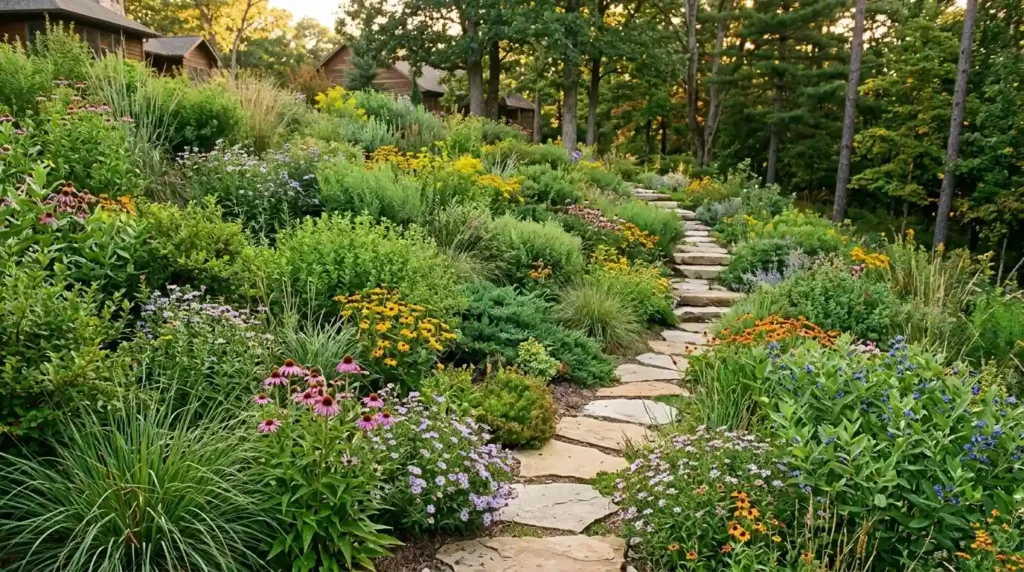
Replace weak grass with a mix of native grasses, flowering perennials, and low shrubs. Fibrous grass roots protect the upper soil. Deeper shrub roots help support the ground below it. Dense leaves also soften the impact of falling rain.
Match each plant to the site. A dry, sunny bank needs different plants than a damp slope beneath trees. Your local extension service or native plant society can help you find suitable native plants for erosion control.
Leave a few stepping stones between planting groups. They will give you safe access without creating a worn dirt trail.
Best for: Slopes where grass is thin, hard to mow, or costly to maintain.
Use Contour Rows to Slow Water Across a Hill
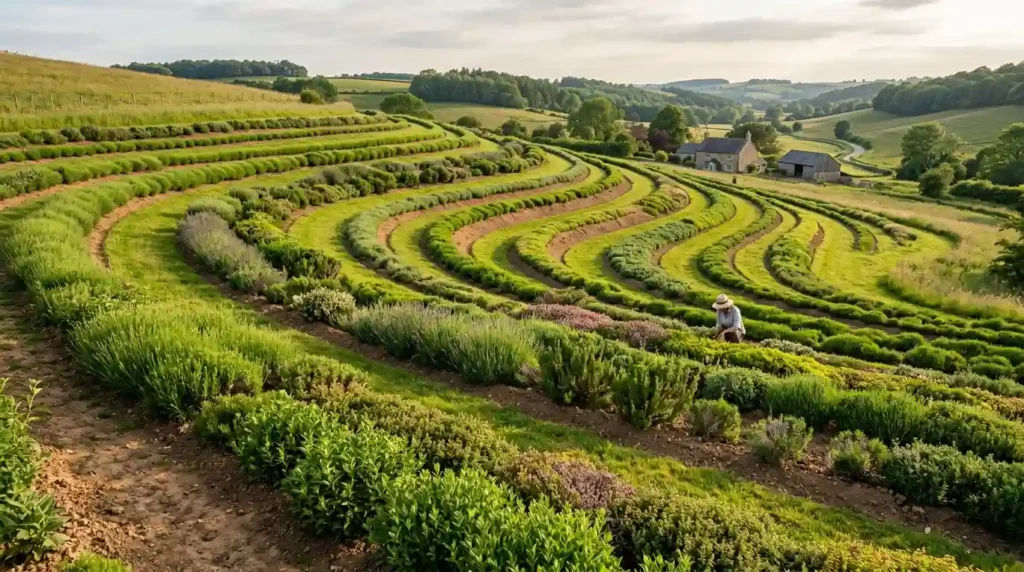
Look at the direction of your planting rows. Rows that run straight downhill can act like small channels and increase the speed of runoff.
Contour planting works across the hill. Each row follows the natural curve of the land instead of dropping down the slope. These horizontal bands interrupt water, spread it over a wider area, and give it more time to soak into the ground.
You can form shallow planting shelves or low soil berms along the contours. Stagger grasses, shrubs, and ground covers so water cannot pass through one open line.
Do not build a berm that sends water at your house, a walkway, or a neighboring yard. Every contour design still needs a safe overflow route.
Best for: Wide hillsides with enough space for several planted bands.
Catch Loose Soil With Coir Logs
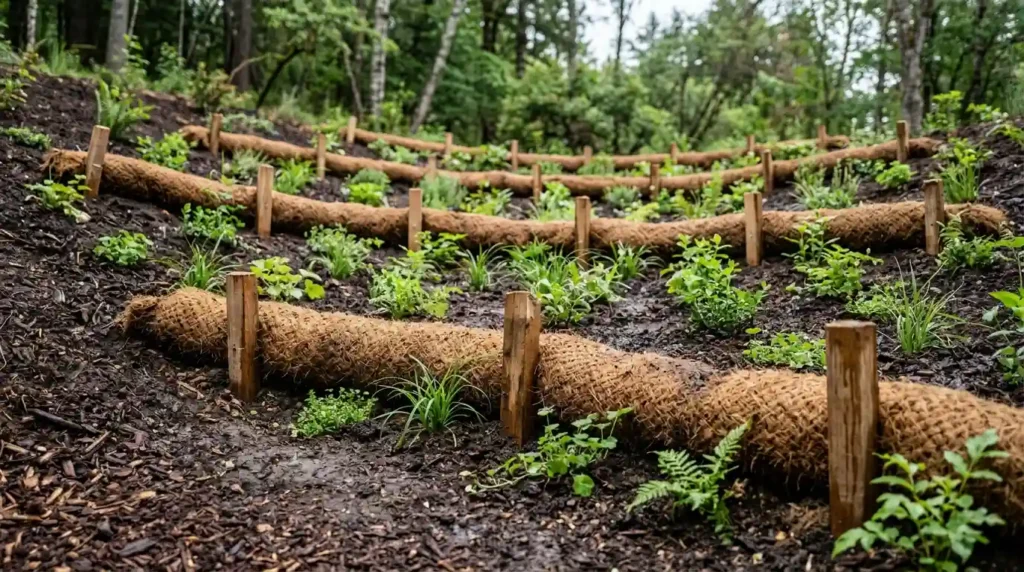
If soil keeps collecting at the bottom of a newly planted bank, coir logs can provide temporary support. These thick rolls are made from coconut fiber and slowly break down outdoors.
Place coir logs across the slope, following its contour. Secure them with stakes based on the product instructions. Good contact with the ground helps stop water from passing underneath.
The logs slow surface runoff and catch loose sediment. They also create protected pockets where young plants can form roots.
Coir logs for erosion control are not permanent retaining walls. Their job is to support the slope while plants become established. Check the stakes and the soil around each log after heavy rain.
Best for: Newly planted slopes, garden banks, and approved waterside projects.
Protect New Seed With an Erosion-Control Blanket
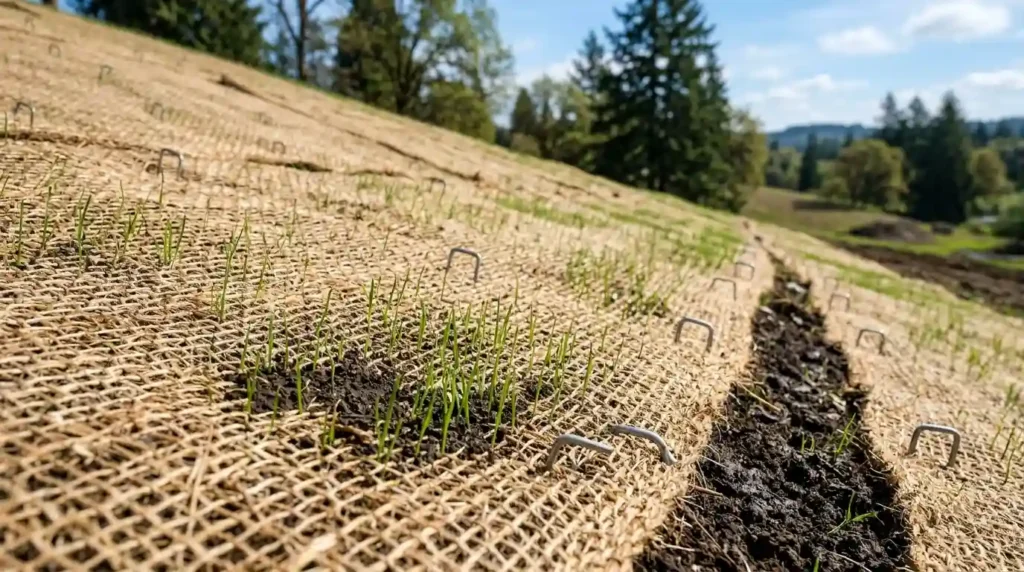
Fresh seed and loose soil can wash away before grass or other plants have time to grow. An erosion-control blanket protects the surface during this weak stage.
Biodegradable blankets are often made from straw, jute, or coir. They reduce the force of raindrops, hold moisture near the seed, and limit soil movement.
Lay the blanket flat against the ground. Gaps underneath can let water gather and form channels. Secure the edges and middle with the recommended pins or staples. Follow the manufacturer’s spacing guide because steeper slopes often require more anchors.
Do not treat the blanket as the finished solution. Plants must still develop enough roots to provide lasting protection.
Best for: Seeded slopes and recently graded areas with exposed soil.
Watch out for: Loose edges that can lift or direct water underneath the material.
Use Shredded Mulch That Resists Washing Away
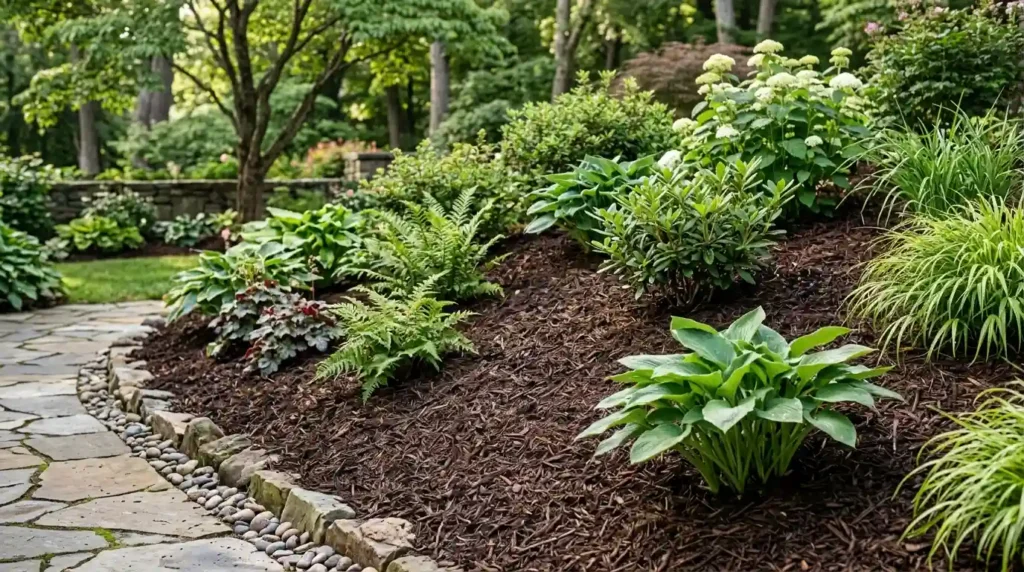
Mulch protects soil from direct rain and helps it stay moist. The type of mulch matters when you use it on a slope.
Shredded wood tends to knit together as it settles. This makes it less likely to roll downhill than large, lightweight bark nuggets. Apply an even layer, but do not pile it against plant stems, tree trunks, foundations, or drain openings.
Mulch for erosion control works best on gentle slopes with light, spread-out runoff. It will not stop water that pours from a downspout or races through a deep channel.
If mulch keeps moving after every storm, find the source of the water. You may need plants, coir logs, a swale, or another drainage feature.
Best for: Gentle sloped garden beds with established plants.
Guide Runoff With a Rock-Lined Dry Creek Bed
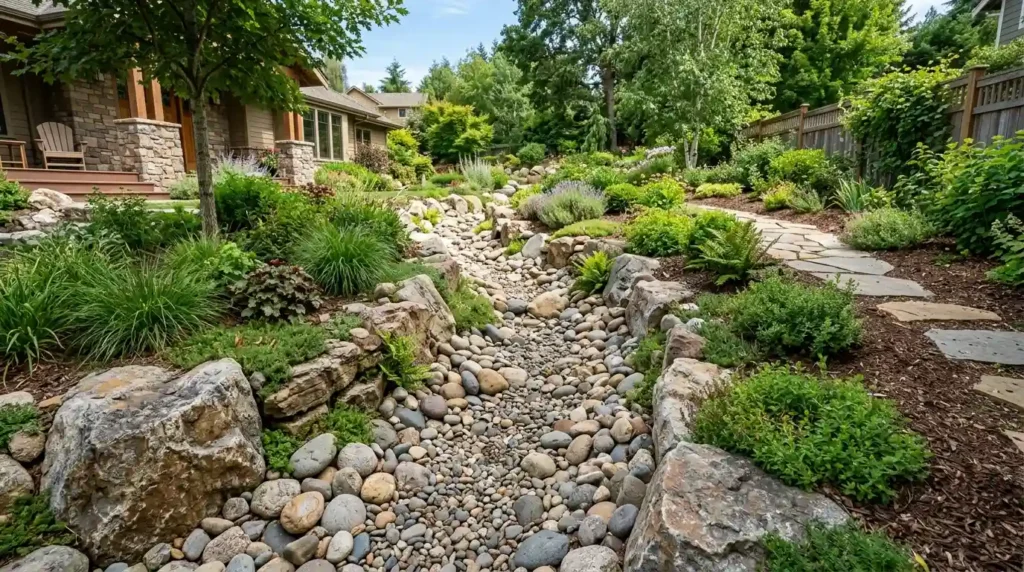
A dry creek bed can turn a wet, eroded channel into an attractive part of your landscape. It follows a planned route and carries runoff to a safe outlet.
Shape the channel with a soft curve that follows the natural low area. Use several rock sizes instead of filling it with identical stones. Larger rocks can support the edges, while smaller stones fill the channel floor.
Plant grasses, sedges, or low shrubs beside the rocks to soften the design and help secure nearby soil. A dry creek bed can carry water from a downspout area into a rain garden if the grade and outlet are suitable.
The base material and channel size must fit the amount of water on your property. Check local rules before changing a natural drainage route.
Best for: Yards with a clear runoff path that appears during storms.
Spread Fast Runoff With a Vegetated Swale
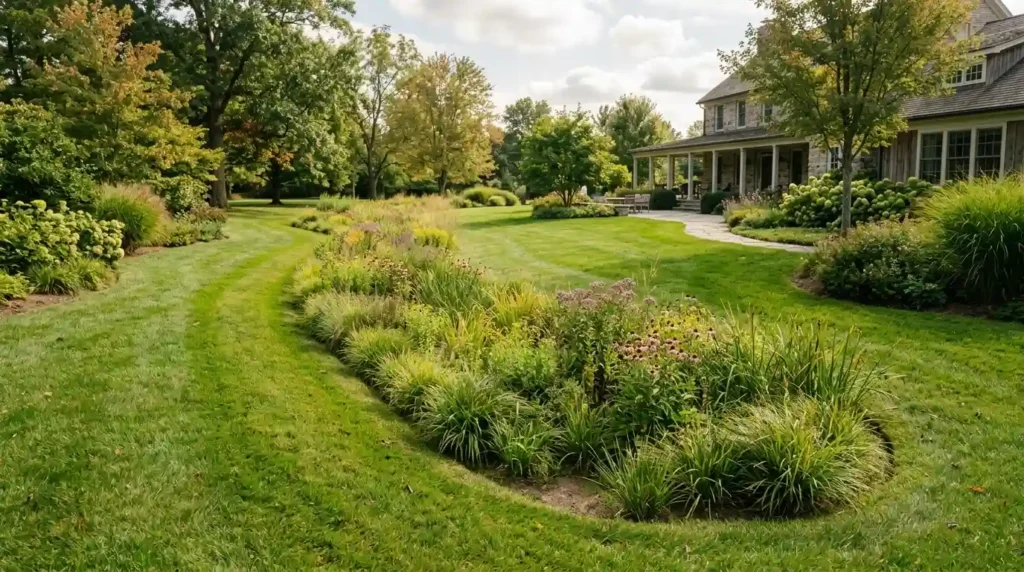
Runoff does more damage when it moves in a narrow, fast stream. A vegetated swale creates a broad, shallow route that slows and spreads the water.
A swale is different from a steep ditch. Its sides are gentle, and its surface is covered with grass or moisture-tolerant plants. The vegetation filters sediment and protects the soil from direct contact with flowing water.
Swales can work beside driveways, across large lawns, or near the bottom of a slope. They need a controlled grade so water continues moving without racing through the yard.
Do not place a swale where soaking water could affect a foundation, septic system, or unstable bank. The water must also have a safe overflow point during large storms.
Best for: Broad areas where runoff needs to move slowly across the property.
Collect Water in a Rain Garden
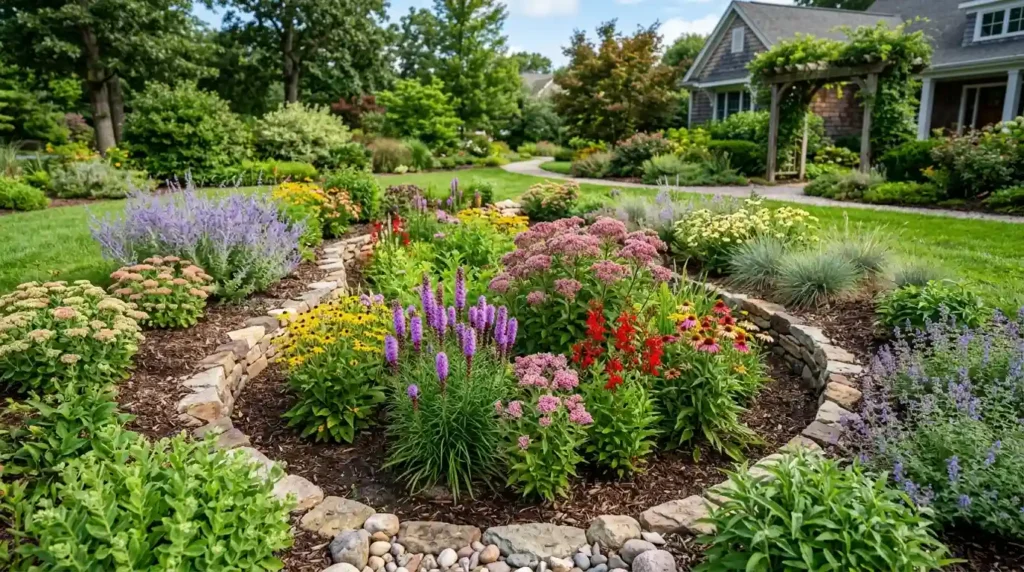
A rain garden collects runoff for a short time and lets it soak into suitable soil. It can also add color and wildlife value to an open low area.
Before digging, test how quickly the soil drains. Choose a location away from foundations, septic systems, underground utilities, and unstable slopes. Local rules may set minimum distances for these features.
Use plants that can handle wet soil after rain and drier conditions between storms. Moisture-loving plants can sit in the lower section. Plants that prefer less water can grow around the upper edge.
Every rain garden needs a planned overflow route. During a large storm, extra water should leave without cutting a new channel or flooding another property.
Best for: Safe low areas that receive runoff from a roof, lawn, or paved surface.
Redirect Downspouts Before They Cut New Channels
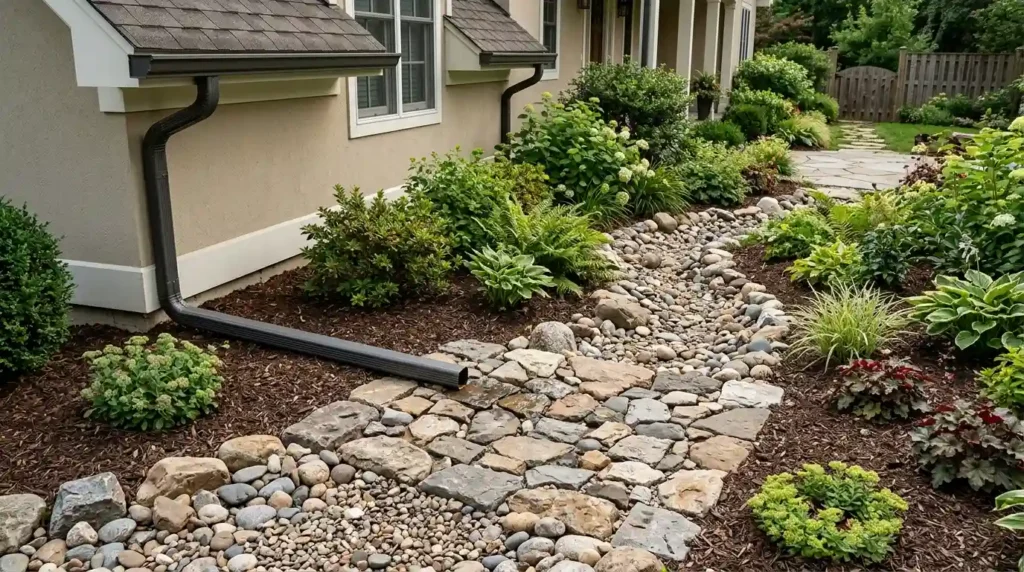
Your roof can collect a large amount of rain and release it through a few downspouts. If one downspout empties onto bare soil, the concentrated flow can quickly cut a channel.
Inspect each outlet during light rain. Look for washed mulch, exposed roots, muddy holes, or water running down a slope. Extend the downspout if it ends too close to the house or an eroding area.
Send the water into a suitable swale, rain garden, dry creek bed, or approved drainage system. Add a splash block or stable stone apron at the outlet to spread the flow.
Never redirect rainwater onto a sidewalk, road, or neighboring property. Check local drainage rules before changing the discharge point.
Best for: Erosion that begins near a roof drainage outlet.
Slow Water With Small Stone Check Dams
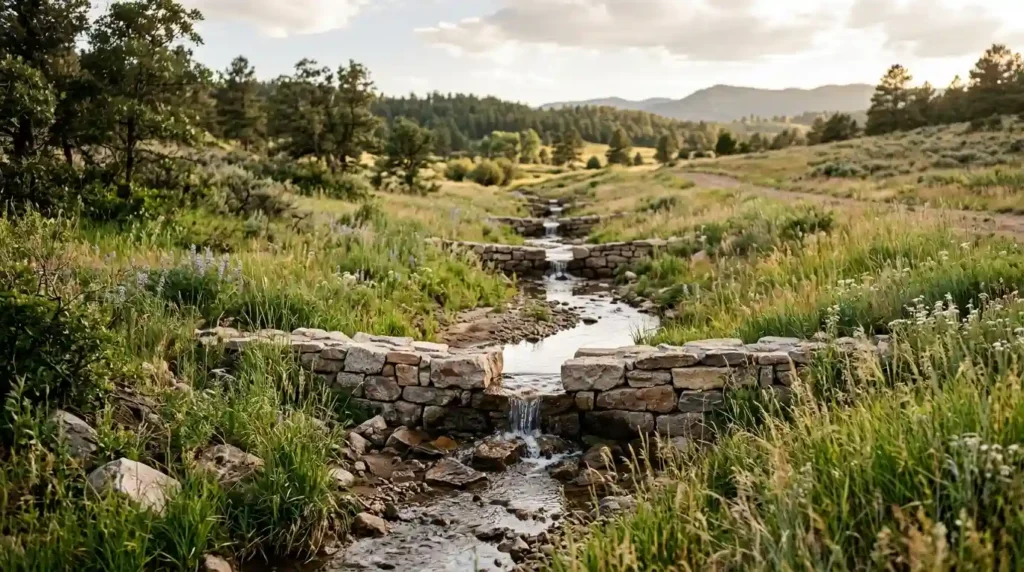
A narrow drainage channel can deepen when water gains speed. A series of low stone check dams can slow the flow in stages.
Build each check across the channel. Keep its center slightly lower than the sides so water passes over the middle. If the sides are lower, runoff may cut around the stones and widen the channel.
Several small checks are usually more useful than one tall pile of rocks. Leave enough space between them for water to settle before reaching the next barrier.
Check dams reduce speed and catch some sediment. They do not replace a full drainage plan, and they should not block a stream or major water route.
Best for: Small landscape swales or shallow drainage channels.
Watch out for: Channels that carry deep or powerful storm flows. These need professional advice.
Protect Drain Outlets With Riprap
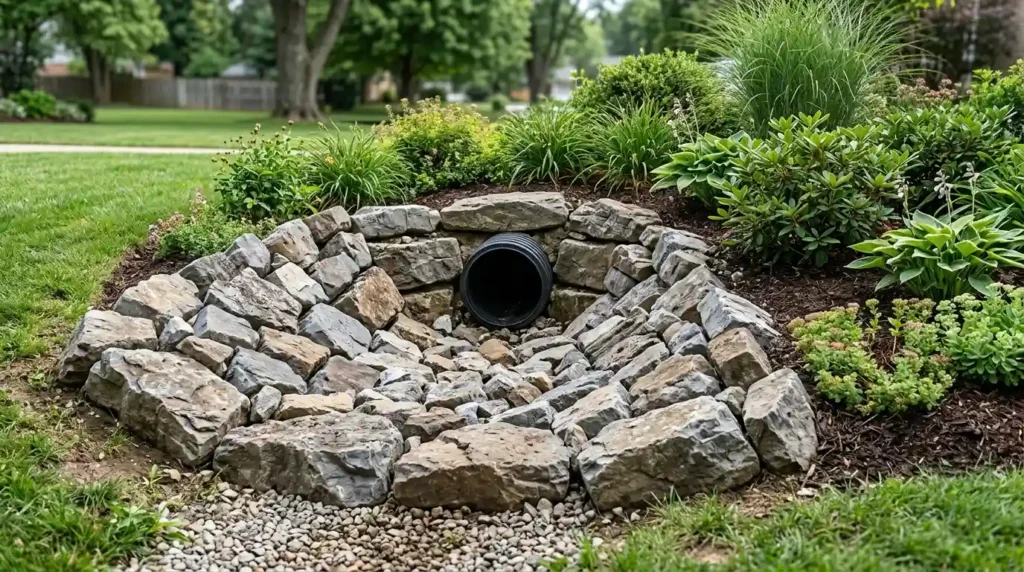
Water leaving a pipe can hit the soil with enough force to dig a hole. Riprap protects that outlet with a stable apron of durable stone.
Spread the stones beyond the end of the pipe so they absorb and distribute the water’s force. The stone area should be wide enough to prevent runoff from cutting around its edges. A suitable base may also be needed to keep the rocks from sinking into soft soil.
Stone size must match the strength of the flow. Small gravel can wash away when a large pipe releases water quickly.
You can improve the appearance with a clean border and sturdy plants nearby. Keep roots and leaves from blocking the pipe opening.
Best for: Downspout extensions, culverts, and other drainage outlets.
Turn a Long Slope Into Shorter Terraces
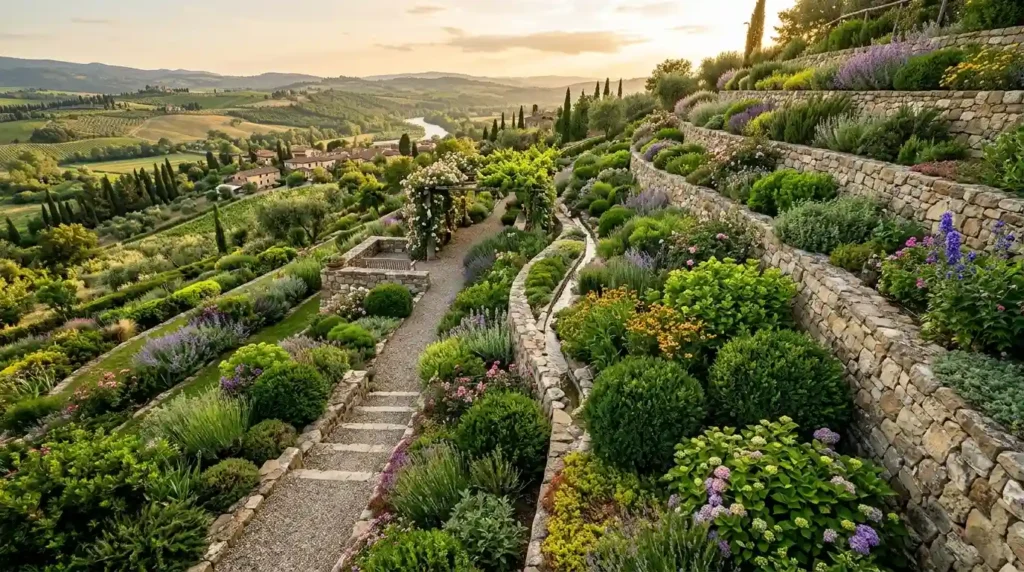
A long slope gives water more distance to gain speed. Terracing breaks that slope into shorter, flatter planting levels.
Each level can hold ground covers, shrubs, herbs, or a small sitting area. The shorter drops make the hillside easier to plant and may reduce surface runoff when the terraces are built correctly.
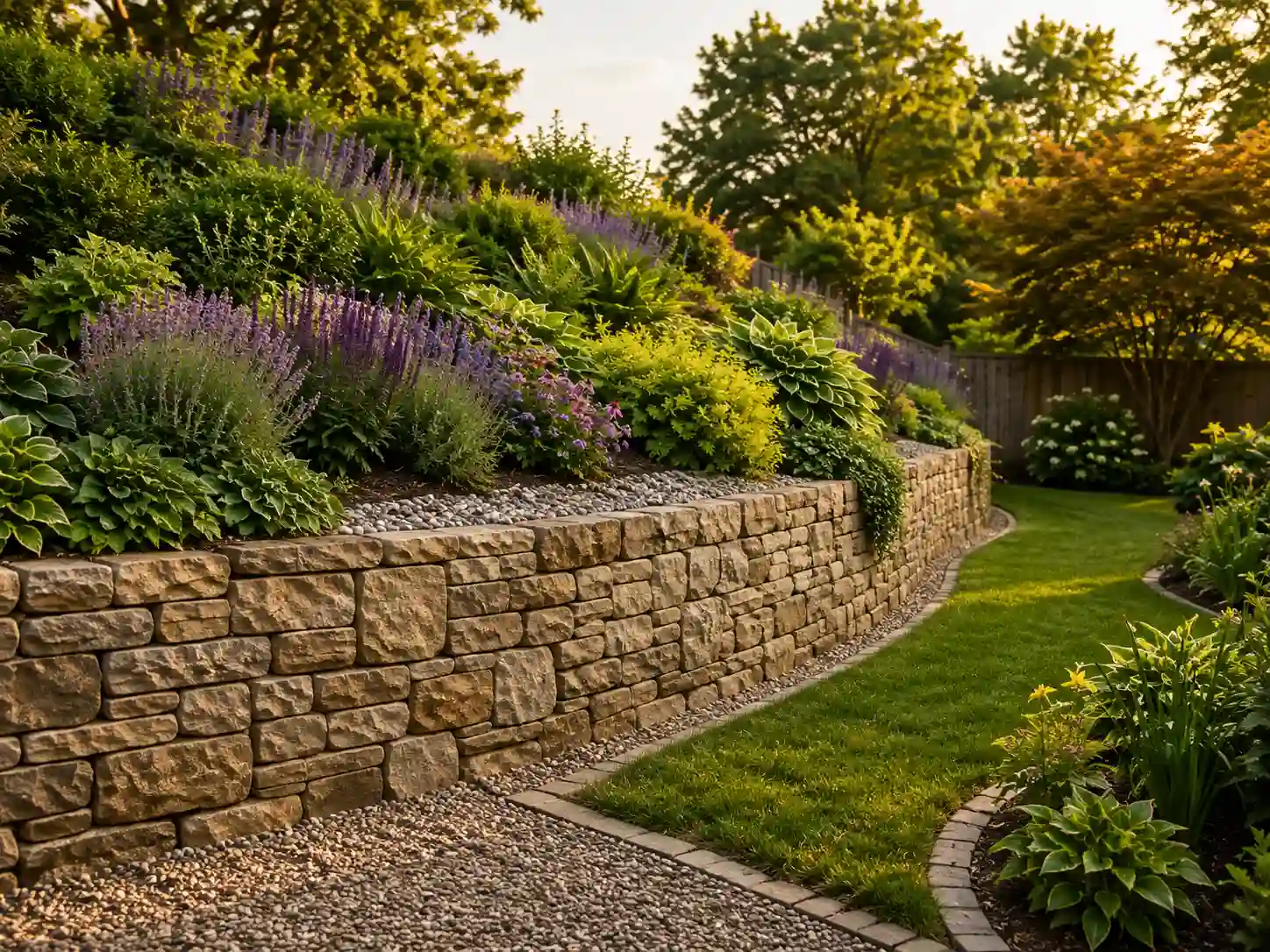
Use stone, timber, masonry, or modular blocks that suit the site. Water must be able to drain behind and between built sections. Trapped water creates pressure and can move soil or damage the structure.
Several low terraces may fit a residential garden better than one tall wall. Tall terraces, steep sites, and unstable soil need professional design. You may also need a permit.
Best for: Long, steep slopes that are hard to plant or maintain.
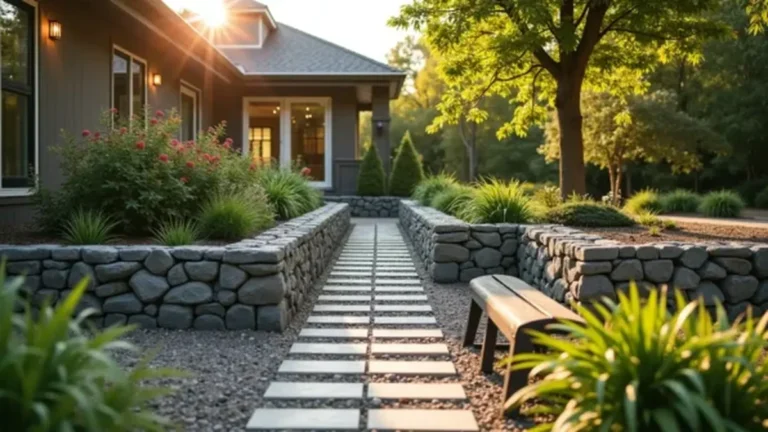
Hold Moving Soil With a Drained Retaining Wall
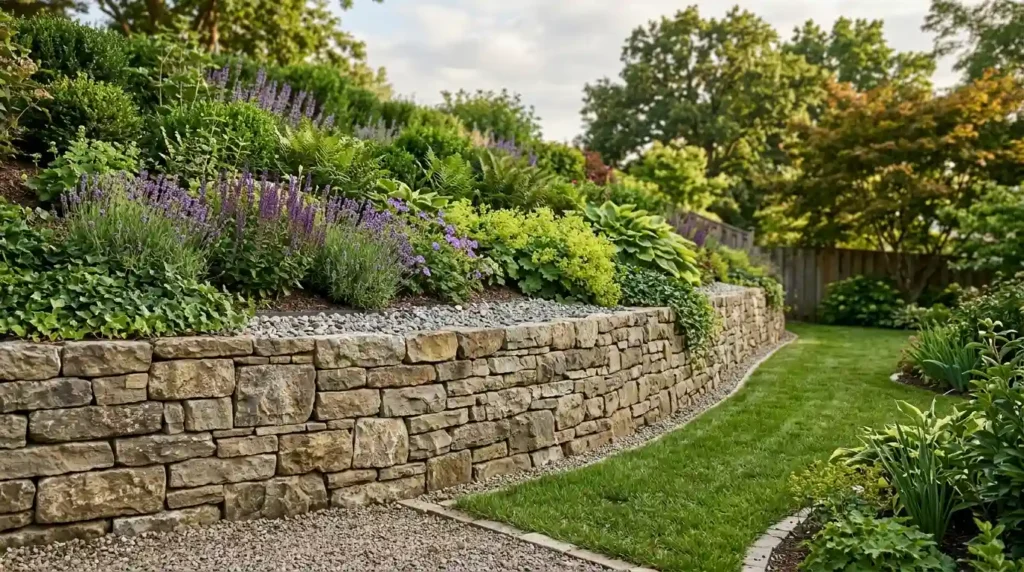
A retaining wall may be needed when soil is shifting or a slope must support a sharp change in height. It holds soil in place instead of simply covering the surface.
A sound wall needs a firm base, suitable backfill, drainage stone, and a way for water to escape. Water trapped behind the wall adds pressure. Over time, this may cause leaning, cracking, or failure.
Low garden walls may be possible as a DIY project if local rules allow them. Tall walls and walls near driveways, buildings, or property lines need qualified design.
Check permit, height, and setback rules before buying materials. Plants can soften the finished look, but their roots should not block the drainage system.
Best for: Sharp grade changes and soil that needs structural support.
Pair Embedded Boulders With Dense Plants
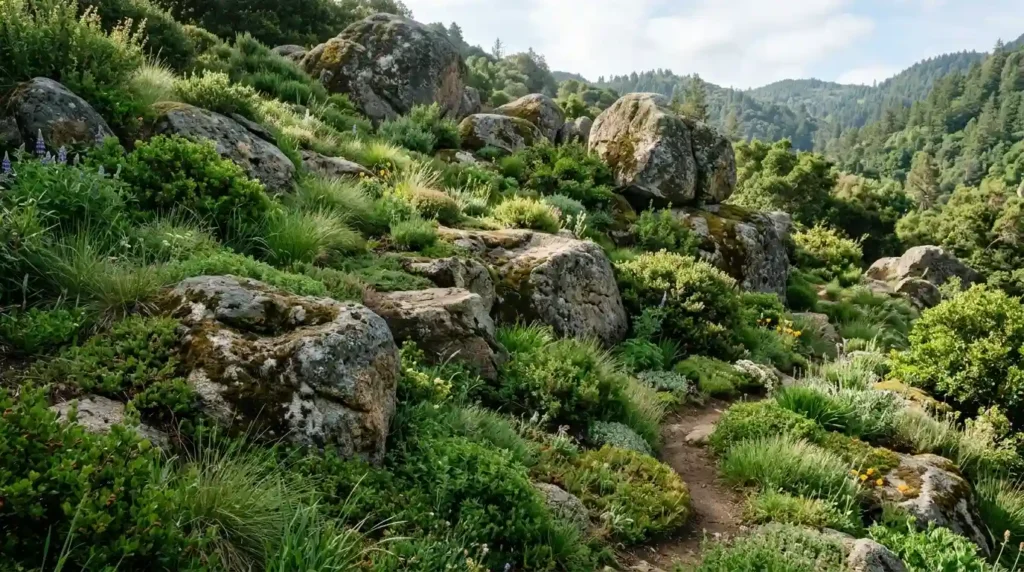
Boulders can slow surface water and add structure to a planted hillside. They work best when they are partly set into stable ground.
Place the stones in a staggered pattern instead of making one straight downhill line. This breaks up the path of runoff. Add native grasses, low shrubs, and spreading ground covers around the rocks to protect the open soil.
Rocks alone may not solve the problem. Water can wash soil from the gaps and create hidden channels. Dense roots provide the coverage that decorative stone cannot.
Do not balance loose boulders on steep ground. Large stones are heavy and may shift if the base is weak. Use professional equipment and advice when safe placement is uncertain.
Best for: Visible hillsides that need both soil protection and a natural look.
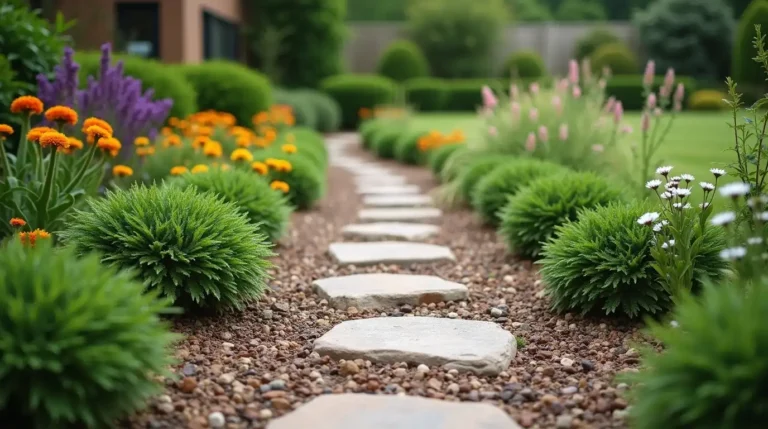
Stop Paths From Turning Into Water Channels
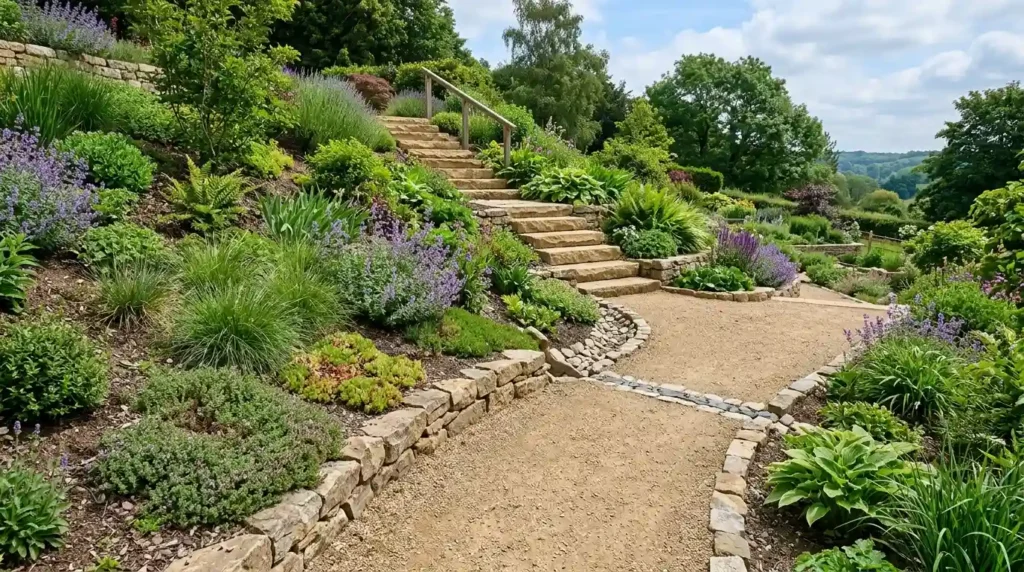
A dirt path that runs straight downhill can become a stream during heavy rain. Foot traffic removes plants, compacts the soil, and gives water a clear route.
Curve the path across the slope when space allows. Add stable edging, a well-compacted base, and permeable gravel or pavers suited to the site. Water bars or small breaks can move runoff off the path before it gains speed.
Permeable surfaces may let some water enter the soil, but they still need proper grading and drainage. Edging alone will not fix a path that receives water from a large area above it.
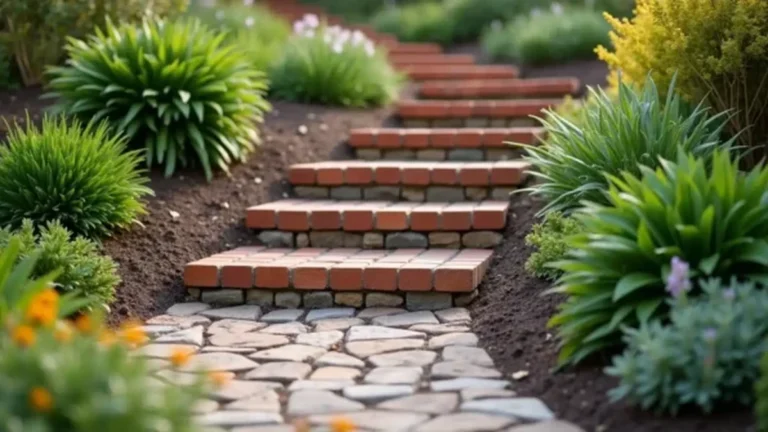
Use steps when the grade is too steep for comfortable walking. Include a safe landing and drainage route beside each run.
Best for: Worn hillside walkways that wash out after rain.
Combine Methods for Stronger Erosion Control
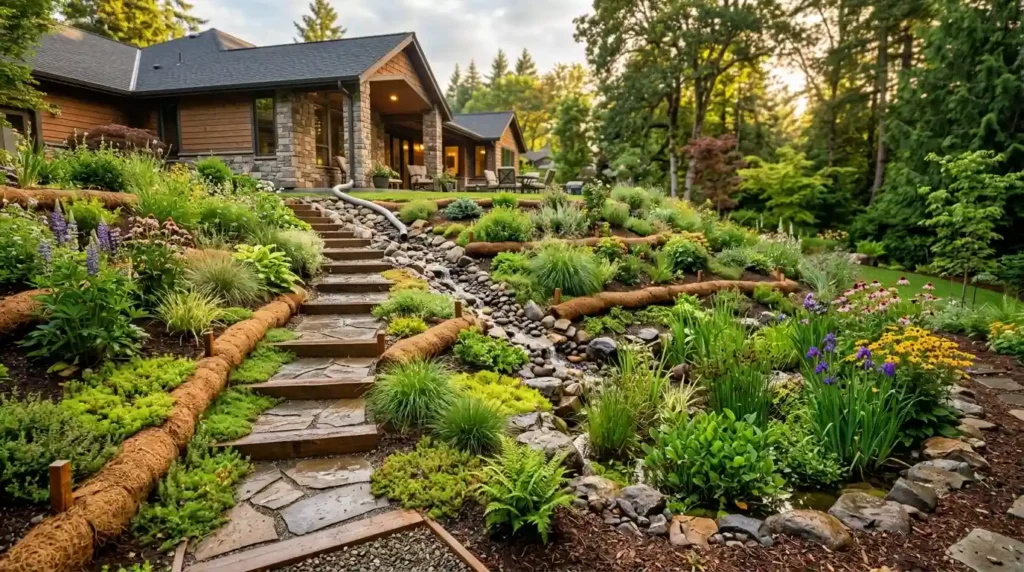
Serious erosion often has more than one cause. You may have roof runoff at the top, bare soil in the middle, and poor drainage at the bottom.
Build a complete erosion control plan from the top down. First, redirect a problem downspout into a safe route. Next, use contour planting, native ground covers, or coir logs to protect the slope. Finish with a rain garden or approved outlet at the lower end.
This combined plan manages the water before it damages the soil. It also gives each feature a clear job.
Inspect the area during light rain and again after a strong storm. Repair loose stones, exposed blanket edges, weak plants, and new channels early.
Best for: Large slopes or yards with several connected runoff problems.
Which Erosion-Control Method Fits Your Yard?
| Yard problem | Good options |
| Bare soil on a gentle slope | Ground covers, native plants, or shredded mulch |
| Newly seeded bank | Erosion-control blanket or coir logs |
| Water flowing through one channel | Dry creek bed, vegetated swale, or check dams |
| Erosion below a downspout | Downspout extension, splash block, or riprap |
| Long, steep hillside | Terraces, dense planting, or professional slope work |
| Moving soil or sharp grade change | Properly drained retaining wall |
| Worn downhill footpath | Curved permeable path, water breaks, or steps |
| Safe low area with suitable soil | Rain garden |
| Several erosion sources | A combined top-to-bottom plan |
When Should You Call a Professional?
Some erosion problems are too risky for a basic weekend project. Contact a landscape architect, drainage contractor, or qualified engineer if you notice:
- Deep gullies that return after repairs
- Cracks or bulges in a slope
- Leaning trees, fences, or retaining walls
- Soil moving near a foundation
- Water entering the house
- A steep bank above a road or neighboring property
- Fast water coming from a large drainage area
- Exposed pipes, cables, or other utilities
Call your utility-location service before digging. You should also check local drainage, building, and permit rules before changing the grade or building a wall.
Protect Your Yard by Starting With the Water
Erosion begins with moving water, exposed soil, or both. Plants can hold the ground, but they work better when runoff is slowed and spread out. Swales, dry creek beds, terraces, and retaining walls each solve a different type of problem.
Walk through your yard during or soon after light rain. Note where the water starts, which path it follows, and where it ends. Then choose a solution that fixes the cause instead of hiding the damage.
Start with the erosion-control landscaping ideas that match your slope, soil, and water flow. Inspect the area after storms and adjust the plan if new weak spots appear. If the ground is shifting or erosion threatens a building, ask a qualified professional to assess the site.