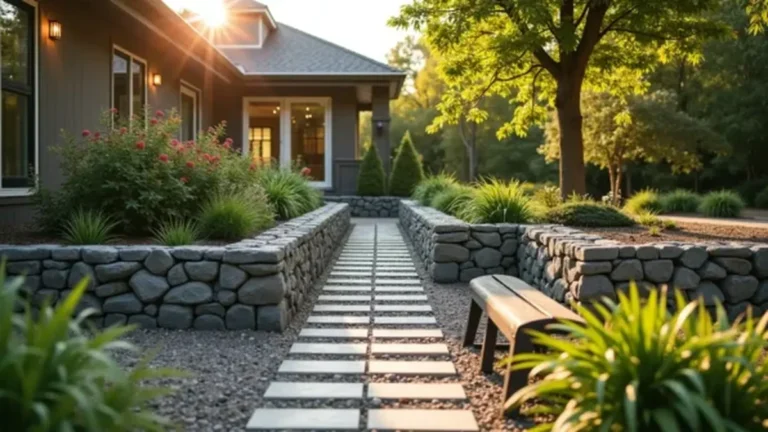
19 Landscaping Hardscape Ideas Front Yard Owners Love
Your front yard may need more than new plants to look finished and welcoming. Plants add color and soften hard edges. But they cannot fix a muddy path, a steep slope, or water collecting near your home.
The right landscaping hardscape ideas front yard spaces can use will solve these problems. They can also reduce lawn care and make your entrance easier to use.
Hardscape includes solid features such as paths, patios, steps, walls, gravel beds, and stone borders. These features give your yard structure. They also help guide people from the street or driveway to your front door.
The key is to choose features that serve a clear purpose. A wide path can improve access. A retaining wall can control a slope. A small patio can give you a place to sit.
Below are 19 front yard hardscape ideas for entrances, seating areas, drainage, slopes, and low-maintenance spaces.
5 Front Yard Hardscape Ideas That Improve Your Entrance
Your entrance should be easy to find and safe to use. It should also look connected to your home.
Start with the route people take from the street or driveway. Then improve the landing, steps, and driveway edge.
Build a Wide Paver Walkway
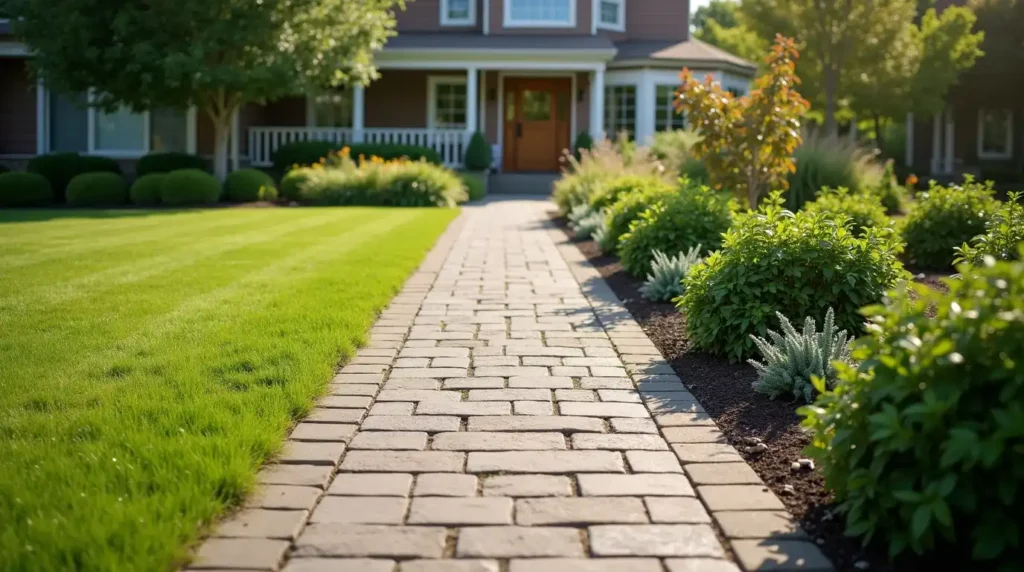
A wide walkway gives your front yard a clear direction. It leads visitors straight to the door and keeps shoes away from wet grass or mud.
A path that is 42 to 48 inches wide often feels more comfortable than a narrow 30-inch path. Two people can walk side by side. You also have more room for bags, strollers, or mobility aids.
Concrete pavers are a practical choice. You can replace one damaged paver without removing the full path. Brick and natural stone also work well when they match the style of your home.
Keep the surface level and firm. Choose a finish that offers good grip during rain.
Curves can soften a straight yard. However, too many bends may make the path feel forced. Use a gentle curve only when it fits the shape of the space.
Best for: Homes with a weak or unclear route to the front door.
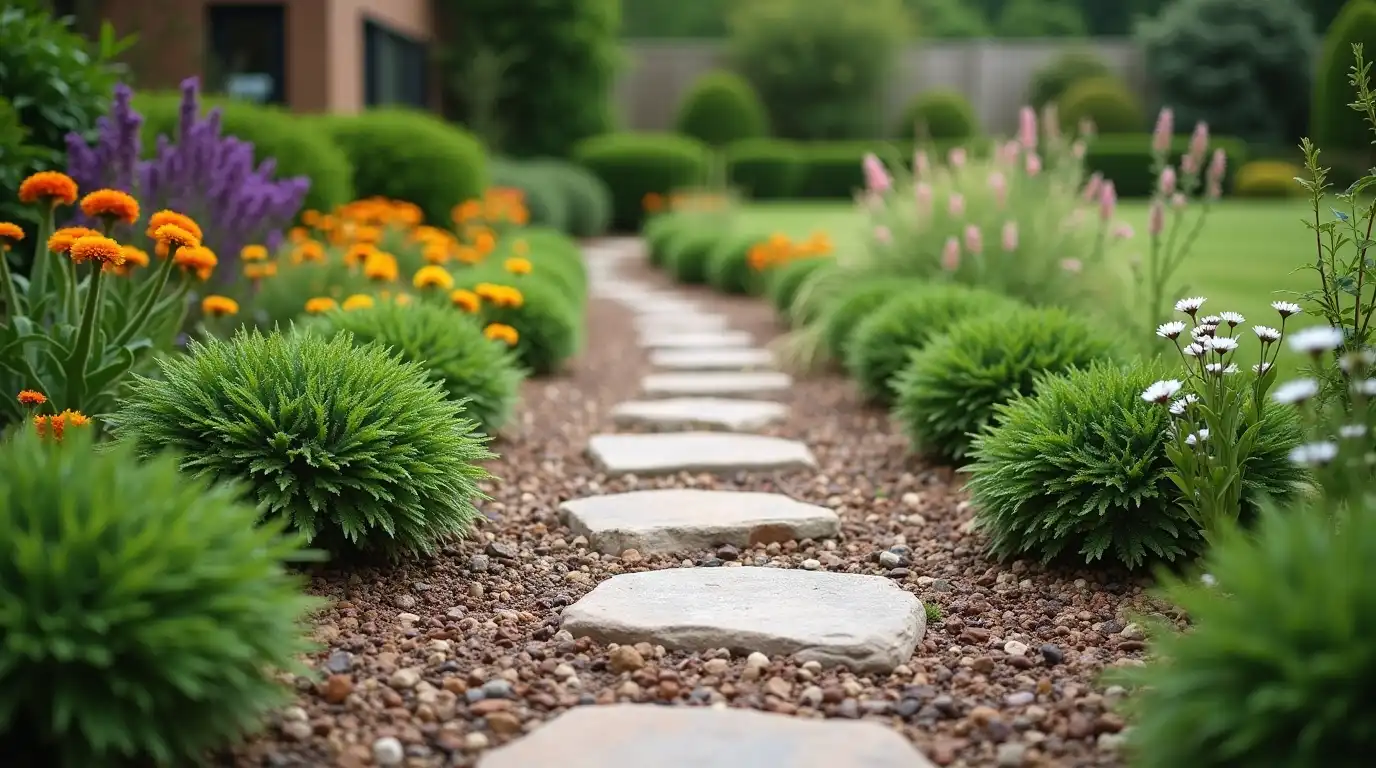
Add a Stepping-Stone Garden Path
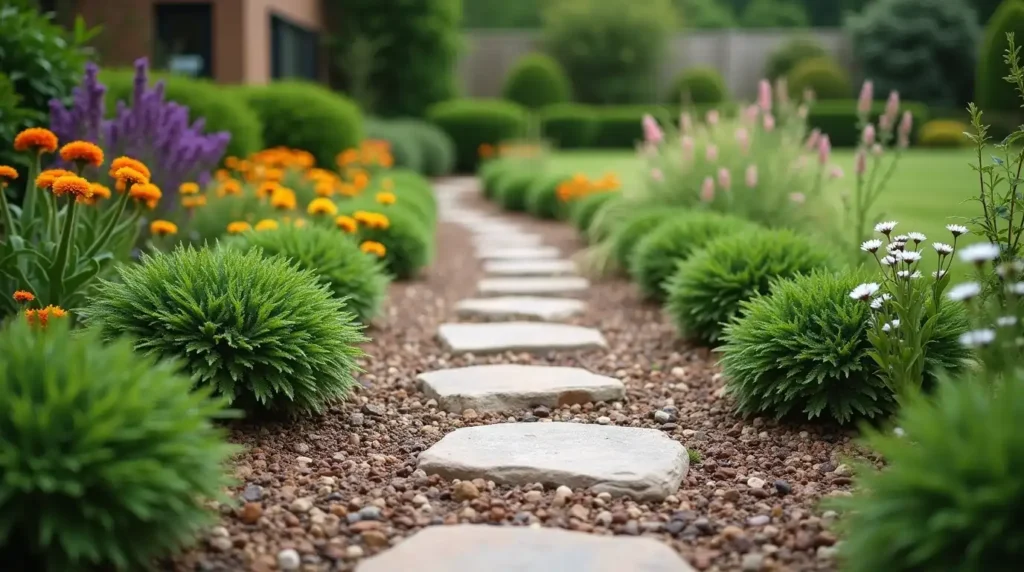
A stepping-stone path works well as a second route through the yard. It can connect the driveway to a side gate, porch, mailbox, or garden.
Choose large, flat stones that give each foot enough support. Place them at a natural walking distance. Test the spacing before fixing them in place.
You can fill the gaps with gravel, mulch, or a low-growing plant. Gravel creates a clean look. Creeping plants make the path feel softer.
Do not use loose or uneven stones on the main entrance route. They may shift underfoot or become slippery.
A stepping-stone path looks best when it leads somewhere useful. Avoid placing stones in the yard with no clear end point.
Good DIY project: Mark the route with cardboard shapes before buying stone.
Create a Larger Front Door Landing
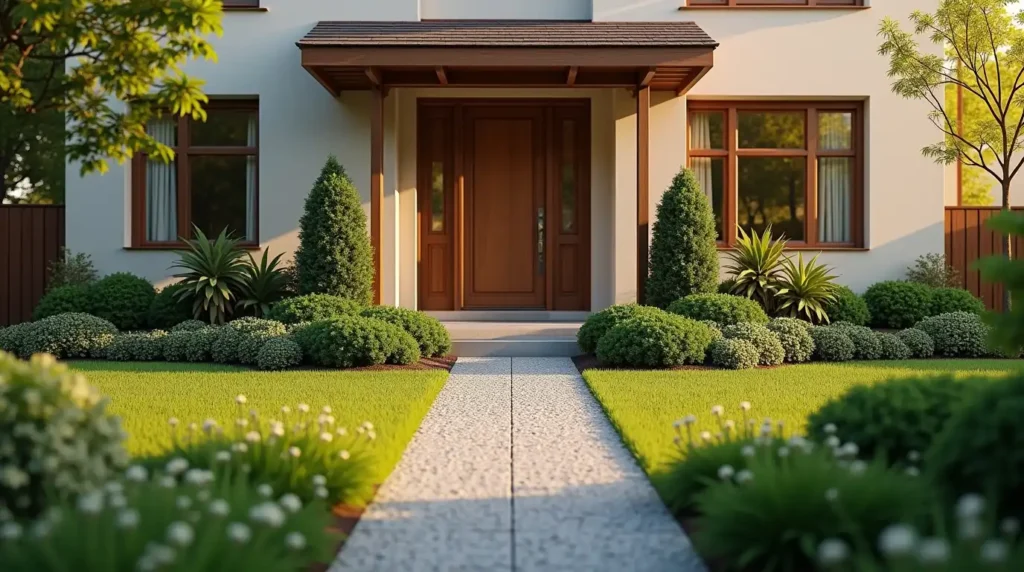
A tiny landing can make your entrance feel crowded. Visitors may have to step backward while you open the door.
A larger landing gives people room to stand safely. It also gives you space for a small planter, welcome mat, or bench.
Check which way your front door opens. Keep furniture and pots outside the door swing. Leave the main walking route clear.
Use the same material as the walkway when possible. This creates a smooth visual link from the yard to the door.
You can also add a border in a second material. For example, use concrete pavers with a thin brick edge. Keep the mix simple so the landing does not look too busy.
Make sure water drains away from the doorway. A landing that tilts back at the house can send water inside.
Common mistake: Filling a small landing with oversized pots.
Upgrade Front Steps With Stone or Brick
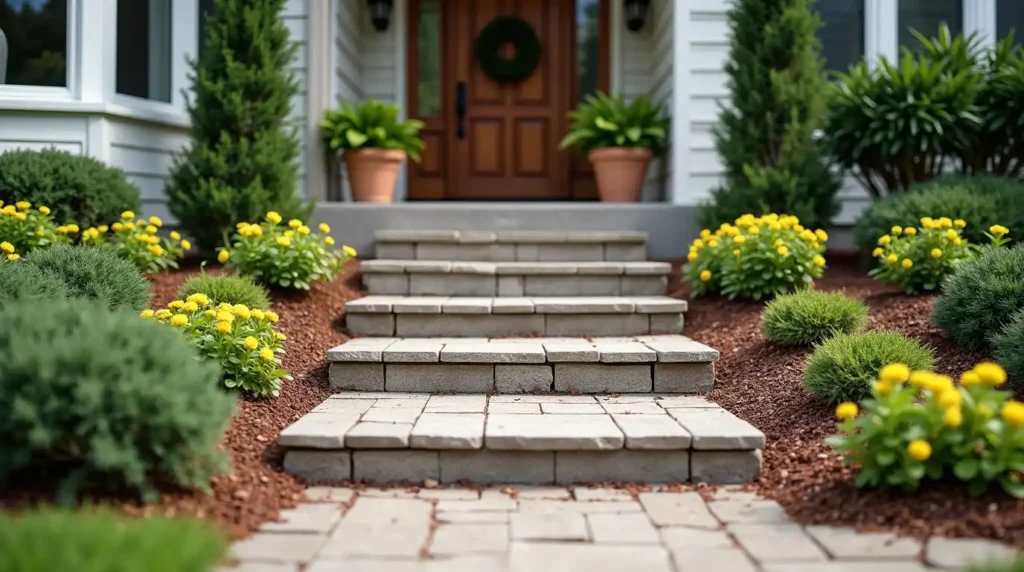
Plain concrete steps may look separate from the rest of your home. A stone or brick finish can help them fit the building and yard.
Brick works well with traditional homes. Natural stone can suit rustic, cottage, and classic designs. Large concrete slabs often fit modern homes.
Safety comes first. Each step should have a steady height and enough depth for your foot. The front edge should remain easy to see.
Add lighting beside the steps if the entrance is dark at night. A handrail may also be needed based on the height and local rules.
Choose outdoor materials that handle rain, heat, and cold in your area. Smooth indoor tiles may become dangerous when wet.
Professional installation is often a smart choice for major step changes. Poorly built steps can crack, settle, or become uneven.
Check local rules: Step and handrail rules can vary by location.
Frame the Driveway With a Paver Border
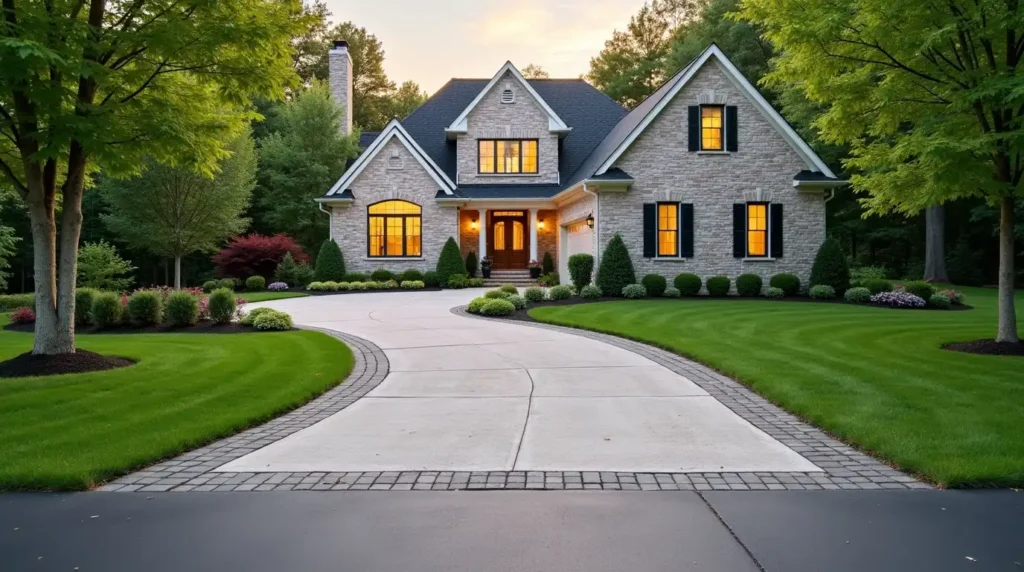
A paver border can make a basic concrete or asphalt driveway look more finished. It creates a clean line without replacing the full surface.
Choose a color that works with your walkway, porch, or home exterior. A dark brick border can add contrast around pale concrete. A pale stone border can soften black asphalt.
Keep the border level with the driveway. Raised pavers may catch tires or make car doors harder to open.
The border should not reduce parking space. This matters most when the driveway is already narrow.
Repeat the same material near the walkway or front steps. Small repeated details can make the full yard feel connected.
Make sure the base is firm. Pavers placed on loose soil may sink or spread after heavy rain.
Best quick update: Add a border near the driveway entrance first if the full edge is outside your budget.
5 Landscaping Hardscape Ideas Front Yard Seating Areas Can Use
A front yard does not have to be a space you only walk through. A small seating area can give you a place to enjoy fresh air, greet neighbors, or watch children play.
The best landscaping hardscape ideas front yard seating areas use should keep the main entrance open. They should also offer enough room for people to move around the furniture.
Add a Small Gravel Sitting Area
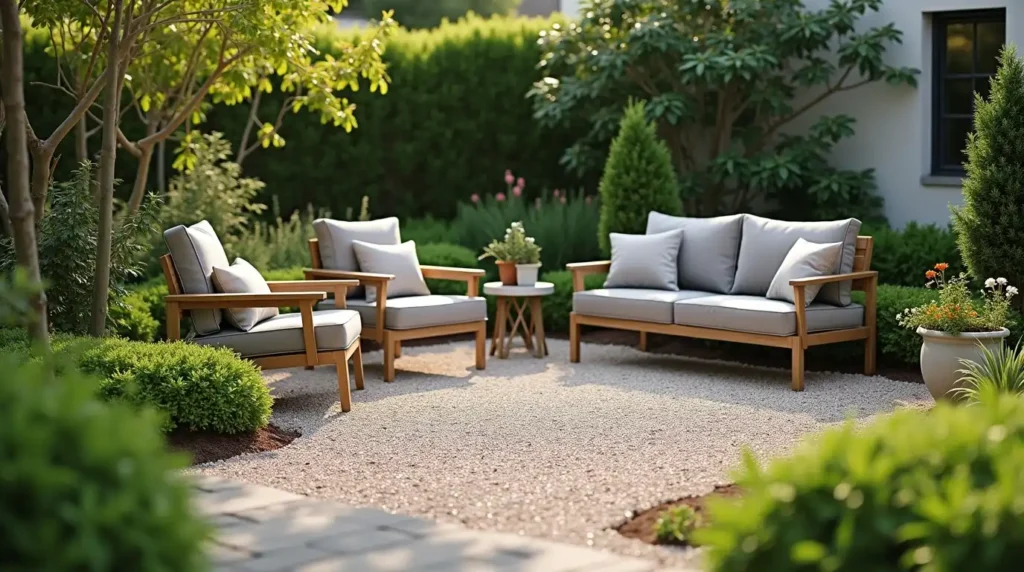
A gravel sitting area is often cheaper and easier to build than a full patio. It also works well in a small corner near the porch.
A space around 6 by 8 feet can hold two chairs and a small table. Mark the area before digging to make sure the furniture fits.
Remove soft soil and prepare a firm base. Add edging around the space so gravel does not spread into the lawn or walkway.
Angular gravel tends to stay in place better than smooth, round stones. It also creates a firmer surface under chairs.
Choose furniture with wide feet. Thin metal legs may sink into the gravel.
Place the sitting area outside major drainage routes. Water moving through the space can wash away small stones.
Lowest-cost option: Use simple edging and local gravel instead of premium decorative stone.
Build a Compact Paver Patio
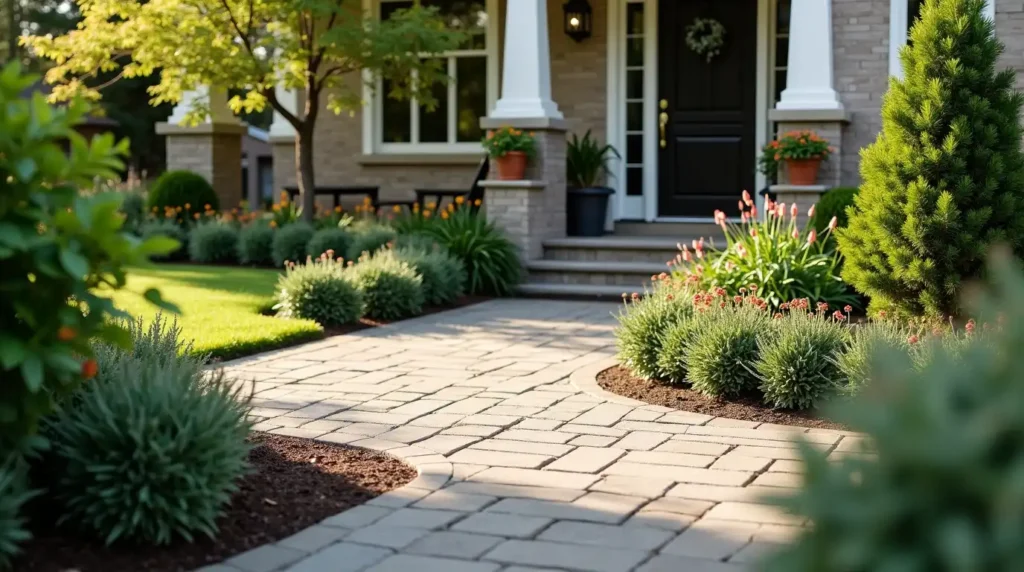
A small paver patio can turn an unused front corner into a useful outdoor space. It also gives chairs a solid and level base.
Place the patio near the porch or beside the house. This often feels more natural than placing it in the middle of the lawn.
Leave a clear path from the sidewalk or driveway to the front door. Visitors should not have to walk through the seating area.
Use one of the same materials found at the entrance. You could repeat the walkway pavers or use a matching border.
Low plants can give the patio a small amount of privacy. Avoid tall hedges near the driveway because they may block views.
Plan enough room to pull chairs away from the table. A patio may look large when empty but feel cramped once furniture is added.
Best for: Homeowners who use their front porch but need more seating room.
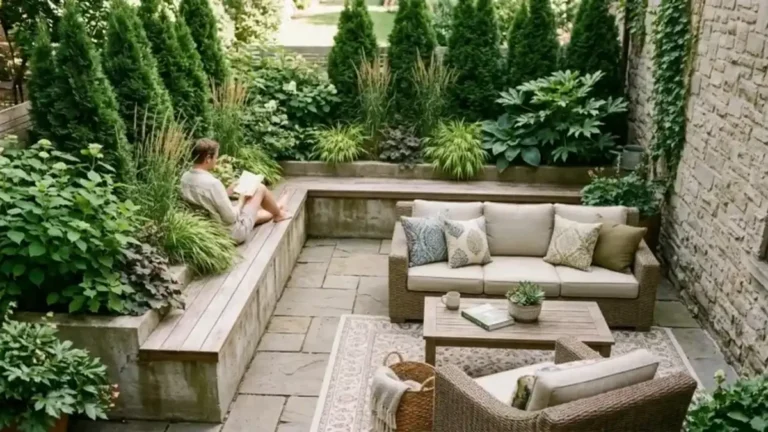
Install a Low Seat Wall
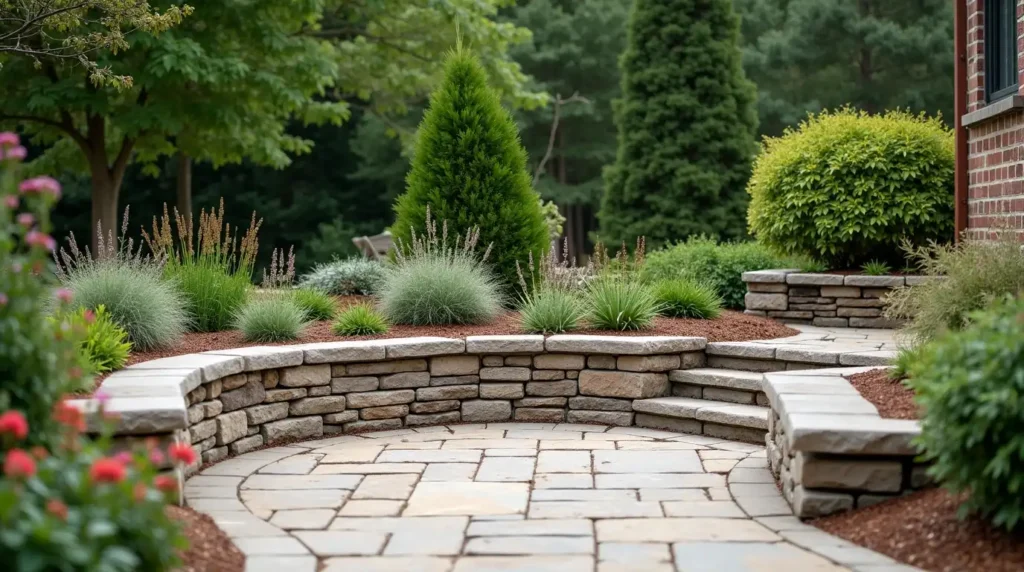
A low wall can define a patio and provide extra seating. It may also reduce the need for several outdoor chairs.
Use a smooth capstone on top. Rough stone may look good but feel uncomfortable to sit on.
A seat wall can also form the front edge of a raised planting bed. This gives you seating and planting space in one feature.
Keep the wall away from driveway sight lines. Drivers need a clear view of people, cars, and bikes near the street.
Do not build the wall so close to the path that it creates a tight walking space. Leave room for people to pass even when someone is sitting there.
Choose a wall material that matches the patio or house. Too many colors and stone types can make a small front yard feel crowded.
Professional help recommended: Get expert advice for walls that hold back soil.
Add a Bench Nook Beside the Walkway
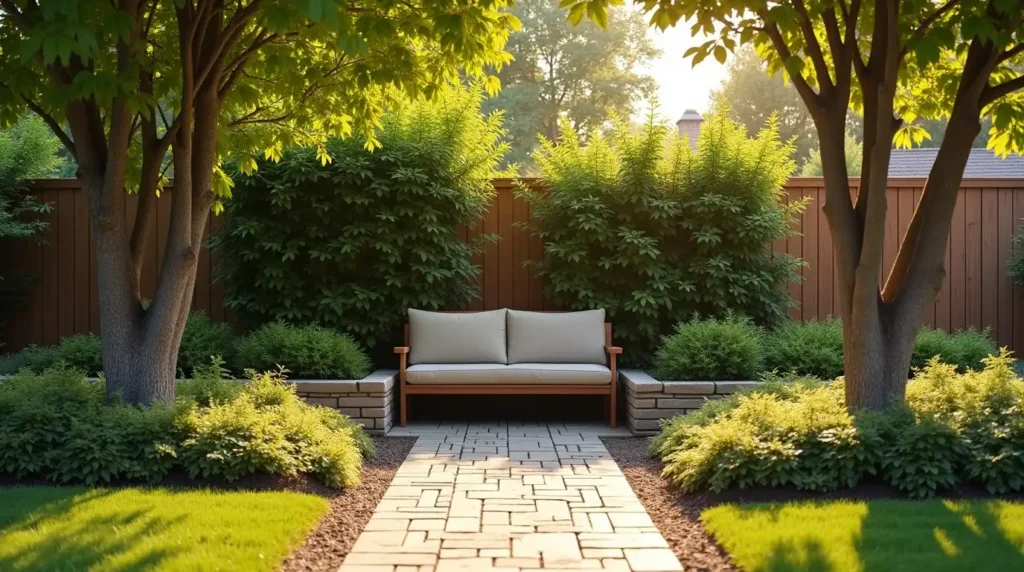
A bench nook gives you seating without the cost of a full patio. It can fit beside a walkway, under a tree, or near a garden bed.
Place the bench on a firm pad made from pavers, gravel, or stone. Do not set it directly on soft soil because the legs may sink.
Face the bench at something worth seeing. This could be the garden, a tree, the street, or the front of the house.
Keep the nook separate from the main walking line. People should not have to move around seated guests to reach the door.
Add low plants around the bench to make the area feel settled. Avoid thorny plants or flowers that attract many insects close to the seat.
Shade will make the nook more comfortable. Use an existing tree when possible, but avoid digging through major roots.
Simple design idea: Use a four-paver pad, one bench, and two matching pots.
Mark the Entrance With an Arbor
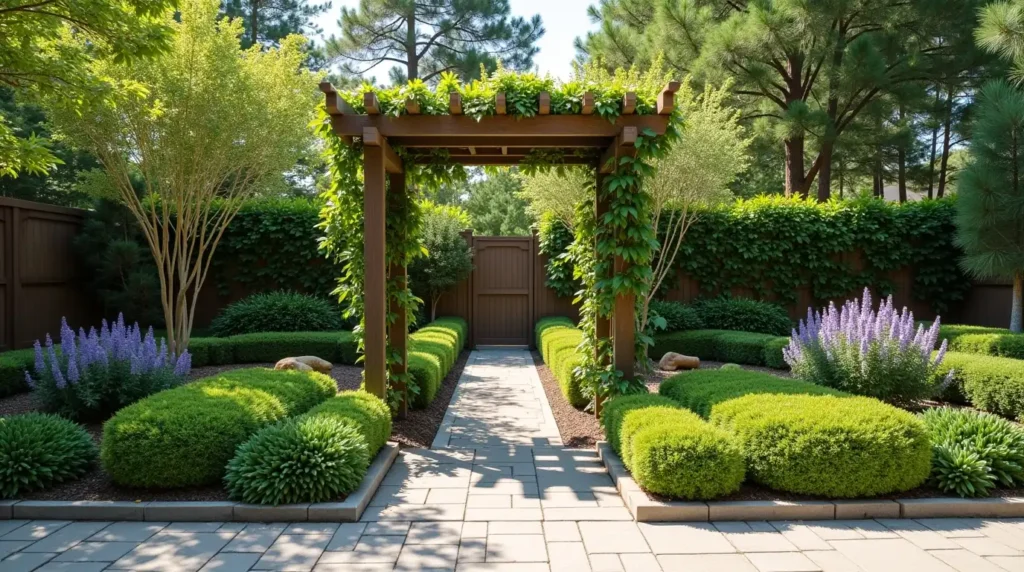
An arbor can show where a path begins. It creates a clear transition from the sidewalk or driveway into the front garden.
The opening should be wide enough for easy walking. Keep plants and vines from reducing the usable width.
Choose metal, wood, or masonry based on your home. Wood feels warm but needs regular care. Metal is slimmer and may work better in a small yard.
Do not place an arbor where it hides the house number. Delivery drivers and emergency services should be able to see your address.
Choose a vine that suits the strength of the structure. Some vines become heavy as they grow.
An arbor should connect to a path or gate. A structure standing alone in the lawn may look out of place.
Best for: Cottage-style yards and front paths that need a clear starting point.
4 Hardscape Ideas That Fix Slopes and Drainage
Water and steep ground can damage a front yard. Soil may wash away. Puddles may form beside the path. Water may even move close to the foundation.
Hardscape can help, but the water still needs a safe place to go. Do not move runoff from one problem area into another.
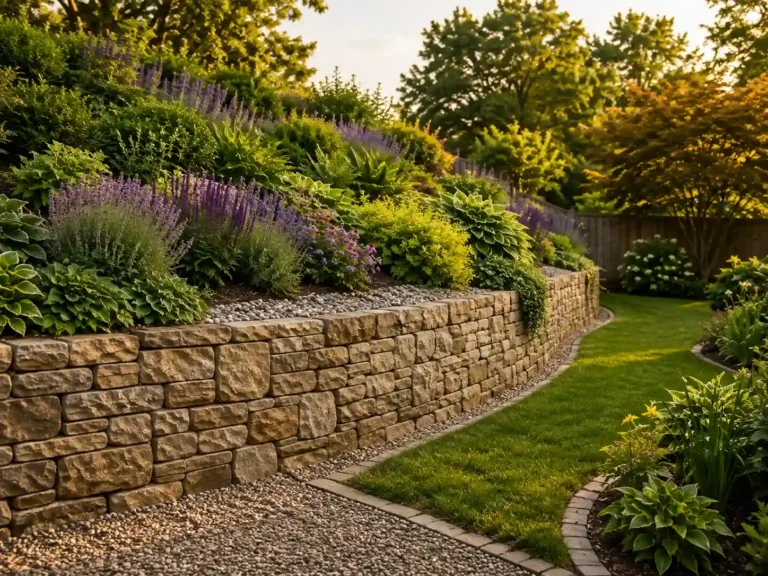
Terrace a Sloped Yard With Retaining Walls
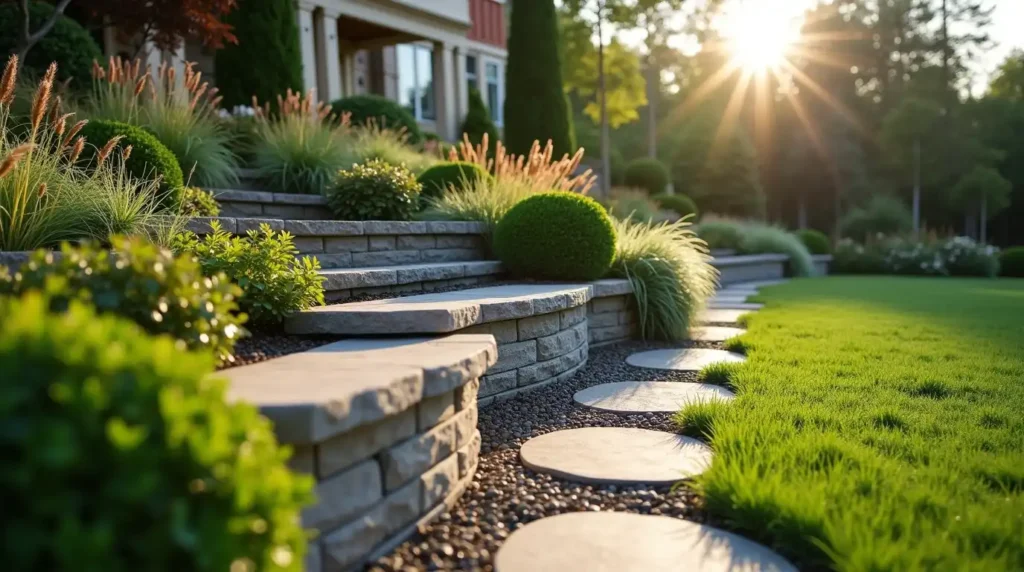
A sloped yard can be hard to mow, plant, and walk across. Terracing divides the slope into flatter levels.
Several short walls often look softer than one tall wall. They also give you separate areas for plants, steps, or a path.
Use stone, concrete blocks, brick, or timber made for ground contact. Match the material to the home and other hardscape features.
Drainage behind the wall is important. Trapped water can push against the structure and cause movement or failure.
Plant between the walls to soften the hard lines. Ground cover may also reduce exposed soil.
Tall walls may need permits, proper footings, and professional design. Never guess when a wall is holding back a large amount of soil.
Professional help recommended: Contact a qualified contractor for tall or structural walls.
Build a Decorative Dry Creek Bed
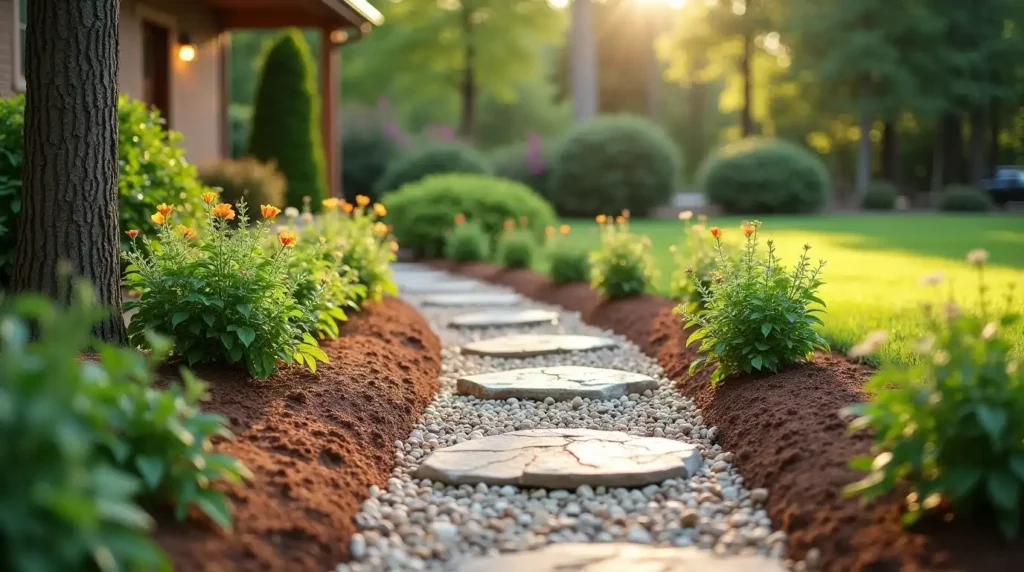
A dry creek bed can guide rainwater through a low part of the yard. It can also turn a wet area into a visual feature.
Follow the natural path of the water. A creek bed should not curve only for appearance while ignoring the slope.
Use larger stones along bends and edges. Add medium stone and gravel between them. This mix looks more natural and helps hold the bed in place.
Partly bury some of the larger rocks. Stones sitting fully above the soil can look like they were dropped there.
Lead the water to a safe outlet. Do not send it onto a sidewalk, road, or nearby property.
Add plants that handle both wet and dry periods. Place them along the edges rather than in the main water path.
Common mistake: Building a creek bed with no clear outlet.
Use Permeable Pavers
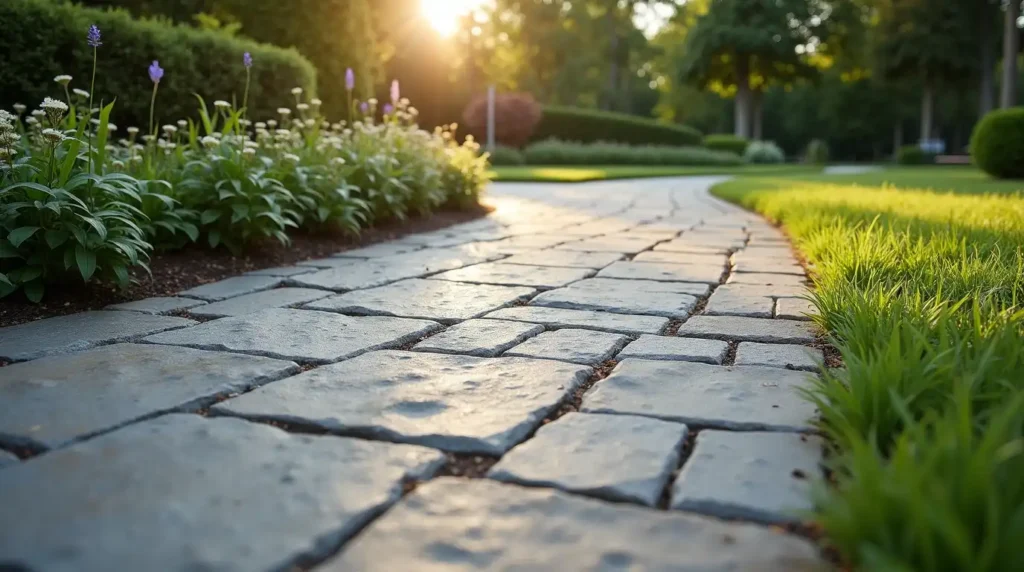
Standard paving can send rainwater across the surface. Permeable pavers allow water to move through open joints into the base below.
They can work for paths, patios, and some driveways. The full system must be designed for the expected load.
The base is just as important as the pavers. Water needs open space below the surface. A poor base may block drainage.
The joints can collect dirt over time. Regular sweeping and cleaning may help keep them open.
Permeable pavers may reduce small puddles and surface runoff. Their results depend on soil, slope, rainfall, and installation.
They are not a fix for every drainage problem. Heavy clay soil or severe runoff may need another plan.
Best for: Homeowners who want a firm surface with better water control.
Add a Gravel Swale
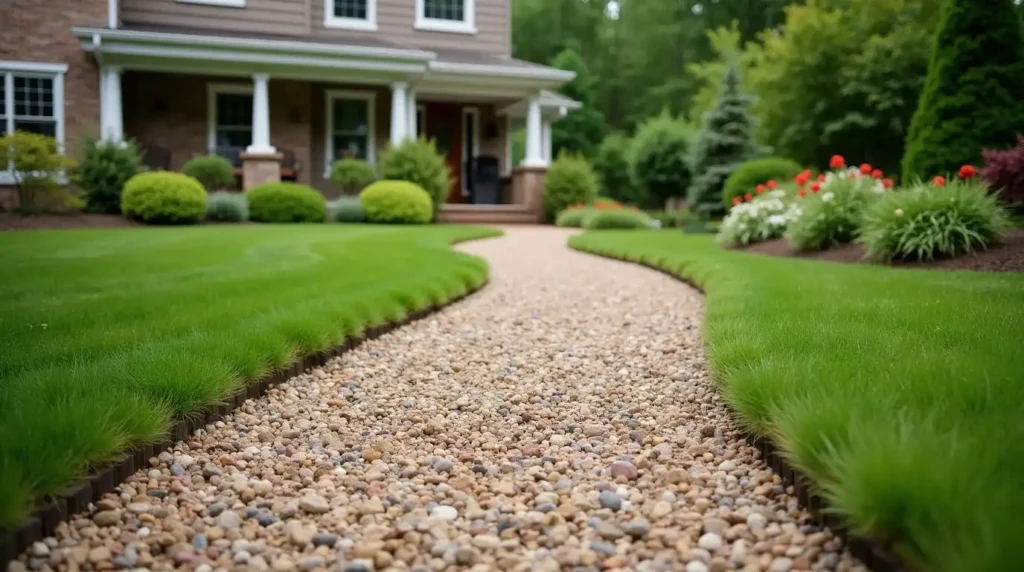
A swale is a shallow channel that moves water across the yard. Adding gravel can reduce mud and make it look like part of the landscape.
Place the swale along the natural low area. The channel should carry water away from the house.
Use stone that is large enough to resist moving water. Tiny gravel may wash away during a strong storm.
Add larger rocks at key points to slow the flow. Plants along the edges can also help hold soil.
Keep the channel clear of leaves and soil. A blocked swale may cause water to spill into the wrong area.
Before digging, check for buried cables and pipes. You should also confirm that the water has a legal and safe outlet.
Good to know: A swale moves water. A rain garden holds water for a short time so it can soak into the ground.
5 Low-Maintenance Hardscape Ideas for Borders and Focal Points
A front yard can feel unfinished when every area runs into the next. Borders, raised beds, and one strong focal point can make the design look planned.
Keep the number of materials low. Two or three hardscape materials are often enough for a normal front yard.
Build Raised Stone Planting Beds
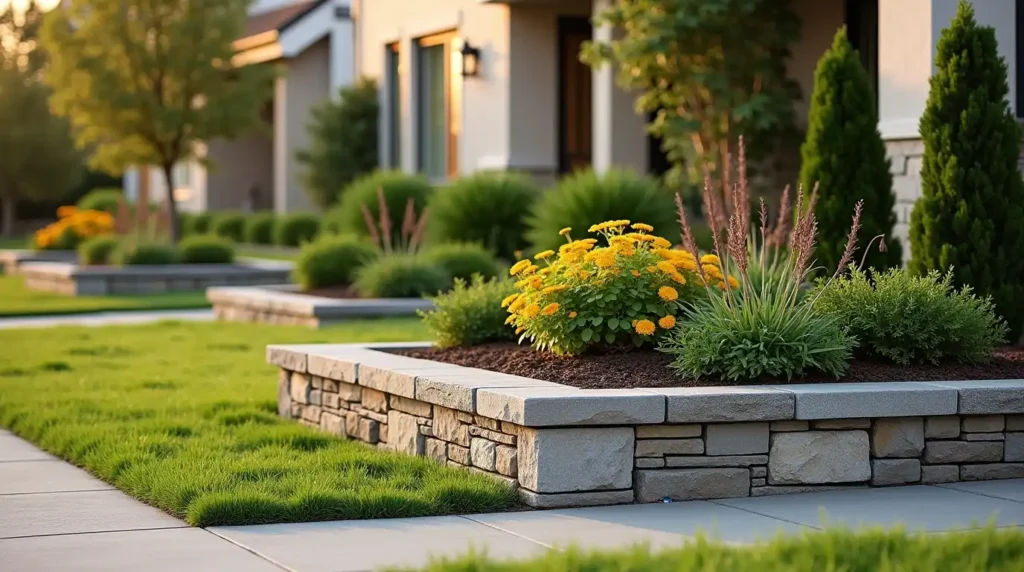
Raised stone beds give flower and shrub areas a clear shape. They can also add height to a flat front yard.
Use them beside the porch, walkway, or house. Keep the height low enough to avoid covering windows or vents.
Raised beds may give you more control over the soil. This helps when the existing soil is poor, hard, or full of building waste.
Include a way for extra water to leave the bed. Wet soil can damage plants and place pressure on the wall.
Repeat stone used on the steps, walkway, or house. Matching materials help the bed look like part of the property.
Do not pile soil or stone against siding. Leave enough space to inspect and maintain the home.
Best for: Defined planting areas and front yards with poor soil.
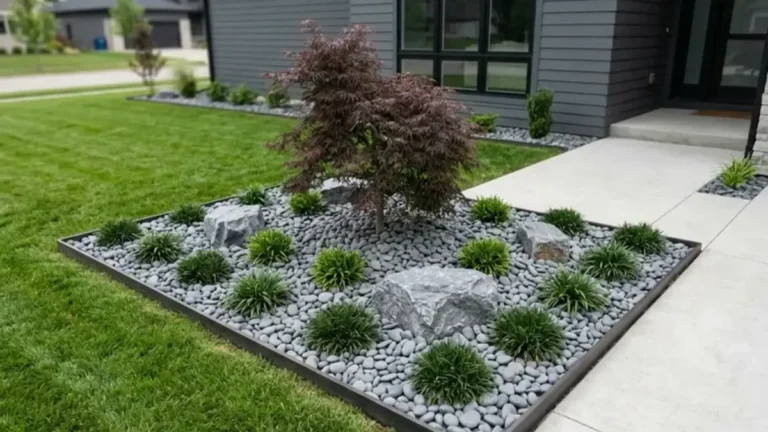
Use a Boulder Group as a Focal Point
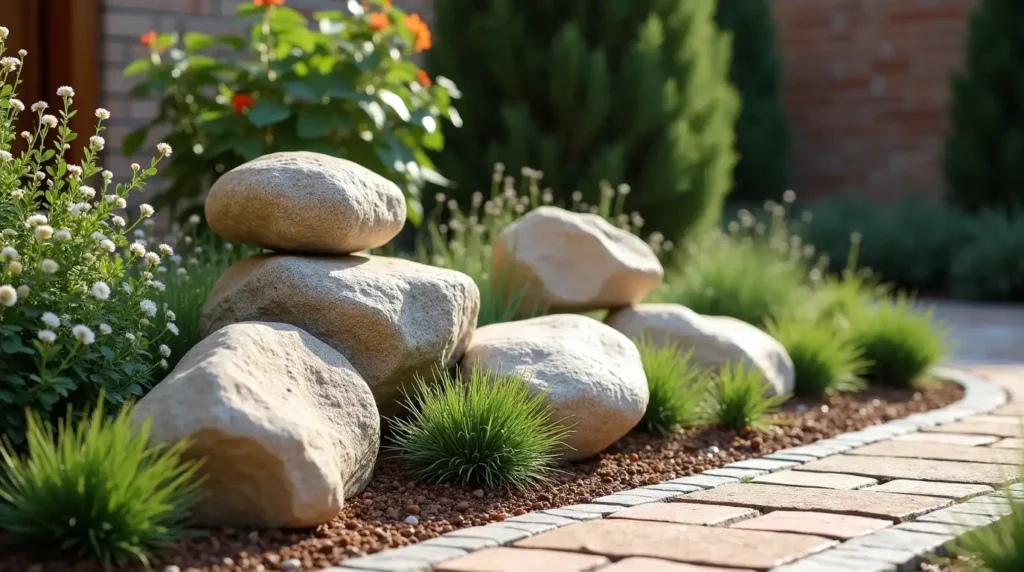
A small boulder group can add shape and height without needing daily care. It works best when the rocks look settled into the land.
Use a group of three or five boulders. Mix the sizes instead of choosing matching rocks.
Bury part of each boulder. The largest stone can act as the main feature, while smaller stones support it.
Place plants around the boulders to soften the edges. Low grasses, ground cover, and small shrubs often work well.
Avoid placing one large rock alone in the center of the lawn. It may look random and make mowing harder.
Check utility locations before moving large stones into place. Heavy equipment can also damage soil, roots, and paving.
Design tip: Turn the widest side of the main boulder toward the best viewing point.
Create a Paved Mailbox Garden
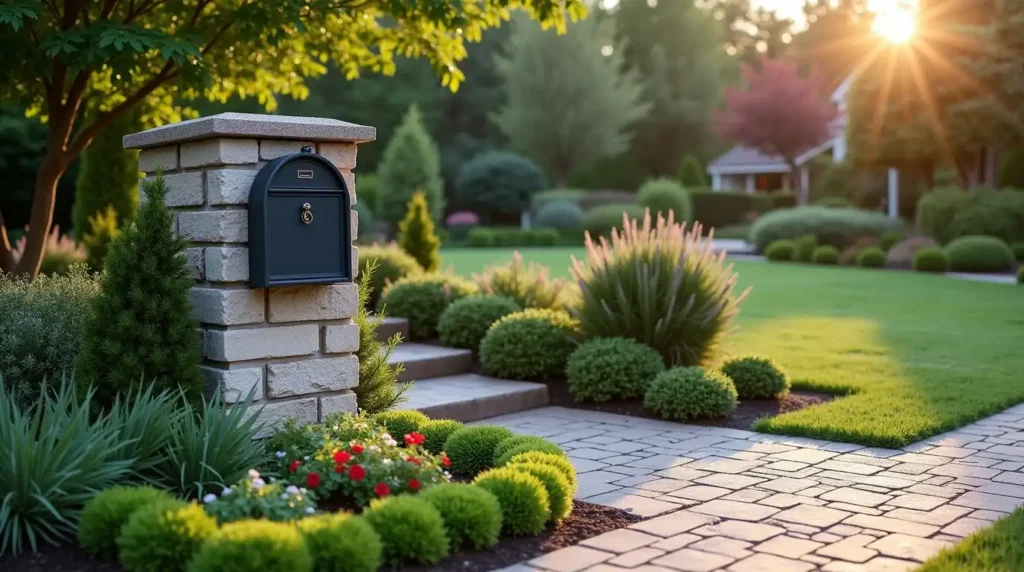
A mailbox area is easy to overlook. A small paved or gravel bed can turn it into a neat part of the yard.
Use pavers, stone, or gravel around the base. This can reduce weeds and remove the need to trim grass around the post.
Leave clear access for mail delivery. The surface should also remain safe for anyone walking near the road.
Use low plants that will not hide the mailbox or block traffic views. Avoid plants that spread into the street.
Match the paving to the driveway border or walkway. This small repeat can connect the mailbox to the rest of the yard.
Check local placement rules before making major changes. Mailbox height and distance from the road may be controlled in your area.
Low-maintenance choice: Combine a gravel base with two or three compact plants.
Replace Thin Grass Strips With Decorative Gravel
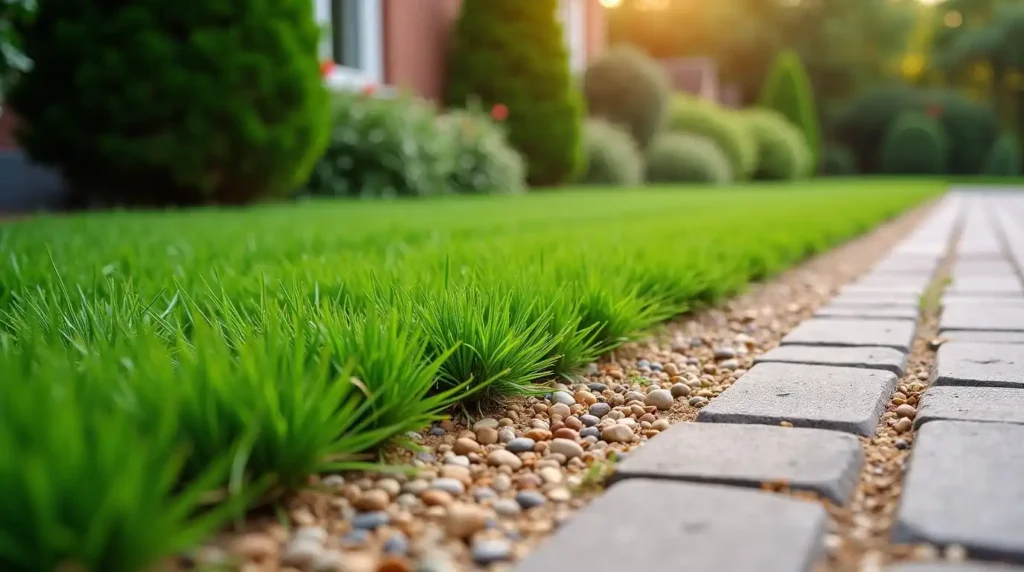
Thin strips of grass are often difficult to mow and water. They may also become dry when they sit beside hot paving.
Decorative gravel can turn these strips into clean, low-care borders. Add firm edging to stop stones from spreading.
Prepare the ground before adding gravel. Remove weeds and shape the soil so water does not collect near the house.
Landscape fabric may help in some gravel areas. However, soil and weeds can still build up on top over time.
Do not pile gravel around tree trunks or against siding. Leave the root flare and building materials clear.
Add a few drought-tolerant plants for color and texture. Too many small plants can make a narrow border look messy.
Best for: Side strips beside driveways, paths, and walls.
Install a House-Number Monument
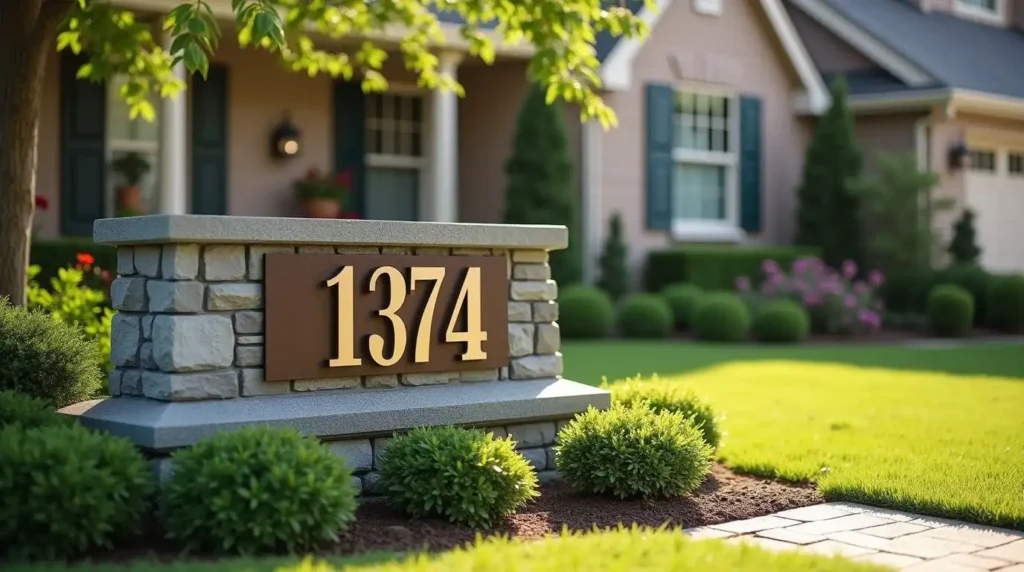
A house-number monument can become a strong front yard focal point. It also helps guests and emergency workers find your home.
Build it from stone, brick, concrete, or metal. Use a material already found on the house or walkway.
Choose large, clear numbers. Decorative fonts can be hard to read from a moving car.
Add a small light if the numbers are difficult to see at night. Keep the fixture aimed at the sign instead of the road.
Place the monument outside vehicle sight lines. It should not block drivers leaving the driveway.
Test the design before building it. Mark the proposed size with boxes or stakes. Then view it from across the street.
After dark, check whether you can read the number from the road. This quick test may show that you need larger numbers or better lighting.
Safety benefit: A clear address may help emergency services reach the right home faster.
How to Choose Hardscape Materials That Last
The best-looking material is not always the best choice for your yard. It may become slippery, hold too much heat, or require more care than expected.
Consider how you will use the surface before choosing it.
Brick
Brick has a warm, classic look. It works well with traditional and cottage-style homes.
It may need cleaning and joint repairs over time. Some bricks can also become slick in shaded, damp areas.
Natural Stone
Natural stone gives each project a different look. It works well for paths, walls, steps, and focal points.
The cost can be higher than concrete. Uneven pieces may also need skilled installation.
Concrete Pavers
Concrete pavers come in many shapes, sizes, and finishes. They work for paths, patios, driveways, and borders.
Individual pieces can be replaced when damaged. The base must be prepared well to prevent sinking.
Gravel
Gravel is often one of the lowest-cost hardscape materials. It works well for sitting areas, borders, creek beds, and secondary paths.
It may move under feet or furniture. Edging and a firm base will help control it.
Poured Concrete
Poured concrete creates a smooth and simple surface. It is often used for walkways, landings, and driveways.
Cracks can be hard to repair without leaving a visible mark. The finish should provide grip in wet weather.
Permeable Pavers
Permeable pavers can support drainage while creating a firm surface. They work best as part of a full system with an open base.
The joints need care so dirt does not block water. Installation may cost more than basic paving.
Before buying any material, bring a sample home. View it beside your siding, roof, steps, and driveway.
Look at the sample in bright sun and shade. Some colors change more than you may expect.
Also include the full project cost. Base material, edging, delivery, drainage work, and labor can add a large amount to the final price.
Plan Your Front Yard Hardscape Before You Start
A clear plan can prevent wasted materials and costly repairs.
Start by writing down the main problem. Is the path muddy? Is the slope washing away? Is the entrance hard to find?
Then follow these steps:
- Measure the full work area.
- Mark paths, patios, and walls with string or paint.
- Walk through the marked layout.
- Open gates and doors to test clearance.
- Watch how water moves during rain.
- Check for buried utilities.
- Review local permit rules.
- Price the base, edging, materials, and labor.
- Choose one main material and one accent.
- Build the most useful feature first.
Do not add several hardscape features just to fill the yard. Empty space helps each feature stand out.
Plants also matter. They soften stone, brick, gravel, and concrete. Leave enough soil for trees, shrubs, flowers, and ground cover.
Final Thoughts
The best front yard hardscape makes daily life easier. It gives visitors a clear path, keeps water under control, and reduces difficult lawn care.
Start with the area causing the biggest problem. This may be a muddy walkway, a steep slope, or an entrance that feels weak.
Measure the space before buying materials. Choose one main material that suits your home. Then repeat it in small ways across the yard.
These landscaping hardscape ideas front yard spaces can use work best when each feature has a purpose. Pick one project that improves both curb appeal and the way you use your home.