19 Concrete and Paver Patio Ideas for Any Yard
An empty or outdated patio can make your whole backyard feel unfinished. You may have enough space for outdoor seating, but choosing the right surface can be hard.
Should you use poured concrete or patio pavers? Which pattern will match your home? How much space do you need for chairs, a grill, or a fire pit?
The right choice depends on your yard, budget, and how you plan to use the space.
These concrete and paver patio ideas include clean concrete finishes, decorative paving patterns, mixed materials, and small backyard options. You will also find ideas for shade, outdoor dining, drainage, and built-in seating.
Some designs are simple. Others need skilled installation and careful planning.
Start by picking three ideas you like. Then compare them with your patio size, soil, water flow, and home style.
Concrete or Pavers: Which Patio Surface Fits Your Yard?
Concrete and pavers can both create a strong and useful outdoor surface. However, they look different and have different care needs.
A poured concrete patio creates one solid surface. It often works well for dining tables, grills, and outdoor furniture because chair legs do not catch in wide joints.
Concrete can also have a broom finish, stamped pattern, colour, or exposed stone texture. This gives you more design choices than plain grey concrete.
Pavers come as separate pieces. They are available in many colours, shapes, and sizes. You can use them to create straight lines, curves, borders, circles, and detailed patterns.
Pavers may move if the base is weak. Concrete may crack if the ground shifts or the joints are poorly planned. And here’s why that matters. The work under the patio often affects its life more than the surface you see.
| Feature | Concrete | Pavers |
| Finished look | Smooth and simple | Detailed and patterned |
| Repairs | Cracks may be hard to hide | Single pavers can be replaced |
| Weed growth | Usually low | Possible in poorly maintained joints |
| Curved designs | Possible with forms | Easy with smaller pavers |
| Upfront cost | Often lower for basic work | Often higher due to labour |
| DIY difficulty | Hard for large areas | Possible for skilled DIY owners |
| Colour choices | Stains, dyes, and finishes | Many factory-made colours |
| Drainage | Needs a planned slope | Permeable systems are available |
Choose concrete when you want a clean surface with fewer joints. Consider pavers when pattern, repair options, and curved edges matter more.
You can also mix both materials. This gives you a simple main surface with decorative detail around the edges.
4 Concrete Patio Ideas That Make a Plain Slab Look Better
Concrete does not need to look cold or unfinished. The finish, joint layout, border, and furniture can change the whole result.
These concrete patio ideas work for modern homes, family yards, and low-care outdoor areas.
Broom-Finished Patio
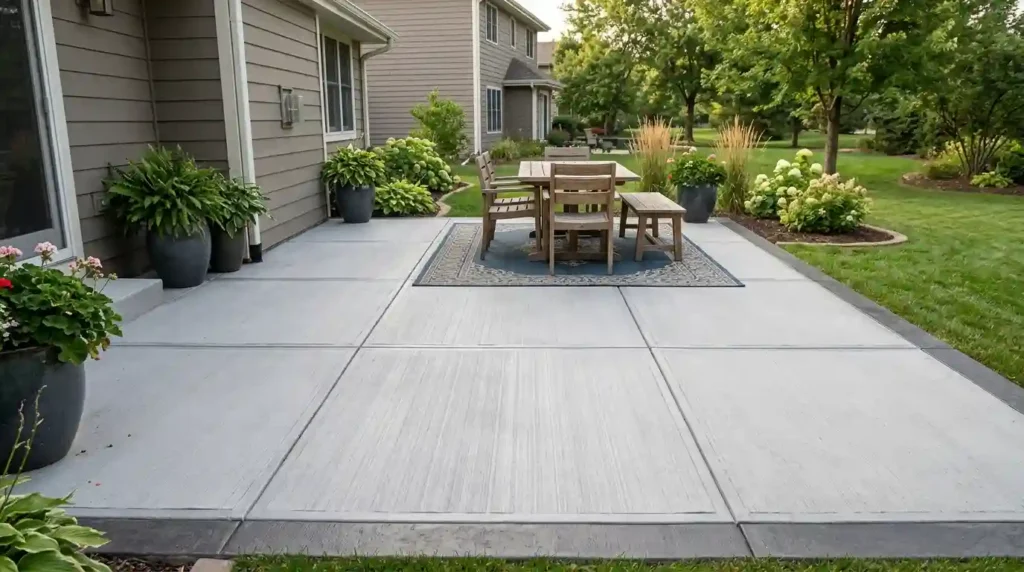
A broom finish adds thin lines across wet concrete before it dries. The finished surface has more texture than smooth concrete.
This extra grip can help in areas that get wet. It works well beside lawns, outdoor kitchens, and family seating areas.
A basic broom-finished patio can still look stylish. Add a dark edge, large planters, or a weather-safe rug. Wood furniture can also soften the grey surface.
The direction of the broom lines matters. Lines that run across a narrow patio can make it look wider. Lines that run from the house to the yard can make the space feel longer.
Control joints also need careful placement. These planned lines help manage where cracks may form.
Best for: Family patios, grilling areas, and simple outdoor dining
Style: Clean and practical
Watch for: Poor joint placement and water flowing back to the house
Create a Modern Look With Large Concrete Slabs
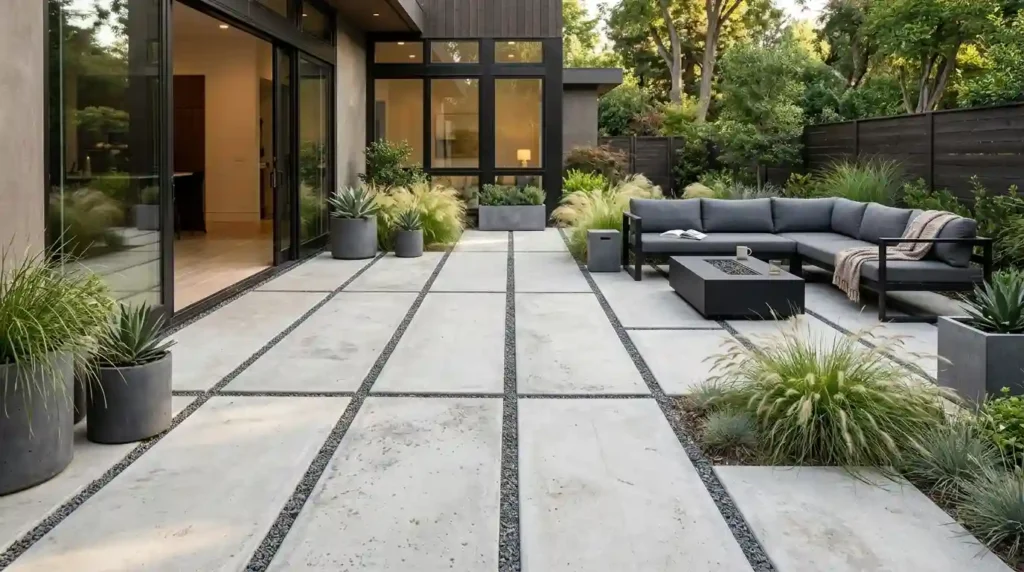
Large square or rectangle sections can make a patio feel clean and modern. The joints between the sections become part of the design.
You can fill narrow spaces with gravel, small stones, or dark joint material. Keep each gap even. Uneven spaces can make the design look accidental.
Match the slab shapes with parts of your home. For example, long rectangle slabs may work well with wide doors or modern windows.
Large slabs look good with black furniture, simple planters, and soft grasses. They can also help a small patio look less busy.
The simple layout does not mean the work is easy. Large concrete areas still need a strong base and correct slope.
Best for: Modern homes and open backyard layouts
Style: Simple and structured
Watch for: Uneven joints, settling, and poor water flow
Get a Stone Look With Stamped Concrete
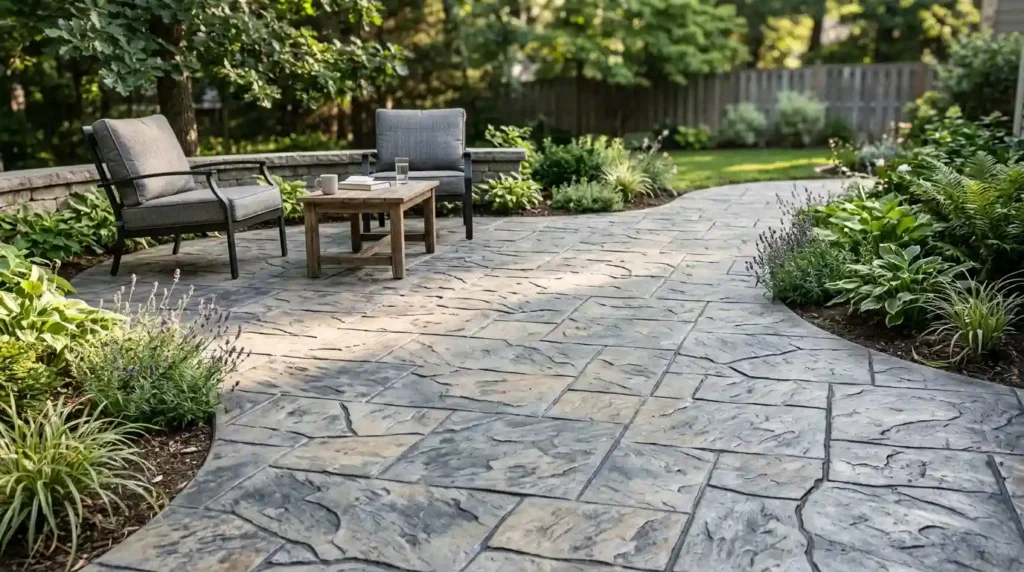
Stamped concrete can copy the look of stone, brick, tile, or wood. A pattern is pressed into the concrete while the surface is still soft.
Common patterns include slate, flagstone, brick, and wood planks. The colour can also include light and dark shades to add depth.
Try to keep the colours natural. Too many strong shades can make the patio look fake or busy.
The pattern size should match the patio size. Large stone shapes may overpower a tiny patio. Small patterns may look crowded across a wide space.
View a full-size sample outside before making your final choice. A small sample may look very different in bright sun.
Stamped surfaces may need sealing over time. Some sealers can also affect grip, so ask about safe outdoor finishes.
Best for: Homeowners who want a stone look without separate stones
Style: Traditional, rustic, or decorative
Watch for: Slippery sealers and colours that are too strong
Add Natural Texture With Exposed Aggregate
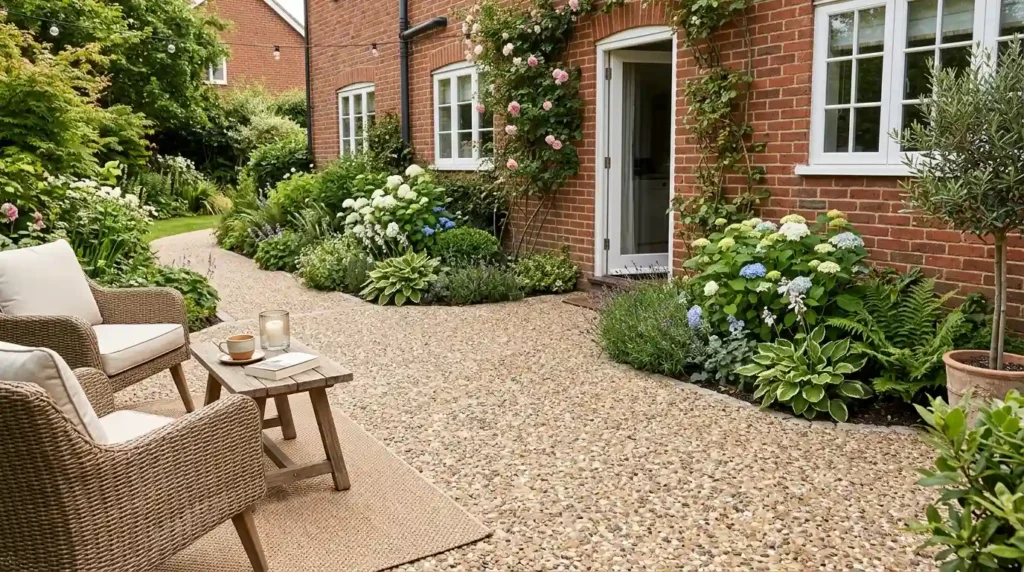
Exposed aggregate shows small stones at the surface of the concrete. It adds colour, grip, and natural detail.
The stone mix can include soft beige, brown, grey, or darker shades. Choose colours that match your roof, brick, siding, or garden stone.
Warm stones may suit a red-brick home. Cool grey stones can work well beside a modern white or dark exterior.
This finish can hide small marks better than plain smooth concrete. It can also work beside pools or garden paths where more surface texture is useful.
However, very rough aggregate may feel uncomfortable under bare feet. Ask to see and touch a finished sample before choosing it.
Best for: Garden patios, pool areas, and busy family spaces
Style: Natural and textured
Watch for: Rough surfaces and poor sealing
5 Paver Patio Ideas That Add Pattern and Character
Pavers give you more control over lines, colours, and patio shape. You can create a formal layout or a relaxed garden look.
These paver patio ideas also work well when you need curves, borders, or a raised design.
Use a Herringbone Pattern for a Strong Classic Look
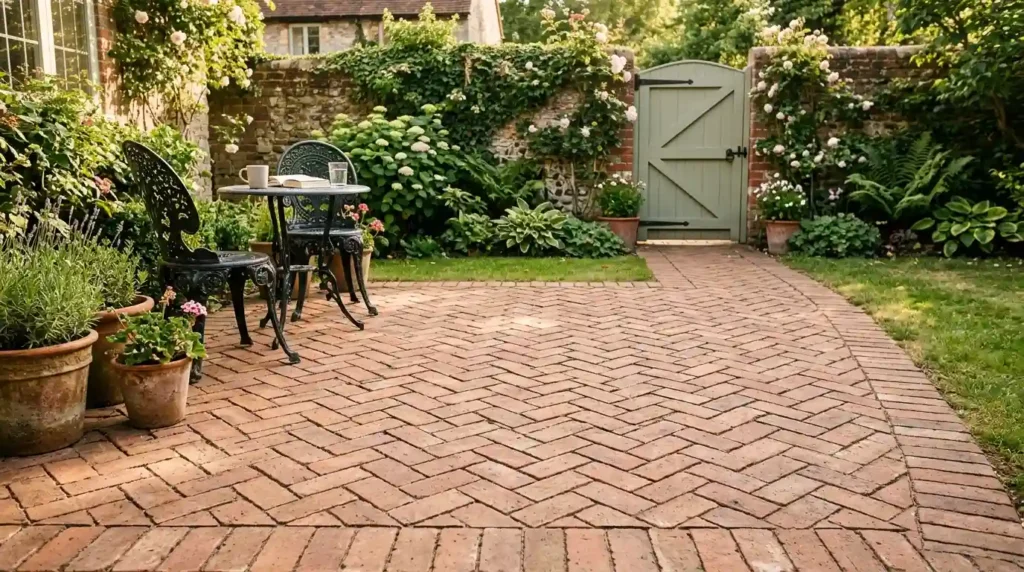
A herringbone pattern places rectangle pavers in a repeated zigzag shape. The layout can run at a 45-degree or 90-degree angle.
This pattern works well with brick-style pavers. It can suit courtyards, traditional homes, and busy walking areas.
Use a straight border around the pattern. The border creates a clean edge and keeps the centre design from looking unfinished.
The direction of the pattern can also guide the eye. Point it to the back door, garden path, or fire pit to create a clear visual line.
Herringbone layouts often need more edge cuts than simple rows. That can increase labour and waste.
Best for: Brick homes, courtyards, and formal patios
Style: Classic and detailed
Watch for: Extra cuts and poor edge support
Add Movement With a Three-Size Paver Pattern
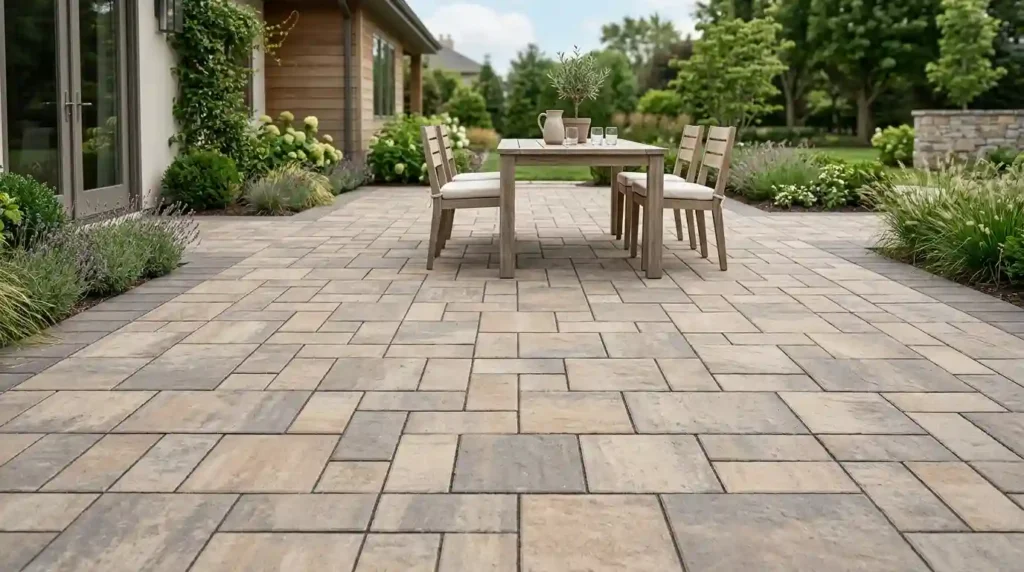
A modular patio uses two or three paver sizes in one repeated layout. The mix keeps the surface from looking like a simple grid.
Use soft colour blends such as sand, taupe, grey, or light brown. This can copy the mixed look of natural stone.
Ask the paver maker for a pattern guide. Random placement may create large groups of the same size. That can make the finished patio look uneven.
This layout works well on medium and large patios. It adds interest without using strong colour contrast.
Use simple furniture and planting around the patio. The paving already has plenty of detail.
Best for: Large seating and dining areas
Style: Relaxed and natural
Watch for: Too many colours or repeated blocks
Build a Circular Paver Patio Around a Fire Pit
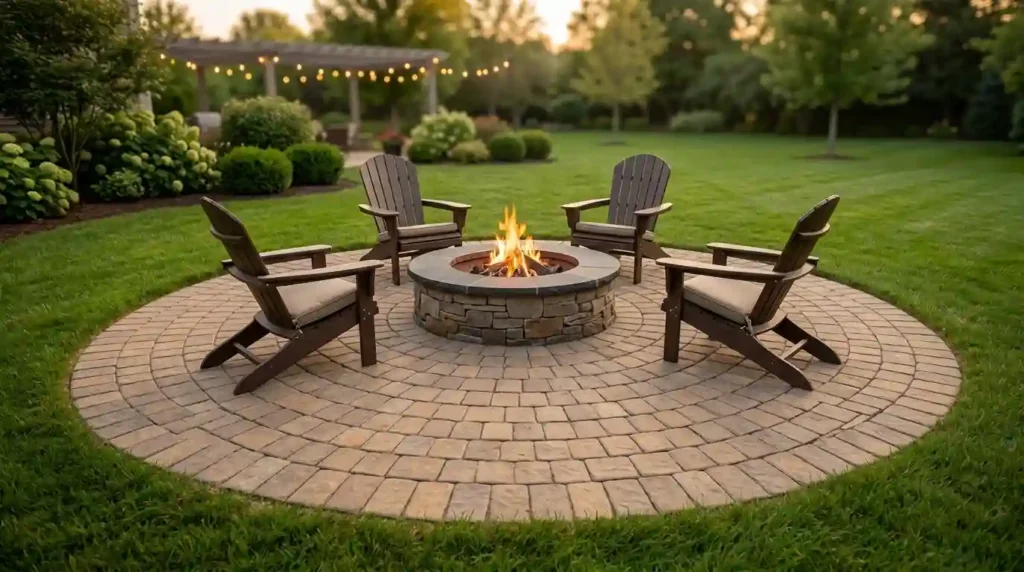
A round patio creates a natural space for people to sit and talk. It works especially well around a central fire pit.
Place the pavers in rings or fan-shaped rows. This keeps the pattern connected with the round patio edge.
Use movable chairs instead of fixed seating if you want more control over space. Chairs can move closer for small groups or farther back when the fire feels too warm.
Leave a clear walking path around the chairs. People should not need to step between the fire and another guest.
Fire rules can change by location. Check local rules and product safety details before building.
Do not place regular paving materials too close to direct heat unless the product maker allows it.
Best for: Evening seating and social spaces
Style: Warm and welcoming
Watch for: Fire safety, smoke direction, and tight walkways
Soften a Square Yard With a Curved Paver Patio
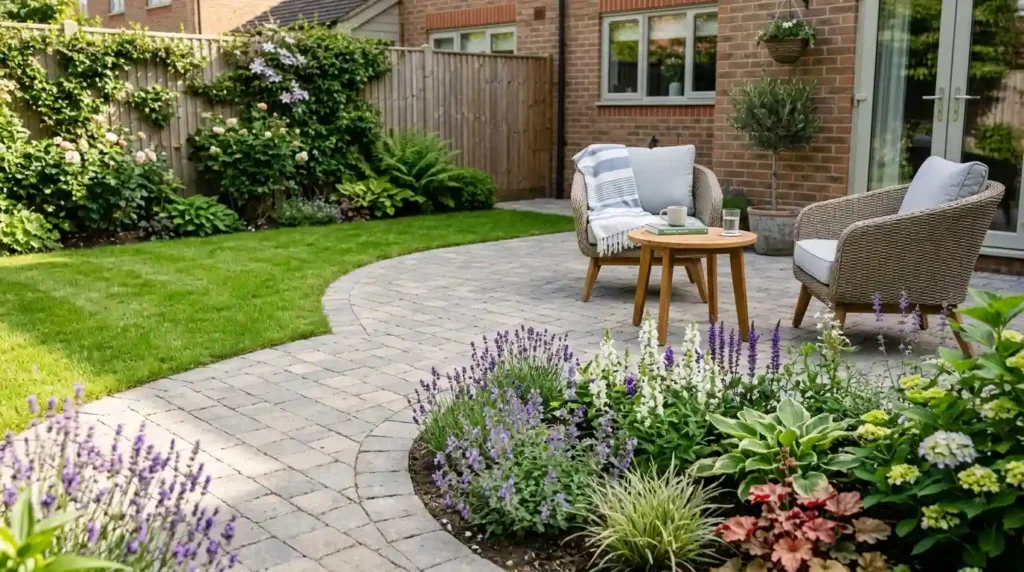
A curved patio can make a narrow or square yard feel softer. It also connects well with flower beds and garden paths.
Smaller pavers are easier to use around tight curves. Large pieces may need many cuts.
Before digging, place a garden hose on the ground to test the shape. Walk around it. Place a few chairs inside the marked space.
This simple test can show whether the curve feels natural or takes away too much lawn.
Use low plants along the edge so the patio stays open. Tall shrubs can make a small curved area feel closed in.
Best for: Cottage gardens and informal backyards
Style: Soft and relaxed
Watch for: Tight curves and loss of usable space
Connect a High Back Door With a Raised Paver Patio
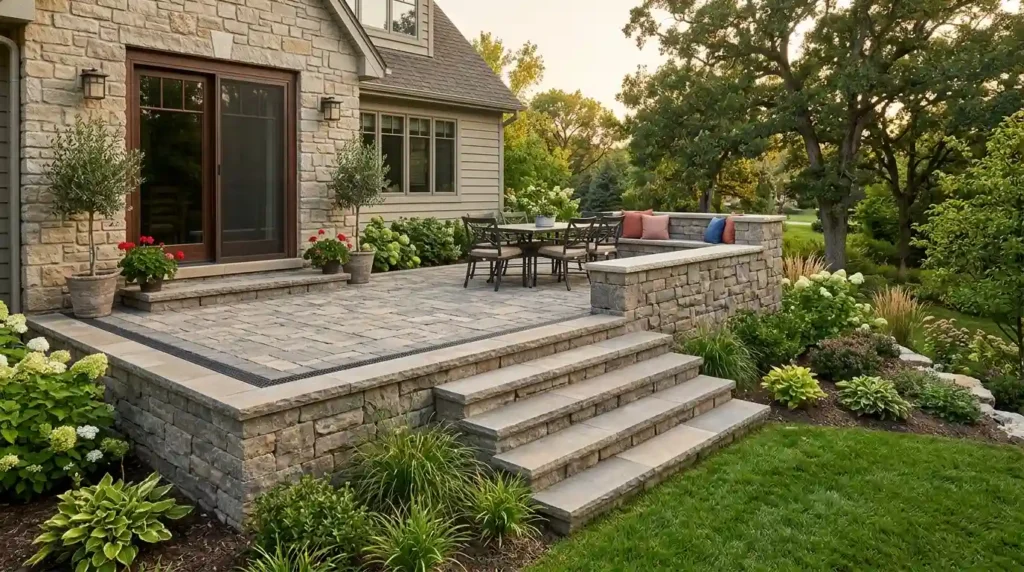
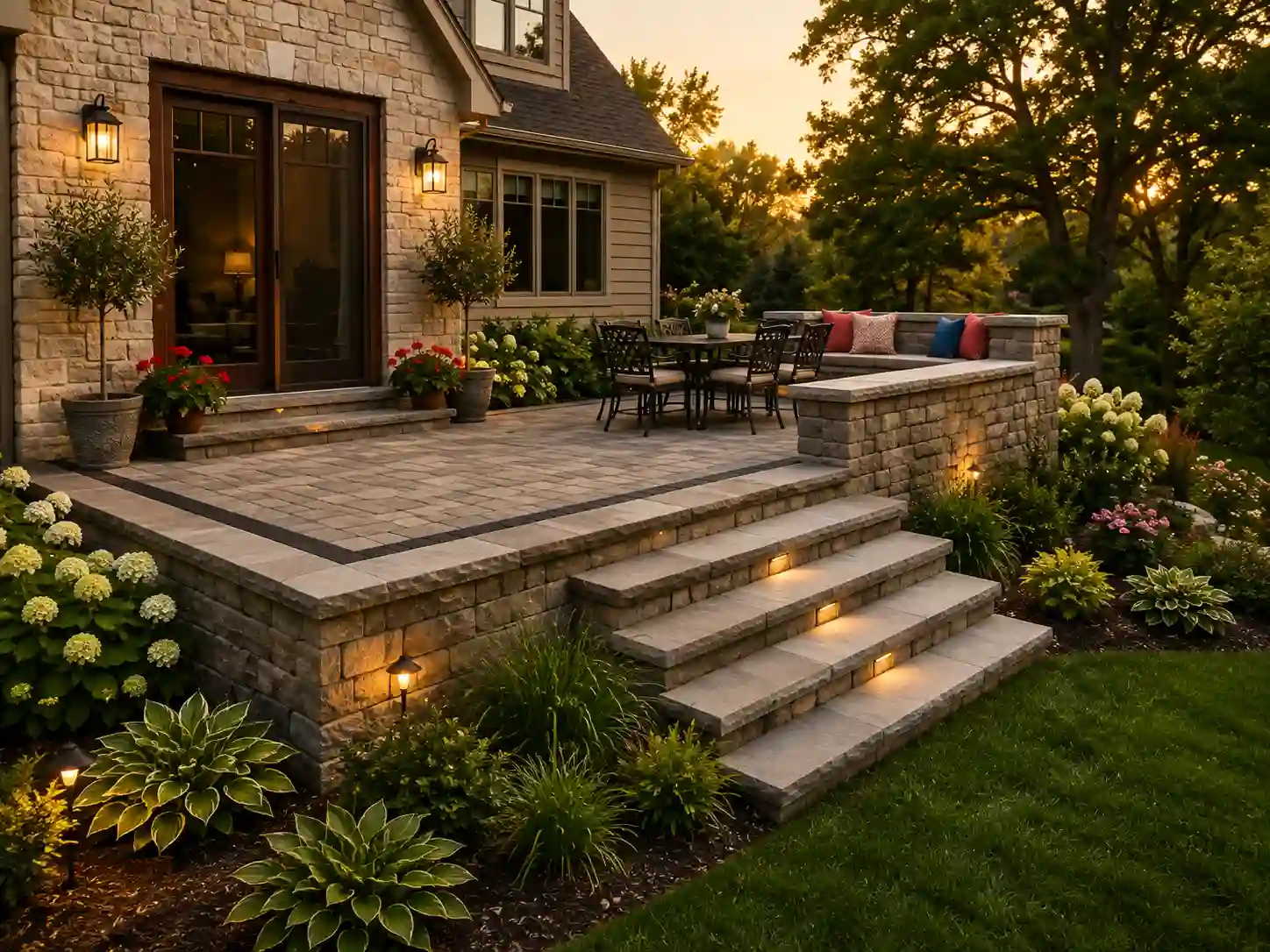
A raised patio can connect an elevated back door with the lower yard. It may need steps, retaining blocks, strong edges, and added drainage.
This design can solve an awkward height change. It can also create a clear outdoor room beside the house.
A low retaining wall may work as extra seating when it has a safe height and strong construction. Add flat wall caps for a cleaner finish.
Water behind the wall needs a safe route out. Trapped water can push against the wall and weaken the patio base.
A raised patio is not a simple weekend project. Ask a skilled contractor or engineer for help when the height change is large.
Best for: Sloped yards and raised back doors
Style: Structured and finished
Watch for: Drainage, steps, wall strength, and local rules
3 Concrete and Paver Patio Ideas That Mix Materials
You do not have to pick one surface for the whole space. These concrete and paver patio ideas use both materials to create borders, zones, and strong visual lines.
Keep the colour plan simple. Two main materials are usually enough.
Frame a Concrete Patio With a Paver Border
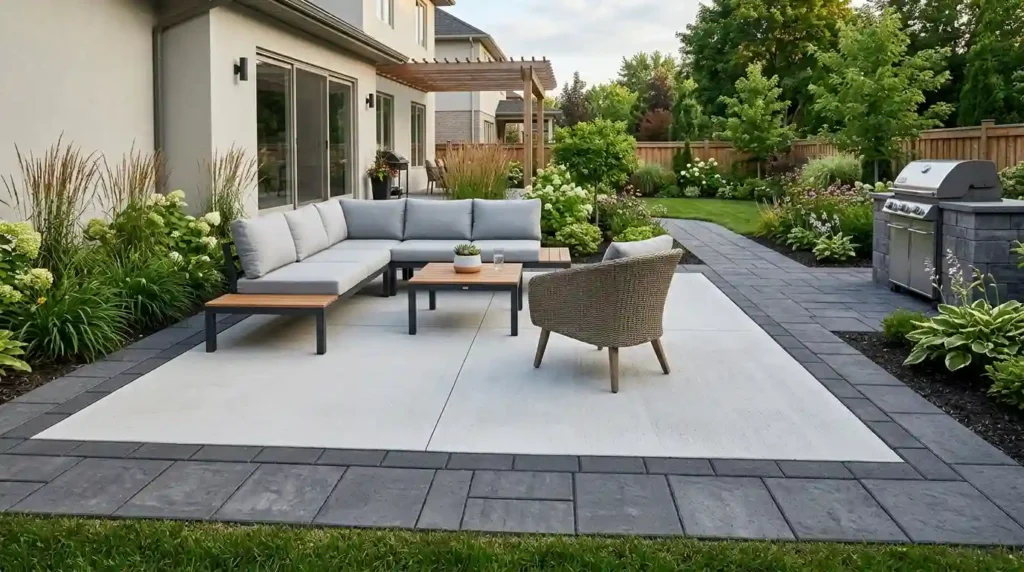
A paver border can make plain concrete look more finished. It can also connect the patio with nearby brick, stone, or walkways.
Light grey concrete with a charcoal border creates a clean modern look. Warm concrete with red-brown pavers may suit a brick home.
The width of the border affects the design. A narrow edge looks simple. A wide border makes a stronger statement.
Repeat the same pavers in a garden path or grill area. This helps the backyard feel connected.
Concrete and pavers may move in different ways. The installer must plan the joint between both materials.
Best for: Large plain concrete patios
Style: Clean with added detail
Watch for: Poor joints between materials
Create a Checkerboard Patio With Pavers and Gravel
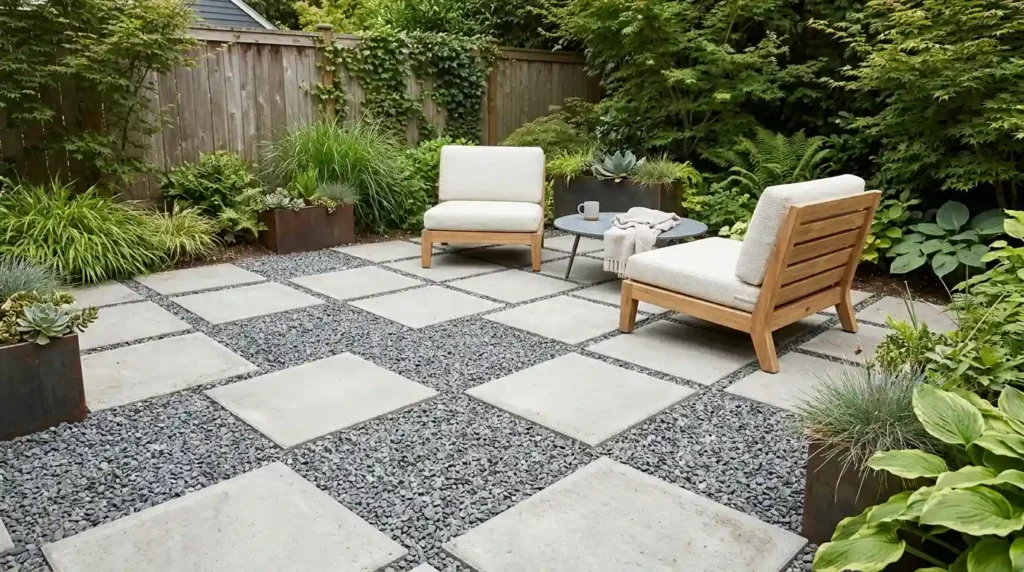
Large square pavers with gravel or plants between them can create a light and open look.
This design works best in low-use lounge spaces. Wide gaps may cause trouble under dining chairs or tables.
Use small gravel that stays in place, or choose a stabilised product made for walking areas. Loose stones can move onto the pavers and become annoying.
You can also grow low plants in the gaps. Creeping thyme and dwarf mondo grass are two common options, but your climate and sunlight will affect plant choice.
Artificial grass can create a similar look with less watering. It still needs a solid base and good drainage.
Best for: Lounge areas and garden corners
Style: Modern or relaxed
Watch for: Loose stones, weeds, and moving chair legs
Use Concrete Bands to Divide Paver Sections
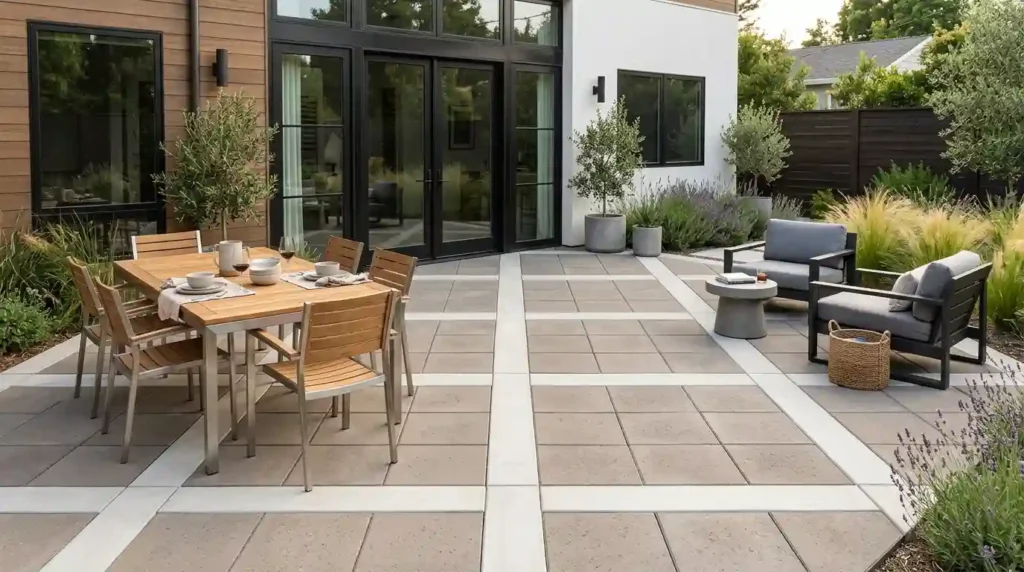
Concrete bands can form a grid around groups of pavers. The result looks planned and modern.
Line up the bands with doors, windows, posts, or garden walls. This connects the patio design with the house.
Use pale concrete around warm grey pavers for soft contrast. Avoid mixing many strong colours.
The bands can also mark separate zones. One section may hold a dining table. Another may hold lounge chairs.
This style needs accurate measuring. Small mistakes in the grid may stand out across the whole surface.
Best for: Modern homes and large patios
Style: Geometric and clean
Watch for: Uneven spacing and too much contrast
3 Small and Budget Patio Ideas That Still Feel Useful
A small patio can work better than a large one when it fits your real needs.
These small backyard patio ideas focus on comfort, simple shapes, and careful use of materials.
Build a Compact Bistro Patio for Two
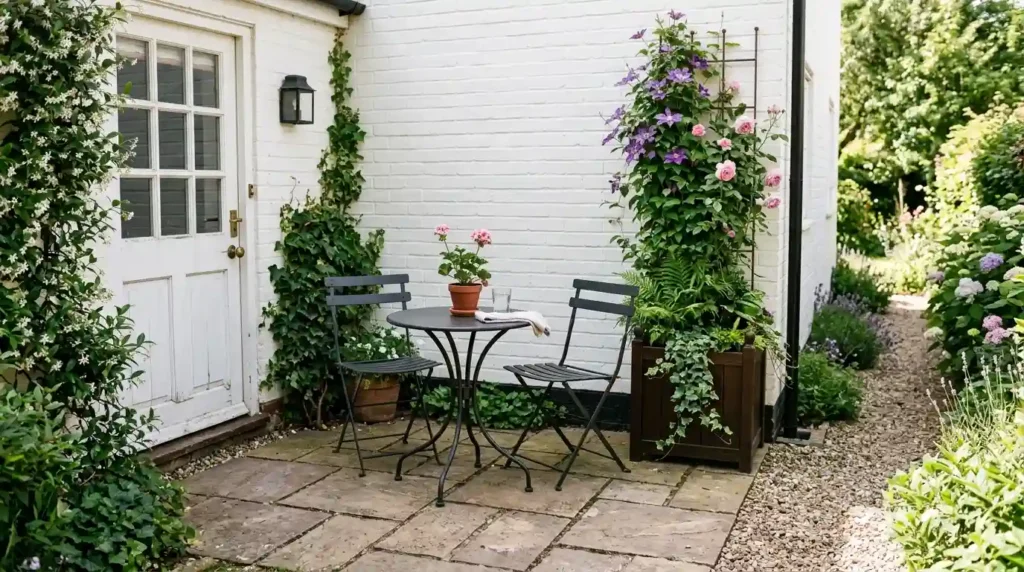
An 8-by-8-foot patio can hold two chairs and a small table. It can become a quiet place for coffee, reading, or a simple meal.
Place it near the kitchen door for easy access. You can also use a sunny garden corner or a spot with afternoon shade.
Keep the shape simple. A square, circle, or half-circle usually needs fewer cuts and less waste.
Use wall planters, climbing plants, or tall pots instead of wide garden beds. This keeps more floor space open.
Measure the chairs when they are pulled away from the table. A patio may look large enough until someone tries to sit down.
Best for: Couples, small yards, and quiet garden areas
Style: Simple and cosy
Watch for: Tight chair space and blocked walkways
Place Large Concrete Pavers Over Gravel
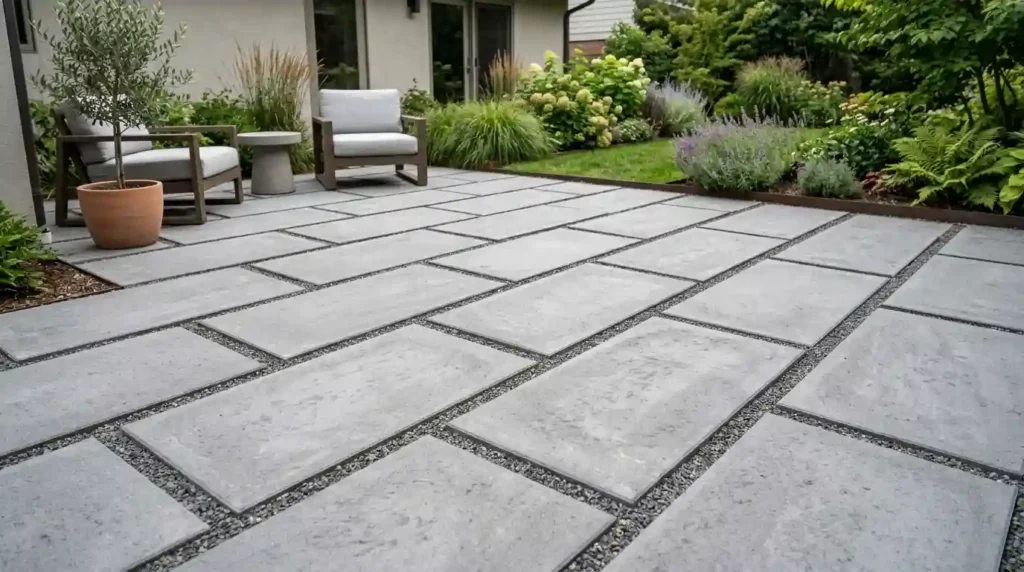
Large concrete pavers can cost less than a full custom patio in some projects. They also create a clean and modern look.
Place the pavers over a firm, level, and compact base. Do not lay them directly on soft soil.
Fill the narrow gaps with compact gravel. Keep the gaps even so the design looks neat.
An offset layout can add interest without adding more materials. Rectangle pavers work well for this style.
The work may look easy, but each paver must sit level. One raised edge can become a trip risk.
Best for: Garden seating and simple DIY-style projects
Style: Modern and light
Watch for: Poor compaction and uneven pavers
Save Money With Reclaimed Pavers
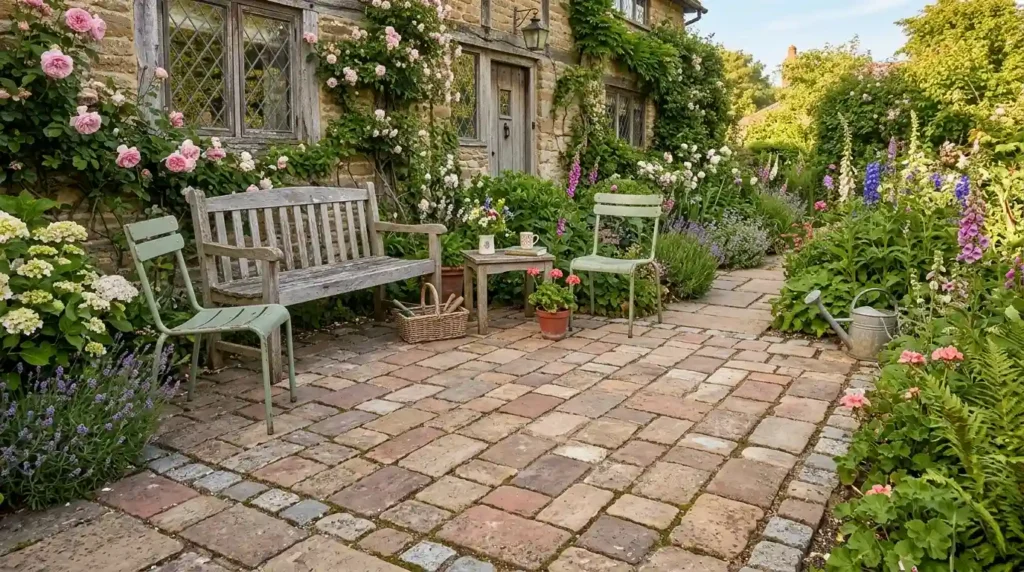
Used pavers can add age and character to a patio. They may also reduce material costs.
Look for pavers from home projects, salvage yards, and local resale sites. Check every piece for cracks, heavy wear, and damage.
The pavers should have similar thickness. Mixed thickness can make the surface hard to level.
If you cannot find enough matching pieces, use the reclaimed pavers as a border. Fill the centre with a new material.
Clean and sort all pieces before work starts. This helps you plan the colour mix and spot damaged units.
Budget patio ideas still need a good base. Saving money on the surface will not help if the patio sinks later.
Best for: Cottage yards and older homes
Style: Aged and full of character
Watch for: Mixed thickness and damaged pieces
3 Patio Ideas That Make Outdoor Time More Comfortable
A patio should support the way you live. Think about how people will sit, eat, cook, and move through the space.
These backyard patio design ideas focus on daily comfort instead of surface pattern alone.
Separate Dining and Lounge Areas
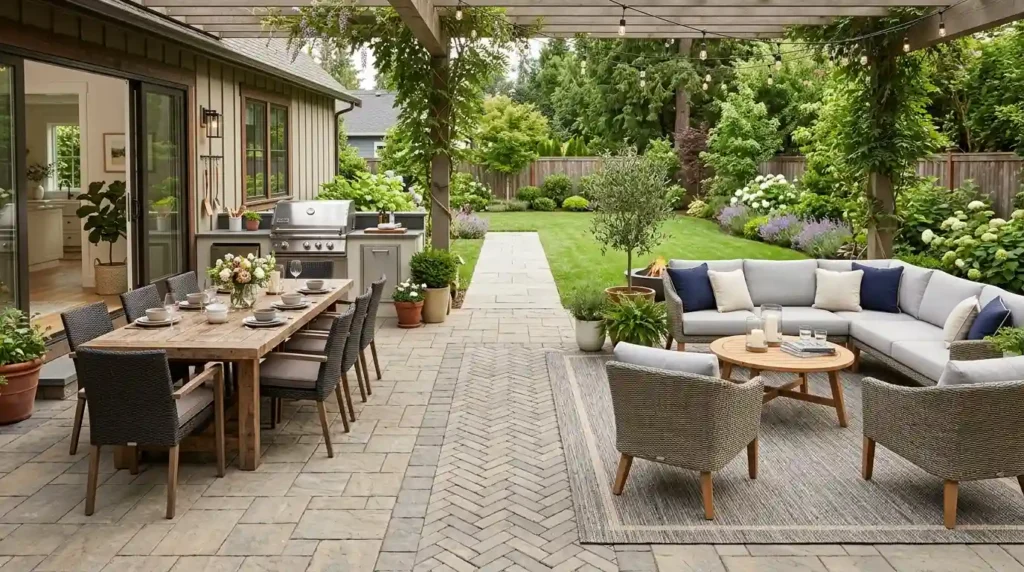
Divide a large patio into a dining zone and a seating zone. This makes each part feel useful.
Use a paver border, a change in paving direction, or an outdoor rug to mark the two areas.
Keep the grill near the kitchen, but away from soft seating when possible. Smoke can make a lounge area uncomfortable.
Leave a clear path from the back door to the lawn. Guests should not need to squeeze behind chairs.
Place your real furniture on the grass before setting the patio size. This quick test can prevent an expensive sizing mistake.
Best for: Families and people who host guests
Style: Organised and flexible
Watch for: Crowded furniture and blocked paths
Add Extra Seating With a Low Paver Wall
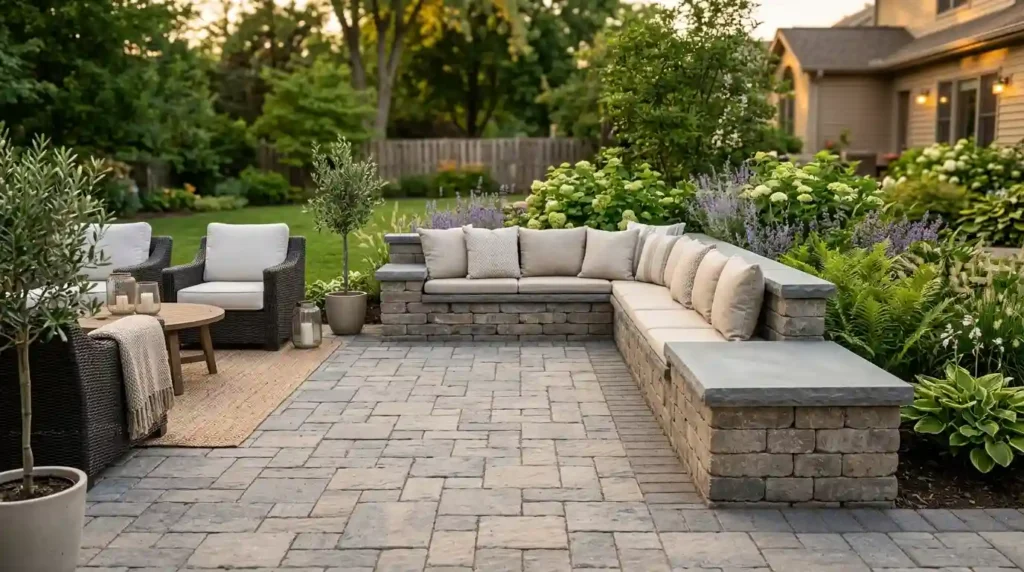
A built-in seat wall gives guests a place to sit without adding more chairs. It can also frame one side of the patio.
An L-shaped wall works well beside a fire table, garden bed, or lounge area.
Do not close every side of the patio. Keep wide openings for people to enter and leave.
Add flat wall caps and outdoor cushions for comfort. Match the caps with the patio border to keep the design connected.
A seat wall may also hold back a small amount of soil. That use needs correct drainage and strong support.
Best for: Entertaining and fire pit areas
Style: Finished and practical
Watch for: Poor height, blocked access, and weak support
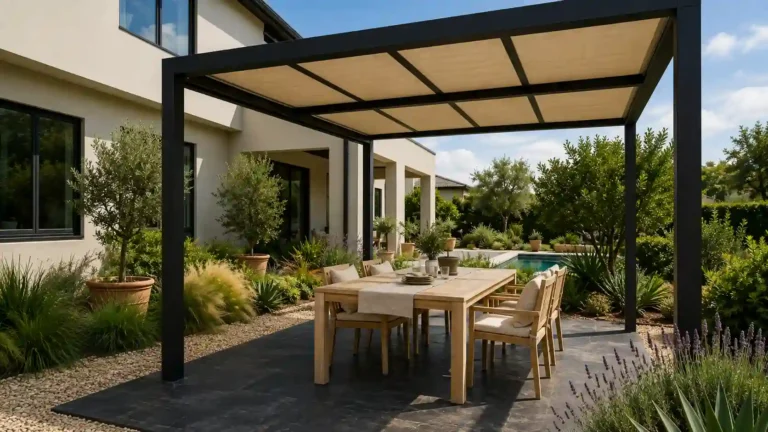
Plan the Patio for a Future Pergola
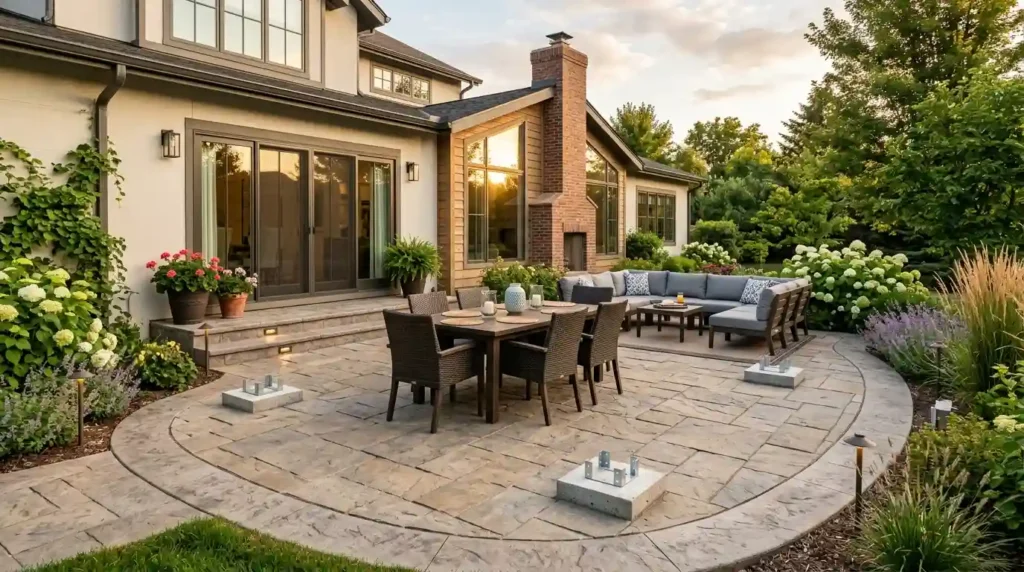
You may not be ready to build a pergola now. Still, planning for one can save money later.
Choose the future post locations before the patio goes in. Pavers alone may not support heavy posts.
Plan the footings, wiring, lights, and water lines early. You may also want power for a fan, heater, or outdoor kitchen.
Check where the afternoon sun hits the yard. The pergola should block heat where you need shade most.
Make sure the structure will not block doors or sit too close to windows. Leave enough room for roof lines and rainwater.
A patio with future plans should include:
- Post footings
- Electric lines
- Outdoor lighting
- Grill or kitchen lines
- Water flow
- Door space
- Safe walking areas
Best for: Long-term backyard plans
Style: Flexible and planned
Watch for: Weak post support and poorly placed shade
Reduce Standing Water With a Permeable Paver Patio
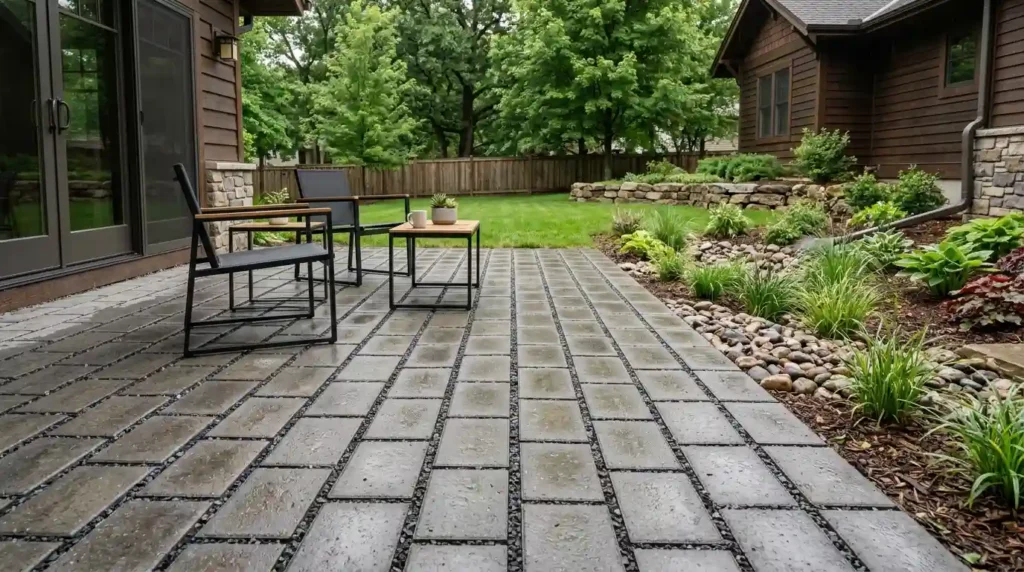
A permeable paver patio allows water to pass through open joints and into a stone base below.
This is different from placing regular pavers with random gaps. A true permeable system uses special joints, stone layers, and base materials.
The base may hold water for a short time while it slowly moves into the soil or a planned drainage area.
Soil type matters. Heavy clay may drain slowly. Sandy soil may drain faster.
The patio must also send water to a safe place. Do not direct runoff to your foundation, a neighbour’s yard, a weak slope, or a retaining wall.
The open joints may collect dirt over time. Cleaning and adding new joint stone may be needed.
Ask a local installer about soil, rainfall, and drainage rules before choosing this system.
Best for: Yards with runoff concerns
Style: Natural or modern
Watch for: Clogged joints, clay soil, and poor water planning
How to Pick the Right Patio Design in 5 Steps
Saving patio photos is easy. Choosing the best option for your own yard takes more thought.
Use these five steps before buying materials.
1. Decide How You Will Use the Patio
List your main activities.
Will you use the patio for dining, cooking, reading, children, parties, or a fire pit?
Focus on the activity you will use most. A dining patio needs a flat surface and chair space. A lounge patio may work with wider joints and softer edges.
2. Measure Your Furniture
Measure tables, chairs, grills, planters, and storage boxes.
Pull each chair away from the table and measure again. Include space for people to walk behind it.
Check your door swing too. A large patio is not useful when an open door hits a chair.
3. Check the Yard
Look at the slope after rain. Find out where roof water and downspouts send water.
Check for tree roots, soft soil, steps, and utility lines. Think about how workers and tools will reach the site.
A beautiful design may fail when it ignores the ground below it.
4. Match the Patio With the House
Repeat one or two details from your home.
You might use the same brick colour, roof shade, window shape, or stone tone.
Do not copy every colour on the house. A simple match often looks better.
5. Plan the Full Budget
The surface material is only one cost.
Your budget may also need to cover:
- Removal of the old surface
- Digging and soil removal
- Base stone
- Drainage work
- Edge supports
- Steps or walls
- Labour
- Sealer
- Furniture
- Lighting
- Plants
Compare full quotes instead of looking at the paver or concrete price alone.
10 Patio Mistakes That Can Cost You More Later
A weak patio often starts with poor planning below the surface.
Avoid these common problems before work begins.
1. Ignoring Water Flow
Water should move away from the house. A flat or badly sloped surface may collect puddles.
2. Making the Patio Too Small
Measure furniture before choosing the size. Include room for chair movement and walking paths.
3. Skipping Proper Base Work
A weak base can cause pavers to sink and concrete to crack.
4. Using a Surface That Is Too Smooth
Smooth outdoor finishes may become slippery in rain.
5. Mixing Too Many Materials
Several colours, borders, patterns, and stone types can make the space feel busy.
6. Forgetting Concrete Joints
Control joints help manage cracking. Their location should be part of the design.
7. Leaving Paver Edges Unsupported
Edge restraints help hold pavers in place. Weak edges can spread and drop.
8. Building Over Unknown Utility Lines
Have underground lines marked before digging.
9. Adding Pergola Posts Without Strong Footings
Patio pavers are not a safe base for every structure. Plan proper support before paving.
10. Believing Sealer Will Fix Major Problems
Sealer may protect the surface. It will not fix sinking, bad slope, weak base work, or moving edges.
Before You Start Building
Complete these checks before buying patio materials:
- Mark underground utilities.
- Check local permit rules.
- Measure doors, steps, and furniture.
- Watch where water goes after rain.
- Confirm the finished patio height.
- Plan access for tools and soil removal.
- Ask how the base will be prepared.
- Check the care needs of the chosen surface.
- View colour samples outside in natural light.
- Get clear quotes that include labour and base work.
Final Thoughts
The best patio is not always the largest or most expensive one. It is the space that fits your yard and supports the way you live.
Concrete can create a clean surface with fewer joints. Pavers can add colour, curves, and detailed patterns. A mixed design can give you a simple centre with a strong border or separate activity zones.
Choose three favourite designs. Mark the size on the ground and place your furniture inside it. Then check the slope, water flow, and full project cost.
Use these concrete and paver patio ideas to create an outdoor space that feels connected to your home and works well every day.