19 Low Maintenance Backyard Landscaping Ideas
Your backyard should give you a place to relax. It should not create a long list of weekend chores.
Yet many outdoor spaces take more work than expected. Grass needs mowing. Flower beds fill with weeds. Small pots dry out fast. Delicate plants may need water every day during hot weather.
You may want a beautiful yard, but you probably do not want to spend every free hour caring for it.
These low maintenance backyard landscaping ideas can help you create a clean and useful outdoor space without constant work. The right mix of plants, hard surfaces, storage, watering tools, and simple design choices can cut down on mowing, watering, pruning, and cleanup.
You do not need to use all 19 ideas. Start with the problems that waste the most time in your yard. Then choose a few changes that fit your climate, budget, and daily routine.
Start With a Low Maintenance Backyard Plan
Low maintenance begins before you buy plants, gravel, furniture, or patio materials.
Start by measuring your backyard. Mark the doors, fences, trees, drains, slopes, sunny areas, and shaded corners. Watch where water collects after rain. A wet area needs a different plan than a dry, sunny space.
Next, list the chores you want to reduce.
Do you dislike mowing? Reduce the lawn.
Are weeds the main problem? Add mulch, dense planting, and clear borders.
Do your plants dry out too fast? Install drip irrigation or use larger containers.
Divide the yard into simple zones based on how you use the space. You might place a patio near the back door, a gravel seating area in a sunny corner, and native plants along the fence. A clear path can connect each area.
A good low maintenance backyard design also uses fewer materials and fewer plant types. Repeating the same three to five plants can make the yard look calm and planned. It also makes watering, pruning, and seasonal care much easier.
Do not try to fill every empty spot at once. A simple backyard layout often costs less and takes less time to manage.
Replace Hard-to-Mow Grass With Ground Cover
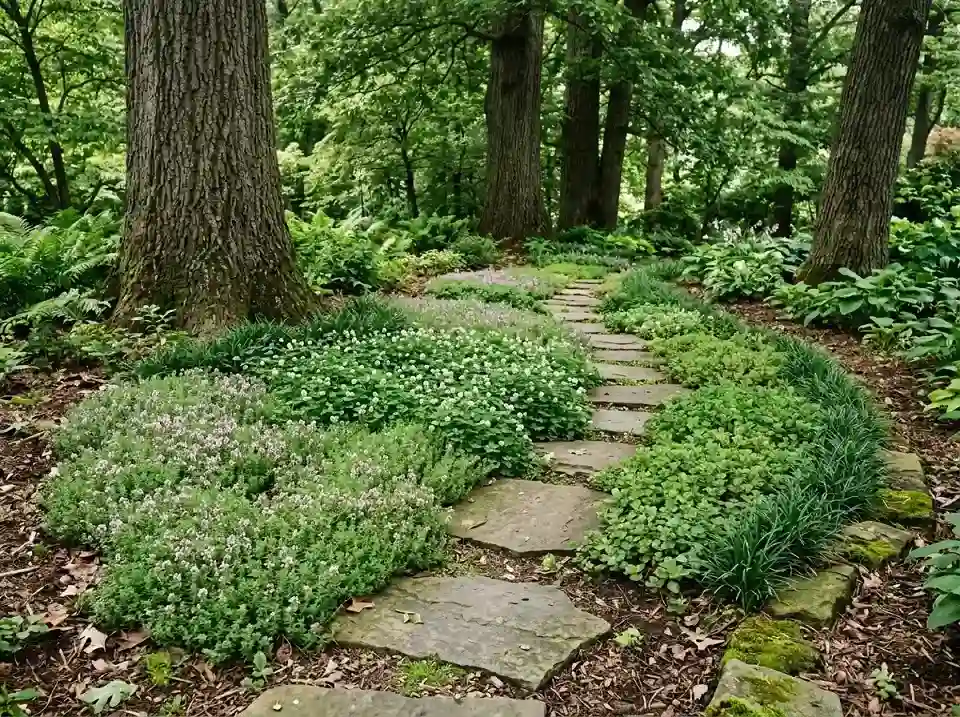
Grass can become a problem in narrow strips, steep corners, shaded areas, and spaces around trees. These areas are often difficult to mow and may never look healthy.
Replace problem grass with low-growing ground cover.
Creeping thyme, clover, sedum, mondo grass, and native ground covers are possible choices. The right option depends on your climate, sunlight, soil, and foot traffic.
Some ground covers can handle light walking. Others are better placed between stepping stones or around garden beds. Always check how quickly a plant spreads before adding it to your yard. A fast-growing choice may become invasive in some areas.
Ground cover still needs care while it becomes established. You may need to water it, remove weeds, and fill bare spots during the first season.
Once it spreads, it can create a soft, no-mow surface that needs less work than traditional grass.
Best for: Shaded corners, slopes, tree bases, and narrow lawn strips
Cost level: $–$$
Ongoing care: Light trimming and weed checks
Watch out for: Invasive varieties and poor foot-traffic tolerance
Use Gravel for Paths and Seating Areas
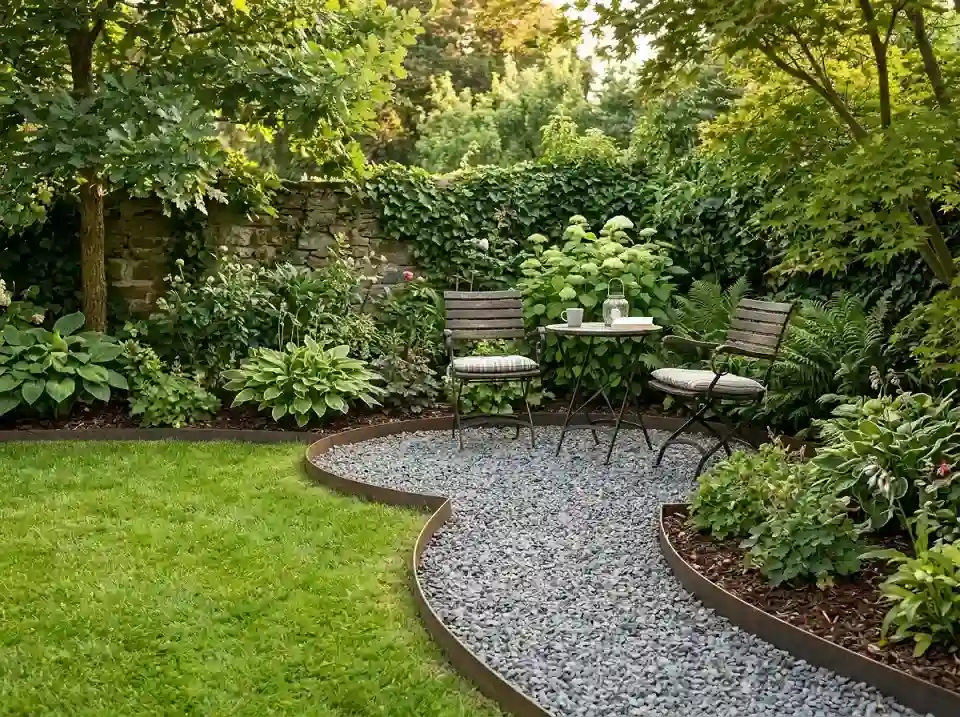
Gravel can quickly turn a muddy or unused section of your yard into a practical outdoor area.
Use it for garden paths, seating spaces, side yards, fire pit zones, or strips beside a patio. It does not need mowing or watering. It also allows rainwater to move through the surface when the base is prepared correctly.
Edging is important. Without it, gravel can spread into grass and garden beds.
Angular gravel often stays in place better than smooth, round stones. Pea gravel can feel comfortable underfoot, but it may move more when people walk across it.
Prepare the area before adding gravel. Remove weeds, level the soil, and add a compacted base where needed. Landscape fabric may help in some locations, but it can become difficult to manage when soil and weeds collect on top.
Gravel is not perfect for every yard. Loose stone may be hard for wheelchairs, strollers, or people with limited mobility. It may also be uncomfortable in busy play areas.
Best for: Side yards, garden paths, seating corners, and dry areas
Cost level: $–$$
Ongoing care: Occasional raking and weed removal
Watch out for: Weak edging and poor base preparation
Build a Simple Paver Patio
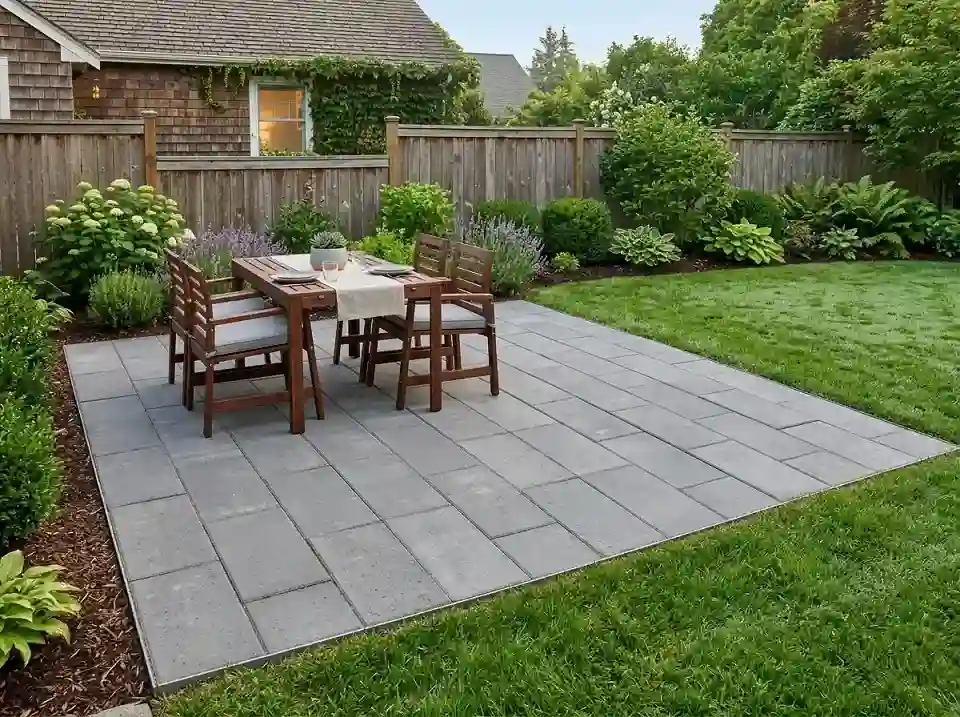
A paver patio gives you a stable place for chairs, tables, grills, and outdoor meals. It also reduces the amount of grass or soil you need to care for.
Keep the shape simple. A square or rectangle usually needs fewer cuts and less labor than a detailed curved design.
Choose the patio size based on how you plan to use it. A small square may fit two chairs and a side table. A medium patio can hold a dining set. A larger space can include separate dining and lounge areas.
The base matters more than the pattern.
Pavers placed on weak or uneven ground may sink, shift, or collect water. A properly prepared base can help the surface stay level for years.
Concrete pavers are often easier to repair than one solid concrete slab. If one paver cracks, you may be able to replace that single piece.
A larger patio means less planting and mowing. However, it will cost more at the start.
Best for: Outdoor dining, lounge seating, and small backyard makeovers
Cost level: $$–$$$
Ongoing care: Sweeping, joint maintenance, and occasional washing
Watch out for: Poor drainage and an uneven base
Choose Native Plants That Fit Your Climate
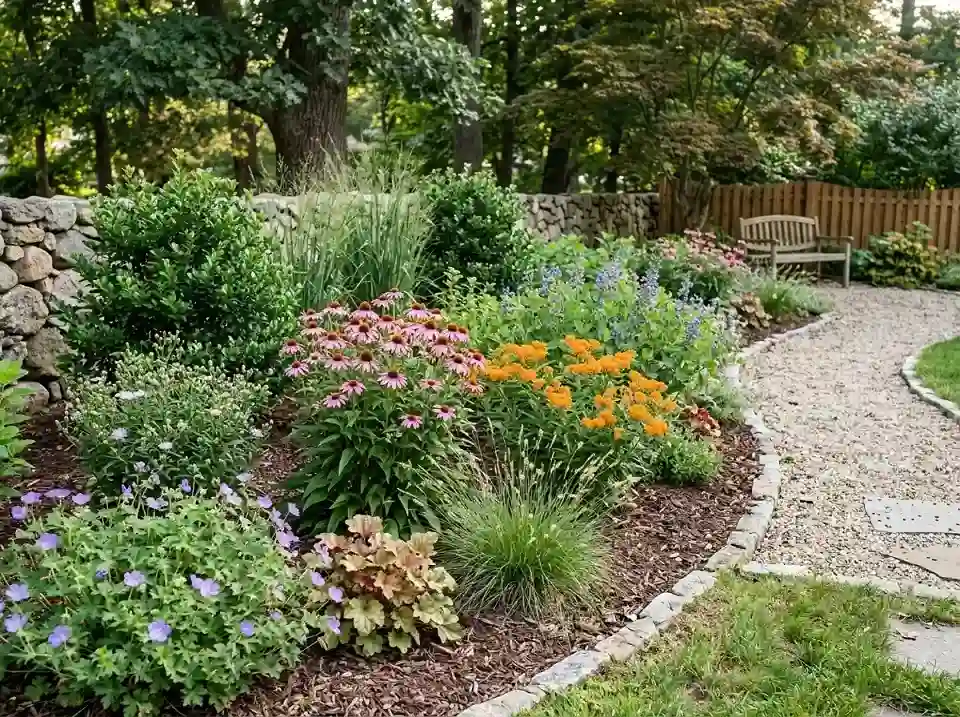
Plants that suit your local climate are often easier to keep healthy.
Native plants have adapted to regional weather, rainfall, soil, and seasonal changes. Once established, many need less water and less extra care than plants from very different climates.
They can also provide food and shelter for local birds, bees, and butterflies.
However, native does not mean maintenance-free. Some native plants grow tall. Others spread quickly. A plant that works well in a large natural garden may be too aggressive for a small backyard.
Choose plants based on the exact conditions in your yard. Check the amount of sun, soil drainage, mature height, mature width, and water needs.
Local university extension programs, native plant groups, botanical gardens, and garden centers can help you find suitable options.
Avoid using the same plant list for every region. A low-care plant in a dry climate may struggle in an area with heavy rain.
Best for: Garden beds, fence lines, pollinator gardens, and dry areas
Cost level: $–$$
Ongoing care: Seasonal trimming and early watering
Watch out for: Plants that outgrow the space
Plant in Groups Instead of Scattered Rows
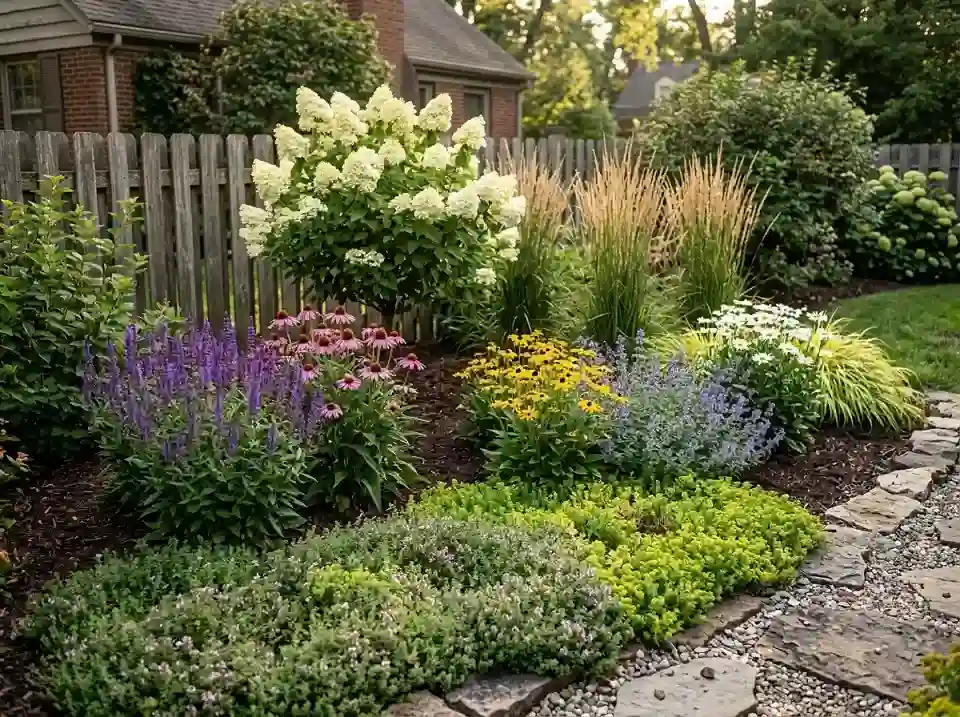
A yard with many single plants can look busy. It can also make care more difficult.
Planting in groups creates a stronger design and makes watering easier. Plants with the same needs can share one section of the yard.
For example, you could combine three ornamental grasses, five flowering perennials, one medium shrub, and a low ground cover around the edge.
This simple formula creates layers without using too many plant types.
Dense planting may also help shade the soil. This can slow weed growth and reduce moisture loss during hot weather. Leave enough room for each plant to reach its mature size.
Group plants based on sunlight and water needs. Do not place a water-loving plant beside one that prefers dry soil.
Simple backyard planting works because repetition makes the space feel connected.
Best for: Borders, fence lines, foundation beds, and wide garden areas
Cost level: $–$$
Ongoing care: Seasonal trimming and basic weed control
Watch out for: Planting too closely
Cover Bare Soil With Mulch
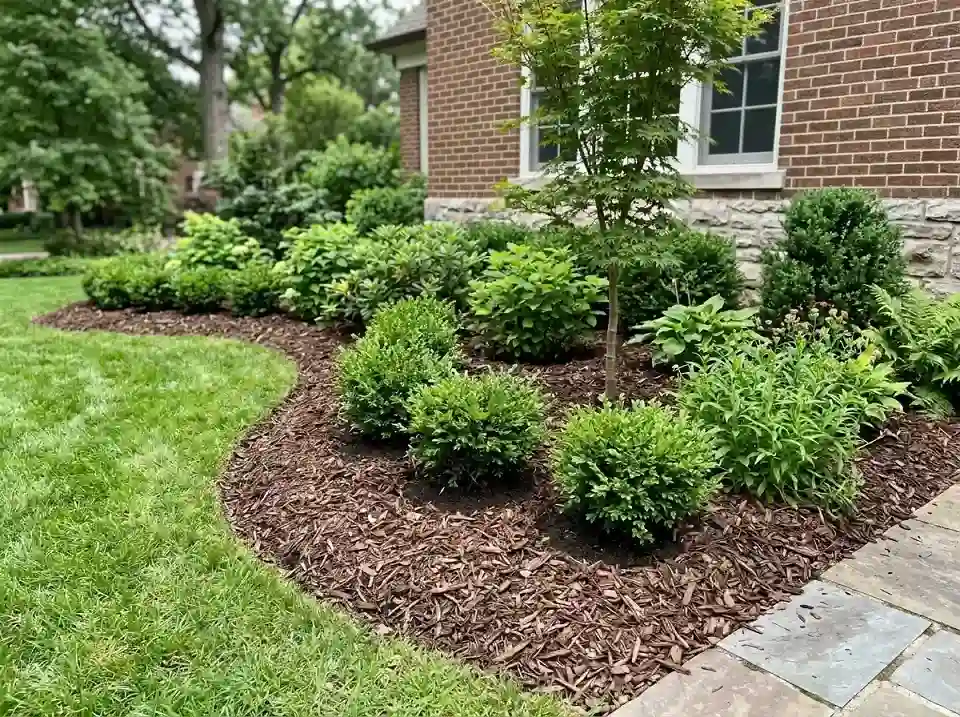
Bare soil dries out fast and gives weeds room to grow.
A layer of mulch can help the soil hold moisture. It can also reduce weed growth and give planting beds a cleaner look.
Wood chips, shredded bark, pine straw, compost, and decorative gravel are common options. Choose a material that fits your climate, plants, and home style.
Organic mulch breaks down over time. This can improve the soil, but you will need to add more when the layer becomes thin.
Decorative gravel lasts longer. It may work well around drought-tolerant plants. However, it can be difficult to remove if you change the garden later.
Do not pile mulch against tree trunks, shrub stems, or the outside wall of your home. Leave a small gap to reduce moisture problems.
Mulch is one of the easiest ways to create low maintenance flower beds without rebuilding the whole yard.
Best for: Tree bases, flower beds, shrub borders, and play areas
Cost level: $
Ongoing care: Topping up and light raking
Watch out for: Mulch piled against stems or trunks
Add Evergreen Shrubs for Year-Round Shape
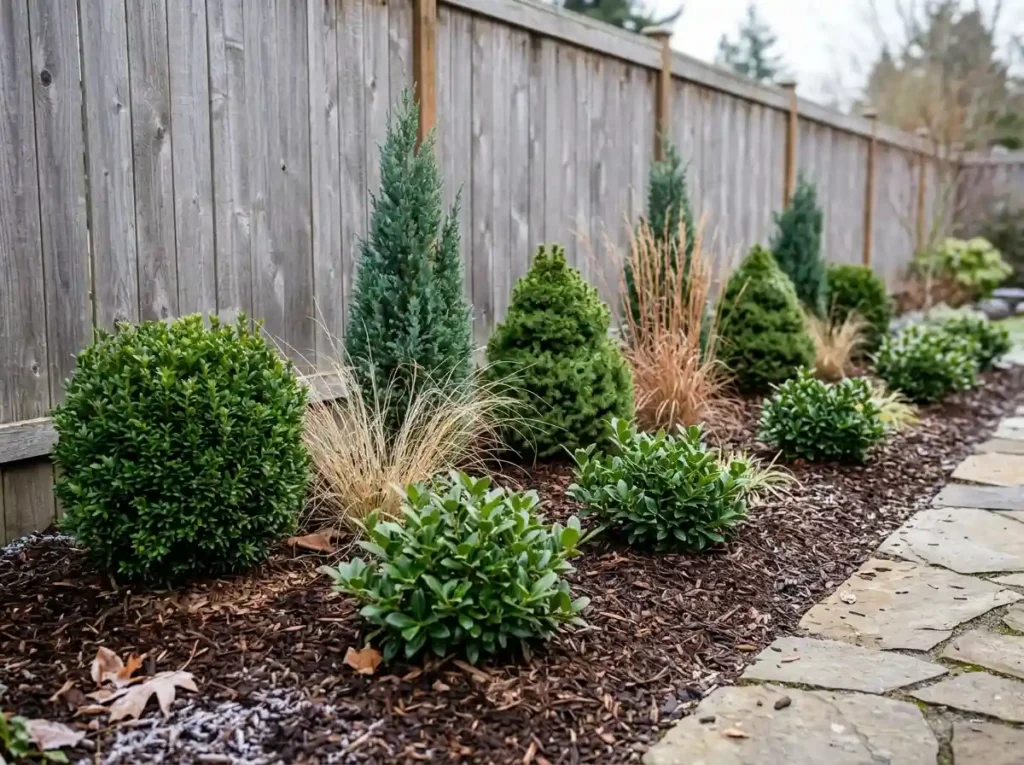
A backyard can look empty when seasonal plants die back.
Evergreen shrubs keep their leaves or needles through much of the year. They can provide privacy, color, and structure without the need to replant every season.
Compact shrubs often need less pruning than fast-growing varieties. Check the mature size before buying. A small shrub at the garden center may grow wide enough to block a walkway or window.
Plant shrubs far enough from walls, fences, and paths. This reduces future trimming and allows air to move around the plant.
Juniper, holly, yew, dwarf conifers, and evergreen native shrubs may work in some regions. The best choice depends on local weather and soil.
Use a small number of evergreen shrubs as the base of the design. Add a few seasonal flowers or grasses for color.
Best for: Privacy, foundation beds, fence lines, and winter interest
Cost level: $$
Ongoing care: Light pruning and seasonal checks
Watch out for: Mature size and climate limits
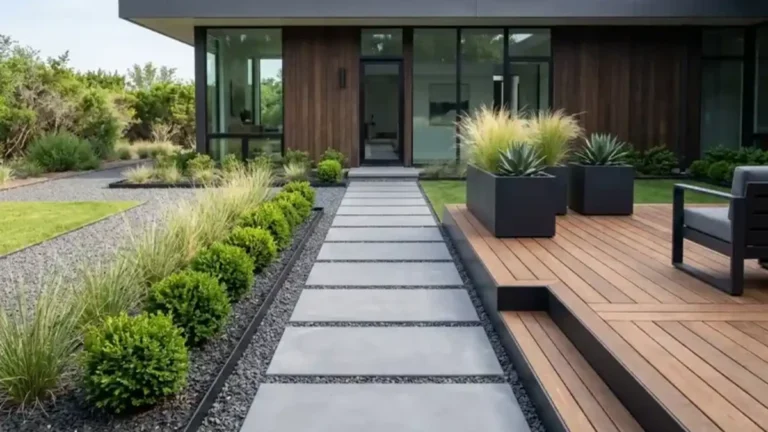
Use Ornamental Grasses for Easy Texture
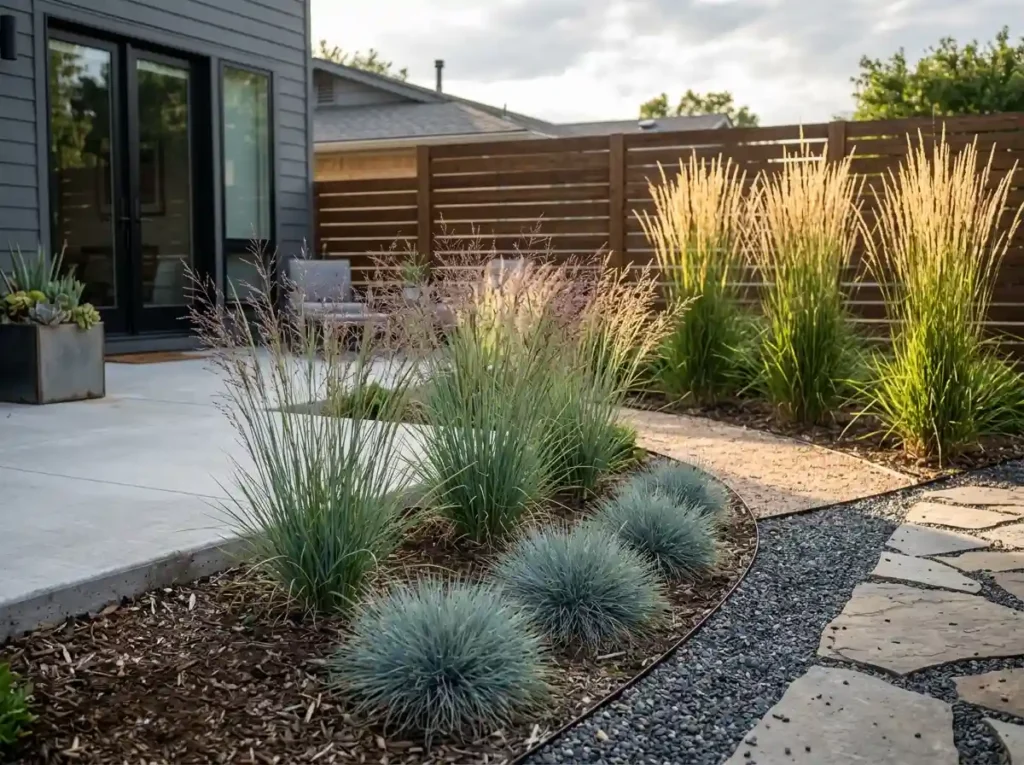
Ornamental grasses can add height, movement, and soft texture without filling the yard with many different plants.
Many types need one main cutback each year. Some may also need light cleanup after storms or winter weather.
Use them beside patios, along fences, near garden paths, or behind lower plants. Tall grasses can soften a plain wall or add some privacy.
Switchgrass, blue fescue, feather reed grass, and local native grasses are possible choices. Some fountain grasses may be invasive in certain regions, so check local guidance before planting.
Choose a grass that matches the size of your space. A tall variety may overpower a small garden bed. A low-growing type may disappear behind shrubs.
Ornamental grass landscaping works best when plants are repeated in small groups.
Best for: Modern yards, fence lines, dry gardens, and mixed beds
Cost level: $–$$
Ongoing care: One seasonal cutback
Watch out for: Aggressive spread and self-seeding
Create Clear Edges Around Beds and Paths
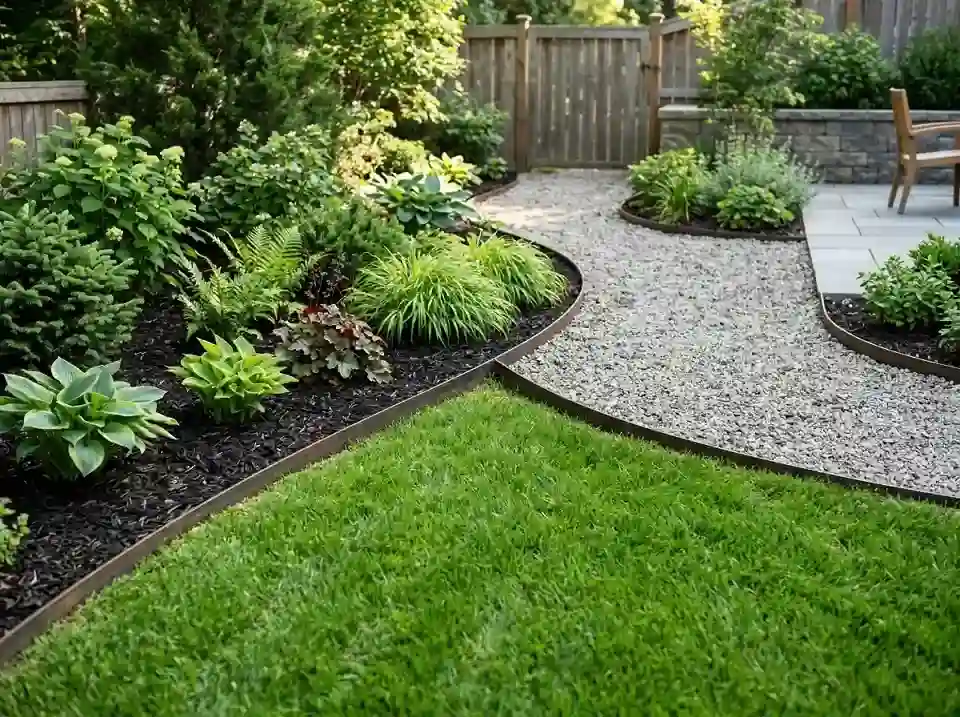
Clean borders can make a simple yard look finished.
Edging keeps mulch, gravel, soil, and grass in the correct place. It also reduces the time you spend fixing messy garden lines.
Steel edging creates a thin, modern border. Brick and stone can suit traditional yards. Concrete borders last a long time but cost more to install. Recycled plastic edging is often affordable, though it may move or fade over time.
Straight lines and gentle curves are easier to maintain than tight, detailed shapes.
Think about mowing before choosing the border. Sharp corners and narrow grass strips can be difficult to reach with a mower.
Good edging also protects your work. It stops gravel from moving into planting beds and keeps mulch from washing across paths.
Best for: Garden beds, gravel paths, lawns, and patio borders
Cost level: $–$$
Ongoing care: Minor realignment and edge cleaning
Watch out for: Weak installation and tight curves
Install Drip Irrigation or Soaker Hoses
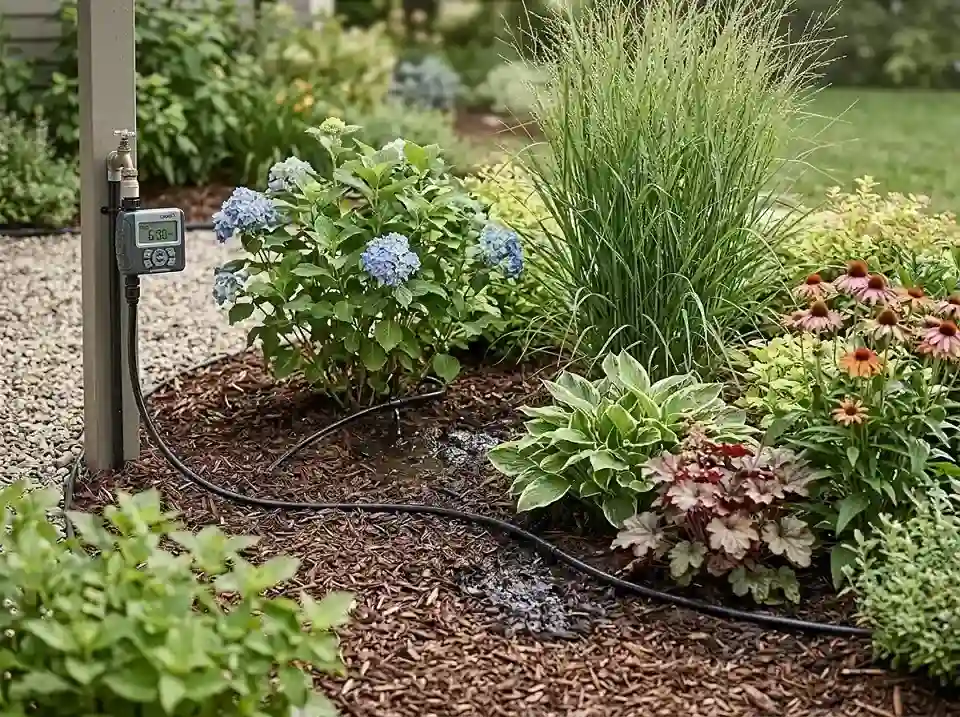
Hand watering can take a lot of time. It can also lead to uneven watering.
Drip irrigation carries water close to plant roots. This keeps paths and leaves drier while reducing water waste from spray and wind.
Use drip emitters for single shrubs and larger plants. Dripline works well through rows or grouped garden beds. A soaker hose can be a simple choice for a small bed.
Add a timer so watering happens on a set schedule. You should still check the soil and adjust the timer during rainy or cool periods.
Divide the yard into watering zones. Plants in full sun may need a different schedule than plants in shade. New plants may also need more water than established shrubs.
Inspect the system from time to time. Look for leaks, loose parts, blocked emitters, and lines damaged by tools or animals.
This is one of the most useful low maintenance backyard landscaping ideas for reducing repeated daily work.
Best for: Flower beds, shrubs, raised beds, and large planters
Cost level: $–$$
Ongoing care: Seasonal checks and timer changes
Watch out for: Hidden leaks and blocked emitters
Choose Large Planters Instead of Many Small Pots
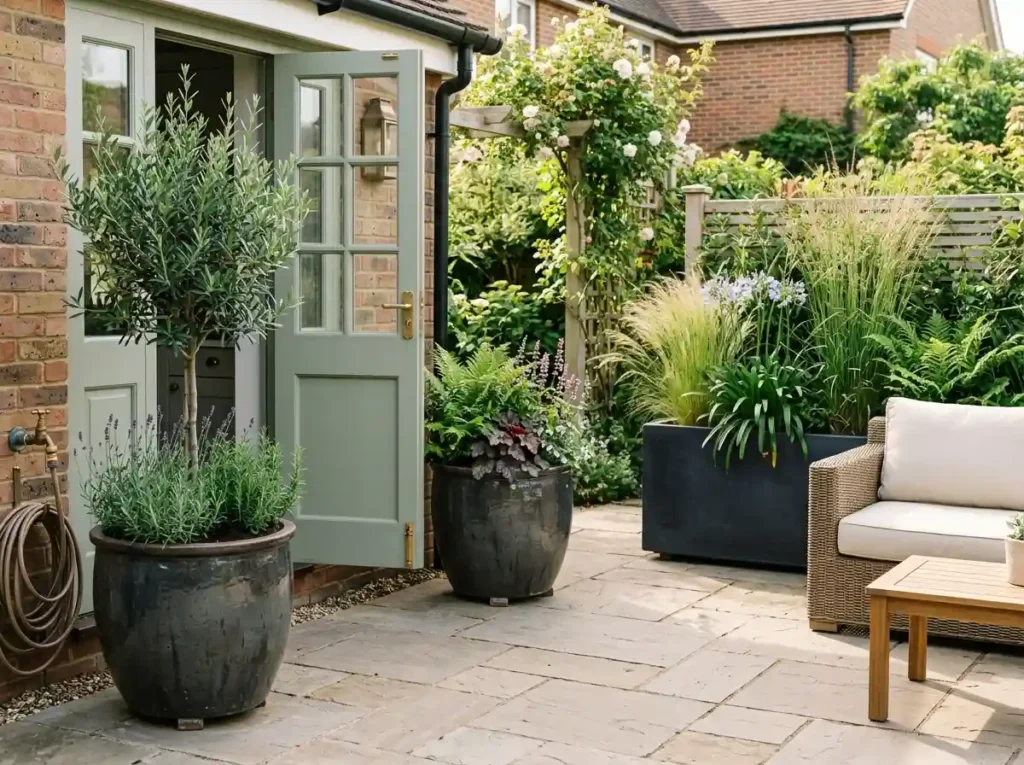
A row of small pots may look charming, but each pot needs separate care.
Small containers dry out fast. They can also blow over, crack, or become crowded as plants grow.
Use a few large planters instead.
Large containers hold more soil, so they often stay moist longer. They also create a stronger design with less clutter.
Place one large planter beside the patio. Use two matching pots near the back door. A long rectangular planter can add privacy along a seating area.
Self-watering containers may help reduce watering, though they still need regular checks.
Choose planters made for outdoor use. Look for frost-resistant materials if winters are cold. Make sure each container has drainage holes.
Place planters close to a water source. This makes care easier during hot weather.
Best for: Patios, rental homes, small yards, and entry areas
Cost level: $–$$
Ongoing care: Watering, feeding, and seasonal cleanup
Watch out for: Poor drainage and heavy containers
Add Raised Beds With Easy-to-Reach Borders
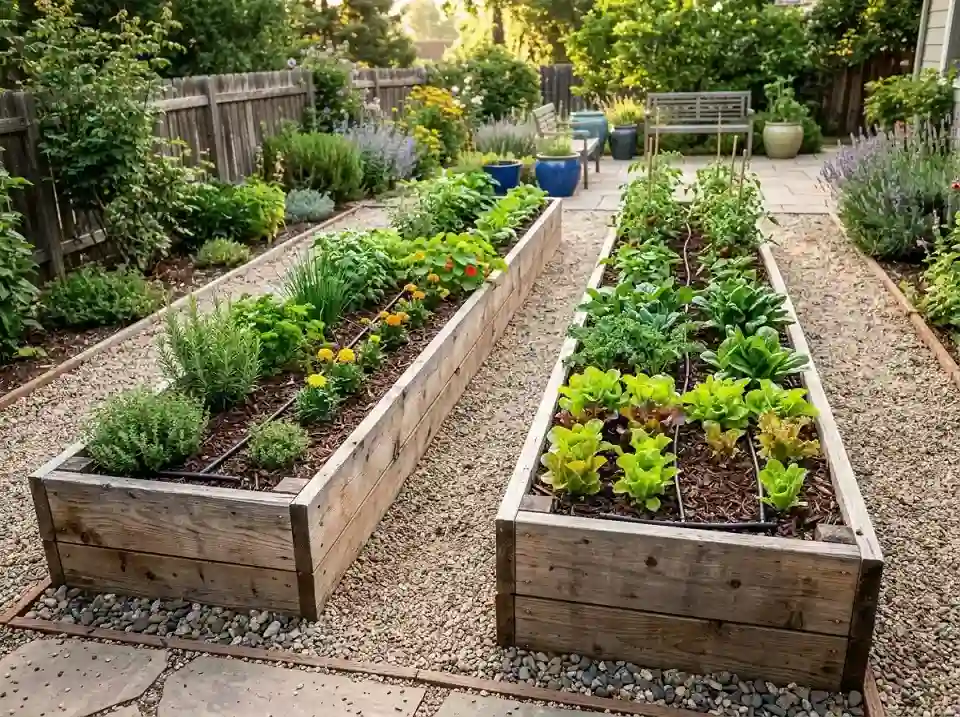
Raised beds keep vegetables, herbs, and flowers in a clear space.
They can make weeding easier because the soil is contained. They may also help in areas with poor soil or drainage.
Keep each bed narrow enough to reach the center without stepping inside. This protects the soil and makes planting easier.
Cedar, composite boards, metal, brick, and concrete blocks are common materials. Each option has a different price and lifespan.
Add mulch to reduce weeds. A dripline or soaker hose can reduce the time spent watering.
Raised beds still need regular care. Vegetables need planting, watering, feeding, harvesting, and seasonal cleanup. They are organized, but they are not maintenance-free.
Use one or two beds rather than filling the whole yard with them. This keeps the garden useful without creating more work than you can handle.
Best for: Herbs, vegetables, flowers, and poor soil areas
Cost level: $$
Ongoing care: Planting, watering, and seasonal soil care
Watch out for: Beds that are too wide or poorly drained
Use Artificial Turf in Small Problem Areas
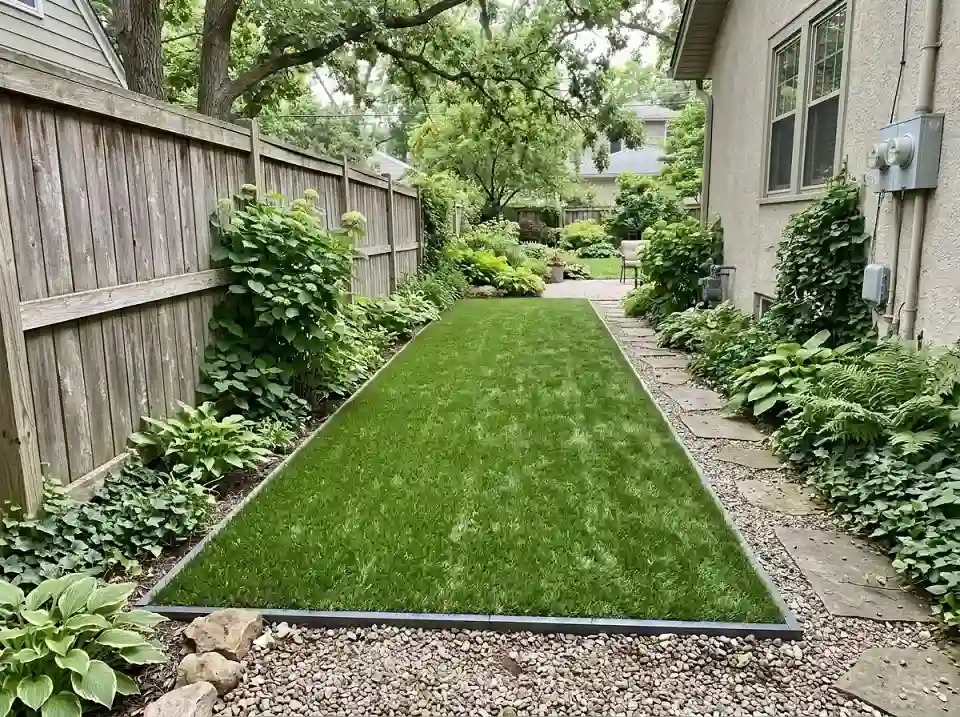
Artificial turf removes mowing and regular lawn watering.
It can work well in narrow side yards, small pet areas, shaded spaces, or compact play zones where real grass struggles.
However, artificial turf still needs care. Leaves and dirt must be removed. Pet areas need cleaning. The surface may need brushing to keep the blades standing upright.
Heat is another concern. Artificial grass can become much hotter than natural grass in direct sun. This may make it uncomfortable for children, pets, or bare feet.
Drainage and base preparation are also important. A poor base can lead to puddles, odors, or an uneven surface.
For many homes, turf works better in one difficult zone than across the whole yard.
Use it where it solves a clear problem. Do not treat it as a perfect answer for every space.
Best for: Small shaded lawns, pet zones, and narrow side yards
Cost level: $$–$$$
Ongoing care: Cleaning, brushing, and leaf removal
Watch out for: Heat, drainage, and poor-quality installation
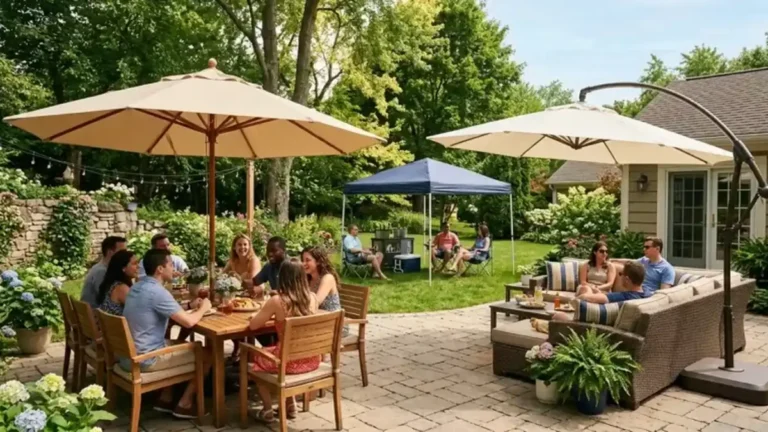
Add a Low-Care Outdoor Seating Area
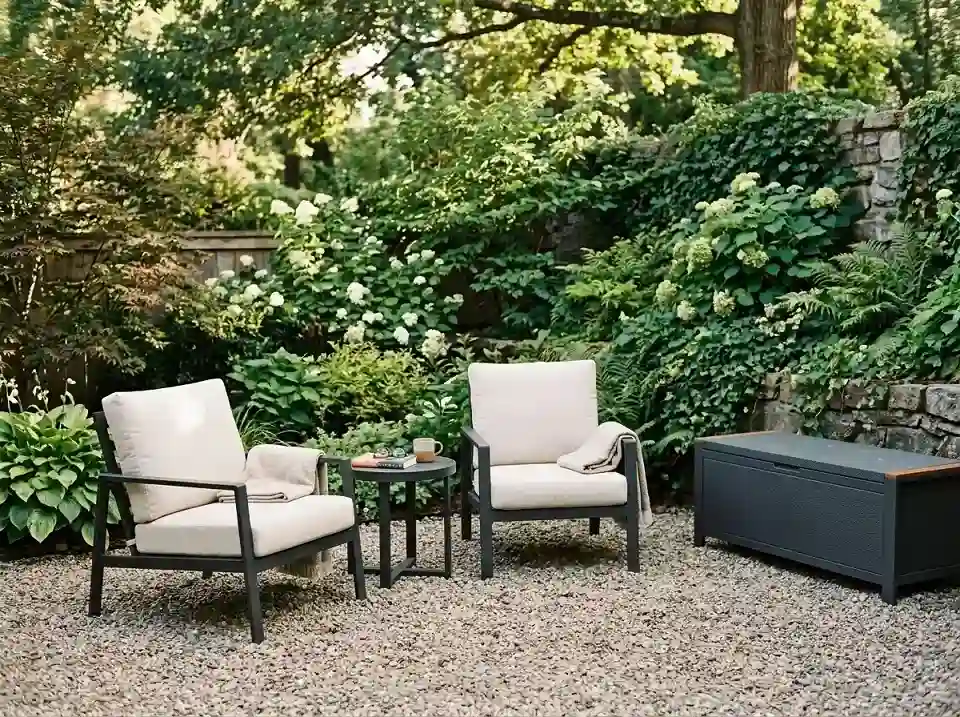
A backyard becomes more useful when you have a comfortable place to sit.
Choose furniture that can handle local weather. Powder-coated aluminum, recycled plastic, resin wicker, teak, and sealed steel are common choices.
Place furniture on a stable surface such as a patio, deck, or gravel area. Chairs placed on soil or grass may sink, wobble, or create muddy patches.
Keep the layout simple. A small table and four chairs may be enough for meals. Two lounge chairs and a side table can create a quiet reading corner.
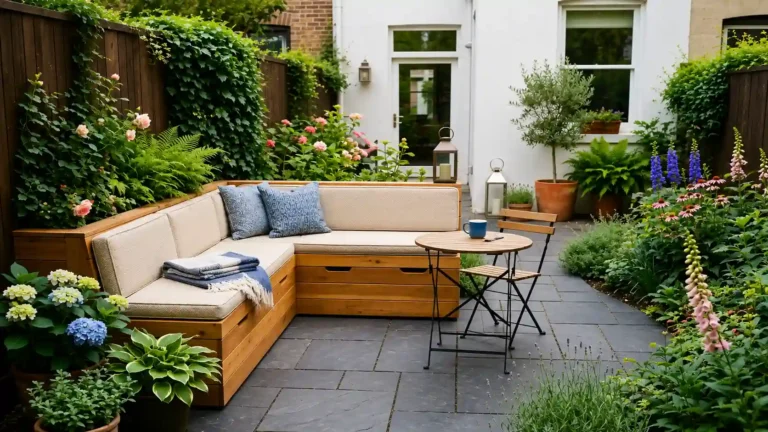
Use removable cushion covers that can be washed. Add a deck box or storage bench to protect cushions during storms or winter.
Weather-resistant furniture lasts longer with some care. Cover it during harsh weather and clean it before dirt becomes difficult to remove.
Best for: Patios, gravel areas, decks, and quiet garden corners
Cost level: $$–$$$
Ongoing care: Wiping, covering, and seasonal storage
Watch out for: Oversized furniture in small yards
Install Solar or Low-Voltage Lighting
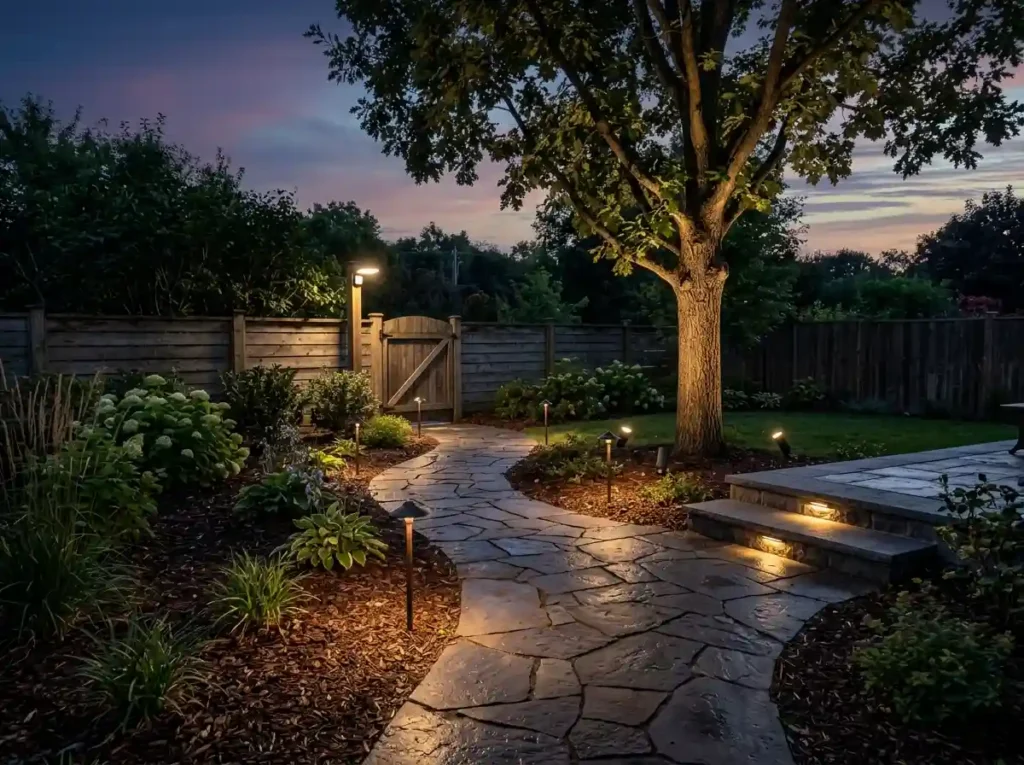
Outdoor lighting can make paths, steps, and seating areas safer after dark.
Solar lights are easy to install because they do not need wiring. They work best in places that receive enough direct sunlight during the day. Their brightness and battery life can vary.
Low-voltage lighting usually provides stronger and more reliable light. It may cost more and may need professional installation.
Focus on the areas that matter most. Add path lights near walkways, step lights near level changes, and motion lights beside gates or storage areas.
String lights can create soft light over a patio. One or two uplights can draw attention to a tree or garden feature.
Avoid covering the yard with too many fixtures. A few well-placed lights usually look better and need less care.
Best for: Steps, paths, patios, gates, and seating areas
Cost level: $–$$
Ongoing care: Cleaning panels and replacing bulbs or batteries
Watch out for: Weak solar exposure and excessive brightness
Reduce Clutter With Outdoor Storage
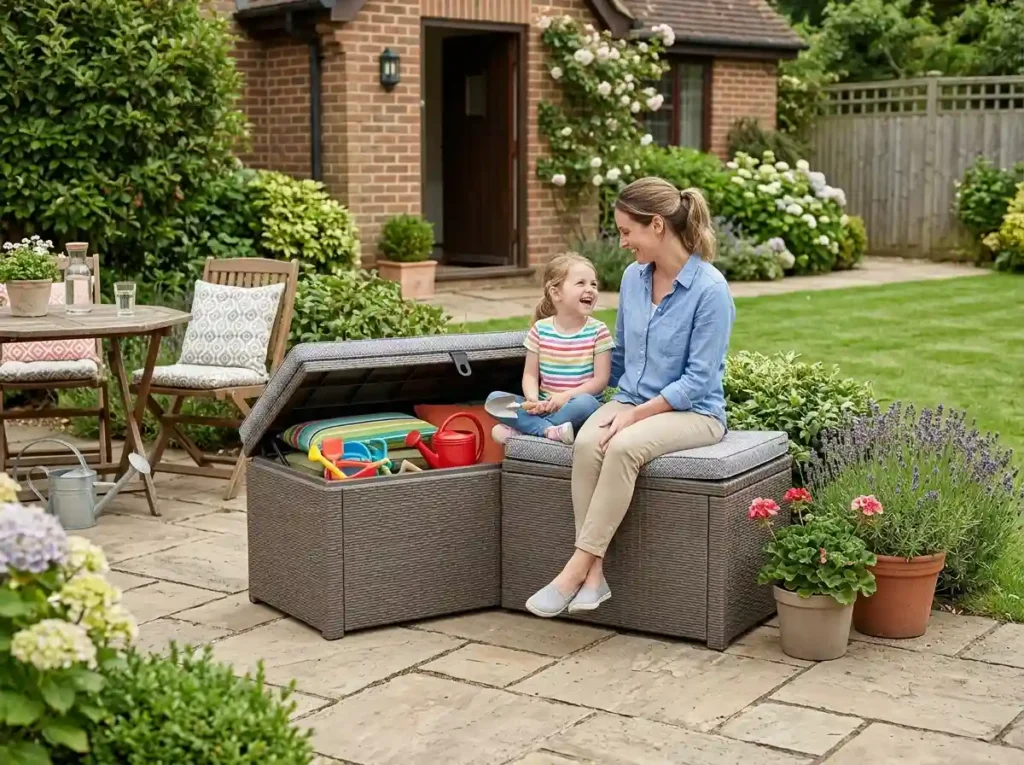
Loose tools, hoses, toys, cushions, and garden supplies can make a backyard feel messy.
Outdoor storage keeps these items protected and easy to find.
A storage bench gives you seating and hidden space in one piece. A deck box can hold cushions, toys, or small tools. A slim vertical cabinet may fit beside a fence or wall.
Place storage near the area where you use the items. Keep grill tools near the cooking space. Store garden tools near the beds. Place toys close to the play area.
Choose weather-resistant storage with a lid or door that closes tightly.
Do not add an oversized shed to a small yard unless you truly need it. Large storage units can take over the space and create another surface to clean or repair.
Best for: Family yards, patios, small gardens, and pool areas
Cost level: $–$$
Ongoing care: Cleaning and checking for leaks
Watch out for: Storage that blocks paths or drainage
Add One Strong Focal Point
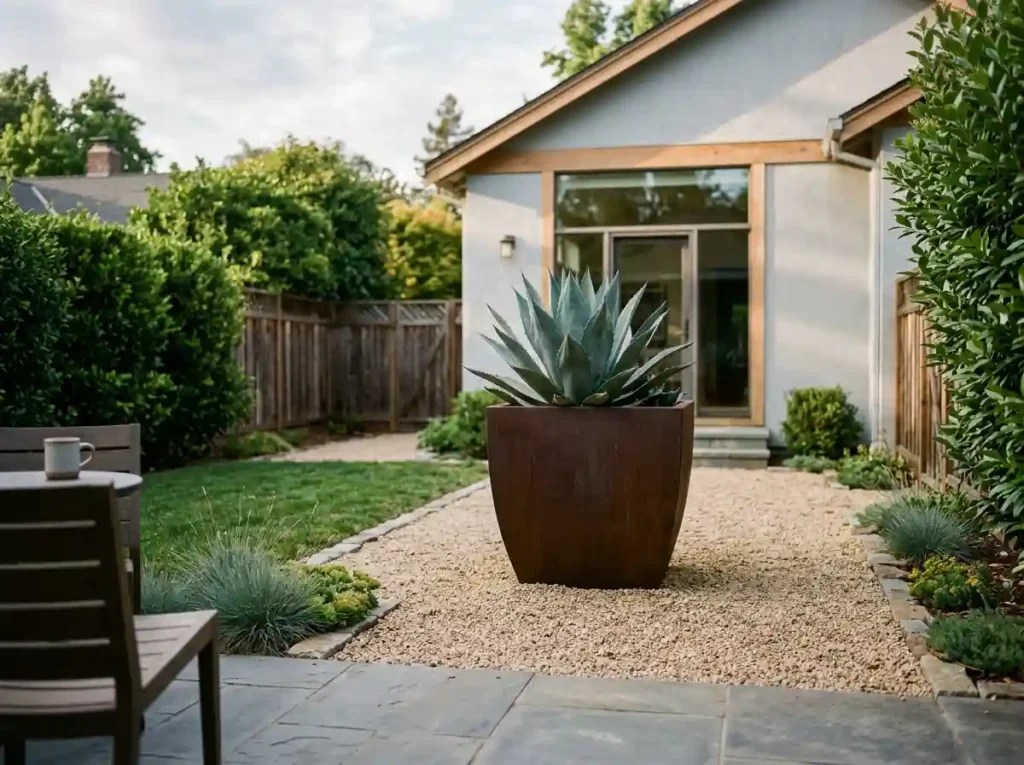
You do not need many decorations to make a backyard feel complete.
One strong focal point can give the whole yard a clear design. It also reduces the need for many small objects that collect dirt, fade, or need repairs.
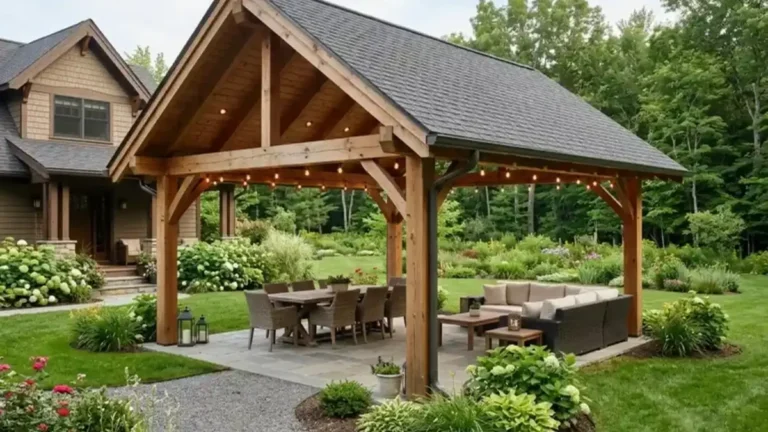
A specimen tree, large planter, small fountain, sculptural bench, pergola, privacy screen, or fire feature can become the main attraction.
Choose a feature that matches the size of the yard. A large pergola may overwhelm a narrow space. A small planter may disappear in a wide lawn.
Place the focal point where you can see it from the patio, kitchen, or main window. Keep the area around it simple.
A clear view allows the feature to stand out without extra decoration.
Best for: Plain yards, small patios, modern designs, and simple layouts
Cost level: $–$$$
Ongoing care: Depends on the feature
Watch out for: Features that are too large for the space
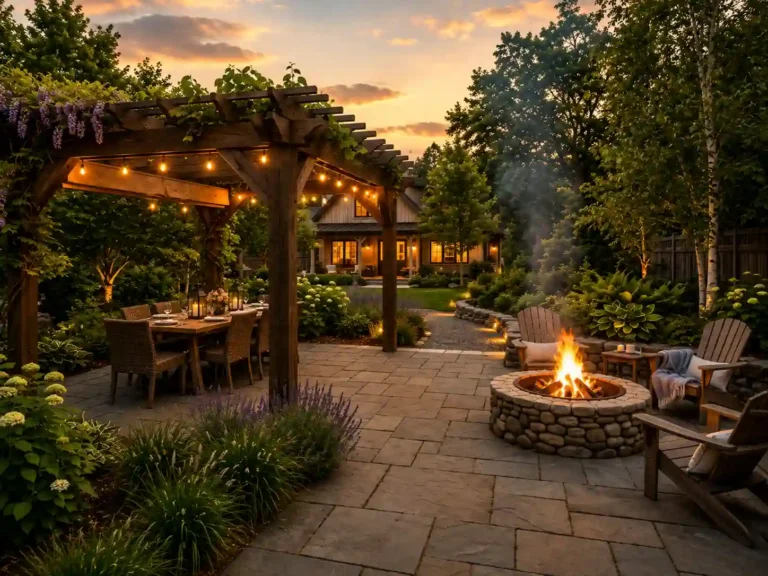
Create a Simple Fire Pit Area
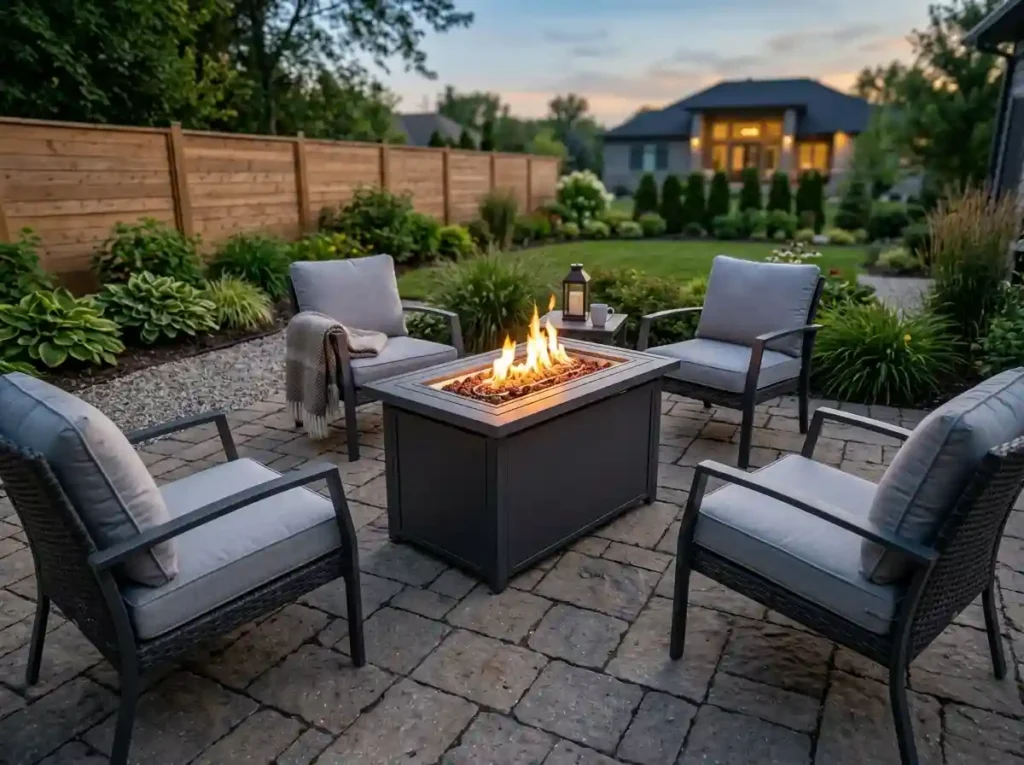
A fire pit area can give you a clear place for evening gatherings.
Use gravel, pavers, stone, or concrete around the fire feature. These materials are easier to clean than grass and provide a stable base for seating.
Portable fire bowls are flexible and can be stored when they are not in use. Propane fire tables create less smoke and may be easier to start. Built-in stone fire pits feel permanent but often cost more.
Smokeless fire pits may reduce smoke, but they still produce heat and need safe placement.
Check local fire rules before installing any fire feature. Follow the maker’s instructions for distance from walls, fences, branches, furniture, and buildings.
Choose simple chairs that can stay outdoors. Avoid placing cushions too close to open flames.
A low maintenance fire pit area still needs ash removal, surface cleaning, and regular safety checks.
Best for: Gravel yards, patios, entertaining spaces, and open corners
Cost level: $$–$$$
Ongoing care: Cleaning and safety checks
Watch out for: Local rules, wind, and nearby structures
Leave Some Open Space
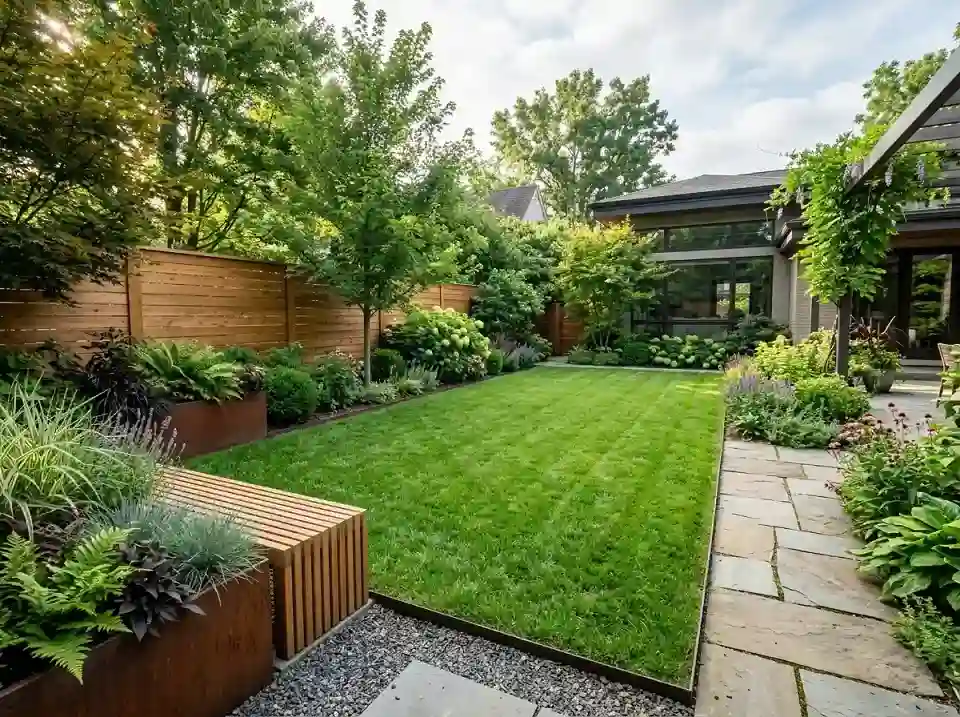
You do not need to fill every part of your backyard.
Open space creates visual balance. It also gives you room to move furniture, set up a game, add a table, or change the layout later.
An open paved area can hold movable chairs. A small lawn can give children space to play. A gravel section may serve as a dining area during summer and a fire pit zone during cooler months.
Fewer permanent features mean fewer surfaces to repair, clean, water, or trim.
The key is to make empty space look planned. Use clean edges, a clear shape, and one nearby feature such as a tree, planter, or bench.
Simple backyard landscaping is often easier to enjoy because the space does not feel crowded.
Best for: Small yards, flexible family spaces, and simple modern designs
Cost level: $
Ongoing care: Basic sweeping, mowing, or raking
Watch out for: Leaving unfinished soil that turns muddy or weedy
How to Pick the Best Low Maintenance Backyard Ideas
You do not need to use every idea in this guide.
Start with your biggest backyard problem. Then choose two to five changes that deal with it.
Climate comes first. A gravel-heavy yard may work well in a dry area but feel harsh in a hot space with no shade. A plant that grows easily in one state may struggle in another.
Think about how you use the yard. A family with children may need open play space. A couple who enjoys outdoor meals may get more value from a patio and lighting.
Your budget also matters. Mulch, edging, and grouped plants may provide a quick change at a lower cost. Pavers, artificial turf, and built-in features often need a larger starting budget.
Compare the starting cost with future care. A cheap material may need frequent replacement. A more expensive option may last longer with less work.
| Backyard Problem | Ideas That May Help |
| Too much mowing | Ground cover, gravel, patio, artificial turf |
| Constant watering | Native plants, mulch, drip irrigation |
| Too many weeds | Mulch, dense planting, defined edging |
| Small backyard | Large planters, storage, one focal point |
| Poor drainage | Gravel paths, raised beds, suitable plants |
| Limited budget | Mulch, edging, solar lights, grouped plants |
| Little gardening experience | Evergreen shrubs, simple beds, hard surfaces |
Pick ideas that remove real chores. Do not add a feature just because it looks good in a photo.
Avoid These Low Maintenance Landscaping Mistakes
Some low-care ideas create more work when they are planned poorly.
The first common mistake is buying plants without checking their mature size. A small shrub may later block a path, cover a window, or crowd nearby plants.
Another mistake is using too many plant types. Each plant may have different water, pruning, and soil needs. A smaller plant list is usually easier to manage.
Do not ignore drainage. Water that collects beside a patio, shed, or house can cause damage. Fix drainage before adding expensive plants or hard surfaces.
Be careful with invasive plants. A fast-growing ground cover or ornamental grass may spread beyond the area where you planted it.
Too much hardscaping can also cause problems. Large paved areas may hold heat or increase runoff if water has nowhere to go.
Artificial turf still needs cleaning. Gravel still needs raking. Native plants still need early watering. Low maintenance does not mean zero care.
Choose materials that suit your weather. Wood, metal, plastic, and stone can respond differently to heat, frost, rain, and salt air.
Good installation matters as much as the product you choose.
Plan a Low Maintenance Backyard on Your Budget
You do not need to complete the whole yard at once.
Start with the work that protects the property. Fix drainage first. Prepare the soil. Build strong bases for paths and patios.
Then add irrigation, plants, furniture, and decoration.
Reuse what you already have when it makes sense. Healthy shrubs can be moved or shaped. Old bricks may work as garden edging. Existing furniture can look better after cleaning or repainting.
Compare DIY work with professional installation. Mulching and planting may be easy weekend jobs. Drainage, electrical work, large patios, and built-in fire features may need skilled help.
Remember to include hidden costs such as delivery, soil, edging, waste removal, tools, and surface preparation.
| Budget Level | Possible Projects |
| Low budget | Mulch, edging, grouped plants, solar lights |
| Mid-range | Gravel seating area, drip irrigation, large planters |
| Higher budget | Paver patio, artificial turf, storage, fire feature |
Complete one zone before starting another. This helps you control costs and gives you a finished space to enjoy while you plan the next phase.
Build a Backyard That Fits Your Life
A low-care backyard is created through a group of smart choices.
Reduce grass where mowing is difficult. Choose plants that suit your climate. Cover bare soil with mulch. Add clear borders. Use stable surfaces for seating. Install simple watering tools where they save time.
Keep the layout open and easy to move through.
Start by writing down the three backyard chores you dislike most. Then choose two or three ideas that reduce those exact tasks.
You might replace one weak patch of grass, refresh a garden bed, or build a small gravel seating area this weekend.
The best low maintenance backyard landscaping ideas make your outdoor space easier to enjoy, easier to manage, and better suited to your daily life.