15 Mediterranean Garden Design Ideas for Any Yard
Your garden may feel plain, dry, or hard to use. You might have a large lawn that needs constant watering. Or perhaps your small patio lacks shade, color, and privacy.
You do not need a sea view or an Italian villa to change that.
These Mediterranean garden design ideas can help you create a warm and relaxed outdoor space. The style uses natural stone, gravel, terracotta, fragrant herbs, shaded seating, and simple colors.
Many parts of this look can also reduce garden care. Gravel does not need mowing. Established herbs often need less water than lawn. Large pots make it easier to change plants as the seasons change.
The key is to choose features that suit your climate and space. An olive tree may work well in one area, while a hardy silver-leaved tree may be better somewhere colder.
Start small. Choose one focal point, one main material, and a few suitable plants. You can add more details later.
Choose a Sun-Washed Color Palette That Feels Calm
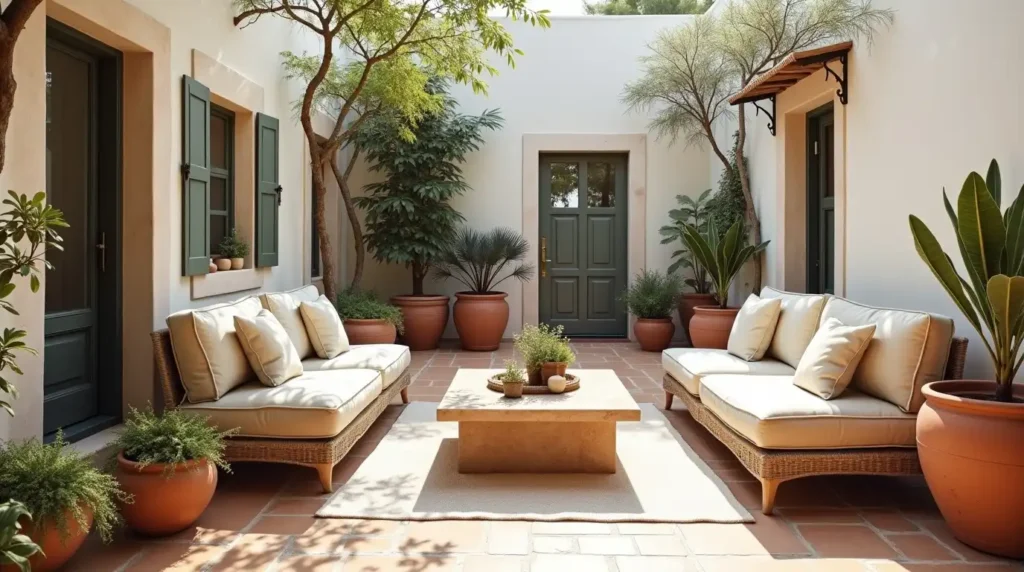
Color is one of the fastest ways to create a Mediterranean feel. You can use it before you replace plants or build new garden features.
Start with warm neutral shades. Chalk white, cream, sand, and soft beige work well on walls, fences, pots, and outdoor furniture.
Next, add earthy colors through natural materials. Terracotta pots, weathered wood, gravel, and warm stone bring depth without making the garden feel busy.
Choose two or three accent colors. Cobalt blue, sea green, olive green, deep red, and ochre can all work. But using all of them at once may make the space feel crowded.
For example, place blue ceramic pots against a white wall. Add cream cushions and a few olive-green plants. The blue will stand out because the rest of the palette is simple.
Try to connect the garden colors with your house. A warm stone path may pick up the color of your roof or brickwork.
Before you shop, choose three main colors. Repeat them across pots, fabrics, walls, and tiles.
Replace Thirsty Lawn With Gravel and Stone Paths
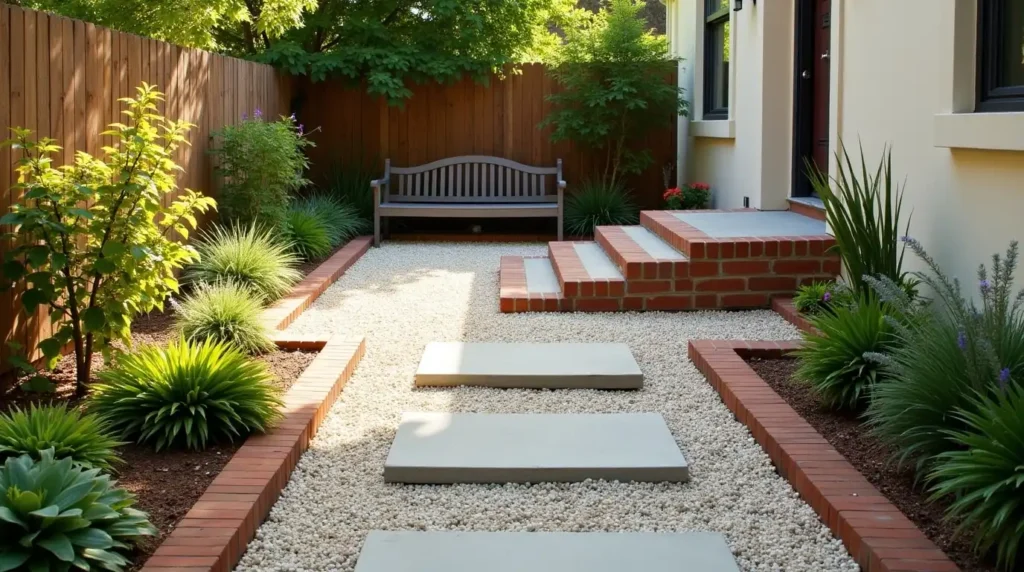
A large lawn can take a lot of time, water, and care. It may also look out of place in a dry Mediterranean-style garden.
You do not have to remove every piece of grass. Start with an area that is hard to mow or rarely used.
Replace it with pale gravel, crushed stone, flagstone, or decomposed granite. These materials create a dry, sun-washed look and give you a firm place to walk or sit.
A gravel path can curve between herbs and flowering plants. Large stepping stones can lead to a bench or dining area. You can also create a simple gravel courtyard under a tree.
Use edging to keep loose stones in place. Brick, steel, stone, or terracotta edging can create a clean border.
Do not cover every planted bed with landscape fabric. It can make future planting harder and may affect the soil below. Use it only where it makes sense for your site.
Before digging, place a garden hose on the ground to mark the path. Walk along it several times. This simple test will show whether the route feels natural.
Use Terracotta Pots for Fast Mediterranean Style
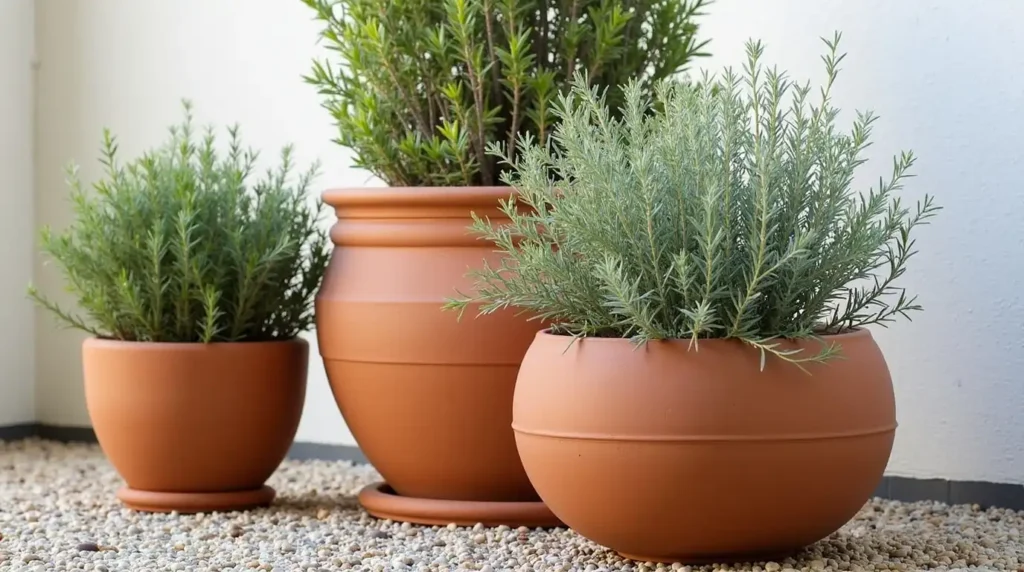
Terracotta pots can change a plain patio without major building work. Their warm color looks good beside stone, gravel, white walls, and green plants.
Choose a mix of tall, medium, and low containers. Group them in sets of three or five. Odd-numbered groups often feel more relaxed than matching pairs.
Try using three large pots instead of many tiny ones. Large containers make a stronger visual impact. They also dry out more slowly during hot weather.
You could plant a dwarf olive in the largest pot. Add rosemary to a medium container and trailing thyme to a lower one.
Repeat one shape or finish across the group. For example, use several rounded, unglazed terracotta pots in different sizes. This keeps the display connected.
All pots need drainage holes. Raise large containers slightly so water can escape from the base.
Terracotta can crack during freezing weather because it absorbs moisture. Choose frost-resistant containers if your winters are cold. You may also need to move valuable pots into a protected area.
For a small space, one large citrus tree in a terracotta pot can become the main feature.
Make an Olive Tree Your Main Focal Point
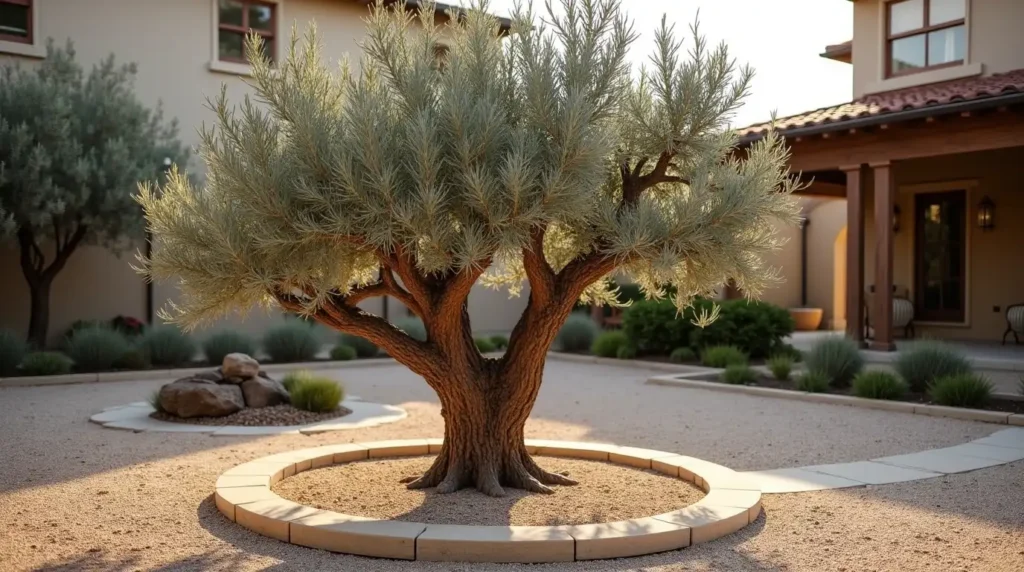
An olive tree brings soft green color, silver leaves, and a beautiful trunk to a garden. One tree can give a patio or courtyard a clear center.
Place it where you can see it from the house or main seating area. A gravel circle, low stone border, or simple bench can help frame it.
You do not need a large mature tree. Young or multi-stem olive trees can still create a strong shape.
Before planting, check the mature height and width of the variety. Some olive trees can grow much larger than expected. Their roots, falling fruit, and seasonal care may also affect where you place them.
Fruiting trees can leave olives on paths and patios. A fruitless variety may be easier near a seating area, but check whether it is suitable and allowed in your region.
Cold winters can damage olive trees. In colder areas, grow a compact variety in a large pot. Move it into a bright, protected place when temperatures fall.
A soft outdoor light placed near the base can highlight the trunk at night. Keep the lighting gentle so the tree remains the focus.
Add Citrus Trees for Color and Fragrance
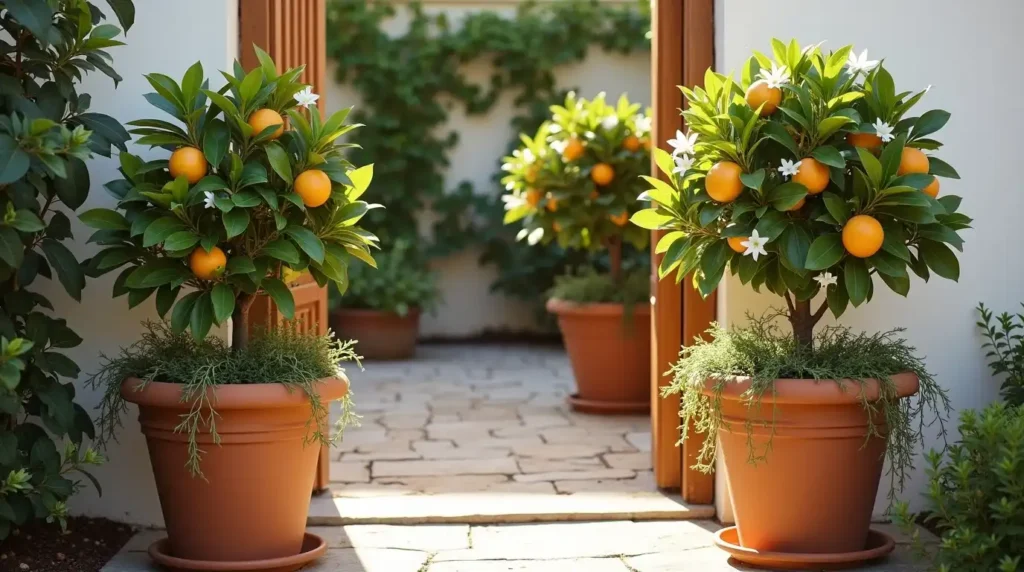
A citrus tree gives you several benefits from one plant. It can provide glossy leaves, scented flowers, bright fruit, and light shade.
Lemon trees are a popular choice, but oranges, limes, kumquats, and calamondins can also work well.
Plant citrus near a patio, doorway, or path. You will enjoy the flower scent more in places where you often sit or walk.
Dwarf varieties are useful in small gardens. They can grow in large containers and may be moved to a protected place during winter.
Citrus usually needs plenty of sun and soil that drains well. A tree in a pot will need regular watering because the soil dries faster than garden soil. It may also need citrus food during the growing season.
Do not choose a tree based on fruit alone. Check its final size and cold tolerance first.
A kumquat can fit into a small courtyard. A lemon tree may work beside a dining table. Two matching pots can frame a garden entrance.
Place trailing thyme or rosemary around the base of a large citrus container. This creates another layer of scent and softens the edge of the pot.
Plant Lavender, Rosemary, and Sage Near Paths
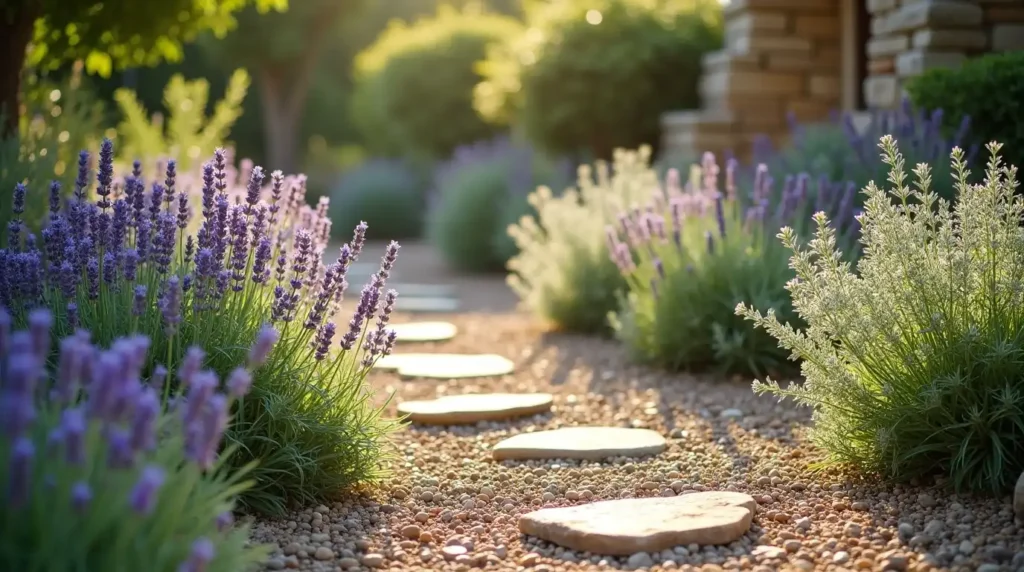
A Mediterranean garden should appeal to more than your eyes. Fragrant herbs add scent each time you brush past them.
Plant lavender along a path, near a gate, or beside a sitting area. Its flower spikes add soft color and attract many visiting insects.
Rosemary can grow as a small shrub, low hedge, or trailing plant. Prostrate rosemary looks good when it spills over the top of a stone wall.
Sage adds soft foliage and works well beside gravel and ornamental grasses. Thyme can grow between stepping stones where foot traffic is light.
Most Mediterranean herbs prefer bright sun and free-draining soil. They often struggle in heavy, wet ground.
Do not water lavender and rosemary as often as thirsty flowers. Constantly wet roots can cause poor growth or plant loss.
Humid climates can also be difficult for some varieties. Choose plants that local nurseries recommend for your conditions.
Place herbs where you can use them. A rosemary plant beside an outdoor kitchen is both useful and attractive.
The best location is one where you can touch, smell, and harvest the plants during normal garden use.
Layer Drought-Tolerant Plants for a Fuller Look
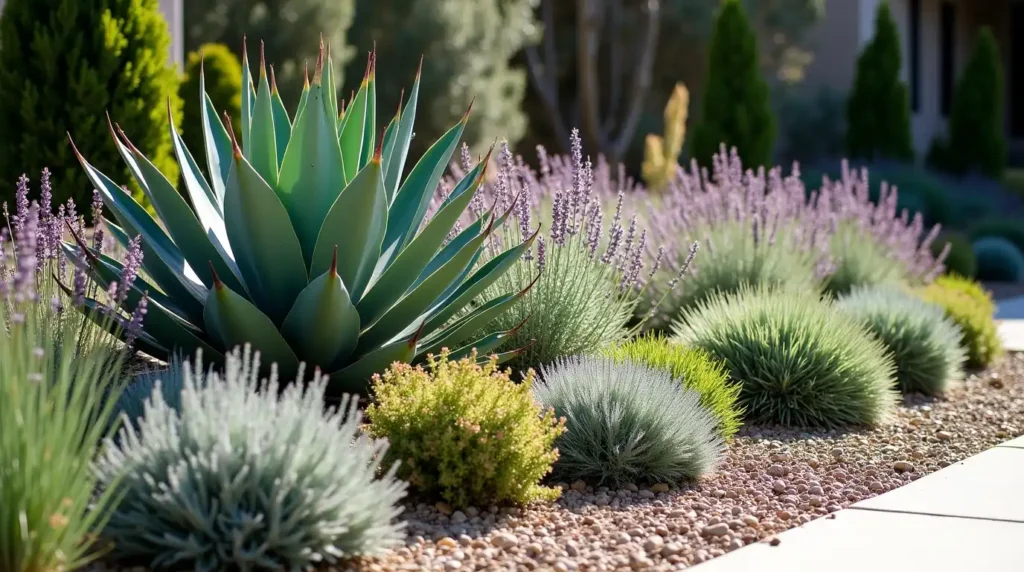
A low-water garden does not need to look empty. The right mix of plant shapes can make it feel full and rich.
Start with one or two structural plants. An agave, aloe, compact shrub, or small tree can provide a strong outline.
Add medium plants around them. Lavender, santolina, rockrose, germander, yarrow, and sage can fill the middle layer.
Finish with low plants. Thyme, lamb’s ear, and low ornamental grasses can cover bare soil and soften path edges.
Repeat the same plants in small groups. A row of five lavender plants will look calmer than five unrelated plants placed side by side.
Mix leaf textures. Pair soft silver foliage with bold, pointed leaves. Add a few flowering plants for seasonal color.
Always check local growing advice. Agave may suit a hot, dry yard but fail in a cold, wet one. Some plants may also spread too quickly in certain regions.
| Plant | Light | Water Need | Best Use |
| Lavender | Full sun | Low after roots establish | Borders and paths |
| Rosemary | Full sun | Low to moderate | Hedges and containers |
| Santolina | Full sun | Low | Edging and silver color |
| Agave | Full sun | Low | Bold focal point |
| Thyme | Full sun | Low | Ground cover and pots |
Leave enough room for each plant to reach its mature size.
Add a Pergola to Make Hot Areas More Useful
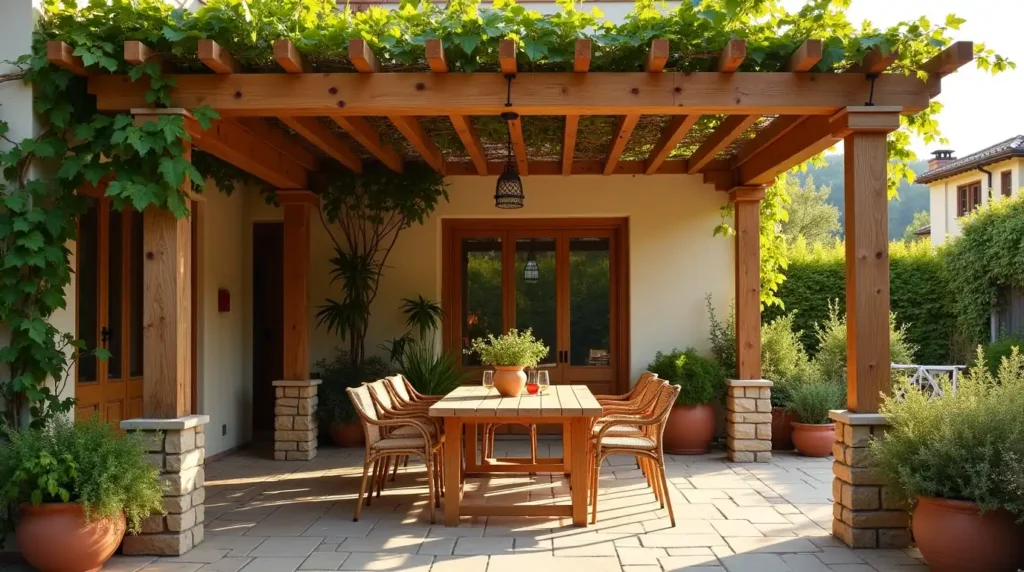
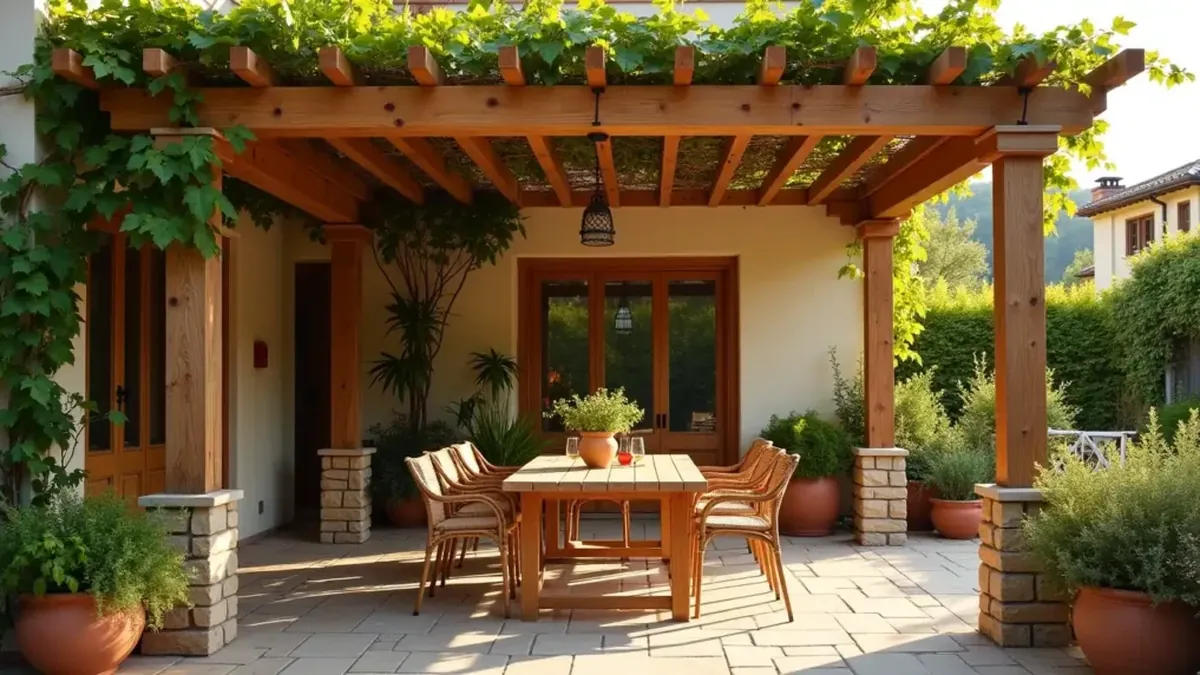
An open patio can become too hot to enjoy during the afternoon. A pergola creates shade and makes the area feel like an outdoor room.
Place it over a dining table, bench, or lounge area. Watch how the sun moves before deciding where it should go. Afternoon shade is often more useful than morning shade.
Wood creates a warm and natural look. Painted timber, metal, and stone supports can also suit Mediterranean patio ideas.
You can cover the top with grapevines, climbing roses, outdoor fabric, bamboo screening, or a retractable shade panel.
Each choice has limits. Fabric may fade or tear. Vines need pruning. Dense plant growth can become heavy after rain.
Make sure the posts are safely fixed. Check local building rules before adding a large or attached structure.
For a lower-cost option, add reed screening across an existing frame. A wall-mounted shade panel may work better in a narrow courtyard.
These Mediterranean garden design ideas work best when plants, materials, and furniture repeat a small group of colors and textures.
Add a Small Fountain Without Wasting Space
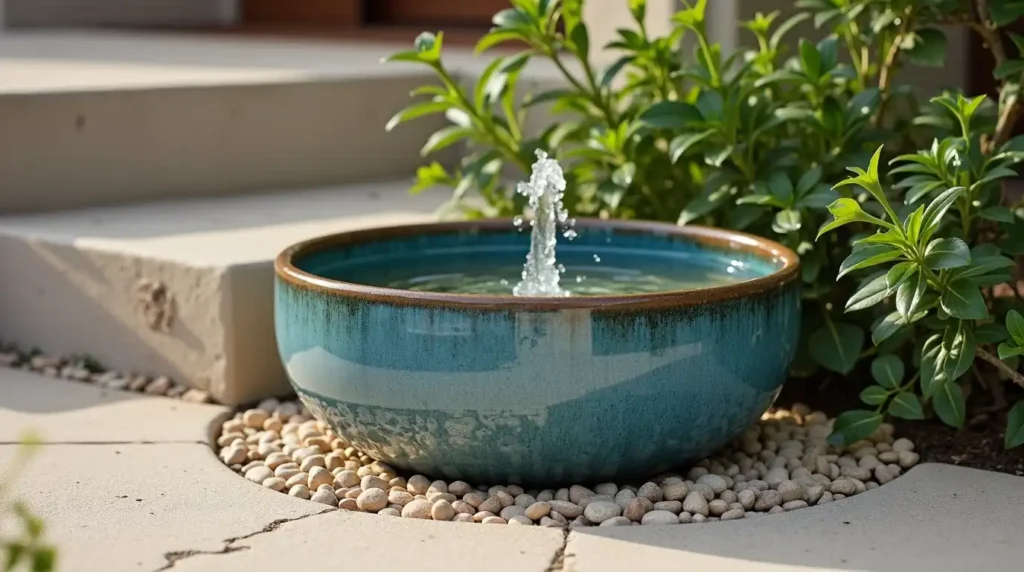
You do not need a large pool to enjoy the sound of water. A small fountain, bubbling pot, or water bowl can become a peaceful focal point.
Place it near a seating area. The sound can help soften traffic noise and make the space feel more private.
A wall fountain works well in a narrow courtyard because it takes up little floor space. A blue ceramic bowl can add color to a gravel garden. A stone basin may suit a more natural design.
Choose a recirculating system. It moves the same water through the pump instead of using a constant fresh supply.
Keep the feature easy to clean. Remove fallen leaves and check the water level during hot weather.
Still water can attract mosquitoes. Moving water helps, but you should also clean the bowl and follow local pest advice.
Freezing weather may damage pumps, pipes, and ceramic bowls. Empty or protect the feature before winter if needed.
Renters can use a small plug-in fountain that does not require building work.
Choose a water feature you can maintain in a few minutes each week. A beautiful fountain will quickly lose its appeal if it becomes dirty or difficult to manage.
Use Walls and Raised Beds to Give the Garden Shape
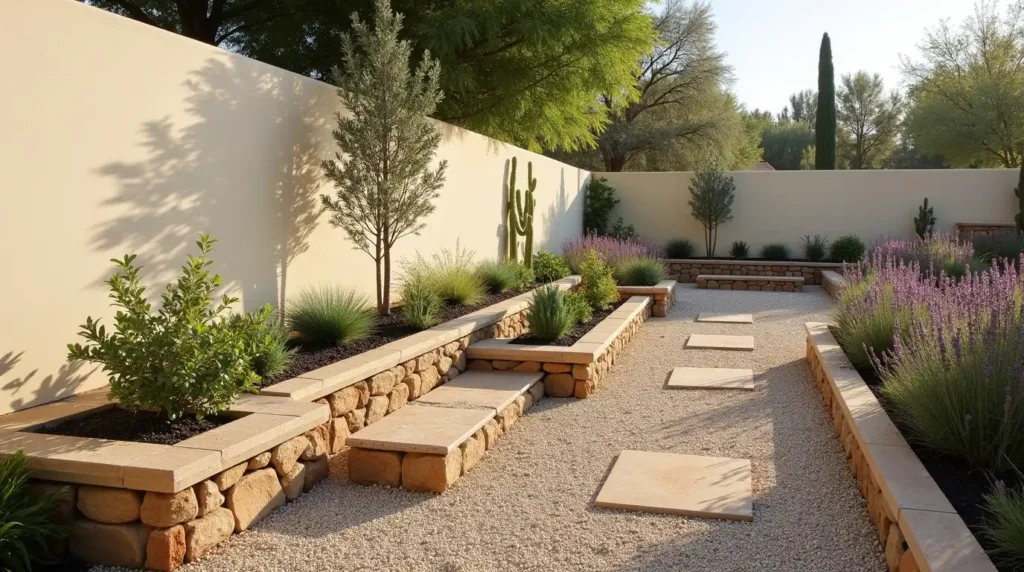
Relaxed planting can look messy when it has no clear borders. Walls, edging, and raised beds give the garden a stronger structure.
A cream or white stucco wall can reflect light and provide a clean background for olive trees, vines, and terracotta pots.
Low stone walls can divide one part of the garden from another. They can also provide extra seating when the top is wide and smooth.
Use raised beds if your soil drains poorly. Mediterranean garden plants often suffer in ground that stays wet for too long.
Fill raised beds with suitable soil rather than placing drought-loving plants straight into heavy clay.
Repeat the same wall finish or stone in more than one place. For example, use the same stone around a raised herb bed and along a gravel path.
Local stone often fits the house and surrounding area better than imported materials. It may also cost less to transport.
Retaining walls need proper drainage. Trapped water can place pressure behind the structure and cause damage.
Use one main wall finish and one main stone type. Too many materials can make the garden feel broken into unrelated parts.
Add Hand-Painted Tiles in Small Areas
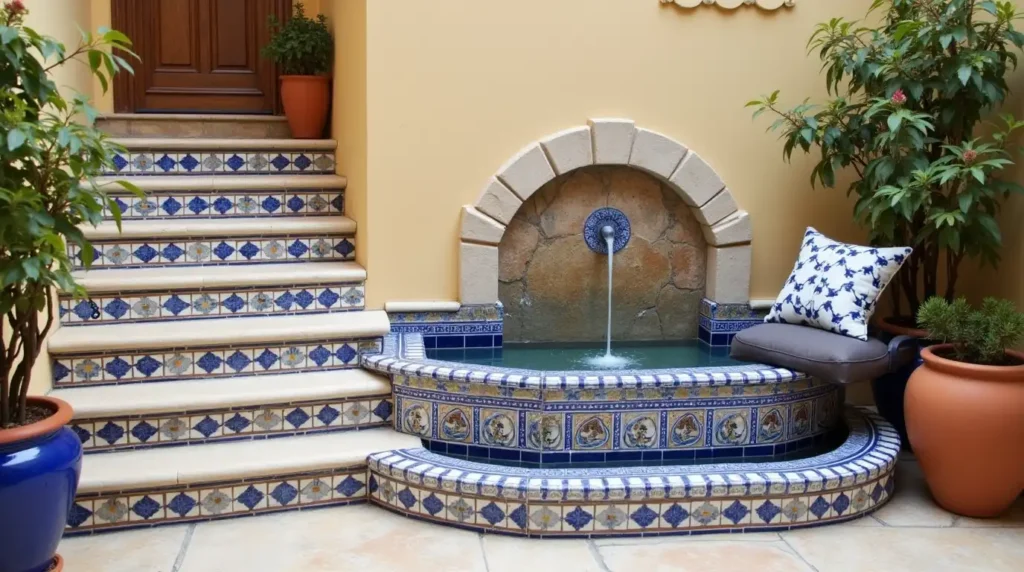
Patterned tile can give a simple garden more character. But you do not need to cover a whole wall or floor.
Use tiles as small accents. Good places include:
- Stair risers
- Fountain surrounds
- Bench backs
- Outdoor tabletops
- Wall niches
Blue and white tile looks fresh against chalk-white walls. Warm red, green, and yellow patterns work well with terracotta and stone.
Repeat colors that already appear in the garden. A blue tile detail will feel more connected if the same blue appears in a pot or cushion.
Choose tiles made for outdoor use. Indoor tiles may become slippery, fade, or crack.
Cold climates need frost-resistant materials. Water can enter weak tile or grout and expand when it freezes.
Walking surfaces should have enough grip, especially around water features. Smooth glazed tiles may be unsafe on wet steps or patios.
Start with one small area. You could tile the front of two steps or add a narrow border around a fountain.
A small pattern can draw attention without taking control of the whole design.
Build an Outdoor Dining Area You Will Use
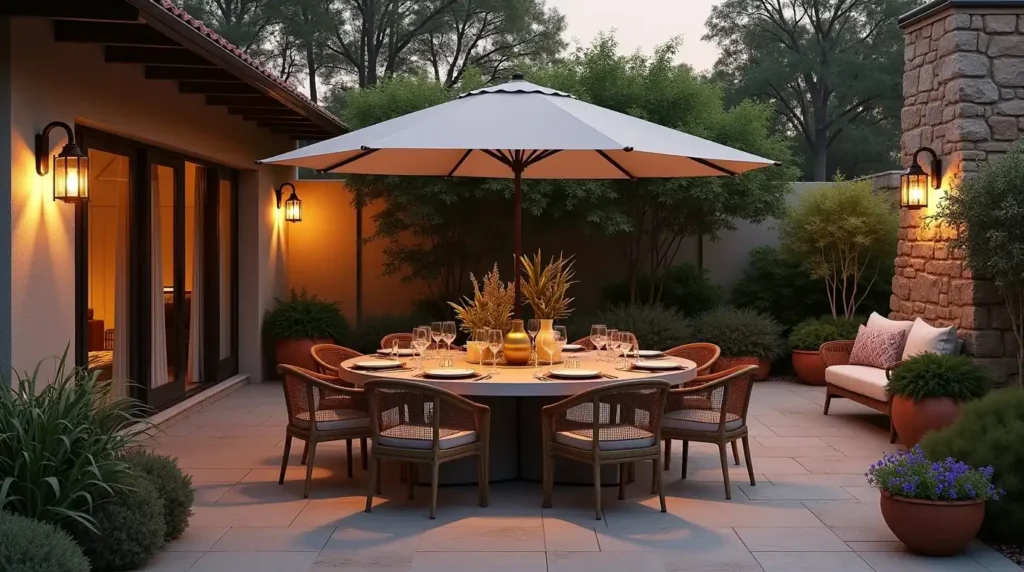
A beautiful garden is more valuable when you can sit, eat, and spend time in it.
Choose a flat area close to the house. Carrying food and dishes across a long garden path can become annoying.
Make sure there is enough space around the table. Chairs should pull out without hitting a wall, pot, or planting bed.
A round table often works well in a small courtyard. A long wooden table suits a larger pergola. A folding bistro set can fit on a balcony.
Add shade for daytime meals. A tree, pergola, umbrella, or fabric canopy can make the space cooler.
Use soft lighting for evening meals. Wall lights, low garden lights, and outdoor string lights can make paths safer without creating harsh glare.
Choose furniture that matches the space. Heavy pieces can overwhelm a small patio. Very small furniture may look lost in a large yard.
Add a nearby surface for drinks and serving dishes. This could be a narrow console, built-in ledge, or outdoor counter.
Before buying furniture, place temporary chairs in the area. Sit there in the morning, afternoon, and evening. You may notice sun, wind, noise, or privacy problems.
Use Climbing Plants to Soften Bare Walls
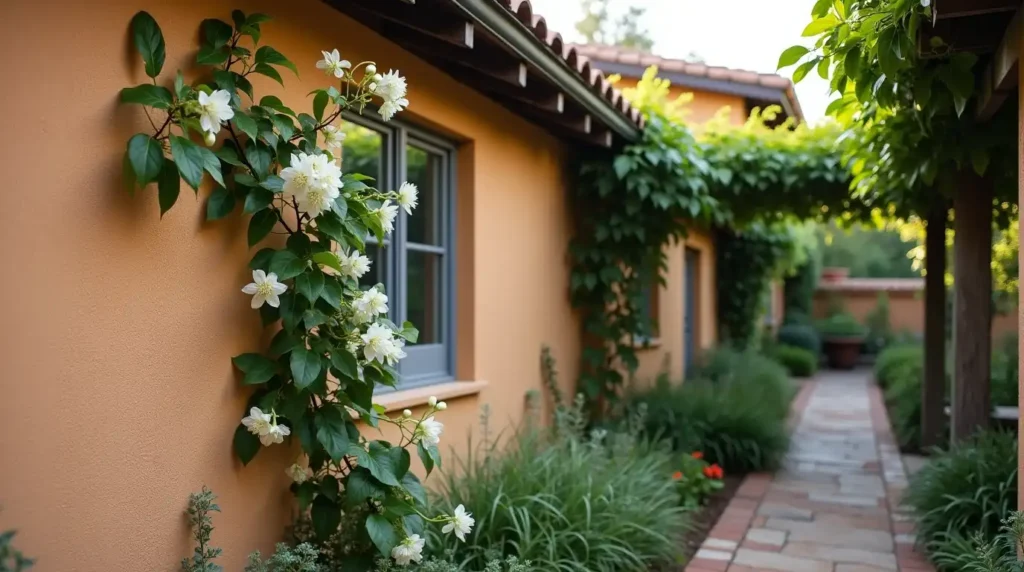
A bare wall can make a garden feel hard and unfinished. Climbing plants add leaves, flowers, shade, and privacy.
Grapevines can cover a strong pergola and provide seasonal shade. Star jasmine offers glossy leaves and scented flowers in suitable climates.
Bougainvillea adds bright color but needs warmth. Climbing roses work in many cooler areas. Clematis can fit smaller supports if you choose the right variety.
Install wires, trellis panels, or another support before planting. This makes training the stems much easier.
Match the support to the mature weight of the plant. A light trellis may not hold a large wisteria.
Keep strong vines away from damaged walls, roofs, gutters, and weak fences. Fast growth can create extra pruning work.
Check whether a plant is harmful to pets or children. You should also check local invasive plant lists before buying.
Decide whether you want summer shade or year-round screening. A deciduous grapevine loses its leaves in winter. An evergreen climber may give more privacy but block winter light.
The fastest-growing plant is not always the best choice. A slower vine may be easier to keep under control.
Create a Mediterranean Garden in a Small Space
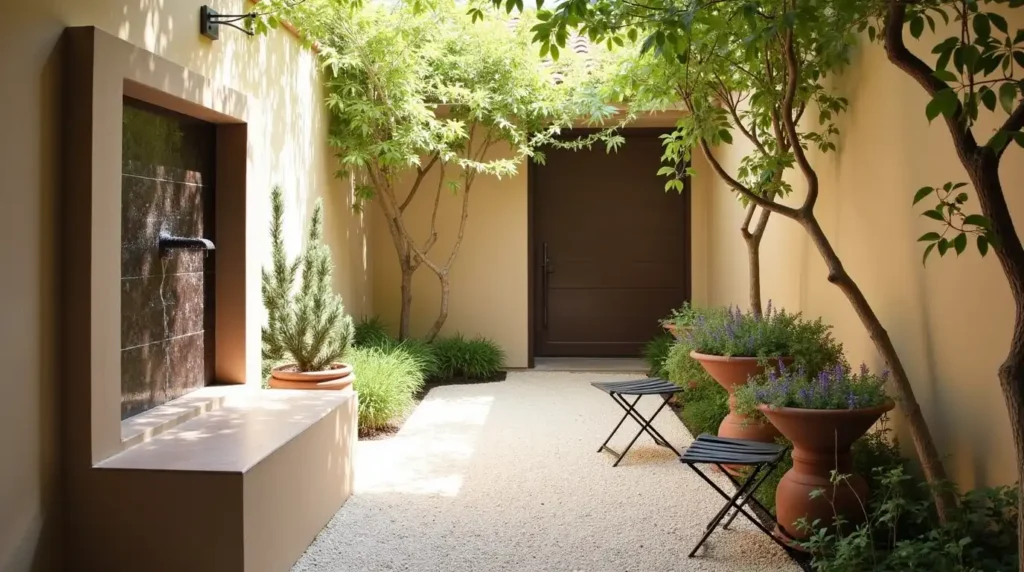
You can create this style on a balcony, narrow patio, or tiny courtyard. The secret is to use fewer items with a clear purpose.
Choose one main feature. This might be a dwarf citrus tree, tall terracotta pot, wall fountain, or slim olive tree.
Use vertical space for extra plants. Add a trellis, wall planter, narrow shelf, or hanging pots.
Keep the color palette simple. Two main colors and one accent shade are enough for a small area.
Choose furniture that does not block the view. Folding chairs, open metal frames, and built-in benches can help the space feel larger.
Keep doors and paths clear. A beautiful pot becomes a problem if you have to step around it every day.
Small Balcony Plan
Use one dwarf citrus tree, a rail planter filled with herbs, and one folding chair.
Narrow Courtyard Plan
Add a wall fountain, slim bench, climbing jasmine, and a pale gravel floor.
Compact Backyard Plan
Create a small gravel sitting area. Add one focal tree and repeat lavender along the edge.
Mirrors can reflect light, but place them carefully. Bright reflections may confuse birds.
Remove one unused item before adding more decor. Small spaces often improve when you reduce clutter.
Adapt Mediterranean Garden Design Ideas to Your Climate
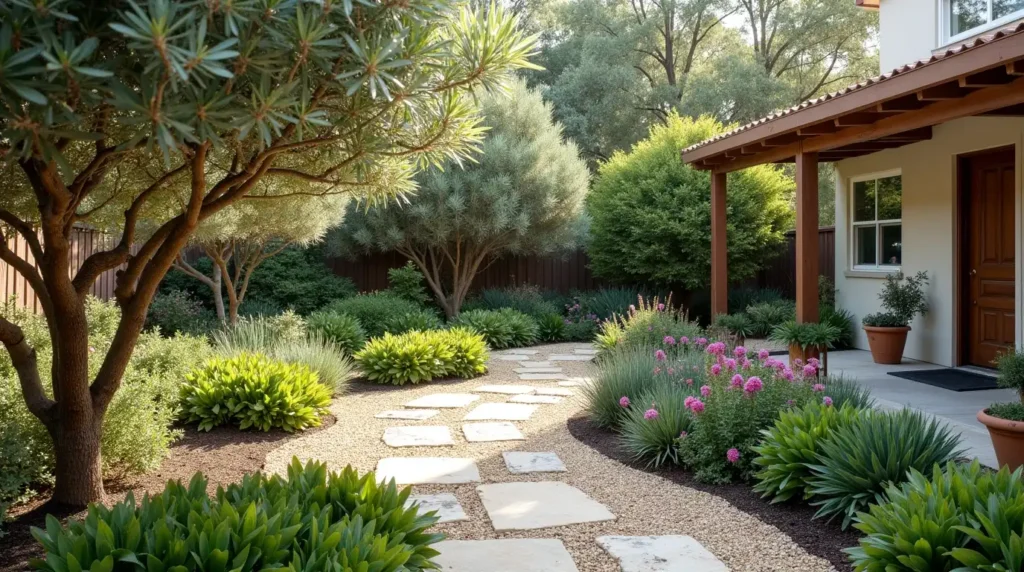
Mediterranean style is based on color, texture, shade, and outdoor living. It does not depend on one fixed plant list.
Start by checking your winter temperatures, summer heat, rainfall, soil, and sun.
If olive trees cannot survive your winters, choose a hardy tree with silver or gray-green leaves. You can create a similar visual effect without forcing the wrong plant into your garden.
Grow citrus in containers if frost is common. Move the pots into a bright protected place during cold weather.
In humid regions, choose herbs and flowering plants that can handle moisture. Lavender may struggle in heavy soil or areas with poor air movement.
Improve drainage before adding dry-climate plants. Raised beds, gravel layers in paths, and suitable soil can help. Do not assume that a plant needs no water just because it handles drought. New plants still need regular care while their roots grow.
Group plants with similar water needs. This makes watering easier and reduces waste.
Use local stone and climate-friendly plants where possible. They often fit the area better and may be easier to maintain.
Check local plant restrictions and invasive species lists. A plant that behaves well in one country may spread quickly in another.
Create Your Mediterranean Garden One Step at a Time
A Mediterranean garden combines warm colors, gravel, natural stone, fragrant plants, terracotta pots, shade, and comfortable seating.
You do not need to add every feature at once.
Start with one area that causes problems. Replace a dry patch of lawn with gravel. Add three large pots to a plain patio. Plant rosemary beside a path. Place a small table in a shaded corner.
Measure your space and watch how the sun moves across it. Then choose three ideas that fit your climate, budget, and daily routine.
The best Mediterranean garden design ideas balance beauty with the real conditions in your yard. Choose plants that can grow well, materials you can maintain, and seating you will use.
A simple garden that works for your life will feel better than an expensive design that creates more work.