17 Year-Round Garden Design Ideas for Every Season
Your garden may look bright and full in spring. Then summer ends, the flowers fade, and the whole space starts to feel empty.
This is a common problem. Many people choose plants because they look good at the garden center that day. They do not check how the same plants will look three or six months later.
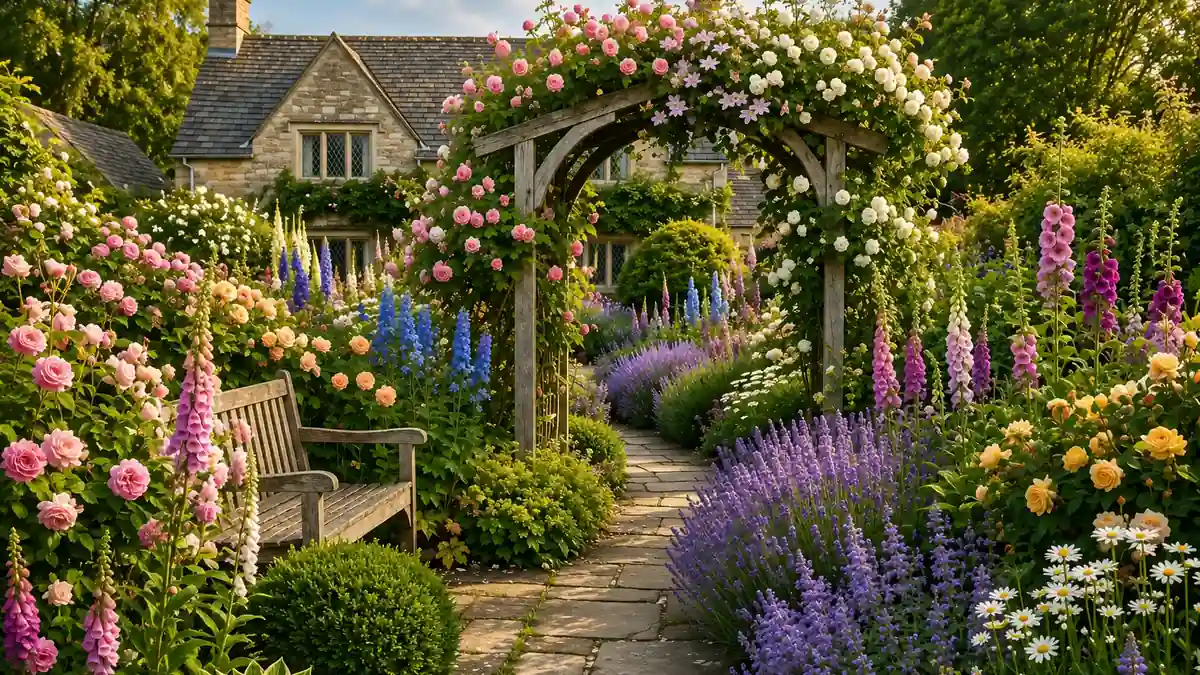
A good year-round garden design works differently. It mixes permanent structure with flowers, leaves, bark, berries, seed heads, and useful garden features. Each part has a job during a different season.
You do not need a huge yard or a large budget. You also do not need flowers in every corner all year. The goal is to give your garden shape, color, texture, or movement in every month.
These 17 four-season garden ideas will help you find weak spots and make better plant choices. You will also learn how to plan seasonal containers, improve winter views, and create a simple care calendar.
Start with a seasonal plan. Then build your garden one layer at a time.
How to Plan a Year-Round Garden Design
A garden center can be full of color while your own yard has empty months. This often happens when you buy plants one shopping trip at a time.
Before buying anything, study the garden you already have.
Look at it from the places you use most. This may include your kitchen window, patio, front door, driveway, or favorite chair.
Take note of what catches your eye. It may be a flowering tree, an evergreen shrub, a stone path, or a group of grasses.
Next, think about every season.
Ask yourself:
- What looks good in early spring?
- Where does summer color come from?
- Which plants change color in fall?
- What remains visible in winter?
- Which months feel flat or empty?
Create a simple 12-month garden interest chart. Write the months across the top or down one side.
Add columns for flowers, leaves, bark, berries, seed heads, evergreens, containers, and garden features. Aim for two or three points of interest in each month.
Your chart may show spring bulbs in March, flowering shrubs in May, perennials in July, grasses in October, and bright bark in January.
You should also check the growing conditions before choosing plants. Note how much sun each bed receives. Check whether the soil stays wet, dries quickly, or drains well.
Learn your local growing zone. Pay attention to heat, frost, wind, and rainfall.
Most of all, check the mature size of every tree and shrub. A small plant in a nursery pot may become far too large for its space.
Once you find the seasonal gaps, you can fill them with purpose.
5 Ways to Give Your Garden Structure All Year
Flowers come and go. Trees, shrubs, paths, walls, and focal points keep the garden looking planned after the flowers fade.
Start with these permanent layers before adding more seasonal color.
Start With Evergreen Plants
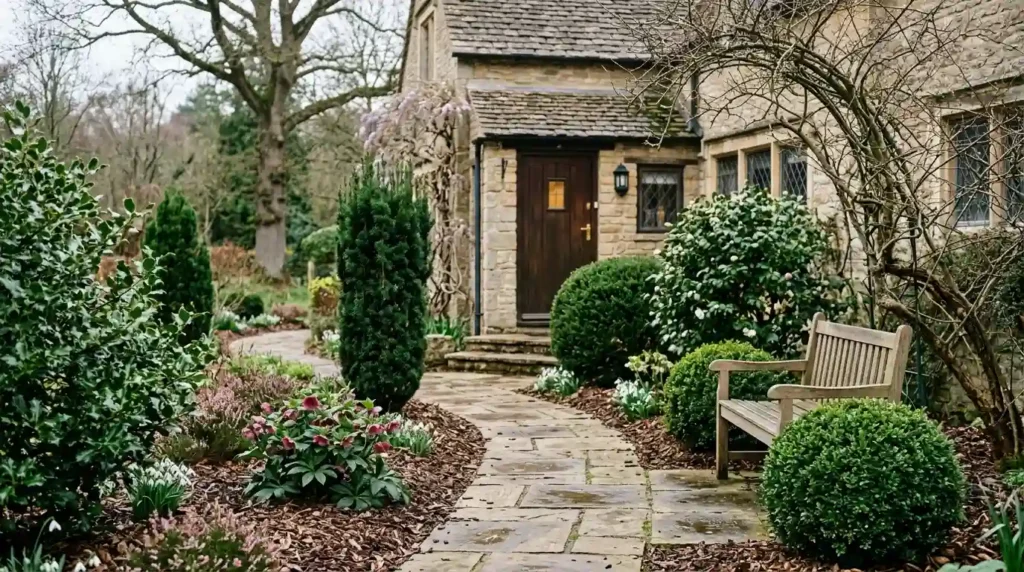
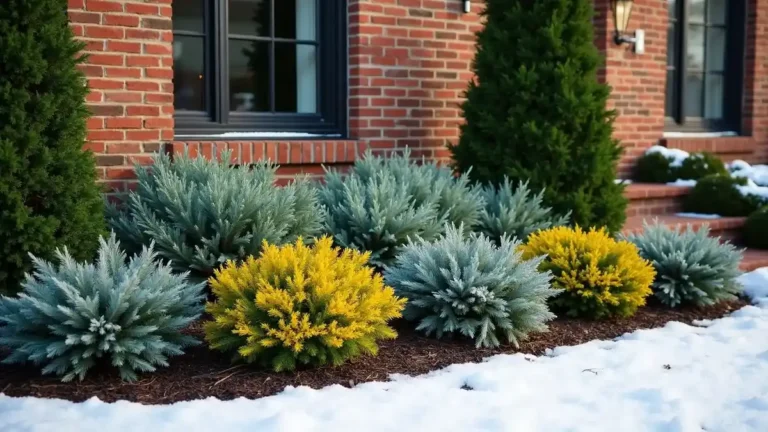
Evergreen plants hold their leaves or needles through most or all of the year. They help your garden keep its shape during winter.
Use evergreens as anchors rather than filling every bed with them.
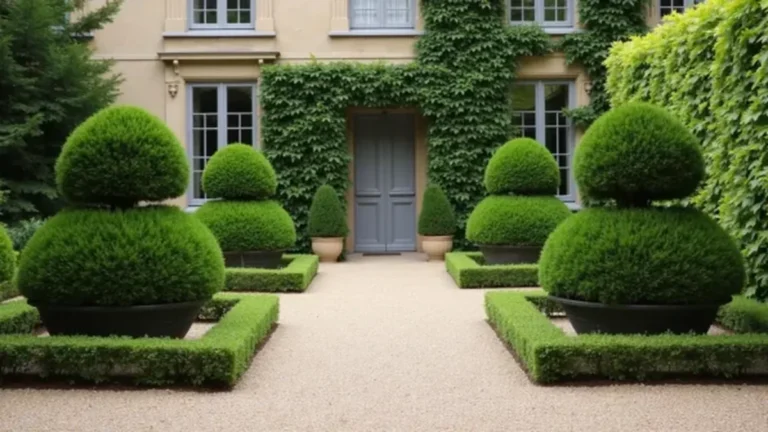
Place one near the front door. Add another at the end of a path or in a bare corner. You can also use them to frame a bench, window, gate, or garden feature.
Good choices may include boxwood, holly, yew, juniper, dwarf conifers, camellia, pittosporum, and evergreen viburnum.
The best choice depends on your climate and growing conditions. Some plants may spread too fast or struggle in local weather.
Mix different forms instead of using one type everywhere. Try a rounded shrub with an upright conifer or a loose broadleaf evergreen.
Always check the mature height and width. This small step can save you years of heavy pruning.
Choose Trees and Shrubs With Strong Shapes
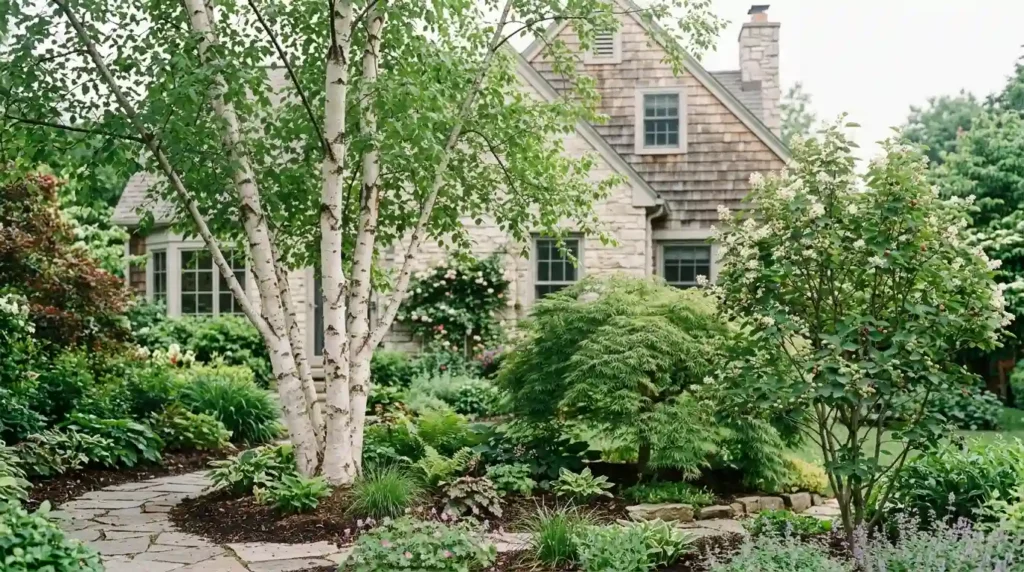
A tree can add beauty even when it has no leaves.
Look for trees and shrubs with clear branches, attractive trunks, or a strong natural shape. Upright, arching, rounded, and multi-stemmed forms can all work well.
A multi-stem birch can brighten a winter view. A Japanese maple can add fine branches and fall color. A serviceberry may offer spring flowers, summer fruit, and colorful fall leaves.
Other choices may include magnolia, crepe myrtle, ornamental crabapple, or paperbark maple.
Think about the plant from every angle. It should suit the house, nearby beds, and available space.
One well-placed tree often has more impact than several shrubs crowded into the wrong area.
Repeat Plants to Make the Garden Feel Connected
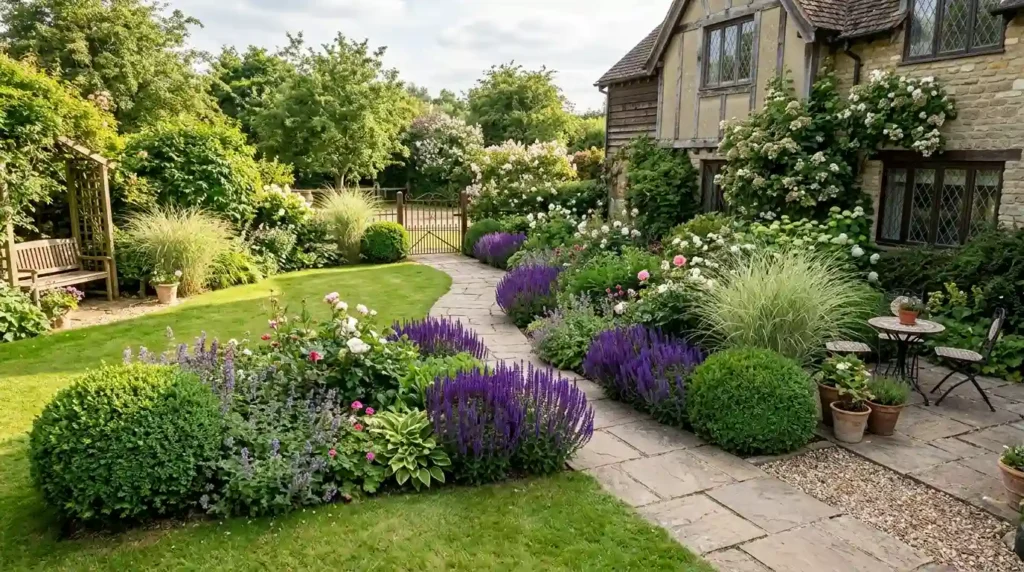
A garden can look messy when every plant is different.
Repetition creates a clear pattern. It guides your eye through the space and helps separate planting areas feel connected.
Choose one evergreen, flowering perennial, or ornamental grass. Repeat it in at least three places.
For example, you could repeat groups of salvia along a path. You could place the same rounded evergreen at both ends of a border. You could use one grass near the patio, gate, and seating area.
Small gardens need fewer plant types. Too much variety can make a limited space feel crowded.
A simple plant pattern is also easier to care for. You learn what each plant needs and can complete similar tasks at the same time.
Add Hardscape That Looks Good in Every Season
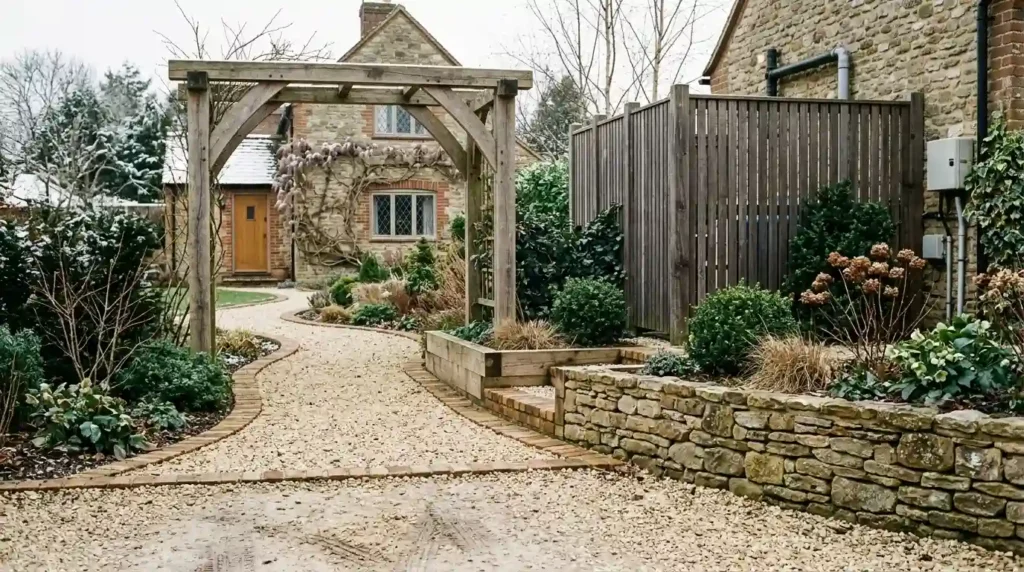
Hardscape means the solid parts of your garden. It includes paths, walls, steps, fences, arches, raised beds, and edging.
These features remain visible when plants become bare.
A gravel path can create a clear line through soft planting. Brick edging can keep a border neat. A low stone wall can add height and texture.
Raised beds make planting areas look more planned. Wooden screens can hide bins, storage areas, or utility equipment.
Choose materials that match your home. Brick may suit a traditional house. Simple paving and metal edging may fit a modern yard.
Try to limit the number of materials. Too many finishes can make the space feel broken into small parts.
Good hardscape should support the plants. It should not compete for attention.
Create One Strong Focal Point
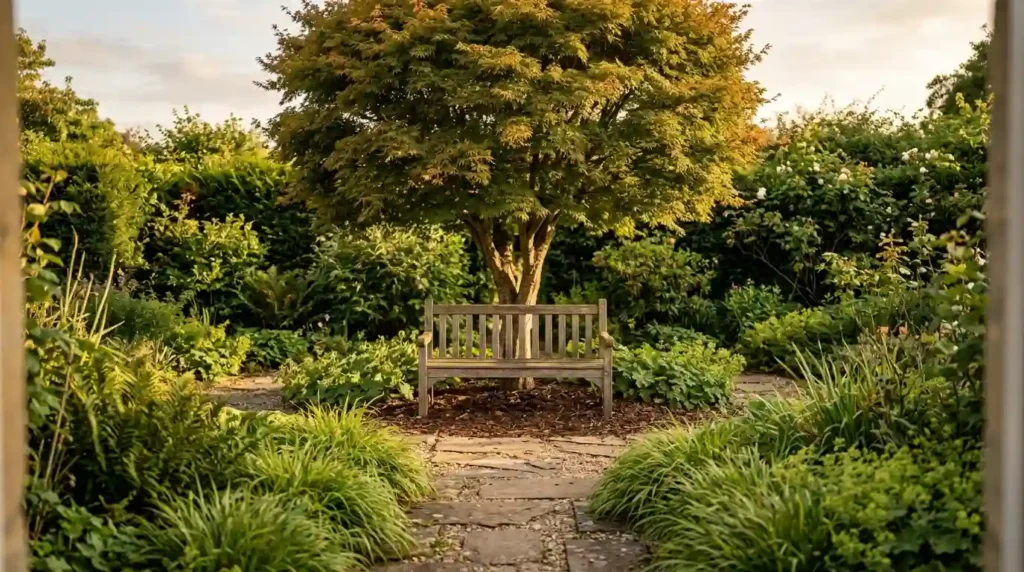
A focal point gives your eye a place to rest.
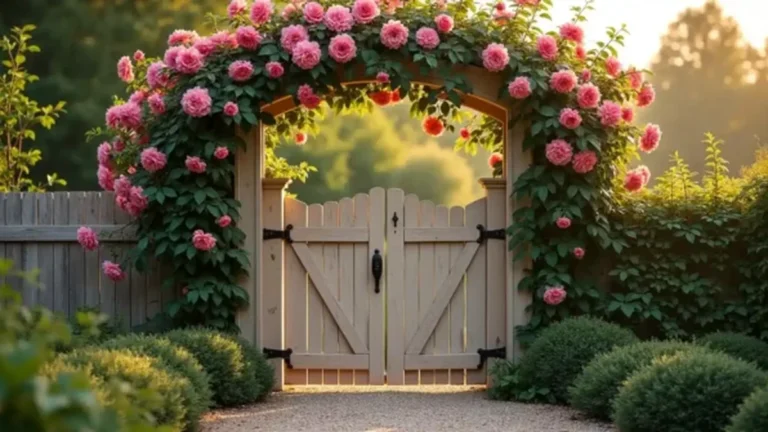
It can be a bench, birdbath, sculpture, large container, small tree, water bowl, or garden arch.
Place it where you can see it from an important view. This may be the end of a path or the center of a window view.
Match the size of the feature to the garden. A tiny ornament may disappear in a wide lawn. A large sculpture may overpower a small courtyard.
Avoid placing several bold features close together. They will fight for attention.
A plain bench beneath a small tree may be enough. It gives the garden purpose in every season, even when few plants are flowering.
Once the garden has a strong base, seasonal plants can add changing layers of color and texture.
3 Ways to Fill Bare Spring Garden Beds
Spring often receives the most attention. Still, a few weeks of tulips will not carry the garden into summer.
Create a sequence that starts early and lasts for several months.
Layer Spring Bulbs by Bloom Time
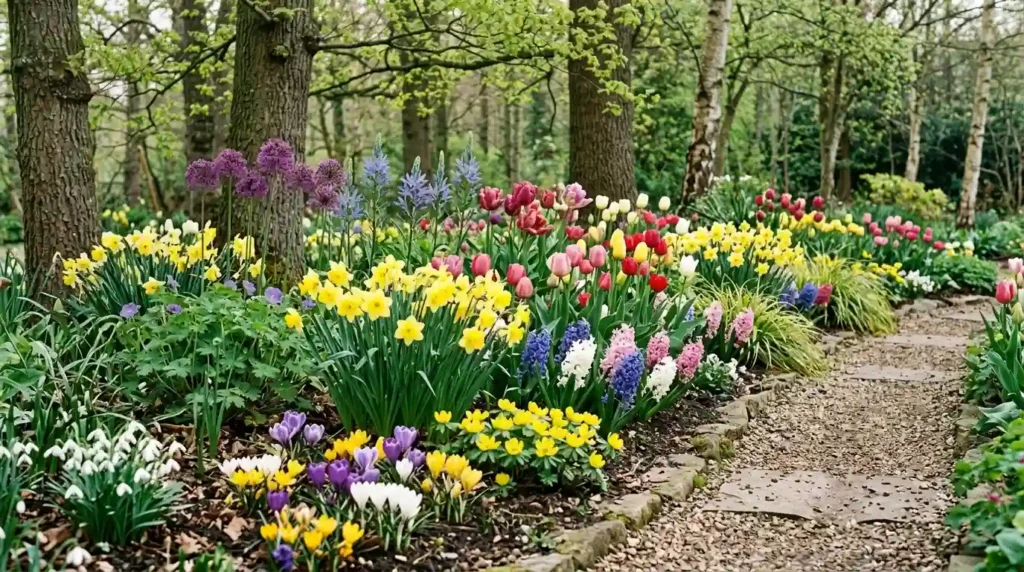
Do not choose bulbs that all flower at once.
Mix early, middle, and late-spring types. This gives you a longer display without using more space.
Snowdrops, crocuses, and winter aconites can appear early. Daffodils, tulips, and hyacinths can follow. Alliums, camassia, and late tulips can close the season.
Plant bulbs in groups rather than in single straight lines. Loose groups often look more natural and are easier to notice from a distance.
You can place bulbs beneath trees that lose their leaves. They will receive spring sunlight before the tree canopy becomes full.
Plant them near entrances, paths, and windows. These are the places where early color has the most value.
Do not remove bulb leaves as soon as flowers fade. The leaves help store energy for the next year.
Hide fading foliage behind plants that emerge later, such as hardy geraniums, hostas, or ornamental grasses.
Add Early-Flowering Shrubs for More Impact
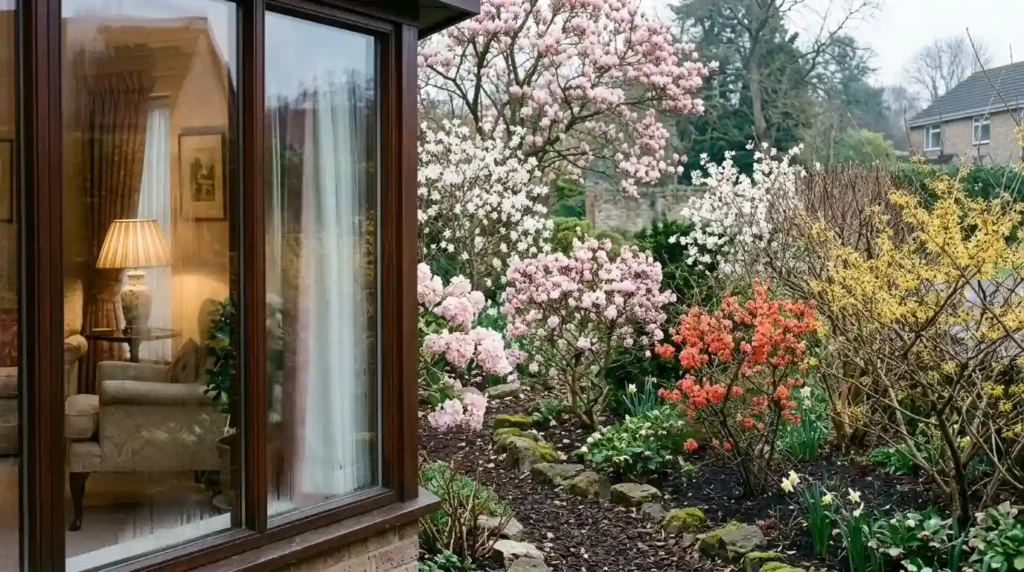
Small bulbs add welcome color, but they may not fill a large view.
Early-flowering shrubs add height, width, and stronger visual impact. They can brighten a bare border before summer plants have grown.
Options may include witch hazel, forsythia, flowering quince, viburnum, serviceberry, and magnolia.
Try to choose shrubs that offer more than spring flowers.
A serviceberry may produce fruit and fall color. Some viburnums offer flowers, berries, and attractive leaves. Magnolia branches can create a strong shape after the flowers drop.
Place spring shrubs where you can see them from inside. You may spend more time looking through a window than walking through the garden in cool weather.
Give each shrub enough room to reach its natural size. Heavy pruning can remove flowers and spoil its shape.
Cover Empty Soil With Spring Ground Covers
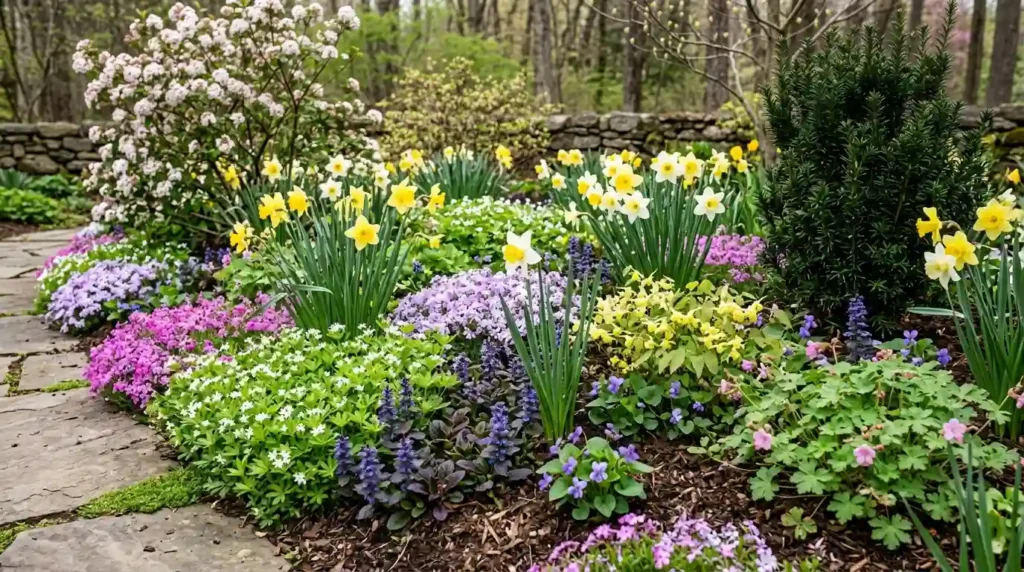
Large patches of bare soil can make a spring garden feel unfinished.
Ground covers spread across the soil and connect taller plants. They can soften bed edges and help reduce some weeds.
Possible choices include creeping phlox, epimedium, sweet woodruff, ajuga, native violets, and hardy geraniums.
Choose plants that suit the light and moisture in the area. A shade-loving ground cover may struggle in full afternoon sun.
Check how fast each plant spreads. Some can move beyond their planned space and crowd nearby plants.
A small spring bed could include daffodils for early flowers, a viburnum for height, hardy geraniums for ground cover, and one evergreen for winter shape.
Each plant supports the next part of the season. This helps create garden interest all year instead of one short burst of color.
3 Ways to Keep Your Summer Garden Full
A summer garden can still look empty when every plant flowers during the same few weeks.
Staggered flowers, lasting leaves, and containers will help the display continue.
Stagger Perennial Bloom Times
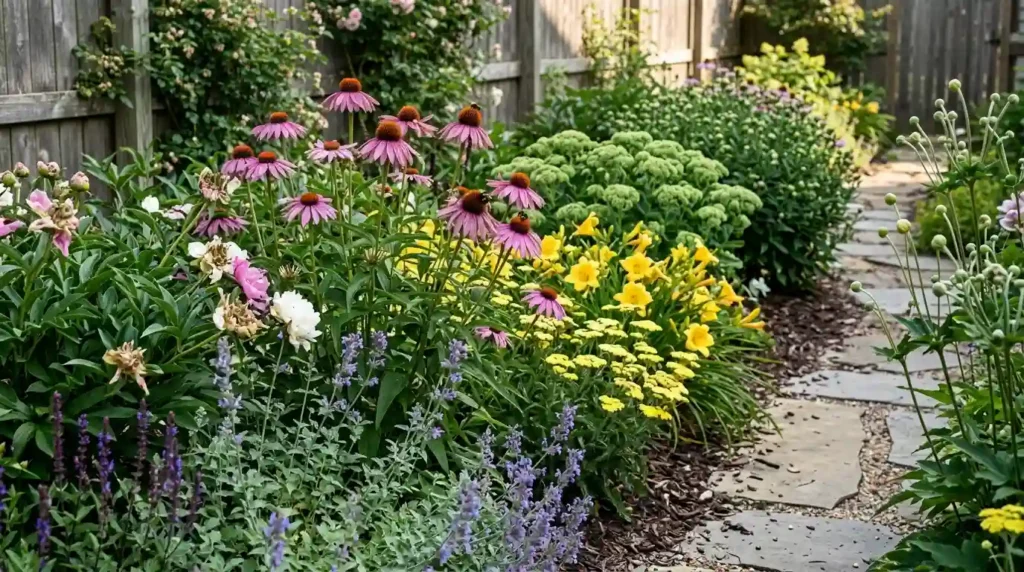
Do not buy every perennial while it is flowering at the store.
That choice may give you a border that looks great for one month and dull for the rest of summer.
Check the expected flowering period on the plant label. Choose early, middle, and late-summer bloomers.
Peonies, salvia, and catmint can start the season. Coneflowers, daylilies, and yarrow can take over in midsummer. Sedum, asters, and Japanese anemones can add later color.
You do not need one of everything. Repeat several reliable plants across the border.
Long-flowering plants can also help fill gaps. The right choices will depend on your heat, rainfall, soil, and local growing zone.
Keep a simple bloom list on your phone. Write down the month when each plant usually flowers.
This makes it easier to spot weeks with too little color.
Use Leaves as Much as Flowers
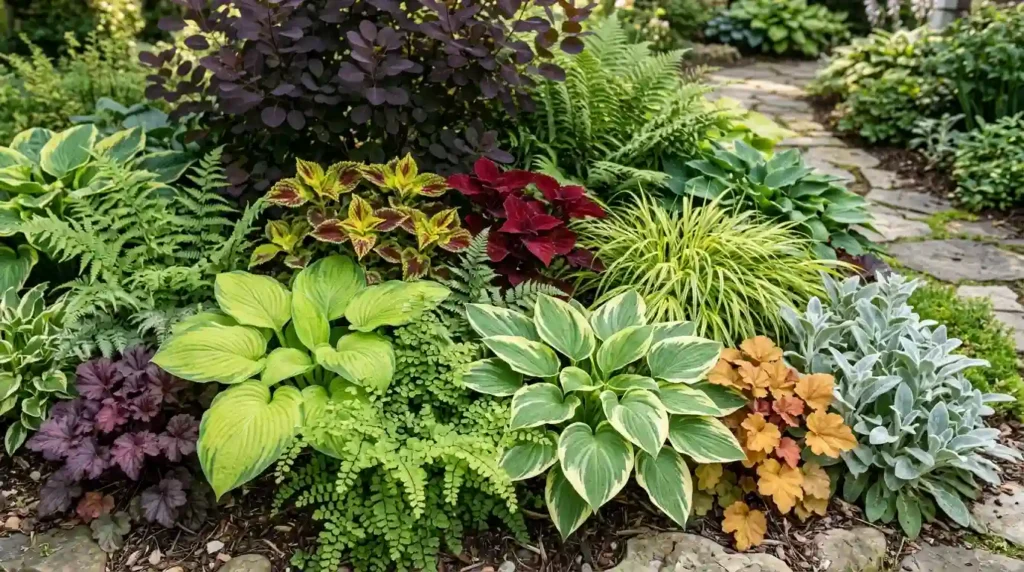
Flowers may last for a few weeks. Good foliage can last for months.
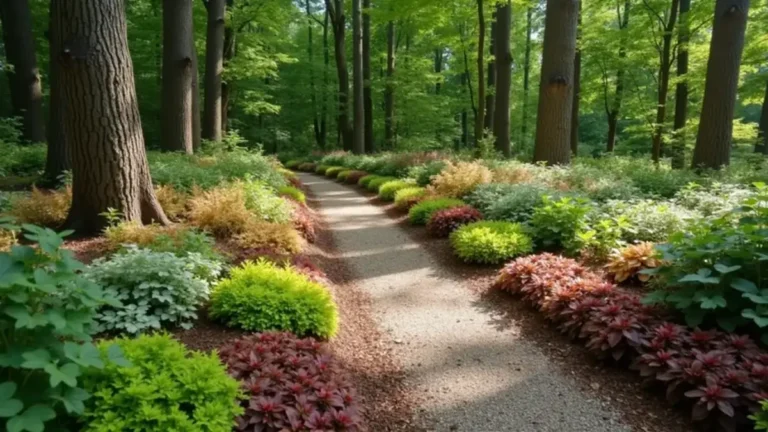
Mix different leaf shapes and sizes. Use broad hosta leaves with fine ferns. Pair soft grasses with rounded heuchera leaves.
You can also mix several shades of green. Add small amounts of silver, purple, gold, or variegated leaves for contrast.
Useful foliage plants may include hostas, ferns, heucheras, ornamental grasses, lamb’s ear, coleus, and smokebush.
Do not add too many bold leaf colors. A small amount will stand out more.
Texture matters too. Glossy leaves reflect light. Soft leaves create a calm look. Fine leaves add movement when the wind blows.
Before buying another flowering plant, ask what its leaves will add after the flowers fade.
A plant with good foliage earns its space for much longer.
Fill Seasonal Gaps With Containers
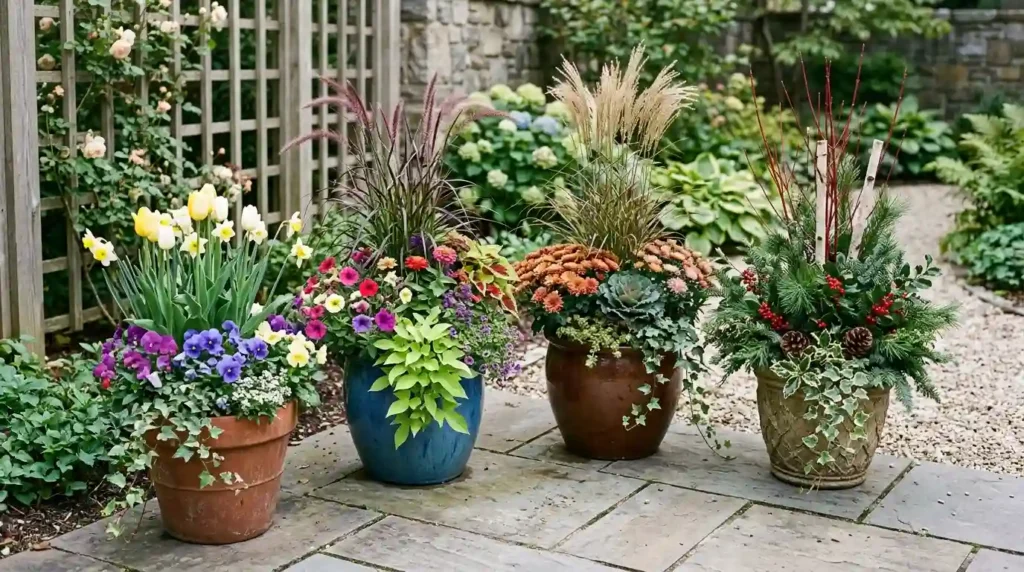
Containers are useful when a bed looks empty but you are not ready to change the planting.
Place pots near doors, patios, stairs, seating areas, or bare corners. You can move them when another area needs color.
Choose containers that suit the house and garden. Repeating one material or shape creates a cleaner look.
For spring, use bulbs and violas. In summer, add herbs and annual flowers. Fall pots can hold grasses and cool-season plants.
During winter, frost-safe containers can hold evergreen branches, pinecones, and decorative stems.
A simple planting method uses three layers. Add one tall plant, a full middle layer, and a trailing plant near the edge.
You do not have to replace every plant each season. A small evergreen or grass can remain in the pot while the lower plants change.
Containers need more regular watering than garden beds. Check them often during hot and windy weather.
Choose a few late-summer plants before early flowers fade. This will help the border move into fall without a sudden loss of color.
3 Ways to Make Fall One of Your Best Seasons
Fall does not have to mean empty beds and fast cleanup.
Late flowers, grasses, berries, and changing leaves can make this one of the strongest garden seasons.
Plant Flowers That Bloom Late
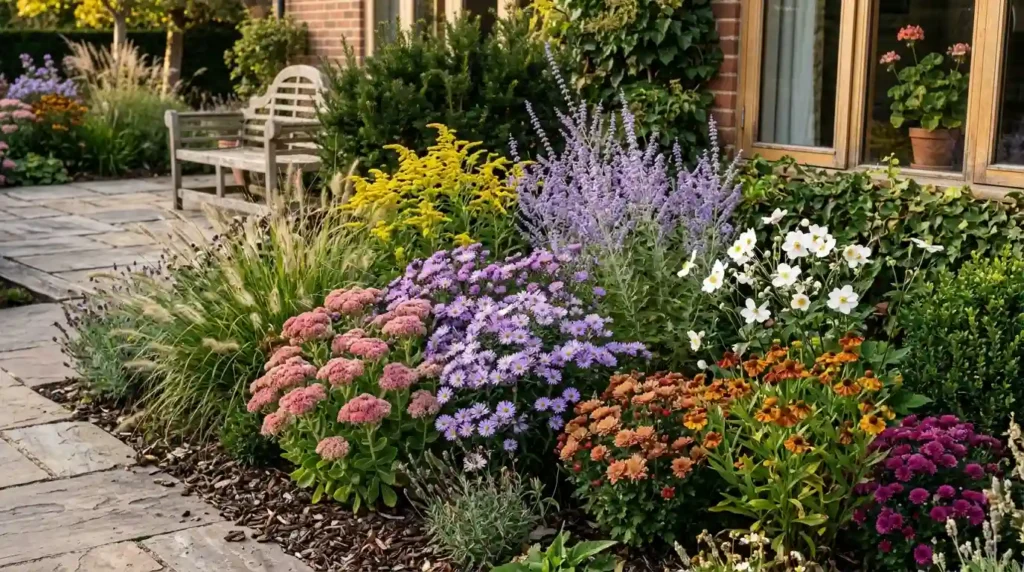
Late-blooming plants keep color going after many summer flowers have finished.
Good choices may include asters, sedum, goldenrod, Japanese anemones, helenium, chrysanthemums, and Russian sage.
Place them near patios, windows, and paths. You will enjoy them more in areas you see each day.
Mix flower shapes to create variety. Use flat sedum flower heads with small daisy-like asters. Add upright flower spikes or soft grasses nearby.
Choose locally recommended types. Some plants can spread too fast in certain areas.
You can also cut back selected perennials in late spring to delay some flowers. This does not work for every plant, so check the right method first.
Late flowers are useful, but they should connect with other fall features. Add grasses, berries, or colorful leaves so the whole border does not depend on flowers.
Add Ornamental Grasses for Movement
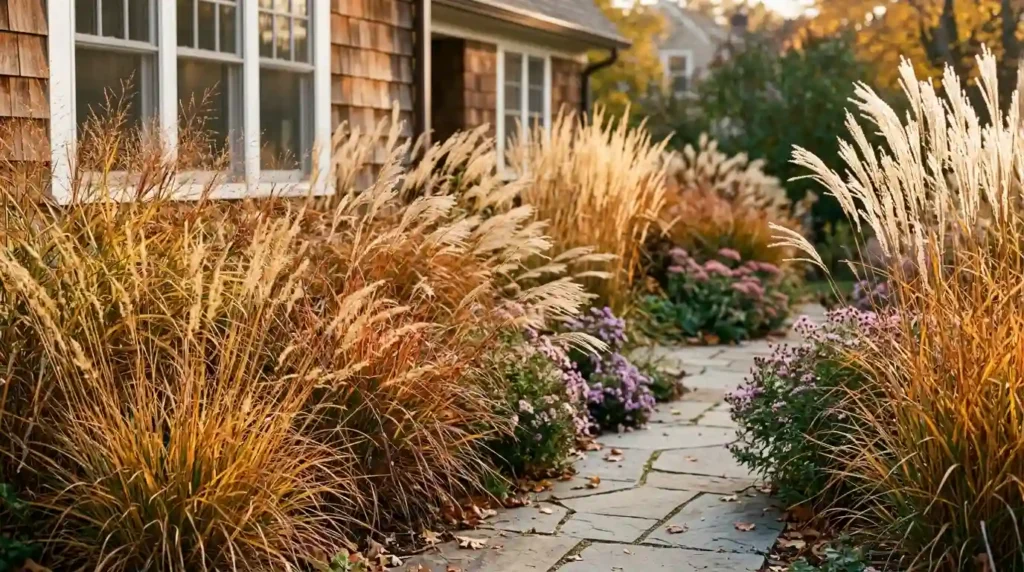
Ornamental grasses add soft texture and movement.
Many grasses develop seed heads in late summer or fall. Their leaves may also turn gold, red, copper, or bronze.
Possible choices include switchgrass, feather reed grass, little bluestem, moor grass, fountain grass, and native sedges.
Some fountain grasses may spread in warm areas. Check local advice before planting.
Use compact grasses in small gardens. Large grasses can quickly block paths, windows, or smaller plants.
Plant grasses where wind can move through them. They look especially good when low sunlight shines through the leaves and seed heads.
Many grasses can remain standing through winter. Their dry shapes add interest when other plants have disappeared.
Cut them back before fresh spring growth begins, unless local care advice says otherwise.
Choose Shrubs With Berries and Fall Leaves
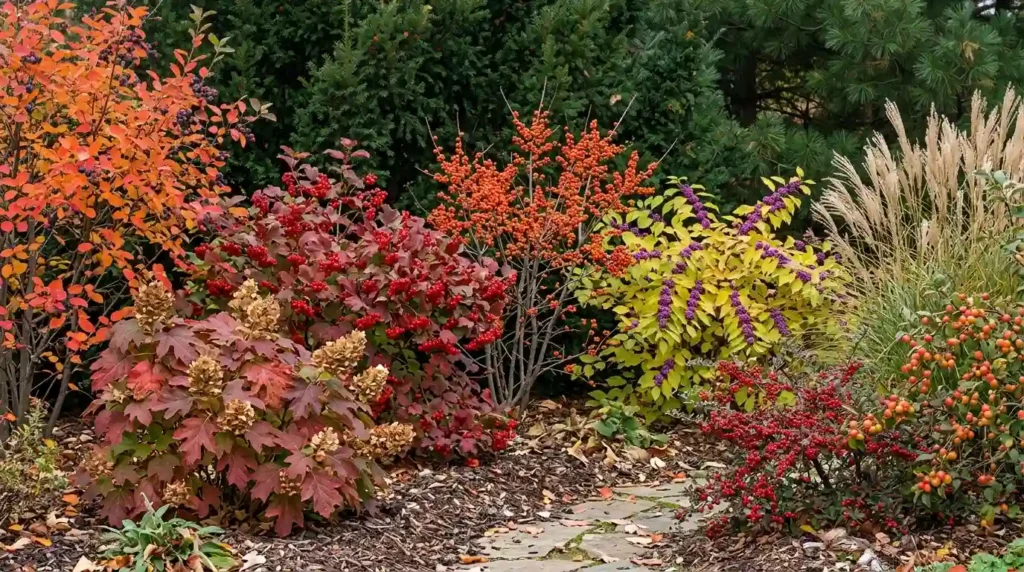
Flowers are only one reason to choose a shrub.
Look for plants that also produce berries or strong fall color. This gives you more value from the same planting space.
Serviceberry, viburnum, beautyberry, winterberry holly, crabapple, cotoneaster, and oakleaf hydrangea may offer useful seasonal features.
Some berry plants need a second plant nearby for pollination. Check the label before buying.
Berries can add color and provide food for birds. However, some may be unsafe for people or pets.
Place these plants with care if young children or animals use the garden.
For a simple fall border, combine sedum flowers, upright grass seed heads, a shrub with red leaves, and an evergreen background.
The evergreen keeps the border grounded. The other plants bring seasonal color and movement.
3 Ways to Fix a Bare Winter Garden
Winter reveals whether your garden has a strong framework.
When flowers and leaves disappear, bark, stems, seed heads, evergreens, and hardscape become much more important.
Choose Trees and Shrubs With Colorful Bark
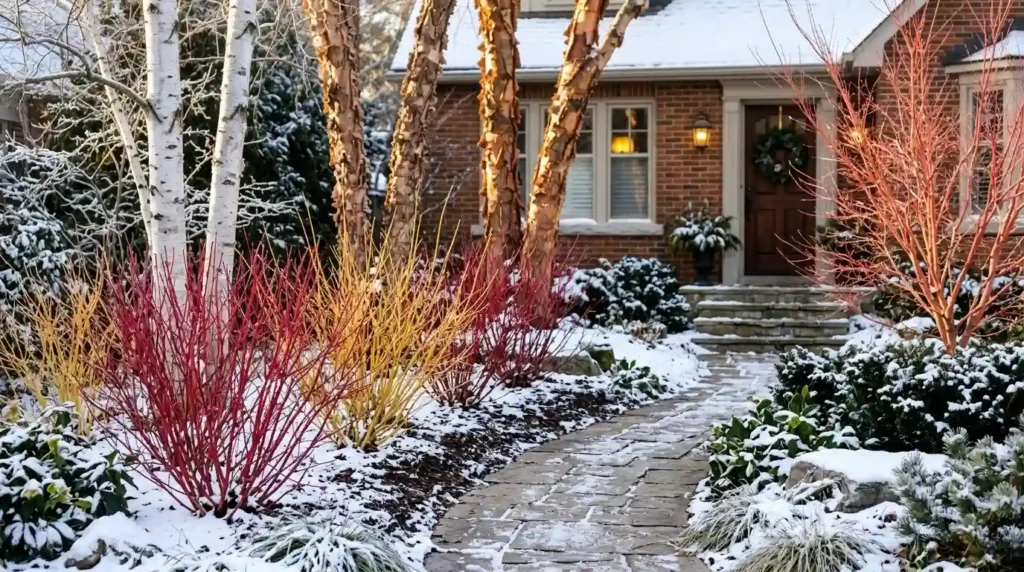
Colorful bark can brighten the garden during its quietest months.
Red-twig dogwood and yellow-twig dogwood can create bright stem color. White-barked birch can stand out against dark fences and evergreens.
Paperbark maple offers peeling bark. River birch can add texture and a warm range of brown and cream tones.
Coral-bark maple may provide bright young branches as well as fine structure.
Place these plants near windows, entrances, and winter paths. They have the most value where you can see them often.
Some plants show the brightest stem color on young growth. Correct pruning may help produce fresh stems.
Do not cut them without checking the proper time and method. Poor pruning may remove the best display or damage the plant.
Dark mulch, stone, snow, and evergreen leaves can make bright bark stand out even more.
Leave Healthy Seed Heads Standing
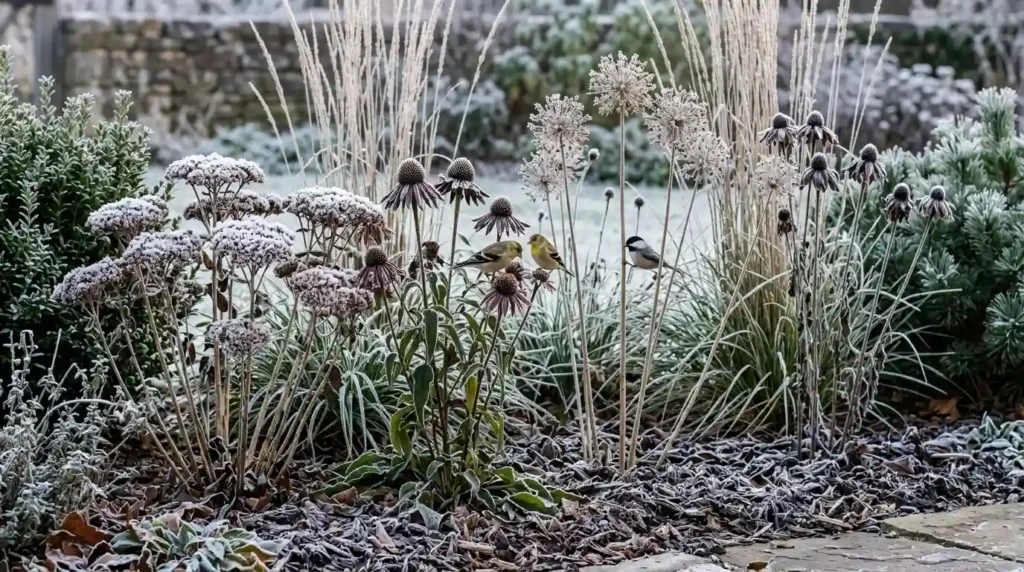
Many gardeners cut every perennial to the ground in fall. This can leave the garden flat and empty for months.
Keep selected seed heads and dry stems in place.
Coneflowers, sedum, alliums, black-eyed Susans, and ornamental grasses can hold their shape through winter. Frost may outline their edges and make them more noticeable.
Some seeds may also provide food for birds.
You do not need to leave every plant untouched. Remove diseased, broken, or messy growth.
Focus on plants with strong forms. Keep the ones that still look useful from a window or path.
Cut them back in late winter or early spring before new shoots become tall.
This approach can save you work in fall. It also gives your garden more texture during cold weather.
Use Lighting to Show Winter Structure
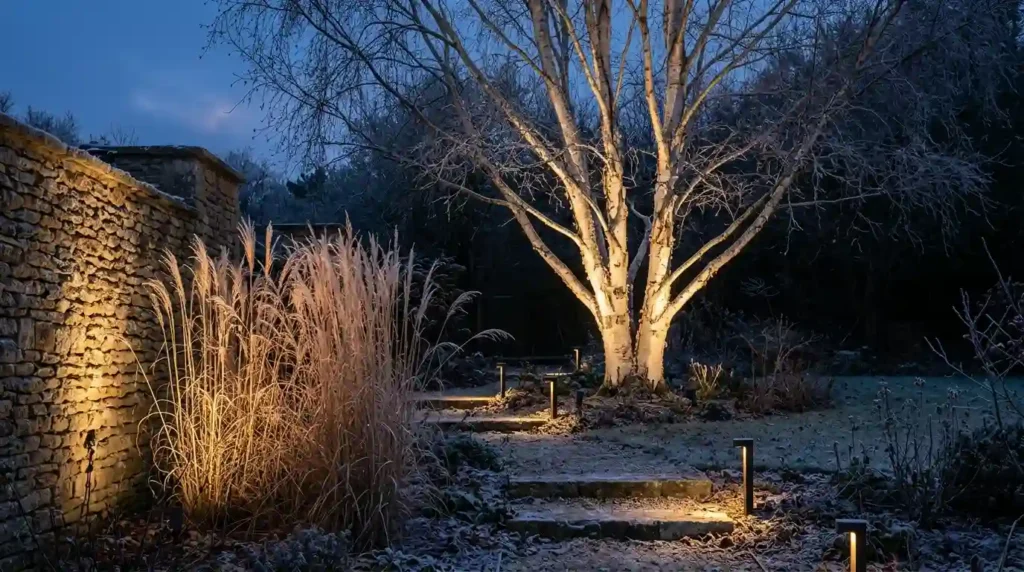
Winter days can be short. Good lighting helps you enjoy the garden after dark.
Use lights to show selected trees, walls, paths, grasses, or sculptures.
Uplight a multi-stem tree to reveal its branches. Place low lights beside steps or paths for safer movement.
You can backlight tall grasses so their dry seed heads glow. Side lighting can bring out the texture of a brick or stone wall.
Keep the effect soft. Bright lights across the whole yard may feel harsh and can disturb wildlife.
Use a timer so the lights turn off later at night. Choose outdoor fixtures made for rain, frost, and changing weather.
Warm light often feels softer around plants and natural materials.
These details help a year-round garden design stay attractive when flowers and leaves are limited.
How to Use These Ideas in Any Garden
You do not need a large yard or four cold seasons to use these ideas.
The main goal is to create a series of changing features that suit your space and climate.
Make a Small Garden Feel Full
Small gardens need careful plant choices.
Use dwarf trees and compact shrubs. Grow climbers on walls, fences, and freestanding supports.
Choose plants with two or three seasons of value. A shrub may offer spring flowers, summer leaves, and fall berries.
Repeat a small group of plants instead of adding many different types.
Containers can add seasonal color without taking up much bed space. They can also move when you need to free a path or seating area.
Bring Order to a Large Garden
Large gardens need repetition and clear areas.
Use trees, hedges, and repeated plant groups to divide the space. Plan views from paths, windows, and seating areas.
Large grasses and shrubs need enough room to reach their full size. Avoid placing them too close to narrow paths.
You do not have to improve the whole garden at once. Complete one area before moving to the next.
Start with the spaces you see and use most.
Plan for Warm Climates
Warm-climate gardens may not have a long dormant season.
Focus on evergreen foliage, changing flower periods, bark, fruit, and leaf texture. You may need to plan for wet and dry seasons instead of spring and winter.
Choose heat-tolerant plants and add shade where needed.
Group plants with similar water needs. This makes watering easier and reduces waste.
Plan for Cold Climates
In cold areas, winter structure is very important.
Choose hardy evergreens, trees with good bark, strong grasses, and shrubs that can handle snow.
Check whether heavy snow may flatten or break certain plants.
Use containers that can cope with freezing weather. Some pots may crack when wet soil freezes and expands.
Improve a Rental Garden Without Permanent Work
Renters can still create seasonal interest.
Use containers, window boxes, freestanding trellises, solar lights, and movable seating.
Grow climbers on supports that do not damage walls. Use large pots to create height and privacy.
Ask for permission before planting trees or making permanent changes.
In every garden, use local plant advice. A plant that grows well in one area may fail or spread too fast in another.
How to Keep the Garden Attractive With Less Work
Even a well-planned garden can lose its seasonal appeal when plants become crowded or are cut back at the wrong time.
A simple care calendar will help you stay ahead.
Spring Jobs
Cut back healthy dry stems before new growth becomes tall.
Remove plants that did not survive. Divide crowded perennials where needed.
Add mulch after the soil begins to warm. Keep mulch away from trunks and plant crowns.
Look for empty areas before summer leaves hide them.
Summer Jobs
Water deeply when plants need it. Deep watering often supports stronger roots than frequent light watering.
Remove faded flowers from plants that may bloom again. Leave useful seed heads on plants you want to keep for winter.
Support tall stems before they fall across nearby plants.
Take photos of plant groups that work well. Note where summer color or foliage is missing.
Fall Jobs
Plant spring bulbs at the right time for your climate.
Fall may also be a good time to plant trees and shrubs in some areas. Check local advice first.
Remove diseased leaves and stems. Keep healthy seed heads that have a strong shape.
Refresh containers with grasses, evergreen branches, or cool-season plants.
Winter Jobs
Study the garden from inside your home.
Look for empty views, weak shapes, and areas that need more evergreen cover.
Check whether lighting still points at the right plants. Growth and pruning can change the effect.
Review your monthly notes before buying plants for spring.
One of the best tools is a monthly photo log. Take one picture from the same spot every month.
At the end of the year, compare the photos. They will show seasonal gaps that are easy to forget.
Build Your Garden One Season at a Time
A garden that looks good all year needs several layers.
Evergreens and hardscape create permanent shape. Spring bulbs and shrubs bring early color. Summer perennials and foliage keep beds full.
Fall flowers, berries, leaves, and grasses extend the display. Bark, seed heads, and lighting improve winter views.
You do not need to fix everything at once.
Walk through your garden and write down what looks good in each season. Then choose one weak month and add a plant or feature that improves it.
Good year-round garden design does not mean every plant must look perfect in every month. It means combining different features so your garden always has color, shape, texture, or movement.