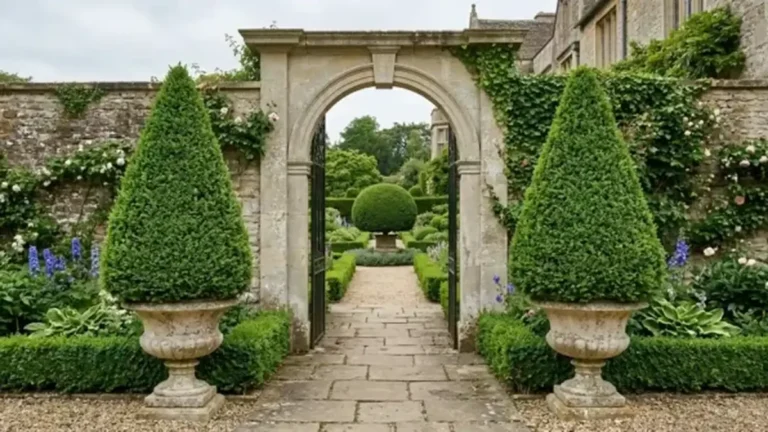
22 Courtyard Garden Ideas for Small Outdoor Spaces
A small courtyard can feel dark, crowded, and hard to use. You may have high walls, little sunlight, or no room for a full garden bed. Adding random pots and large furniture often makes the problem worse.
The right courtyard garden ideas can help you use every part of the space. Walls can hold plants. A corner can become a dining spot. One small tree can add height and shade without taking over the whole area.
These small courtyard garden ideas cover plants, privacy, seating, paving, lighting, and storage. You will also learn how to plan the layout before spending money. Some ideas suit renters, while others work better during a full garden update.
You do not need to copy all 22 ideas. Start with the problem that bothers you most. It may be a lack of privacy, poor light, too much paving, or nowhere comfortable to sit.
Before choosing plants or furniture, study how light, movement, and scale affect your courtyard garden design.
How to Plan a Courtyard Garden Without Wasting Space
A courtyard can become crowded fast. Every chair, pot, and plant needs a clear purpose.
Start by measuring the full space. Mark the doors, windows, drains, taps, and power points. Include the direction in which each door opens. A chair placed too close to a door may block the main path.
Next, watch the sunlight during the day. Check the courtyard in the morning, at midday, and in the afternoon. High walls may create deep shade during one part of the day and strong reflected heat during another.
This small courtyard design should also match the way you plan to use the area. Ask yourself one clear question:
What do I want to do here most often?
Your answer may be:
- Eat meals outside
- Read and relax
- Grow herbs and vegetables
- Entertain friends
- Create a private garden view
- Give children a safe outdoor area
Choose one main use before adding extra features. A dining courtyard needs a clear path around the table. A quiet reading area may need one bench, shade, and soft planting.
Pick one main focal point. This could be a tree, wall fountain, large planter, painted wall, or built-in seat. Too many focal points can make the courtyard garden layout feel busy.
Check drainage before adding raised beds or heavy pots. Water should move away from doors and walls. Keep drains open and easy to reach.
When space allows, aim for a walking path that feels wide enough to move through without brushing against plants or furniture. About 3 feet can work well, but smaller courtyards may need a tighter route.
Finish by drawing a simple plan on grid paper. Test two or three courtyard landscaping ideas before buying anything. Moving shapes on paper is much easier than moving a large tree or stone planter later.
Small Courtyard Garden Ideas That Save Floor Space
When floor space is limited, walls, corners, and built-in features become your best design tools.
Grow Plants on a Living Wall
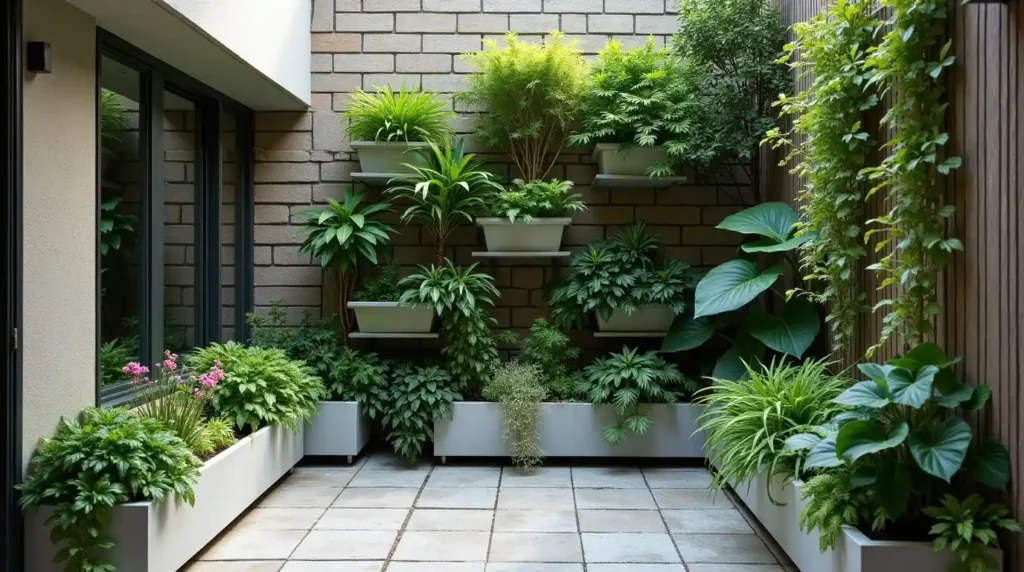
A living wall gives you more planting space without blocking the courtyard floor. It can also soften a plain wall and make a hard space feel cooler.
You can use modular wall planters, pocket systems, or rows of wall-mounted pots. Choose plants based on the light that reaches the wall. Ferns and pothos suit many shaded areas. Herbs and small flowering plants may work where there is more sun.
Best for: Narrow courtyards and bare walls
Maintenance level: Medium to high
Watch out for: Water leaks and hard-to-reach plants
Protect the wall from moisture before installing the system. Make sure you can reach every plant for watering and trimming. One planned living wall often looks calmer than twenty small pots placed around the floor.
Train Climbing Plants Across a Trellis
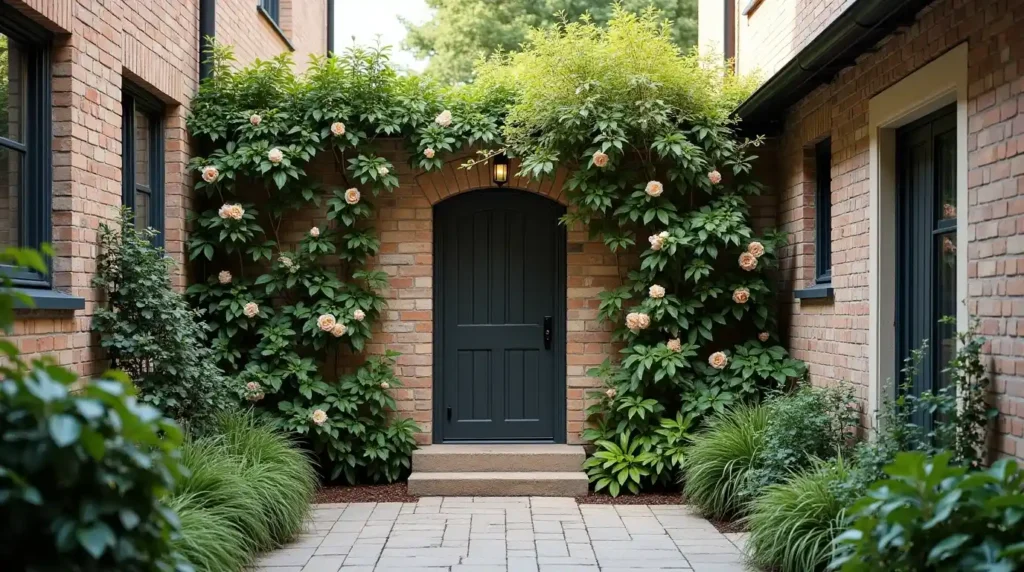
Climbing plants can hide a harsh wall, add privacy, and bring flowers closer to eye level. They are useful when the courtyard has little room for wide shrubs.
Star jasmine, clematis, climbing roses, and climbing hydrangea can work in the right climate. Bougainvillea is a bold option for warm, sunny spaces.
Best for: Privacy screens and tall walls
Maintenance level: Medium
Watch out for: Heavy growth and wall damage
Install strong wires or a trellis before the plant becomes large. Do not let self-clinging plants attach to weak brickwork or cracked walls. Keep growth away from gutters, roofs, windows, and outdoor lights.
3. Build Narrow Raised Beds Around the Edges
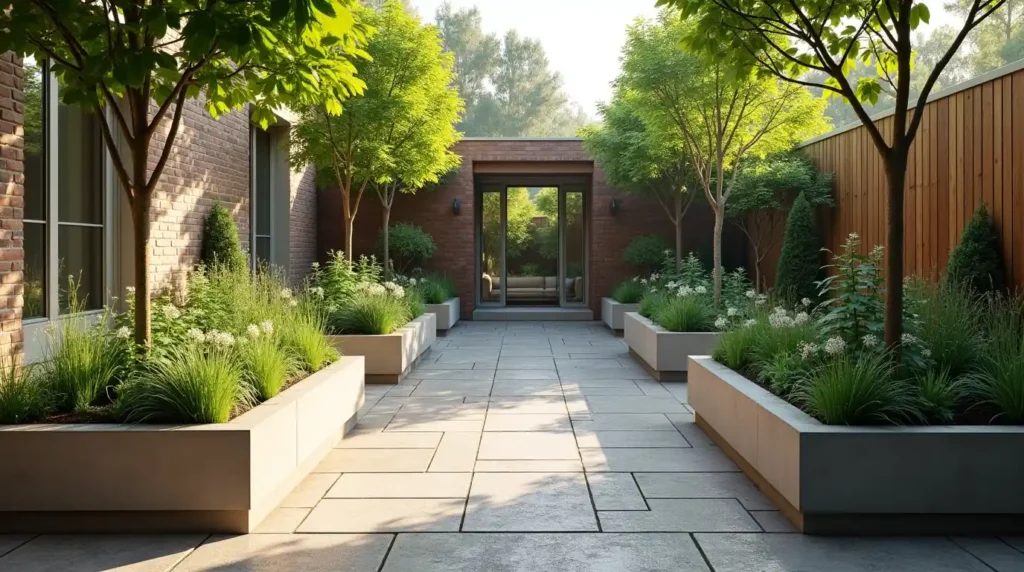
Narrow raised beds create planting room while keeping the center open. They can also hide the hard line where paving meets a wall.
A bed that is about 12 to 24 inches deep may hold herbs, grasses, small shrubs, or shade plants. The right depth depends on the roots of your chosen plants.
Best for: Square and rectangular courtyards
Maintenance level: Low to medium
Watch out for: Poor drainage and limited root space
Use the same material as the paving or seating to keep the design connected. You can also make the top edge wide enough to act as an extra seat. Add irrigation during construction so you do not have to drag a hose through the courtyard.
Use a Few Large Pots Instead of Many Small Ones
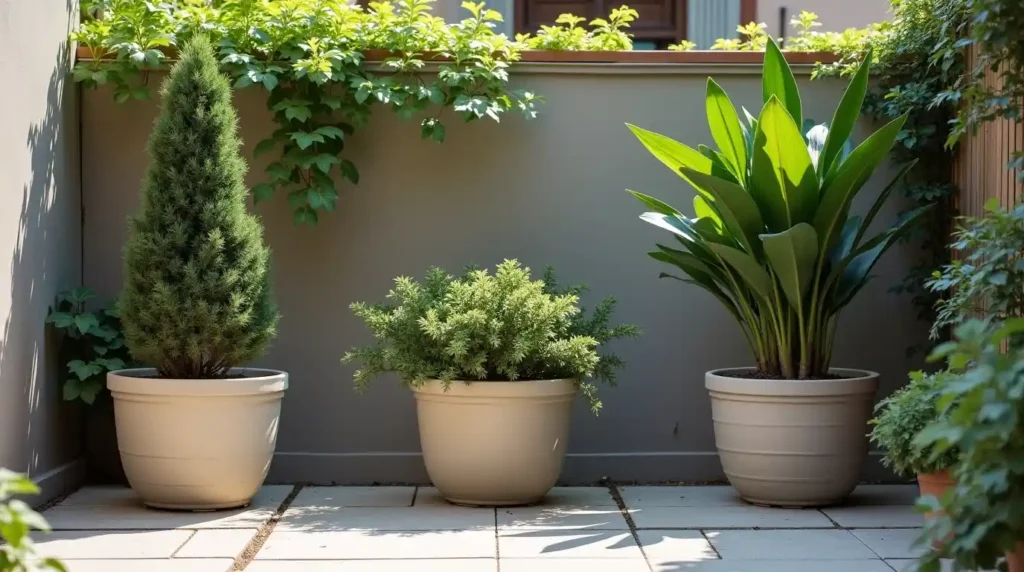
A group of large planters can make a small courtyard feel cleaner and more planned. Many tiny pots create lots of edges, gaps, and watering jobs.
Choose three to five pots in the same color or material. Vary their heights, but keep the overall style simple. Add one tall plant, one rounded plant, and one trailing plant for balance.
Best for: Renters and paved courtyards
Maintenance level: Low to medium
Watch out for: Weight and blocked drainage
Use lightweight outdoor pots if you may need to move them. Place each pot on feet so water can drain below it. Large pots dry out more slowly than small ones, but they still need regular checks during hot weather.
Install a Fold-Down Table
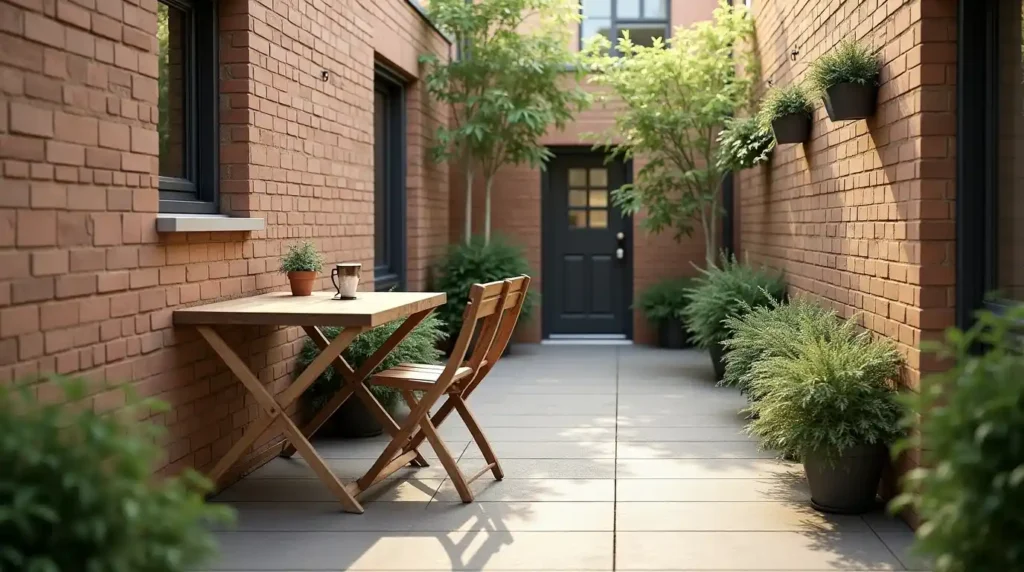
A fold-down table gives you a useful surface without taking up permanent floor space. It can serve several jobs during the week.
Use it for morning coffee, laptop work, potting plants, or casual meals. Fold it flat when you need more room to walk or entertain.
Best for: Very narrow courtyards
Maintenance level: Low
Watch out for: Weak wall fixings and rain damage
Choose outdoor-safe wood or powder-coated metal. Make sure the wall can hold the weight. Pair the table with folding chairs or stools that can hang on hooks when they are not in use.
A small courtyard usually feels larger when a few useful pieces replace many small objects.
Courtyard Planting Ideas for Color, Shade, and Texture
The best courtyard plants are not always the prettiest ones at the garden center. They must suit the real light, heat, and space in your garden.
Build a Layered Foliage Garden
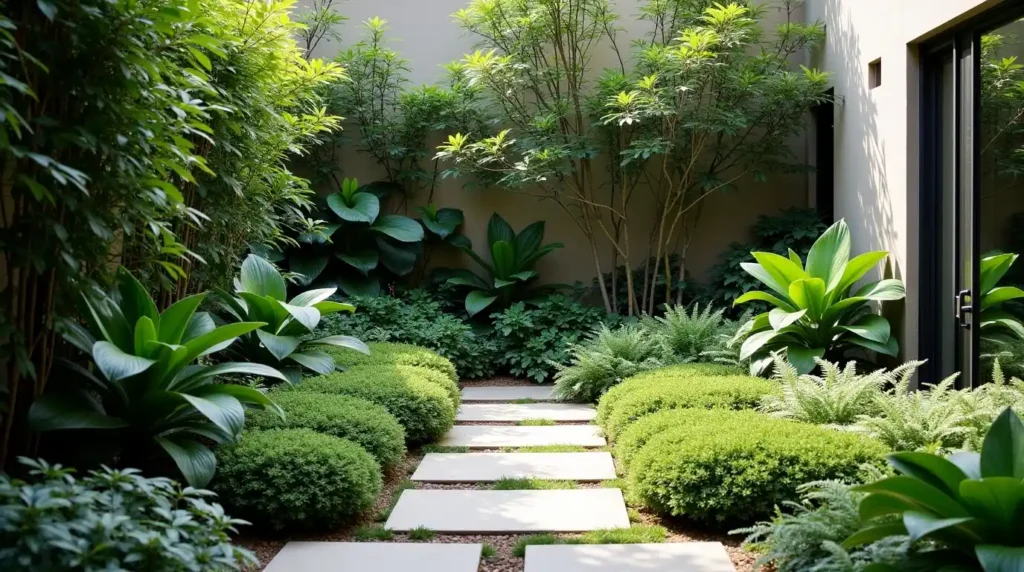
A foliage garden can look full and rich even when flowers are limited. Leaves bring color, shape, and movement throughout the year.
Use a simple planting formula:
- One tall plant for structure
- Two or three medium plants
- Several low plants
- One trailing plant near an edge
Mix broad leaves with fine grasses and soft ferns. Repeat one or two plants across the area so the display does not look random.
Best for: Shaded and partly shaded courtyards
Maintenance level: Medium
Watch out for: Plants with very different water needs
Dark green leaves can add depth. Lime or silver leaves can brighten a dim corner. Check the final size of every plant before placing it in a narrow bed.
Create a Shade-Loving Courtyard
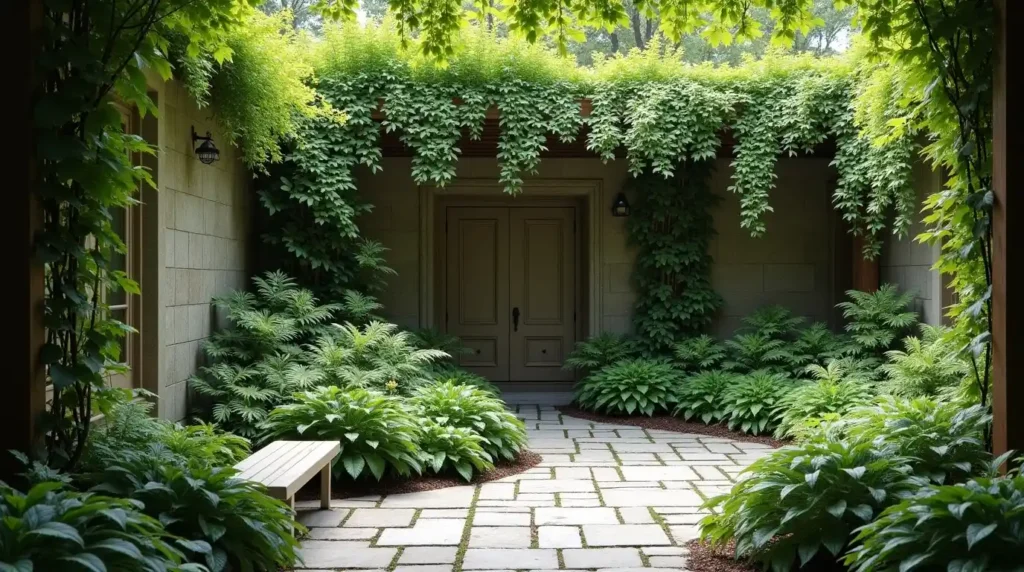
A shady courtyard does not have to feel dull. Many plants prefer cool, protected conditions and may burn in strong sun.
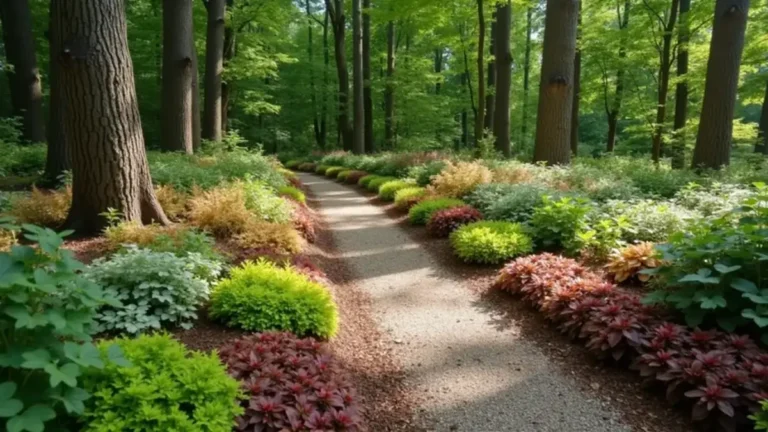
Ferns, hostas, hellebores, coral bells, begonias, Japanese forest grass, and fatsia can add shape and color. Your local climate will decide which plants can stay outside all year.
Best for: North-facing or walled courtyards
Maintenance level: Low to medium
Watch out for: Wet soil and poor airflow
Use pale pots or walls to reflect available light. Add plants with white, cream, or lime markings. Avoid packing plants too closely, since still air and damp leaves can lead to plant problems.
Grow Herbs and Food in Containers
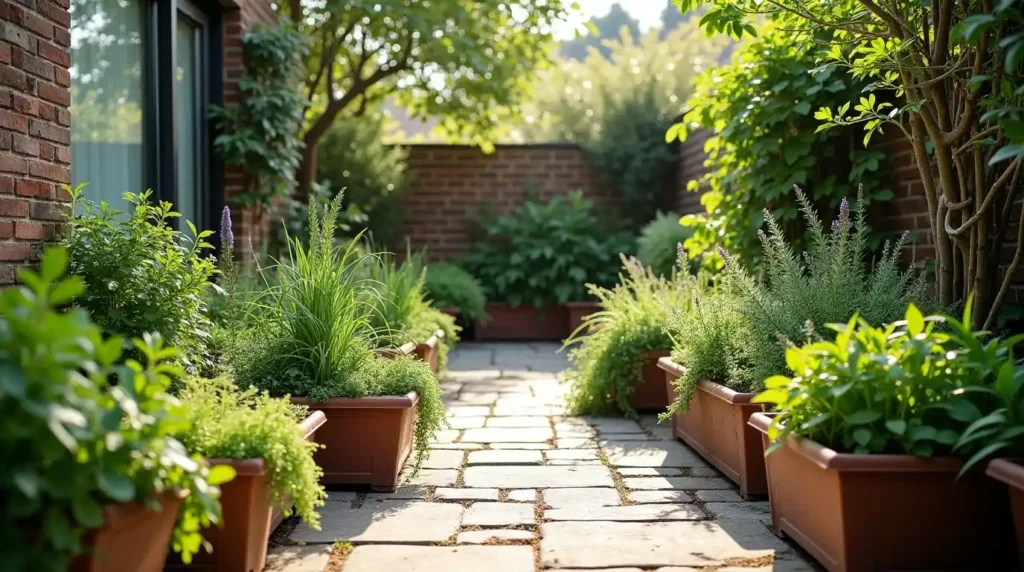
An edible courtyard garden can give you fresh herbs and small crops close to the kitchen. You do not need a large vegetable patch.
Try basil, thyme, parsley, lettuce, strawberries, chili peppers, or dwarf citrus. Keep mint in its own pot because it spreads fast.
Best for: Sunny courtyards near a kitchen
Maintenance level: Medium
Watch out for: Fast-drying pots and weak sunlight
Use food-safe containers with drainage holes. Avoid old timber that may contain harmful treatments. Place the plants you use most near the door. Keep taller plants behind shorter ones so they do not block the sun.
Place Fragrant Plants Near the Seating
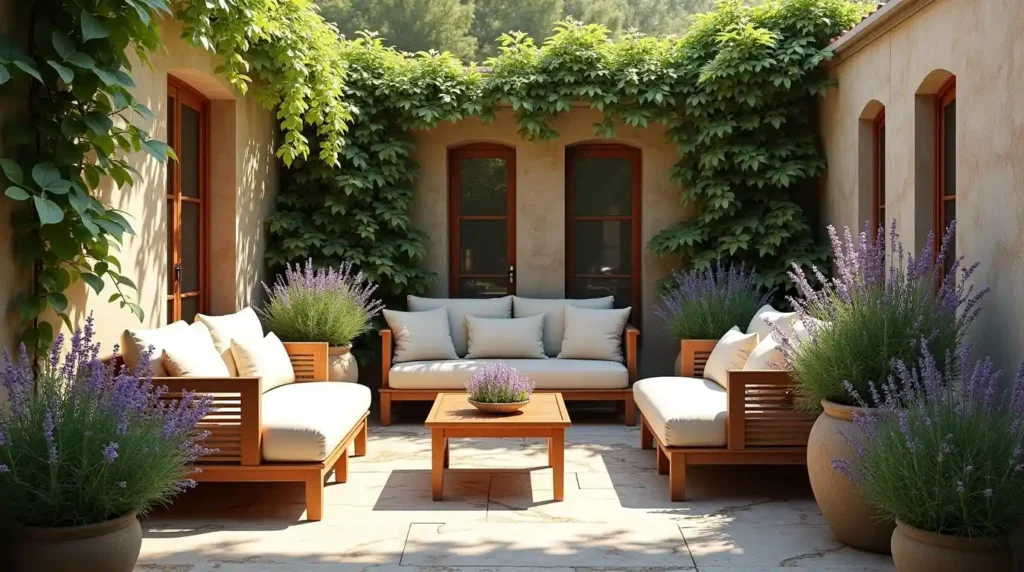
Scent is easy to notice in an enclosed garden. A few fragrant plants can make a simple seating area feel more inviting.
Jasmine, lavender, rosemary, gardenia, sweet alyssum, and scented pelargoniums are popular choices. Pick plants that suit your climate and light.
Best for: Dining and reading areas
Maintenance level: Low to medium
Watch out for: Too many strong scents
Place fragrant plants near a chair, doorway, or path where you can enjoy them. Do not mix several heavy scents in one tiny area. One clear scent often feels fresher and is less likely to bother guests.
Add One Small Feature Tree
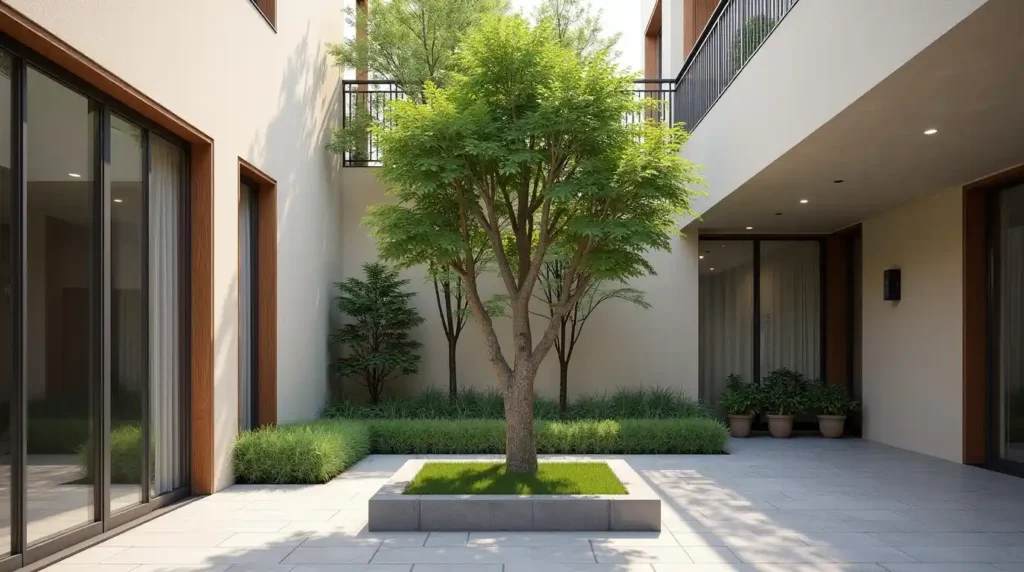
One well-placed tree can add height, shade, and a strong focal point. It may be more useful than several small shrubs.
Possible choices include Japanese maple, olive, serviceberry, dwarf magnolia, crape myrtle, or citrus. The right tree depends on your climate, sunlight, and available root space.
Best for: Courtyards that need height
Maintenance level: Medium
Watch out for: Roots, leaf drop, and final size
Check how tall and wide the tree will become. Look at its roots and water needs too. A tree in a pot needs a large container and regular feeding. Place it where falling leaves will not block the main drain.
Modern Courtyard Garden Design Ideas That Feel Calm
A modern courtyard feels calm because its shapes, materials, and plants follow one clear system.
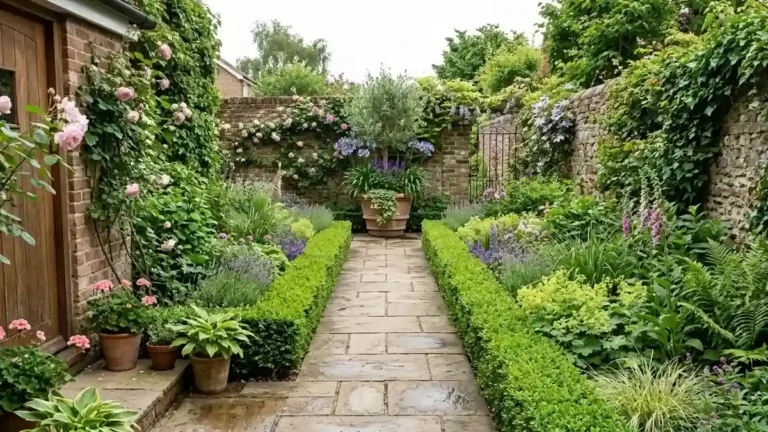
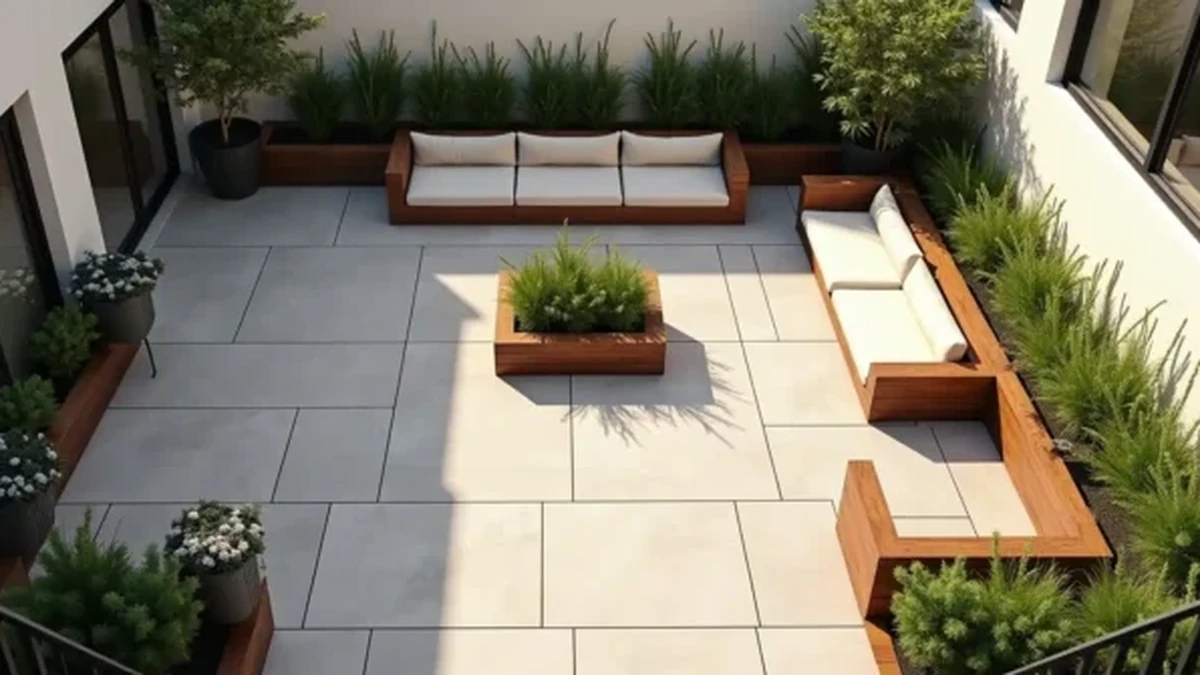
Use Large Paving Slabs
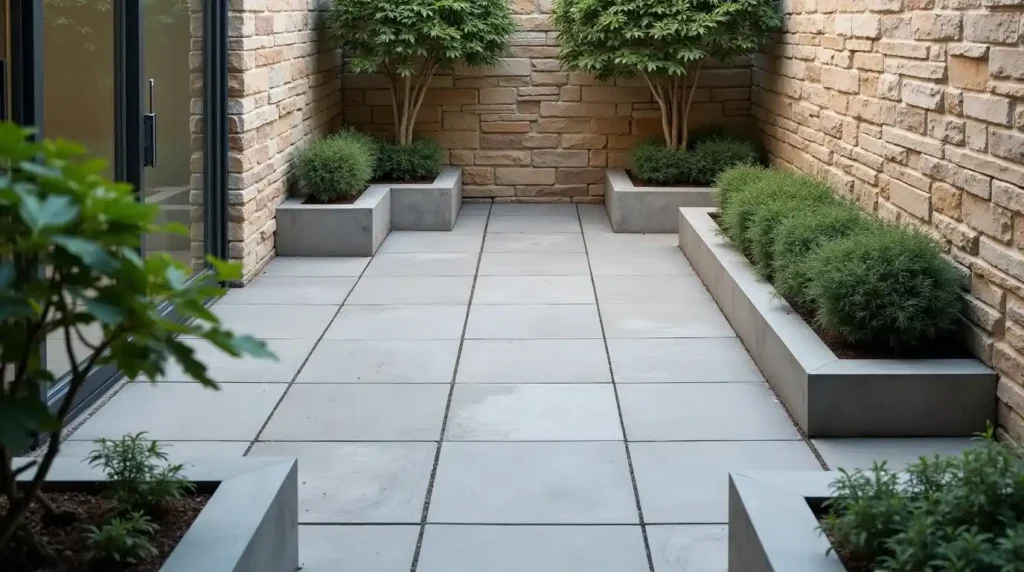
Large paving slabs create fewer lines across the floor. This can make a small courtyard look wider and less busy.
Choose a surface with good grip, especially near doors or water features. Pale paving can brighten a shaded area, while dark paving may become hot in strong sun.
Best for: Modern homes and simple layouts
Maintenance level: Low
Watch out for: Slippery finishes and trapped water
Ask the installer to create a gentle slope so rainwater moves toward the drain. Where possible, match the courtyard paving with the indoor floor. This visual link can make both spaces feel more connected.
Use a Simple Geometric Layout
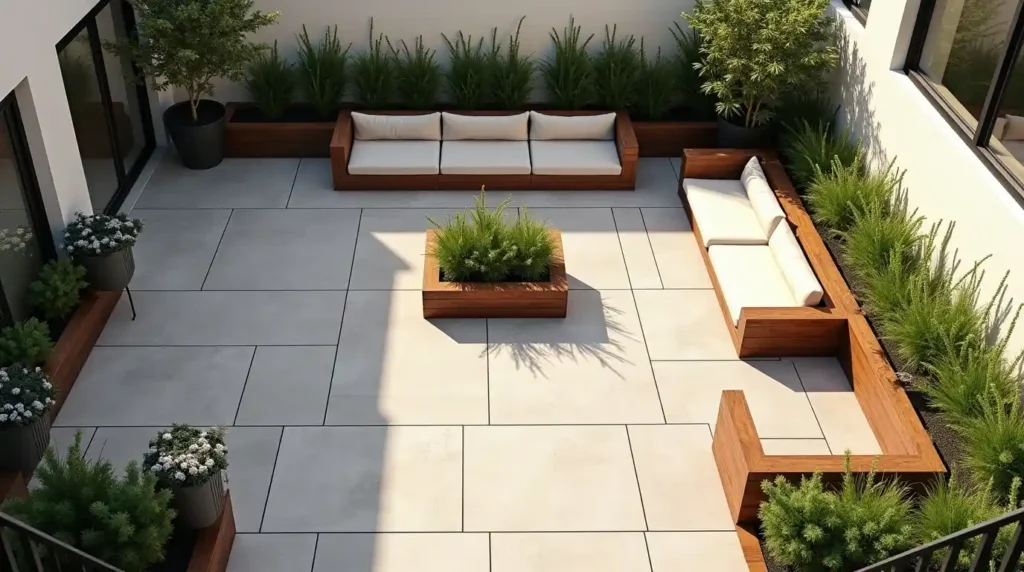
Strong shapes can give an awkward courtyard a clear order. Squares, rectangles, and straight lines work well in small urban gardens.
You could use square planters, a straight path, a centered tree, and a rectangular bench. Keep gaps and edges even where possible.
Best for: Modern courtyard garden design
Maintenance level: Low
Watch out for: A layout that feels too stiff
Plants can soften the hard lines. Use grasses, rounded shrubs, or a loose climber beside the paving. Keep the basic structure simple, then let selected plants bring gentle movement.
Limit the Courtyard to Three Main Materials
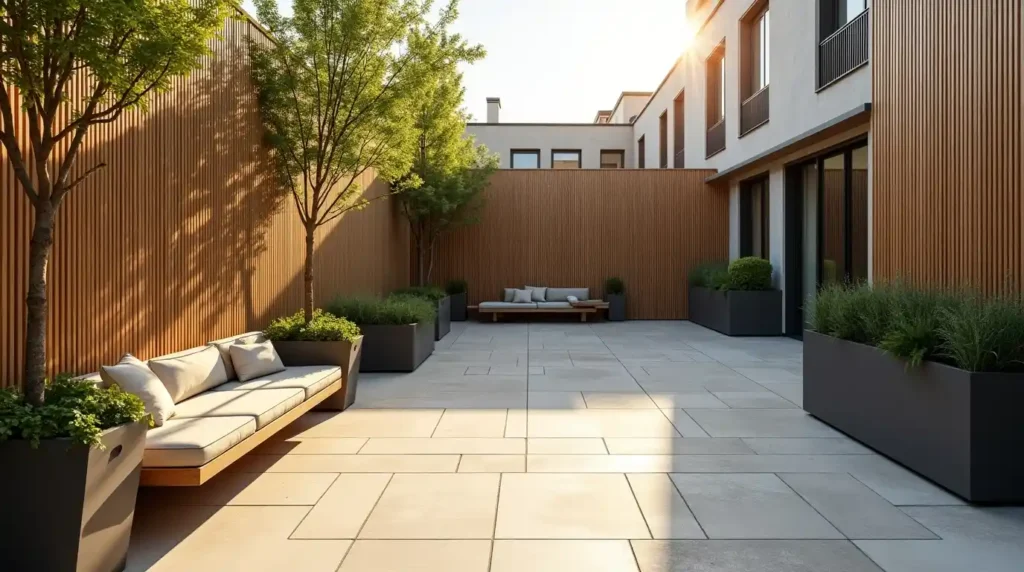
Too many materials can make a small garden feel broken into pieces. Pick two or three finishes and repeat them.
A warm modern design may use pale stone, timber, and black metal. A Mediterranean look may use brick, terracotta, and light walls.
Best for: Courtyards that feel cluttered
Maintenance level: Low
Watch out for: Materials that age at different rates
Match planters, furniture, edging, and lights where possible. You do not need every item to be identical. They should simply share a common color, texture, or shape.
Add a Small Water Feature
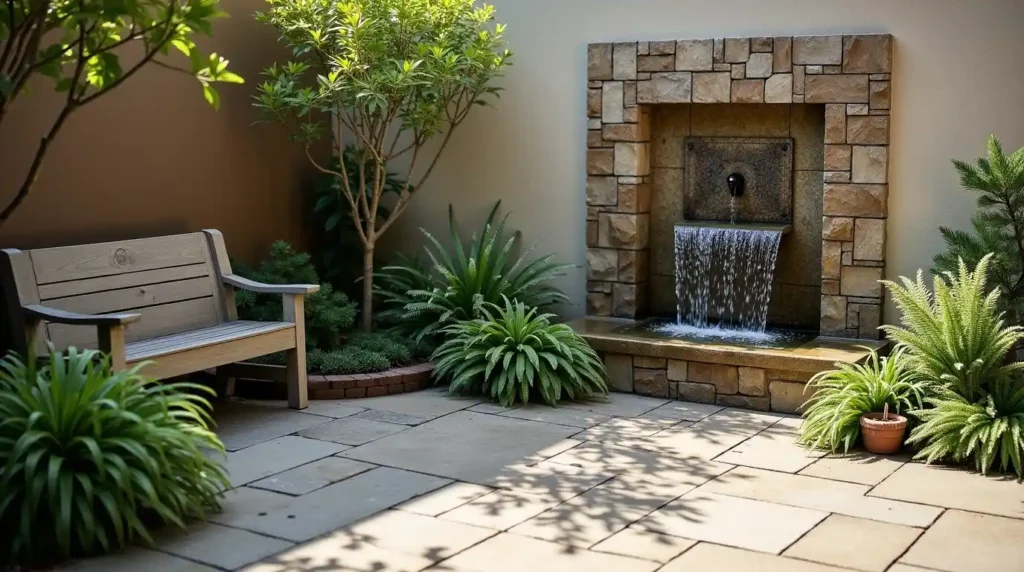
A small water feature can cover traffic noise and bring gentle movement to a hard courtyard. It can also create a clear focal point.
Good options include a wall fountain, bubbling pot, water bowl, or narrow water channel. Choose a style that matches the scale of the space.
Best for: Quiet seating areas
Maintenance level: Medium
Watch out for: Cleaning, pump noise, and child safety
Test the sound before buying. Some pumps are louder than expected in an enclosed area. Keep the water clean and check the pump often. A simple feature is usually easier to care for than a pond.
Repeat Plants, Pots, and Lights
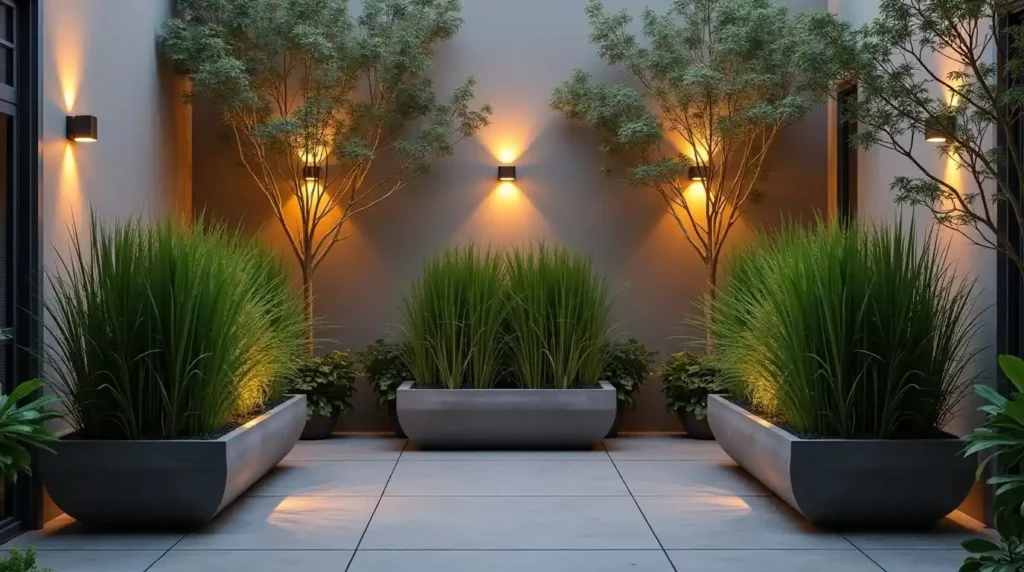
Repetition helps the eye move through a small space without stopping at every object. It is one of the easiest ways to make a design feel calm.
Try three matching planters, the same grass repeated along a wall, or two matching wall lights. Use one pot color across the courtyard.
Best for: Any courtyard style
Maintenance level: Low
Watch out for: Repeating too many different items
Choose one or two details to repeat. Leave other features simple. Repetition works best when there is also one stronger focal point, such as a tree, fountain, or painted wall.
Courtyard Seating and Privacy Ideas You Will Use
A courtyard will rarely be used if the seating feels exposed, cramped, or hard to reach.
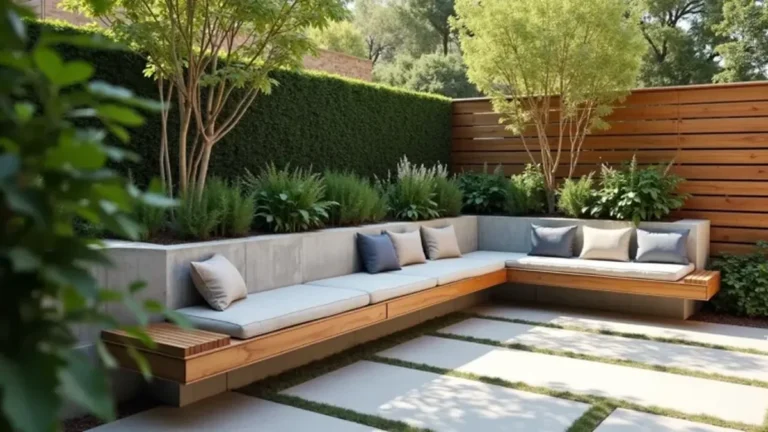
Build Seating Against a Wall
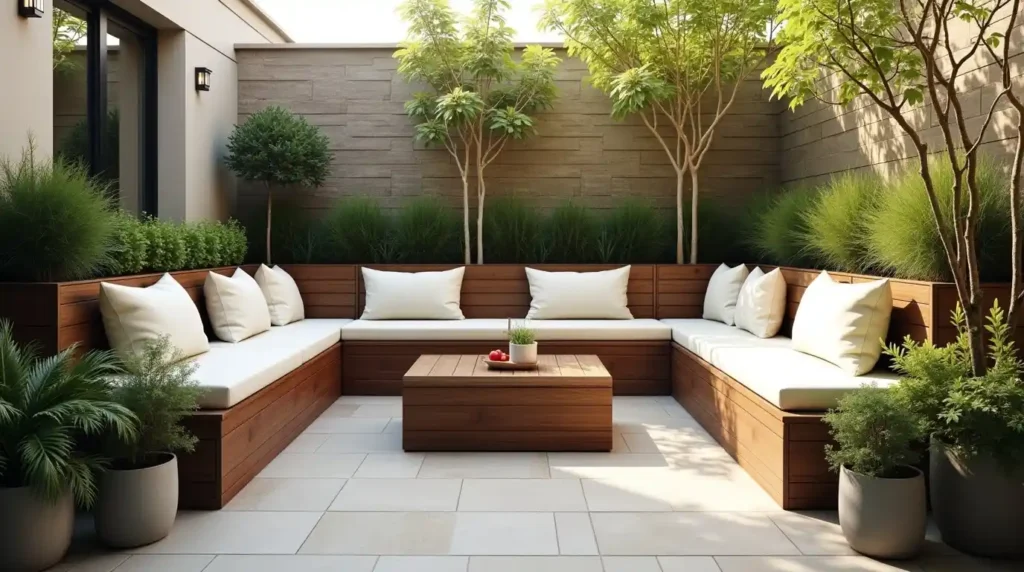
Built-in seating saves space because it removes the wide gaps needed around loose chairs. A bench can also hold storage below the seat.
Place it against the longest wall or in a quiet corner. Add outdoor cushions with removable covers.
Best for: Family seating and entertaining
Maintenance level: Low
Watch out for: Poor back support and trapped rainwater
Make the seat deep enough to feel comfortable, but do not let it block the path. Add a sloped or open base so water cannot collect below it. A corner bench can hold more people without filling the center.
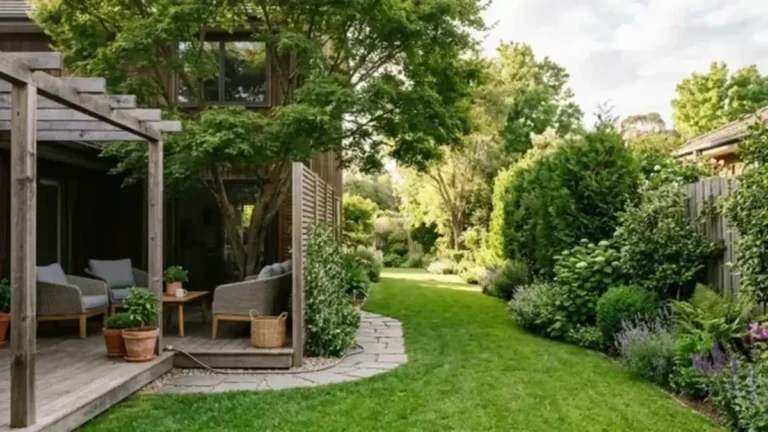
Add a Pergola for Shade
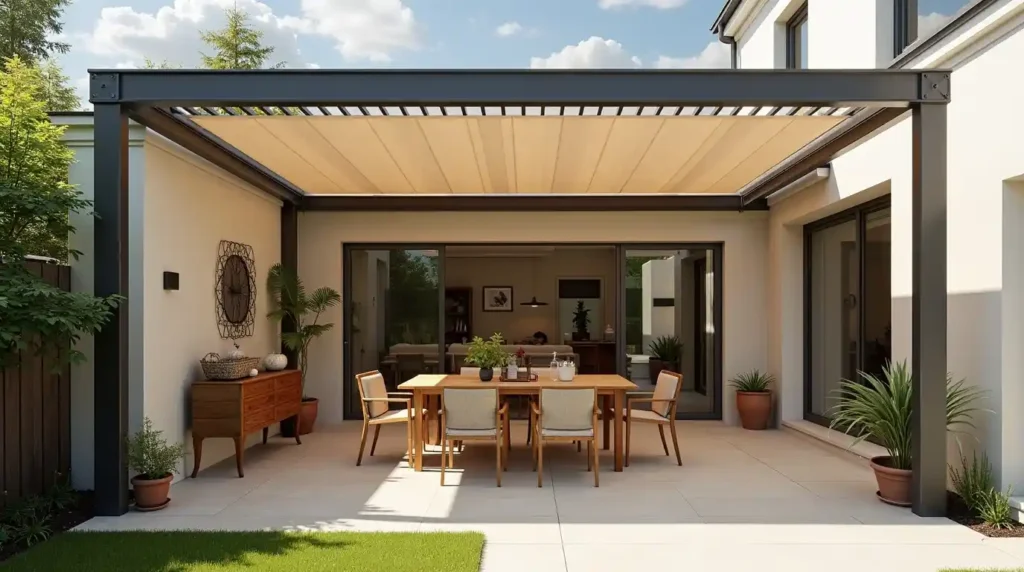
A pergola can make a plain courtyard feel like a real outdoor room. It also gives you a frame for shade cloth, lights, or climbing plants.
Choose timber for a warm look or metal for a cleaner finish. A retractable cover gives you more control during changing weather.
Best for: Hot and sunny courtyards
Maintenance level: Medium
Watch out for: Building rules and blocked windows
Check local rules before fixing a large structure to the house. Do not place thick beams where they will block useful indoor light. Plan where rainwater will go when you add a solid or fabric cover.
Block Unwanted Views Without Blocking All the Light
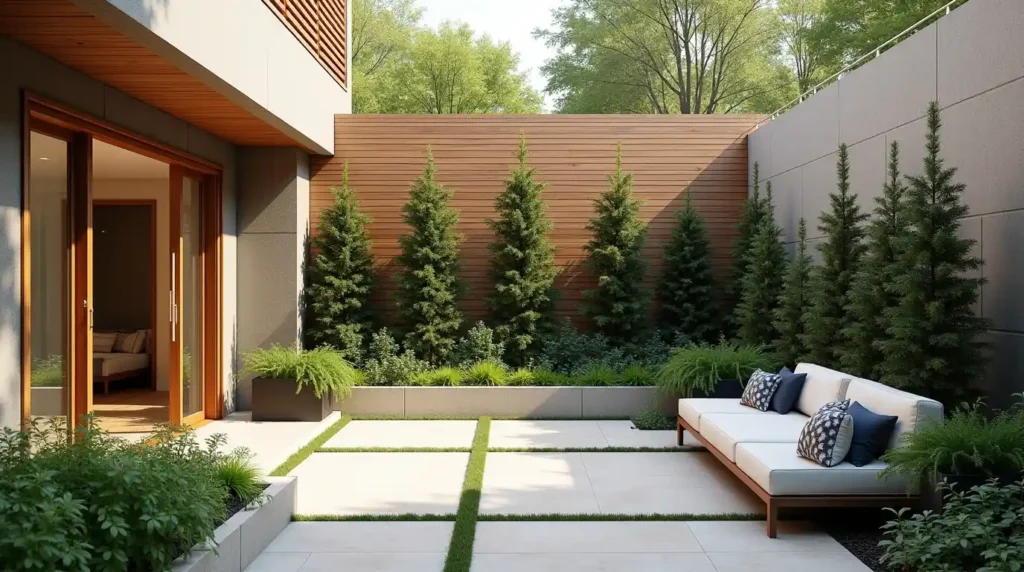
Privacy is often a major problem in a courtyard. Nearby windows and upper floors can make the seating area feel exposed.
Use slatted screens, trellis panels, tall planters, outdoor curtains, or small trees. Frosted film may help on a window where the view is not needed.
Best for: Townhouses and apartment courtyards
Maintenance level: Low to medium
Watch out for: Reduced airflow
Place the strongest screen near the main seating area rather than closing every side. Leave small gaps for light and air. A climber on a trellis can feel softer than a solid fence, but it may take time to fill in.
Create a Small Outdoor Dining Corner
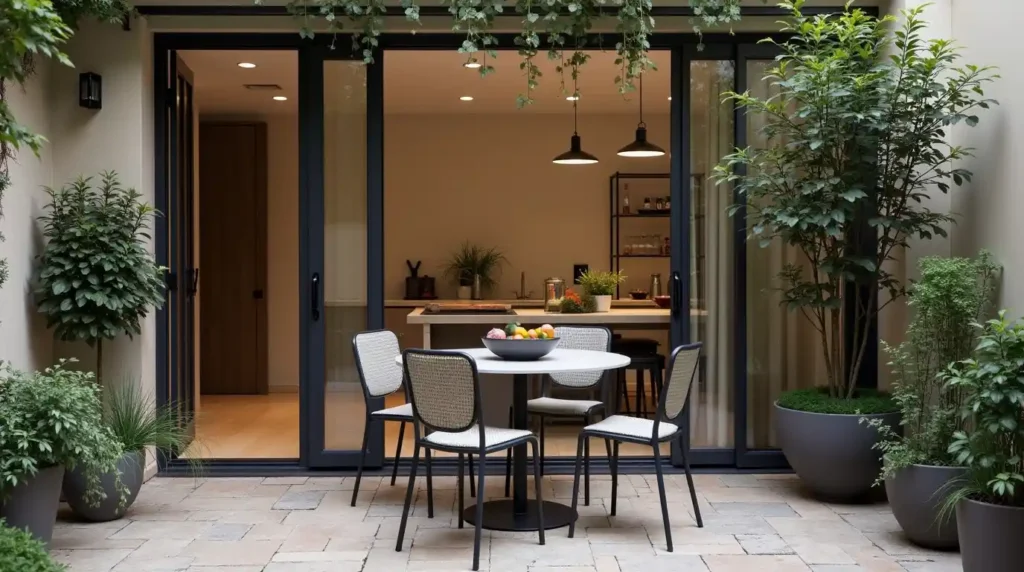
A dining area can turn an unused courtyard into part of your daily living space. The table does not need to be large.
A round table often works well in tight spaces because it has no sharp corners. Folding or stackable chairs can be moved when you need more room.
Best for: Courtyards near the kitchen
Maintenance level: Low
Watch out for: Blocking the door
Keep one clear path from the house to the far side of the courtyard. Add a wall light above the table and place herbs nearby. Before buying furniture, mark its size on the floor with tape.
Courtyard Lighting Ideas for a Warmer Evening Space
A courtyard that looks inviting during the day can feel harsh at night when it has one bright security light.
Layer Several Types of Outdoor Lighting
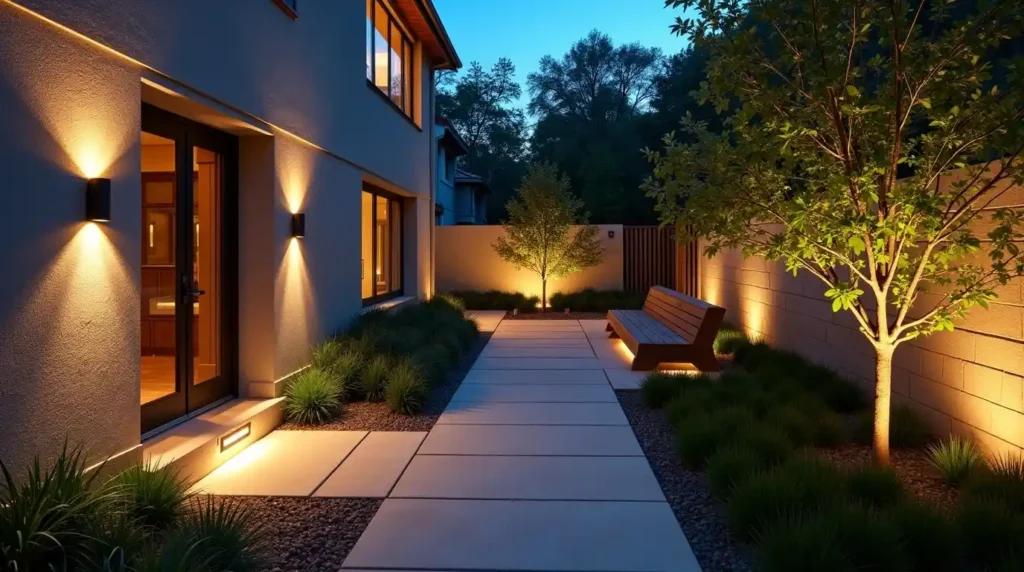
Good courtyard garden lighting has more than one job. You need safe movement, enough light for eating, and softer light for plants or walls.
Use wall lights near doors, a focused light over the table, and a small uplight below a feature tree. Step lights can help near changes in floor level.
Best for: Courtyards used after sunset
Maintenance level: Low
Watch out for: Glare and exposed cables
Choose fixtures made for outdoor use. Aim lights away from windows and neighbors. Warm, low-level lighting usually feels more comfortable than a bright light fixed high above the seating area.
Use an Outdoor Mirror to Reflect Light
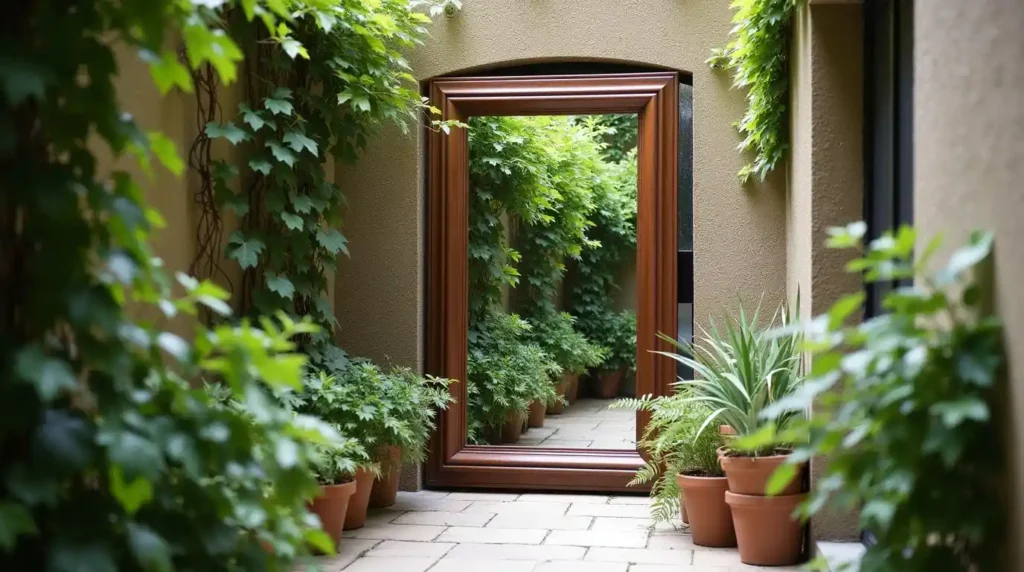
A mirror can make a shaded courtyard feel deeper and brighter. It works best when it reflects plants, sky, or a feature wall.
Use a mirror made for outdoor conditions. Secure it firmly to a strong wall.
Best for: Dark or narrow courtyards
Maintenance level: Low
Watch out for: Strong reflected sunlight
Check the reflection during different parts of the day. Do not place the mirror where it sends sharp sunlight into a window or seating area. Keep it away from places where birds may mistake the reflection for an open path.
Add a Safe Heat or Fire Feature
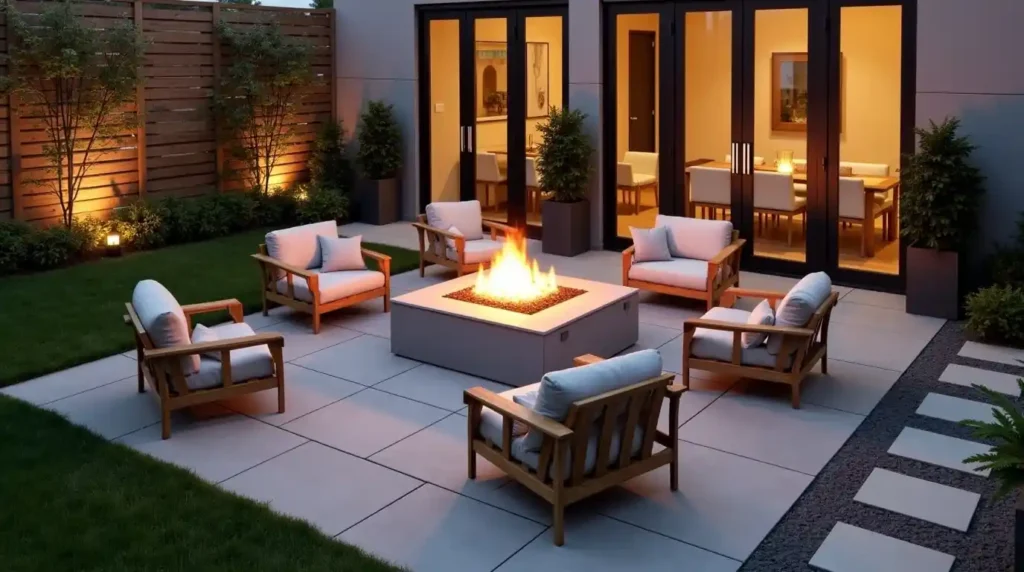
A heat source can help you use the courtyard during cooler evenings. Options include a gas fire table, electric wall heater, built-in fireplace, or approved fire bowl.
The best choice depends on the size of the space and local rules.
Best for: Evening entertaining
Maintenance level: Medium
Watch out for: Smoke, fuel, and limited airflow
Check fire rules before buying anything. Apartment buildings may ban open flames. Keep the feature away from plants, fabric, timber screens, and low roofs. In a tight courtyard, an electric heater may be safer and easier than a wood fire.
How to Create a Low-Maintenance Courtyard Garden
A courtyard may be small, but crowded pots and hard surfaces can still create a lot of work. A low-maintenance courtyard garden starts with smart choices.
Group plants with similar sunlight and water needs. This makes watering faster and reduces plant loss. Do not place a thirsty fern beside a dry-loving herb in the same pot.
Install drip irrigation for raised beds and large containers. A timer can help during hot weather or short trips. Check the system often because small tubes can become blocked.
Choose plants that grow slowly and keep a neat shape. Evergreen plants can provide year-round structure, but they may still need feeding and trimming.
Use larger containers where possible. They hold moisture longer than small pots. Add mulch on top of the soil to slow water loss and reduce weeds.
Keep drains open. Fallen leaves, soil, and plant roots can block water flow. Courtyard garden maintenance becomes much harder when rainwater has nowhere to go.
Choose outdoor cushion covers that can be removed and washed. Store cushions and small tools in a bench or narrow cabinet.
Once a month, complete this quick check:
- Clear leaves from drains
- Test the irrigation
- Check pots for standing water
- Trim plants away from lights and doors
- Clean the water feature
- Look for loose climbing supports
- Wipe outdoor furniture
- Check plants for pests
Easy courtyard landscaping is less about removing every task. It is about making each task simple and quick.
10 Courtyard Garden Mistakes That Make the Space Feel Smaller
Most courtyard garden mistakes happen when people add too much before fixing the layout.
1. Buying Plants Without Checking Their Final Size
A small shrub may become too wide within a few years. Read the plant label and check its final height and spread.
2. Using Too Many Small Pots
Ten small pots can look more crowded than three large ones. Group plants into fewer containers where possible.
3. Blocking the Main Walking Route
Keep a clear path between doors, seats, and storage. Test the route before fixing heavy items in place.
4. Choosing Furniture That Is Too Large
Mark the furniture size on the floor with tape. Leave enough room to pull out chairs and walk around them.
5. Ignoring Drainage
Raised beds, pots, and rugs can cover drains. Keep water routes clear and easy to inspect.
6. Mixing Too Many Colors and Materials
Limit the design to a few main finishes. Repeat them across furniture, pots, paving, and screens.
7. Choosing Plants for Looks Alone
A sun-loving plant will struggle in deep shade. Match each plant to the real conditions.
8. Using One Harsh Light
Replace one bright overhead light with several softer lights placed at different levels.
9. Forgetting Storage
Cushions, tools, watering cans, and toys create clutter. Use a storage bench or slim outdoor cabinet.
10. Trying to Add Every Garden Feature
You may love fountains, fire pits, dining tables, trees, and living walls. Your courtyard may not have room for all of them.
Take a photo from the main doorway. Photos often show clutter and blocked views more clearly. Remove one or two weak items before buying anything new.
Choose Courtyard Garden Ideas That Fix Your Main Problem
A successful courtyard does not need many features. It needs a clear purpose, a simple layout, and plants that suit the light.
Start by measuring the space and watching how the sun moves across it. Choose one main use, such as dining, relaxing, or growing plants. Then select a focal point and keep the walking route clear.
You may need a living wall for more planting space, a screen for privacy, or built-in seating for comfort. Good drainage, outdoor lighting, and easy storage will make the garden more useful over time.
Choose three courtyard garden ideas that solve your biggest problems. Sketch them on paper before buying plants or furniture.
The best courtyard garden ideas make your space easier to use, easier to care for, and more enjoyable every day.