17 Japanese Garden Design Ideas for a Peaceful Yard
Your backyard does not need to be large or expensive to feel peaceful.
A calm garden often comes from using fewer things with more care. Yet many homeowners add bamboo, lanterns, stones, and bright bridges without a clear plan. The yard soon feels busy instead of restful.
These Japanese garden design ideas will help you create a quiet outdoor space with natural stone, soft planting, gentle paths, and simple water features. You will also learn how to use empty space so each feature has room to stand out.
You can adapt these ideas for a large backyard, a narrow side yard, or a small courtyard. You do not need to copy a historic Japanese garden. Instead, focus on balance, natural shapes, changing views, and plants that grow well in your climate.
Start with one clear idea. Then build the rest of the garden around it.
What Makes a Japanese Garden Feel Peaceful?
A Japanese-style garden is not created by placing a lantern beside a bamboo plant. The calm feeling comes from the way every part works together.
Natural shapes are an important part of the design. Paths curve gently. Stones have uneven edges. Trees and shrubs do not form perfect matching rows.
Empty space also matters. A patch of gravel, an open lawn, or a simple area of groundcover gives your eyes a place to rest. Filling every corner with plants and decorations can make the garden feel smaller.
Asymmetry helps the yard look natural. This means the two sides do not match, but they still feel balanced. You may place one tall tree on the left and a low group of stones on the right.
The garden should reveal itself slowly. A curved path may hide a bench until you turn a corner. A gate may frame a single tree instead of showing the full yard at once.
Some Japanese gardens include ponds and plants. Others use gravel and stones to suggest water and mountains. A dry Zen garden is one style, but it is not the only type.
The main rule is simple. Every feature needs a purpose.
How to Plan Your Japanese Garden Before Buying Anything
Good small Japanese garden design begins with the view, the walking route, and the amount of open space.
First, look at your yard from the room you use most. Your best view may be from a kitchen window, patio door, or living room. Plan the garden so it also looks good from inside the house.
Next, choose the mood you want. You might want a shaded woodland garden, a quiet tea corner, a dry gravel space, or a simple courtyard.
Select one main focal point. This could be a small tree, a water bowl, a stone group, or a bench. Adding several strong focal points can make a small garden feel crowded.
Draw the path before choosing plants. The path controls how people move and what they see. It also helps you decide where to place stones, lights, and seating.
Check the practical details before you shop:
- How many hours of sun does the space receive?
- Does water collect after rain?
- How large will each plant become?
- How cold or hot does your climate get?
- How much pruning and cleaning can you manage?
- Are there local rules for ponds or water features?
A 12-by-16-foot courtyard may need only a small feature tree, three groups of stones, gravel, and a water bowl.
For a low-cost garden, use local stones, gravel, simple groundcover, and a wood screen. A larger budget may allow for a pond, custom gate, mature tree, or professional stone placement.
Choose the view, draw the path, place the focal point, and then select the plants.
Japanese Garden Design Ideas for Better Structure and Flow
Paths and stones form the basic shape of the garden. Plan these first so the space feels balanced before you add smaller details.
Build an Asymmetrical Garden Layout
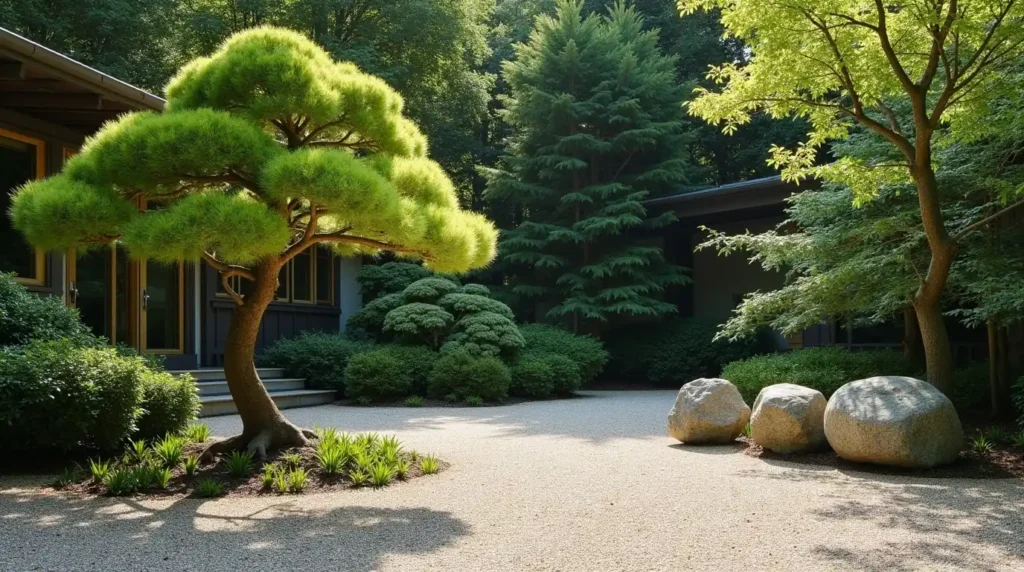
Matching features can make a yard feel formal and stiff. A Japanese garden layout often feels more natural when the two sides are different.
Place one main feature on one side of the yard. Balance it with two or three smaller features on the other side.
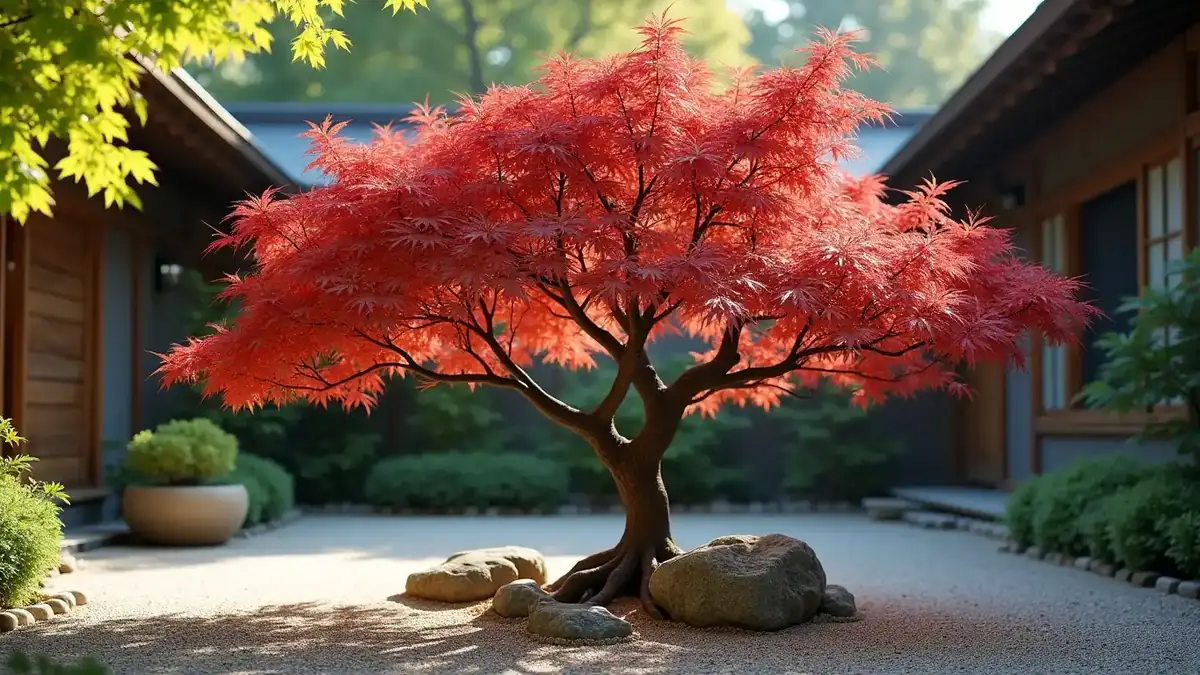
For example, you could plant one Japanese maple near a corner. On the opposite side, add a low evergreen shrub and three natural stones.
Do not fill every gap. Open ground makes the larger features more visible.
Stand back and look at the whole yard. The garden should feel balanced even when the parts do not match.
Create a Winding Stepping-Stone Path
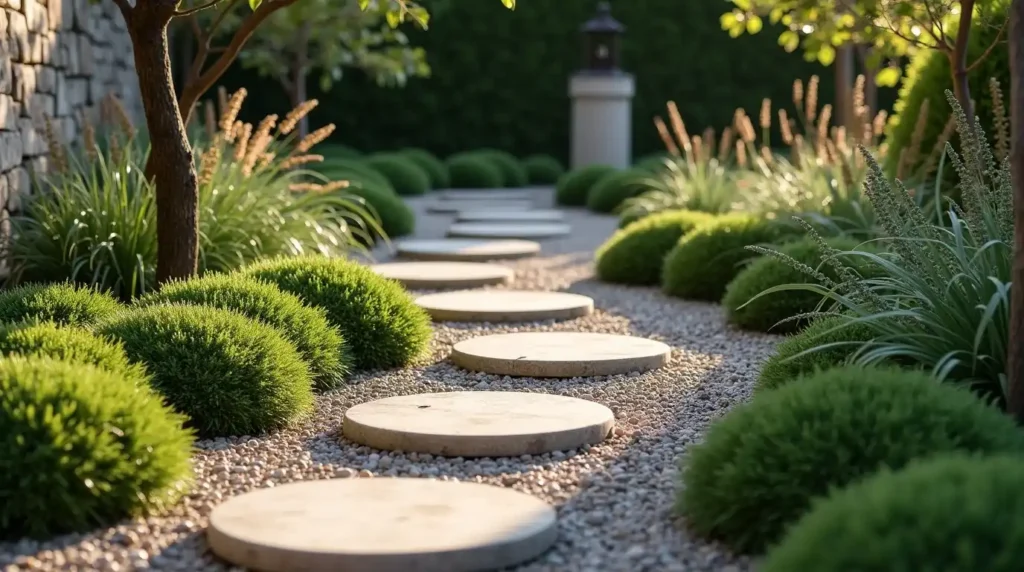
A curved path can make a small garden feel longer. It also slows people down and changes what they see as they walk.
Use stones with slightly different shapes. Keep the tops level so the path remains safe.
The route should guide the eye before it guides the feet. Let visitors see part of a tree, lantern, or water feature before they reach it.
Avoid making sharp turns that feel forced. A soft curve usually looks more natural.
Allow low plants to grow near the edges. Do not let them cover the walking surface.
Secure every stone before using the path. Loose or uneven stones can become slippery and unsafe.
Add a Dry Gravel Stream
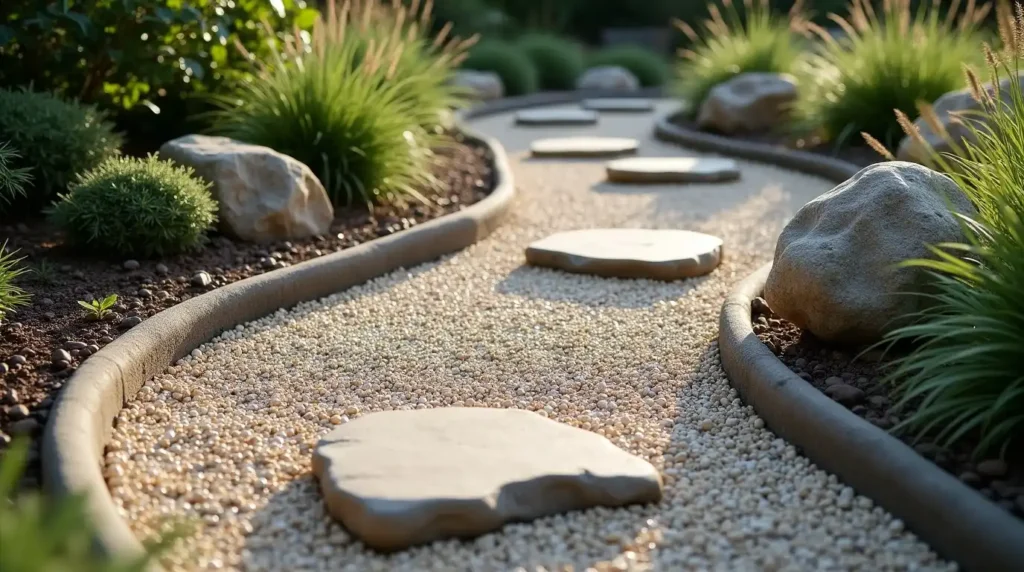
A dry stream gives you the look of moving water without a pond or pump.
Shape the stream with soft curves. A straight gravel strip may look like a pathway rather than a riverbed.
Place larger stones along the edges to suggest riverbanks. Add one or two stones inside the gravel so the stream looks natural.
You can cross the stream with flat stepping stones or a small wooden bridge.
Hidden edging will help keep gravel in place. It should sit below the surface so it does not break the natural look.
A dry stream may also help guide rainwater if the slope and drainage are planned well. Do not send water close to your home’s walls or foundation.
This idea works well in dry climates where a pond may waste too much water.
Frame a View With Borrowed Scenery
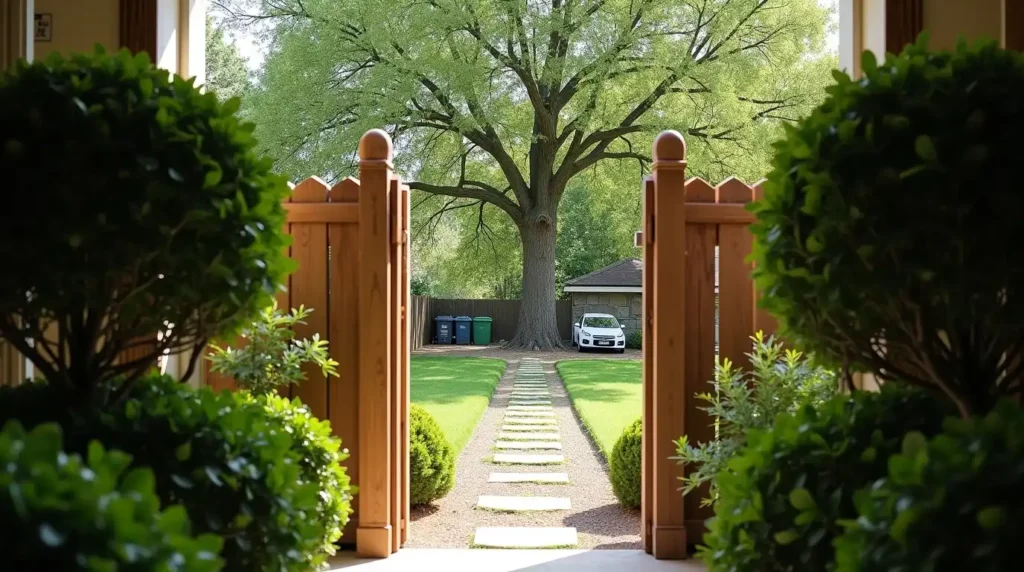
You may already have a useful feature beyond your property. It could be a tall tree, a green hill, an old wall, or a group of plants next door.
Borrowed scenery means using that distant view as part of your garden.
Frame it with tree branches, a gate, or two groups of shrubs. Hide bins, parked cars, and other poor views with screens or layered plants.
For example, place two low shrubs around the view of a mature tree behind your fence. The tree may then feel like part of your own yard.
Check the view from inside your home too. A well-framed scene can look like a living picture through a window.
Strong paths and stone groups give the garden its shape. Water and traditional features can then add movement, sound, and character.
Japanese Garden Ideas Using Water and Traditional Features
Water can make a garden feel cooler and quieter. Traditional features can also add interest, but each one needs enough space.
Add a Small Reflective Pond
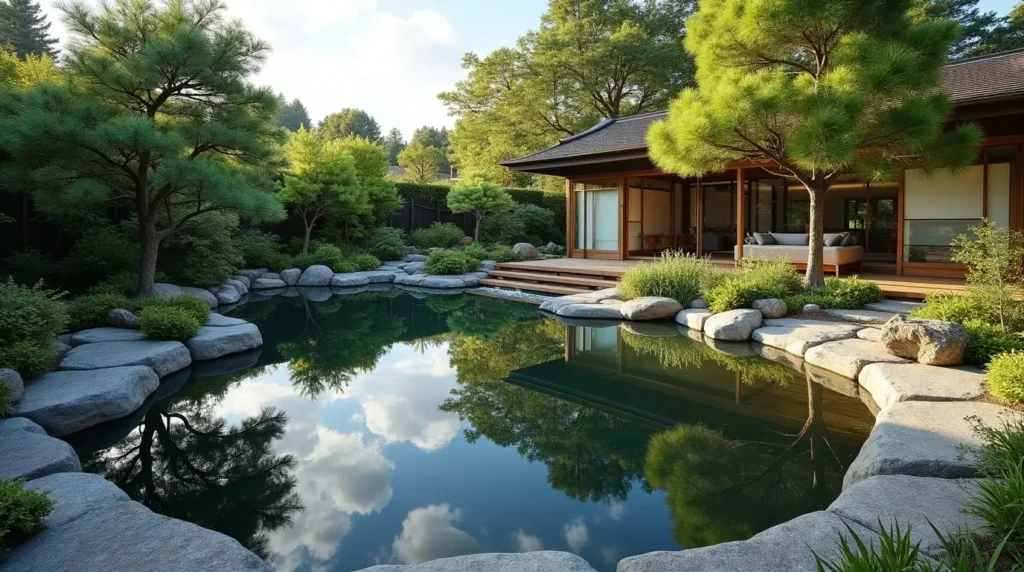
A still pond can reflect the sky, nearby trees, and moving clouds. This adds depth without filling the space with more objects.
Choose a soft, uneven shape instead of a perfect square or circle. Keep part of the water open so reflections remain visible.
Use water plants with care. Too many lilies or grasses can hide the surface.
Before adding a pond, think about:
- Child and pet safety
- Mosquito control
- Pump access
- Fallen leaves
- Water loss in hot weather
- Local building rules
A pond is not right for every yard. A large water bowl can give you reflection and gentle sound with less work.
Install a Simple Water Basin
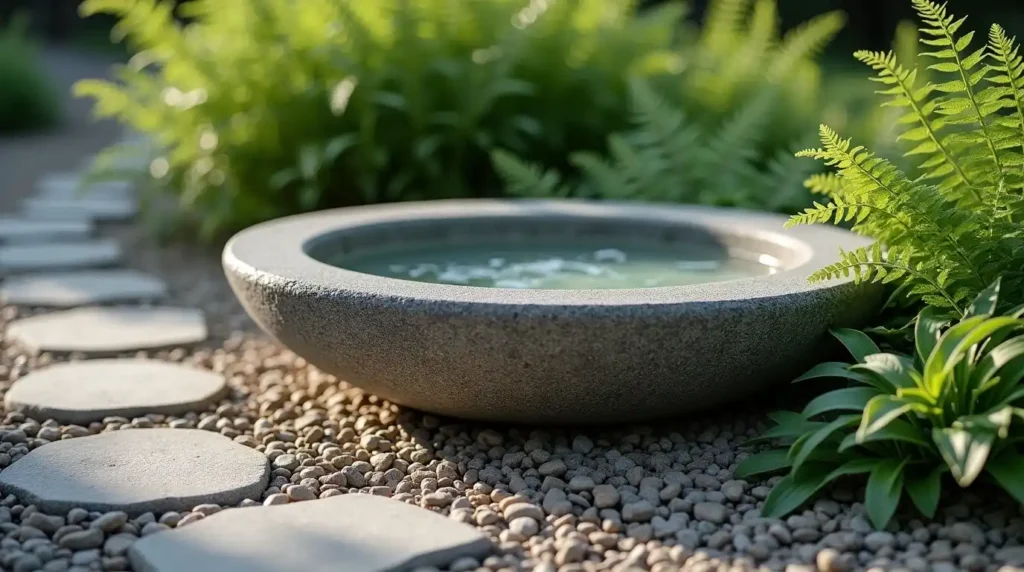
A low water basin can become a quiet focal point near a path, gate, or bench.
Place it among gravel, ferns, or low groundcover. Keep the area around it simple so the basin does not get lost.
A bamboo water spout may suit the space, but it is not required. A plain stone or stone-look bowl can work well on its own.
Traditional purification basins have cultural meaning. Treat them with respect instead of using them as random garden decorations.
For a small courtyard, a sealed bowl with clean water may be enough. Add a hidden pump only when you want the sound of moving water.
Clean the basin often so algae and standing water do not become a problem.
Cross a Wet or Dry Stream With a Simple Bridge
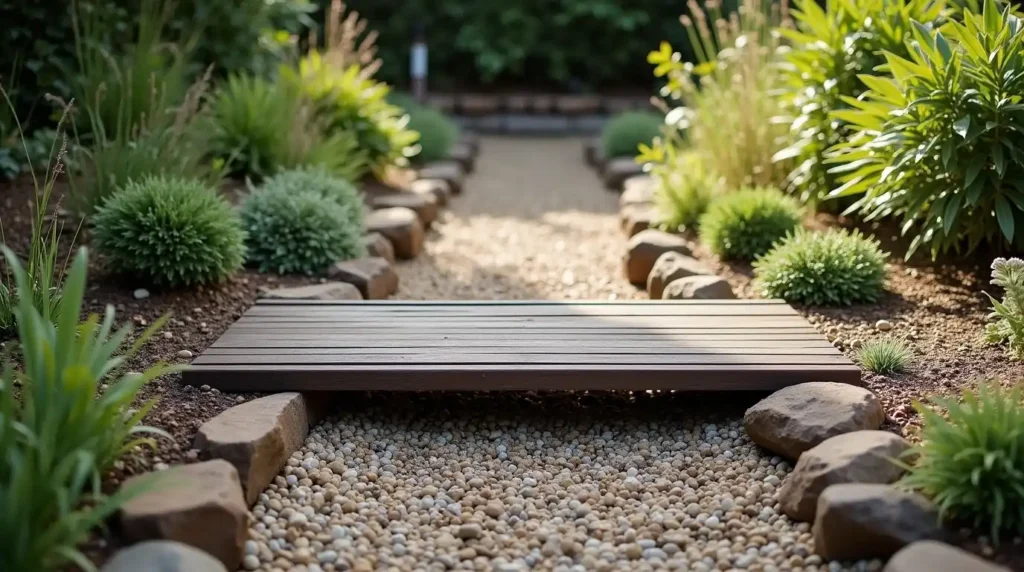
A bridge can mark a change from one part of the yard to another. It can also become a strong visual feature.
Keep the size in balance with the garden. A short flat bridge often looks better than a tall, curved bridge in a small yard.
Use natural wood, dark-stained timber, or a wide stone slab. Make sure the surface is safe when wet.
A bright red bridge may suit some large or formal settings. In a small home garden, it can draw too much attention.
The bridge should have a reason to be there. Place it over a pond edge, narrow stream, drainage channel, or dry gravel river.
For a side yard, a short wooden bridge over gravel can create the look without the cost of real water.
Place One Stone Lantern as a Focal Point
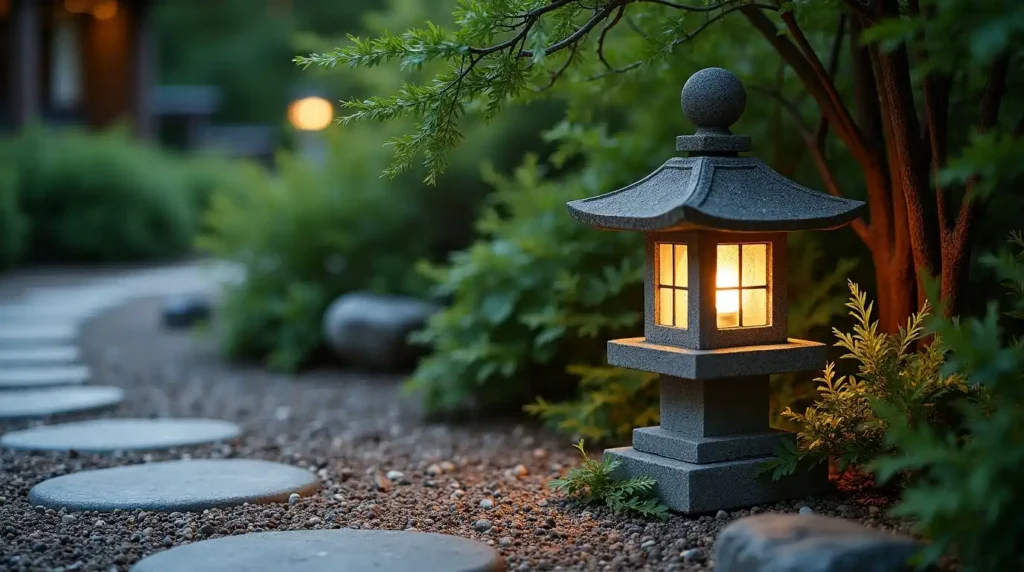
One carefully placed lantern can be more effective than several matching ones.
Choose a size that fits the yard. A large lantern can overwhelm a narrow path or small courtyard.
Good locations include:
- Beside a water basin
- Near a turn in the path
- Under a tree
- Close to a garden entrance
- Beside a quiet seating area
Allow some leaves or branches to cover part of the lantern. It should feel settled into the garden rather than placed on display.
A stronger design may use one lantern surrounded by plants. A weaker design may use four matching lanterns in a straight row.
Use soft outdoor lighting near the lantern if needed. Do not place a bright bulb inside unless the lantern was made for that use.
Add a Bamboo-Style Fence or Simple Entry Gate
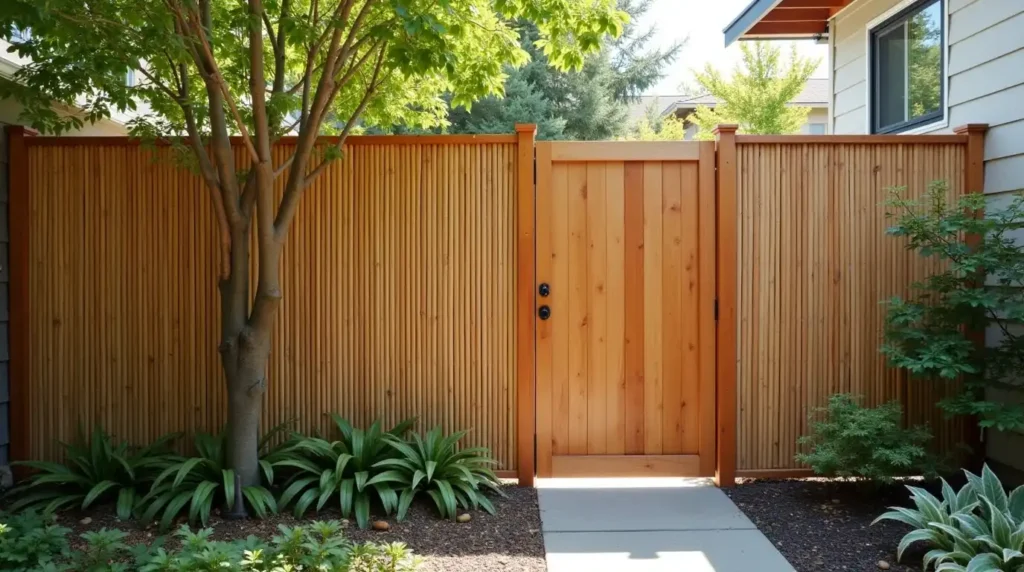
A screen can hide poor views and make the garden feel private.
Real bamboo looks attractive, but it may rot quickly in wet weather. Bamboo-look panels, treated wood, or narrow timber strips may last longer.
Use the screen to hide:
- Trash bins
- Air-conditioning equipment
- Utility boxes
- Neighboring windows
- Busy roads
- Storage areas
A simple gate can also slow the move from one area to another. It creates a clear entrance without needing heavy decoration.
Keep the shape plain and the color natural. Dark brown, warm wood, black, and soft gray often work well.
A short screen behind a bench may be enough to create a Japanese courtyard feeling.
Hard features should support the plants. They should not fight for attention.
Japanese Garden Plant Ideas for Texture and Seasonal Change
Green should form the base of your planting. Flowers can add seasonal interest, but they should not cover every bed.
Use a Japanese Maple as a Feature Tree
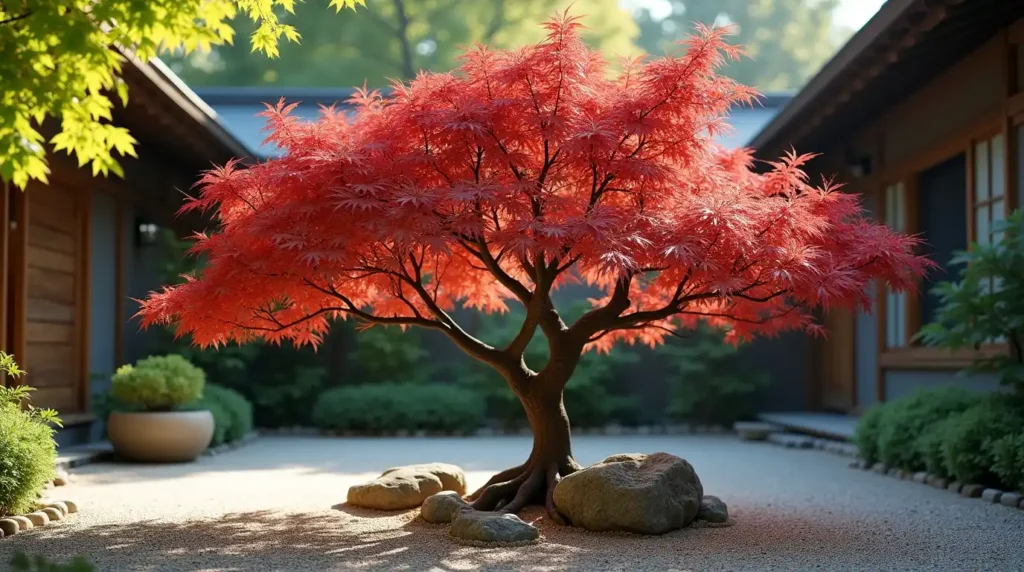
A Japanese maple can add graceful branches, fine leaves, and rich autumn color.
Choose the variety with care. Some become wide trees, while others stay small enough for a courtyard or container.
Check the growing needs before planting. Many Japanese maples need shelter from harsh afternoon sun, strong wind, and very dry soil.
Do not place the tree too close to a wall or path. Look at its mature height and width, not its size at the nursery.
Use one maple as the main feature instead of planting several types close together.
A Japanese maple may not grow well in every climate. You can use a local tree with similar qualities, such as:
- Fine leaves
- Graceful branching
- Seasonal color
- A useful mature size
- Attractive bark
The design matters more than the plant’s country of origin.
Layer Evergreens for Year-Round Structure
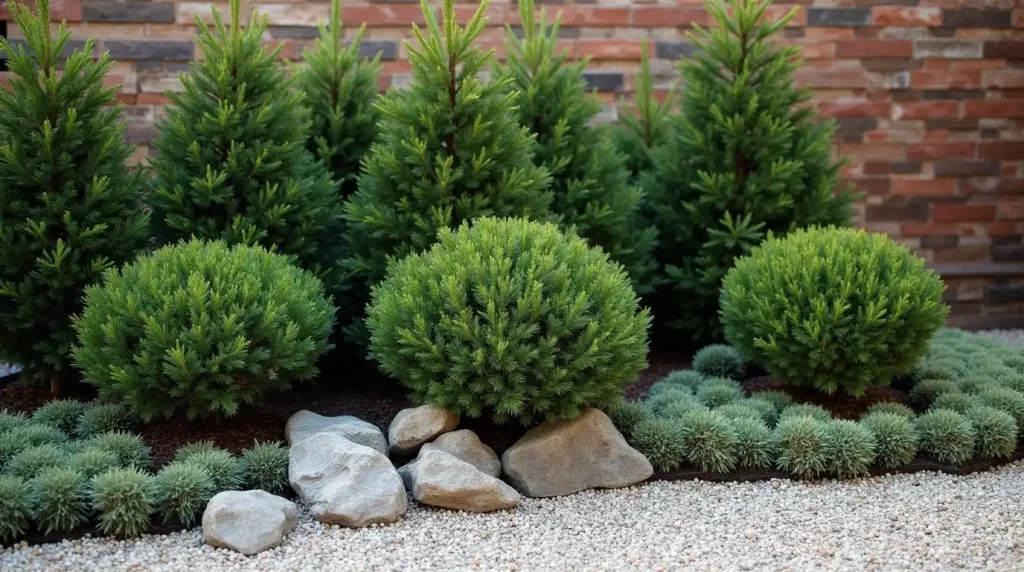
Evergreens keep the garden looking full during winter. They also create a calm green background for stones and paths.
Place taller shrubs near walls or fences. Use medium shrubs in front and low groundcover near the path.
Mix different leaf shapes and shades of green. This adds depth without using bright color.
Choose pines, junipers, hollies, or other evergreen plants that suit your climate.
Prune them to show their natural shape. Avoid cutting every shrub into the same round form.
A good group may include one sculptural evergreen, two soft rounded shrubs, and a low carpet of groundcover.
Avoid planting one straight hedge around the whole yard. The garden will often feel softer when the heights rise and fall.
Create a Mossy Look With Suitable Groundcovers
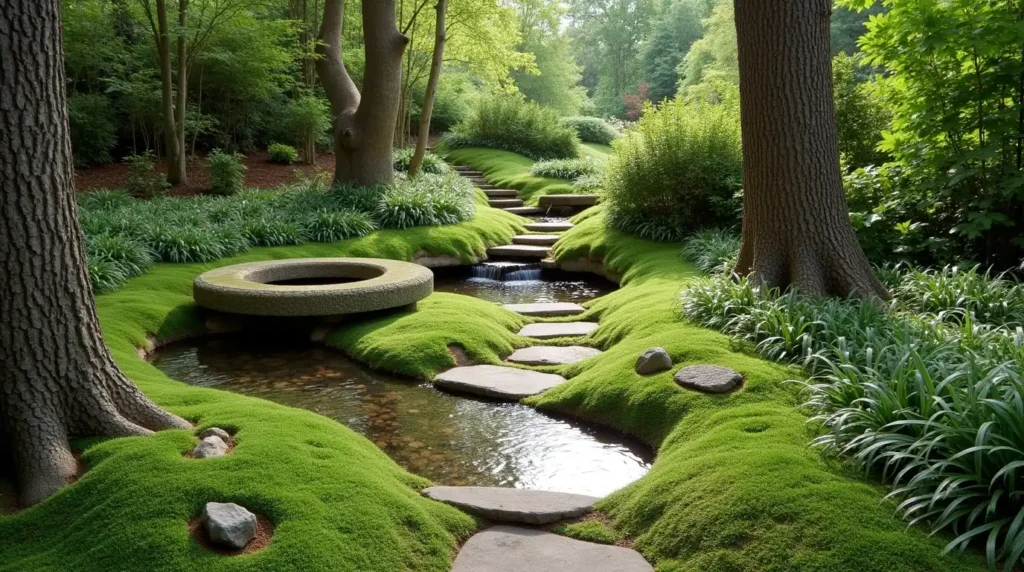
Moss can make stone and soil look old and settled. Yet real moss needs shade, moisture, and the right soil.
It may fail in a hot, dry, or sunny yard.
Instead of forcing moss to grow, choose a low plant that gives a similar soft look. Options may include:
- Dwarf mondo grass
- Irish moss
- Scotch moss
- Creeping thyme
- Baby’s tears
- A local low-growing groundcover
Check whether any plant is invasive in your area before planting it.
Use groundcover between stones, under trees, and around the edge of a water basin.
Keep foot traffic away from delicate plants. Leave a clear stone surface for walking.
Some groundcovers need more water than they appear to need. Match each plant to your soil, sunlight, and rainfall.
Use Seasonal Color With Restraint
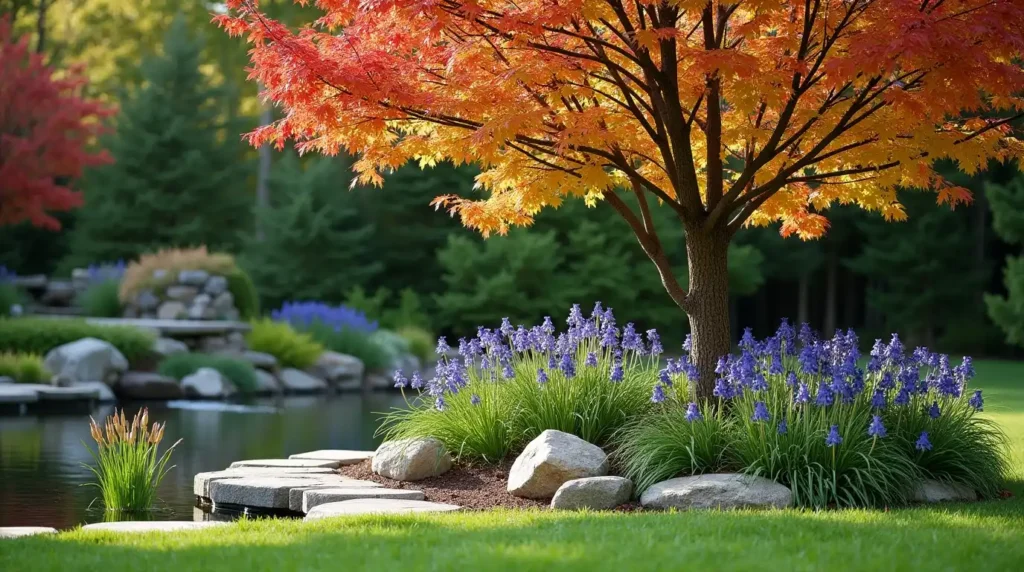
A peaceful garden does not need flowers in every month.
Build the design around green leaves, stone, bark, and open ground. Then choose one or two moments for stronger color.
You might use:
- Spring blossoms
- Summer iris
- Red or gold autumn leaves
- Winter berries
- Textured bark
- Evergreen branches
Plant flowers in small groups instead of mixing many colors together.
A single patch of blue iris near water may have more impact than a bed filled with several flower types.
Autumn color can come from one feature tree. Winter interest may come from pine branches, stones, and bark.
You do not need a long list of Japanese garden plants. Choose plants that give you layers, soft color, and a clear seasonal change.
Small Japanese Garden Design Ideas for Modern Homes
A small yard can be easier to simplify. You have less room for clutter, so each choice needs to work hard.
Turn a Courtyard or Side Yard Into a Mini Garden
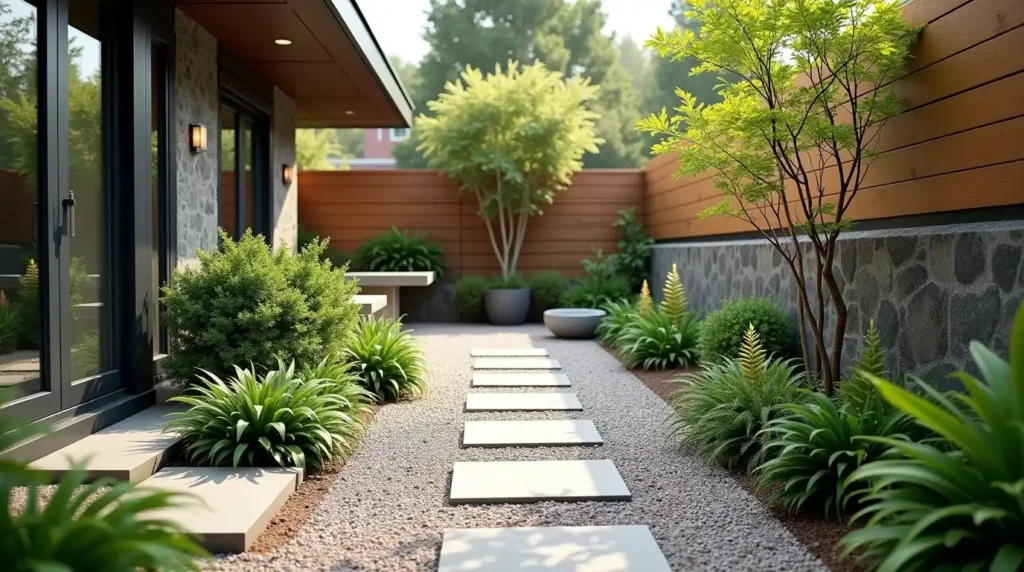
Walls and fences can form a simple background for a small Japanese garden.
Choose one tall plant or feature tree. Add a short path, gravel, and one small water feature.
A narrow side-yard plan may include:
- Flat stepping stones
- A slim gravel border
- A wood or bamboo-style screen
- Ferns or shade plants
- One water bowl at the end
Keep the plant list short. Three to five plant types may be enough.
Use vertical screening when floor space is limited. You can also grow a small maple or evergreen shrub in a large container.
Renters can create a similar look with pots, loose stones, a freestanding screen, and a portable water bowl.
Avoid adding a pond, bridge, lantern, and statue to the same small area. One or two strong features will look better.
Build a Quiet Tea or Seating Corner
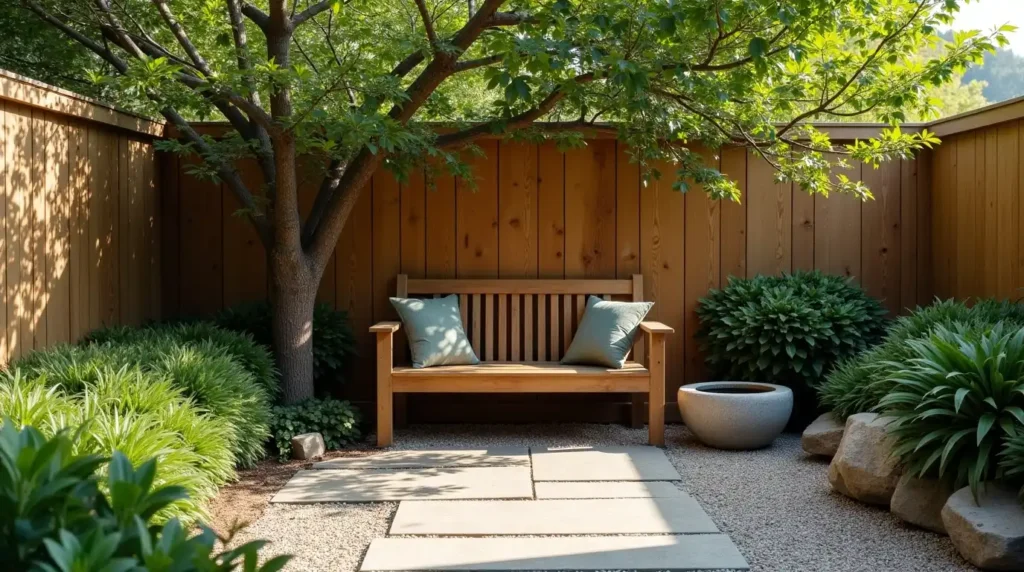
A garden should give you a place to stop and enjoy it.
Choose the seating spot before buying the bench. Sit there for a few minutes at different times of day.
Check:
- What can you see?
- Can neighbors see you?
- Is the area too hot in the afternoon?
- Can you hear traffic?
- Does rainwater collect there?
- Is the best garden view in front of you?
Use a plain wood or stone bench instead of a large outdoor sofa. Keep cushions and furniture in quiet natural colors.
Add shade with a small tree, pergola, or screen. Place a water bowl nearby if you want soft sound.
Leave enough room to walk around the seat. A crowded corner will not feel restful.
This area does not need to be used for a formal tea event. It can simply be a place to read, drink coffee, or sit after work.
Use Soft Lighting to Show Shape and Texture
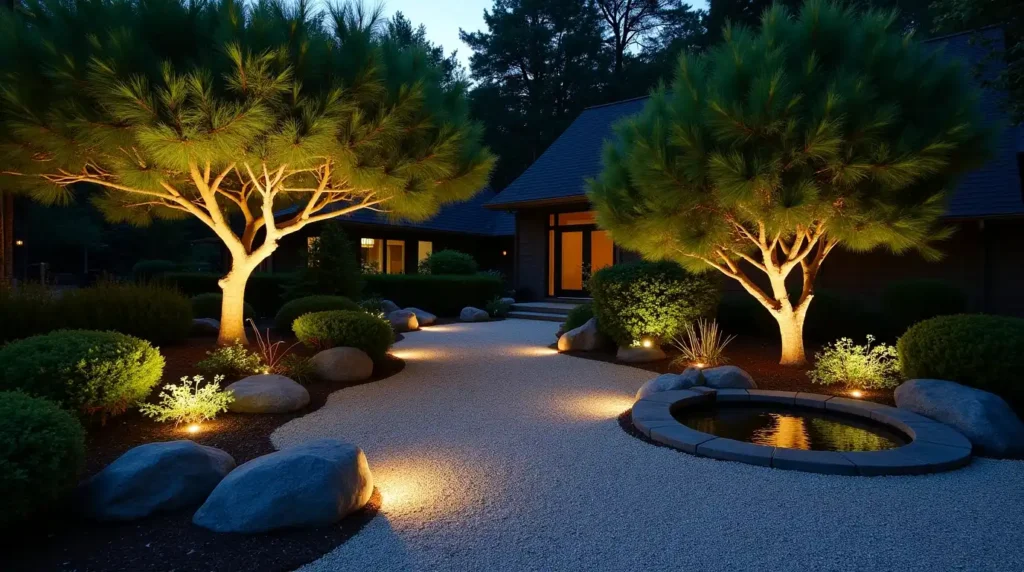
Garden lighting should help you move safely and enjoy a few key features at night.
Use warm, low-level lights. Bright white lighting can make the garden feel harsh.
Focus on one or two areas, such as:
- A feature tree
- A stone group
- A path turn
- A water basin
- A small bridge
Hide the light source behind plants or stones when possible. You should notice the soft glow before you notice the fixture.
Place path lights near steps and changes in level. Do not light every plant.
Choose outdoor-rated fixtures that can handle rain, soil, and heat.
The most successful Japanese garden design ideas use lighting to show texture without making the yard feel bright or busy.
How to Choose Japanese Garden Plants for Your Climate
An attractive plant can still be wrong for your garden.
Before buying anything, check the amount of sun, soil type, rainfall, summer heat, and winter cold. You should also check the plant’s mature size.
A small nursery shrub may become wider than your path within a few years.
You can plan the garden with five plant groups:
- One feature tree
- One or two structural evergreens
- Medium shrubs
- Low groundcovers
- A small amount of seasonal color
Look for plants with fine leaves, graceful branches, deep green color, or attractive bark.
You do not need to use plants from Japan. Local trees and shrubs may give you the same shape while handling your weather better.
Group plants with similar watering needs. This makes care easier and helps prevent overwatering.
Be careful with bamboo. Some types spread through the soil and can become hard to remove. Use clumping bamboo, root barriers, or bamboo-look screens when local advice supports them.
Check plant safety if children or pets use the garden. Some attractive plants can be harmful when eaten.
A local nursery or garden service can help you find plants that match the look and survive in your area.
Japanese Garden Mistakes That Can Ruin the Calm Look
The most common mistake is adding too much.
A small yard may feel crowded when it includes a red bridge, large lantern, pond, fountain, statue, gravel bed, and several feature trees.
A stronger plan may use one maple, a short stone path, three natural stones, low groundcover, and a water bowl.
Other common mistakes include:
- Making both sides match
- Using too many bright colors
- Choosing plants without checking mature size
- Placing stepping stones too far apart
- Using loose or slippery path materials
- Planting spreading bamboo without a barrier
- Lighting every feature
- Ignoring the view from inside the house
- Adding traditional objects without learning their purpose
- Filling every open area with plants
Maintenance also matters. A pond full of leaves or a gravel bed covered in weeds will lose its calm look.
Choose features you can care for. A simple garden in good condition often looks better than a detailed garden you cannot maintain.
Use fewer features, place them carefully, and leave room around them.
Start With One Calm, Well-Placed Feature
A Japanese-inspired garden does not need to include every traditional feature.
Begin with natural materials, a clear path, and one strong focal point. Use asymmetrical balance instead of matching both sides. Add layered plants that suit your climate. Leave open space so the garden can breathe.
Look at your yard from the main window or seating area. Choose one view you want to improve. Then decide where the path, feature tree, stone group, or water bowl should go.
Start with one idea that suits your space, budget, and weather. These Japanese garden design ideas work best when each stone, plant, path, and water feature has room to make an impact.