18 Focal Point Ideas for Gardens That Stand Out
A garden can have healthy plants, fresh flowers, and neat paths but still feel unfinished. You may keep adding pots, chairs, lights, and decorations. Yet the space still does not feel connected.
The problem may be the lack of a clear focal point.
A garden focal point is the feature that catches your eye first. It gives the rest of the space a sense of order. It can also guide people through the garden, mark a seating area, or draw attention away from an unattractive view.
These focal point ideas for gardens can help you improve your yard without changing the whole layout. You will find options for large lawns, small patios, narrow courtyards, and rented spaces.
Some ideas use plants. Others use seating, water, art, lighting, or garden structures. The right choice will depend on your space, budget, style, and the amount of care you can give it.
Why Does Your Garden Feel Unfinished?
A focal point is the main feature in a garden view. It gives your eyes a place to stop.
Without one, every plant and decoration may compete for attention. The garden can feel busy, even when each item looks good on its own.
A strong focal point stands out because of its:
- Color
- Height
- Shape
- Texture
- Size
- Position
For example, a red bench will stand out against a green hedge. A pale tree trunk can catch the eye in a dark planting bed. A fountain at the end of a straight path can make the whole layout feel planned.
A focal point does not need to be large or costly. One bold container can work better than ten small pots. A simple chair painted in a strong color can become the main feature in a small yard.
Try this quick test. Imagine removing every decorative item from your garden. Which single item would you put back first?
That item may be your best focal point.
5 Checks Before You Choose a Garden Focal Point
A feature may look great in a shop or online photo but still be wrong for your yard. Check these five things before you spend money.
1. Check the Size of Your Garden
A large pergola may overpower a small courtyard. A tiny statue may disappear in the middle of a wide lawn.
Measure the area before choosing a feature. You do not need a perfect garden plan. Basic height and width measurements are enough to prevent many scale problems.
2. Check Where You Will See It
Think about where you spend the most time.
Can you see the feature from the kitchen window? Will it be visible from the patio? Does it appear when you enter through the gate?
The best garden focal point ideas work from the places you use most.
3. Match the Garden Style
A clipped topiary may suit a formal garden. A weathered bench may fit a cottage garden. A smooth black planter can work well in a modern yard.
The feature does not need to match every detail. It should still feel like part of the same space.
4. Be Honest About Maintenance
A pond needs cleaning. Topiary needs trimming. A wooden structure may need fresh stain or paint. Outdoor lights need safe wiring and weatherproof fittings.
Choose a feature you can care for without turning it into a burden.
5. Decide What the Feature Should Do
A focal point can have more than one job.
It may:
- Create a strong view
- Hide an unattractive wall
- Add seating
- Mark the end of a path
- Bring height to a flat garden
- Add interest during winter
- Create an evening gathering area
Choose a feature that solves a real problem in your garden.
4 Living Focal Point Ideas for Gardens
Plants can create a soft and natural main feature. They also change through the seasons, which keeps the garden interesting.
The key is to choose a plant with a clear shape, color, or height. Give it enough room to stand out.
Plant a Specimen Tree
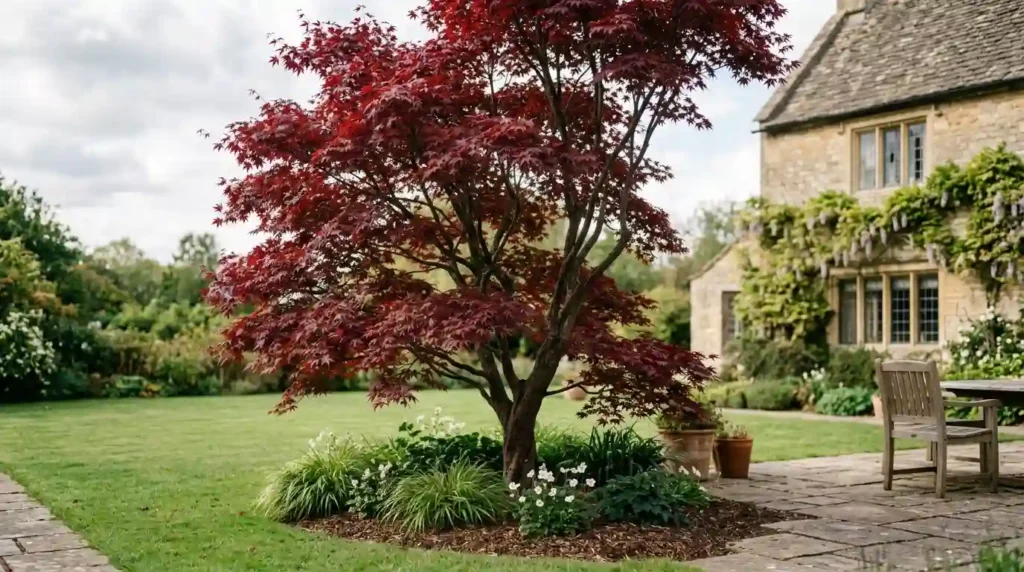
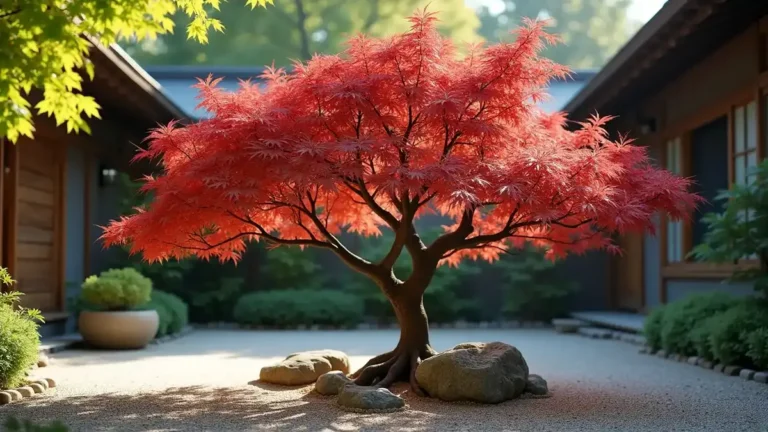
A specimen tree is chosen for its special appearance. It may have colorful leaves, peeling bark, spring flowers, or an unusual shape.
Use one where it can be seen from the house, patio, or garden entrance. Keep the planting around it low and simple. This gives the tree space to become the main feature.
Possible choices include:
- Japanese maple for leaf color and shape
- Silver birch for pale bark
- Magnolia for spring flowers
- Olive tree for a dry or Mediterranean-style garden
- Flowering cherry for spring color
Check the tree’s mature height and width before planting. A small tree in a garden center can grow much larger than expected.
Also check your local climate and soil. A beautiful tree will not make a good focal point if it struggles to stay healthy.
Best for: Front gardens, lawns, large borders, and open courtyards.
Avoid this: Planting the tree too close to a wall, path, drain, or building.
Group Flowering Shrubs for Bold Color
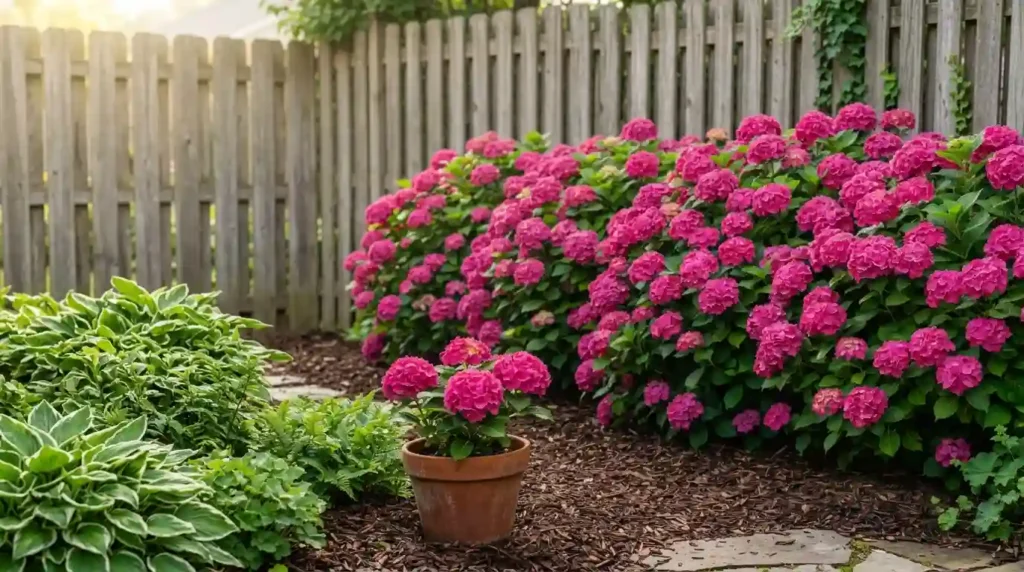
One flowering shrub can blend into a busy border. A group of the same shrub creates a stronger block of color.
Plant three, five, or more of the same type where space allows. Repeating one flower color makes the group feel calm and planned.
You could use:
- Hydrangeas in a partly shaded area
- Roses near a seating space
- Azaleas in a woodland-style garden
- Lavender along a sunny path
- Camellias against a sheltered wall
Choose shrubs that suit the amount of sun in the area. Also think about what they look like after the flowers fade.
Shrubs with strong leaves, berries, bark, or neat shapes will keep the display useful for longer.
Best for: Borders, fence lines, and garden corners that need more color.
Design tip: Repeat the flower color in one or two small pots nearby. This will connect the focal point to the rest of the garden.
Add Sculpted Topiary
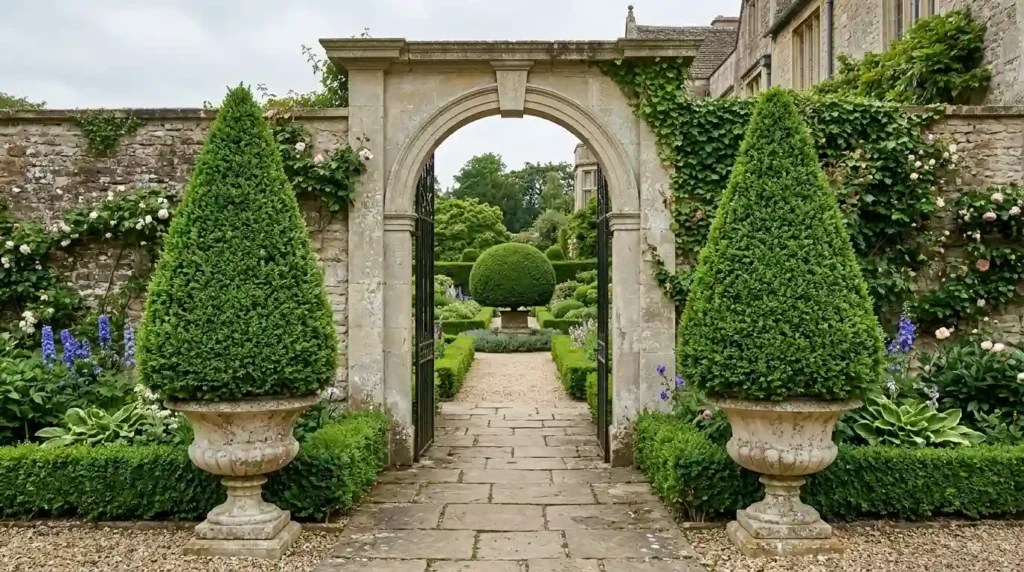
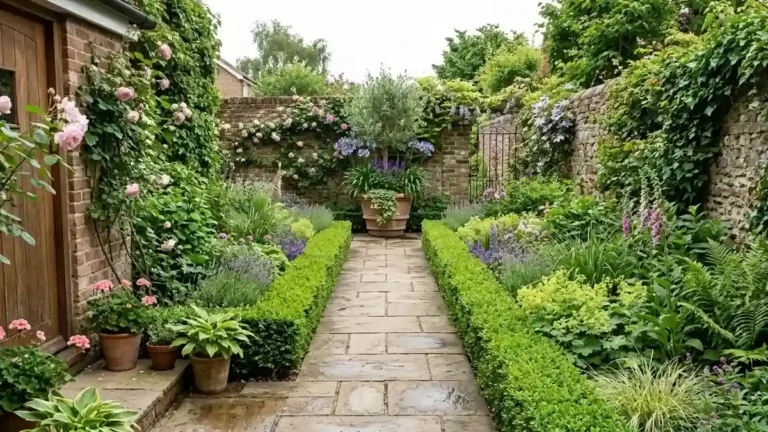
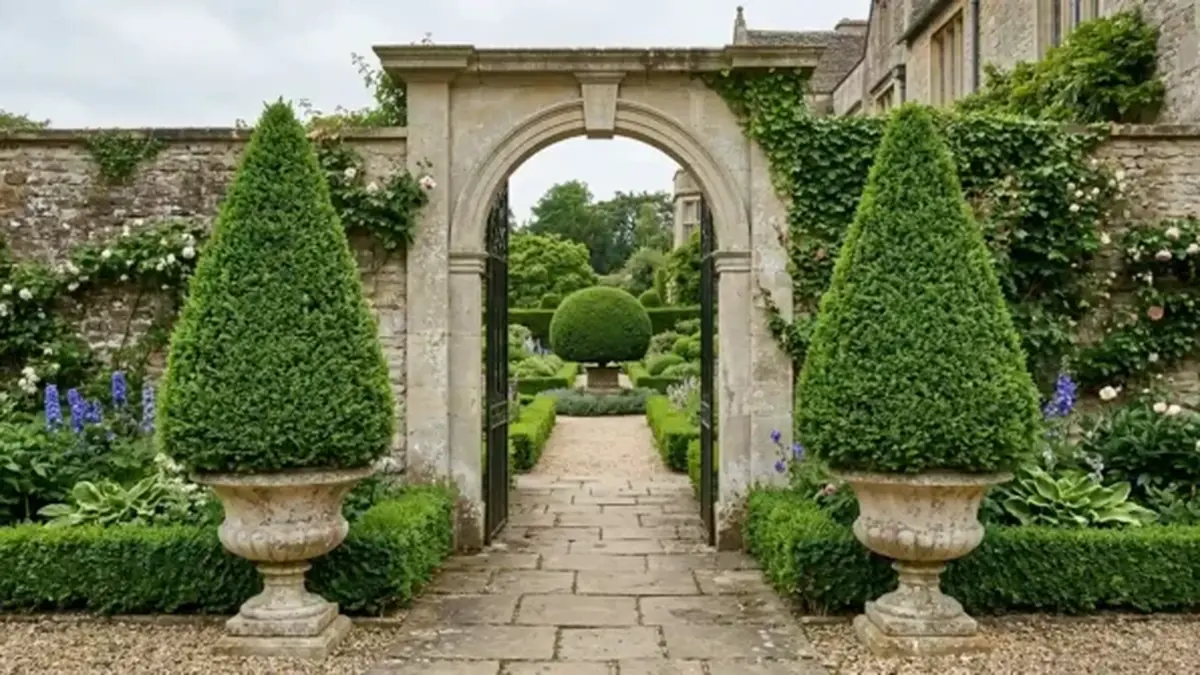
Topiary adds a clear shape to a garden. It can make an entrance feel more formal or bring order to loose planting.
You could place two matching topiary plants beside a gate or door. You could also use one large clipped plant in the center of a bed.
Simple shapes often work best:
- Balls
- Cones
- Spirals
- Cubes
- Cloud-shaped shrubs
Topiary looks neat, but it needs regular trimming. Some plants may also need protection from strong sun, frost, or drying winds.
Artificial topiary is another option for a covered patio or dark entrance. It needs less care, but low-quality versions may look fake when viewed closely.
Best for: Formal gardens, entrances, patios, and structured planting beds.
Avoid this: Adding many different clipped shapes in one small area.
Use Ornamental Grasses for Movement
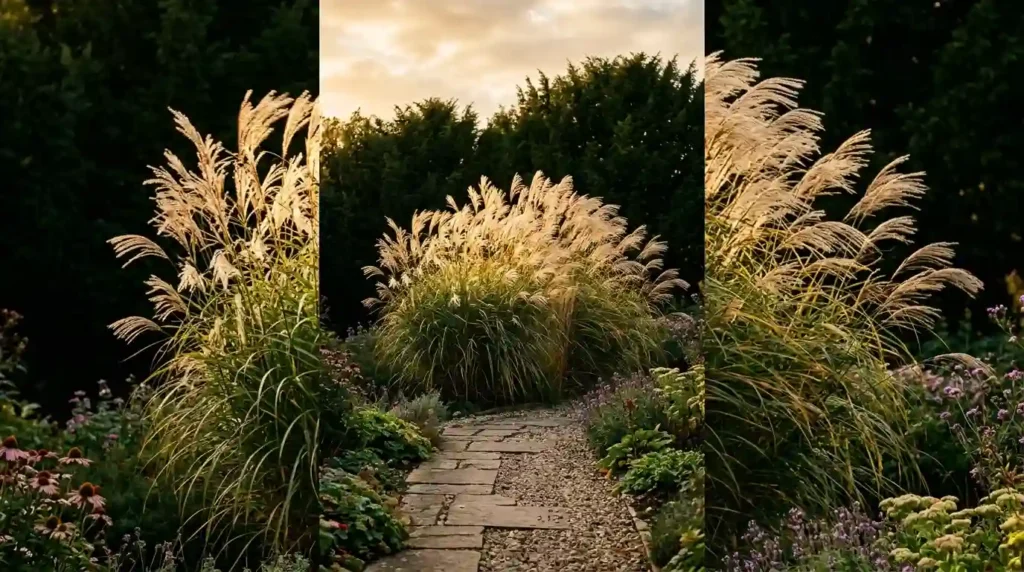
Ornamental grasses add height without feeling heavy. Their leaves and seed heads move in the wind, which brings life to a still garden.
Plant a large group instead of placing single grasses across the yard. A strong cluster will have more visual effect.
Grasses can look striking:
- Beside a still pond
- Behind a low bench
- Against a dark fence
- Near a gravel path
- Where evening light shines through the seed heads
Choose types that stay upright if you want a neat shape. Some grasses bend or spread more than others.
Check whether the plant is suitable for your climate. Also find out whether it spreads by seed or underground roots.
Best for: Modern gardens, dry gardens, gravel beds, and sunny borders.
Design tip: Place a soft grass beside stone, metal, or concrete. The contrast will make both materials stand out.
4 Garden Structures That Create a Strong View
Garden structures add height and shape throughout the year. They can also provide shade, seating, storage, or support for climbing plants.
These backyard focal point ideas work well when plants alone do not give the garden enough structure.
Frame a View With an Arbor or Pergola
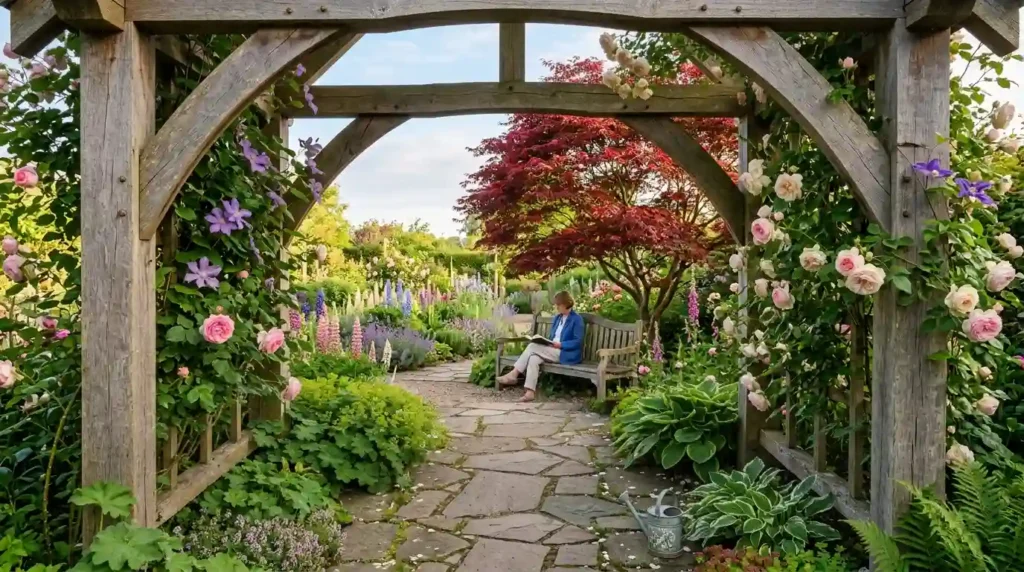
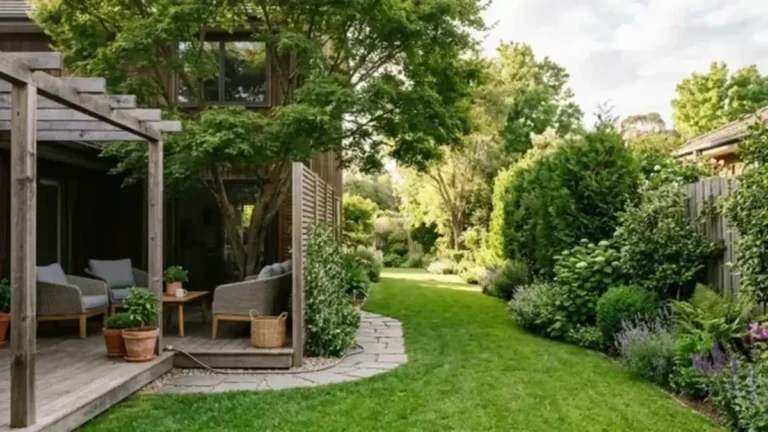
An arbor or pergola can mark an entrance, cover a path, or create a clear outdoor room.
Place an arbor where it frames something worth seeing. This could be a bench, tree, statue, or flower bed.
A pergola can create a larger focal point over a dining or seating area. Keep its size in balance with the house and garden.
Climbing plants can soften the structure. Roses, jasmine, clematis, and grapevines are common choices. Check the plant’s growth speed and final size before planting.
A strong climber can become heavy. Make sure the structure can support it.
Best for: Garden entrances, patios, paths, and outdoor dining areas.
Avoid this: Placing a large pergola in a space where it blocks light from the house.
Paint a Garden Gate in a Bold Color
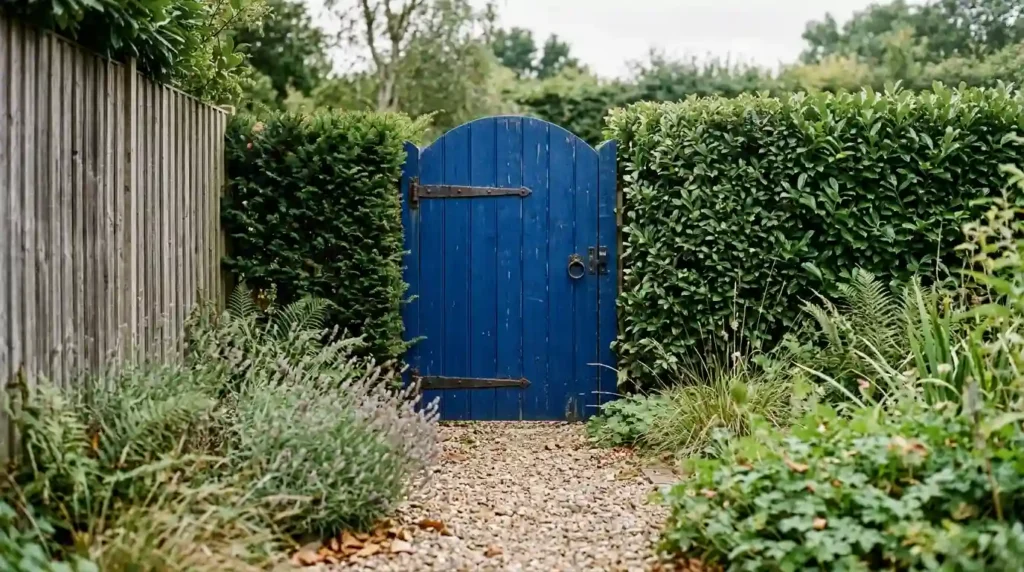
A colorful gate is one of the fastest ways to create a focal point. It works well because the color stands out against green plants.
You could try:
- Deep blue in a white cottage garden
- Dark red beside silver leaves
- Black in a clean modern yard
- Soft yellow among purple flowers
- Sage green against warm brick
Repeat the gate color in one or two small details. A nearby pot, cushion, or group of flowers can help the color feel connected.
Do not repeat the same bold color everywhere. It will lose its effect.
A gate can also create a sense of mystery. Even if it leads to a small side area, it suggests that there is more to see.
Best for: Side yards, cottage gardens, entrances, and garden zones.
Quick win: Paint an existing gate instead of buying a new feature.
Create a Bench or Seating Nook
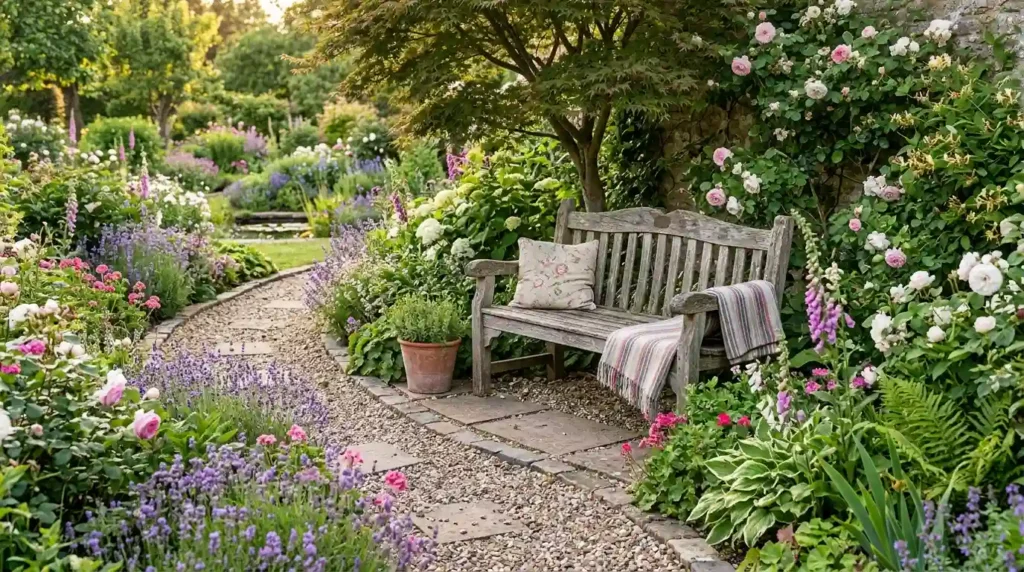
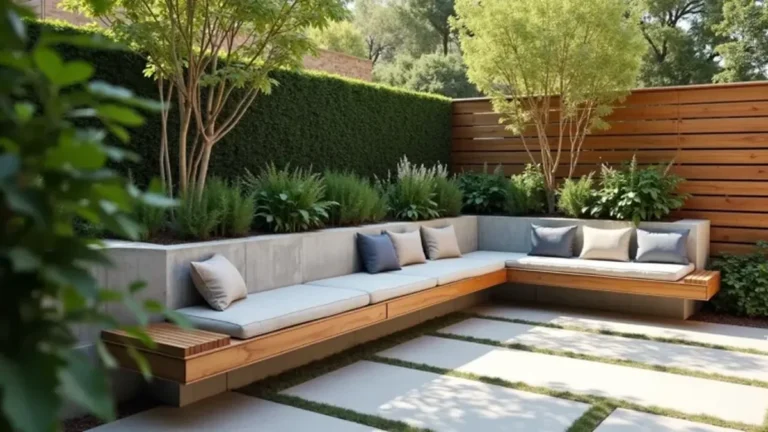
A focal point can be useful. A bench gives the eye a clear destination and gives you a place to enjoy the garden.
Position the seat where it faces a pleasant view. You can place it:
- Under a flowering tree
- At the end of a path
- Inside a deep border
- Against a garden wall
- Near a pond or fountain
Create a sense of shelter with plants, a fence, or a hedge. People often feel more comfortable when a seat has some support behind it.
A bright bench will attract attention. A natural wood bench will blend more gently with the planting.
Both options can work. The right choice depends on whether you want strong contrast or a softer look.
Best for: Gardens that need both a destination and a place to rest.
Avoid this: Adding too many pots, signs, cushions, and ornaments around the bench.
Turn a Shed or Greenhouse Into a Feature
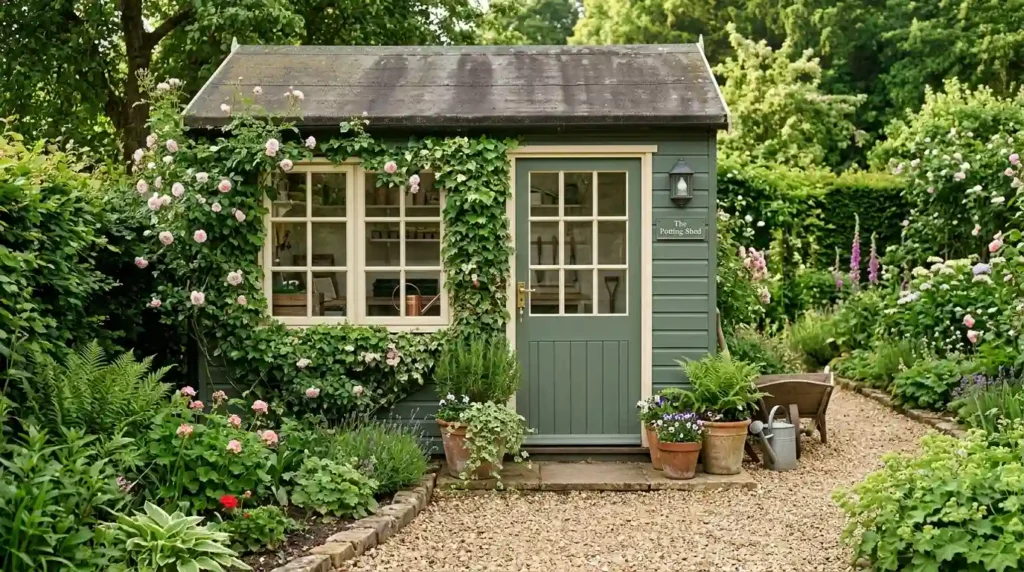
A shed or greenhouse often takes up a large part of the garden view. Trying to hide it may not work.
Instead, make it look like part of the plan.
You can:
- Paint it a deep green or charcoal
- Add a window box
- Place matching pots beside the door
- Grow a climber along one side
- Add a simple path to the entrance
- Replace damaged handles or trim
A greenhouse can become a strong feature when it is surrounded by herbs, raised beds, or gravel paths.
Keep the area around the building tidy. Tools, bags, hoses, and empty pots can quickly weaken the effect.
Best for: Working gardens, cottage yards, and larger back gardens.
Design tip: Repeat the shed color on a bench, gate, or planter to connect the space.
4 Decorative Landscaping Focal Points
Decorative features can add contrast when your planting feels too soft or similar. They are also useful in gardens where you cannot make major changes.
The best landscaping focal points are large enough to be noticed but simple enough to fit the space.
Install One Strong Garden Sculpture
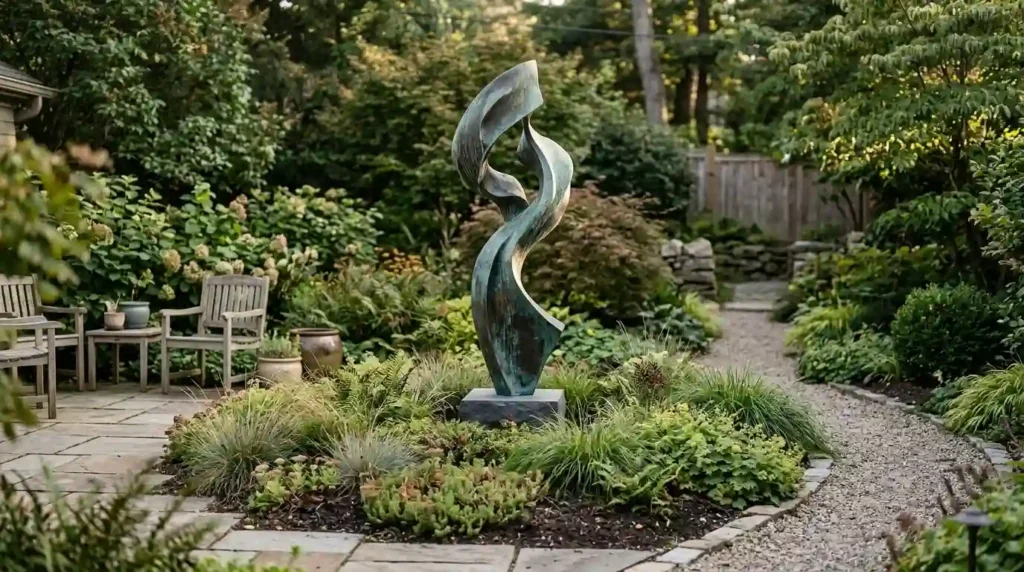
A single sculpture can give a garden character. It can also add interest during winter when many plants have died back.
Choose a style that fits the setting.
An abstract metal piece may suit a modern garden. A stone figure may work in a formal space. A handmade ceramic piece can bring color to a relaxed garden.
Place the sculpture against a simple background. A plain hedge, wall, gravel bed, or group of grasses can help it stand out.
Check how the material handles weather. Metal may rust. Painted surfaces may fade. Some ceramic items can crack in freezing weather.
Best for: Modern gardens, gravel gardens, lawns, and simple planting beds.
Avoid this: Spreading many small statues across the same view.
10. Use One Oversized Planter
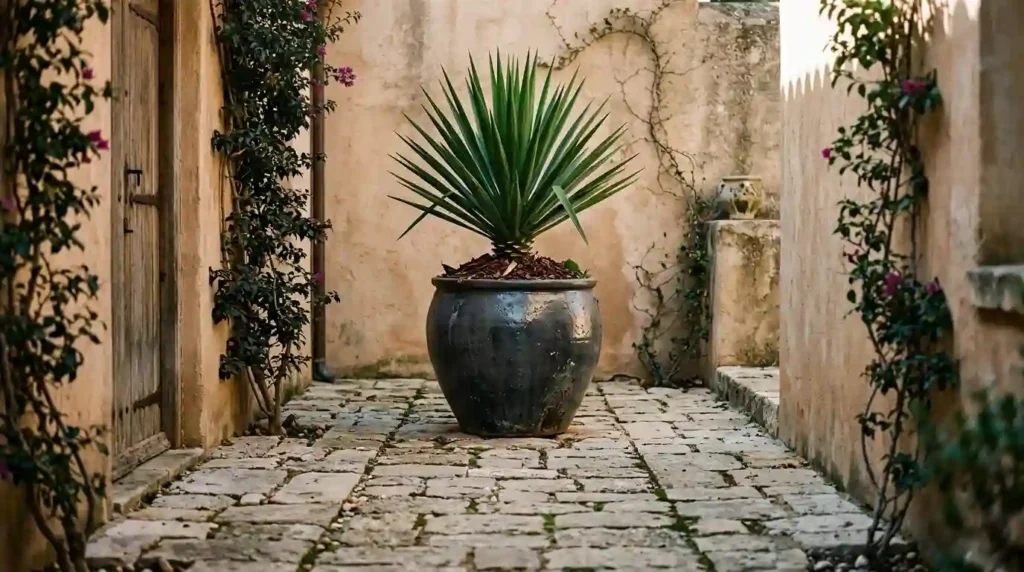
Several small pots can make a patio feel crowded. One large planter often creates a cleaner and stronger look.
Choose a container with a bold shape or finish. It could be tall and narrow, low and wide, smooth, rough, dark, or brightly glazed.
Then choose a plant that suits the pot.
You could try:
- A small olive tree in a terracotta pot
- Soft grass in a tall black planter
- A fern in a wide stone bowl
- A compact tree in a large square container
- Trailing plants in a raised urn
Make sure the container has drainage holes. Large pots are also heavy, so place them before filling them with soil.
Best for: Patios, doorways, path corners, and rented gardens.
Quick win: Group three small pots inside one large outer container to test the scale before planting.
Build a Natural Rock Feature
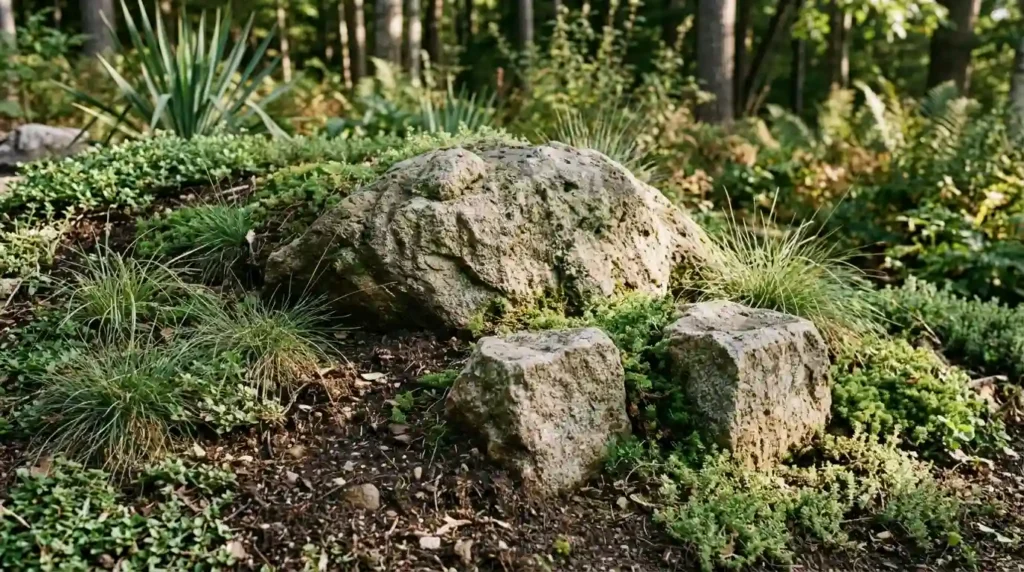
Rocks can add weight and shape to a garden. They work well in dry, modern, woodland, and natural-style spaces.
One large boulder can create more impact than many small stones. You can also arrange three rocks at different heights.
Bury part of each rock in the soil. This makes it look settled instead of placed on top of the ground.
Add low plants around the base. Ground covers, small grasses, herbs, and drought-tolerant plants can soften the edges.
Use stone that matches other materials in the garden when possible. A random mix of colors and rock types may look messy.
Best for: Slopes, gravel gardens, dry beds, and wide borders.
Avoid this: Lining up identical stones in a straight row unless the garden has a very formal style.
Turn a Plain Wall Into a Feature
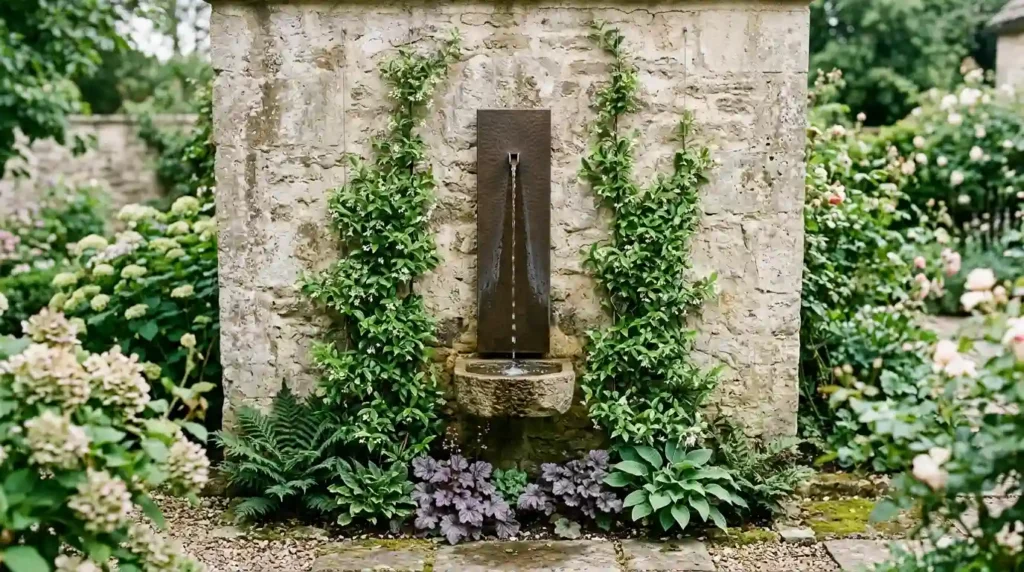
A blank fence or wall can make a garden feel flat. It can also become one of the strongest focal points in the space.
You could add:
- Timber slats
- A painted panel
- Patterned outdoor tiles
- A metal screen
- A large trellis
- A wall planter
- Climbing plants
- Soft outdoor lighting
Keep the design simple. One strong pattern or material will work better than several competing ideas.
Repeat one part of the wall feature elsewhere. For example, match timber slats with a bench or planter.
If you use climbing plants, leave enough space for air and growth. Make sure the wall or support can handle the mature plant.
Best for: Courtyards, patios, side yards, and gardens with unattractive fences.
Design tip: Light the wall from below so it can become an evening focal point too.
3 Water and Fire Features That Pull People In
Water and fire attract attention through sound, movement, reflection, and light. They can also make a garden feel more inviting.
These features need more care than a bench or planter. Plan for safety and maintenance before installation.
Add a Fountain or Birdbath
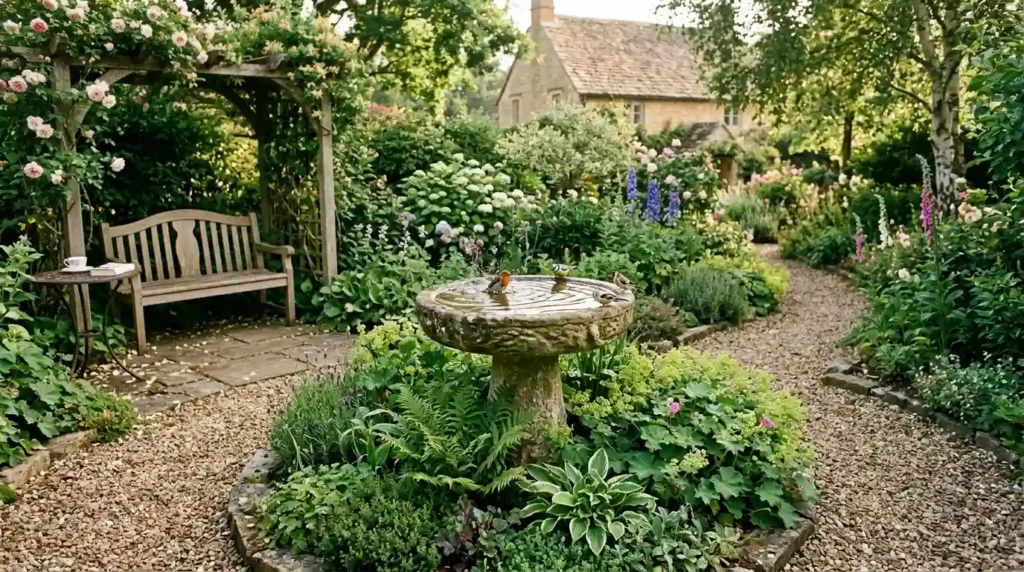
A fountain brings sound and movement to a garden. Even a small wall fountain can change the feel of a courtyard.
Place it where you can both see and hear it. A fountain hidden at the back of a border may not have much effect.
A birdbath is a simpler option. It can become a focal point when it has a strong shape and clear space around it.
Keep birdbaths clean and refill them with fresh water. Place them where birds have a clear view of the area.
For a powered fountain, make sure you can reach the pump for cleaning. Use outdoor-rated electrical parts and follow local safety rules.
Best for: Courtyards, cottage gardens, patios, and quiet seating areas.
Budget option: Use a wide waterproof bowl as a simple water feature.
Create a Small Pond
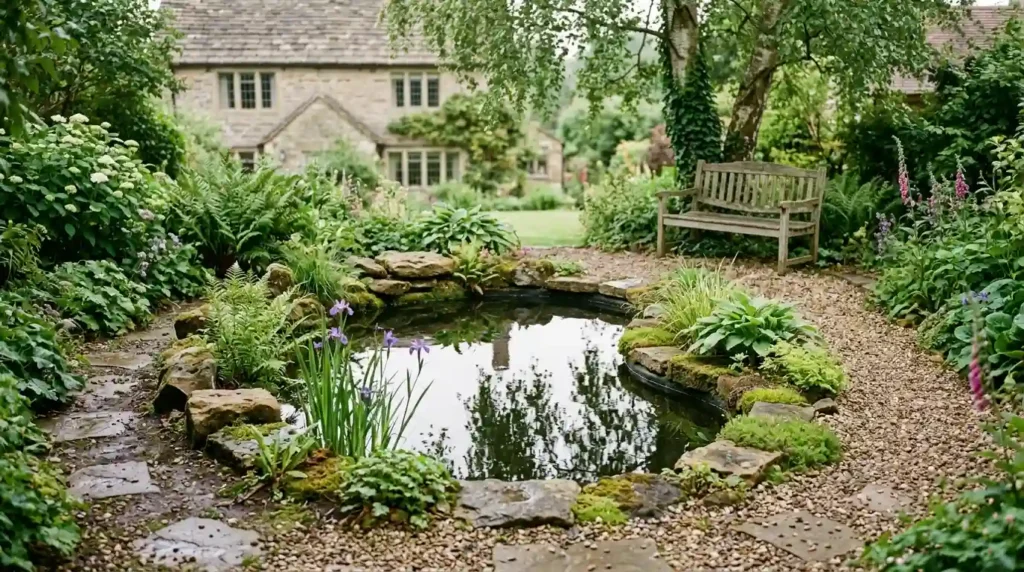
A pond reflects the sky, plants, and nearby structures. This can make a small garden feel deeper.
You do not need a large space. A container pond can work on a patio. A small ground-level pond can fit beside a path or seating area.
Keep the outline simple in a compact garden. Too many curves and decorations can make the feature feel busy.
Use plants around the edge, but do not cover all the water. The reflection is part of the focal point.
Think about children, pets, and wildlife when planning the depth and edge. Add safe access points for small animals that may fall in.
Best for: Wildlife gardens, modern yards, patios, and natural planting areas.
Avoid this: Placing a pond where leaves will fall into it all year.
Create an Evening Focus With a Fire Pit
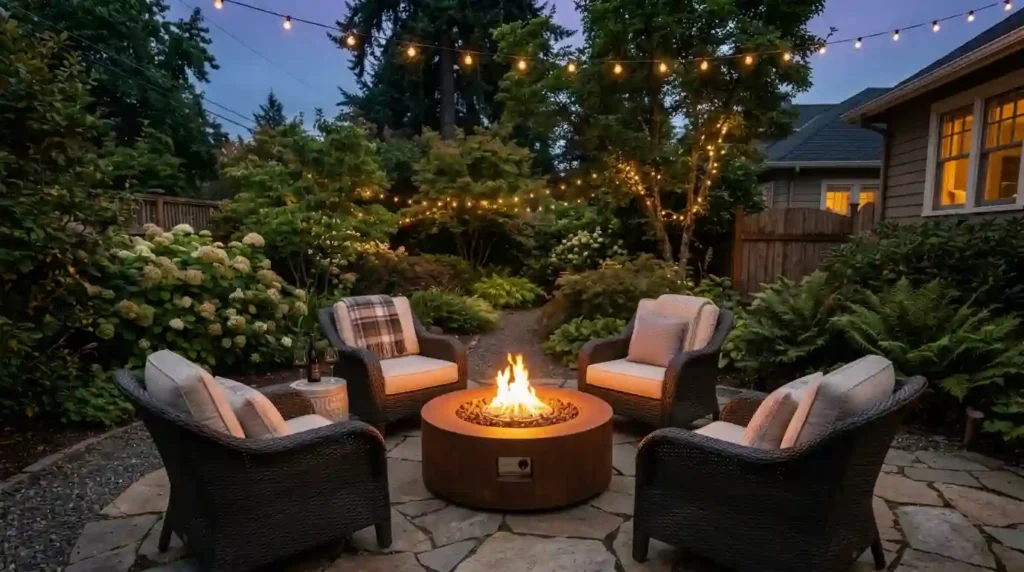
A fire pit can become the heart of an outdoor seating area. It adds warmth, light, and a clear place for people to gather.
Place chairs around it in a circle or half-circle. Leave enough room for people to move safely.
Keep fire features away from:
- Wooden fences
- Sheds
- Low branches
- Dry plants
- Roof covers
- Flammable furniture
Check local rules before using an open flame. Some areas limit outdoor fires during dry weather.
A gas fire table may suit a patio where a wood fire is not practical. A portable fire bowl is another flexible choice.
Best for: Larger patios, gravel seating areas, and evening gardens.
Safety note: Never leave a fire unattended. Keep water or another suitable fire control method nearby.
3 Focal Points for Small or Dark Gardens
A small space can still have a strong focal point. In fact, one clear feature can make a small yard feel calmer and more planned.
The trick is to use walls, light, and height instead of filling the floor.
Build a Vertical Garden
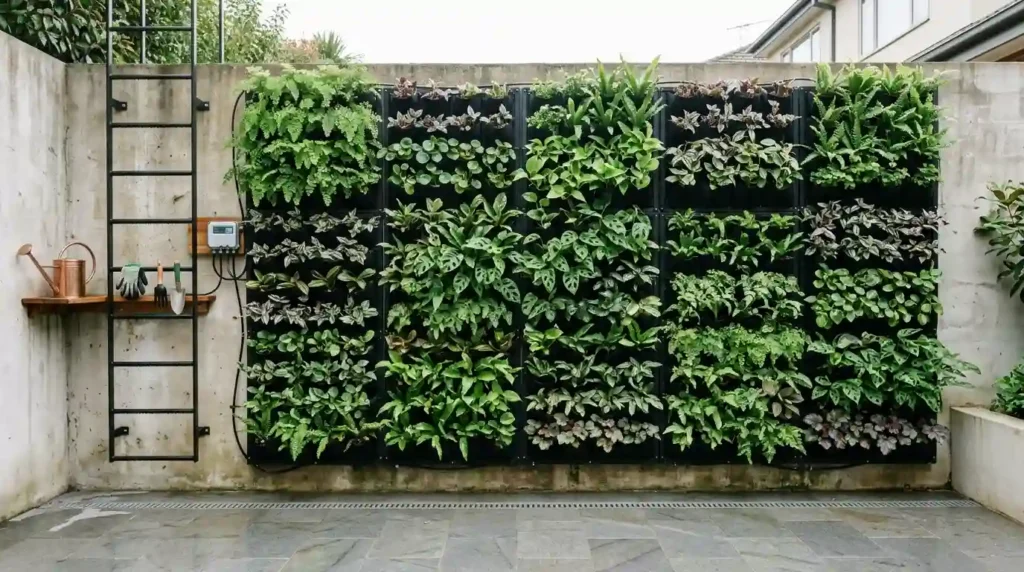
A vertical garden brings color and texture to a plain wall. It also saves ground space.
You can use:
- Wall-mounted pots
- Pocket planters
- Shelves
- Climbing plants
- Timber frames
- Hanging containers
Choose plants based on the amount of sunlight. Ferns may suit a shaded wall. Herbs may work near a sunny outdoor kitchen.
Plan how you will water the plants. The top pots may dry faster than the lower ones. Water can also drip onto the wall or floor.
Keep the planting pattern simple. Repeating a few plant types will look stronger than using many unrelated plants.
Best for: Balconies, courtyards, patios, and narrow side gardens.
Avoid this: Installing a large living wall without easy access for watering and pruning.
Use a Garden Mirror With Care
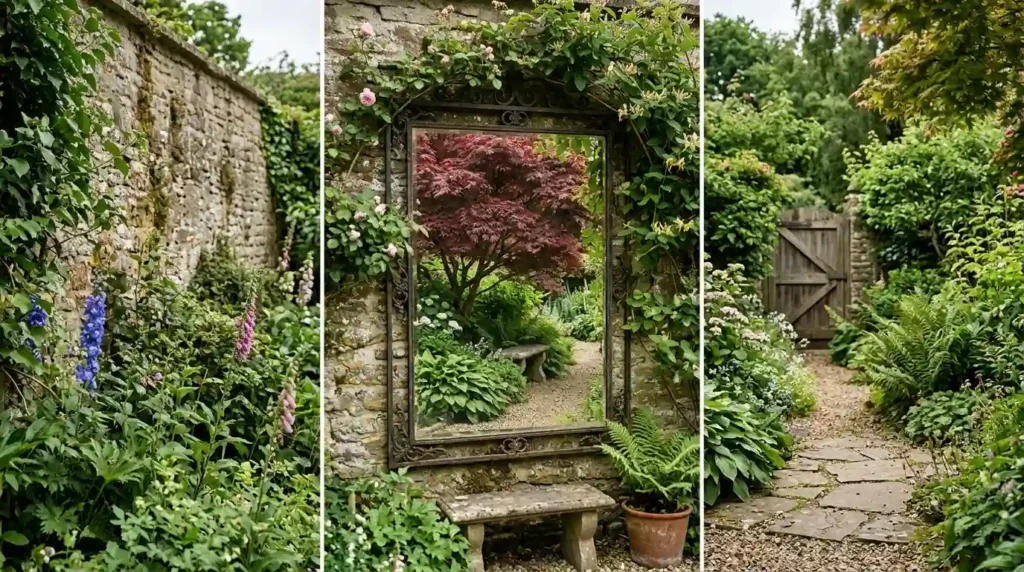
A mirror can reflect light and plants. It can also make a narrow garden feel wider.
Place it where it reflects something attractive. This could be a flowering border, tree, or group of pots.
Frame the mirror like a window or doorway. This helps it feel like part of the garden.
Do not place it where it reflects strong direct sunlight into the house or seating area.
Birds may mistake a clear reflection for open space. Break up the reflection with a frame, nearby branches, stickers, or other visible details.
Use a mirror made for outdoor use. Indoor mirrors may not handle rain, heat, and cold.
Best for: Small courtyards, shaded yards, and narrow gardens.
Design tip: Test the position with a cheap temporary mirror before installing a heavy one.
Light the End of a Garden Path
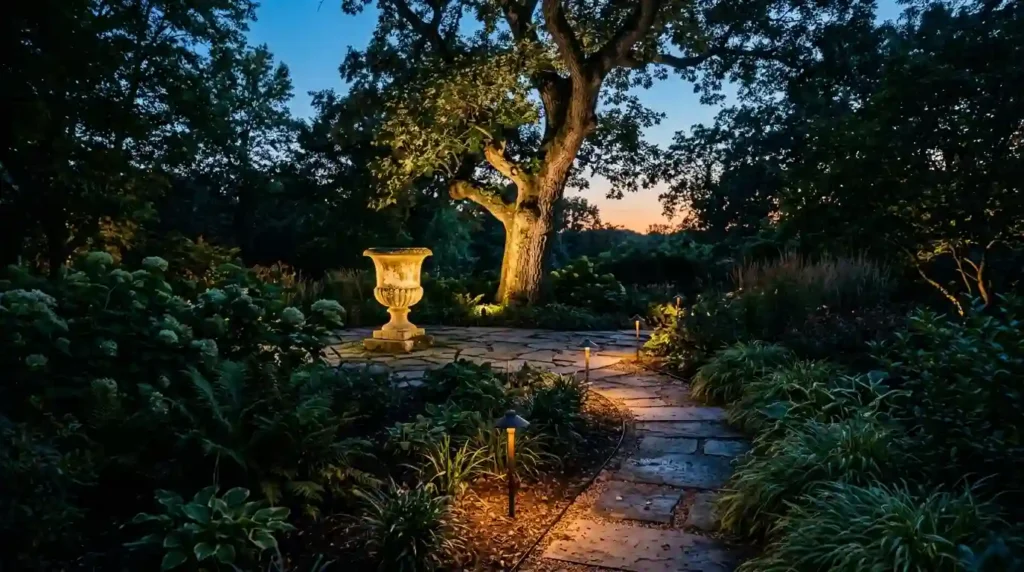
Garden lighting can create a focal point after dark. You do not need to light the whole yard.
Choose one feature to highlight:
- A small tree
- A large planter
- A wall
- A sculpture
- A bench
- A fountain
Place the feature at the end of a path or where the path changes direction. This gives the eye a clear destination.
Keep nearby lights softer. If every object has the same bright light, nothing will stand out.
Use outdoor-rated fittings. Aim lights away from windows and seating areas to reduce glare.
Solar lights are easy to install, but they may not stay bright all night. Low-voltage wired lights often give a stronger and more steady result.
Best for: Side yards, evening patios, paths, and garden entrances.
Quick win: Use one portable solar spotlight to test the effect before installing permanent lights.
How to Place a Focal Point Where People Will See It
A costly feature in the wrong place may have less impact than a simple pot in the right place.
Start by finding your main viewing areas. These are the places where you look at the garden most often.
Take photos from:
- The back door
- The main window
- The patio seat
- The garden gate
- The start and end of the main path
Look at each photo. Where does your eye land first? Is that area attractive, empty, or cluttered?
Place your focal point along one of these natural sightlines. A straight path can lead to a bench or fountain. A curved path can reveal a sculpture slowly.
Leave some open space around the feature. This space may be gravel, lawn, a plain wall, or low planting. The open area helps the focal point stand out.
You can also frame it with plants. Use taller plants on the sides and lower plants in front.
Check the view while sitting and standing. A planter may look perfect when you stand but disappear behind a table when you sit down.
Small changes can have a large effect. Moving a sculpture one or two feet may bring it into view from the kitchen without changing the rest of the garden.
7 Garden Focal Point Mistakes That Create Clutter
A focal point loses its power when too many other features compete with it.
Avoid these common mistakes.
1. Adding Too Many Main Features
A bright bench, three statues, a fountain, colorful pots, and a painted wall may be too much for one small view.
Choose one main feature. Let the other items support it.
2. Choosing Something Too Small
A tiny ornament may disappear in a large bed or lawn.
Take a photo of the area and mark the planned feature size. This can help you judge whether it will be seen from a distance.
3. Hiding the Feature Behind Plants
Plants grow. A sculpture that looks clear in spring may vanish by summer.
Check mature plant heights before placing the focal point.
4. Mixing Too Many Styles
A formal stone statue, tropical wall art, and a rustic wagon may each look good alone. Together, they may feel disconnected.
Choose a clear garden style or repeat one material to link the items.
5. Forgetting the Winter View
Flowers fade. Leaves fall. Some grasses collapse.
Think about what the focal point will look like during the quiet season. Structures, bark, stone, metal, and lighting can provide interest all year.
6. Ignoring Maintenance
A dirty fountain or faded bench may become an eyesore.
Choose a feature that suits the time and effort you can give it.
7. Using Bright Color Everywhere
Strong color attracts attention. If you use it in every corner, the eye will not know where to rest.
Repeat the main color in small amounts. Do not give every feature the same visual weight.
A useful rule is simple:
Give each main garden view one lead feature and a few quiet supporting details.
A large garden can have several focal points. Place them in separate areas so they appear one at a time.
Choose One Feature and Test It First
A strong focal point gives your garden direction. It can be a tree, bench, fountain, wall, gate, planter, or simple light.
The best choice is not always the largest or most costly one. It is the feature that fits your space, can be seen from the right place, and feels connected to the rest of the garden.
Stand at your main window or seating area. Notice where your eye rests. Then choose one feature that will improve that view.
Test the size and position before buying anything. You can use an empty pot, chair, cardboard box, or temporary light to mark the spot.
Start with one of these focal point ideas for gardens. Keep the area around it simple, and let that feature lead the design.