19 Modern Minimalist Garden Design Ideas for a Calm Yard
Your garden may feel crowded even when it is not very large. Mismatched pots, extra chairs, bright decorations, and overgrown plants can quickly fill the space.
Removing everything will not always fix the problem. A garden with no texture or warmth can feel cold and unfinished.
These modern minimalist garden design ideas will help you create a clean and calm outdoor space. You will learn how to plan the layout, choose materials, limit plant types, and hide everyday clutter.
You do not need a huge yard or a large budget. Many of these ideas work in small backyards, patios, courtyards, and front gardens.
The goal is simple. Every feature should have a clear use or add real beauty.
Choose the ideas that solve your main problems. You do not need to use all 19 at once.
Make Modern Minimalist Garden Design Ideas Work With a Clear Layout
Do you often buy plants or furniture before deciding where they will go? This can leave your garden feeling crowded and hard to use.
Start by measuring the whole space. Mark doors, windows, drains, sunny spots, shaded areas, and anything that cannot be moved.
Next, divide the garden into clear zones. You may need a seating area, a path, a planting zone, and a place for storage.
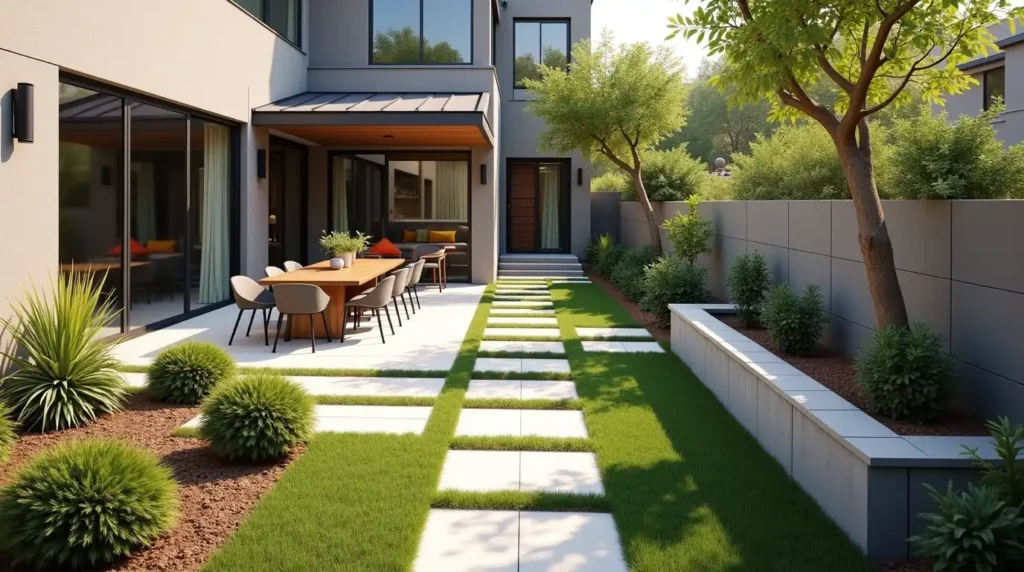
A narrow backyard could have a small dining area near the house. A straight path could lead to a tree or raised planter at the far end.
Keep each route easy to follow. Avoid paths that twist without a reason or lead to unused corners.
Sketch your clean garden layout on paper before you buy anything. This small step can save money and stop the design from becoming messy later.
Use Geometric Garden Beds for a Cleaner Look
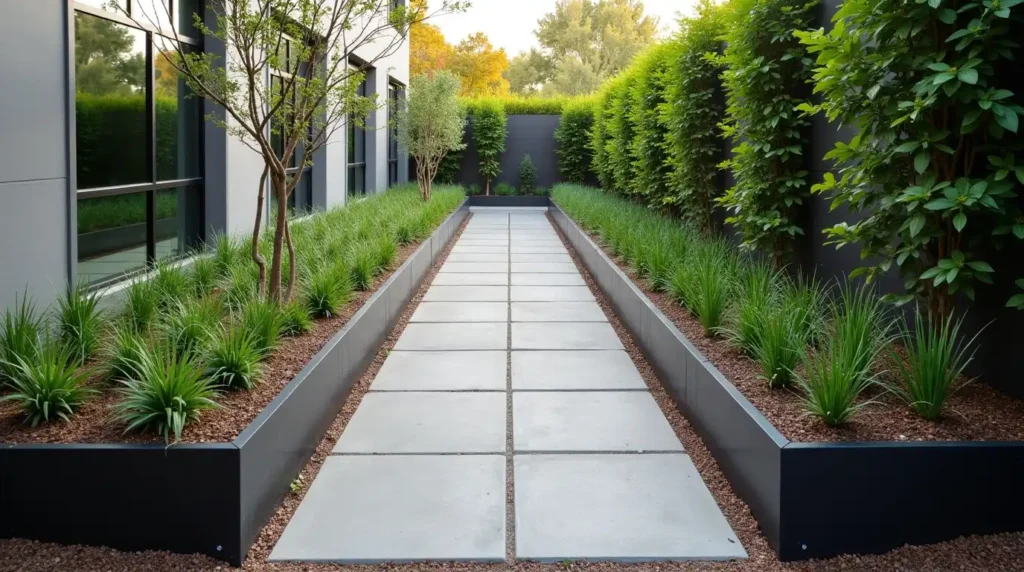
Random garden bed shapes can make a small yard feel busy. Simple squares and rectangles create a stronger sense of order.
Try placing one long bed along each side of a narrow garden. This can make the space appear wider and guide your eyes to the back.
Use steel, stone, brick, or concrete to create clean garden borders. Choose one edging material and repeat it throughout the yard.
Do not create several tiny planting areas. They are harder to care for and can make the garden feel broken into too many pieces.
Leave enough room between plants. A young plant may look small now, but it could spread much farther within a few years.
Check the mature width before planting. This helps you avoid constant cutting and crowded beds.
Geometric beds give your minimalist garden design structure without adding extra decoration.
Limit Your Garden to Three Main Materials
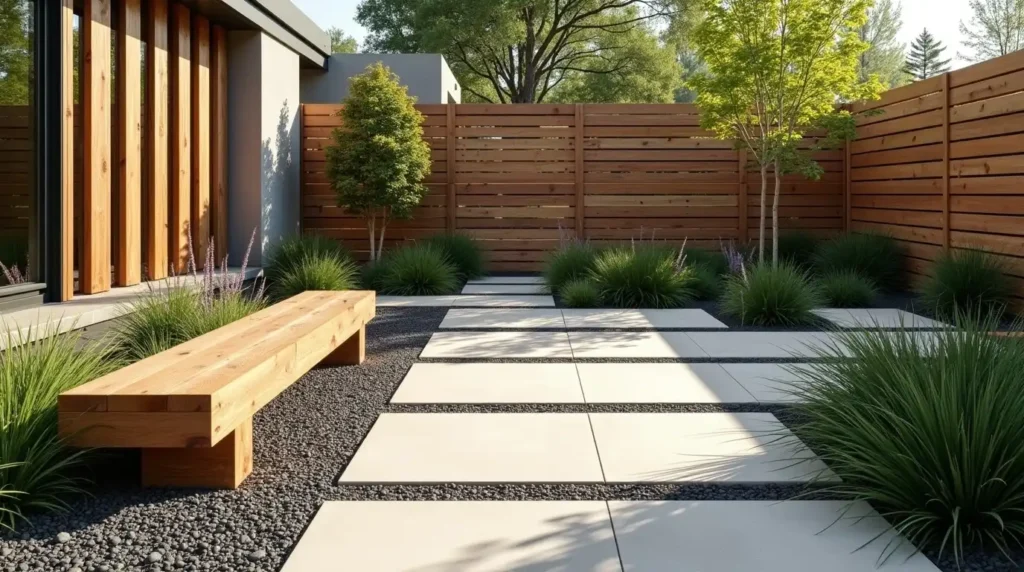
Too many materials can make a garden feel less calm. Different paving stones, wood colors, metals, and gravel shades may compete for attention.
A simple rule is to choose three main materials.
Start with one material for the largest surfaces. This could be concrete paving, natural stone, brick, or timber decking.
Add one warm material. Natural wood is a good choice for screens, benches, or raised beds.
Finish with one supporting texture, such as gravel or dark metal.
For example, you could combine light concrete paving, natural timber screens, and charcoal gravel. Repeat these materials in different parts of the yard.
You do not need the most expensive products. Large plain pavers can look more modern than costly stones with several colors and patterns.
A small material palette helps every area feel connected.
Choose a Neutral Color Palette That Still Feels Warm
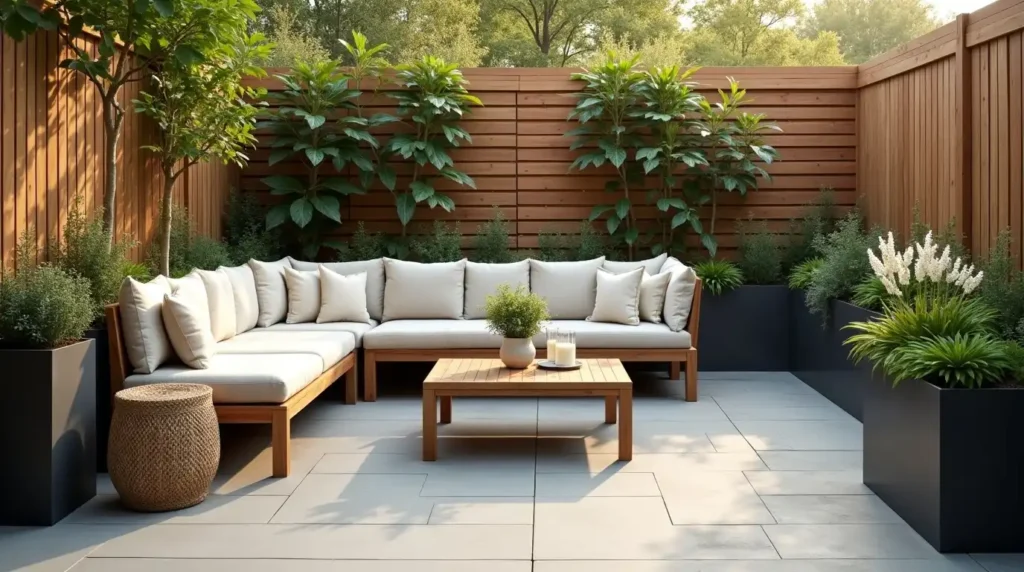
A minimalist garden does not need to be gray from top to bottom. Too much gray can make the space feel flat.
Use a calm base of black, white, tan, soft gray, or natural wood. Let green plants provide most of the living color.
Warm wood can soften concrete and black metal. Cream cushions can make a dark bench feel more welcoming.
You can also add one accent color. White flowers create a fresh look. Deep purple flowers can add contrast without making the garden feel busy.
Try to match your garden colors with the outside of your home. A warm brick house may suit tan paving and wood. A white modern home may look better with gray paving and dark planters.
Keep furniture and pots within the same color family.
A controlled color palette creates a modern outdoor space that feels calm, not empty.
Create One Focal Point Instead of Many Small Features
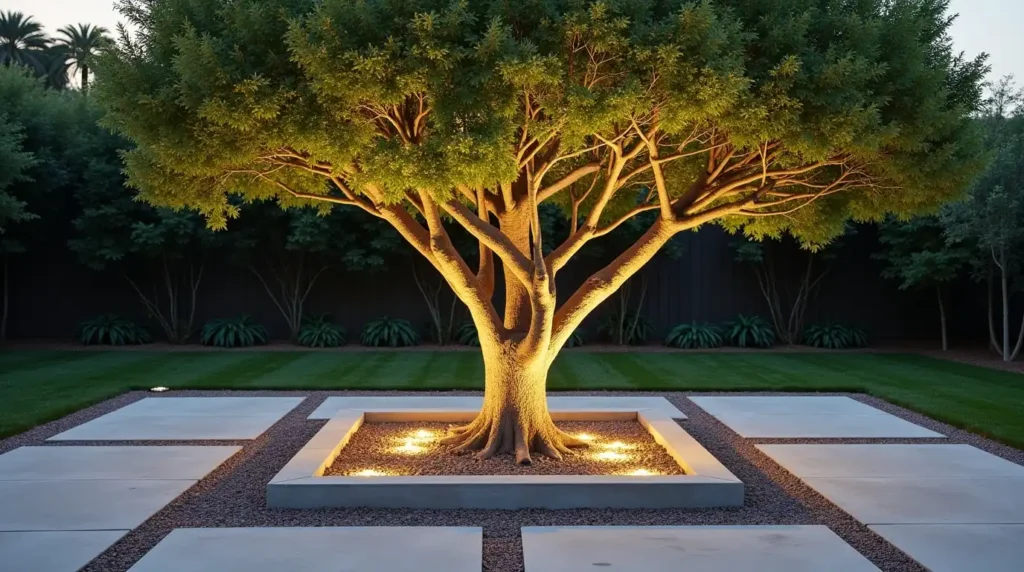
What do you notice first when you look into your garden? If your eyes move between several decorations, pots, and ornaments, the space may lack a clear focus.
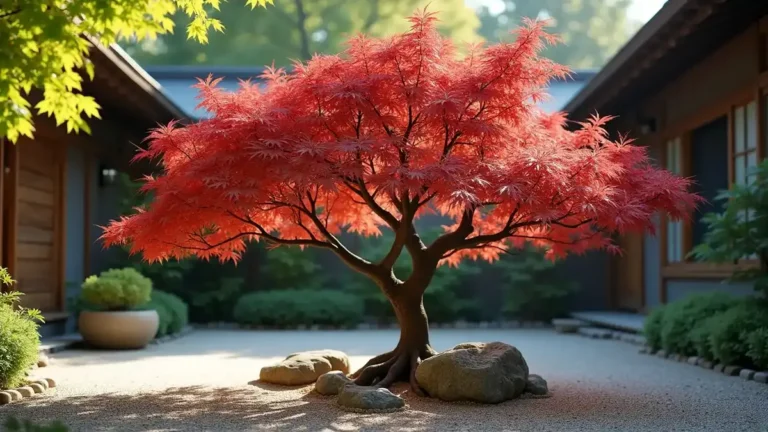
Choose one main feature. It could be a sculptural tree, a large planter, a simple bench, or a slim water feature.
Place it where you can see it from an important window or door. This helps the garden look attractive from inside the house too.
A multi-stem olive tree in a square raised bed can work well in a warm climate. In colder areas, choose a small tree suited to local weather.
Leave open space around your focal point. Do not surround it with several competing objects.
You can add soft lighting to keep the feature visible in the evening.
One strong focal point often has more impact than ten small decorations.
Repeat Plants Instead of Buying One of Everything
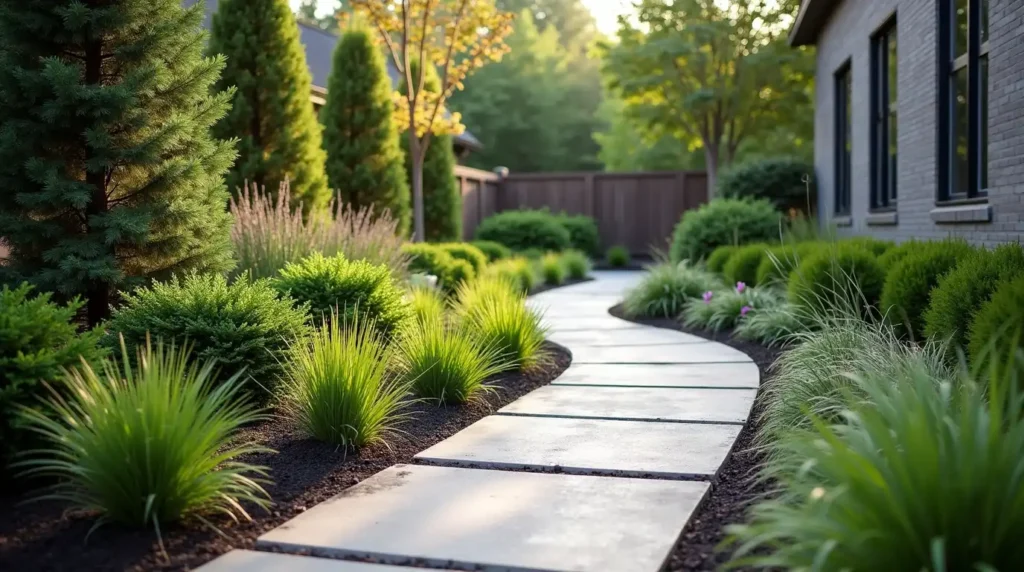
It is easy to fall in love with many plants at the garden center. But one of each type can create a garden that feels random.
Choose a short plant list and repeat it. Groups of three, five, or more plants usually look stronger than single plants spread across the yard.
You can also repeat the same grass or shrub on both sides of a path. This makes the space feel balanced.
Try a simple four-plant formula:
- One small focal tree
- One structural shrub
- One soft grass
- One low ground cover
Choose plants with similar needs. They should suit your soil, sunlight, local weather, and watering plan.
A shaded garden needs a different plant list from a hot, dry yard.
Repeated planting also makes maintenance easier. You can care for larger groups in the same way instead of managing many plants with different needs.
Add Evergreen Plants for Year-Round Shape
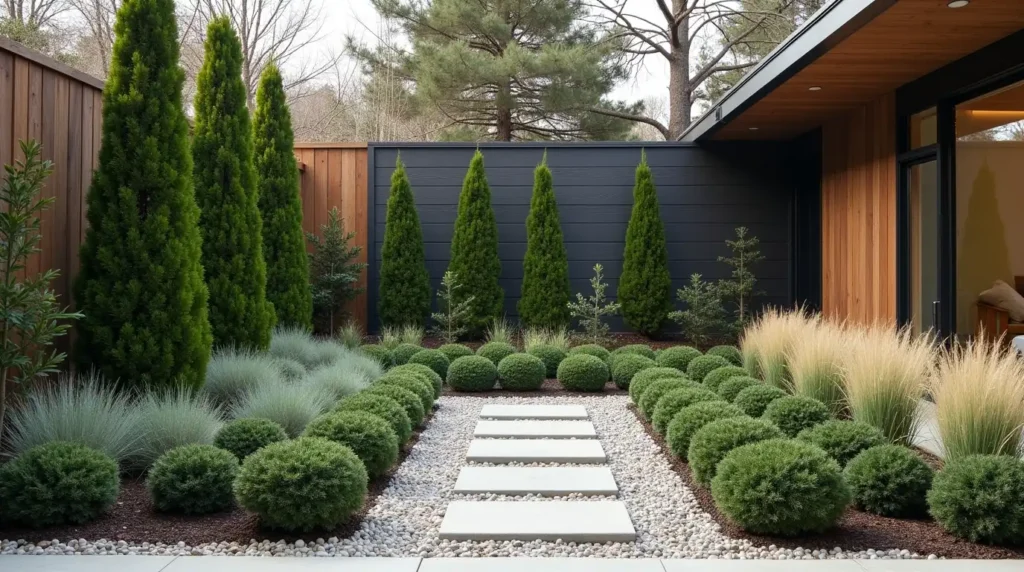
Flowers may disappear after a few weeks. Evergreen plants help your garden keep its shape through every season.
Look for plants with strong leaves, clear forms, or upright growth. Dwarf conifers, yucca, agave, pittosporum, and podocarpus may work in the right climate.
Olive trees can suit warm and dry areas. They may struggle in places with severe cold or wet soil.
Do not copy a plant list from a garden in a very different climate. Check local advice before buying.
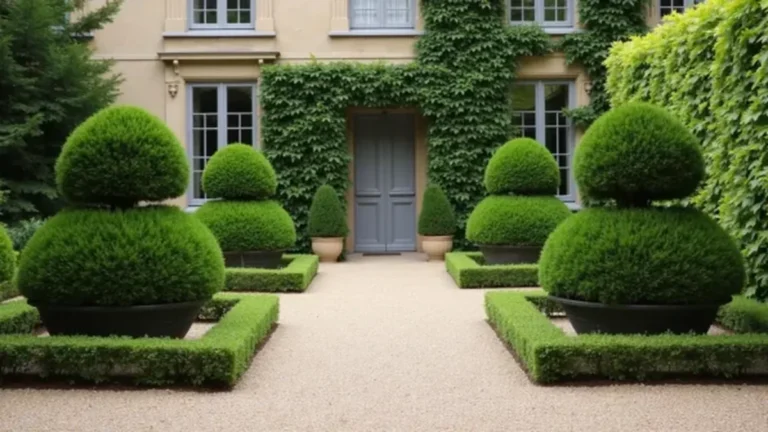
You can use one evergreen shrub as a repeated border plant. A pair of matching evergreens can also frame a door or seating area.
Avoid filling every bed with tightly clipped bushes. Too many hard shapes can make the garden feel stiff.
Mix structured plants with softer grasses or ground covers. This keeps the garden neat while adding natural texture.
Soften Concrete and Stone With Ornamental Grasses
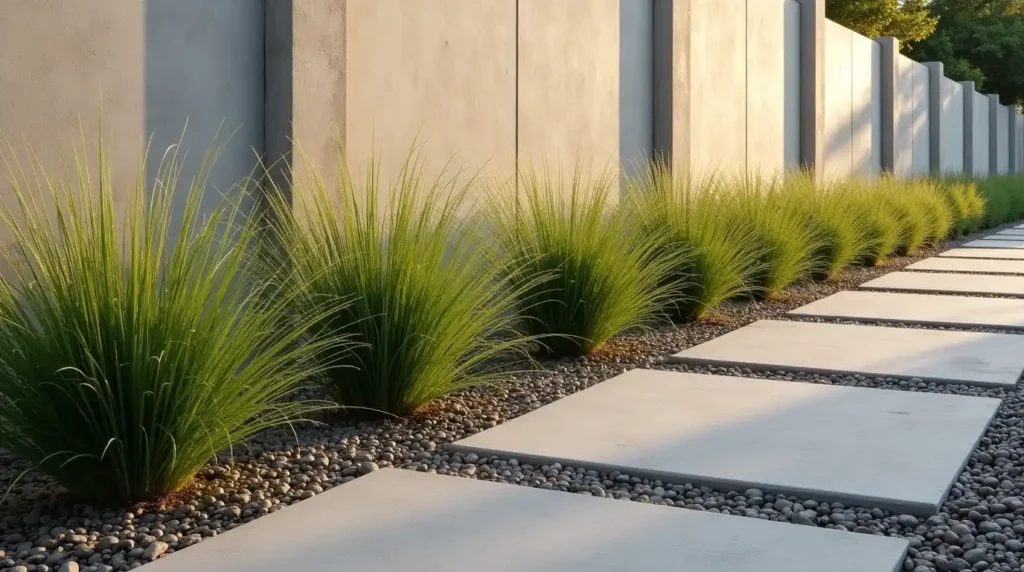
Clean paving and straight walls give a modern garden its structure. However, too many hard lines can make the space feel cold.
Ornamental grasses add soft movement. Their leaves sway in the wind and change with the light.
Plant them in groups rather than using one grass in each corner. A repeated row beside a concrete wall can soften the surface without hiding it.
Grasses also work well beside gravel, metal edging, and large paving slabs.
Choose types that suit your local climate. Check whether a grass spreads by seed or underground roots. Some types can become hard to control.
Many grasses need cutting back during a certain season. Learn the needs of your chosen type before planting it.
These plants are useful when you want modern garden ideas that feel simple but still alive.
Build a Low-Water Gravel Garden
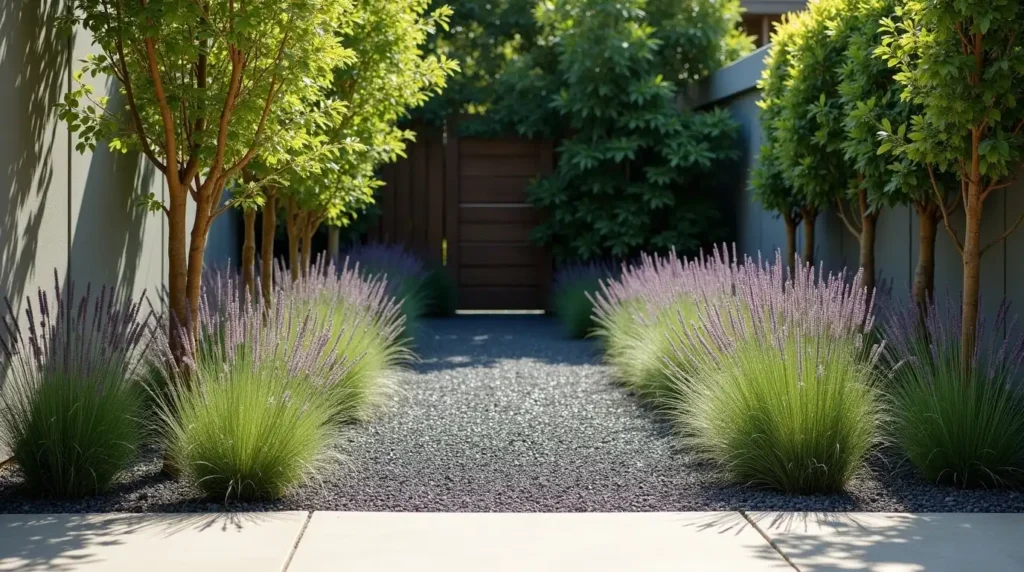
A gravel garden can reduce the amount of lawn and create a clean surface around plants. It works best when you plan the base, edging, and planting first.
Use strong edging to keep gravel out of paths, drains, and nearby beds. Place a suitable layer below it to improve stability and reduce weeds.
Do not spread gravel over poor ground and hope for the best. Weeds can still appear, and loose stones may move into other areas.
Combine gravel with plants that suit dry conditions. Lavender, grasses, low shrubs, and small trees can work well in the right climate.
Loose gravel is not ideal for every path. It may be difficult for wheelchairs, strollers, bicycles, or people with limited movement.
Use firm paving for main routes and keep gravel in planting areas.
A low-water minimalist garden should still contain enough plants to offer shade, texture, and seasonal interest.
Use Raised Planters to Organize the Space
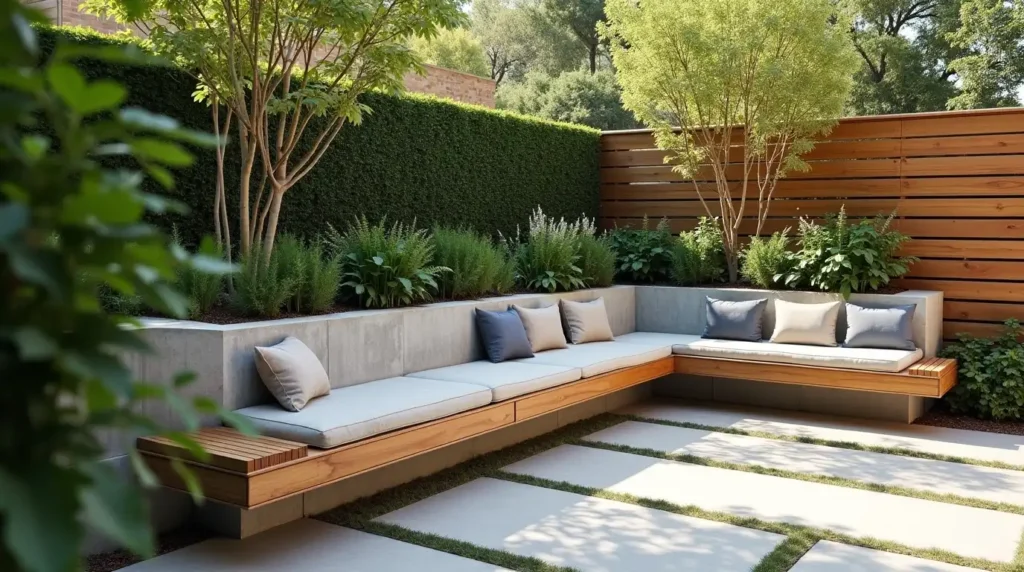
Raised planters can turn an unclear yard into a well-planned garden. They create strong lines and separate seating from planting areas.
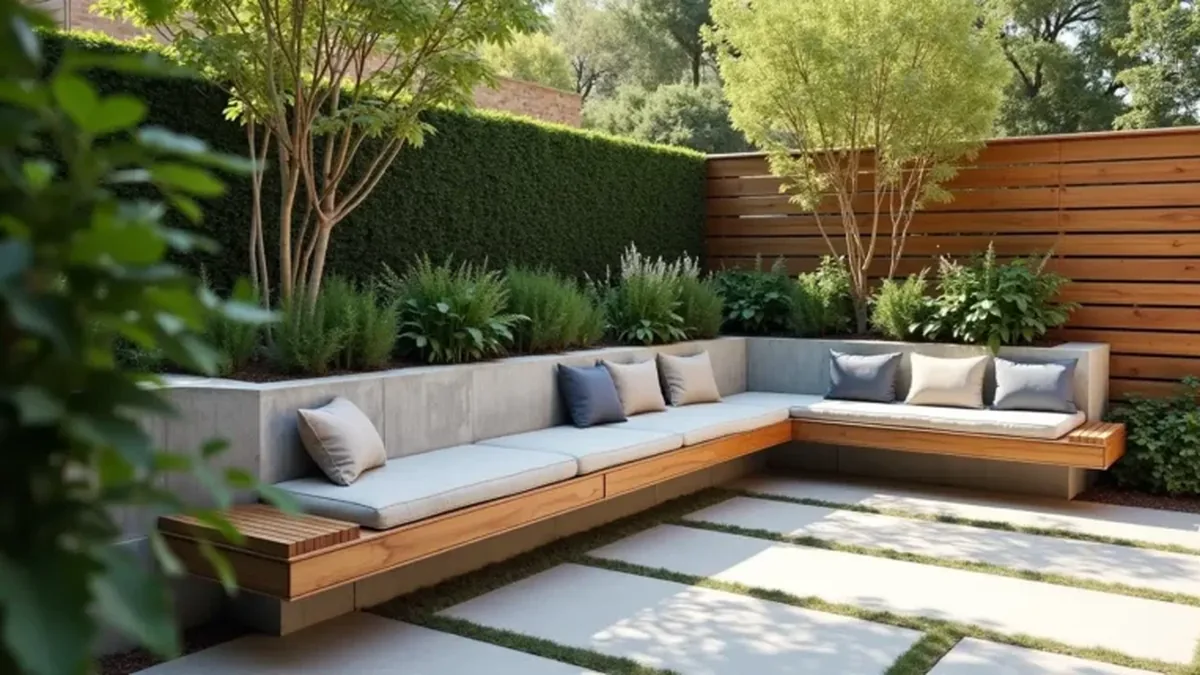
A long planter behind a bench can form a simple green background. It can also make the seating area feel more private.
Match the planter finish with your paving, walls, or house. Concrete-look finishes suit many modern gardens. Timber can create a warmer result.
Raised beds are also useful when the ground soil is poor. You can fill them with better soil suited to your chosen plants.
Taller beds may reduce bending during planting and care. However, they need proper drainage.
Plan watering before you fill the bed. Adding irrigation later can mean removing soil or damaging finished surfaces.
Keep the planter shape simple. One long bed often looks cleaner than several small boxes placed around the yard.
Add a Slim Water Feature Without Taking Over the Garden
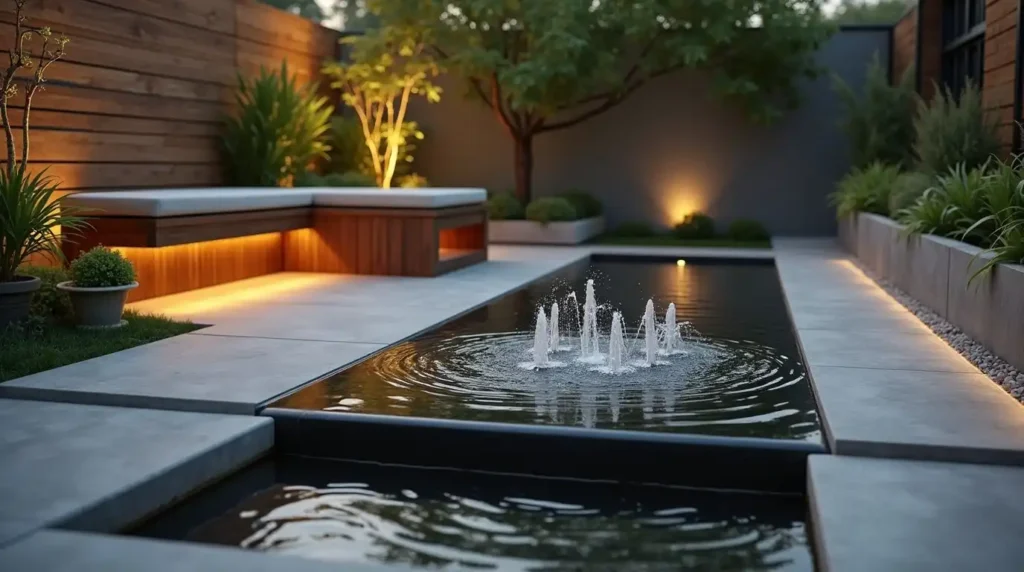
A water feature does not need carved stone, bright tiles, or a large fountain.
Choose a simple shape that fits the size of your garden. A narrow water channel, a dark bowl, or a small wall fountain can add sound and movement.
Place it near the seating area where you can hear it. Do not put it in a hidden corner just because space is available.
Check the sound of the pump before installation. A loud pump can ruin the calm effect you wanted.
Think about cleaning too. Leaves, dust, and algae can collect in still water.
A narrow black water trough may fit a small courtyard better than a large traditional fountain.
Choose a design that still looks good when the pump is switched off.
Add a safe cover or shallow design where children and pets use the space.
Use Clean-Edged Paths to Make Movement Easier
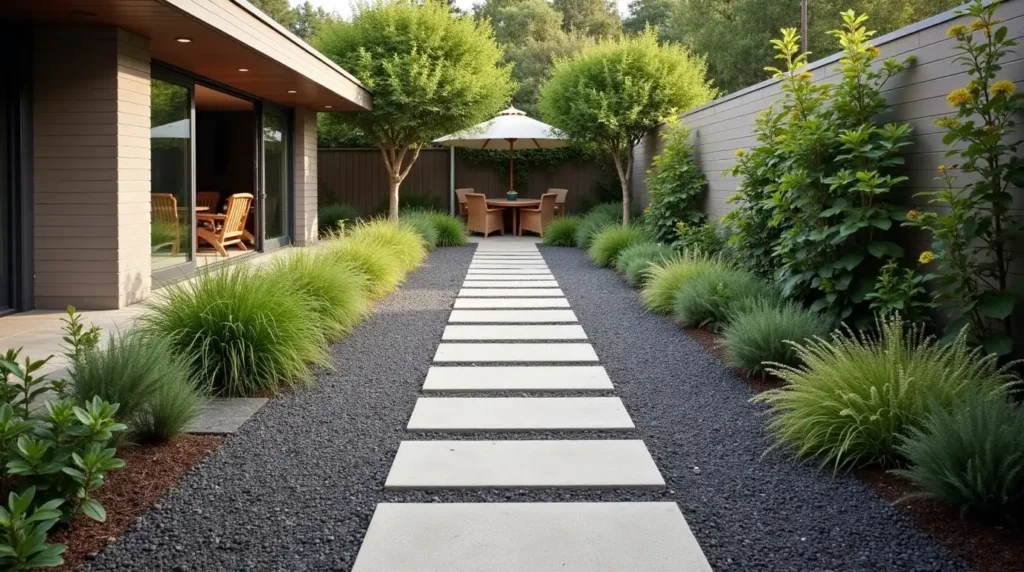
Your path should follow the route people already want to take. A path that forces people to walk around several features will feel awkward.
Use large paving slabs, rectangular stepping stones, or a straight gravel route.
Keep gaps between stepping stones even. Test the spacing before fixing them in place. People have different stride lengths, so one set distance will not suit everyone.
Choose surfaces that are stable and less likely to become slippery during rain.
Large rectangular pavers set into gravel can create a strong modern garden path. Low ground cover between slabs can create a softer look.
Make the main route wide enough for daily use. Think about carrying bags, moving bins, or walking beside another person.
In a small minimalist garden, a clear path also makes the layout feel less crowded.
Add Built-In Seating to Reduce Furniture Clutter
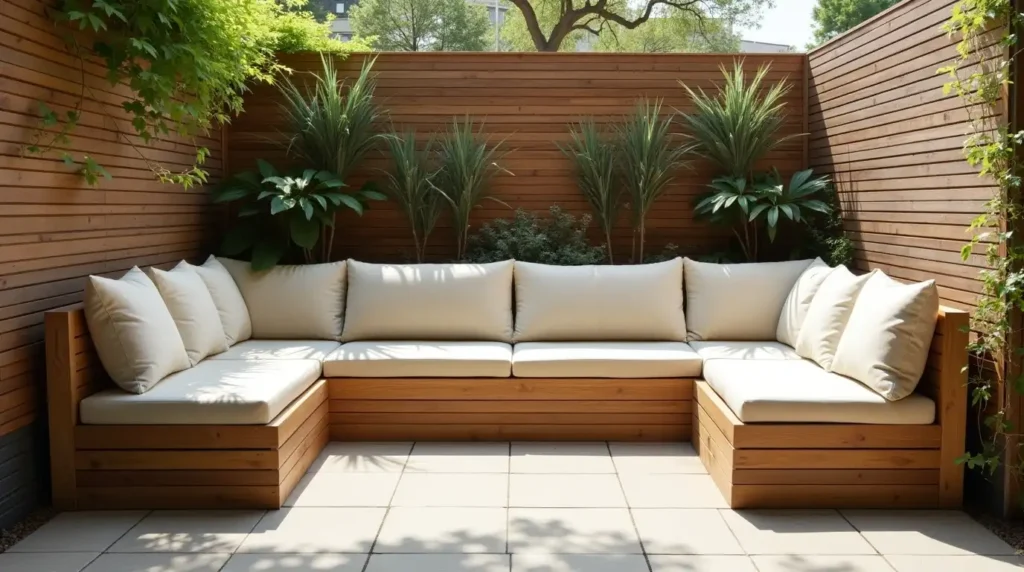
Several loose chairs can take up more room than you expect. They also move around and may make a small patio feel untidy.
Built-in seating gives the space a fixed shape. You can attach a bench to a wall, raised bed, or deck.
An L-shaped bench can fit into a courtyard corner and seat several people. This leaves the center open for a small table.
Add storage below the seat for cushions, tools, or outdoor toys. Make sure the storage stays dry and is easy to open.
Comfort still matters. Test the seat depth and height before building the final bench.
Use outdoor cushions in one or two colors. Avoid covering the bench with many patterns.
Choose materials that can handle your local weather.
Built-in garden seating can make a small space feel calmer while giving you more room to move.
Use Warm Lighting Instead of One Harsh Floodlight
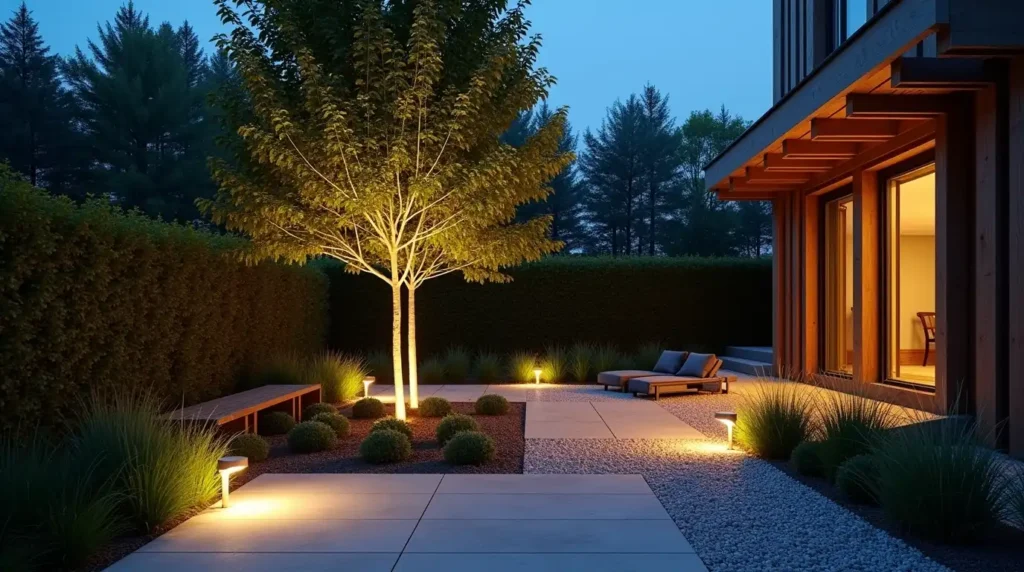
One bright floodlight may help you see, but it can make the garden feel flat and exposed.
Use several low-level lights for different jobs. Light the steps and paths first. Then add gentle light near the seating area.
You can place a small light below a bench or use an upward light at the base of one tree. This creates depth without lighting every part of the yard.
Warm light often feels more comfortable around plants, wood, and outdoor seating.
Hide cables and fittings where possible. Visible wires can weaken the clean look.
Use outdoor-rated lights made for rain, dust, and changing temperatures.
Do not point strong lights into nearby homes or windows.
Stand inside your house after dark and check the view. Good modern garden lighting should improve the garden from both inside and outside.
Add Privacy With Simple Slatted Screens
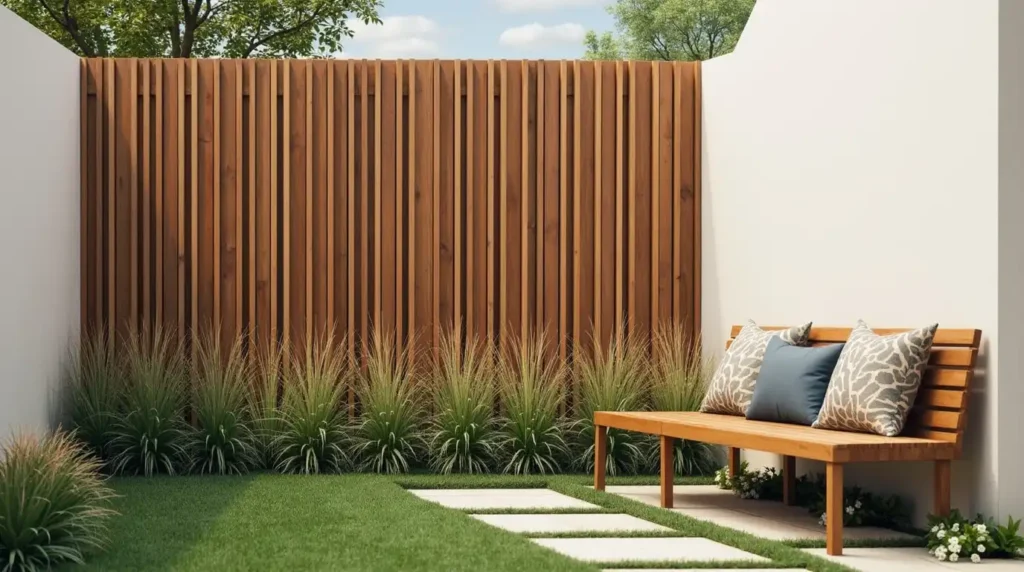
A privacy screen can hide a nearby window, wall, or seating area without making the garden feel closed.
Timber and metal slats work well in a modern design. Vertical slats may also make a low boundary appear taller.
Leave small gaps between the slats. This allows some light and air to pass through.
Repeat the screen material somewhere else. You could use the same timber on a bench, planter, or storage box.
Add a narrow row of grasses or simple shrubs in front of the screen. Avoid covering the full surface with many plant types.
Check local rules before building a tall screen. Some areas limit fence height or require approval.
A modern garden privacy screen should solve a clear problem. Do not block an open view or useful sunlight when privacy is not needed.
Use Open Space to Make a Small Garden Feel Larger
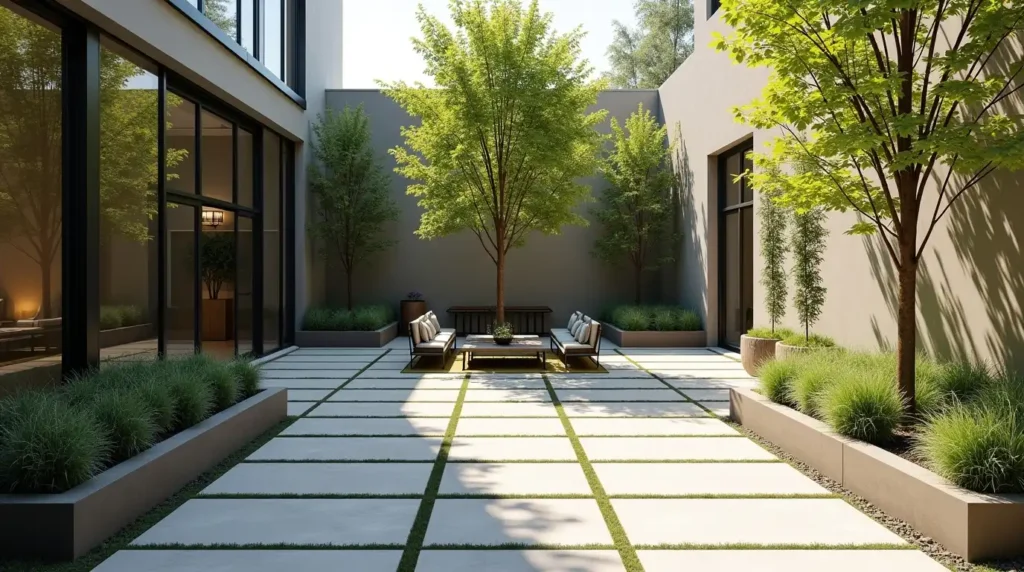
Do you feel the need to fill every empty corner? In a minimalist garden, open space is part of the design.
An open area gives your eyes a place to rest. It can also improve movement and make a small yard appear larger.
Keep the center of a courtyard open and place planting around the sides. You could use plain paving, gravel, a small lawn, or low ground cover.
Avoid lining every wall with pots, ornaments, and furniture. Too many items can shorten the view across the garden.
Create one clear sight line from the house to the focal point.
This use of open space is sometimes called negative space. It means leaving part of the design free on purpose.
Before adding a new feature, remove one item that no longer serves a use. You may find that the garden already has everything it needs.
Choose Large Pots Instead of Many Small Containers
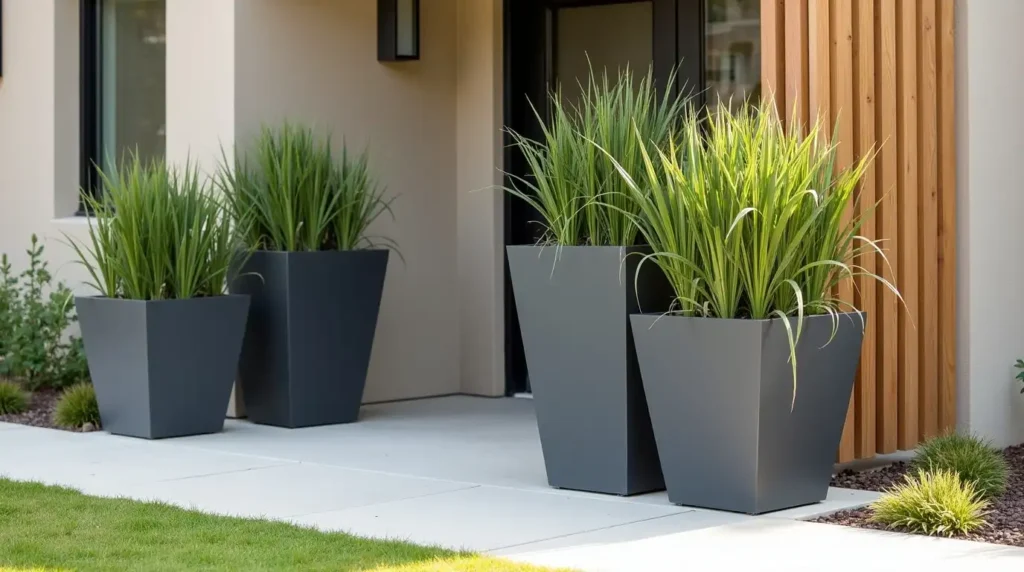
Small pots can collect quickly. They often come in different colors, sizes, and materials, which can make a patio feel messy.
Choose two or three larger containers instead. Keep them within the same color or material family.
For example, place three charcoal pots of different heights near an entrance. Plant each one with the same grass or evergreen.
This creates variety without losing the clean style.
Large modern garden pots can also frame a bench, doorway, or path. Place them where they support the layout rather than block movement.
Check drainage before planting. Water should not collect around the roots or stain the paving below.
Large pots can become very heavy. Put them in the correct position before filling them with soil.
Group, repaint, move, or remove small containers that do not fit the new plan.
Use Vertical Planting When Floor Space Is Limited
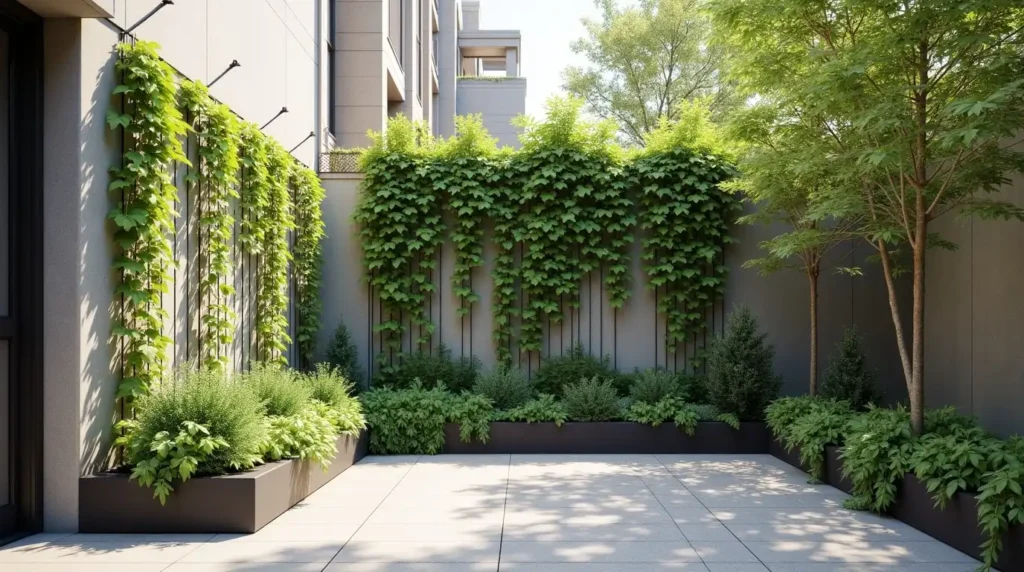
A narrow courtyard may not have room for wide planting beds. Use walls and screens to add greenery without filling the floor.
Train one climbing plant across simple wires or a slim trellis. This usually looks cleaner than covering a wall with many small hanging pots.
Choose a plant that suits the light and local weather. Check its mature weight and growth habit before installing the support.
Some climbers can damage walls or enter gutters. Leave enough space for airflow and future care.
Keep part of the wall visible. A fully covered wall can feel heavy in a small space.
You can also use a narrow wall planter for herbs or compact plants. Keep the design simple and make sure excess water can drain safely.
Vertical planting can give a small minimalist garden more life without reducing walking or seating space.
Hide Storage and Everyday Garden Clutter
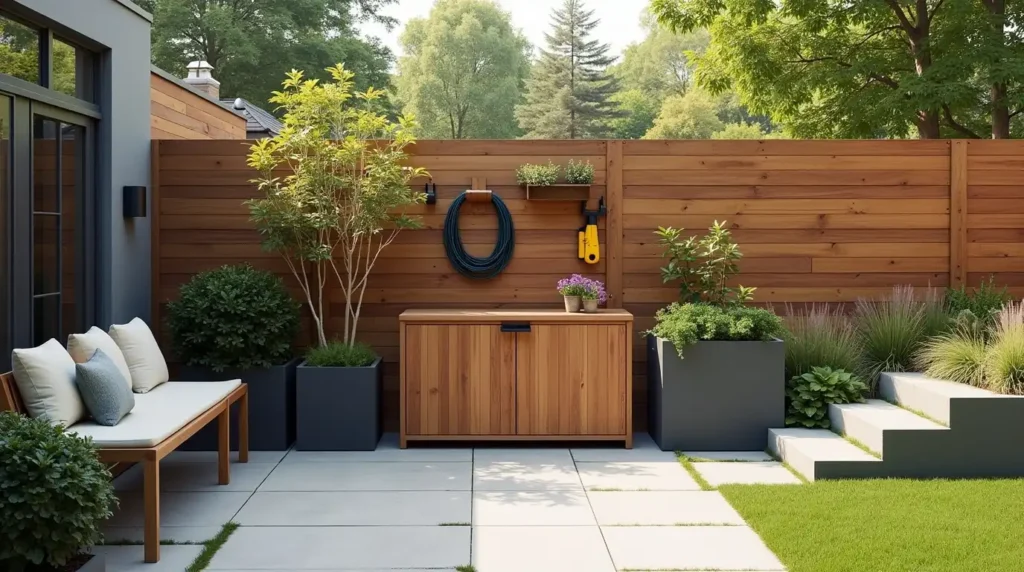
A clean garden is hard to maintain when tools, hoses, cushions, bins, and toys have no proper home.
Plan storage as part of the design instead of adding a plastic box later.
Build storage below a bench or inside a simple outdoor cabinet. Use wall hooks for small tools and coiled hoses.
Screen bins with the same timber used for your privacy fence. This makes the storage area feel like part of the main garden.
Make sure the screen leaves enough room to move and open each bin.
List the items you need to store before choosing a storage size:
- Garden tools
- Furniture cushions
- Hoses
- Children’s toys
- Cleaning supplies
- Plant food
- Waste and recycling bins
Hidden storage protects your low-maintenance minimalist garden from everyday clutter. And here’s why that matters. A garden should still look calm after people start using it.
Create a Minimal Garden That Still Feels Welcoming
A good minimalist garden starts with a clear layout. It uses repeated materials, a limited plant list, useful seating, and open space.
You do not need to replace everything at once. Start by removing broken pots, unused furniture, extra decorations, and plants that no longer fit the space.
Then measure your garden and choose one focal point. Select no more than three main materials and a short list of plants.
Plan lighting, privacy, paths, and storage around the way you use the yard each day.
Save the three ideas that would fix your biggest garden problems first.
With careful planning, these modern minimalist garden design ideas can help you create an outdoor space that feels calm, practical, warm, and easy to care for.