19 Patio Ideas for Small Spaces That Feel Bigger
A small patio can quickly feel crowded. One large chair may block the door. A wide table can leave no room to walk. Add a few plant pots, and the whole area may start to feel messy.
You do not need a large backyard to create a useful outdoor space. You need furniture that fits, a clear layout, and items that serve more than one purpose.
The best patio ideas for small spaces help you use walls, corners, and open areas in smarter ways. Folding chairs can give you more room when guests leave. A vertical garden can add plants without filling the floor. A storage bench can hide cushions while giving you another seat.
These small patio ideas work for apartments, townhouses, narrow yards, and compact concrete patios. Some are renter-friendly. Others need basic installation.
Start with the problems that bother you most. Then choose two or three changes that will make the biggest difference.
Measure Your Patio Before You Buy Anything
Buying furniture before measuring is one of the easiest ways to overcrowd a small patio.
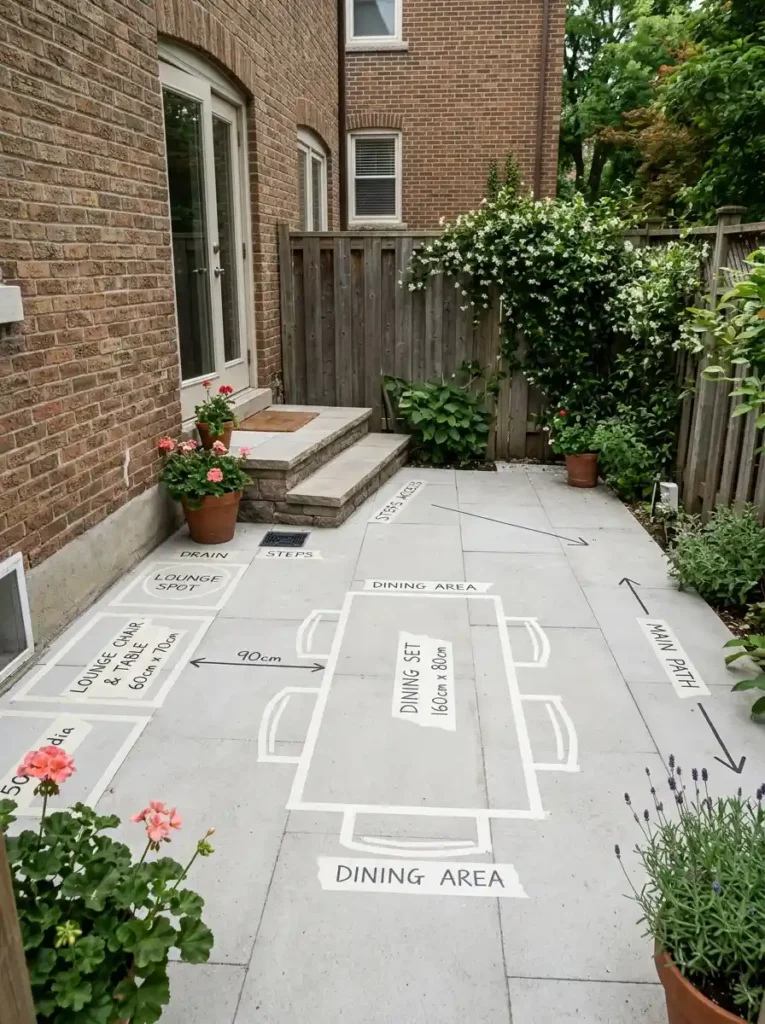
Measure the full length and width of your outdoor area. Then mark doors, steps, drains, outlets, and other fixed parts. Your furniture should never block a door or cover a drain.
Try to keep a walking path that is about 30 to 36 inches wide when space allows. A narrow patio may not give you that much room. In that case, focus on keeping the path from the door clear.
Use painter’s tape to mark furniture sizes on the floor. This simple step shows how much room a chair, table, or bench will use.
For example, a chair may look slim in an online photo. Yet its arms and back may make it much wider than expected.
Decide how you want to use the patio before shopping. A dining area needs a different layout than a reading corner.
Choose a Round Bistro Set for Easy Outdoor Dining
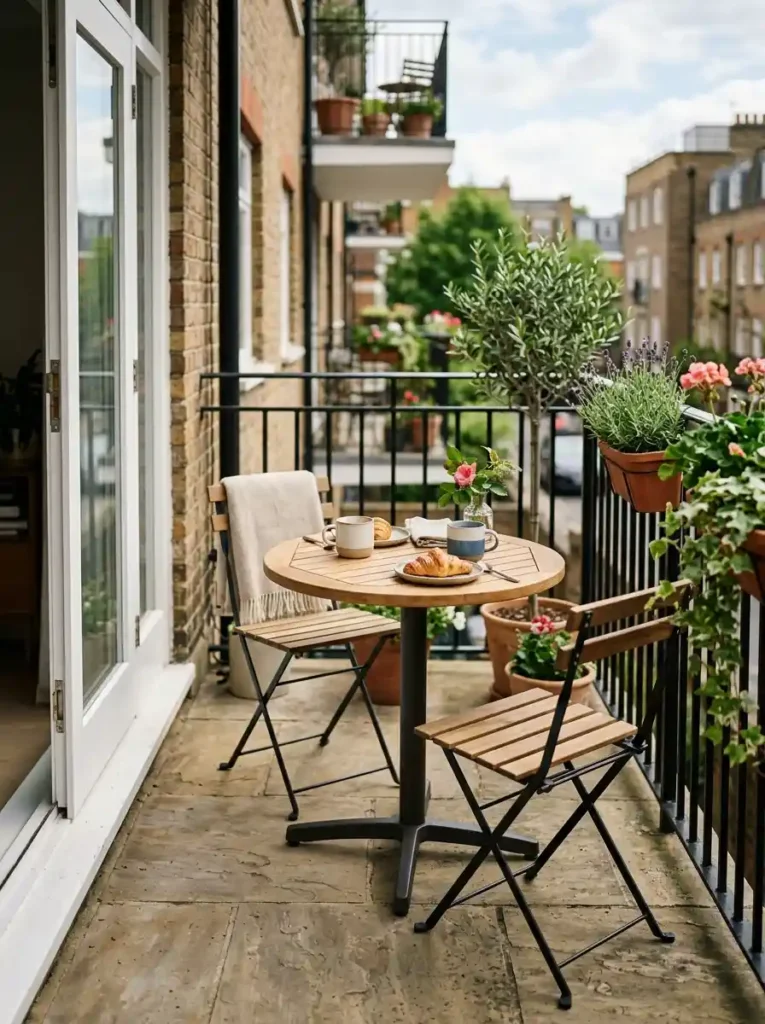
A full dining table can take over a small patio. A round bistro set uses less visual space and gives you a simple place to eat.
Choose a table that is 24 to 30 inches wide for two people. A table between 30 and 36 inches wide may work for three or four people when needed.
A pedestal base can be a good choice. It gives you more legroom because there are no table legs at each corner.
Look for slim chairs made from metal or sealed wood. Folding bistro chairs are even better when your patio serves more than one purpose.
A round table also makes it easier to move around tight corners. Square tables can leave sharp edges in the walking path.
This setup works well for couples, apartment renters, and anyone who enjoys morning coffee outside.
Choose the smallest table that fits your normal needs. Do not buy for the rare event when several guests visit.
Use Folding Furniture to Get Your Floor Space Back
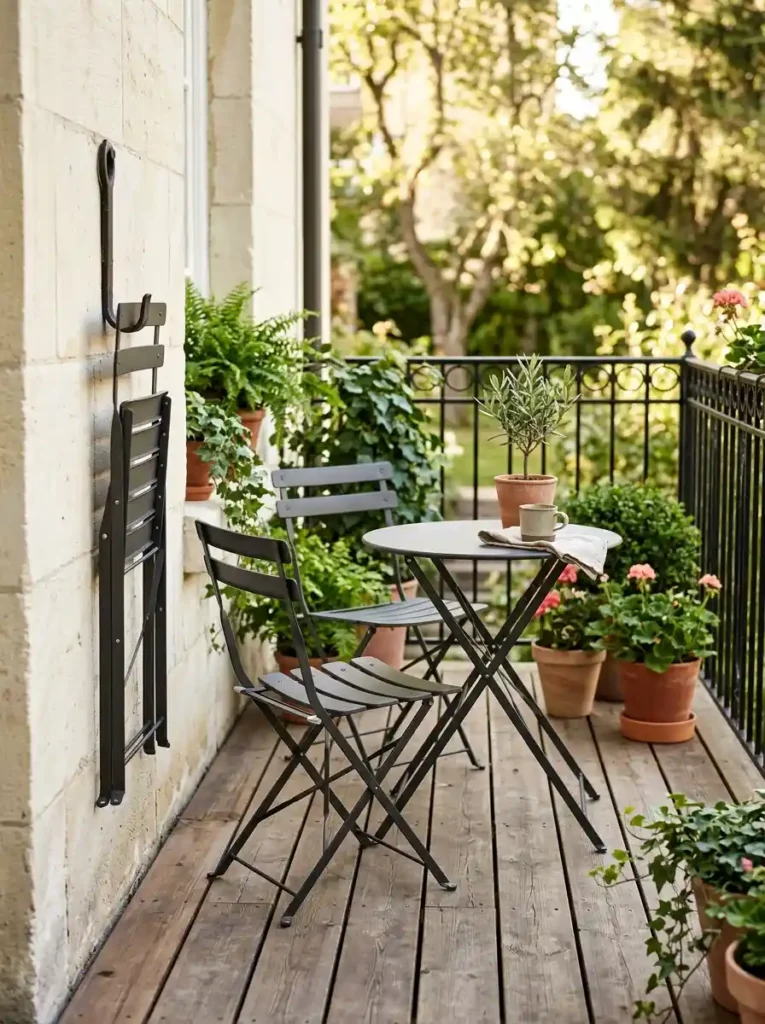
Folding furniture gives you more open space when you are not using it.
Two folding chairs and a small folding table can turn a narrow patio into a dining area. After the meal, you can fold everything and open the space again.
This works well for patios used for several tasks. You may need room for children to play during the day. Later, the same space can become a quiet seating area.
Look for powder-coated metal, sealed wood, or another material made for outdoor use. These options are easier to care for than furniture made for indoor rooms.
Check the size of each item when it is open and folded. Some folding chairs are still thick when closed.
You can hang lightweight chairs on strong wall hooks. You can also slide them behind a storage bench.
For renters, folding furniture is one of the easiest small outdoor patio ideas because it does not require permanent changes.
Add a Drop-Leaf Table Without Blocking the Walkway
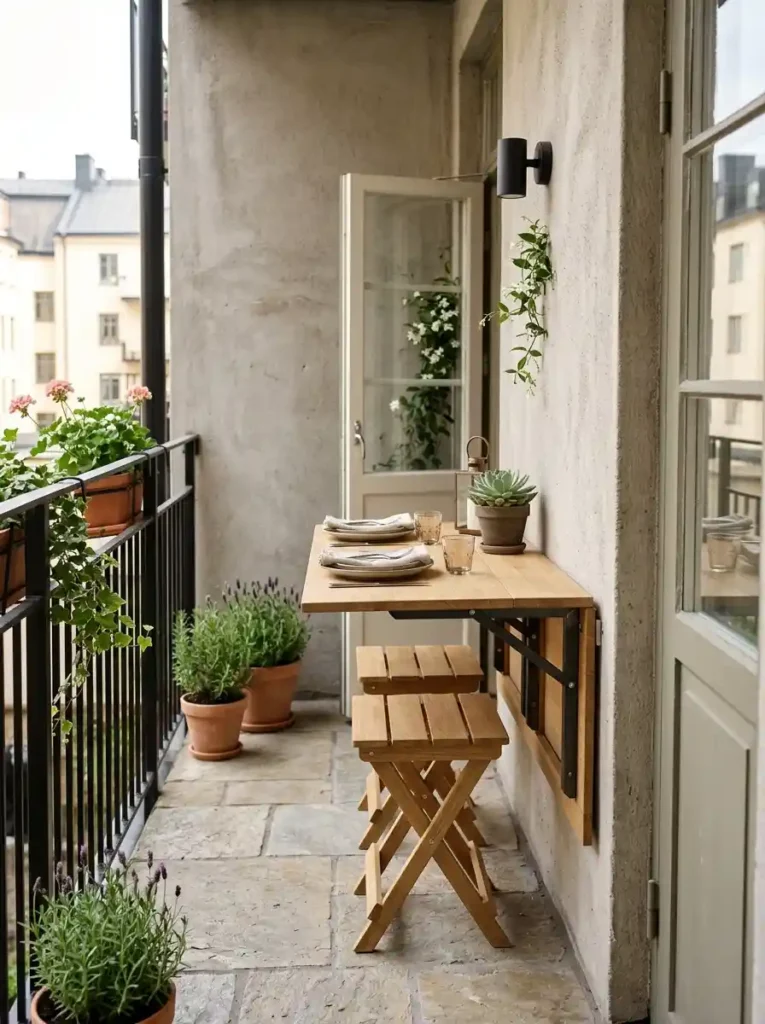
A normal table may block the path on a long, narrow patio. A wall-mounted drop-leaf table solves that problem.
The table stays flat against the wall when you are not using it. Fold it down for meals, laptop work, drinks, or plant care.
A table that is 30 to 40 inches wide and 16 to 20 inches deep can work in many tight spaces. Pair it with two folding stools that can be stored under it.
Before installation, check the wall material. Brick, concrete, wood, and siding need different hardware. The table must be attached to a strong surface.
Make sure the table can open without hitting a door, chair, or planter.
Renters may not be allowed to drill into an outside wall. A slim console table can give you a similar setup. Look for one that is no more than 12 to 16 inches deep.
This idea works best when every inch of floor space matters.
Place a Corner Bench in an Area You Rarely Use
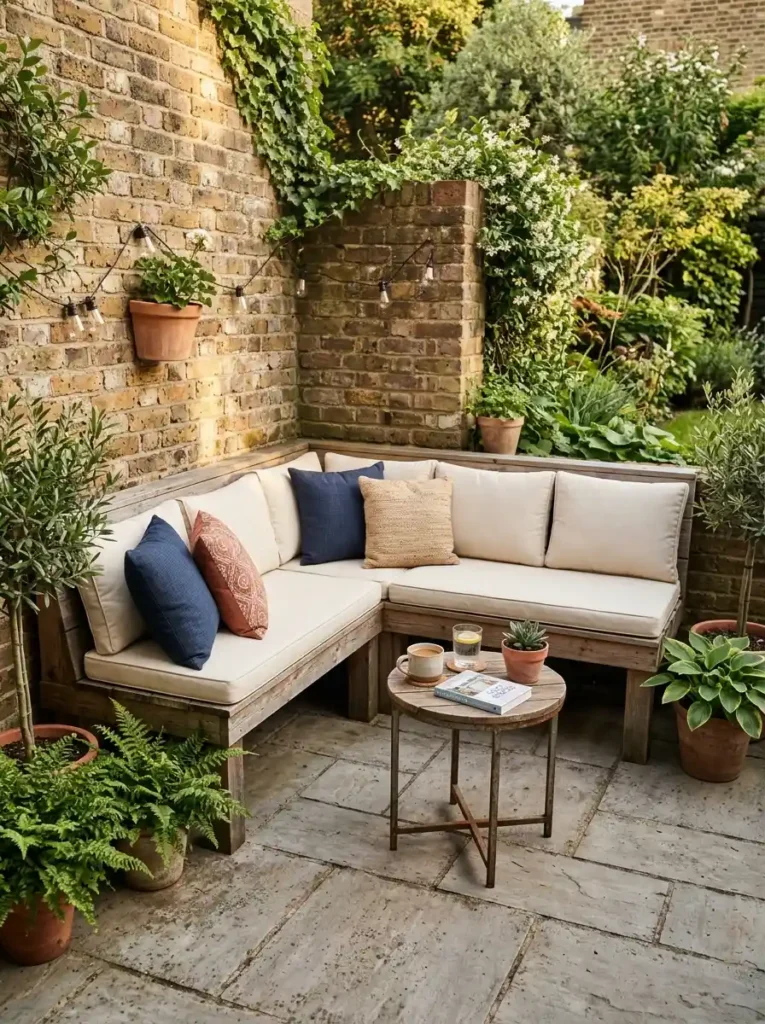
Separate chairs often leave empty gaps between them. A corner bench can use that lost space.
An L-shaped bench works well on a square patio or in a small backyard corner. It may seat more people than three separate chairs while using less floor space.
Aim for a seat depth of about 18 to 22 inches. A deeper bench may feel comfortable, but it can take up too much room.
A backless bench can make the area feel more open. Add outdoor cushions when you want more support.
Place a small round table in front of the bench. This creates a useful area for drinks, meals, or games.
A built-in bench gives you a neat, finished look. However, it may not suit renters or people who want to change the layout often.
A freestanding corner bench is easier to move. It can also be taken with you when you move to another home.
Pick a Storage Bench That Handles Two Jobs
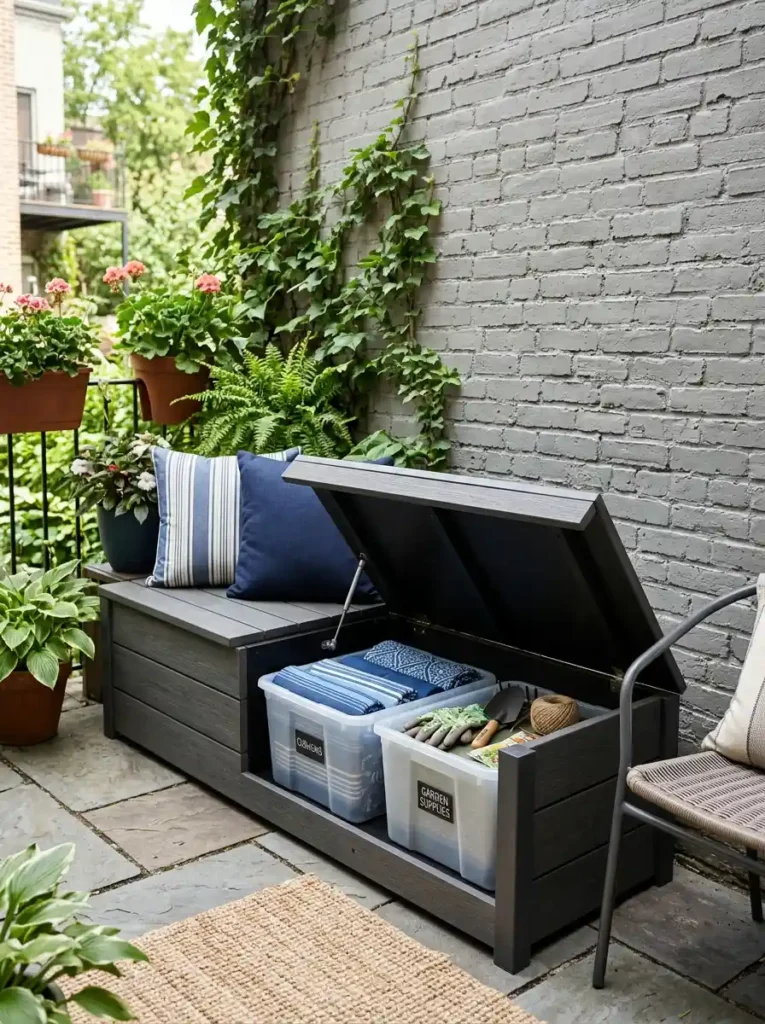
Cushions, garden tools, and outdoor games need a place to go. A storage bench hides these items while giving you another seat.
Place the bench along the longest wall. This keeps the middle of the patio open.
Use the inside for dry cushions, small tools, cleaning supplies, or table items. Removable bins can stop small objects from getting mixed together.
Check whether the bench is weather-resistant or waterproof. These terms do not mean the same thing. A weather-resistant box may handle light rain, but water can still enter during a storm.
You can place smaller waterproof containers inside for extra protection.
Do not put damp cushions into a closed bench. Moisture can lead to mold and bad smells.
Leave enough room above and behind the bench so the lid can open fully. A bench may save space, but it can still feel bulky on a very narrow patio.
Measure first, and choose a low, simple design.
Use Nesting Tables and Stackable Stools
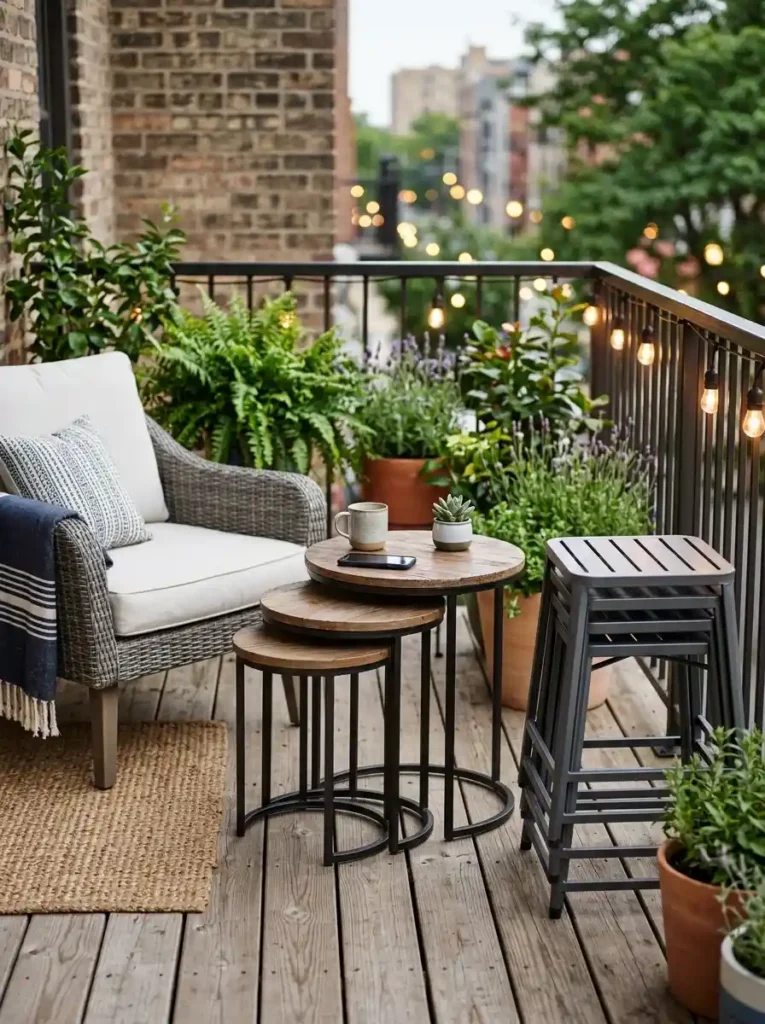
Fixed furniture can waste space when you use it only once or twice a week.
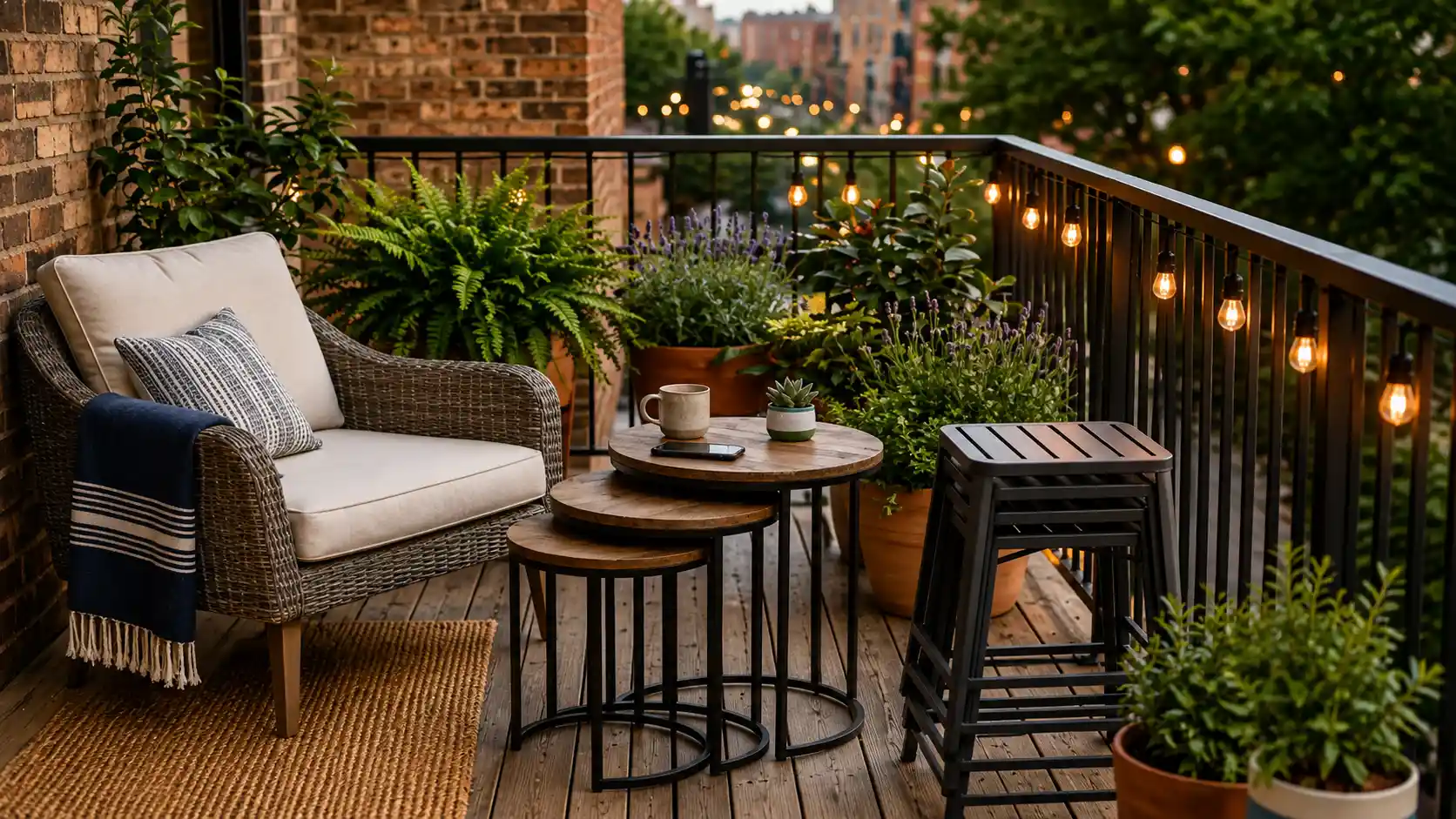
Nesting tables solve this problem. Two or three smaller tables fit under the largest one. Pull them apart when guests arrive, then stack them again after use.
Stackable stools can work as extra seats, side tables, or plant stands. This makes them useful in a small patio layout.
For a quiet evening, you may need only one table beside your chair. During a meal, you can spread the full set around the seating area.
Choose pieces that are light enough to move without effort. Open metal legs are often a better choice than thick solid bases.
Furniture with open legs lets you see more of the floor. This can make the patio feel less full.
Before buying stackable stools, check the total height when they are stacked. Make sure they will fit under a table or inside your storage area.
Grow More Plants With a Vertical Garden
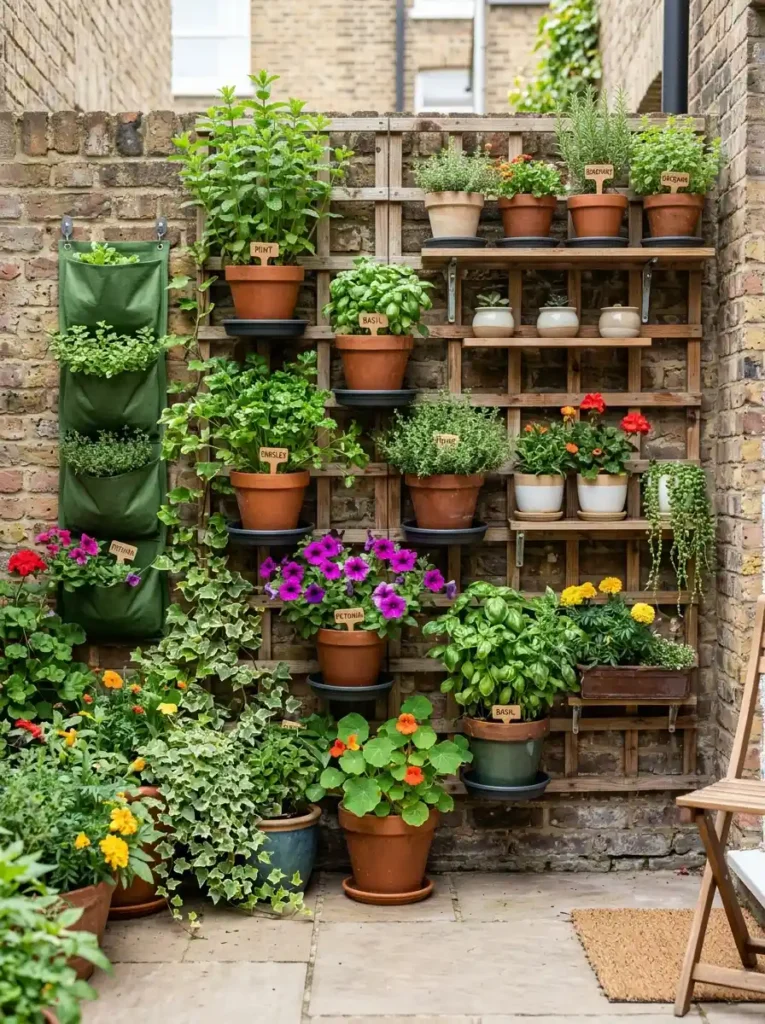
Where can you grow plants when most of the floor is already in use? Use the wall.
A vertical garden gives you color and greenery without filling the walking area. You can use a wood trellis, wall pots, pocket planters, or narrow shelves.
Grow herbs such as mint, parsley, thyme, or basil near your table. Add flowers for color. Trailing plants can soften a plain wall.
Check how much sun the wall receives. Put sun-loving plants near the top when that area gets the most light. Place plants that need less sun lower down.
Use drip trays to protect the patio floor. A waterproof backing may also be needed behind fabric pocket planters.
Make sure you can reach every pot for watering and trimming. A tall plant wall may look good, but it becomes a problem when the top pots are hard to care for.
Start with one small section. Add more plants after you see what grows well.
Hang Planters to Keep the Floor Clear
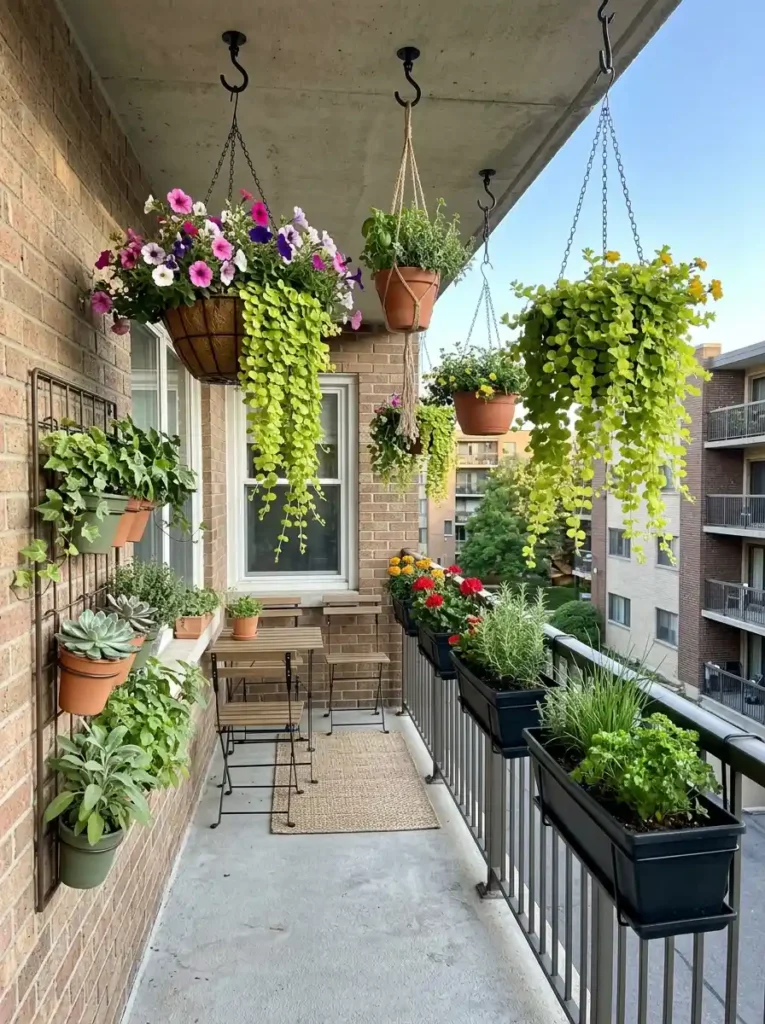
Plants do not always need to sit on the ground.
Hanging pots, railing boxes, and wall planters give you more room for chairs and tables. They also bring color closer to eye level.
Use railing boxes for herbs or small flowers. Petunias and creeping Jenny can trail over the sides in suitable weather. Plant choices should match your local climate and the amount of sunlight.
Always check the planter’s weight after watering. Wet soil can make a small pot much heavier.
Use strong hooks and supports made for outdoor conditions. Do not hang a planter where wind can swing it into a window or wall.
Avoid placing dripping pots above chairs, tables, or a neighbor’s patio. A tray or self-watering planter can reduce mess.
Lightweight containers are useful for apartment patios. They are easier to move and place less weight on railings.
Check building rules before attaching anything to a shared railing.
Add Privacy Without Making the Patio Feel Closed
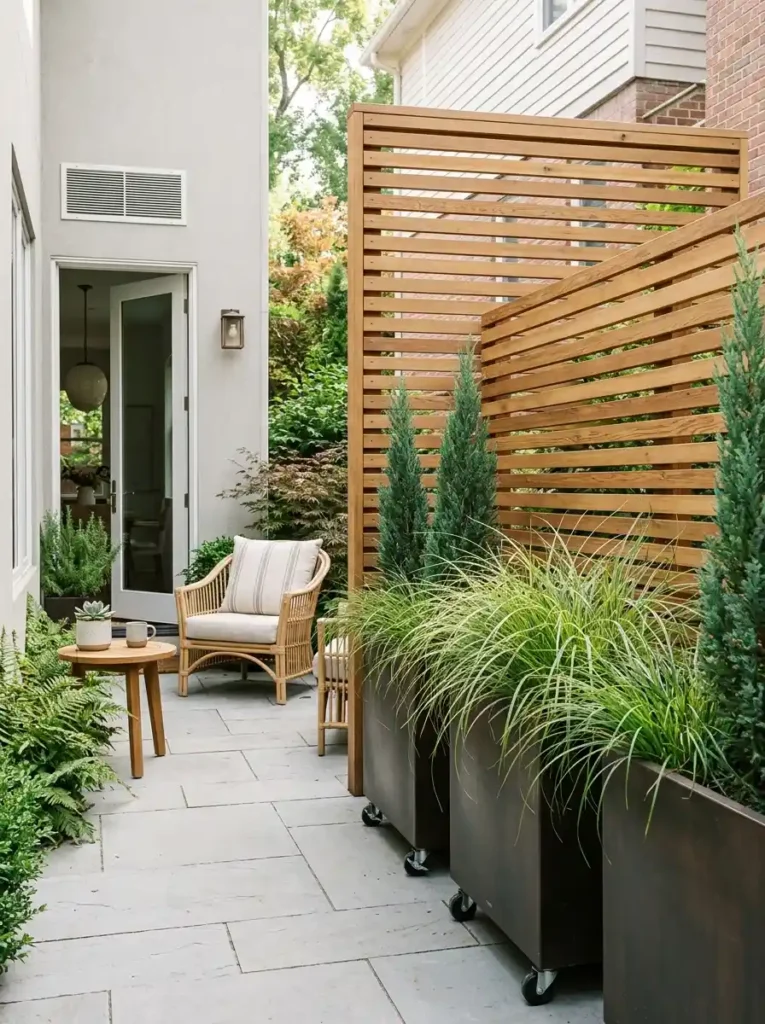
It is hard to relax outside when you feel watched by neighbors or people passing by.
A slim screen can block the main view without filling the patio. Slatted wood screens are useful because they allow some air and light to pass through.
Tall planters can create a softer barrier. Try ornamental grass or narrow evergreen plants that suit your weather.
Place large pots on rolling bases. This makes them easier to move for cleaning or when you want more sunlight.
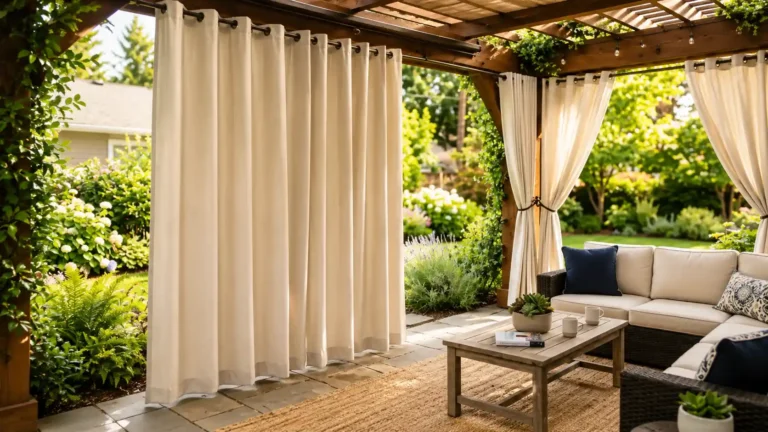
Renters can use a freestanding folding screen. Outdoor curtains may also work when there is a safe place to hang them.
Do not block doors, vents, or required exits. You should also check apartment, community, or property rules before adding a tall screen.
The best privacy option does not need to hide every view. Block the area that causes the most discomfort first.
These patio ideas for small spaces should help you feel more comfortable without making the area dark.
Use Light Colors to Make the Space Feel Open
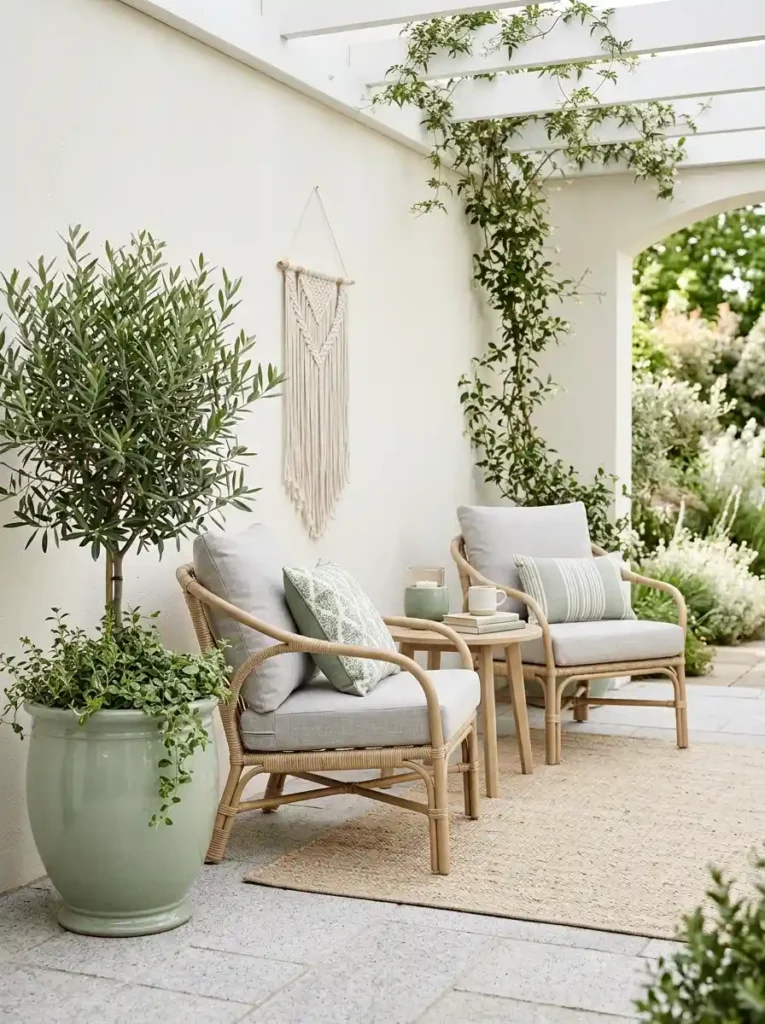
Dark furniture and many strong patterns can make a small patio feel busy.
Start with a light base. Cream, warm beige, pale gray, and soft green can help the area feel brighter.
Use the same color family for large items. Your rug, cushions, and biggest planters should feel connected.
Then add one stronger accent color. You can repeat it in a cushion, flower pot, and small table item.
Try to keep the main color plan to two or three shades. Too many unrelated colors can break the patio into small visual pieces.
Pure white may look clean, but it also shows dust and marks quickly. Warm off-white is often easier to live with.
Choose outdoor fabrics that can be removed and washed. Light colors need regular care, especially near plants and food.
This is one of the simplest ways to make a small patio look bigger without moving any furniture.
Lay Deck Tiles or Pavers on a Diagonal
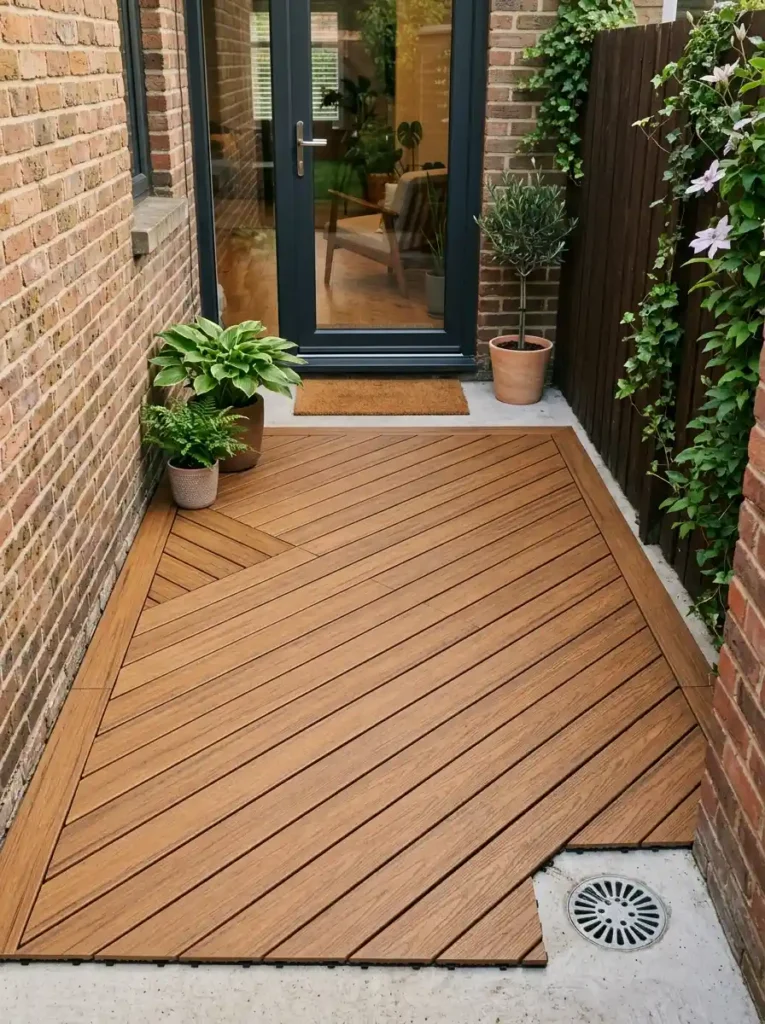
The direction of your flooring can change how the patio feels.
Diagonal lines guide the eye across the space. This can make a narrow or square patio seem wider.
Interlocking deck tiles are a useful choice for worn concrete. Many types click together without glue, which may suit renters.
Use one flooring style across the full patio. Several small mats and mixed materials can make the floor look broken.
Check door clearance before adding tiles. A raised floor may stop a door from opening.
You should also keep all drains clear. Water needs a safe path away from the home.
Measure the patio before ordering. Diagonal layouts often need more cuts, so buy a little extra material for mistakes and damaged pieces.
Test a few tiles in one corner first. Check whether they stay firm, drain well, and feel safe when wet.
A new floor can improve the full patio, but poor drainage can create a bigger problem.
Hang an Outdoor Mirror to Reflect Light
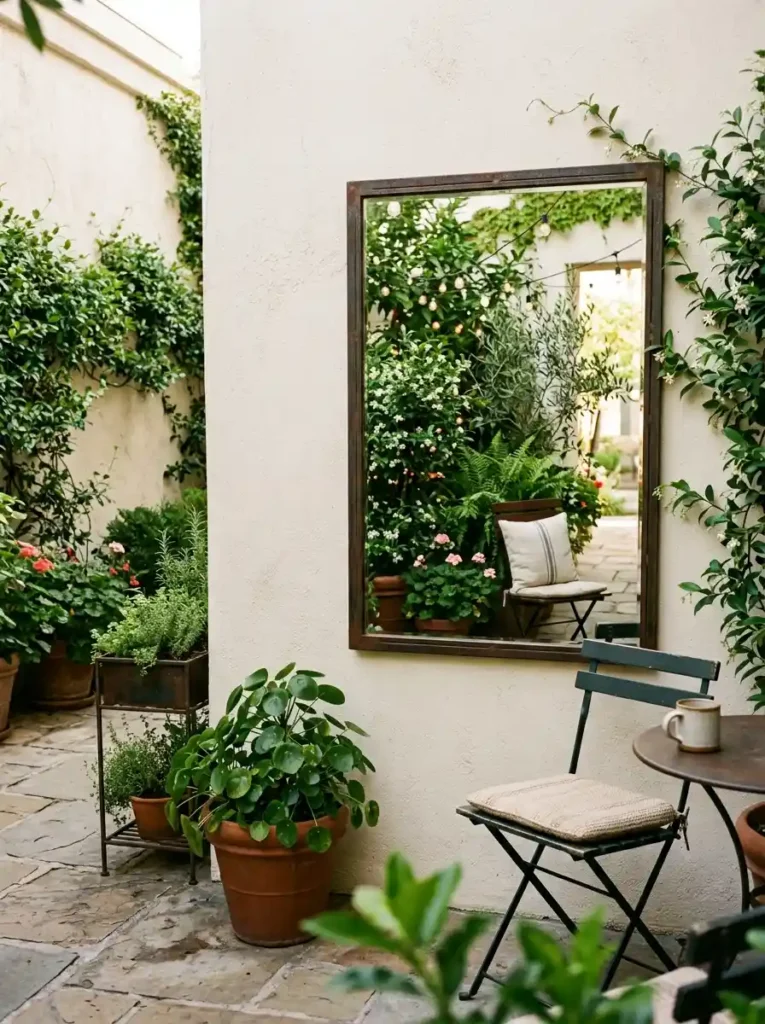
A patio surrounded by plain walls or fences can feel closed in. An outdoor mirror can make it feel deeper.
Place the mirror where it reflects plants, soft lighting, or an open part of the patio. Do not place it where it reflects bins, tools, or a busy doorway.
Choose a frame and backing made for outdoor use. Indoor mirrors may warp, rust, or break after exposure to rain and heat.
Acrylic mirror panels are lighter than glass. They may also be a safer choice in areas used by children or pets.
Secure the mirror firmly. Wind can pull a poorly attached mirror away from the wall.
Check the reflection during the morning and afternoon. Strong sunlight can cause glare or direct heat at dry plants and nearby windows.
One medium mirror often works better than several small ones. It creates a cleaner focal point.
This idea suits small courtyard patios with a protected wall.
Use One Outdoor Rug to Join the Seating Area
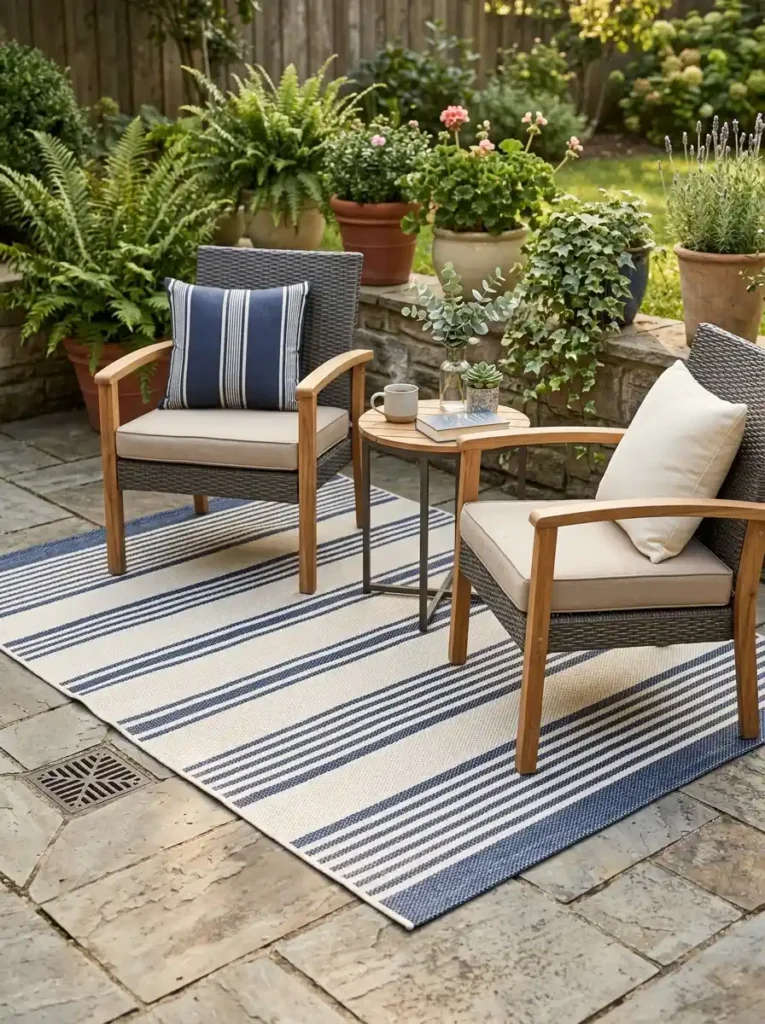
A rug can make separate chairs and tables feel like one planned space.
Choose a rug that is large enough to sit under the main furniture. In many two-chair layouts, a 5-by-7-foot rug may work well.
Try to place at least the front legs of each chair on the rug. A rug that sits alone in the middle can make the space feel smaller.
Flat-woven outdoor rugs are easier to use under chairs. Thick rugs may catch chair legs and hold more water.
Look for a material made for rain, sun, and regular cleaning. An indoor rug may stay damp and develop mold.
Do not cover a drain with the rug. Lift it from time to time so the floor underneath can dry.
One medium rug usually looks cleaner than several small mats. It also gives you a clear border for the seating area.
Measure the full furniture setup before choosing the rug size.
Use Wall Lights and String Lights Instead of Floor Lamps
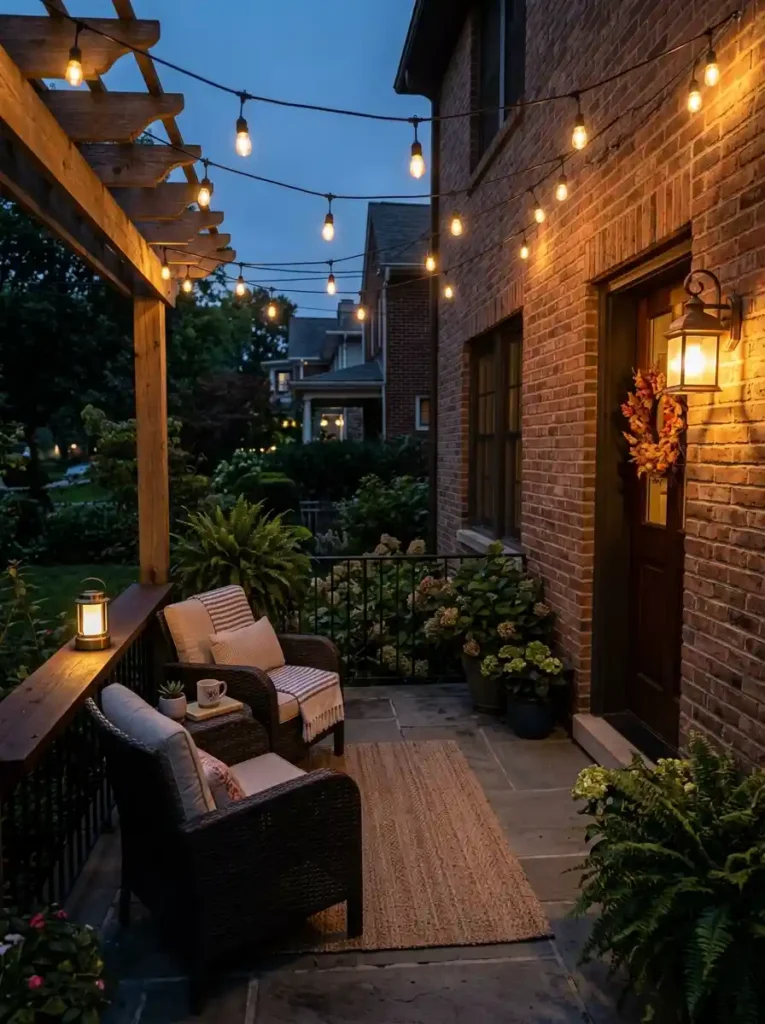
Floor lamps use valuable space and can be easy to knock over. Wall and overhead lights keep the ground clear.
Start with one useful light near the door or table. Then add softer lights around the seating area.
String lights can make the patio feel warm after dark. Hang them high enough so people do not hit them when standing.
A rechargeable table lamp can work on a narrow ledge. Solar lights may be useful when there is no nearby outlet.
Choose lighting made for outdoor use. Indoor plugs, cords, and lamps are not safe in wet conditions.
Use exterior-rated extension cords only when needed. Keep connections away from water and walking paths.
Test the lighting before adding more. Too many bright bulbs can make a small patio feel harsh.
A mix of one task light and soft string lights is often enough for a compact seating area.
Add Shade Without Using Too Much Floor Space
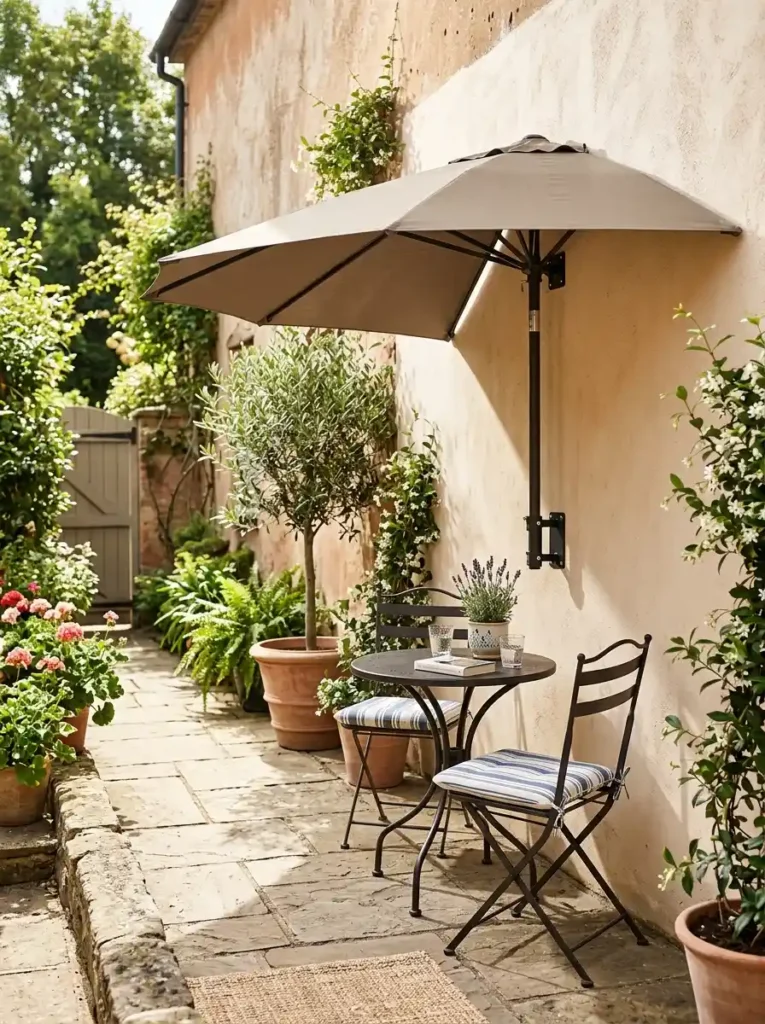
A sunny patio may stay empty during the hottest part of the day.
A half umbrella can sit close to a wall. It takes up less space than a full round umbrella and works well over a bistro set.
A shade sail keeps the floor open because it hangs above the patio. However, it needs strong attachment points.
A cantilever umbrella moves the pole away from the center of the seating area. The base can be large, so measure it before buying.
Watch the sun at different times of day. A shade cover in the wrong place may miss the chairs when you need it most.
Wind also matters. Close umbrellas during strong wind, and check that all shade products are firmly secured.
Renters should ask before drilling or attaching hardware to walls.
The best small patio shade idea covers the area where you sit without blocking the walkway.
Create One Small Herb, Coffee, or Drink Station
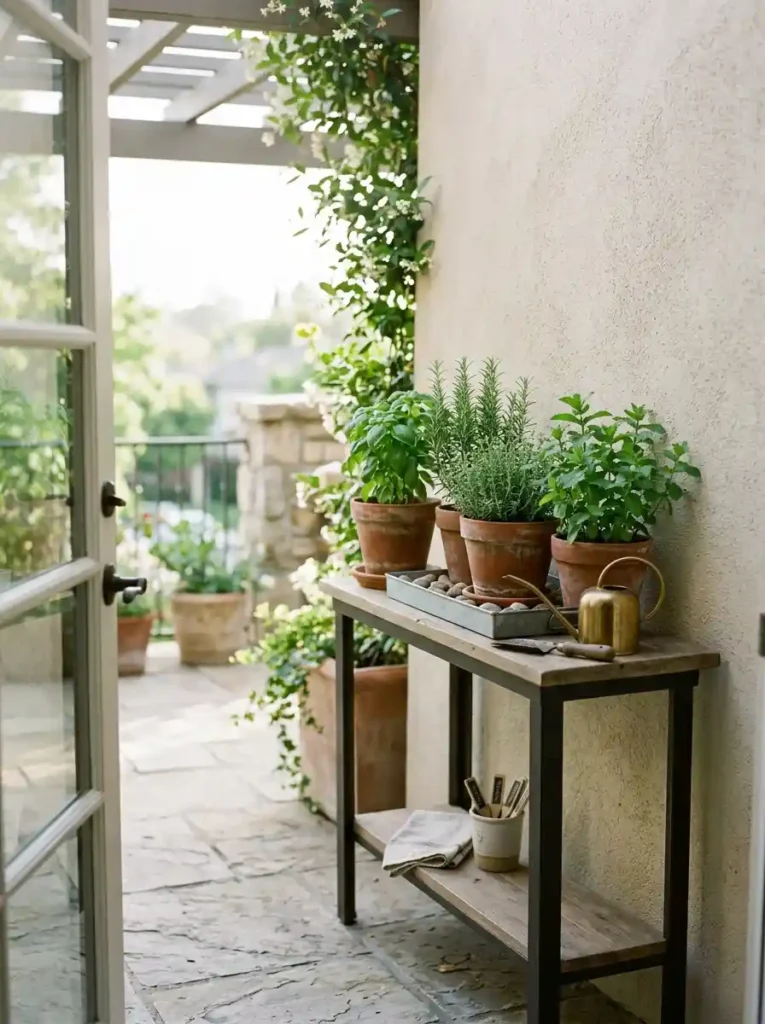
Your patio becomes more useful when it supports an activity you already enjoy.
A narrow console can become a coffee station, drink area, or herb shelf. Choose one purpose instead of trying to fit all three.
A surface that is 12 to 16 inches deep can hold cups, a tray, and a few supplies without blocking the path.
For a herb station, place three or four pots near the dining area. Choose herbs you use often. There is little value in growing plants you never cook with.
A coffee setup may include a tray, two cups, and a covered container for napkins. Bring food, machines, and breakable items indoors after use.
Keep the station away from the main door swing. It should also stay clear of the walking path.
This small feature can give the patio a clear purpose and make you use it more often.
Move Supplies Easily With a Rolling Cart
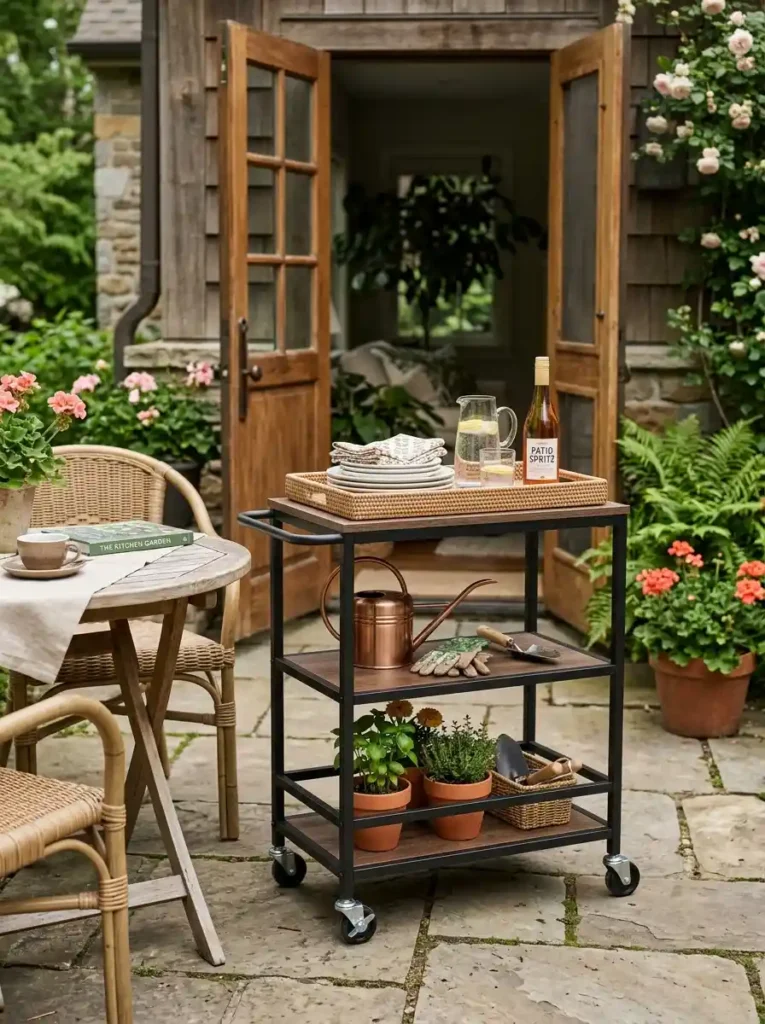
A rolling cart gives you storage where you need it, when you need it.
Move it beside the table during meals. Use it for plates, drinks, and napkins.
During the week, the same cart can hold plant tools, watering supplies, or small pots. A removable top tray makes it easy to carry items indoors.
Choose a cart with locking wheels. This stops it from moving on a sloped or uneven surface.
Measure your doorway before buying. The cart should fit through the door without turning sideways.
Covered shelves can protect supplies from light rain. However, most carts should still be moved indoors during severe weather.
Avoid filling every shelf. A crowded cart can become hard to move and may make the patio look messy.
For a budget small patio makeover, a simple rolling cart can replace a cabinet, serving table, and plant station.
Pick One Focal Point and Remove Extra Clutter
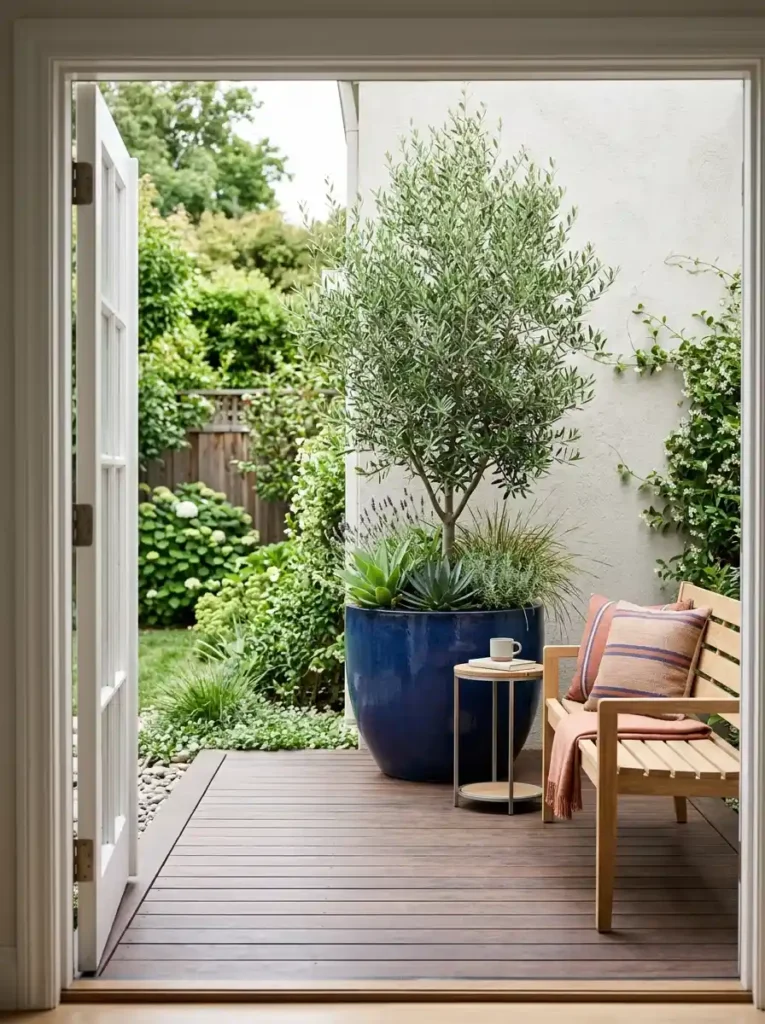
A small patio rarely needs more decoration. It usually needs better editing.
Choose one main feature. This could be a bright chair, large planter, mirror, plant wall, or small water bowl.
Keep the rest of the patio simple. Repeat one or two colors so the space feels connected.
Five small decorations often create more clutter than one larger feature. A single tall planter beside a bench may look better than several unrelated pots.
Leave part of the floor open. Open space gives your eyes a place to rest and makes it easier to move.
Take a photo of the patio from the doorway. Clutter is often easier to notice in a picture.
At the start of each season, remove broken items and things you rarely use. Clean the main furniture before buying new decorations.
A simple three-part setup works well: one seating area, one useful surface, and one focal point.
Turn Your Small Patio Into a Space You Will Use
A useful patio does not need to be large. It needs a clear purpose and furniture that fits.
Start by measuring the area. Keep the door and walking path open. Then choose flexible furniture, vertical plants, or hidden storage based on your biggest problem.
You do not need to complete every idea at once. Begin with one furniture change, one comfort upgrade, and one decorative feature. Use the space for a few days before adding more.
A round bistro table may be enough for one patio. Another space may need privacy or shade first.
With a clear layout and a few smart choices, these patio ideas for small spaces can turn a narrow outdoor area into a comfortable place you use often.