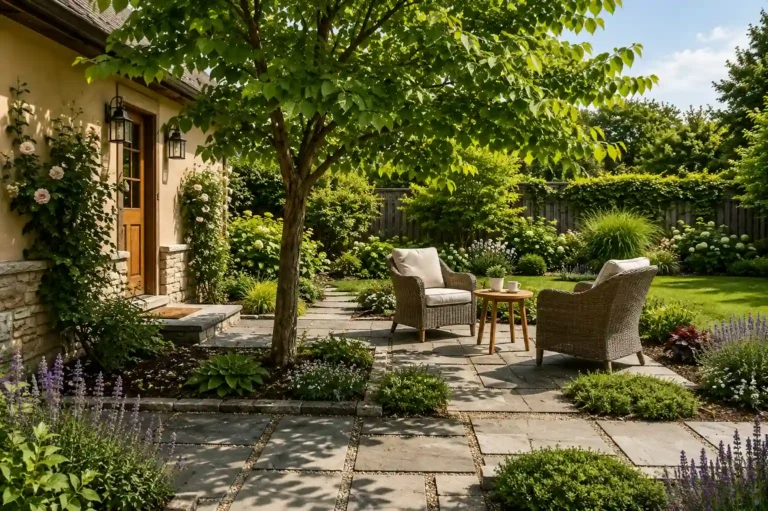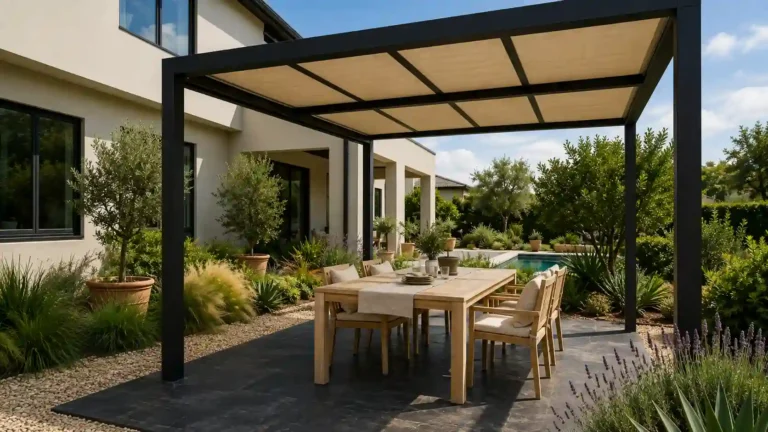
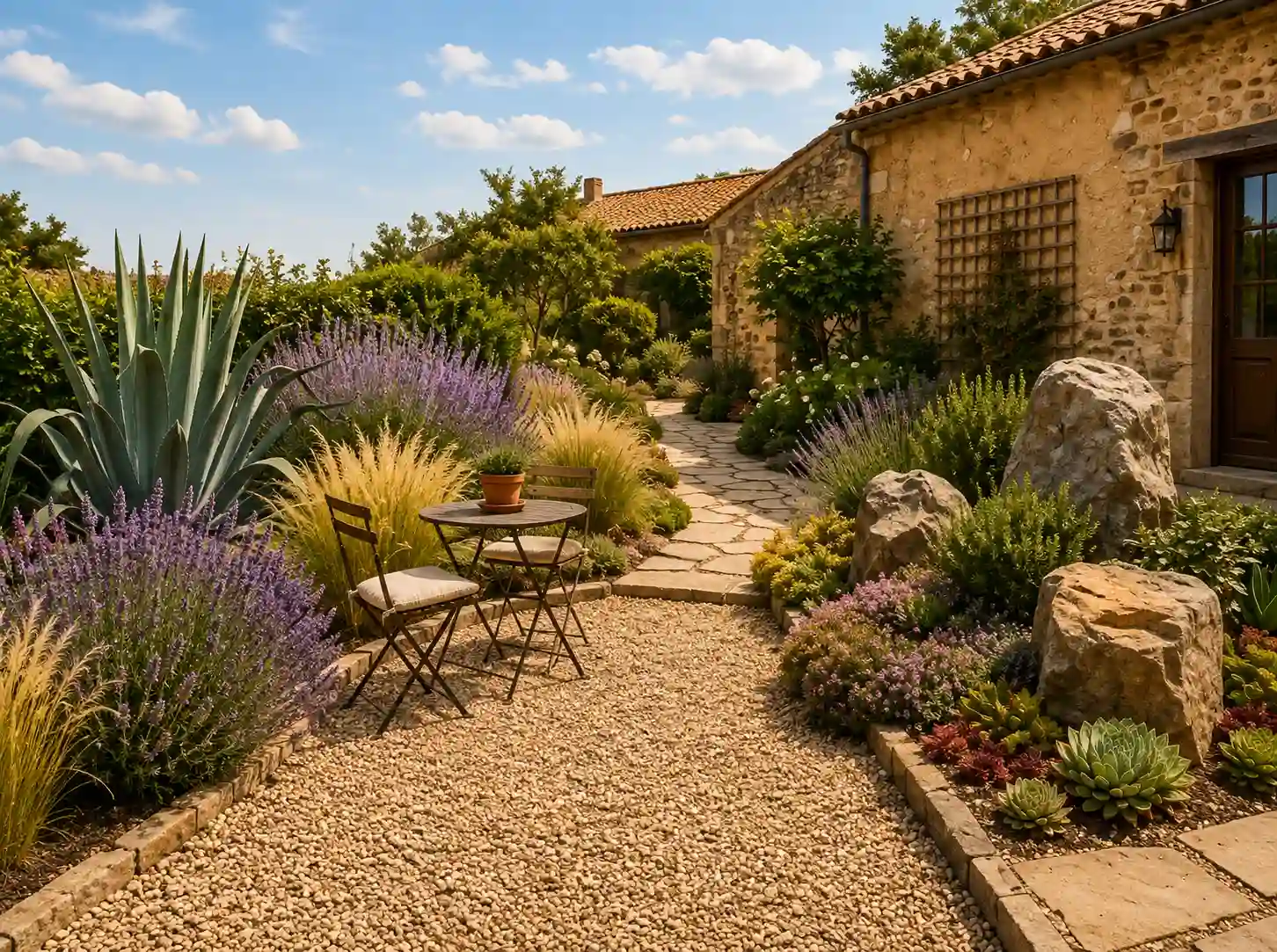
16 Gravel Patio Ideas for a Stylish Outdoor Space
You want a comfortable place to sit outside, but the cost of concrete or stone may be holding you back. These gravel patio ideas can help you create an attractive outdoor area without paying for a full paved surface.
Gravel works in large yards, narrow side spaces, and small garden corners. You can use it beneath a dining table, around a fire pit, or next to a wood deck. It also comes in many colors and sizes, so it can fit modern, rustic, and cottage-style homes.
Still, a backyard gravel patio needs some planning. Poor drainage can create puddles. Weak edging lets stones spread into the lawn. Deep, loose gravel can also make chairs feel unstable.
The ideas below show you how to avoid these problems. You will learn how to combine gravel with brick, pavers, plants, paths, and pergolas. You will also find practical tips for building and caring for a DIY gravel patio.
What Should You Consider Before Choosing a Gravel Patio Design?
Start by deciding how you want to use the patio. A quiet reading corner needs less room than a six-seat dining area. A fire pit also needs open space and extra safety planning.
Measure the proposed area before choosing furniture or ordering stone. Mark the edges with stakes and string, a garden hose, or marking paint. Place your furniture inside the marked area to see whether the layout feels crowded.
Next, watch what happens after rain. Water should move away from your house and other structures. Gravel allows water to pass through, but it cannot fix every drainage problem. A low area may still need grading or a drainage system.
Think about comfort as well. Rounded pea gravel feels smoother underfoot, but it moves more easily. Angular crushed stone locks together better and may create a firmer surface.
Your gravel patio design should also account for furniture legs, wheels, and walking needs. Pavers can create stable spots beneath a grill, table, or chair. A firm surface may be a better choice if someone in your home uses a wheelchair or walker.
Before you begin, check these four points:
- The patio’s main purpose
- The amount of available space
- The direction of water flow
- The type of gravel and edging you need
Create a Comfortable Pea Gravel Patio
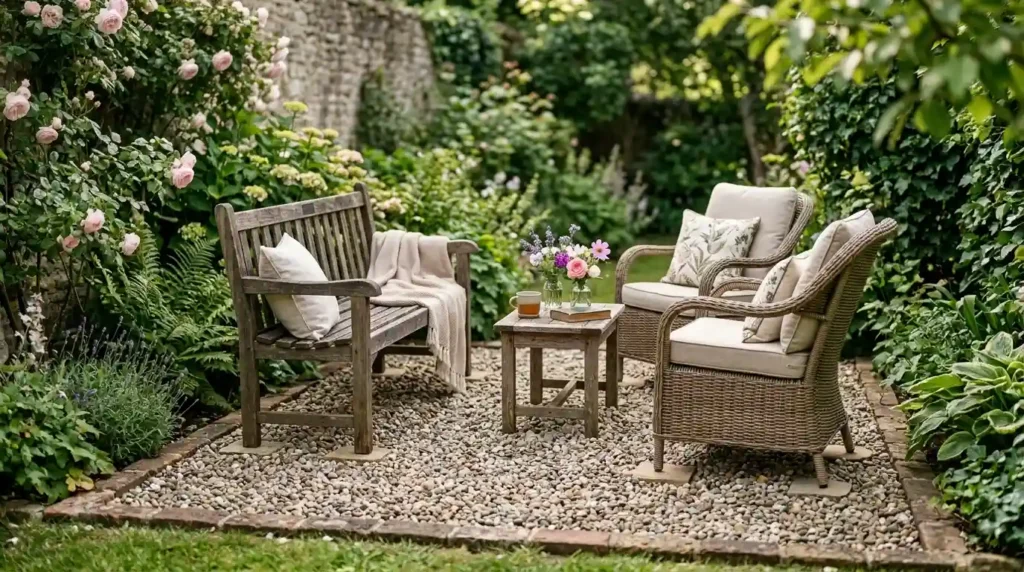
Pea gravel creates a casual patio that feels at home in a relaxed garden. Its small, rounded stones usually come in mixed shades of gray, tan, brown, and cream.
Choose a gravel color that works with your home and nearby paths. Warm gravel can soften red brick or weathered wood. Gray gravel often suits painted siding and modern outdoor furniture.
The smooth stones can shift when you walk across them. Install a compacted base and strong gravel patio edging to help control movement. Keep the decorative layer from becoming too deep because furniture may sink into it.
Wide furniture feet work better than narrow metal legs. You can also place outdoor furniture pads or flat stones beneath each leg.
For a simple design, build a rectangular pea gravel seating area with a weathered brick border. Add a wood bench, two chairs, and a small table. This is one of the easiest pea gravel patio ideas for a quiet garden corner.
Best for: Informal gardens, seating areas, and homeowners who prefer a soft look.
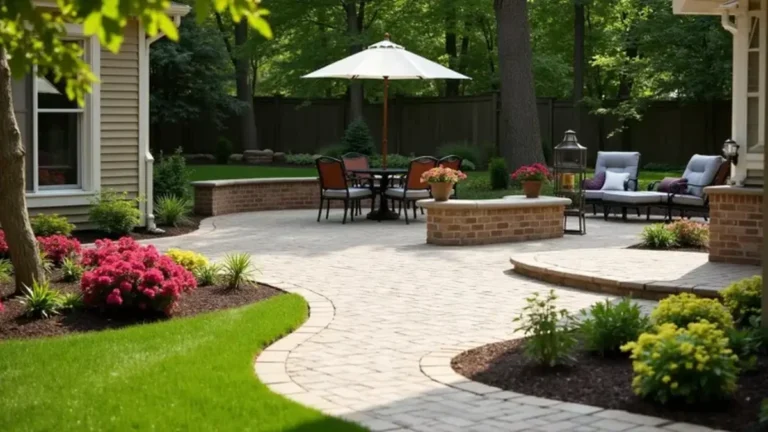
Use Brick Edging to Keep Gravel in Place
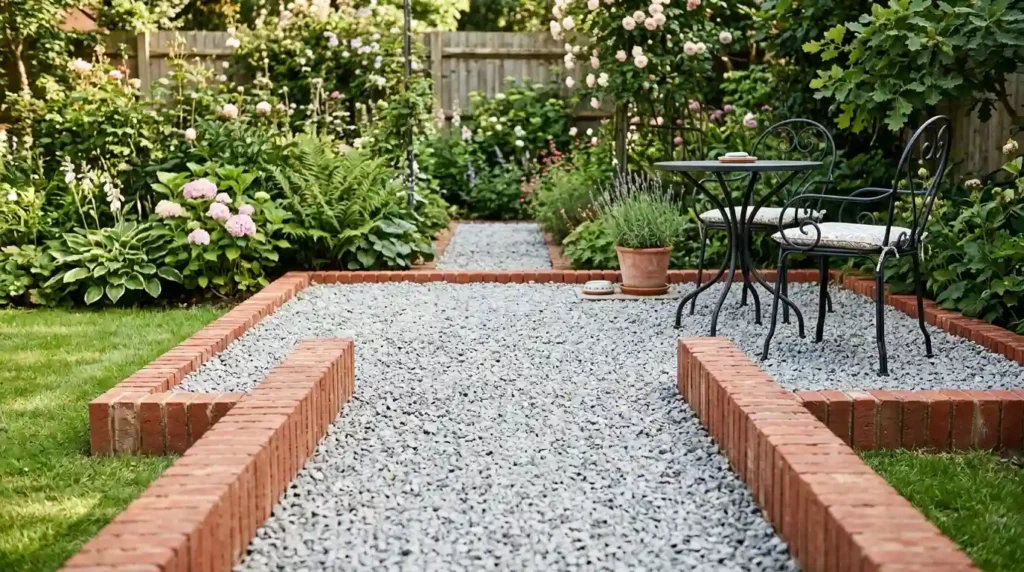
A strong border makes a gravel patio look finished. It also stops loose stones from spreading into flower beds and grass.
Brick works well because it adds color without making the patio feel too formal. Match new edging to brick already used on your house, walkway, or garden steps.
You can install bricks flat for a low border. Set them upright when you need a deeper edge to contain loose gravel. Curved brick lines suit cottage gardens, while straight borders create a cleaner design.
Make sure the brick is set on a stable base. Loose bricks can move as the soil settles or water freezes beneath them. The top should sit high enough to contain the gravel without creating a tripping hazard.
Try warm red brick around pale gray gravel. Add dark metal furniture to connect the old and new materials.
Practical tip: Use the same brick on a nearby path so the patio feels connected to the rest of the yard.
Add Large Pavers for Easier Walking
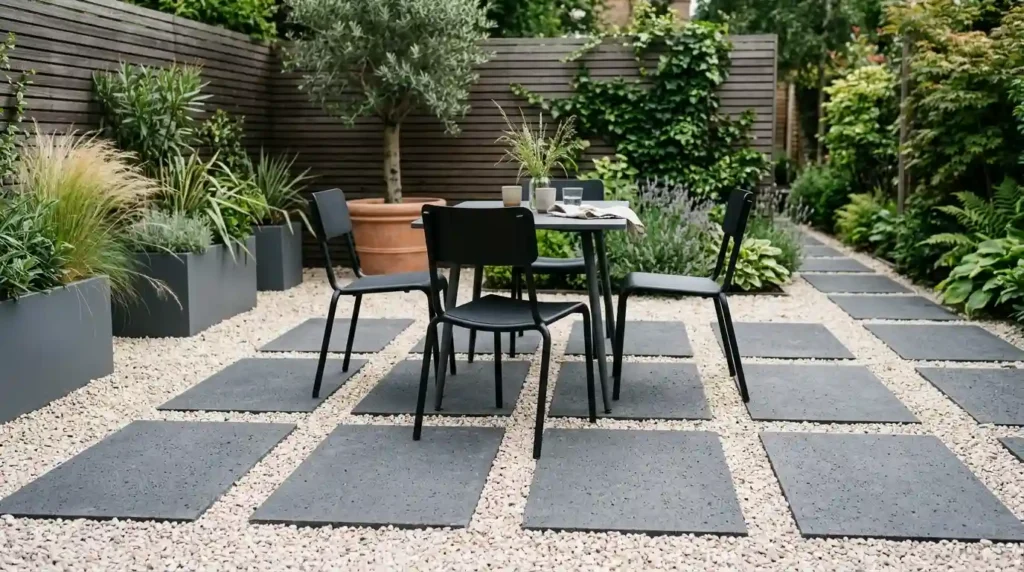
Loose gravel is attractive, but it can make chairs and narrow furniture legs unstable. Large pavers give you solid places to walk and arrange furniture.
Set square or rectangular pavers in a regular grid for a modern look. Use irregular natural stones if you want the patio to feel softer and less formal.
The pavers should sit level with the finished gravel surface. Pavers that are too high can become tripping hazards. Those set too low may collect water and loose stones.
Plan their positions before installation. Place them along the main walking route and beneath table legs. Keep the spacing short enough for a natural step.
A gravel patio with pavers can use pale stones around large charcoal slabs. Add black chairs and simple planters to complete the modern design.
Best for: Dining areas, busy walking routes, and patios where furniture needs more support.
Build a Safe Gravel Patio Around a Fire Pit
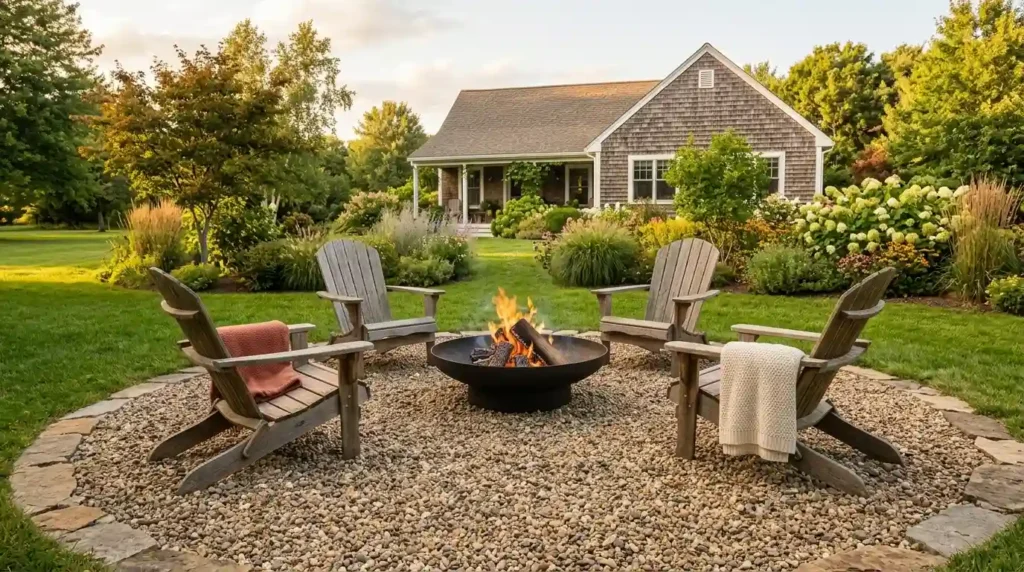
A gravel fire pit patio creates a natural gathering place. A round layout works well because it gives each chair a clear view of the fire.
Place the fire feature in an open part of the yard. Keep it away from buildings, fences, low branches, and other materials that could burn. Follow the manufacturer’s required clearances and check your local fire rules before building.
Use materials made for high-heat areas. Gravel may be used around some fire features, but the fire pit must have a suitable base. Never assume every type of stone is safe for direct heat.
Leave enough room for people to pull chairs back and move around safely. Movable chairs give you more control over the distance from the flames.
For a classic design, place a steel fire bowl in the center of a circular gravel area. Surround it with Adirondack chairs and use stone or metal edging around the patio.
Keep in mind: Fire safety matters more than the exact shape or color of the patio.
Make Outdoor Meals Easier With a Gravel Dining Patio
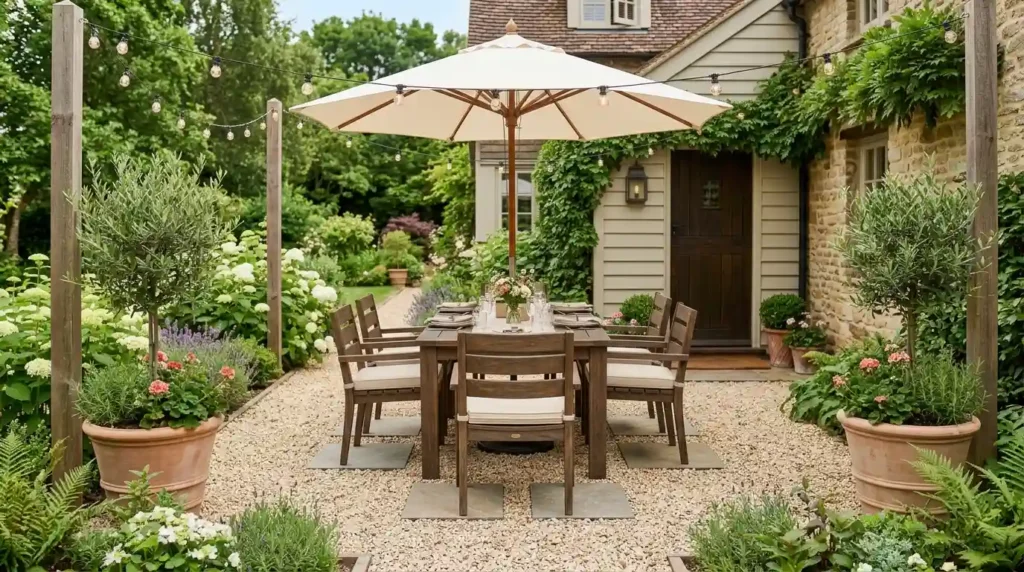
A gravel dining patio works best on flat ground near your kitchen or back door. A short route makes carrying food, dishes, and drinks much easier.
Allow enough space around the table for people to pull out their chairs. Test the layout on the ground before setting the patio edges. If chairs reach the border when pulled back, make the patio larger.
Compacted angular gravel often creates a firmer dining surface than rounded stone. You can also add pavers beneath the table and chair legs.
Shade will make the area more useful during warm weather. Add a patio umbrella, shade sail, pergola, or nearby tree. Soft lighting can keep the space comfortable after sunset.
Picture a six-seat table on light gravel with flat pavers beneath each chair. Hang string lights from secure posts and place two planters near the entrance.
Practical tip: Check that your grill stands on a stable, heat-safe surface before cooking.
Turn an Empty Corner Into a Small Gravel Patio
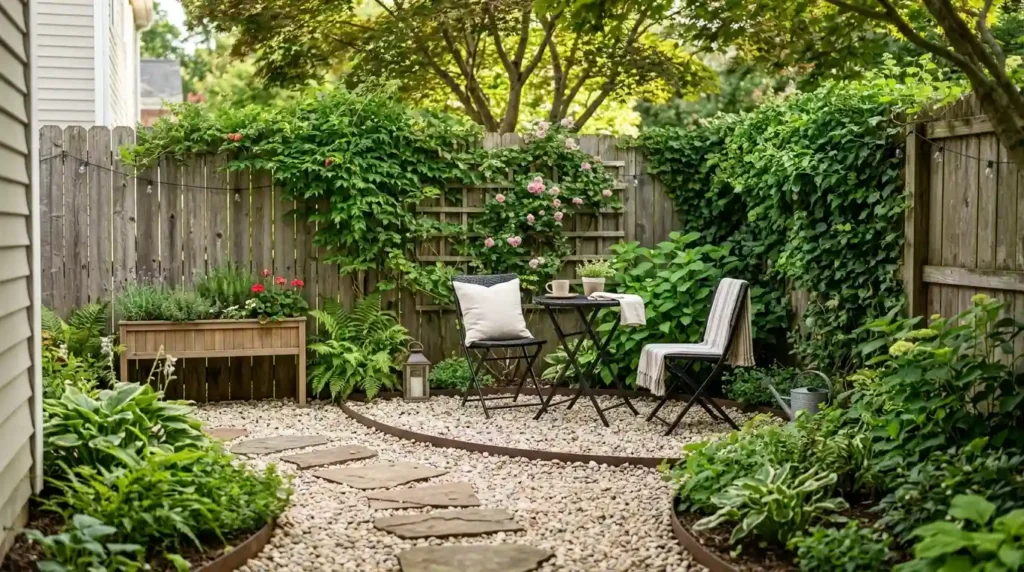
You do not need a wide yard to create useful outdoor seating. An empty corner beside a fence, garage, or garden wall may have enough room for two people.
Use a round or gently curved shape to soften a tight area. A small gravel patio may also feel more open when you choose pale stone instead of dark gravel.
Keep the furniture simple. A bistro table and two folding chairs take up less space than a full outdoor sofa. Folding pieces can be stored when you need more room.
Use height instead of filling the ground with pots. One slim planter, a wall trellis, or a tall container can add greenery without blocking the walking area.
For a finished look, connect the corner patio to the house with a narrow gravel or stepping-stone path.
Best for: Townhouse yards, side gardens, and unused spaces beside a fence.
Create a Clean Black-and-Gray Patio
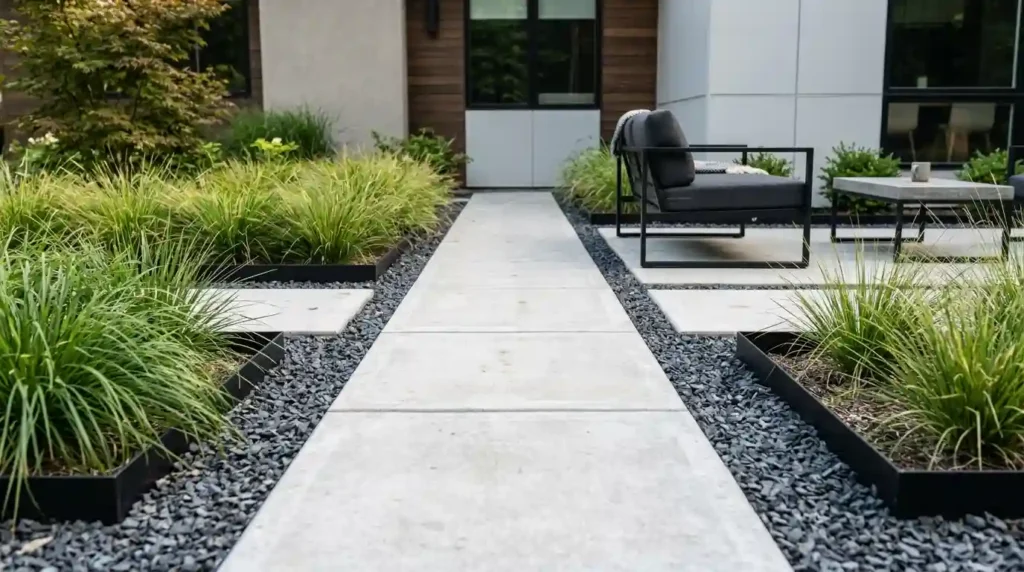
Dark gravel and large concrete slabs can give your patio a crisp, modern style. The key is to keep the material list short.
Start with a square or rectangular patio. Use charcoal gravel around light or medium-gray concrete pavers. Black metal edging will create a sharp line between the patio and nearby planting beds.
Choose furniture with straight lines and slim frames. Black, gray, or natural wood pieces will fit the simple color scheme.
Repeat one or two plants instead of adding many unrelated varieties. Ornamental grasses, clipped shrubs, or tall plants in matching containers can provide texture without making the area feel busy.
Dark gravel may become hot in strong sun. Consider adding shade if the patio receives direct afternoon light.
Practical tip: Limit the design to two or three main colors. This keeps a modern gravel patio calm and connected.
Soften Gravel With a Cottage-Garden Border
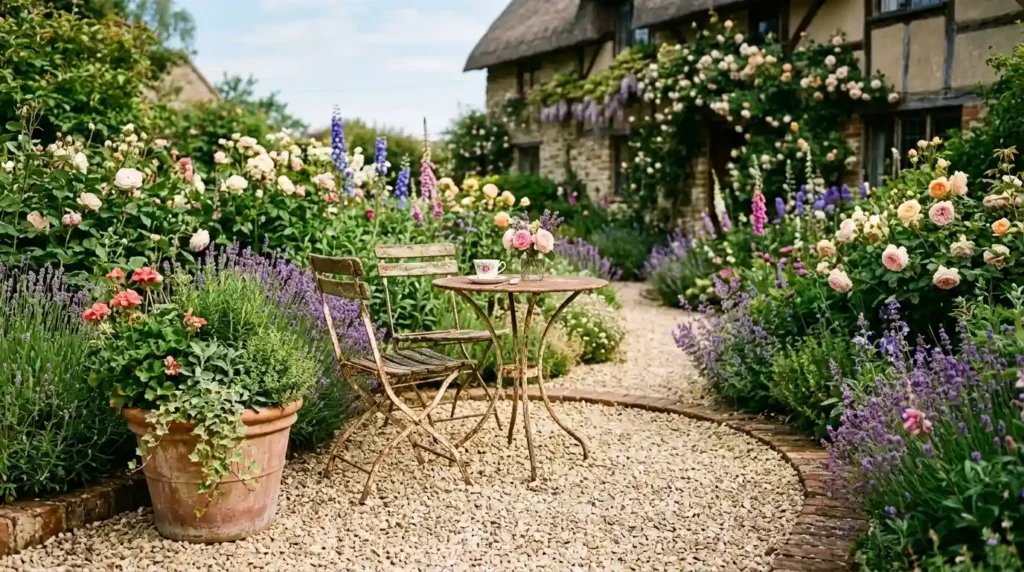
Gravel can feel warm and welcoming when you surround it with flowers. This style works well near older homes, garden sheds, and traditional brick paths.
Choose gravel with mixed cream, gold, gray, or brown tones. Create a gently curved border instead of a perfect square.
Plant flowers close enough to soften the edge, but keep walking routes clear. Lavender, roses, herbs, and other plants can work when they suit your soil and climate.
Terracotta pots, aged wood furniture, and weathered brick add character. The pieces do not need to match exactly. Their colors and materials should still feel related.
A cream pea gravel patio bordered by flowers can hold a small round table and two vintage-style chairs. Add a large terracotta pot as the main feature.
Keep in mind: Plants that drop many seeds, leaves, or petals may increase cleaning work.
Add Shade With a Pergola Over the Patio
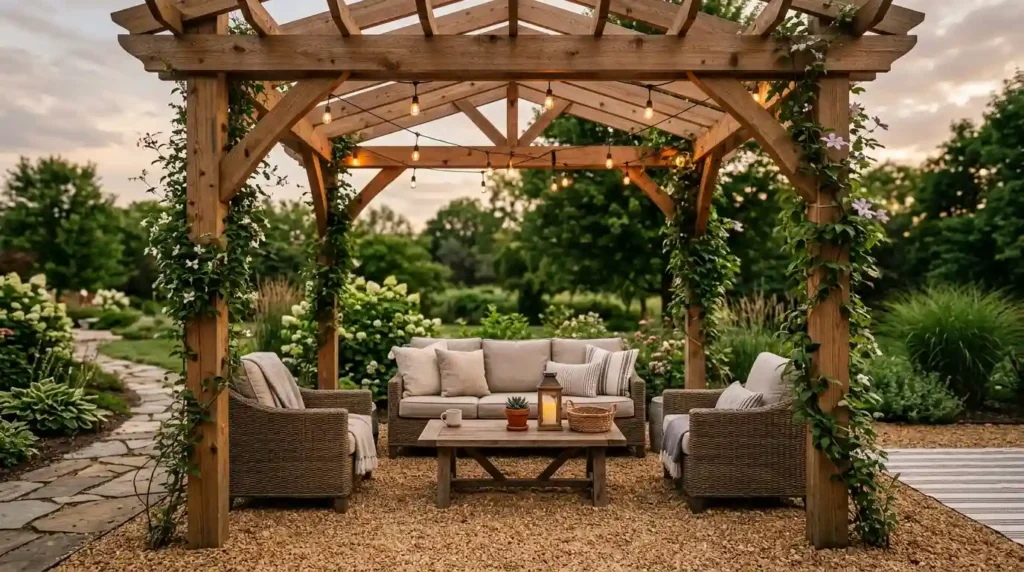
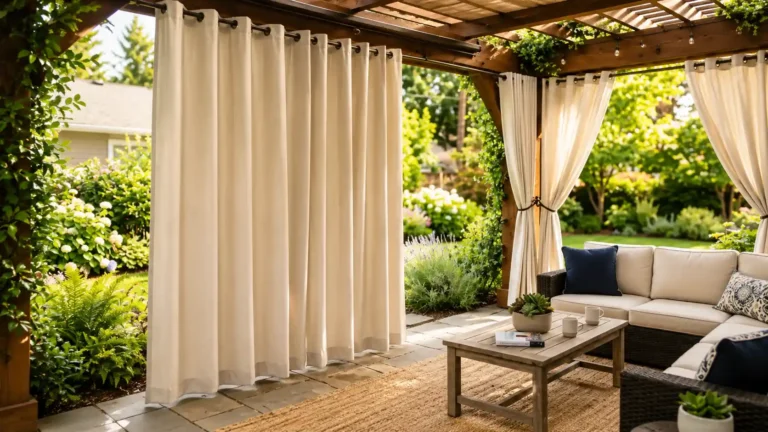
A pergola makes a gravel seating area feel like an outdoor room. It can provide partial shade while creating a place for lights or climbing plants.
Plan the pergola before spreading the decorative gravel. Its posts need secure footings below ground. Loose stone cannot support the structure safely.
Place pavers beneath a heavy sofa, dining table, or outdoor cabinet. This keeps the furniture level and reduces sinking.
You can add climbing plants if they suit your climate and the strength of the structure. A fabric shade panel may provide faster cover. Any outdoor fabric should be made for sun and rain exposure.
For a simple layout, build a wood pergola over tan gravel. Add an outdoor sofa, two chairs, and a low table. Use warm lights along the beams for evening seating.
Best for: Sunny patios that need shade and a clearer sense of enclosure.
Connect the Patio to a Gravel Garden Path
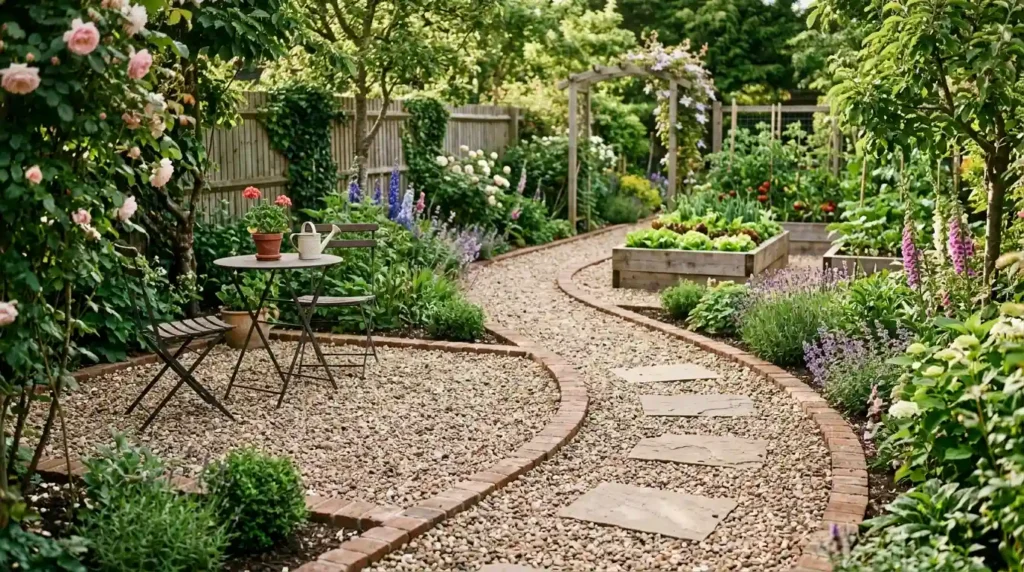
A patio feels more useful when it connects naturally to the rest of your yard. A matching path can lead to a gate, shed, garden bed, or back door.
Use the same gravel on the path and patio for a connected look. Repeat the edging material as well. Brick edging around the patio can continue along both sides of the path.
Make the path wide enough for comfortable walking. Add flat stepping stones along busy routes if the loose surface feels difficult underfoot.
A curved path creates a relaxed garden style. A straight path suits formal and modern yards. Direct the line toward a useful destination instead of letting it end without a clear purpose.
For example, a curved gravel garden path could run from the patio to a group of raised vegetable beds.
Practical tip: Keep the path and patio surface level where they meet so loose gravel does not collect at the entrance.
Use Raised Beds to Define the Patio
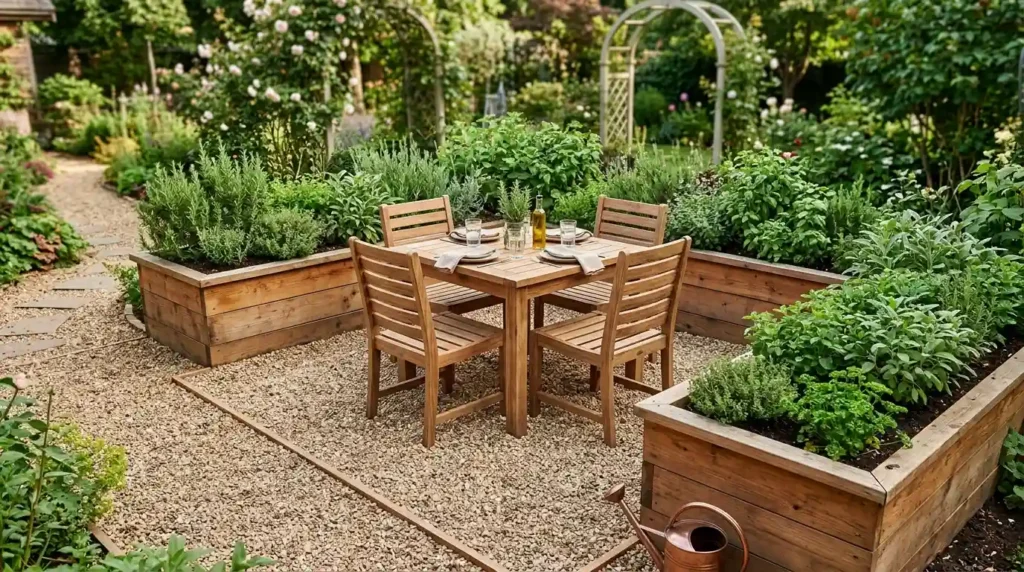
Raised garden beds can create a natural border around a gravel patio. They add color, privacy, and useful growing space.
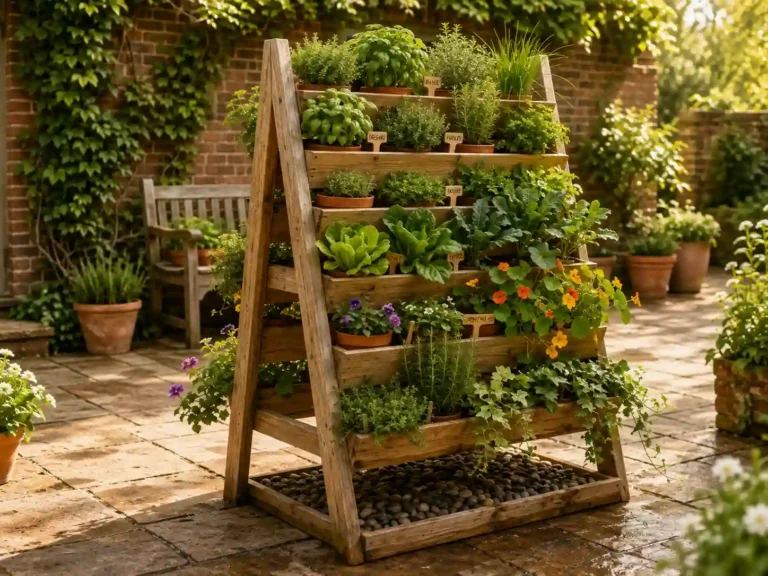
Place herb beds near an outdoor dining or cooking area. This keeps fresh herbs close while giving the patio a pleasant scent. Choose plants suited to the amount of sun the area receives.
Leave enough space to reach each bed without moving chairs or tables. Avoid placing wide beds against a wall unless you can reach them from both sides.
Match the bed material to another part of the patio. Cedar beds can work with wood furniture. Brick or stone beds may connect with matching edging.
Make sure soil and mulch cannot wash into the gravel. A raised lip or narrow divider can help keep the materials separate.
Example: Surround a compact dining patio with cedar herb beds while leaving one side open for access.
Join a Gravel Patio to a Wood Deck
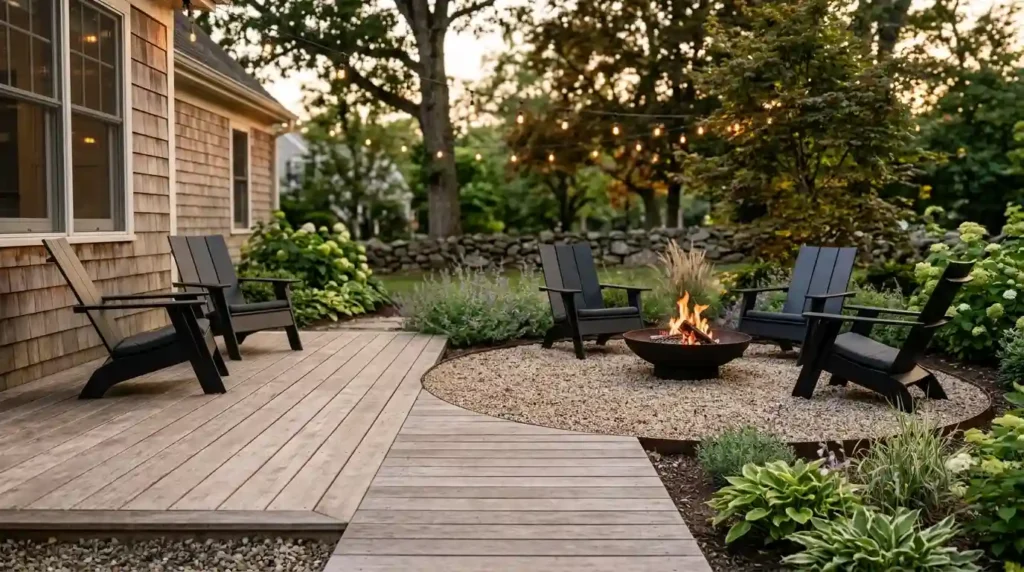
Using gravel beside a deck lets you create two outdoor zones without paving the whole yard. The deck might hold a dining table, while the gravel area provides casual seating.
Pay close attention to the point where the two surfaces meet. Avoid a sudden height change that could cause someone to trip. Use a clear step or a level transition.
Repeat colors across both areas to make them feel connected. For example, black chairs on the deck can match a black fire bowl on the gravel.
Direct water away from deck posts and wood supports. Gravel alone will not protect wood from moisture. The deck structure still needs proper drainage and suitable footings.
A low wood deck paired with a circular gravel seating area works well in a medium-size yard. Add a short path between the two if they cannot meet directly.
Best for: Homeowners who want separate dining and relaxing areas.
Block Unwanted Views With Screens and Tall Plants
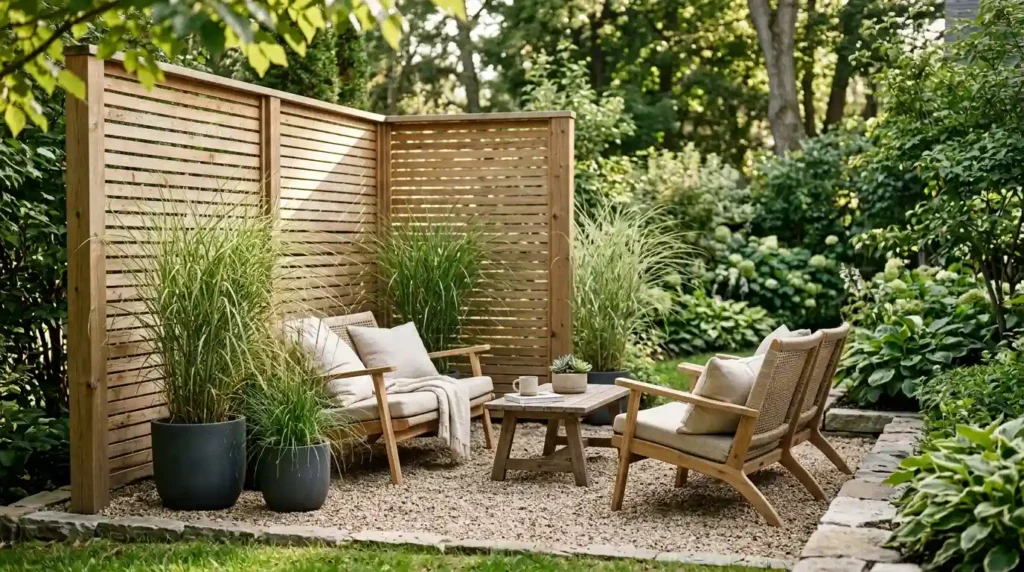
A patio will not feel relaxing if it is fully exposed to neighbors or a busy road. Screens and plants can create privacy without making the space feel closed.
Stand in the main seating position and find the exact views you want to block. This helps you place privacy features where they are useful.
Slatted wood screens reduce direct views while allowing some light and air through. Tall planters are a flexible choice for renters or small yards. You can move them if the layout changes.
Choose plants that fit the available space. Wide shrubs may make a narrow patio feel crowded. Plants that drop large amounts of fruit or leaves can also increase maintenance.
A private gravel patio could use cedar screens along one side and tall ornamental grasses in matching containers.
Practical tip: Block the problem view instead of surrounding the whole patio with solid panels.
Create a Low-Water Gravel Garden Patio
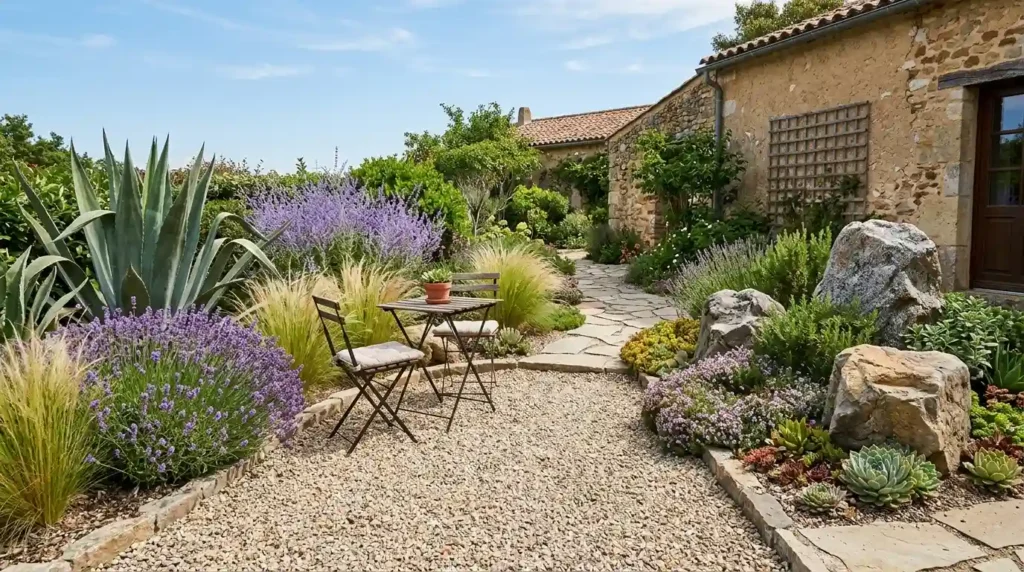
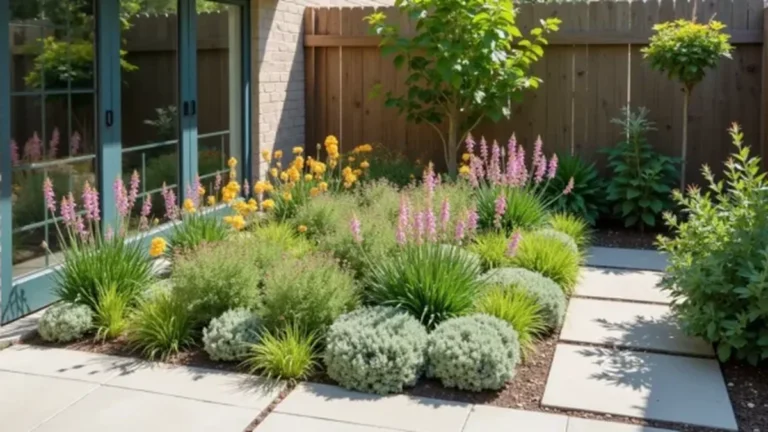
A gravel garden patio can reduce the amount of lawn around your seating area. It can also fit a low-water landscape when you choose plants suited to your region.
Select plants based on your local climate, soil, and sunlight. Lavender, thyme, ornamental grasses, and agave may work in some areas, but no plant is right for every yard.
Group plants with similar water needs. Keep planting soil separate from the main patio gravel so watering does not create muddy patches.
Large rocks or boulders can add height and break up a flat surface. Use a few well-placed stones instead of covering the area with many unrelated materials.
Pale gravel can create a bright, dry-garden look. Keep in mind that reflected heat may affect nearby plants during hot weather.
Best for: Sunny yards where homeowners want less lawn and fewer high-water plants.
Build a Sunken Gravel Conversation Area
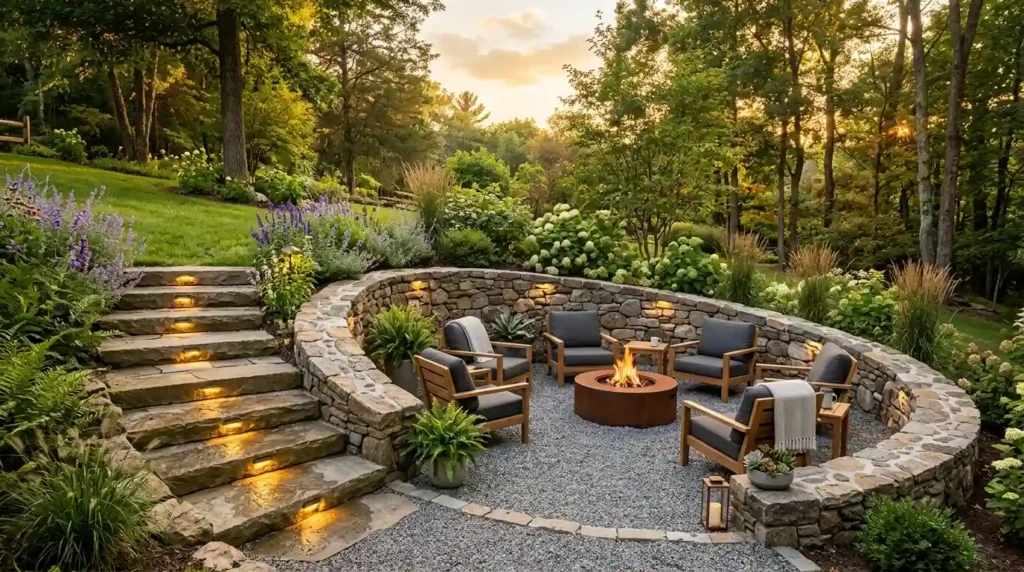
A slightly lowered patio can feel sheltered and separate from the rest of the yard. It works well on a natural slope or in a large open space.
Plan drainage before digging. Water collects at the lowest point, so a sunken gravel patio can flood if it has no safe outlet.
Use clear, stable steps to enter the space. Add low outdoor lights near each level change so people can see the edges after dark.
Stone seat walls can hold the surrounding soil while providing extra seating. However, retaining walls need the right base, drainage, and construction method.
Major excavation can affect soil stability and buried utility lines. Contact the local utility-marking service before digging. Hire a qualified professional if the design requires tall retaining walls or major changes to the yard’s grade.
Keep in mind: This idea needs more planning than a simple patio built on level ground.
Build a Simple DIY Gravel Patio on a Budget
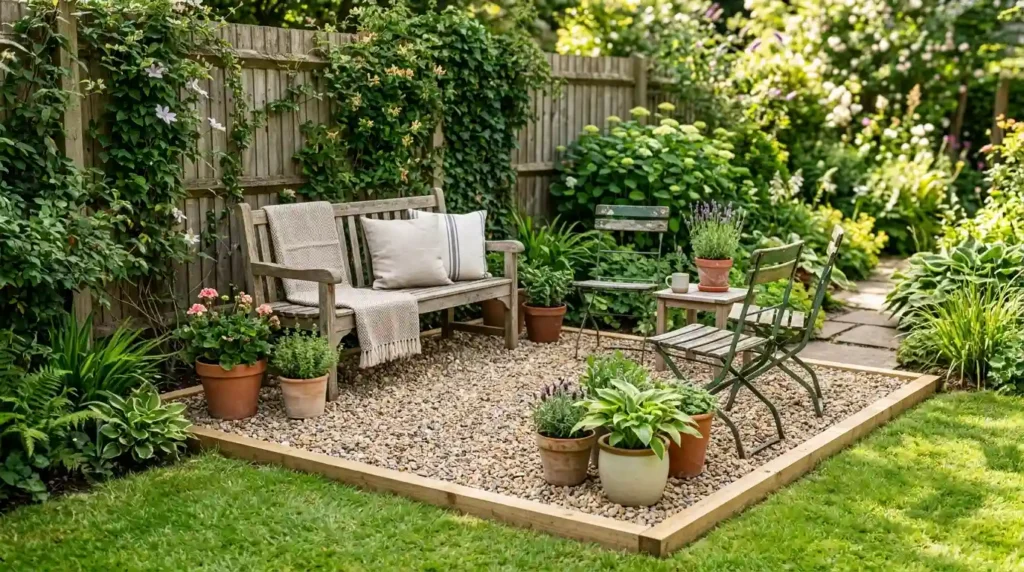
A basic square or rectangle is usually the easiest shape for a first DIY gravel patio. Straight edges simplify measuring, digging, and installing the border.
Begin by measuring the length and width. Multiply those numbers to find the area in square feet. For example, a 10-by-10-foot patio covers 100 square feet.
Remove grass and loose organic matter. Prepare the ground, install suitable edging, and add a compacted base. Spread the decorative gravel in an even layer based on the product and site needs.
You can rent a plate compactor instead of buying one. Secondhand chairs, a basic wood bench, and reused planters can also lower the final cost.
To estimate material volume, multiply the patio area by the planned depth. Make sure all measurements use the same unit. Convert the total to cubic feet or cubic yards as required by your supplier.
Coverage changes with gravel size, base conditions, and compaction. Ask the supplier to confirm your calculation before placing an order.
A simple material list may include:
- Stakes and string
- Shovel and rake
- Landscape edging
- Base aggregate
- Decorative gravel
- Hand tamper or plate compactor
- Level and wheelbarrow
How Can You Keep a Gravel Patio Neat?
A gravel patio is low-care, but it is not free from maintenance. Small, regular tasks are easier than repairing the whole surface later.
Rake the patio when you notice thin spots or small piles. Pull scattered stones away from the lawn and return them to the patio. Check the edging if gravel keeps escaping from the same area.
Remove weeds while they are small. Landscape fabric may help separate the gravel from the soil, but it cannot stop every weed. Seeds can settle in dust and organic matter above the fabric.
Leaves are easier to remove before they break down. Use a light rake or a low-powered leaf blower. Strong air can scatter pea gravel and other small stones.
Check the surface after heavy rain. Fill low spots and look for signs of moving water. Deep channels or repeated puddles may point to a drainage problem.
Furniture can also disturb the surface. Add wide pads beneath narrow legs or place the furniture on flat pavers.
A quick care routine can take only a few minutes:
- Pick up large sticks and leaves.
- Pull visible weeds.
- Rake gravel back into low spots.
- Return loose stones from nearby beds or grass.
- Check the edging for movement.
Tree-covered patios will need more frequent cleaning than open patios. However, shade from those trees may make the space more comfortable.
Which Gravel Patio Mistakes Should You Avoid?
The part beneath the gravel has a major effect on the final patio. Decorative stone placed directly over soft soil may sink, mix with mud, or develop uneven spots.
Do not skip the base just because it will be hidden. The right base depends on your soil, climate, drainage, and planned use.
Weak edging is another common problem. Thin or poorly secured borders may bend when people walk near them. Install an edge made to handle the weight and movement of the gravel.
Choose the surface for the people who will use it. Deep, rounded gravel can be difficult for wheelchairs, walkers, bicycles, and rolling carts. A firm path or paved section may provide better access.
Do not ignore runoff. Water should move away from the house without washing gravel into the lawn. Watch the site during rain before building.
Narrow furniture legs may sink into loose stone. Use furniture with wide feet, add pads, or place pavers under each leg.
Fire features need separate safety planning. Follow the product instructions and local rules. Do not place a fire pit based on appearance alone.
Good preparation will not remove every maintenance task. It will make the patio more stable, easier to clean, and less likely to need major repairs.
Choose a Gravel Patio That Fits Your Yard
The best gravel patio ideas balance appearance with daily use. You can create a small seating corner, a dining space, a fire-pit circle, or a shaded area beneath a pergola. Gravel also pairs well with brick, pavers, wood decks, and garden plants.
Whatever style you choose, pay close attention to the base, drainage, edging, and furniture placement. These details help the surface stay safe and neat.
Measure your space and decide how you want to use it. Then save two or three designs that match your home, budget, and maintenance needs. If you are building a DIY gravel patio, begin with a simple shape and confirm your material amounts before ordering.