15 Patio Ideas With Fire Pit for Cozy Nights
A fire pit can make your patio feel warm, social, and useful after sunset. Yet picking a fire pit is often the easy part. The harder task is deciding where it should go, what should sit around it, and which surface can handle the heat.
These patio ideas with fire pit layouts cover small corners, large entertainment areas, gravel patios, paver designs, and poolside lounges. You will also find practical fire pit seating ideas for different budgets and yard sizes.
Before you start, measure your space and check local fire rules. Read the fire pit manual as well. Required clearances can change based on the fuel, model, surface, and nearby structures.
Center a Round Fire Pit for Easier Conversation
Best for: Medium and large patios
Main benefit: Everyone can see and speak to each other
Watch for: A circle may use more floor space than a straight layout
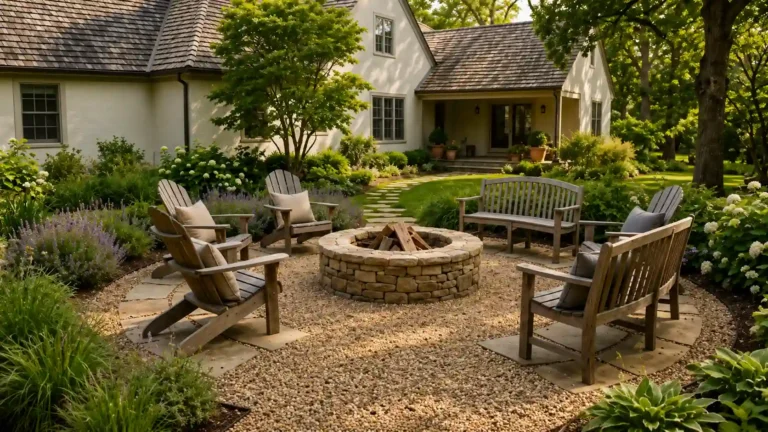
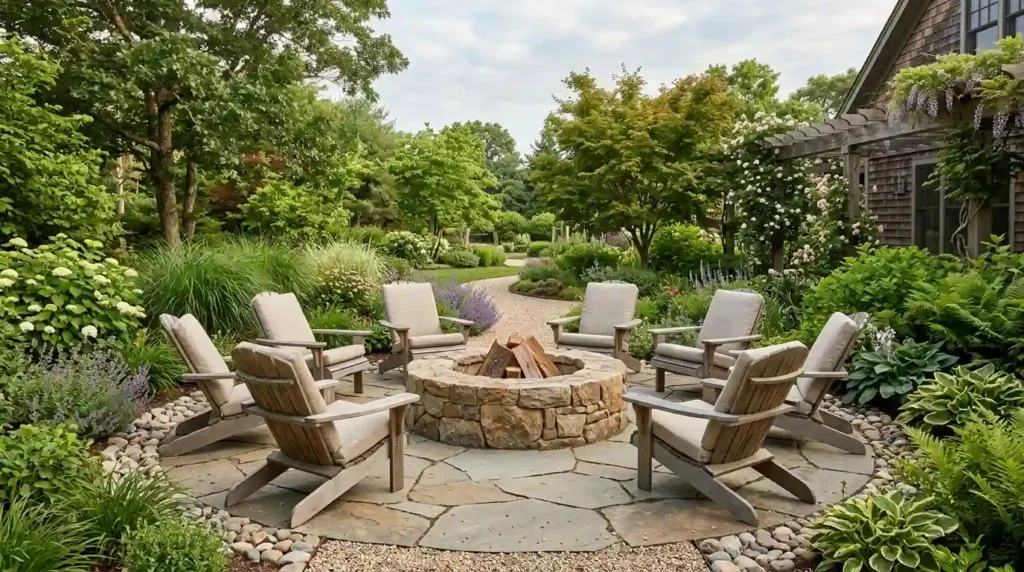
A round fire pit works well when conversation is your main goal. Each chair faces the center, so no guest feels left out.
Repeat the circular shape in the patio surface. You could install round pavers, create a gravel circle, or add a curved stone border. This makes the fire pit look like part of the design instead of an item placed in the middle.
Four Adirondack chairs create a simple setup for a family. A larger circle may hold six movable chairs. Leave openings between a few chairs so people can enter without stepping close to the fire.
Keep a clear walking path behind the seats. Chairs should remain within comfortable view of the flames while meeting the clearance listed in your fire pit manual.
This round fire pit patio works best when you have enough room for chairs and a safe traffic path.
Build a Sunken Area That Feels Private
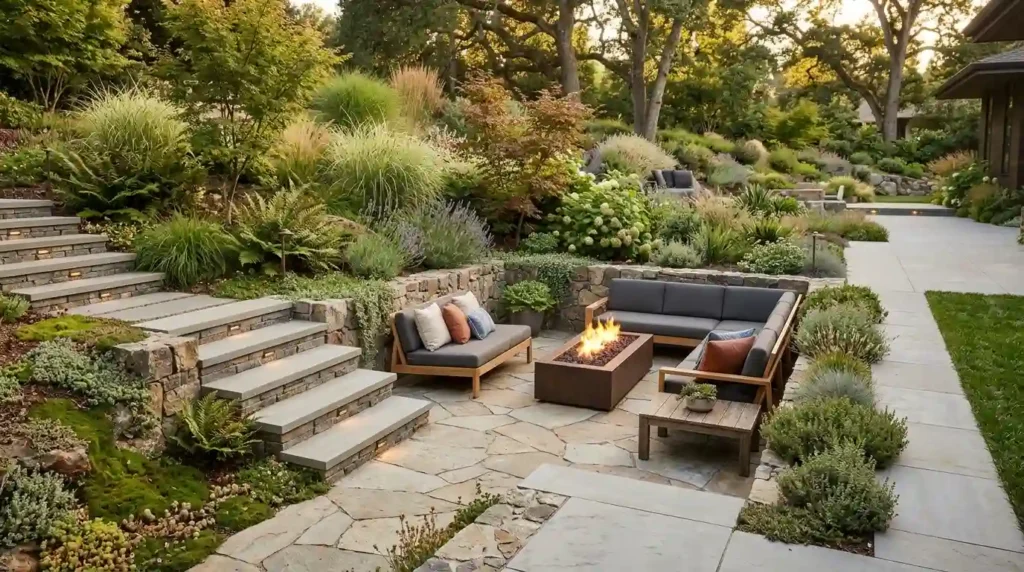
Best for: Sloped yards and modern patios
Main benefit: Creates a sheltered conversation zone
Watch for: Drainage and safe steps must be planned early
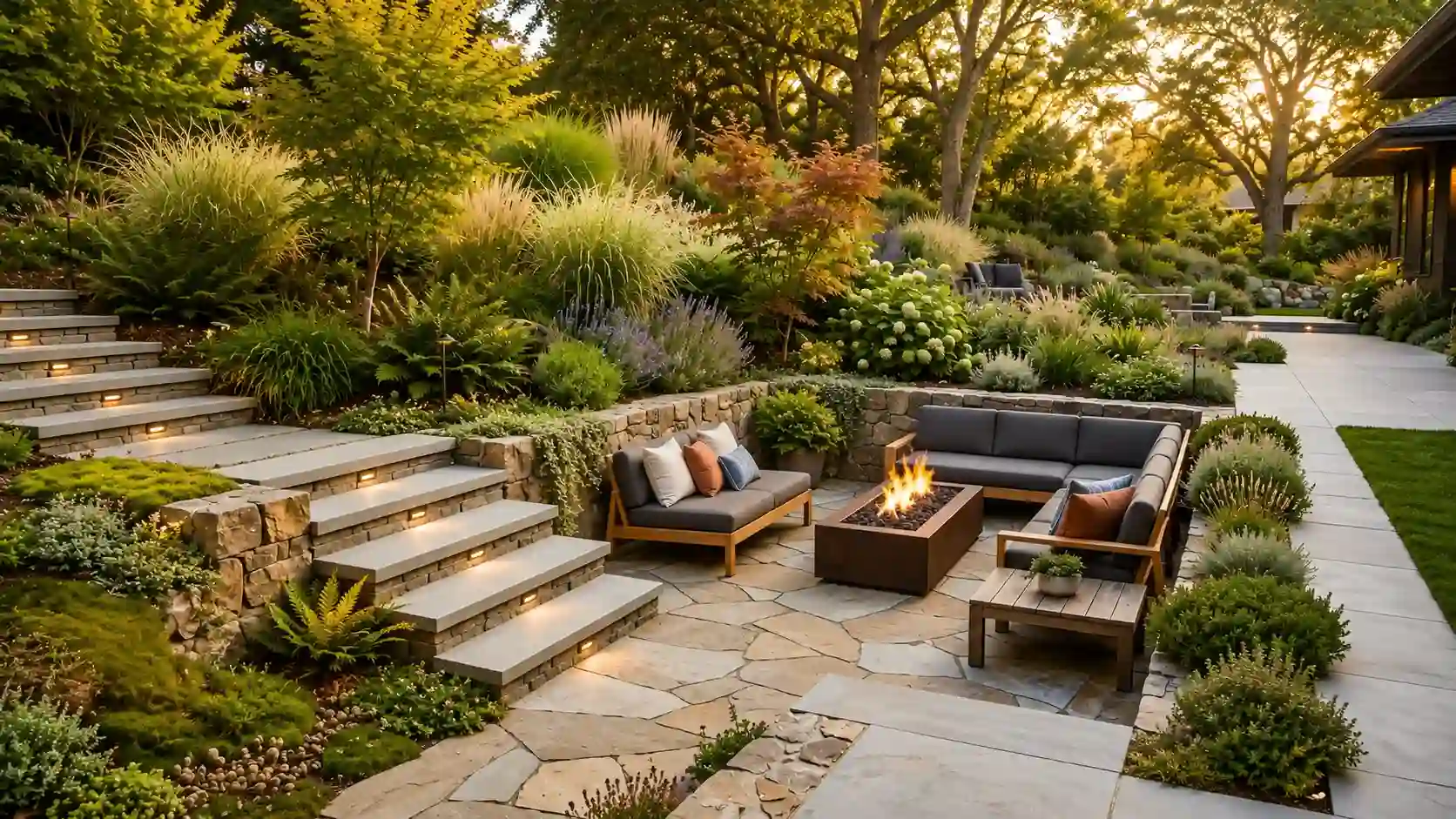
A sunken fire pit patio can feel like an outdoor room. Lowering the floor by one or two steps separates the lounge from the rest of the yard without adding walls.
Built-in benches can follow the edge of the lowered space. Add firm back cushions and outdoor seat pads for comfort. Storage beneath the benches can hold furniture covers, but keep fuel and flammable items in a safe place.
Water is the main issue with this design. The low area needs a planned drainage system so rain does not collect around the fire feature. Ask a qualified contractor to assess the grade before construction begins.
Add low step lights to mark each change in level. Keep at least one clear exit open, and do not let extra chairs block it.
A sunken design can look impressive, but it is not a quick weekend project. Plan drainage, gas lines, electrical work, and access before digging.
Use Gravel to Build a Fire Pit Patio on a Budget
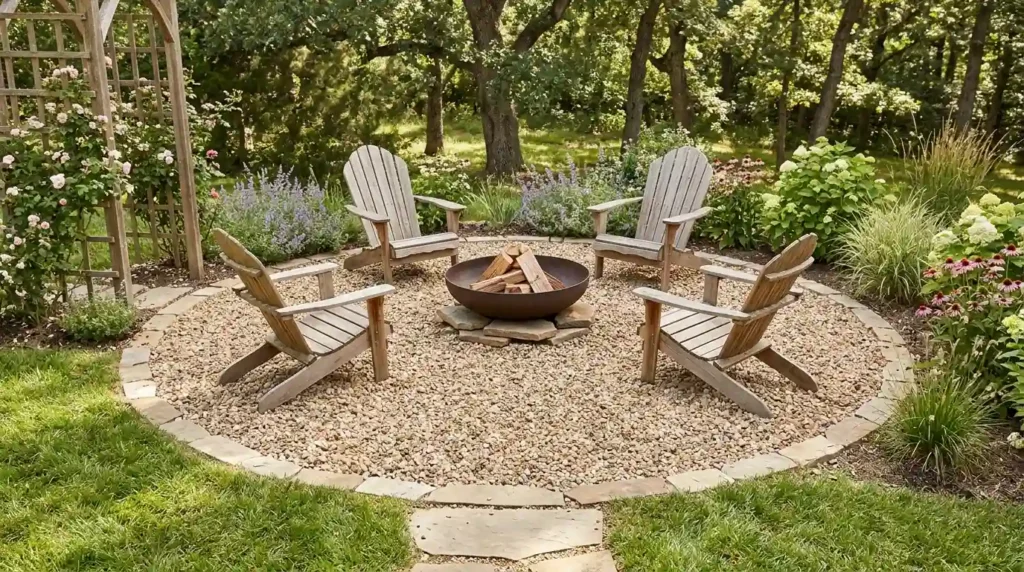
Best for: DIY projects and informal yards
Main benefit: Costs less than many permanent hardscapes
Watch for: Loose gravel can shift under chair legs
A gravel patio with a fire pit is one of the simpler ways to create a defined gathering area. It works well in rustic, cottage, and casual gardens.
Start with a firm, level base. Add edging around the patio to keep the gravel from spreading into the lawn. The right base depth and preparation will depend on your soil and chosen material.
Pea gravel feels smooth but moves easily. Crushed stone locks together better and may provide a firmer surface. Compacted decomposed granite can create a more stable floor, though availability varies by location.
Place broad pavers beneath chair legs if they sink or wobble. Keep loose mulch and dry leaves away from the fire area.
A basic budget fire pit patio could include a steel fire ring, compacted gravel, stone edging, and four secondhand chairs. You can add better seating and lighting later without rebuilding the whole space.
Turn a Small Corner Into a Two-Person Fire Area
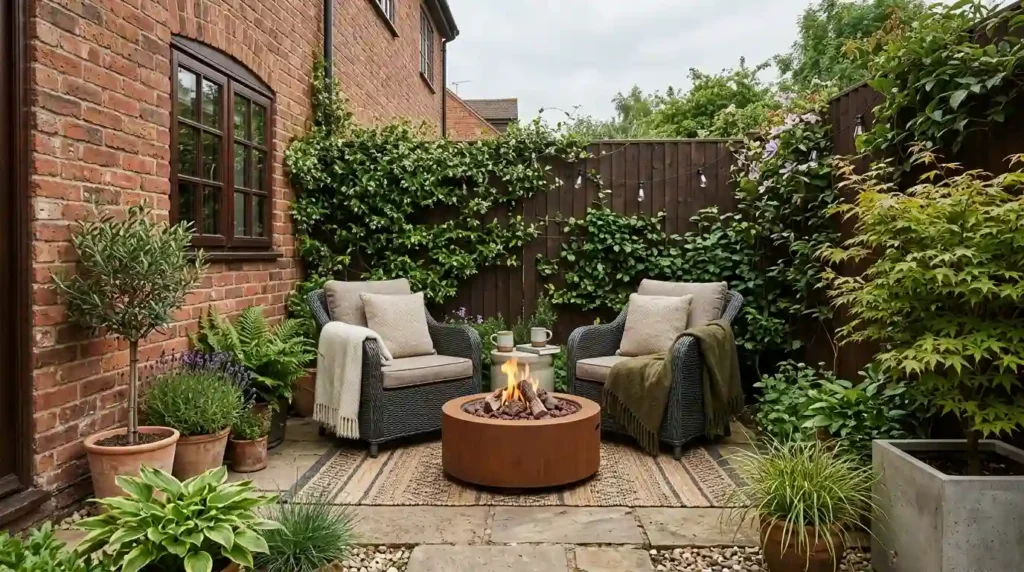
Best for: Small patios and close-set homes
Main benefit: Uses an overlooked corner
Watch for: Nearby walls and fences may limit safe placement
Small patios need careful choices. A large wood-burning bowl can crowd the floor and send smoke close to doors, windows, or neighbors.
Consider a compact gas fire bowl or an approved tabletop unit instead. Choose a product made for outdoor use and follow its manual. Never assume a small flame means fewer safety rules.
A narrow bench can provide two or three seats without filling the patio. Armless chairs also use less space than wide lounge chairs. Add a slim side table for drinks so guests do not place glasses near the flame.
An 8-by-10-foot patio might hold a two-seat fire zone at one end and a small café table at the other. Use tall planters or a narrow screen for privacy, but keep them outside the stated clearance area.
These small patio ideas with fire pit layouts work best when every item has a clear purpose. Keep the route to the house open.
Match a Fire Pit to a Paver Patio
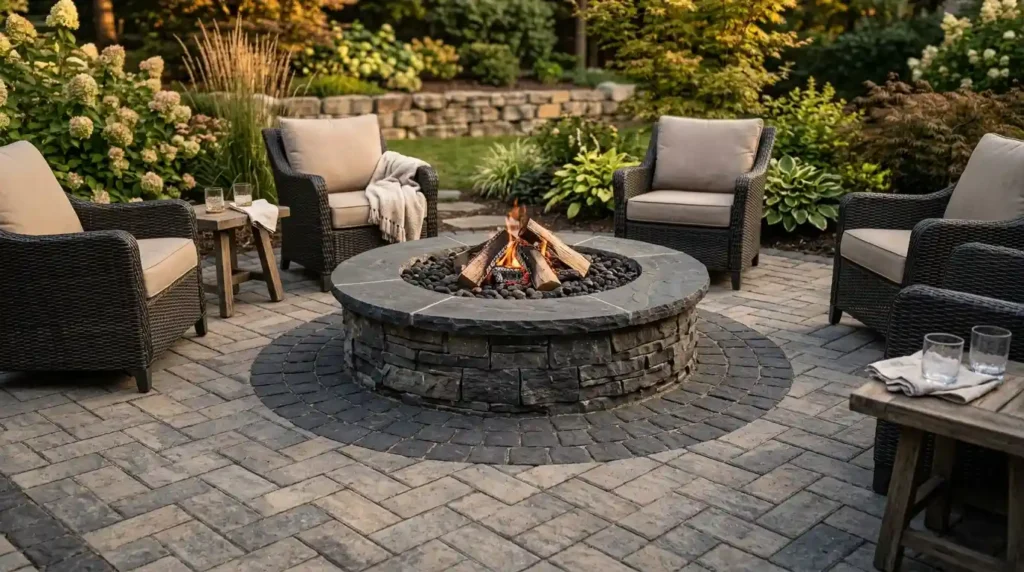
Best for: Finished patios and permanent gathering areas
Main benefit: Creates a clean, connected appearance
Watch for: Some paving products can be damaged by high heat
A paver patio gives you many ways to mark the fire area. You can change the paving pattern, add a darker border, or create a large circle within a square patio.
For a built-in pit, choose blocks and inserts approved for that use. Regular concrete products may crack or weaken when exposed to intense heat. A contractor or product maker can confirm which materials are suitable.
A portable fire bowl gives you more flexibility. Place it on the heat-safe base required by the manual. Do not assume that every stone or concrete surface can take direct heat.
If you plan to use natural gas, decide where the line will run before laying the pavers. This prevents you from lifting finished sections later.
Among backyard fire pit patio ideas, pavers offer one of the widest style choices. They can suit a rustic ring, a classic brick design, or a sharp modern layout.
Pair a Long Fire Table With a Sectional
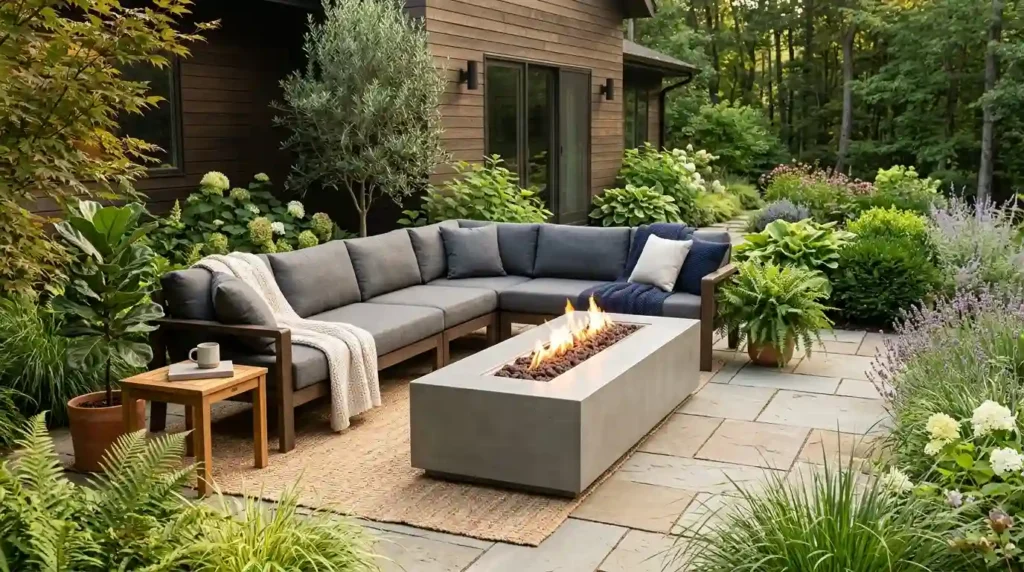
Best for: Modern patios and gas fire features
Main benefit: Fits naturally with straight furniture lines
Watch for: Poor spacing can make the seats feel too hot
A rectangular fire table pairs well with an outdoor sectional. Its long shape gives several people a clear view of the flame without forcing the furniture into a circle.
Set the fire table parallel to the sectional’s longest side. Add one or two lightweight chairs across from it when you need extra seats. These chairs can be moved when the patio feels crowded.
Choose a table that matches the scale of the sectional. A tiny unit may look lost. A table that is too wide can leave little room for knees and walking.
Many fire tables use propane or natural gas. They are easy to start and produce less smoke than wood, but each fuel has its own installation and storage rules. A licensed professional may be needed for a fixed gas line.
A fitted hard cover can turn some models into a regular table after the unit has cooled. Confirm that the cover is approved for your model before using it.
Use Adirondack Chairs for a Relaxed Camp Feel
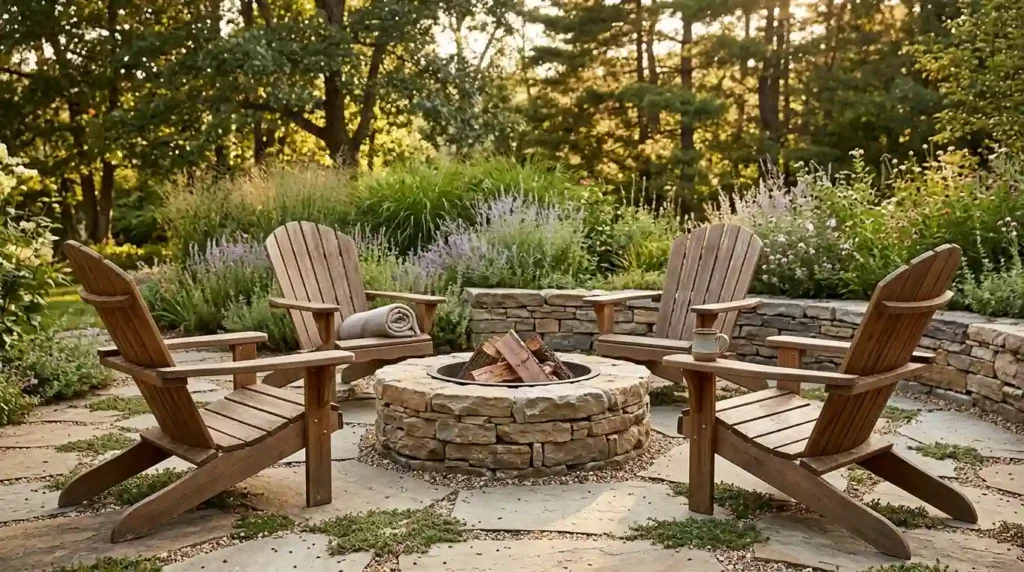
Best for: Rustic patios and casual family spaces
Main benefit: Creates a familiar, welcoming look
Watch for: Deep chairs need more floor space
Adirondack chairs are a classic choice around a rustic patio fire pit. Their angled backs invite guests to settle in, while their broad arms can hold small items.
Arrange four chairs around a compact fire ring for a family setup. Use six if the patio is large enough to keep safe space around the fire and clear paths between seats.
Do not pack the chairs into a closed circle. Leave two wider gaps so people can enter and exit without squeezing past the flames. Add small side tables in these openings for drinks, phones, and lanterns.
Wood chairs develop a natural worn look but need care. Composite chairs often weigh more and may be easier to clean. Pick the option that fits your weather and storage space.
Cedar, black, forest green, and muted mixed colors suit a camp-style patio. Store cushions and throws indoors when rain is expected.
Add a Curved Seat Wall to Save Floor Space
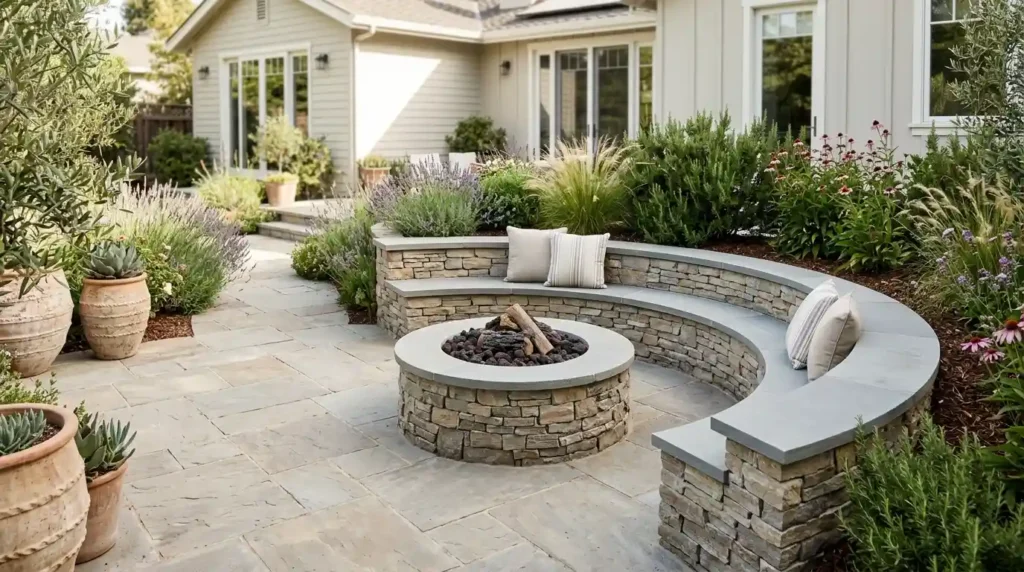
Best for: Patios that need extra guest seating
Main benefit: Provides seats without filling the area with chairs
Watch for: A full circular wall can restrict movement
A low seat wall gives your patio structure and creates extra places for guests to sit. It can also help define the fire area without adding a tall visual barrier.
A semicircular wall often works better than a complete ring. The open side keeps the area easy to enter and gives you space for two movable lounge chairs.
Cap the wall with a smooth material that feels comfortable and does not have sharp edges. Outdoor cushions can soften the seat, but they should be easy to carry inside.
Check the fire feature’s required distance from walls and other surfaces. A masonry wall may resist heat better than wood, but that does not mean it can sit anywhere.
Built-in fire pit seating is useful during parties because guests can sit without bringing out many spare chairs. Add a few movable seats for people who want back support or more distance from the heat.
Separate the Fire Lounge From the Outdoor Kitchen
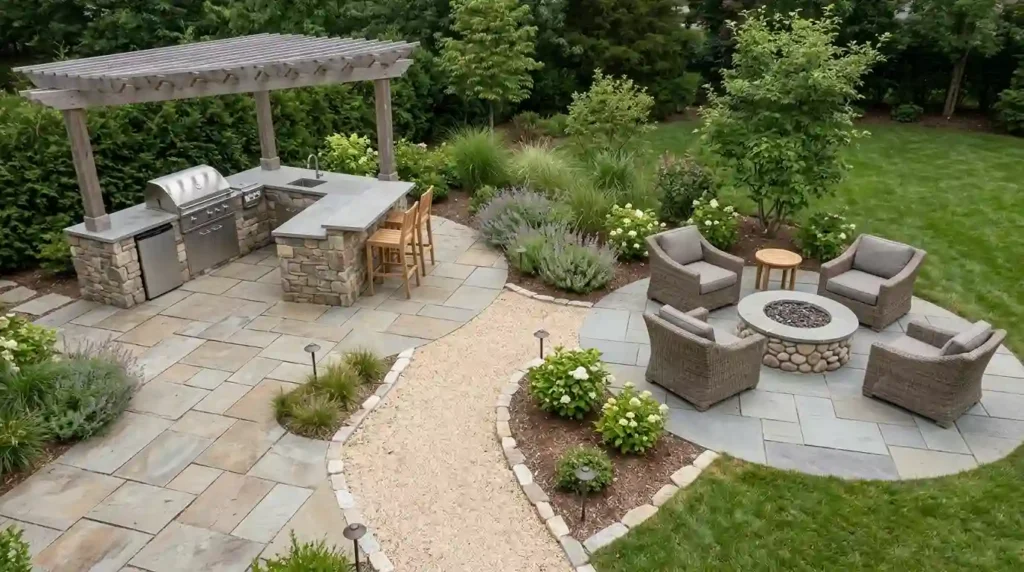
Best for: Large patios used for entertaining
Main benefit: Keeps cooking and relaxing from competing for space
Watch for: Smoke and guest traffic can disrupt food preparation
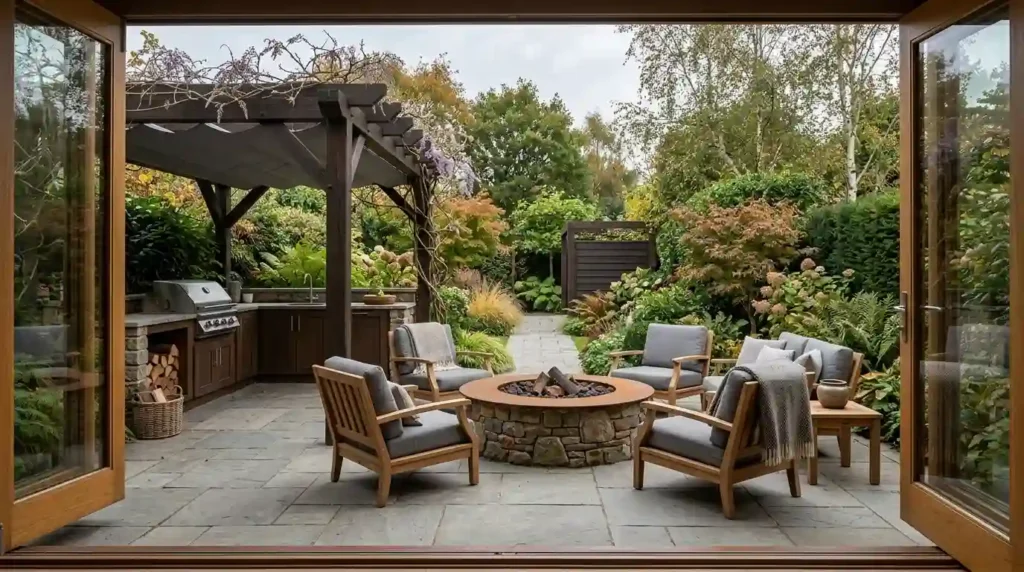
An outdoor kitchen and fire pit can share one patio if each has its own zone. Start by studying how people will move between the house, grill, table, and lounge.
A practical order may be grill, counter, dining table, and then fire lounge. This keeps seated guests away from hot cooking surfaces. It also gives the cook room to work without people crossing behind them.
Repeat one or two materials in both zones. For example, the fire pit could use the same stone as the kitchen base. A narrow serving ledge can create another visual link.
Place a wood-burning pit where smoke is less likely to blow across the grill or dining table. Wind changes, so test the site at different times before building.
Store propane cylinders, firewood, and other fuel as directed by local rules and product instructions. Keep fuel away from cooking heat and open flames.
Place a Pergola Beside the Fire Pit
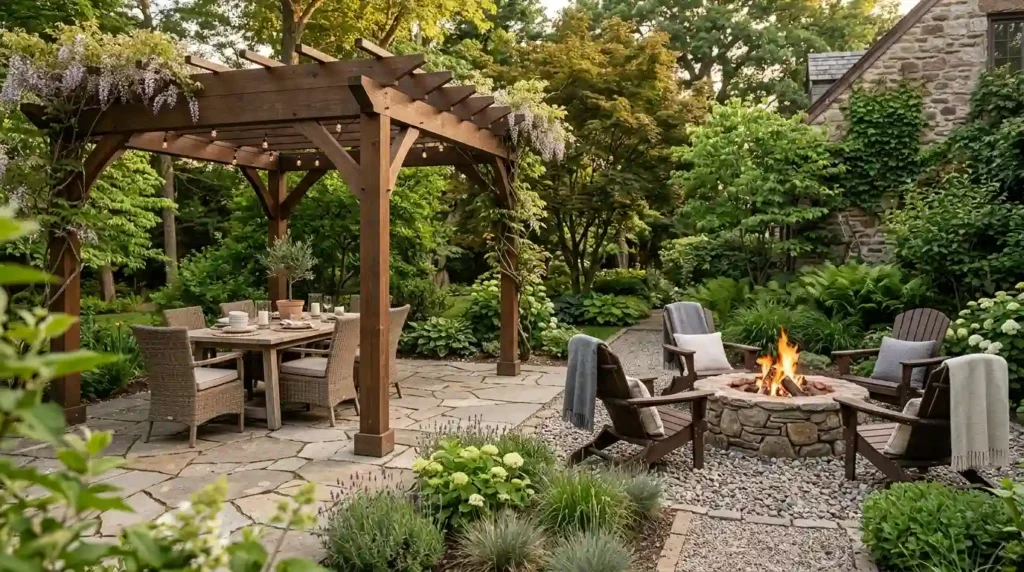
Best for: Patios that need shade and visual structure
Main benefit: Creates separate dining and fire zones
Watch for: Flames, heat, and smoke can make covered placement unsafe
A pergola can make a patio feel more complete, but open flames and overhead structures need careful planning.
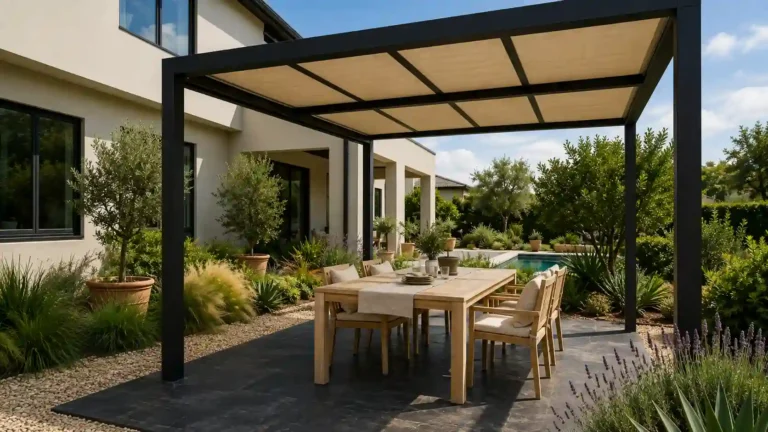
One safer layout is to place the pergola over a dining or seating zone beside the fire pit. The fire area remains open to the sky, while the pergola provides daytime shade nearby.
If you want a gas fire feature beneath a pergola, check the appliance instructions first. Ask the manufacturer whether the model is approved for that setting. You must also check roof height, ventilation, nearby fabrics, and local codes.
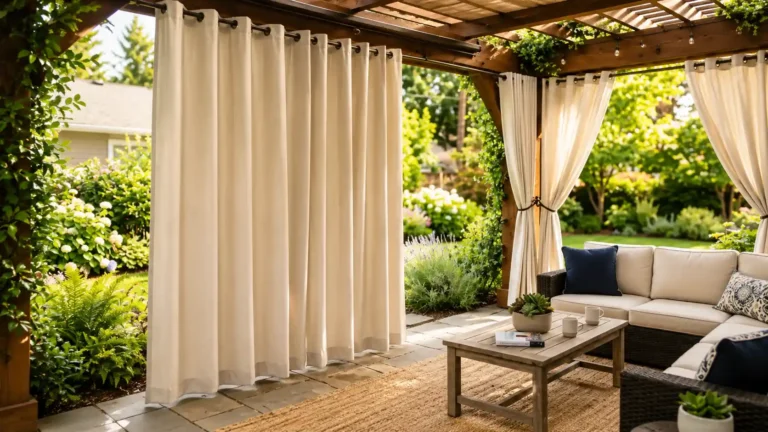
Keep climbing plants away from heat. Dry stems and leaves can burn quickly. Outdoor curtains should remain secured so wind cannot push them near a flame.
When the product instructions are unclear, place the fire pit outside the covered area. You can still connect both zones with matching pavers, furniture colors, and lighting.
Create a Poolside Fire Lounge Away From Wet Traffic
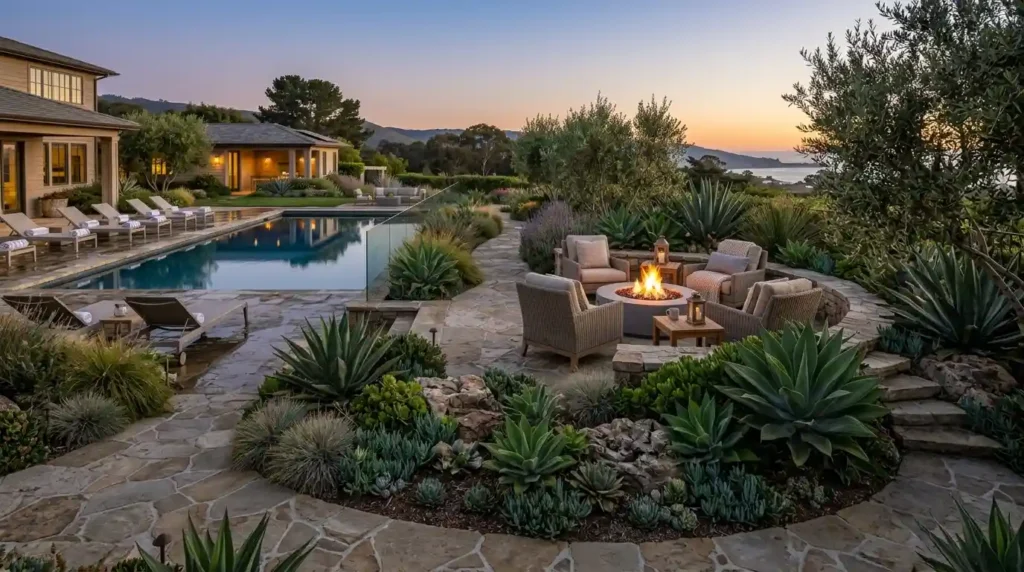
Best for: Large pool patios
Main benefit: Extends poolside use into the evening
Watch for: Wet surfaces and fire equipment require extra care
A poolside fire lounge can give swimmers a warm place to sit after sunset. The best location is away from the main route between the pool, steps, towels, and house.
Use slip-resistant paving around the lounge. Water on smooth stone can create a fall risk, especially when guests are moving around in low light.
A long gas fire feature can sit behind a row of low lounge chairs. This keeps it away from the busiest pool edge and helps preserve the view across the water.
Protect gas controls, electrical parts, and ignition systems from splashes. Follow the product maker’s rules for outdoor and poolside placement. A licensed installer can help with fixed gas and electrical connections.
Include dry storage for cushions and towels. Keep loose fabric away from the flame.
A pool patio with fire pit seating can look calm and polished, but clear walking routes matter more than perfect symmetry.
Add Privacy Without Trapping Heat or Smoke
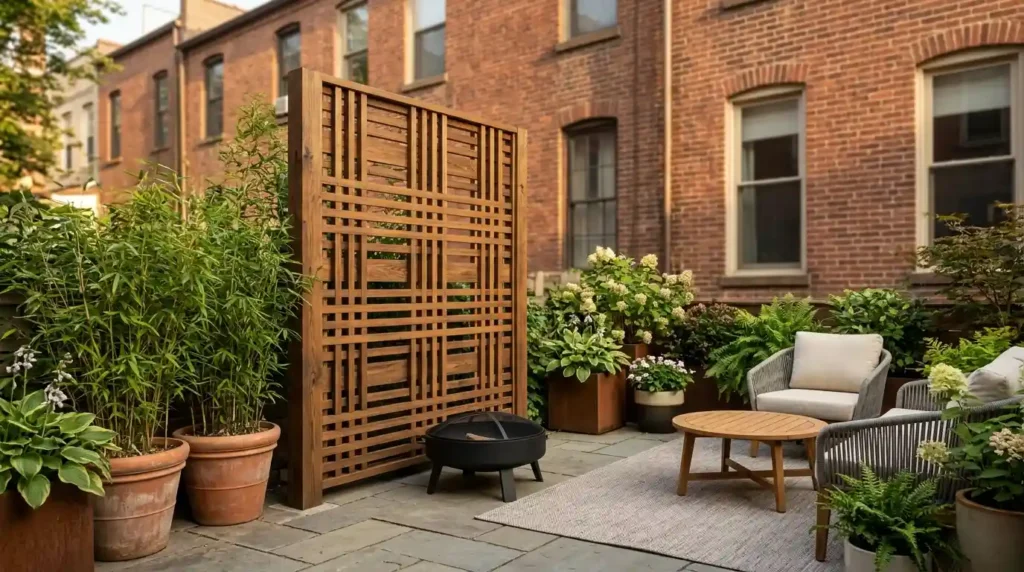
Best for: Urban yards and patios near neighbors
Main benefit: Makes the seating area feel less exposed
Watch for: Solid screens may block airflow or sit too close to heat
Start by finding the exact view you want to block. You may need one screen beside a neighbor’s window rather than a full wall around the patio.
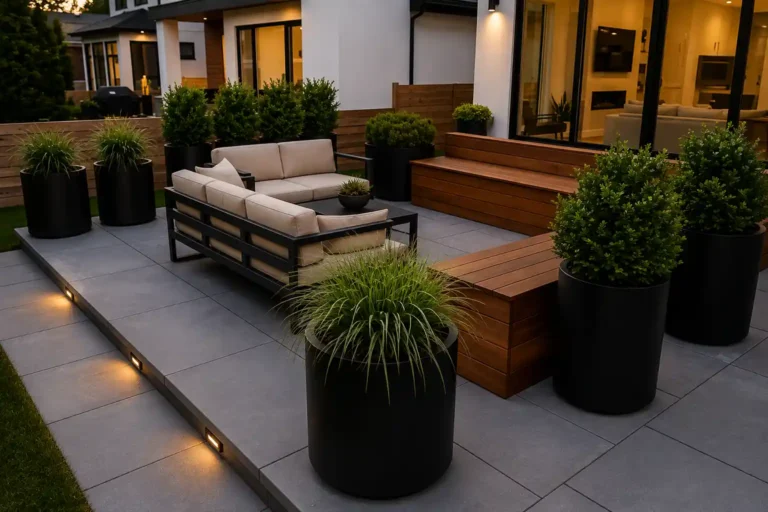
Slatted screens can provide privacy while allowing some airflow. Masonry panels may suit a modern yard. Tall planters work well when permanent construction is not possible.
Plants can soften the edges of a private fire pit patio. Try a mix of upright shrubs, ornamental grasses, and lower plants. Check their mature size so they do not grow into the fire clearance zone.
Avoid placing dry grasses, wood screens, or overhanging branches near open flames. Even green plants can collect dead leaves and stems.
Do not seal the entire area with solid walls. Smoke and heat need room to escape. A few well-placed screens often provide enough privacy without making the patio feel boxed in.
Use Low Lighting So Guests Can Move Safely
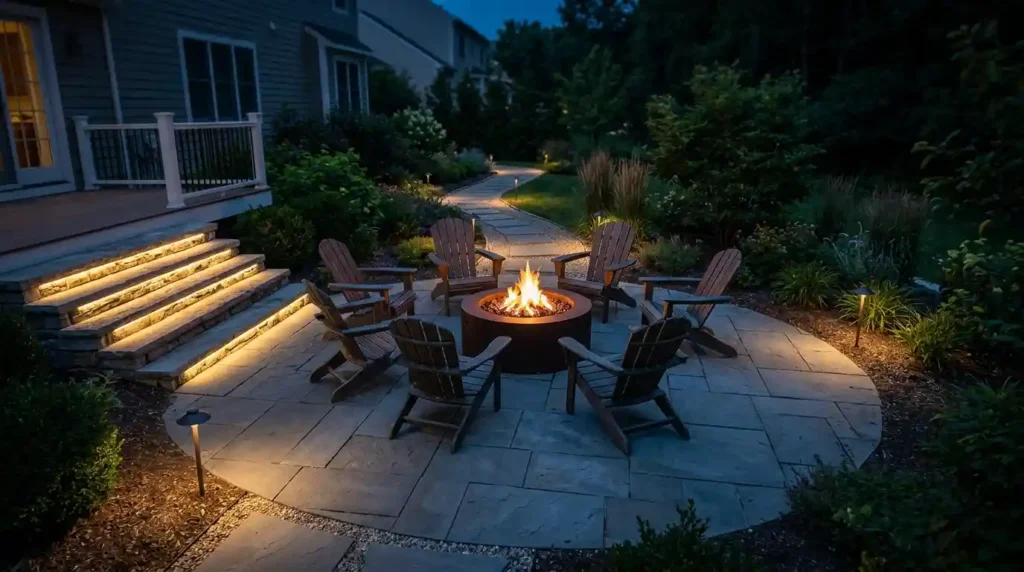
Best for: Patios used after dark
Main benefit: Marks steps and paths without hiding the firelight
Watch for: Bright fixtures can cause glare
The fire should remain the main visual feature. You still need enough light for guests to see steps, chair legs, and changes in the paving.
Start with the entrance path. Add shielded path lights that direct light at the ground instead of into people’s eyes. Recessed step lights can mark raised or sunken areas.
Place battery lanterns on side tables for a softer glow. Keep them far enough from the fire and choose sturdy models that will not tip easily.
Avoid loose electrical cords across walking routes. Use outdoor-rated equipment for permanent fixtures and hire a qualified electrician when needed.
Warm, low lighting usually feels more comfortable than bright white floodlights. Sit in every chair after dark and check for glare. A fixture that looks fine while standing may shine directly into someone’s eyes when seated.
Good fire pit patio lighting helps people move safely while keeping the space calm.
Prepare the Patio for More Than One Season
Best for: Homeowners who use outdoor space often
Main benefit: Makes the patio more useful across the year
Watch for: A fire pit cannot solve every weather problem
A year-round fire pit patio needs more than a strong flame. Wind, rain, heat, falling leaves, and storage all affect comfort.
Use a screen or planted buffer to reduce common winds, but do not block the ventilation needed for the fire. Keep any screen outside the required clearance.
Choose quick-drying cushions and frames that suit your climate. Add shade for hot months, then store umbrellas or fabric covers safely when the fire is active.
Keep a weatherproof storage box nearby for furniture covers. Blankets are best stored indoors so they stay clean and dry.
Check drainage after heavy rain. Remove leaves before lighting the fire. Inspect gas connections, burner openings, and protective covers as directed by the manufacturer.
A fire feature can take the chill off a cool evening, but it is not a full heating system. Very cold, wet, or windy weather may still make the patio uncomfortable.
Choose a Portable Fire Pit for a Flexible Patio
Best for: Renters and changing patio layouts
Main benefit: Can be stored or moved after cooling
Watch for: “Portable” does not mean safe on every surface
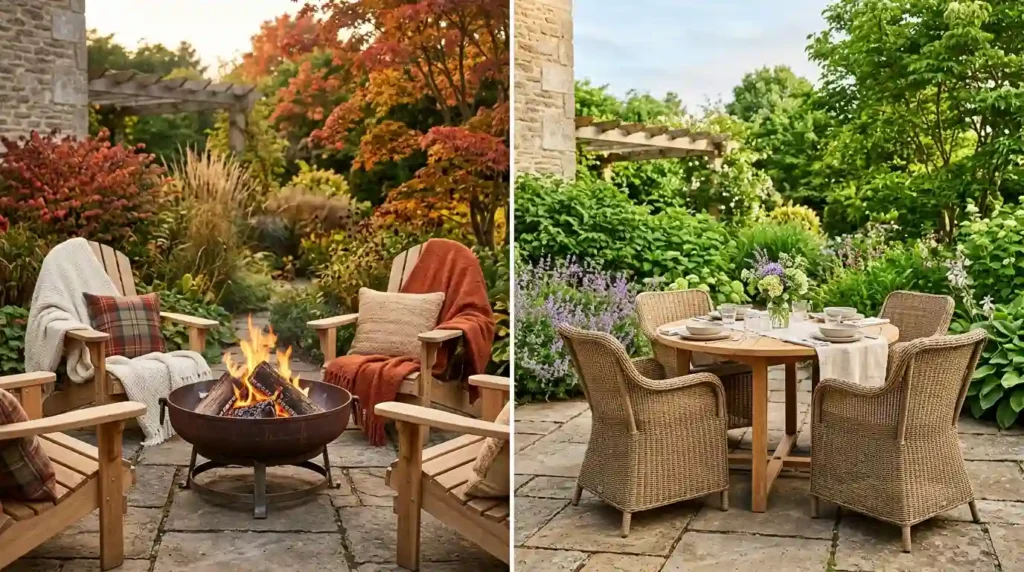
A portable fire pit lets you change the patio layout as your needs change. You can create a fire lounge in fall, then use the same area for dining in summer.
Common options include steel bowls, smokeless-style units, propane bowls, and small tabletop models. Each one has different surface, ventilation, fuel, and clearance needs.
Choose a unit that fits your patio. A large bowl can overpower a small area and push chairs into walking paths. A tiny tabletop model may suit two people but feel too small for a group.
Use the base, stand, or heat shield approved by the manufacturer. Do not place a hot unit directly on grass, a wood deck, or unknown paving material unless the instructions permit it.
Let the fire pit cool fully before moving or covering it. Store fuel safely and keep the manual for future checks.
A portable unit is flexible. A permanent design may be better if you want fixed gas, built-in seating, or a strong central feature.
How to Plan a Safe and Comfortable Fire Pit Patio
Fire pit rules differ by city, fuel type, appliance, and property. That is why a single clearance number cannot apply to every patio.
Use this checklist before you buy or build:
- Check local rules. Contact your fire department or local building office. Ask about permits, seasonal bans, smoke rules, and allowed fuel types.
- Read the product manual. Find the required space above, beside, and below the unit. Check which surfaces are approved.
- Study the site. Look for fences, walls, roof edges, trees, dry plants, windows, doors, and utility lines.
- Watch the wind. Visit the proposed spot at different times. Smoke should not blow into the house, dining area, or nearby homes.
- Plan the walking route. Guests should not need to pass close to the flames. Leave clear openings between seats.
- Choose the fuel. Wood gives you a classic flame but creates smoke and sparks. Propane is portable but needs safe cylinder storage. Natural gas needs a fixed line and professional installation.
- Prepare for emergencies. Keep a suitable extinguisher or water source nearby, based on the fuel and local guidance.
- Supervise the fire. Never leave an active fire alone. Keep children and pets at a safe distance.
- Check before digging. Use your local utility-location service before installing footings, gas lines, or electrical cables.
- Put the fire out correctly. Follow the appliance instructions. Hot ash and coals can remain dangerous long after visible flames disappear.
Safety begins with the exact model you own. When local rules and the manual differ, ask the fire authority or a qualified installer what applies to your site.
Pick a Fire Pit Layout That Fits Your Patio
The best patio ideas with fire pit designs start with safe placement and comfortable movement. The style comes next.
A circular layout supports conversation. Gravel can lower the project cost. Built-in walls add extra seats, while a portable unit keeps the patio flexible. Small spaces may work better with a compact gas feature and slim furniture.
Measure the area before shopping. Then choose your fuel, check local rules, and mark each chair on the ground. Cardboard furniture templates can help you test the layout.
These backyard fire pit patio ideas should give you a clear starting point. Pick the setup that fits your space, budget, weather, and real needs—not the one that simply looks best in a photo.