16 Patio Privacy Ideas for a Secluded Outdoor Space
Your patio should feel like a private place to relax. It should not feel like a stage that neighbors, pedestrians, and nearby drivers can see.
But adding privacy is not always simple.
A tall wall may block the view. It may also block sunlight and fresh air. A row of plants may look beautiful, but it can take years to grow. Some screens work well on large patios but make small spaces feel cramped.
The best patio privacy ideas solve the problem without closing off your whole yard. You may need one screen near the dining table. You may need plants along a shared fence. You may need overhead cover to block the view from an upstairs window.
This guide shares 16 practical outdoor privacy solutions. You will find ideas for small patios, rental homes, windy areas, and different budgets.
Start by finding the exact spot where people can see you. Then choose a solution that blocks that view while keeping your patio bright, comfortable, and easy to use.
Find the Right Privacy Solution Before You Spend Money
You may not need to cover every side of your patio.
Most privacy problems come from one or two directions. A neighbor may have a window facing your dining table. A sidewalk may run beside your seating area. An upstairs balcony may look down into your yard.
A quick check can help you find the real problem.
Sit in the chair, sofa, or dining spot you use most. Ask another person to stand near the street, shared fence, or nearby window. Mark the spots where they can clearly see you.
Next, measure the area that needs coverage. Measure the width and the height. Make sure you check the view while sitting and standing.
A short screen may work behind a sofa. A hot tub may need taller coverage. An upstairs window may require a pergola, angled panel, or small tree.
Before choosing a design, check these points:
- How much sunlight reaches the patio?
- Does strong wind pass through the area?
- Where does rainwater drain?
- Do you rent or own the property?
- Can you attach anything to the wall or fence?
- Are there local rules for fences or patio walls?
- How much upkeep are you willing to do?
The right choice should fix the privacy problem without creating a new one.
Quick Picks for Different Patio Problems
- Fastest privacy: Fixed or freestanding screens
- Best natural look: Tall plants and climbing vines
- Best for renters: Folding screens and movable planters
- Best for airflow: Slatted or louvered panels
- Best for a small patio: Vertical screens and raised planters
- Best for shade and privacy: Pergola curtains
- Best low-cost option: Bamboo screening over an existing fence
4 Patio Privacy Screen Ideas That Give Fast Coverage
Privacy screens work well when you need quick results. You do not have to wait for shrubs or vines to grow.
The right screen can also add style to a plain patio. The key is to choose a design that fits the size of your space.
Install a Horizontal Wood Slat Screen
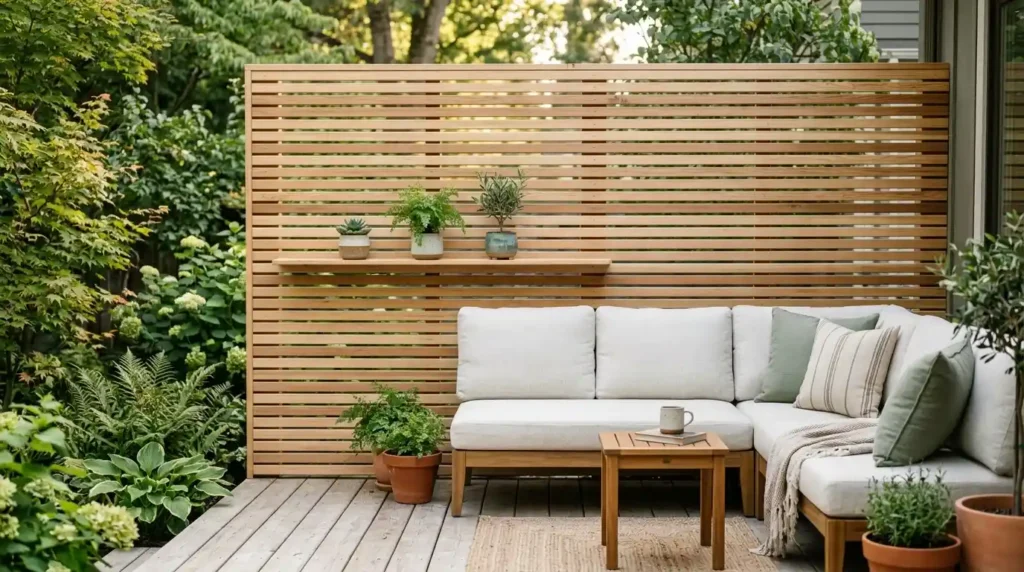
A horizontal wood screen can block a direct view without making your patio feel like a closed room.
Leave small gaps between the boards. These gaps let light and air pass through. They also reduce some of the pressure caused by strong wind.
Install the screen only where you need it. For example, place it behind the sofa if a neighbor can see your seating area. There may be no reason to cover the full property line.
You can stain the wood to match your deck or furniture. A light stain can make a small patio feel open. A dark finish can create a bold look.
Use wood made for outdoor use. Properly treated lumber will last longer than indoor wood.
You can also add a narrow shelf for small pots. Keep the shelf simple so the screen does not become heavy or crowded.
Best for: Modern patios and side-yard seating areas
Privacy level: High
Maintenance: Clean and reseal the wood when needed
Renter-friendly: Usually no
Possible drawback: Wood may warp, fade, or rot without proper care
Add Lattice Panels With Climbing Plants
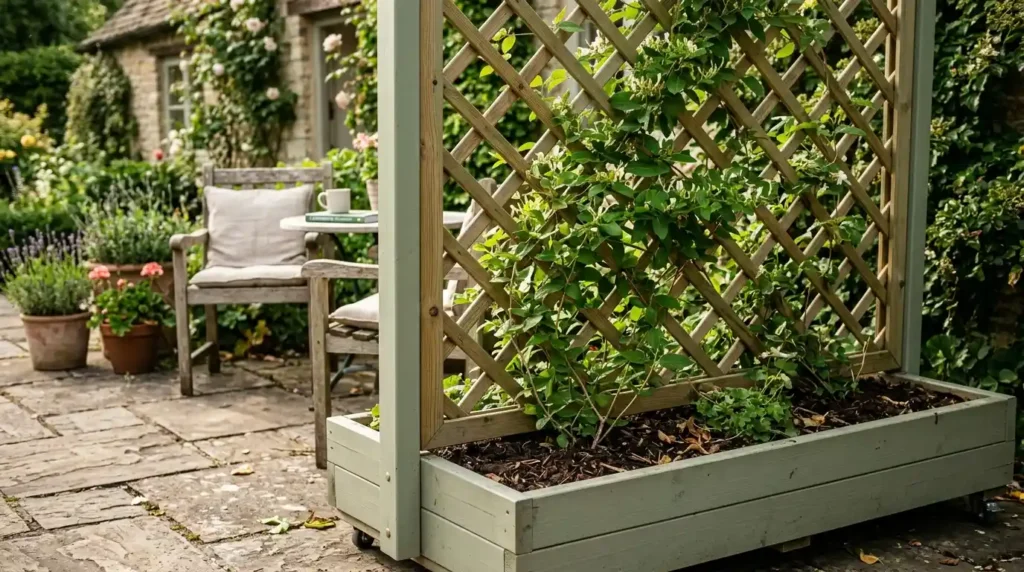
Lattice gives you some privacy as soon as it is installed. Climbing plants can fill the open spaces over time.
This is a good choice when a solid wall would feel too heavy. The open pattern allows sunlight and airflow to reach the patio.
You can attach lattice to an existing fence. You can also place it inside a large planter if you cannot build a permanent structure.
Choose vines that suit your local weather and sunlight. Some vines lose their leaves in winter. Others stay green for much of the year.
Check how large the plant may grow. Fast-growing vines may need regular trimming. Some types can also spread into nearby beds or damage weak surfaces.
Painted lattice works well with cottage-style patios. Natural wood fits garden spaces. Dark lattice can create a cleaner and more modern look.
Best for: Traditional and garden-style patios
Privacy level: Medium at first and higher as plants grow
Maintenance: Trimming, watering, and panel care
Renter-friendly: Yes, when placed in a movable planter
Possible drawback: Plants may take time to cover the panel
Use Decorative Metal Privacy Panels
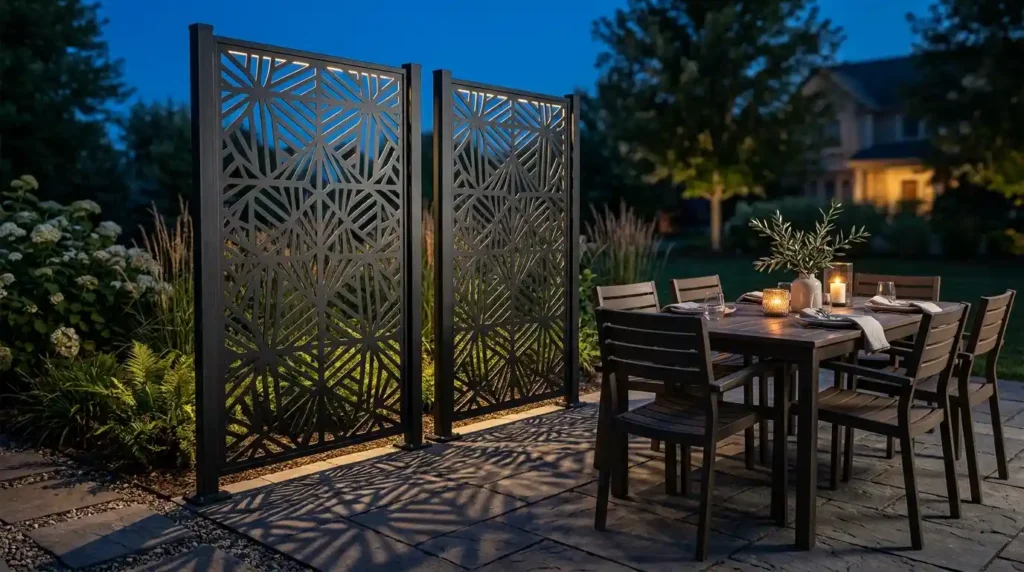
Decorative metal panels can provide privacy while adding a strong design feature.
Many panels have cutout patterns. These openings allow light and air to pass through. They also create shadows that change during the day.
You can install one panel beside a dining area. You can also use two narrow panels with a gap between them. This often feels lighter than one large wall.
Powder-coated metal may need less care than unfinished metal. Check that the panel is made for outdoor use.
A light placed behind the panel can create a soft pattern at night. Keep the lighting gentle so it does not bother nearby homes.
Metal panels can become hot in direct sun. Place them where people will not need to touch them often.
Best for: Modern patios and outdoor dining spaces
Privacy level: Medium to high
Maintenance: Low
Renter-friendly: Sometimes, with a freestanding frame
Possible drawback: Quality panels can cost more than wood or bamboo
Cover an Existing Fence With Bamboo or Reed
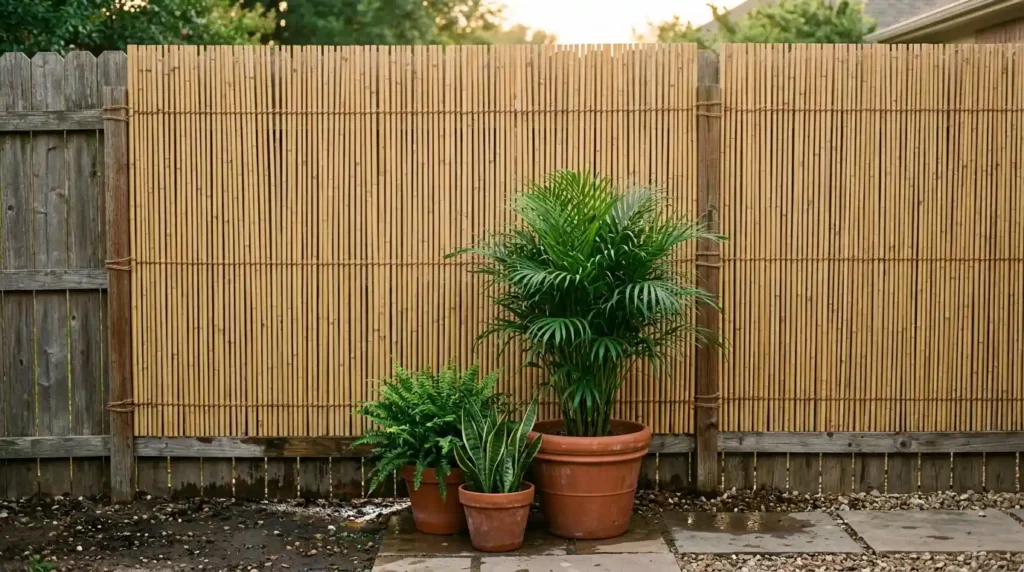
Bamboo and reed rolls offer a quick way to cover gaps in an old fence.
They can also hide a plain wall, wire fence, or unattractive boundary. This makes them useful for budget patio privacy ideas.
Attach the material tightly at several points. Loose screening can flap, tear, or pull away during strong wind.
Keep the bottom edge above wet soil and standing water. Long contact with moisture can shorten its life.
Natural screening may fade over time. It may also crack or break faster than wood or metal. This option works best when you need a simple fix rather than a permanent feature.
You can improve the look by adding large pots in front of the screening. Green plants will soften the flat surface.
Best for: Fast and affordable patio makeovers
Privacy level: Medium to high
Maintenance: Check ties and damaged sections
Renter-friendly: Often, with permission
Possible drawback: Lower-cost rolls may weather quickly
Living Patio Privacy Ideas That Add Greenery
Plants can give you privacy without making your patio feel hard or closed.
They add color, texture, and movement. They may also provide shade and help soften the look of concrete, brick, and fencing.
But plants need the right conditions. Check the sunlight, water needs, mature size, and local climate before buying.
Arrange Tall Ornamental Grasses in Planters
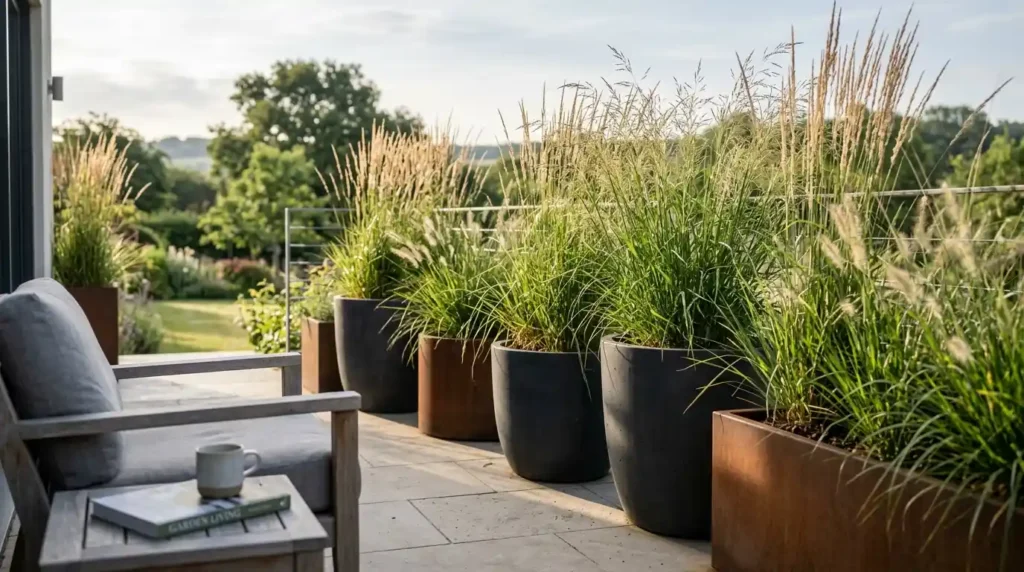
Tall grasses can create a soft screen along the edge of a patio.
Their narrow shape works well in small areas. Their leaves move in the wind, which gives the space a relaxed feel.
Use a few large planters instead of many small pots. Large pots hold more soil and dry out more slowly. They can also provide a more stable base.
Place the planters where they block the main view. You do not need to line them around the full patio.
Stagger the pots instead of placing them in a straight row. This creates a more natural design.
Choose grasses that fit your climate. Some types turn brown or need to be cut back during winter.
Best for: Narrow patios and modern spaces
Privacy level: Medium
Maintenance: Watering and seasonal trimming
Renter-friendly: Yes
Possible drawback: Some grasses provide less cover during winter
Plant a Narrow Evergreen Hedge
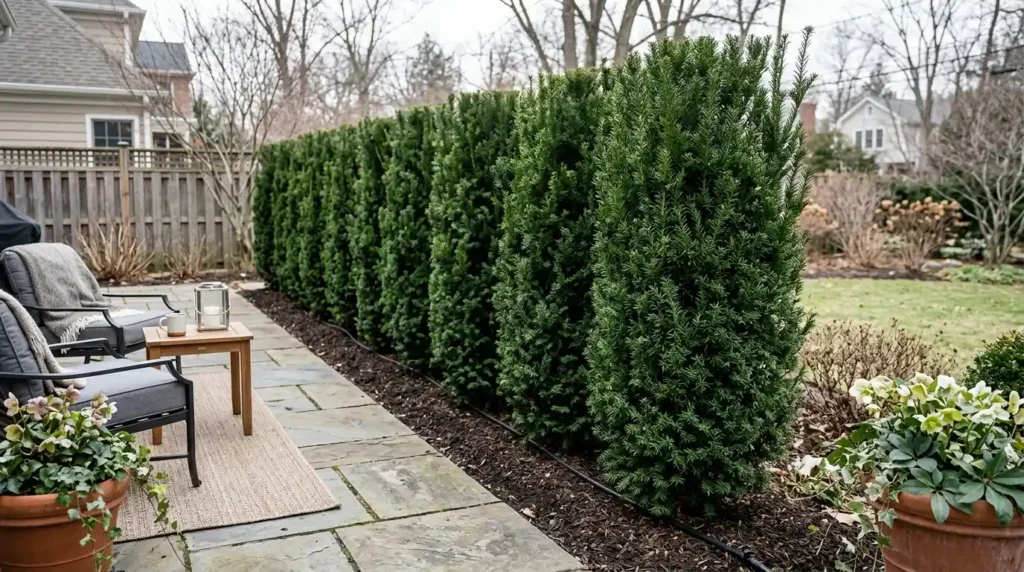
A narrow evergreen hedge can give you privacy during every season.
This works best for homeowners who have room to plant in the ground. It can also work in large containers if the plant type allows it.
Choose plants with a slim or upright shape. Wide shrubs can quickly take over a small patio.
Always check the mature width. A plant that looks small at the nursery may become several feet wide.
Leave enough space between the hedge and the patio. This helps air move around the plants and gives you room to trim them.
You may also need a drip line or regular watering plan. Plants in dry soil can become thin and leave gaps.
Ask a local nursery which evergreen plants grow well in your area. A plant that works in one state may fail in another.
Best for: Year-round natural privacy
Privacy level: High after the hedge fills in
Maintenance: Watering, feeding, and trimming
Renter-friendly: Usually no
Possible drawback: The hedge may take several seasons to become dense
Train Climbing Vines on a Freestanding Trellis
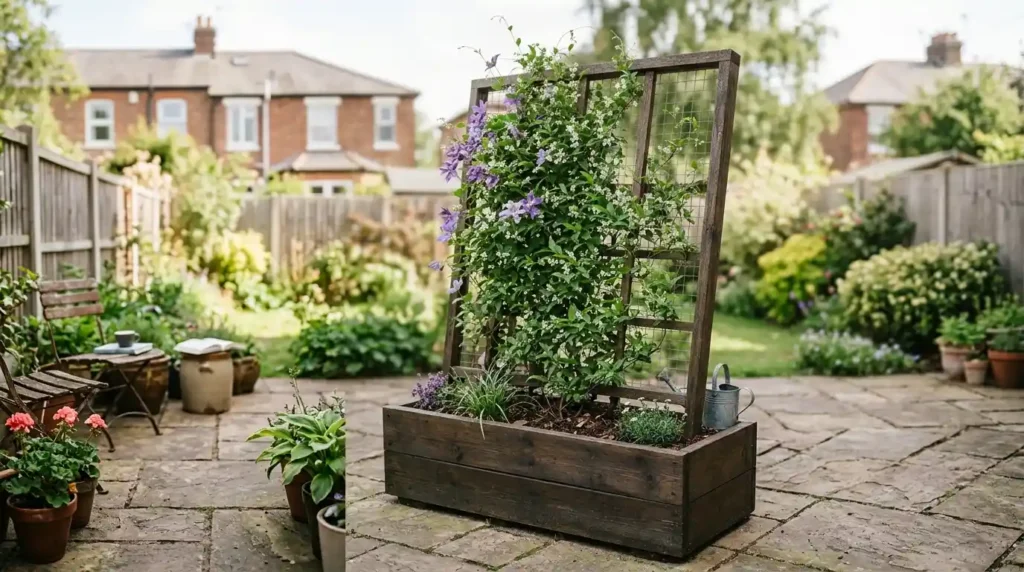
A trellis uses vertical space, so it works well on a small patio.
Place the trellis in a deep planter if you cannot attach it to a fence or wall. Make sure the base is wide and stable.
You can angle the trellis to block a direct view. It does not have to sit flat against the patio edge.
Choose a vine based on the amount of sunlight the spot receives. You should also decide whether you want flowers, thick leaves, or year-round coverage.
Some vines grow fast and need regular pruning. Others may damage weak walls or spread into nearby areas.
Check local plant guides before planting. Avoid types that are invasive in your region.
Best for: Small patios that need tall coverage
Privacy level: Medium to high after growth
Maintenance: Training, pruning, and watering
Renter-friendly: Yes, with a freestanding planter
Possible drawback: Coverage may be thin during the first season
Build a Layered Container Privacy Garden
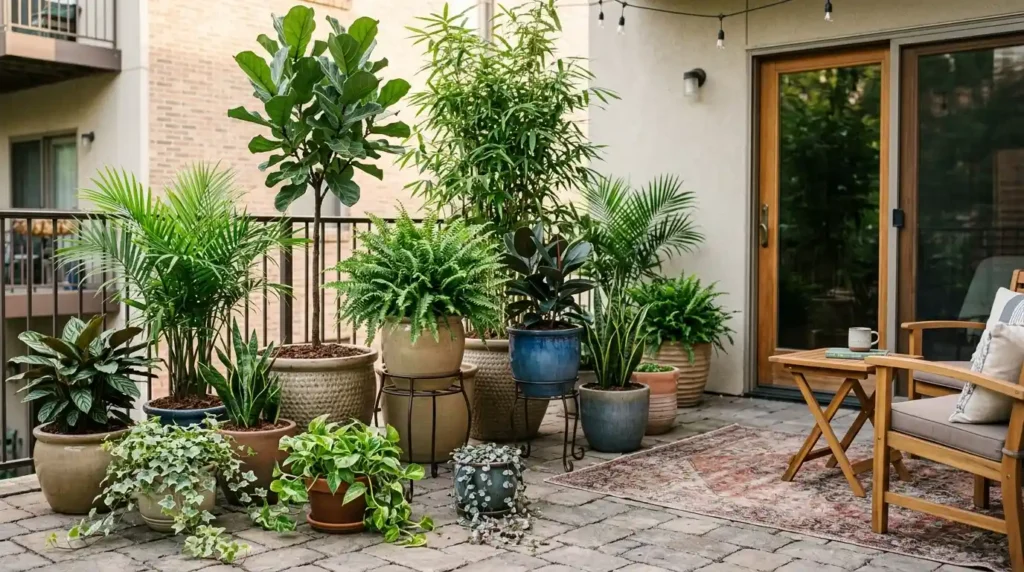
A group of planters can create privacy without building a wall.
Start with one or two tall plants at the back. Add medium plants in front. Finish with trailing plants near the edges.
This layered design looks fuller than a straight row of matching shrubs.
Repeat a few plant types across the group. Too many different plants can make the space look messy.
Choose pots that work well together. They do not need to match, but the colors and shapes should feel connected.
You can place shorter pots on strong plant stands. This adds height without buying large, mature trees.
Keep enough space for walking. A beautiful planter group can become a problem if it blocks doors or narrow paths.
Best for: Renters and patios without garden beds
Privacy level: Medium to high
Maintenance: Regular watering and plant care
Renter-friendly: Yes
Possible drawback: Large pots can become heavy and hard to move
Check These 7 Things Before Buying Privacy Plants
- Mature height
- Mature width
- Sunlight needs
- Water needs
- Seasonal leaf loss
- Root growth
- Safety around children and pets
4 Structural Privacy Ideas That Improve the Whole Patio
Some outdoor privacy solutions can do more than block a view.
They can add seating, shade, storage, or support for plants. These options often cost more, but they can become a useful part of the patio.
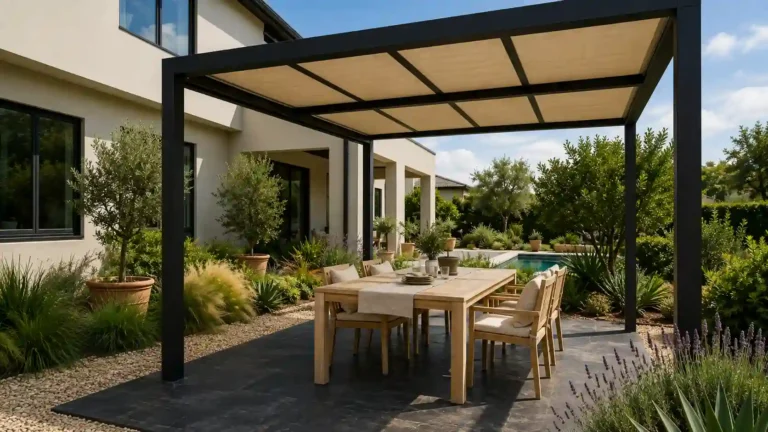
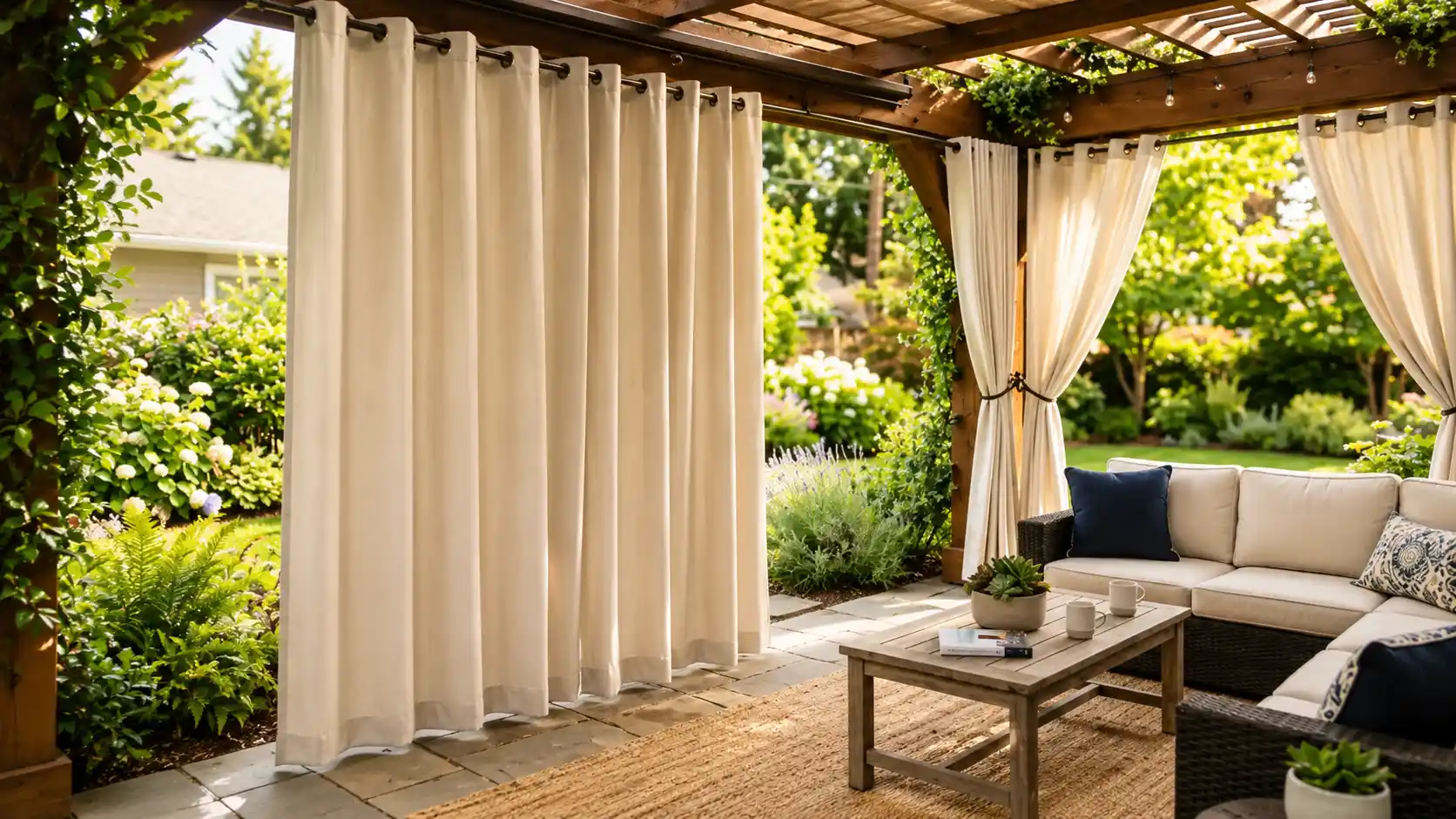
Add Outdoor Curtains to a Pergola
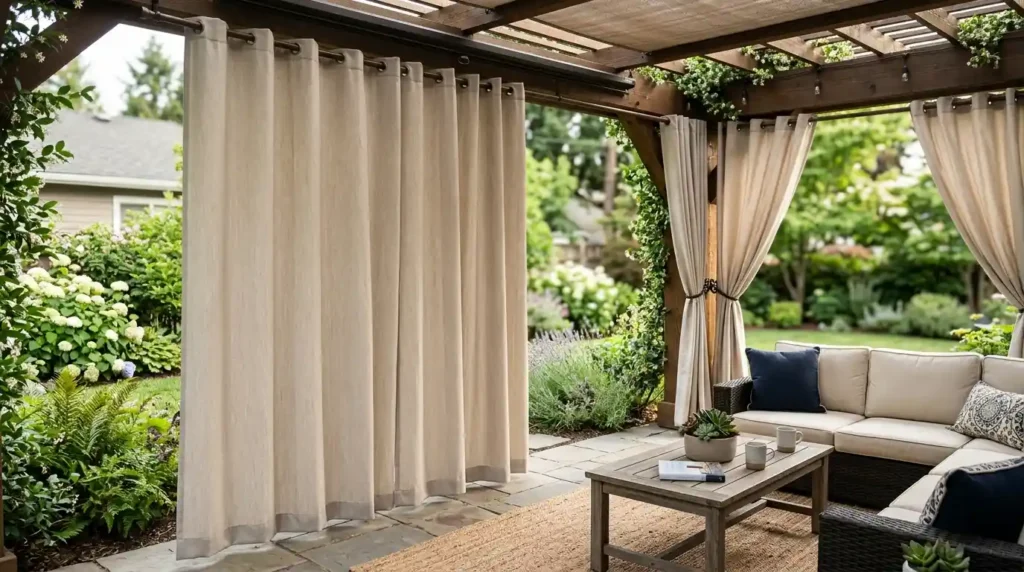
Outdoor curtains can give you privacy only when you need it.
Open them during quiet parts of the day. Close them when neighbors are outside or when you want a more private meal.
Use fabric made for outdoor areas. Indoor curtains can hold water, fade, and grow mold.
Choose rust-resistant rods and hardware. Add tiebacks so the curtains do not blow across the seating area.
Weighted bottoms can help in light wind. Curtains should still be opened or removed during bad weather.
Allow wet fabric to dry before tying it closed. This can help prevent stains and musty smells.
Best for: Covered patios and pergolas
Privacy level: High when closed
Maintenance: Washing and seasonal storage
Renter-friendly: Sometimes
Possible drawback: Wind can make loose curtains hard to control
Build a Privacy Wall With a Bench
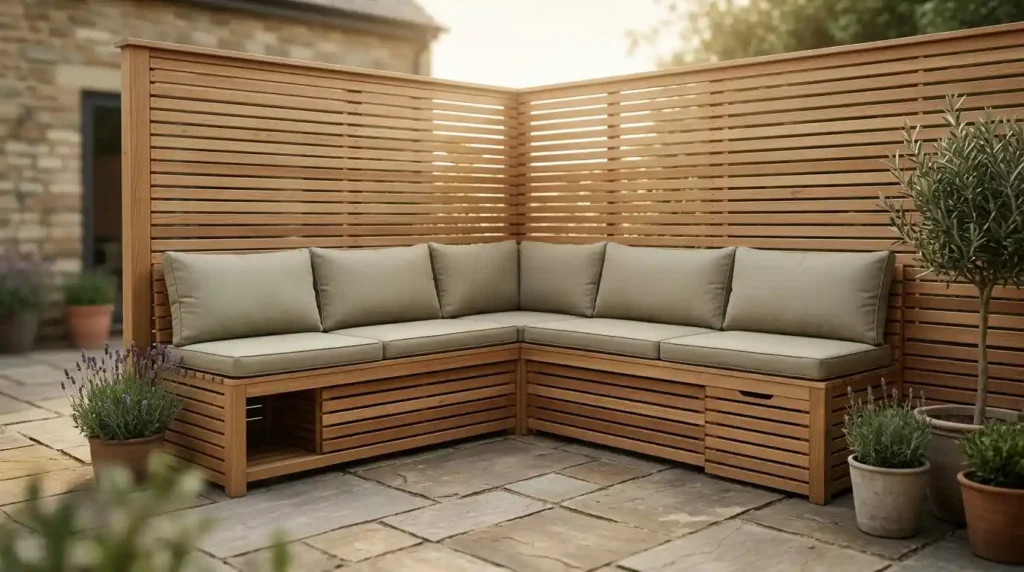
A privacy wall and built-in bench can save space on a small patio.
Place the wall behind the main seating area. It can block the view while also serving as the back of the bench.
The wall may only need to rise above seated eye level. A taller wall may cost more and block extra light.
Leave small gaps when airflow is important. You can also add hooks, a shelf, or a narrow planter.
Storage under the bench may be useful. Make sure rainwater can drain and air can move through the storage area.
Add outdoor cushions to soften the look. Use colors that connect the bench to the rest of the patio.
Best for: Small patios that need seating and privacy
Privacy level: High
Maintenance: Depends on the building material
Renter-friendly: No
Possible drawback: Poor planning can make the structure feel too large
Use a Raised Planter as a Privacy Wall
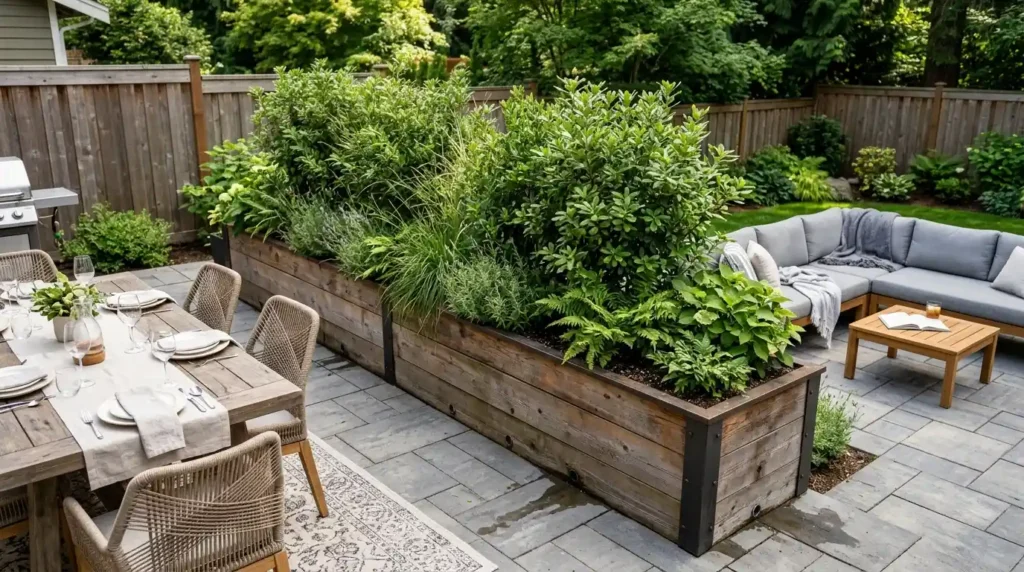
A tall planter can lift plants higher and provide faster coverage.
This allows you to use smaller plants while still blocking the view. It also creates a clear edge around the patio.
Choose a planter with proper drainage holes. Water needs a safe path out of the container.
Do not place a heavy planter on a deck or balcony without checking the weight limit. Wet soil can weigh much more than dry soil.
Use plants with roots that fit the planter size. Large roots may crack weak containers or slow plant growth.
A long planter can also divide a dining area from a lounge space.
Best for: Patios that need structure and greenery
Privacy level: Medium to high
Maintenance: Watering and planter care
Renter-friendly: Sometimes
Possible drawback: Large filled planters can be very heavy
Install Louvered Privacy Panels
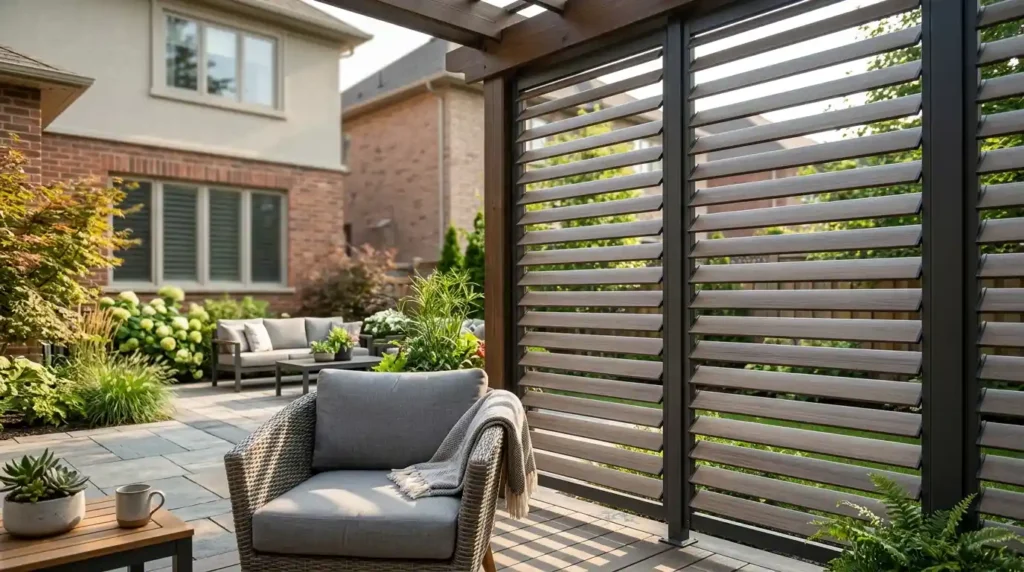
Louvers are angled slats that block a direct view while letting air pass through.
They work well when you know where the unwanted view comes from. The slats can face away from a neighbor’s window or nearby walkway.
Fixed louvers stay in one position. Adjustable louvers can change based on the sun or the angle of the view.
Adjustable panels often cost more. Fixed panels may be enough for a patio with one clear privacy problem.
Use outdoor materials that can handle sun, rain, and changing temperatures.
Check the angle before final installation. A small change can make a big difference in how much the panel blocks.
Best for: Privacy with good airflow
Privacy level: Medium to high
Maintenance: Low to moderate
Renter-friendly: Usually no
Possible drawback: The wrong slat angle may fail to block the view
4 Flexible Patio Privacy Ideas for Renters
Renters may not be allowed to build walls, drill into brick, or replace a fence.
That does not mean you have to live with an exposed patio.
Movable and removable products can create privacy without major changes. They can also move with you when your lease ends.
Install a Retractable Side Awning
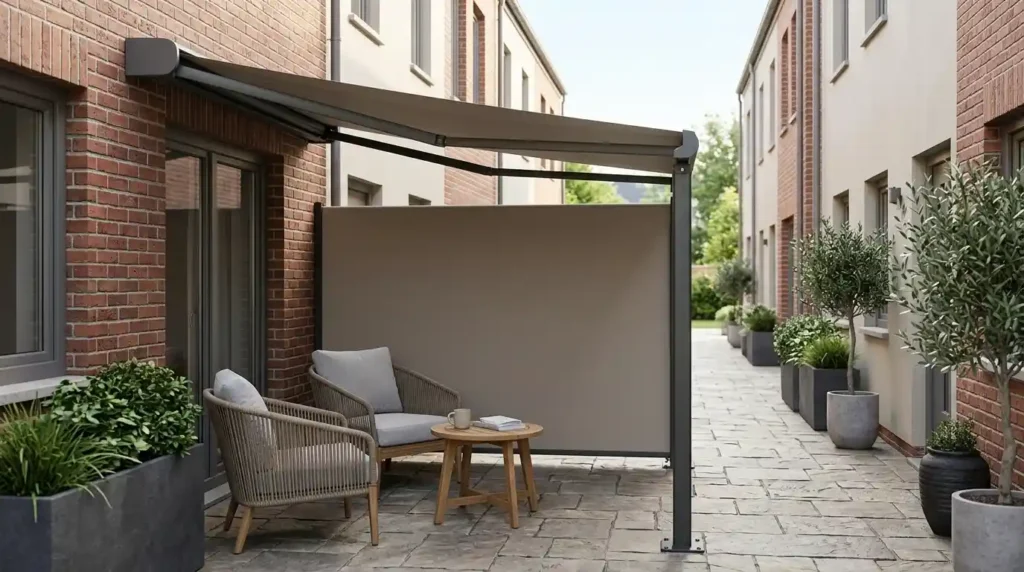
A retractable side awning works like a pull-out fabric wall.
You can open it when you use the patio. You can close it when you want a more open view.
This option works well between two townhouses or beside a narrow seating area.
Some models need to attach to a strong wall and floor post. Check the mounting rules before buying.
Choose fabric based on the amount of light you want. Solid fabric gives more privacy. A lighter weave may keep the space brighter.
Always retract the awning during storms and strong wind.
Best for: Narrow patios and side-by-side homes
Privacy level: High when open
Maintenance: Clean the fabric and check the hardware
Renter-friendly: Only with approval
Possible drawback: It needs a strong mounting point
Place a Freestanding Folding Screen
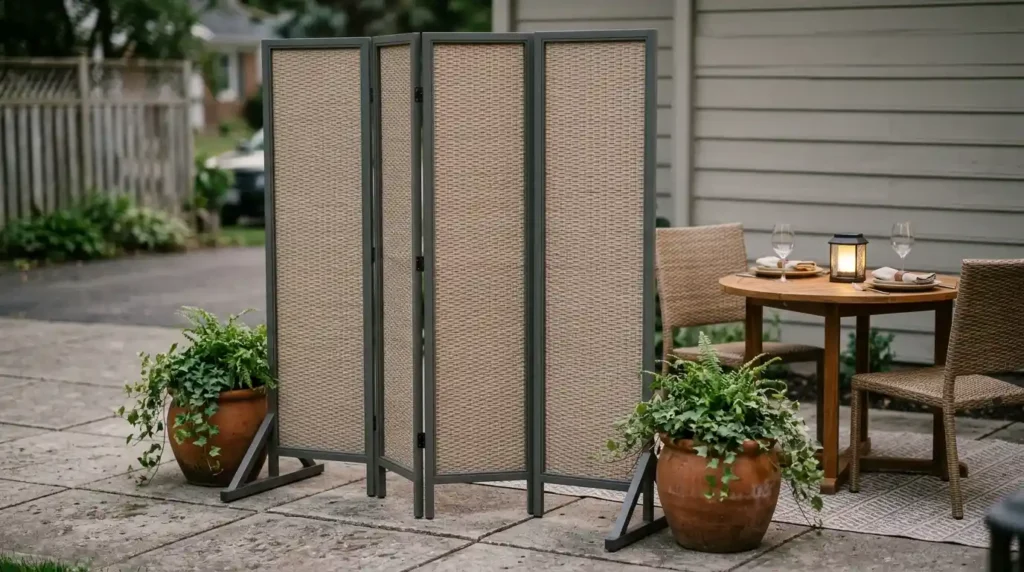
A folding screen is one of the simplest temporary patio privacy ideas.
You can move it beside a chair, dining table, or grill. You can fold it away when the patio is not in use.
Outdoor folding screens come in wood, resin, metal, and fabric.
Choose a product with a wide, strong base. A tall and light screen may fall over in the wind.
You can place a planter near each end for extra support. Do not block the screen’s folding parts.
Store the screen indoors during severe weather if the maker recommends it.
Best for: Renters and changing patio layouts
Privacy level: Medium to high
Maintenance: Low
Renter-friendly: Yes
Possible drawback: Lightweight screens may tip over
Hang Curtains From a Removable Frame
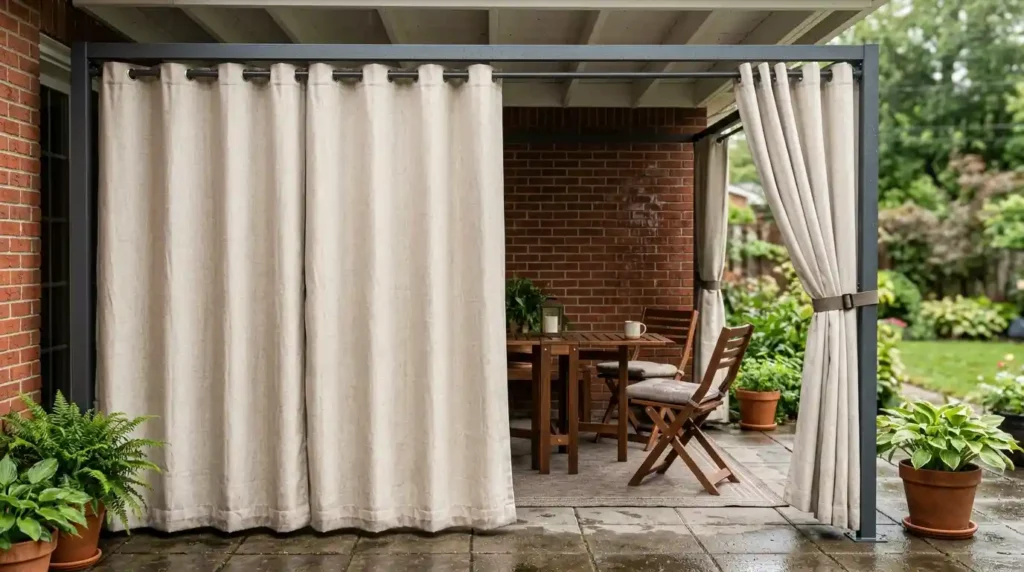
A removable curtain frame can work on a covered patio or balcony.
You can use a freestanding frame or another no-drill system that fits the space. Make sure the frame is made for the size and weight of the fabric.
Choose quick-drying outdoor curtains. Add tiebacks and weighted hems.
Open the curtains after rain so the fabric can dry. This will also allow more air and light into the patio.
A removable frame can be taken down at the end of the season. It may also move with you to a new home.
Do not assume a tension-style system is safe in every area. It still needs a strong and secure fit.
Best for: Covered rental patios
Privacy level: High
Maintenance: Wash and dry the fabric as needed
Renter-friendly: Yes
Possible drawback: It may not work well in strong wind
Create a Movable Vertical Planter Screen
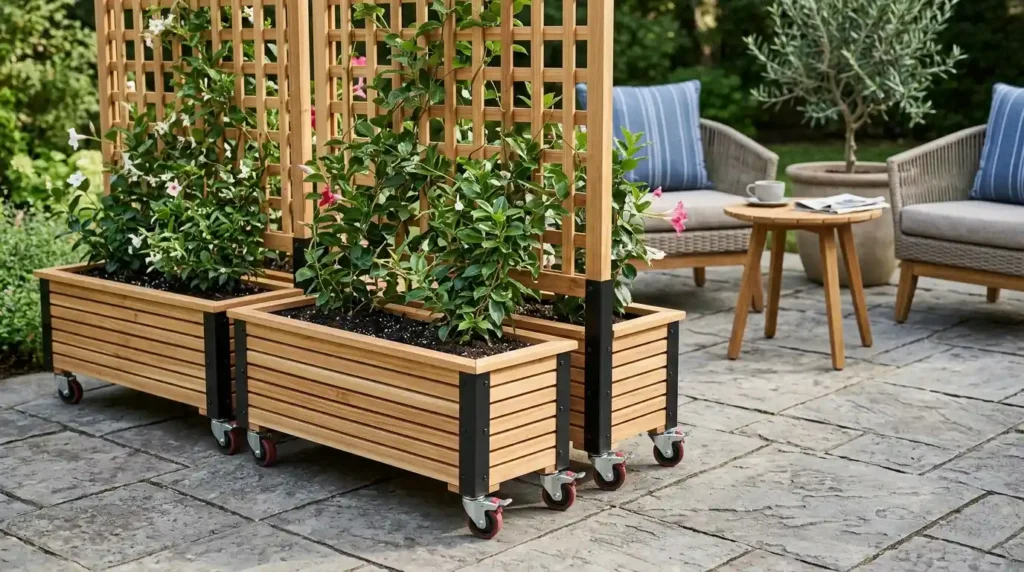
A vertical planter screen combines plants with a movable frame.
Build or buy a narrow planter with an attached trellis. Add locking wheels so you can change its position.
Move the planter when the sun changes or when you need privacy in another part of the patio.
Use a wide base so the unit does not become top-heavy. Lock the wheels every time you move it into place.
Lightweight potting mix can make the planter easier to move. The base still needs enough weight to stay stable.
Two narrow planter screens may work better than one wide unit. You can place them together or separate them during parties.
Best for: Renters and patios with changing needs
Privacy level: Medium to high
Maintenance: Plant care and wheel checks
Renter-friendly: Yes
Possible drawback: Poorly built units may tip or become hard to move
Compare All 16 Patio Privacy Ideas
The best patio privacy ideas depend on your space, budget, and property rules.
Use this table to narrow down your options.
| Privacy idea | Cost level | Privacy | Setup | Upkeep | Good for renters |
| Wood slat screen | Medium | High | Medium | Medium | No |
| Lattice and vines | Low–medium | Medium | Easy | Medium | Sometimes |
| Metal panels | Medium–high | Medium–high | Medium | Low | Sometimes |
| Bamboo screening | Low | Medium–high | Easy | Medium | Often |
| Tall grasses | Medium | Medium | Easy | Medium | Yes |
| Evergreen hedge | Medium–high | High | Medium | Medium | No |
| Vine trellis | Low–medium | Medium | Easy | Medium | Yes |
| Container garden | Medium | Medium–high | Easy | High | Yes |
| Pergola curtains | Medium | High | Easy–medium | Medium | Sometimes |
| Bench privacy wall | High | High | Hard | Medium | No |
| Raised planter wall | Medium–high | Medium–high | Medium | Medium | Sometimes |
| Louvered panels | High | Medium–high | Hard | Low | No |
| Side awning | Medium | High | Medium | Low | With approval |
| Folding screen | Low–medium | Medium–high | Easy | Low | Yes |
| Removable curtains | Low–medium | High | Easy | Medium | Yes |
| Movable planter screen | Medium | Medium–high | Medium | Medium | Yes |
Screens give you the fastest results. Plants create a softer look. Built-in features often work best for homeowners who plan to stay for many years.
You can also combine two options.
Try a wood screen with narrow planters. Pair pergola curtains with climbing vines. Place tall grasses in front of a metal panel.
One hard surface and one soft surface often create a more balanced patio.
Avoid These 8 Patio Privacy Mistakes
A privacy feature will not help much if it is placed in the wrong spot.
Here are common mistakes to avoid.
1. Covering Every Side of the Patio
Full coverage can make a small space feel closed and dark.
Block the main view first. Leave open areas where privacy is not a problem.
2. Checking the View Only While Standing
You may spend most of your patio time sitting.
Check the view from your dining chair, sofa, and lounge seat before choosing the screen height.
3. Ignoring Upstairs Windows
A standard fence may not block a view from above.
Use angled louvers, a pergola, tall plants, or a small tree where overhead coverage is needed.
4. Buying Plants Without Checking Their Full Size
A small nursery plant may grow much wider than expected.
Check its mature height and width before planting it near a path, wall, or door.
5. Forgetting About Wind
Curtains, folding screens, and tall planters can fall or move in strong wind.
Use secure hardware, stable bases, and products made for exposed areas.
6. Blocking Water Drainage
Screens and planters should not stop rainwater from leaving the patio.
Keep drains clear. Raise natural screening above wet ground.
7. Using Indoor Materials Outside
Indoor fabric and untreated wood may fade, rot, or grow mold.
Choose products made for outdoor use.
8. Skipping Property Rules
Permanent walls, tall screens, and fence changes may need approval.
Check with your landlord, local office, or homeowners’ group before starting major work.
Create Privacy Without Closing Off Your Patio
Good privacy does not mean building the tallest wall possible.
Start with the view that bothers you most. Measure that area and choose a solution that fits your budget, space, and maintenance needs.
A wood screen can give fast coverage. Plants can create a softer look. Curtains and folding screens can work well for renters. Built-in benches and raised planters can make a small patio more useful.
You can also mix two ideas. A simple screen with plants in front often feels more natural than a solid barrier.
These patio privacy ideas can help turn an exposed outdoor area into a calm and comfortable space. Measure your patio, take photos of the unwanted views, and choose the option that solves your main problem first.