15 Patio Ideas With Pavers and Gravel for Any Yard
You do not need a solid concrete slab to create a useful outdoor space. Some of the best patio ideas with pavers and gravel combine two simple materials.
Pavers give you firm places to walk, sit, and set furniture. Gravel fills open areas, helps manage surface water, and gives the patio a softer look.
Still, the wrong layout can cause problems. Small stones may spread into the lawn. Chair legs can sink or wobble. Weeds may appear, and poorly planned water flow can damage nearby areas.
The good news is that most of these problems can be reduced during planning. You need the right gravel, a strong edge, a suitable base, and enough paved space for furniture.
The following gravel patio ideas work in small yards, side yards, gardens, and large entertaining areas. Each one includes a key benefit and a possible drawback to consider before you start building your paver and gravel patio.
Simple Paver and Gravel Patio Layouts
Create a Clean Paver Grid Filled With Gravel
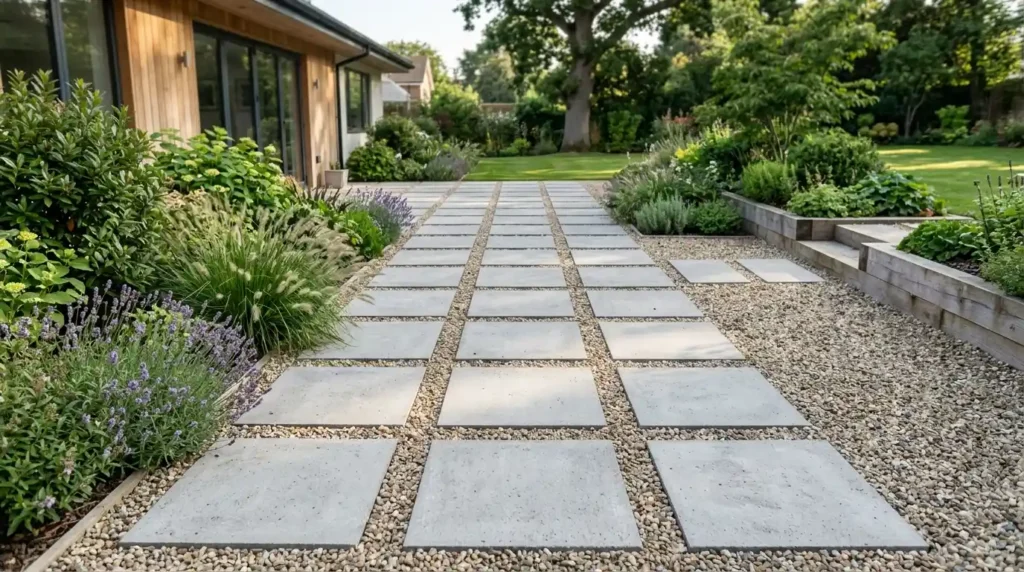
A paver grid gives your patio a neat and modern look. Place square concrete pavers in straight rows. Then fill the spaces between them with gravel.
Large 24-inch pavers often create a calmer look than many small units. They also provide more stable space beneath chairs and tables. Keep the gaps even so the finished grid looks planned.
Light gravel can form a strong contrast with charcoal pavers. Gray gravel can also soften the look of red or warm brown pavers.
Check the placement of each furniture leg before setting the pavers. A chair can wobble if one leg rests on gravel while the others sit on concrete.
Best for: Modern homes, simple gardens, and square patio areas.
Watch out for: Wide gaps may make walking hard for children, older adults, or anyone using a mobility aid.
Build a Stepping-Stone Patio
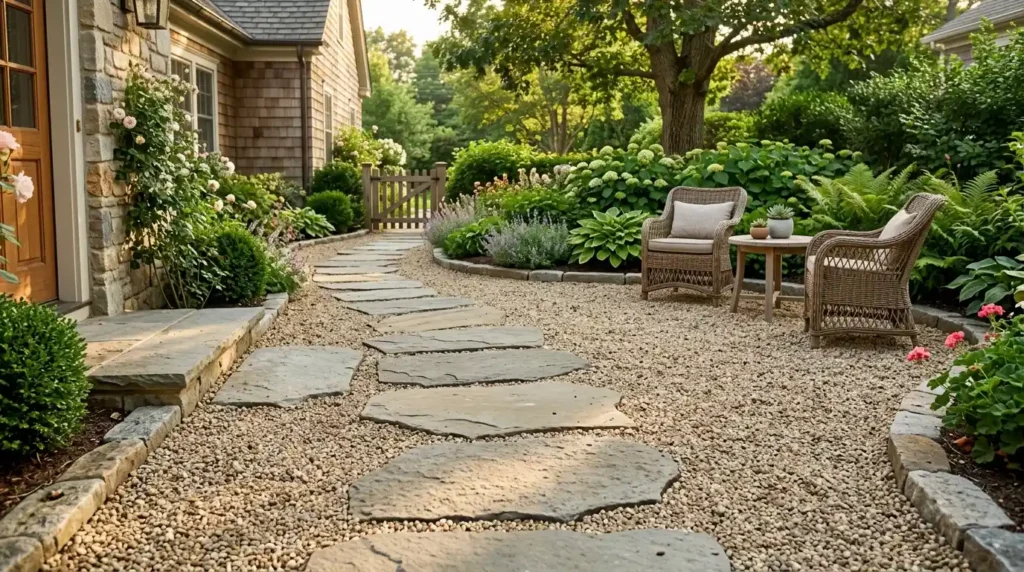
Broad stepping stones can guide people across a gravel seating area. This design uses fewer pavers, which may help lower material costs.
Place the pavers along the natural route between your home, patio furniture, and garden. Test the route by walking it before you dig. Your steps should feel normal instead of forced.
Keep the pavers close enough for safe movement. Set each one at the same height so no edge becomes a trip point.
This layout works well for a casual seating area. However, it is less useful beneath a dining set. Small chair legs can sink into gravel or catch on paver edges.
Best for: Informal garden patios and low-traffic seating areas.
Watch out for: Loose gravel is harder to cross with wheels. Add a firm, stable path if someone needs easier access.
Frame the Gravel With a Paver Border
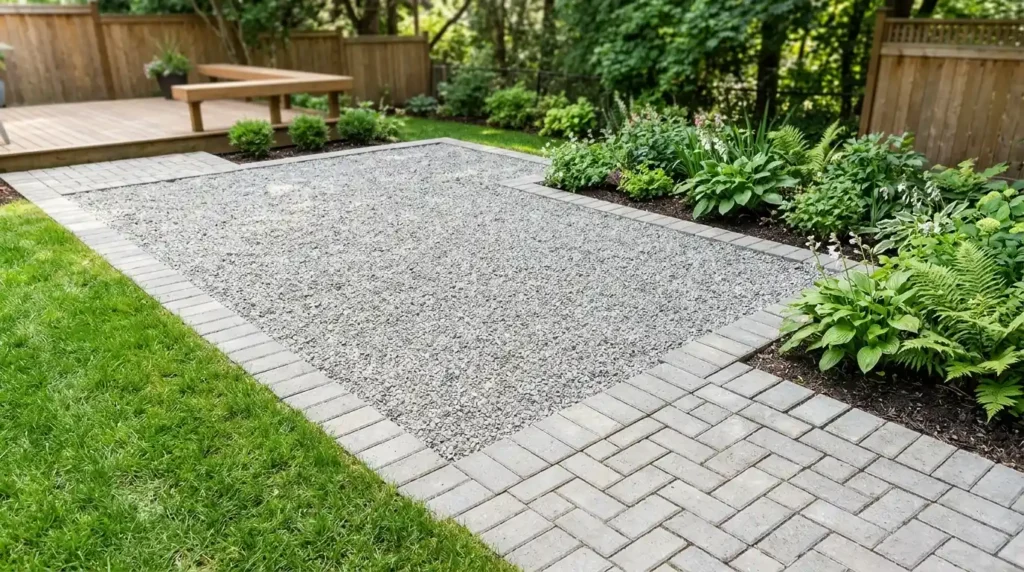
A paver border gives loose gravel a clear stopping point. It can keep stones out of nearby grass, flower beds, and walkways.
Lay the border around the full patio edge. You can place rectangular pavers end to end for a simple “soldier course.” A basket-weave pattern creates a more traditional look.
Match the border with nearby steps or paths to connect the patio with the rest of your yard. Make sure the edge is firmly set. Loose border pavers may spread apart as people walk over them.
The border should sit high enough to hold the gravel. It should not create a raised lip that causes trips or blocks water.
Best for: Traditional gardens and patios beside a lawn.
Watch out for: A decorative border will not hold the gravel if its base is weak.
Patio Ideas With Pavers and Gravel for Small Yards
Use Oversized Pavers to Make the Patio Feel Wider
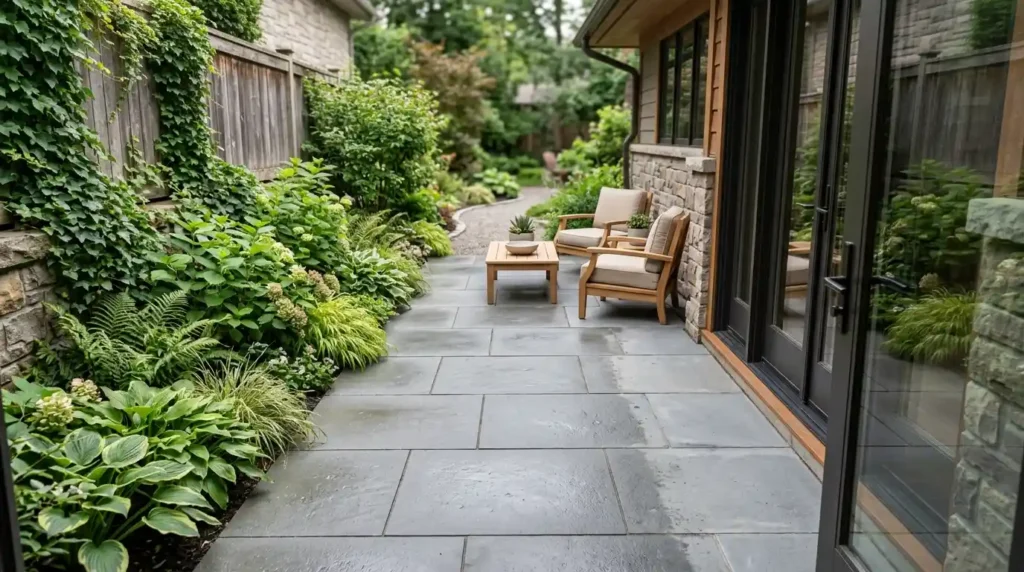
Large pavers can make a small patio feel less busy. You see fewer joints, which creates a cleaner view across the space.
For a narrow patio, place rectangular pavers across the short direction. This can make the area appear wider. Use one gravel color so the floor does not compete with furniture and plants.
A 6-by-8-foot area may hold two lounge chairs and a small table. An 8-by-10-foot space can fit a compact dining set, depending on the furniture size.
Always measure the chairs when they are pulled out. The table may fit while the seats still hit a wall, fence, or planter.
Best for: Small urban yards and patios with a simple style.
Watch out for: Large pavers are heavy. Moving and leveling them may require two people or lifting equipment.
Create a Compact Bistro Patio
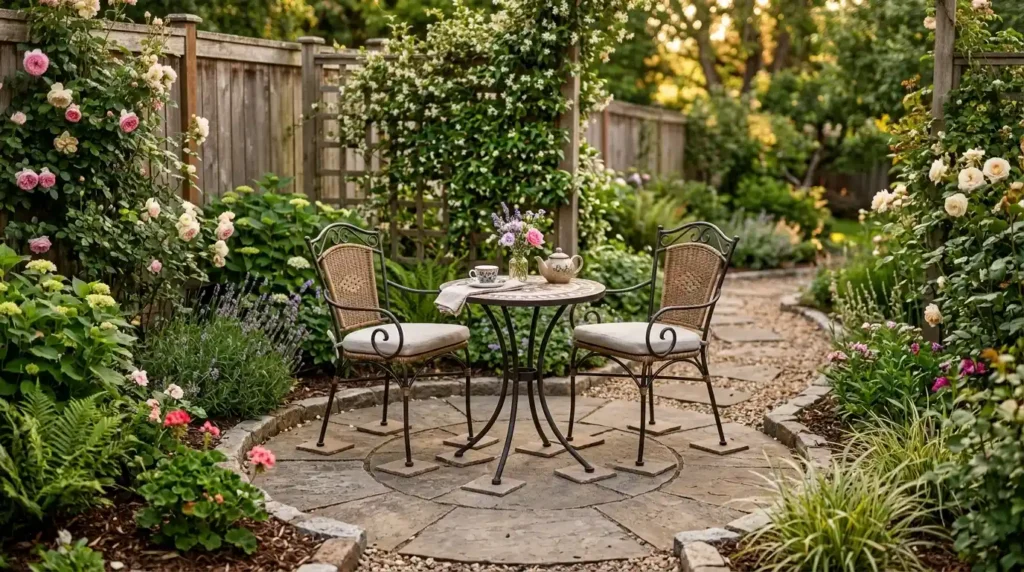
A bistro patio gives you a place for coffee or a quiet meal without taking over the yard. Start with a paved center large enough for two chairs and a small table.
Place pavers beneath every furniture leg. Add gravel around the paved center to help connect it with paths and planting areas.
Folding chairs can save space when the patio is not in use. A narrow planting bed often works better than wide pots in a tight area. It uses less floor space and reduces clutter.
Mark an 8-by-10-foot outline before buying materials. Put your furniture inside it and sit down. Pull back the chairs to see how much room you truly need.
Best for: Couples, renters with approval, and small backyards.
Watch out for: A tiny patio can feel crowded if you add too many pots, lights, or decorations.
Turn a Side Yard Into a Useful Patio
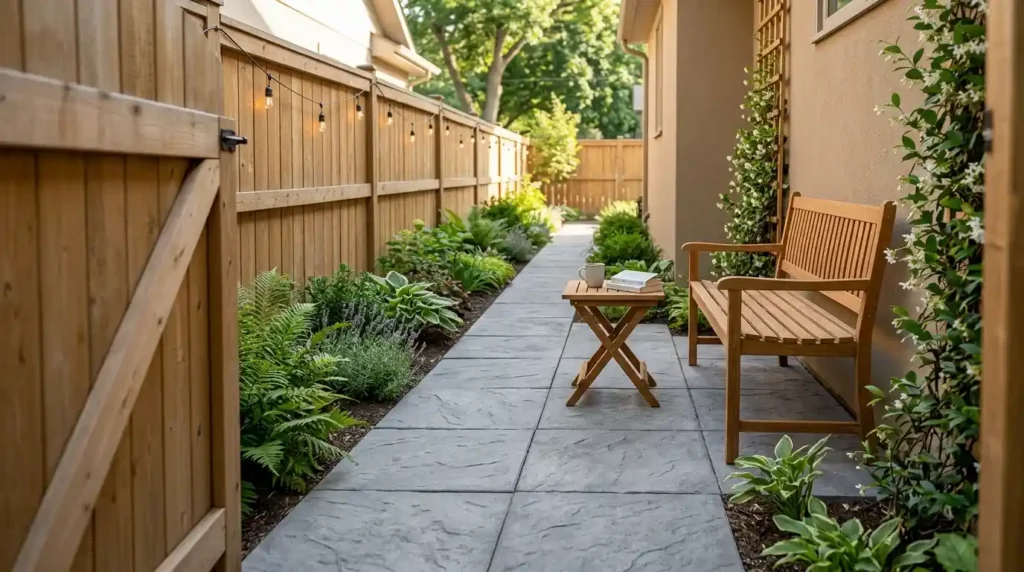
A narrow side yard can become a quiet seating space instead of a forgotten passage. Use a straight line of pavers to lead from the gate to the seating area.
A slim bench, folding table, or wall-mounted shelf will leave more room for walking. Wall lights also save floor space.
Check how far the gate swings before placing furniture. You should also keep access open for bins, hoses, tools, and home repairs.
Water control matters in a side yard because the space may sit between two walls or fences. Observe it during rain. Make sure the finished surface will not send water against your home or a neighbor’s property.
Best for: Long, narrow spaces with limited use.
Watch out for: Side yards can hold water if the ground is flat or blocked by buildings.
Comfortable Patios for Dining and Entertaining
Build a Solid Paver Dining Zone
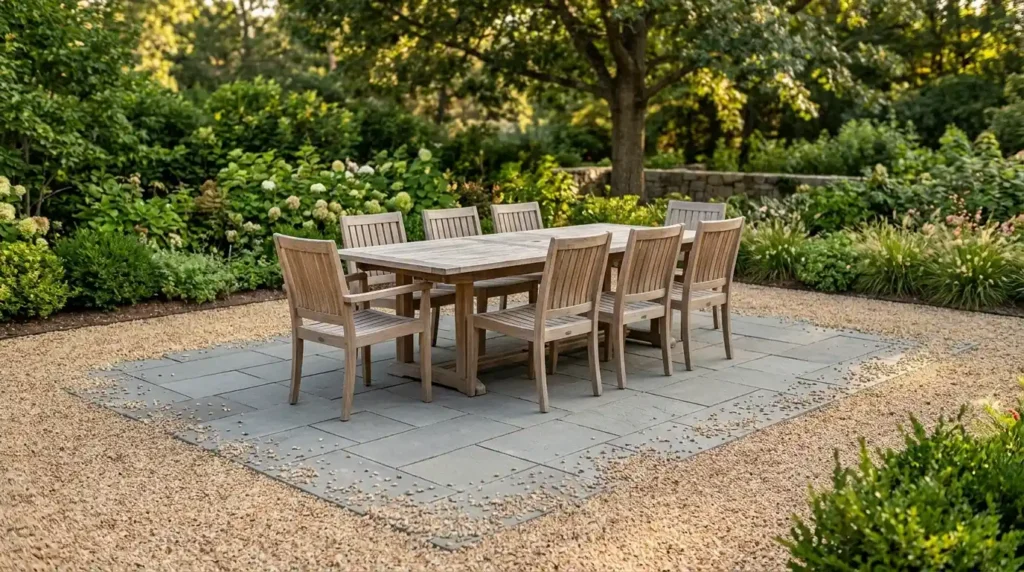
A paved dining zone keeps tables steady and allows chairs to move more easily. Fit the pavers close together beneath the full dining set. Use gravel around the paved area as a border.
As a starting point, allow about three feet behind dining chairs where space permits. Larger chairs or busy walking routes may need more room. Test your exact furniture before setting the patio size.
A table for four can fit in a smaller paved zone. A table for six needs extra length and space around every occupied chair.
Keep loose stones away from chair legs. Pulling chairs through gravel can be noisy and uncomfortable. It may also scatter stones across the pavers.
Best for: Outdoor meals and regular family gatherings.
Watch out for: A paved pad that fits an empty table may feel too small once every chair is in use.
Make a Gravel Fire-Pit Patio With Paver Seats
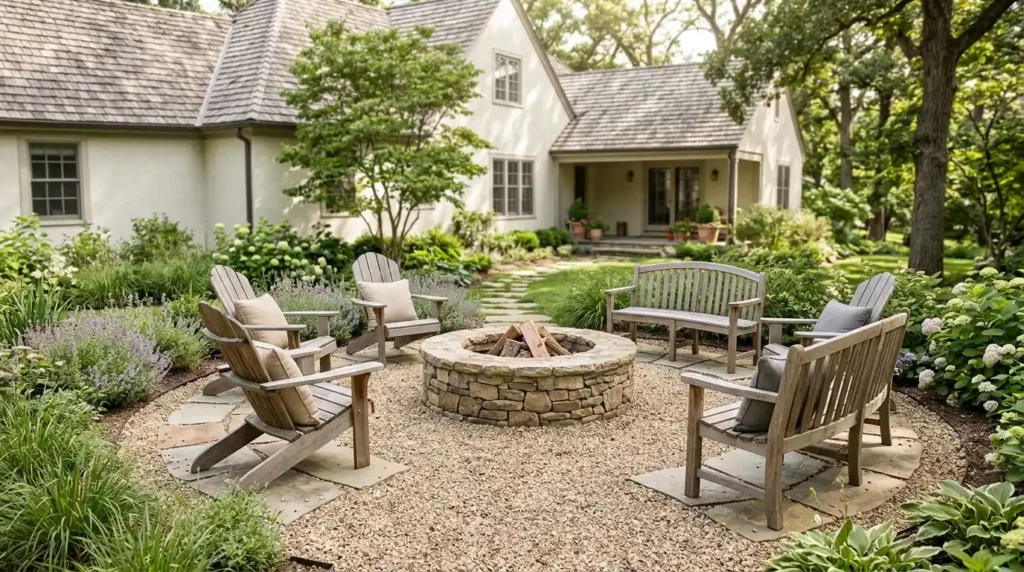
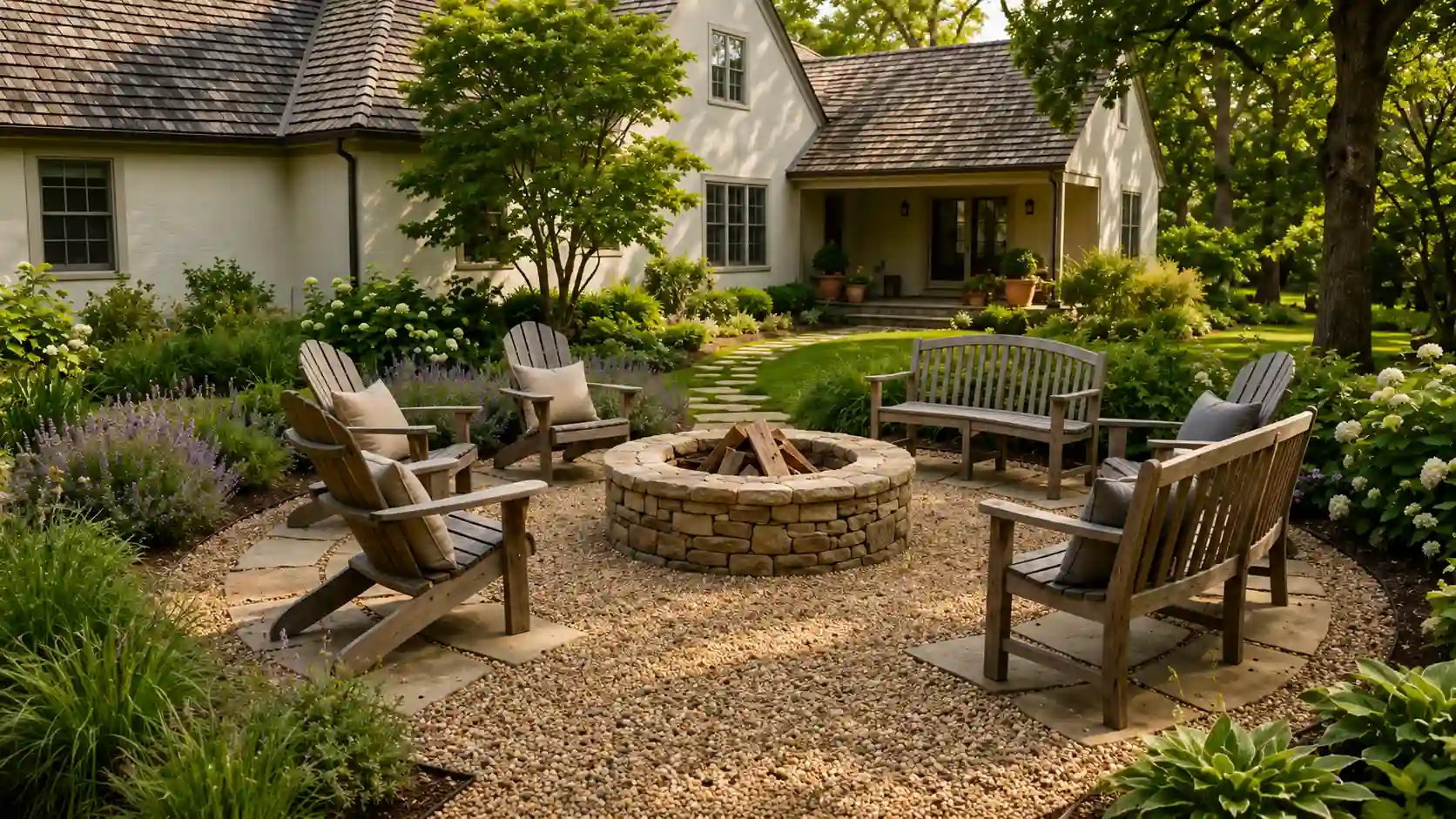
Gravel can define a relaxed gathering area around an outdoor fire pit. Add large pavers beneath chairs or benches to keep them level.
A round gravel area suits a central fire pit. A square design may fit better beside a modern home. In either case, leave a clear route so people can move away from the fire.
Use the clearances stated by the fire-pit maker. You also need to check local fire rules, permits, burn limits, and surface requirements. Keep the fire away from dry plants, fences, roofs, branches, and other items that can burn.
Avoid pooled-alcohol tabletop fire pits. The U.S. Consumer Product Safety Commission has warned that some models can cause flame jetting and severe burns. Review current CPSC fire-pit warnings before buying one.
Best for: Evening gatherings in yards where outdoor fires are allowed.
Watch out for: Gravel alone does not make a fire area safe. Fuel type, wind, clearance, and local rules still matter.
Design an Outdoor Lounge With Paver “Rugs”
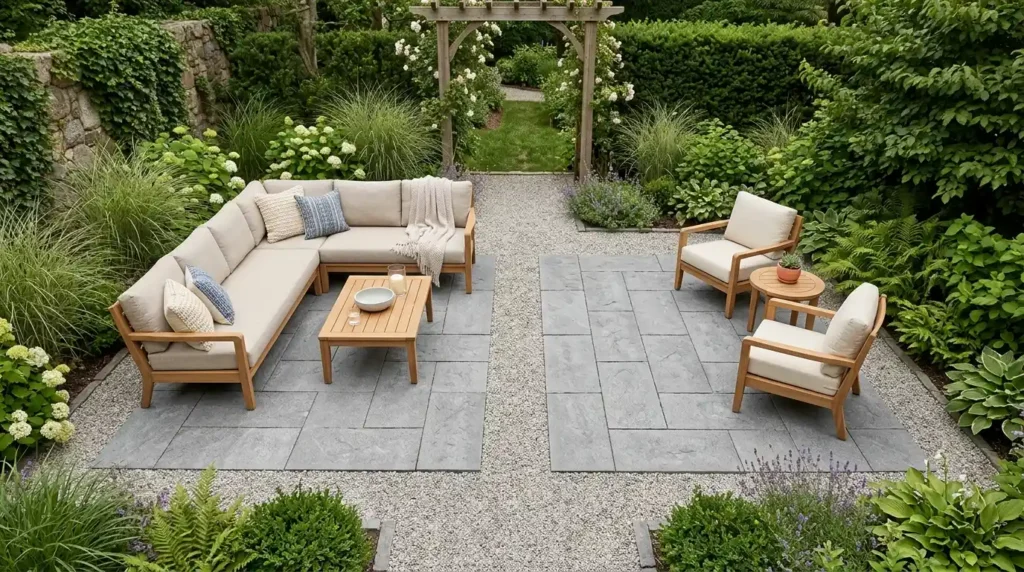
Groups of pavers can work like outdoor rugs. Build one solid pad beneath a sofa and another beneath two chairs. Separate the zones with narrow gravel strips.
Repeat the same paver size in each group. This makes the areas feel connected even when gravel sits between them.
The gravel strips can also mark walking routes. Choose angular gravel if you want the stones to lock together better. Rounded stones tend to move more underfoot.
Add a fabric outdoor rug only if the pavers form a flat, stable surface. A rug placed over loose gravel may bunch, trap stones, or create a trip risk.
Best for: Large patios with separate seating and conversation areas.
Watch out for: Too many small zones can make the patio feel broken up. Two clear groups are often enough.
Natural and Garden-Focused Gravel Patio Ideas
Add Planting Pockets Between Pavers
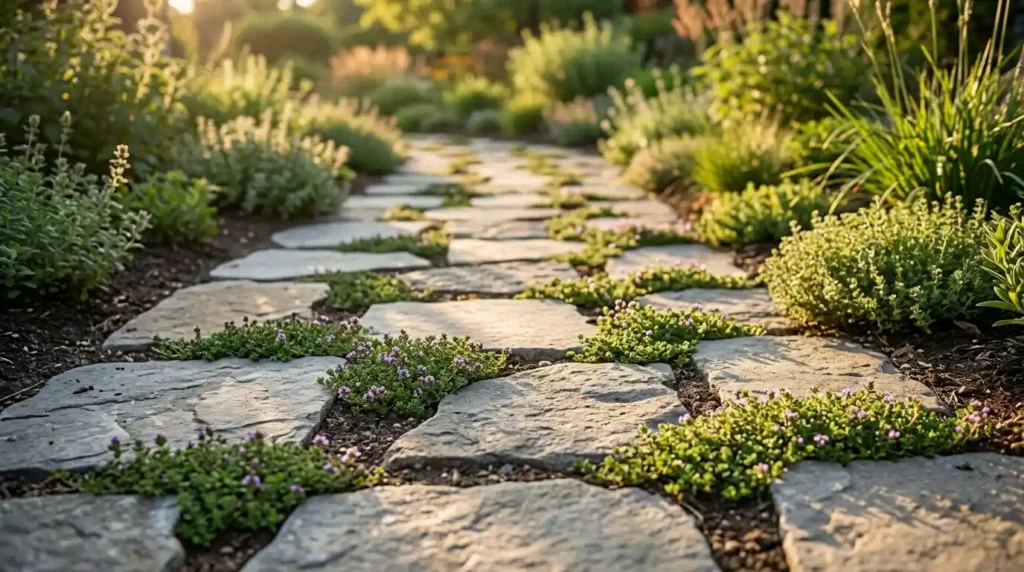
Small planting pockets can soften hard paver lines. Leave selected gaps open and fill them with soil and low plants.
Creeping thyme may work in sunny, well-drained areas with light foot traffic. It is not right for every climate. Choose plants based on your sun, winter temperatures, rainfall, soil, and expected use.
Keep plants away from the main furniture zone. Chair legs can crush them, and damp soil may stain nearby surfaces.
Avoid plants with strong or spreading roots near the paver base. Roots may lift pavers or enter joints over time. Ask a local nursery which low plants behave well in your region.
Best for: Garden patios that need a softer, greener look.
Watch out for: Plants between pavers need care. They may require trimming, watering, and replacement.
Shape a Curved Gravel Patio
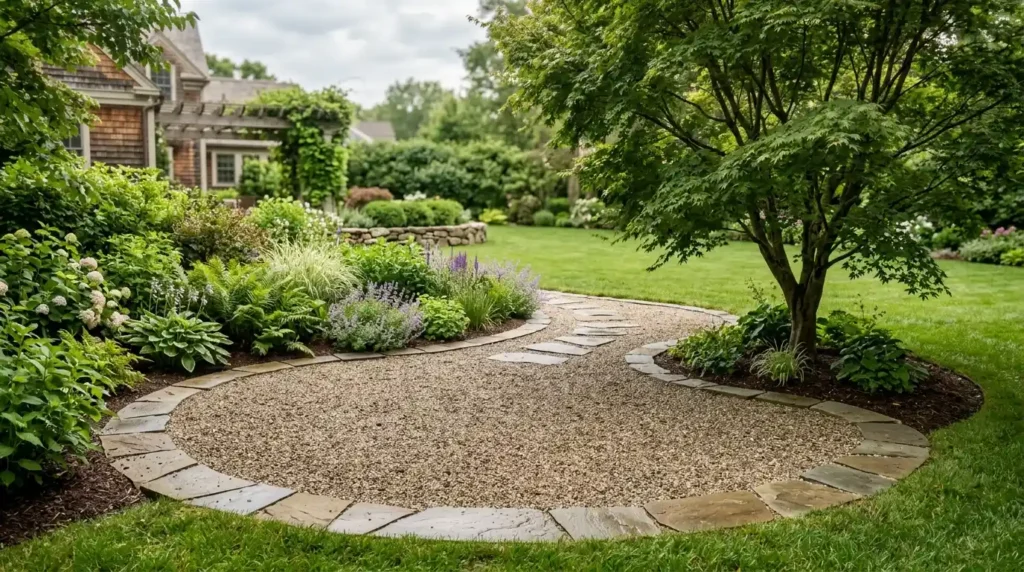
A curved patio can fit around trees, beds, and natural yard lines. Use a garden hose to test the shape before marking the ground.
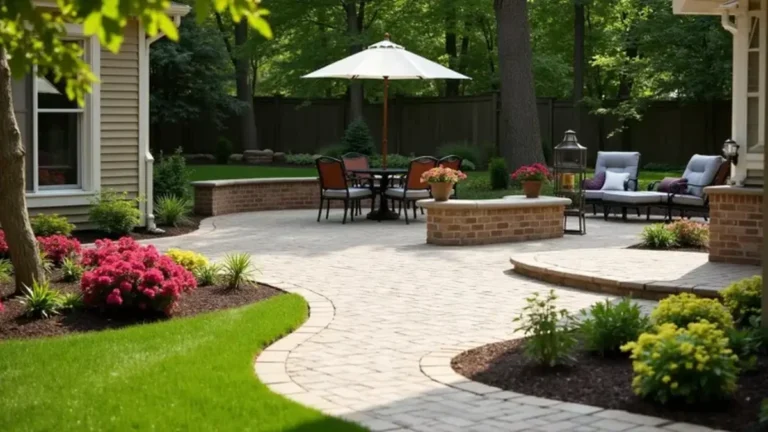
Place pavers along the outside curve or use them as stepping stones through the gravel. Connect the new patio with curved paths and flower beds for a steady look.
Flexible metal edging can hold a smooth curve. Aluminum will not rust, while steel is strong and can develop surface rust unless protected. Plastic costs less but may move or show above the gravel. A stone edge looks natural but can take longer to set.
Avoid tight bends that create thin, unused sections. A broad curve is easier to build and furnish.
Best for: Cottage gardens and yards without straight boundaries.
Watch out for: Curves can require extra cutting when you use pavers along the edge.
Combine Gravel, Pavers, and Raised Beds
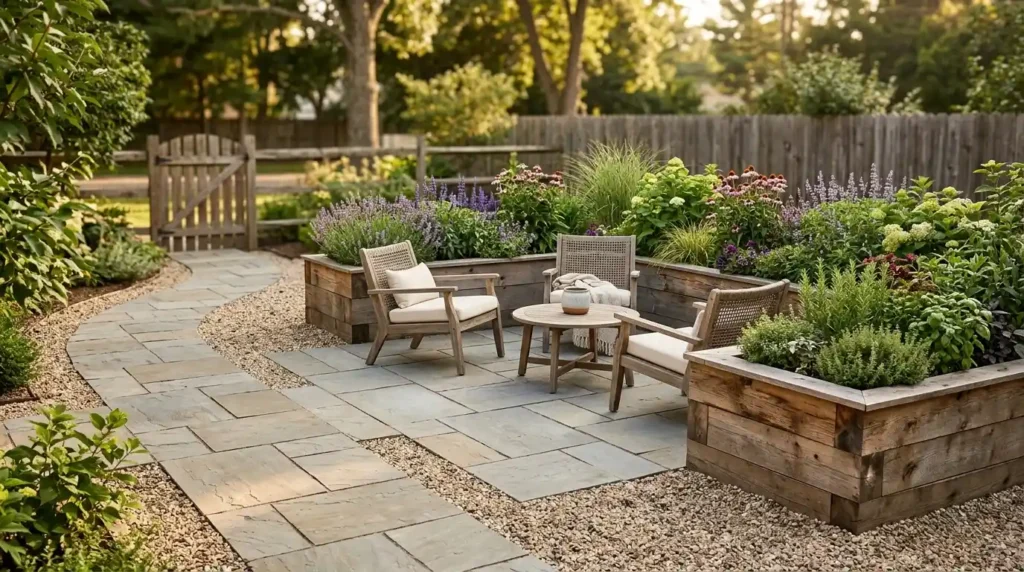
Raised beds can form walls around a patio without closing in the space. Place them along one or two sides and connect them with a matching paver path.
Keep the center stable for seating. Gravel can fill the spaces beside beds and between paved routes.
Leave enough room to reach every plant. You should be able to water, prune, and harvest without leaning across furniture. Keep hose routes clear so they do not cross the main walking area.
If you use wooden beds, avoid trapping damp soil and wet gravel against the outer boards. Constant moisture can shorten the wood’s life. Add drainage space or another suitable barrier based on the bed design.
Best for: Kitchen gardens and patios used for both growing and relaxing.
Watch out for: Raised beds can narrow the patio if their size is not marked out first.
Distinctive Paver and Gravel Patio Designs
Mix Brick Pavers With Pea Gravel
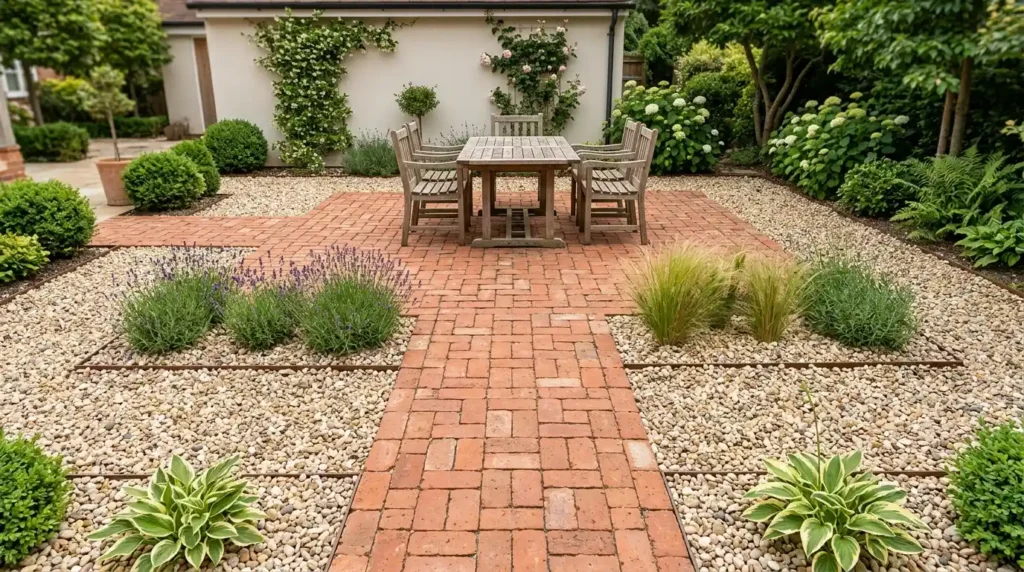
Brick and pea gravel create a warm, classic patio. The soft color of brick works well with cream, tan, gray, or mixed gravel.
Use brick beneath tables, chairs, and busy walking routes. Let the gravel fill quieter sections or form a border around the main paved area.
Pea gravel feels smooth because its stones are rounded. That same shape makes it more likely to roll and shift. Strong edging is important, and you may need to rake the stones back into place.
Crushed granite or angular gravel moves less because the sharp pieces fit together. However, it can feel rougher beneath bare feet.
Best for: Cottage, farmhouse, and traditional home styles.
Watch out for: Pea gravel can travel into grass and planting beds if the edge is too low.
Pair Dark Pavers With Pale Gravel
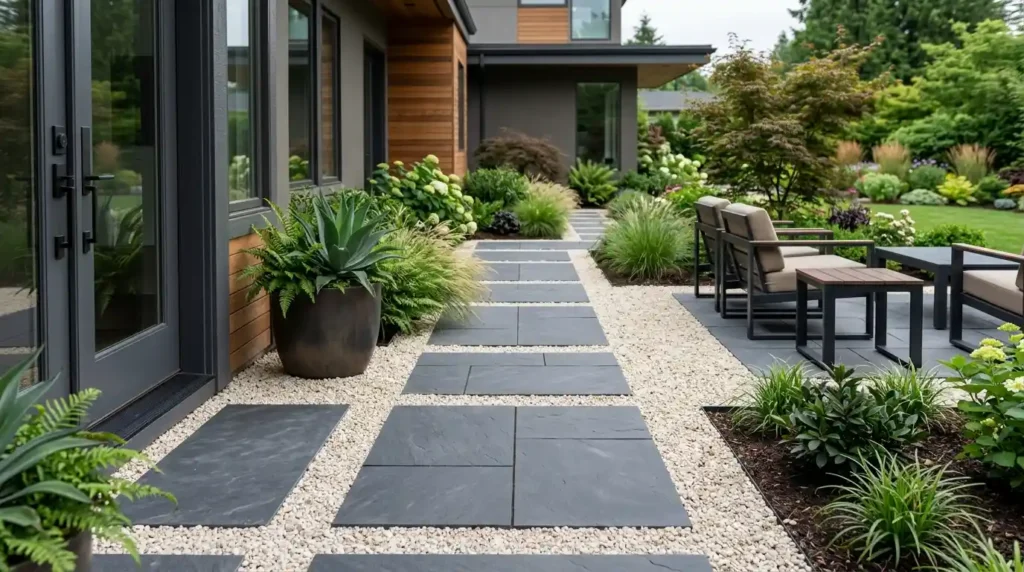
Dark pavers and light gravel create a clear, modern contrast. Repeat the dark color in furniture frames, planters, or door trim for a connected design.
Choose one pale gravel rather than mixing several colors. The strong light-and-dark pattern already creates enough visual interest.
Test samples in both sun and shade. A paver that looks soft gray in a store may appear almost black outside. Very dark materials can also become hot in direct summer sun.
Place a sample on the ground and leave it there for several days. Check it in morning light, full sun, and evening shade. Touch the surface on a hot afternoon before using it around bare feet or pets.
Best for: Modern houses and simple outdoor rooms.
Watch out for: Pale gravel may show leaves, soil, and stains more clearly.
Build a Two-Level Patio With Gravel Transitions
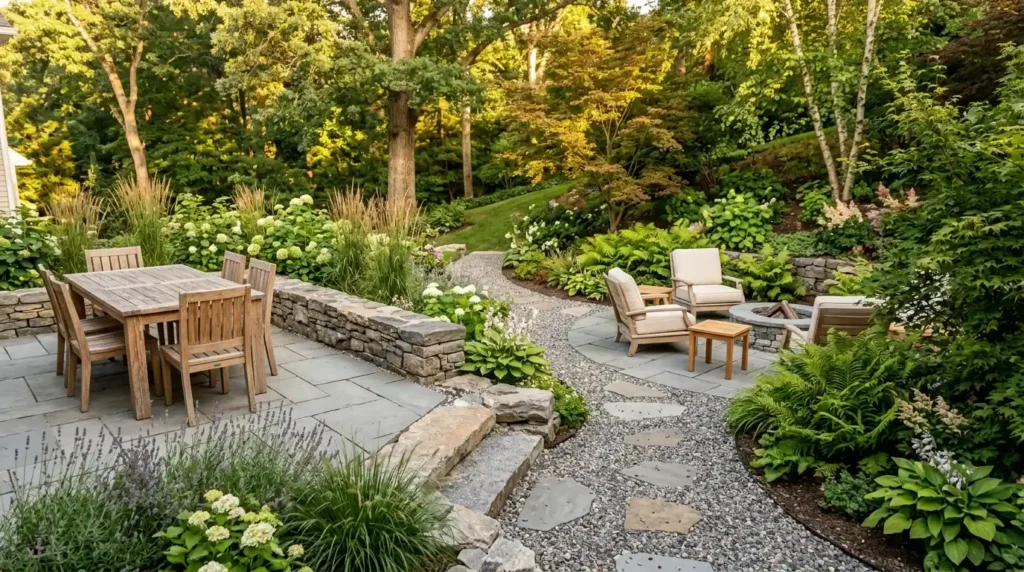
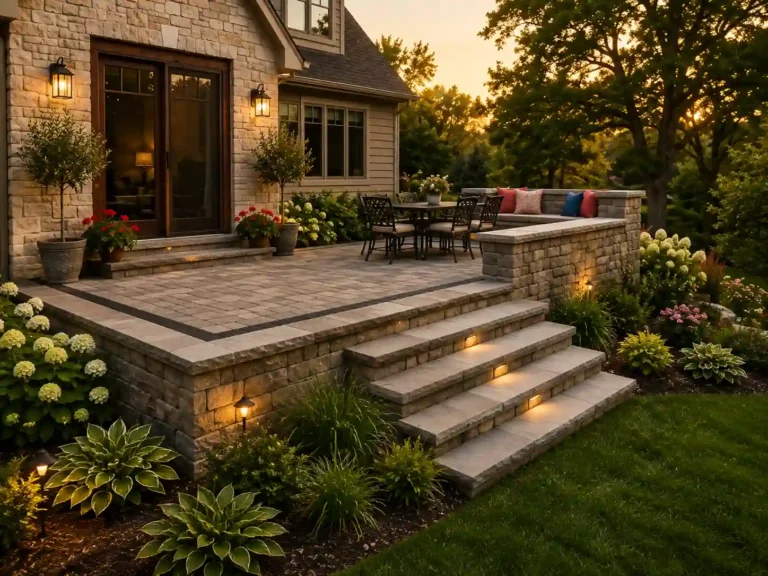
A two-level layout can make a sloped yard more useful. Use pavers for the main seating areas and gravel for paths or small transition spaces.
One level might hold the dining table. The second could contain lounge chairs or garden beds. Keep each main surface large enough for its purpose.
Height changes need careful work. Steps require stable footings, even heights, safe edges, and good water control. A steep slope may also need a retaining wall designed for local soil and loads.
Add lights near steps so people can see the change after dark. Place fixtures where they will not create glare or become trip points.
Best for: Sloped yards with enough room for separate activity areas.
Watch out for: Retaining walls, major grading, and built steps may require a contractor or permit.
How to Plan a Patio That Stays Neat
A beautiful layout will fail if the ground beneath it moves. Start by marking the patio with stakes, string, or landscape paint. Put your furniture inside the outline and test every seat and walking route.
Check for underground utilities before digging. In the United States, contact 811 before excavation. Other countries have their own utility-locating services.
Study water flow during rain. Your patio should direct water away from the house without sending it into another property. The needed slope and drainage system depend on the site. Ask a qualified local contractor if water already collects near your foundation.
Do not place pavers straight on loose soil. They need a suitable, compacted base that supports them and manages water. Base materials and depths vary by soil, climate, paver type, and expected load. Freeze-and-thaw cycles may require added preparation. This paver base guide explains why firm compaction matters.
Install strong edging before spreading the decorative gravel. Set the pavers at a steady height and check them with a level. The paver surfaces should stay clear of loose stones where people walk.
Landscape fabric can help separate gravel from the soil in some projects. It will not stop every future weed. Dust, soil, and seeds can collect above the fabric, allowing new weeds to grow.
If a family member uses a wheelchair, walker, or cane, include a firm route rather than loose gravel alone. Accessible surfaces should be firm, stable, and slip-resistant, as noted in the ADA design standards.
Plan for basic care. You may need to rake gravel, remove leaves, clean paver joints, pull weeds, and add more stone after settling.
Quick Patio Planning Worksheet
Write down these details before ordering materials:
- Patio length and width
- Location of doors, gates, steps, and drains
- Table and chair measurements
- Space needed behind pulled-out chairs
- Paver size and planned spacing
- Number of pavers, including a waste allowance
- Gravel type and area to cover
- Base and gravel depths set for local conditions
- Total edging length
- Water-flow direction
- Utility locations
- Fire-pit rules and maker clearances
- Access needs
- Tools, delivery fees, and disposal costs
Choose a Layout That Fits How You Live
The best patio ideas with pavers and gravel balance comfort, appearance, and upkeep. Pavers provide firm areas for walking, dining, and furniture. Gravel fills open sections, supports water control, and helps the patio blend with the garden.
Your final choice should fit the yard, climate, furniture, and amount of care you can provide. Before buying anything, mark your favorite design with stakes and string. Put the furniture inside the outline and use the area for a day.
That simple test can expose tight paths, weak furniture placement, and poor proportions. Once the layout feels comfortable, you can build a paver and gravel patio that works as good as it looks.