15 River Rock Landscaping Ideas for a Natural Yard
Bare soil, muddy paths, and tired garden beds can make your yard feel unfinished. You may want to fix these areas, but grass and mulch are not always the best choices.
River rock can cover bare ground, control mud, and give your yard a clean look. It comes in many sizes and natural colors. It also works with plants, concrete, wood, pavers, and other outdoor materials.
Still, placing stones anywhere you see empty soil can cause problems. The rocks may sink, spread, trap leaves, or send water in the wrong direction.
These river rock landscaping ideas will help you avoid those mistakes. You will learn how to use river rocks for paths, garden beds, drainage areas, slopes, and front yard features. You will also learn how to pick the right size, prepare the ground, and estimate how much material you need.
Why River Rock Can Fix Common Yard Problems
River rock adds color and texture without making your yard look too busy. Its smooth shape creates a softer look than sharp gravel.
Landscaping with river rocks can also fix practical problems. The stones can cover muddy soil, protect areas from light erosion, and create clean borders around paths or garden beds.
River rock does not break down like wood mulch. You will not need to replace it every year. However, it is not free from upkeep. Leaves, soil, and weeds can still collect between the stones.
River rock also works well with many home styles. Gray stones can suit a modern home. Brown, tan, and mixed stones often fit rustic or traditional homes.
The best results depend on good planning. You need to choose the right stone size and place it where it can serve a clear purpose.
How to Choose the Right River Rock for Your Yard
Choosing river rock by color alone can lead to an expensive mistake. The stone size should match how you plan to use the area.
Ask these questions before you order:
- Will people walk across the rocks?
- Will rainwater flow through the area?
- Do nearby trees drop many leaves?
- Will plants grow beside or through the stones?
- Does the stone color match your house and paving?
Ask your local supplier for a sample. Place it beside your home, patio, and plants. Look at it in both sun and shade before making a final choice.
Small River Rock
Small river rock works well in narrow spaces and decorative beds. You can also place it between stepping stones or around small water features.
Small stones are easy to spread. However, they may move into the lawn or mix with soil. Strong edging can help keep them in place.
Medium River Rock
Medium river rock is a flexible choice for most home projects. It works well in garden borders, foundation strips, dry creek beds, and front yard features.
These stones create a clear texture without looking too heavy. They are also large enough to stay in place better than tiny stones.
Large River Rock
Large stones work well near ponds, drainage channels, slopes, and dry creek beds. They can handle moving water better than small rocks.
Large river rocks also make strong focal points. However, they are heavy and may be hard to place without help.
Stone measurements can differ between suppliers. Always inspect the rocks before ordering a large amount.
15 River Rock Landscaping Ideas for a Practical Yard
You do not need to cover your whole yard with stone. One well-planned feature can solve a problem and improve the way your outdoor space looks.
Use these river rock landscaping ideas to find a design that fits your yard, budget, and maintenance needs.
Create a Curved Dry Creek Bed
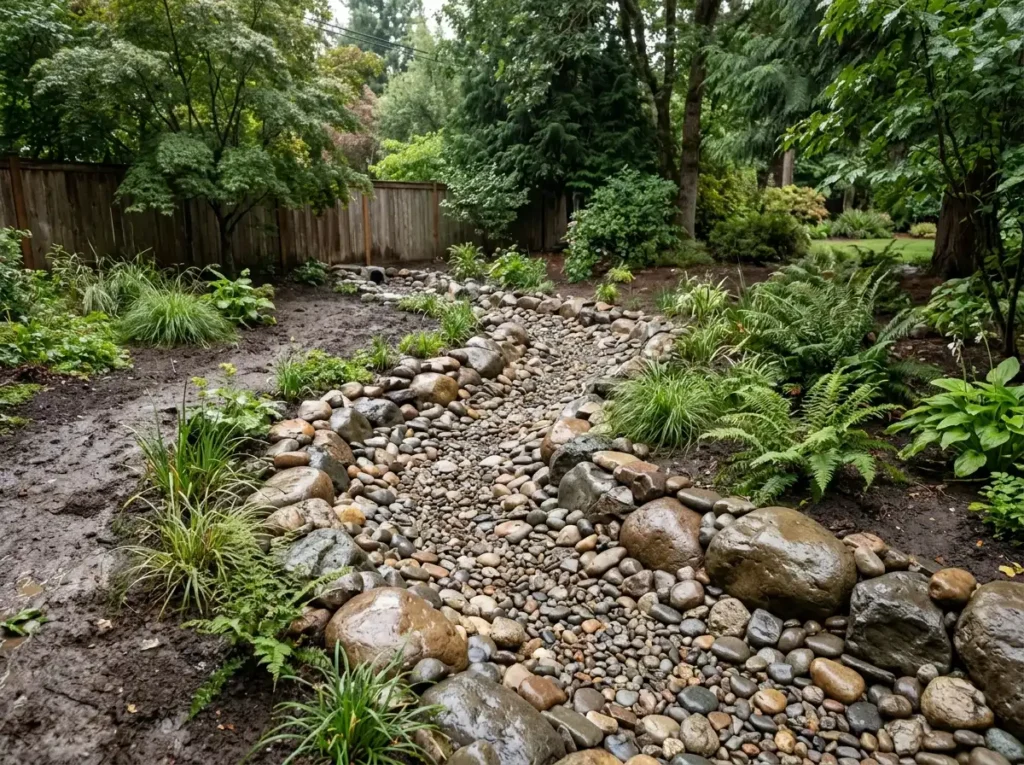
A dry creek bed can turn a low, muddy area into a natural-looking yard feature. It may also guide rainwater when the ground has the correct slope.
Mark a soft, curved line through the yard. Avoid making the creek bed perfectly straight. Natural streams bend around plants, stones, and changes in the ground.
Place large rocks along the sides and around each curve. Fill the middle with smaller river rock. Add grasses, sedges, ferns, or other plants that fit your local conditions.
A decorative creek bed does not always control water. If water will flow through it, make sure the channel leads to a safe outlet.
Best for: Low or muddy yard areas
Rock size: Mixed medium and large stones
Maintenance: Moderate
Main caution: Do not send water toward your house
Guide Rainwater From a Rain Garden
A rain garden holds rainwater for a short time while it slowly enters the soil. River rock can form a channel that guides extra water into or away from the garden.
Make the channel wide and slightly curved. Place larger rocks where water enters with more force. These stones can protect the soil from washing away.
Plant native grasses and flowers near the edges. Choose plants that can handle both wet and dry periods.
Check where the overflow will go during a heavy storm. Water should not reach your foundation, driveway, or a neighbor’s yard.
Best for: Yards with a rain garden
Rock size: Medium and large
Maintenance: Moderate
Main caution: Plan a safe overflow route
Stop Mud Below a Downspout
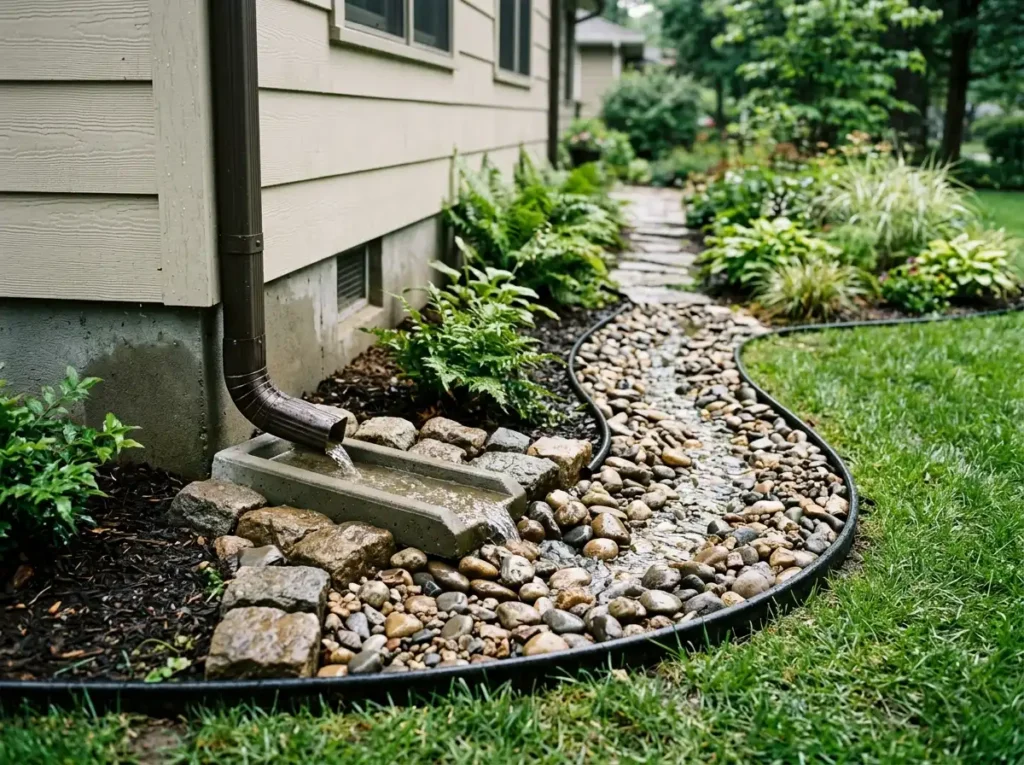
A downspout can create a muddy hole beside your home. River rock can protect the soil and make the area look cleaner.
Start with a downspout extension or solid splash block. This part should carry water away from the foundation. Place river rock around the outlet to reduce soil movement.
You can also build a shallow stone channel that leads toward a lawn, drain, or rain garden. Add edging so the stones do not spread into the grass.
Do not place a small pile of rocks under the downspout and assume the problem is fixed. The water still needs somewhere safe to go.
Best for: Muddy downspout areas
Rock size: Medium
Maintenance: Low
Main caution: Rocks cannot replace proper drainage
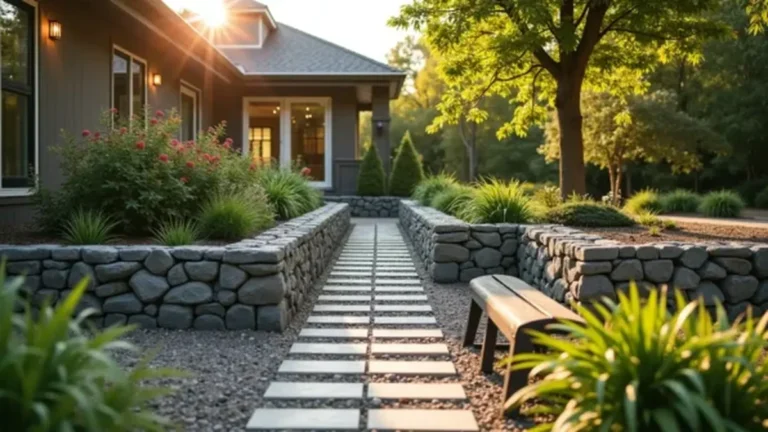
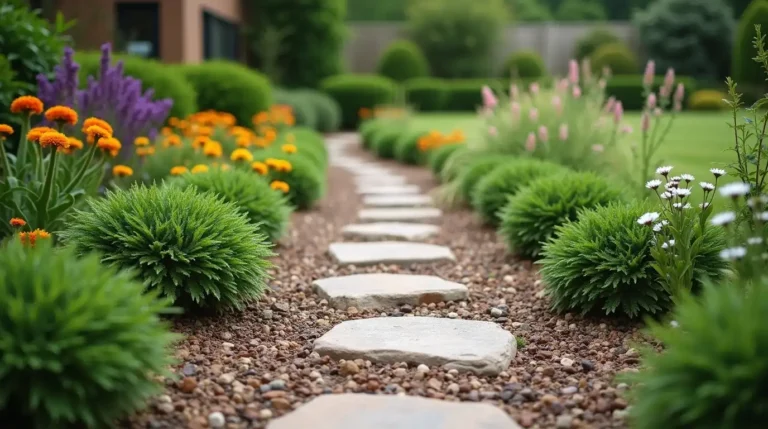
Add a Stepping-Stone Path
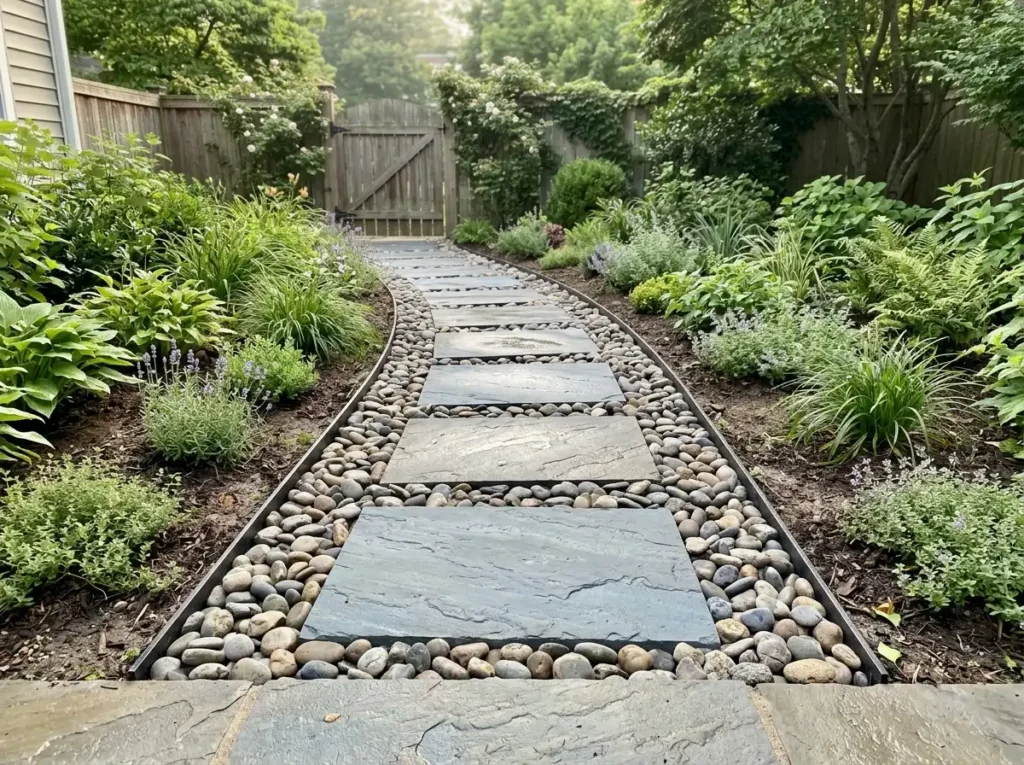
Loose river rock can move under your feet. Flat stepping stones give you a safer and more stable walking surface.
Create a path from your patio to a garden shed, side gate, or seating area. Place each stepping stone at a comfortable walking distance. Test the spacing before setting the stones into the ground.
Add a firm base under each paver. Fill the spaces around them with smooth river rock. Install edging on both sides of the path.
This is one of the most useful river rock walkway ideas for lightly used areas. For busy paths, solid paving may work better.
Best for: Garden and side yard paths
Rock size: Small or medium
Maintenance: Low to moderate
Main caution: Use flat stones for each step
Make a Clean Border Around Your House
A narrow river rock border can create a neat line between your home and lawn. It can also reduce mud and soil marks on the lower part of your siding.
Remove weeds and shape the ground so it slopes away from the house. Add strong edging along the lawn side. Spread the stones in a smooth, even layer.
Keep the rocks below siding, vents, drain openings, and weep holes. Do not cover outdoor taps or utility boxes.
River rock landscaping around a house may improve the look of the foundation area. However, it does not waterproof the foundation or fix standing water.
Best for: Foundation strips
Rock size: Medium
Maintenance: Low
Main caution: Keep vents and siding clear
Edge Flower Beds With River Stones
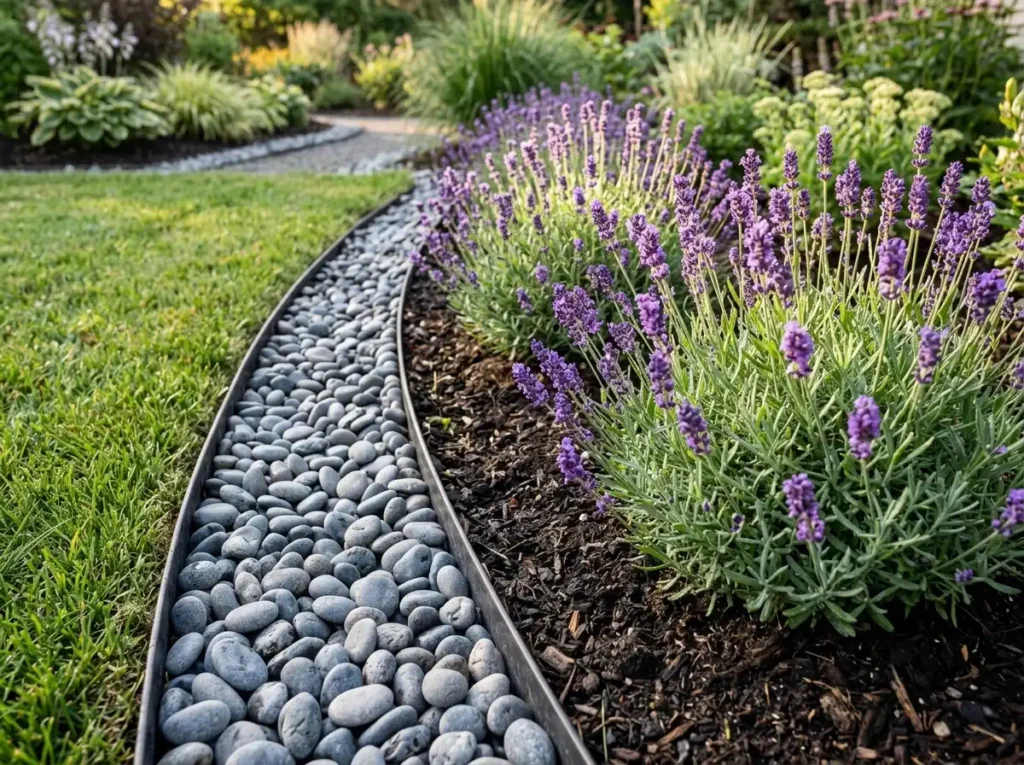
You do not need to fill an entire flower bed with rock. A narrow river rock edge may be enough to give the bed a clean finish.
Choose a stone color that stands out from the soil, mulch, or paving. Gray stones can look good beside lavender. Brown stones pair well with grasses and green shrubs.
Create a firm edge before adding the rock. This keeps stones out of the lawn and away from mower blades.
Repeat the same stone in another part of the yard. This small detail helps the whole design feel connected.
Best for: Flower and shrub beds
Rock size: Small or medium
Maintenance: Low
Main caution: Keep loose stones away from the mower
Frame a Pond or Fountain
River rock looks natural beside water. You can use it to hide pond liners, cover pump tubes, and soften hard edges.
Mix several stone sizes instead of using one even row. Place a few large rocks as anchors. Fill small gaps with medium and small stones.
Add ferns, grasses, or moisture-loving plants around selected areas. Leave some open space so the edge does not look crowded.
Keep access to pumps, filters, and drain points. A beautiful edge can become frustrating if you need to remove many heavy stones for every repair.
Best for: Ponds, fountains, and waterfalls
Rock size: Mixed sizes
Maintenance: Moderate
Main caution: Keep equipment easy to reach
Finish the Edge of a Patio or Deck
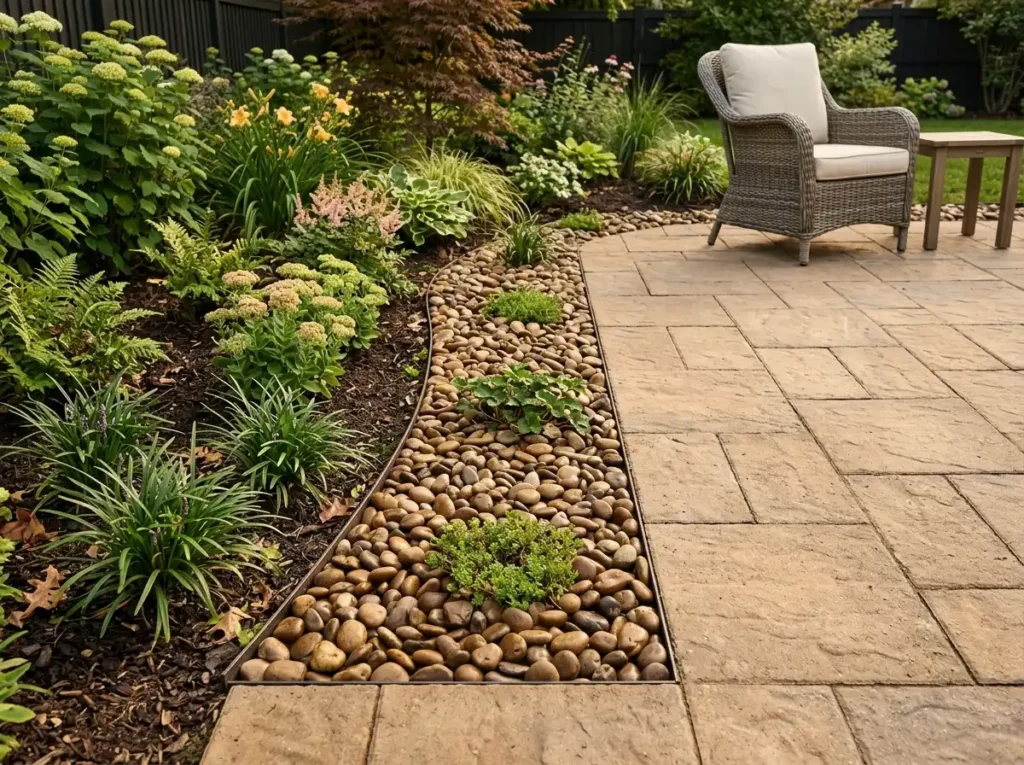
Small gaps around a patio can collect weeds and mud. A band of river rock can create a simple transition between paving and planting areas.
Match the rock color to the patio. Warm brown stones work well with tan pavers. Cool gray stones can suit plain concrete.
Install edging to stop the rocks from rolling onto the patio. You can add a few low plants to break up a long stone strip.
Keep the border narrow. A wide area of loose rock may make it harder to move chairs or walk around the patio.
Best for: Patio and deck edges
Rock size: Small or medium
Maintenance: Low
Main caution: Keep stones off the walking surface
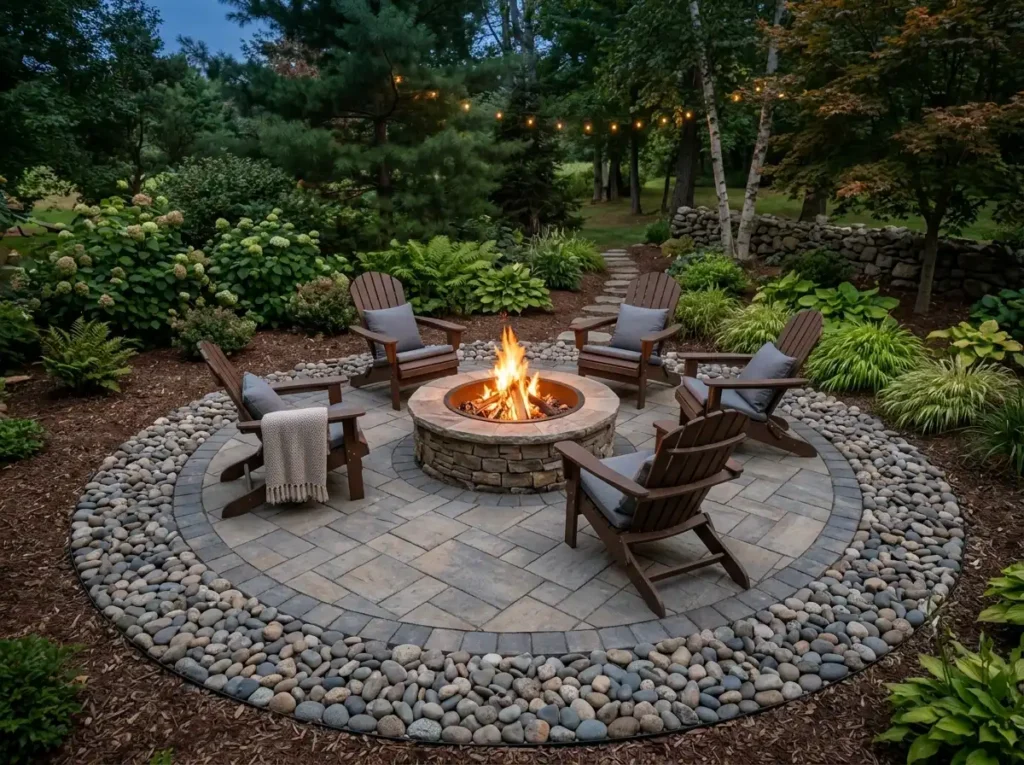
Add a Safe Border Around a Fire Pit Area
River rock can form a decorative border around a fire pit seating area. It should stay outside the main fire zone.
Use pavers, concrete, or another approved fire-safe material below the fire pit. Place chairs on a firm surface that will not shift under weight.
Keep plants, dry leaves, and other materials away from flames. Follow local rules for fire pit size and distance from buildings.
Do not place damp river rocks inside a fire pit. Some rocks can hold moisture. Heat may cause them to crack or break.
Best for: Fire pit seating zones
Rock size: Medium
Maintenance: Moderate
Main caution: Keep river rock outside the fire area
Fix a Narrow or Shaded Side Yard
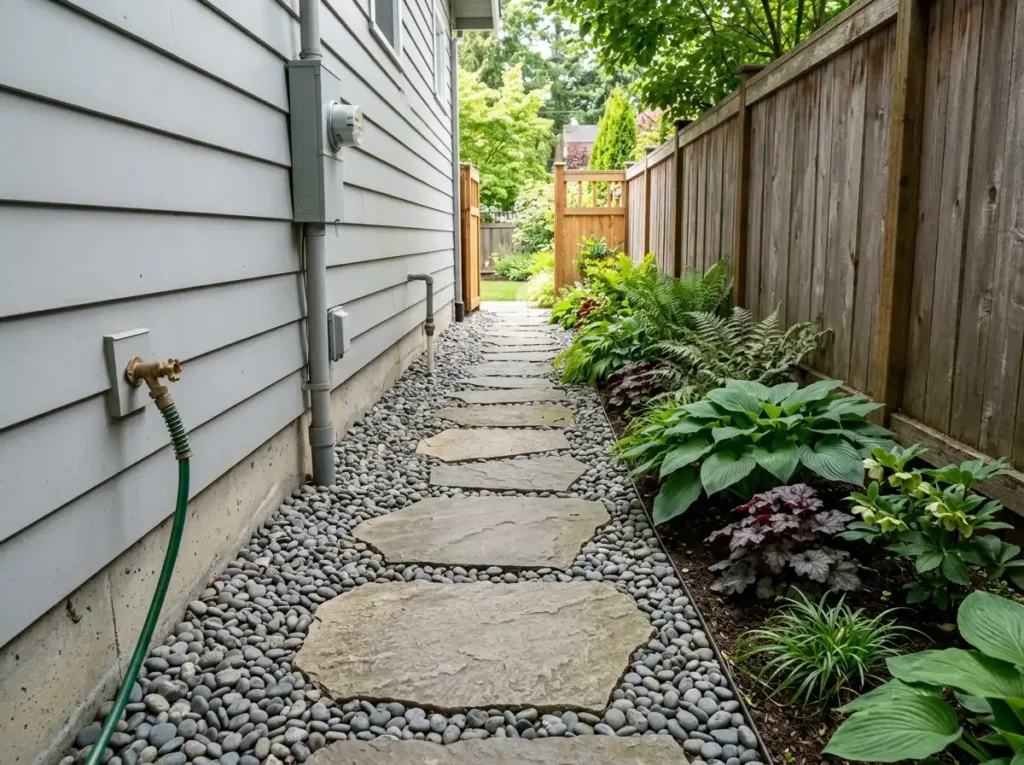
Grass often struggles in narrow side yards. Heavy shade, foot traffic, and poor air flow can leave the ground thin and muddy.
Create a simple path with stepping stones and river rock. Add shade-friendly plants where there is enough room. Keep utility equipment and outdoor taps easy to reach.
Make sure the ground carries water away from the house. Do not use stone to hide a drainage problem.
This design works well for a lightly used path between the front and back yards. It can also reduce the need to mow a tight space.
Best for: Shaded side yards
Rock size: Small or medium
Maintenance: Low
Main caution: Keep service areas open
Create Paths Between Raised Garden Beds
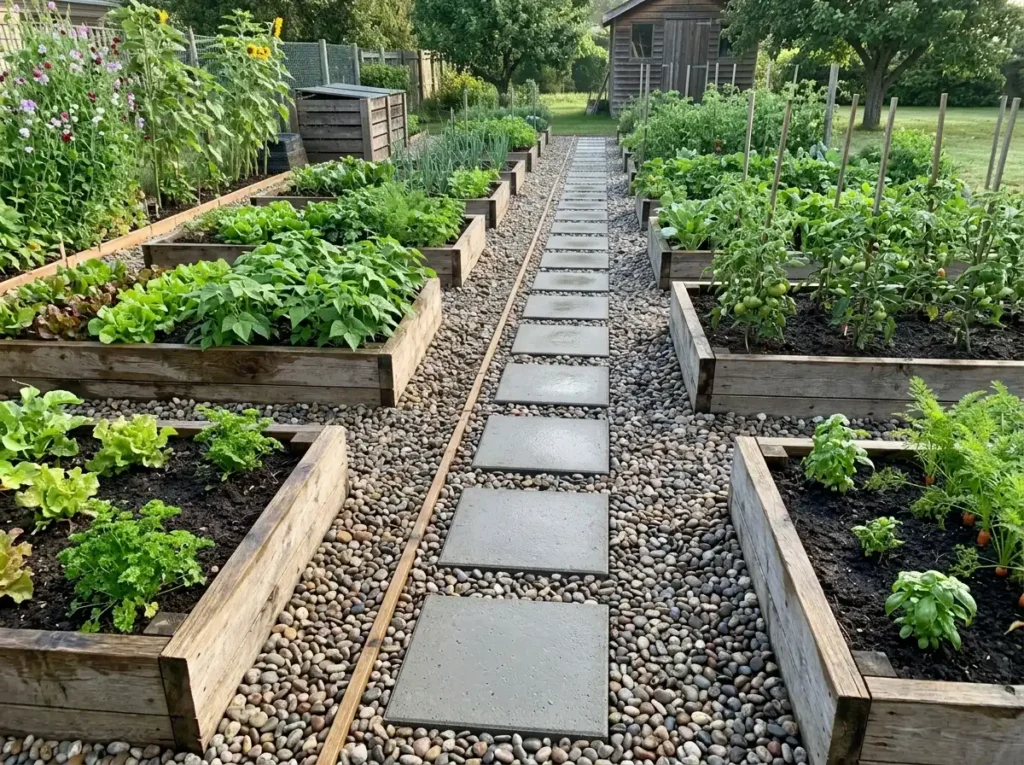
Muddy paths can make vegetable gardening harder. River rock can keep the spaces between raised beds cleaner.
Remove weeds and add a firm base before placing the rocks. Use edging around each garden bed so loose stones do not mix with the soil.
Think about how you use the path. Rounded river rock may feel unstable under a wheelbarrow. It may also be hard for people with limited movement.
Use flat pavers through the center if you need a firmer walking line. Compacted gravel may be a better choice for very busy garden paths.
Best for: Raised garden bed paths
Rock size: Small or medium
Maintenance: Moderate
Main caution: Check that carts can move safely
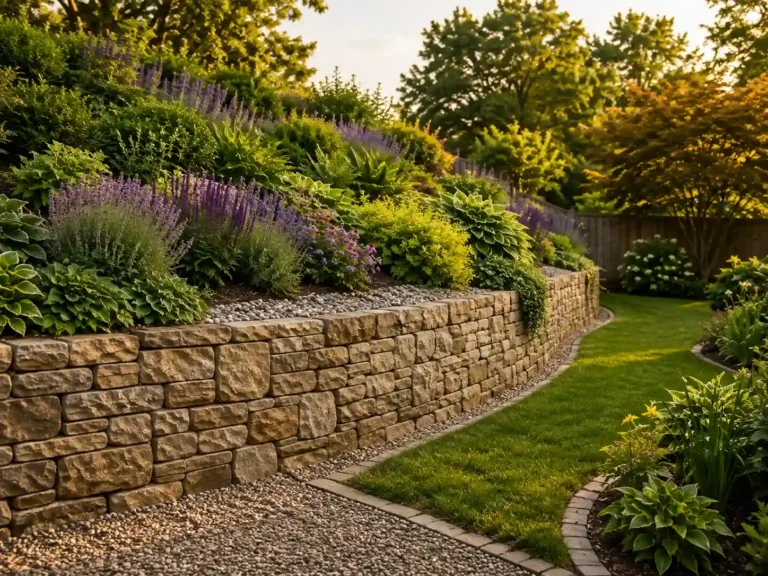
Support a Gentle Slope With Rocks and Plants
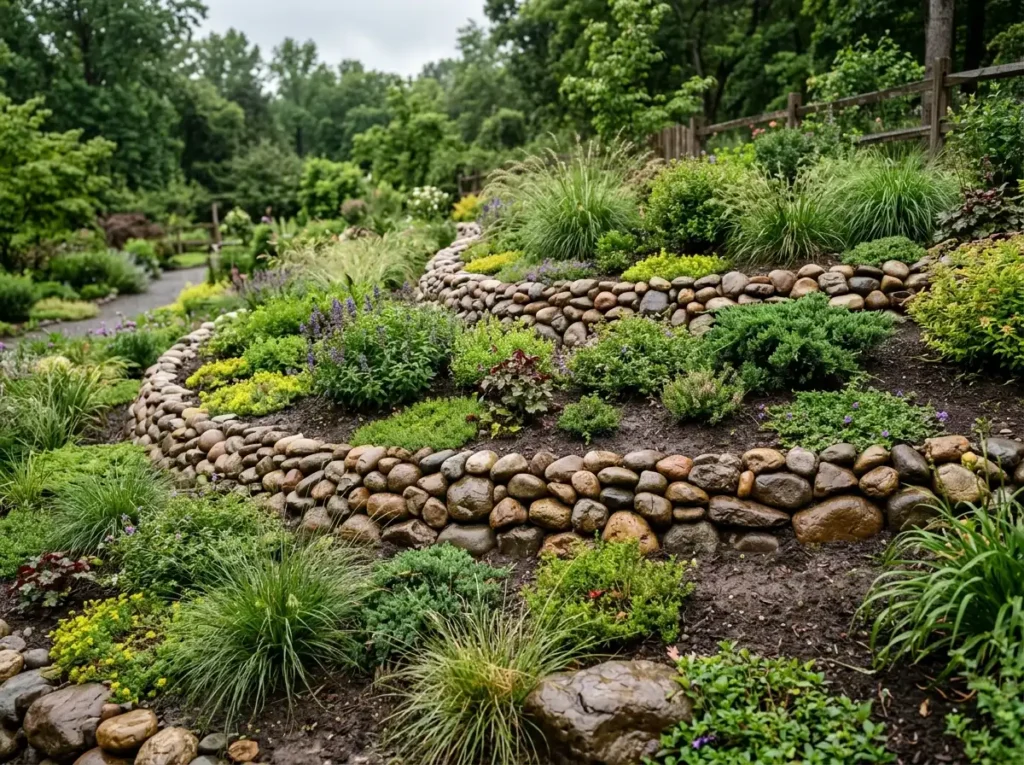
A gentle slope may lose soil during heavy rain. Curved rock bands can slow the flow of water and add structure.
Place larger stones across the slope instead of running them straight downhill. Add deep-rooted grasses, shrubs, or ground covers between the stone bands.
Plants help hold the soil. The rocks protect exposed spots and reduce the force of moving water.
Do not pour loose river rock onto a steep slope. The stones may roll downhill while soil washes beneath them. Serious erosion may need grading, drains, terraces, or professional support.
Best for: Gentle slopes
Rock size: Medium and large
Maintenance: Moderate
Main caution: River rock alone cannot hold a steep slope
Improve a Mailbox or Driveway Entrance
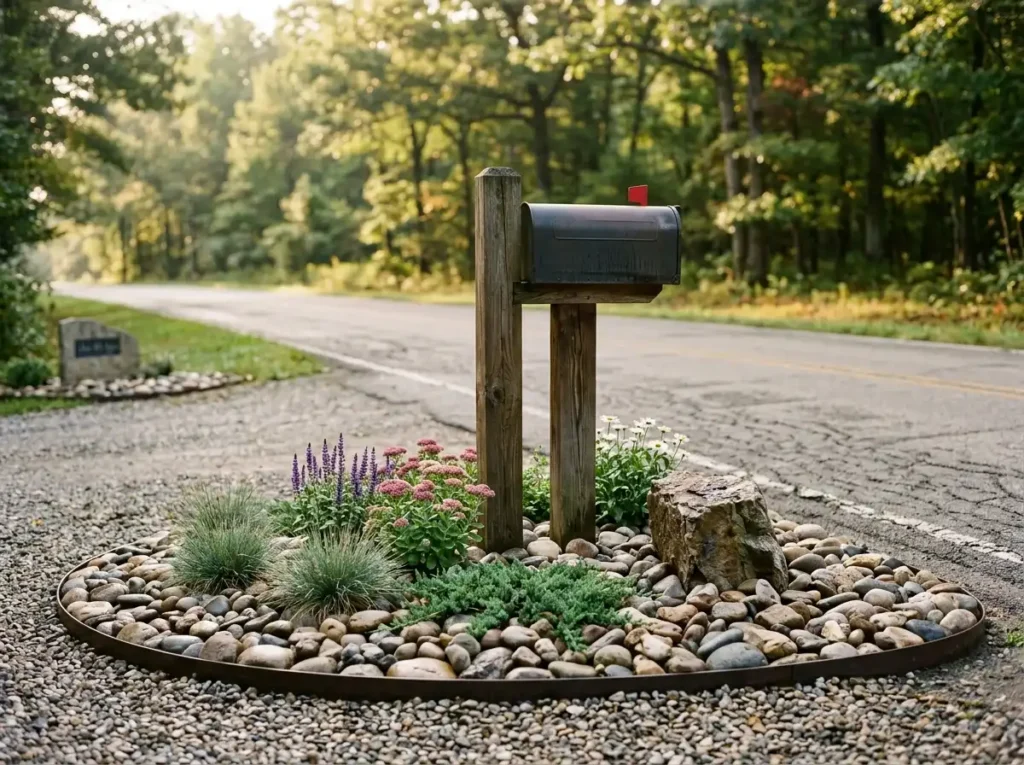
A small river rock bed can make your mailbox or driveway entrance easier to notice. It can also reduce grass trimming around posts and signs.
Create a simple round, oval, or curved bed. Add one large stone or a small group of plants as the main feature.
Choose low plants that will not block drivers’ views. Dwarf grasses, creeping juniper, and short flowers can work well.
Keep loose rocks away from vehicle tires and turning areas. In cold areas, choose plants that can handle road salt.
Best for: Mailboxes and driveway entrances
Rock size: Medium with a few large stones
Maintenance: Low
Main caution: Protect clear views of the road
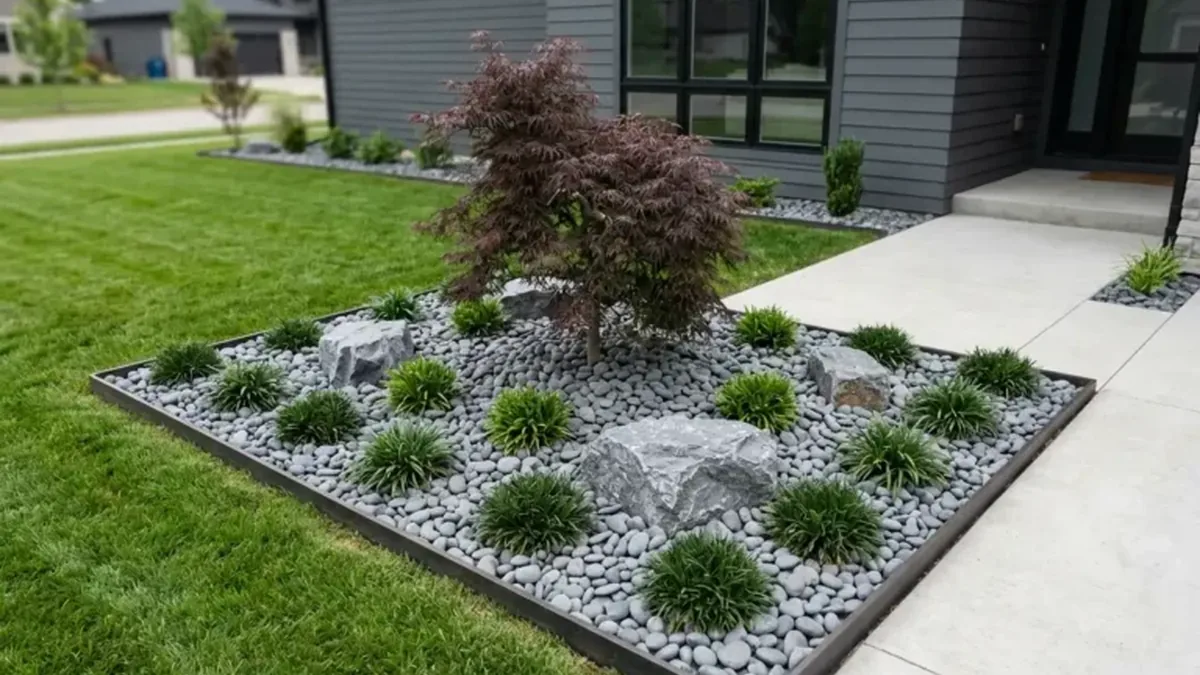
Build a Modern Front Yard Rock Island
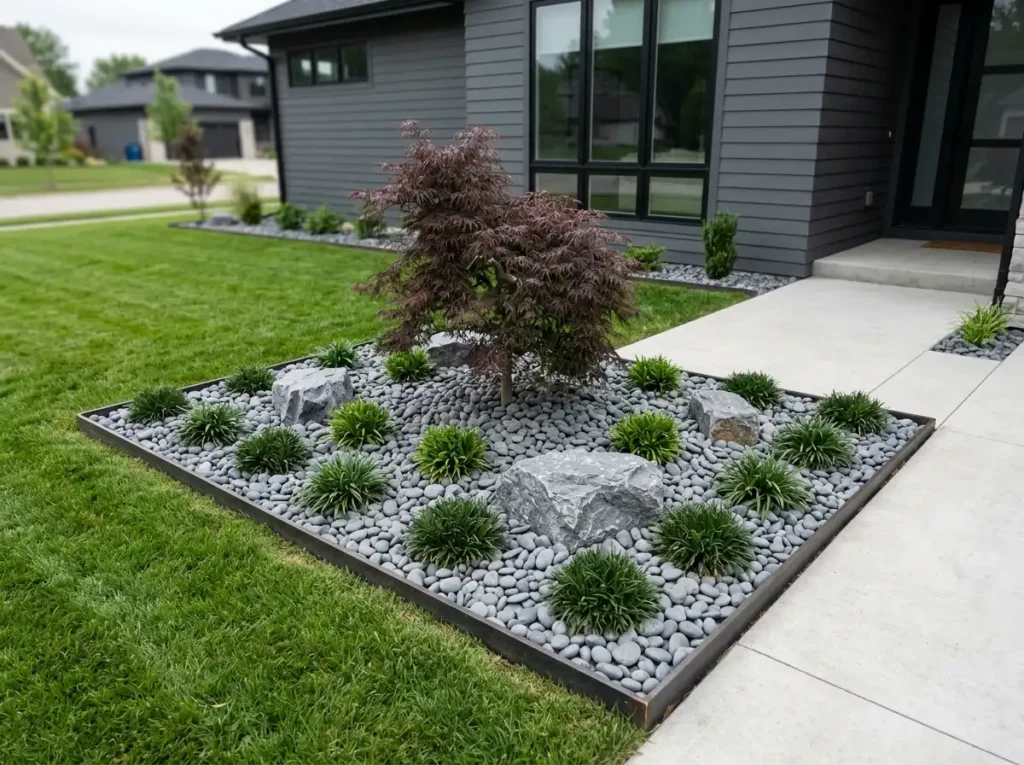
A front yard rock island can add shape to a flat lawn. The best designs use a small number of materials.
Choose a curved bed for a soft look or a straight shape for a modern home. Add one feature boulder, small tree, or sculptural plant.
Use two or three plant types and repeat them across the bed. Leave some open stone between plant groups.
Too many colors can make the design feel messy. Use one river rock color, one edging type, and a simple plant mix. These river rock front yard ideas often look best when the layout stays clean.
Best for: Open front lawns
Rock size: Medium and large
Maintenance: Low to moderate
Main caution: Do not crowd the bed
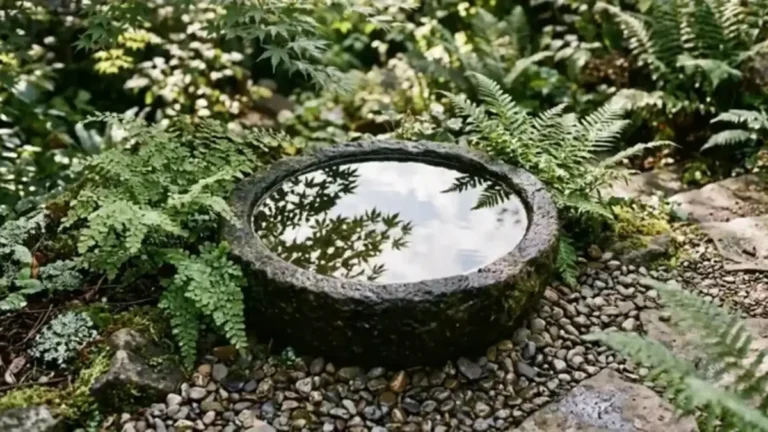
Create a Quiet Zen-Inspired Corner
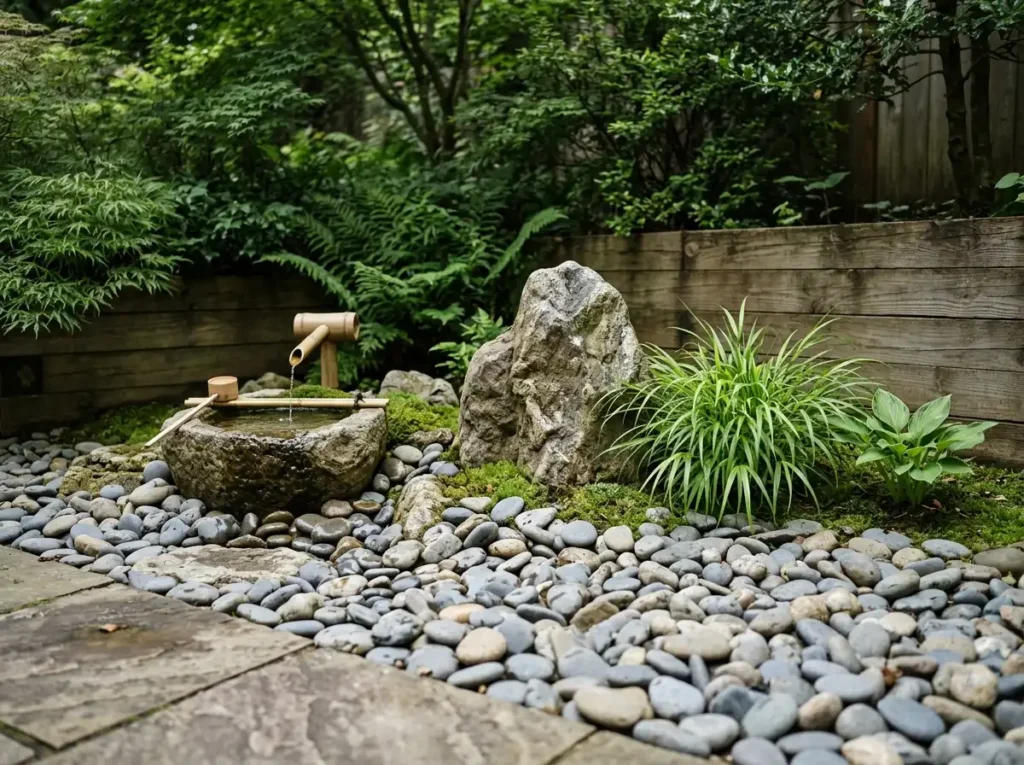
A quiet corner near a patio or window can become a simple place to rest. You do not need a large yard to create this feature.
Use smooth stones, one feature rock, and a few simple plants. Add a small fountain, basin, or bench when space allows.
Keep the colors calm and limited. Open space is part of the design, so avoid filling every gap.
A Zen-inspired corner is different from a traditional Japanese garden. Use the idea as simple design inspiration unless you have researched the traditional style in detail.
Best for: Small, quiet garden corners
Rock size: Small and medium
Maintenance: Low
Main caution: Keep the layout simple
How to Install River Rock Without Weeds or Sinking
River rock often sinks, spreads, or fills with weeds because the ground was not prepared first. Good preparation takes extra time, but it can prevent many future problems.
1. Measure and Mark the Area
Use stakes, string, or marking paint to show the project shape. Measure the length and width before buying materials.
For curved areas, divide the space into smaller sections. Measure each part and add the totals.
2. Remove Grass and Weeds
Remove grass, weed roots, and loose soil. Do not place river rock directly over living grass.
The grass may grow through gaps. It may also break down and leave low spots under the stones.
3. Fix the Ground Level
Check how water moves across the area. The ground near your home should slope away from the foundation.
Fill deep holes and remove high spots. Compact loose soil where needed.
4. Add the Right Base
A firm gravel base may help under paths and other high-use areas. Woven landscape fabric can help separate stone from soil in permanent, unplanted spaces.
Fabric does not stop weeds forever. Soil and leaves may collect on top, which gives new weeds a place to grow.
Avoid solid plastic sheeting. It can trap water and create drainage problems.
5. Install Edging
Place edging before spreading the rock. Metal, plastic, concrete, and stone edging can all work.
Choose an edge that matches the use of the space. It should be high enough to hold the stones without becoming a trip risk.
6. Spread the River Rock
Decorative beds often need a layer about 2 to 3 inches deep. Paths and drainage areas may need 3 to 4 inches.
Larger stones may need a deeper layer. Your supplier can give advice based on the size and shape of the rock.
7. Check the Finished Area
Rake the rocks into an even layer. Check for low spots, exposed fabric, and loose edging.
Inspect the area after rain. Fix any place where water collects or carries stones away.
How Much River Rock Do You Need?
Use this formula to estimate the amount:
Cubic yards needed = square feet × depth in inches ÷ 324
For example, you have a 200-square-foot area. You want the stone to be 3 inches deep.
200 × 3 ÷ 324 = 1.85 cubic yards
You may order about 2 cubic yards to allow for low spots and settling.
One cubic yard covers about:
- 108 square feet at 3 inches deep
- 81 square feet at 4 inches deep
These numbers are estimates. Uneven ground and stone shape can change the final amount.
10 River Rock Landscaping Mistakes to Avoid
Most river rock problems come from poor placement, not from the stone itself.
1. Choosing Rocks That Are Too Small
Tiny stones can wash away or spread into the lawn.
Do this instead: Use medium or large stones in areas with flowing water.
2. Skipping the Edging
River rock can slowly move into grass, paths, and garden beds.
Do this instead: Install a strong border before spreading the stone.
3. Placing Rock Over Grass
Grass and weeds may grow through the stones. The ground may also sink as the plants break down.
Do this instead: Remove the grass and roots first.
4. Sending Water Toward the House
A stone channel may make drainage look controlled while still sending water toward the foundation.
Do this instead: Check the slope and provide a safe outlet.
5. Covering Tree Trunks
Deep piles of rock can trap heat and hide damage near the trunk.
Do this instead: Keep stones away from the trunk and visible root flare.
6. Using Loose Rock on Busy Paths
Rounded rocks may shift under feet, carts, and wheelchairs.
Do this instead: Add pavers or use a firm, compacted path material.
7. Filling Every Empty Area
Too much rock can make a yard feel hot and hard.
Do this instead: Mix stone with plants, soil, lawn, and open space.
8. Mixing Too Many Colors
Several unrelated stone colors can make the yard look unplanned.
Do this instead: Choose one main river rock color and repeat it.
9. Ignoring Falling Leaves
Leaves can become trapped between stones and turn into soil.
Do this instead: Avoid large rock beds under trees that drop heavy leaf litter.
10. Expecting Zero Weeds
Seeds can land in soil that collects above the rocks.
Do this instead: Remove young weeds early and clear organic waste often.
Good preparation matters more than adding a thick layer of stone.
How to Plan River Rock Cost and Maintenance
River rock may be sold by the bag, ton, or cubic yard. Bagged rock works well for small projects. Bulk delivery is often easier for large beds, paths, and drainage areas.
Prices vary by stone size, color, location, and delivery distance. Ask for a full delivered price before placing your order.
Your total cost may include:
- River rock
- Delivery
- Edging
- Base gravel
- Landscape fabric
- Grass or soil removal
- Tool rental
- Professional labor
Do not compare material prices alone. A cheap stone may cost more after delivery.
Monthly or As Needed
- Pull visible weeds.
- Rake loose rocks back into place.
- Clear drains and water channels.
- Remove fallen branches and waste.
Each Season
- Blow or rake out leaves.
- Check edging for movement.
- Look for sinking areas.
- Inspect drainage after heavy rain.
- Add stone where the layer has become thin.
Every Few Years
Soil and plant waste may build up between the rocks. Remove this material before adding more stone.
You may also wash stones in small areas. Large rock beds are harder to clean, so regular leaf removal can save time later.
Choose the Right River Rock Idea for Your Yard
River rock can fix muddy areas, create cleaner borders, guide water, and add texture to an empty yard. It works well around paths, patios, ponds, garden beds, and front yard features.
The right design starts with a clear purpose. Choose the correct stone size. Prepare the ground. Add edging. Check the direction of rainwater before spreading the rocks.
Start with one small space instead of changing the whole yard at once. Measure the area and bring home a stone sample.
These river rock landscaping ideas can help you create a cleaner and more useful yard without covering every open area with stone.