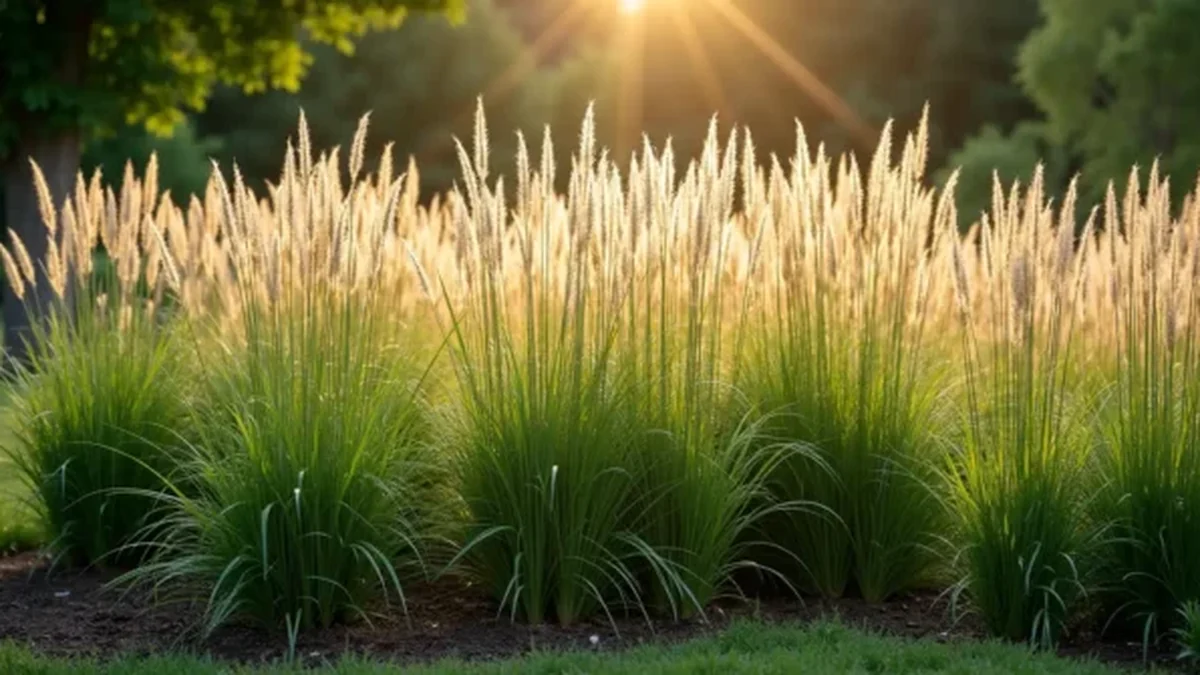
18 Low Maintenance Landscaping Plants for an Easy-Care Yard
Your yard can look full, colorful, and cared for without taking up every free weekend.
The problem often starts at the garden center. A small shrub or flowering plant looks easy to manage. You take it home, plant it, and soon learn that it needs constant watering, pruning, feeding, or pest control.
Choosing the right low maintenance landscaping plants can reduce many of these jobs. The best choices fit your sunlight, soil, climate, and available space. They also stay attractive without needing weekly attention.
This guide covers 18 easy care outdoor plants for front yards, borders, slopes, sunny beds, and shaded spaces. You will learn what each plant needs, where it works best, and what problems to watch for.
Keep in mind that low maintenance does not mean no maintenance. New plants need regular care while their roots grow. Plant results also vary by climate, rainfall, soil, and cultivar.
How to Choose Low Maintenance Landscaping Plants
A plant is not low maintenance simply because its label says it is tough.
A plant becomes easy to manage when it grows in the right place. A sun-loving plant may become weak in deep shade. A drought-tolerant plant may rot in wet soil.
Start by checking how much sunlight the area receives. Full sun usually means at least six hours of direct light each day. Part shade often means three to six hours.
Next, check the soil. Dig a hole about 12 inches deep and fill it with water. If the water sits for many hours, the soil may drain too slowly for plants such as creeping thyme, yarrow, or Russian sage.
You should also check your USDA hardiness zone. This shows how cold your area may become during winter. It does not tell you about summer heat, rainfall, wind, or soil conditions.
Most importantly, check the plant’s mature size. A shrub that looks small at the nursery may grow wider than your window or walkway.
Use these five questions before buying any plant:
- Does it suit the sunlight in my yard?
- Can it handle my soil and drainage?
- Will it fit when fully grown?
- Does it spread faster than I want?
- What work will it need each year?
These questions can save you hours of future yard work.
Compare 18 Easy-Care Plants at a Glance
The chart below gives you a quick way to compare the plants. The detailed sections explain their care needs and possible problems.
Maintenance ratings:
- 1: Very little care after establishment
- 2: One main seasonal task
- 3: Occasional pruning, dividing, or cleanup
| Plant | Type | Best Light | Water Needs | Best Use | Main Task | Rating |
| Ninebark | Shrub | Sun to part shade | Low to moderate | Hedges and borders | Thin old stems | 2 |
| Spirea | Shrub | Full sun | Moderate | Walkways and low hedges | Light pruning | 2 |
| Inkberry Holly | Evergreen shrub | Sun to part shade | Moderate | Foundations and hedges | Remove weak growth | 2 |
| Dwarf Mugo Pine | Evergreen shrub | Full sun | Low to moderate | Entry beds and rock gardens | Little pruning | 1 |
| Panicle Hydrangea | Flowering shrub | Sun to part shade | Moderate | Borders and foundations | Yearly pruning | 3 |
| Purple Coneflower | Perennial | Full sun | Low after establishment | Pollinator beds | Optional cleanup | 1 |
| Black-Eyed Susan | Perennial | Full sun | Low to moderate | Mass plantings | Cut back yearly | 2 |
| Yarrow | Perennial | Full sun | Low | Dry beds | Divide if needed | 1 |
| Catmint | Perennial | Sun to part sun | Low | Paths and borders | Midseason trim | 2 |
| Russian Sage | Perennial | Full sun | Low | Hot, dry beds | Spring cutback | 2 |
| Stonecrop | Perennial | Full sun | Low | Rock gardens | Remove old stems | 1 |
| Creeping Thyme | Ground cover | Full sun | Low | Edges and stepping stones | Light trimming | 1 |
| Barrenwort | Ground cover | Part shade | Low to moderate | Dry shade | Remove old leaves | 2 |
| Creeping Juniper | Evergreen ground cover | Full sun | Low | Slopes and banks | Rare trimming | 1 |
| Switchgrass | Ornamental grass | Full sun | Low to moderate | Screens and borders | Annual cutback | 2 |
| Little Bluestem | Ornamental grass | Full sun | Low | Dry sunny beds | Annual cutback | 1 |
| Blue Fescue | Ornamental grass | Full sun | Low | Edging and rock gardens | Divide as needed | 2 |
| Pennsylvania Sedge | Sedge | Part shade | Low to moderate | Woodland-style beds | Optional trimming | 1 |
5 Low-Maintenance Shrubs That Add Structure
Shrubs form the basic shape of a landscape. They add height, privacy, color, and year-round interest.
The right shrub can also reduce your need for seasonal flowers. The key is choosing one that fits the space when fully grown.
Ninebark
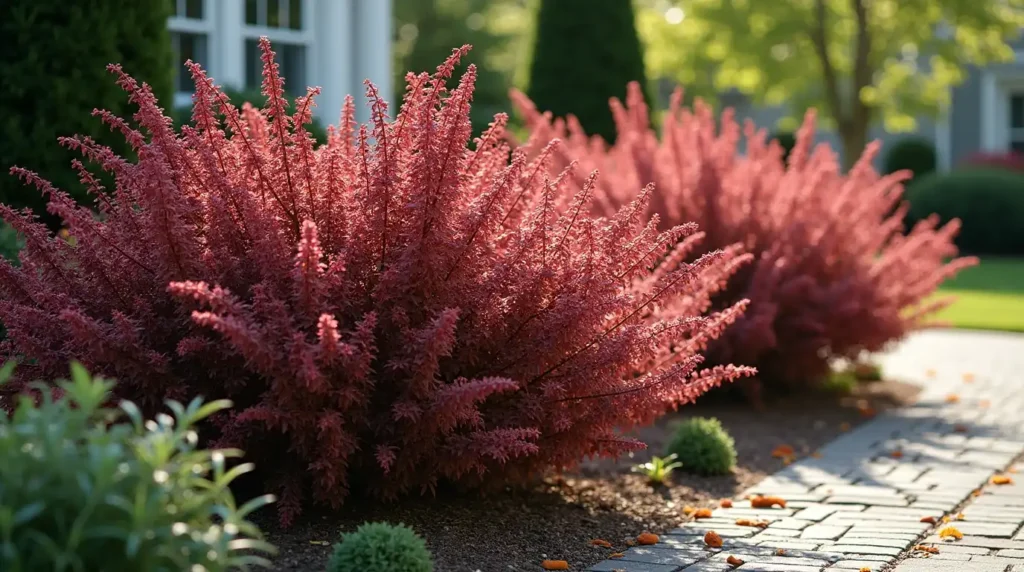
Best for: Informal hedges, mixed borders, and large foundation beds
Ninebark is a tough shrub with colorful leaves and clusters of small flowers. Depending on the cultivar, the leaves may be green, gold, copper, or deep burgundy.
It grows best in full sun but can handle some shade. More sunlight often produces stronger leaf color.
Established ninebark plants can handle short dry periods. They also tolerate a range of soils as long as the ground does not stay soaked.
The main task is removing a few old stems when the center becomes crowded. You do not need to shape it every month.
Standard varieties can become large. Choose a compact cultivar when planting near windows, doors, or walkways.
2. Spirea
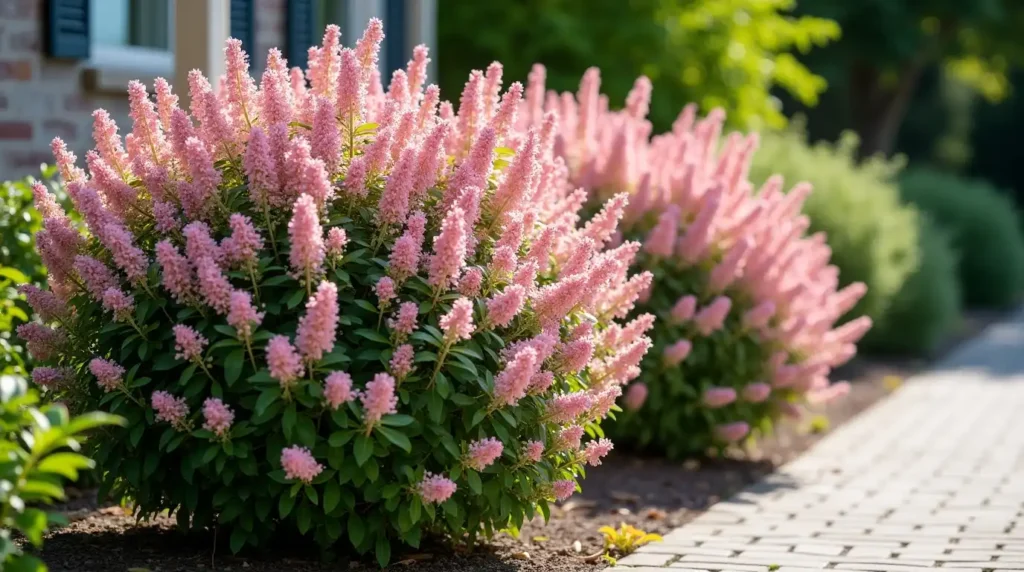
Best for: Low hedges, pathways, borders, and sunny front yards
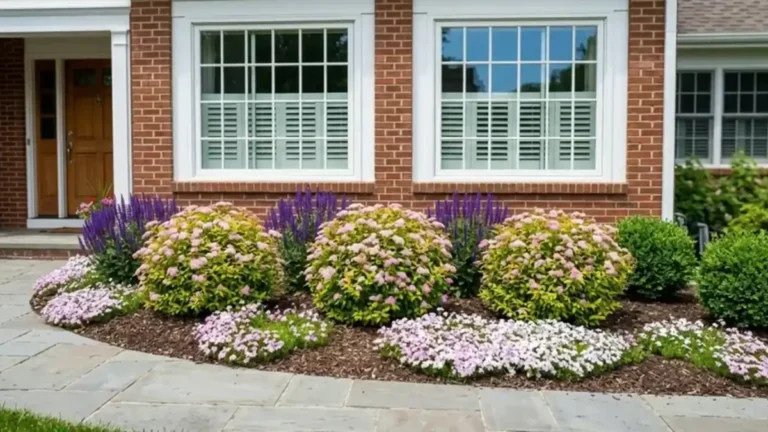
Spirea is known for its rounded growth and clusters of pink, white, or red flowers. It works well when you need a neat shrub without constant shaping.
Most types bloom best in full sun. They can grow in part shade, but flowering may decrease.
Some spirea varieties flower in spring. Others bloom during summer. Check the label so you know when to prune.
A naturally compact cultivar will need less trimming than a large, fast-growing type. Light pruning after flowering may be enough.
Some spirea species can spread into natural areas. Check your local invasive plant list before buying one.
Inkberry Holly
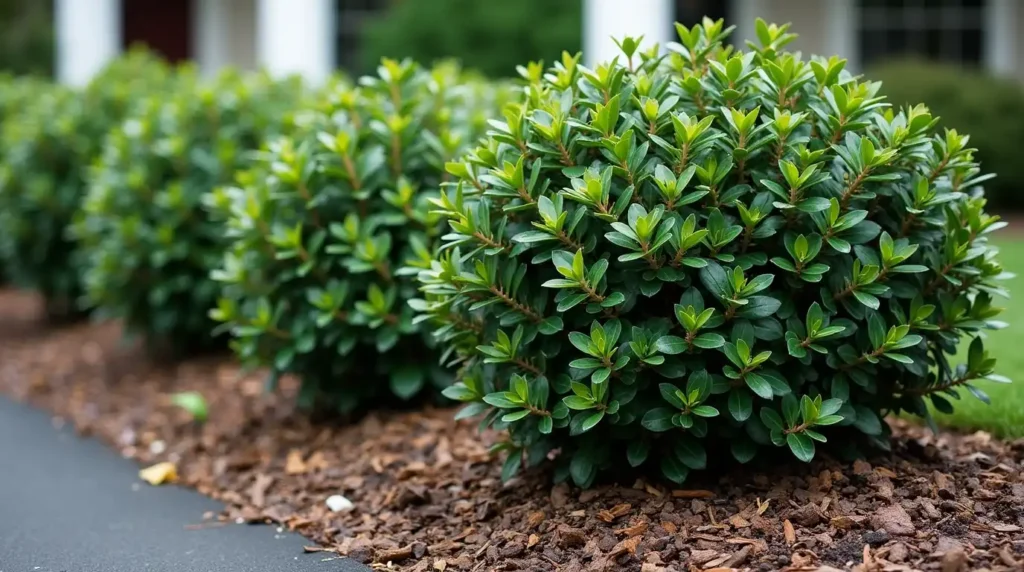
Best for: Evergreen hedges, foundation beds, and moist areas
Inkberry holly gives your yard green structure through every season. Its leaves are smaller and softer than those of many traditional hollies.
It grows in full sun or part shade. It often performs best in moist, acidic soil with good drainage.
Inkberry can work well in areas where other evergreen shrubs struggle. However, some cultivars may become bare near the base as they age.
Choose a compact, full-growing cultivar for a front foundation bed. Remove dead or weak branches when needed.
Female plants may produce dark berries when a suitable male pollinator grows nearby. Check the plant label if berries matter to you.
Dwarf Mugo Pine
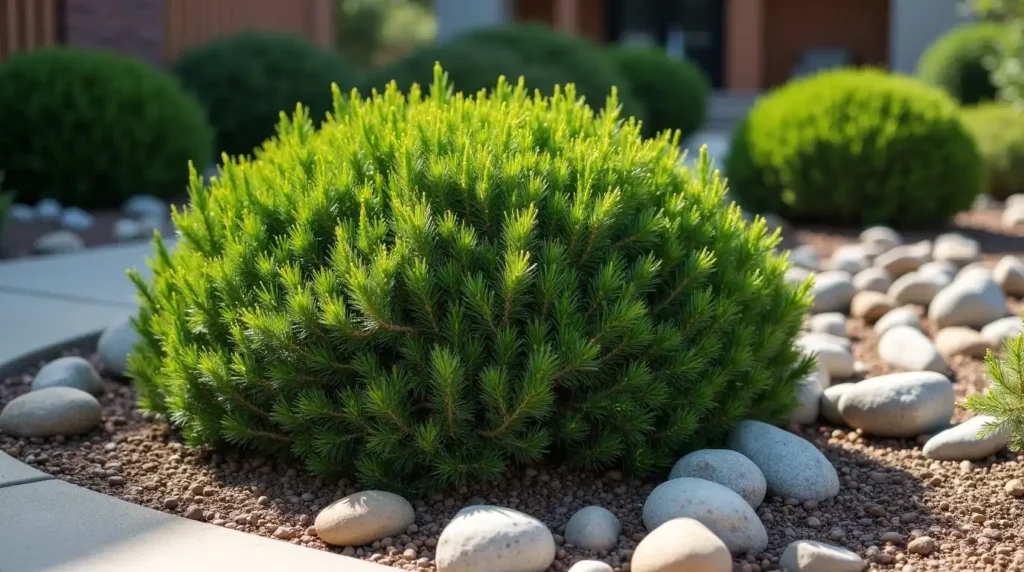
Best for: Rock gardens, sunny entry beds, slopes, and foundation areas
Dwarf mugo pine adds evergreen color and strong texture. It keeps its shape with very little pruning.
This shrub prefers full sun and well-drained soil. Once established, it can handle dry periods better than many flowering shrubs.
The word “dwarf” can be misleading. Some dwarf mugo pines stay low, while others grow several feet tall and wide.
Always check the mature size of the exact cultivar. Do not rely on the plant’s small nursery size.
When planted in the right space, dwarf mugo pine may need little more than the removal of damaged growth.
Panicle Hydrangea
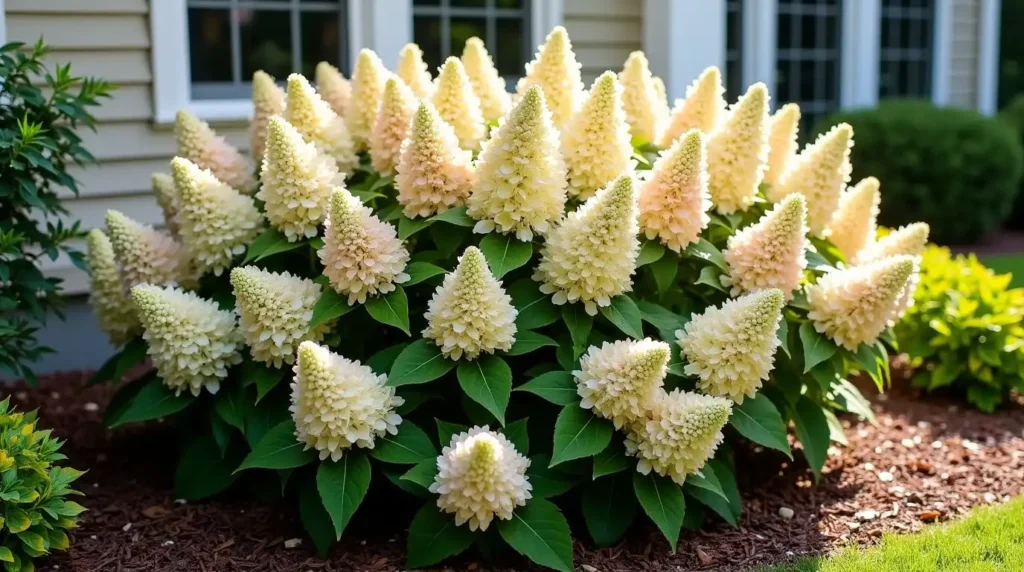
Best for: Flowering borders, large foundation beds, and summer color
Panicle hydrangea produces large flower clusters from summer into fall. Many varieties start white and change to pink, rose, or tan as the flowers age.
It handles more sun than many other hydrangea types. In hot climates, some afternoon shade may help protect the leaves.
Panicle hydrangeas flower on new growth. This means you can prune them in late winter or early spring without removing the next set of blooms.
This is the highest-maintenance shrub on this list. It may need more water than ninebark, mugo pine, or other dry-site plants.
Choose a compact cultivar for a small front yard. Full-size varieties can become too large for narrow beds.
6 Easy-Care Perennials That Provide Lasting Color
You can add months of color without planting a new bed of annual flowers every spring.
Perennials return for several years. Some also provide food and shelter for birds and pollinators.
They still need the right conditions. A drought-tolerant perennial will not stay healthy in wet, heavy soil.
Purple Coneflower
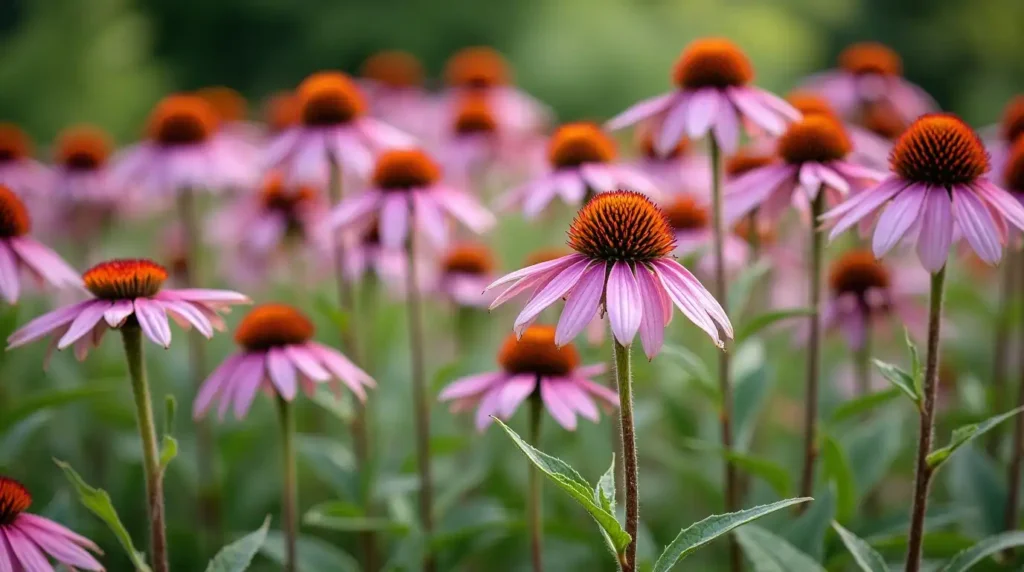
Best for: Sunny borders, pollinator gardens, and informal beds
Purple coneflower produces daisy-shaped blooms with raised centers. The flowers often appear from summer into early fall.
It grows best in full sun and well-drained soil. Once its roots are established, it can handle short dry periods.
Coneflower does not need regular deadheading. You can remove faded flowers for a neater look, but this task is optional.
Leaving some seed heads in place gives the winter garden more texture. Birds may also feed on the seeds.
Poor drainage is a bigger problem than dry soil. Avoid planting coneflower where water collects after rain.
Black-Eyed Susan
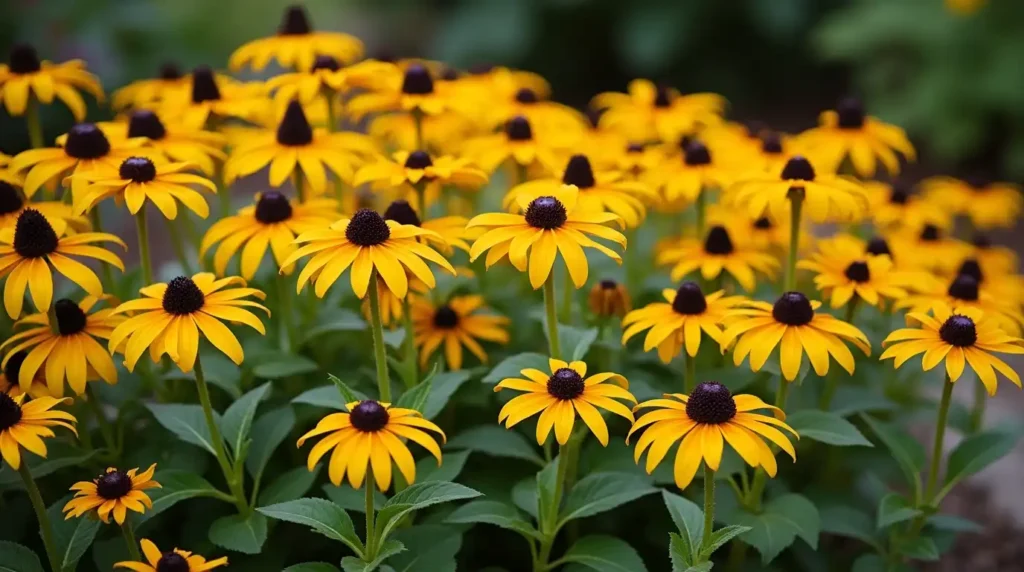
Best for: Bright borders, mass plantings, and cottage-style gardens
Black-eyed Susan brings strong yellow color to sunny landscapes. It looks best when several plants grow together.
Most types prefer full sun. They can handle some shade, but weak light may cause fewer flowers and softer stems.
These plants may spread by seed. This can be useful when you want a full, natural-looking bed.
Self-seeding may cause problems in a formal garden. Remove the seed heads before they drop if you want tighter control.
Give the plants enough space for air to move between them. Crowded growth may increase the risk of leaf disease.
Yarrow
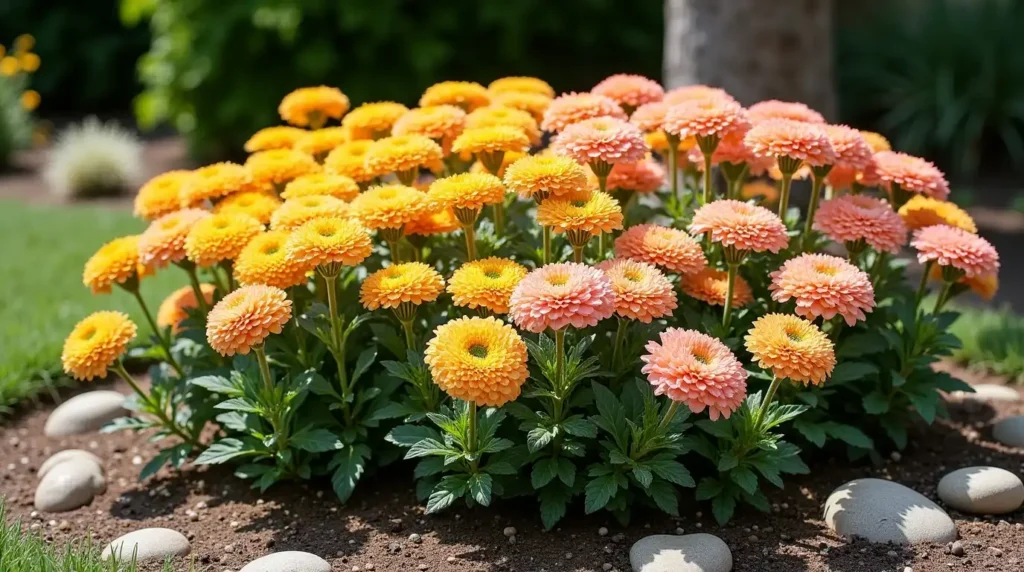
Best for: Hot beds, water-wise gardens, and dry sunny borders
Yarrow handles heat, poor soil, and dry weather better than many flowering plants. Its flat flower clusters come in white, yellow, pink, red, and peach shades.
It performs best in full sun and fast-draining soil. Rich soil and heavy fertilizer can make the stems weak.
This plant may spread through underground growth. Divide the clump when it moves beyond its space.
Yarrow flowers can be removed after blooming, but regular deadheading is not required.
Do not place it next to plants that need frequent watering. Constant moisture may lead to weak growth or root problems.
Catmint
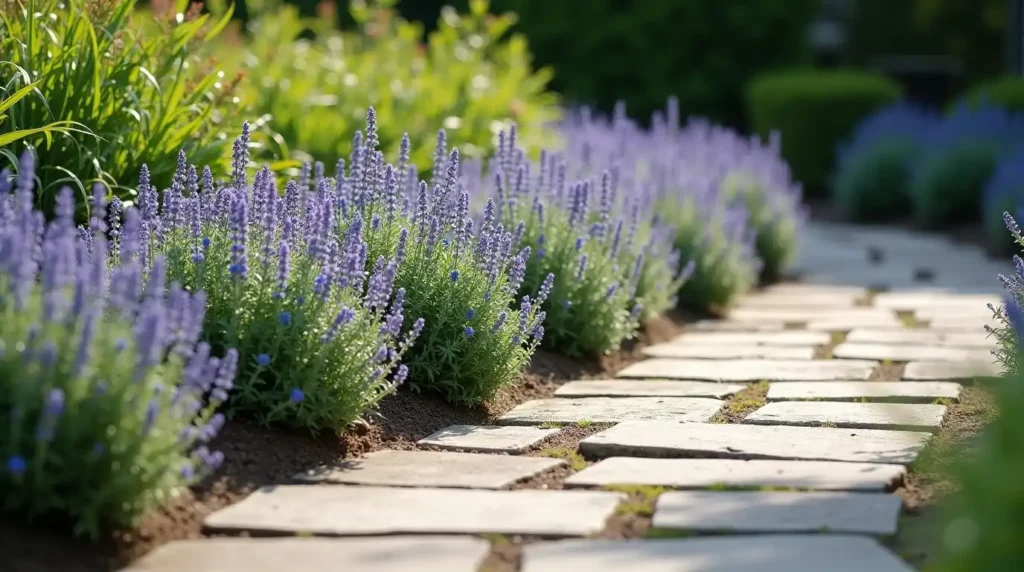
Best for: Path edges, sunny borders, and soft front-yard color
Catmint creates low mounds of gray-green leaves and purple-blue flowers. It softens the edge of a walkway without looking messy.
It grows well in full sun and can handle some part sun. Established plants often need little extra water.
One midseason trim can keep the plant neat. Cutting it back after the first main bloom may also produce more flowers.
Some types spread or produce many seedlings. Choose a compact or sterile cultivar when control matters.
Catmint can grow wider than expected. Give it room so it does not cover nearby paths.
Russian Sage
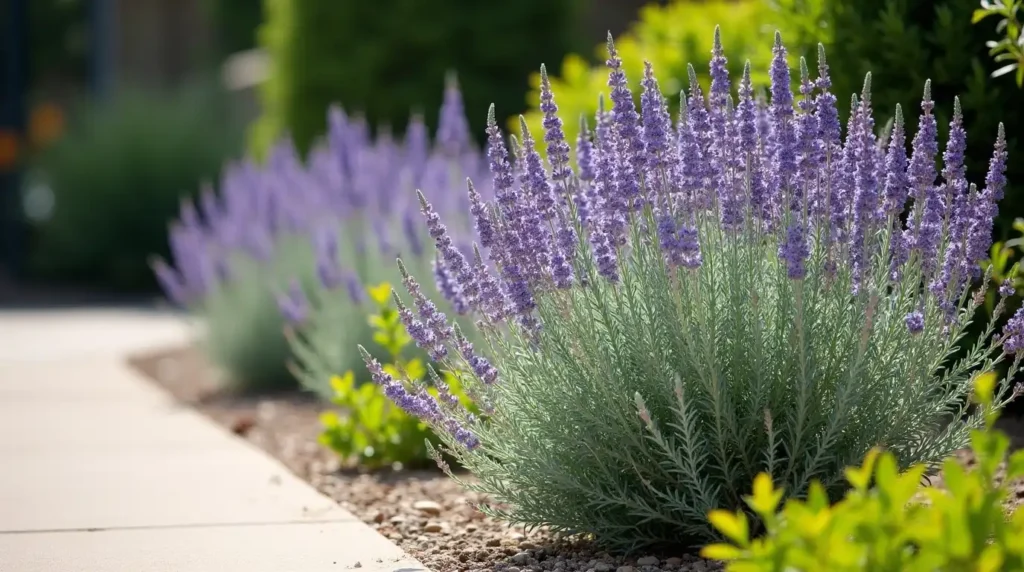
Best for: Hot driveways, sunny borders, and dry landscapes
Russian sage gives you tall stems, silver leaves, and soft purple-blue flowers. It works well behind shorter plants.
It needs full sun and well-drained soil. Too much shade can cause the stems to lean.
Once established, Russian sage handles dry weather well. Frequent watering may create weak growth and root problems.
Cut the old stems back in spring when new growth begins. This is usually the main task for the year.
Do not place it beside lawn sprinklers that run every day. A dry planting area will suit it better.
Stonecrop or Sedum
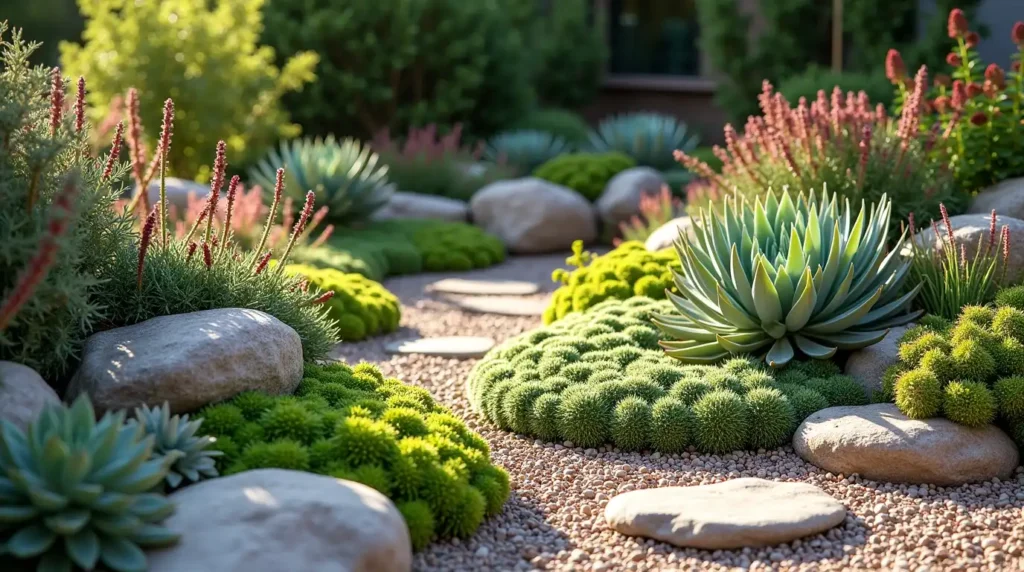
Best for: Rock gardens, hot borders, dry slopes, and containers
Stonecrop stores moisture in its thick leaves. This helps it stay healthy during dry periods.
Low-growing stonecrops spread close to the ground. Upright types form taller clumps and often bloom in late summer or fall.
Check the label before buying. A low ground cover will not fill the same role as an upright border plant.
Stonecrop prefers full sun and sharp drainage. Wet soil can quickly damage the roots.
The main yearly task is removing old flower stems or damaged growth. Extra fertilizer is rarely needed.
3 Low-Maintenance Ground Covers for Bare Soil
Ground covers can reduce open soil, but they do not make weeds disappear overnight.
You will still need to remove weeds while the plants become established. Once the ground cover fills in, fewer open spaces may mean less future weeding.
Creeping Thyme
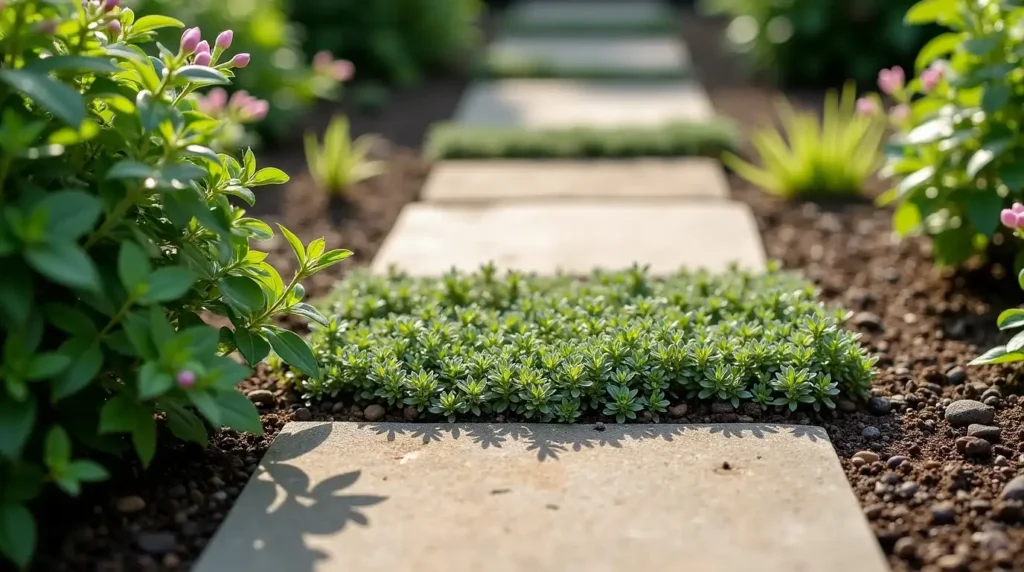
Best for: Sunny edges, rock gardens, and spaces between wide stepping stones
Creeping thyme forms a low mat of tiny leaves. Small flowers appear during the warmer months and may attract bees.
It needs full sun and well-drained soil. It often performs well in dry, rocky areas where other plants struggle.
Creeping thyme can handle light, occasional stepping. It is not a good replacement for a lawn used by children, pets, or frequent foot traffic.
Wet soil is its main enemy. Avoid low areas that stay soggy after rain.
Trim growth that spreads onto paths. Other than that, it needs little care.
Barrenwort
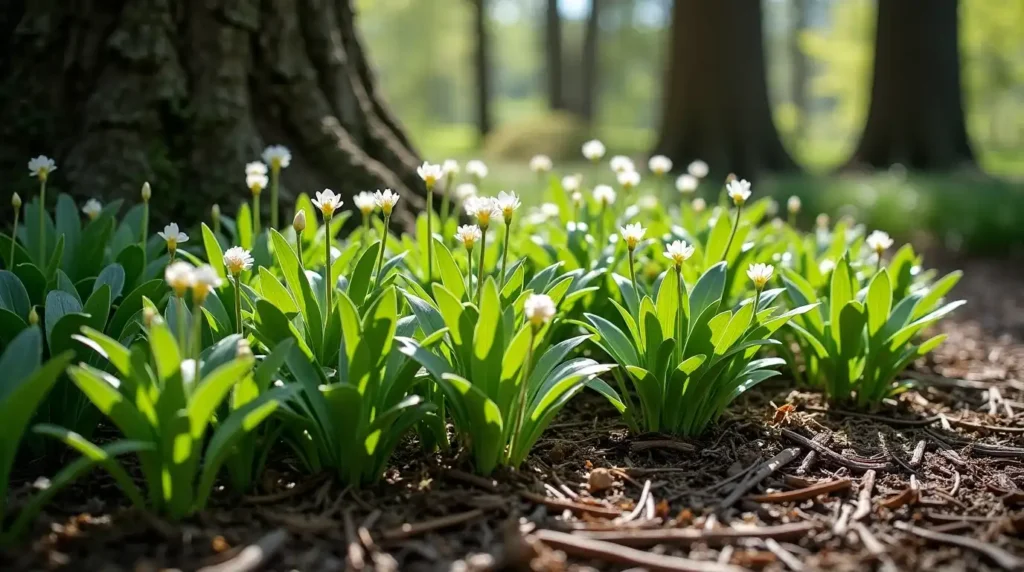
Best for: Part shade, dry shade, and beds under open trees
Barrenwort is useful in areas where many flowering plants fail. It produces low foliage and small spring flowers.
It grows well in part shade. Some types can handle dry soil once their roots are established.
Barrenwort usually spreads at a steady pace rather than taking over quickly. This makes it useful for controlled shade plantings.
It may take time to fill a large area. Do not expect full coverage during the first season.
Remove damaged or old leaves in late winter or early spring. New growth will soon cover the area.
Creeping Juniper
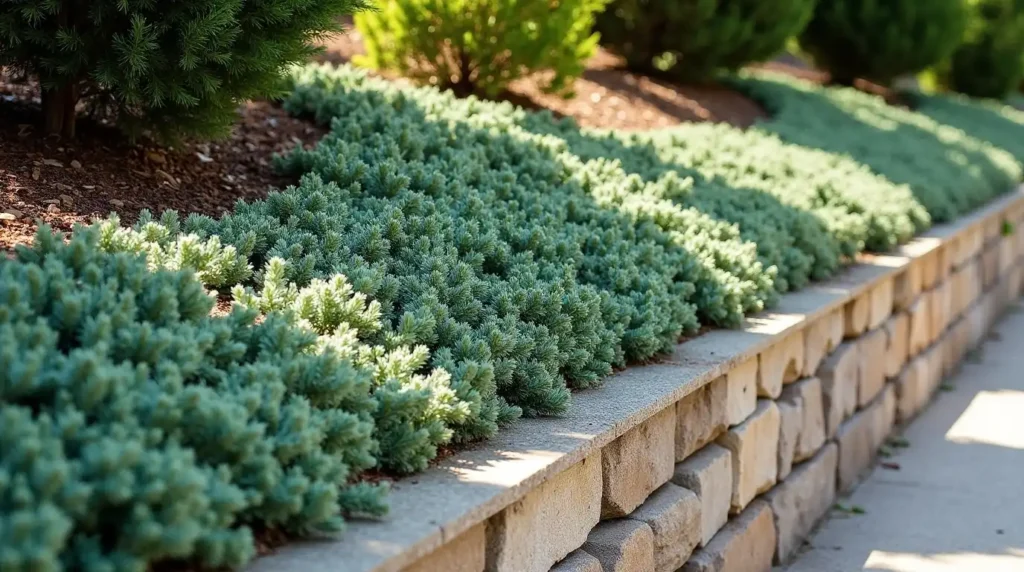
Best for: Sunny slopes, banks, retaining walls, and wide bed edges
Creeping juniper creates low evergreen coverage. Its branches spread outward and help cover exposed soil.
It prefers full sun and well-drained soil. Once established, it can handle dry weather.
This plant works well on slopes where mowing would be difficult. Its evergreen leaves also provide color during winter.
Check the mature spread before planting. A single plant may grow much wider than expected.
Keep it away from narrow sidewalks. Branches that grow across the path will need regular trimming.
4 Ornamental Grasses and Sedges for Easy Texture
Grasses add movement and height even when few flowers are in bloom.
Most of these plants need one main cutback each year. Their seed heads may also provide winter interest.
Check local rules before planting any ornamental grass. Some grass species spread beyond gardens in certain regions.
Switchgrass
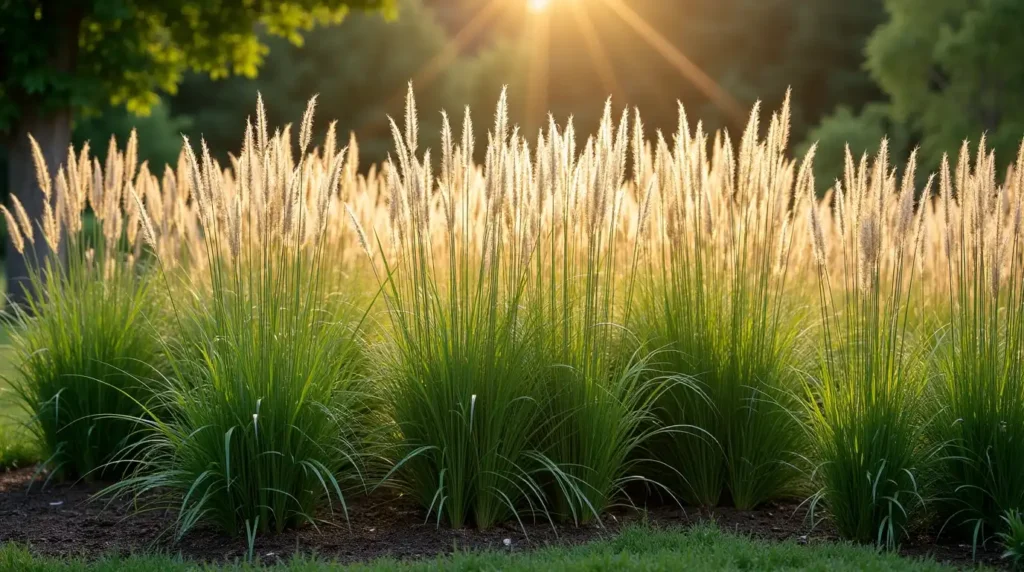
Best for: Privacy screens, back borders, rain gardens, and open spaces
Switchgrass forms upright clumps with fine leaves and airy seed heads. It brings movement to large beds.
Most varieties grow best in full sun. Some can handle part sun, but the stems may become softer.
Switchgrass can tolerate a range of soil conditions. Established plants may also handle short dry periods.
Different cultivars have very different heights. Some stay around three feet, while others can grow much taller.
Cut the old stems close to the ground in late winter or early spring. That is often the main yearly task.
Little Bluestem
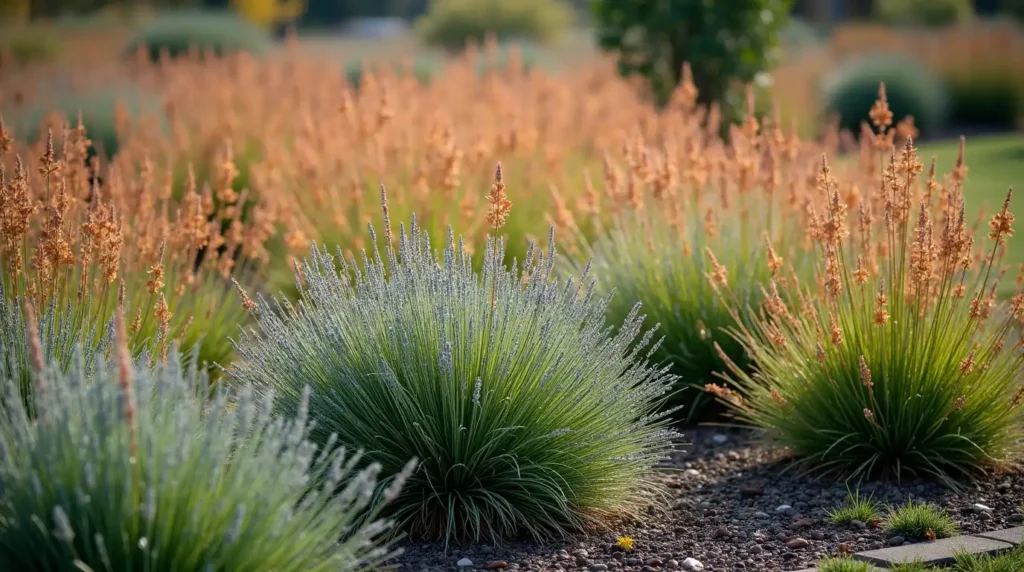
Best for: Dry gardens, sunny borders, and natural-style landscapes
Little bluestem has fine leaves and an upright shape. Its color often changes from blue-green to copper, orange, or red during fall.
It grows best in full sun and well-drained soil. It can handle poor soil once established.
Rich soil and heavy watering may cause the stems to fall over. You may get stronger growth by giving it fewer extras.
Leave the dried stems standing during winter for shape and texture. Cut them down before new spring growth begins.
Choose a cultivar with a height that fits your bed. Some types stay more upright than others.
Blue Fescue
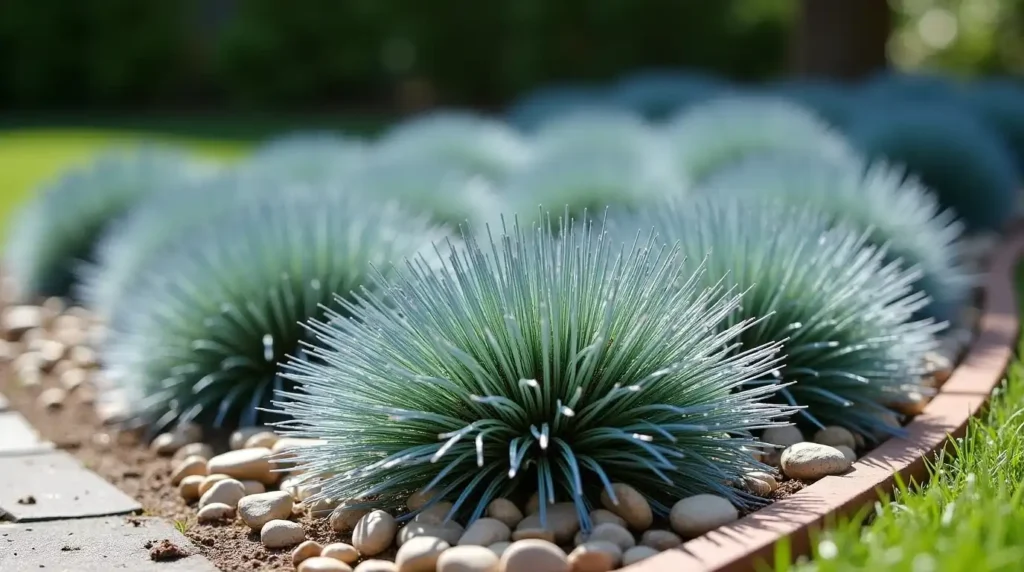
Best for: Small rock gardens, dry edges, and compact front-yard beds
Blue fescue forms small mounds of thin, blue-gray leaves. It works well along the front of a sunny bed.
It needs full sun for the best color. Fast-draining soil helps prevent root and crown problems.
Blue fescue is easy to care for, but it may be shorter-lived than larger native grasses. The center of the clump can become thin over time.
Remove old or damaged leaves in spring. Divide or replace the plant when the center no longer fills in.
Avoid placing it in wet soil or beside plants that need daily watering.
Pennsylvania Sedge
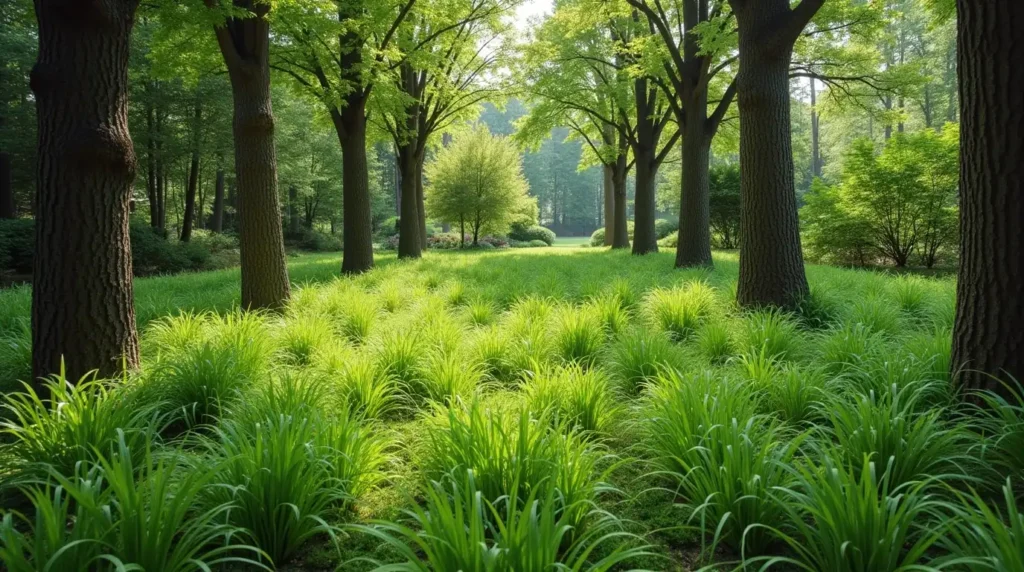
Best for: Part shade, woodland-style beds, and areas under open trees
Pennsylvania sedge looks like a fine, soft grass. It forms a natural-looking layer beneath shrubs and trees.
Although it looks like grass, it belongs to a different plant group. It often performs better in part shade than many lawn grasses.
It can handle some dry soil after establishment. Local results depend on climate, soil, and tree-root competition.
You can leave it uncut for a soft look. You may also trim it once a year when you want a neater appearance.
This plant is most suitable within or close to its natural growing region. Check with a local nursery or Extension office before planting it.
How to Match Plants to Sun, Soil, and Water
The easiest plant on this list can become difficult when planted in the wrong place.
Start with sunlight. Watch the area at 9 a.m., noon, and 3 p.m. Record when direct sunlight reaches the soil.
Next, test the drainage. Most drought tolerant landscaping plants need soil that drains well. They may survive dry periods, but their roots can still rot in standing water.
New plants also need watering. The term “drought tolerant” usually describes an established plant, not one that was planted yesterday.
Group plants with similar water needs. This practice keeps you from overwatering dry-site plants while trying to support thirsty ones nearby.
Use these quick combinations as a starting point:
For a hot and dry bed:
- Yarrow
- Russian sage
- Stonecrop
- Little bluestem
- Creeping thyme
For a partly shaded area:
- Inkberry holly
- Barrenwort
- Pennsylvania sedge
For year-round structure:
- Inkberry holly
- Dwarf mugo pine
- Creeping juniper
Always check local invasive plant lists before making your final choice.
How to Plant Once and Save Work Later
Much of a plant’s future maintenance is decided on planting day.
Remove existing weeds before you begin. Covering strong weeds with mulch will not always stop them from growing back.
Fix major drainage problems before adding plants. Do not expect a drought-loving plant to repair wet soil.
Space each plant based on its mature width. Crowding plants may give you quick coverage, but it can lead to disease and constant pruning later.
Water deeply after planting. Continue checking the soil during the first growing season.
A layer of mulch can help slow water loss and reduce weed growth. Keep the mulch away from stems, trunks, and plant crowns.
Outdoor water use in the United States reaches billions of gallons each day. A large amount can be wasted through overwatering and poor irrigation. Grouping plants by water needs can help reduce this waste.
Use this simple first-year care plan:
- First two weeks: Check soil moisture often.
- First growing season: Water deeply when the soil begins to dry.
- After establishment: Reduce watering based on rainfall.
- Once each year: Complete the plant’s main pruning or cleanup task.
Avoid shallow watering every day. It can keep roots close to the soil surface.
9 Mistakes That Create More Yard Work
A small shrub beside a window may look harmless until it doubles in size.
Many landscaping problems begin with poor plant selection. Avoid these common mistakes:
- Buying a plant that will outgrow the area
Always check the mature height and width. - Ignoring sunlight needs
A full-sun plant may become weak and floppy in shade. - Treating drought-tolerant plants as no-water plants
They still need water while their roots grow. - Mixing thirsty and dry-site plants
One group may receive too much or too little water. - Using fast spreaders in a narrow bed
A ground cover may quickly move across paths or into nearby plants. - Planting too close to walls or air-conditioning units
Leave enough room for mature growth and airflow. - Adding too much fertilizer
Extra feeding can cause soft stems, fewer flowers, or fast growth. - Using permanent landscape fabric around long-term plantings
Soil and leaves can collect above the fabric. Weeds may then grow on top. - Skipping local invasive plant checks
A plant that is safe in one region may cause problems in another.
Return to the five-question plant test whenever you shop. It will help you avoid most of these mistakes.
Create an Easy-Care Yard That Fits Your Life
A lower-care yard starts with good plant choices.
Check your sunlight and soil before shopping. Confirm the mature size of every plant. Choose types suited to your climate and available space.
Give new plants regular care during their first growing season. Once their roots are established, many will need little more than one yearly cutback, trim, or cleanup.
You do not need to plant all 18 choices at once. Start with three plants that match one part of your yard. Check their needs, space them well, and allow them time to grow.
With the right low maintenance landscaping plants, you can create a yard that looks finished without filling your calendar with extra work.