17 French Garden Design Ideas for a Timeless Yard
A plain yard can feel hard to plan. You may have enough space, but the plants, paths, and furniture do not seem to work together.
These French garden design ideas can help you create a yard that feels calm, balanced, and full of charm. You do not need a huge estate or a team of gardeners. A clear layout, repeated plants, and one strong focal point can make a big difference.
Formal French gardens use straight lines, clipped hedges, and strong symmetry. French country gardens feel softer. They often include roses, herbs, gravel, old stone, and relaxed planting.
You can choose one style or mix both. For example, you might use a straight path and matching planters, then soften the look with roses and lavender.
The 17 ideas below include options for large lawns, small yards, patios, and courtyards. You will also find honest advice about cost, care, climate, and common mistakes.
Which French Garden Style Fits Your Yard?
| Garden Style | Main Features | Best For | Care Level |
| Formal French | Symmetry, straight paths, clipped hedges | Medium and large yards | Medium to high |
| French country | Roses, herbs, gravel, soft planting | Cottage homes and relaxed yards | Medium |
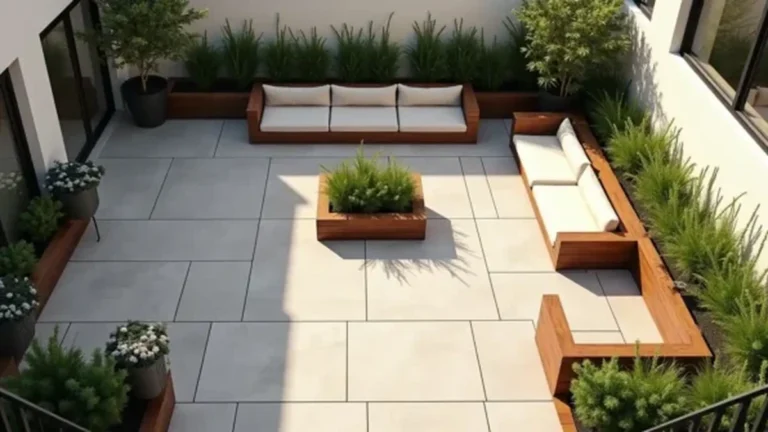
| Modern French | Clean lines and fewer plant types | New homes and simple courtyards | Low to medium |
| Small-space French | Containers and one focal point | Patios and compact yards | Low to medium |
You do not need to follow one style perfectly. Choose the features that fit your space, budget, and free time.
Start With a Central Line That Gives the Yard Order
Best for: Yards of any size
Budget: Low to high
Care level: Low
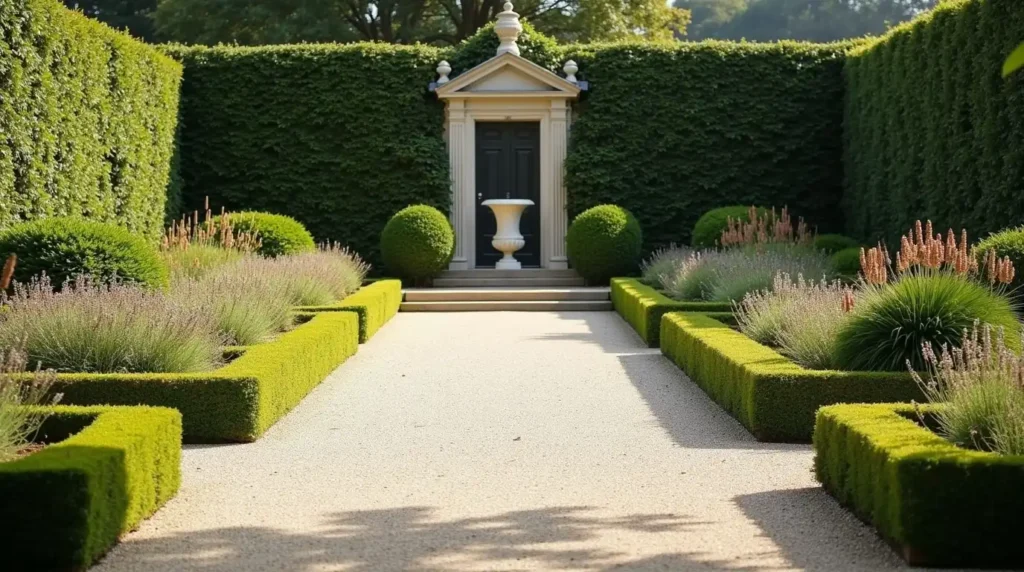
A strong central line is one of the easiest ways to make a yard feel planned. It creates a clear view from one end of the garden to the other.
Stand at your back door and look across the yard. What do you see? A path could lead to a fountain, bench, tree, urn, or garden gate.
This clear line is often called a central axis. It becomes the base of your French garden layout.
You can create it with:
- A straight gravel path
- A narrow lawn strip
- Two matching flower beds
- A row of paving stones
- A line of clipped shrubs
The focal point should sit at the end of the view. This gives the eye a place to rest.
Before you dig, test the line with string and garden stakes. Look at it from the house and seating areas. A small change in position can improve the whole layout.
Use Symmetry to Make the Space Feel Balanced
Best for: Front entrances, patios, and formal yards
Budget: Low to medium
Care level: Low to medium
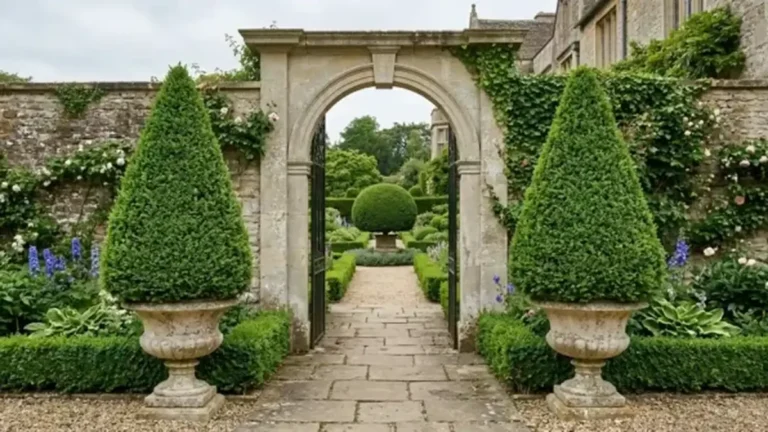
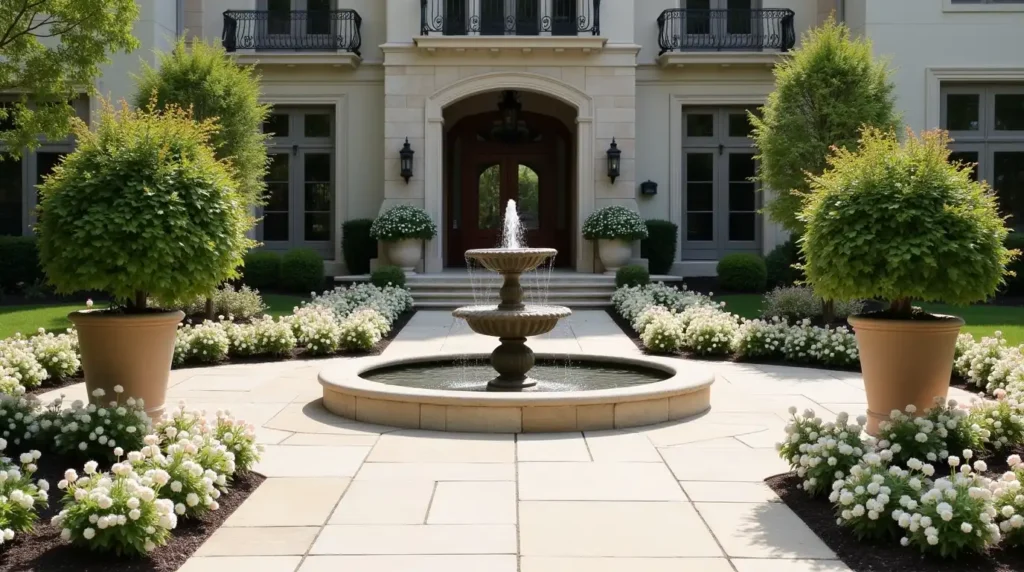
Symmetry is a key part of formal French garden design. It means placing similar shapes or objects on both sides of a central point.
Start with easy changes. Put matching pots beside a door. Plant two small trees on each side of a path. Create two flower beds with the same shape and size.
The two sides do not need to match plant for plant. They should have a similar visual weight.
For example, one side could have a rounded shrub with white flowers. The other side could use a shrub of the same size with pale pink flowers.
You can repeat:
- Container styles
- Hedge shapes
- Plant heights
- Flower colors
- Benches or chairs
- Small trees
Keep one main object in the center. This could be a fountain, statue, large planter, or clipped tree.
Symmetry works because it reduces visual noise. The yard feels calmer, even when it contains many plants.
Create Simple Geometric Beds Before Trying Complex Patterns
Best for: Front yards and open lawns
Budget: Medium
Care level: Medium to high
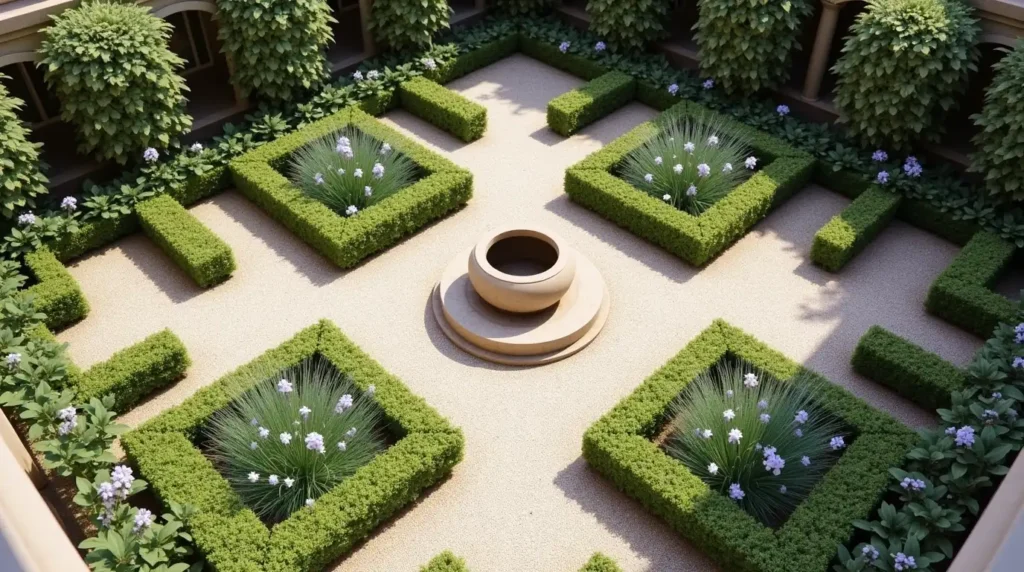
A parterre is a group of garden beds arranged in a clear pattern. The design is often easy to see from a window, balcony, or raised patio.
Some parterres use detailed curves and scroll shapes. Those designs can take a lot of work. Start with squares, rectangles, circles, or diamonds instead.
One simple plan uses four square beds around a central pot. Add gravel paths between the beds. Frame each section with low hedging or neat edging.
You can fill the beds with:
- Lavender
- White flowers
- Small roses
- Herbs
- Dark mulch
- Pale gravel
- Seasonal plants
Keep the pattern easy to read. Too many colors and plant types can hide the shape.
A geometric bed works well in a small front yard because it adds structure without needing a large lawn. Mark the pattern with string before cutting the bed lines.
Frame Loose Plants With Low Clipped Hedges
Best for: Formal beds and mixed planting
Budget: Medium
Care level: Medium to high
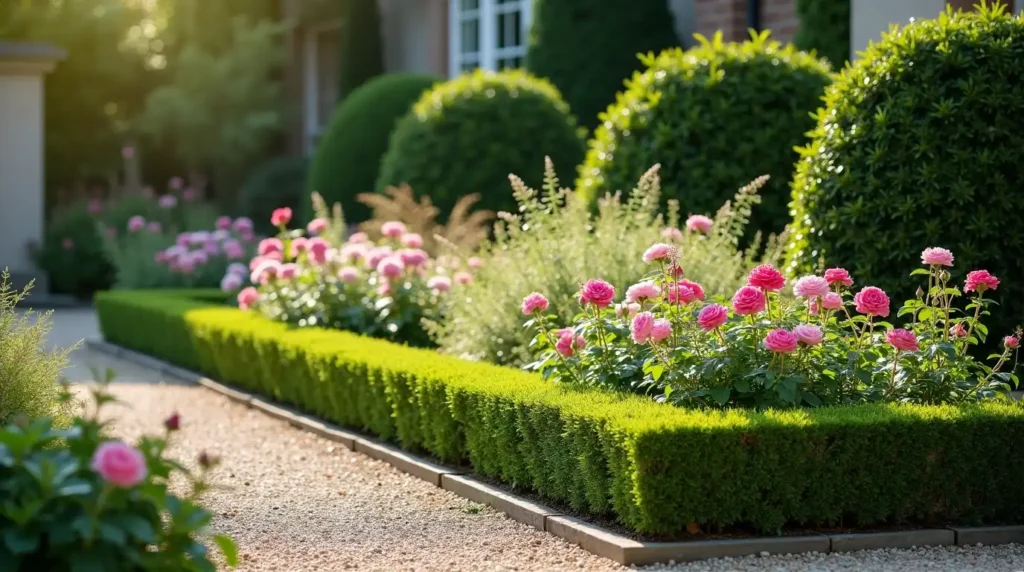
Flowers can look messy when they have no clear border. A low clipped hedge gives them a clean frame.
Boxwood is a classic choice, but it is not perfect for every garden. It may face disease, pest, or climate problems in some areas.
Check local advice before planting a long hedge. Good options may include compact holly, dwarf yew, germander, lavender, or another small evergreen that grows well in your area.
Before buying, check:
- Mature height
- Mature width
- Sun needs
- Water needs
- Growth speed
- Trimming needs
- Local disease risks
Leave enough room between each plant. Crowded shrubs may lose airflow and become harder to trim.
Keep the hedge low enough to show the flowers behind it. A border that grows too tall can make a small garden feel closed in.
You can also use brick or stone edging where regular hedge cutting is not practical.
Add Pale Gravel Paths for a Classic French Look
Best for: Courtyards, kitchen gardens, and dry areas
Budget: Low to medium
Care level: Low to medium
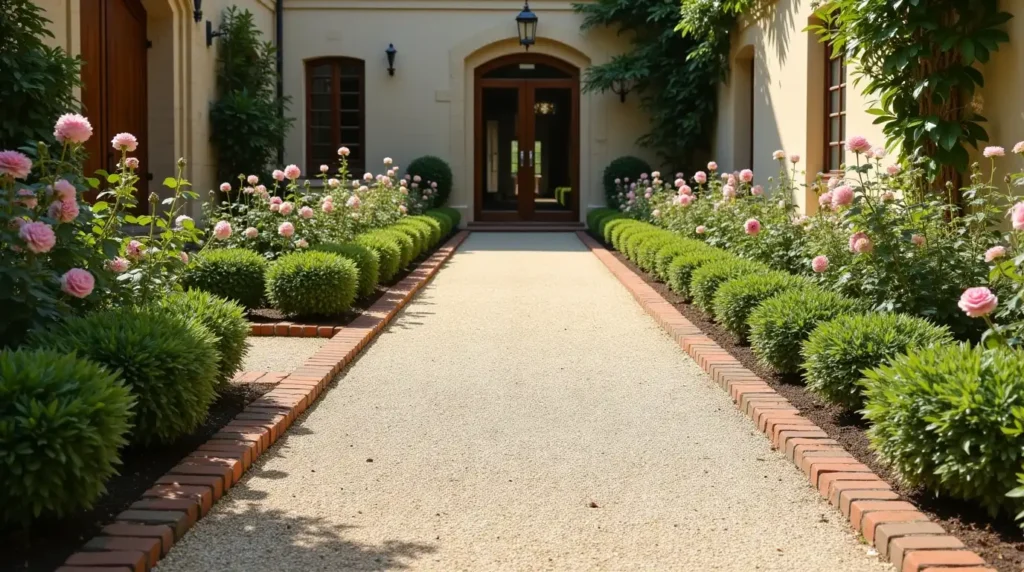
Pale gravel gives a French-style garden a soft and natural look. It also works with clipped greenery, roses, herbs, and old stone.
Choose gravel in cream, warm beige, light gray, or soft brown. Very bright white stone can look harsh and may show dirt quickly.
A good path needs more than loose gravel poured over soil. Prepare a firm base so the surface does not sink or become muddy.
Use strong edging to keep the stones in place. Brick, metal, stone, or treated timber can work.
Make the main path wide enough for comfortable walking. A path used by two people should feel open rather than tight.
Gravel has a few limits. It may move under wheels, collect leaves, or escape into nearby beds. It can also be difficult for some people with limited movement.
Use stable paving near doors, steps, and busy seating areas. Save loose gravel for quieter parts of the garden.
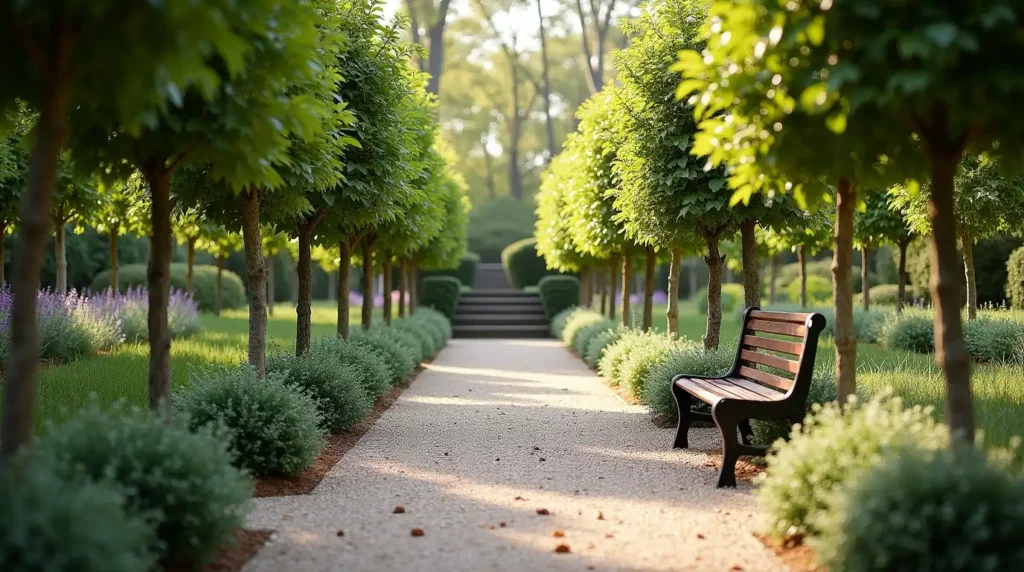
Create a Small Tree-Lined Allée
Best for: Long yards, entrances, and driveways
Budget: Medium to high
Care level: Medium
An allée is a straight path with trees or tall plants on both sides. It creates a strong view and leads people to a clear end point.
Large French gardens may use rows of mature trees. You can copy the idea on a smaller scale.
Use:
- Upright trees
- Narrow evergreens
- Clipped shrubs
- Matching container trees
- Small flowering trees
The end of the path could feature a bench, gate, urn, statue, or water bowl.
Do not choose trees based on their size at the nursery. Check how wide they may become. Roots, branches, and falling leaves can cause trouble when planted too close to walls or paths.
A narrow side yard can use tall pots instead of planted trees. Place matching containers at even spaces along the path.
This creates rhythm without taking away much ground space. It also lets you move or replace plants later.
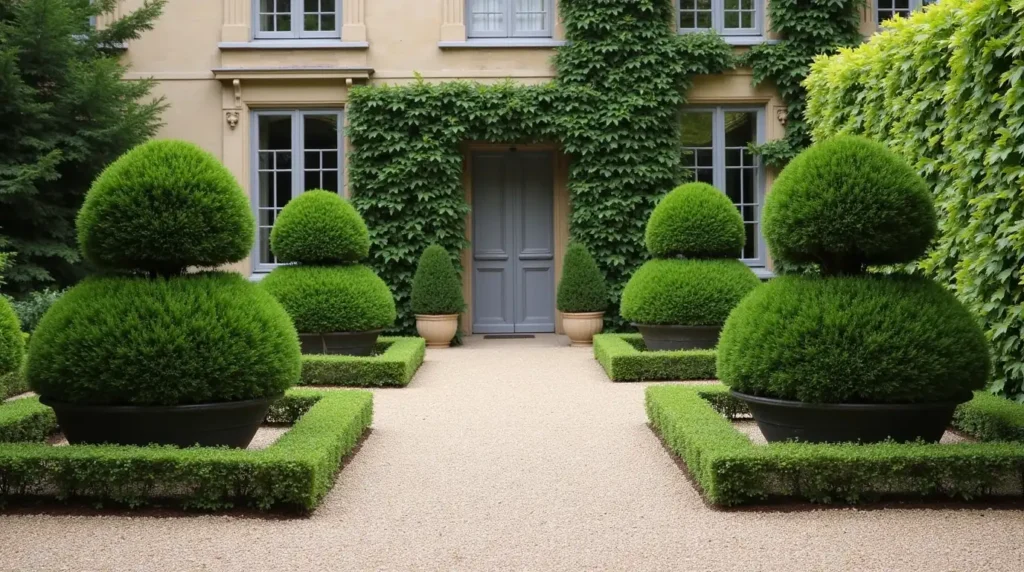
Use Repeated Topiary for Shape in Every Season
Best for: Entrances, corners, and formal beds
Budget: Medium
Care level: Medium
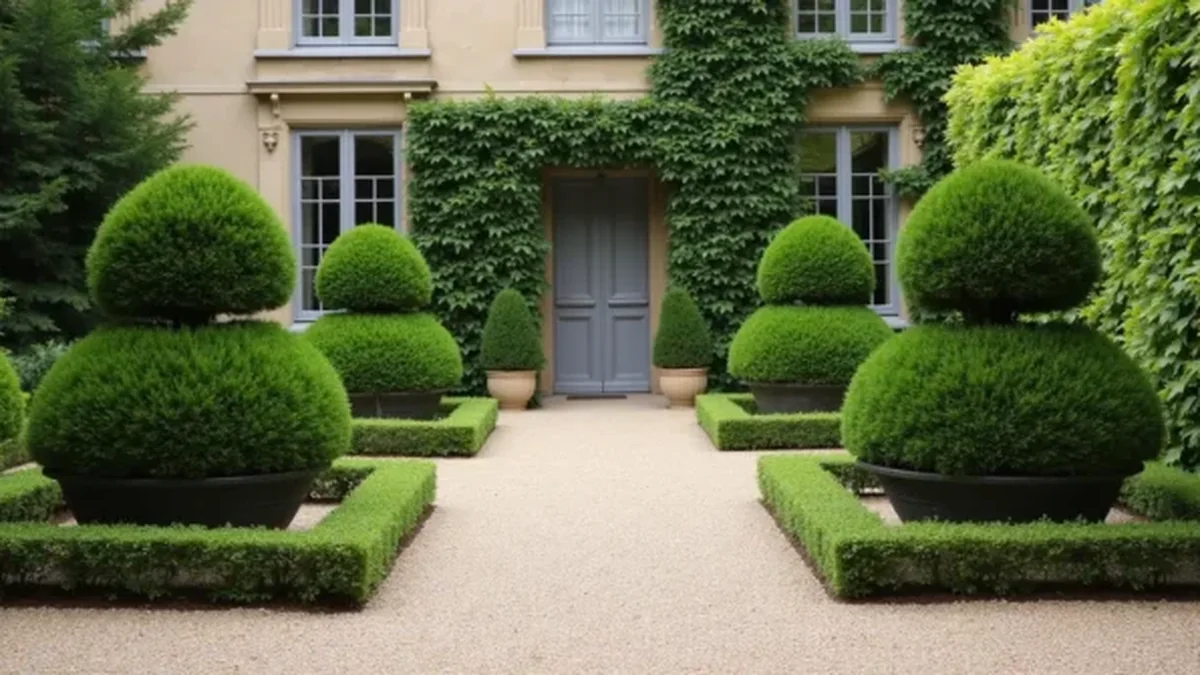
Topiary is a plant clipped into a clear shape. Common forms include balls, cones, spirals, and small trees with rounded tops.
A few repeated shapes usually look better than many different styles. Four round shrubs can mark the corners of a bed. Two cone-shaped plants can frame a door.
Place topiary where the garden needs a strong visual stop:
- Beside an entrance
- At a path crossing
- At the end of a view
- In the center of a bed
- On each side of a bench
Container topiary works well for renters and small patios. You can move the pots when the layout changes.
Real topiary needs regular clipping. Fast-growing plants may need more care than expected. Choose slower plants when you have little free time.
One or two strong shapes can be enough. Filling every corner with shaped plants may make the garden feel stiff.
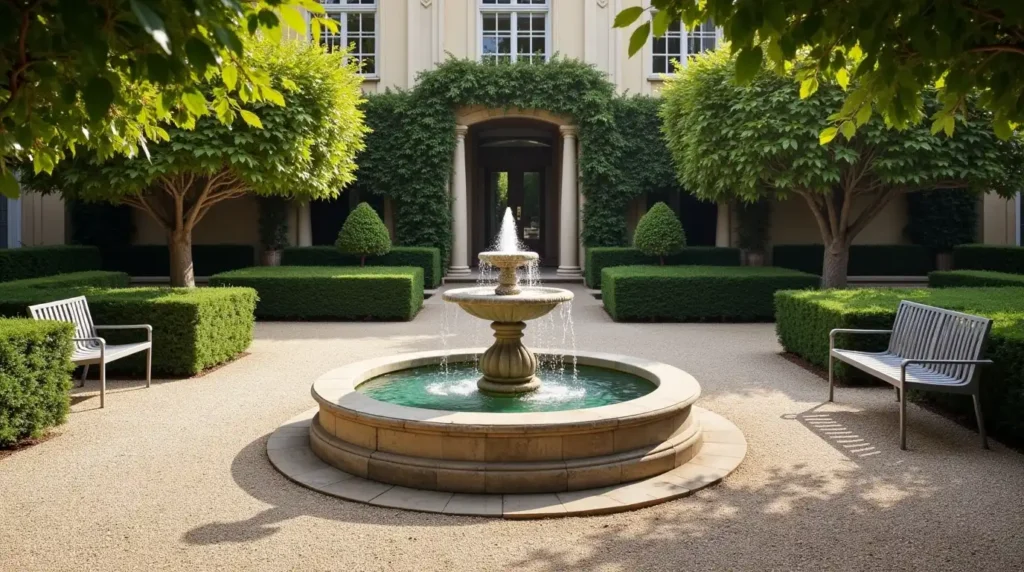
Make a Fountain the Main Focal Point
Best for: Courtyards and central garden beds
Budget: Medium to high
Care level: Medium
A fountain adds sound, movement, and a clear place for the eye to stop. It works best when placed on the main garden line.
Match the fountain to the size of the space. A tall tiered fountain may suit a large lawn, but it can overwhelm a small courtyard.
Good options include:
- A low stone bowl
- A wall fountain
- A bubbling urn
- A small tiered fountain
- A simple recirculating water feature
A self-contained fountain can be easier to install because it reuses the same water. You will still need to check its power needs and keep the pump clean.
Place seating close enough to hear the water. Do not place chairs so near that people get splashed.
Water features need care. Leaves, algae, and dirt can collect in the basin. Plan for cleaning before you buy a detailed design with hard-to-reach parts.
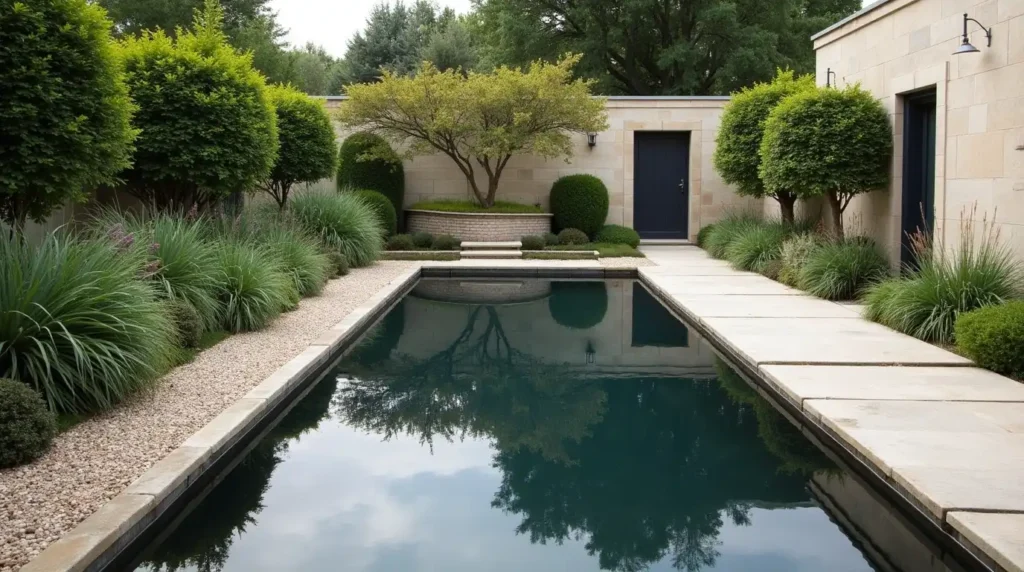
Use Still Water to Make the Garden Feel Calm
Best for: Modern French gardens and quiet seating areas
Budget: Medium to high
Care level: Medium
A reflecting pool creates a different mood from a fountain. The water stays still and reflects the sky, plants, stonework, or nearby buildings.
Rectangular pools work well because their shape supports the straight lines of a formal garden.
A narrow water rill can run beside a path. A shallow basin can sit in front of a bench. Even a wide, dark water bowl can create a small reflective surface.
Dark interiors often produce clearer reflections. Pale stone may create a softer look.
Keep the design simple. Water plants, bright decorations, and large fountains can reduce the mirror effect.
Think about safety before adding open water. This matters in homes with children or pets. You also need a plan for drainage, cleaning, and mosquito control.
For a lower-cost option, use a shallow sealed bowl on a stable base. Place it where it can reflect a tree or wall plant.
Add One Strong Urn or Statue Instead of Many Decorations
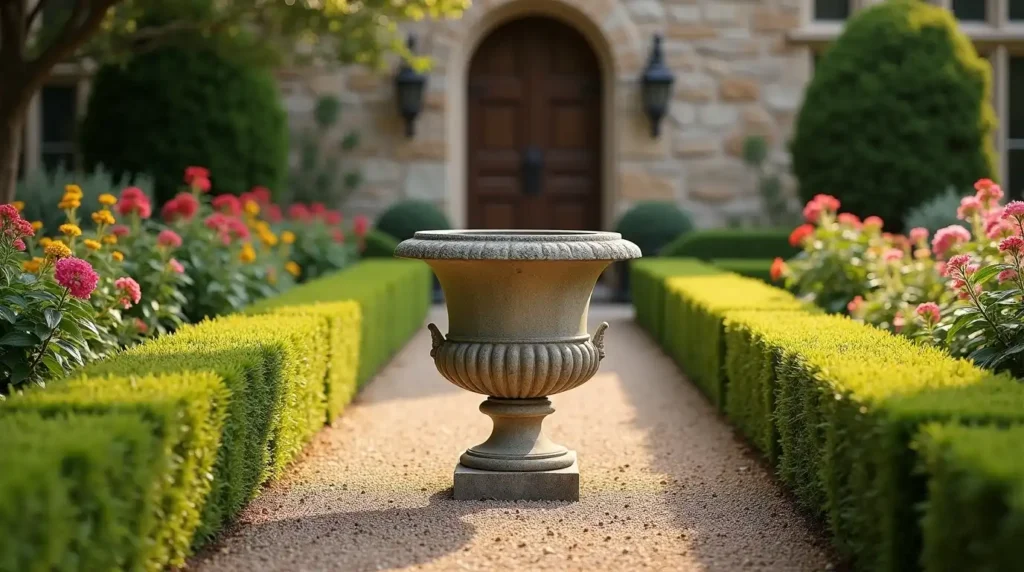
Best for: Path endings and empty garden corners
Budget: Low to high
Care level: Low
French garden decor often uses stone urns, statues, sundials, and other classic pieces. The key is restraint.
One large urn at the end of a path has more impact than ten small objects placed around the yard.
Good locations include:
- The center of four beds
- The end of a straight path
- A space inside a hedge
- The top of garden steps
- Both sides of an entrance
Choose materials that suit the house. Weathered stone works well with older homes. Clean cast stone may suit a newer yard. Warm terracotta adds a softer French country feel.
The object should match the scale of the space. A small statue may disappear in a large lawn. A huge urn may make a tiny courtyard feel crowded.
View the feature from inside the house before fixing it in place. The indoor view may matter as much as the garden view.
Limit the Color Palette to Make Planting Feel Planned
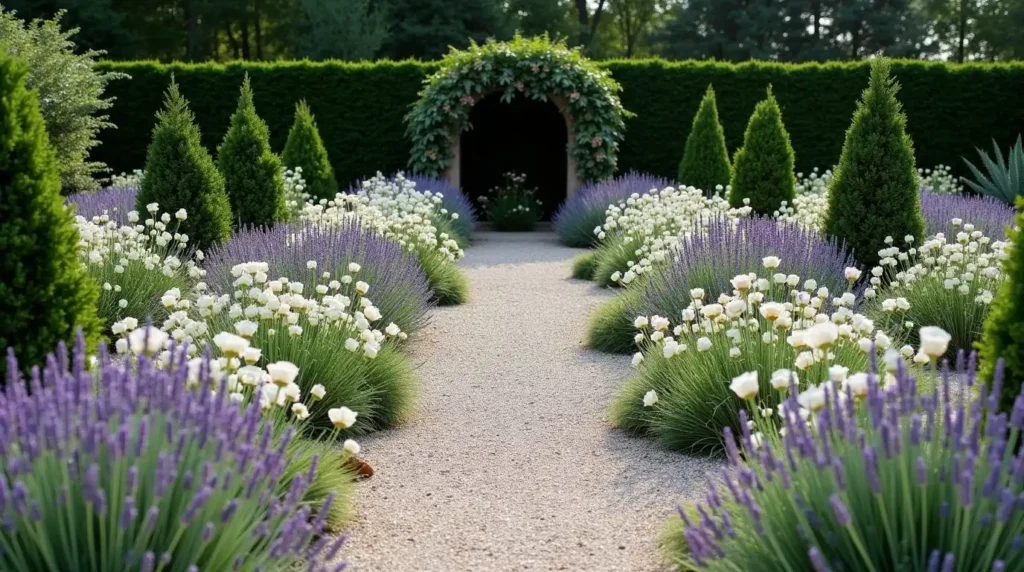
Best for: Busy beds and small gardens
Budget: Low to medium
Care level: Low to medium
A garden can feel untidy when every flower has a different color. A limited French garden color palette creates a calmer result.
Start with green. Hedges, shrubs, herbs, and small trees can provide the main structure.
Then choose two or three flower colors. Easy combinations include:
- Green, white, and lavender
- Green, blush pink, and cream
- Blue, purple, and silver
- White flowers with dark green leaves
Repeat the same plants in several areas. One group of lavender is easy to miss. Three repeated groups create a clear pattern.
Think about each season. Spring bulbs may fade before summer roses open. Evergreen plants help hold the layout together when flowers are gone.
Do not buy plants based on flower color alone. Check their final size, sunlight needs, and bloom period.
Choose your main colors before visiting the nursery. This makes it easier to avoid random purchases.
Soften Straight Lines With Roses and Lavender
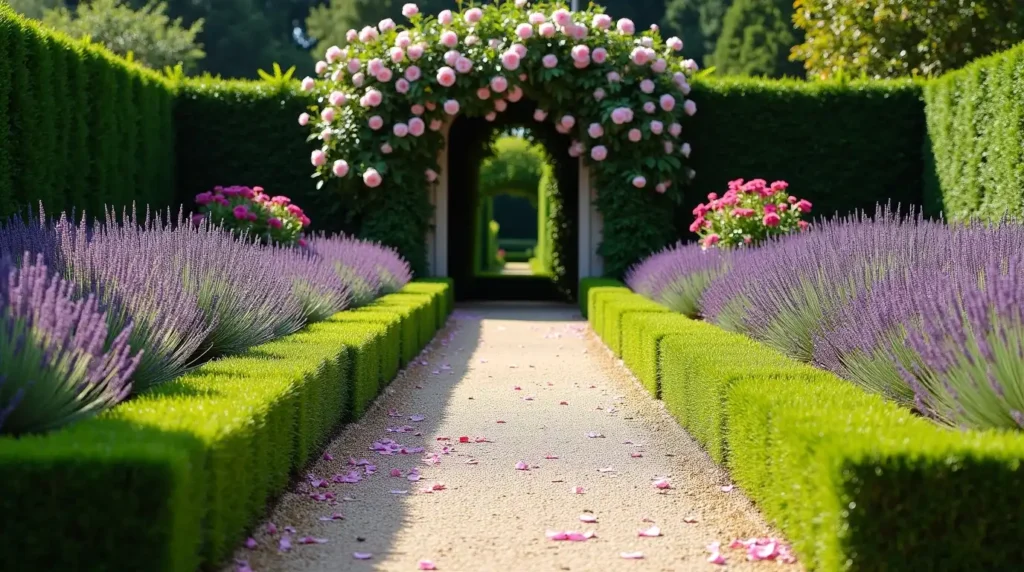
Best for: French country gardens and sunny beds
Budget: Medium
Care level: Medium
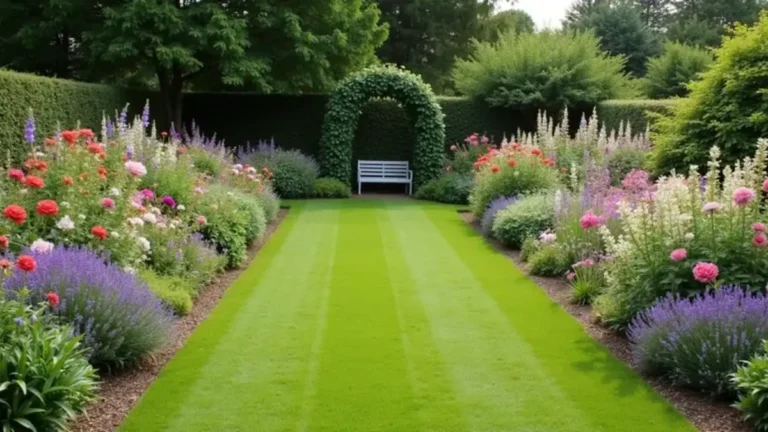
Straight paths and clipped hedges can feel too hard on their own. Roses and lavender add softness, scent, and movement.
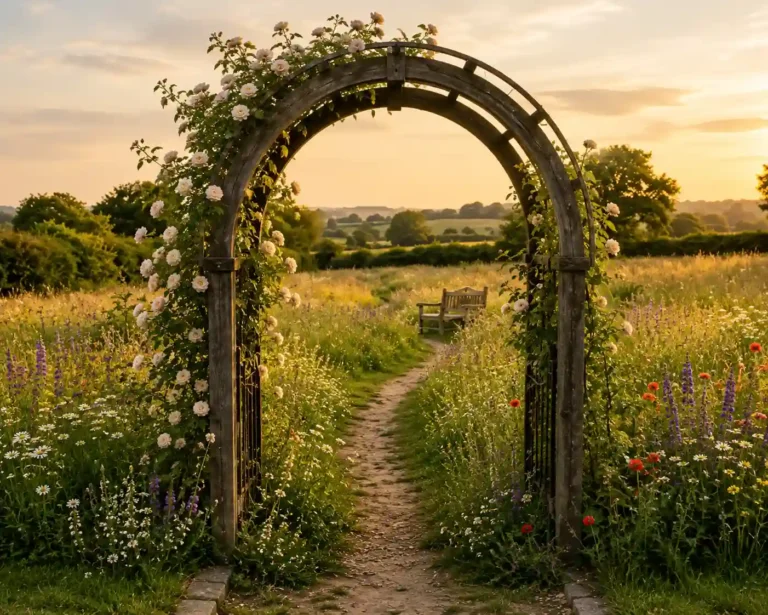
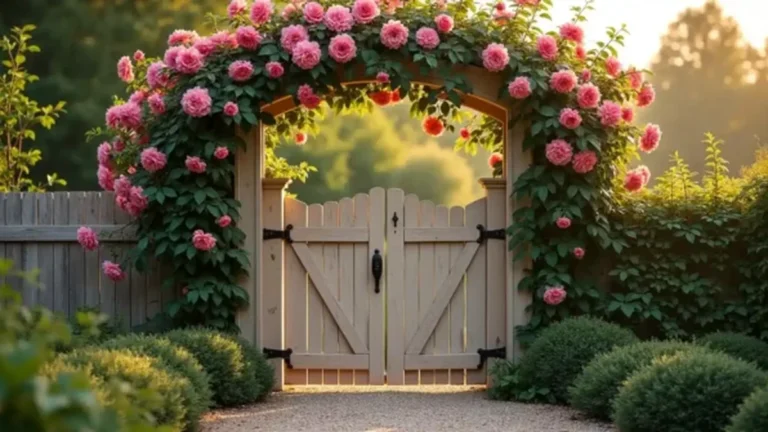
Use climbing roses on a wall, arch, or fence. Shrub roses can sit inside formal beds. Place them in repeated groups so the planting still feels planned.
Lavender looks lovely beside pale gravel. It needs sun and soil that drains well. Wet ground may cause weak growth or root problems.
Where lavender struggles, try a plant with a similar shape or color. Possible choices include catmint, salvia, rosemary, or another local plant with soft purple flowers.
Roses also need the right spot. Choose types that fit your climate and available space. A strong disease-resistant rose may save you hours of work later.
The best French country garden ideas mix control with softness. Use clipped green borders as the frame. Let flowers rise and spill inside that frame.
Train Fruit Trees Flat to Save Space
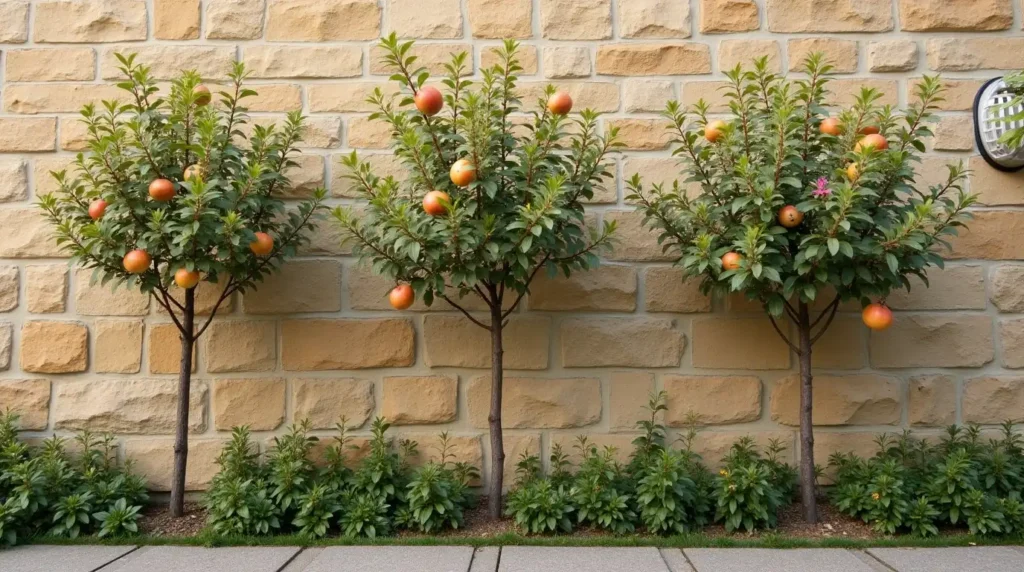
Best for: Walls, fences, and narrow yards
Budget: Medium
Care level: Medium to high
Espalier fruit trees grow flat against wires, fences, or walls. Their branches are trained into clear lines instead of spreading in every direction.
Apple and pear trees are common choices. The flat form saves space and can turn a plain wall into a living feature.
You need a strong support system. Horizontal wires should be fixed before planting. Young branches are then tied and trained as they grow.
Place the tree where it receives enough sun. A warm wall may help fruit ripen, but very hot walls can stress some plants.
Espalier trees need regular pruning and training, mainly during their early years. They are not a plant-and-forget choice.
The effort can be worth it in a small French garden. You get flowers, fruit, strong lines, and vertical interest without losing much floor space.
Ask a local nursery which fruit trees perform well in your climate.
Turn Your Vegetable Beds Into a French Potager
Best for: Families who grow herbs and food
Budget: Low to medium
Care level: Medium
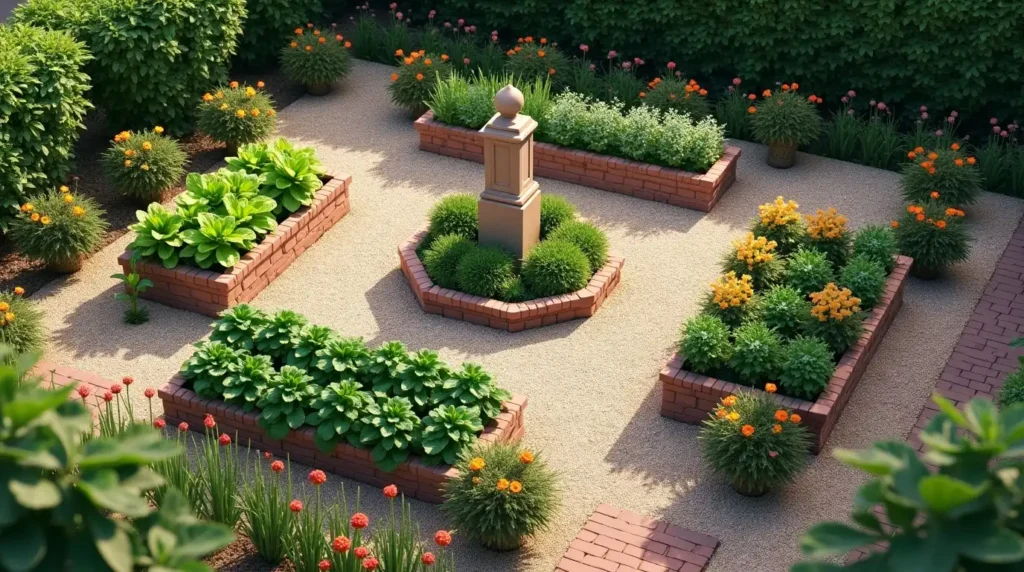
A French potager is a kitchen garden designed to look good while producing food. Vegetables, herbs, fruit, and flowers are arranged in clear shapes.
Start with four beds around a central feature. The center could hold a fruit tree, obelisk, birdbath, or large pot.
Use gravel or brick paths between the beds. Keep frequently picked herbs near the house.
You can mix:
- Lettuce in neat rows
- Chives along bed edges
- Tomatoes on simple supports
- Thyme between paving stones
- Marigolds near vegetables
- Nasturtiums spilling over borders
Repeat colors and shapes to keep the potager from looking messy. For example, plant the same herb along the edge of each bed.
The garden will change as crops are picked. Add flowers and permanent herbs to keep some structure through the full growing season.
A potager works best when beauty and easy access support each other.
Create a French Courtyard With Simple Seating
Best for: Patios, small yards, and areas near the kitchen
Budget: Low to medium
Care level: Low
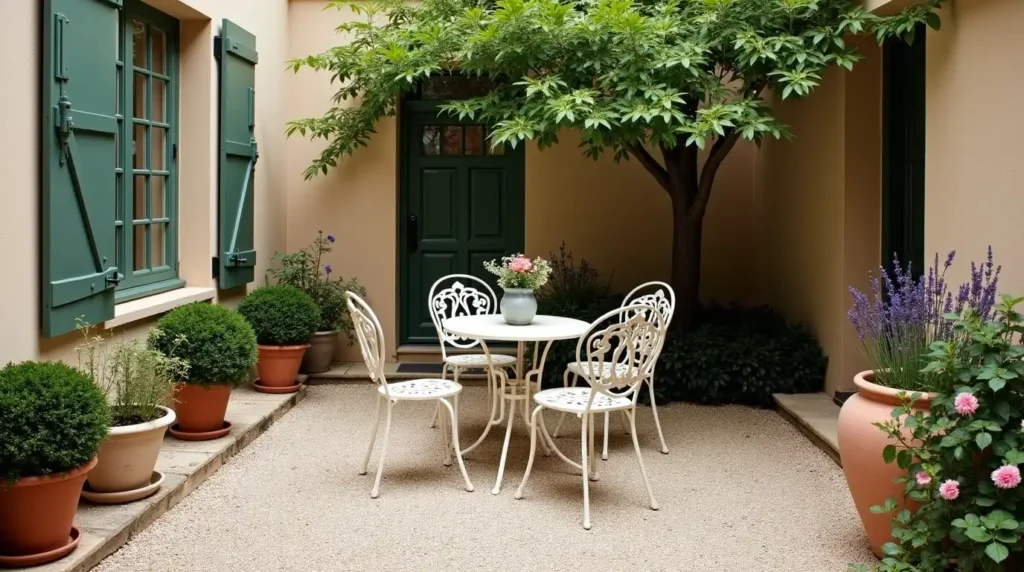
You do not need a large garden to create a French outdoor space. A small seating area can bring the style close to the house.
Start with a simple floor. Gravel, brick, or stone can all work. Add a small metal table with two or four chairs.
Surround the space with:
- Terracotta herb pots
- Clipped shrubs
- Roses
- A small tree
- Lavender or similar plants
- One wall fountain or large urn
Use matching planters to create balance. A tree, umbrella, or simple pergola can provide shade.
Do not fill the patio with too much furniture. Leave enough space to walk around the table and reach the plants.
For a low-cost setup, look for secondhand metal chairs. Paint them in one simple color. Add plain seat cushions that can be stored indoors.
The best French courtyard garden ideas feel useful, relaxed, and easy to enjoy each day.
Use French Garden Design Ideas That Fit a Small Yard
Best for: Patios, side yards, and urban homes
Budget: Low to medium
Care level: Low to medium
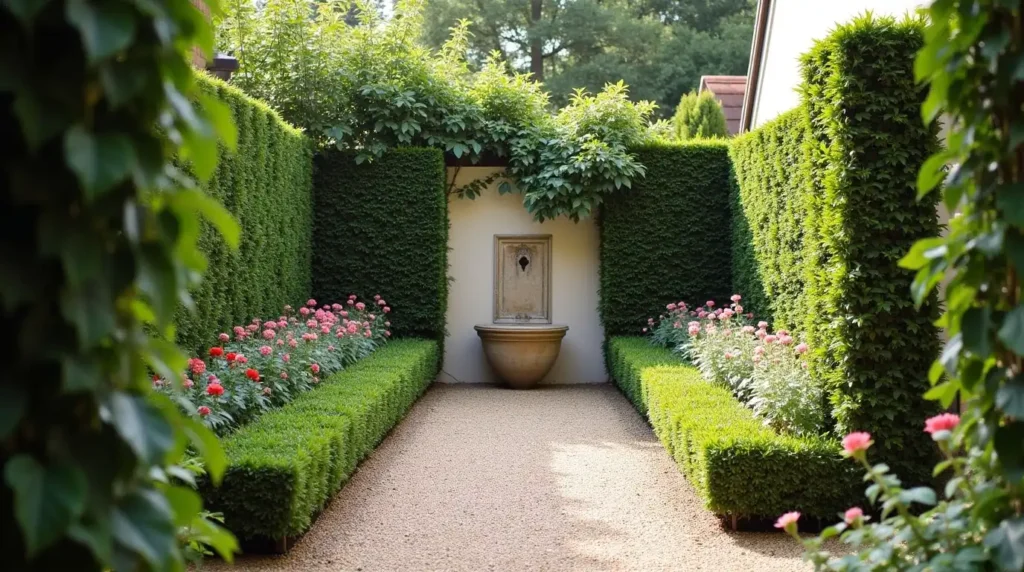
Many French garden design ideas work well in small yards. You just need to reduce the scale and limit the number of features.
A narrow side yard can use a straight gravel path with clipped plants on each side. Place a large pot or wall feature at the far end.
A small patio can use two matching planters, a café table, and a wall fountain. This creates balance without using much floor space.
A square yard could have four small beds around one central pot. Keep the bed shapes simple and repeat the same plants.
Vertical features also save room. Try:
- A climbing rose
- An espalier fruit tree
- A wall fountain
- Tall narrow shrubs
- A slim metal plant support
Use one main path material, one focal point, and a limited plant palette.
Trying to fit every French feature into a small yard will make it feel crowded. Choose three strong ideas and give them room to stand out.
Add Warm Lighting Without Hiding the Layout
Best for: Paths, entrances, and evening seating
Budget: Low to high
Care level: Low
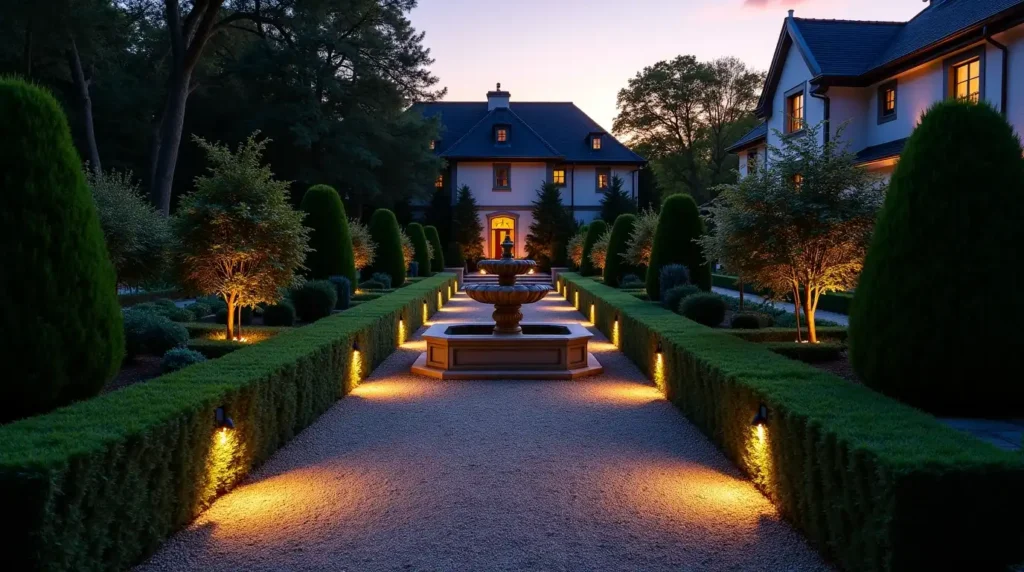
Garden lighting should help you see the layout after dark. It should not turn every plant into a bright display.
Start with the main path. Use low lights that help people walk safely. Keep the fixtures evenly spaced to support the garden’s symmetry.
Add one light to the main focal point. A soft beam can show a fountain, urn, tree, or statue.
You can also place small hidden lights under clipped shrubs or inside planting beds. The fixture should be less noticeable than the light it creates.
Warm light usually works better with stone, gravel, brick, and green plants. Very cool white light may make the garden feel harsh.
Avoid placing a light beside every flower. Dark areas create contrast and help the main features stand out.
Test the effect with temporary solar lights before paying for permanent wiring. This makes it easier to adjust the spacing and angle.
How to Pick the Right Features for Your Yard
The best French garden is not the one with the most features. It is the one that fits your home and your weekly schedule.
Start by checking the size and shape of the yard. A long space may suit a straight path or small allée. A square space may work better with four balanced beds.
Next, study the sunlight and drainage. Roses and lavender may fail in the wrong place, even when the design looks good on paper.
Be honest about maintenance. Clipped hedges, topiary, fountains, and trained trees all need care. You can lower the workload by using stone edging, slow-growing shrubs, simple plant groups, and fewer formal beds.
Choose a style based on your needs:
- Pick a formal French garden for strong lines and neat hedges.
- Pick a French country garden for herbs, flowers, gravel, and softer edges.
- Pick a modern French garden for simple shapes and fewer plants.
- Mix styles when you want structure without a stiff result.
Before buying anything, measure the yard and draw a basic plan. Add the main path first. Then place the focal point, seating, beds, and large plants.
Common Mistakes That Can Spoil the French Look
A French-style yard can lose its calm feel when too many ideas compete for attention.
Avoid these common problems:
- Using too many flower colors
- Mixing several path materials
- Choosing plants that outgrow the beds
- Placing decorations in every empty corner
- Building a fountain that is too large
- Planting hedges without checking their final width
- Ignoring the view from inside the house
- Creating a layout that needs more care than you can give
It is better to finish three strong features than start ten weak ones.
Begin with a central line, repeated planting, and one focal point. Add other details after the main structure feels right.
Create Your French Garden One Feature at a Time
You do not need a château, a huge lawn, or a large budget to create a French-style yard.
Start with structure. Mark one clear line through the garden. Add balanced beds or matching containers. Choose one focal point that can be seen from the house.
Then add details that fit your space. Pale gravel, clipped shrubs, roses, herbs, fruit trees, and warm lighting can build the look over time.
Do not rush to fill every corner. A few repeated plants and clear shapes often create a stronger result than many unrelated features.
Start with one or two of these French garden design ideas. Add more as your plants grow and your plan becomes clearer.