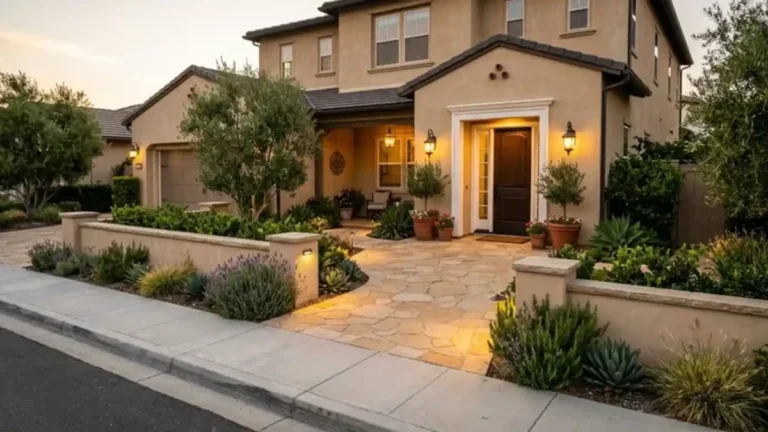
17 Front Yard Landscaping for Spring Ideas
After months of cold weather, your front yard may look bare, muddy, patchy, or overgrown. You know it needs work. The hard part is deciding where to begin.
Good front yard landscaping for spring does not mean replacing every plant or rebuilding the whole yard. A few focused changes can make the space look cleaner, brighter, and easier to care for.
Start with the problems winter left behind. You may have broken branches, thin grass, faded mulch, standing water, or plants that did not survive. Fixing these issues first gives you a better base for flowers, shrubs, planters, and other spring front yard ideas.
The 17 ideas below work for many yard sizes and budgets. Some can be finished in one afternoon. Others need more planning. Choose the projects that match your climate, sunlight, soil, and free time.
Plan Your Front Yard Landscaping for Spring
It is easy to spend too much at a garden center when you do not have a plan. Colorful plants look great on the shelf, but they may not solve the real problems in your yard.
Start by walking around the property. Take photos from the street, driveway, and front door. Photos can help you notice empty areas, crooked bed lines, overgrown shrubs, and clutter that you miss when standing close to them.
Next, sort each problem into three groups.
| Priority | What to Check |
| Fix first | Standing water, broken steps, dead branches, exposed roots |
| Improve next | Thin grass, faded mulch, overgrown shrubs, bare beds |
| Decorate last | Planters, flowers, lighting, pots, and garden accents |
Check how much sunlight each planting area receives. A bed beside the house may be shaded in the morning but hot in the afternoon.
Set a budget before buying anything. A simple spring landscaping plan will help you spend money on changes that make a real difference.
Clean the Yard Without Removing Helpful Wildlife
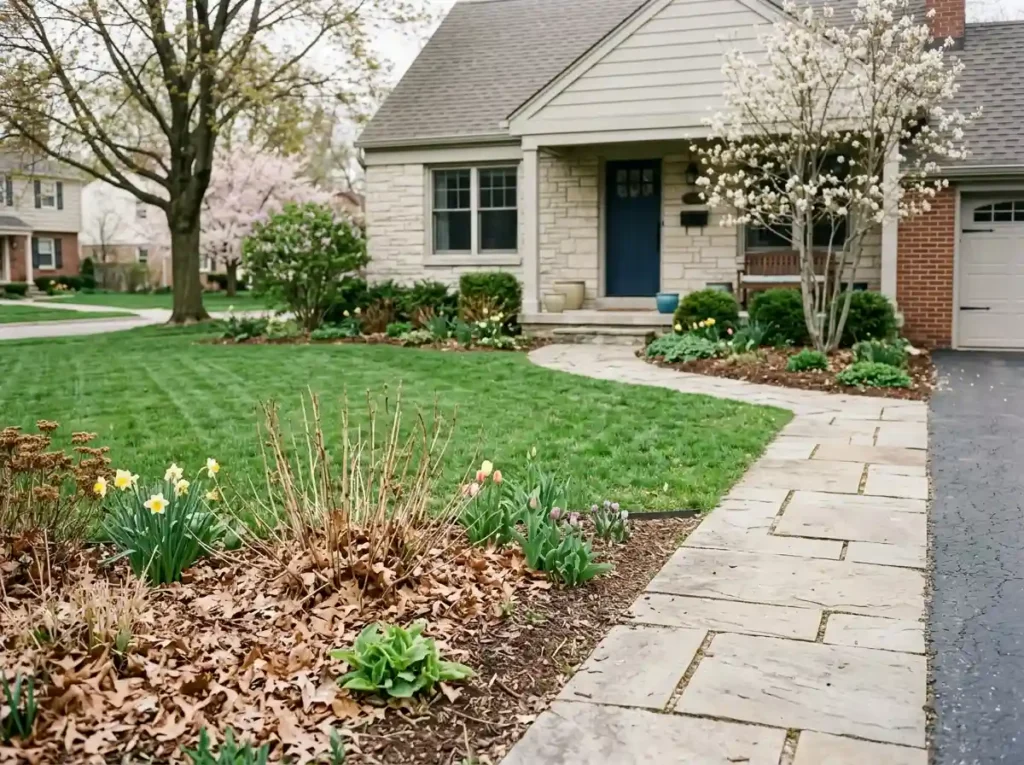
Spring cleanup gives your front yard a fast improvement. But clearing every leaf and dry stem too early can disturb insects that are still sheltering from cold weather.
Start with obvious waste. Pick up trash, broken pots, fallen branches, and materials that may blow into the street. Remove diseased leaves and damaged plant parts so problems do not spread.
You do not need to clear every planting bed at once. Some bees, butterflies, and other useful insects spend winter inside dry stems or under leaves. Wait until your local weather stays mild before cutting all old growth to the ground.
Check shrubs and small trees for snapped branches. Clean cuts are safer than leaving torn wood attached.
You should also clean paths, steps, and the driveway. Removing slippery leaves and loose materials makes the area safer.
A careful spring yard cleanup creates a neat look without treating every natural material as waste.
Test the Soil Before Buying New Plants
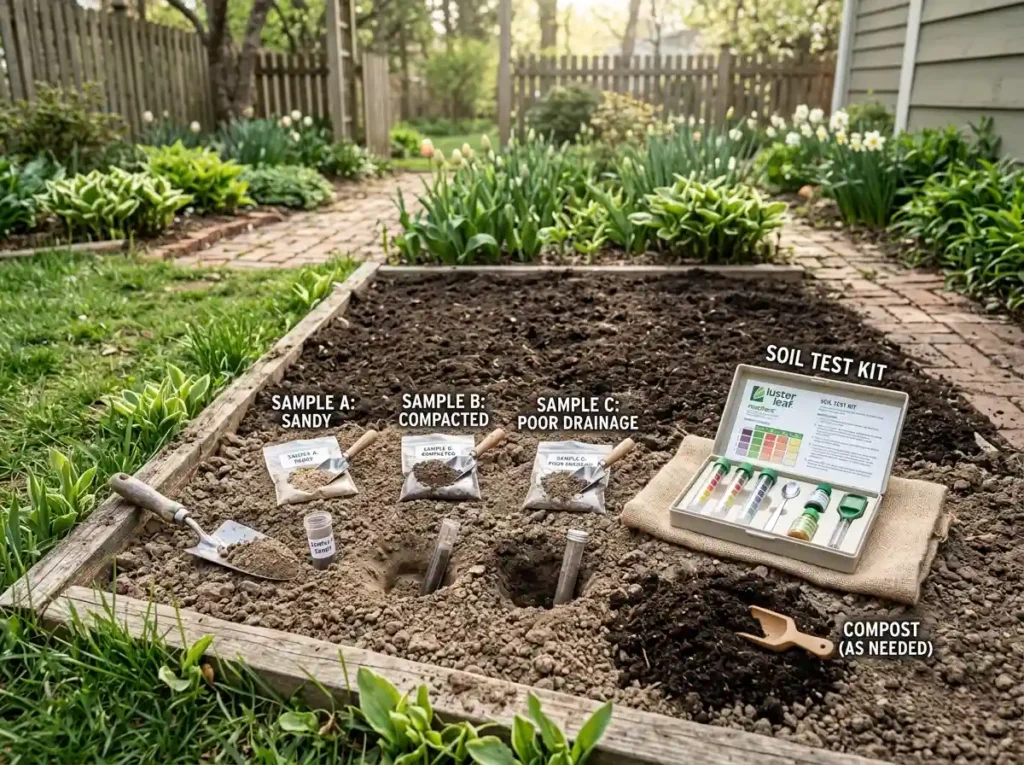
New flowers cannot fix poor soil. If the soil is packed hard, drains badly, or lacks key nutrients, your plants may struggle no matter how much you water them.
Look at the ground before digging. Water that stays for hours may point to poor drainage. Hard soil with deep cracks may be compacted. Soil that dries soon after watering may contain too much sand.
A soil test can tell you more than guessing. Many university and county extension offices offer affordable testing. The results may show the soil’s pH level and which nutrients are missing.
Do not add large amounts of fertilizer without a test. Too much fertilizer can damage plants and wash into drains.
Compost can help many soils, but more is not always better. Add it based on your soil condition and the plants you want to grow.
Avoid working wet soil. Squeeze a small amount in your hand. If it forms a sticky lump, wait until it dries before digging.
Edge Flower Beds for a Fast Curb Appeal Win
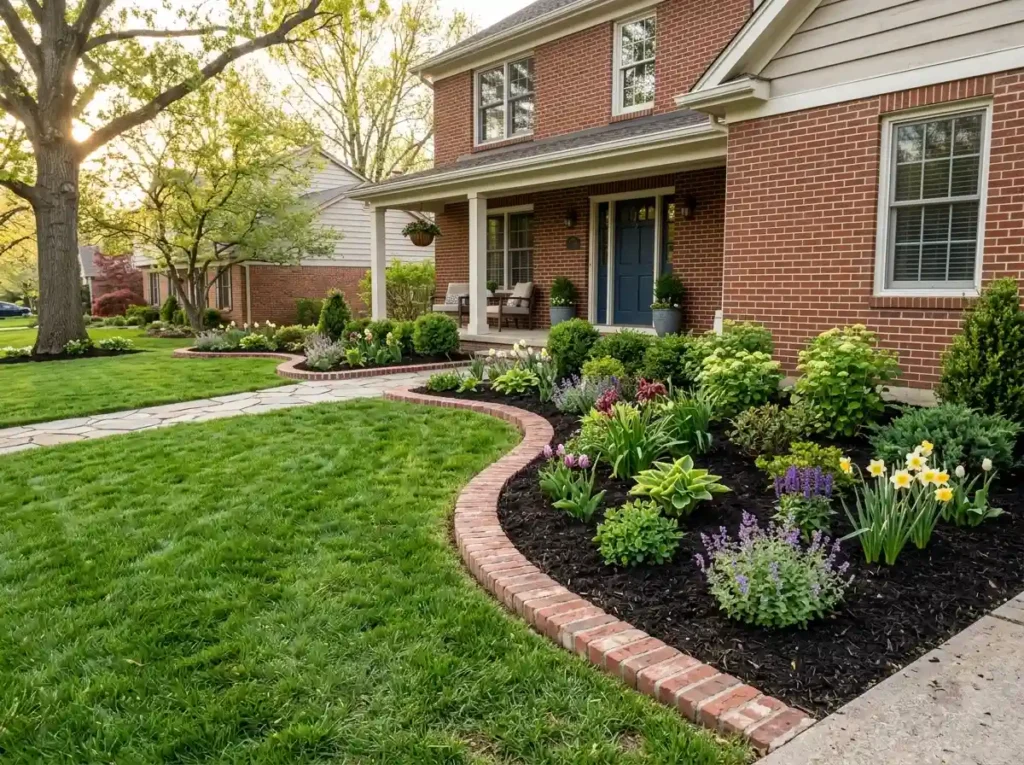
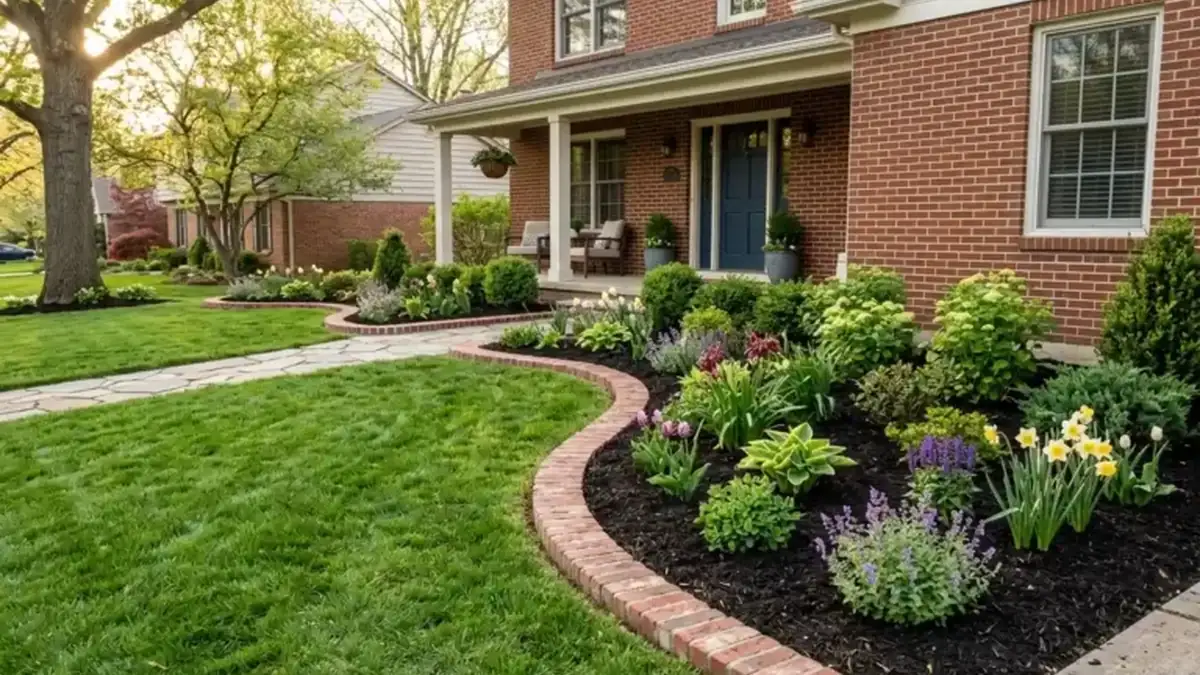
Messy bed lines can make a cared-for yard look unfinished. Clean edging creates a clear break between the lawn and planting areas.
Use a garden hose to mark the shape before cutting. This lets you test curves without making a permanent change.
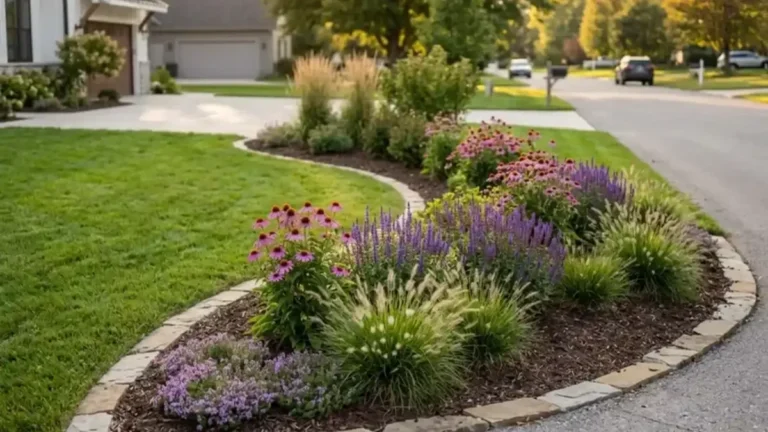
Keep the design simple. One or two gentle curves often look better than many small waves. Wider beds also give shrubs and flowers room to reach their mature size.
Choose an edging material that suits your house.
Brick works well with many traditional homes. Thin metal edging creates a clean look around modern houses. Natural stone suits cottage-style and rustic yards. A simple cut trench is a good choice when you want to spend less.
Avoid making beds too narrow. A strip that is only a few inches wide can be hard to plant and maintain.
Front yard flower bed edging may seem like a small detail. Still, it can make the whole yard look more planned in one afternoon.
Refresh Mulch Without Harming Trees
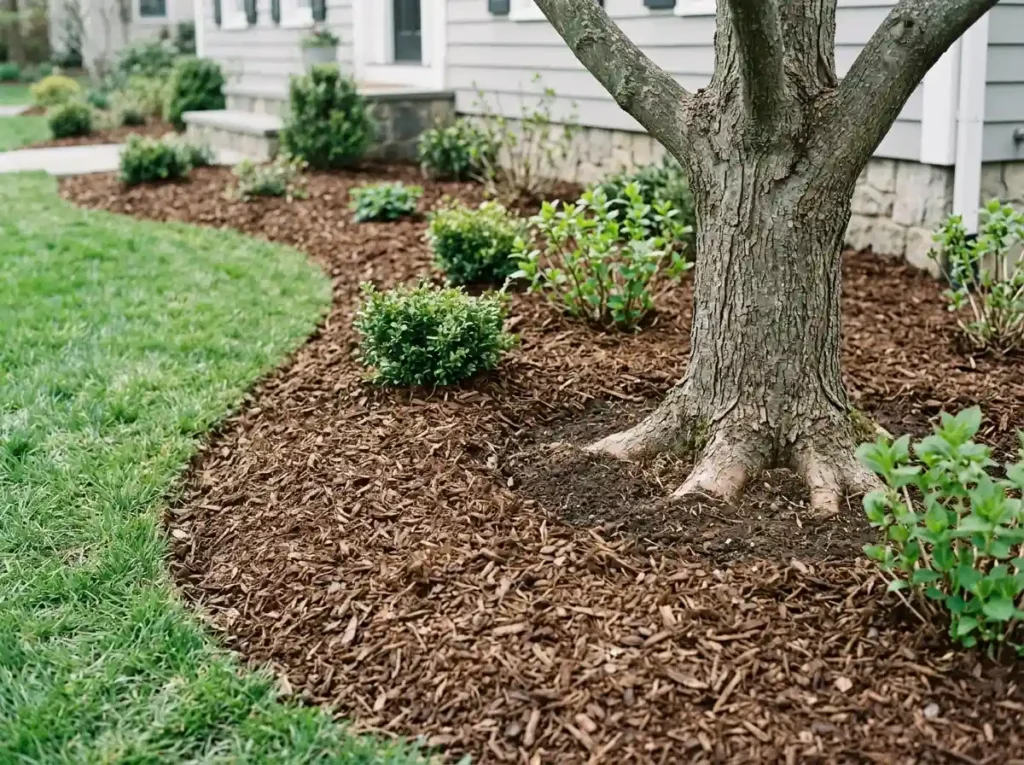
Fresh mulch can brighten faded planting beds. It also helps the soil hold moisture and can reduce weed growth.
Before adding more, check what is already there. Old mulch may look thin on top but still be deep near the soil. Rake it gently to break up hard areas.
Aim for a layer of about two to three inches in most beds. Very deep mulch can keep too much water near plant stems.
Keep mulch away from tree trunks and the base of shrubs. A tall pile against a trunk is often called a mulch volcano. It can trap moisture, hide damage, and lead to root or bark problems.
You should be able to see the tree’s root flare. This is the wider area where the trunk meets the ground.
Use one mulch type or color in connected front beds. Too many colors can make a small yard look busy.
Before buying more bags, measure each bed and check the current depth. You may need less mulch than you think.
Fix Patchy Grass Instead of Reseeding Blindly
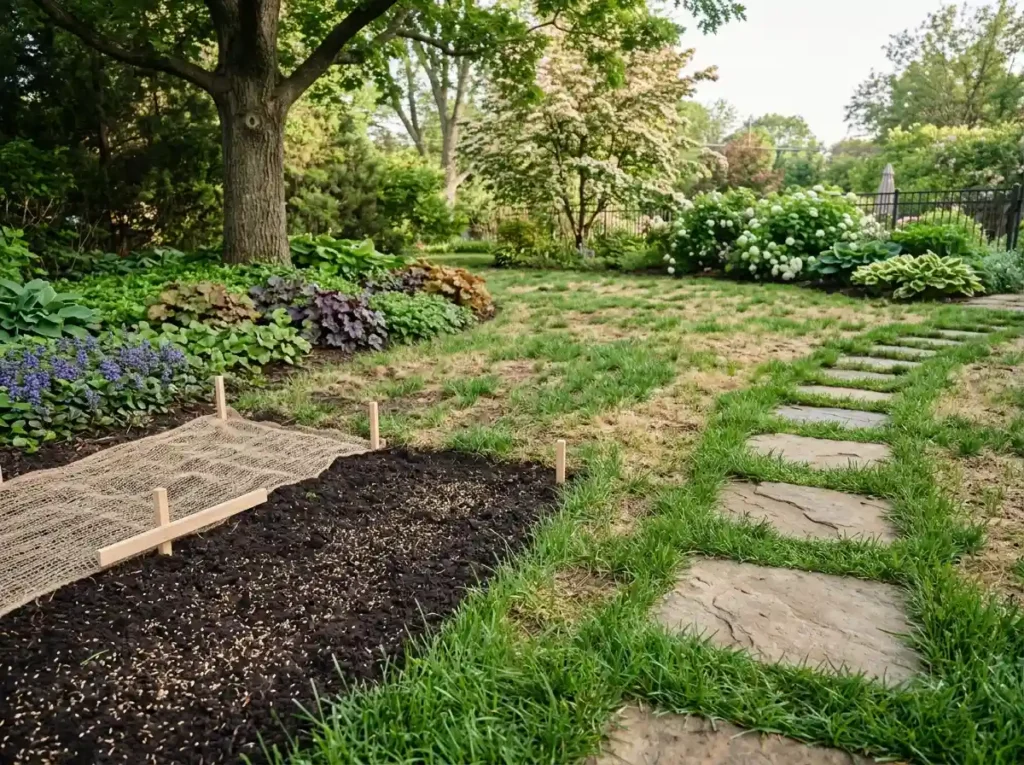
A thin lawn can make the whole front yard look tired. But adding seed every spring will not help if the main cause is still there.
First, ask why the grass died.
The area may receive too little sun. The soil may be packed down by foot traffic. Water may sit after rain. Pets may use the same spot each day.
Match the solution to the cause. Loosen compacted soil before seeding. Redirect foot traffic with stepping stones. Fix drainage before covering a wet area with more grass.
Lawn timing also depends on the grass type. Cool-season grasses can be repaired in spring, though early fall often gives better results. Warm-season grasses are usually repaired after active growth begins in late spring.
Choose seed based on sunlight and climate. Do not buy a mix only because the bag says “quick growth.”
Deep shade may never support a thick lawn. A shade-tolerant ground cover or wider planting bed may work better than reseeding the same patch each year.
Frame the Front Door With Spring Planters
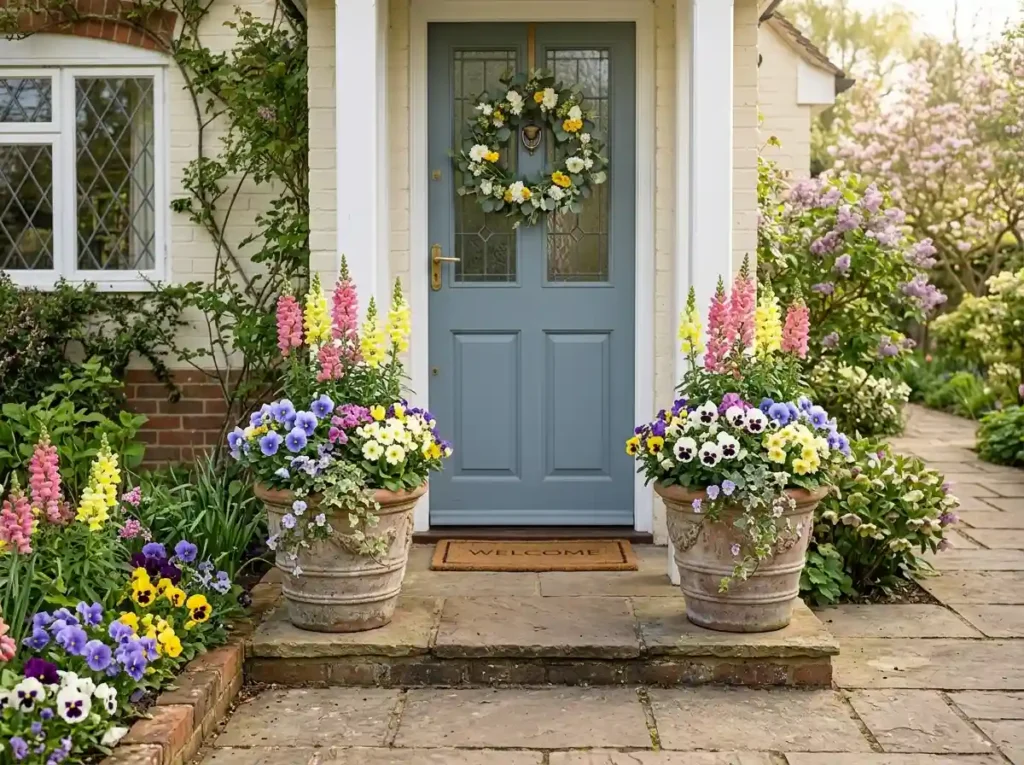
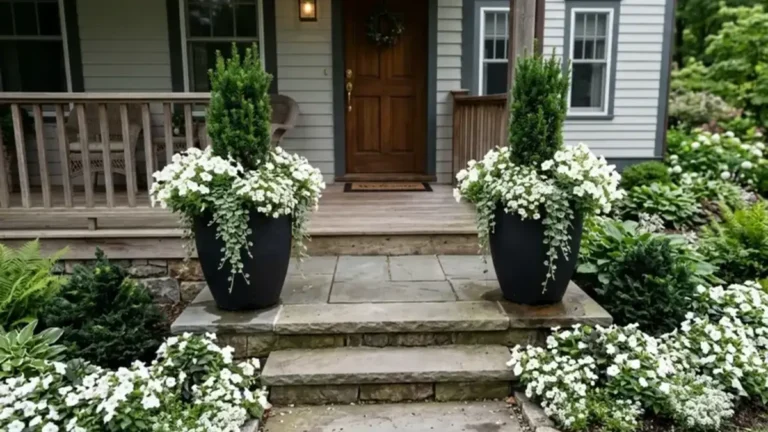
Your front door is often the first place visitors look. A pair of well-sized planters can make the entrance feel more welcoming without changing the whole yard.
Choose pots that are large enough to be seen from the street. Small pots can disappear beside a wide door or tall porch.
You do not need identical planters, but they should feel balanced. Use matching colors, shapes, or plant types to connect them.
A simple container formula works well:
- Use one upright plant for height.
- Add mounding flowers around the middle.
- Place a trailing plant near the edge.
For cool spring weather, you might use pansies, violas, primroses, or snapdragons. Plant choices will depend on your climate and the amount of sun near the door.
Leave enough room for people to walk, carry bags, and open the door safely.
Repeat one flower color elsewhere in the yard. This small link can make your front yard spring makeover feel more complete.
Add Quick Color With Potted Bulbs and Spring Flowers
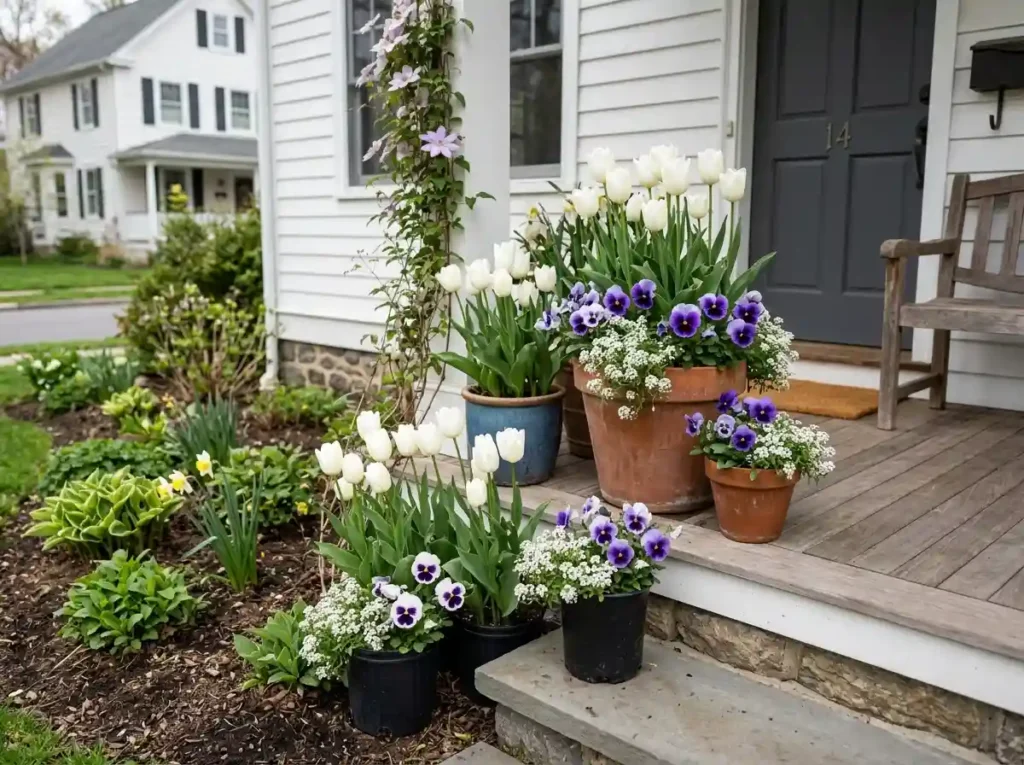
Many front yards look dull in early spring because trees and summer plants have not filled out yet. Potted bulbs can bring color to the space right away.
Most spring-blooming bulbs are planted in fall. But garden centers often sell tulips, daffodils, and hyacinths that are already growing or blooming.
Place these pots inside larger porch containers or use them to fill short-term gaps in flower beds.
Choose two or three colors and repeat them. Too many unrelated colors can make a small yard feel crowded.
Try simple combinations such as:
- Yellow daffodils with blue violas
- White tulips with purple pansies
- Pink hyacinths with white sweet alyssum
Plant flowers in groups instead of placing single plants far apart. Groups are easier to see from the road and create a stronger visual effect.
Potted bulbs provide fast color, but they are not a full-season solution. Plan what will replace them after the flowers fade.
Build a Layered Garden Near the House
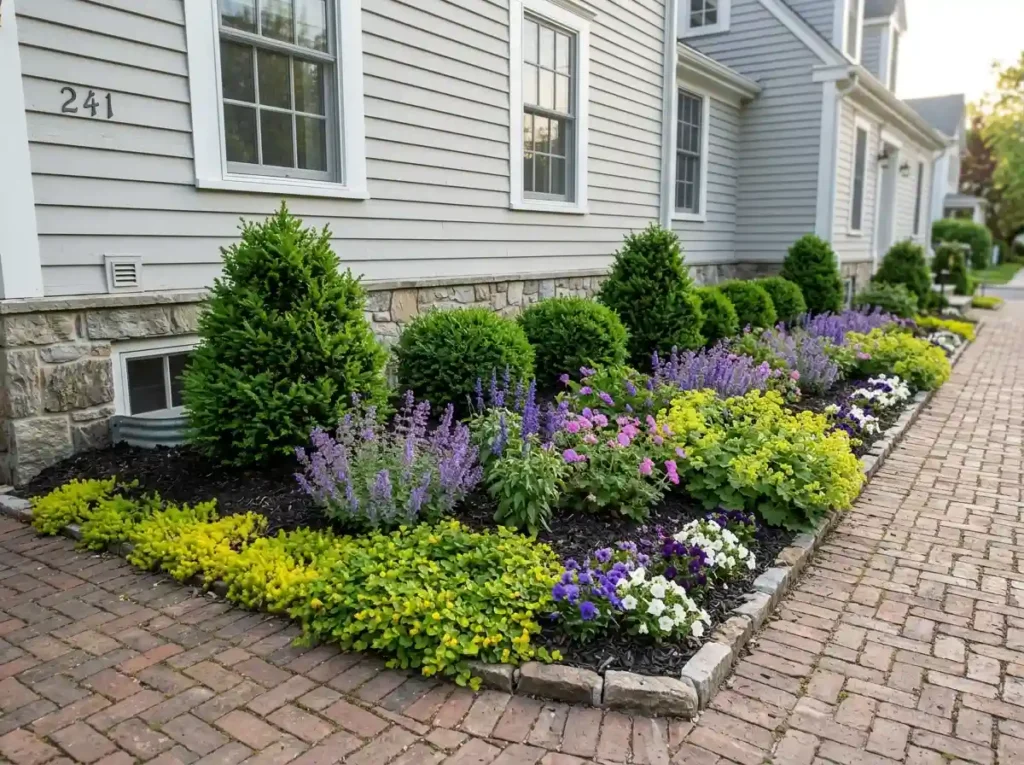
Random plants often look disconnected, even when each plant is healthy. A layered foundation garden creates order by placing plants in clear height groups.
Start with the tallest plants near the house. Choose compact shrubs that will not cover windows, vents, or house numbers.
Place medium-height flowers or perennials in front of the shrubs. Add low plants or ground cover along the bed edge.
The basic layout looks like this:
| Layer | Plant Type | Main Purpose |
| Back | Compact shrub or evergreen | Adds structure |
| Middle | Perennial flowers | Adds seasonal color |
| Front | Ground cover or low annual | Softens the edge |
Repeat plants instead of using one of everything. Three matching perennials often look stronger than three unrelated plants.
Check mature widths before planting. A small shrub at the garden center may grow several feet wide.
Leave some open soil between young plants. The bed may look less full during the first season, but the space prevents crowding later.
Use Flowering Shrubs for Color That Returns
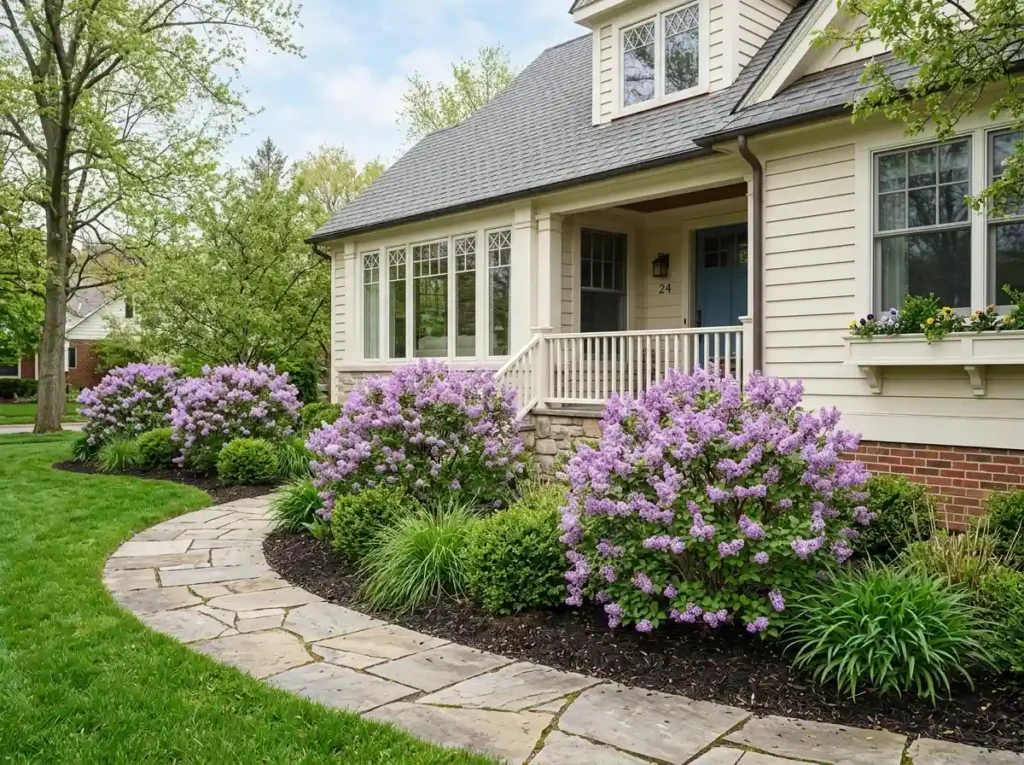
Annual flowers can give you fast color, but they need to be replaced. Flowering shrubs can return each year and add more size to the landscape.
Choose shrubs based on their mature height, width, sunlight needs, and bloom time. Do not choose one based only on its flowers at the garden center.
Possible spring-blooming choices include azalea, viburnum, dwarf lilac, spirea, serviceberry, and some types of ninebark. The best choice will depend on your region.
Mix flowering shrubs with plants that have useful foliage after the blooms fade. Otherwise, the bed may look plain for the rest of the year.
Place taller shrubs where they will not block windows or cover the walkway. Avoid planting wide varieties in narrow spaces beside steps.
You also need to check when each shrub should be pruned. Cutting at the wrong time may remove next season’s flower buds.
One repeated shrub variety often creates a cleaner design than several unrelated kinds.
Add One Small Tree as a Focal Point
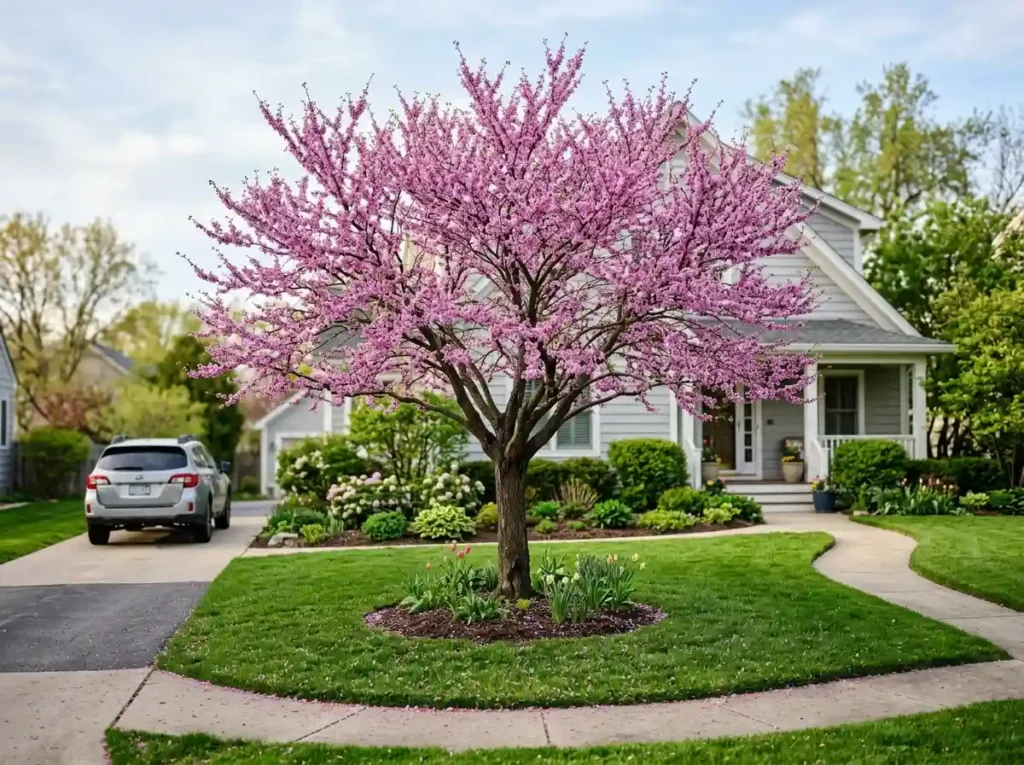
A front yard without a focal point can feel flat. One small flowering tree can add height, shade, and seasonal color.
The word “small” can be misleading. A young tree may fit inside your car, but its canopy could spread 15 or 20 feet after it matures.
Measure the planting area first. Check the distance from the house, driveway, sidewalk, and power lines.
Possible choices include redbud, serviceberry, crabapple, dogwood, fringe tree, and saucer magnolia. Each tree has different soil, climate, and care needs.
Think about what happens after flowering. Some trees produce fruit, seed pods, or fallen petals. These features may be welcome in a garden bed but annoying over a driveway.
Do not plant a tree too deep. The root flare should remain visible near the soil surface.
A local certified arborist can help when the space is tight or utility lines are nearby. The right tree can improve the yard for years. The wrong tree can create costly problems.
Use Native Plants to Help Local Pollinators
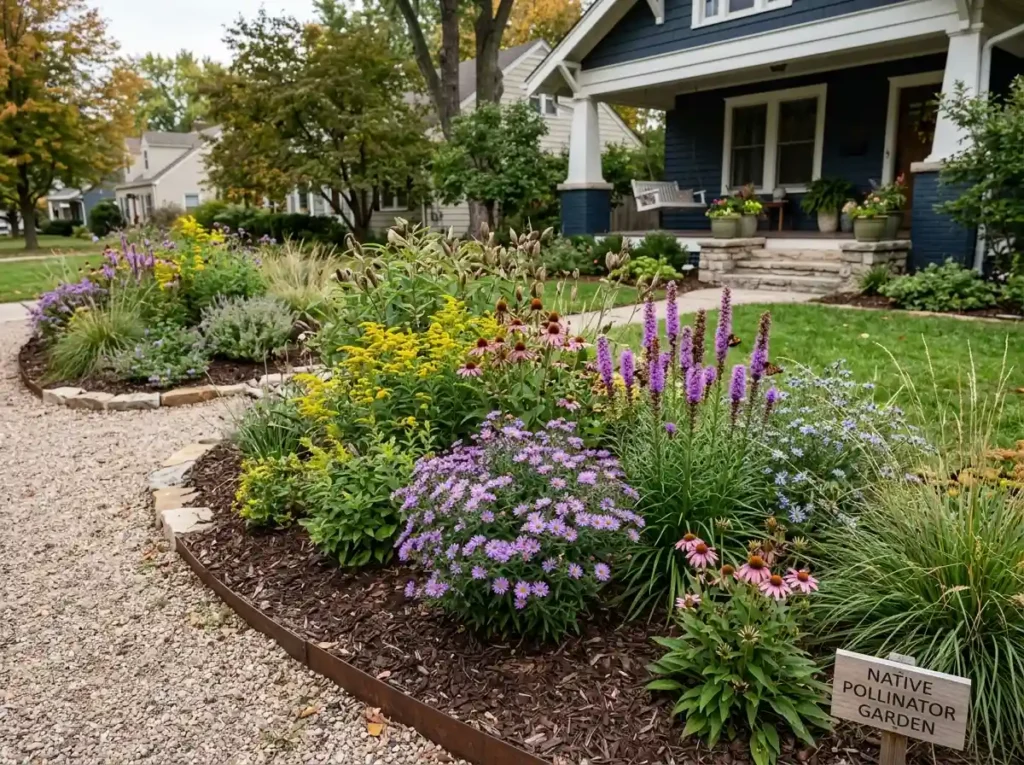
Some front yard plants need constant watering, spraying, or replacement. Native plants may need less help once they are growing in the right location.
A native plant is one that developed naturally in your region. It is often better suited to local weather, soil, and wildlife.
This does not mean every native plant will grow anywhere in your yard. You still need to match each plant to the available sun and moisture.
Choose plants that bloom at different times. Early spring flowers provide food when fewer options are available. Later flowers keep the area useful during summer and fall.
Plant several of the same kind together. Groups are easier for bees and other pollinators to find than single flowers spread across the yard.
You can also include host plants that support butterfly caterpillars.
Check a local native plant society or extension office before buying. Plant names and growing conditions differ by region.
Native front yard plants can add color while supporting insects, birds, and other local wildlife.
Soften a Wide Driveway With Low Plants
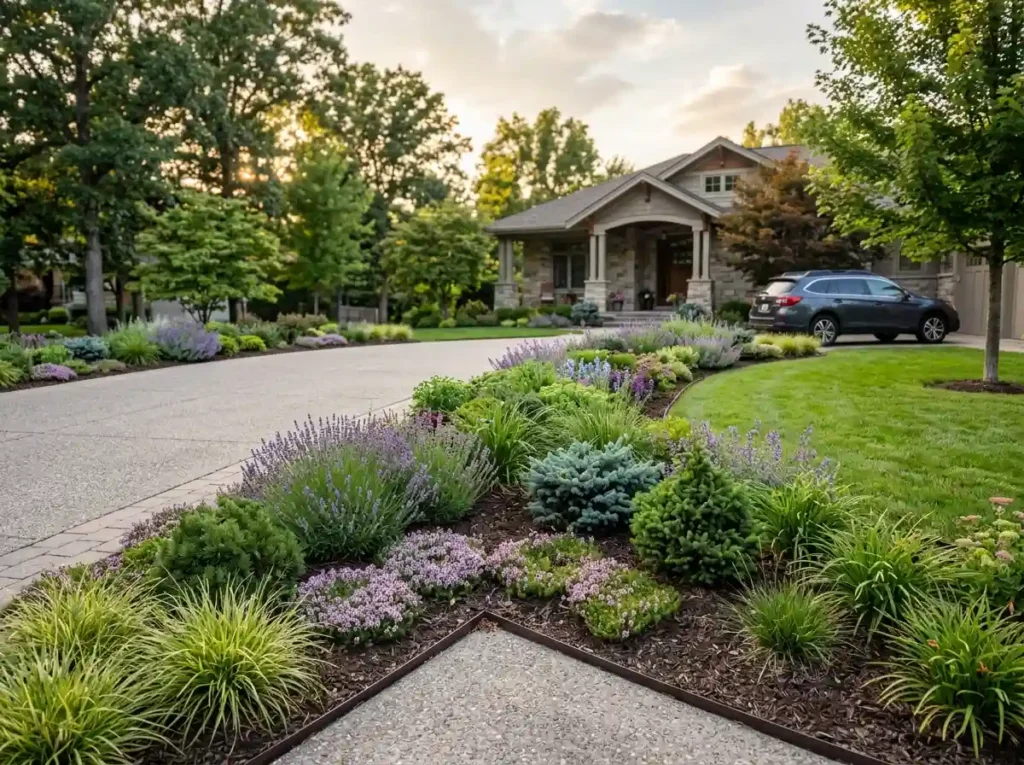
A large driveway can take up most of the view from the street. A low planting border can soften the hard surface without making parking harder.
Leave enough open space for car doors, trash bins, and people walking between vehicles.
Choose plants that can handle heat reflected from concrete or asphalt. Plants beside the driveway may dry faster than plants in other parts of the yard.
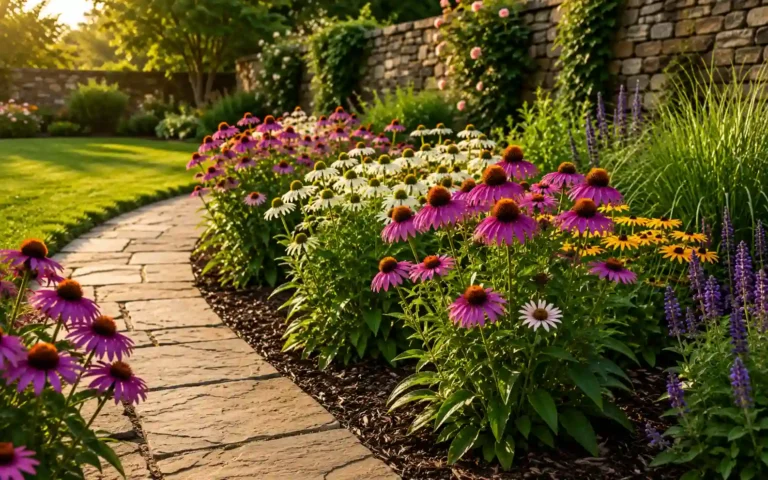
Good options may include low ornamental grasses, sedges, creeping thyme, compact lavender, dwarf evergreens, or low native flowers. Plant choices will depend on climate and soil.
Avoid thorny shrubs near parking spaces. Do not use tall plants where they could block a driver’s view.
Cold-climate homeowners should also consider road salt. Some plants are more sensitive to salt spray and salty runoff.
Repeat one or two plants along the border. A simple pattern usually looks better than a long row of different flowers.
Test the border width with a hose before removing grass or digging.
Make the Front Walkway Safer and More Inviting
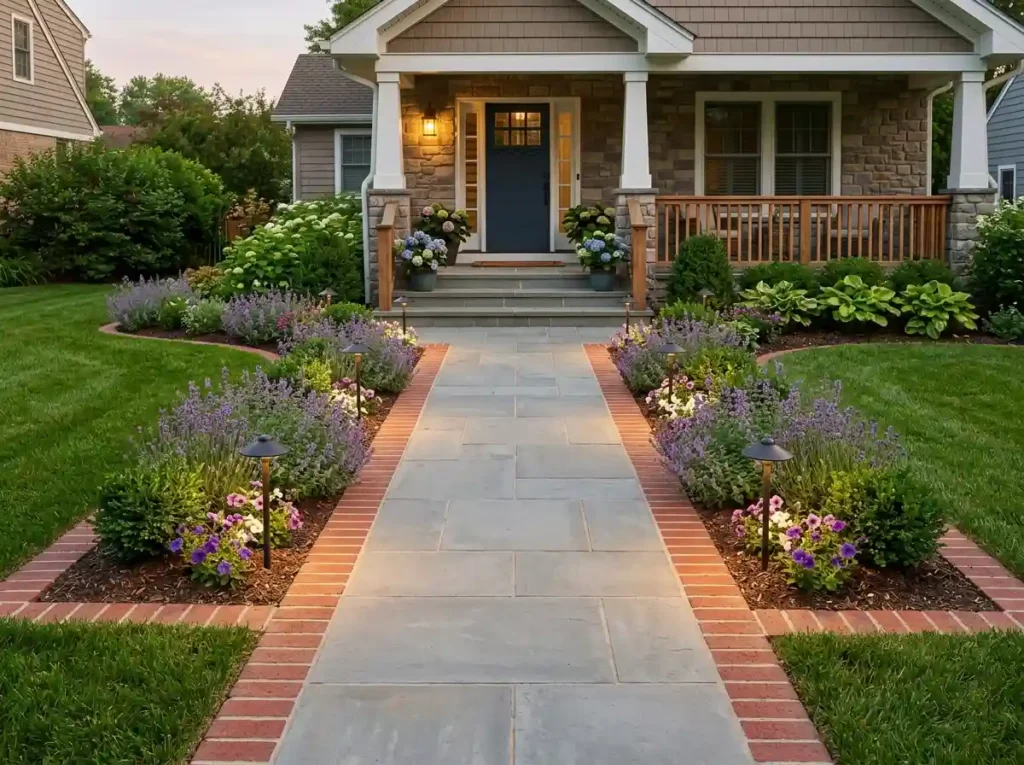
A front walkway should guide people to the door. If it feels narrow, dark, or broken, plants alone will not solve the problem.
Repair loose stones, raised edges, and cracked sections first. Safety comes before decoration.
Next, define the path with low plants or clean edging. Keep mature growth away from the walking surface. Wet leaves and spreading stems can make a path slippery.
Use materials that connect with the house. Brick edging can match a brick exterior. Gravel may suit a cottage-style yard. Simple pavers can work with many modern homes.
You can improve the walkway at three spending levels.
For a low-cost update, edge the path and add compact flowers. For a mid-range project, add gravel strips or a few lights. For a larger project, replace damaged sections with pavers or stone.
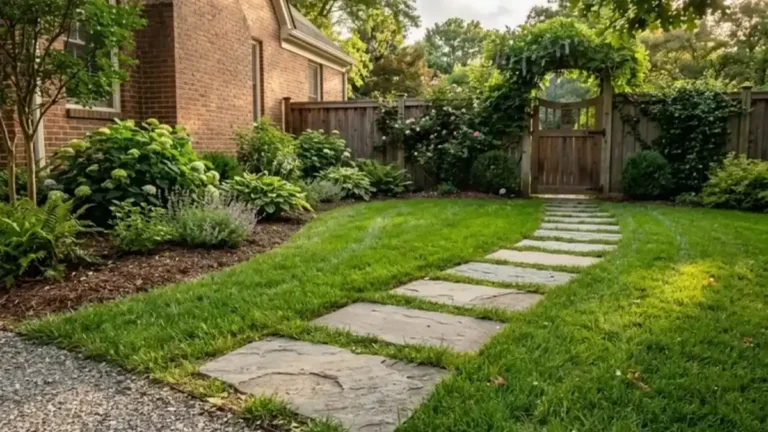
Do not place stepping stones where people need to change their natural stride.
A clear and safe route makes the whole entrance feel better cared for.
Turn a Wet Patch Into a Rain Garden
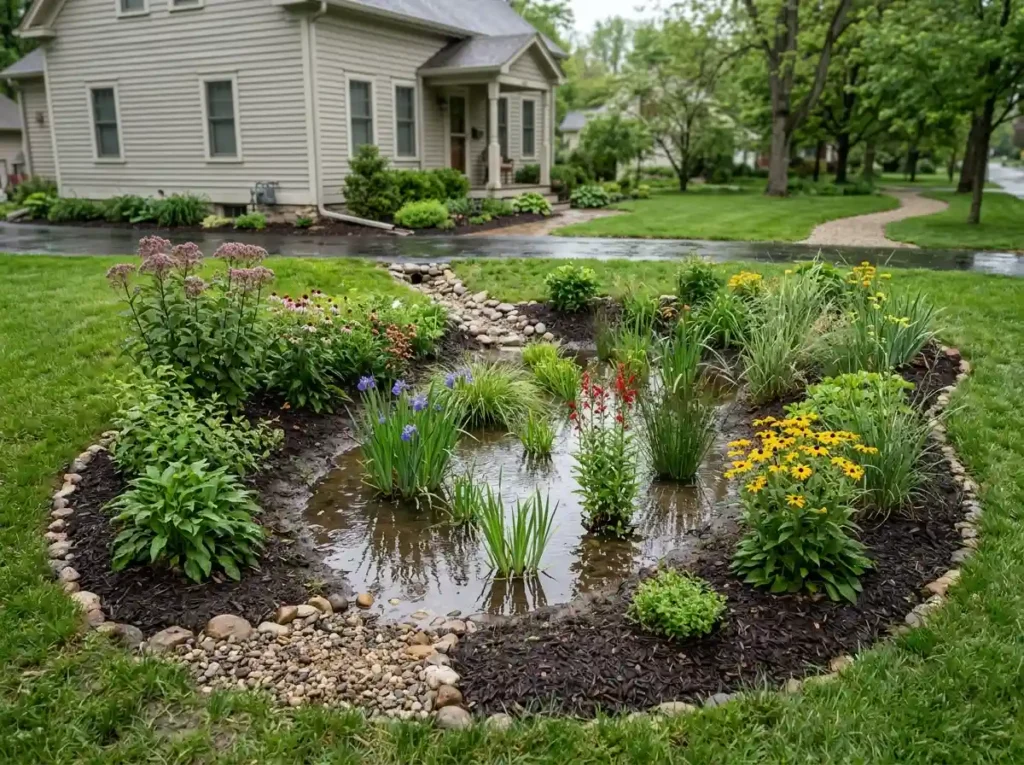
A muddy area that returns after every storm is more than an appearance problem. It may point to poor grading, compacted soil, or water flowing from a roof or driveway.
A rain garden can help manage some runoff. It is a shallow planted area that holds rainwater for a short time and lets it soak into the ground.
Place moisture-tolerant plants near the center. Use plants that can handle both wet and dry periods around the outer edge.
A rain garden should drain between storms. It should not become a permanent pond.
Keep it away from the home’s foundation and septic systems. Check local rules before digging. You should also contact the local utility marking service to find buried lines.
Do not use a rain garden as a quick fix for serious flooding. Water entering the house or washing away soil may require help from a drainage professional.
For a suitable wet patch, this feature can reduce mud while adding flowers and texture to the front yard.
Create a Simple Mailbox Garden
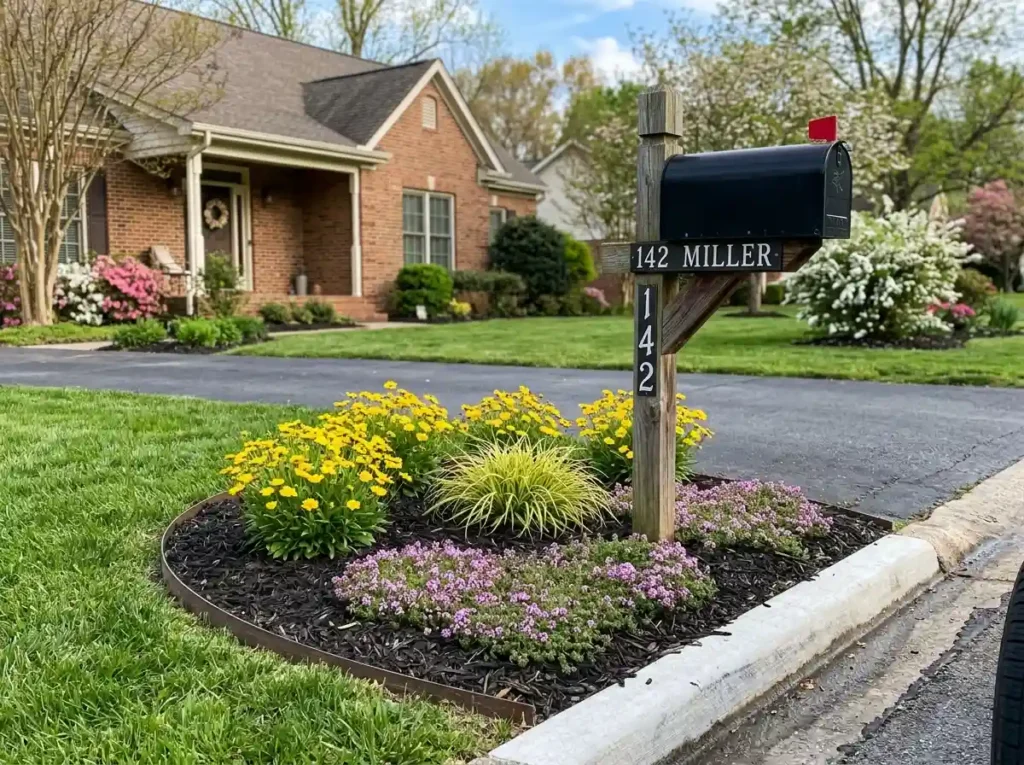
The mailbox area is small, but it is often one of the first parts of the property people see. A few plants can turn it into a clear focal point.
Start by checking access. The mailbox must remain easy to reach from the road or sidewalk.
Choose plants that can handle heat, dust, road spray, and possible salt. Keep them low enough to protect the view of drivers and pedestrians.
A simple layout may include one compact ornamental grass, three to five flowering perennials, and a low ground cover. Finish the bed with clean edging and mulch.
Avoid using too many plant types. A crowded mailbox bed can look messy and be hard to weed.
Do not plant tall flowers where they may lean into the road. Leave room for trimming, painting, and other mailbox care.
This is one of the easiest spring landscaping ideas for a small budget. It can also be finished without changing the rest of the yard.
Add Lighting Where It Improves Safety
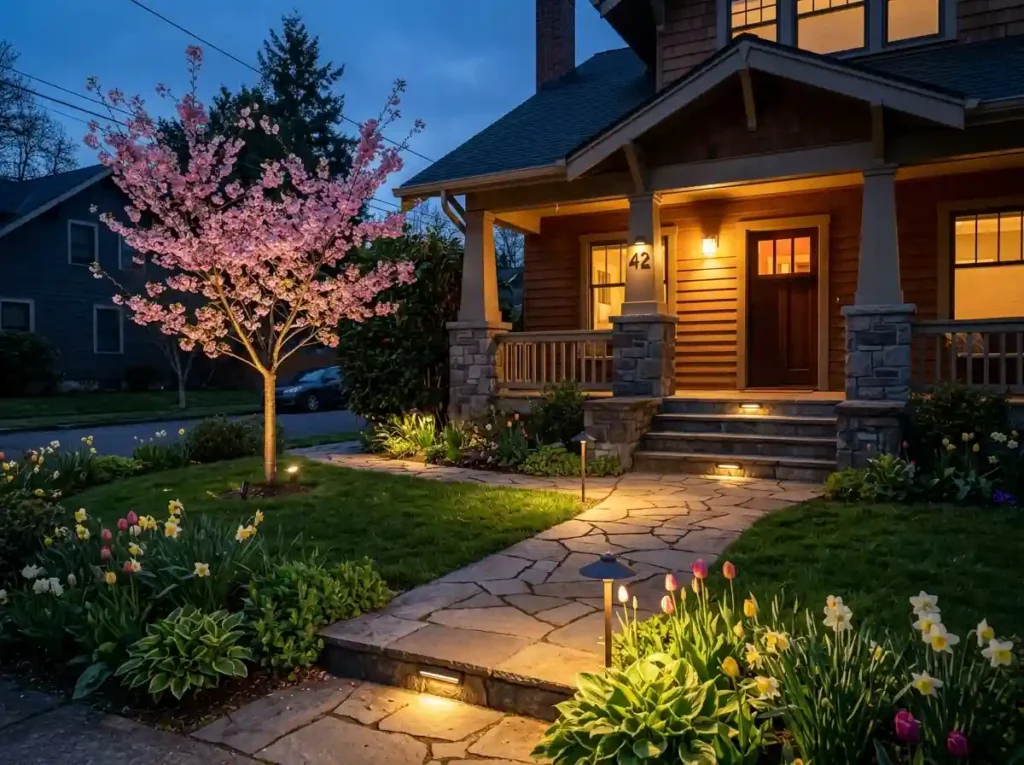
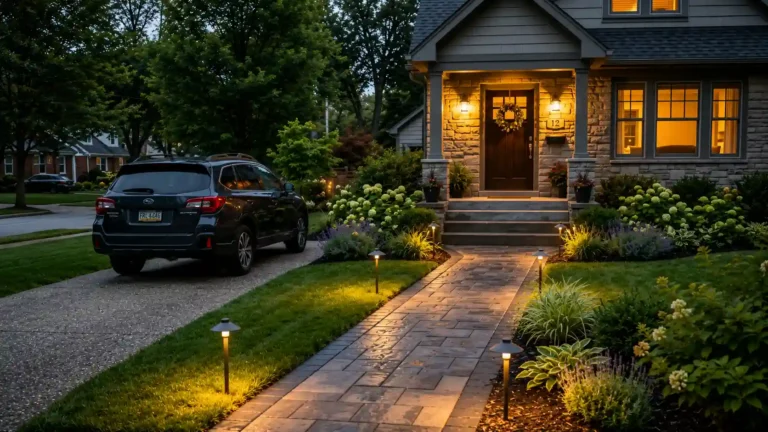
Landscape lighting can make your entrance safer after dark. It can also highlight one or two strong features.
Start with places where people could trip. Light steps, walkway turns, uneven surfaces, and the house number.
You do not need a light beside every plant. Too many fixtures can create glare and make the yard feel busy.
Solar lights are easy to install because they do not need wiring. But they may give weak or uneven light in shaded areas.
Low-voltage wired lights often provide steadier results. They may cost more and take longer to install.
Direct lights down when possible. Avoid shining them into windows, across the road, or into a neighbor’s home.
One light near the path and one aimed at a small tree may create more impact than ten lights placed without a plan.
Test temporary solar fixtures before installing a larger system. This can help you find the best locations.
Make Spring Watering Easier and Less Wasteful
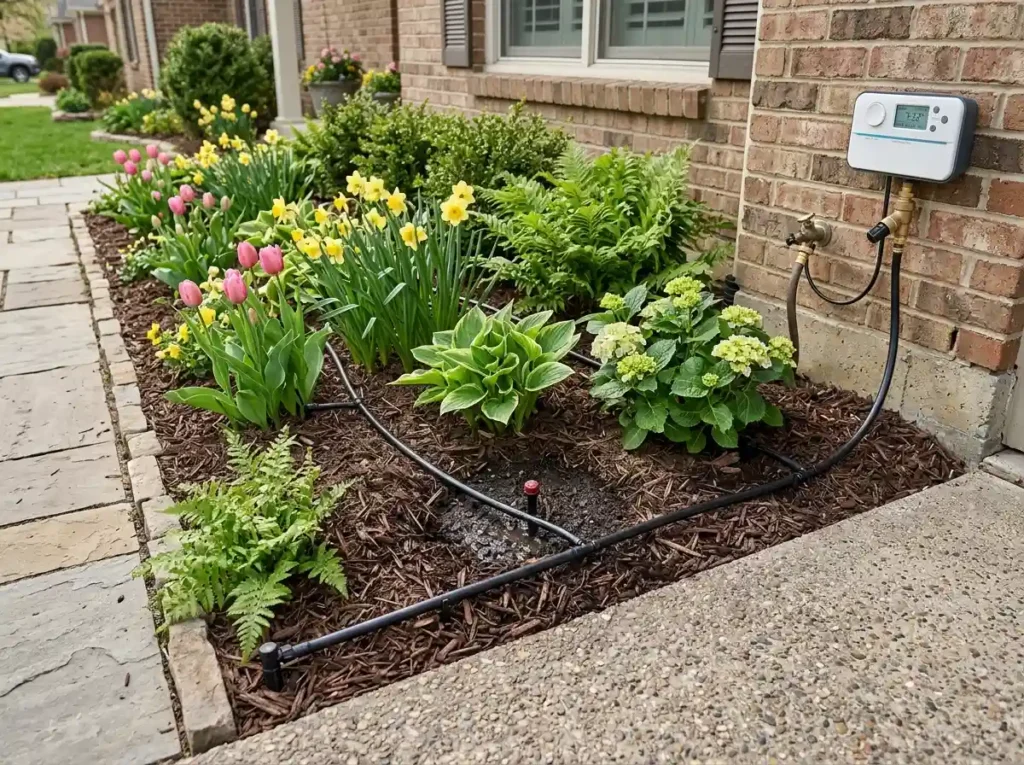
Watering should help your plants, not the driveway.
Run each irrigation zone and watch where the water lands. Look for broken heads, blocked spray, leaks, and water flowing onto pavement.
Group plants with similar water needs. A plant that likes dry soil should not share an irrigation area with one that needs steady moisture.
Drip irrigation and soaker hoses work well in many planting beds. They place water near the soil instead of spraying leaves and hard surfaces.
Watering needs change with rainfall and temperature. Do not keep the same schedule through every season.
EPA WaterSense reports that outdoor residential water use in the United States reaches nearly eight billion gallons each day. It also estimates that up to half of outdoor water may be lost through poor irrigation, wind, evaporation, and runoff.
Check the soil before watering. The surface may look dry while the soil below is still damp.
Better watering can lower waste, reduce plant disease, and make your low-maintenance front yard easier to manage.
Choose Spring Projects That Match Your Budget
You do not need a large budget to improve your front yard. The best project is often the one that fixes the most visible problem.
| Budget | Projects to Consider |
| Under $100 | Cleanup, bed edging, mulch touch-up, mailbox flowers |
| $100–$500 | Entry planters, lawn repair, seasonal flowers, path lights |
| $500–$1,500 | Shrubs, expanded beds, drip irrigation, small tree |
| $1,500 or more | Walkway replacement, drainage work, larger landscape changes |
These ranges are only planning examples. Plant prices, materials, and labor costs differ by location.
The National Association of REALTORS® has reported that 97% of surveyed real estate professionals saw curb appeal as important when attracting buyers. But you do not need to be selling your home to benefit.
A cleaner front yard can make the property feel more welcoming every day.
Finish one area before starting another. Several half-finished projects can make the yard look worse than one completed update.
Common Spring Landscaping Mistakes to Avoid
Spring energy can lead to rushed choices. Slow down before buying plants or removing large areas of grass.
Avoid these common mistakes:
- Planting before checking frost dates
- Buying plants without checking mature size
- Adding fertilizer without testing the soil
- Piling mulch against tree trunks
- Choosing flowers based only on their current blooms
- Ignoring drainage and standing water
- Filling every open space with young plants
- Planting too close to paths, windows, or utility lines
You should also avoid copying a yard from a different climate. A plant that performs well in one state may fail in another.
Use the USDA Plant Hardiness Zone Map and local extension planting guides. Local advice will be more useful than a general national calendar.
When Should You Start Spring Landscaping?
You can begin cleanup after snow and ice have cleared. Remove trash, broken branches, and unsafe materials first.
Wait to work the soil until it is no longer wet and sticky. Digging wet soil can damage its structure.
Planting dates depend on the plant and your local frost risk. Some cool-season flowers can handle light cold. Warm-season plants may fail if placed outside too early.
Lawn work also changes by region and grass type.
Use your local extension calendar instead of choosing one date for the whole country.
What Should You Fix First in a Front Yard?
Fix anything that affects safety, drainage, or plant health first.
This includes broken steps, loose pavers, hanging branches, standing water, and damaged trees.
Next, improve the main structure. Edge beds, prune overgrown shrubs, correct mulch, and repair bare lawn areas.
Add flowers, pots, and lighting after the main problems are handled.
This order prevents you from damaging new plants while completing repair work.
How Can You Make a Front Yard Look Professionally Landscaped?
Professional-looking yards usually have a clear structure.
Create simple bed shapes. Repeat plants in groups. Use a limited color range. Place taller plants behind shorter ones.
Leave enough room for plants to grow. Crowded planting may look full at first, but it creates more work later.
Connect different areas with repeated materials or colors. For example, use the same flower color near the mailbox and front door.
Good maintenance matters too. Clean edges, healthy plants, and clear paths can improve a simple design.
Start With One Spring Project
Your front yard does not need a full rebuild. Start by fixing the problem that bothers you most.
That may mean edging one flower bed, correcting mulch around a tree, repairing a bare lawn patch, or adding two planters near the front door.
Choose a project you can finish this weekend. Take a photo before you begin. Then compare it with the finished result.
Use these front yard landscaping for spring ideas to make one practical update now. You can add more changes as the season continues.