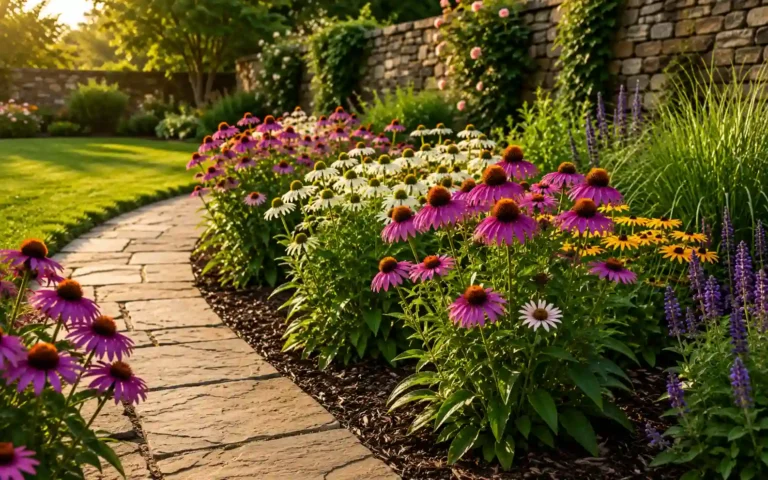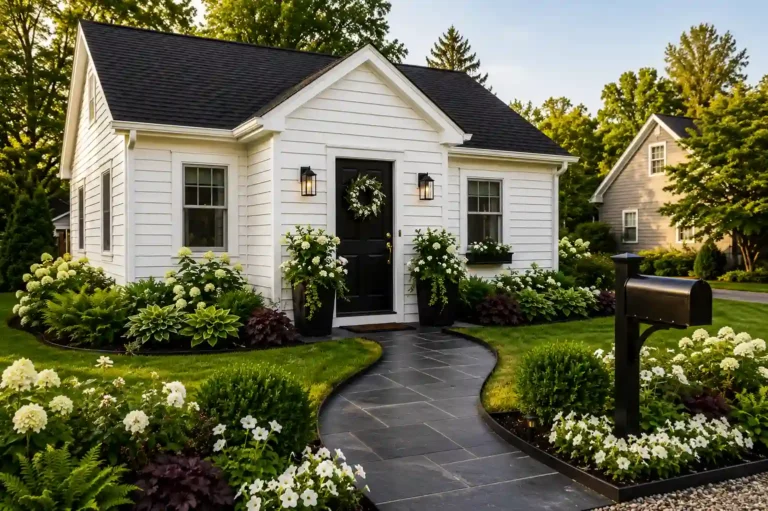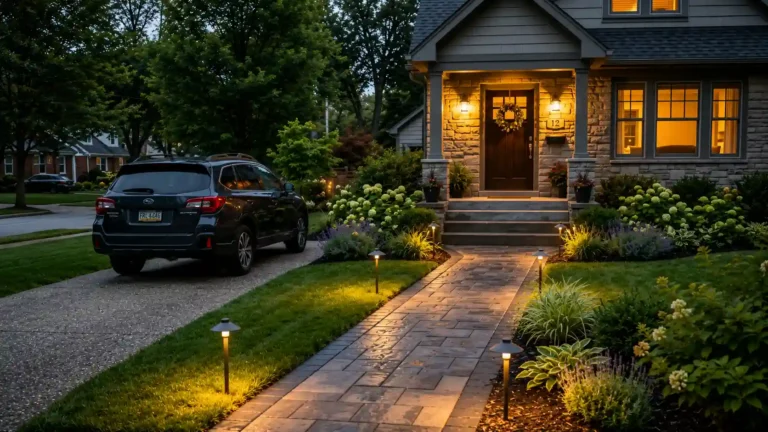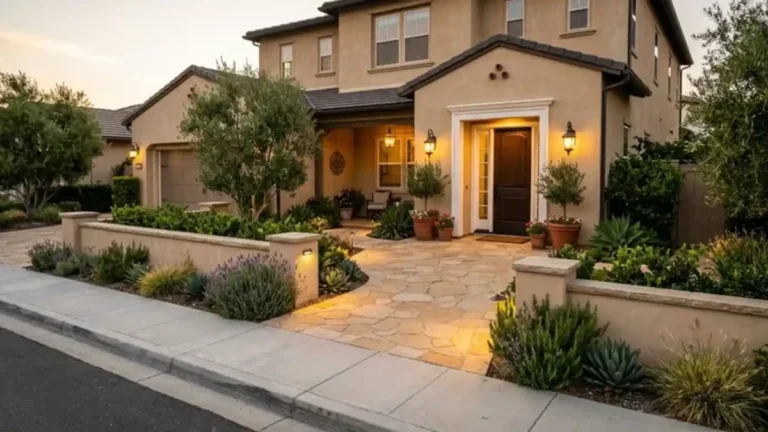
18 Front Yard Landscaping on a Budget Ideas
A better-looking front yard does not require a large landscaping crew or thousands of dollars. You can make a plain or messy yard feel fresh with a few smart changes.
The hard part is knowing where to start.
You may have patchy grass, empty flower beds, overgrown shrubs, or a dull entrance. You may also worry that buying plants, tools, soil, and decorations will push the project beyond your budget.
These front yard landscaping on a budget ideas focus on changes that give you the most visual impact for your money. Some ideas cost almost nothing. Others work well for budgets of $50, $100, or a little more.
You will learn how to clean up what you already have, reuse plants, build simple beds, add paths, save water, and reduce future yard work. You will also find sample plans for different budgets.
You do not need to complete everything at once. Start with one visible area. Finish it well. Then move to the next part when you have more time and money.
How to Plan Front Yard Landscaping on a Budget
Buying plants without a plan can waste money fast. A pretty plant may look perfect at the store but fail in your yard because it gets too much sun, too little water, or does not have enough growing space.
Start by looking at your yard from the street.
Walk across the road if it is safe. Take a photo of the house and front yard. The photo will help you notice problems that are easy to miss when you stand close to them.
Look for three things:
- Areas that look messy or overgrown
- Areas that look empty or unfinished
- Areas that block the path, windows, door, or house number
You can also turn the photo black and white. This removes the distraction of color and makes shapes easier to see. You may notice that one side of the yard feels too heavy while the other side feels empty.
Next, measure the spaces you want to improve. Measure the length and width of flower beds, lawn strips, paths, and planting areas. These numbers will help you avoid buying too much mulch, gravel, or edging.
Set one total budget before shopping. A simple budget may look like this:
- 60% for plants, compost, and soil
- 25% for edging, gravel, mulch, or other materials
- 15% for tools and surprise costs
This is not a strict rule. Change it based on what your yard needs.
Focus on one main area first. The space around the front door often gives the best return because guests see it right away. A clean walkway, trimmed shrubs, and one neat flower bed can change the whole look of the house.
4 Free and Nearly Free Landscaping Ideas
You may not need to buy anything yet. Cleanup, pruning, and moving existing plants can create a bigger change than adding new decorations.
Clean, Weed, and Edge Your Existing Beds
Estimated budget: $0–$15
Time needed: Two to four hours
Best for: Neglected beds and messy lawn edges
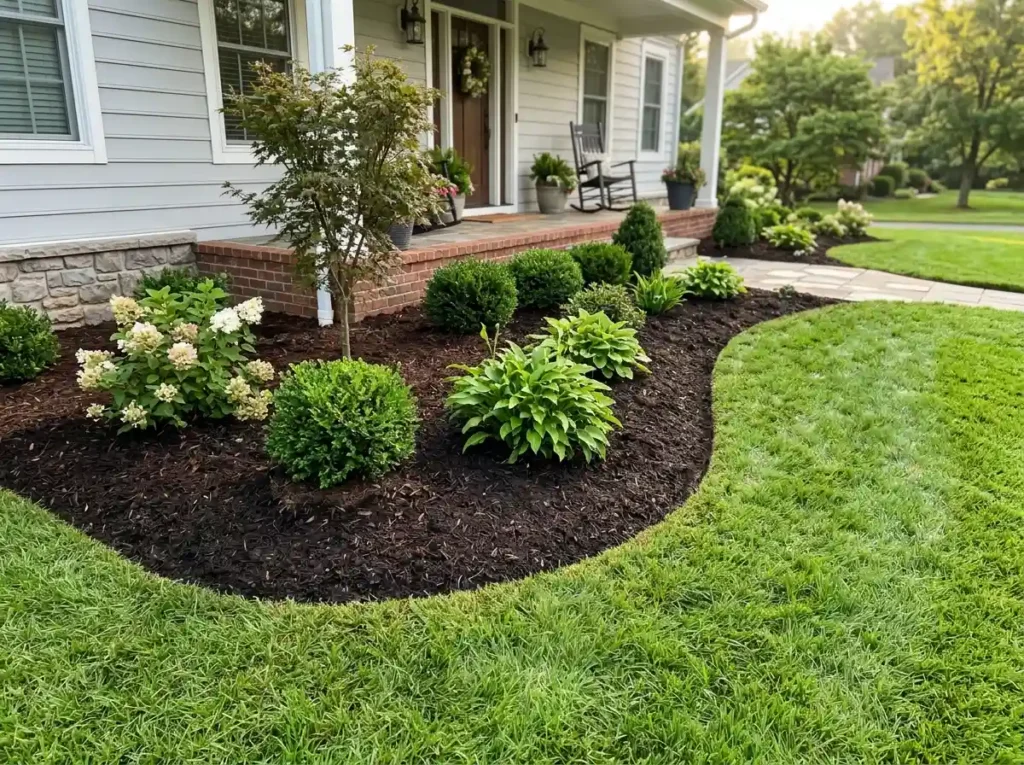
Weeds, dead leaves, empty pots, and broken decorations make a front yard look tired. Removing them gives you a clean starting point.
Pull weeds from the root when possible. Remove dead plants and fallen branches. Rake old leaves from corners and under shrubs.
Next, create a clear edge between the grass and the flower bed. You can use a flat shovel or garden spade. Cut a smooth line along the existing bed shape.
Do not make the bed larger unless you have enough plants and mulch to fill it. A large empty bed can look worse than a smaller finished one.
A clean edge creates contrast between the grass and soil. It makes the yard look planned, even when you have not added anything new.
Money-saving tip: Use the tools you already own or borrow a shovel from a neighbor.
Mistake to avoid: Do not leave loose weeds on the soil. Some can grow again or drop seeds.
Prune Shrubs That Hide Your Home
Estimated budget: $0–$25
Time needed: One afternoon
Best for: Overgrown entrances and blocked windows
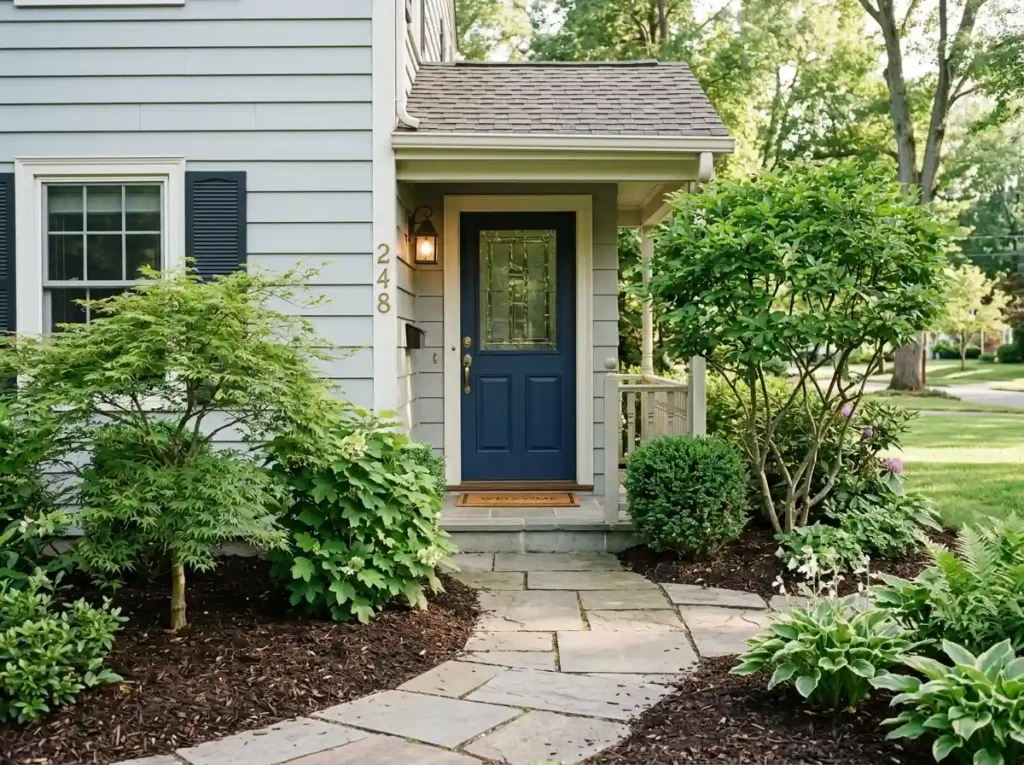
Large shrubs can hide windows, house numbers, porch details, and paths. They can also make a small yard feel crowded.
Start by removing dead, broken, or damaged branches. Then remove branches that cross or rub against each other.
Step back often while you work. This helps you see the overall shape before you cut too much.
Avoid turning every shrub into the same round ball. Natural shapes often look better and may suit the plant’s growth pattern.
Check the correct pruning season before cutting flowering shrubs. Some shrubs grow flowers on old branches. Cutting at the wrong time may remove the next set of blooms.
Large branches and trees need extra care. Hire a trained tree worker when branches are close to power lines, roofs, cars, or public paths.
Money-saving tip: Clean and sharpen your current hand pruners instead of replacing them.
Mistake to avoid: Never remove a large part of a healthy shrub in one session unless the plant can handle hard pruning.
Divide Existing Perennials to Fill Empty Spaces
Estimated budget: $0
Time needed: Two to three hours
Best for: Established yards with large plant clumps
Mature perennials can often be divided into smaller plants. This gives you extra greenery without another trip to the nursery.
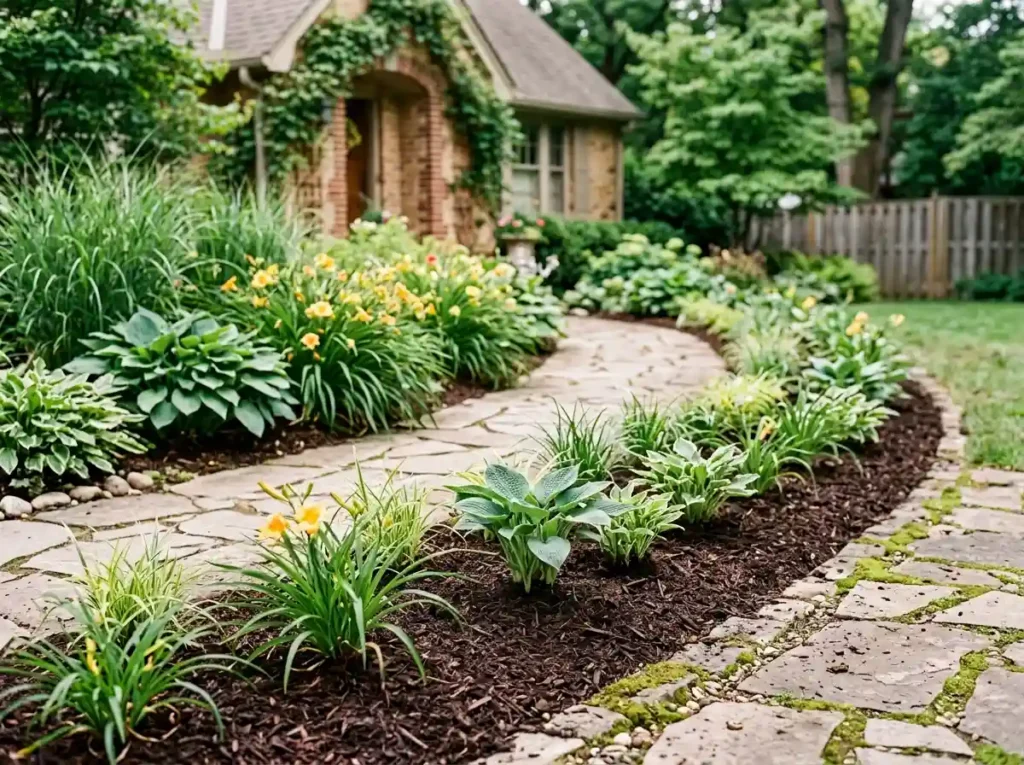
Hostas, daylilies, and some ornamental grasses are common examples. The right method and season depend on the plant.
Dig around the plant and lift the root clump carefully. Split it into smaller sections with healthy roots and leaves. Move those sections into empty areas.
Repeating the same plant in several spots can make the design look calm and connected. For example, one large daylily clump may become three smaller groups along a walkway.
Water moved plants well after planting. They may look weak for a short time while their roots settle.
Money-saving tip: Trade extra plant sections with neighbors.
Mistake to avoid: Do not divide a plant during very hot or dry weather unless you can give it proper care.
Find Free Plants and Reused Materials
Estimated budget: $0–$20
Time needed: Varies
Best for: Patient homeowners and flexible designs
Free landscaping materials are easier to find than many people think.
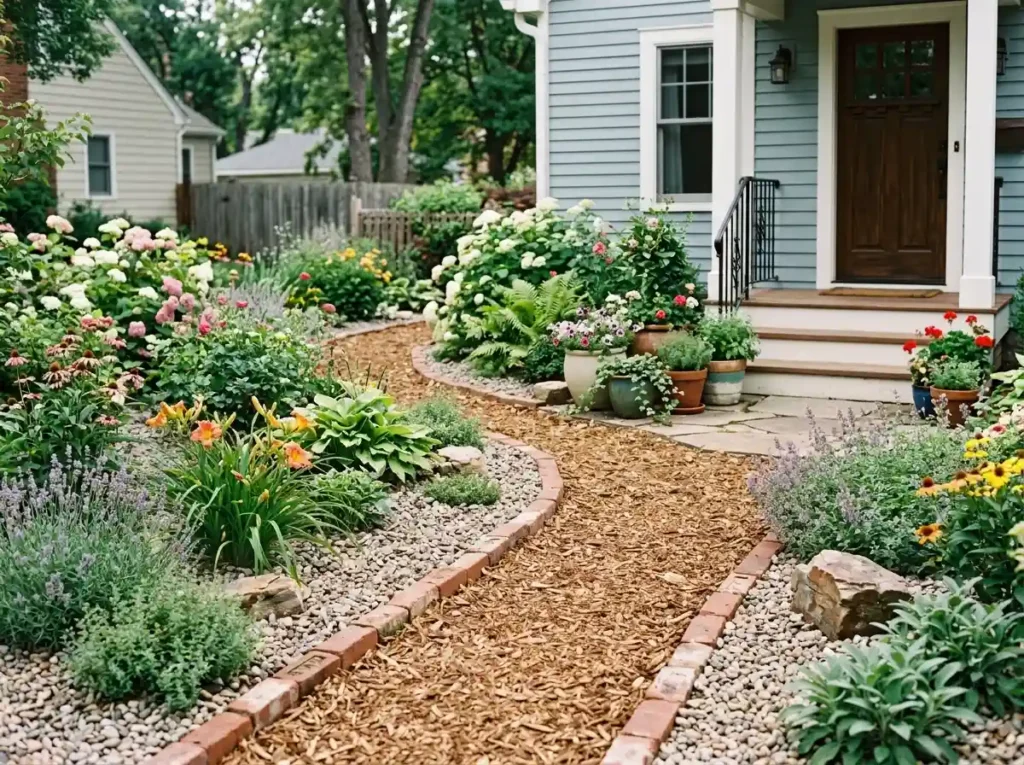
Check local gardening groups, plant swaps, neighborhood pages, and reuse groups. People often give away extra plants, bricks, pots, stones, and small amounts of gravel.
Some tree companies offer free wood chips. Local towns may also provide free compost or mulch at certain times of the year.
Inspect used materials before bringing them home. Avoid rotting wood, sharp metal, broken glass, diseased plants, or soil filled with weed roots.
Ask permission before taking anything from a property. Do not collect plants, rocks, or wood from parks or protected land.
Curb appeal matters because it shapes the first view of a home. A National Association of Realtors report found that 97% of surveyed real estate professionals saw curb appeal as important for attracting buyers. The report also found that 92% had advised sellers to improve it before listing.
That does not mean you need an expensive yard. A clean path and tidy bed can make a clear difference.
5 Front Yard Landscaping Ideas Under $50
Small amounts of money can go far when you focus on areas people see first. Prices vary by store, yard size, and location, so treat these budgets as rough examples.
Refresh Mulch in High-Impact Areas
Estimated budget: $20–$50
Time needed: Two to four hours
Best for: Front-door beds and foundation plants
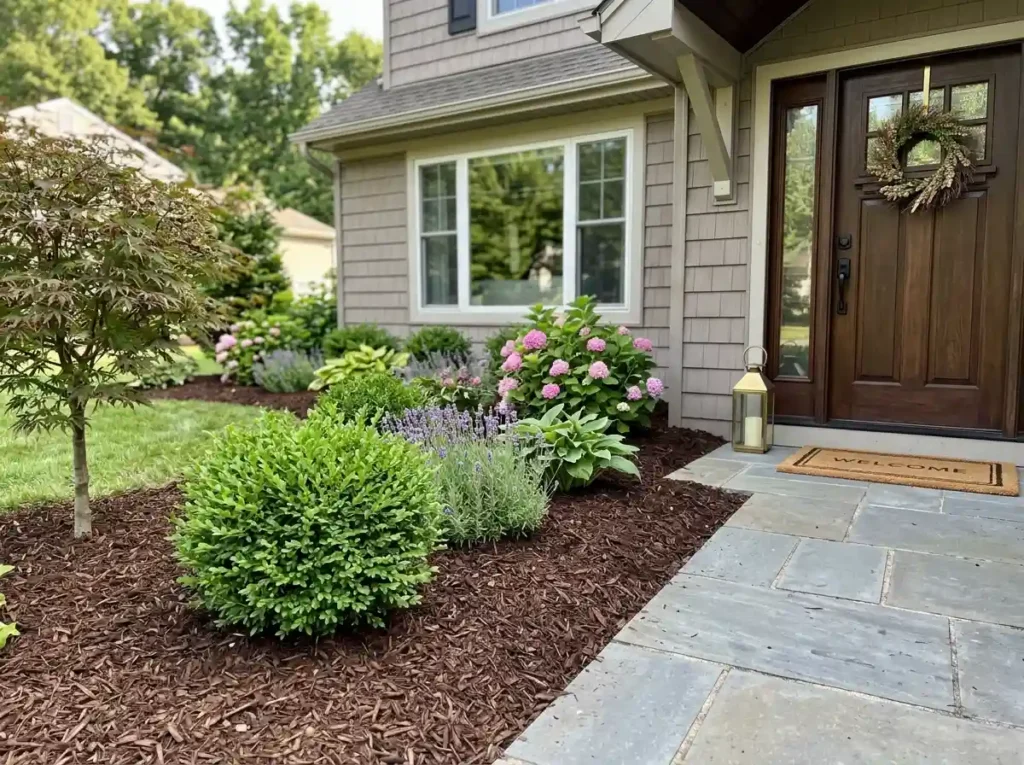
Fresh mulch can make an old bed look cleaner within a few hours. It can also help limit weeds and hold moisture in the soil.
You do not need to cover every bed at once. Start with the area beside the front door or walkway.
Remove weeds before adding mulch. Break up hard patches of old mulch so water can reach the soil.
Keep mulch away from tree trunks and plant stems. A thick pile against a trunk can trap moisture and lead to damage.
Use the same mulch in connected beds. Too many colors and textures can make a small front yard look busy.
The University of Minnesota Extension explains that mulch can control weeds, support soil moisture, manage soil temperature, and add organic matter as it breaks down.
Measure the bed before buying bags. Multiply the length by the width to find the square footage. Then use a mulch calculator to estimate the amount you need.
Money-saving tip: Ask whether your town offers free mulch.
Mistake to avoid: Do not cover weeds and expect them to disappear.
Build a Small Mailbox Flower Bed
Estimated budget: $25–$50
Time needed: One afternoon
Best for: Plain roadside areas
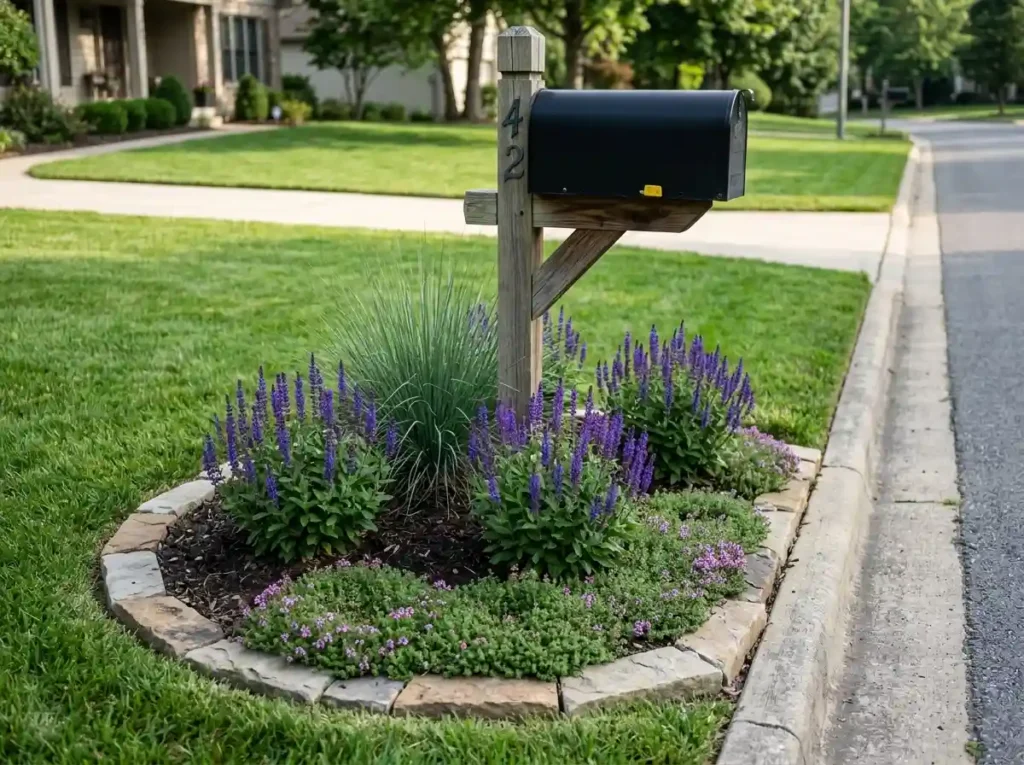
A mailbox bed creates a small focal point without taking over the yard. It can also hide weak grass around the post.
Choose a simple shape such as a circle, oval, or square. Keep it small enough to care for without trouble.
Use one taller plant near the post. Add three flowering perennials around it. Finish the edge with one low groundcover or mulch.
Plants near roads and driveways face extra heat from pavement. Choose plants that can handle the amount of sun and heat in that spot.
Keep plants low enough to protect views for drivers and people leaving the driveway.
Check for underground pipes and wires before digging. Use your local utility-marking service when needed.
Money-saving tip: Divide plants from another bed instead of buying every plant.
Mistake to avoid: Do not place tall plants where they block the mailbox or road view.
Group Reused Containers Near the Door
Estimated budget: $10–$50
Time needed: One to two hours
Best for: Renters, shaded entrances, and small porches
Containers add color without digging a new bed. They are also easy to move when the seasons change.
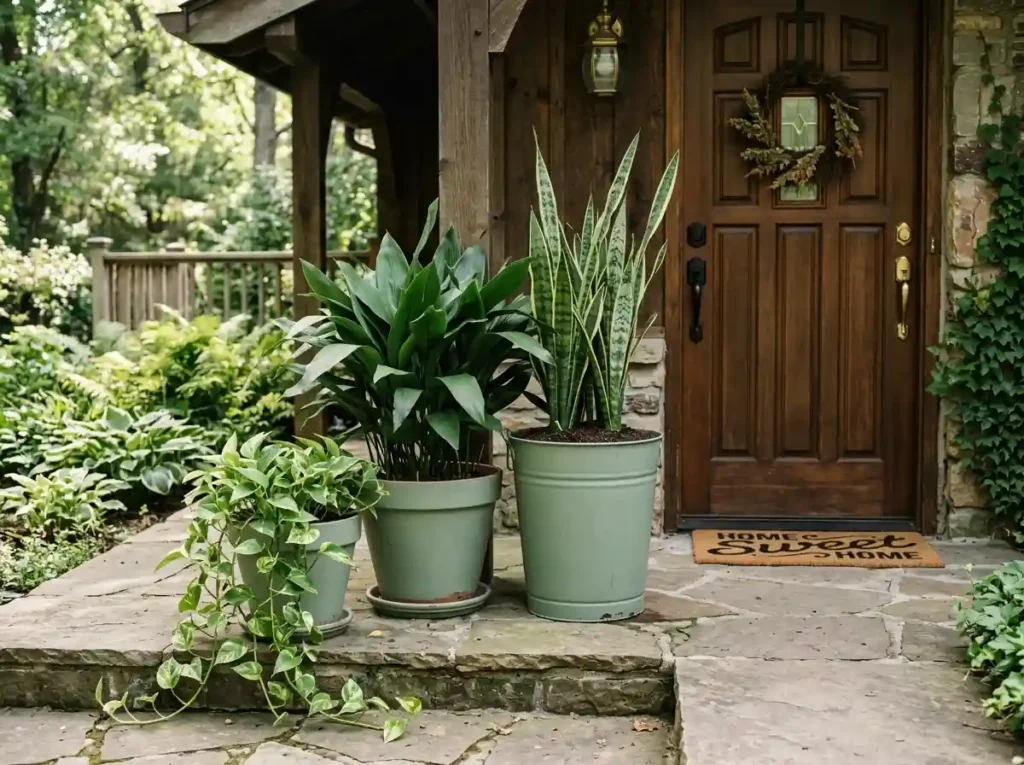
Group three pots of different heights. Odd-numbered groups often look more natural than two matching pots placed far apart.
Use one tall plant, one full plant, and one trailing plant. You can also use one plant type in every pot for a simple look.
Mismatched pots can still work together. Paint them in one finish or repeat one color in each container.
Make sure every pot has a drainage hole. Roots can rot when water has nowhere to go.
Containers can work well under trees where roots make planting in the ground difficult. Still, you must choose plants that match the light level.
Money-saving tip: Clean and paint old pots instead of buying new ones.
Mistake to avoid: Do not place containers where they make the walkway too narrow.
Grow Seasonal Flowers From Seed
Estimated budget: $10–$40
Time needed: Several weeks
Best for: Gardeners who can plan ahead
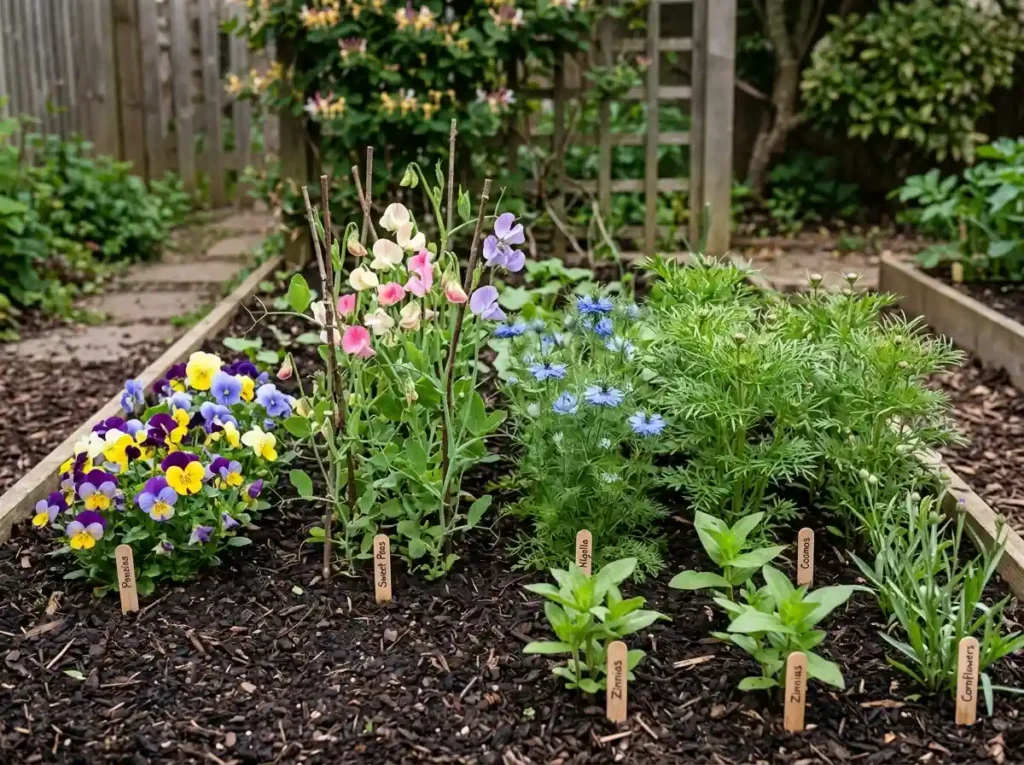
Seed packets usually cost less than trays of mature annual flowers. One packet may produce enough plants for several small areas.
Choose flowers that suit your climate, soil, and sunlight. Check the seed packet for planting times and spacing.
Do not start more seeds than your yard can hold. Too many seedlings can become hard to care for.
Use flowers with different bloom times. This can keep the yard colorful for a longer part of the season.
Label each group of seeds. Small seedlings can look like weeds before they grow their full leaves.
Seed-grown flowers take longer to make an impact. They are a good choice when you have more time than money.
Money-saving tip: Save suitable seeds at the end of the season for next year.
Mistake to avoid: Do not choose a flower only because the package looks pretty.
Make Garden Edging From Reclaimed Materials
Estimated budget: $0–$50
Time needed: Two to five hours
Best for: Flower beds and short paths
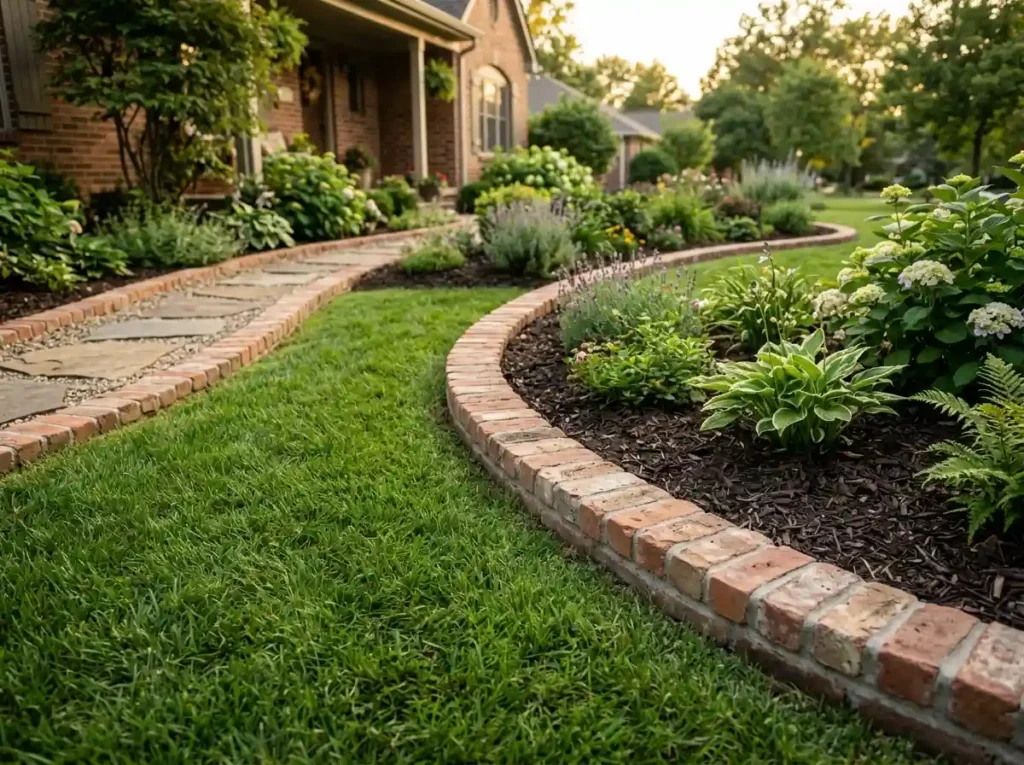
Edging separates flower beds from grass, gravel, or paths. It can also help hold mulch in place.
Reused bricks, pavers, stones, and untreated wood can all work. Pick one material and repeat it across the visible yard.
Set the pieces at an even height. Low edging is often easier to mow beside and less likely to cause trips.
Lay out the material before digging. This helps you check the shape and spacing.
Avoid broken bricks with sharp corners. Do not use painted or treated materials when you are unsure what chemicals they contain.
Money-saving tip: Ask neighbors whether they have leftover pavers from an old project.
Mistake to avoid: Do not mix several edging styles in one small yard.
5 Budget-Friendly Front Yard Projects Under $100
A budget near $100 can support one strong project. It is often better to finish one visible feature than to start several weak ones.
Build One Curved Focal Flower Bed
Estimated budget: $50–$100
Time needed: One weekend
Best for: Empty house corners and plain entrances
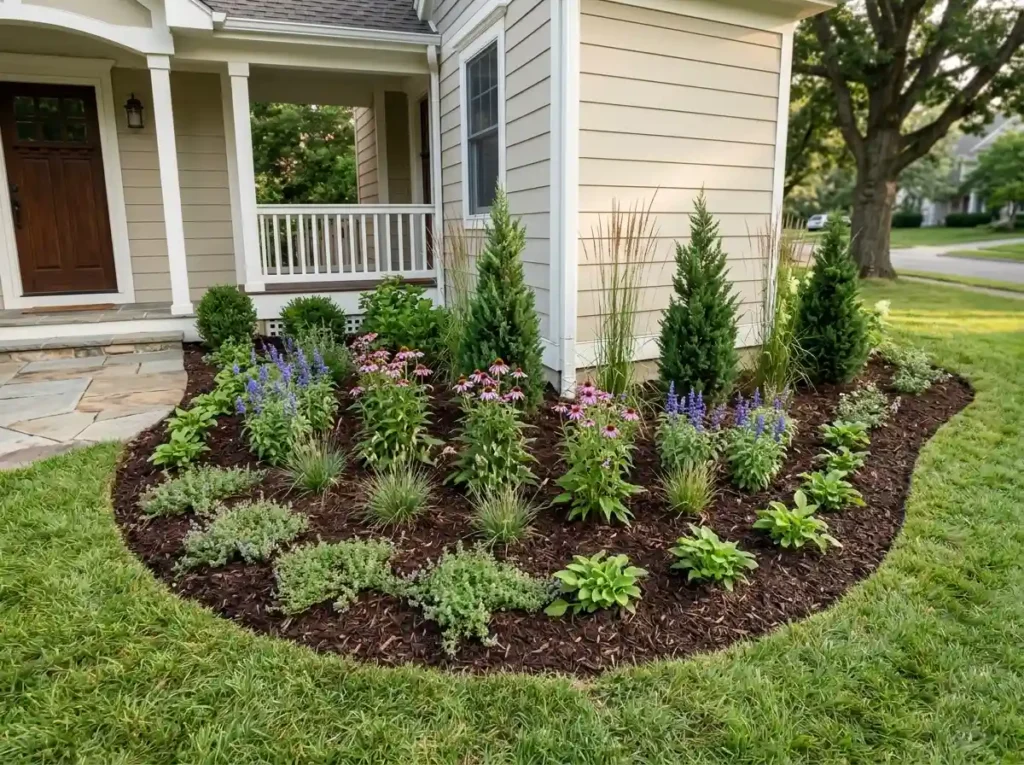
One well-shaped flower bed can make the whole yard feel more complete.
Choose a spot near the front door, porch, walkway, or an empty house corner. These areas already draw the eye.
Lay a garden hose on the ground to test the bed shape. Move the hose until the curve feels smooth.
Take a photo before digging. You can use a basic drawing app to mark where each plant may go.
Choose three to five types of plants. Too many unrelated plants can make a small bed look messy.
Place taller plants at the back. Put medium plants in the middle. Use short plants near the edge.
Read the mature size on each plant label. A small nursery plant may grow much wider in two or three years.
Money-saving tip: Buy smaller plants and give them room to grow.
Mistake to avoid: Do not fill every inch on planting day.
Add a Short Gravel or Stepping-Stone Path
Estimated budget: $40–$100
Time needed: One weekend
Best for: Routes from the driveway to a door or gate
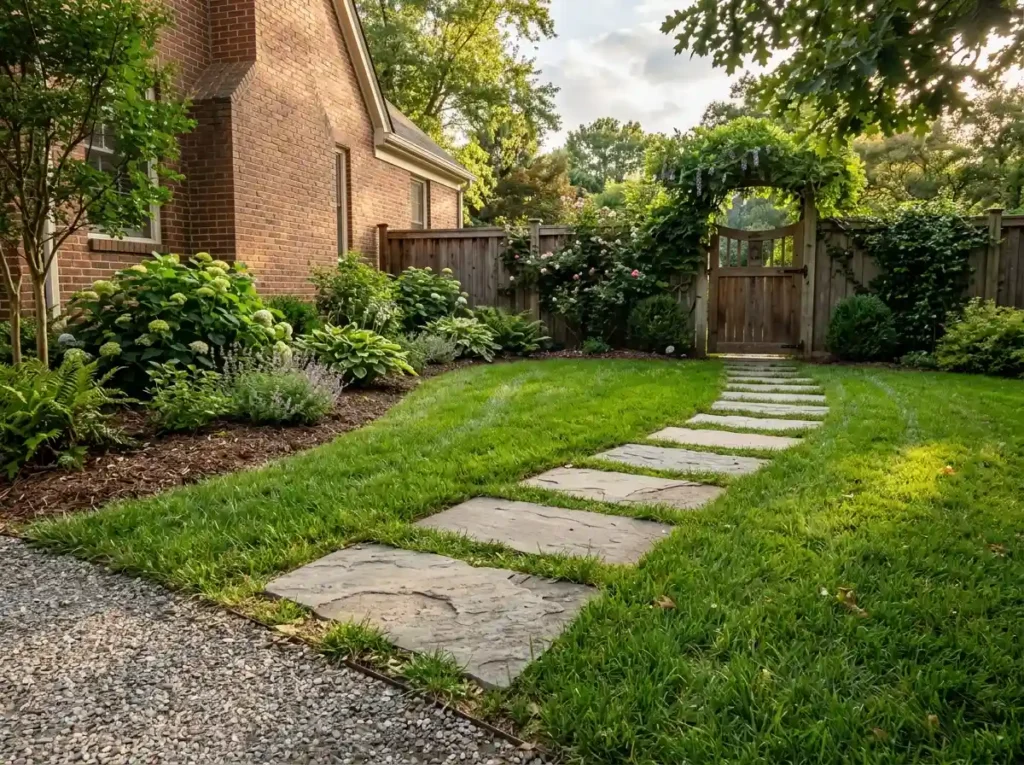
A short path can make a front yard easier to use. It can also stop people from cutting across grass or muddy areas.
Choose the route people already take. A path that fights natural foot traffic may be ignored.
Mark both sides with string or a garden hose. Remove loose grass and soil. Level the base before placing stones.
Frequently used paths may need a compacted base under the gravel or stepping stones. This helps reduce sinking and movement.
Make sure water moves away from the house. Do not create a low channel that sends rain toward the foundation.
Use landscape fabric only when it suits the site and material. Fabric can help under some gravel paths, but it may also become visible as soil and weeds build on top.
Money-saving tip: Build a short useful path instead of covering a large area.
Mistake to avoid: Do not place stepping stones so far apart that walking feels awkward.
Add Solar Lights Where Safety Matters
Estimated budget: $25–$100
Time needed: One hour
Best for: Paths, steps, and driveway edges
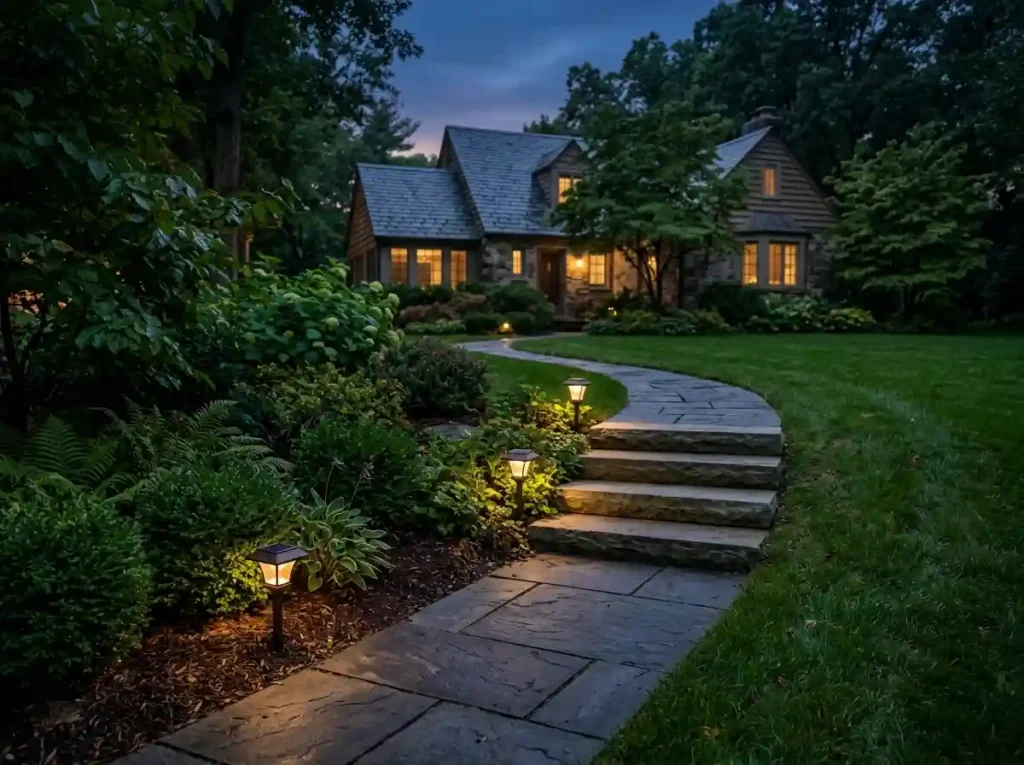
Solar lights can improve visibility without wiring. They are useful near steps, turns, and changes in ground level.
Use fewer lights and space them with care. A long row of bright lights can look harsh.
Focus on the places where someone may trip. You do not need a light beside every plant.
Warm, soft light often feels better near a home than bright white light.
Place each solar panel where it can receive enough sunlight. Shade from the house, trees, and shrubs may reduce how long the light works at night.
Clean the panels from time to time. Dust and leaves can block sunlight.
Solar lights are not perfect. Battery quality, weather, shade, and winter daylight can affect their performance.
Money-saving tip: Test a small set before buying lights for the whole path.
Mistake to avoid: Do not place lights where lawn equipment may hit them.
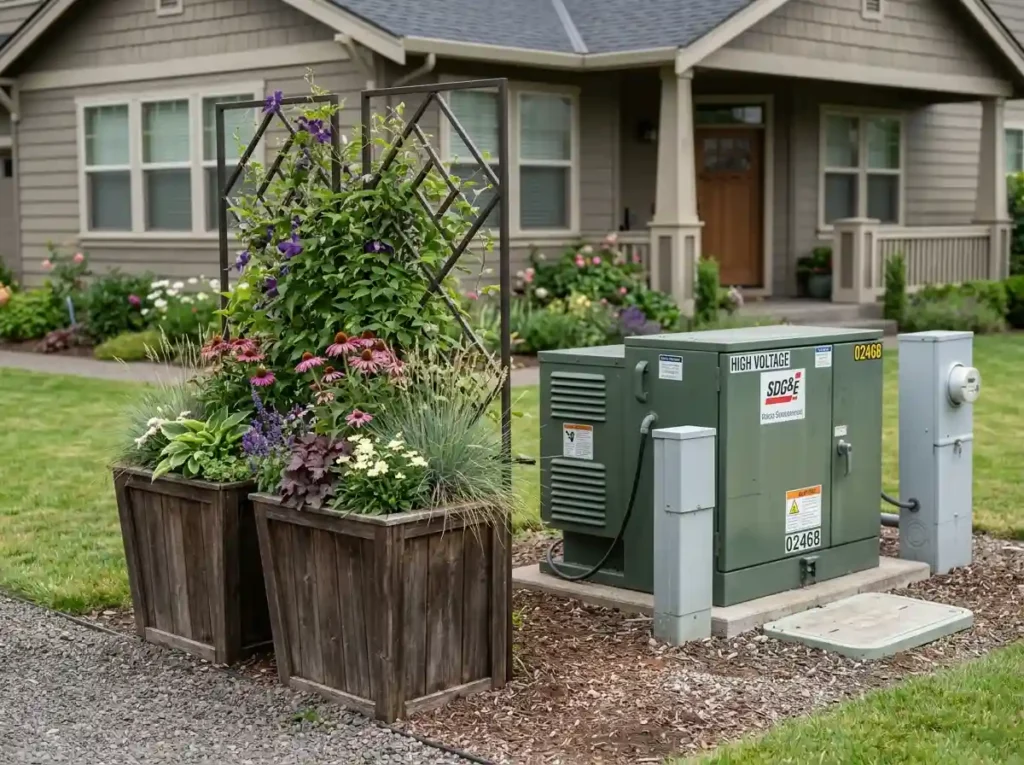
Hide Utility Boxes Without Blocking Them
Estimated budget: $30–$100
Time needed: Two to five hours
Best for: Visible utility areas
Utility boxes can stand out in a neat yard. You can soften the view, but access and safety must come first.
Use tall containers, a small movable screen, or a light trellis placed at a safe distance.
Do not attach anything to the utility box. Do not block doors, meters, labels, pipes, or working space.
Choose plants with roots that will not damage nearby pipes or cables. Avoid thorny plants that make access hard.
Check the rules from the utility company before planting or building near the box. Clearance rules may vary.
A movable feature is often safer than a permanent wall. Workers can move it when they need access.
Money-saving tip: Use two tall reused planters instead of building a fixed screen.
Mistake to avoid: Never hide a gas meter so fully that it cannot be checked.
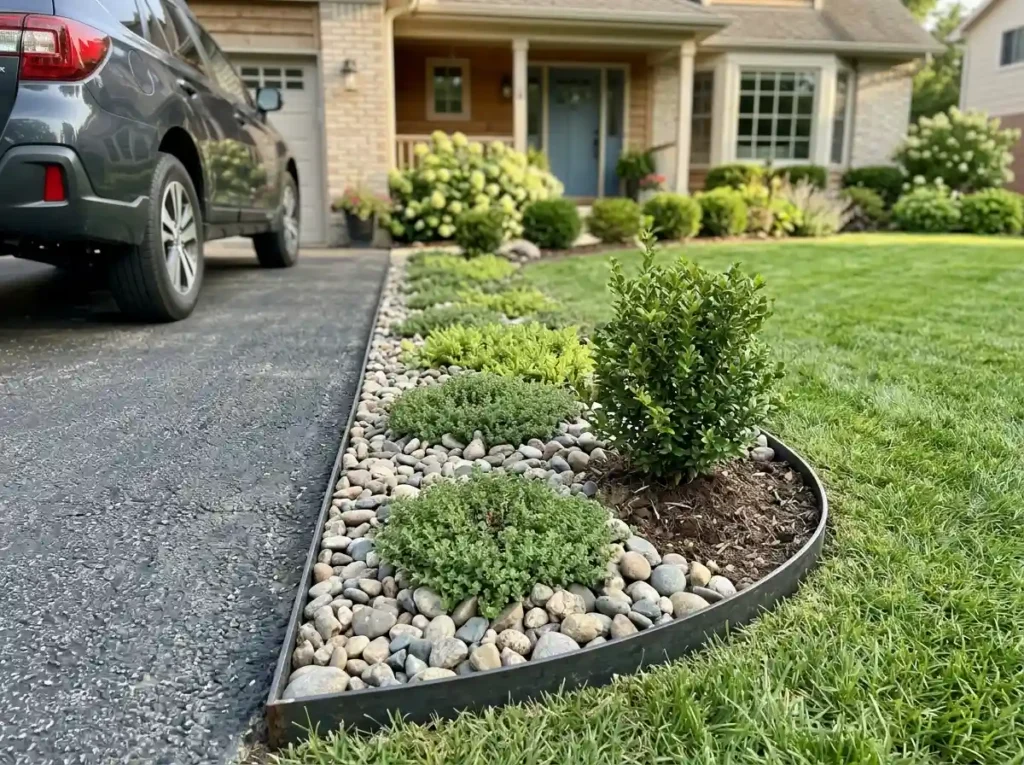
Fix a Patchy Driveway Strip With Rock and Groundcover
Estimated budget: $50–$100
Time needed: One weekend
Best for: Narrow strips where grass keeps dying
Grass often struggles beside driveways. Heat, tire traffic, salt, poor soil, and narrow space can make the problem worse.
You do not have to keep replacing the grass.
Remove the weak turf and create a narrow bed. Add mulch, gravel, or local stone. Then use compact plants that can handle heat.
Low groundcovers can soften the hard surface. One small shrub can add shape if the strip is wide enough.
Use edging to keep gravel away from vehicle tires and storm drains.
Do not use loose rock in a place where cars turn sharply. Tires may push it into the road.
Money-saving tip: Use rock only in the narrow problem area.
Mistake to avoid: Do not choose plants that grow wide enough to scratch cars.
4 Low-Maintenance Ideas That Can Save Money Later
The lowest price today may not give you the lowest cost over five years. Some cheap plants need more water, trimming, and replacement.
These ideas may cost more at first, but they can reduce future work.
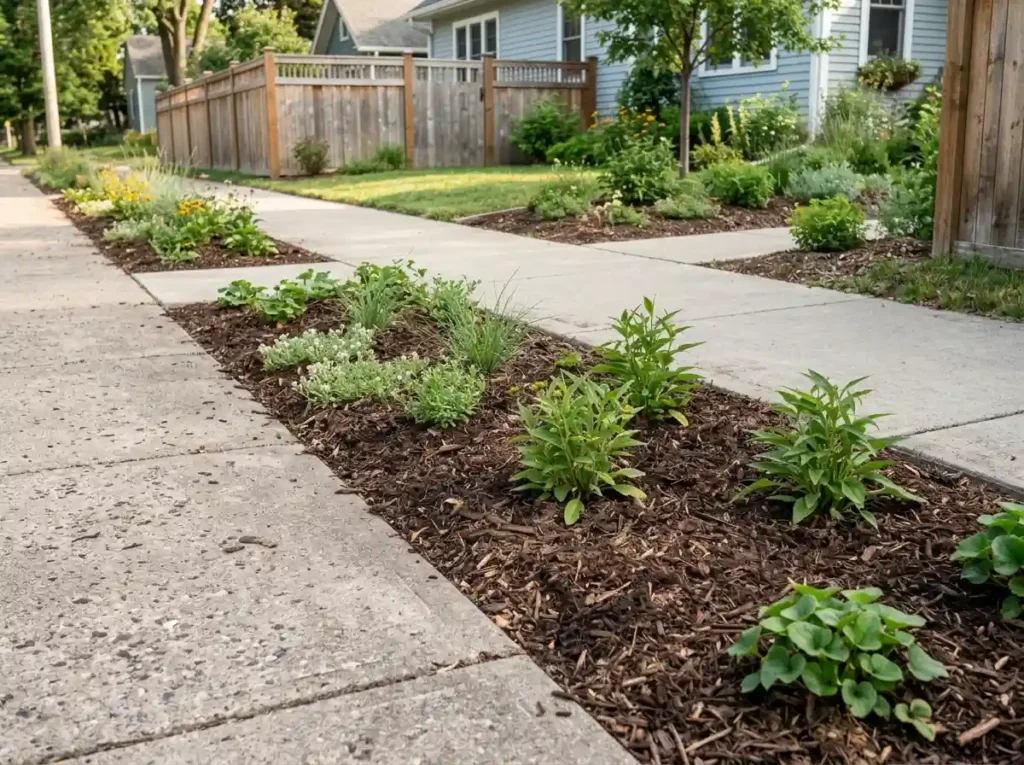
Replace a Narrow Lawn Strip With Native Plants
Estimated budget: $40–$150
Time needed: One weekend
Best for: Hard-to-mow lawn strips
Start small. You do not have to remove the whole lawn.
Choose one narrow strip beside the driveway, sidewalk, or property edge. Remove the grass and replace it with plants suited to your region.
Native plants can be useful because they are linked to local soil, rainfall, wildlife, and seasons. They still need the right site and care.
Group plants with similar water and light needs. Repeating a few plant types usually looks cleaner than using one of everything.
Check the mature width before planting. A plant that fits today may cover the path later.
USDA guidance notes that native plants can help conserve water, protect soil, and provide habitat. That does not mean every native plant is easy or suitable for every yard.
Money-saving tip: Buy small plants or plugs and let them fill in over time.
Mistake to avoid: Do not plant a native species without checking whether it fits your exact space.
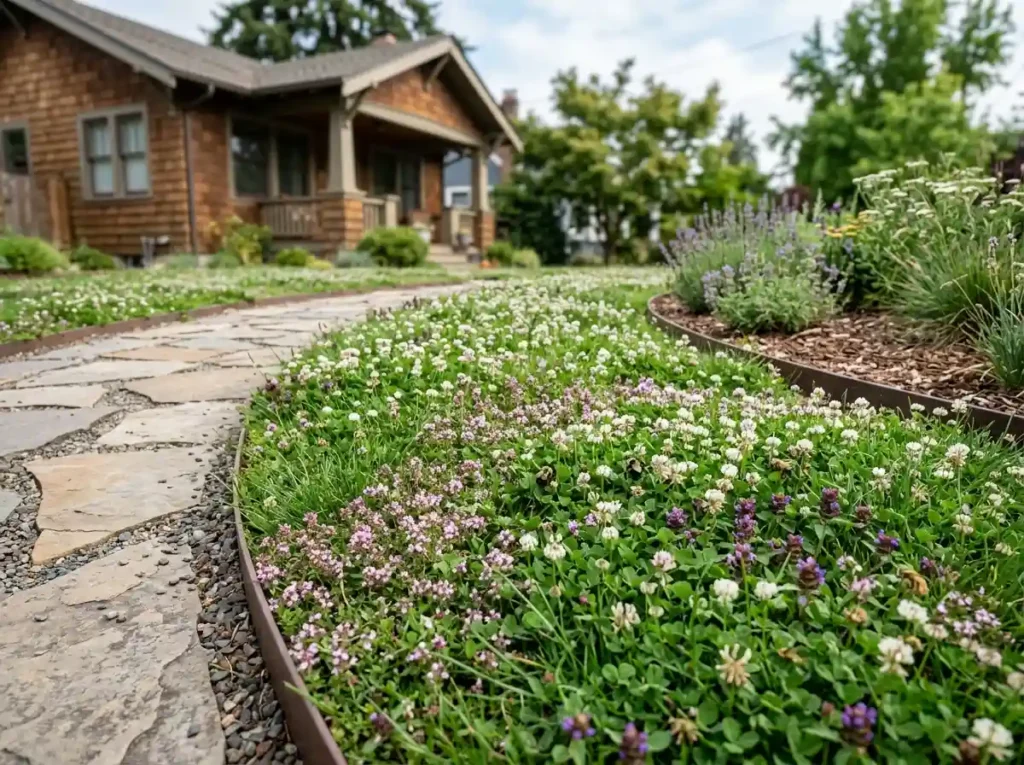
Cover Bare Soil With Groundcovers or a Bee Lawn
Estimated budget: $30–$150
Time needed: One weekend plus care
Best for: Bare areas and low-use lawn spaces
Bare soil invites weeds and can wash away during heavy rain. Groundcovers can protect the soil while adding color and texture.
Choose plants based on sunlight, moisture, soil, and foot traffic. A groundcover that works in shade may fail beside a hot driveway.
Use plant plugs or divided plants to reduce the starting cost. Space them based on their mature width.
Do not plant aggressive species that may spread into nearby beds or natural areas. Check local invasive plant lists first.
A bee lawn is another option for some low-use areas. It may mix low-growing flowers with turfgrass. Clover, self-heal, and creeping thyme are common examples in some regions.
The University of Minnesota Extension notes that an established bee lawn may need similar or less work than a traditional lawn. The first season still requires care while plants grow.
Money-saving tip: Change one small lawn area before changing the full yard.
Mistake to avoid: Do not use groundcover in a path that receives heavy foot traffic unless the plant can handle it.
Water Beds With a Soaker Hose or Simple Drip Line
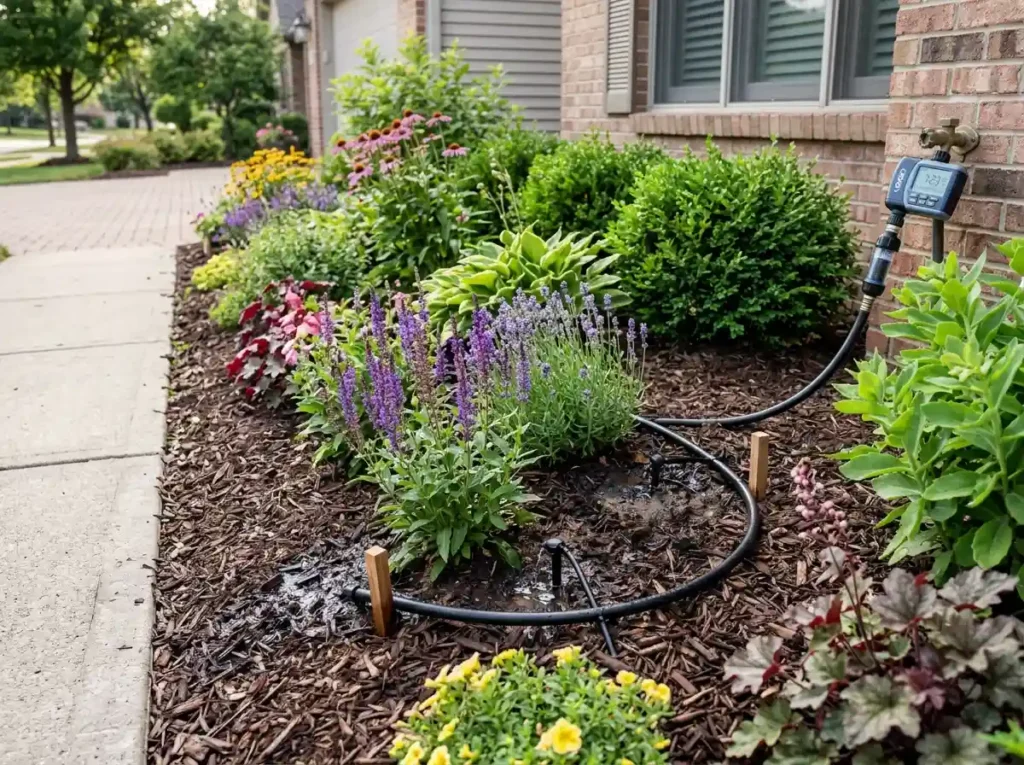
Estimated budget: $25–$100
Time needed: One to three hours
Best for: Flower beds and rows of shrubs
Sprinklers often water driveways, walls, and sidewalks along with the plants. A soaker hose or drip line sends water closer to the roots.
Place the line near the plant base. Cover it lightly with mulch if the product allows this.
Water deeply when the plants need it. Frequent shallow watering may keep roots near the surface.
Add a timer if you often forget to turn the water off. Check the system after storms so you do not water wet soil.
Inspect hoses for leaks and blocked sections. A line that looks fine at one end may provide little water at the other.
The EPA reports that outdoor residential water use in the United States reaches nearly 8 billion gallons per day. It also says outdoor use can make up 30% to 70% of household water use in some regions.
A simple watering system can save time, but it still needs checks and seasonal changes.
Money-saving tip: Start with one front bed rather than buying a full-yard system.
Mistake to avoid: Do not use the same watering schedule during wet and dry weather.
Plant One Small Tree for Long-Term Structure
Estimated budget: $50–$200
Time needed: Three to five hours
Best for: Yards that feel flat or empty
One small tree can give a front yard height and shape. It can also connect the house with the lower plants around it.
Choose a tree that fits the space at its mature size. Check its height, width, root habits, and light needs.
Look above the planting site for power lines. Check below for utility lines and pipes.
Keep enough space between the tree, house, driveway, and sidewalk. Roots and branches need room to grow.
Smaller nursery trees may cost less than large ones. They can also be easier to plant and may settle into the soil faster.
Do not plant the root flare too deep. The point where the trunk widens into the main roots should remain near the soil surface.
Keep mulch away from the trunk. A mulch pile shaped like a volcano can hold moisture against the bark.
Ask a certified arborist or local plant expert for help when you have drainage problems, limited space, or overhead wires.
Money-saving tip: Choose one healthy tree instead of several weak shrubs.
Mistake to avoid: Do not choose a tree based only on its flowers.
3 Sample Plans for a Low-Cost Front Yard Makeover
You do not have to use every idea in this article. Pick a plan that matches your current budget and the time you can give to the yard.
Prices will vary. Keep some money aside for tax, delivery, extra soil, or a broken tool.
| Budget | Main goal | Suggested work |
| Around $100 | Create a cleaner entrance | Weed and edge beds, divide existing plants, refresh visible mulch, and group reused pots |
| Around $250 | Add color and structure | Complete the $100 plan, add a mailbox bed, install a few solar lights, and build a short stepping-stone path |
| Around $500 | Make a fuller front yard change | Add a focal bed, use native perennials, improve watering, refresh paths, and plant one small tree |
A $100 Plan for a Cleaner Entrance
Start with cleanup because it costs little and changes the full view.
Spend your money on mulch near the door, fresh soil for containers, and one or two healthy plants. Use existing plants to fill other gaps.
This plan works well for sellers and busy homeowners.
A $250 Plan for More Color and Shape
Complete the cleanup first. Then add one clear feature, such as a mailbox bed.
Use a few solar lights near steps or turns. Add a short path only where people already walk.
Do not spread the money across the whole property. Keep the work close to the entrance.
A $500 Plan for a Fuller Update
Use part of the budget for soil and healthy plants. Add one focal bed with repeated perennials.
Improve watering so the new plants have a better chance of surviving.
Finish with one small tree or strong upright shrub. This gives the yard a clear anchor.
Keep 10% to 15% of the budget for surprise costs. You may need more soil, extra edging, or a replacement tool.
Which Projects Give the Best Visual Impact?
Some projects change the view faster than others. This table can help you choose.
| Improvement | Visual impact | Work level | Future care |
| Cleanup and edging | High | Medium | Low |
| Fresh mulch | High | Low | Medium |
| Seasonal flowers | Medium | Low | High |
| Native perennials | Medium at first | Medium | Lower after they settle |
| Short walkway | High | Medium | Low |
| Small tree | Medium at first | Medium | Medium |
Cleanup and edging often give the fastest result for the least money.
Seasonal flowers provide quick color. However, they may need more watering and replacement.
Perennials and trees take longer to fill the space. Their value grows over time when they are placed correctly.
8 Budget Landscaping Mistakes That Cost More Later
A sale price does not make a plant a good deal. A cheap plant can cost more later if it dies, blocks a path, or needs constant trimming.
1. Buying Plants Before Checking the Light
Watch the yard during the day. Note which areas receive full sun, part sun, or deep shade.
A sun-loving plant will not bloom well in a dark corner.
2. Ignoring Mature Plant Size
Nursery plants look small because they are young. Read the mature height and width before buying.
Leave enough room between plants, walls, windows, and paths.
3. Using Too Many Plant Types
One of every plant can make a small yard feel scattered.
Repeat three or four types to create a clearer pattern.
4. Planting Too Close to the Foundation
Shrubs need air and growing space. Crowded plants may trap moisture and block access to the wall.
Check the mature width before digging.
5. Blocking Water Flow
Do not build beds or paths that send rain toward the house.
Watch the yard during rain before making major changes.
6. Choosing Fast-Spreading Invasive Plants
A fast-growing plant may look like an easy way to fill space. It can become hard to control later.
Check a local invasive plant list before buying.
7. Buying Weak Materials That Need Fast Replacement
Very thin edging, poor lights, and weak pots may fail after one season.
Spend more on a few useful items rather than filling the yard with low-quality pieces.
8. Starting Too Many Projects
Half-finished beds and piles of unused material can make the yard look worse.
Finish one high-impact area before opening another project.
A poor plan may involve buying 15 discounted plants without checking their final size. A better plan may involve buying six suitable plants and repeating them in a clear pattern.
Good plant choices match the soil, water, light, and space. This can reduce plant loss, watering, pest problems, and future work.
Start With One Area You Can Finish
A good front yard does not have to be expensive. It needs to look cared for, balanced, and easy to use.
Start by cleaning what you already have. Edge the beds, prune the right plants, and move healthy perennials into empty spaces.
Then spend your budget where it will be seen. Refresh the entrance bed, create one focal point, or improve the path to the door.
Choose plants that fit your local weather and yard conditions. A plant that survives for years offers more value than a cheap plant that fails after one season.
Take a photo of your yard today. Pick the one area that bothers you most. Set a clear budget and finish that project first.
The best front yard landscaping on a budget plan is one you can complete, care for, and improve over time.