19 Front Yard Landscaping Ideas With Pavers
Pavers can make a plain front yard look neat and finished. But the wrong layout can make your space feel crowded, uneven, or hard to care for.
That is why choosing from random photos can be risky. An idea that works for a wide corner lot may look awkward in a narrow yard. A curved path may suit a cottage, while straight concrete slabs may fit a modern home better.
These front yard landscaping ideas with pavers cover more than appearance. You will find options for walkways, driveways, patios, garden beds, trees, and drainage areas.
You will also learn how to choose the right material, pattern, and project size. Some ideas need a skilled installer. Others can give your yard a fresh look without replacing every hard surface.
The goal is simple. Pick a paver project that solves a real problem and makes your front yard easier to use.
19 Front Yard Paver Ideas at a Glance
You do not need to cover your whole yard with pavers. A small border, landing, or path may give you the change you want.
Use this table to narrow down your options.
| Paver idea | Best for | Main material |
| Straight entry walkway | Formal and traditional homes | Brick or concrete |
| Curved garden path | Boxy or cottage-style yards | Concrete or brick |
| Wide entrance path | Large porches and double doors | Concrete pavers |
| Herringbone walkway | Detailed traditional designs | Brick pavers |
| Stepping pavers in gravel | Dry and modern yards | Concrete slabs |
| Modern paver grid | Contemporary homes | Large concrete pavers |
| Cottage garden path | Older homes and soft planting | Tumbled brick |
| Driveway border | Lower-cost driveway updates | Concrete or brick |
| Full paver driveway | Major curb appeal projects | Vehicle-rated pavers |
| Permeable driveway | Areas with water buildup | Permeable pavers |
| Extra parking pad | Homes needing more parking | Concrete pavers |
| Paver entrance landing | Small porch updates | Brick or concrete |
| Small front patio | Unused space near a porch | Concrete pavers |
| Shaded seating nook | Front yards with mature trees | Stone or concrete |
| Front courtyard | Larger enclosed entrances | Brick or concrete |
| Flower bed edging | Fast, low-cost updates | Brick or concrete |
| Tree border | Large planting beds | Matching pavers |
| Drainage strip | Wet areas and downspouts | Pavers and river rock |
| Pavers with gravel | Struggling lawns | Large concrete slabs |
Before choosing a design, look at how you already use the yard. A path should lead somewhere. A patio should have room for furniture. A driveway project should handle cars and rainwater without sinking.
How to Plan a Front Yard Paver Layout That Fits Your Home
It is easy to fall in love with a paver style before checking whether it fits your yard. Start with the job the pavers need to do.
Do you need a safer path to the door? Are you trying to create an extra parking space? Do you want to stop grass from growing around a flower bed?
Your answer will guide the size, material, and base needed for the project.
Measure the driveway, porch, walkways, planting beds, and property edges. Draw a rough plan on paper. You do not need special design software.
A garden hose works well for testing curved paths. Use string and stakes for straight lines. Then walk through the marked space before buying anything.
Pay attention to your home’s shape. A straight path can support the clean lines of a formal brick house. A gentle curve can soften a small cottage yard.
Keep the design simple in a narrow front yard. Too many small paved sections can make the area feel broken into pieces.
You also need to check where rainwater flows. Pavers should not send water against the house, across the sidewalk, or into a neighbor’s yard.
Check local rules before changing a driveway, curb, sidewalk, wall, or drainage area. Some projects may need approval even when they are on your property.
7 Paver Walkway Ideas That Make Your Entrance Easy to Find
Your walkway should make the front door clear from the street. It also needs to feel safe and comfortable underfoot.
These paver walkway ideas range from simple entry paths to detailed garden designs.
Build a Straight Paver Walkway to the Front Door
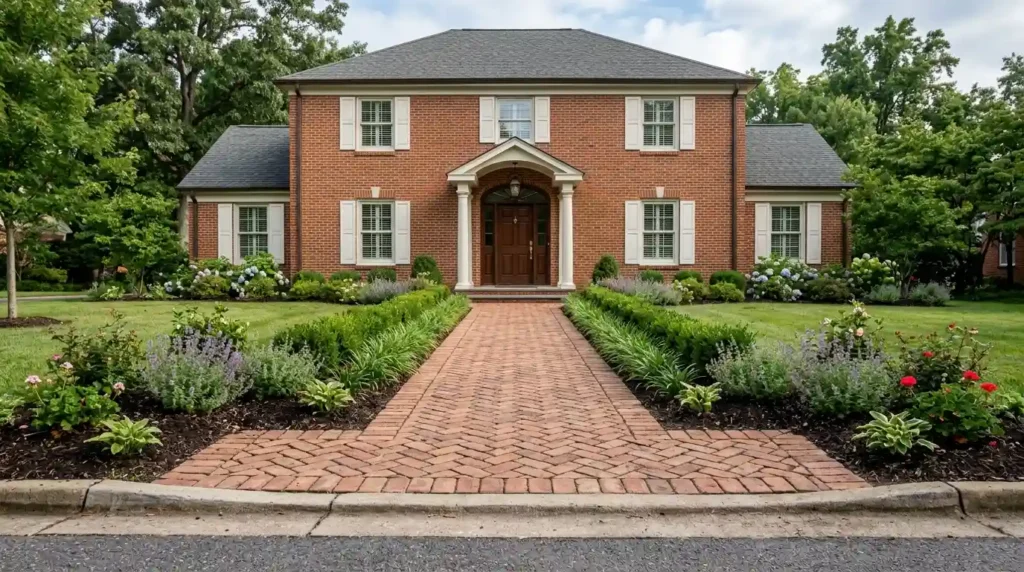
A straight walkway gives your front yard a clean and orderly look. It works best when the front door sits near the center of the house.
This layout suits traditional, Colonial, and symmetrical homes. It can also make a small yard look longer.
Brick pavers add warmth. Gray concrete pavers create a calmer look. Stone-style pavers can work when the house already has stone on the walls or porch.
Keep the path wide enough for comfortable use. A path near four feet wide often gives two people enough space to walk side by side.
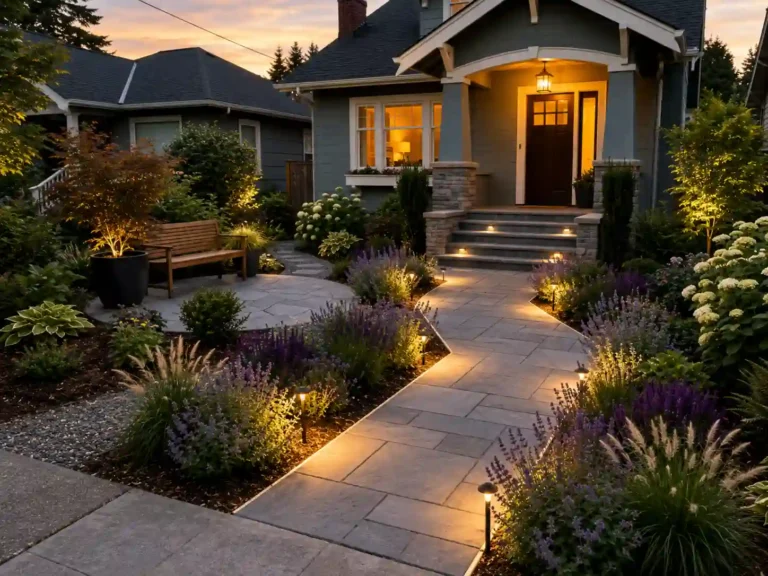
Low plants can soften each edge without hiding the path. Choose plants that will not grow across the walking surface.
Best for: Formal homes and direct entrances
Watch out for: A narrow path that becomes crowded near steps or planters
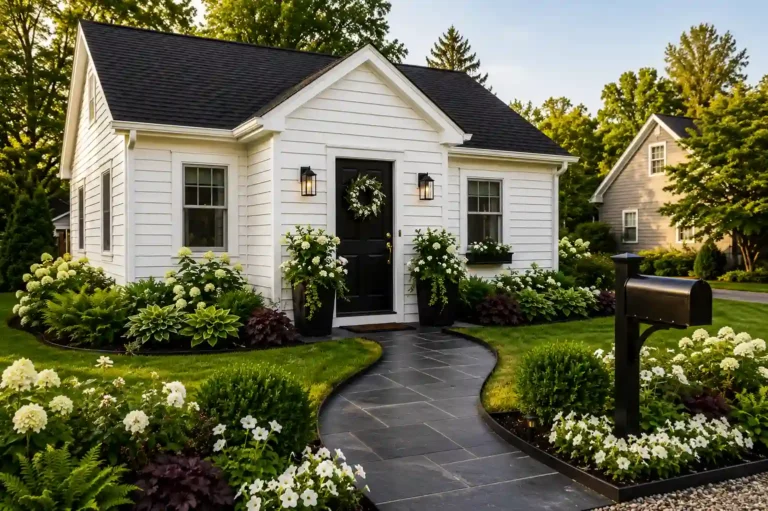
Use a Curved Paver Path to Soften a Boxy Yard
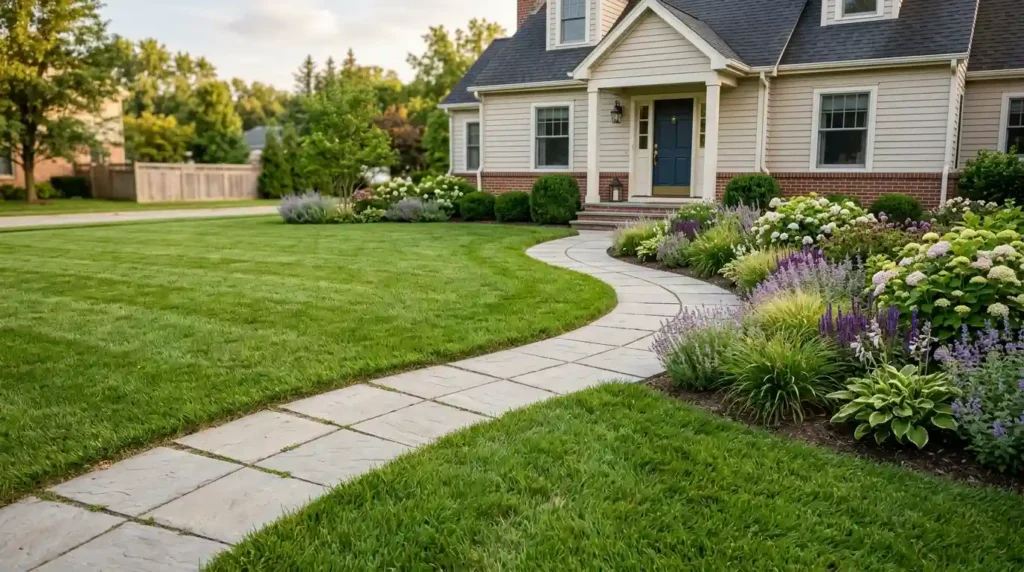
A gentle curve can make a square front lawn feel less stiff. It can also guide people past a flower bed, small tree, or garden feature.
The curve should have a reason. Avoid adding several bends just to make the path look more decorative.
Sharp turns can feel awkward to walk on. People may also cut across the grass when the path takes an unnecessary route.
Use larger pavers to keep the design calm. Small pavers mixed with several colors can make a curved path look too busy.
Let nearby planting follow the same line. This helps the path feel like part of the yard instead of a separate strip.
Best for: Cottage gardens and wide front lawns
Watch out for: Curves that hide the front door or make the walk longer
Widen the Entry Path for a More Welcoming Look
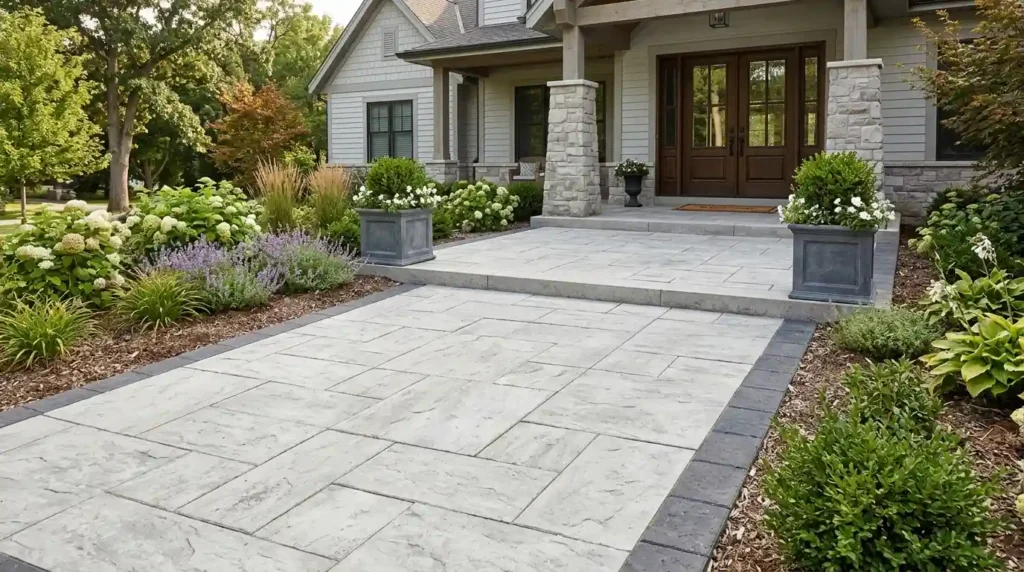
A wide path can make a large porch or double front door feel balanced. It also gives guests more room to walk together.
This idea works well when the current walkway looks too small for the house.
Use one main paver color and add a darker border. The border makes the path feel finished without adding too much detail.
You can place matching planters near the entrance. Keep them outside the main walking area.
Do not forget the landing at the top. People need room to stand while the door opens.
Best for: Large porches and wide entrances
Watch out for: Making the path so wide that it takes over a small lawn
Add a Herringbone Paver Walkway for More Detail
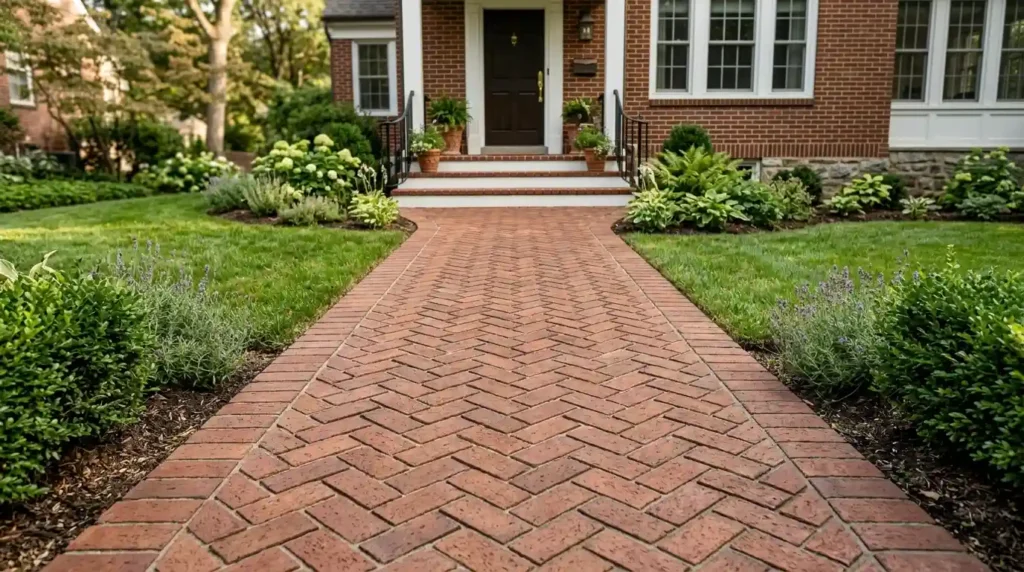
A herringbone pattern uses rectangular pavers set at angles. It creates movement without needing several colors.
Brick is a popular choice for this layout. Warm red or brown pavers can add character to white, cream, or gray homes.
A plain border helps frame the pattern. It also stops the edges from looking unfinished.
This pattern needs more cutting than a simple running layout. That can raise labor and material waste.
Use it where the detail can be seen. A short entrance path may show the pattern better than a narrow side path.
Best for: Brick homes and classic front yards
Watch out for: Higher labor needs and too many paver colors
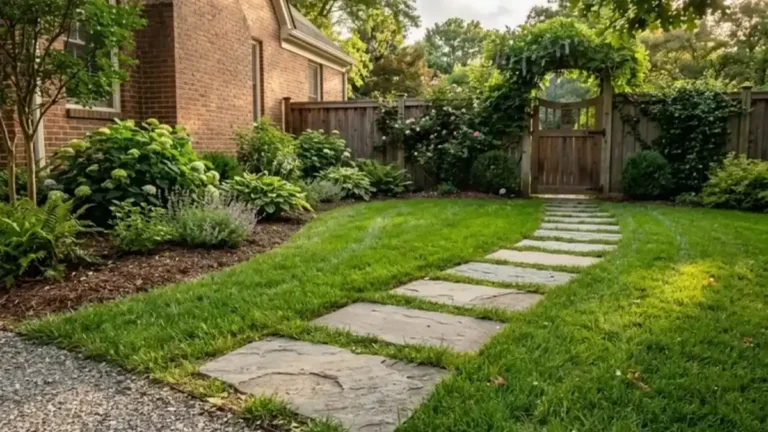
Place Large Stepping Pavers in Gravel
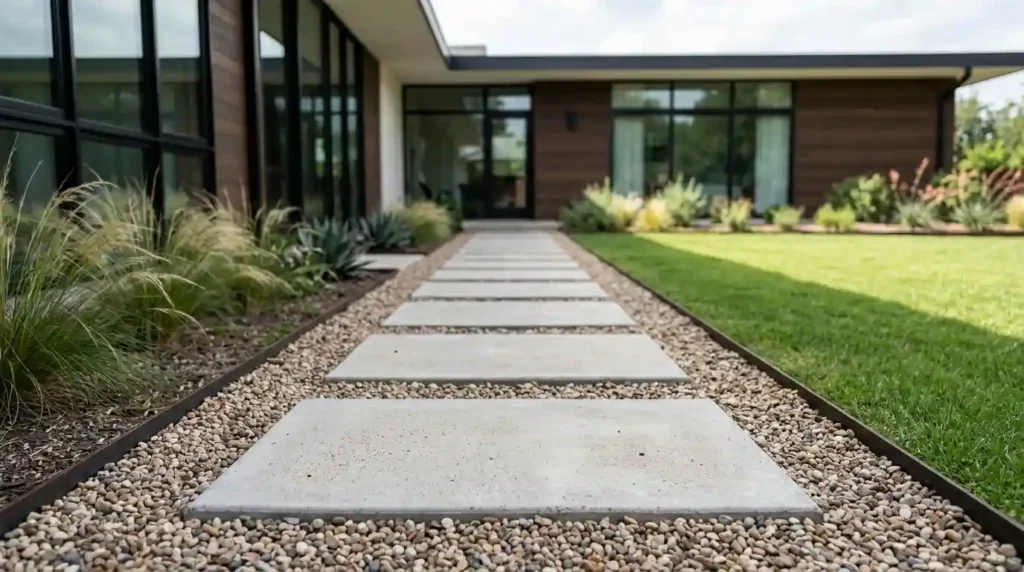
Large stepping pavers can create a clear path without forming one solid paved surface. Gravel fills the spaces around each slab.
This style works well with modern homes and dry-climate landscaping. It can also reduce the amount of concrete used.
Choose pavers large enough for a comfortable step. Keep the gaps even so people do not have to stretch or shorten their stride.
Use firm edging around the gravel. Without it, small stones can spread into the lawn or driveway.
Avoid loose, round gravel on steep paths. It may shift underfoot.
Best for: Modern yards and dry planting plans
Watch out for: Uneven spacing and gravel that moves onto the walkway
Create a Modern Grid With Large Concrete Pavers
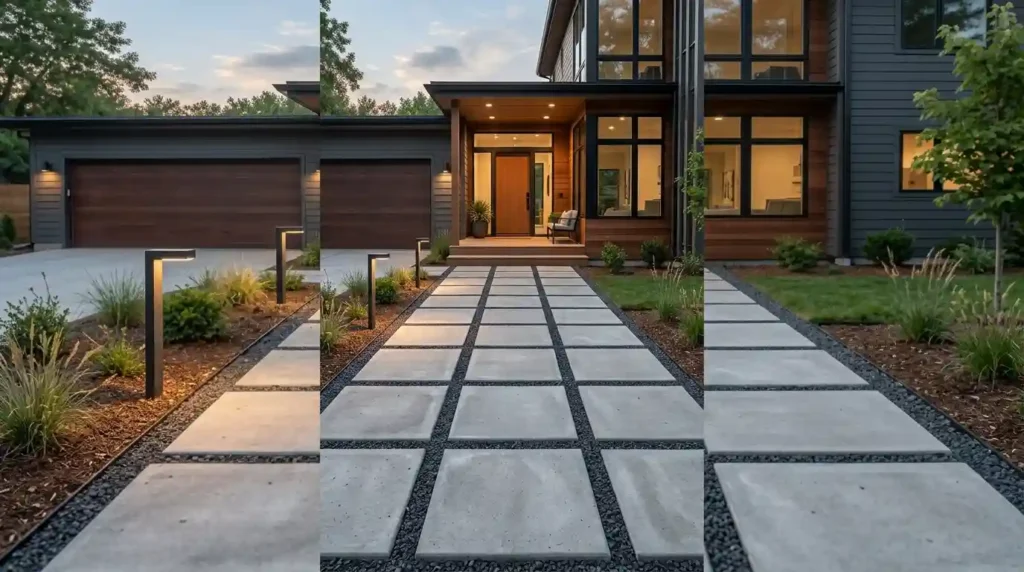
Large square or rectangular pavers can give your front yard a clean, modern shape. Place them in a simple grid with even gaps.
You can fill the gaps with dark gravel, small stones, grass, or low plants. The filler should suit the amount of foot traffic.
Keep the number of paver sizes low. One or two sizes often look better than a mix of many shapes.
This design looks strongest when it follows the lines of the house, garage, and porch.
Simple path lights can make the grid easy to see at night. Place them beside the path rather than in the walking area.
Best for: Modern and mid-century homes
Watch out for: Gaps that are hard to cross with small wheels or high heels
Use Brick Pavers for a Cottage-Style Garden Path
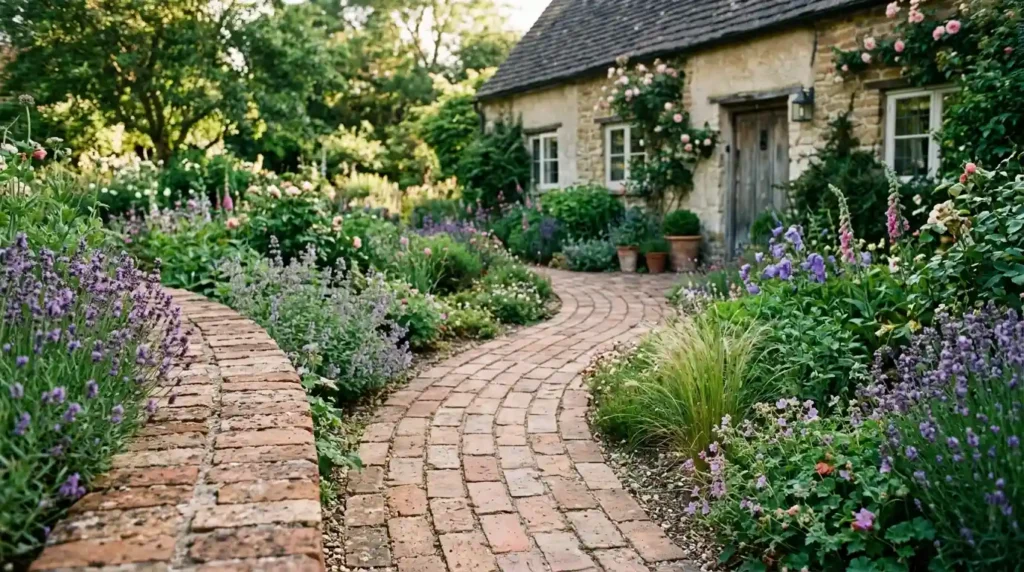
Brick pavers can make a garden path feel warm and lived-in. Tumbled or aged finishes work well with cottages and older homes.
Use a gentle curve rather than a sharp turn. Let flowers and low plants grow close to the edges.
Lavender, small grasses, and low flowering plants can soften the brick. Keep enough open space so wet leaves do not cover the walkway.
Check the pavers each season. Tree roots, frost, and poor base work can raise edges and create trip points.
Best for: Cottage gardens and older homes
Watch out for: Loose bricks and plants that spread over the path
Frame a Concrete Driveway With a Paver Border
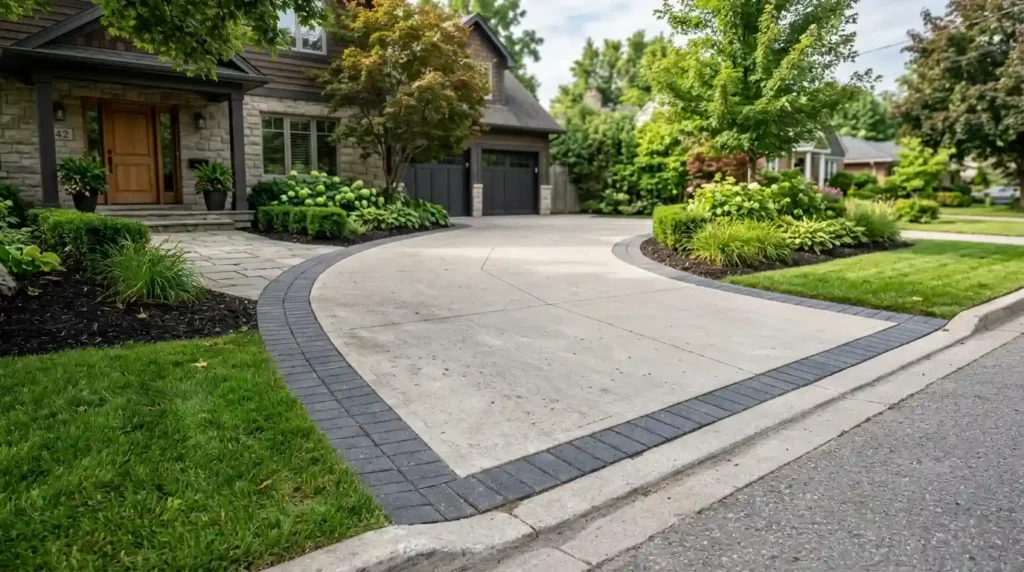
You do not need to replace a full concrete driveway to add paver detail. A border can create a finished edge at a lower cost.
Choose a paver color that contrasts with the concrete. Charcoal, brown, or red borders often work well.
Use the same border on the nearby walkway to connect both areas. This gives the front yard a planned look.
Keep the design simple on a narrow driveway. A thick border can make the driving space look smaller.
The border also needs proper support. Cars can push loose edge pavers outward over time.
Best for: Lower-cost driveway updates
Watch out for: Weak edges and borders that reduce usable width
Install a Full Paver Driveway With a Simple Pattern
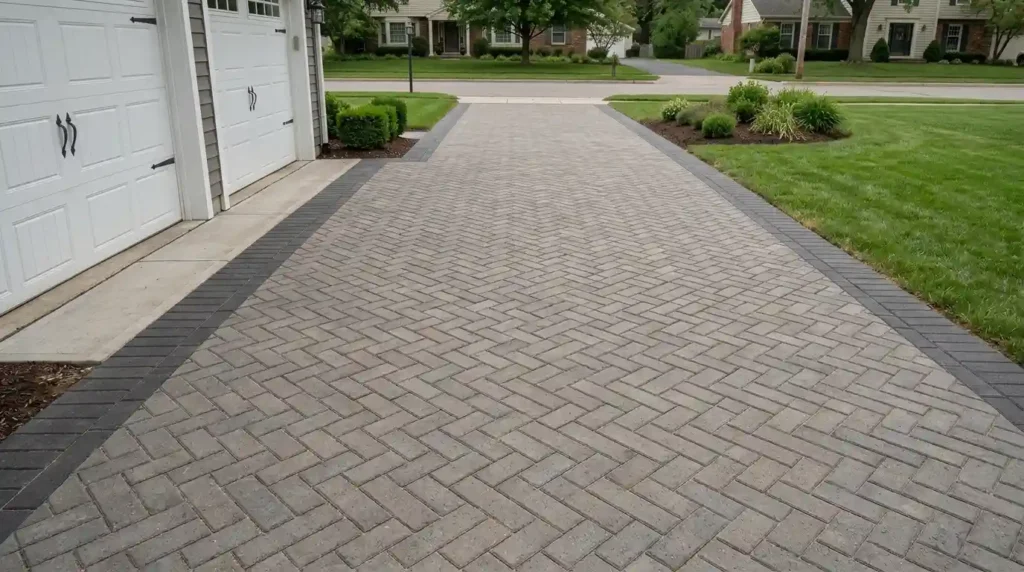
A full paver driveway can add texture and color to a large part of the front yard. It also allows damaged pieces to be replaced one at a time.
Running bond, basketweave, and herringbone are common layout choices. Herringbone often works well in areas where cars turn because the pattern locks together in several directions.
Use pavers made for vehicle traffic. Ask the installer how the base will be prepared and compacted.
Mid-tone colors can hide dust and tire marks better than very light pavers. A darker border can help define the driveway edge.
A detailed design may look good, but it will often need more cuts. Simple patterns are usually easier to repair later.
Best for: Major front yard updates
Watch out for: Poor base work and pavers that are not rated for cars
Use Permeable Pavers Where Water Collects
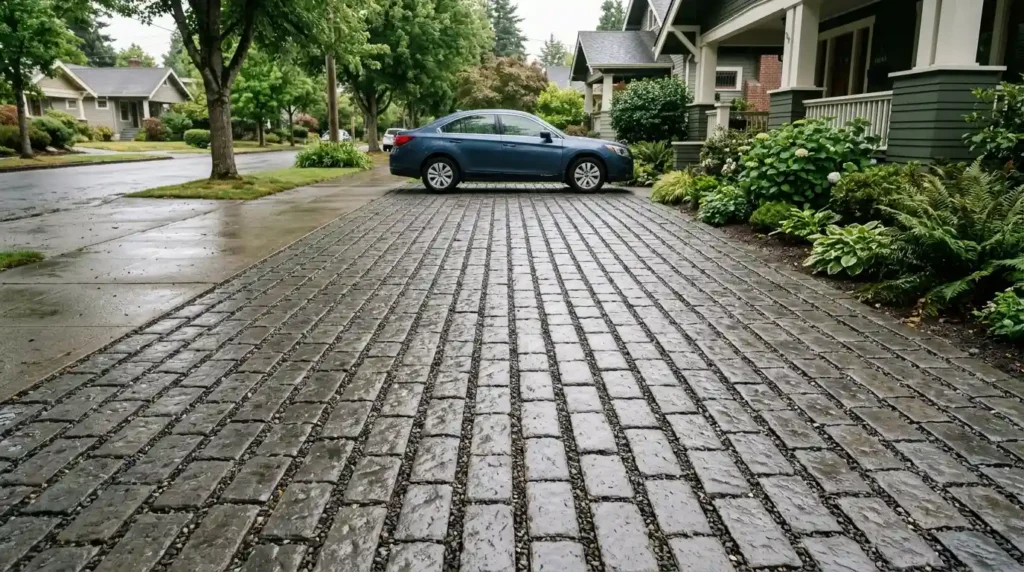
Permeable pavers are designed to let rain pass through open joints into a stone base below. They can help in places where water often collects.
The base is a major part of the system. Standard sand and tightly packed soil will not give the same result.
Fine dirt, leaves, and debris can block the joints over time. Regular cleaning helps keep water moving through the surface.
Permeable pavers may work well on a parking strip, driveway, or wide front path. Soil type and local drainage rules still matter.
This is usually a job for an installer with experience in permeable systems.
Best for: Wet areas and stormwater control
Watch out for: Clogged joints and the wrong base material
Add a Paver Parking Pad Without Paving the Whole Yard
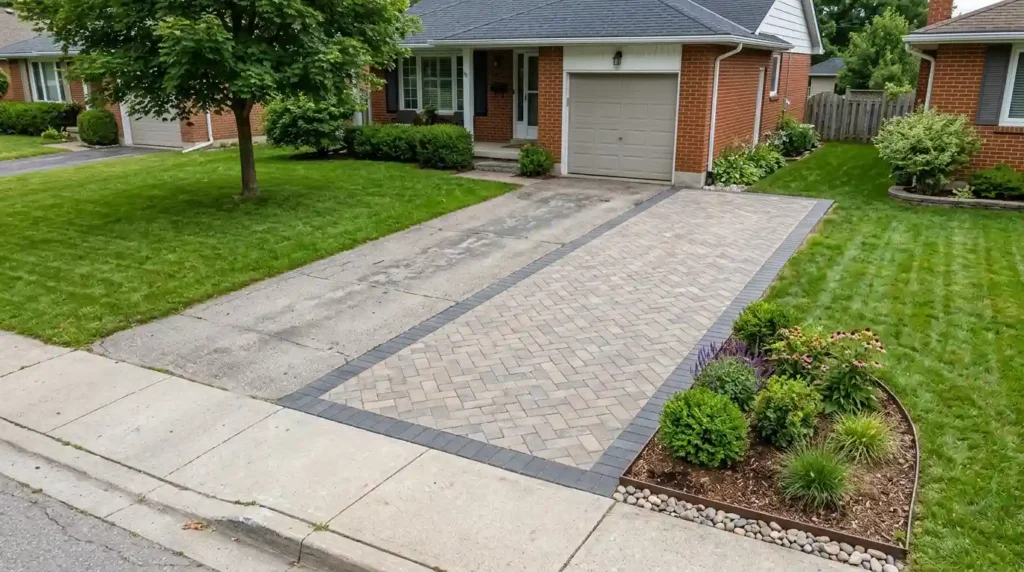
An extra parking pad can solve a real problem when the driveway is too small. Pavers can help the new section look planned rather than added at random.
Match the color or border to the main driveway. You do not need to use the exact same pattern.
Add a planting bed or low shrubs beside the pad. This can soften the view from the street.
Check property lines, curb rules, and local parking limits before work starts. Some areas control how much of the front yard can be paved.
Best for: Homes needing one more parking space
Watch out for: Local rules and water running onto the sidewalk
Replace a Small Concrete Landing With Pavers
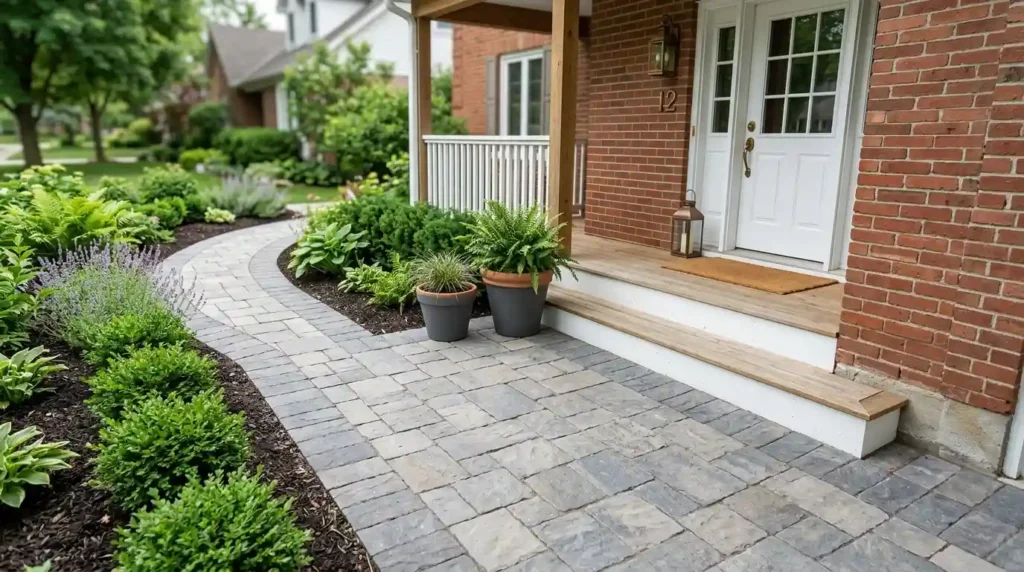
A worn concrete landing can make the whole entrance look unfinished. Replacing or extending it with pavers can connect the porch to the walkway.
Use the same pavers as the path, or choose a close match. One shared color is often enough.
Make sure the landing gives the door room to open. It should also leave space for a person to stand without stepping backward onto a lower surface.
Two planters or a narrow bench can complete the area. Keep decorations away from the main route.
Best for: Small entrance updates
Watch out for: Raising the surface too close to the door threshold
Create a Small Paver Patio Beside the Porch
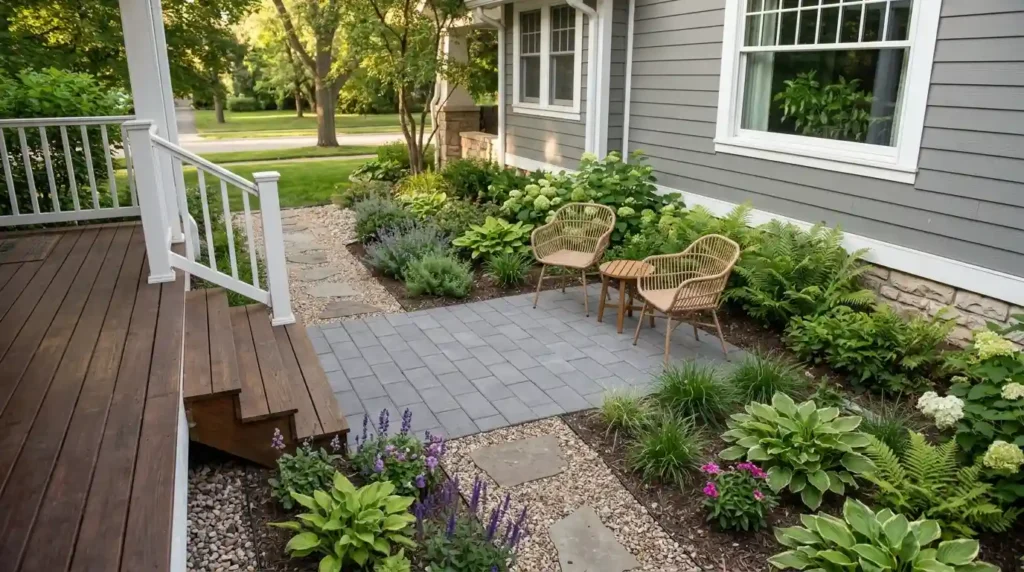
An 8-by-10-foot space may be enough for two chairs and a small table. This can turn an unused side of the porch into a simple seating spot.
Use one paver color to keep a small patio from feeling crowded. A plain running pattern is often enough.
Add low plants for a little privacy. Keep them below window level and away from the walkway.
Test the furniture layout before installing the patio. Mark the corners and place the chairs inside the space.
Best for: Compact yards and small budgets
Watch out for: Furniture blocking the path to the door
Build a Shaded Seating Nook Under a Mature Tree
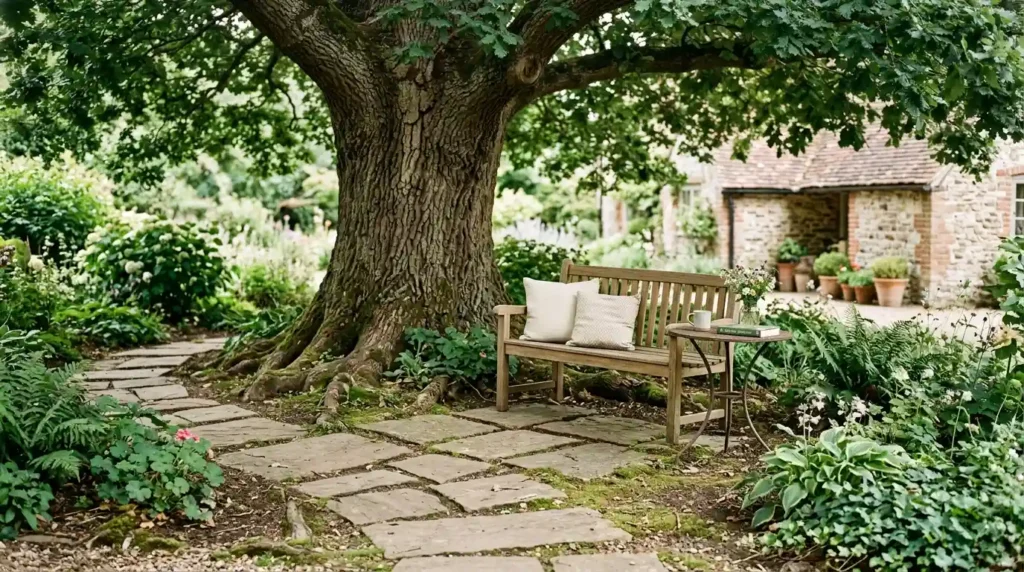
A mature tree can create a natural place to sit. But digging and heavy base work may harm important roots.
Keep the paved area away from the trunk. Avoid cutting large roots just to fit a perfect circle or square.
A simple bench may work better than several heavy chairs. You can also use spaced pavers instead of one solid surface.
Talk with an arborist before building near a valuable tree. Root damage may not show right away.
Best for: Large trees and naturally shaded yards
Watch out for: Root damage and pavers lifting as roots grow
Design a Front Courtyard With Pavers and Low Walls
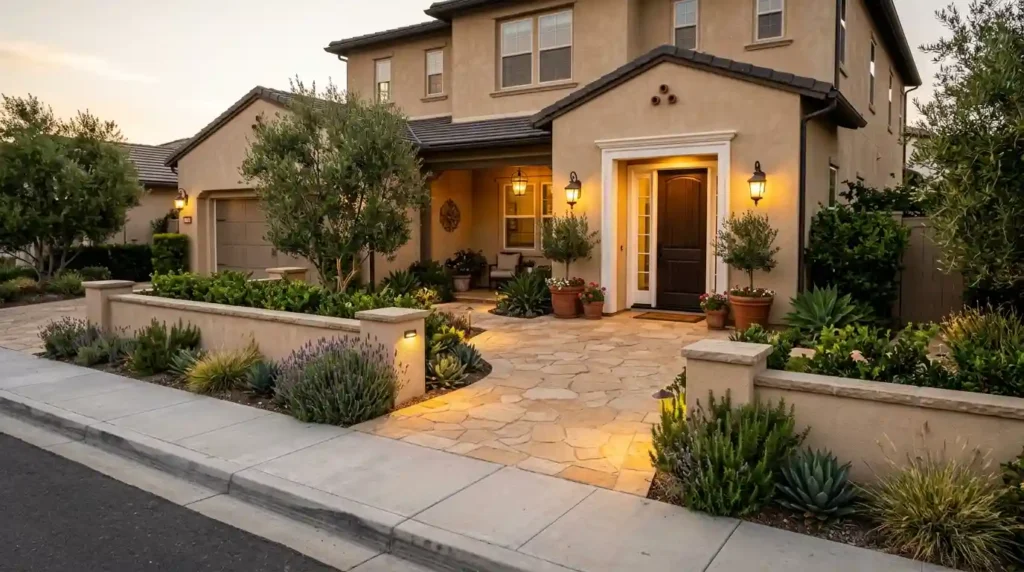
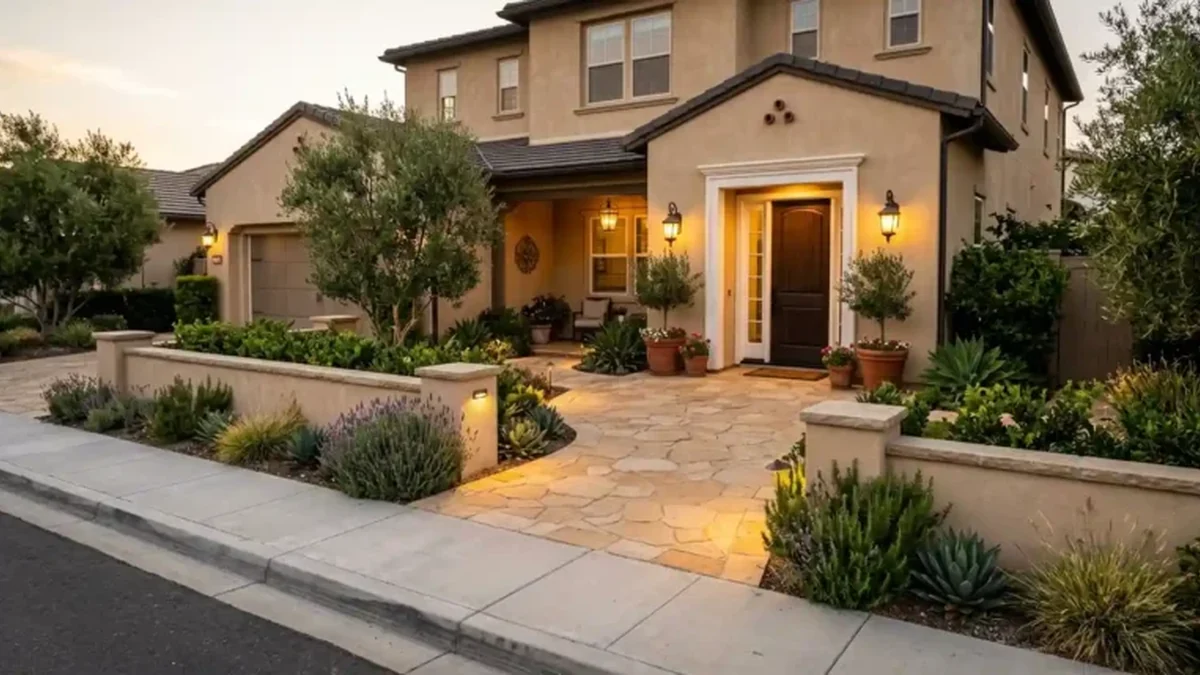
A front courtyard can make the entrance feel private without hiding it from the street. Use a low wall, hedge, or large planters to shape the area.
Warm brick or tan pavers often work well with stucco homes. Gray concrete pavers fit many modern designs.
Keep the front door visible. The courtyard should guide people in, not make them search for the entrance.
Add wall lights, path lights, or soft porch lighting. Avoid placing bright lights where they shine into nearby windows.
Best for: Wide front yards and larger entrances
Watch out for: High walls that make the home feel closed off
Edge Flower Beds With Matching Pavers
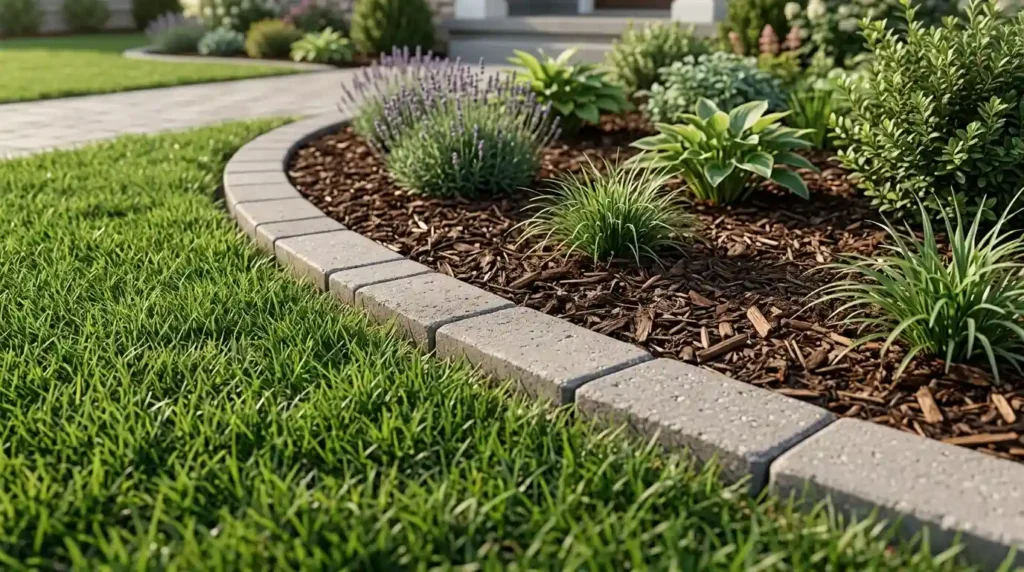
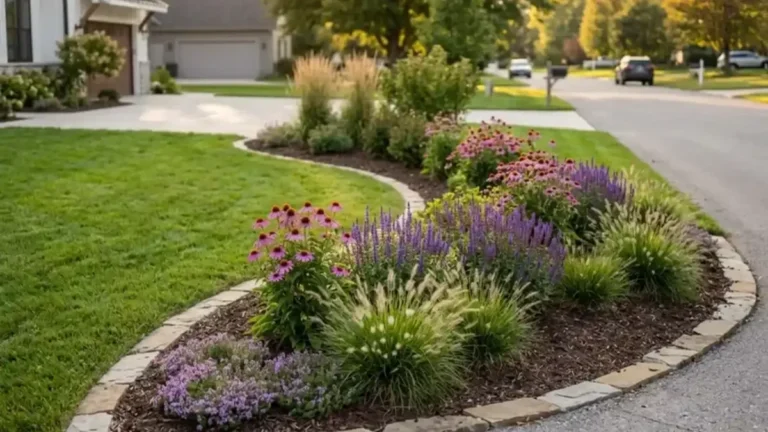
A row of pavers can create a clean line between the lawn and flower bed. It also helps stop mulch and soil from spreading onto the grass.
Match the edging to a nearby walkway or driveway. This connects the yard without adding another color.
Set the pavers low enough for easy mowing. Raised edges may require extra trimming each week.
Use one row for a simple look. Two rows can add more weight around a large bed.
Best for: Fast and affordable yard updates
Watch out for: Edging that sits too high for the mower
Create a Paver Border Around a Feature Tree
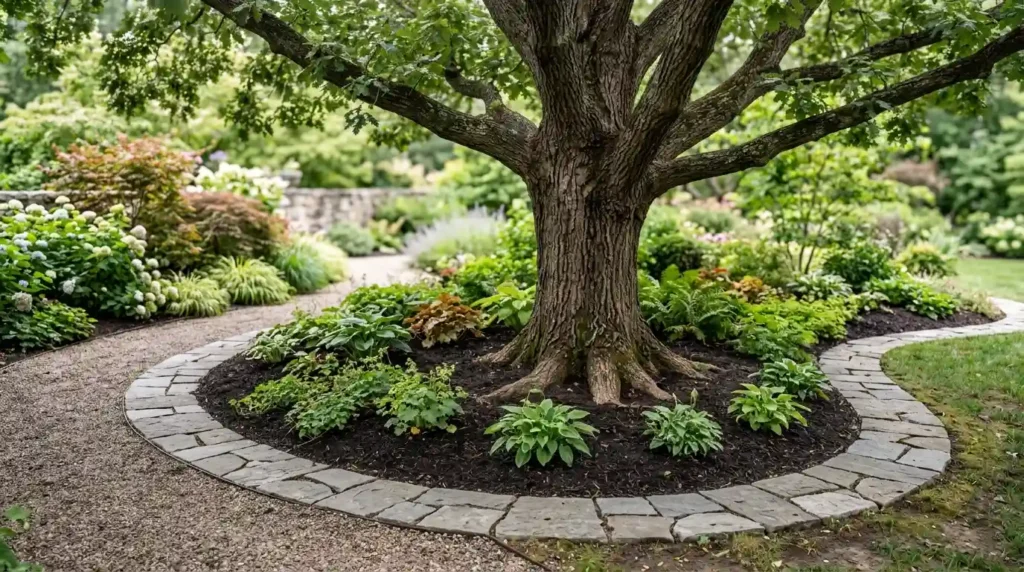
A broad paver border can define the planting area around a tree. It can also stop grass from growing close to exposed roots.
Do not build a raised ring of soil or mulch against the trunk. The base of the tree should remain open.
Make the bed wider than a tight circle. A gentle curve often looks more natural and gives roots more space.
Avoid deep digging near the tree. Use the existing ground level as much as possible.
Best for: Flowering and shade trees
Watch out for: Tight rings, deep digging, and mulch against the trunk
Combine Pavers and River Rock in a Drainage Strip
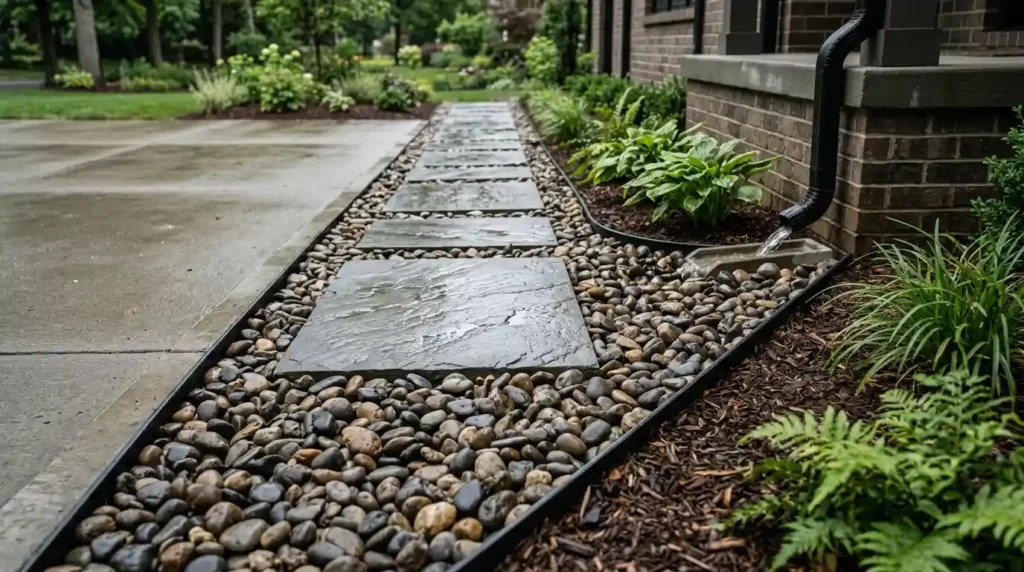
A river-rock strip can carry water beside a driveway, path, or downspout. Add flat pavers where people need to cross it.
The pavers make the strip useful without blocking water flow. They also create a clear route to a gate or side yard.
Use edging to keep the rocks in place. Pick stones large enough that normal rain will not move them easily.
The strip must lead water to a safe area. It should not end beside the foundation.
Best for: Wet areas and side-yard access
Watch out for: Sending water toward the house or another property
Replace a Struggling Lawn With Pavers and Gravel
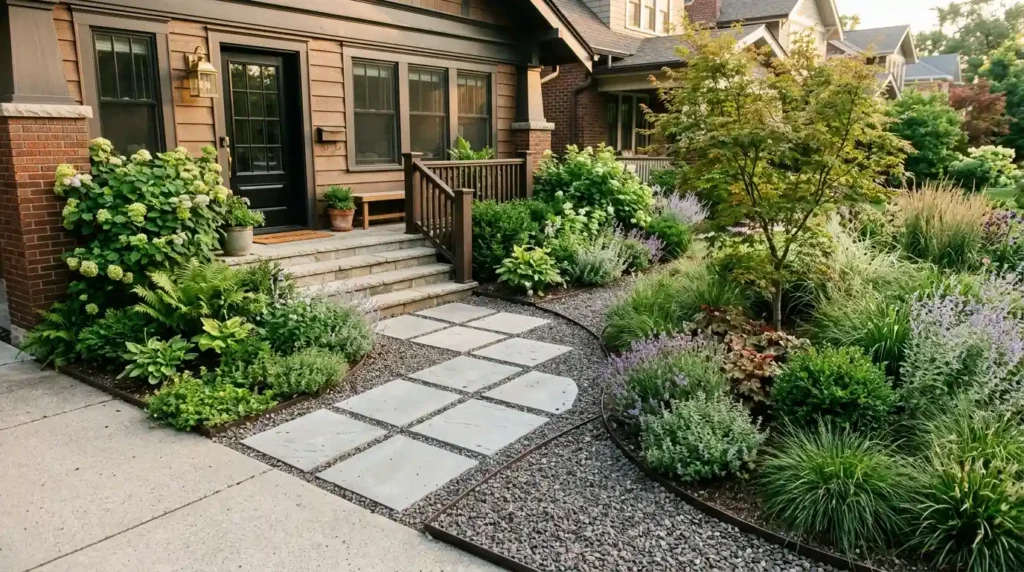
Grass often fails in narrow, dry, shaded, or high-traffic areas. Replacing part of it with pavers and gravel can reduce mowing and muddy spots.
Use large pavers to create a clear walking route. Leave open planting areas for shrubs, grasses, and small trees.
Do not cover the whole space with one type of gravel. The yard may look flat and unfinished.
Add plants with different heights. A few larger plants often look better than many small ones.
Best for: Dry yards and areas where grass will not grow
Watch out for: Too much gravel and too little plant life
How to Choose the Right Paver Material, Color, and Pattern
A small sample can look very different once it covers a full path or driveway. View your choices outside before placing an order.
Look at each sample in direct sun, shade, and wet weather. Colors often appear darker after rain.
| Material | Main benefit | Main concern | Good uses |
| Concrete pavers | Many sizes, shapes, and colors | Quality can vary | Paths, patios, and driveways |
| Brick pavers | Warm and classic look | Fewer color choices | Traditional paths and entrances |
| Natural stone | Rich texture and natural variation | Higher cost | Premium paths and courtyards |
| Permeable pavers | Helps water move into the base | Needs a special base | Driveways and wet areas |
Match the paver style to your home.
Red brick works well with cottages, Colonial homes, and white siding. Large gray slabs fit modern homes. Warm tan pavers can support a stucco exterior.
Try to repeat a color already found on the house. You might match the roof, stonework, shutters, or porch floor.
Avoid using several unrelated colors and patterns. One main paver and one border choice are enough for most front yards.
Simple patterns also make repairs easier. When a layout uses many special cuts, replacing one section can become harder.
What Front Yard Pavers Cost and Where You Can Save
Paver prices depend on more than the product you see at the store. The full job may include digging, base stone, sand, edging, delivery, cutting, labor, and waste.
A small garden border usually costs less than a full walkway. A driveway costs more because it needs a deeper and stronger base.
Pattern choice also matters. A straight running pattern needs fewer cuts than herringbone or a curved layout.
| Project | Lower-cost approach | Mid-range approach | Higher-cost approach |
| Garden edging | One row of basic blocks | Tumbled concrete pavers | Natural stone edging |
| Walkway | Straight running pattern | Pattern with a border | Custom stone layout |
| Driveway | Add a paver border | Standard paver driveway | Permeable paver system |
| Patio | Small square space | Mixed-size pattern | Full front courtyard |
The base is not the best place to save money. Expensive pavers can still sink when the ground below them is weak.
You can often save by reducing the project size. A short entrance path or driveway border may give you enough visual change.
Ask for written quotes that cover the same work. One quote may seem cheaper because it leaves out digging, disposal, or edge support.
Also ask how extra pavers will be handled. Keeping a few matching pieces can make future repairs easier.
How to Keep Front Yard Pavers Level and Weed-Free
Pavers are easier to care for when water drains well and the joints stay filled.
Sweep dirt, leaves, and seeds from the surface. Weeds often start in soil that collects between the pavers.
Pull small weeds before roots spread. Replace missing joint sand or other joint material when needed.
Do not aim a strong pressure washer directly into the joints. It can remove the material that helps hold the pavers in place.
Watch for repeated sinking in the same spot. That often points to a weak base, water problem, or soil movement.
Resetting one loose paver may be a simple repair. Several sunken areas may need deeper work.
Simple Seasonal Paver Checklist
In spring:
- Check for movement after cold or wet weather.
- Remove weeds while they are small.
- Refill open joints.
- Clear leaves and dirt from drainage areas.
In fall:
- Sweep away seeds and fallen leaves.
- Check that water flows away from the house.
- Repair loose edges before winter.
- Follow the maker’s advice before using any sealer.
Choose the Paver Idea That Fixes a Real Yard Problem
Pavers can create a safer path, improve a driveway, add a small seating area, or clean up messy garden edges.
But a bigger project is not always better.
A simple border may be enough to update an old driveway. A short walkway may make the entrance easier to find. A few large slabs may solve a muddy path without covering the whole lawn.
Measure your space before choosing a design. Check the water flow and match the paver style to your home.
Start with the front yard landscaping ideas with pavers that solve a real problem in your space. Then choose a material and layout that fit your house, budget, and daily needs.