18 Best Plants for Front Yard Landscaping
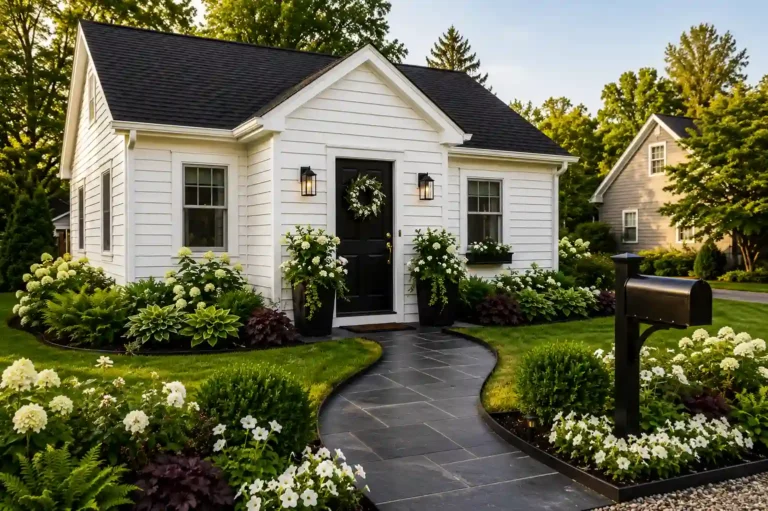
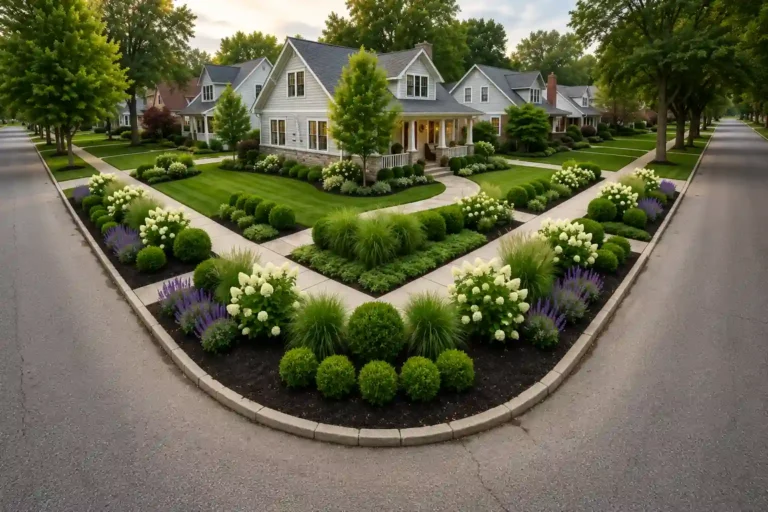
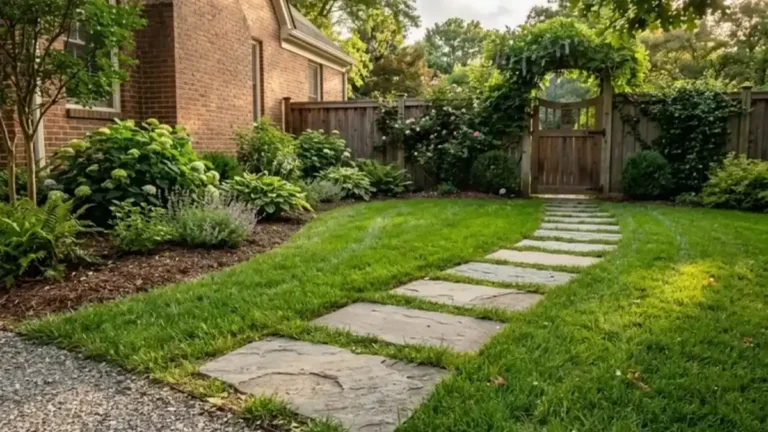
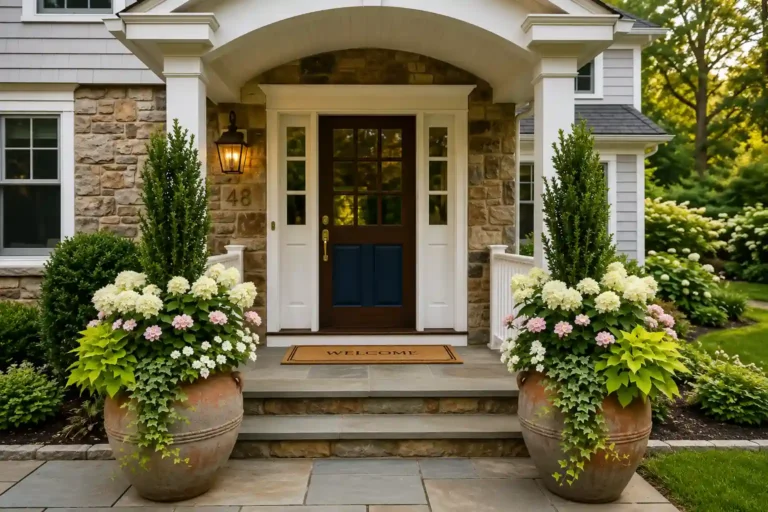
The right plants can make a plain front yard feel warm and welcoming. They can also improve curb appeal without filling every weekend with yard work. The best plants for front yard landscaping fit the light, soil, climate, and space you already have.
A shrub may look small at the nursery but grow wider than your front window. A sun-loving flower may stop blooming beside a shaded porch. These common problems often start when people choose front yard landscaping plants based on looks alone.
This guide covers 18 reliable options for different yard styles. You will learn where each plant works best, how much light it needs, and what problems to expect. You will also find three simple planting plans you can copy.
No plant is free from care. Still, smart choices can give you attractive plants for curb appeal with far less work.
How to Choose Front Yard Landscaping Plants
Buying plants based on their flowers alone can become an expensive mistake. Before visiting a nursery, study the conditions in your yard.
Start by tracking sunlight for one full day. Full sun usually means at least six hours of direct light. Part shade receives about three to six hours. Full shade receives less than three hours, though the strength of the light also matters. University of Minnesota Extension offers a helpful guide to shade levels.
Next, check your USDA Plant Hardiness Zone. The zone tells you how cold your area becomes during a typical winter. It does not account for summer heat, rainfall, soil, wind, or small climate differences within your yard. Use it as a starting point, not your only selection tool. You can search by ZIP code on the USDA Plant Hardiness Zone Map.
Measure your planting beds before buying anything. Compare the available space with each plant’s mature height and width. Keep shrubs below window sills and away from paths, doors, utility boxes, and house numbers.
Look for low-maintenance front yard plants with needs that match your schedule. Consider watering, pruning, deadheading, leaf drop, and winter cleanup.
Check these six items on every nursery label:
- Hardiness zone
- Light needs
- Mature height and width
- Water needs
- Bloom season
- Growth habit
A good design mixes evergreen structure with seasonal flowers. This keeps the yard from looking bare during winter.
Best Evergreen Plants for Year-Round Structure
Evergreens give your front yard shape when flowers are gone. One strong evergreen can also act as an anchor that holds the rest of the bed together.
Boxwood
Best for: Formal borders, low hedges, and foundation beds
Light: Full sun to part shade
Typical form: Dense and rounded
Main benefit: Evergreen leaves provide a neat look all year
Possible drawback: Some types face pest and disease problems
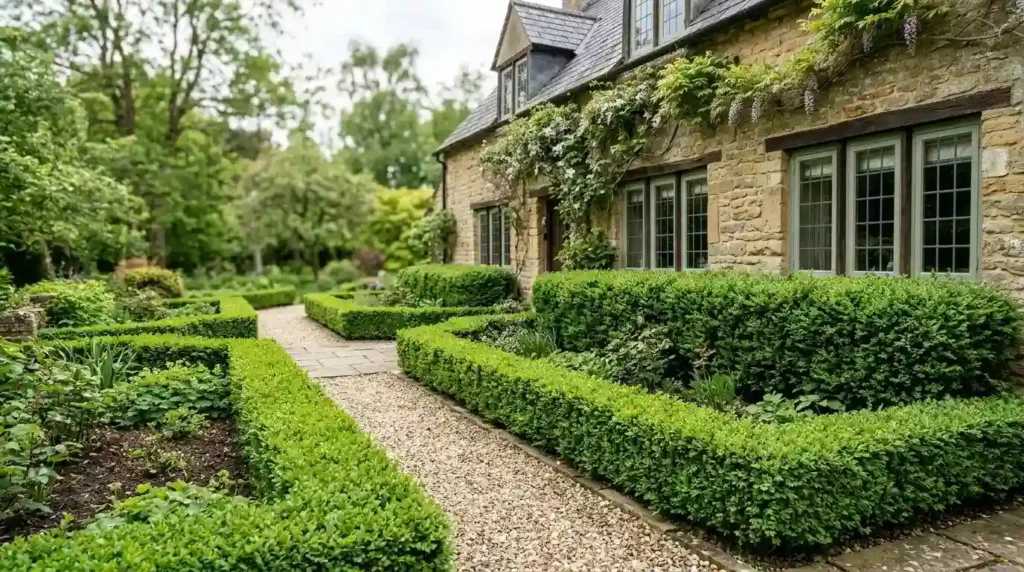
Boxwood works well beside paths, below windows, or around a small porch. Compact cultivars need less pruning than full-size forms. Check the mature width because some boxwoods grow much larger than their nursery size suggests.
Boxwood blight can be a concern in some areas. Ask your local Extension office about disease-resistant options and avoid buying plants with spotted leaves or bare stems.
Dwarf Hinoki Cypress
Best for: Entry beds, corners, and small focal points
Light: Full sun to light shade
Typical form: Upright with layered foliage
Main benefit: Slow growth limits frequent trimming
Possible drawback: Poor drainage can damage its roots
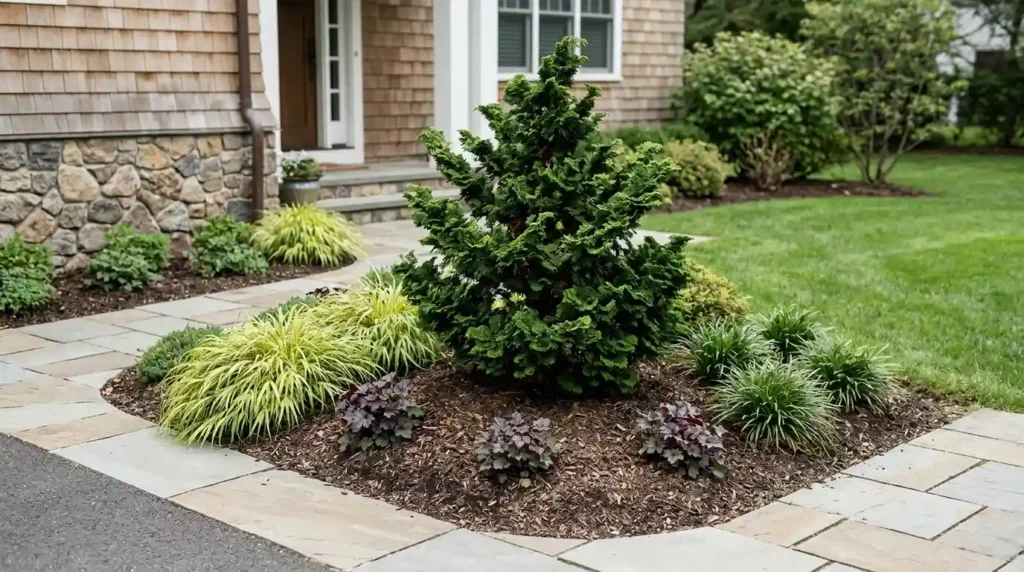
Dwarf Hinoki cypress has soft, fan-shaped evergreen foliage. Its texture gives a front bed more interest without bright flowers.
Use one plant beside an entrance or at the corner of a foundation bed. Read the cultivar label carefully. Some “dwarf” forms stay small, while others may become several feet tall over time.
Inkberry Holly
Best for: Informal hedges and moist or acidic soil
Light: Full sun to part shade
Typical form: Rounded and bushy
Main benefit: Offers an evergreen alternative to boxwood
Possible drawback: Older plants can become bare near the base
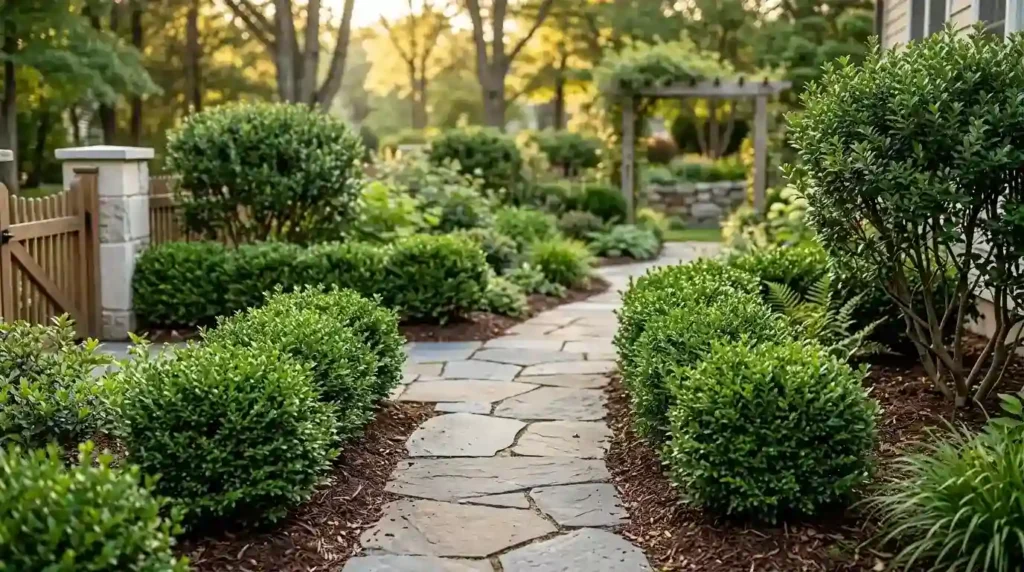
Inkberry holly is native to much of eastern North America. It fits natural-looking yards and pairs well with azaleas, hostas, and native flowers.
Choose a compact cultivar for a narrow foundation bed. You may also need both male and female plants if you want berries. Check the cultivar information before buying.
One evergreen anchor is often enough for a small bed. Repeating the same evergreen in a larger yard can create a calm, connected look.
Best Flowering Shrubs for Front Yard Color
Flowering shrubs bring color closer to eye level than most perennials. They can also fill more space, which means you may need fewer plants.
Panicle Hydrangea
Best for: Summer color and mixed foundation beds
Light: Full sun to part shade
Typical form: Rounded with large flower clusters
Main benefit: Flowers on new growth
Possible drawback: Larger forms can block windows
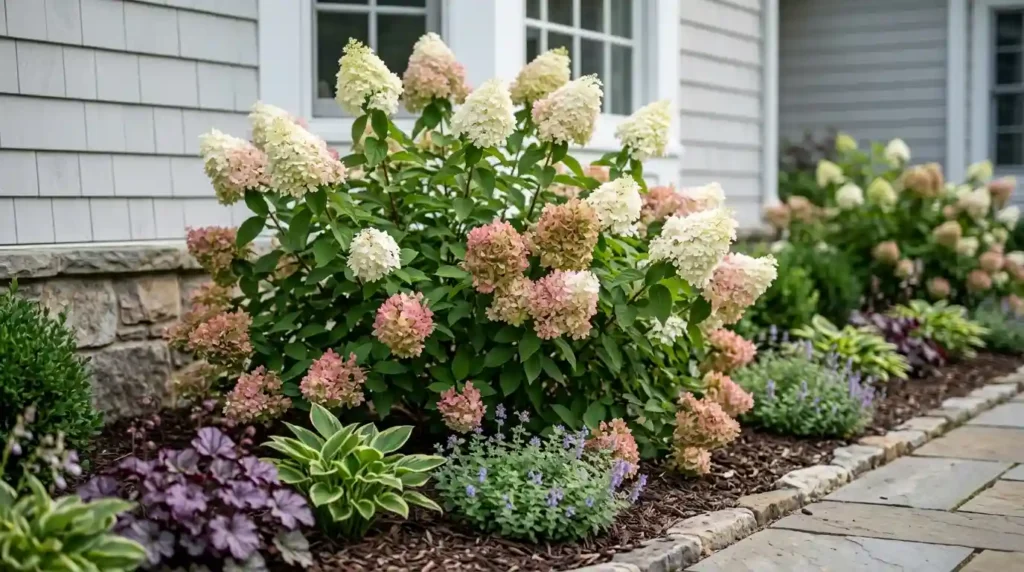
Panicle hydrangeas produce cone-shaped flowers during summer. Many blooms change from white to pink, tan, or soft green as they age.
These hydrangeas form flower buds on the current season’s growth. This makes pruning less risky than it is with hydrangeas that bloom on older stems. Choose a compact cultivar if you are planting beneath a window.
Spirea
Best for: Low borders, sunny paths, and mass planting
Light: Full sun
Typical form: Compact and mounded
Main benefit: Flowers and colorful foliage offer long seasonal interest
Possible drawback: Older plants may need renewal pruning
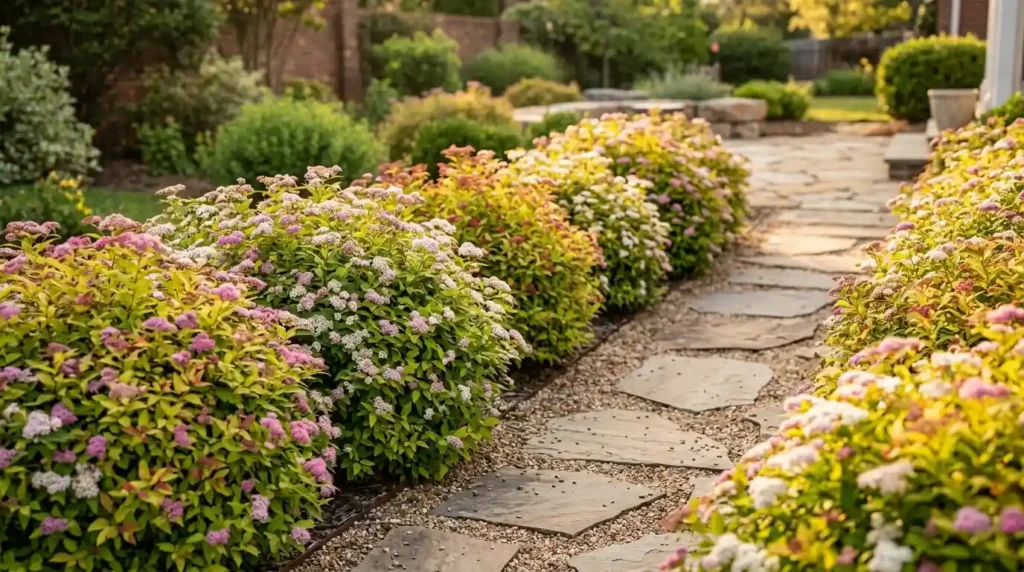
Spirea is a practical choice for hot, sunny beds. Depending on the variety, it may flower in spring or summer. Foliage colors include green, gold, bronze, and red.
A group of three matching plants often looks stronger than three unrelated shrubs. Allow room between them based on their mature width, even if the new plants look far apart.
Dwarf Lilac
Best for: Fragrant spring color near porches and paths
Light: Full sun
Typical form: Rounded and compact
Main benefit: Strong fragrance and spring flowers
Possible drawback: Poor airflow may lead to leaf disease
Dwarf lilacs give you the scent of a traditional lilac in a smaller form. Place one near a front walk, porch, or seating area where you can enjoy the fragrance.
Lilacs bloom best with plenty of direct sunlight. Avoid crowding them against a wall or between larger shrubs. Good airflow helps leaves dry faster after rain.
Azalea
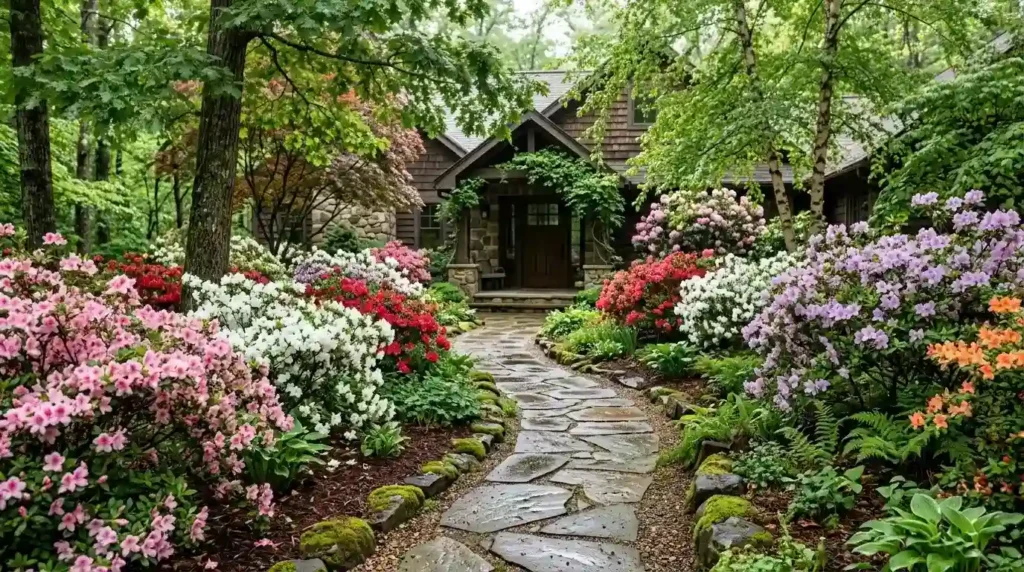
Best for: Shaded entrances and woodland-style yards
Light: Part shade
Typical form: Rounded with dense branches
Main benefit: Strong spring color
Possible drawback: Needs suitable soil and steady moisture
Azaleas can fill a shaded front bed with spring flowers. Evergreen and deciduous types are available, and flower colors range from white to pink, red, orange, and purple.
Most azaleas prefer acidic, well-drained soil. Test the soil before trying to change its pH. Select a cultivar proven to grow well in your region.
Abelia
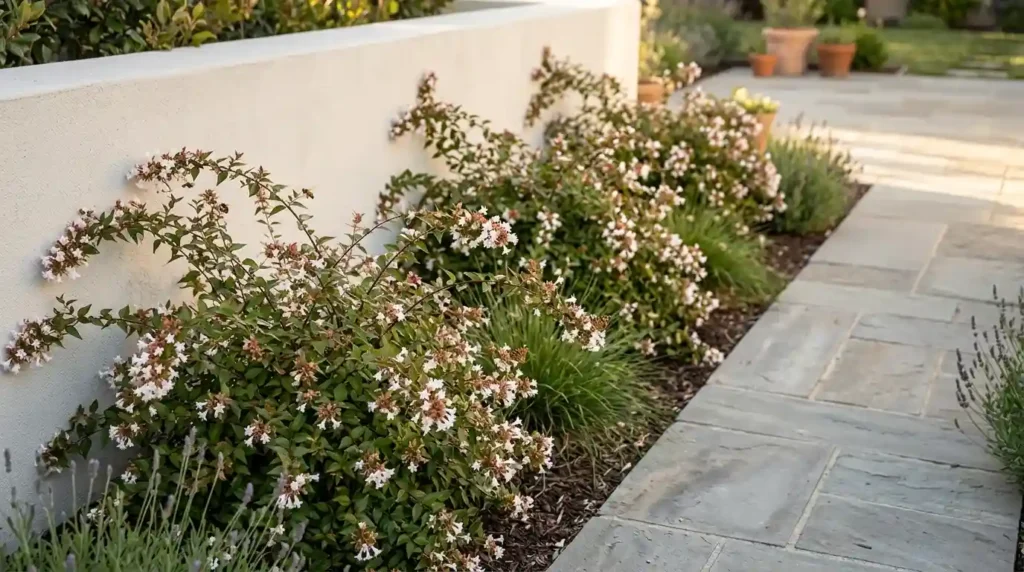
Best for: Softening walls, corners, and straight bed lines
Light: Full sun to part shade
Typical form: Arching and rounded
Main benefit: Long flowering period
Possible drawback: Cold winters may damage stems
Abelia produces many small flowers over a long season. The flowers can attract bees, butterflies, and other pollinators.
Its curved branches soften hard building lines. Some varieties are evergreen in warm areas but lose part or all of their leaves in colder regions. Check local performance before using it for winter screening.
For a balanced foundation bed, pair one flowering shrub type with a steady evergreen. Panicle hydrangeas and spirea work especially well with dark green foliage.
Best Perennials for Long-Lasting Flower Beds
Perennials fill open areas between shrubs and return for several growing seasons. They still require care, but you do not need to replace them every spring.
Coneflower
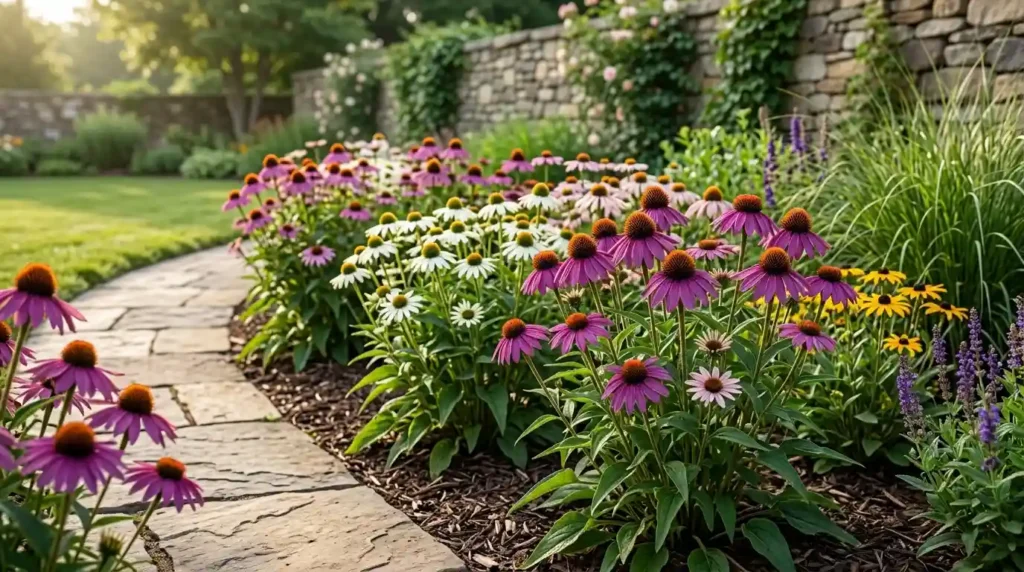
Best for: Sunny borders and wildlife-friendly gardens
Light: Full sun
Typical form: Upright with daisy-like flowers
Main benefit: Provides nectar and seeds for wildlife
Possible drawback: Some fancy cultivars are less reliable than basic forms
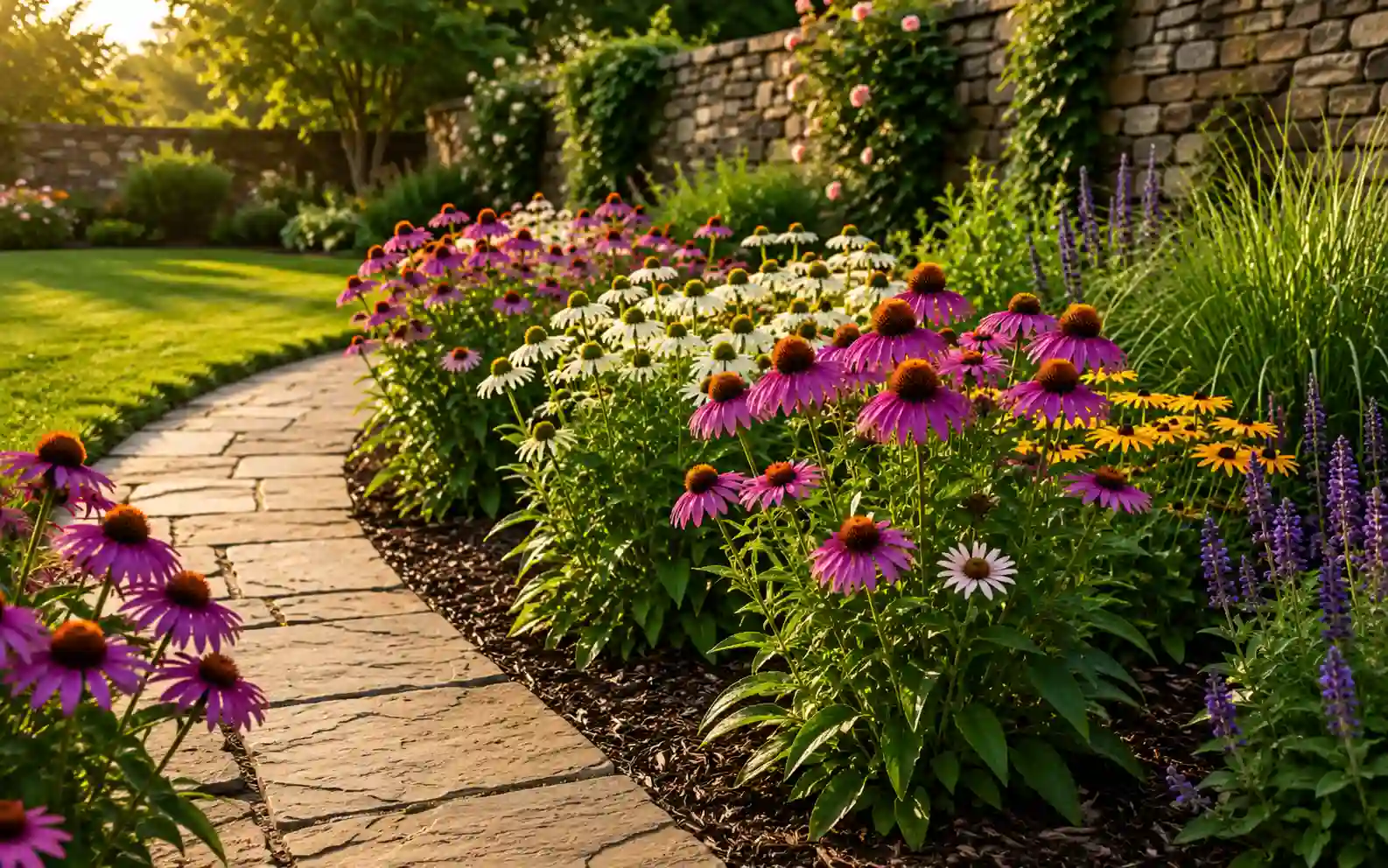
Coneflowers bloom during summer and often continue into early fall. Purple is the classic color, but white, yellow, orange, red, and pink forms are also sold.
Established plants can handle short dry periods. Leave some seed heads standing after flowering if you want to feed birds and add winter texture.
Black-Eyed Susan
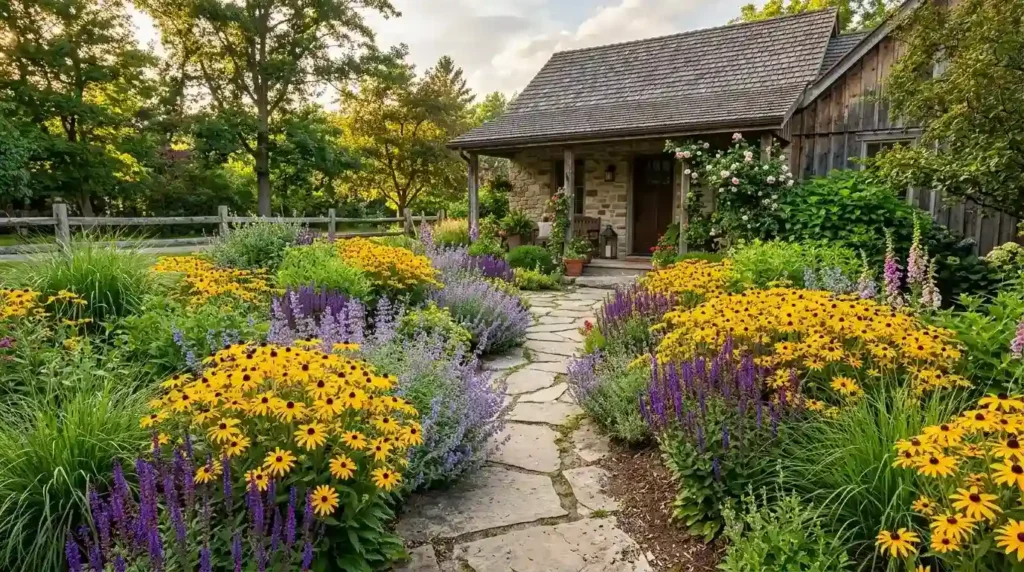
Best for: Cottage beds and bright summer color
Light: Full sun
Typical form: Upright clumps
Main benefit: Bold yellow flowers are easy to see from the street
Possible drawback: Certain types spread quickly
Black-eyed Susans add warm color to informal front yards. Their yellow flowers pair well with purple salvia, blue catmint, and green ornamental grasses.
Check the plant’s botanical name and growth habit before buying. “Black-eyed Susan” can refer to several species and cultivars with different life spans and spreading habits.
Salvia
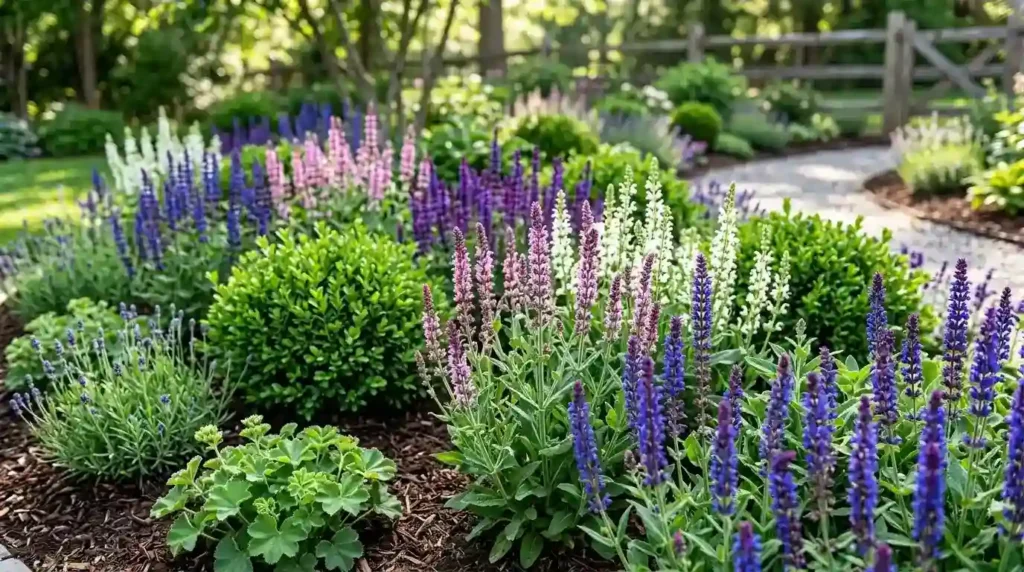
Best for: Vertical color in sunny flower beds
Light: Full sun
Typical form: Upright flower spikes
Main benefit: Attracts pollinators and may bloom again
Possible drawback: Wet soil can cause poor growth
Perennial salvia adds narrow flower spikes among rounded shrubs and flowers. Blue, purple, pink, and white varieties are widely available.
Many types produce a second round of flowers if you remove the spent blooms. Plant salvia in soil that drains well and avoid areas where water sits after rain.
Catmint
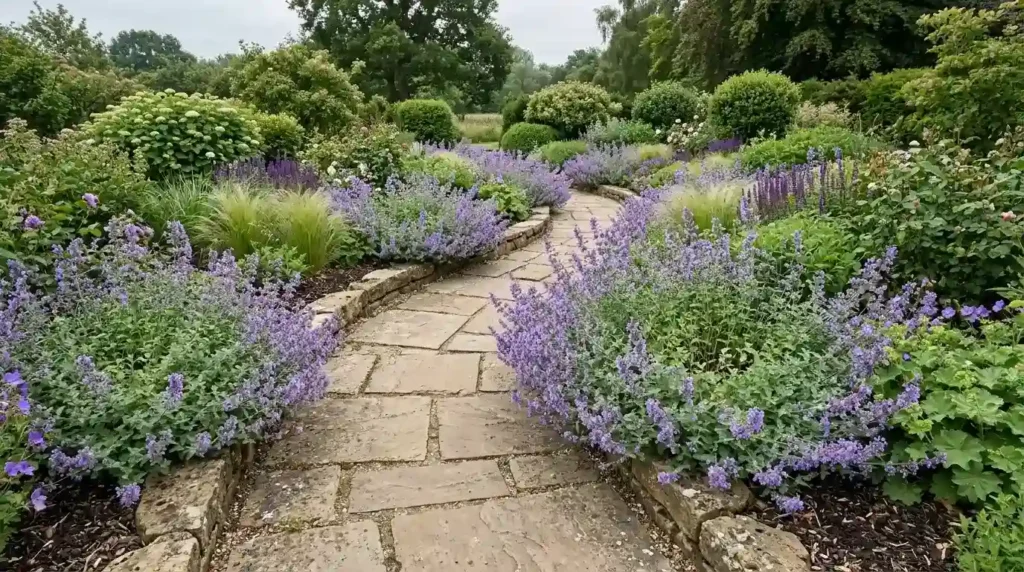
Best for: Path edges and soft flower-bed borders
Light: Full sun
Typical form: Low, wide, and spreading
Main benefit: Long-lasting blue-purple flowers
Possible drawback: Some forms spread more than expected
Catmint has gray-green leaves and a relaxed shape. It works well beside stone paths because its stems soften hard edges.
Choose a sterile or well-behaved cultivar if unwanted seedlings concern you. Trim the plant after its first major bloom to encourage tidy new growth.
Hosta
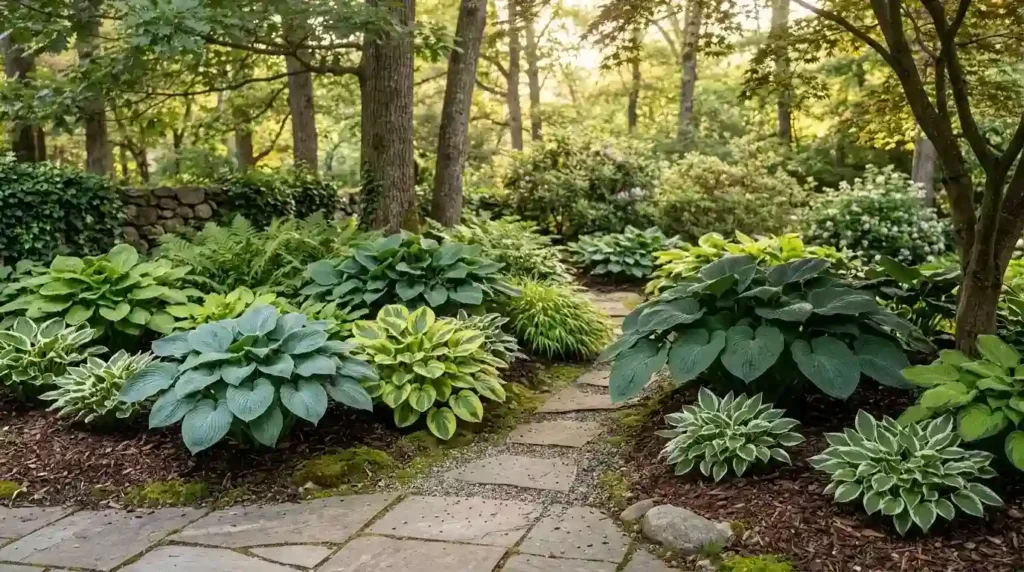
Best for: North-facing beds and shaded areas beneath trees
Light: Part shade to full shade
Typical form: Rounded mound of broad leaves
Main benefit: Strong foliage color and texture
Possible drawback: Deer and slugs may damage the leaves
Hostas come in many sizes and shades of green, blue, gold, and white. Their bold leaves provide color even when few shade plants are blooming.
Do not assume every hosta stays small. Large varieties can cover several feet, while miniature forms fit tight planting pockets. Deer pressure can make hostas a poor choice in some neighborhoods.
Heuchera
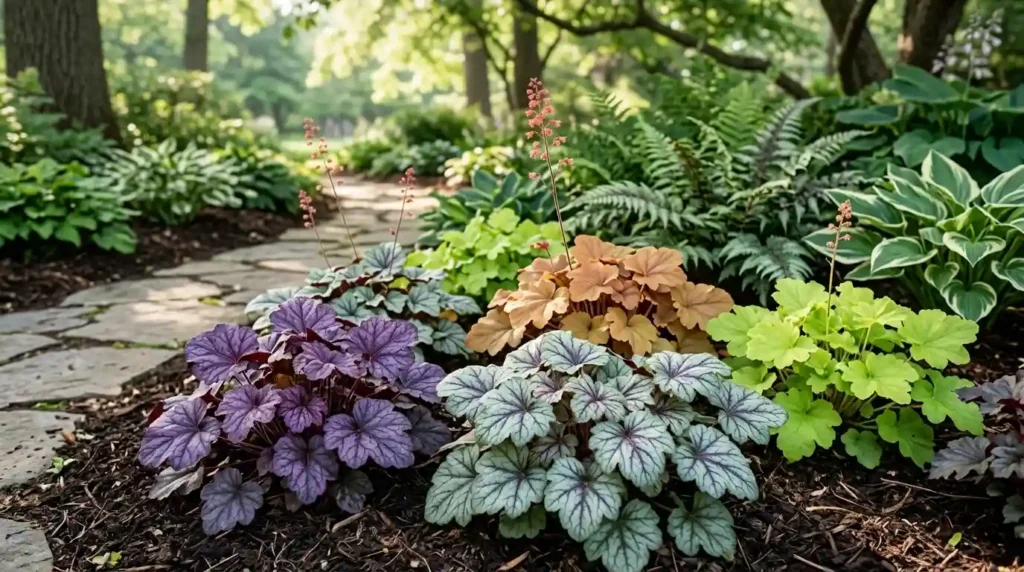
Best for: Shaded borders and small planting spaces
Light: Part shade, though needs vary by cultivar
Typical form: Low mound of colorful leaves
Main benefit: Foliage stays attractive beyond the bloom period
Possible drawback: Poor drainage can cause root problems
Heuchera, also called coral bells, comes in green, lime, bronze, silver, red, and purple shades. Small flowers rise above the foliage on thin stems.
Use heuchera along the front of a shaded bed. Check the cultivar’s light needs because some colors handle sun better than others.
For a sunny bed, combine salvia, coneflower, and catmint. For shade, pair hosta and heuchera with inkberry holly. Repeat one perennial in at least three places to make the whole design feel connected.
Best Ground Covers and Ornamental Grasses
Bare soil makes a bed look unfinished and gives weeds room to grow. Ground covers fill low spaces, while grasses add movement and height.
Creeping Phlox
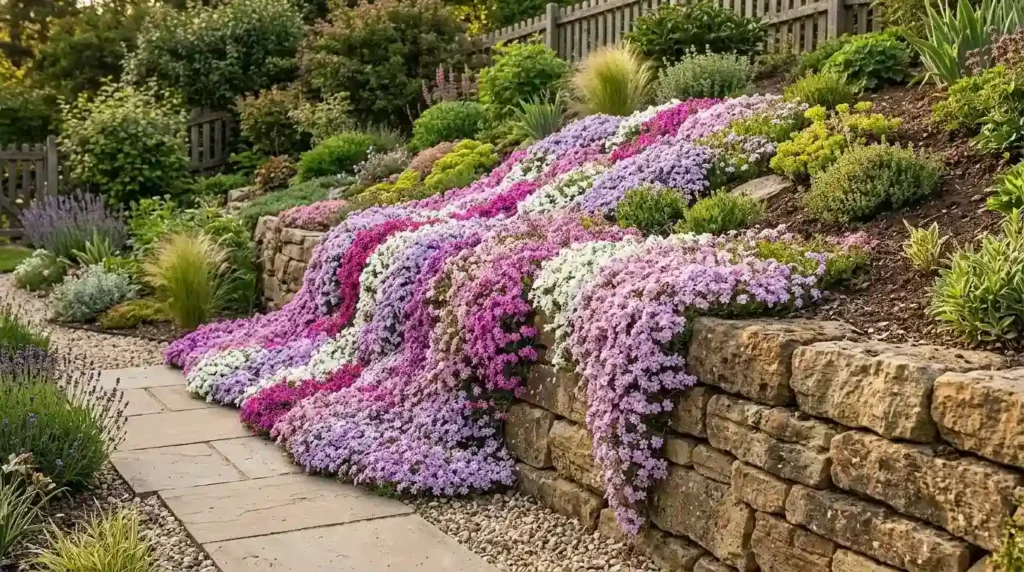
Best for: Slopes, retaining walls, and sunny bed edges
Light: Full sun
Typical form: Low spreading mat
Main benefit: Covers soil with spring flowers
Possible drawback: Performs poorly in wet soil
Creeping phlox can spill over a low wall or spread across a sunny slope. Its spring flowers may be white, pink, blue, purple, or striped.
Give it room to spread without covering nearby small plants. Trim damaged or untidy growth after flowering if needed.
Lamb’s Ear
Best for: Cottage gardens and dry, sunny edges
Light: Full sun
Typical form: Low clumps of silver leaves
Main benefit: Adds soft texture and strong color contrast
Possible drawback: Leaves may rot in wet or humid conditions
Lamb’s ear stands out because of its fuzzy silver foliage. It looks good beside purple flowers, dark evergreens, and stone paths.
Plant it where water drains quickly. In wet climates, choose a variety known for strong foliage and limited flower production.
Switchgrass
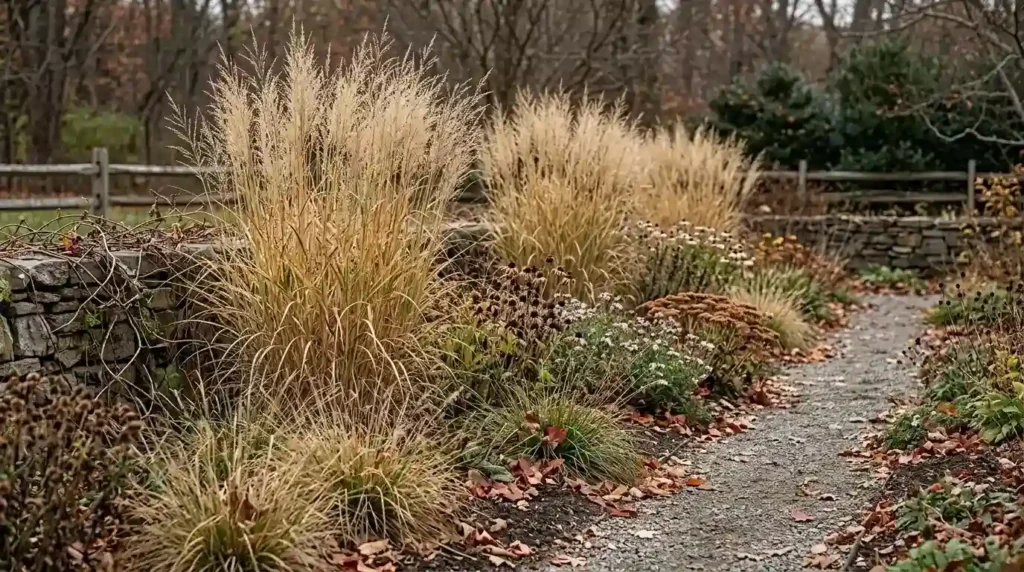
Best for: Back rows, natural yards, and fall interest
Light: Full sun
Typical form: Upright clump
Main benefit: Adds movement and winter structure
Possible drawback: Some cultivars grow too tall for small beds
Switchgrass is a native grass across much of North America. Its upright leaves and airy flower heads can remain attractive into winter.
Place it behind shorter flowers so it does not hide them. Compare cultivar heights carefully. A compact selection can fit below some windows, while a tall one may block the view.
Blue Fescue
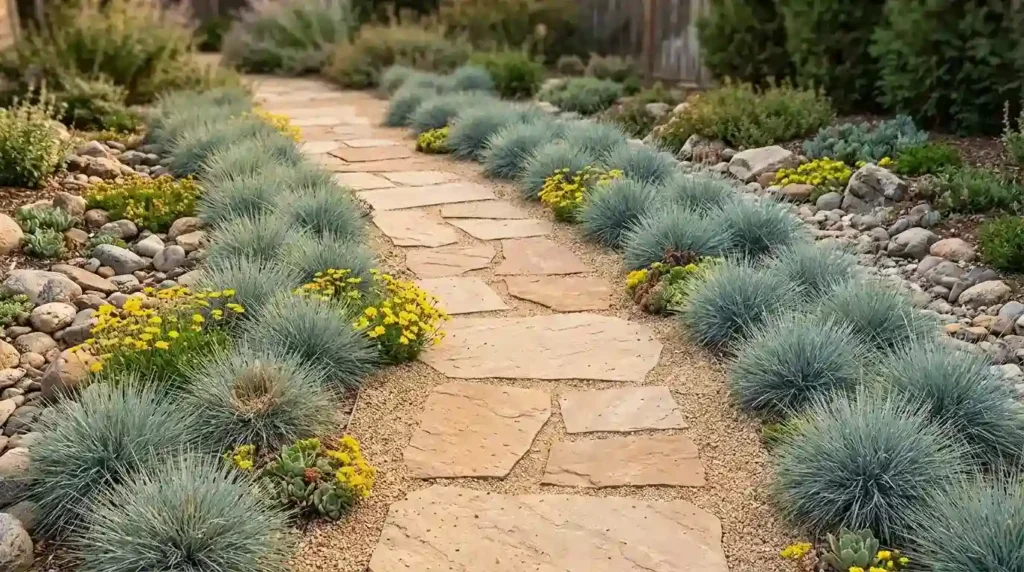
Best for: Walkway edges and rock gardens
Light: Full sun
Typical form: Small rounded grass clump
Main benefit: Blue-green foliage provides year-round contrast in mild climates
Possible drawback: The center may thin with age
Blue fescue works best when repeated along a path instead of planted as one isolated clump. Its cool color contrasts well with warm stone and yellow flowers.
Divide or replace older plants when their centers become thin. Avoid rich, wet soil, which can lead to weak growth.
Three Front Yard Planting Combinations to Copy
You do not need to build a plant plan from scratch. Start with one of these combinations and adjust it for your bed size, local climate, and available sunlight.
1. Sunny and Low-Maintenance Bed
Use a dwarf Hinoki cypress as the main anchor. Place a compact panicle hydrangea nearby for summer flowers.
Add salvia and catmint through the middle of the bed. Finish with repeated clumps of blue fescue along the edge.
This plan works best in a sunny bed with good drainage. It combines steady evergreen foliage with flowers, texture, and movement.
2. Shady Foundation Bed
Place compact inkberry hollies at the back for evergreen structure. Add a group of azaleas for spring color.
Use hostas through the middle for large, bold leaves. Plant heuchera along the front to add smaller leaves and rich color.
This plan suits a north-facing entrance or an area with filtered afternoon light. Protect hostas if deer visit your yard.
3. Pollinator-Friendly Border
Place switchgrass across the back of a wide, sunny border. Add groups of coneflowers and black-eyed Susans through the middle.
Repeat salvia between the flower groups for upright purple or blue color. Use creeping phlox along the front edge for spring interest.
Check local invasive-plant lists before buying any spreading plant. Native plant societies and Extension offices can also suggest regional substitutes.
In every plan, arrange plants by mature height. Keep tall plants at the back and low plants near paths. Leave enough space between the foliage and your house for airflow and future maintenance.
Front Yard Planting Mistakes to Avoid
That small shrub in a one-gallon pot may become wider than your window. Always plan for its mature size, not its current size.
Avoid these common front yard landscaping mistakes:
- Planting tall shrubs below windows: This blocks light and creates constant pruning work.
- Crowding plants against the house: Tight spacing limits airflow and makes repairs harder.
- Mixing different water needs: A thirsty hydrangea and a dry-soil plant may struggle under the same watering plan.
- Buying too many unrelated plants: Repeating a few choices creates a cleaner design.
- Ignoring winter appearance: A bed filled with deciduous flowers may look empty for several months.
- Blocking important views: Keep plants away from doors, house numbers, driveway sightlines, and walkways.
- Forgetting underground utilities: Contact your local utility-marking service before digging.
- Skipping local checks: A well-behaved plant in one region may spread fast in another.
Read the nursery label before placing a plant in your cart. Confirm its zone, light, mature spread, water needs, bloom period, and growth habit.
Plant performance also varies by cultivar and region. A local Extension plant finder can help you compare foundation planting shrubs with conditions in your area.
Start With the Right Plant for Your Site
A good front yard begins with plants that fit the space. Check your sunlight, climate, soil drainage, and bed size before choosing flowers or foliage.
Combine evergreens for structure, flowering shrubs for seasonal color, and perennials or ground covers to fill open areas. Repeat a few strong choices instead of using a different plant in every spot.
Map your sunlight and measure each bed before visiting a nursery. Then choose three to five options from this list. The best plants for front yard landscaping are the ones that can reach their natural size without creating years of extra work.