17 Small Front Yard Driveway Ideas That Save Space
A small front yard can feel even smaller when the driveway takes up most of the space. You may have little room for plants, a walkway, or a clear entrance. Adding too much can also make parking harder.
The good news is that you do not need a large lawn to create curb appeal. Smart borders, compact plants, simple paving, and better lighting can make a big difference.
These small front yard driveway ideas can help you improve the space without losing useful parking. You will find options for narrow yards, low budgets, drainage problems, and easy upkeep.
Some ideas need professional installation. Others can be finished over a weekend. The right choice depends on your driveway width, climate, budget, and daily parking needs.
Before buying plants or materials, look at how your driveway works. Check where people walk, where car doors open, and where rainwater collects. A good design should make your home look better while keeping the space easy to use.
How to Plan Your Small Driveway Before You Start
It is easy to buy plants or pavers because they look good in a photo. But they may not work beside your car or on your property.
Start by measuring the full area. Measure the driveway, lawn, front path, property line, and any open planting strips. Write the numbers on graph paper or create a basic sketch.
Next, park your car in its normal spot. Open every door. Check where passengers place their feet when they get out. This simple test can stop you from putting a planter, hedge, or raised border in the wrong place.
Look at the driveway after heavy rain. Does water collect near the garage? Does it run across the walkway? Does it move near the home’s foundation? These signs may affect which materials you can use.
You should also check:
- Where delivery workers and visitors walk
- Whether bins need to pass beside the car
- How much sun each area receives
- Where underground pipes or cables may be located
- How wide plants will become when fully grown
- Local rules for driveway changes and drainage
Do a five-minute test before making your final plan. Mark the new border with string or a garden hose. Park the car, open the doors, and walk from the street to the front entrance.
If the marked area feels tight, make it smaller. Open space is useful space in a compact front yard.
4 Small Front Yard Driveway Ideas That Improve the Layout
A better layout can make your yard feel larger without adding more land. These small front yard driveway ideas focus on parking, movement, and the shape of the space.
Use a Ribbon Driveway to Add More Green Space
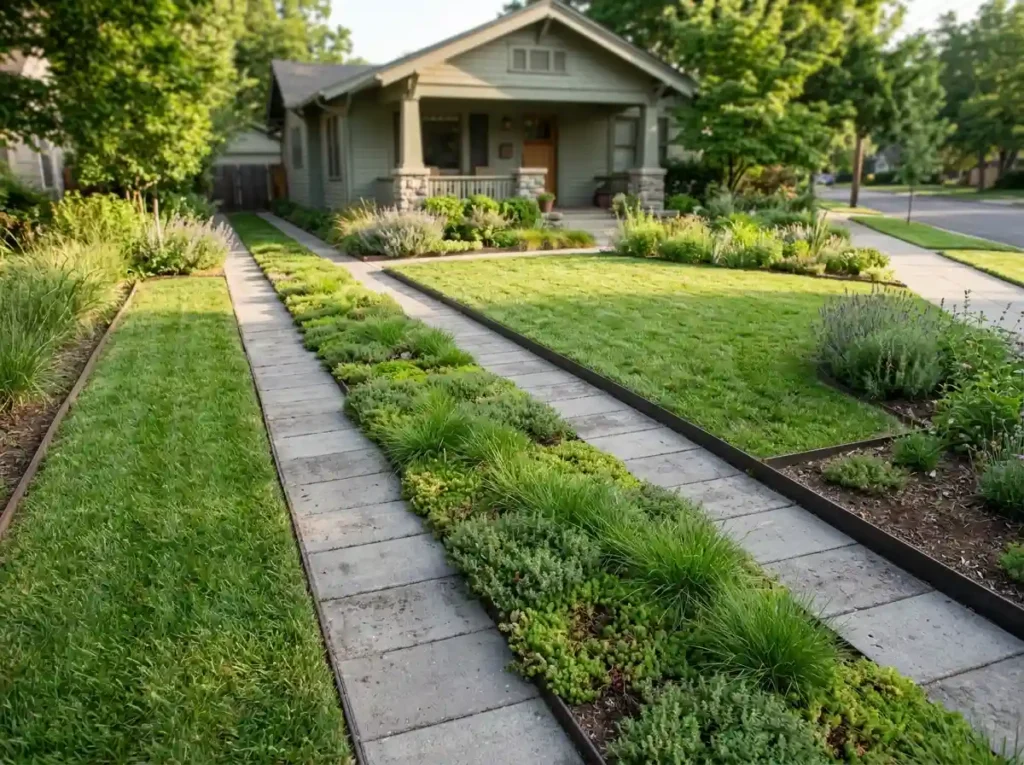
A ribbon driveway has two paved tracks for the vehicle’s tires. The middle strip may contain grass, gravel, small stones, or low groundcover.
This style reduces the amount of solid paving you see from the street. It can make a small yard feel softer and greener.
A ribbon design works best when cars follow the same path each day. The tire tracks need a strong base that can hold the vehicle’s weight.
Choose the center material with care. Grass may look fresh, but it can become muddy or dry. Gravel drains well, but stones may spread without strong edging. Groundcover needs to handle heat and light foot traffic.
Best for: Straight, single-car driveways
Maintenance: Moderate
Add a Compact Parking Pad Near the House
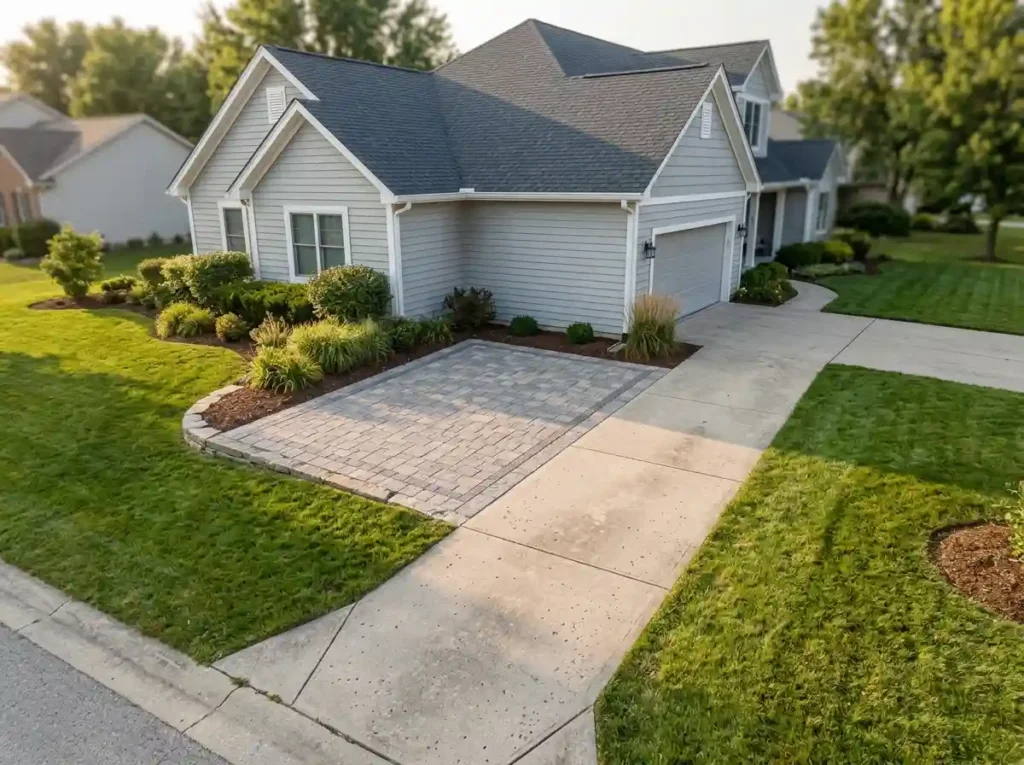
You may need extra parking but may not want to widen the whole driveway. A small parking pad near the garage can solve this problem.
The driveway stays narrow near the street. It then opens into a wider area closer to the house.
This design can provide room for a second car. It can also make it easier to open doors or turn around.
Use materials that match or support the current driveway. Options include pavers, compacted gravel, concrete, or reinforced grass.
Check the water flow before adding a parking pad. A wider hard surface may send more water into the yard or near the house.
You may also need local approval before adding parking space.
Best for: Homes that need occasional second-car parking
Maintenance: Low to moderate
Taper the Driveway Entrance for Easier Turns
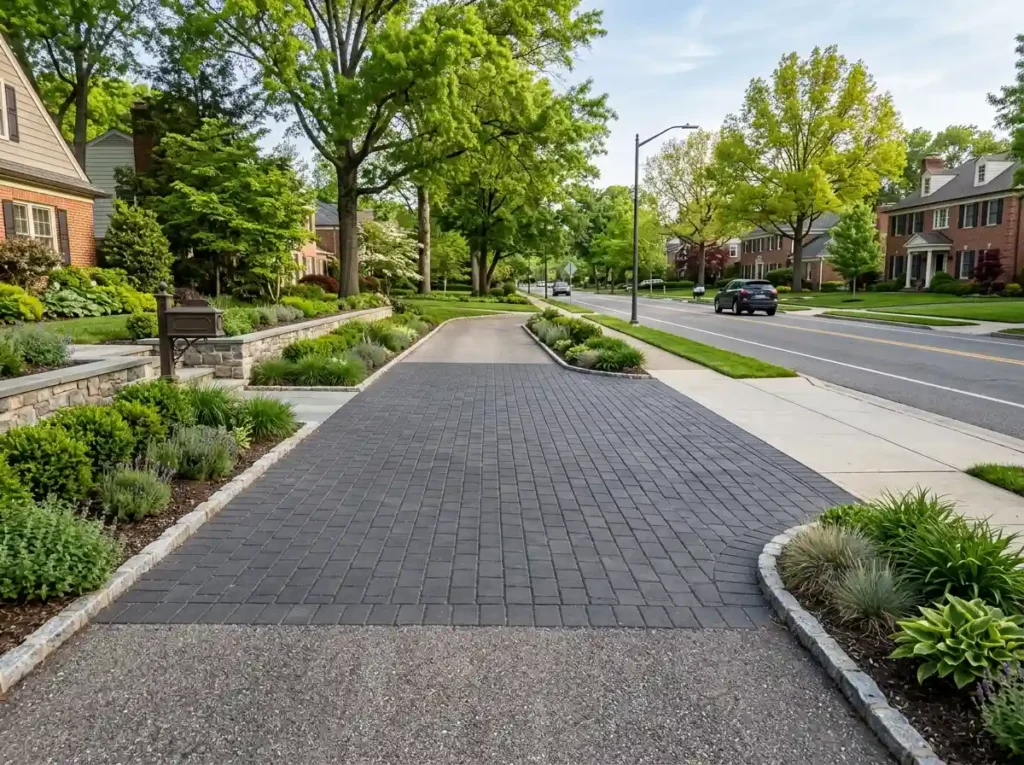
Do your tires often touch the grass when you enter the driveway? A tapered entrance may help.
A tapered driveway is wider near the street. It slowly becomes narrower as it reaches the house.
This shape gives drivers more room to turn. It may also protect the lawn from tire damage.
Use brick, stone, or darker pavers to mark the wider entrance. The border can make the shape look planned instead of uneven.
Keep plants low near the street. Drivers need a clear view of cars, cyclists, and people using the sidewalk.
The wider area should also stay within your property and local curb rules.
Best for: Tight driveway entrances
Maintenance: Low
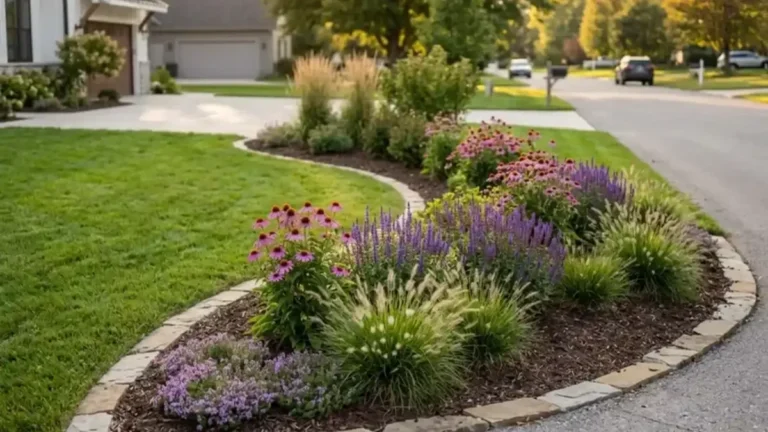
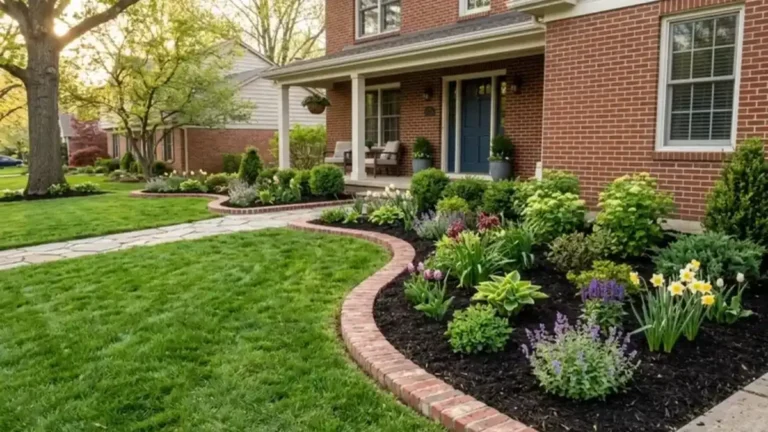
Use a Curved Planting Edge to Soften Straight Lines
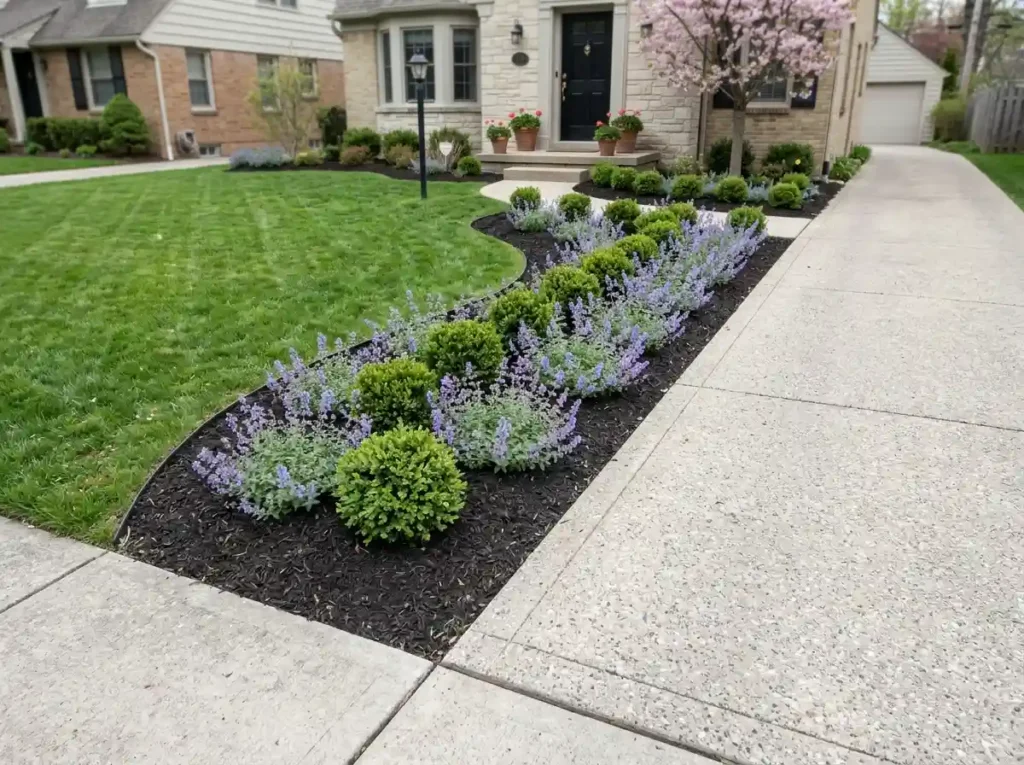
Most driveways are long, flat, and straight. A curved planting border can make the yard feel less rigid.
You do not need to curve the driveway itself. Shape the nearby flower bed with a gentle line instead.
Start the curve near the sidewalk or street. Let it widen slightly near the front path or steps.
A garden hose can help you test the shape. Move it until the curve looks natural from the street.
Keep the curve shallow. A deep bed may take away parking space or block car doors.
Plant compact shrubs or repeated flowers inside the curve. Too many plant types can make a small bed look messy.
Best for: Plain concrete or asphalt driveways
Maintenance: Moderate
A layout may look good on paper, but it must still work in real life. Leave enough space for parking, turning, deliveries, and safe movement around the car.
4 Small Driveway Landscaping Ideas for Narrow Borders
A thin strip beside the driveway can be hard to manage. Grass may turn brown from heat, while large plants may scratch the car.
These small driveway landscaping ideas can turn that awkward strip into a clean and useful part of the yard.
Create a Slim Flower Border
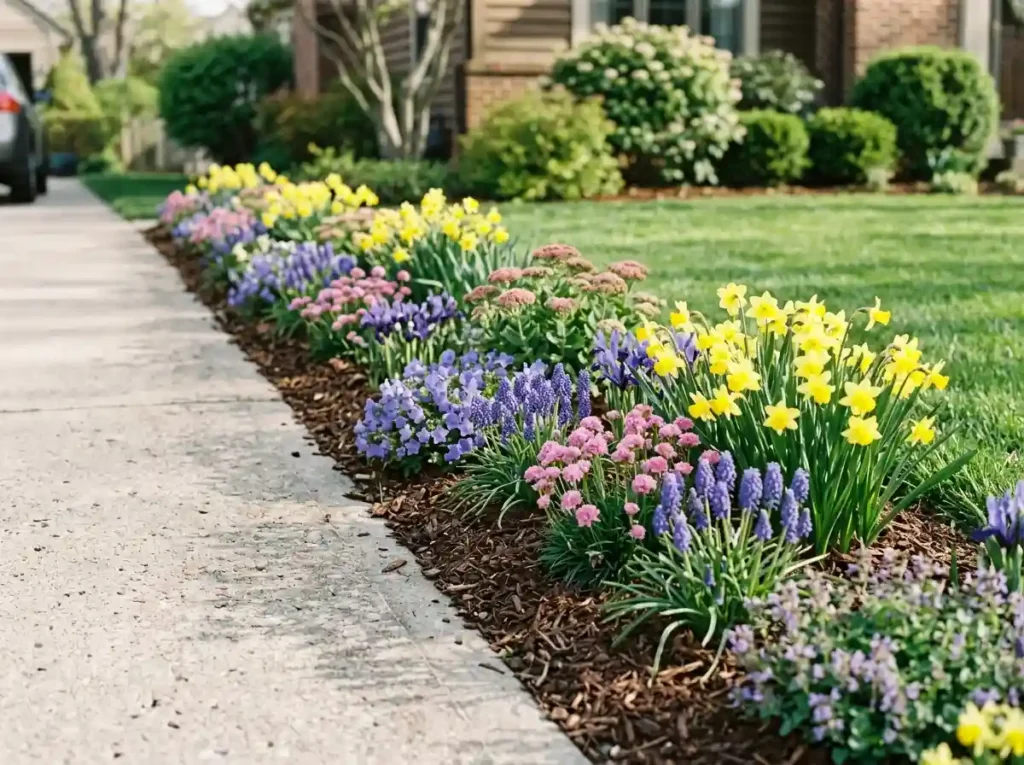
A narrow flower bed can add color without taking up much room. The key is to use compact plants with a tidy shape.
Choose two or three plant types and repeat them along the border. Repetition makes the area look longer and less crowded.
Good options may include:
- Small flowering perennials
- Compact annuals
- Spring bulbs
- Dwarf shrubs
- Low native flowers
Choose plants based on your local climate and sunlight. A flower that grows well in shade may struggle beside a hot, sunny driveway.
Avoid thorny plants near car doors. You should also avoid plants with long stems that may bend across the pavement.
Add mulch to reduce weeds and stop soil from washing onto the driveway.
Best for: Narrow strips with at least a few inches of usable soil
Maintenance: Moderate
Plant a Low Evergreen Hedge for Year-Round Structure
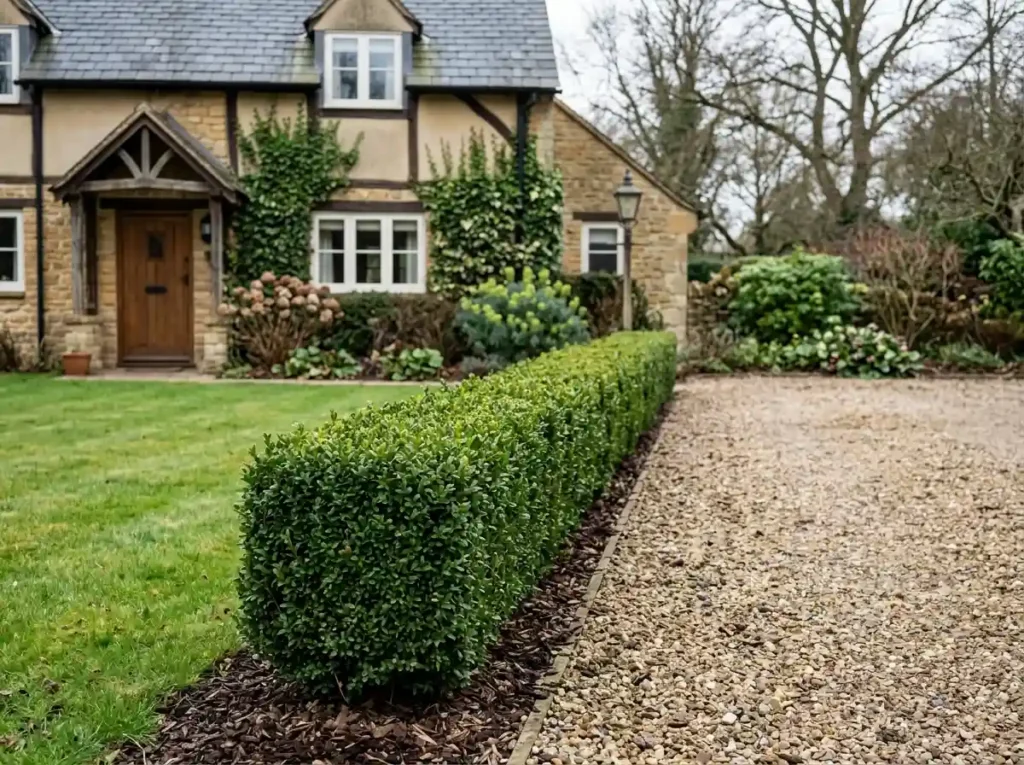
A short evergreen hedge can separate the driveway from the lawn. It can also hide rough or uneven pavement edges.
Choose a variety that stays naturally small. This will save you from constant cutting and shaping.
A clipped hedge can look formal. However, it needs regular care to stay narrow. A naturally compact shrub may be a better fit for busy homeowners.
Keep the hedge below eye level near the street. Tall plants can block your view when you back out.
Leave space between the mature hedge and the vehicle. Nursery plants may look tiny, but some can become several feet wide.
Check the plant label before buying. Focus on the mature width, growth speed, and sunlight needs.
Best for: Traditional homes and tidy front yards
Maintenance: Moderate
Replace Weak Grass With Low Groundcover
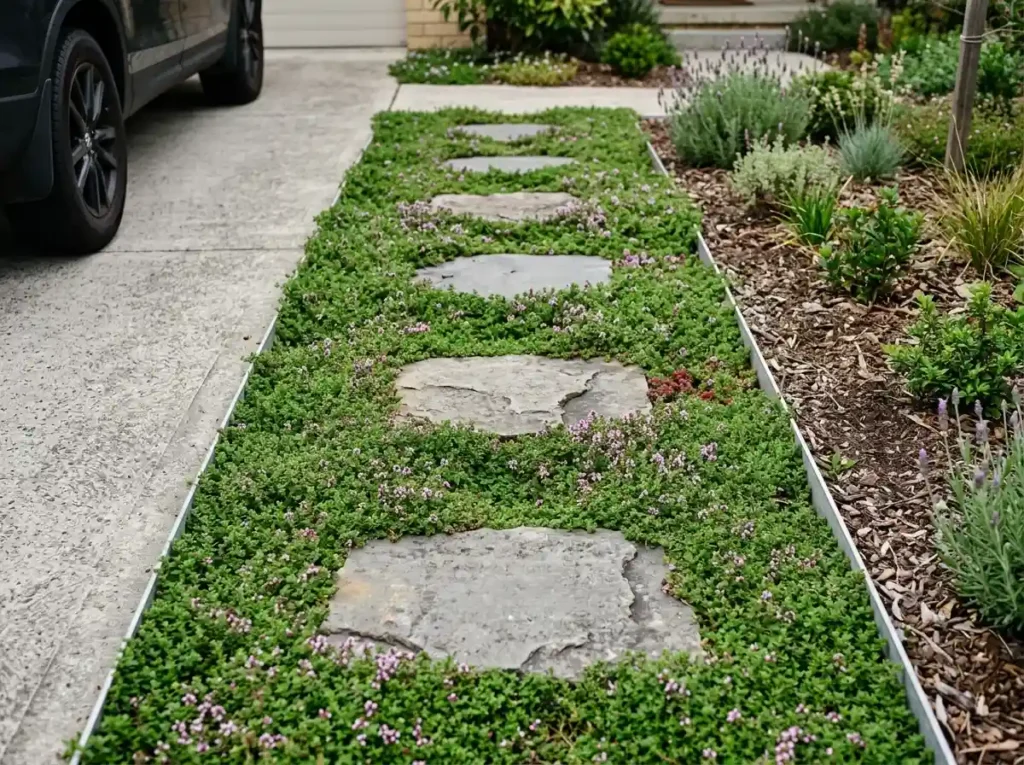
Grass often struggles beside a driveway. The pavement creates heat, and car tires may damage the edge.
Low groundcover can fill this area with less mowing. It also creates a softer line between the hard surface and the yard.
Choose a plant that fits the local climate. It should handle heat, dry soil, and the amount of sunlight the area receives.
If passengers may step on the border, use a groundcover that can handle light foot traffic. Delicate plants may flatten after a few days.
Avoid fast-spreading types that may enter pavement gaps or take over nearby beds.
You can also add flat stepping stones in spots where people often exit the car.
Best for: Hot driveway edges where grass keeps dying
Maintenance: Low to moderate
Add Small Groups of Ornamental Grasses
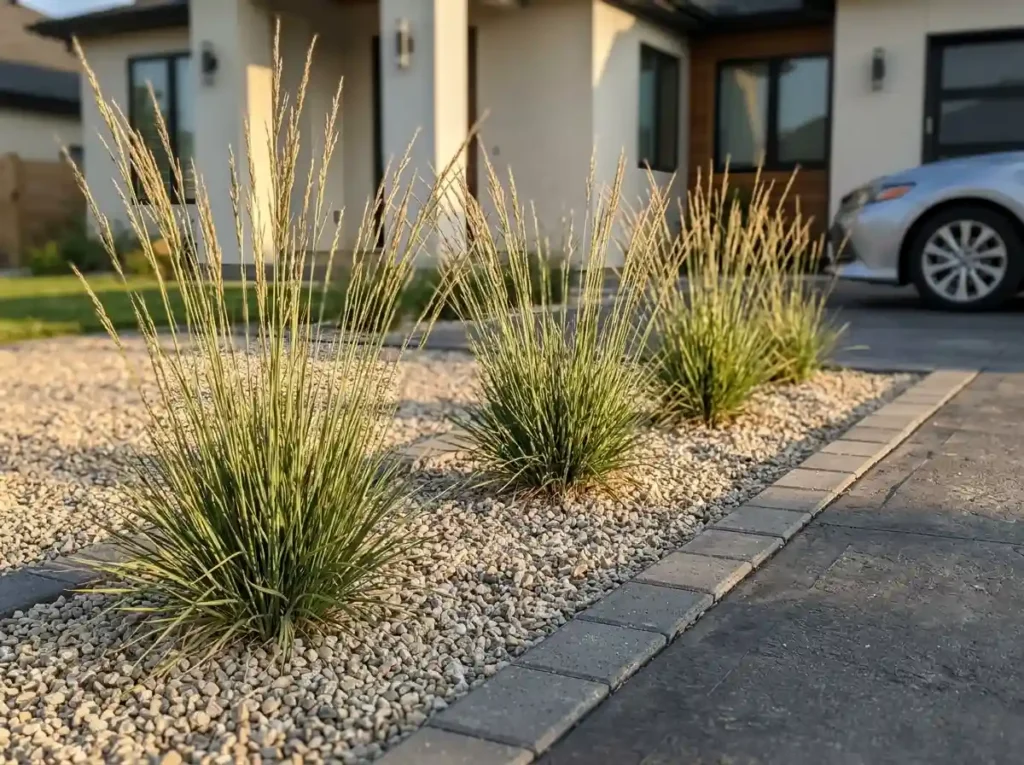
Compact ornamental grasses can add shape and movement to a small front yard. They work well with simple homes and modern paving.
Plant them in small groups instead of creating one thick wall. This leaves open space and makes each group stand out.
Choose grasses that stay narrow. Large types can bend across the driveway and brush against the vehicle.
Some grasses have sharp leaves. Others spread through roots or seeds. Check the plant’s growth habits before adding it near pavement.
Small grasses often look best when mixed with gravel, low flowers, or simple paver edging.
Cutting needs depend on the type. Some need trimming once a year. Others need more regular care.
Best for: Modern or natural-looking yards
Maintenance: Low to moderate
Keep narrow planting areas simple. Repeating a few compact plants will usually look cleaner than using many unrelated types.
4 Front Yard Driveway Landscaping Ideas With Pavers and Gravel
Plants are not the only way to improve a small driveway. Hard materials can add clear lines, better drainage, and a more finished look.
These front yard driveway landscaping options work well when there is little planting space.
Install Permeable Pavers to Help With Runoff
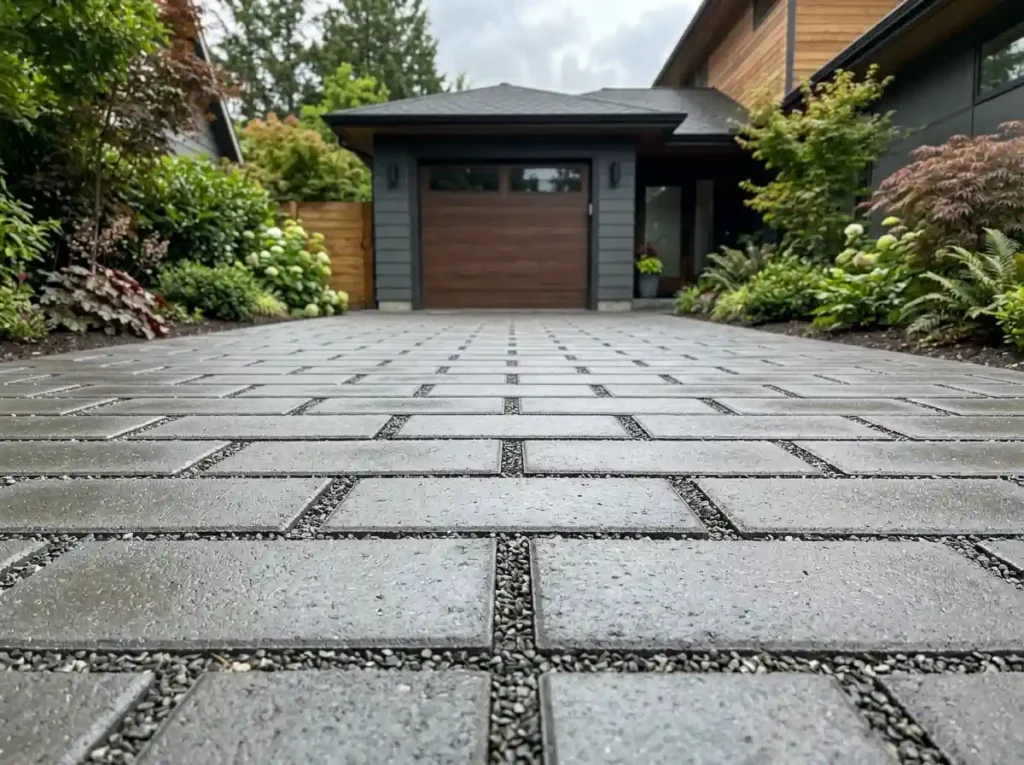
Permeable pavers allow rainwater to move through the gaps between each unit. The water then enters the prepared stone base below.
This surface may help reduce puddles and runoff when installed correctly. It can also give the driveway a cleaner and more finished look.
The base is the most important part of the system. Water will not drain well if the ground below is poorly prepared.
Soil type also matters. Heavy clay may drain more slowly than sandy soil.
Permeable pavers come in many shapes and styles. Simple gray blocks suit modern homes. Brick-style units work well with traditional houses.
Professional installation may cost more at first. However, damaged sections can often be repaired without replacing the full driveway.
Best for: Homes with runoff concerns and a larger project budget
Maintenance: Low to moderate
Combine Gravel With Paver Tracks
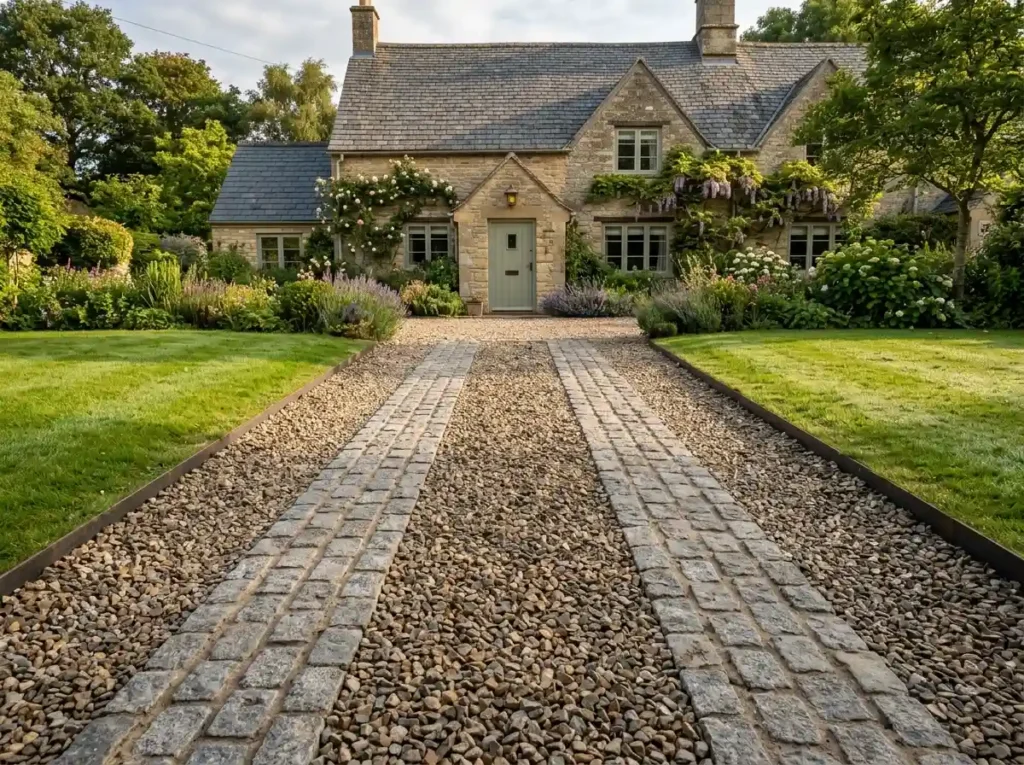
You can use pavers where the vehicle’s tires travel and gravel around them. This creates a clear driving path with less full-width paving.
The mix adds texture and may cost less than covering the whole driveway with decorative pavers.
The paver tracks need a strong base. Decorative gravel alone cannot support a car for long.
Choose gravel that locks together when compacted. Smooth, round stones may roll under tires and spread into the lawn.
Strong metal, stone, or concrete edging can keep gravel in place. A weed barrier may also reduce unwanted growth, though weeds can still appear in surface dust.
This design works best on level or gently sloped sites. Loose gravel can move downhill during rain.
Best for: Cottage, rustic, and casual homes
Maintenance: Moderate
Frame the Driveway With a Contrasting Border
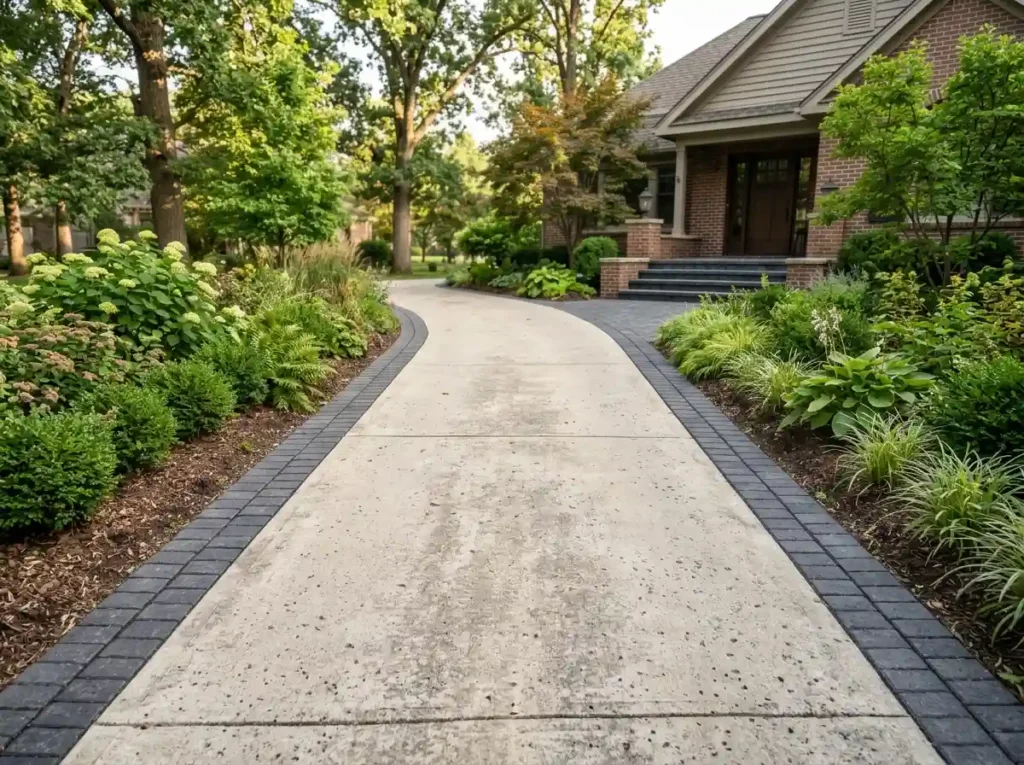
You may not need to replace an old concrete or asphalt driveway. A contrasting border can give it a fresh look.
Use brick, stone, or pavers along each edge. The border defines the driveway and creates a clear break between paving and plants.
Match the border to another part of the home. You could repeat the color of the front steps, brick walls, roof, or front door.
Common pairings include:
- Red brick with a traditional home
- Dark pavers around pale concrete
- Natural stone beside a cottage garden
- Simple gray blocks beside a modern house
The border needs proper support. Loose units may shift when tires pass over them.
Keep the design simple. Several border colors can make a small area look broken into pieces.
Best for: Older driveways that are still in usable condition
Maintenance: Low
Add a Separate Walkway Beside the Driveway
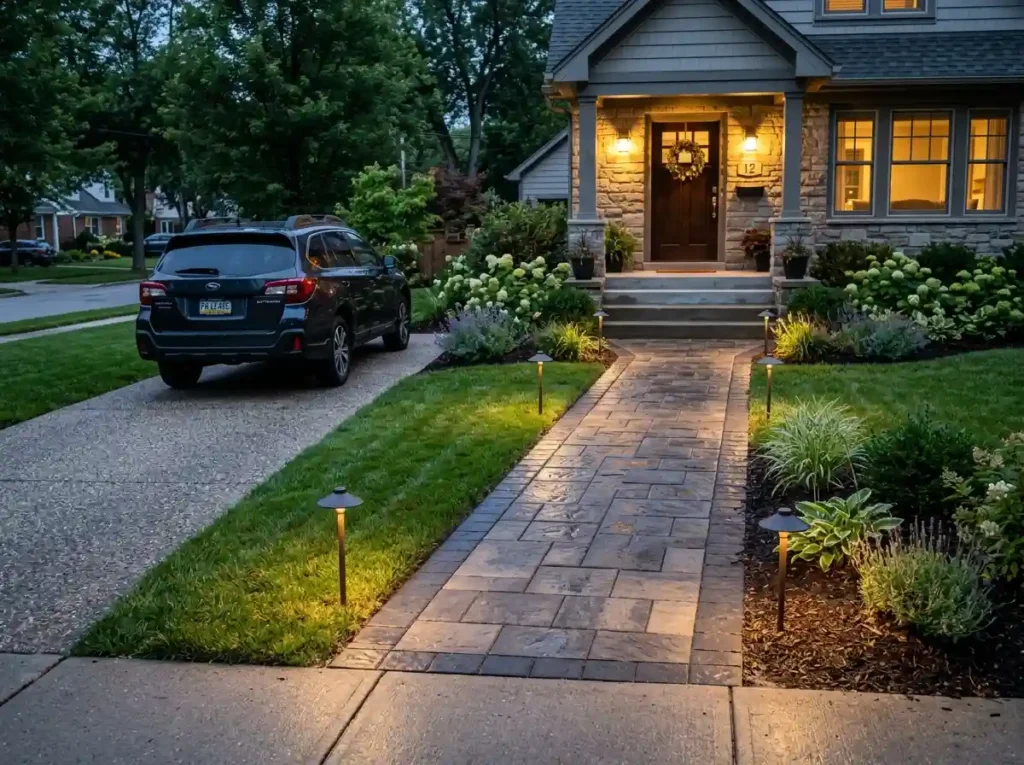
Visitors often walk on the driveway because there is no clear path to the front door. This can feel unsafe when cars are parked nearby.
A slim walkway gives people their own route. It also makes the entrance easier to find.
You can use stepping stones, small pavers, brick, or a narrow solid path. The surface should be level and easy to walk on.
Place the path where people naturally leave their cars. Do not make them cross a wet lawn or step through a flower bed.
The path should connect to the front steps without sharp turns. Add low lighting if guests use it after dark.
Leave enough room between the path and driveway for vehicle doors. Test the layout before installation.
Best for: Homes where the driveway is the main walking route
Maintenance: Low
Choose driveway materials for more than looks. Think about traction, drainage, vehicle weight, repairs, and the quality of the base below.
3 Ways to Add Curb Appeal Without Crowding the Driveway
A small front yard does not need many decorations. One clear focal point often works better than several small features.
Build a Small Mailbox Garden
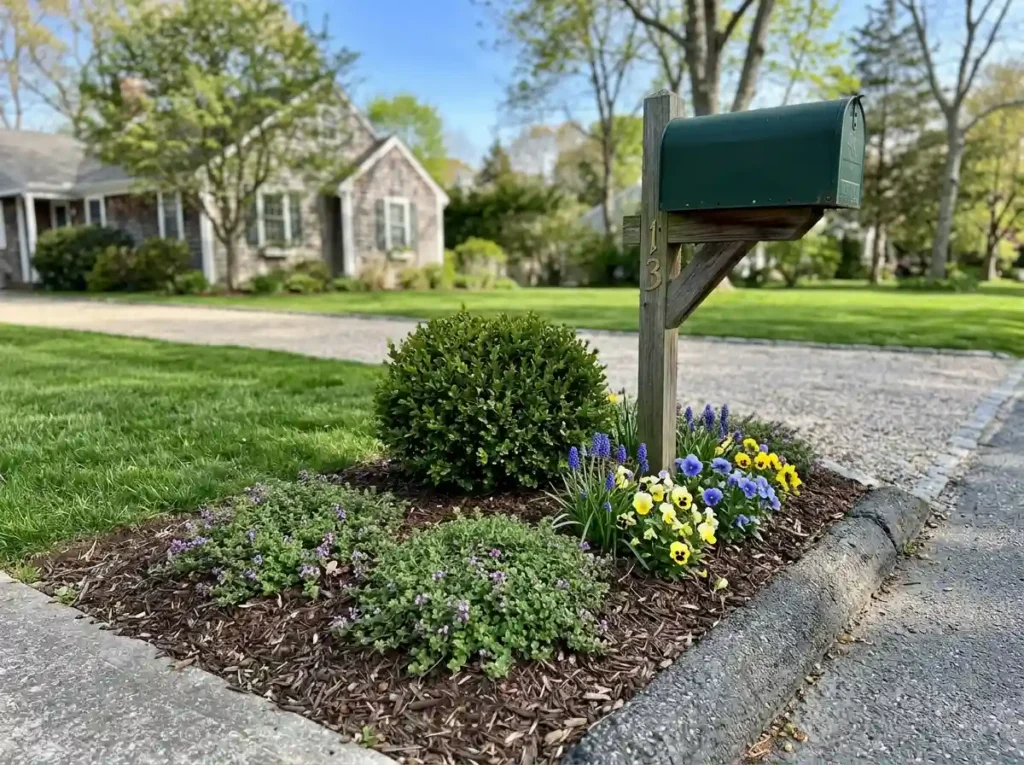
A compact mailbox garden can add color near the street. It also marks the start of the property.
Keep the bed small and easy to see around. One compact shrub, low groundcover, and a few seasonal flowers may be enough.
Choose plants that can handle heat, dust, wind, and road spray. In colder areas, they may also need to handle road salt.
Do not block access to the mailbox. Delivery workers should be able to reach it without stepping into plants.
Keep the bed away from the driveway’s turning area. Tall plants may also block your view of traffic.
Check local rules before building near the street or sidewalk.
Best for: Front yards with a freestanding mailbox
Maintenance: Moderate
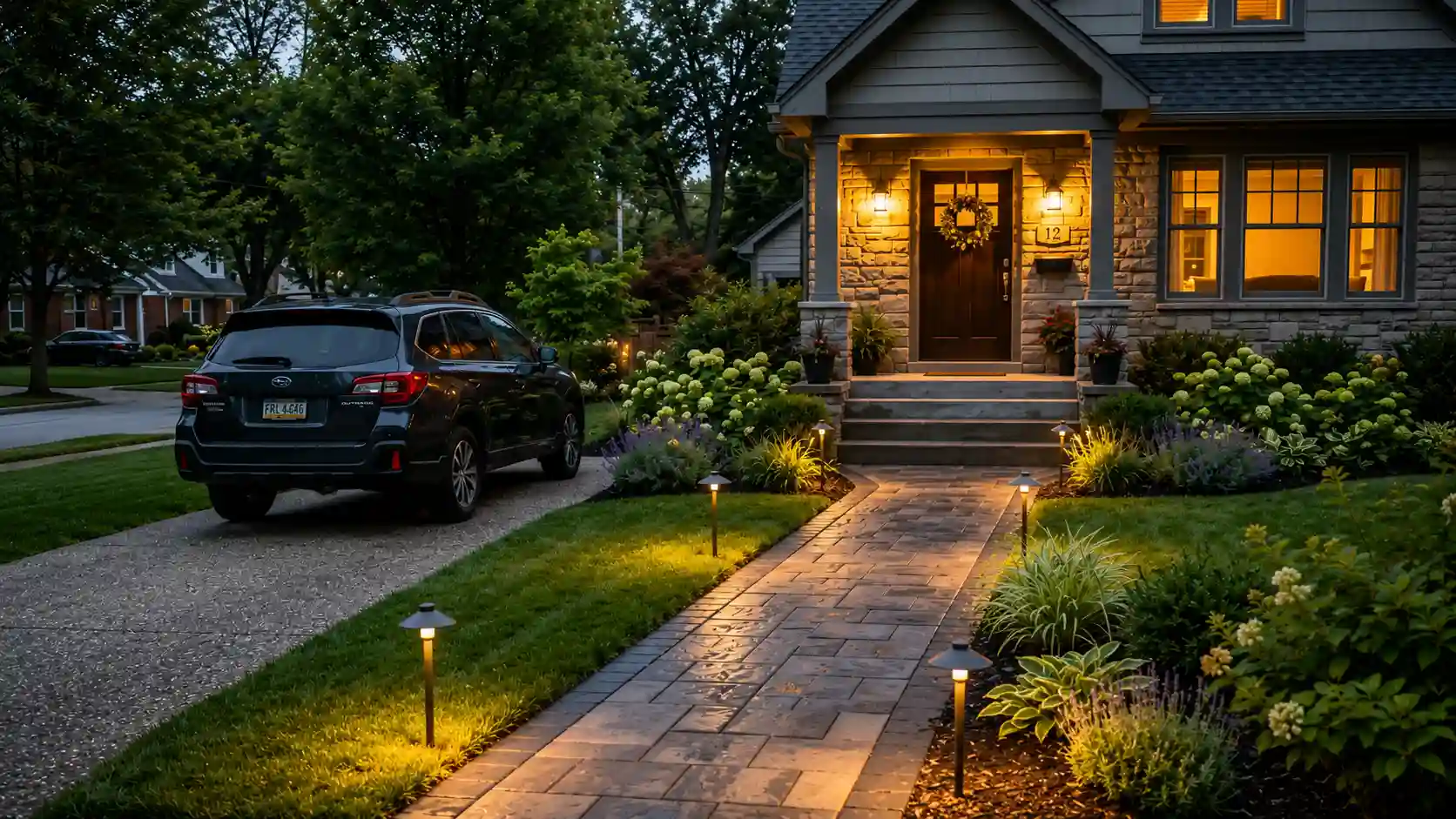
Install Simple Driveway Lighting
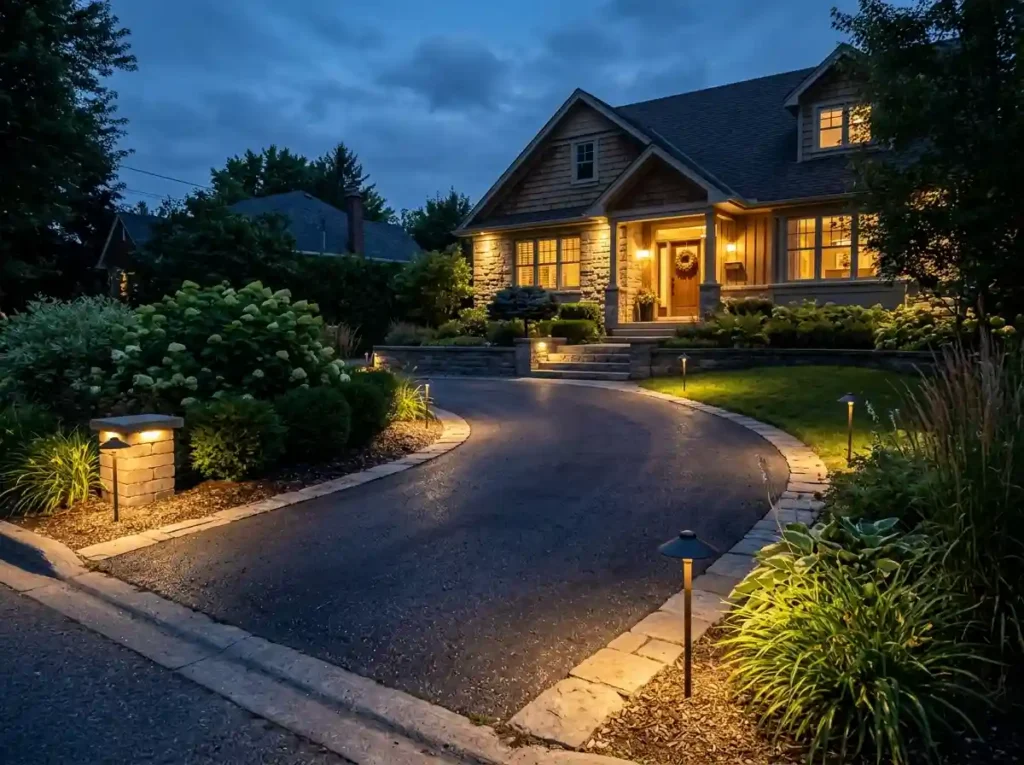
Good lighting helps people see driveway edges, steps, and changes in height. It can also make the entrance feel more welcoming.
You do not need a long row of bright fixtures. A few lights in the right places can work better.
Useful options include:
- Low path lights
- Lights built into pavers
- Small downlights
- House-number lighting
- Motion lights near the garage
Aim lights at paths, plants, or the ground. Do not point them into drivers’ eyes or nearby windows.
Solar lights are easy to install, but they may be dim after cloudy days. Low-voltage wired lights often give steadier results.
Keep fixtures away from tires, lawn equipment, and snow-clearing paths.
Best for: Dark driveways and homes with evening visitors
Maintenance: Low
Use a Slim Screen or Vertical Trellis
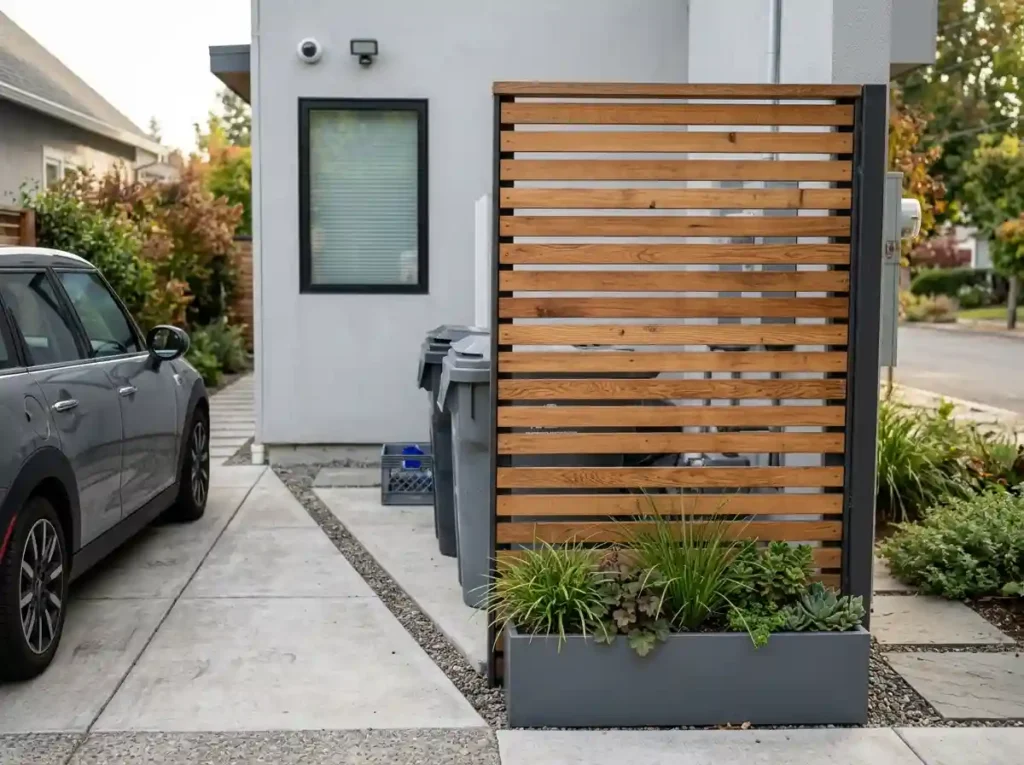
A narrow screen can hide bins, utility boxes, or a plain wall. It adds height without taking up much ground space.
Wood slats can create a clean, modern look. A metal trellis can support a small climbing plant. A narrow panel may also hold house numbers.
Keep the screen outside the car-door zone. It should not block windows, cameras, or the driver’s view of the street.
Choose climbing plants with care. Some grow fast and need regular cutting. Others can enter gutters, siding, or roof gaps.
A plain screen without vines may be easier to manage. You can soften it with one narrow planter at the base.
Best for: Driveways beside bins, walls, or utility areas
Maintenance: Low to moderate
One strong focal point usually has more impact than several items competing for attention. Choose one feature and let it stand out.
2 Low-Maintenance Small Front Yard Driveway Ideas
A design may look good when it is new. But it can become a burden if it needs constant watering, sweeping, cutting, and weeding.
These ideas solve practical problems while keeping regular work under control.
Add a Rain Garden or Drainage Strip
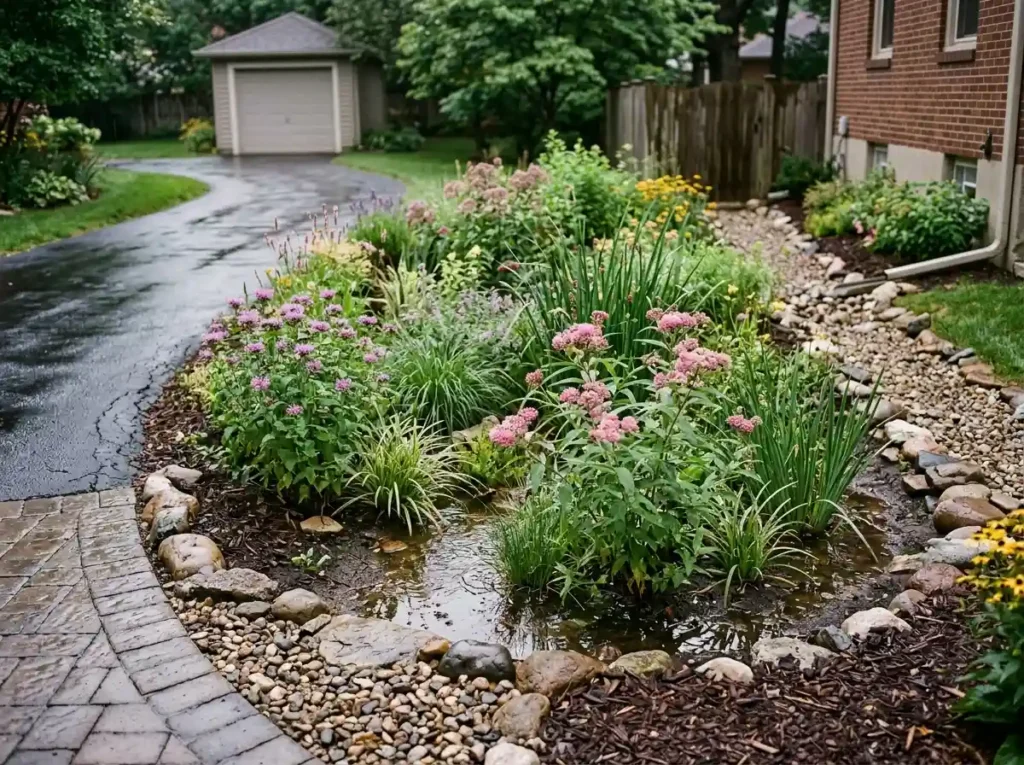
Water can collect beside a driveway or flow across the yard after a storm. A shallow rain garden or stone drainage strip may help manage it.
A rain garden is a planted low area that holds water for a short time. The water then soaks into the soil.
A drainage strip may use gravel, stone, or plants along the driveway edge. It can guide water away from paths and low spots.
The correct location depends on the slope, soil, pipes, and nearby foundations. Do not place a rain garden directly against the house.
This is not a fix for every water problem. Get professional help if water reaches the foundation, causes erosion, or flows onto another property.
Choose plants that can handle both wet and dry periods.
Best for: Driveways with minor runoff or puddle problems
Maintenance: Low to moderate
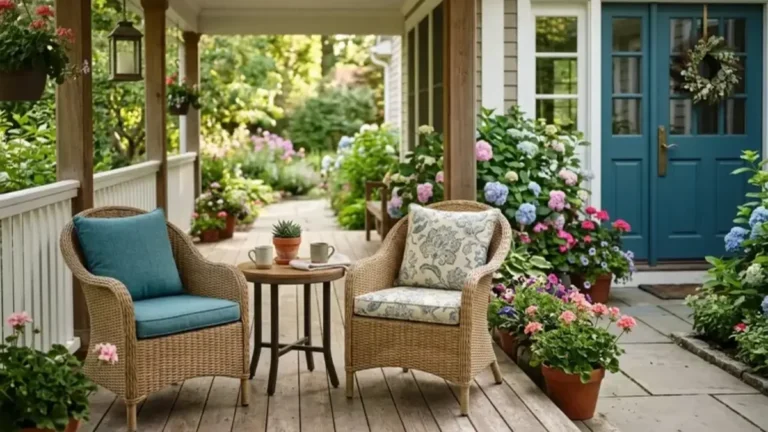
Use Matching Container Planters
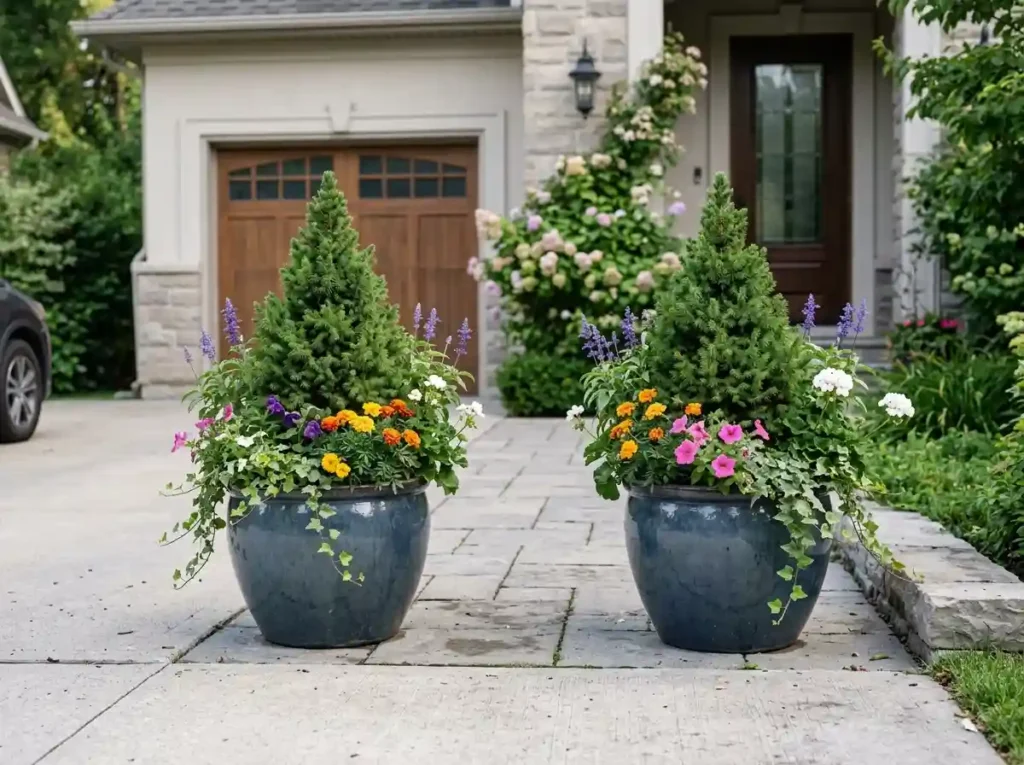
Containers add color without changing the driveway or digging a new bed. They are also useful for renters.
Use one or two matching pots instead of many small containers. A simple pair can make the entrance feel balanced.
Good locations include:
- Beside the garage
- Near the front steps
- Against a blank wall
- At the start of the front path
Do not place pots where car doors open or where people need to walk. Heavy containers should sit on a firm, level surface.
Choose plants based on sunlight and watering needs. Small pots dry out fast during hot weather. Larger pots hold moisture longer but may be hard to move.
An evergreen center plant with seasonal flowers can provide color for much of the year.
Best for: Renters and homeowners who want a flexible option
Maintenance: Moderate
For easier upkeep, use fewer plant types and strong edging. Choose plants that fit the site instead of trying to force the wrong plant to grow there.
How to Pick the Best Idea for Your Property
The prettiest option in a photo may not be the right one for your home. Start with the problem you need to solve.
Ask yourself these five questions:
- How much usable width do I have?
- Does water collect or run across the driveway?
- Where do passengers step out of the car?
- How much weekly care can I manage?
- Which colors and materials already appear on my home?
Use your main need to narrow the choices.
| Your Main Need | Ideas to Consider |
| Very limited space | Groundcover, slim flower bed, vertical screen |
| Lower budget | Containers, gravel, curved border |
| Better drainage | Permeable pavers, drainage strip, rain garden |
| Less upkeep | Paver border, compact shrubs, simple lighting |
| Modern style | Ornamental grasses, gray pavers, wood slat screen |
| Traditional style | Brick edging, low hedge, mailbox garden |
| Safer walking | Separate path, tapered entrance, path lights |
A simple formula can help:
Main problem + available space + maintenance level + budget = your best starting idea.
Start with one useful change. Then add one smaller feature that supports it.
For example, install a walkway first. Add lighting later. Or create a narrow border first, then add one matching planter near the door.
You do not need to complete the whole yard at once.
10 Mistakes That Make a Small Driveway Feel Smaller
Small yards need clear lines and open space. Too many features can make the area feel tight.
Avoid these common mistakes:
- Choosing plants that grow too wide. Check the mature size before planting.
- Using tall plants near the street. They may block traffic views.
- Placing pots beside car doors. Test the door space first.
- Using loose gravel without edging. Stones may spread across the lawn.
- Mixing too many colors. Use two or three main materials.
- Ignoring standing water. It can damage plants and surfaces.
- Building a path that leads into a parked car. Watch how people already move.
- Planting large trees near paving. Roots may lift or crack surfaces.
- Using lights that cause glare. Aim fixtures at the ground.
- Filling every empty area. Open space makes a small yard feel larger.
Compare these two designs.
The first has six plant types, several pots, decorative stones, bright lights, and a raised border. Each item may look fine alone. Together, they can make the yard feel busy.
The second uses one low shrub, repeated groundcover, and a simple paver edge. It feels wider because your eyes can follow clear lines.
And here’s why that matters. A small-yard design should support the driveway, not fight for space with it.
Before installing anything:
- Open all car doors.
- Walk your normal route to the house.
- Check the view of the street.
- Watch where water flows.
- Mark the plan at full size.
- Check the mature plant width.
- Review local property and drainage rules.
The goal is not to fill every open spot. The goal is to make the driveway and front yard work as one clear space.
Final Thoughts
A compact driveway can still have plants, useful lighting, better drainage, and a clear path to the front door. The key is to choose features that fit the available space.
Measure first. Check how people and cars move. Then choose the idea that solves your biggest problem.
You may start with a narrow flower border, a paver edge, or two matching planters. Larger projects, such as permeable paving or a parking pad, may need professional help.
The best small front yard driveway ideas improve curb appeal without making parking harder. Keep the layout simple, leave room around the car, and add each feature for a clear reason.