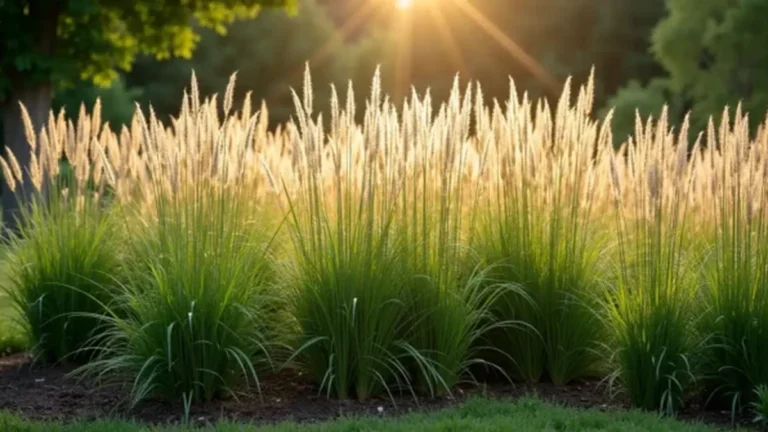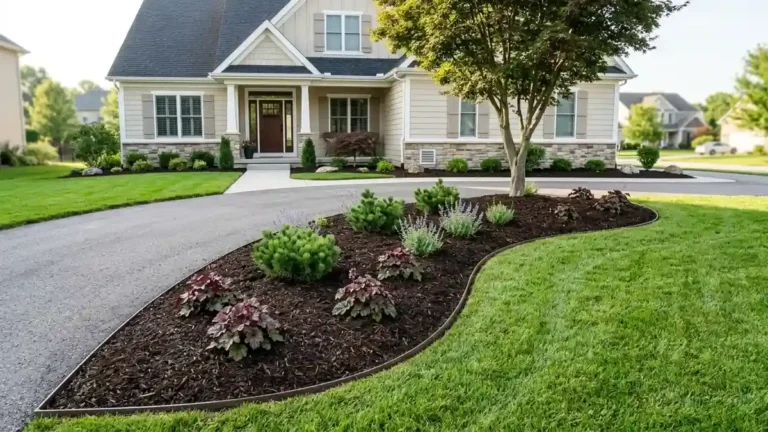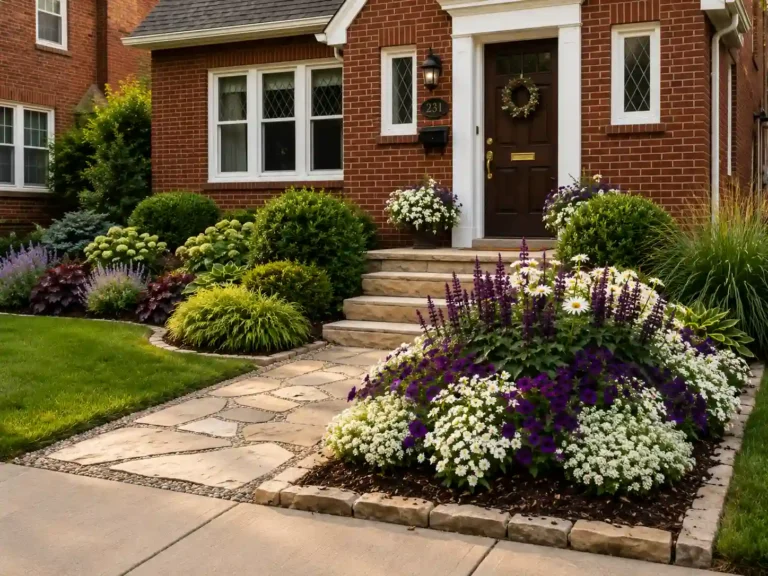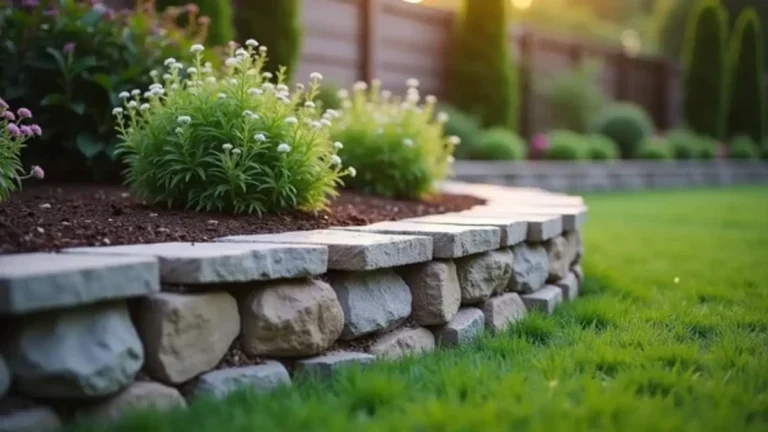
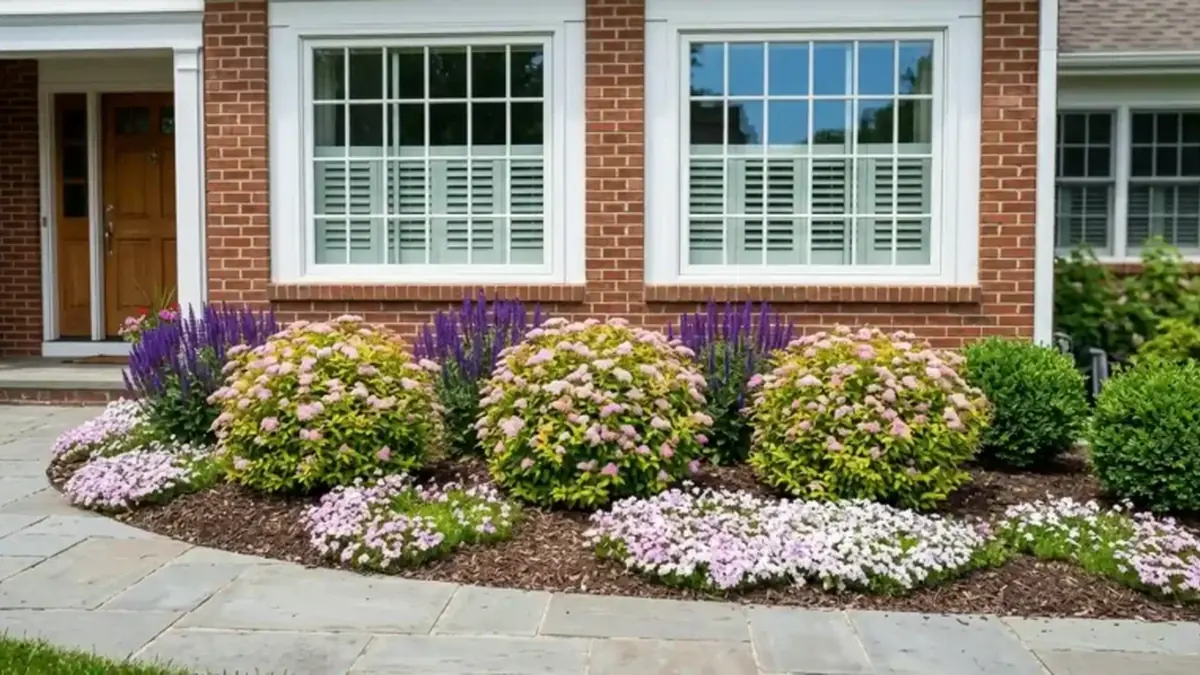
18 Low Maintenance Landscaping Plants for Front of House
Your front yard should improve your home’s appearance. It should not create a long list of weekend chores.
The wrong plants can turn a simple garden bed into constant work. You may spend hours pruning branches, treating plant diseases, pulling weeds, and replacing plants that failed.
Choosing the right low maintenance landscaping plants for front of house areas helps you avoid these problems. The right plants fit your sunlight, soil, climate, and available space.
Plant choice can also affect water use. Homes across the United States use almost 8 billion gallons of water outdoors each day, mainly for landscape irrigation. Plants that fit local conditions often need less extra water once their roots are established.
This guide covers 18 evergreen shrubs, flowering plants, shade plants, and ground covers. You will also learn where to place them, what conditions they need, and what problems to check before planting.
Quick answer: Good low maintenance plants for the front of a house include dwarf boxwood, inkberry holly, juniper, panicle hydrangea, spirea, lavender, catmint, coneflower, sedum, hosta, coral bells, and creeping thyme. The best choice depends on sunlight, drainage, mature plant size, and local weather.
Compare These 18 Easy Front Yard Plants
| Plant | Best Light | Typical Size | Best Use | Main Concern |
| Dwarf boxwood | Sun to part shade | 2–3 feet | Low hedge | Disease and winter damage |
| Inkberry holly | Sun to part shade | 3–8 feet | Evergreen foundation shrub | May become bare at the base |
| Dwarf juniper | Full sun | 1–3 feet | Dry slopes and hot beds | Dislikes wet soil |
| Panicle hydrangea | Sun to part shade | 3–15 feet | Corner or anchor plant | Full-size types grow large |
| Spirea | Full sun | 2–4 feet | Below windows | Some types spread |
| Glossy abelia | Sun to part shade | 3–5 feet | Informal hedge | May lose leaves in cold areas |
| Lavender | Full sun | 1–3 feet | Walkway border | Dislikes wet and humid sites |
| Catmint | Full sun | 1–2 feet | Soft edging | May spread over nearby plants |
| Perennial salvia | Full sun | 1–3 feet | Upright flower color | Needs good drainage |
| Coneflower | Sun to part shade | 2–4 feet | Pollinator bed | Can reseed |
| Black-eyed Susan | Full sun | 2–3 feet | Mass planting | May spread into large clumps |
| Autumn Joy sedum | Full sun | 1–2 feet | Late-season color | Flops in rich or wet soil |
| Hosta | Part to full shade | 6 inches–4 feet | Shaded foundation bed | Deer and slugs |
| Coral bells | Part shade | 8–12 inches | Colorful edging | Heat and wet soil |
| Japanese forest grass | Part to full shade | 1–2 feet | Shaded paths | Needs steady moisture |
| Creeping thyme | Full sun | 2–3 inches | Path edges | Becomes woody over time |
| Creeping phlox | Full sun | 4–6 inches | Slopes and walls | Short main bloom season |
| Liriope | Sun to shade | 1–1.5 feet | Walkway edging | Some species spread fast |
Plant sizes vary by species and cultivar. Always check the mature height and width on the exact plant label.
How to Choose Plants That Stay Easy to Manage
A plant is not low maintenance simply because it can survive with little care. It must also fit the place where you plan to grow it.
Use this five-point test before buying any plant.
1. Check the Sunlight
Watch the planting area during the morning, midday, and afternoon.
A spot with at least six hours of direct sun is usually called full sun. Partial shade often receives two to six hours of direct light.
Remember that sunlight changes during the year. A bed may receive full sun in spring but become shaded when nearby trees grow leaves.
2. Measure the Available Space
Measure the height from the ground to the bottom of each window. Then measure the depth and width of the planting bed.
Do not judge a plant by its nursery pot. A small shrub can grow several feet tall and wide.
Leave space around vents, water taps, utility meters, and air-conditioning equipment. You should be able to reach these areas without cutting through branches.
3. Test the Drainage
Dig a small hole and fill it with water. Watch how quickly the water drains.
Lavender, juniper, salvia, sedum, and creeping thyme can suffer in wet soil. Inkberry holly and Japanese forest grass can handle more moisture, but they should not sit in standing water.
4. Check Your Climate Zone
The USDA Plant Hardiness Zone Map shows the average lowest winter temperature for locations in the United States. It can help you find perennial plants that are more likely to survive your winters.
Your zone is a starting point. Summer heat, humidity, wind, rainfall, and soil also affect plant health.
5. Plan for the First Two Years
Drought-tolerant does not mean a new plant can be ignored.
New trees and shrubs often need close moisture checks during their first two years. Water deeply when the soil below the surface feels dry, but do not leave roots sitting in water.
Once you know your conditions, you can select plants that give you year-round structure.
3 Evergreen Foundation Plants for Year-Round Structure
Evergreen plants help your front yard look complete when other plants are bare or dormant.
Use them as the main structure of your design. Add flowering plants and ground covers around them.
1. Dwarf Boxwood Keeps Foundation Beds Neat
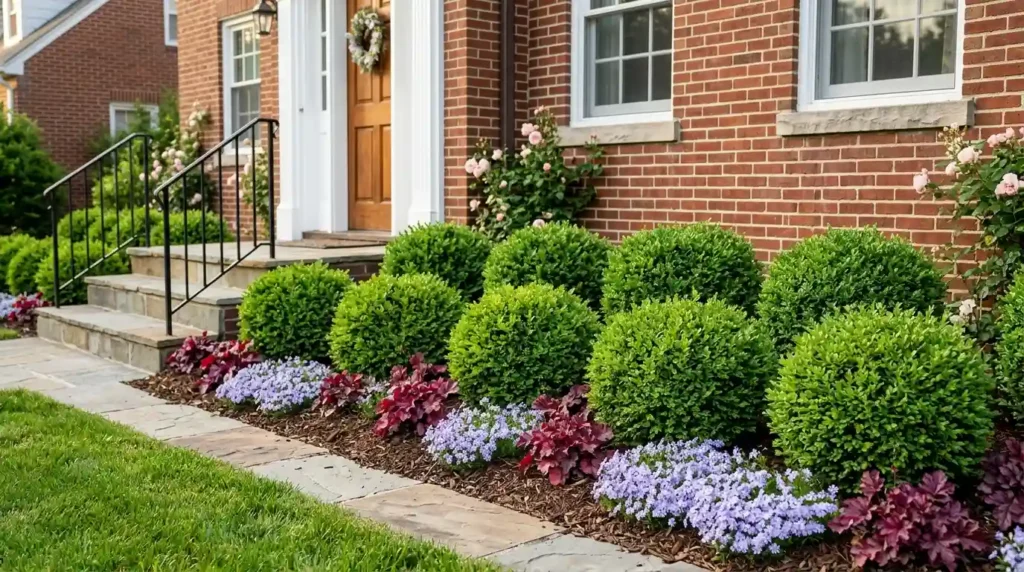
Dwarf boxwood is a good choice when you want a clean and formal look. Its small evergreen leaves form a dense mound.
The compact ‘Suffruticosa’ boxwood often grows about 2 to 3 feet tall and 2 to 4 feet wide. It grows slowly, so it does not need constant trimming.
Best for: Low hedges, front entries, formal paths, and spaces below windows
Light: Morning sun or partial shade
Best placement: Beside steps or in repeated groups along the foundation
Pairs well with: Coral bells, catmint, and creeping phlox
Boxwood is not perfect. It can suffer from winter burn, mites, and disease in some areas. Avoid planting it where strong winter wind or hot afternoon sun can dry the leaves. Check with a local nursery for resistant cultivars.
Inkberry Holly Offers a Softer Evergreen Look
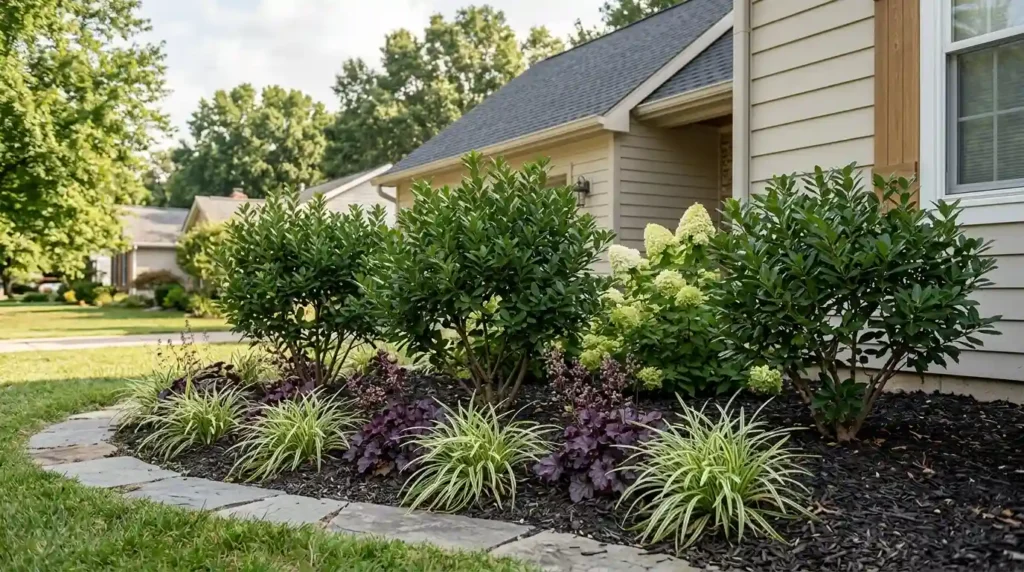
Inkberry holly has smooth leaves and a relaxed shape. It works well when traditional boxwood looks too formal for your home.
The straight species can reach 5 to 8 feet. Compact cultivars are better for many front yards. Read the label carefully because height and shape vary.
Best for: Native-style gardens, informal hedges, and foundation anchors
Light: Full sun to partial shade
Best placement: Near blank walls, corners, or wider foundation beds
Pairs well with: Panicle hydrangea, coral bells, and liriope
Inkberry prefers acidic soil and can handle more moisture than juniper or lavender. Some older plants become bare near the bottom. Choosing a dense cultivar and avoiding hard trimming can reduce this problem.
Dwarf Juniper Handles Hot, Dry Beds
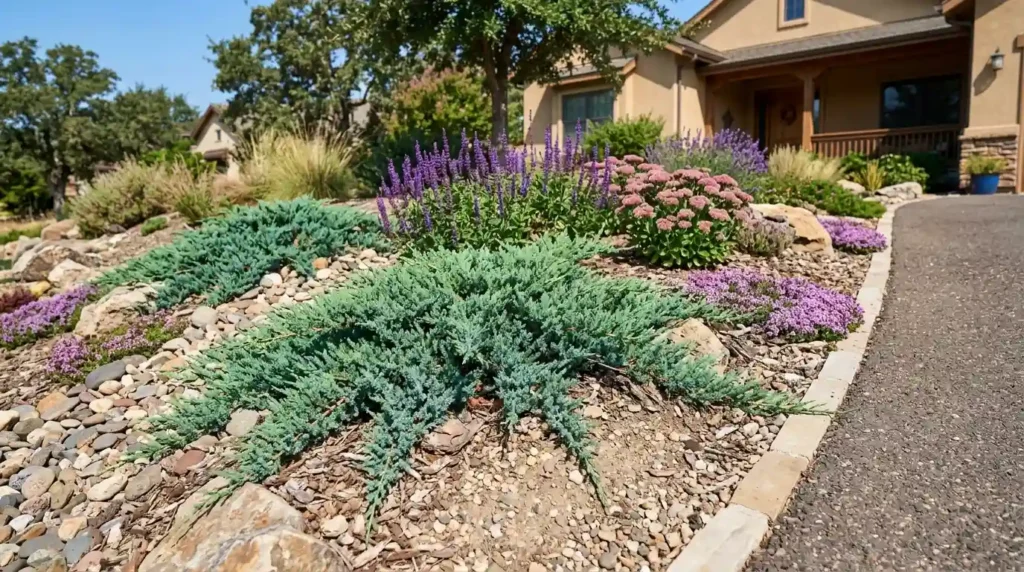
Dwarf juniper works well beside hot walls, sunny driveways, and dry slopes. Its blue-green or deep-green foliage adds color all year.
Many low-growing forms spread wider than they grow tall. This makes them useful for wide beds and banks.
Best for: Sunny slopes, dry foundation beds, and erosion control
Light: Full sun
Best placement: Open areas with strong airflow
Pairs well with: Salvia, sedum, and creeping thyme
Juniper usually needs little pruning when you choose the right size. Do not plant it in heavy soil that stays wet. Poor drainage can lead to root problems and branch loss.
Choose a compact cultivar instead of cutting a large juniper into a small shape every year.
These three plants meet different needs. Use boxwood for a formal shape, inkberry for a softer hedge, and juniper for dry sunny sites.
3 Flowering Shrubs That Add Color With Less Work
Flowering shrubs can provide more color than small annual flowers. They also return each year.
The key is choosing a shrub that fits your bed at its mature size.
Panicle Hydrangea Creates a Strong Focal Point
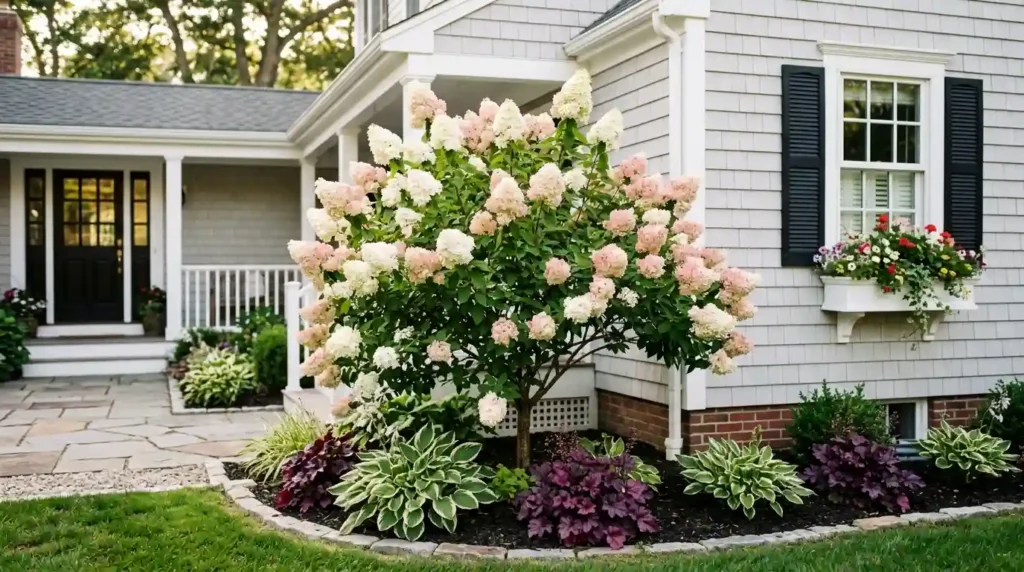
Panicle hydrangea produces large cone-shaped flower clusters during summer. The flowers often start white and change color as they age.
It handles more sun and cold than many bigleaf hydrangeas. It also flowers on new growth. This means winter damage to older stems is less likely to remove the full flower display.
Best for: House corners, wide beds, and large gaps between windows
Light: Morning sun with afternoon shade or full sun in cooler areas
Best placement: Behind shorter perennials
Pairs well with: Inkberry holly, coral bells, and hosta
The main problem is size. The species can grow 8 to 15 feet tall, while compact cultivars may stay around 3 to 5 feet. Check the exact cultivar before planting it below a window.
Prune it in late winter or early spring if needed. Avoid cutting it into a tight ball. Its natural form usually looks better.
Compact Spirea Adds Flowers and Colorful Leaves
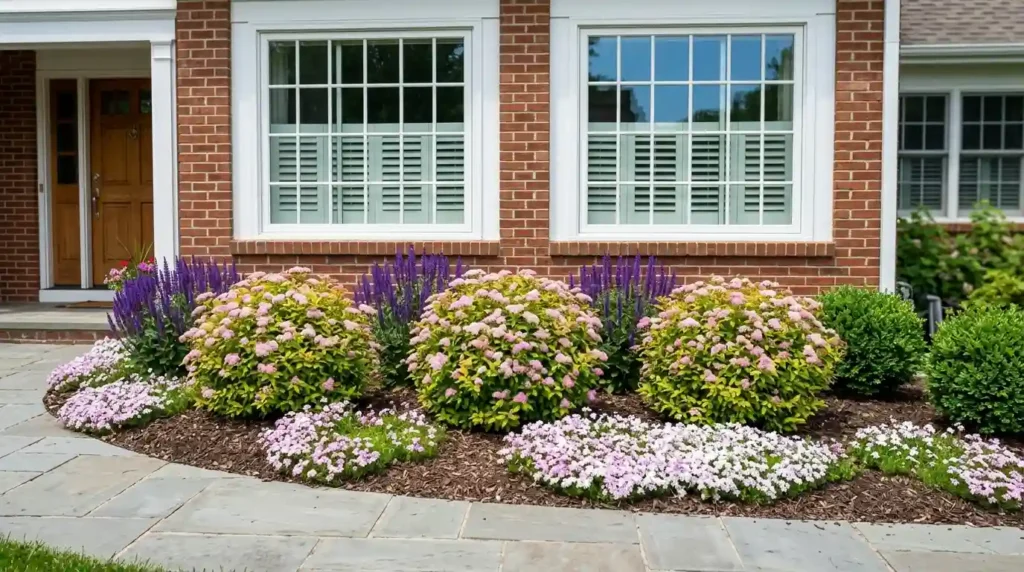
Compact spirea forms a rounded shrub that fits well below windows. Depending on the cultivar, its leaves may be green, gold, orange, or red.
Many compact forms grow about 2 to 4 feet tall and wide. Pink flowers appear from late spring into summer.
Best for: Low foundation beds and sunny walkways
Light: Full sun for the best flowers and leaf color
Best placement: Repeated groups of three rather than single plants
Pairs well with: Dwarf boxwood, salvia, and creeping phlox
Some cultivars need little or no shaping. Others benefit from light pruning in late winter.
Japanese spirea can escape gardens and is listed as invasive in several parts of the eastern United States. Check your local invasive plant list before buying it. A compact cultivar may produce fewer seedlings, but it is still important to follow local guidance.
Glossy Abelia Blooms for Months
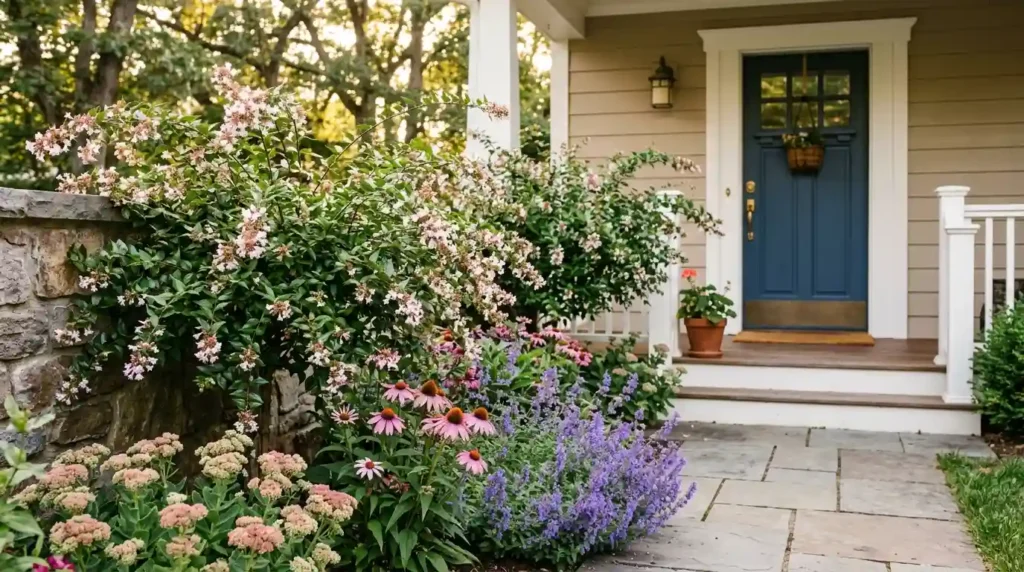
Glossy abelia has arching branches, small leaves, and pale flowers. Its open shape feels softer than a clipped hedge.
Some cultivars flower from spring through fall. The flowers attract bees and other pollinators.
Best for: Informal gardens, porches, and loose hedges
Light: Full sun to partial shade
Best placement: A spot where its arching branches have room
Pairs well with: Catmint, coneflower, and sedum
Compact forms often grow 3 to 5 feet tall. Glossy abelia may remain evergreen in warm areas. It can lose leaves or suffer branch dieback during cold winters.
Prune damaged stems in late winter. Avoid constant trimming, since this removes the plant’s natural arching shape.
Use panicle hydrangea as a bold anchor. Use compact spirea below windows. Give abelia more room beside porches or blank walls.
3 Low Maintenance Plants for a Sunny Front Yard
A sunny bed beside brick, stone, or concrete can become hot and dry.
Choose plants that enjoy full sun and drain well. These plants still need water while their roots are growing.
Lavender Adds Fragrance Beside Walkways
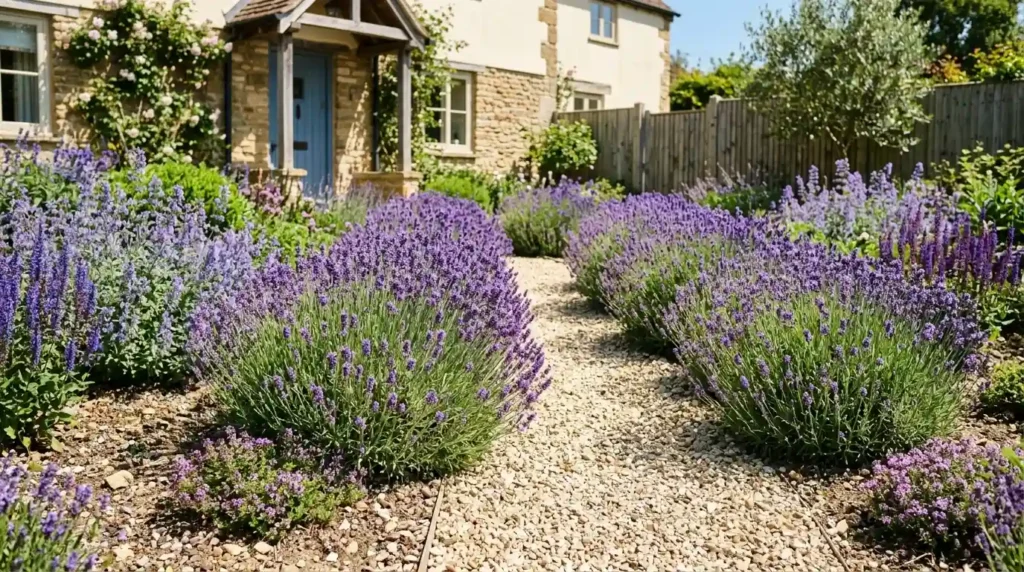
Lavender gives you silver-green leaves, purple flowers, and a clean scent. It works well beside paths where you can enjoy its fragrance.
Most types prefer at least six hours of sun. They also need sandy, gritty, or rocky soil that drains fast.
Best for: Dry borders, sunny paths, and gravel gardens
Light: Full sun
Typical size: About 1 to 3 feet, depending on the type
Pairs well with: Catmint, salvia, and creeping thyme
Lavender can be easy in a dry climate and difficult in a humid one. Heavy clay, deep shade, and wet winter soil can shorten its life.
Trim it lightly after flowering. Do not cut far into old woody stems. English lavender and its hybrids are often hardier than French lavender.
Catmint Softens Hard Walkway Edges
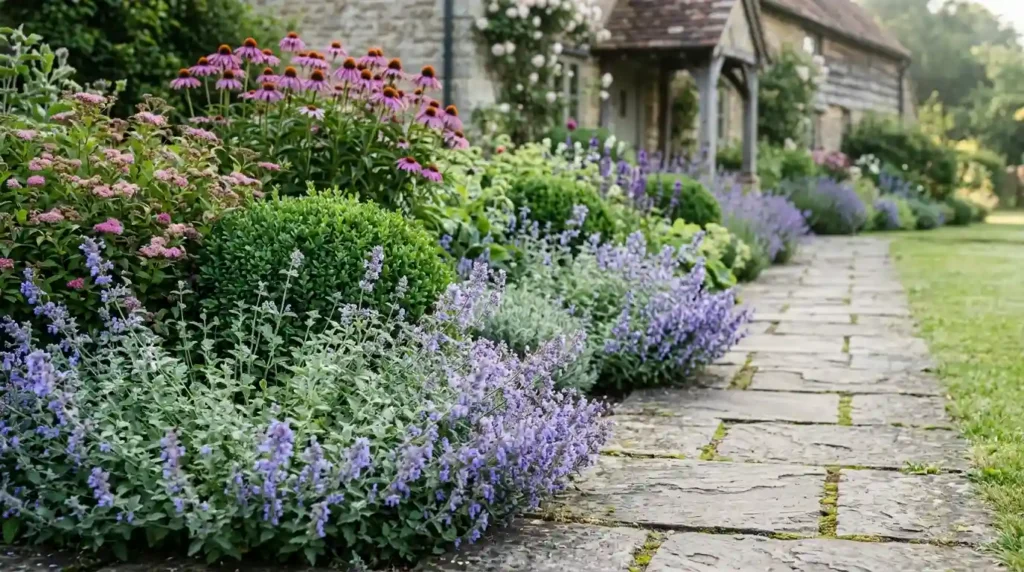
Catmint forms a loose mound of gray-green leaves covered with blue or purple flowers.
Its soft shape looks good beside straight paths and stone borders. It can also hide the bare base of taller shrubs.
Best for: Sunny borders, informal edging, and cottage-style beds
Light: Full sun, with some afternoon shade in very hot areas
Typical size: About 1 to 2 feet tall and wide
Pairs well with: Boxwood, spirea, and coneflower
Catmint grows in several soil types, but drainage matters. It becomes more drought-tolerant after its roots are established.
Trim faded flowers after the first major bloom. This tidies the plant and may produce another flush of flowers. Some varieties spread wider than expected, so keep them away from narrow paths.
Perennial Salvia Adds Upright Flower Spikes
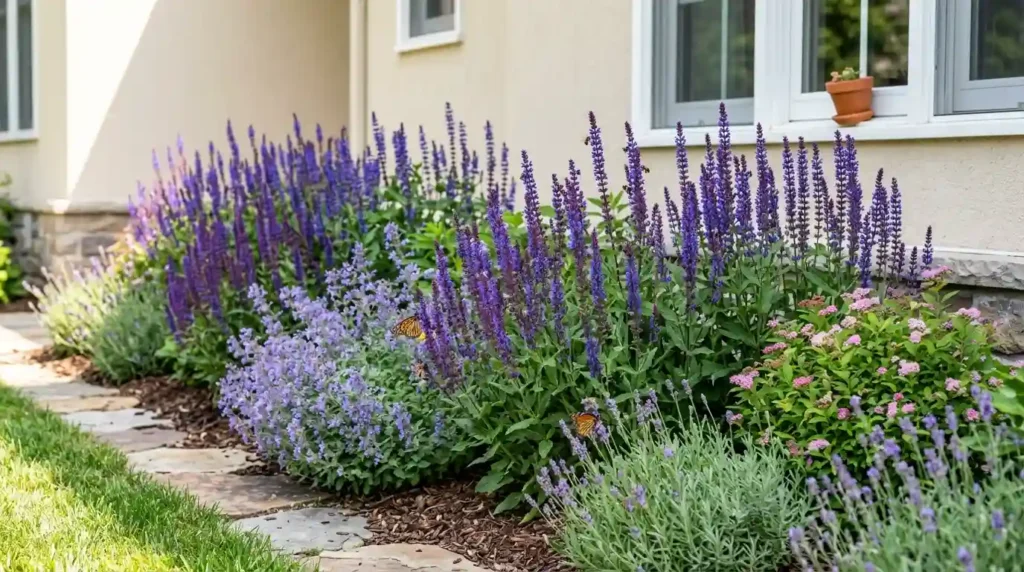
Perennial salvia brings height to a bed without taking up much ground space. Its upright flowers balance the round shapes of boxwood, catmint, and spirea.
Blue, purple, pink, and white cultivars are available.
Best for: Pollinator beds, narrow borders, and sunny paths
Light: Full sun to light shade
Typical size: About 1 to 3 feet tall
Pairs well with: Lavender, catmint, and black-eyed Susan
Salvia handles dry periods after it becomes established. It performs best in soil that drains well.
Cut brown flower stems back to the lower leaves. Many plants will produce another round of flowers. Bees, butterflies, and hummingbirds visit the flower spikes.
A mix of lavender, catmint, and salvia creates a simple purple, blue, and silver color plan. Repeat each plant in small groups for a stronger result.
3 Long-Blooming Plants That Help Pollinators
A low maintenance front yard can still provide flowers for bees, butterflies, and birds.
These perennials return each year. They usually need one main cleanup in late winter or early spring.
Coneflower Handles Heat and Dry Weather
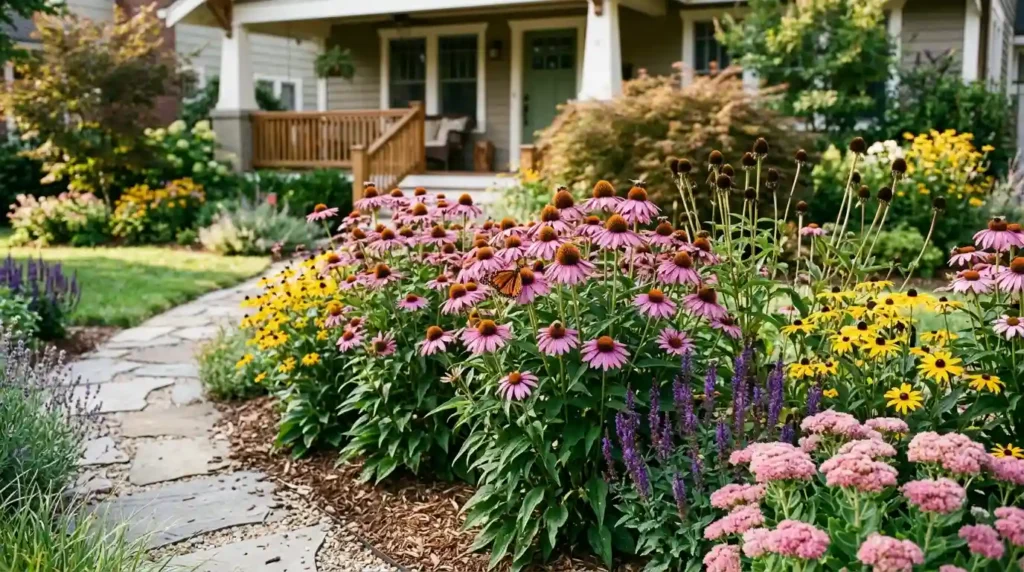
Coneflower produces strong stems topped with daisy-shaped flowers. Purple is the classic color, but modern cultivars also come in white, yellow, orange, and red.
Established plants handle heat and short dry periods well.
Best for: Pollinator gardens, sunny borders, and natural planting styles
Light: Full sun to partial shade
Typical size: About 2 to 4 feet
Pairs well with: Black-eyed Susan, salvia, and sedum
Plant coneflowers in groups rather than placing one plant alone. A group creates a clearer block of color.
You can remove faded flowers for a neater look. You can also leave some seed heads through winter for birds. Native bees may use hollow dead stems, so consider leaving part of the stems standing until spring.
Black-Eyed Susan Gives You Bold Summer Color
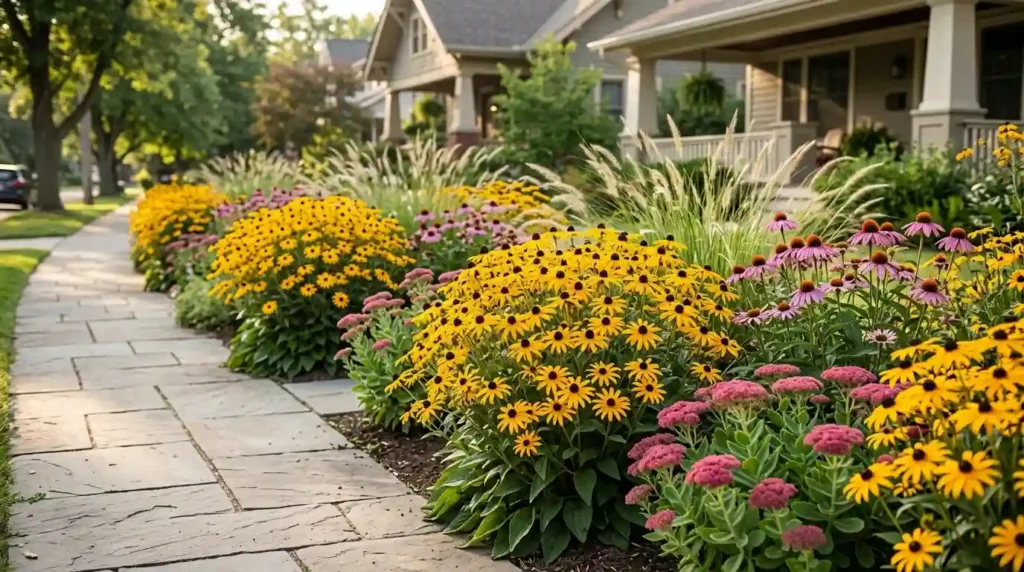
Black-eyed Susan produces yellow flowers with dark centers. Its bright color stands out from the street.
Perennial forms such as Rudbeckia fulgida are better for a permanent front yard bed than annual types.
Best for: Large groups, sunny borders, and native-style gardens
Light: Full sun, though some partial shade is accepted
Typical size: About 2 to 3 feet
Pairs well with: Coneflower, sedum, and ornamental grasses
It grows in many soils as long as they are not soggy. Established plants can handle heat, humidity, and some drought.
Black-eyed Susan spreads through underground stems and can form a large clump. Divide it when it moves beyond its planned space. Leaving seed heads through winter can feed birds and add texture.
Autumn Joy Sedum Adds Late-Season Flowers
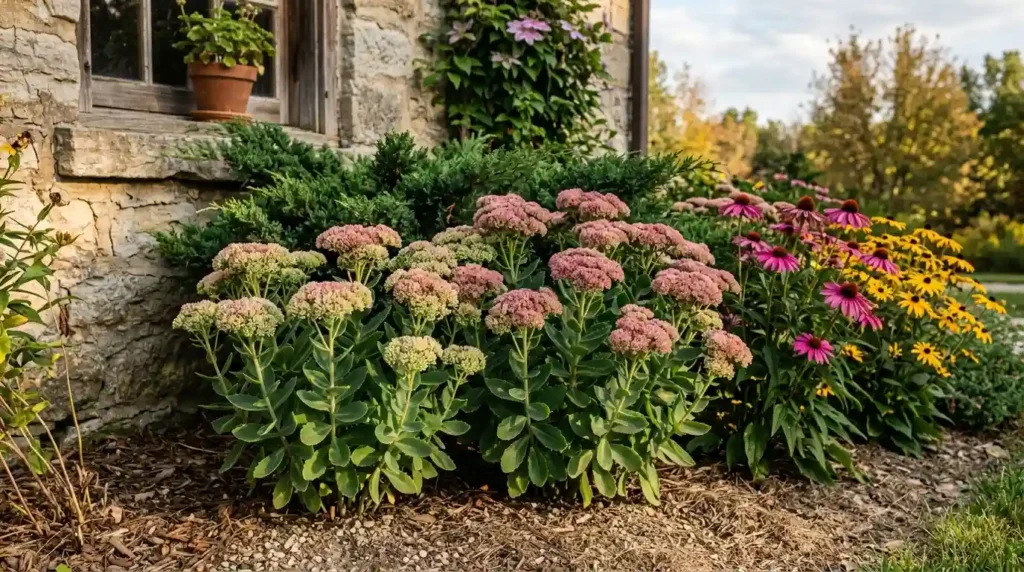
Autumn Joy sedum stays useful for much of the year.
Its thick leaves appear in spring. Flat flower clusters form in summer and turn pink later in the season. The dry flower heads can remain through winter.
Best for: Hot beds, dry borders, and late-season color
Light: Full sun, with some light shade accepted
Typical size: About 1 to 2 feet tall and wide
Pairs well with: Juniper, coneflower, and black-eyed Susan
Sedum needs little water once established. It grows best in average or low-fertility soil with good drainage.
Too much water or fertilizer can cause weak stems that fall open. Skip rich soil and heavy feeding. Cut the old stems down in late winter or early spring.
Coneflower brings summer color. Black-eyed Susan adds bright yellow flowers. Sedum keeps the display going later in the year.
3 Easy-Care Shade Plants for the Front of a House
Shaded foundation beds often look empty because full-sun plants slowly weaken there.
Shade is not the same in every yard. Some areas receive bright filtered light. Others sit in deep shade under a roof or large tree.
Hosta Fills Shaded Beds With Large Leaves
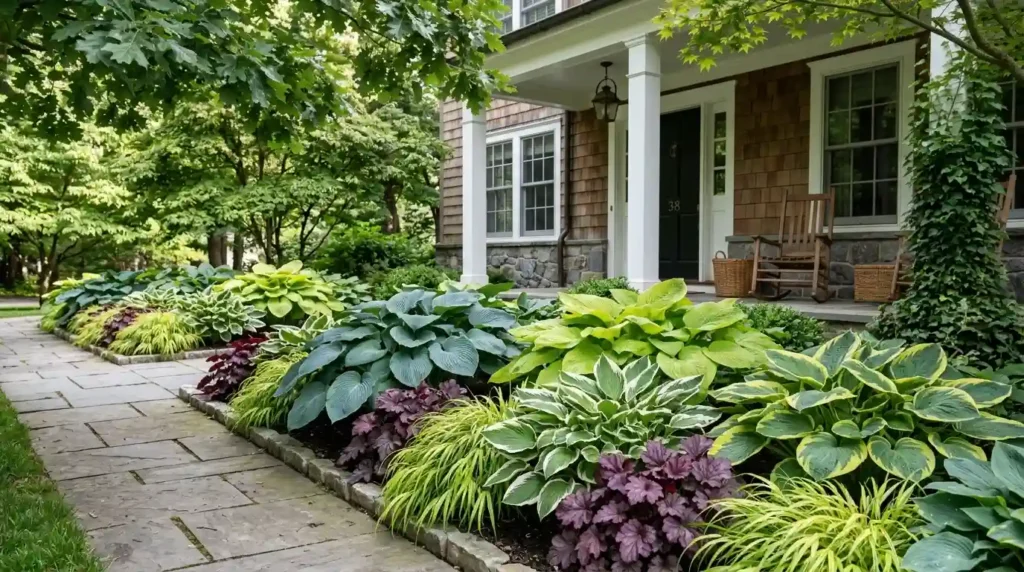
Hosta is grown mainly for its leaves. Varieties come in green, blue, gold, or mixed colors.
Some hostas stay under one foot wide. Large types can grow several feet across. Read the label before placing one near steps or narrow paths.
Best for: Shaded porches, north-facing walls, and areas under trees
Light: Light to medium shade
Best placement: Below windows or in repeated groups
Pairs well with: Coral bells, Japanese forest grass, and liriope
Hostas like moist soil that drains well. They need little care beyond removing damaged leaves and cutting dead foliage after the growing season.
However, they may be a poor low maintenance choice where deer, slugs, or snails are common. Thick-leaved cultivars may suffer less slug damage.
Coral Bells Add Color Without Needing Flowers
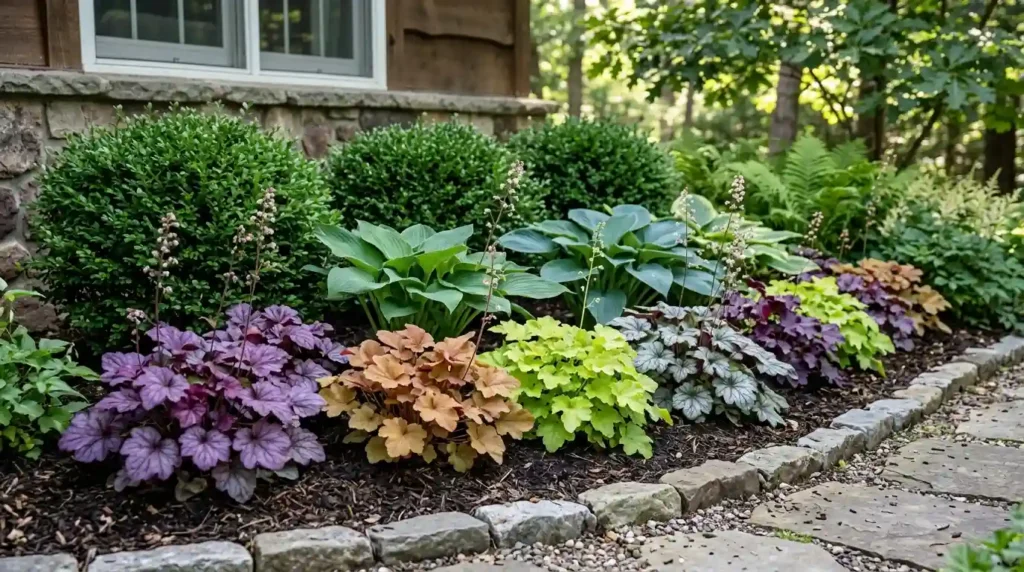
Coral bells can bring purple, caramel, green, silver, red, or lime-colored leaves to a shaded bed.
The compact plants form low mounds. Thin flower stems rise above the leaves during summer.
Best for: Edging, small beds, and spaces between shrubs
Light: Light or partial shade
Typical foliage height: About 8 to 12 inches
Pairs well with: Hosta, inkberry holly, and Japanese forest grass
Most coral bells prefer moist soil with good drainage. They dislike soil that stays very wet or becomes extremely dry.
Strong afternoon sun may burn pale leaves. Some varieties also struggle in extreme heat. Divide older plants every three or four years if the center becomes woody or weak.
Japanese Forest Grass Brightens Dark Corners
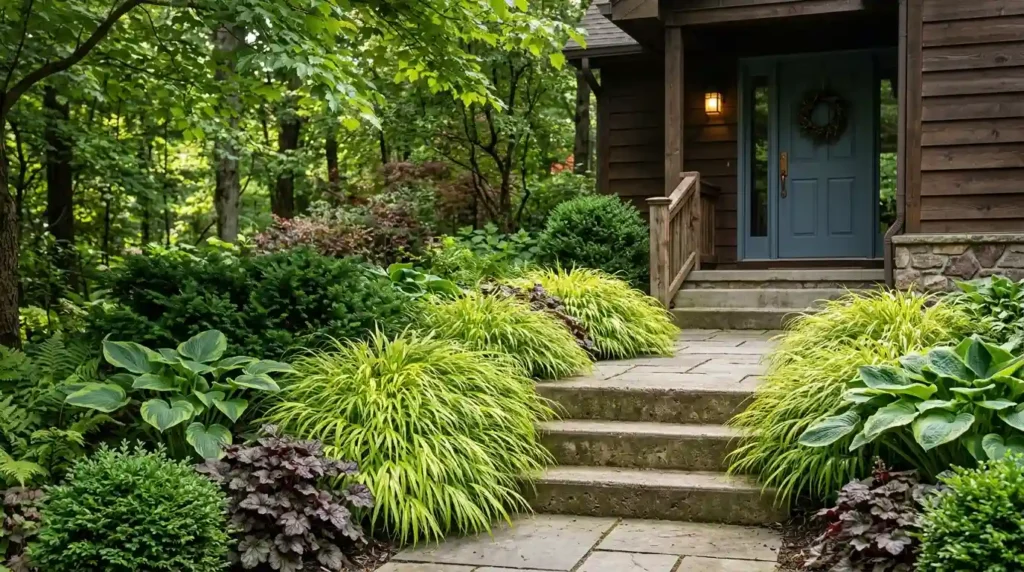
Japanese forest grass forms soft, arching mounds. Gold and striped cultivars can make a shaded entry feel brighter.
Its flowing shape looks good beside steps, rocks, and straight concrete paths.
Best for: Shaded walkways, slopes, and porch beds
Light: Partial to full shade
Typical size: About 1 to 2 feet
Pairs well with: Hosta, coral bells, and compact evergreen shrubs
This grass grows slowly and does not spread like an aggressive lawn grass. It needs rich, moist soil that drains well.
Very dry soil can cause brown edges. Hot sun may burn the leaves. Cut the old foliage to the ground in late winter before new growth appears.
Use hosta for bold leaves. Add coral bells for color. Finish with Japanese forest grass for soft movement.
3 Ground Covers That Reduce Bare Soil and Weeds
Bare spaces allow weed seeds to reach the soil. They can also make a new garden bed look unfinished.
Ground covers help fill these gaps. They reduce open soil, but they do not remove every weed.
Creeping Thyme Fits Sunny Path Edges
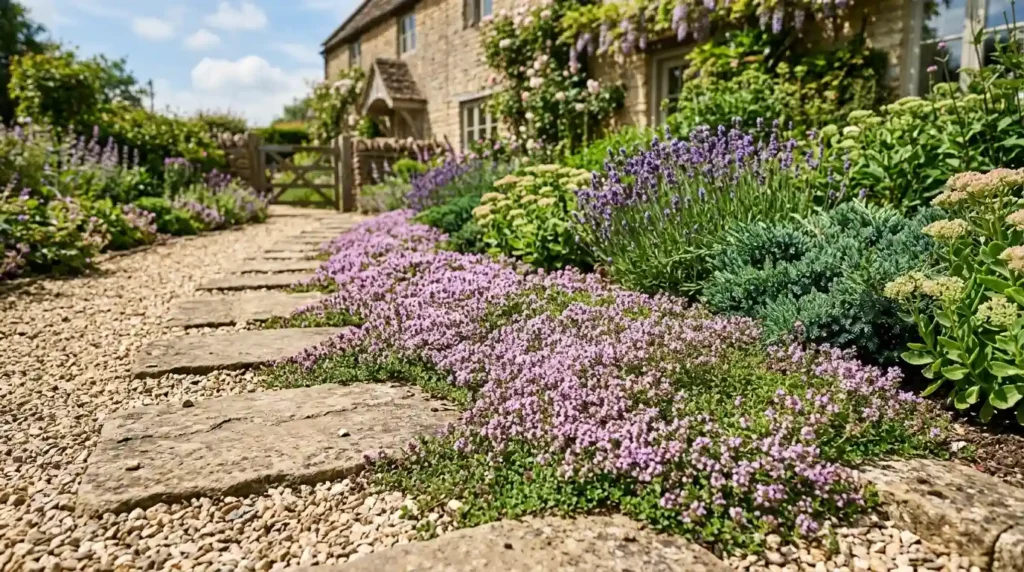
Creeping thyme forms a very low mat of small, scented leaves. Tiny pink or purple flowers appear during summer.
It can grow between stepping stones or along a dry path. It handles limited foot traffic, but it should not replace turf in a busy area.
Best for: Rock gardens, sunny paths, and dry bed edges
Light: Full sun
Typical size: 2 to 3 inches tall and up to 12 inches wide
Pairs well with: Lavender, juniper, and sedum
Creeping thyme likes sandy, rocky, or gritty soil. It is drought-tolerant once established.
Older stems can become woody. Trim the plant lightly when needed to keep it dense. Avoid wet soil and heavy shade.
Creeping Phlox Covers Slopes With Spring Flowers
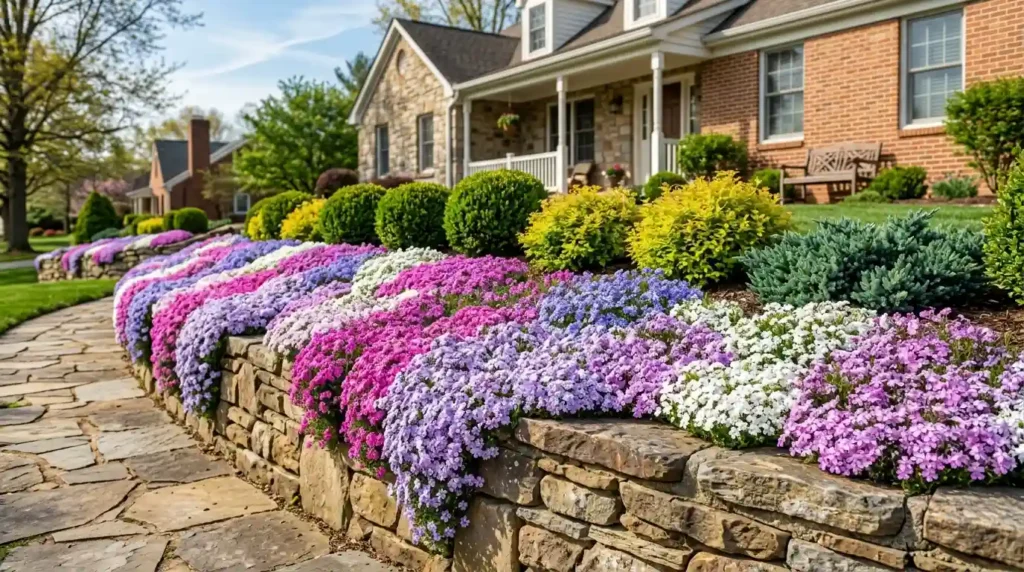
Creeping phlox forms a low mat covered with pink, purple, blue, red, or white flowers in spring.
It works well on slopes, at bed edges, and over low stone walls.
Best for: Sunny banks, retaining walls, and front borders
Light: Full sun, with light shade in very hot areas
Typical size: 4 to 6 inches tall and 2 to 3 feet wide
Pairs well with: Boxwood, spirea, and juniper
Creeping phlox handles dry and rocky conditions better than many other phlox species. Its main flower show is short, but the low foliage continues to cover the soil.
Trim the stems by about half after flowering if the plant becomes loose or thin in the center.
Clumping Liriope Makes a Clear Border
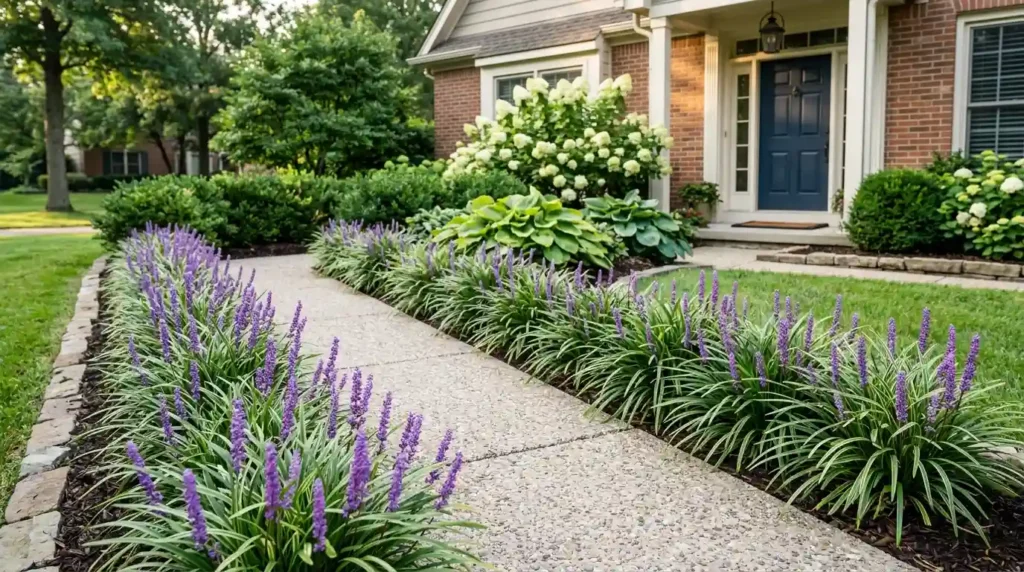
Liriope has narrow, grass-like leaves and purple or white flower spikes. It works well along paths and in front of shrubs.
Choose clumping Liriope muscari for a more controlled edge.
Best for: Walkway borders, shaded beds, and planting beneath shrubs
Light: Full sun to partial shade
Typical size: 1 to 1.5 feet tall and wide
Pairs well with: Inkberry holly, hosta, and panicle hydrangea
Established clumping liriope needs little extra irrigation. Cut old leaves back before new growth starts in spring.
Avoid creeping liriope, Liriope spicata, unless you can contain it. It spreads quickly by underground roots and is listed as invasive in some states.
Creeping thyme fits dry sun. Creeping phlox gives you a strong spring display. Clumping liriope creates a firmer border in sun or shade.
How to Arrange Front Yard Plants Without Crowding Them
Plant choice is only half of the job. Good placement keeps your garden balanced and easier to care for.
Use a simple three-layer plan.
Back Layer: Add Structure
Place taller shrubs near blank walls and house corners.
Good back-layer choices include:
- Panicle hydrangea
- Inkberry holly
- Glossy abelia
- Taller evergreen shrubs
Keep them away from windows, vents, meters, and roof drains.
Middle Layer: Add Flowers and Foliage
Use medium-height plants in front of the main shrubs.
Good choices include:
- Compact spirea
- Catmint
- Salvia
- Coneflower
- Black-eyed Susan
- Sedum
- Hosta
Repeat the same plant in groups of three or five. Repetition makes a small yard feel calmer and more planned.
Front Layer: Cover the Bed Edge
Place low plants along the walkway or front edge.
Try:
- Creeping thyme
- Creeping phlox
- Coral bells
- Liriope
- Low catmint
Do not plant them so close to the path that they cover walking space at maturity.
Try These 3 Simple Plant Combinations
Sunny and Dry Front Bed
Use:
- Dwarf juniper at the back
- Catmint and salvia in the middle
- Autumn Joy sedum for late color
- Creeping thyme along the edge
All five plants like sun and good drainage.
Partly Shaded Foundation Bed
Use:
- Inkberry holly for evergreen structure
- Compact panicle hydrangea for flowers
- Coral bells for leaf color
- Clumping liriope along the front
This mix gives you structure, flowers, and a clear edge.
Shaded Porch Bed
Use:
- A compact evergreen shrub near the wall
- Hostas for bold leaves
- Coral bells for color
- Japanese forest grass near the steps
Do not try to fit all 18 plants into one small yard. Three to five plant types are enough for many front beds.
7 Mistakes That Create More Yard Work
Most plant problems begin before the plants enter the ground.
1. Choosing Plants Before Checking Sunlight
A full-sun plant may survive in shade, but it may become weak and produce fewer flowers.
Watch the area before shopping.
2. Ignoring Mature Size
A two-foot nursery shrub may become six feet wide.
Planting it one foot from a walkway creates years of trimming.
3. Crowding Plants for an Instant Finished Look
New beds often look empty. That is normal.
Leave enough space for mature growth instead of filling every gap on the first day.
4. Mixing Plants With Opposite Water Needs
Do not place lavender beside a plant that needs constantly moist soil. One of them will suffer.
Group plants that need similar watering.
5. Using the Wrong Plant for Wet Clay
Lavender, juniper, thyme, salvia, and sedum can develop root problems in wet soil.
Improve drainage or select plants that fit the existing conditions.
6. Adding Too Much Fertilizer
Extra fertilizer does not fix poor drainage, root damage, or the wrong amount of sunlight.
It can create weak growth that needs more pruning. A soil test is a better first step when you suspect a nutrient problem.
7. Skipping Local Invasive Plant Checks
A plant sold at a nursery may still be invasive in your region.
Check local guidance before planting Japanese spirea, creeping liriope, or any plant known to spread beyond gardens.
Choose Plants That Fit the Yard You Have
The best low maintenance landscaping plants for front of house beds are plants that fit your actual conditions.
Start by checking the sunlight. Test the drainage and measure the available space. Then choose plants that can handle your local winters, summer heat, and rainfall.
Build the main structure with a few evergreen shrubs. Add flowering perennials for color. Finish the front edge with a controlled ground cover.
You do not need all 18 plants. Choose three to five that share similar needs and repeat them across the bed.
A little planning now can save years of trimming, watering, replacing, and fighting plants that never belonged in the space.