18 Backyard Garden Design Ideas for Any Space
Your backyard may have plenty of room but still feel empty, messy, or unfinished. You may want flowers, seating, privacy, or space to grow food. The hard part is working out how everything should fit together.
Poor planning can lead to crowded plants, blocked paths, wasted money, and more yard work than you expected. A design may also look great in a photo but fail in your space because of shade, drainage, or limited room.
These backyard garden design ideas can help you create a yard that feels useful, welcoming, and easy to enjoy. You will find options for small yards, large lawns, renters, families, and people working with a tight budget.
You do not need to use every idea. Choose two or three that solve your biggest problems. A clear garden layout, the right plants, and one comfortable seating area may be enough to change how your whole backyard feels.
Plan a Backyard Garden Layout That Saves Time and Money
Buying plants before measuring your yard can lead to crowded beds, blocked paths, and wasted money. Start with a simple backyard garden layout before you visit a garden center.
Measure the length and width of your yard. Mark doors, fences, sheds, trees, drains, and other features that cannot be moved. You can draw the space on graph paper or use a basic garden planning app.
Next, check how sunlight moves across the yard. Watch the space in the morning, at midday, and later in the afternoon. Some areas may receive full sun, while others stay shaded by the house or nearby trees.
Also look for wet and dry spots. A low area that holds water may not suit a patio or plants that need dry soil. A hot space beside a wall may need plants that can handle heat.
Now decide how you want to use your backyard. You may need:
- A table for outdoor meals
- An open area for children or pets
- Beds for flowers or vegetables
- A private place to relax
- Clear access to a gate, shed, or garage
A family may place a patio near the house, keep an open lawn in the middle, and add planting beds around the edges. A keen gardener may use more space for raised beds and narrow paths.
Set a budget before buying materials. Include plants, soil, mulch, furniture, lighting, edging, tools, and delivery costs. It is often better to finish one area well than spread your money across the whole yard.
Once you know the yard’s size, light, drainage, budget, and purpose, choosing a design becomes much easier.
Use Curved Garden Beds to Soften a Boxy Yard
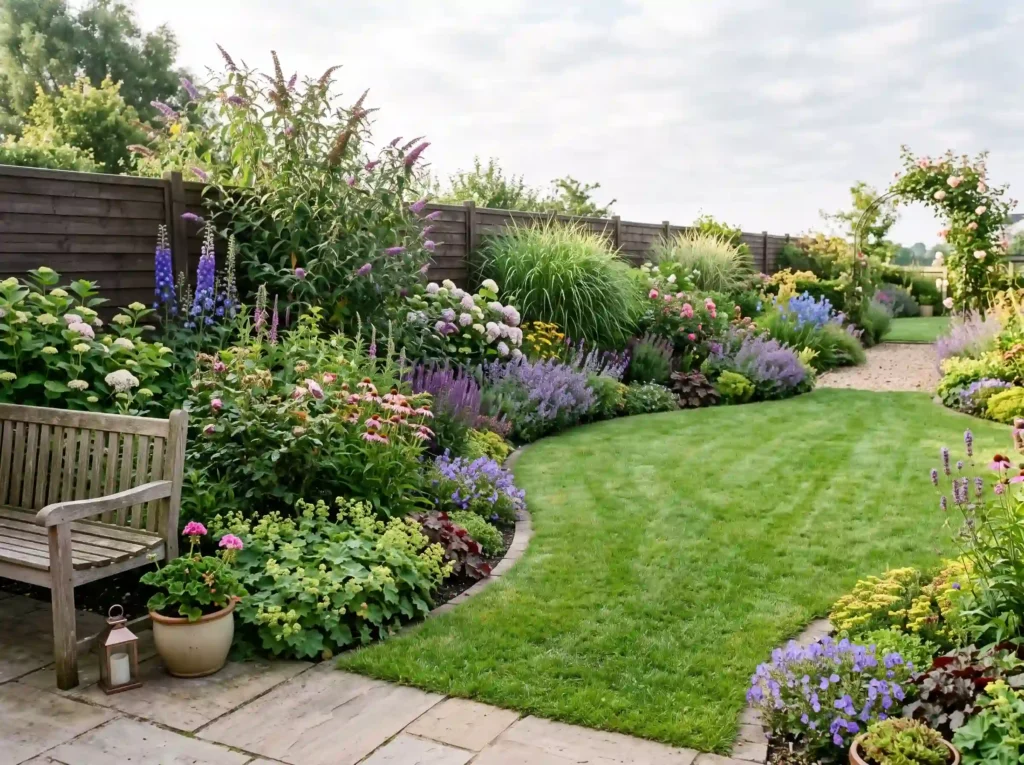
Straight fences and square lawns can make a backyard feel stiff. Curved garden beds soften those hard lines and make the space feel more natural.
Broad curves work better than lots of small waves. Tight curves can look busy and make lawn mowing harder.
Lay a garden hose on the grass to test the shape before cutting the bed. Move it around until the curve looks smooth from the house, patio, and main entrance.
Place taller plants at the back of the bed. Use medium shrubs and flowers in the middle. Add low-growing plants along the front edge.
You might combine ornamental grasses, flowering shrubs, lavender, and ground-cover plants around a central lawn. Repeat some of the same plants on both sides of the yard. This helps the design feel connected.
Avoid buying one of every plant you like. Too many unrelated colors and shapes can make a small garden look cluttered.
Divide the Backyard Into Clear Garden Zones
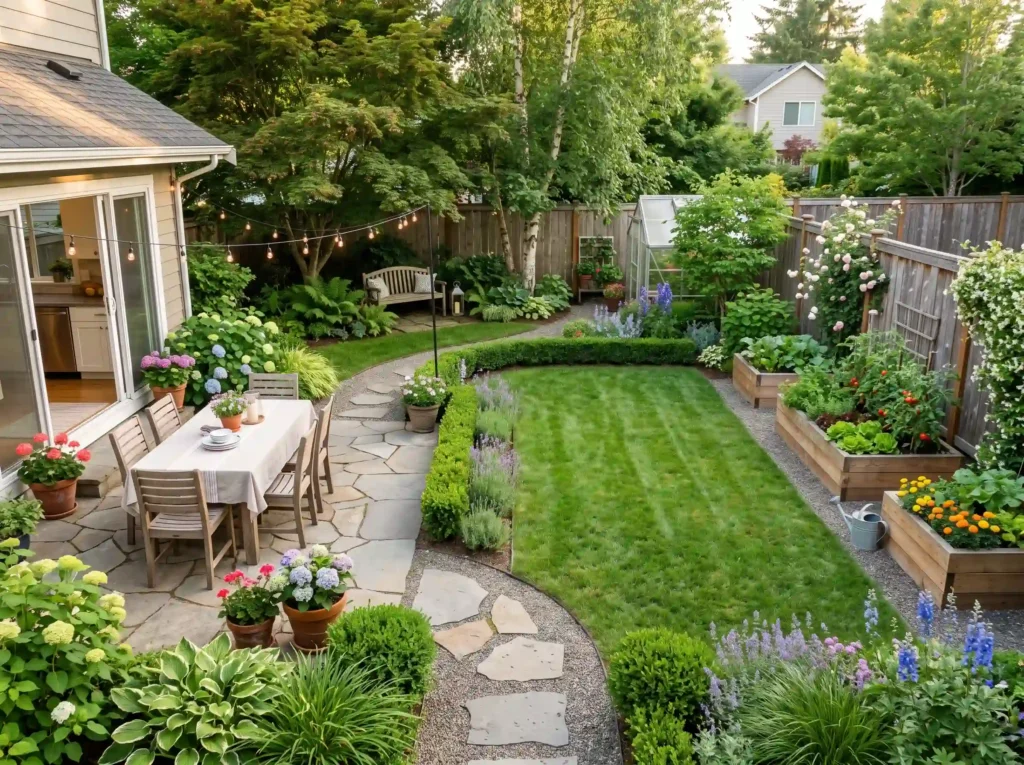
A backyard works better when each part has a clear job. Garden zones can create separate areas for eating, relaxing, playing, and planting.
Keep the busiest zone close to the house. A dining patio near the kitchen makes it easier to carry food and dishes outside.
Place quieter features farther away. A bench, fire pit, or reading chair can work well in a back corner.
You can divide zones with:
- Garden paths
- Low hedges
- Planting beds
- Trellises
- Changes in paving
- Outdoor rugs
- Planters
For example, place a patio near the kitchen, keep an open lawn in the center, and build raised vegetable beds beside a sunny fence.
Do not place large planters, furniture, or garden features in natural walking routes. Walk through the yard before making permanent changes. Notice where people already move.
Sketch the zones on paper first. A rough plan can prevent expensive changes later.
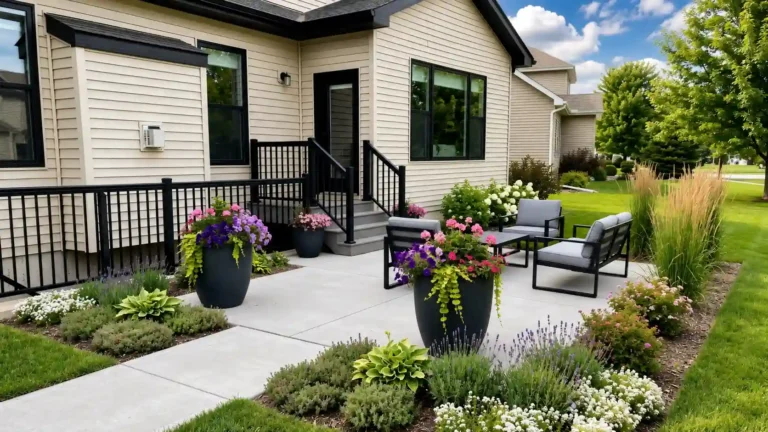
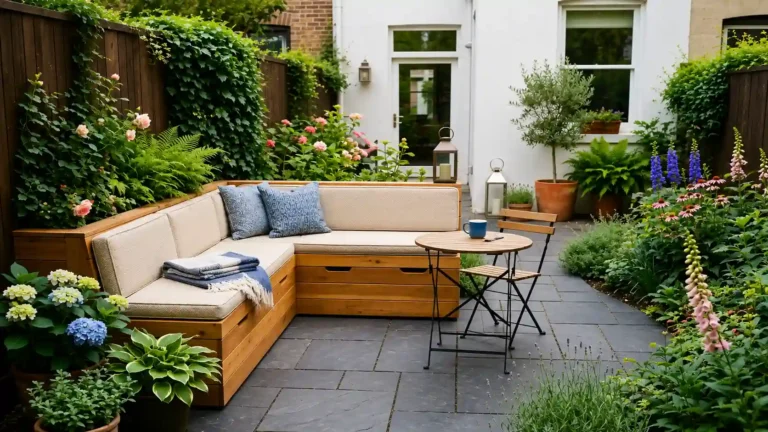
Add a Small Patio Surrounded by Plants
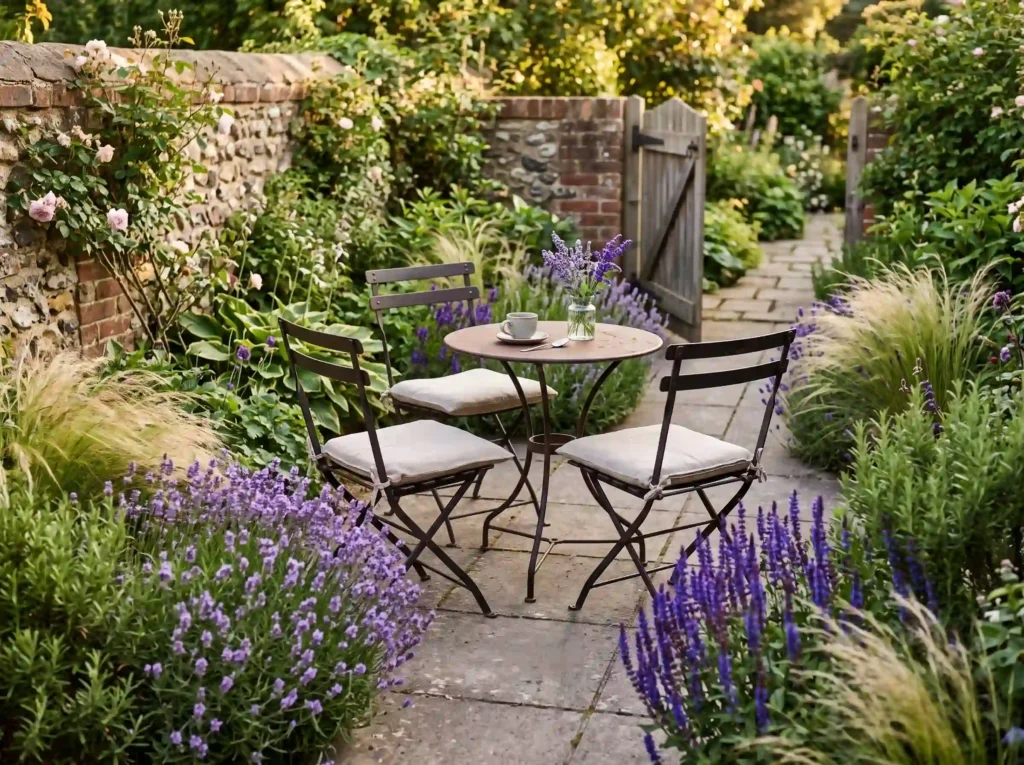
A small patio can give your backyard a clear purpose. It creates a place for morning coffee, meals, reading, or talking with friends.
You do not need a large concrete area. Gravel, brick, or simple pavers may cost less and still create a firm surface.
Choose furniture that fits the scale of the space. A round bistro table and two chairs can work better than a large dining set in a compact yard.
Soften the hard patio edges with plants. Lavender, salvia, rosemary, and ornamental grasses add color, texture, and scent.
Leave enough room behind chairs so people can sit down and stand up safely. A patio that looks spacious when empty may feel cramped once furniture is added.
For a small backyard patio garden, keep the plant palette simple. Repeating three or four plant types often looks calmer than using many different varieties.
Avoid placing thorny plants or plants that attract lots of bees beside narrow seating areas.
Build Raised Beds for Flowers, Herbs, or Vegetables
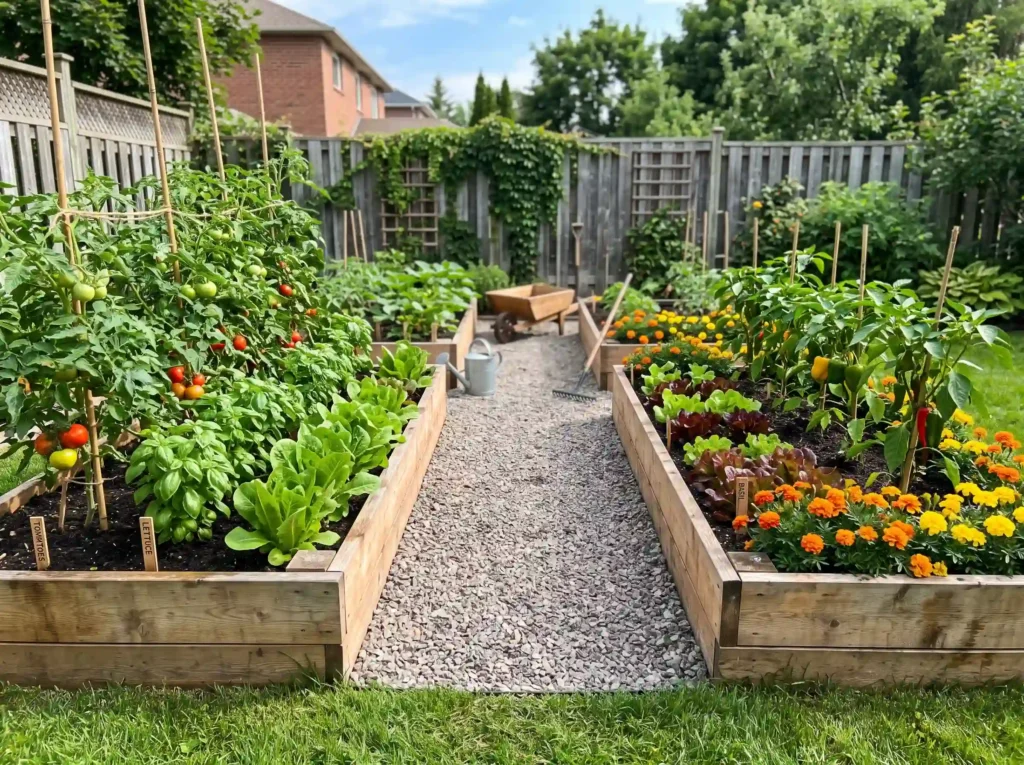
Raised beds bring order to a garden. They create clear planting spaces and help keep soil away from paths and lawns.
They can also improve drainage where ground soil stays wet or becomes packed down. Higher beds may reduce deep bending, although they still need regular care.
Use raised beds for:
- Vegetables
- Herbs
- Cut flowers
- Pollinator plants
- Mixed edible planting
Two wooden beds could hold tomatoes, basil, lettuce, peppers, and marigolds. The marigolds add color while the herbs and vegetables provide food.
Leave enough space between beds for walking, watering, and carrying tools. Wider paths may be needed for a wheelbarrow, stroller, or wheelchair.
Choose materials made for outdoor use. When growing food, avoid wood or treatments that may place unsafe chemicals into the soil.
Raised beds dry out faster than some ground beds. Check moisture often during hot weather.
Grow Upward With a Vertical Garden
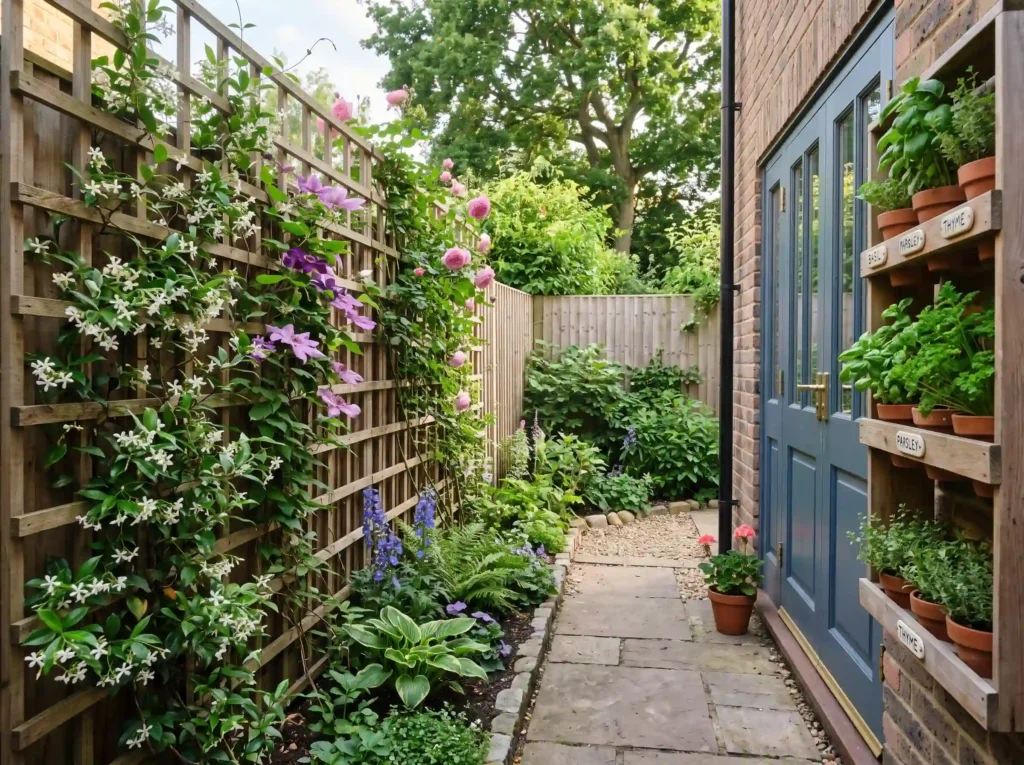
A vertical garden gives you more planting room without taking over the lawn. It is one of the most useful small backyard garden ideas for narrow spaces.
Use fences, walls, trellises, hanging baskets, shelves, or wall planters. These features can hide a blank wall and bring plants closer to eye level.
A wooden trellis above a narrow flower bed could support jasmine, clematis, climbing roses, or another vine suited to your climate.
You can also place a vertical herb planter near the kitchen door. This keeps basil, parsley, thyme, and other useful herbs easy to reach.
Check how large and heavy each plant will become. A weak fence may not support a thick, mature vine. Make sure wall planters and trellises are fixed firmly.
Do not place too many containers high above the ground. Water can drip onto furniture, paths, or people below.
Vertical planting saves space, but plants still need enough soil, water, light, and airflow.
Create a Low-Maintenance Garden You Can Manage
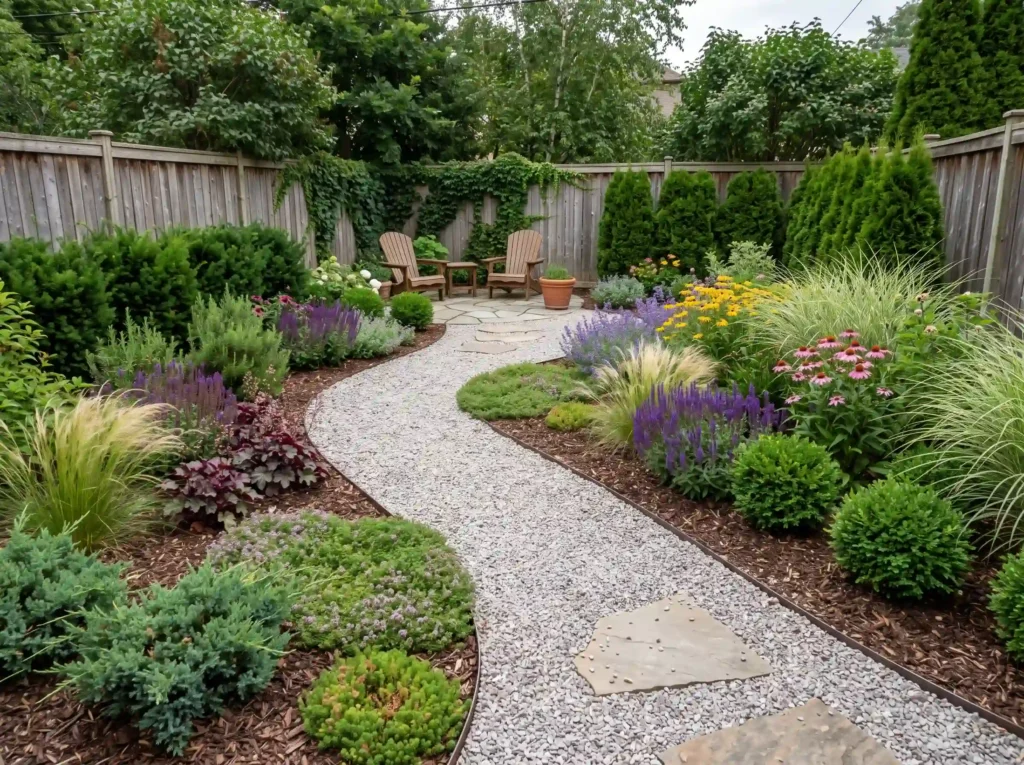
A beautiful garden can become stressful when it needs constant watering, trimming, and weeding. A low-maintenance design reduces regular work without making the yard look bare.
Choose plants that suit your local climate, soil, and light. Plants that struggle in your conditions often need extra care.
Group plants with similar water needs. This makes watering easier and reduces the risk of giving some plants too much water.
Use mulch around plants to slow weed growth and help the soil hold moisture. Keep mulch away from plant stems and tree trunks.
Replace small, awkward lawn sections with planting beds, gravel, ground cover, or paving. Tiny grass areas can take more work than they are worth.
A simple design might include evergreen shrubs, hardy flowering plants, ornamental grasses, and a gravel path.
Low maintenance does not mean no maintenance. Plants still need watering while they settle in. Beds also need seasonal cleaning and basic care.
Add Color With a Cottage-Style Flower Garden
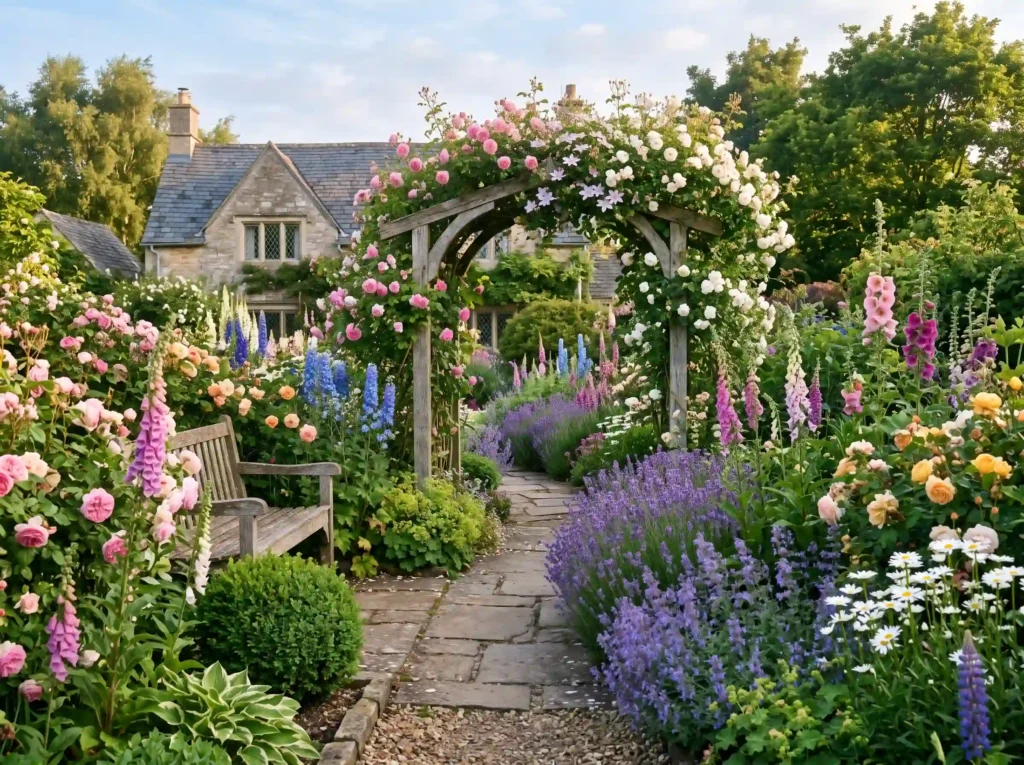
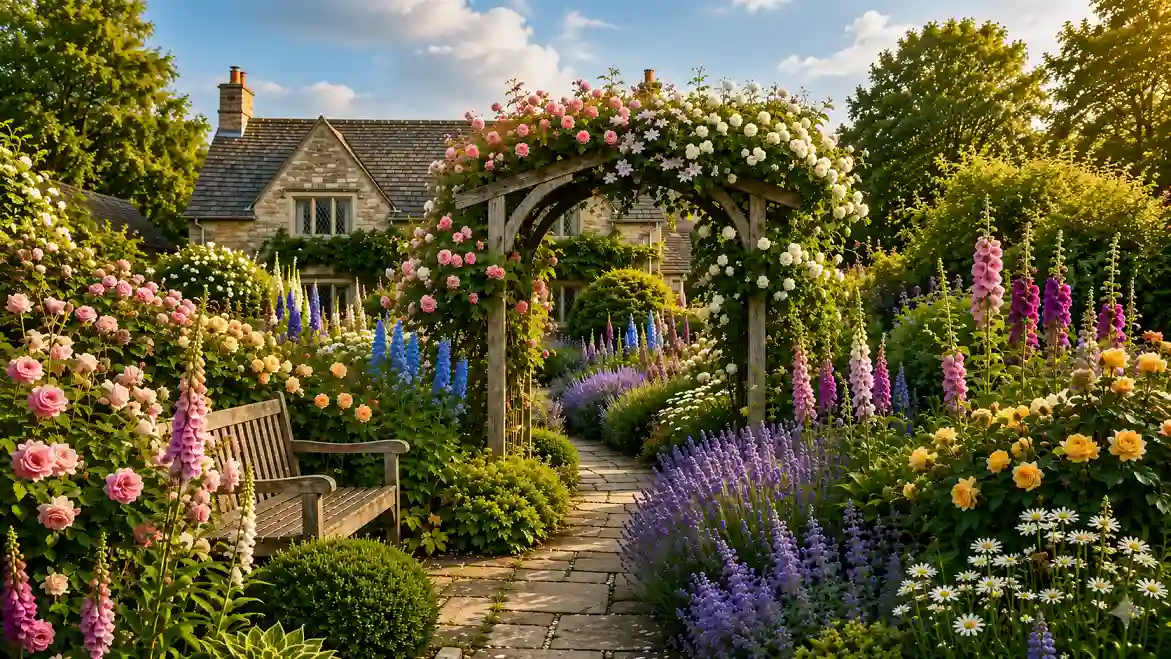
A cottage garden creates a soft, full look with flowers, shrubs, winding paths, and relaxed planting.
Mix plants with different heights and flowering times. This keeps the garden interesting across more than one season.
You might use roses, daisies, lavender, catmint, foxgloves, and climbing flowers around an arbor. Plant choices should always suit your local weather and light.
Repeat a few colors throughout the beds. Repetition prevents a full flower garden from looking random.
Add some structure with small shrubs, evergreen plants, edging, or a clear path. These steady features help control the loose style.
A bench, simple birdbath, or small arbor can give the eye a place to rest.
Do not pack young plants too closely. They may look small at first, but many will spread after one or two growing seasons.
Keep the Yard Calm With a Modern Garden Design
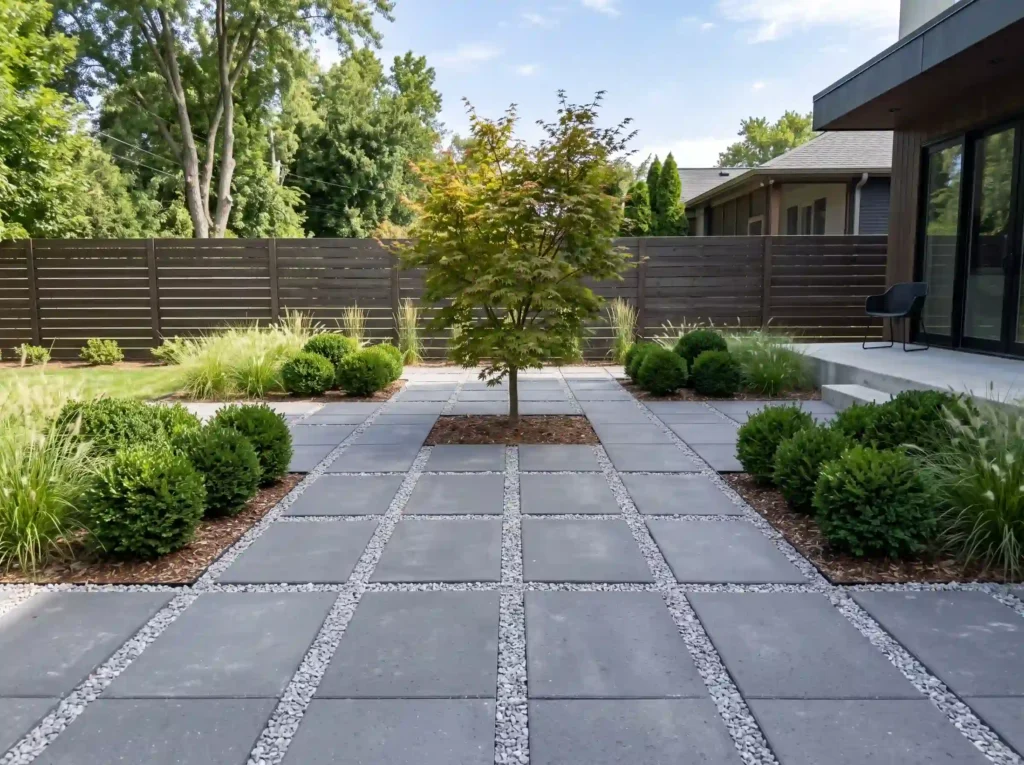
A modern garden uses clean shapes, repeated plants, and a limited range of materials. It can make a small backyard feel neat and open.
Choose one main paving material and one supporting material. Large pavers with gravel between them can create a simple base.
Repeat plants in groups instead of spreading single plants across the yard. Clipped shrubs, ornamental grasses, and one small tree can create a strong design.
Leave some open space around major features. Empty space is part of the design. It prevents the yard from feeling crowded.
Choose one main focal point, such as a tree, water bowl, fire feature, or bench.
Avoid mixing too many pot styles, paving types, bright colors, and ornaments. Modern gardens can quickly lose their clean look when extra items are added.
This style may look simple, but clear lines often need regular edging and trimming.
Build a Garden Path That Leads Somewhere Useful
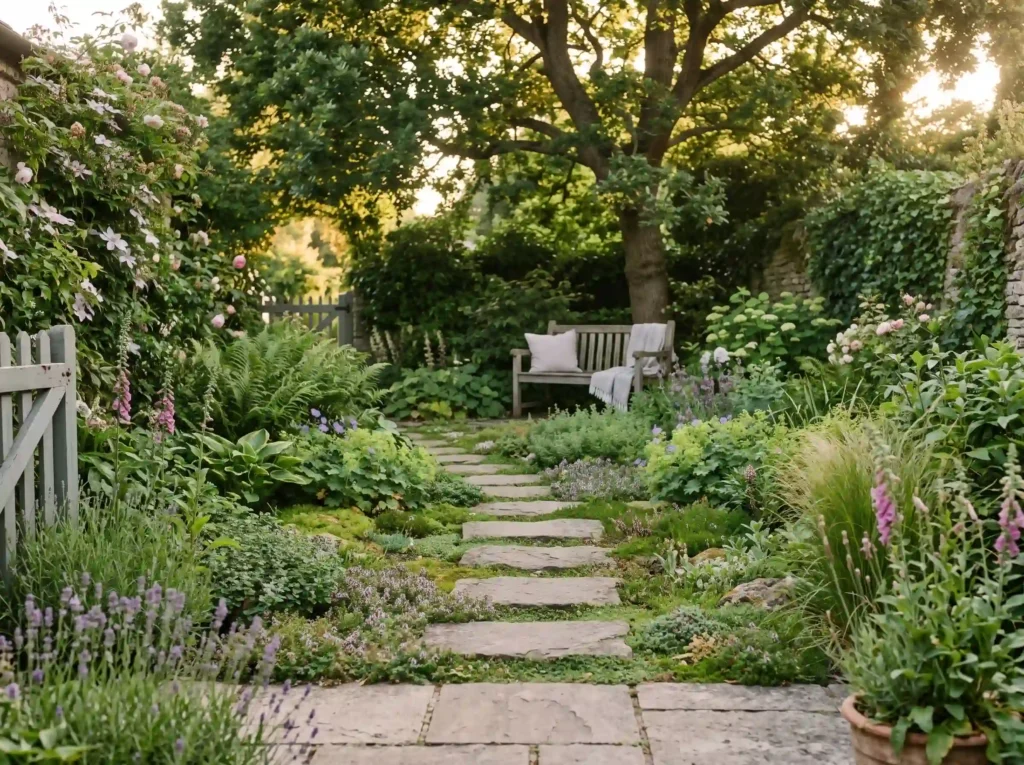
A garden path helps people move through the yard without stepping on plants or wet soil. It can also make a small garden feel longer.
Use gravel, brick, stepping stones, wood, or pavers. Choose a surface that suits the people using the yard.
Gravel is affordable and drains well. However, it can be hard for wheelchairs, strollers, and bare feet.
A straight path creates a formal look. A curved path feels softer and can hide part of the garden from view.
Every path should lead somewhere useful. It might connect the patio to a shed, gate, bench, vegetable bed, or seating corner.
Stepping stones set through low ground-cover plants can create a relaxed route to a bench.
Keep the surface firm and even. Loose stones, raised edges, and large gaps can become trip hazards.
Create Privacy With Layers of Plants
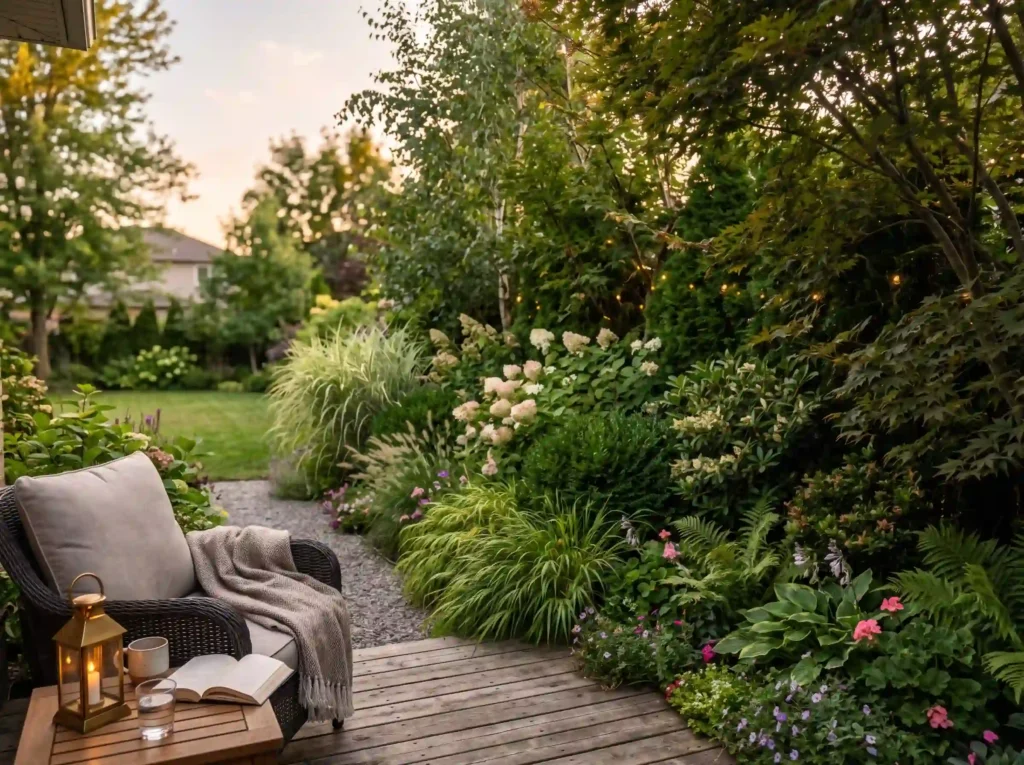
A single row of tall plants can block a view, but it may also feel like a wall. Layered planting creates softer privacy and adds more interest.
Place small trees or tall shrubs at the back. Add medium evergreen shrubs in front. Finish with flowers, grasses, or low plants along the edge.
This mix gives you privacy at different heights. It can also provide color and movement.
You do not always need to screen the whole yard. Focus on the place where privacy matters most, such as a patio, hot tub, or seating nook.
Check the mature height and width of every plant. A small shrub in a nursery pot may grow several feet wide.
Keep large plants far enough from fences, buildings, pipes, and paths. Crowded plants often need heavy trimming later.
Layered planting takes longer to fill out than a solid fence. However, it usually feels softer and more natural.
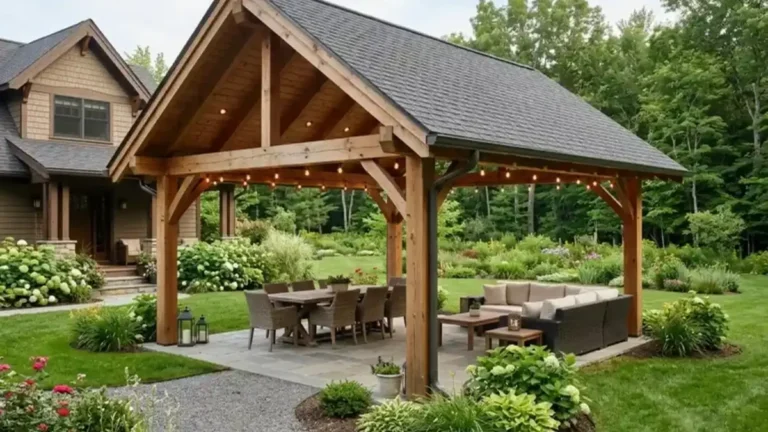
Add a Pergola for Shade and Structure
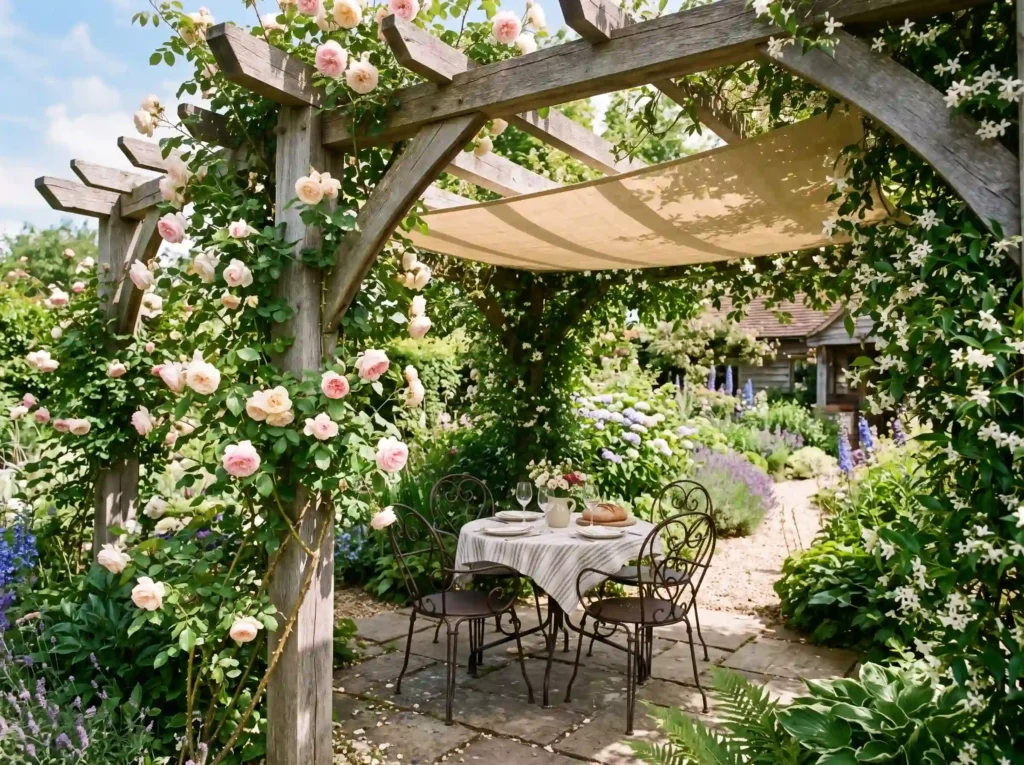
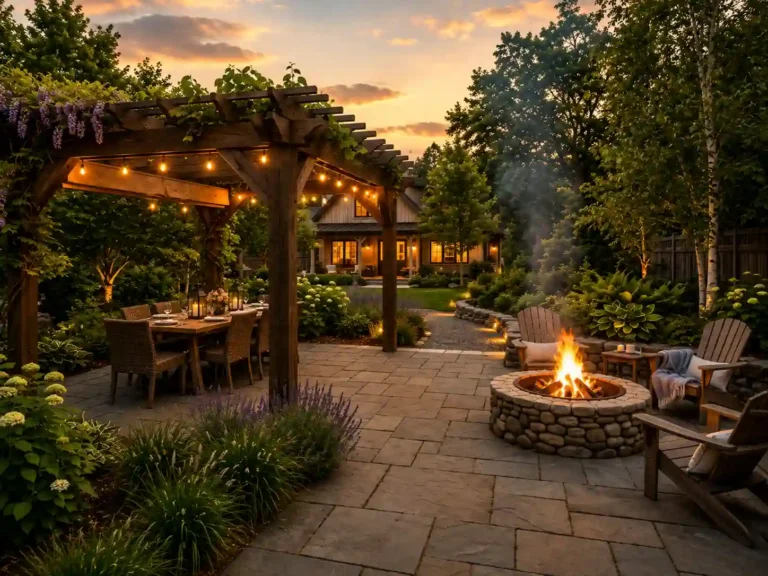
A pergola can turn an open patio into a clear outdoor room. It adds height, supports climbing plants, and may provide some shade.
Place it over a dining table, lounge chairs, or a small seating area. Make sure the structure fits the size of the yard.
Climbing roses, jasmine, grapevines, or other vines can soften the posts and beams. Choose plants that suit the light and local climate.
Check how fast each vine grows. Some plants become very heavy and may damage a weak structure.
Plants that lose their leaves in winter can offer summer shade while allowing more light during colder months.
A pergola may provide partial shade, but it will not always block strong midday sun. Fabric panels, shade cloth, or a solid roof section may be needed.
Keep climbing plants away from gutters and roofing.
Turn an Empty Corner Into a Peaceful Retreat
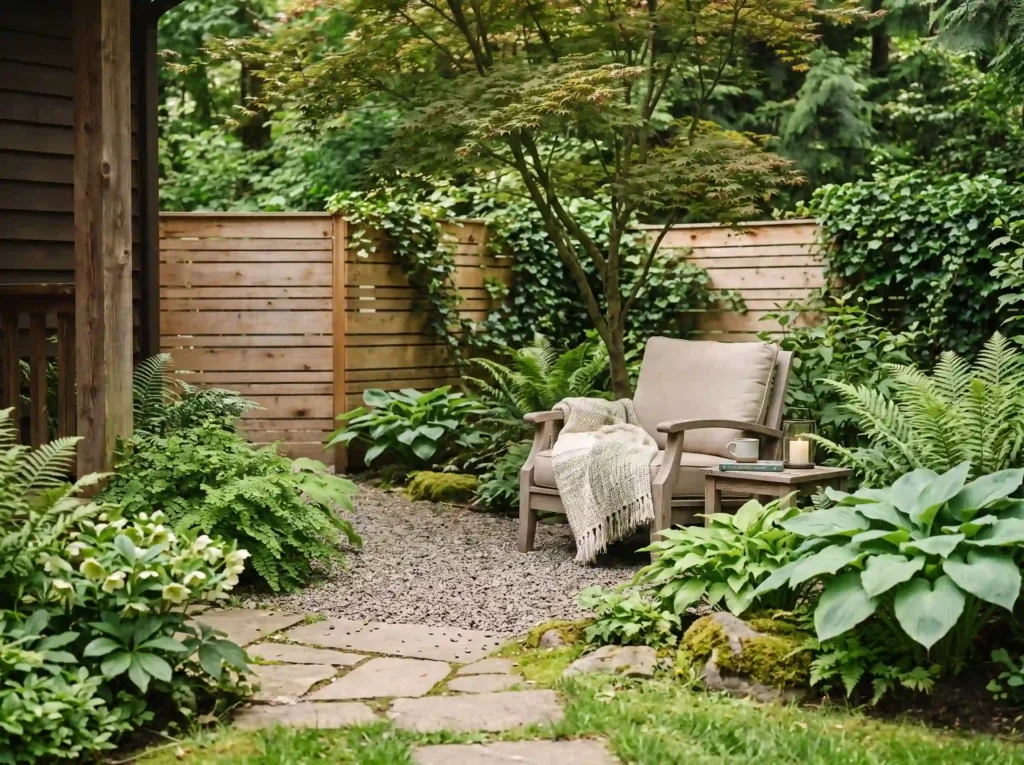
An unused corner can become one of the best parts of your backyard. You may only need a seat, a firm base, and a few plants.
Start with one comfortable chair or a small bench. Turn it slightly away from the house to create a greater sense of privacy.
Place the seat under a small tree or add shade with an umbrella, screen, or pergola.
For a shaded corner, use plants such as ferns, hostas, or other shade-loving choices that suit your area. Add gravel, pavers, or mulch under the seat.
Soft plant textures and calm colors can make the space feel restful. Keep decorations limited so the corner does not become cluttered.
Check the view from the seat. Hide bins, tools, or other unattractive items with a screen or planting.
Make sure the route to the seating area stays dry and safe.
Add a Small Water Feature for Gentle Sound
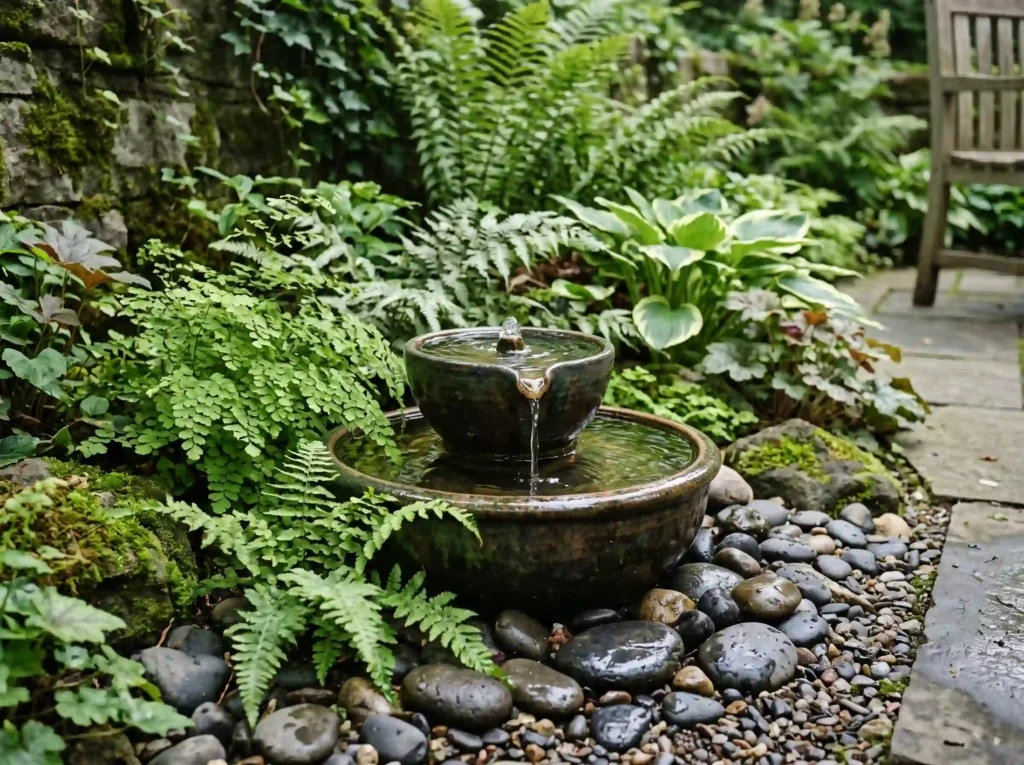
A small fountain can reduce the sound of traffic and add movement to a quiet yard. It also gives the garden a clear focal point.
Place it where you can see or hear it from the patio or inside the house. A hidden fountain may not add much value.
A ceramic fountain surrounded by stones, ferns, and shade plants can work in a small corner.
Before buying one, think about:
- Access to power
- Water refilling
- Cleaning
- Winter care
- Child and pet safety
Avoid placing the fountain under trees that drop lots of leaves. The water may become dirty quickly.
A small water feature still needs regular cleaning. Standing water can also attract insects when pumps are not running.
Choose a size that fits the garden. A large fountain can make a small yard feel crowded.
Grow an Herb Garden Close to the Kitchen
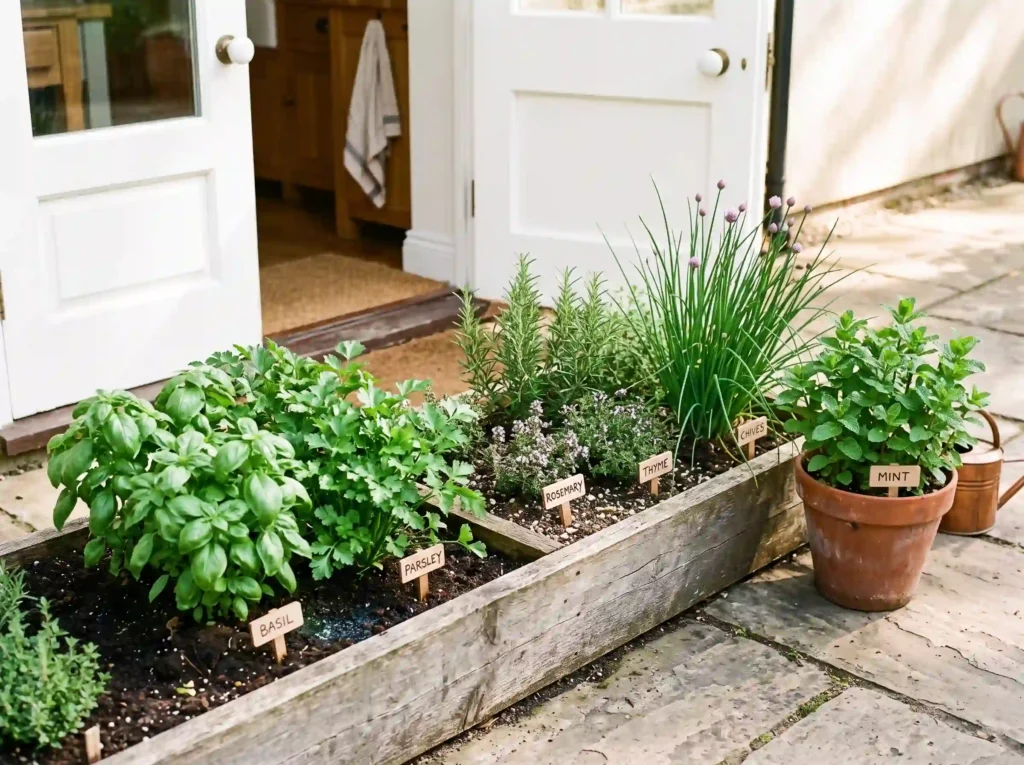
An herb garden near the kitchen makes cooking easier. You can pick fresh leaves without walking across the whole yard.
Use pots, a raised bed, a vertical planter, or a narrow border beside the patio.
Popular choices include basil, parsley, thyme, rosemary, chives, and mint. Pick herbs that suit the amount of sunlight available.
Group plants with similar water needs. Rosemary and thyme often prefer drier soil than basil and parsley.
Plant mint in its own container. It can spread quickly and take over a garden bed.
Add labels while plants are small. Many young herbs look similar.
Place the garden where you will remember to water and use it. A hidden herb bed often gets forgotten.
Avoid planting edible herbs beside treated wood, busy roads, or areas where pets regularly use the ground.
Use Containers for Color You Can Move
Containers bring plants to patios, decks, steps, and paved yards. They also work well for renters because they can move with you.
Group pots in sets of three or five. Use different heights while keeping the colors and materials connected.
For one large container, try the “thriller, filler, and spiller” method. Place one tall plant in the center or back. Add medium plants around it. Finish with trailing plants over the edge.
Choose plants with similar light and water needs. A shade plant and a sun-loving plant will not stay happy in the same pot.
Every container needs drainage holes. Water trapped around roots can cause rot.
Pots dry out faster than garden beds, especially in hot weather. Large containers usually hold water longer than small ones.
Do not use too many unrelated pot styles. A smaller group often looks stronger than many scattered containers.
Add Garden Lighting for Safer Evenings
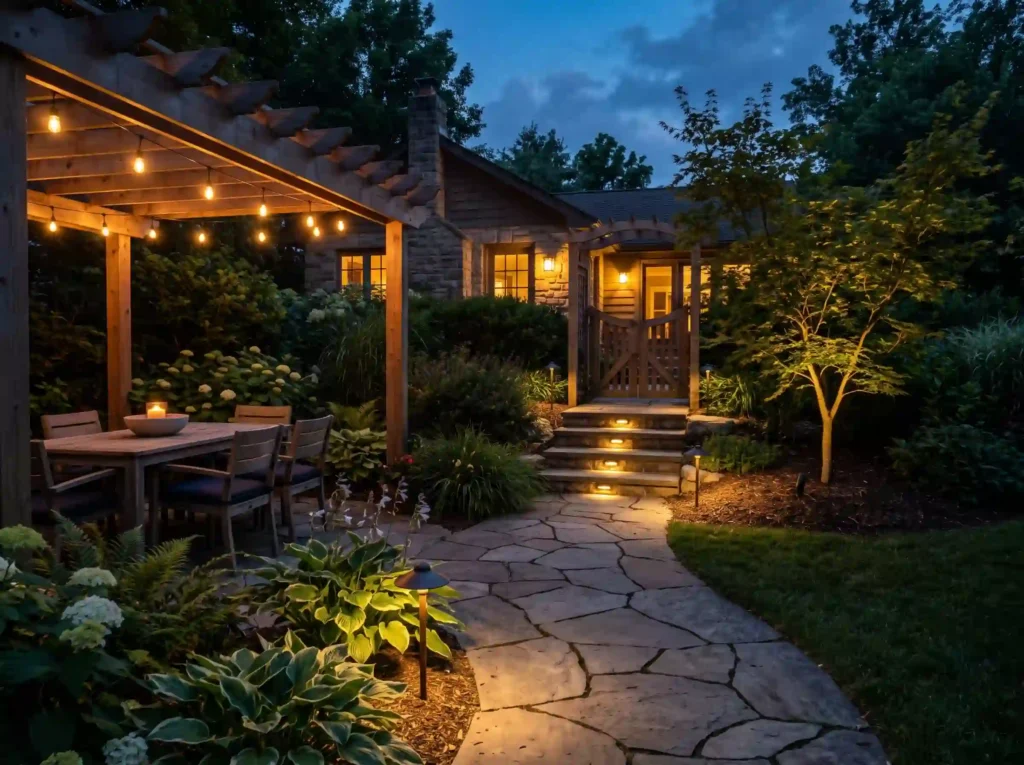
Garden lighting helps you use the yard after dark. Start with safety before adding decorative light.
Light steps, paths, gates, changes in ground level, and seating areas. Avoid bright bulbs at eye level.
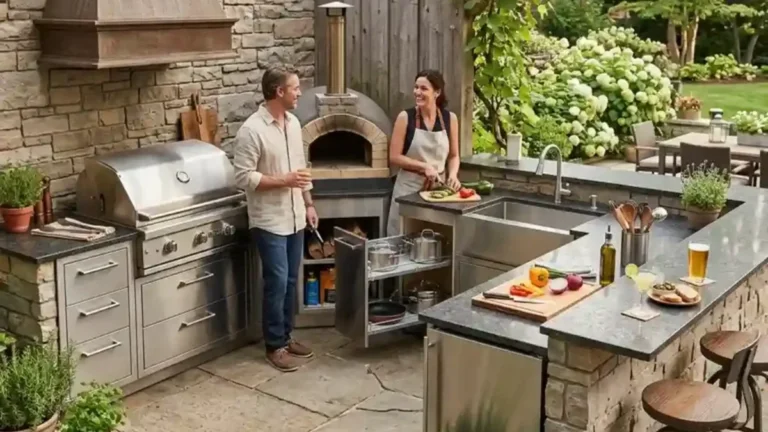
Warm light often feels softer around plants and patios. Use brighter task lighting near grills, outdoor kitchens, or work areas.
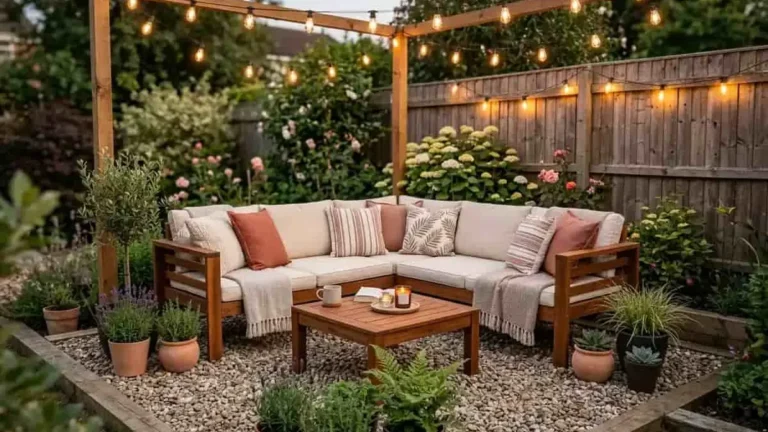
String lights can define a dining area. Low path lights can guide people through the yard. One light placed below a small tree can highlight its shape.
Solar lights are easy to install, but they may provide weak or uneven light. They also need enough sun during the day.
Low-voltage systems offer more control but may need professional installation.
Do not light every plant. Dark spaces help create depth and keep the garden from feeling like a stage.
Make Space for Birds, Bees, and Butterflies
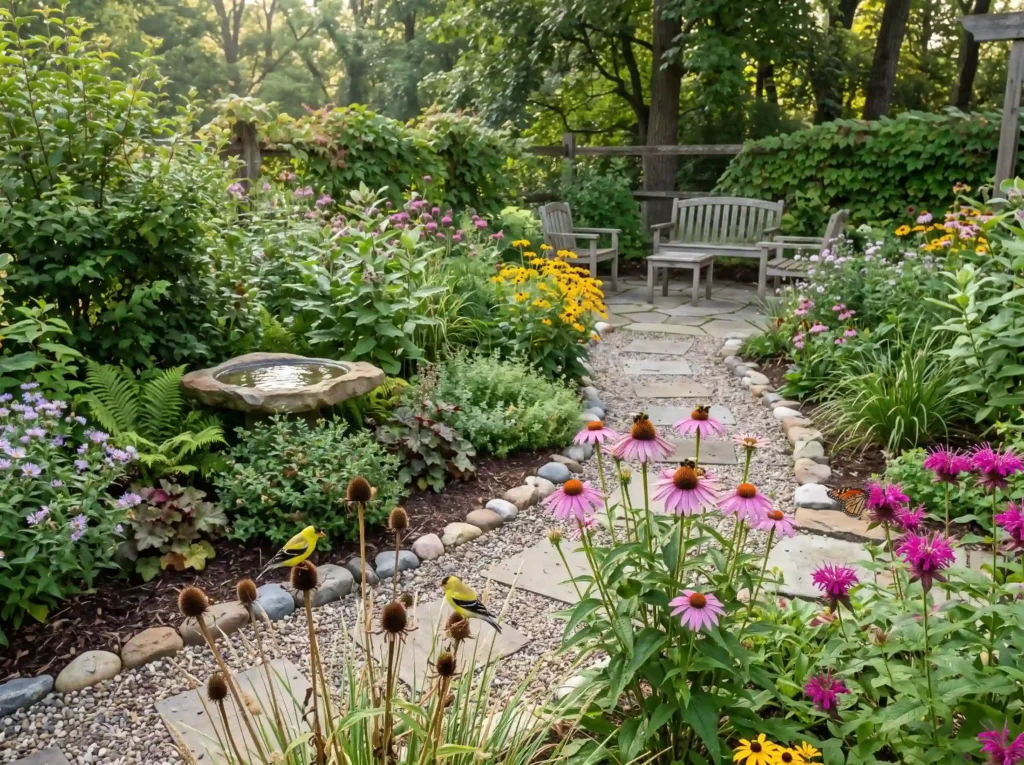
A wildlife-friendly garden can bring movement and life into your backyard. It may support birds, bees, butterflies, and other useful creatures.
Choose native plants where possible. Local plants are often well suited to local weather and wildlife.
Grow flowers that bloom at different times. This provides food across more of the year.
Add a shallow birdbath or water dish. Keep it clean and place it where birds can see nearby cover.
Leave some seed heads in place after flowers fade. Birds may use them for food.
Avoid harmful pesticide use. These products can hurt the insects and animals you want to support.
A wildlife garden does not need to look messy. Keep paths, bed edges, and seating areas clear. These simple design lines make natural planting feel planned.
Improve the Backyard on a Small Budget
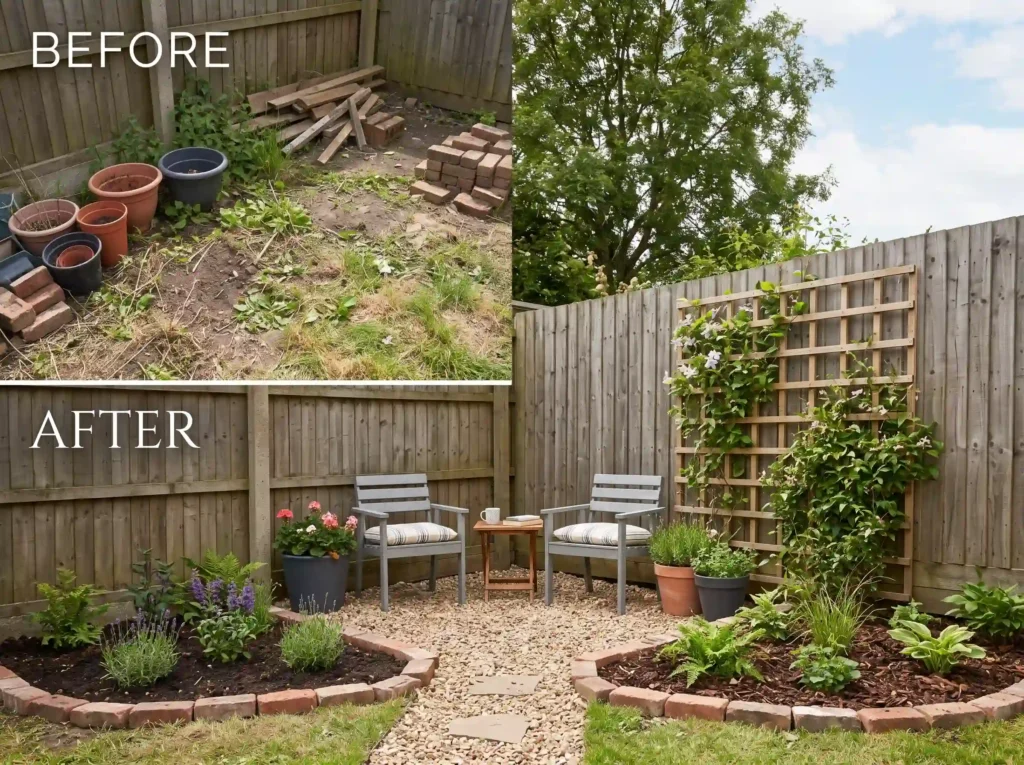
You do not need to rebuild the whole yard to make a clear difference. Good garden design ideas on a budget focus on the areas that matter most.
Start with drainage and soil. Decorative items will not fix a wet patio or plants growing in poor ground.
Improve one section at a time. Begin with the place you see or use most often.
Low-cost ideas include:
- Growing plants from seeds
- Buying smaller plants
- Dividing mature perennials
- Reusing safe bricks or stones
- Painting old planters
- Creating a gravel seating area
- Building a simple trellis
Spend more on permanent features such as paths, drainage, and strong garden structures. Spend less on seasonal decorations that may not last.
A smart order is:
- Fix drainage and soil.
- Build paths or beds.
- Add trees and main plants.
- Place furniture.
- Finish with small decorations.
Cheap materials can still cost money to remove when they fail. Choose safe, durable options for anything people will walk or sit on.
How to Choose the Best Backyard Garden Ideas for Your Space
The best backyard garden ideas are the ones that fit your yard instead of fighting it. A design should work with your space, light, weather, budget, and free time.
Start with yard size. A small space may benefit from vertical planting, containers, and one compact seating area. A larger yard may need clear zones so it does not feel empty.
Next, think about sunlight and drainage. A flower bed filled with sun-loving plants will struggle in deep shade. A low spot that stays wet may need drainage work before planting.
Be honest about how much care you can provide. A full cottage garden may need more cutting, dividing, watering, and weeding than a simple shrub border.
Choose features based on how you live. A family may need open play space. A renter may prefer movable pots. Someone who entertains may value a patio and lighting more than a vegetable bed.
Use this guide to narrow your choices:
| What You Need | Ideas That May Work Best |
| A small backyard | Vertical garden, containers, corner seating |
| More privacy | Layered planting, pergola, climbing plants |
| Less yard work | Native plants, mulch, simple paths |
| Space to grow food | Raised beds, herb garden |
| A low-cost update | Gravel, divided plants, reused containers |
| A relaxing area | Water feature, seating nook, warm lighting |
Choose one main feature and two supporting ideas. For example, use a small patio as the main feature. Add containers and lighting to complete the space.
This approach keeps the backyard useful without making it feel crowded.
Avoid These Backyard Garden Design Mistakes
Most backyard design problems begin before the first plant goes into the ground. A little planning can prevent years of extra work.
Buying Plants Before Making a Plan
Garden centers make it easy to buy plants based on color alone. However, those plants may not suit your soil, sunlight, or available space.
Measure the bed first. Check the plant’s mature height and width before buying it.
Ignoring Mature Plant Size
A young shrub may look small in its pot. Within a few years, it may block a path, cover a window, or crowd nearby plants.
Leave enough room for natural growth. This reduces future trimming.
Using Too Many Materials
Five types of paving, several fence colors, and many pot styles can make a small yard look busy.
Choose a limited set of materials. Repeat them across the space.
Blocking Natural Walking Routes
A beautiful bed can become annoying if people must walk around it every day.
Watch how people use the yard before adding permanent features.
Forgetting About Drainage
Water may collect beside patios, raised beds, walls, and low lawn areas.
Fix drainage before adding expensive plants or furniture.
Choosing More Work Than You Can Handle
Large lawns, clipped hedges, full flower beds, and many pots all need care.
Build a garden that fits your real schedule, not your ideal weekend.
Ignoring the View From Inside
You may see your garden through windows more often than you sit in it.
Take photos from the kitchen, living room, and back door. Place major features where they can be enjoyed from inside.
Before buying anything, check:
- Mature plant size
- Sunlight needs
- Water needs
- Local climate
- Care needs
- Safe planting distance
Measure carefully, leave some open space, and choose plants for the conditions you have.
Start Your Backyard Garden Makeover With These Simple Steps
Learning how to design a backyard garden does not mean changing everything in one weekend. A staged plan is easier to manage and easier on your budget.
Start by observing the yard. Take photos from doors, windows, and seating areas. Notice sunlight, shade, wet soil, and natural walking routes.
Measure the full space. Add fixed items to a basic sketch.
Next, choose one main goal. You may want more privacy, a dining area, easier care, or space to grow food.
Pick one garden style and two or three ideas from this article. Set a budget before shopping.
Complete permanent work first. Fix drainage, build paths, prepare beds, and install raised structures before adding delicate plants.
You can use this simple first-week plan:
- Day 1: Measure and photograph the yard.
- Day 2: Mark sunny, shaded, wet, and dry areas.
- Day 3: Draw the main garden zones.
- Day 4: List materials and compare costs.
- Weekend: Clear one area and begin the first feature.
Add plants in stages. This gives you time to see how each area looks and grows.
Review the garden after one full growing season. Move containers, divide crowded plants, and change anything that does not work.
Choose One Backyard Idea and Start Small
The best backyard garden design ideas fit your space, budget, local conditions, and daily routine. They should make the yard easier to use instead of creating more stress.
Start with one problem. You may need privacy, shade, seating, color, or better walking access. Choose one main feature that fixes that issue. Then add one or two smaller details to support it.
You do not need to finish the entire backyard at once. Sketch your plan, measure the area, and begin with the part you see or use most often.
Even simple garden design ideas on a budget can make a plain yard feel warmer, calmer, and more useful.