19 Backyard Oasis Ideas for a Relaxing Outdoor Retreat
Your backyard may have plenty of space, yet still feel uncomfortable or unfinished. It might get too hot in the afternoon. Nearby homes may look straight into it. You may also have a patio and lawn but no clear reason to spend time outside.
The good news is that you do not need a pool or a full yard renovation. The best backyard oasis ideas focus on comfort, shade, privacy, plants, and useful outdoor areas.
A few smart changes can turn a plain yard into a calm place for reading, eating, resting, or spending time with family. You can start with one corner instead of changing the whole space at once.
This guide covers ideas for large yards, small patios, and rental homes. You will also find simple ways to create a backyard oasis on a budget. Start with the problem that bothers you most. Then choose one or two ideas that can make your yard easier to enjoy.
What Makes a Backyard Feel Like a Real Oasis?
The best relaxing backyard ideas make you feel comfortable as soon as you step outside. Expensive furniture and large water features are optional. Comfort is what matters most.
Start with seating. You need a place where you can sit without feeling cramped, exposed, or too hot. A basic patio can feel welcoming when it has a comfortable chair, a small table, and enough shade.
Privacy also affects how much you use the yard. You may avoid sitting outside when neighbors can see every part of your space. A screen, tall planter, tree, or outdoor curtain can block the main view without closing off the entire yard.
Plants help soften concrete, fences, and bare walls. They add color and movement. They can also help separate one outdoor area from another.
Lighting makes the space useful after sunset. Soft lights near paths, tables, and plants feel calmer than one strong wall light.
Use this simple test before adding anything:
Will this change make the yard more comfortable, private, useful, or peaceful?
If the answer is no, you may not need it.
Plan Your Backyard Oasis Before You Start Shopping
It is easy to buy outdoor furniture or décor because it looks good in a photo. The problem starts when the item is too large, gets full sun, blocks a path, or does not fit how you use the yard.
First, decide what you want to do outside. Do you need a dining area, a reading corner, a space for children, or a place for guests? Your answer will help you choose the right features.
Measure the yard, patio, doors, gates, and main paths. Mark anything that cannot move, such as trees, steps, air-conditioning units, drains, or utility covers.
Next, watch the space during the day. Notice where the sun falls in the morning and afternoon. Look for wet ground after rain. Check which areas feel windy and which windows create privacy problems.
Set a budget before buying anything. A backyard oasis on a budget works best when the project is split into clear stages.
A simple three-step plan may look like this:
- Clean the space, make repairs, and arrange seating.
- Add shade and privacy where they are needed most.
- Bring in plants, lighting, and simple décor.
Plan large or fixed items first. This includes pergolas, patios, fire pits, sheds, and outdoor kitchens. Small items are much easier to move later.
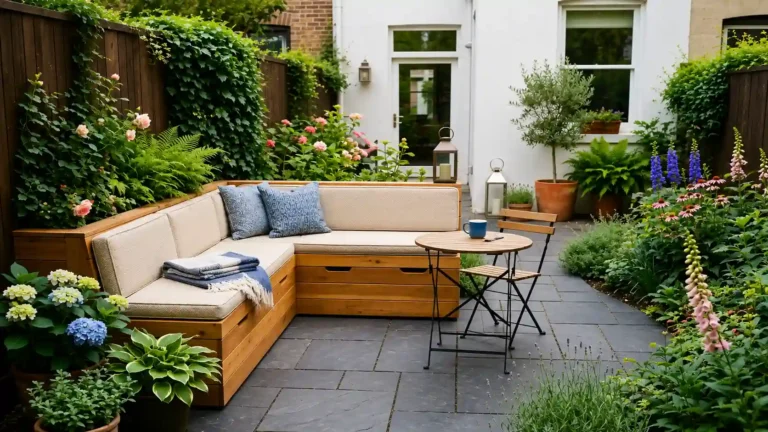
Create an Outdoor Lounge You Will Use Every Day
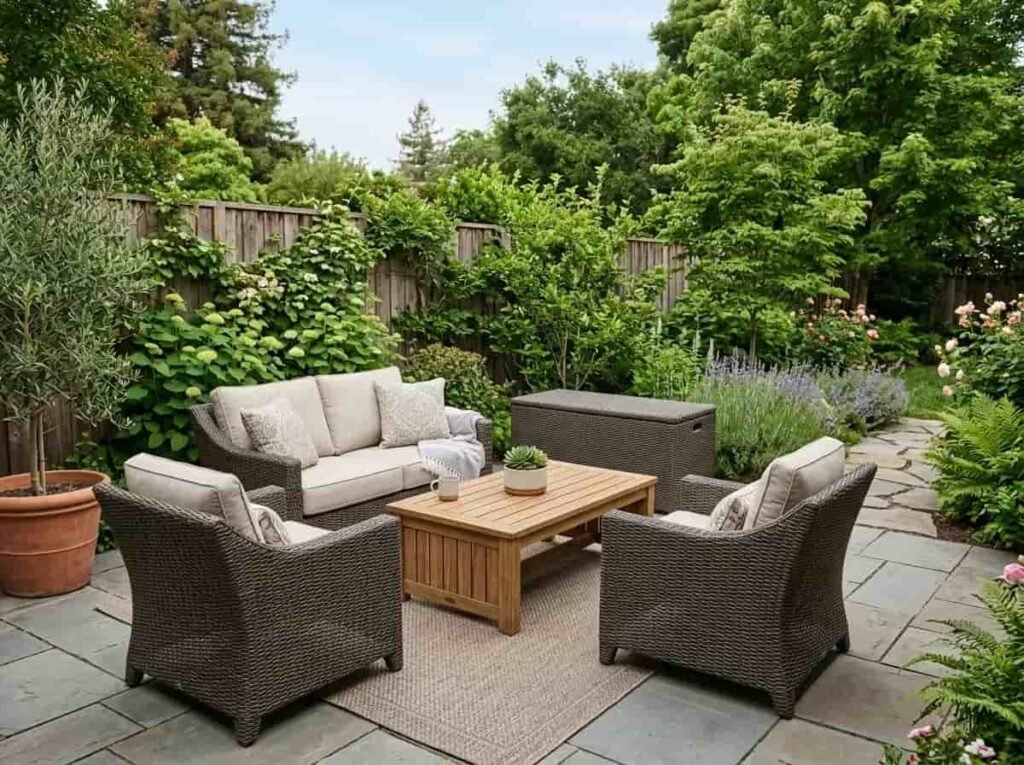
Comfortable seating can turn an empty patio into a useful outdoor room. Choose furniture based on the number of people who will use the space most often.
A small loveseat and two chairs work well for conversation. A large sectional may suit a wide patio where family and friends gather. Two lounge chairs can be enough for a quiet corner.
Place seats close enough for people to talk without raising their voices. Add a coffee table or side tables for drinks, books, and snacks.
Look for cushions made for outdoor use. Removable, washable covers make cleaning easier. Quick-drying foam can also help in areas with frequent rain.
Storage matters too. A weather-safe box can hold cushions, blankets, games, and small garden tools.
Before buying furniture, mark the size on the ground with tape or boxes. This simple test can stop you from choosing pieces that are too large. Comfortable seating is one of the most useful backyard oasis ideas because it gives the whole space a clear purpose.
Add Shade With an Umbrella, Pergola, or Shade Sail
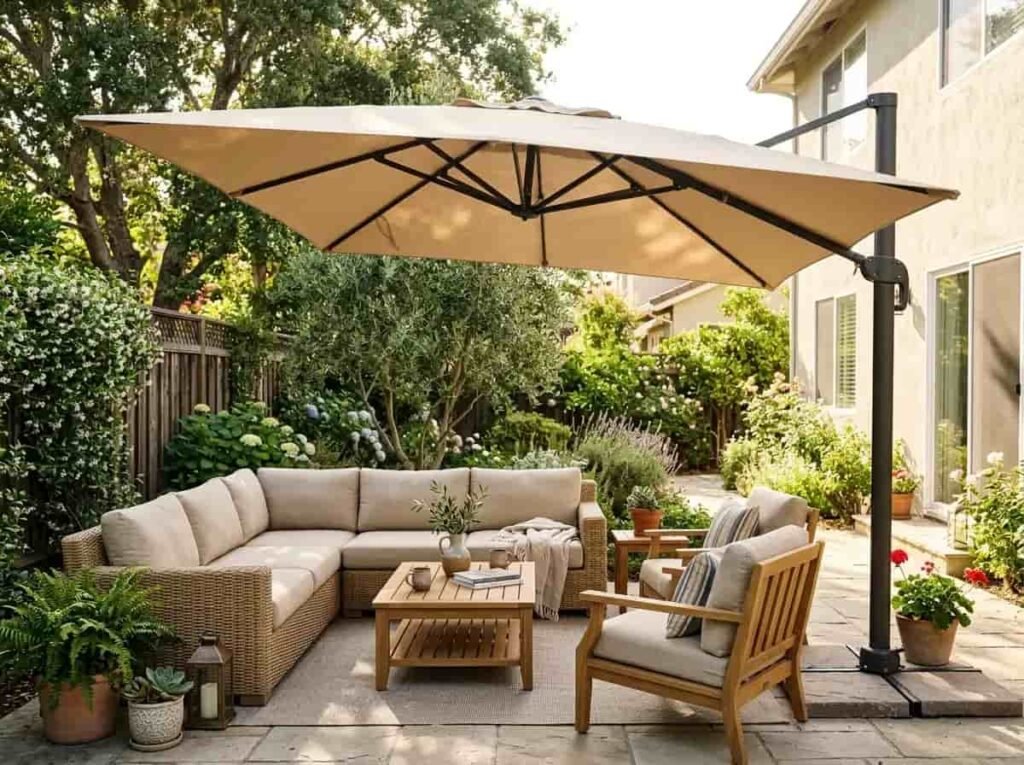
A nice patio may still sit empty when the sun makes it too hot to use. Shade can make the yard more comfortable for meals, reading, and afternoon rest.
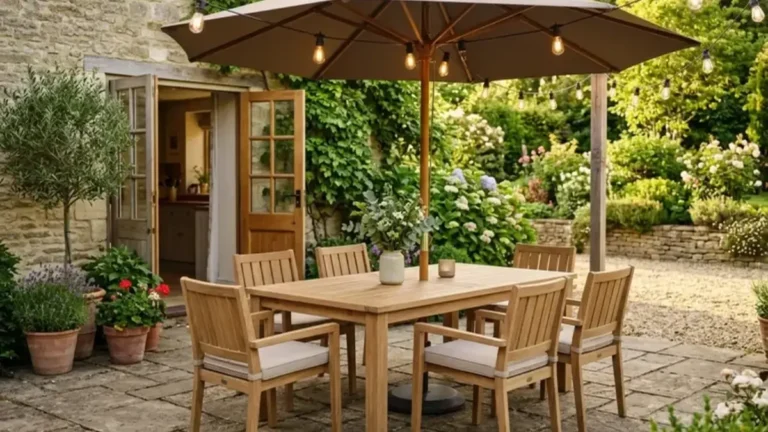
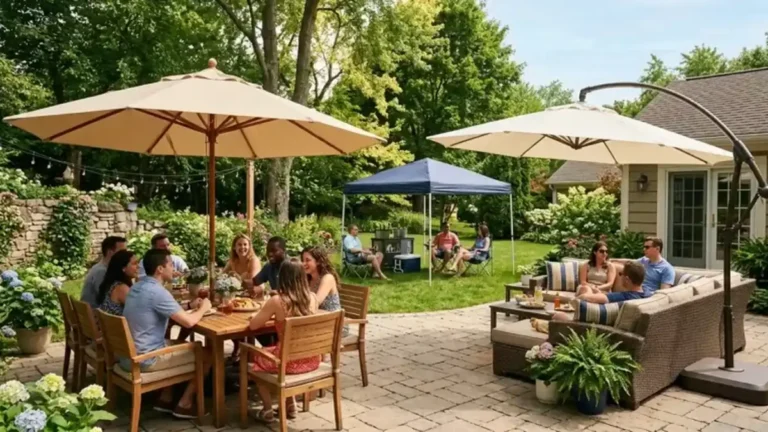
A large umbrella is one of the easiest options. It can move with the sun and does not require a major building project. A cantilever umbrella works well over dining tables and lounge furniture because the support pole sits to the side.
Shade sails suit small patios, play spaces, and modern yards. They need strong anchor points and careful placement so rainwater does not collect in the fabric.
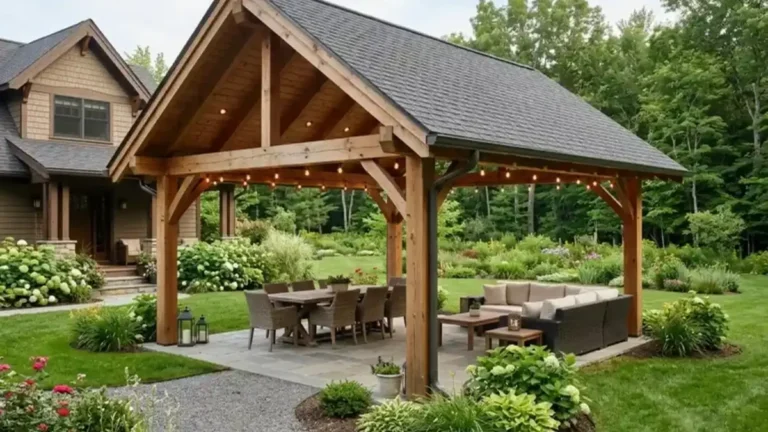
A pergola creates a more permanent outdoor area. It can support curtains, lights, fans, or climbing plants. Keep in mind that open roof slats may provide limited shade during some parts of the day.
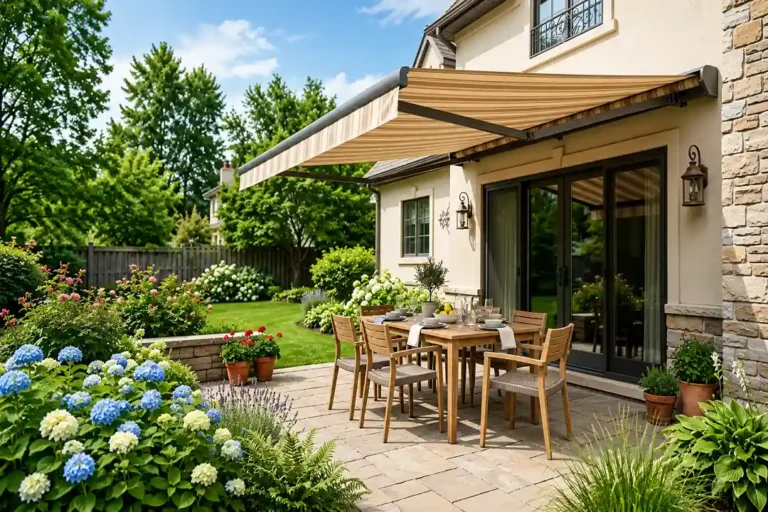
Retractable awnings work well beside the house. You can open them during hot weather and close them when you want more light.
Watch the sun before choosing a location. Afternoon heat often enters from the side, so overhead shade alone may not solve the problem.
Block Unwanted Views Without Closing Off the Yard
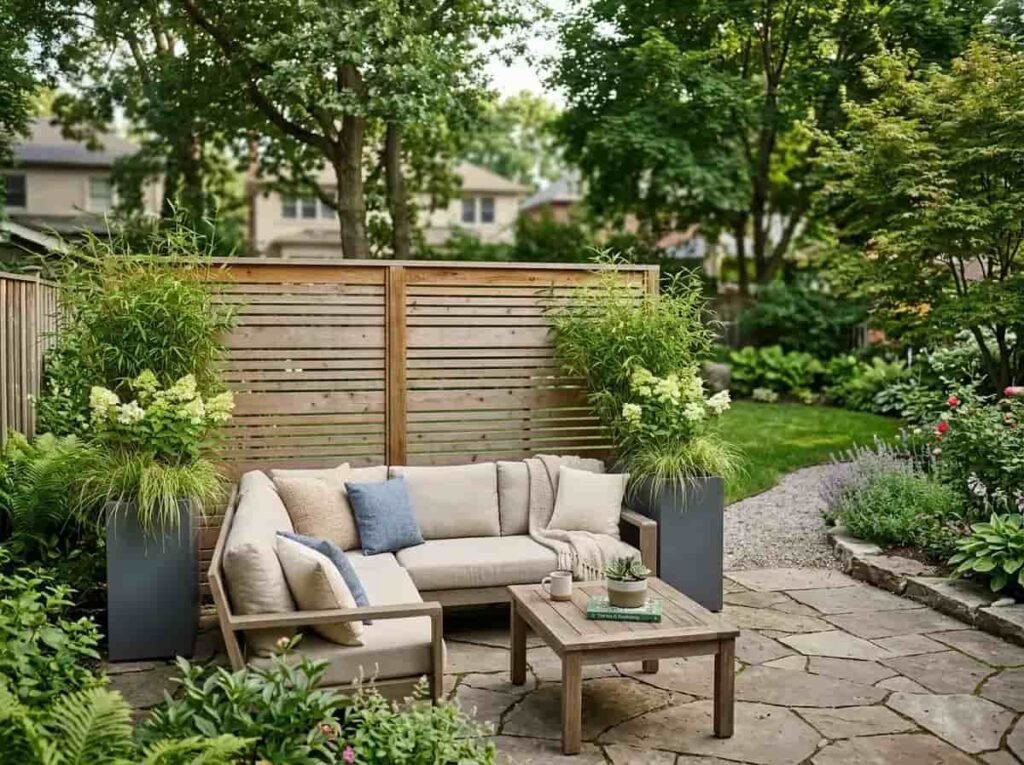
It is hard to relax when nearby windows face your seating area. You do not need to build a tall wall around the whole yard. In many cases, blocking one or two direct views is enough.
Sit in the place where you plan to lounge or eat. Look around and notice which areas make you feel exposed. These are the spots that need screening.
A slatted wood panel can create privacy behind a sofa or dining area. The small gaps allow light and air to pass through. A trellis with climbing plants creates a softer look, but it may take time to fill in.
Outdoor curtains work well around covered patios and pergolas. You can close them when needed and tie them back at other times.
Tall planters are useful when you cannot build a permanent screen. They can also move when your layout changes.
A tree or large shrub may distract the eye without blocking the full view. This often feels more natural in a small yard.
Check local rules before building a fixed screen or fence. Height, property line, and permit rules can vary by area.
Layer Plants to Make the Yard Feel Full and Calm
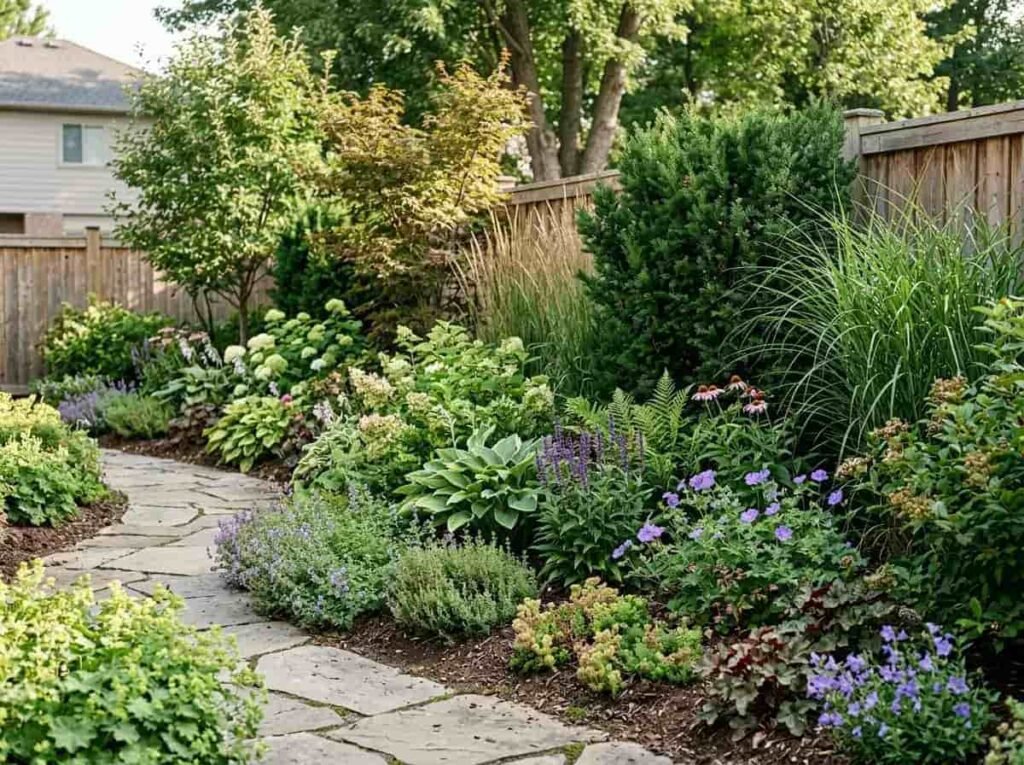
One row of the same plants can look flat. Layering different heights creates depth and makes a yard feel more settled.
Start with the tallest plants at the back. These may include small trees, large shrubs, or tall grasses. Add medium plants in front for structure. Finish with flowers, herbs, or low ground cover near the edge.
Mix evergreen plants with seasonal color. Evergreens keep some shape in the yard throughout the year. Flowers and grasses can add movement and changing color.
Group plants in small clusters instead of placing one plant in every open spot. Repeating a few plant types can also make the design feel connected.
Choose plants that suit your climate, soil, and sunlight. A plant that needs shade will struggle in a hot open yard. A plant that likes dry soil may fail near a downspout.
Check the mature size before planting. Small nursery plants can grow much wider than expected. Leaving enough space now will reduce crowding and pruning later.
For local plant advice, check a trusted nursery or local garden service.
Build a Container Garden for Fast Color
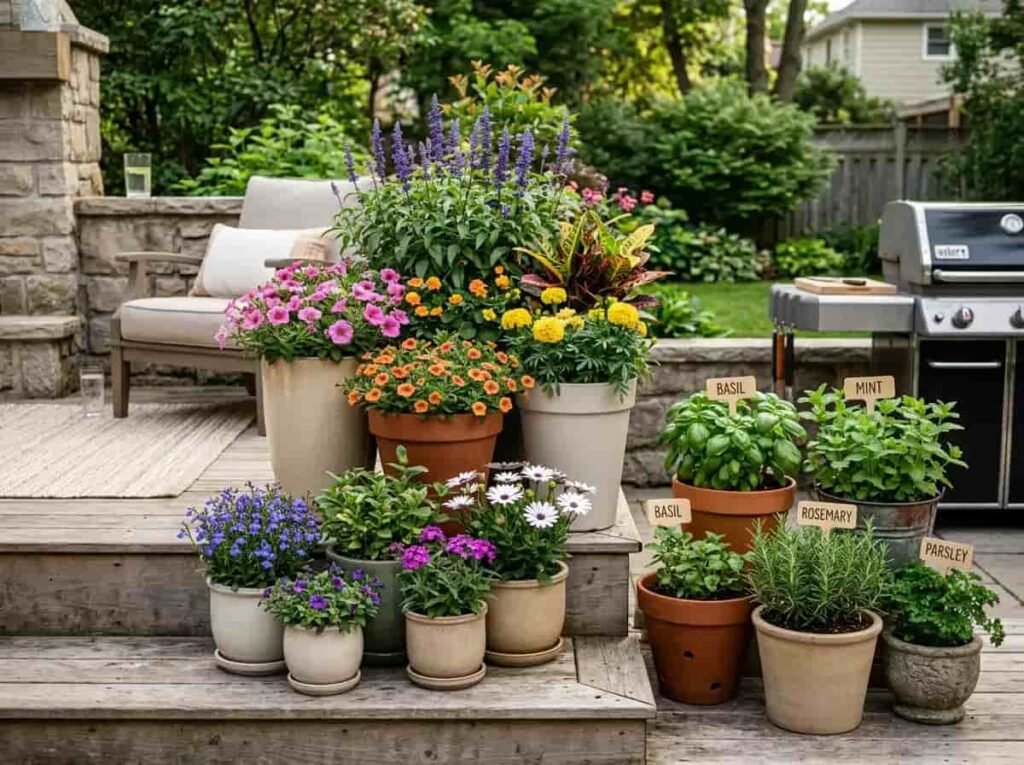
Container gardens work well for renters, patios, decks, and small yards. They give you color without digging up the ground.
Use a mix of pot sizes. Place tall containers at the back and smaller ones near the front. This creates depth and helps each plant stand out.
Choose pots with drainage holes. Water needs a place to leave the container, or plant roots may stay too wet.
You can grow herbs near an outdoor cooking area. Basil, mint, rosemary, and parsley can be easy to reach while preparing food. Plant needs can differ, so check how much sun and water each herb requires.
Tall planters can also create privacy around a seating area. Flower pots beside steps or doors help connect the house to the yard.
Use lightweight containers on balconies and raised decks. Large pots filled with wet soil can become very heavy.
These small backyard oasis ideas give you more control because you can move containers as the seasons change.
Use Soft Lighting Instead of One Harsh Light
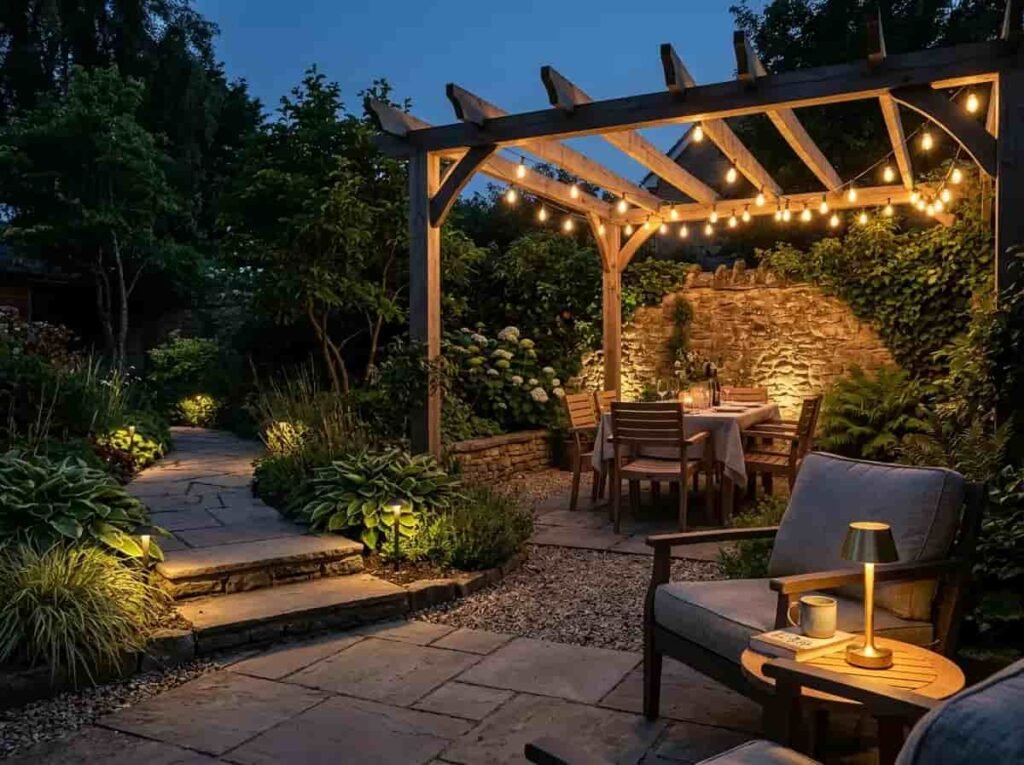
A bright wall light may help you see, but it can make the yard feel cold and exposed. Several softer lights usually create a calmer mood.
Start with safety. Light steps, paths, doors, and changes in ground level. Then add softer lights around seating and plants.
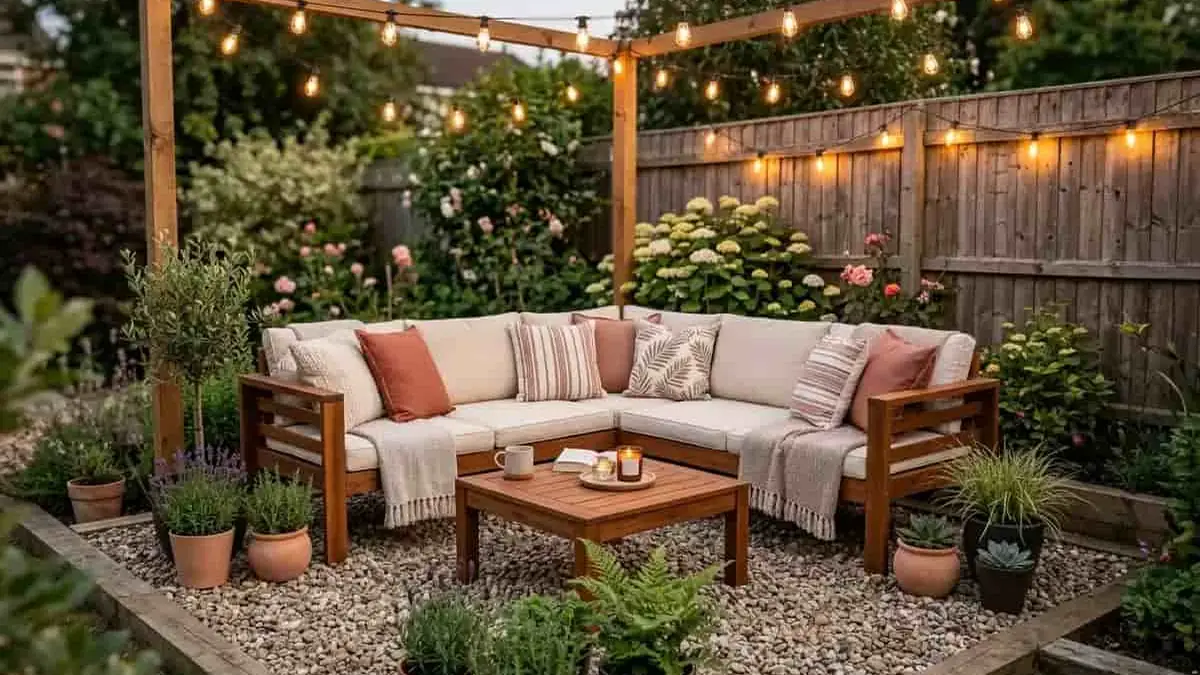
String lights can make a pergola, fence, or dining area feel warm. Solar path lights are useful in sunny areas where running power would be difficult. Rechargeable table lamps give you flexible light without visible cords.
Small uplights near trees or textured walls can add depth. Place them so the light does not shine directly into people’s eyes.
Choose fixtures, cords, and plugs made for outdoor use. Indoor lighting may not be safe in rain or damp weather.
Warm light often feels softer than very bright white light. Keep the level low enough for comfort but bright enough to move around safely.
Test temporary light positions before installing permanent fixtures. Sit in different chairs and check for glare.
Make a Fire Pit Area That Feels Safe and Social
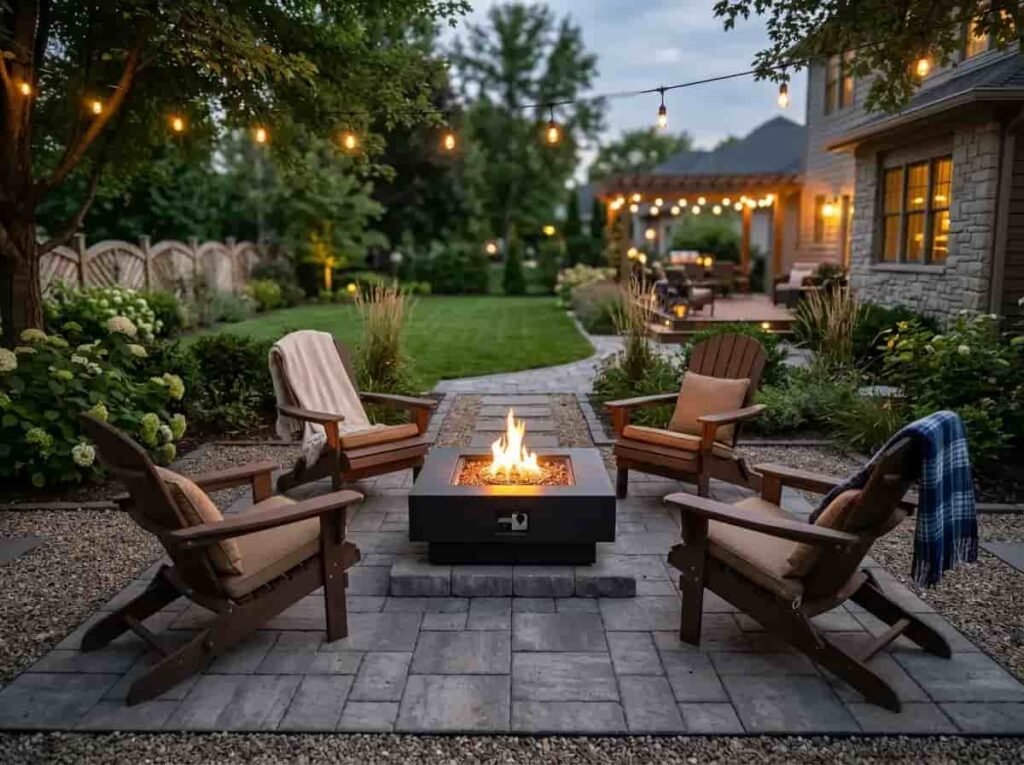
A fire pit gives people a reason to stay outside after sunset. It can create a natural gathering point for family and friends.
Wood-burning fire pits offer a classic flame and sound. They also create smoke, sparks, and ash. Gas fire pits are easier to start and may produce less smoke, but they need a safe fuel setup.
Portable fire pits are useful when you want to change the layout. Some can be stored when they are not in use.
Place the fire feature on a stable surface that suits the product and local rules. Gravel or approved paving may work better than dry grass or a wooden deck.
Keep chairs far enough away from heat and flames. Leave a clear path so people can move without stepping between seats.
Do not place a fire pit under low branches, fabric covers, or enclosed roofs unless the product and structure are made for that use.
Local fire rules may limit when and where you can burn wood. Check them before setting up the area.
Add a Small Water Feature for Calmer Sound
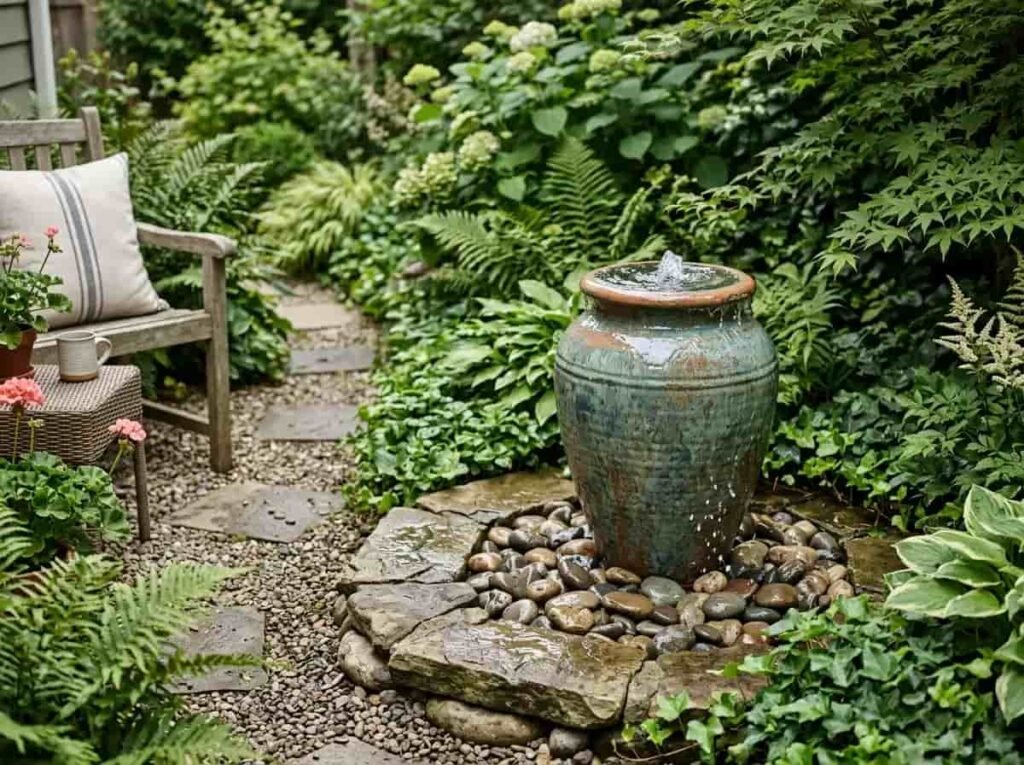
Traffic, air-conditioning units, and nearby activity can make a yard feel noisy. A water feature may help soften some of those sounds.
You do not need a large pond. A tabletop fountain can work on a small patio. A bubbling urn or bowl fountain suits a garden corner. A wall fountain can save floor space.
Place the feature near the seating area so you can hear it. A fountain hidden at the far end of the yard may look nice but have little effect on the space you use.
Think about power before choosing the location. Some fountains use a nearby outdoor outlet. Solar models need enough direct light to run well.
Water features also need care. You may need to remove leaves, refill water, clean the pump, and prepare the unit for cold weather.
Place the fountain where splashes will not create a slippery path. A small recirculating model is often the easiest choice for beginners.
Set Up an Outdoor Dining Area Near the Kitchen
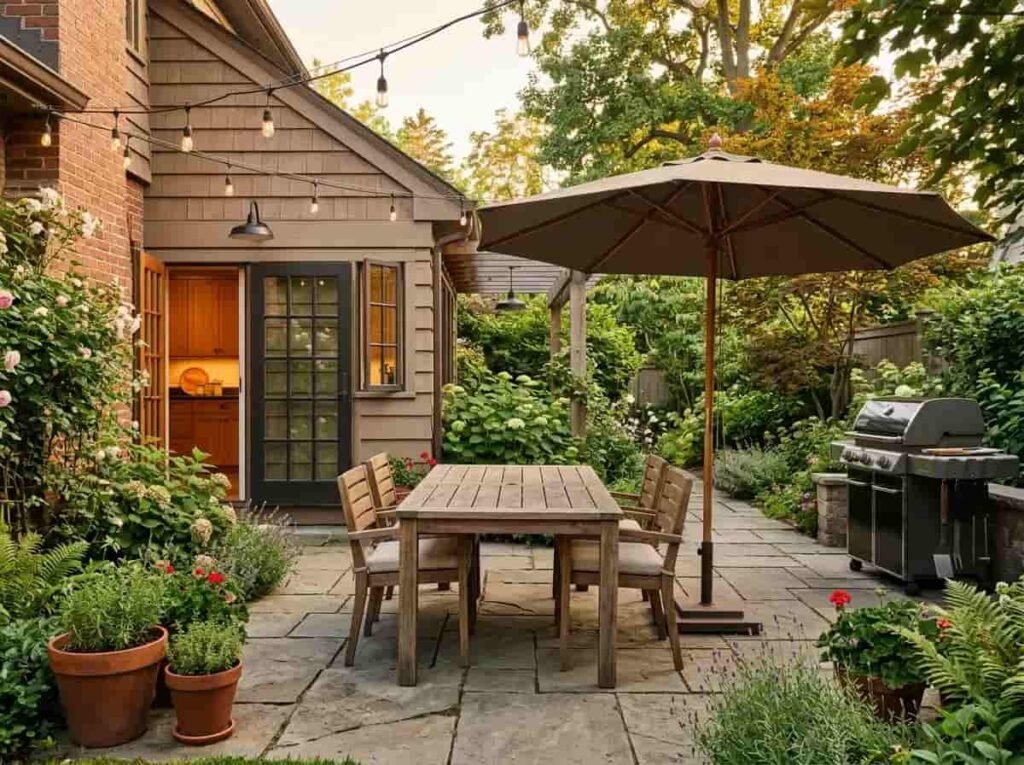
Outdoor meals are easier when the table is close to the house. Carrying food, dishes, and drinks across the full yard can become tiring.
Place the dining area near the kitchen door when the layout allows it. Keep a clear path between the door, table, and grill.
Choose the table size based on daily use. A bistro table may be enough for one or two people. A family may need a table with four to six seats. Benches can save space on narrow patios.
Leave enough room behind each chair. People should be able to pull chairs out without hitting a wall, planter, or another seat.
Add shade for daytime meals. An umbrella, pergola, or covered patio can keep the table cooler.
Use lighting above or beside the table for evening meals. Avoid placing a bright light at eye level.
Select a table surface that is easy to wipe clean. Outdoor meals can leave crumbs, spills, and grease.
Turn a Quiet Corner Into a Reading Nook
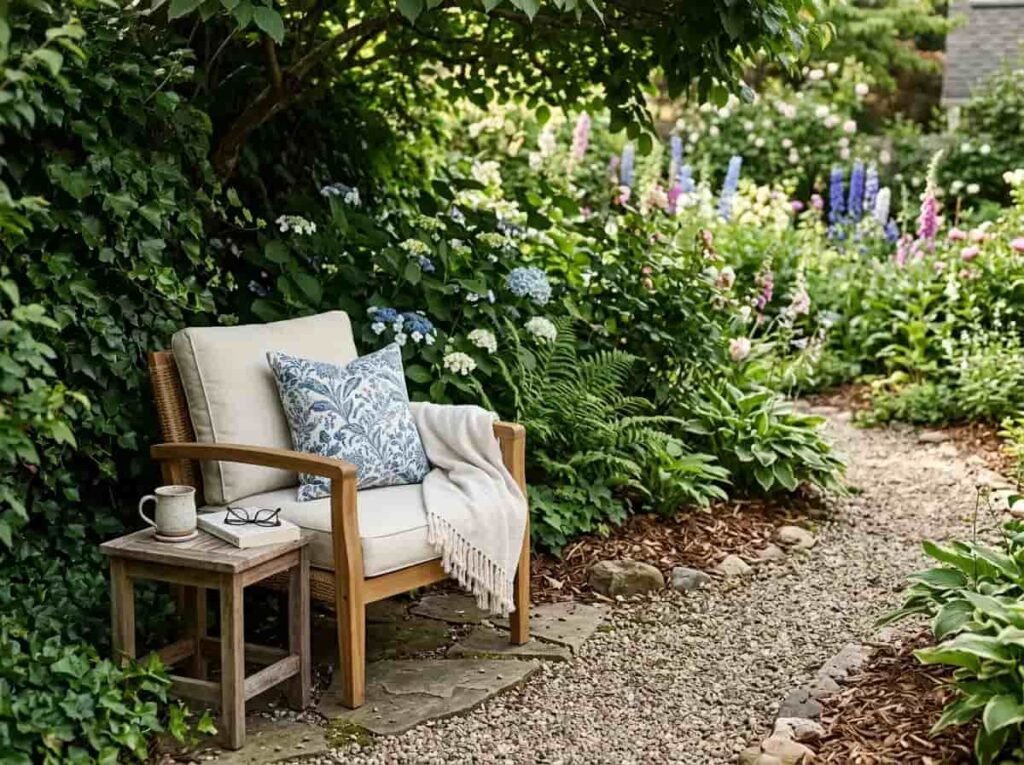
You do not need a large area to create a place for quiet time. Look for the calmest corner of your yard.
Choose a spot with shade and some privacy. This may be under a tree, behind a planter, or beside a garden bed.
Add one comfortable chair, chaise lounge, bench, or hammock. A small side table gives you room for a drink, book, or phone.
An outdoor pillow can make the seat feel softer. A lightweight throw is useful during cool evenings, but store it inside or in a dry box.
Place a few plants nearby to make the nook feel protected. Avoid filling the area with too many items. A quiet space often works best when it stays simple.
Keep the path to the seat clear. You are more likely to use the nook when it is easy to reach.
Define the Seating Area With an Outdoor Rug
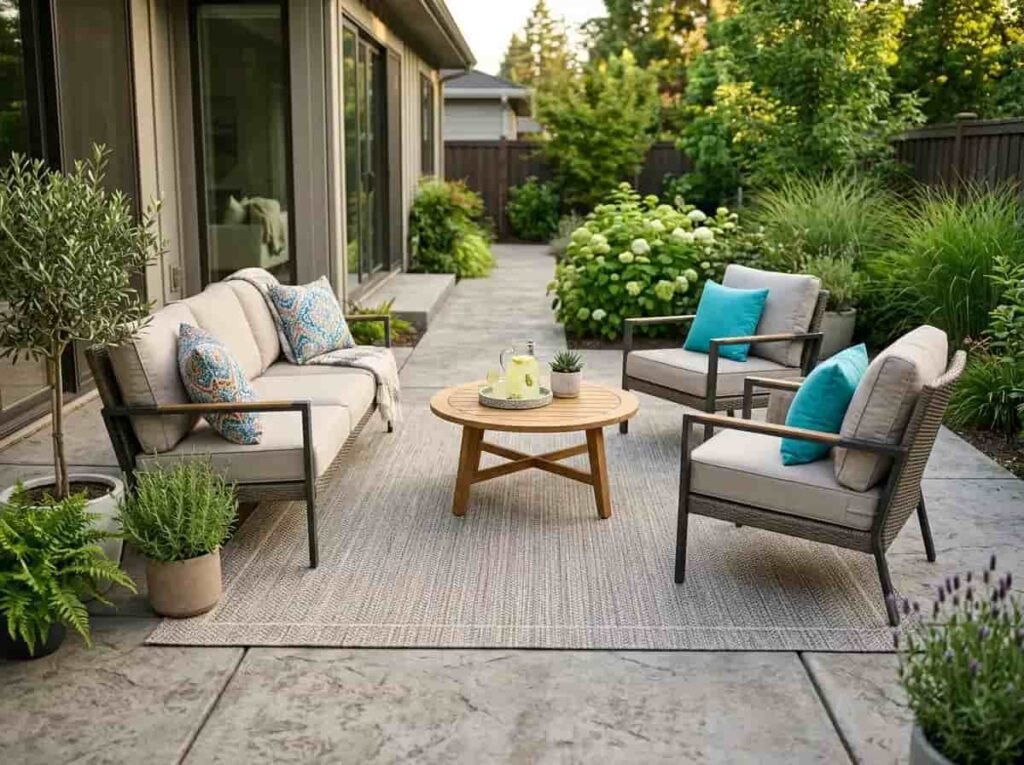
Furniture can look scattered on a wide concrete patio. An outdoor rug helps pull the pieces into one clear area.
Choose a size that fits under at least the front legs of the main chairs and sofa. A rug that is too small can make the furniture look crowded.
Look for a material made for outdoor use. It should handle moisture, dirt, and sunlight better than an indoor rug.
Patterns can hide light dust, leaves, and small stains. Neutral rugs can make bright cushions and plants stand out.
The rug still needs time to dry after rain. Lift it from time to time and check the surface underneath. Trapped moisture may cause stains or unwanted growth.
A simple rug is one of the fastest ways to make a plain patio feel more finished.
Add a Hammock or Hanging Chair for Easy Rest
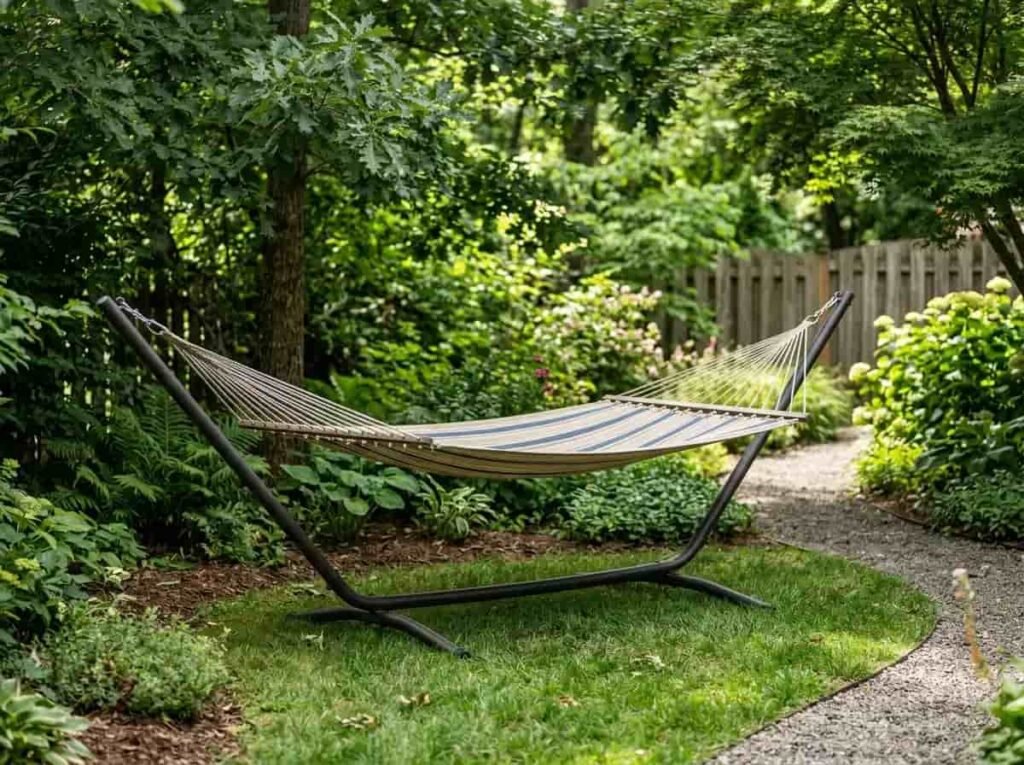
A hammock can make the yard feel more relaxed without taking up much visual space. A hanging chair creates a similar effect in a smaller area.
Safety comes first. Trees, posts, beams, and ceiling supports must be strong enough for the weight and movement.
A freestanding hammock is a good choice when you do not have safe supports. It can also move when you change the layout.
Measure the full swing and walking space before installation. A hanging chair should not hit a wall, table, or railing.
Choose outdoor fabric that dries quickly. Place the seat in shade when possible, since strong sun can heat the fabric and fade some colors.
Do not hang a seat from a weak tree branch or decorative beam. Ask a skilled installer when you are unsure about the support.
Use a Garden Path to Connect the Yard
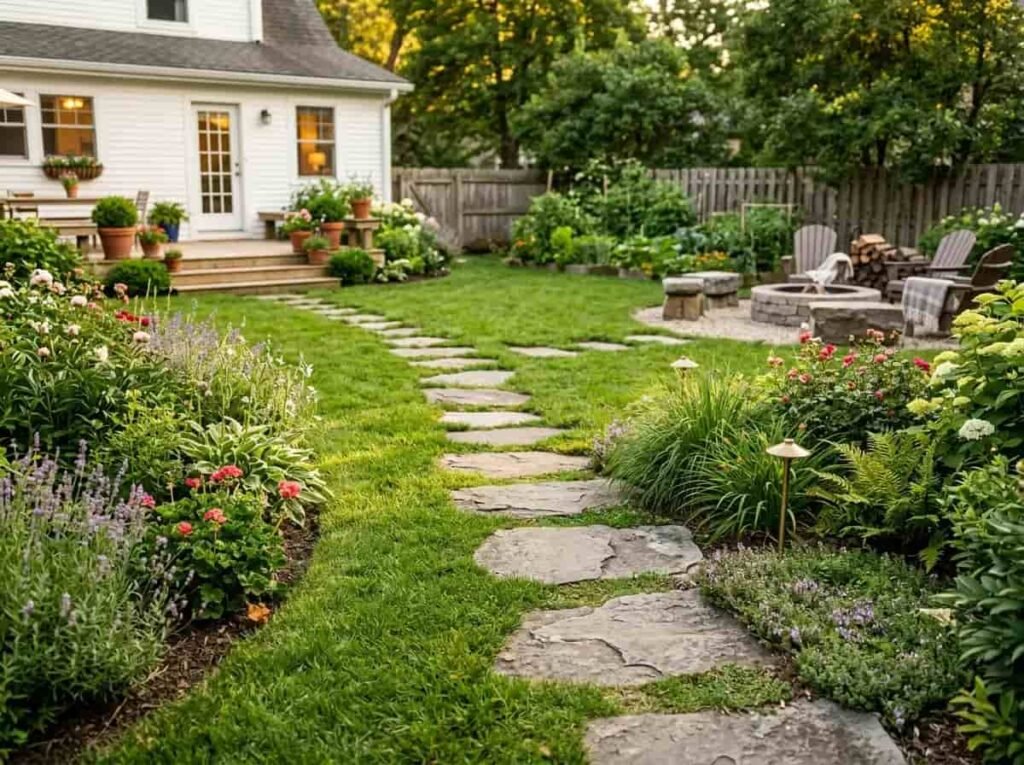
A clear path makes a yard feel planned. It also helps protect grass and planting areas from frequent foot traffic.
Start by listing the places people walk between most often. This may include the back door, patio, shed, garden, fire pit, and gate.
A straight path feels direct and formal. A gentle curve can make the space feel softer and may help guide the eye through a garden.
Gravel is often a simple choice for low-traffic areas. Stepping stones can work through grass or ground cover. Pavers offer a more solid surface for busy routes.
Choose materials that are stable and less slippery when wet. Add edging if gravel or loose stone begins to spread.
Low plants can soften the sides of the path. Small lights can make it safer at night.
Walk the planned route several times before building. The most natural path is usually the one people already take.
Create Clear Zones for Each Outdoor Activity
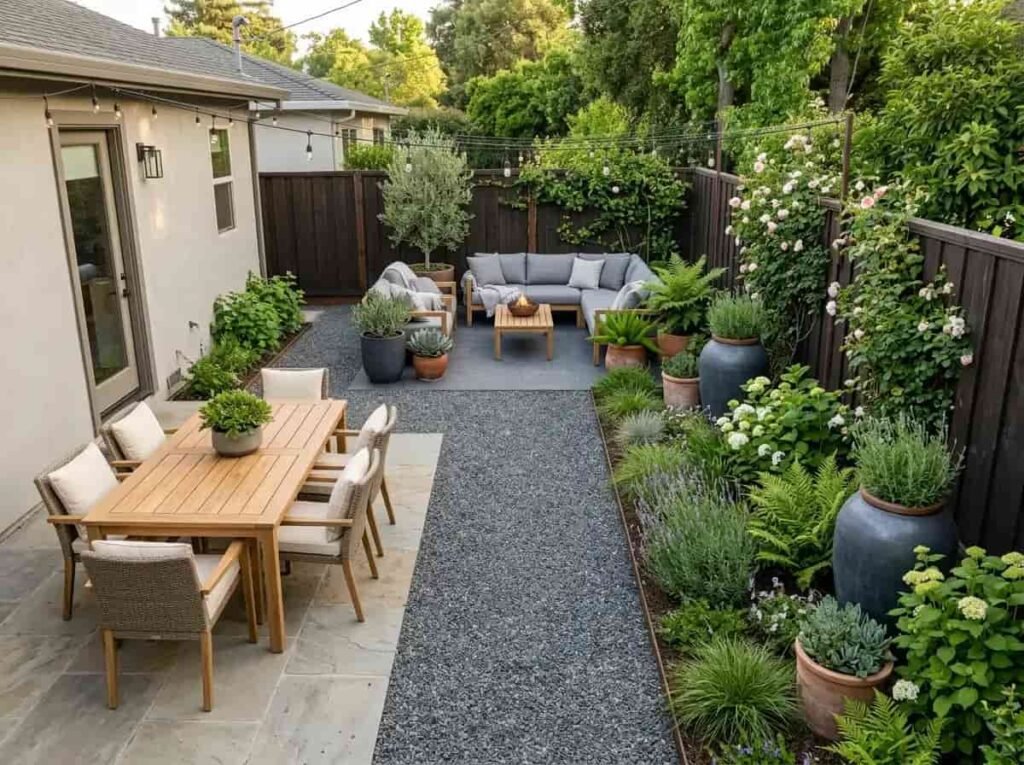
A yard can feel crowded when dining, cooking, playing, and resting all happen in one spot. Clear zones help each activity work better.
Place the dining area near the house so food is easier to carry. Keep cooking close enough for convenience but far enough from seats to reduce smoke.
A fire pit may work better farther from the house. A reading area can sit behind plants or a screen. A children’s play area should be visible from the main seating zone.
You do not need walls between these spaces. Rugs, planters, paths, furniture placement, and changes in ground material can create simple boundaries.
For a small rectangular yard, place dining near the back door. Use one side for a slim garden bed. Put a small lounge area at the far end. Keep the center open as a clear walking and play space.
Avoid adding more zones than the yard can hold. Empty space is useful too.
Start With a Simple Grill Station Before Building a Kitchen
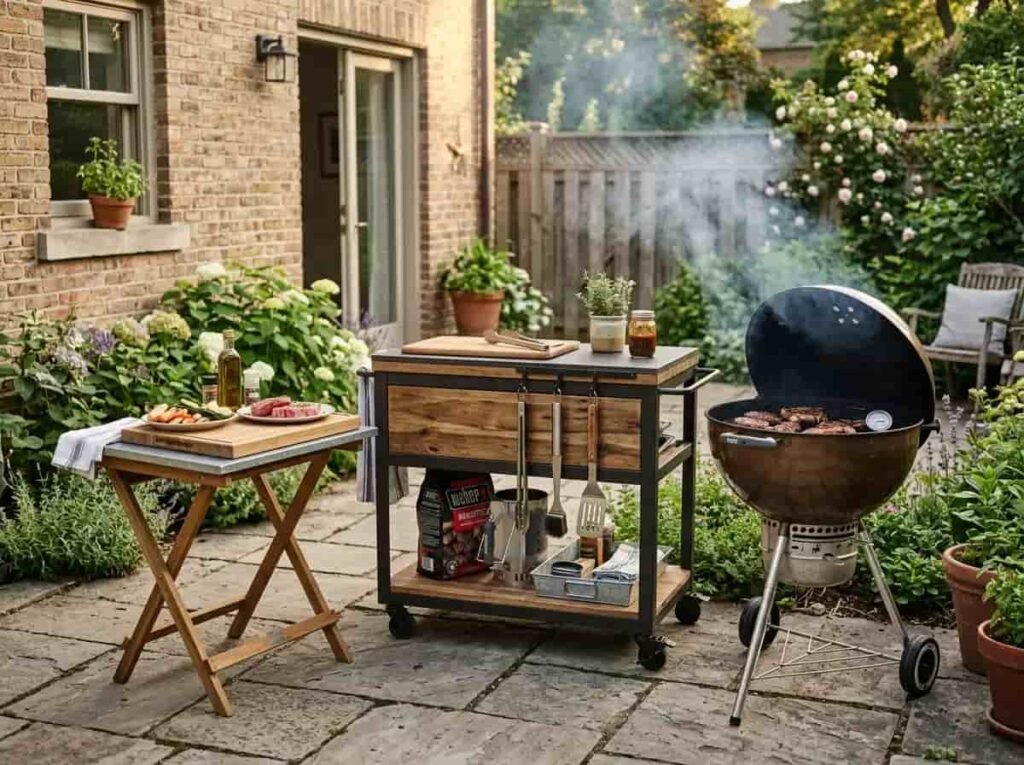
An outdoor cooking space does not need built-in cabinets and costly equipment. A grill cart and small prep table may meet your needs.
Start with the way you already cook. If you grill a few times each month, you may need a grill, tool storage, and a surface for plates. A large outdoor kitchen may be more work than it is worth.
Place the grill where smoke will move away from doors, windows, and seating. Keep it away from materials that can catch fire.
A weather-safe cart can hold tools, trays, and basic supplies. A small counter beside the grill makes food preparation easier.
Built-in kitchens can include counters, sinks, storage, refrigerators, and pizza ovens. These features need careful planning for power, water, drainage, and weather.
Use the basic setup for a while before adding more. This helps you learn which features you actually need.
Add Soft Textures Without Filling Every Surface
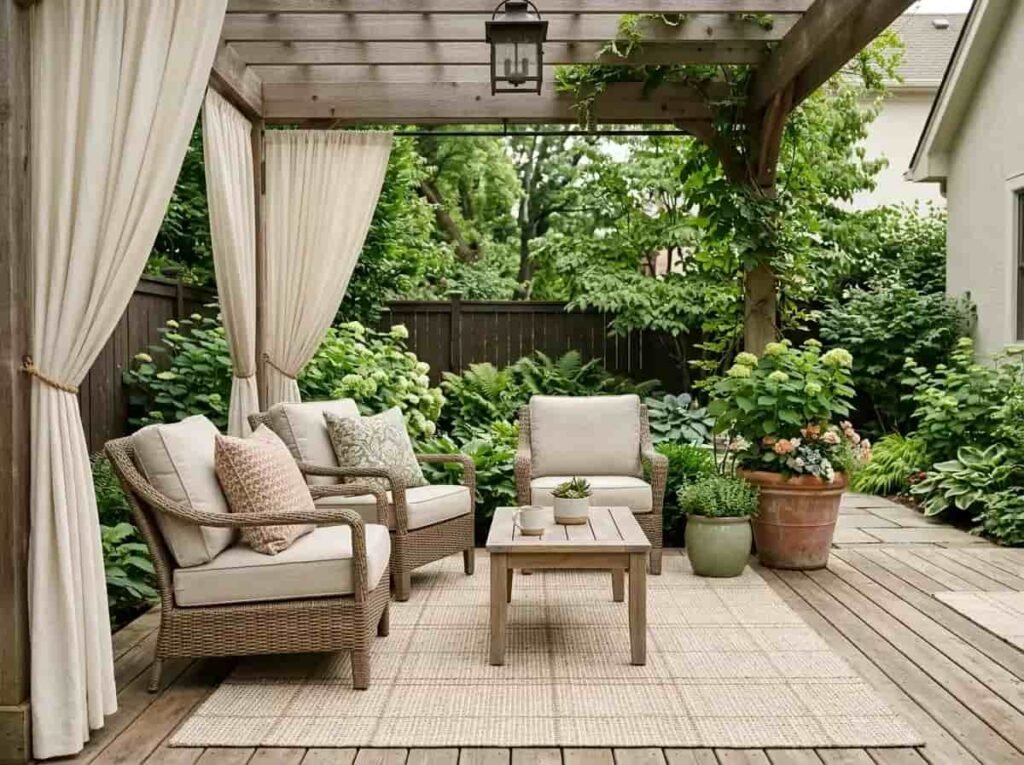
Patios, fences, and outdoor furniture often have hard lines. Cushions, pillows, rugs, curtains, and fabric shades can make the space feel more comfortable.
Choose a simple color plan. Start with one main neutral shade. Add one or two accent colors through pillows, pots, or flowers.
Repeat the same colors in different parts of the yard. This makes separate areas feel connected.
Two patterned pillows may be enough on a sofa with plain cushions. Outdoor curtains can soften a pergola while adding privacy. Lanterns and planters can fill empty corners.
Store fabric items during heavy rain, storms, or long periods when the yard is not in use. Even outdoor fabric lasts longer with basic care.
Avoid decorating every table, fence, and wall. Too many small pieces create clutter and take more time to clean.
Make a Small Backyard Feel Open and Useful
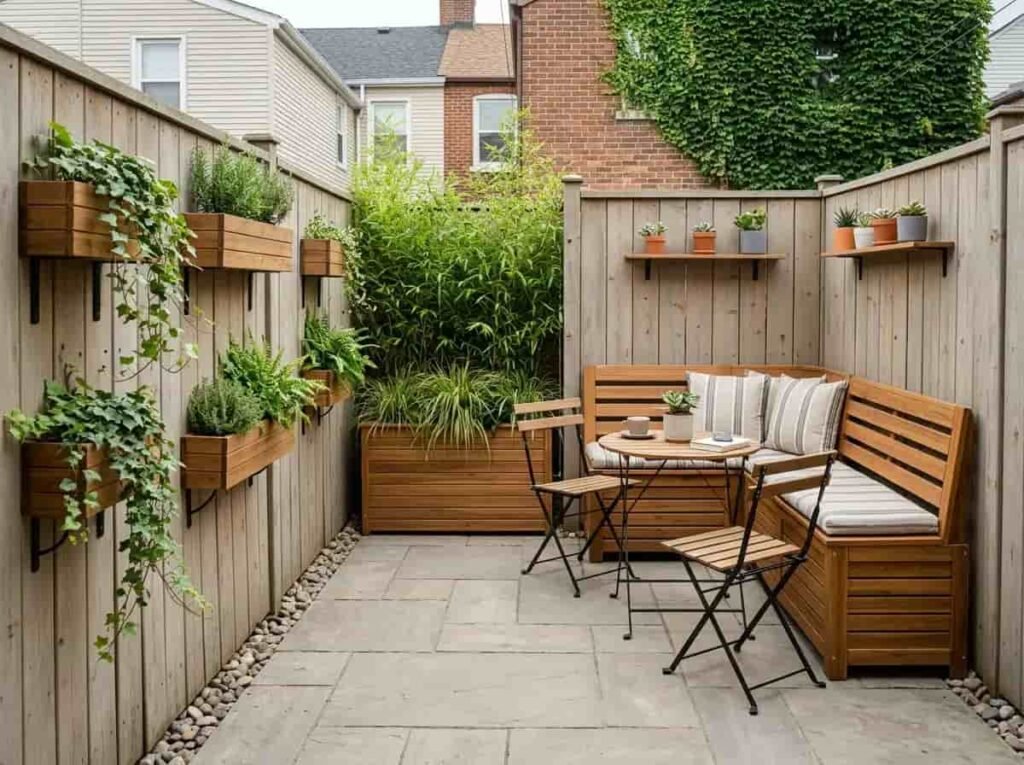
The best small backyard oasis ideas make every item earn its place. Large furniture and too many features can quickly make the area feel tight.
Use furniture with a smaller shape. A folding bistro set works well for meals and can move when you need more open space. A corner bench uses space that may otherwise sit empty.
Choose items with more than one job. A storage bench provides seating and hides cushions or garden tools. A planter may also act as a low privacy screen.
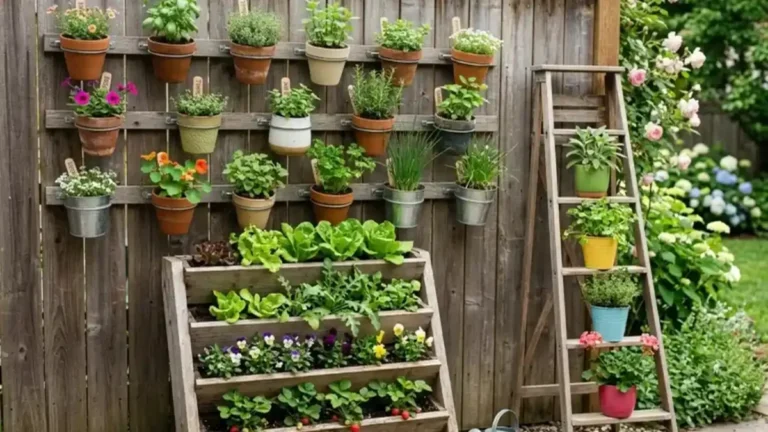
Use walls and fences for vertical planting. Hanging pots, slim shelves, and wall planters add greenery without using much floor space.
Keep the center open when possible. This gives the eye a clear line through the yard and creates room to move.
Limit the number of materials and colors. Repeating the same wood, metal, or paving style can make the design feel less busy.
In a small yard, open space is part of the design.
Build a Backyard Oasis on a Budget
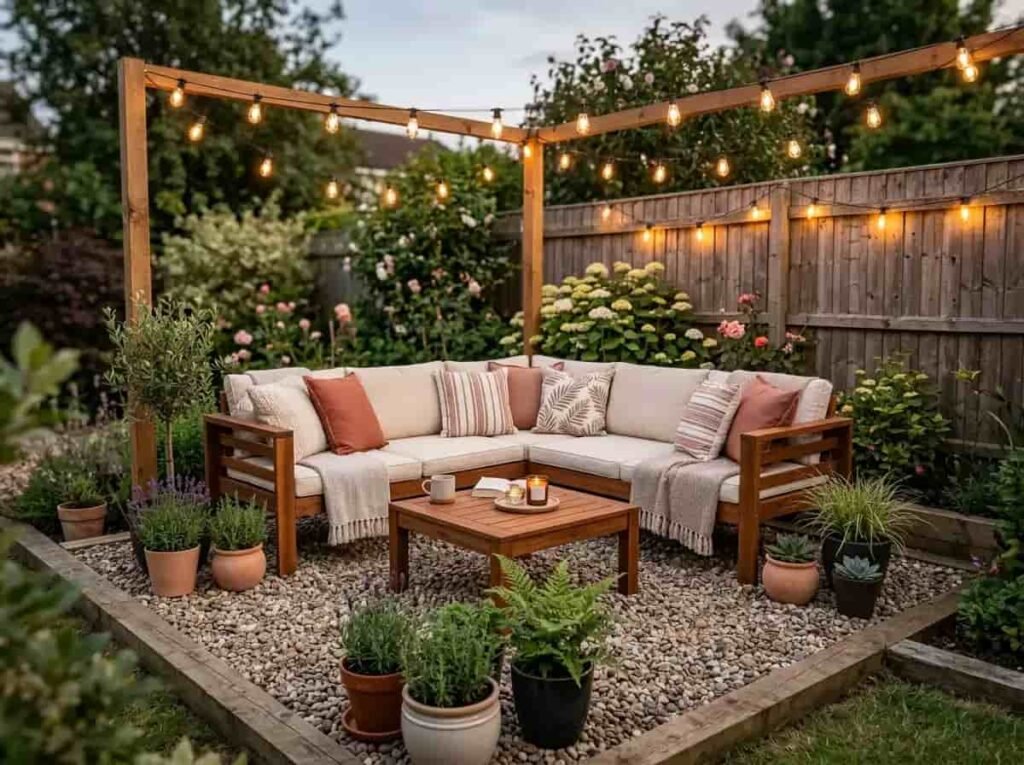
The first step in creating a backyard oasis on a budget does not cost anything. Clean the space and remove items you no longer use.
Wash the patio, trim overgrown plants, clear paths, and repair loose furniture. Then move your current chairs and tables into a better layout.
Paint or stain furniture that is still safe and strong. New cushion covers can also change the look without replacing the full set.
Use gravel for a seating area when a large paved patio is outside your budget. Check drainage and prepare the base so the gravel stays stable.
Buy smaller plants instead of mature ones. They cost less, but you will need to give them time to grow.
Shop at the end of the outdoor season for furniture, pots, lights, and umbrellas. Local resale listings may also have useful items.
| Upgrade | Budget Level |
| Cleaning and small repairs | Low |
| String lights | Low |
| Outdoor pillows | Low |
| Gravel seating area | Low to medium |
| Privacy screen | Medium |
| Pergola | Medium to high |
Finish one useful area before decorating the whole yard. A complete seating zone is more valuable than many half-finished projects.
Add One Feature That Fits Your Real Life
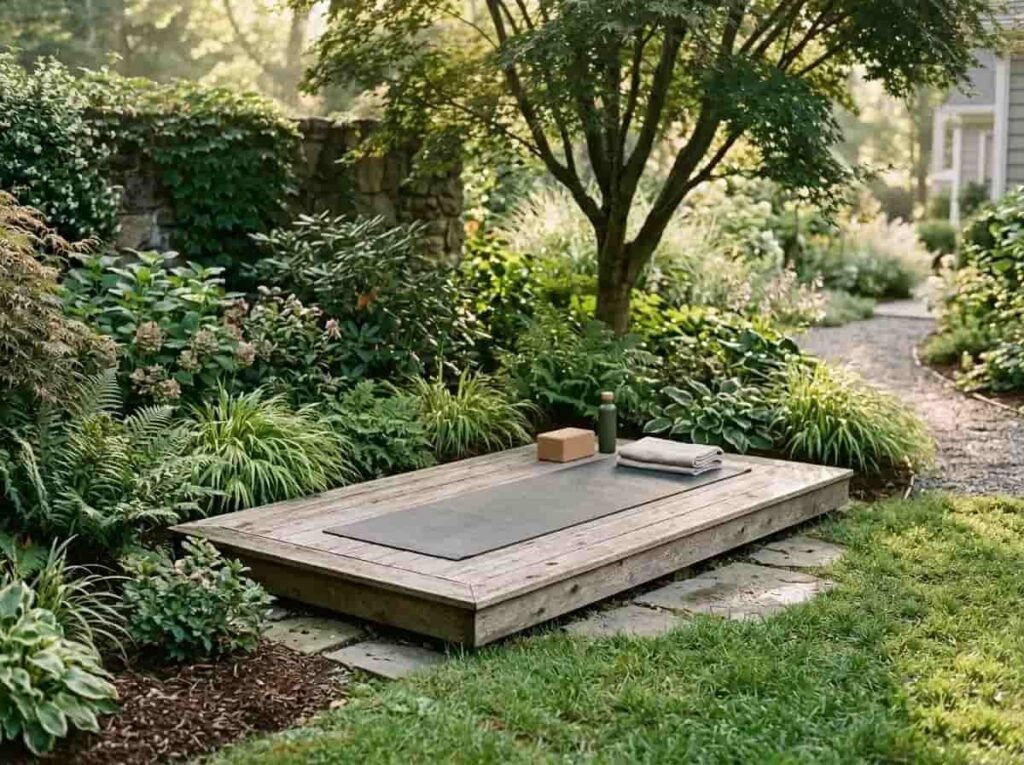
The best yard is one that supports the things you enjoy. Ask yourself what you actually want to do outside.
A yoga platform may help you use a quiet corner in the morning. An outdoor movie screen can create simple family nights. A potting bench gives a gardener space to work without carrying soil and tools through the house.
You may prefer a bird-watching chair near plants and feeders. A small coffee station can make the patio more useful in the morning. Children may enjoy their own planting bed. Pet owners may need a shaded rest area and a safe place for water.
Choose one feature based on your habits, not a passing trend. A costly item has little value when no one uses it.
Keep storage and upkeep in mind. Outdoor movie gear needs a dry place. A children’s garden needs easy access to water. A pet area needs safe materials and regular cleaning.
Your yard should feel like your space, not a copy of someone else’s photo.
How to Pick the Best Backyard Oasis Ideas for Your Yard
You do not need all 19 ideas. Start with the main reason you avoid using the yard.
If the area gets too hot, solve the shade problem first. If you feel exposed, add privacy near the seating area. If the yard feels empty, create one clear lounge zone and add a few plant layers.
Think about your climate and the amount of care you can manage. A large garden may look beautiful, but it may not suit someone who has little time for watering and trimming.
Spend money on features that increase daily use. Comfortable seats and shade may offer more value than decorative items.
Permanent features need more planning. A pergola, large patio, built-in kitchen, or pond can affect drainage and future yard changes. Flexible items such as umbrellas, movable planters, portable fire pits, and folding chairs are easier to adjust.
Your household also matters. Children need safe paths and visible play areas. Pets may need shade and strong plants. Frequent guests may need more seating.
| Your Main Problem | Best Place to Start |
| Too much sun | Umbrella, pergola, or shade sail |
| Little privacy | Screens, plants, or curtains |
| Yard feels empty | Seating zone and layered plants |
| Limited budget | Paint, lights, pillows, and pots |
| Very small yard | Folding furniture and vertical plants |
| Yard is dark at night | Soft layered lighting |
| Nearby traffic is noisy | Plants, screening, and a fountain |
Choose one comfort upgrade and one visual upgrade. For example, add shade first and then bring in plants.
Backyard Oasis Mistakes That Can Waste Space and Money
Good products can become bad choices when they are placed in the wrong spot.
One common mistake is buying furniture before measuring. A large sectional may block a door or leave no room to walk around the patio.
Shade is also easy to overlook. Furniture that sits in full afternoon sun may become too hot to use. Watch the area before setting the final layout.
Too many small decorations can make the yard feel messy. Use fewer pieces with a clear purpose.
Choose plants based on their mature size and care needs. High-maintenance plants may become a problem when you do not have time to water, trim, or clean around them.
Keep natural walking paths open. People will take the shortest route, even if it cuts through a flower bed.
Use products made for outdoor conditions. Indoor rugs, lights, and fabrics may become damaged or unsafe.
Do not forget storage. Cushions, toys, tools, and cooking supplies need a dry place.
Drainage matters too. Water should move away from the house and main seating areas.
A white outdoor sofa may look clean in a photo. It may be a poor choice under a tree that drops leaves or beside a muddy pet area. Plan for your real yard, not a perfect one.
Create a Backyard You Will Actually Use
The best backyard oasis ideas solve real problems. Comfortable seating gives you a reason to go outside. Shade makes the space easier to use. Privacy helps you relax. Plants and lighting bring the full area together.
You do not need to finish everything at once. Choose the biggest problem in your yard and fix that first. Start with seating if the space has no purpose. Add shade if the heat keeps you indoors. Use screens or tall planters when privacy is the main concern.
A simple backyard oasis on a budget can feel better than an expensive yard filled with features you never use. Begin with one useful area, enjoy it, and add more when you are ready.