16 Modern Backyard Landscaping Ideas for a Clean, Useful Space
A backyard can look modern and still feel warm, comfortable, and easy to use. The problem is that many yards lack a clear plan. Furniture sits in random spots. Plants crowd the edges. The patio feels separate from the rest of the space.
Good modern backyard landscaping fixes these issues with clean lines, simple materials, and useful outdoor zones. It does not mean covering the whole yard with concrete or removing every colorful plant.
The best modern backyard landscaping ideas balance hard surfaces with soft greenery. They also support the way you use your yard. You may want a quiet reading spot, a dining area, a safe play space, or a place to host friends.
The following ideas can work in small city yards, wide suburban lots, and everything between. You can use one idea for a quick update or combine several ideas in a full contemporary backyard design.
Start With Clean Lines to Give Your Backyard a Clear Shape
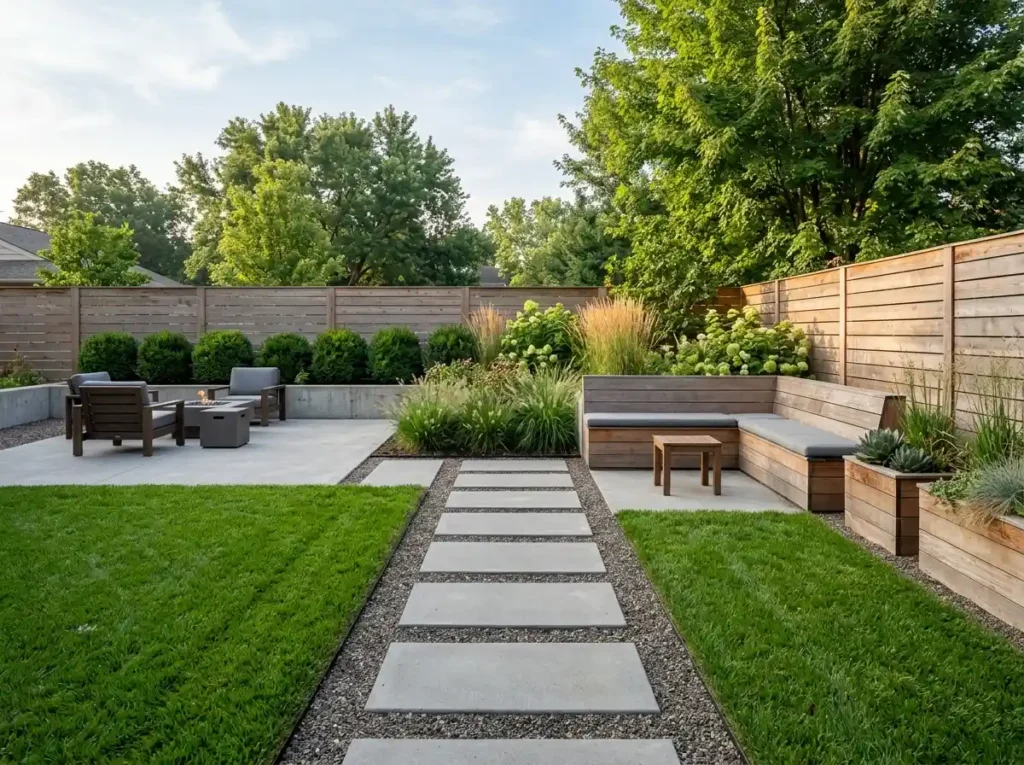
Modern backyard design starts with structure. Before choosing furniture or plants, look at the basic shape of your yard.
Straight paths, square patios, and neat planting beds can make a messy space feel calm. They also help guide people from one part of the yard to another.
For example, you could connect a rectangular patio to the lawn with a row of large stepping stones. A straight planting bed along the fence would support the same clean layout.
Try to repeat the same shapes across the yard. If your patio is rectangular, use rectangular planters or a long bench nearby. This makes separate features feel connected.
Limit the design to two or three main materials. You might combine concrete, gravel, and cedar wood. Using brick, tile, stone, metal, and several wood colors at once can make the yard feel busy.
Clean landscaping lines do not mean the yard must look stiff. Soft grasses and rounded shrubs can balance the sharp edges.
Use Large Concrete Pavers to Create a Cleaner Patio
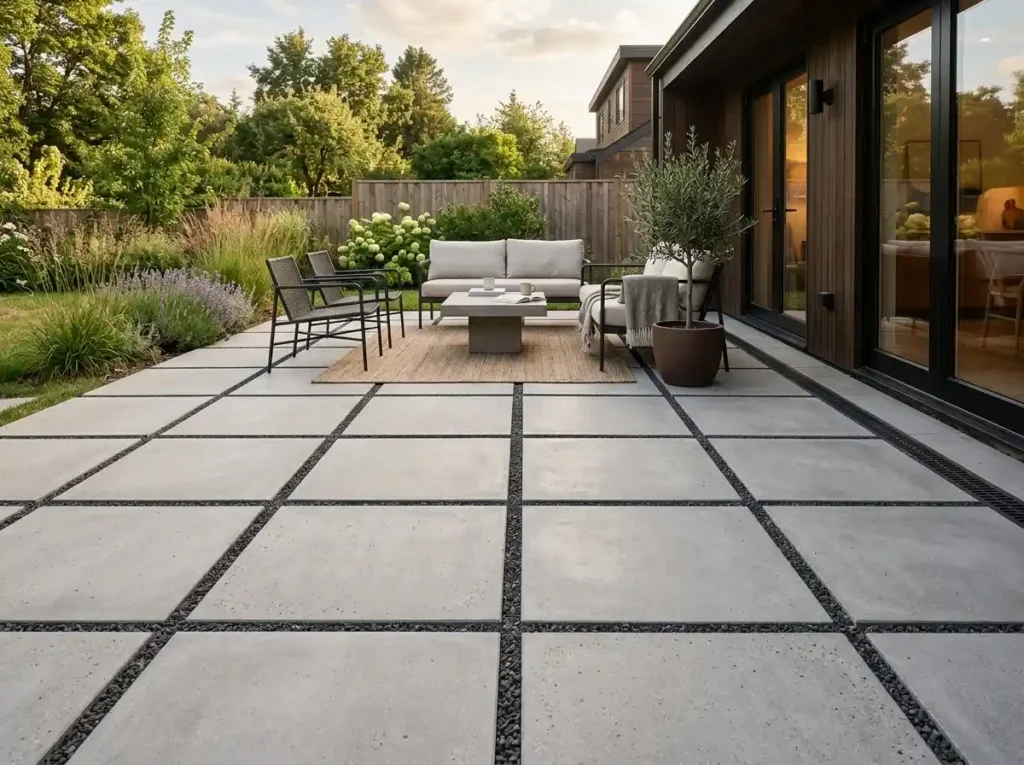
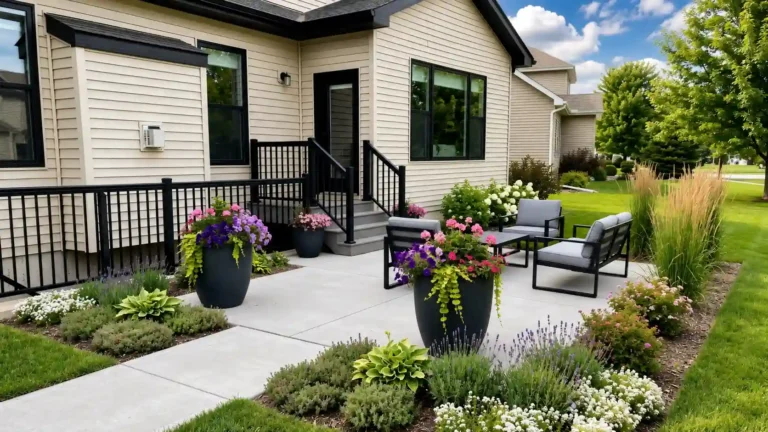
Large pavers can make a patio feel open and less crowded. They create fewer joint lines than small bricks, which gives the surface a smoother look.
Square concrete pavers work well in modern patio designs. Rectangular porcelain tiles can also create a sleek finish. You can place gravel, grass, or low ground cover between the slabs.
A common layout uses 24-inch square pavers with narrow gaps. Dark gravel between light pavers creates strong contrast. Grass between gray slabs feels softer and more natural.
Choose the material based on how you will use the patio. Porcelain can resist stains, but some types may become slippery when wet. Textured concrete may offer better grip around a pool.
Light pavers can make a small modern backyard feel brighter. Dark pavers create a bold look but may become hot in strong sun.
Prepare the base carefully. Poor ground work can cause pavers to sink, shift, or collect water. A good-looking patio still needs proper drainage.
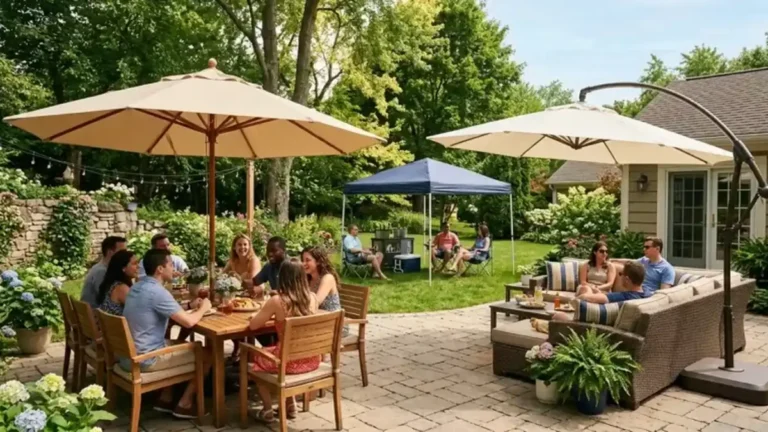
Divide the Yard Into Zones That Match Your Daily Life
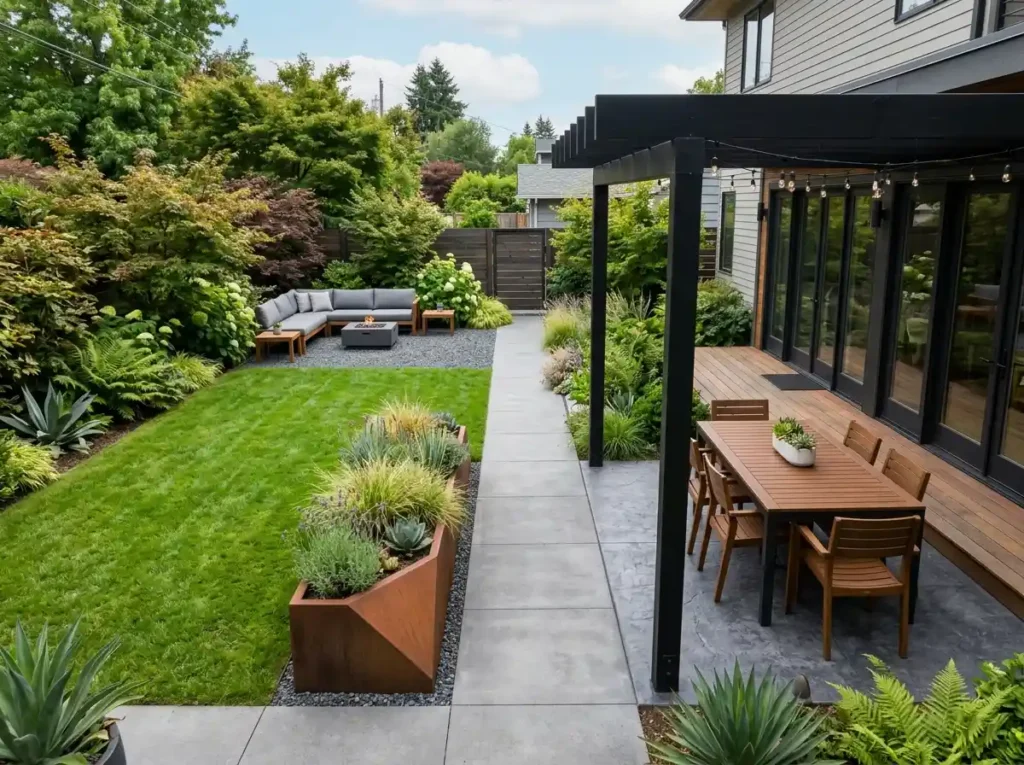
An open yard can still feel useless when it has no clear purpose. Creating zones gives each part of the backyard a job.
Start by listing how you use the space. You may need an outdoor dining area, a lounge, a play space, or a garden. Choose the most important uses first.
Place the dining zone near the back door when possible. This makes it easier to carry food, drinks, and dishes. A lounge or fire pit can sit farther from the house, where it feels more private.
Families may want an open lawn or turf section in the middle. Keeping it visible from the house makes it easier to watch children while cooking or working inside.
You can separate zones without building walls. Change the flooring from concrete to gravel. Add a planter between the patio and lawn. Use an outdoor rug to mark the seating area.
Leave enough room for people to move between each zone. A beautiful backyard layout will become frustrating if chairs block the main path.
Add a Low Modern Fire Pit for a Cozy Gathering Area
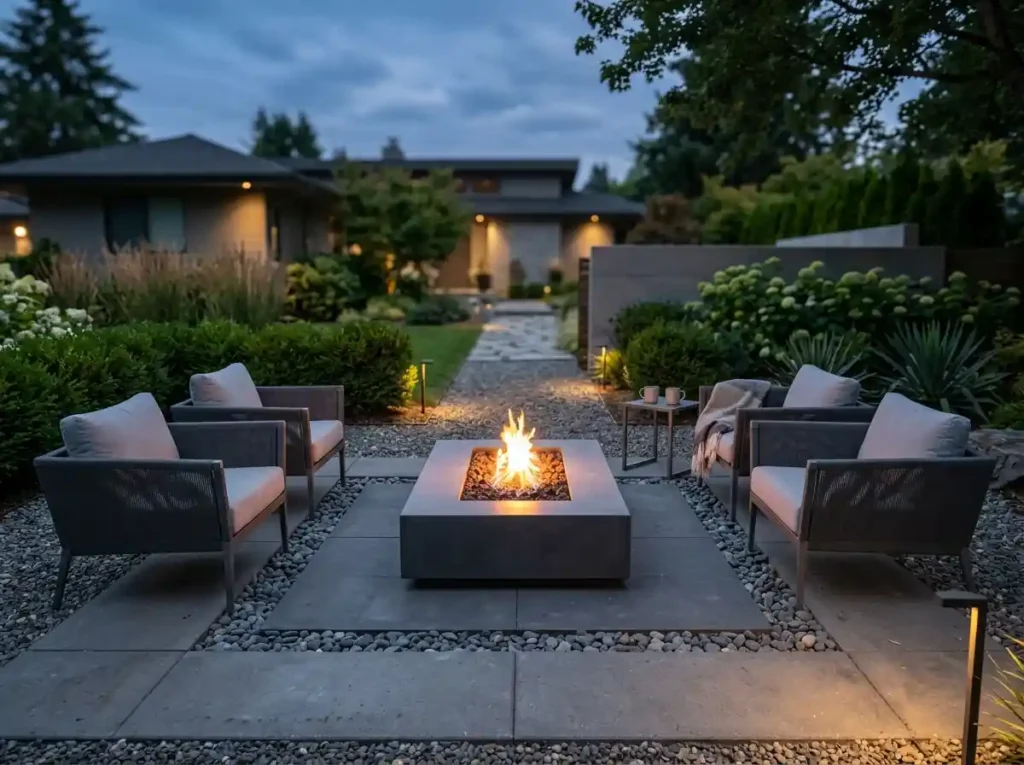
A fire pit gives people a reason to stay outside after sunset. It can also become the main feature in a modern outdoor lounge.
Low square and rectangular fire pits suit clean backyard layouts. A round fire bowl can work too, especially when the surrounding seating follows the same shape.
Gas fire pits are easy to start and create less smoke. Wood-burning models offer a natural fire experience but need more cleanup. Local rules may limit where and when you can use them.
Use concrete, stone, gravel, or another nonflammable surface around the fire pit. Avoid placing it directly beside dry plants, low branches, wooden fences, or covered structures.
Built-in benches can create a neat seating plan. Movable chairs offer more freedom and may be better for renters or small budgets.
A portable fire bowl may also be the smarter choice in a compact yard. You can move it when you need more floor space.
Always check local fire rules and follow the manufacturer’s clearance instructions. Safety distances can change based on the product and location.
Limit Plant Colors to Keep the Garden Calm
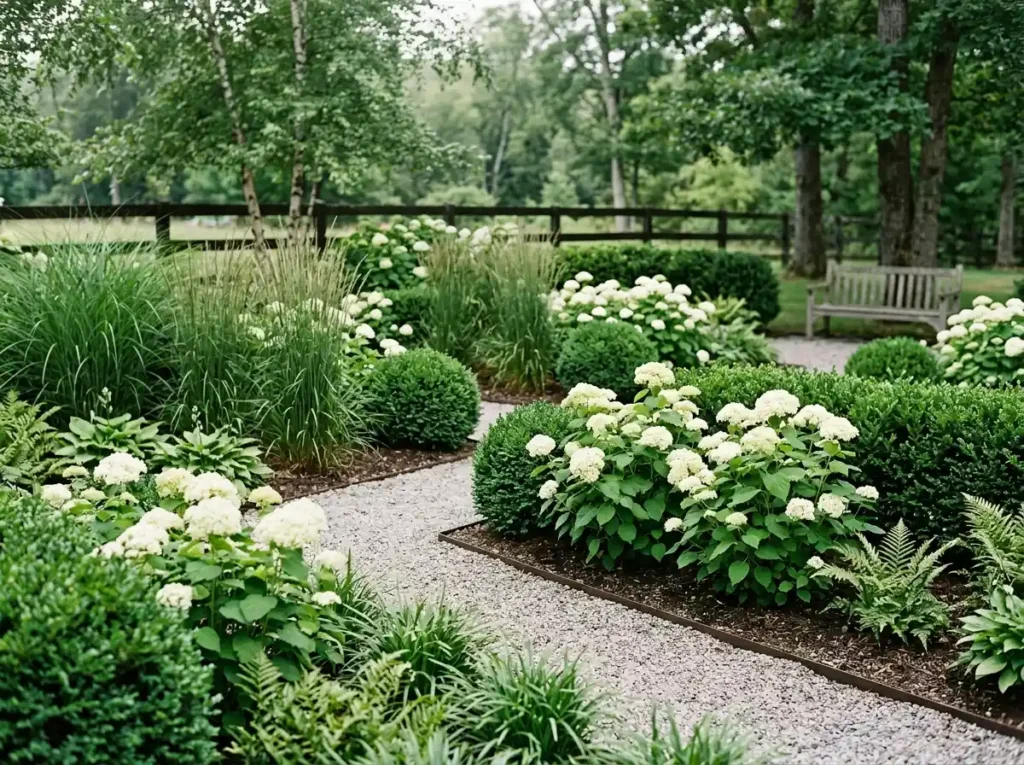
Too many flower colors can make a modern garden feel crowded. A smaller color palette creates a cleaner planting design.
Start with green foliage as the main color. Add one or two flower colors for contrast. White, soft pink, blue, and purple often work well in contemporary gardens.
You could pair ornamental grasses with white hydrangeas and clipped evergreen shrubs. A sunny, dry yard may suit lavender, olive trees, and silver-green plants. A shaded yard could use ferns, hostas, and white flowers.
Repeat the same plants in several areas. Three groups of the same grass usually look more connected than three unrelated plant types.
Think about the whole year. Some plants may look great for one month and plain for the rest of the year. Mix flowering plants with evergreens, grasses, and plants that have strong leaf shapes.
A limited palette does not have to feel dull. Texture, height, and leaf size can add interest without adding more colors.
Soften Hard Edges With Ornamental Grasses
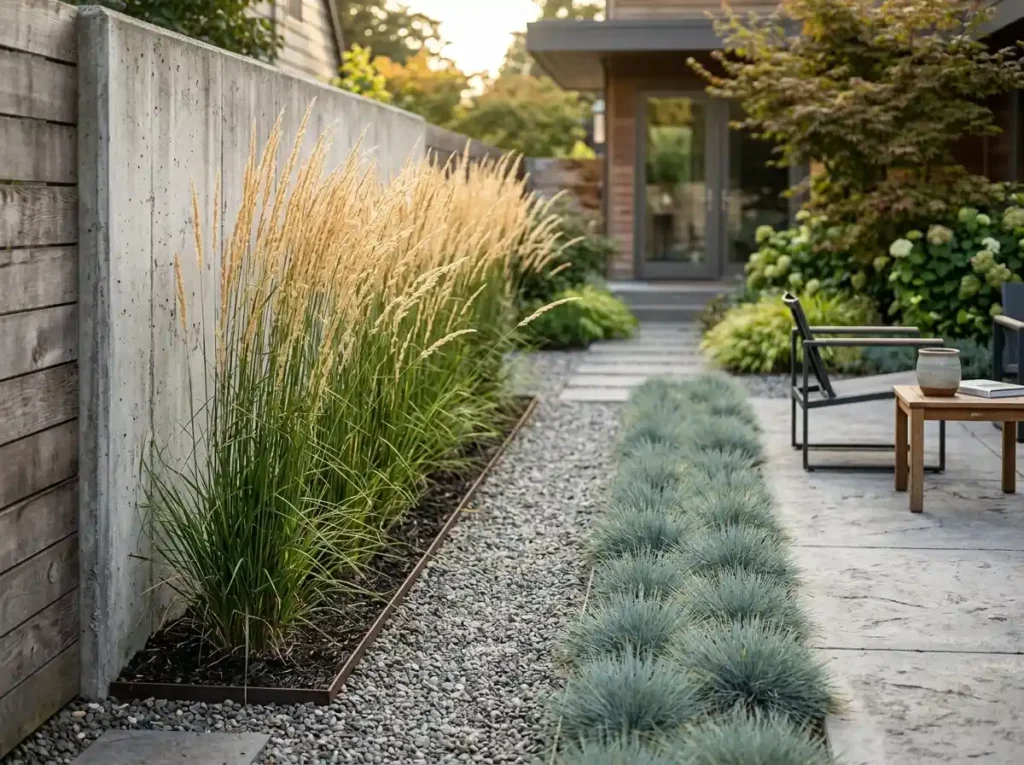
Concrete, steel, and gravel can make a modern backyard feel hard. Ornamental grasses add movement and soften sharp edges.
Tall upright grasses work well along fences and walls. Smaller grasses can line paths or fill narrow planting strips. Flowing varieties look good beside patios because their leaves move in the wind.
Feather reed grass has a tall, narrow shape that suits structured spaces. Switchgrass can form a soft privacy screen. Blue fescue adds low blue-green mounds. Some fountain grasses create arching leaves and fluffy flower heads.
Do not choose grass by appearance alone. Check its mature height, width, water needs, and growth habits. A small plant at the garden center may become too wide for a narrow bed.
Some grasses spread quickly or may be invasive in certain regions. Choose a non-invasive type that suits your local climate.
Most ornamental grasses need trimming once a year. This is simple, but the exact timing depends on the plant and local weather.
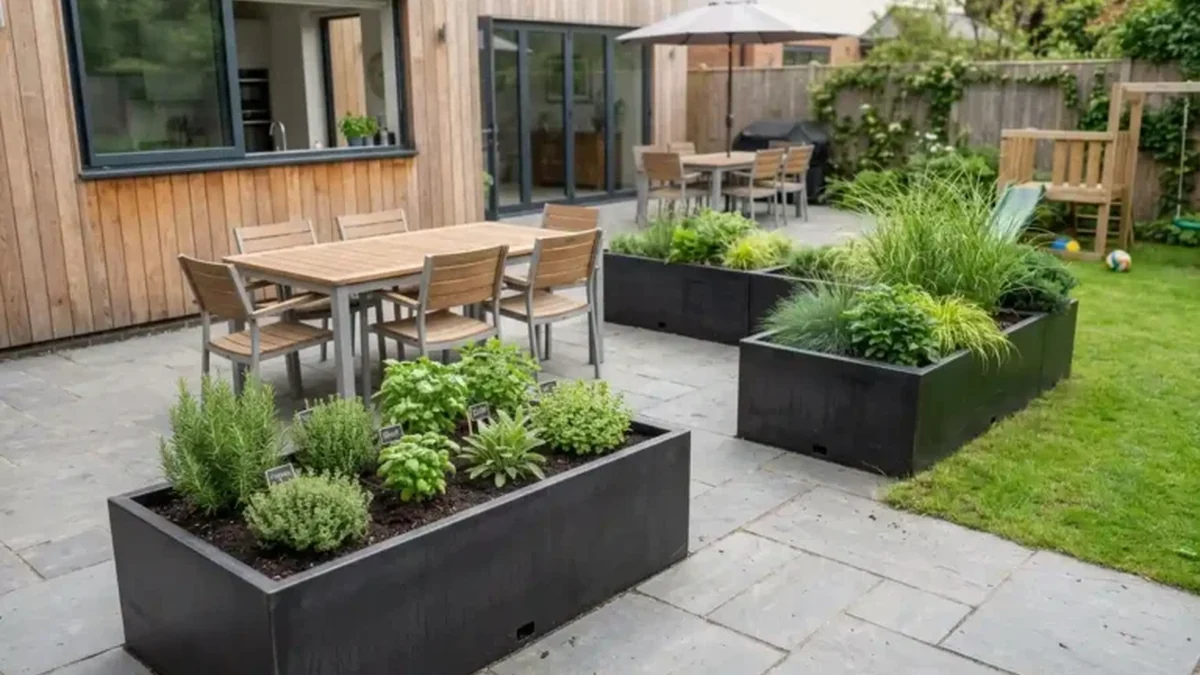
Use Geometric Raised Planters to Add Height
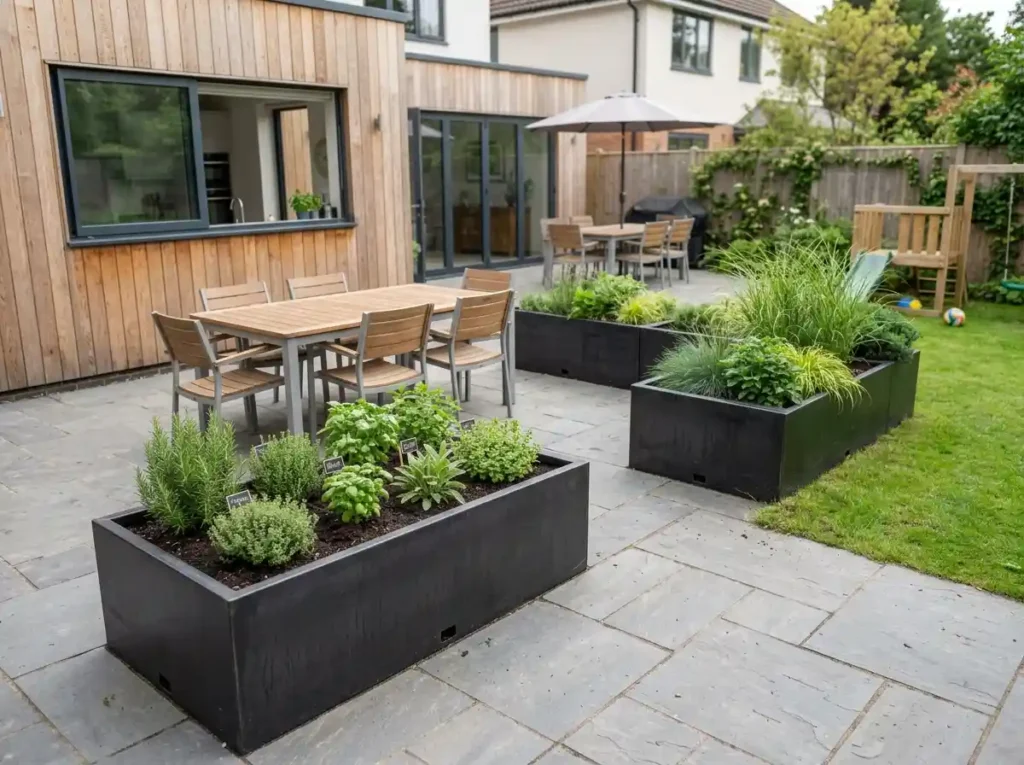
Raised planters can hold plants, shape a patio, and divide outdoor zones. Their clear forms also suit modern backyard landscaping.
Long rectangular beds can frame a dining space. Square planters can mark the corners of a patio. A low raised bed may act as a divider between a lounge and a play area.
Concrete planters offer a solid, smooth look. Black steel creates strong contrast. Cedar adds warmth. Masonry can match nearby walls or paving.
Choose the material based on cost, climate, and care needs. Metal may become hot in full sun. Wood can need sealing. Concrete is heavy and hard to move.
Planter depth should match the plants. Herbs and small flowers need less soil than shrubs or plants with deep roots. Make sure every planter has drainage holes or another safe way for water to escape.
Keep the width practical. You should be able to reach the middle without stepping into the soil.
For a useful modern garden, fill one raised bed with herbs near the kitchen. Use another with grasses or evergreen plants beside the seating area.
Mix Wood With Concrete to Make the Yard Feel Warmer
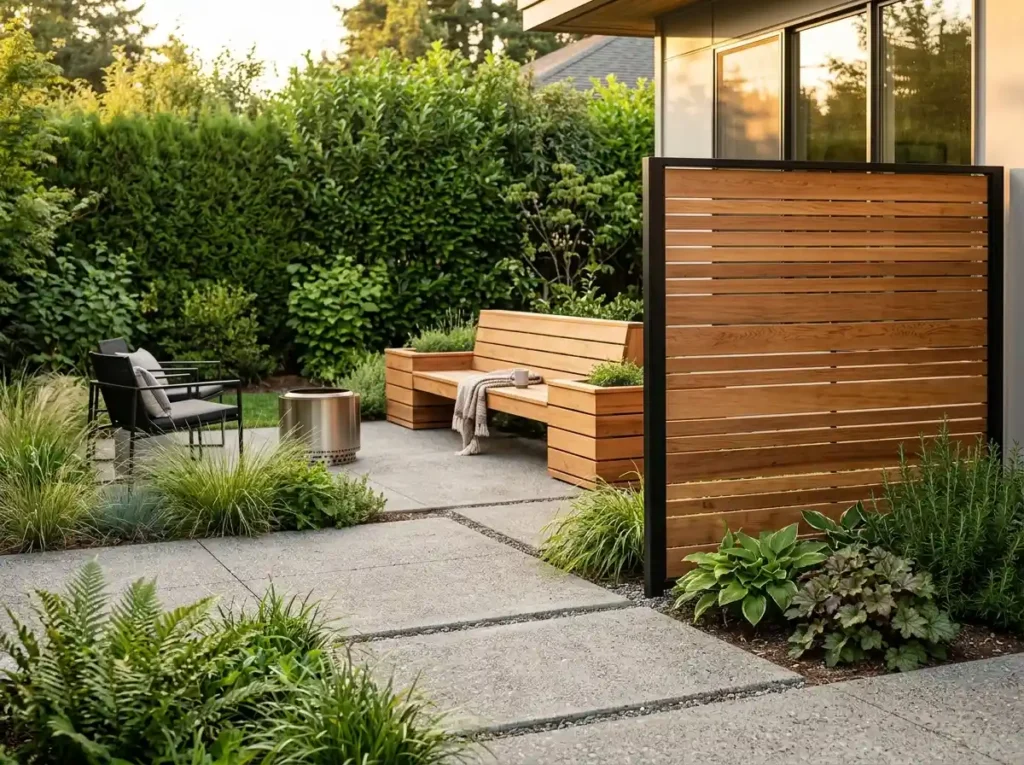
Modern backyards sometimes feel cold because they use too many hard gray materials. Wood adds warmth without making the design look traditional.
Pair a concrete patio with a cedar privacy screen. Add a wooden bench to a block retaining wall. Place a timber deck beside large concrete pavers.
Try to keep the wood tones consistent. A pale deck, orange fence, dark bench, and gray-brown pergola can look mismatched. One main wood color creates a calmer result.
Cedar is popular because it has a warm color and handles outdoor use well. Treated wood may cost less but can have a different appearance. Composite materials need less regular care, though they do not always look like real wood.
Outdoor wood still needs some care. Sun and rain can change its color. Stain or sealer may help, but it will need to be renewed over time.
You do not need much wood to change the mood. One fence panel, bench, or small deck may be enough to balance a concrete-heavy space.
Add One Simple Water Feature as a Focal Point
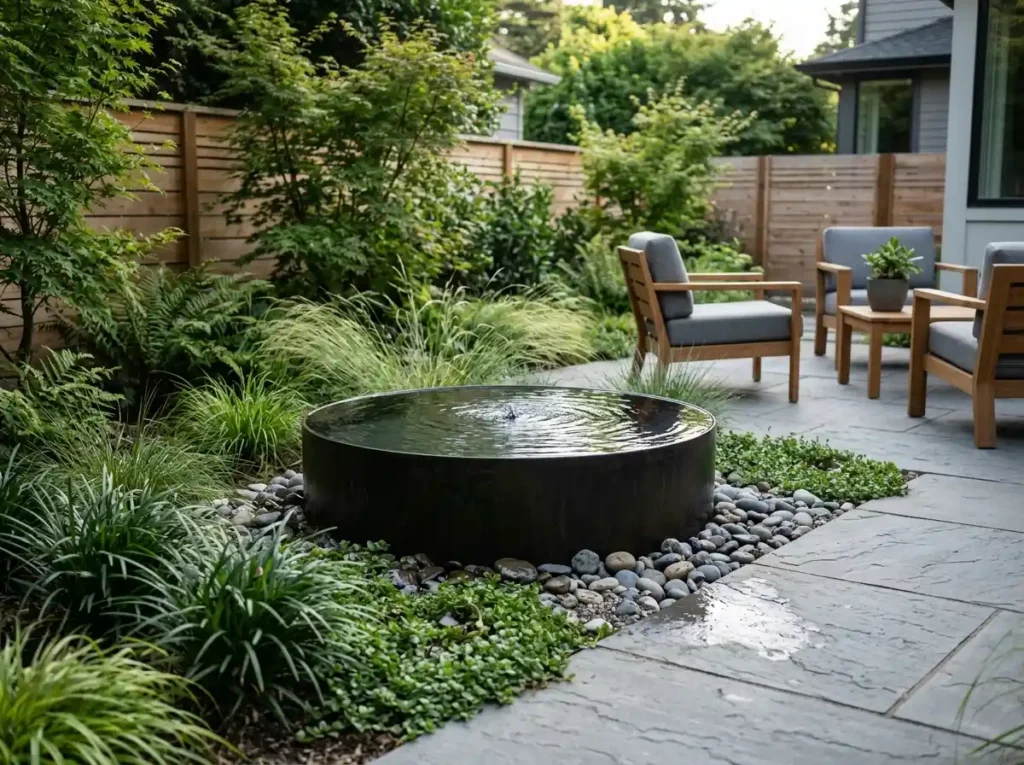
A water feature can make a backyard feel calmer. It may also soften traffic sounds or noise from nearby homes.
Keep the design simple. A narrow water wall, dark water bowl, straight spillway, or shallow rectangular pool fits a contemporary backyard better than a highly decorated fountain.
Match the size to the yard. A wall-mounted fountain can work on a small patio because it takes up little floor space. A reflecting pool needs more room and may suit a larger landscape.
Think about sound before buying. A gentle flow creates a softer sound. A strong waterfall can become too loud near a dining table or reading chair.
Maintenance matters too. Leaves, dust, and algae can collect in the water. Pumps need access for cleaning and repair. Some features also need winter care in cold areas.
Place the feature where you can see it from the house or main seating area. There is little value in hiding an expensive focal point behind furniture.
Choose a water feature you can keep clean. A smaller design that works well is better than a large one that becomes a burden.
Use Horizontal Fencing to Improve Backyard Privacy
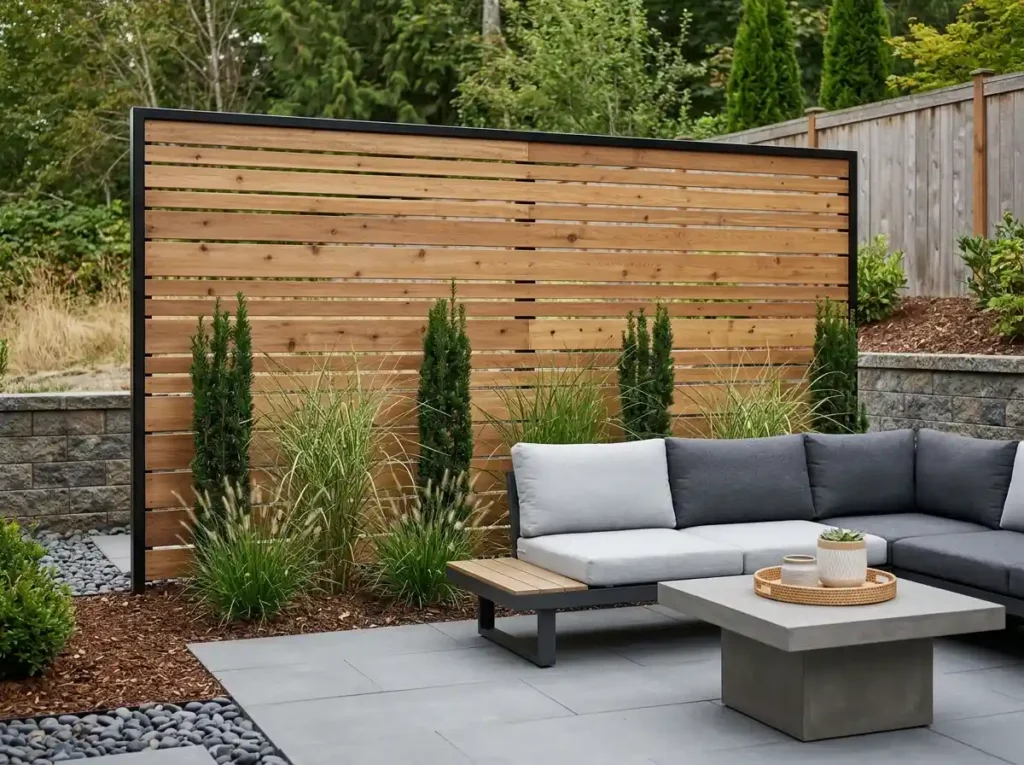
Privacy can be hard to create in a modern yard, especially when nearby homes overlook the space. Horizontal fencing can block views while adding a clean visual line.
The long boards can make a narrow backyard appear wider. Cedar boards offer a warm, natural look. Composite panels need less regular care. Black metal frames can add a bold edge.
Small gaps between boards allow some light and air to pass through. Tight spacing gives more privacy. Think about what you need before choosing the gap size.
You do not always need a full fence around the whole yard. A single privacy panel behind a hot tub, dining area, or lounge may solve the main problem.
Plants can soften the hard surface. Add grasses or slim evergreen shrubs in front of the fence. Avoid plants that will become too wide for the space.
Before building, check local rules for fence height, property lines, and permits. Homeowner associations may also limit colors or materials.
Mark the planned height with temporary poles first. This helps you see whether the screen will block a view, shade a window, or feel too tall.
Add Built-In Seating When Patio Space Is Tight
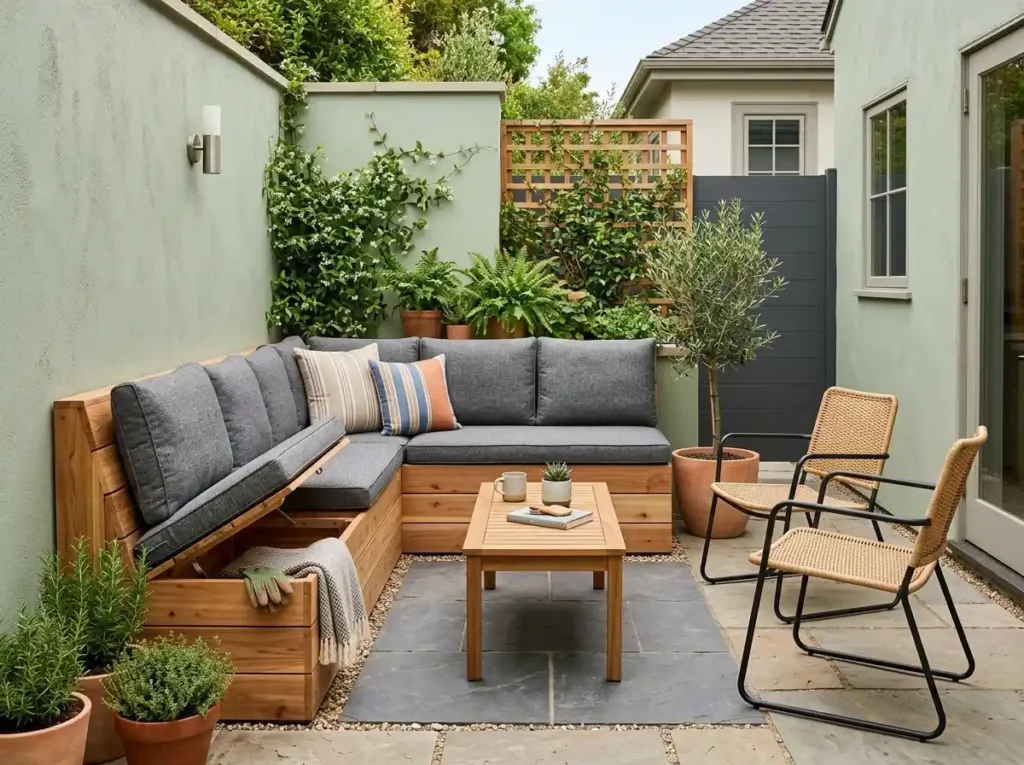
Large outdoor sofas can take over a small patio. Built-in seating uses edges and corners that may otherwise go unused.
An L-shaped bench can fit around two sides of a compact patio. A long bench along a fence leaves the middle open for a narrow table. Seating around a fire pit can create a clear social area.
Built-in benches can also include storage. Hinged sections may hold cushions, garden tools, or outdoor toys. The storage area must stay dry and have proper drainage.
Comfort still matters. A bench that is too deep or too high will not feel good, even if it looks neat. Test the planned size with boxes or temporary boards before building.
Add weather-resistant cushions for support. Choose covers that can be removed and cleaned.
Built-in seating is harder to move than outdoor chairs. Make sure the layout will work for more than one use.
In a small backyard, combine a corner bench with two light chairs. The chairs can move when you need extra room or a different seating plan.
Make a Small Backyard Feel Larger With One Main Purpose
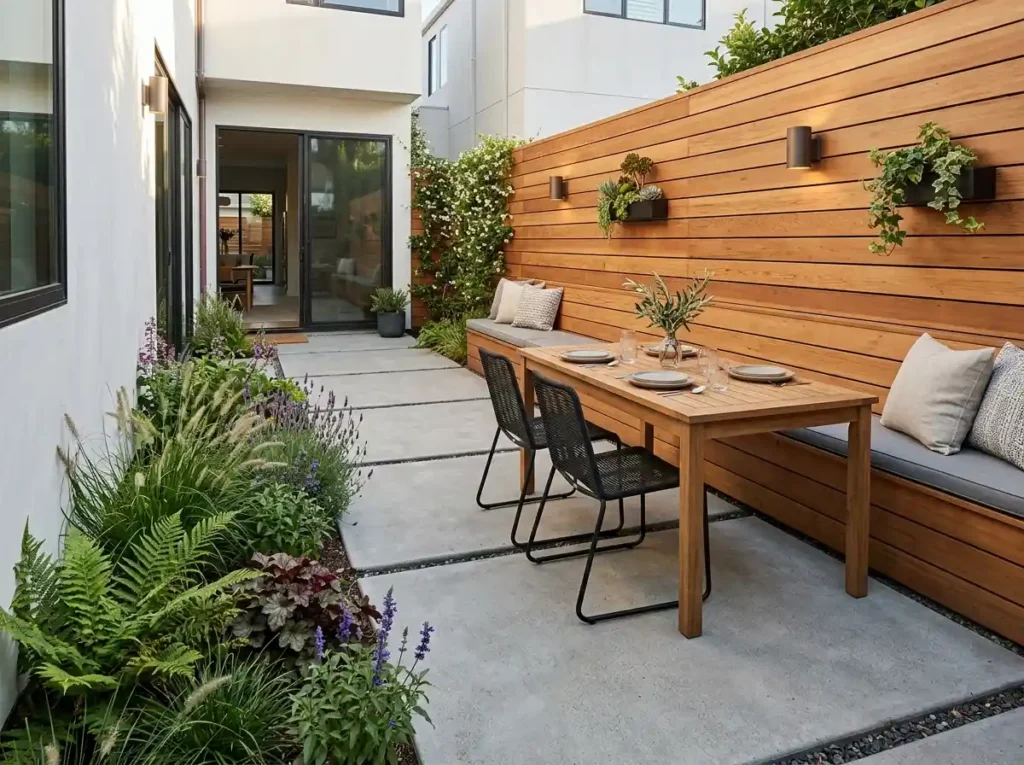
A small yard can feel cramped when it tries to include every popular feature. A better plan gives the space one main purpose.
Decide whether you care most about dining, relaxing, gardening, or play. Let that choice guide the layout.
For example, a compact 10-by-20-foot yard could include a built-in bench along one wall, a small dining table, and a narrow planting strip. Wall lights would add evening use without taking up floor space.
Large pavers can make a small patio feel calmer than many tiny bricks. Low furniture keeps the view open. Vertical plants and wall-mounted planters add greenery without using much ground space.
Avoid cutting the yard into several tiny zones. Too many flooring changes, borders, and furniture groups can make it feel smaller.
Use one main material across most of the floor. Add one accent material to create contrast.
Look at your current plan and remove one feature. The yard may work better without the extra fire pit, water bowl, large sofa, or second table.
A small modern backyard needs clear choices more than extra decoration.
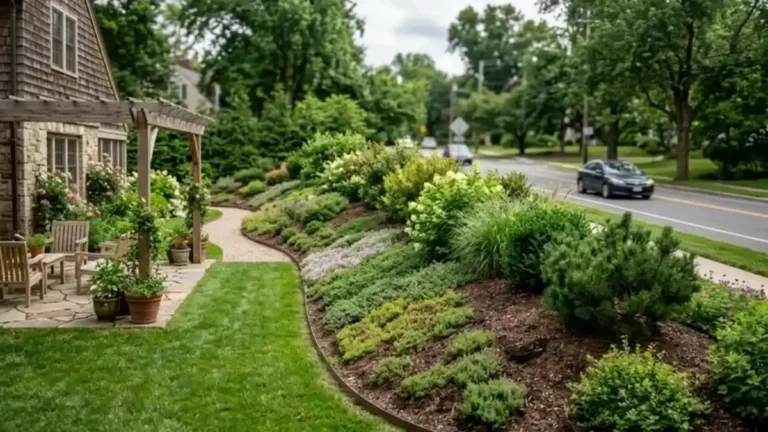
Replace Unused Lawn With Gravel or Ground Cover
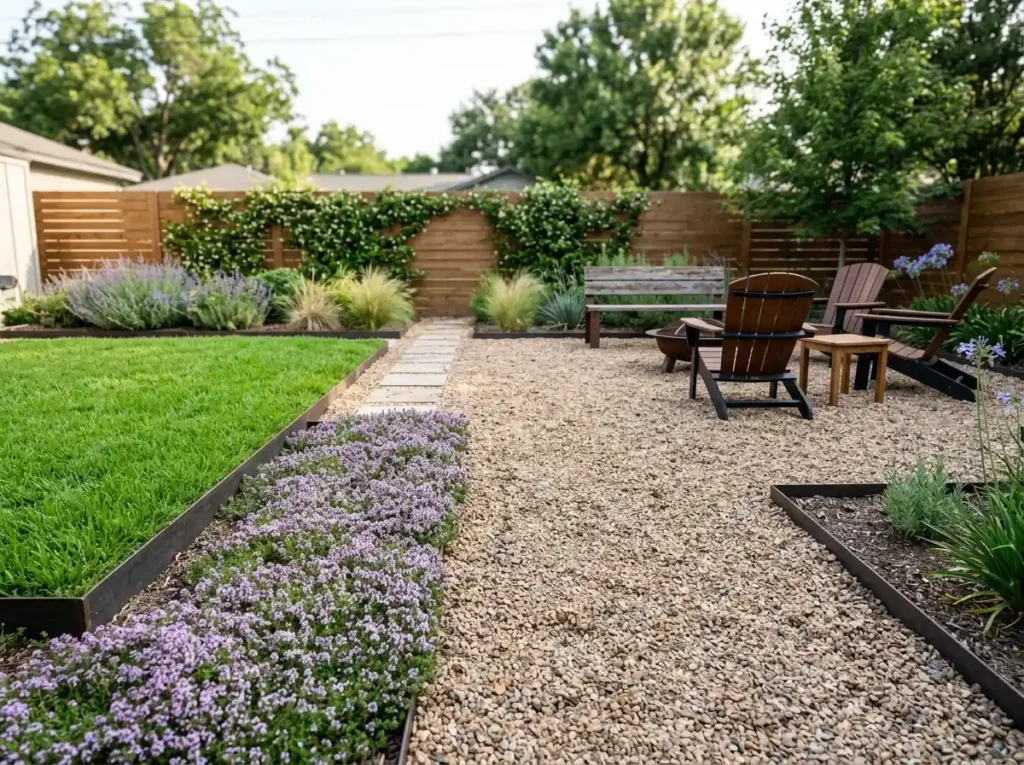
Grass takes time, water, and regular care. If part of your lawn is rarely used, replacing it may make the yard easier to manage.
Gravel works well for paths, side yards, and informal seating areas. Crushed granite gives a firm surface when prepared correctly. Pea gravel feels softer but can move under furniture. River rock is better as a visual feature than a walking surface.
Living ground covers create a softer result. Creeping thyme may work in sunny areas with light foot traffic. Low sedum can suit dry spaces. Plant choice will depend on local soil and weather.
Mulch is affordable and useful around plants, but it needs fresh material over time. Artificial turf stays green, though it can become hot and still needs cleaning.
Good preparation prevents many problems. Fix drainage before adding gravel. Use strong edging to keep loose material out of the lawn and planting beds.
You do not need to remove all the grass. Keep a soft lawn area for pets, children, or games. Replace only the parts that serve no clear purpose.
Making the change in stages also helps you test each material before using it across the whole yard.
Layer Outdoor Lighting Instead of Using One Bright Light
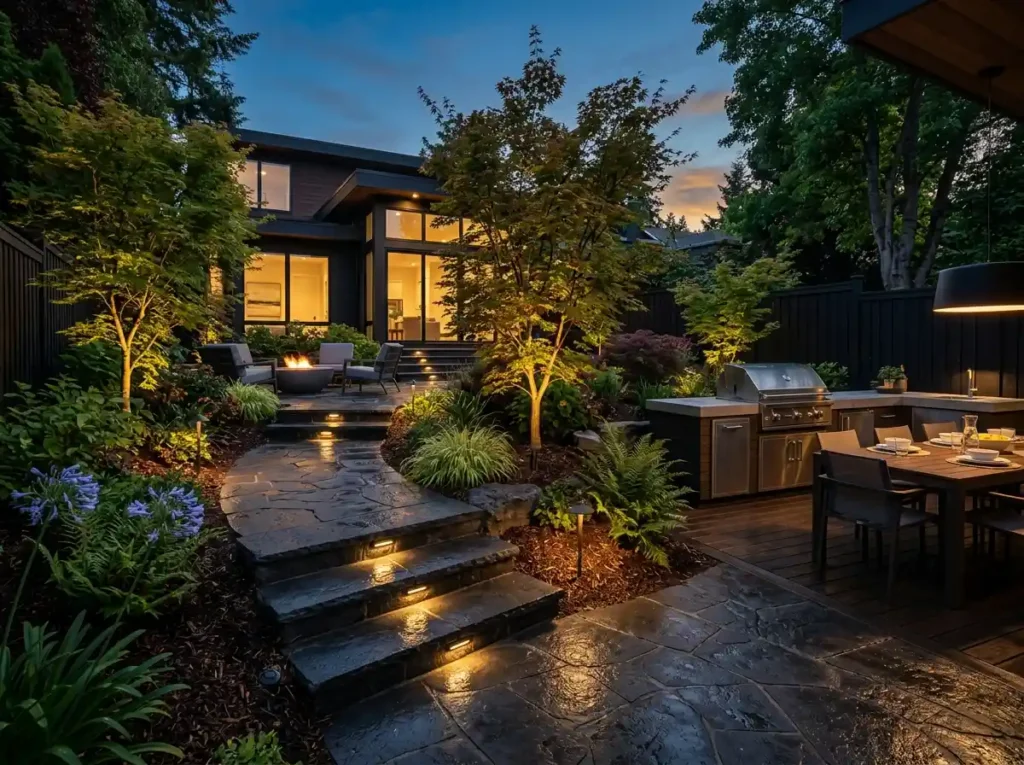
One strong floodlight may help you see, but it rarely creates a comfortable backyard. Modern backyard lighting works better in layers.
The first layer is safety lighting. Place lights near steps, paths, gates, and level changes. These fixtures should help people move without creating glare.
The second layer is task lighting. Add it near the grill, dining table, outdoor kitchen, or work area.
The third layer is mood lighting. Use soft wall lights, hidden fixtures, or small uplights near selected plants. You do not need to light every tree or corner.
Warm light usually feels more comfortable around seating and dining areas. Very bright, cool light can make an outdoor space feel harsh.
Hide fixtures when possible. The effect of the light should be more noticeable than the fixture itself.
Test the plan before permanent installation. Use temporary battery lights or portable lamps for one evening. Sit in each area and check for dark paths, strong glare, and shadows.
Good lighting should help you use the yard safely while keeping the night setting calm.
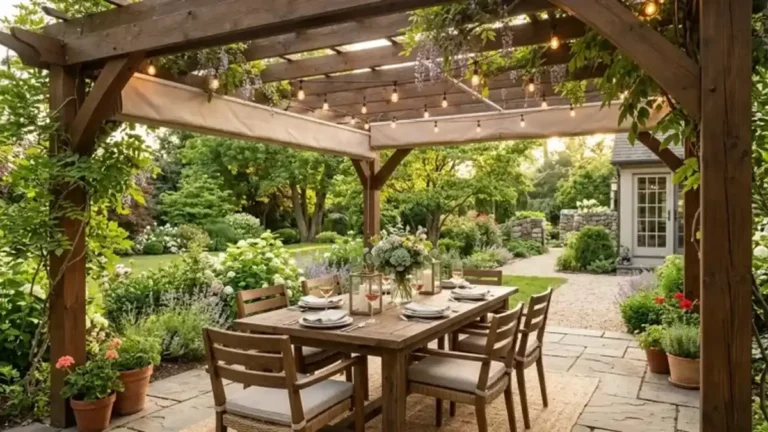
Add a Minimal Pergola for Useful Shade
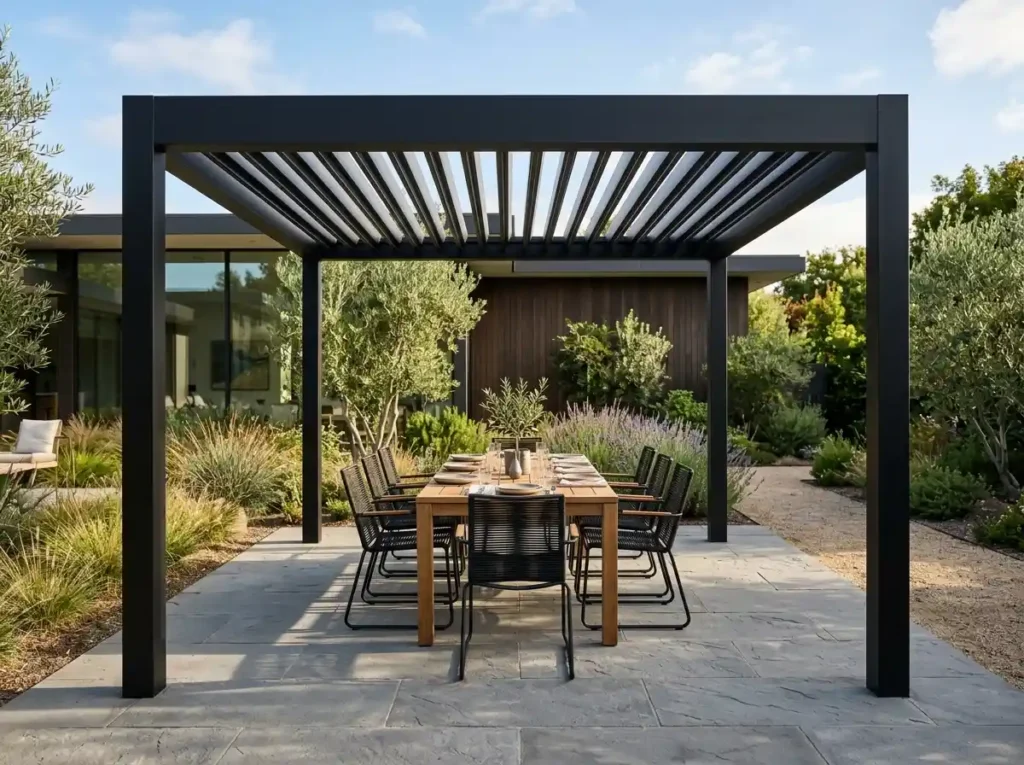
A patio can become too hot to use when it has no shade. A pergola creates cover while giving the seating or dining area a clear frame.
Black aluminum pergolas fit many modern backyard ideas. They have a clean shape and may need less care than wood. Cedar pergolas add warmth and work well with wood fences or decks.
Open roof slats create partial shade. Fabric covers block more sun but may need to be removed during poor weather. Adjustable louvers allow better control, though these systems often cost more.
Study the sun before choosing the location. A pergola placed without checking the sun angle may shade the patio at the wrong time of day.
Keep the size in balance with the patio. A huge frame can make a small yard feel crowded. A structure that is too narrow may fail to shade the table and chairs.
Curtains and screens can add privacy, but too many panels may block air. Climbing plants soften the structure, though they need pruning and support.
Check local building and permit rules before construction. Larger or attached structures may need approval.
Choose Low-Maintenance Features From the Start
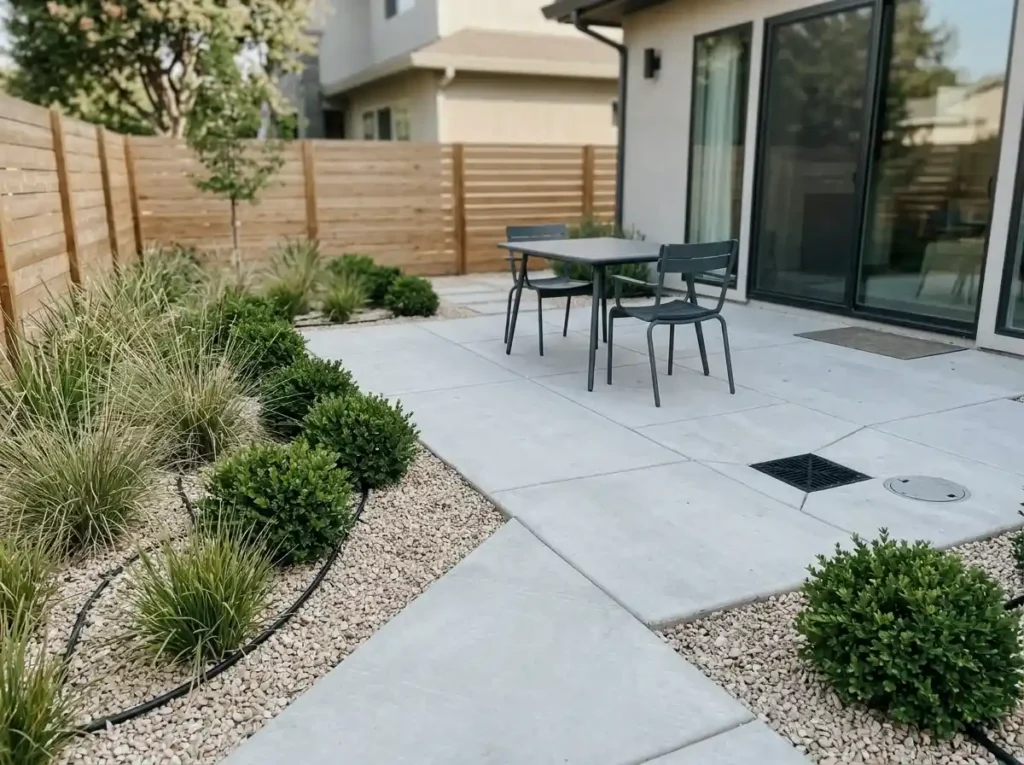
A low-maintenance modern backyard still needs care. The goal is to reduce repeated work, not remove every living plant.
Choose plants that suit your local weather, soil, and sunlight. Plants that naturally fit the site often need less water and fewer treatments.
Reduce lawn in areas where no one walks or plays. Use large concrete pavers for the main patio. Add gravel around native grasses and evergreen shrubs.
Drip irrigation can send water closer to plant roots. This may reduce waste compared with watering the entire bed from above. Check the system during the season because blocked or broken lines can go unnoticed.
Choose furniture made for outdoor use. Powder-coated metal, quality composite pieces, and weather-resistant cushions can handle regular use better than indoor-style items.
Plan access for cleaning and repairs. Leave room to reach the pump behind a water feature. Make sure you can clean between a bench and fence. Avoid placing heavy planters over drains or utility covers.
A practical low-maintenance design might include concrete pavers, drip irrigation, native grasses, evergreen shrubs, gravel beds, and simple metal furniture.
Each part supports the same goal: less repeated work and more time outside.
How to Plan Your Modern Backyard Landscaping Project
Do not start by buying plants, furniture, or pavers. First, measure the yard and create a simple plan.
Follow these steps:
- Measure and photograph the space. Record the yard’s width, length, doors, windows, gates, trees, drains, and utility areas.
- Mark what cannot move. This may include an air-conditioning unit, shed, large tree, or existing patio.
- Study sun and water. Note which areas receive full sun, deep shade, or standing water.
- Choose your main outdoor zones. Give the most space to the activities your household uses most.
- Pick a small material palette. Choose two or three main materials that work with the house.
- Plan plants and irrigation. Match plants to local conditions and their full-grown size.
- Add furniture, shade, and lighting. Complete these choices after the basic layout works.
Set a budget before requesting prices. Divide it into ground preparation, drainage, hardscaping, structures, plants, lighting, furniture, and labor.
Spend money on hidden work first. Drainage, a solid patio base, electrical lines, and irrigation can be difficult to fix later.
You can complete a modern backyard landscaping plan in phases. Finish the main patio and drainage first. Add fencing, plants, lighting, and furniture when the budget allows.
Modern Backyard Mistakes That Can Ruin the Final Result
Modern design looks simple, but small planning mistakes can create large problems.
Using too much concrete: A large gray surface may feel hot and empty. Break it up with grasses, trees, planters, or gravel strips.
Buying furniture before measuring: A wide sectional may block the only path through a narrow yard. Mark the furniture size on the ground with tape first.
Forgetting shade: A dining area may look good but remain unused during hot afternoons. Study the sun before placing the table.
Ignoring drainage: Water can collect beside the house or under pavers. Fix slopes and drains before installing the finished surface.
Using too many materials: Several types of stone, wood, metal, and tile can make the yard feel disjointed. Repeat a small group of finishes.
Choosing plants by their current size: Young shrubs may look tiny at first but crowd paths and windows later. Check their mature height and width.
Copying a yard from another climate: A planting design from a cool, wet region may fail in a hot, dry area. Choose plants for your local conditions.
Review the plan during the day and after dark. A space that works in daylight may still need safer paths or softer evening lighting.
Create a Modern Backyard That Works for You
A good modern backyard does more than look clean in photos. It gives you useful places to sit, eat, play, garden, and relax.
Start with a clear layout. Limit the number of materials and plant colors. Add warmth with wood, greenery, comfortable seating, and soft lighting. Plan drainage, shade, and maintenance before spending money on decorative features.
You do not need to use all 16 ideas. Pick three that solve the biggest problems in your yard. Measure the space, sketch the layout, and decide what must be completed first.
The best modern backyard landscaping plan supports your daily life, fits your climate, and remains manageable for years.