18 Large Backyard Landscaping Ideas for a Beautiful, Useful Yard
A large backyard sounds like a dream until you have to plan it. The extra space can feel bare, disconnected, and costly to maintain. You may have a small patio near the house, a few trees along the fence, and a wide lawn that nobody uses.
The best large backyard landscaping ideas do more than fill empty land. They give each part of the yard a clear purpose. One area may be used for meals. Another may be used for games, gardening, or quiet time.
The key is to connect these spaces so the yard feels like one complete design. Paths, trees, garden beds, lighting, and repeated materials can help.
This guide covers 18 practical ideas for big backyards. You will also learn how to plan the layout, control costs, and avoid common mistakes. You do not need every feature. Start with the ideas that fit your daily life and the amount of care you can manage.
Plan Your Large Backyard Before You Buy Anything
A large yard can become costly when projects happen in the wrong order. A new patio may need to be removed if drainage work is added later. Young trees may sit in the path of a future pool. A play area may end up too far from the house for easy supervision.
Start by measuring the yard. Mark the house, fences, gates, sheds, mature trees, utilities, and hard surfaces that will stay. Then watch how the yard changes during the day. Note where the sun is strongest, where water collects, and which areas get strong wind.
Next, list how you want to use the space. Think about meals, games, pets, gardening, swimming, storage, and quiet seating. Rank these needs so you spend money on features you will use.
A useful layout often has four types of zones. The area near the house can hold dining and cooking. An open area can support games. A quiet corner can hold a garden room or pond. Bins, tools, and compost can sit near a side gate behind a screen.
Draw a rough plan before choosing materials. A simple sketch can show how paths, plants, and outdoor zones will work together.
Divide the Backyard Into Clear Outdoor Living Zones
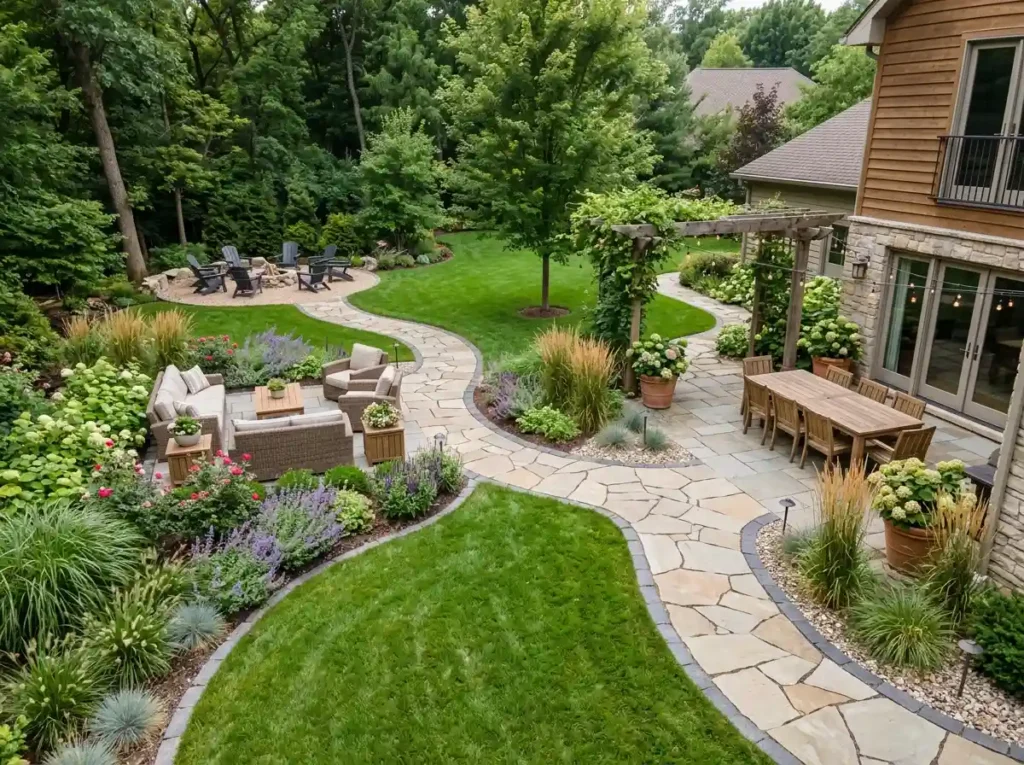
One large open yard can feel less useful than several connected spaces. Dividing it into zones makes the area easier to use and gives the design a clear shape.
Start with the activities that matter most. You may want a dining patio near the kitchen, a lounge beside the garden, a lawn for games, and a fire pit farther from the house.
You do not need solid walls between zones. A change in paving can mark the edge of a patio. A row of grasses can separate seating from the lawn. A curved path can guide guests from one area to the next.
Repeat a few colors and materials across the yard. Use the same stone for path edging and the fire pit. Place similar planters near different seating spaces. These links help the design feel connected instead of random.
Best for: Yards that feel empty or scattered
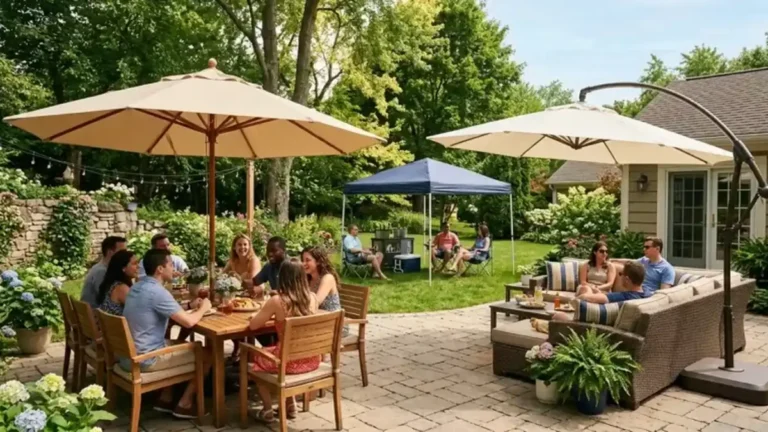
Build a Patio That Fits Dining and Lounging
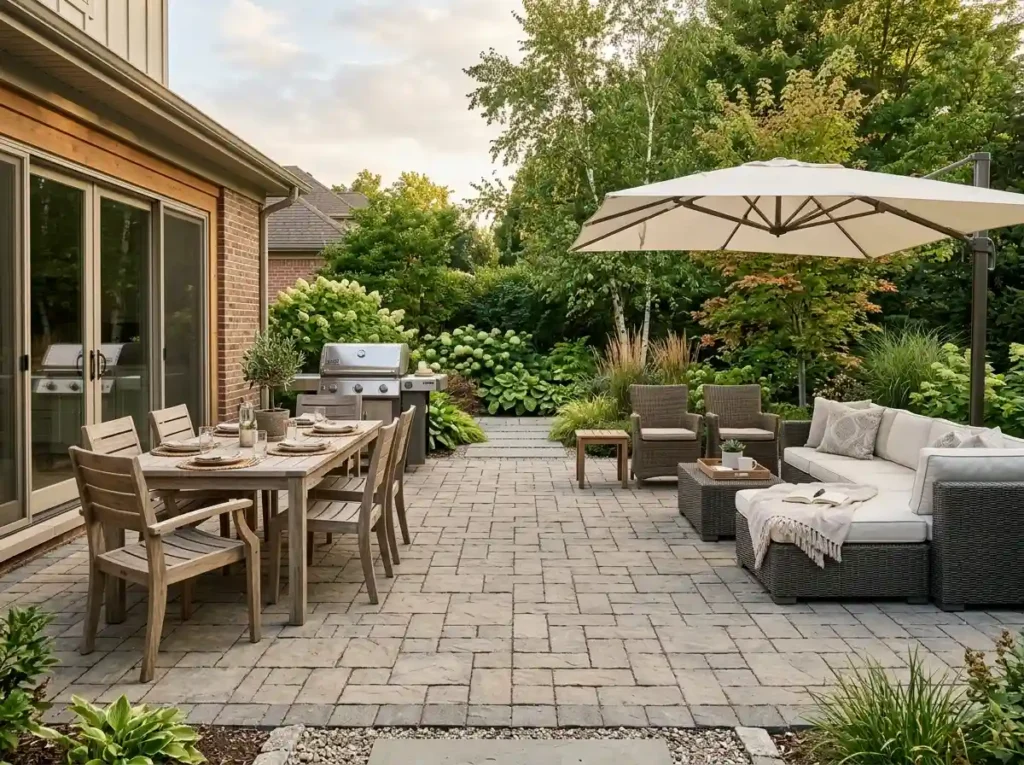
A tiny patio can look lost beside a large lawn. It may also force everyone into one cramped corner. A larger patio gives you room to eat, relax, and move between the house and yard.
Plan the surface around your furniture. Mark the table, chairs, grill, sofa, and walking paths with tape or string. Pull the chairs out as you would during a meal. This test can reveal tight areas before construction starts.
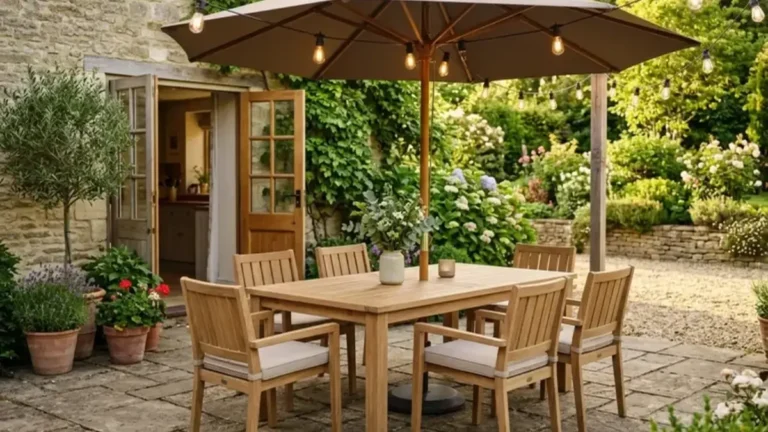
A dining area may sit closest to the kitchen. A connected lounge can face the garden or pool. Concrete is simple and practical. Pavers are easier to repair in small sections. Gravel may cost less, but chairs can feel less stable on it. Natural stone looks rich, though it may cost more.
Add shade with an umbrella, pergola, or tree. A comfortable patio will get far more use during hot afternoons.
Best for: Meals, parties, and daily outdoor use
Add a Covered Pavilion for More Outdoor Time
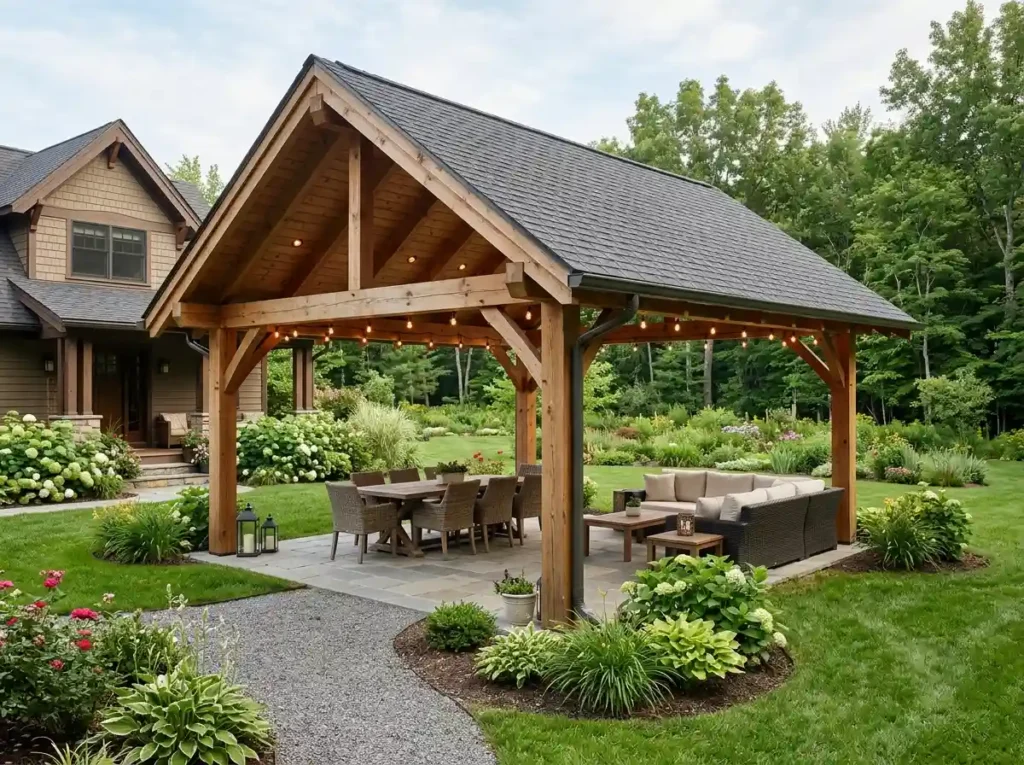
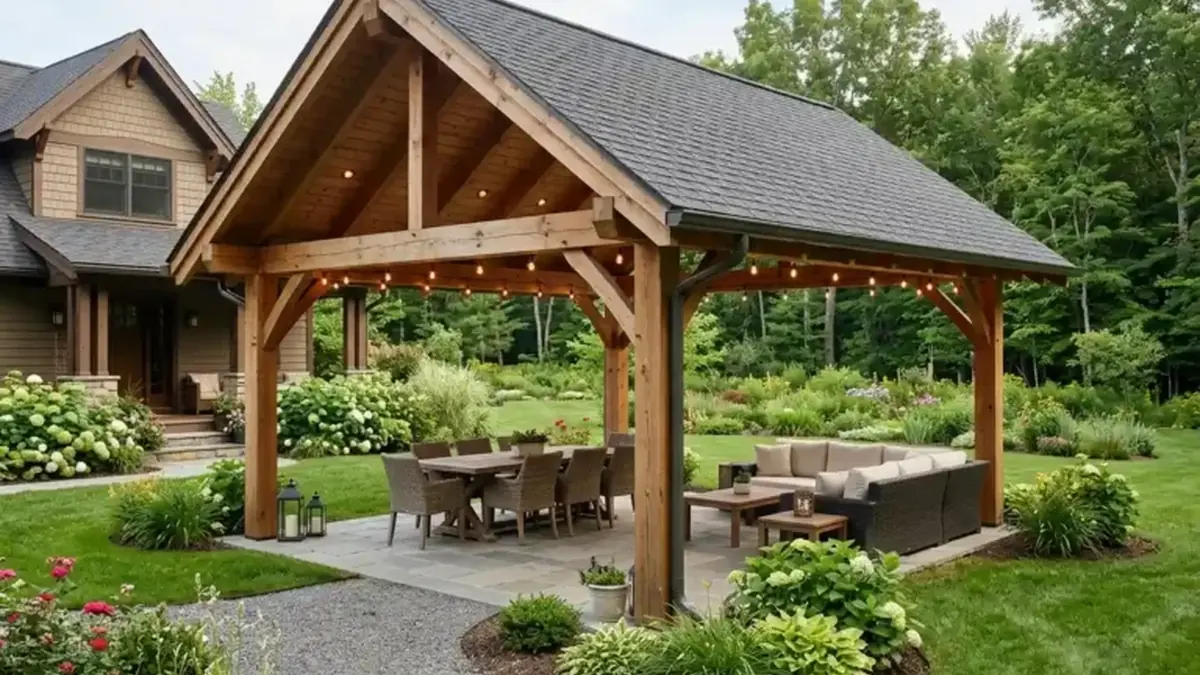
A covered pavilion gives a large backyard a strong visual center. It also makes the space more useful during sun, light rain, and cool evenings.
A pergola has an open or partly open roof. It gives some shade but little rain cover. A gazebo is often a separate structure with a full roof. A pavilion also has a solid roof, but it usually has a larger, more open shape.
Place it where it can face the best view. It may overlook a pool, garden, lawn, or tree line. Inside, you can add a dining table, sectional sofa, ceiling fan, heater, or fireplace.
Lighting and outlets make the area easier to use after sunset. A solid roof also needs proper drainage, so plan gutters and water flow early.
Match the roofline, posts, and main materials to the house. This makes the pavilion feel like part of the property.
Best for: Hot, sunny, or rainy areas
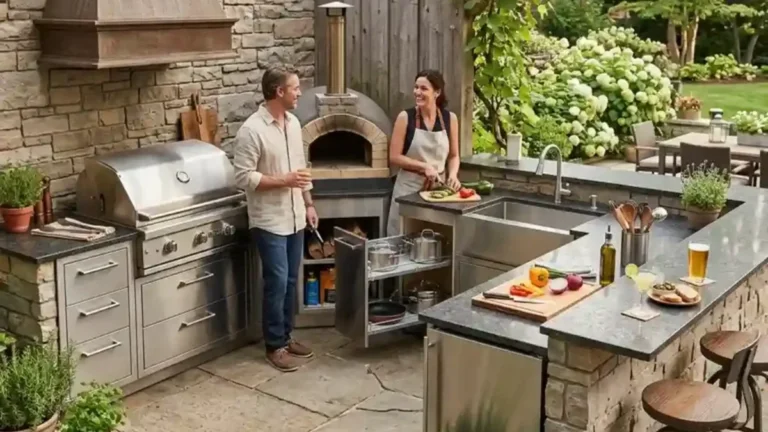
Place an Outdoor Kitchen Close to the House
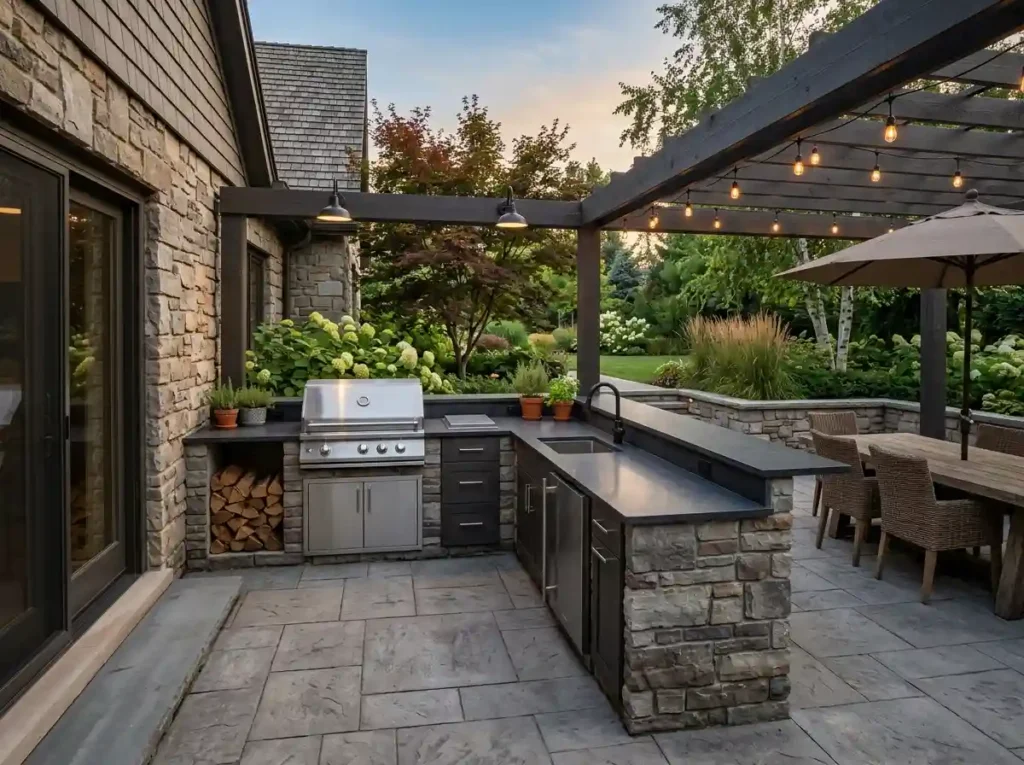
An outdoor kitchen can make backyard meals easier, but it does not need every indoor appliance. Start with the tasks you do most often.
A basic setup may include a grill, worktop, storage, and task lighting. A larger design can add a sink, fridge, pizza oven, side burner, or bar seating. More equipment means higher utility and care needs.
Keep the kitchen fairly close to the house. Shorter gas, water, drain, and power lines may lower installation costs. It also makes it easier to carry food and dishes outside.
Leave clear space between the grill, counters, and dining area. Hot equipment should not sit where children or guests pass closely. Use cabinets, worktops, and flooring made for outdoor weather.
A serving counter can face the dining area while the cooking side stays behind it. Before buying appliances, price the utility work. That part can cost more than expected.
Best for: Families that cook outside often
Make a Fire Pit a Destination at the Far End
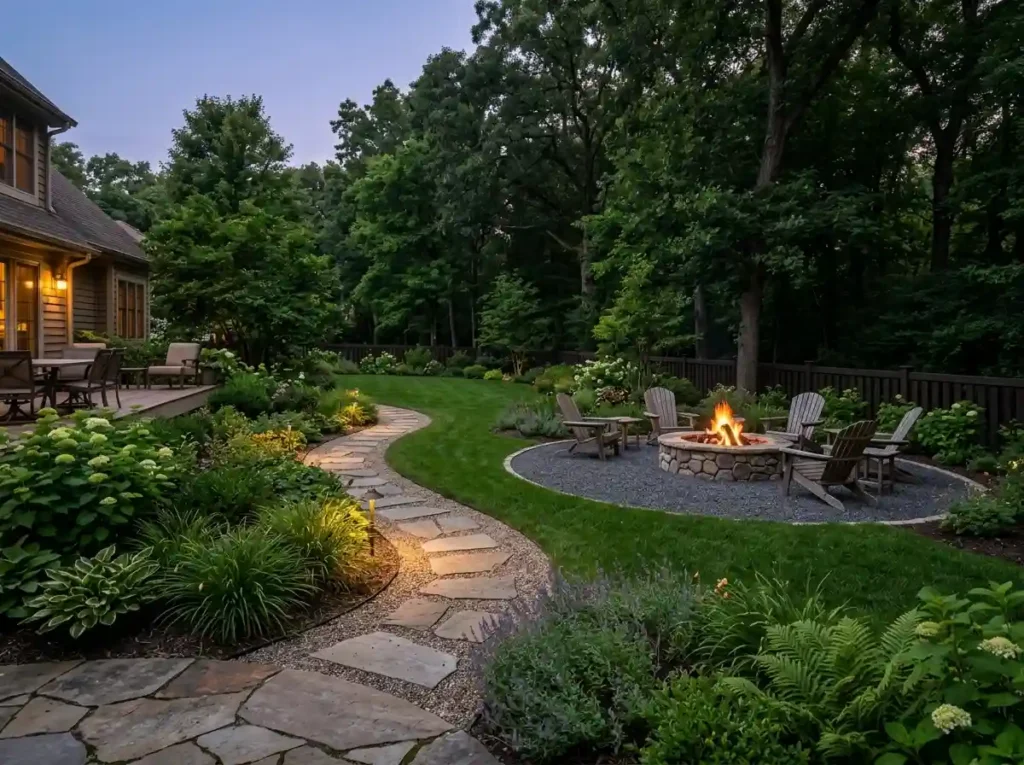
A fire pit can pull people into a part of the yard that would otherwise sit unused. This works well in deep backyards where most activity stays near the house.
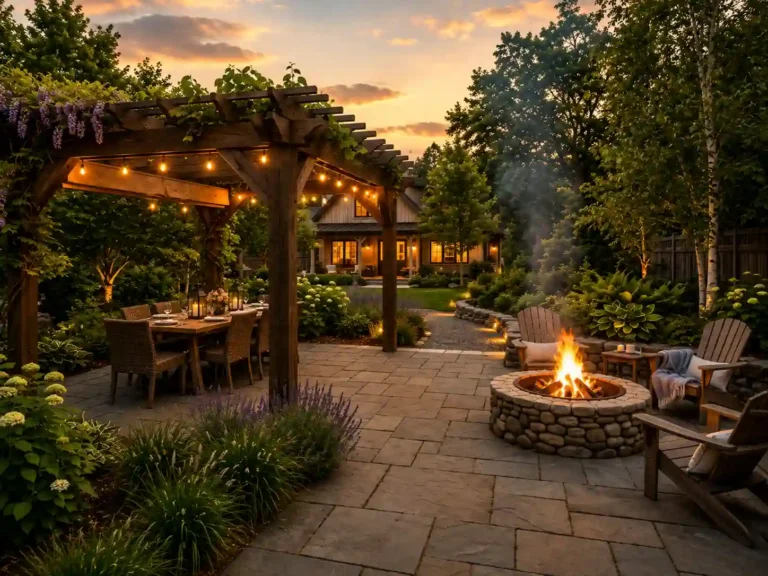
Use a path to connect the patio to the fire area. A gentle curve can make the walk feel inviting. Low beds or path lights can guide the route after dark.
The fire pit may sit at ground level or in a sunken space. A sunken design feels private, but it needs safe steps and good drainage. A level gravel area is often easier to add.
Wood fires give a classic smell and sound, but they create smoke and ash. Propane is easy to control. Natural gas avoids fuel tanks, though it needs a gas line.
Use built-in walls or movable chairs for seating. Keep the area away from low branches, fences, sheds, and materials that may burn. Check local fire rules before choosing the location.
Best for: Evening gatherings and cooler seasons
Plan a Pool Area for Swimming, Shade, and Rest
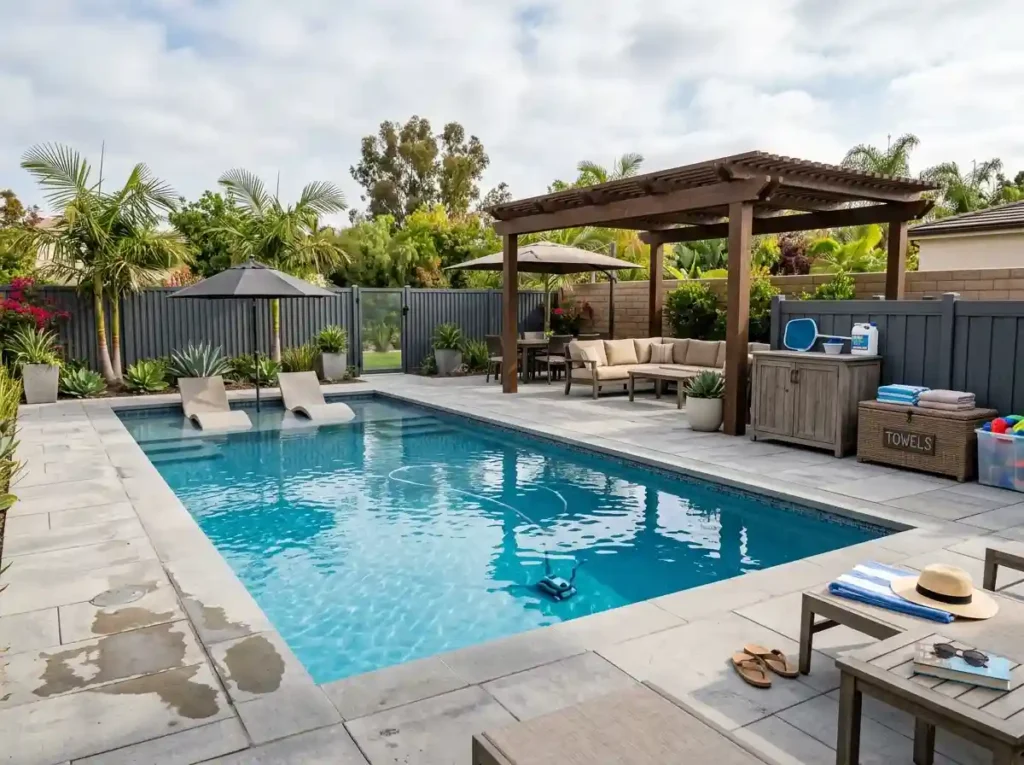
A pool should be planned as a complete outdoor zone. You also need room for safe movement, seating, shade, storage, and maintenance.
A rectangular pool works well for laps and a clean look. A freeform pool suits a softer garden style. A low-depth ledge gives children a place to sit and adults a place for lounge chairs. A spa can connect to the pool or sit nearby.
Leave enough paved space for people to walk without squeezing past furniture. Choose a slip-resistant surface that feels comfortable under bare feet. Plan storage for towels, toys, cleaning tools, and pool equipment.
Plants can soften fences and wide areas of paving. Avoid trees that drop heavy fruit, sharp pods, or many leaves into the water.
Add shade where people will sit. Pool barriers and gates must follow local rules, so check them before the layout is final.
Best for: Active families and resort-style yards
Use Curved Paths to Connect Distant Areas
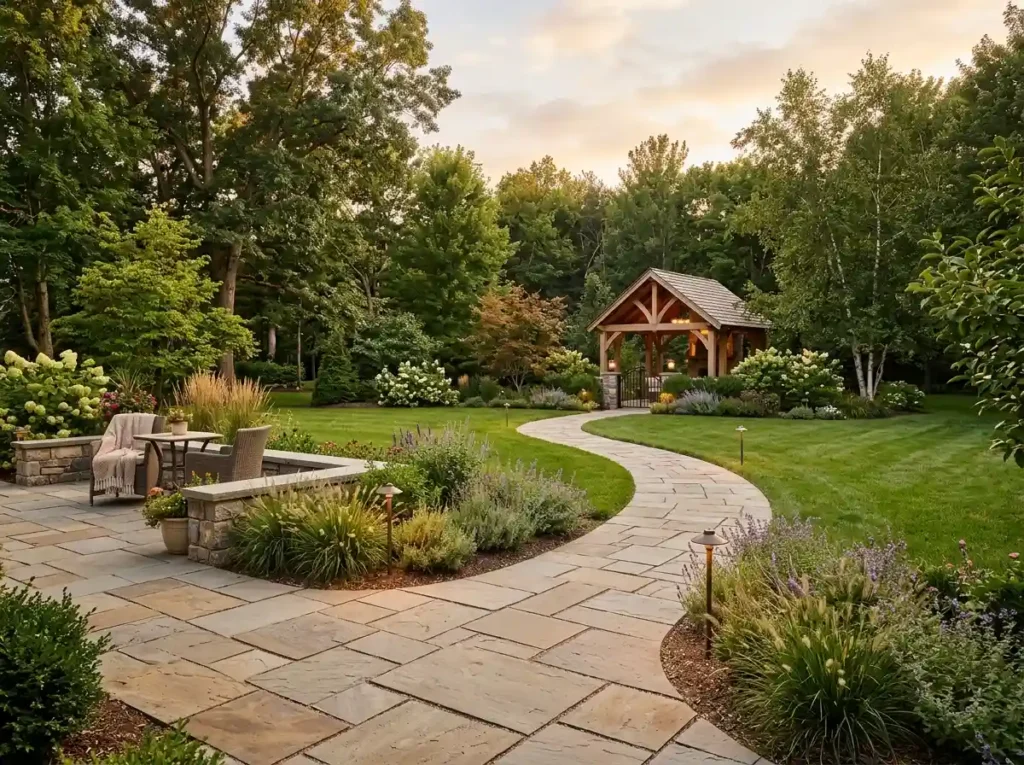
Paths help people know where to go. They also make far corners feel like part of the plan.
A straight path creates a formal look and gives a clear view of the destination. A curved path feels softer and can hide part of the yard, which adds interest.
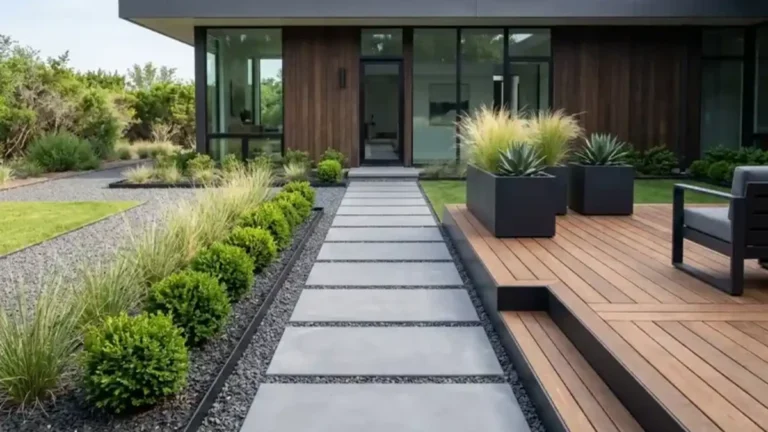
Gravel offers a relaxed look and often costs less. Stepping stones work in light-traffic areas. Brick and pavers create a firmer surface for wheelbarrows, strollers, and regular use. Mulch works in garden zones but may need regular topping up.
Make main paths wide enough for comfortable walking. Avoid tight bends that are hard to use with garden tools. Add lights near steps, slopes, gates, and sharp turns.
Every important path should lead somewhere useful. It may end at a bench, pond, vegetable garden, fire pit, or pavilion.
Best for: Deep yards with several activity zones
Fill Wide Borders With Layered Garden Beds
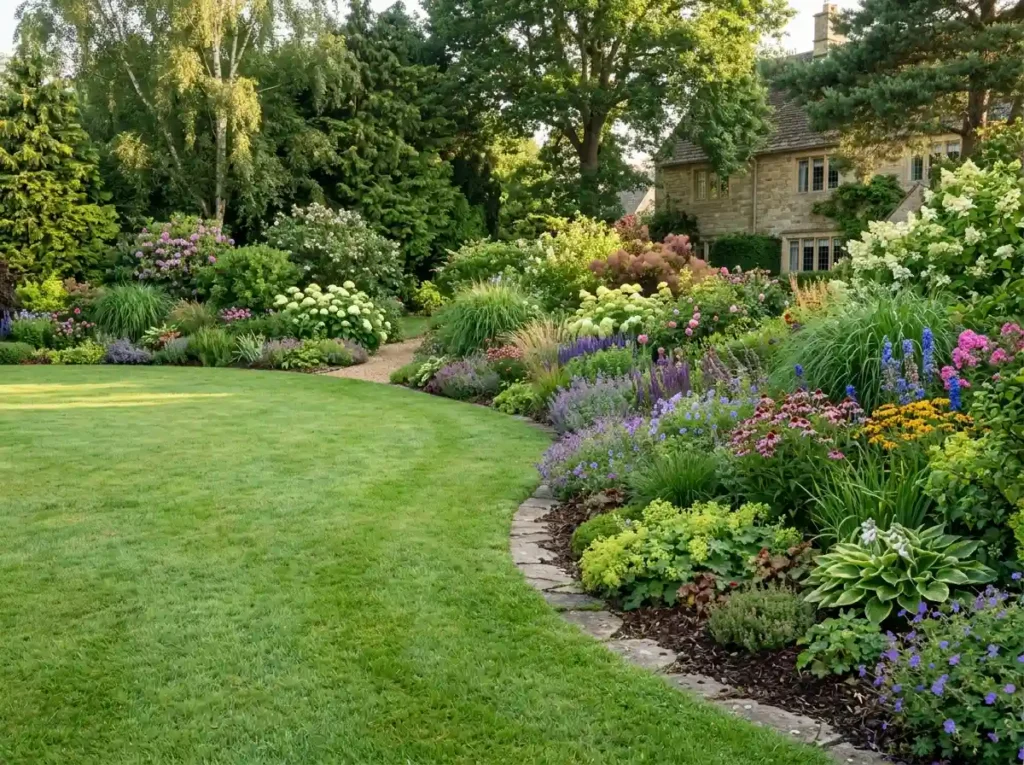
Thin flower beds often disappear beside a large lawn. Deeper beds give the yard better scale and reduce the amount of grass you need to mow.
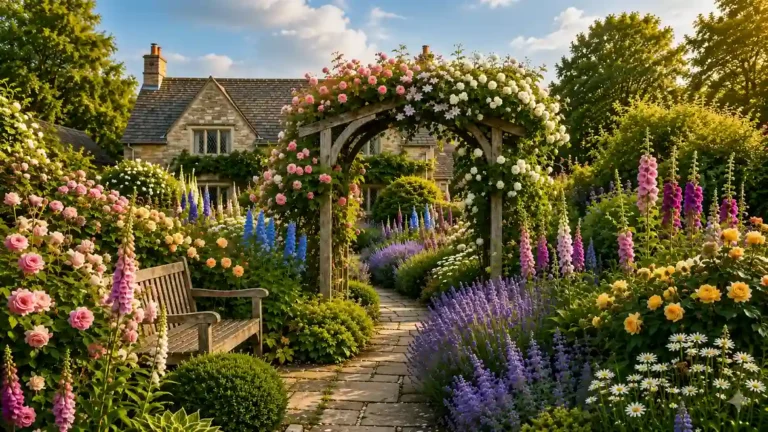
Build the planting in layers. Use taller trees or shrubs at the back. Place medium shrubs and flowers through the center. Add low plants and groundcover along the front edge.
Group plants in sets instead of buying one of each type. Repeated groups are easier to see from a distance. They also make the garden look calmer.
A useful mix may include evergreen shrubs for year-round shape, flowers for color, grasses for movement, and groundcover to fill bare soil. Choose plants that suit the local weather, soil, and sunlight.
Check mature size before planting. A small shrub may become wider than the path in a few years. Local extension plant lists can help you choose suitable species.
Best for: Large lawns that look plain or need less grass
Plant Trees to Frame Views and Add Shade
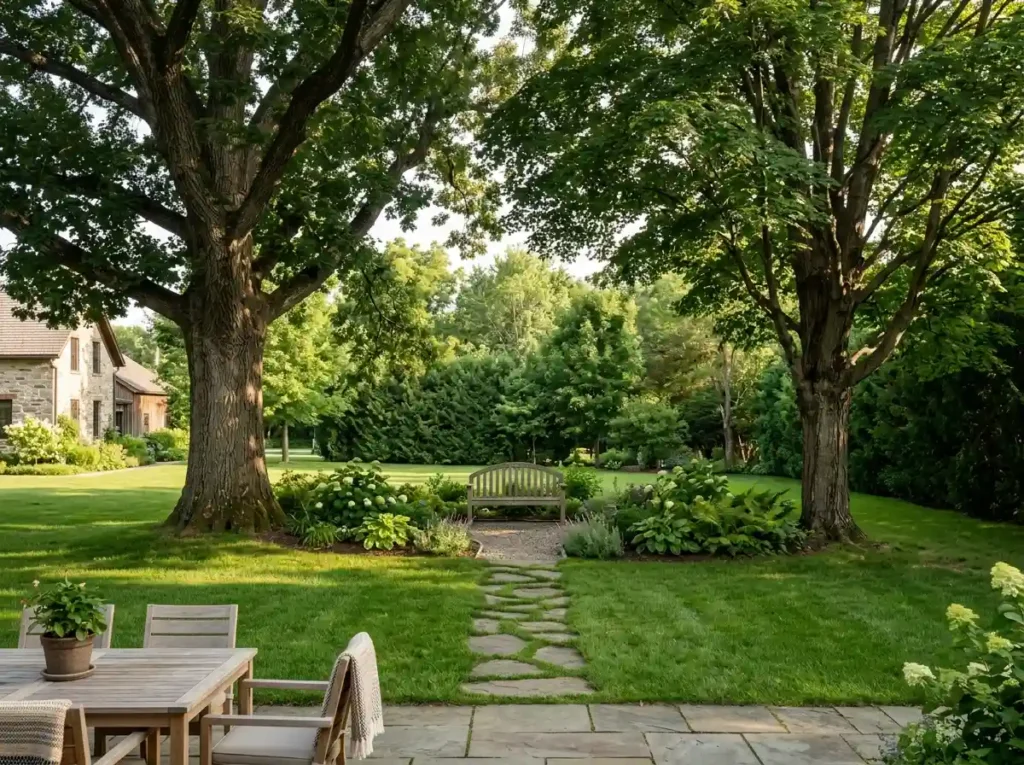
Large yards need plants with enough size to match the space. Trees can add shade, privacy, height, and a strong sense of structure.
Place shade trees near patios, play areas, and west-facing parts of the home. Afternoon sun can make these spaces hard to use in summer. A tree placed at the right distance can cool the area without crowding the house.
Trees can also frame a view. Place two trees on opposite sides of a bench, sculpture, or distant garden. This pulls the eye across the yard and makes its full depth feel useful.
Check mature height, width, and root spread. Keep large trees away from foundations, drains, paving, pools, and utility lines.
Deciduous trees give summer shade and allow more winter sun. Evergreens give year-round screening and color. A mix can work well in many climates.
Best for: Exposed yards that need height and summer comfort
Create a Private Garden Room for Quiet Time
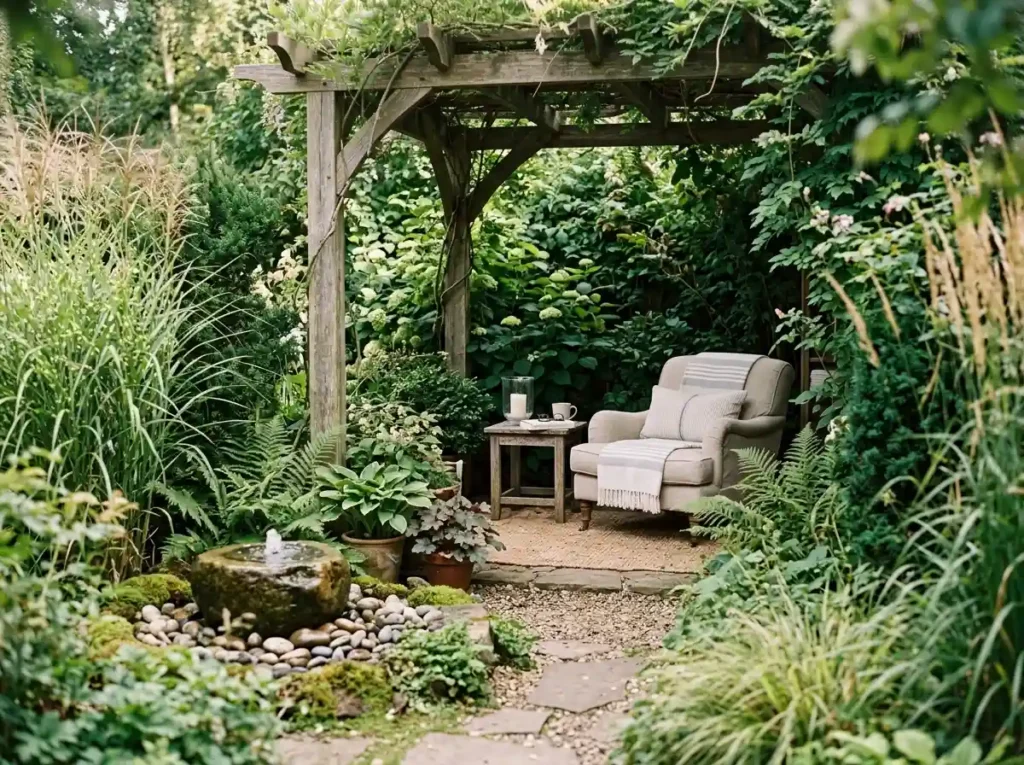
A large backyard does not need to feel open from edge to edge. One small, hidden area can make the whole yard more interesting.
Choose a corner away from the main patio, play area, or pool. Use hedges, trellises, small trees, or tall grasses to create a sense of enclosure. The screen does not need to be solid.
Give the area one clear purpose. It may hold a reading chair, bench, small table, hammock, or fountain. Soft planting and fewer hard surfaces can make it feel calm.
A narrow path can lead through taller plants before opening into the seating area. Keep the entrance partly hidden so the space feels like a small discovery.
Think about when you will use it. A morning coffee spot may need east light. An evening seating area may need shade from the west and a small lamp.
Best for: Reading, quiet talks, or a peaceful break
Grow Food in a Vegetable Garden and Small Orchard
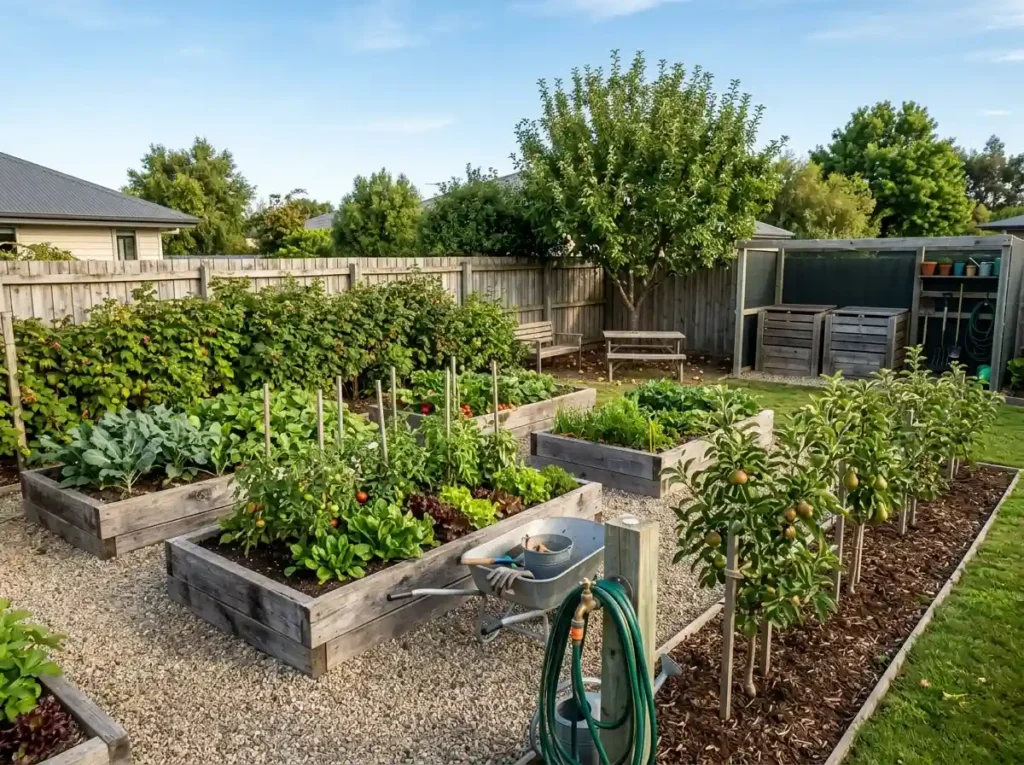
An edible garden gives unused land a practical job. It can also become an attractive part of the yard when the beds and paths are planned well.
Choose a sunny spot with easy water access. Raised beds can improve soil control and reduce bending. Leave paths wide enough for a wheelbarrow. Make sure you can reach the middle of each bed without stepping into the soil.
Dwarf fruit trees fit many home gardens better than full-size types. Place them where fallen fruit will not stain a patio or create a slip risk. Berry bushes can line a fence or form a low screen.
Keep compost, tools, and hoses nearby. A small shed or screened work corner can save many trips across the yard. Add fencing if deer, rabbits, or pets are a problem.
Start with a size you can care for. Four healthy beds are more useful than twelve weedy ones.
Best for: Home cooks and families that enjoy gardening
Keep One Open Lawn for Games and Family Use
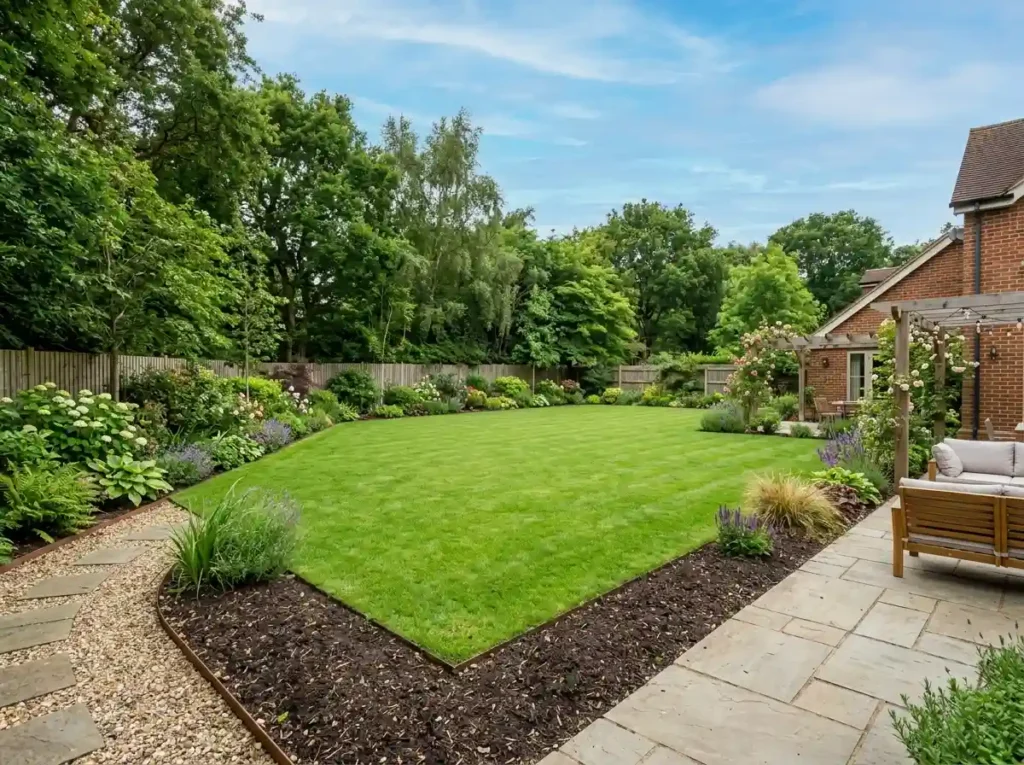
Grass can be useful in a large backyard. The problem starts when lawn covers every open area without serving a clear purpose.
Keep one simple section for games, parties, pets, or flexible seating. A square or rectangle is easier to mow than narrow strips around beds and paths. Flat ground also works better for soccer, badminton, and lawn games.
Place the lawn where adults can watch children from the patio or kitchen. Keep it away from delicate beds if balls and running feet are common.
Choose a grass type that suits local rain, heat, shade, and soil. A lawn that fights the climate will need more water and care. Artificial turf reduces mowing, but it can become hot and may create drainage or replacement issues.
Use trees and planting around the edges to give the lawn shape. This keeps the open area useful while linking it to the wider design.
Best for: Games, pets, parties, and family space
Build a Kids’ Play Area You Can Change Later
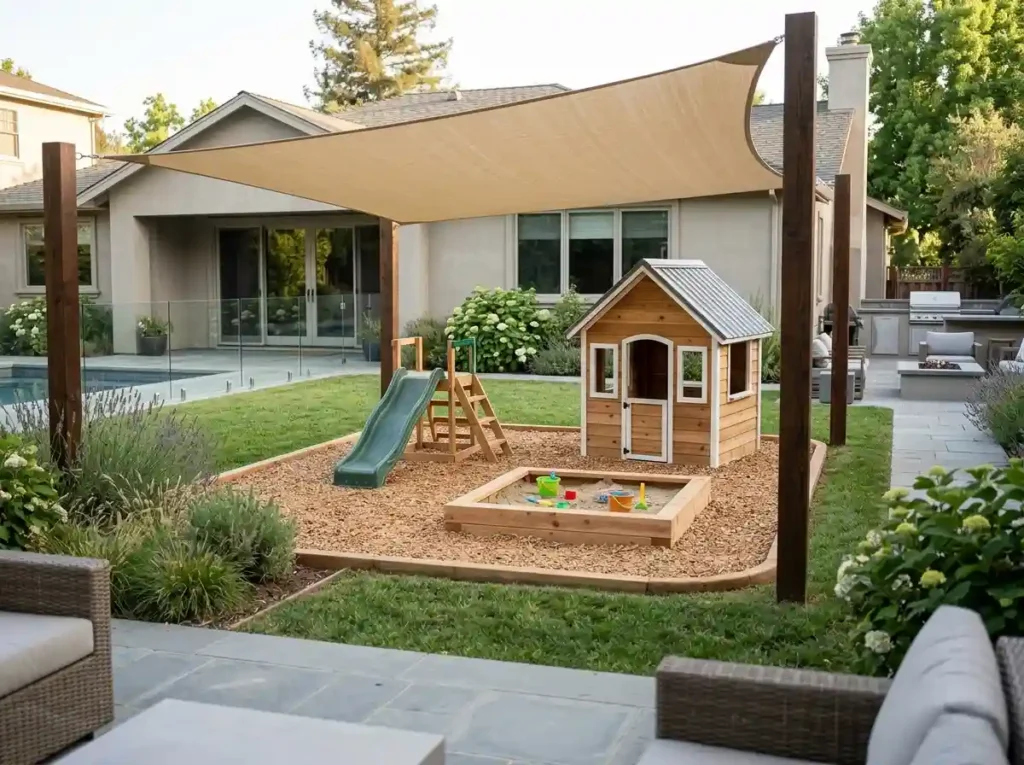
A good play area should be safe now and easy to update as children grow. Large permanent structures may lose their value after a few years.
Place the play zone where adults can see it from the house or main seating area. Keep it away from pools, fire features, driveways, and cooking equipment. Add shade so metal and plastic parts do not become too hot.
Use age-suitable equipment and a surface that helps soften falls. The needed safety space depends on the equipment, so follow the maker’s instructions and current playground guidance.
A young child may enjoy a sandbox, small slide, and playhouse. Older children may prefer climbing equipment, a sports net, or open ground. Leave room so the zone can change without a full rebuild.
Plan a future use from the start. A sandbox can later become a flower bed. A flat play surface may turn into a lounge.
Best for: Families with young or growing children
Add a Pond or Water Feature You Can Enjoy
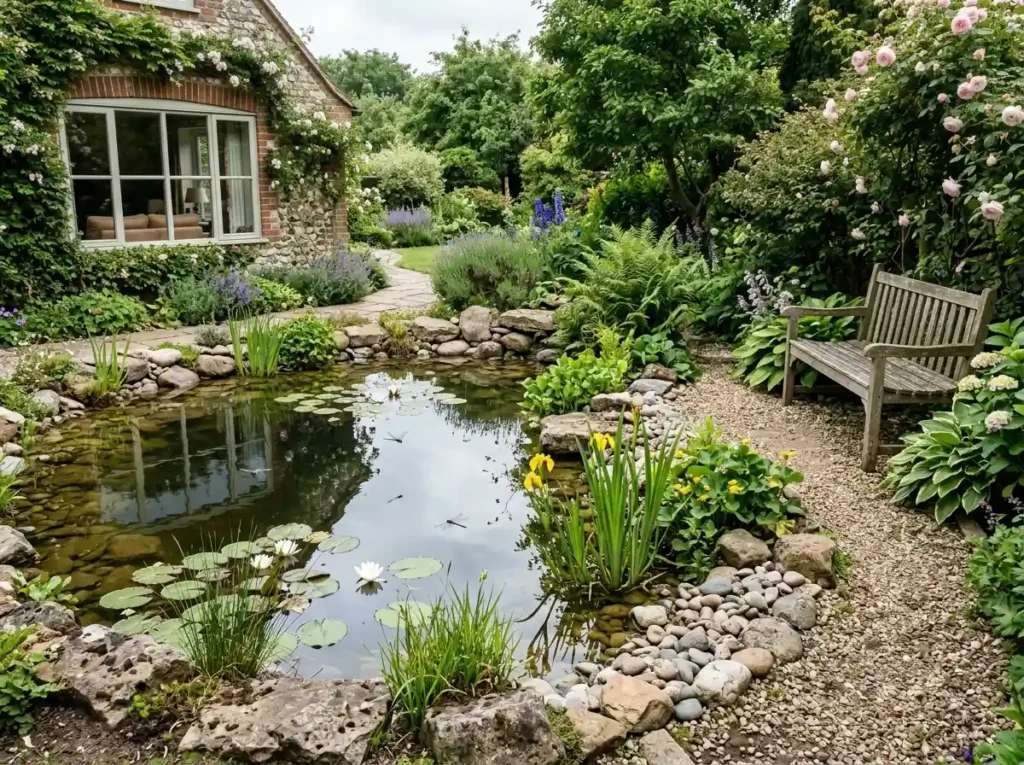
Water adds movement and sound to a large yard. It can also soften traffic noise and make a quiet corner feel more restful.
Choose a feature that fits the care you can give. A fountain may be easier to manage than a large pond. A wildlife pond can support birds and insects, but it needs careful plant and water planning. A small stream can connect two levels in a sloped yard.
Place the water where you can enjoy it from a patio, path, window, or bench. A feature hidden behind a shed will have less value.
Plan power, pumps, filters, and maintenance access before digging. Add stones and plants around the edge so the feature looks like part of the garden.
Child and pet safety should shape the depth, edge, and location. In some homes, a low fountain may be a better choice than an open pond.
Best for: Calm gardens and yards with unwanted noise
Turn a Slope Into Useful Terraced Levels
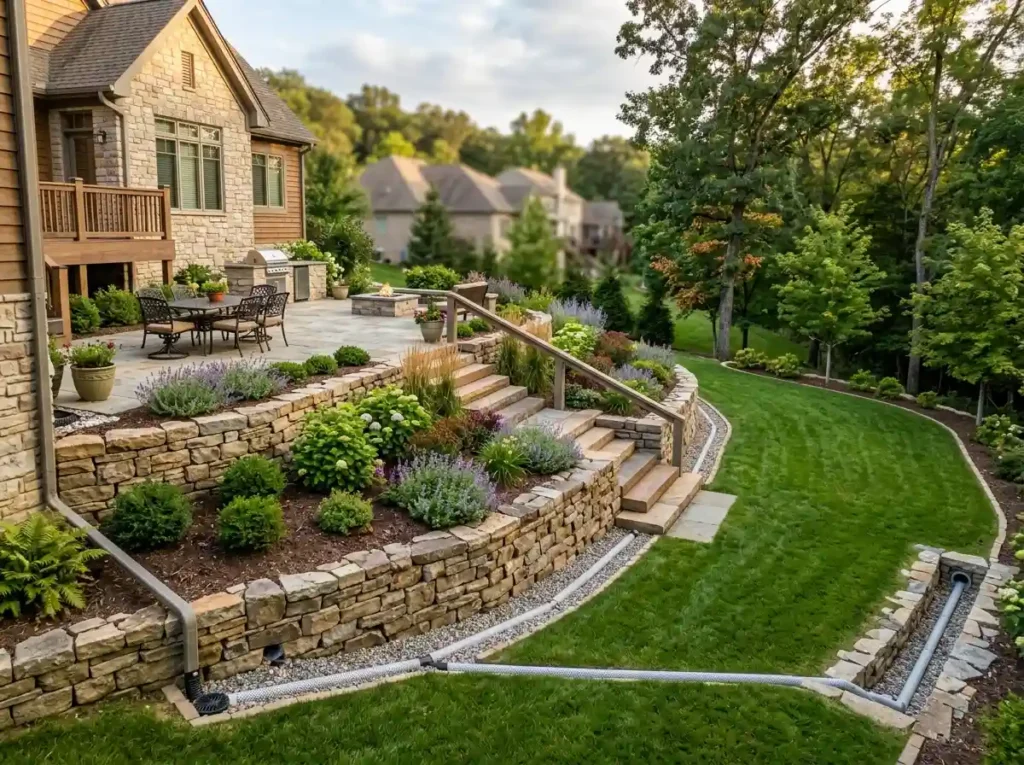
A steep backyard can cause runoff, erosion, and difficult mowing. Terraces can turn the slope into several flat, useful spaces.
Retaining walls hold soil and create level areas. Each level can have a different job. The top may hold a patio. The middle may contain planting beds. The lower level may become a lawn, fire pit, or play space.
Drainage must come first. Water trapped behind a wall can cause damage or failure. Use proper drains, gravel, and outlets based on the wall system and site.
Add safe steps and landings between levels. Handrails may be needed on taller runs. Paths should not become steep shortcuts that wash out during rain.
Small garden terraces may suit skilled DIY work. Taller walls, walls near buildings, and walls carrying heavy loads often need a contractor or engineer. Local permit rules may also apply.
Best for: Sloped yards with runoff or wasted ground
Replace Hard-to-Mow Lawn With a Native Meadow
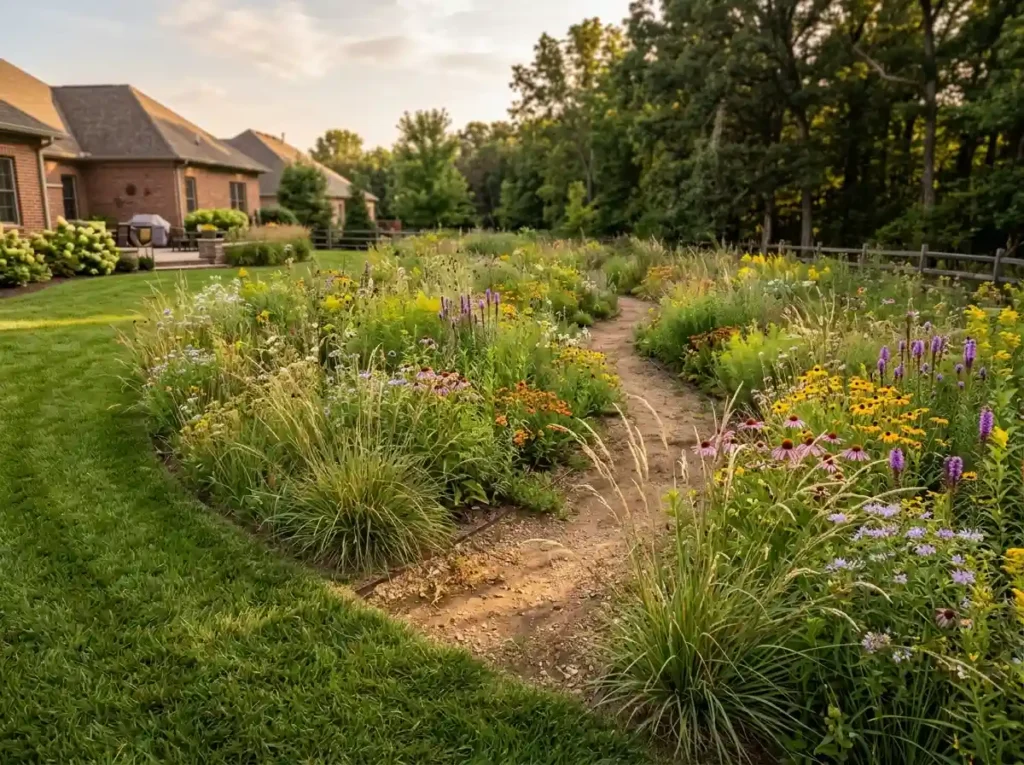
The far end of a large lawn can take time, water, and fuel without adding much use. A native meadow can lower mowing needs and add seasonal color.
Choose grasses and flowers that grow naturally in your region. They are more likely to handle local rain, heat, and soil once established. Native plants may also support local birds and insects.
A meadow still needs a plan. Keep the edges clean with a mowed strip, stone border, or path. This shows that the area is planted on purpose. A gravel or mowed route through the middle lets people enjoy it without stepping on plants.
Do not expect a finished look right away. Meadow plants need time to fill in. Weed control is important during the first year, and seasonal cutting may be needed.
Use meadow planting in low-traffic areas. A formal layout near the house and softer planting in the distance can create a good balance.
Best for: Low-use sections and less mowing
Layer Trees and Screens for Better Privacy
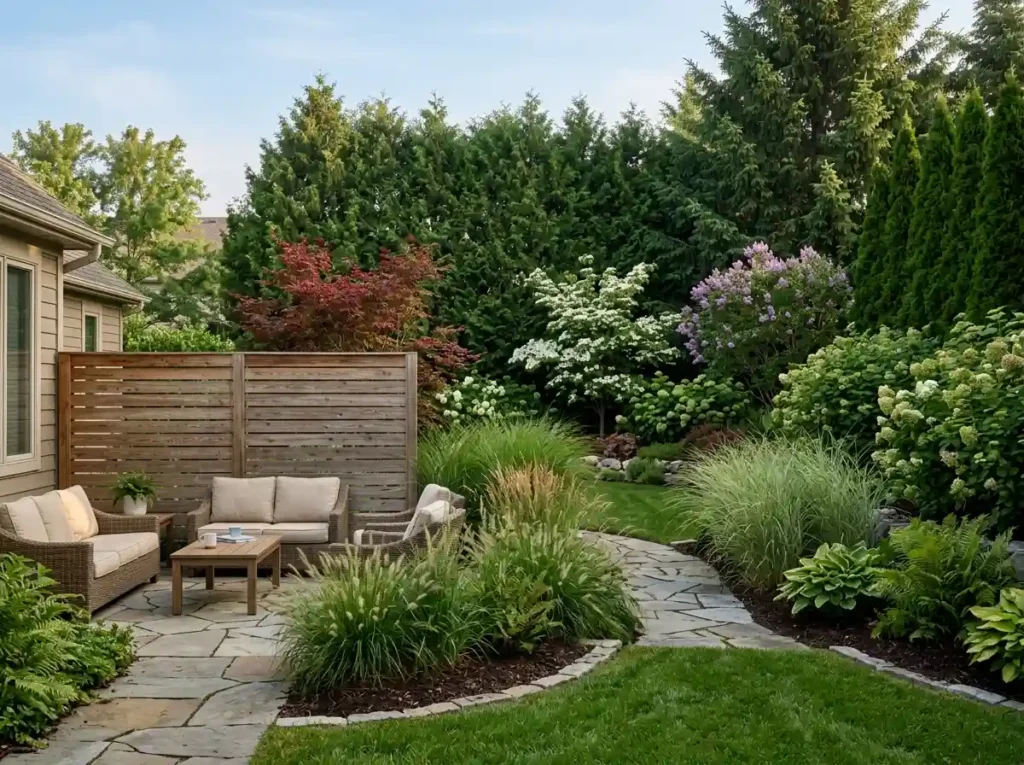
One straight row of thin trees may not block the views that bother you most. It can also look harsh and may leave a gap if one plant becomes sick.
Start by finding the exact sightlines you want to block. A neighbor’s upper window may need a small tree in one spot. A patio beside the fence may need a trellis or tall shrubs closer to the seating area.
Use layers instead of one plant type. Tall evergreens can form the back screen. Flowering trees or large shrubs can sit in front. Grasses and smaller plants can soften the view near paths and patios.
Check the mature width of each plant. Crowding may create quick cover, but it can lead to weak growth and more pruning.
Fences and screens give instant privacy where plants will take years to grow. Soften them with vines, shrubs, or garden beds for a greener look.
Best for: Open yards overlooked by neighbors
Add Landscape Lighting for Safe Evening Use
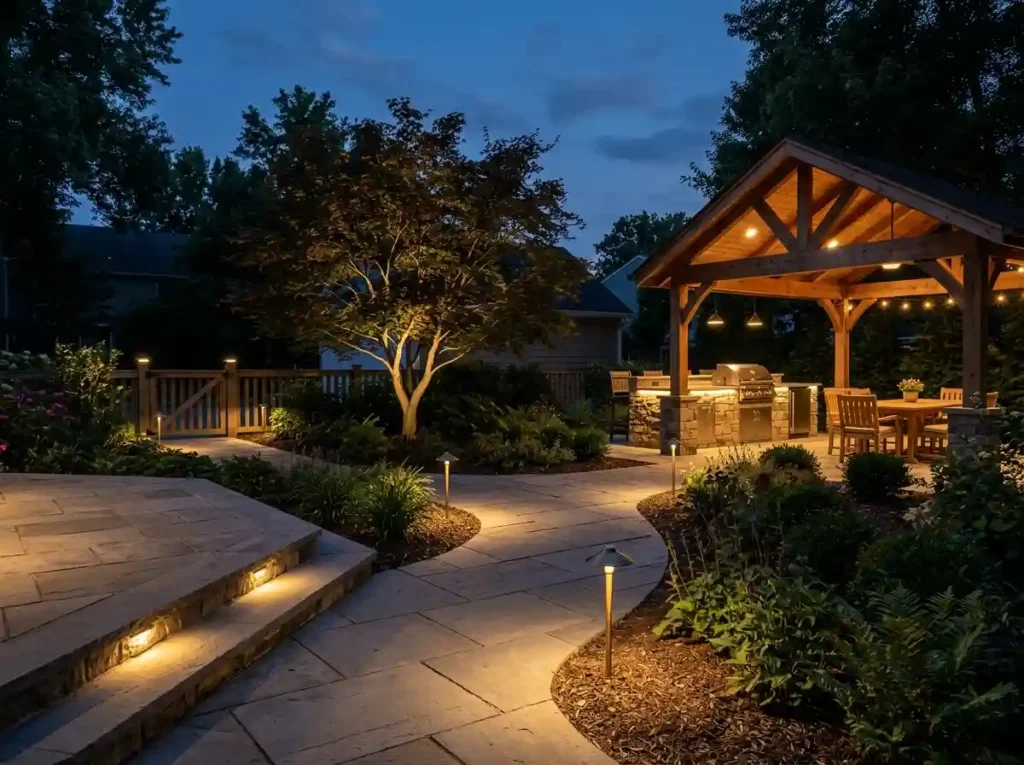
Lighting helps you use the backyard after sunset. It also makes steps, paths, and cooking areas safer.
Start with places where people walk or work. Light entrances, steps, gates, paths, and the outdoor kitchen. Use low fixtures that show the ground without shining into people’s eyes.
Then add a small amount of accent light. One tree may look striking with a soft uplight. A wall may need a gentle wash of light. A pavilion can use warm ceiling or wall lights.
Avoid lighting every plant and surface. Too much light can flatten the yard, bother neighbors, and reduce the calm feel of the garden.
Put different zones on separate switches, timers, or smart controls. Before permanent installation, test positions with temporary solar or battery lights. This can reveal glare and dark gaps.
Best for: Evening meals, safe movement, and outdoor events
How to Choose the Right Ideas for Your Backyard
You do not need all 18 features. Adding too much can make the yard costly, crowded, and hard to care for.
Start with one main goal. Do you want to entertain, grow food, give children more play space, or cut lawn care? Choose one large feature and two smaller features that support it.
| Your Main Goal | Features That May Fit Best |
| Entertaining | Large patio, pavilion, outdoor kitchen, fire pit |
| Family use | Open lawn, play area, pool, shaded seating |
| Gardening | Deep beds, orchard, vegetable garden, meadow |
| Privacy | Layered trees, screens, private garden room |
| Lower upkeep | Native meadow, less lawn, grouped planting |
| Better use of a slope | Terraces, steps, retaining walls, planted levels |
Climate should guide your choices. A sunny patio may be uncomfortable in a hot area. A large lawn may demand too much water in a dry climate. A pond may need more care in a yard filled with falling leaves.
Think about maintenance before looks. Pools, lawns, vegetable beds, and ponds need regular work. A feature that looks good in a photo may become a burden if it does not fit your schedule.
Leave some open space. Empty areas give the design room to breathe and help the main zones stand out.
How to Landscape a Large Backyard on a Budget
Large backyard projects become easier to afford when you complete them in phases. The order matters because early work can affect every later feature.
Start with grading, drainage, utility lines, and major paths. These jobs may not look exciting, but they protect the work that follows. Add large trees early because they need years to grow.
Next, complete the areas you will use most. This may include the main patio, planting beds, lawn, and basic lighting. Gravel and mulch can serve as temporary surfaces while you save for pavers or stone.
Finish premium features last. A pavilion, full outdoor kitchen, pool, or built-in fire area can come after the yard already works well.
| Phase | Work to Complete |
| Phase 1 | Drainage, grading, utilities, paths, and large trees |
| Phase 2 | Patio, planting beds, lawn, and basic lighting |
| Phase 3 | Pavilion, outdoor kitchen, pool, or fire feature |
Buy smaller plants if you are willing to wait for growth. Finish one zone well instead of spreading materials across the whole yard. Get separate quotes for paving, planting, drainage, irrigation, lighting, and structures so you can see where the money is going.
Common Large Backyard Landscaping Mistakes to Avoid
A large space can hide weak design choices at first. The problems often become clear after plants grow or people begin using the yard.
One mistake is placing every feature close to the house. The patio, grill, play set, and fire pit end up crowded into one area while the rest stays empty. Spread useful destinations across the property and connect them with paths.
Another mistake is using plants that are too small for the scale. Tiny beds and single plants may disappear when seen from the house. Use deeper beds, repeated groups, and a mix of heights.
Do not ignore drainage. Water can collect beside patios, behind walls, or in play areas. Fix slopes and water flow before adding costly surfaces.
Too much lawn can also create extra work. Keep grass where it supports games, pets, or gatherings. Replace low-use sections with trees, beds, meadow planting, or mulch.
Plan storage and service access as well. Tools, bins, pool equipment, and hoses need a place. Finally, limit the number of paving styles, wall materials, and colors. A few repeated choices will make the yard feel complete.
Create a Large Backyard That Works for Your Life
A large yard does not need to be packed with costly features. It needs a clear plan. Give each area a job, connect the zones with paths and planting, and choose materials that fit your climate and budget.
Start with the work that affects everything else. Fix drainage, mark the main paths, and choose where large trees will grow. Then build the patio, garden, play space, or other zone you will use most.
Sketch your yard and list your top three priorities before buying materials or asking for quotes. This small step can prevent wasted money and help each project support the next one.
The best large backyard landscaping ideas are the ones that fit your daily life, maintenance limits, and long-term budget.