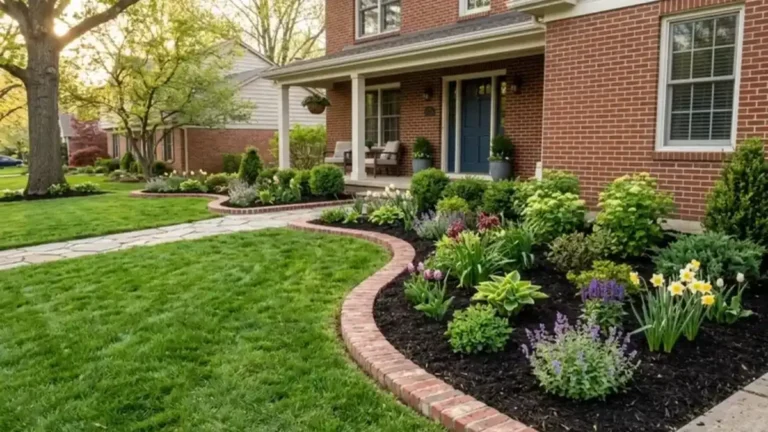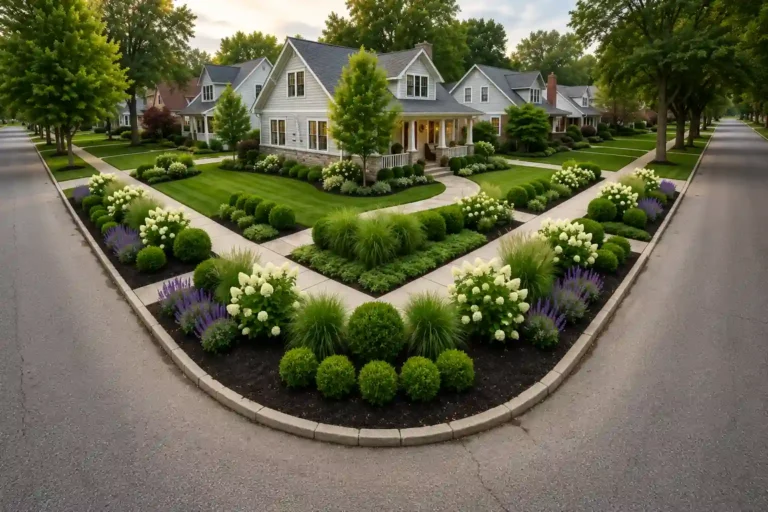
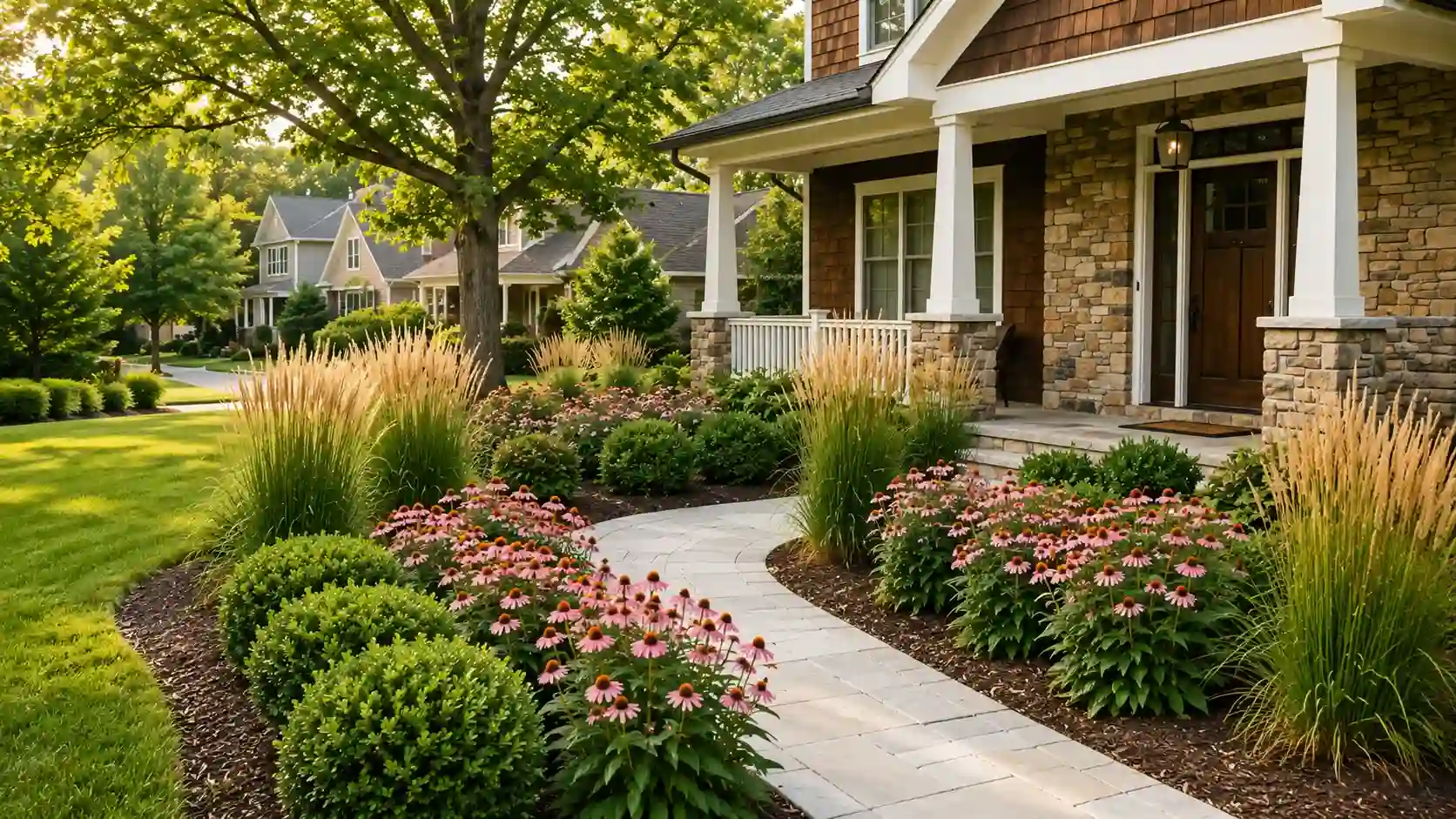
23 Low Maintenance Front Yard Landscaping Ideas That Save Time
A neat front yard should not take every weekend to maintain. Yet many yards demand constant mowing, watering, trimming, and weed pulling. The work adds up fast, especially when plants are placed in the wrong spots or the lawn includes narrow areas that are hard to reach.
The best low maintenance front yard landscaping ideas reduce repeated work without making your home look bare. You can keep color, texture, shade, and curb appeal. You just need to make each part of the yard earn its place.
These easy front yard landscaping ideas cover plants, lawn alternatives, gravel, mulch, walkways, lighting, and water-saving systems. You do not need to use all 23. Choose the options that fit your weather, soil, sunlight, budget, and free time.
How to Plan a Low Maintenance Front Yard Before You Buy Anything
Low maintenance landscaping for a front yard starts with a quick site check. A plant may look perfect at the nursery but create years of extra work when it is placed in the wrong soil or light.
First, watch the sun for one full day. An area with six or more hours of direct sun is usually treated as full sun. A spot with three to six hours is often classed as partial shade. Areas with less direct light need plants that can handle shade.
Next, check what happens after rain. Look for dry soil beside pavement, wet corners, washed-out mulch, and water moving near the house. These clues show where gravel, a dry creek bed, or a rain garden may help.
Water entering a basement or collecting beside the foundation needs professional advice.
Then mark the parts of the yard that waste your time. This may be a narrow grass strip, an overgrown hedge, or a bed that always fills with weeds. Fix those areas first.
Check the mature height and width of every plant before buying it. A small shrub can become wide enough to cover a window or block a path. Also check local rules before removing lawn, changing drainage, or planting near the street.
A five-minute yard check should answer these questions:
- Which areas get full sun, partial shade, or heavy shade?
- Where does water collect after rain?
- Which areas are hard to mow?
- Which plants need constant trimming?
- What part of the yard looks messy first?
Start with the problem that takes the most time. That change will give you the fastest result.
Low Maintenance Front Yard Landscaping Ideas With Plants
Plants are often blamed for yard work. In many cases, the real issue is the plant choice.
The right plants need less water, fit their space, and do not need to be cut back every few weeks.
Use Native Plants That Suit Your Local Climate
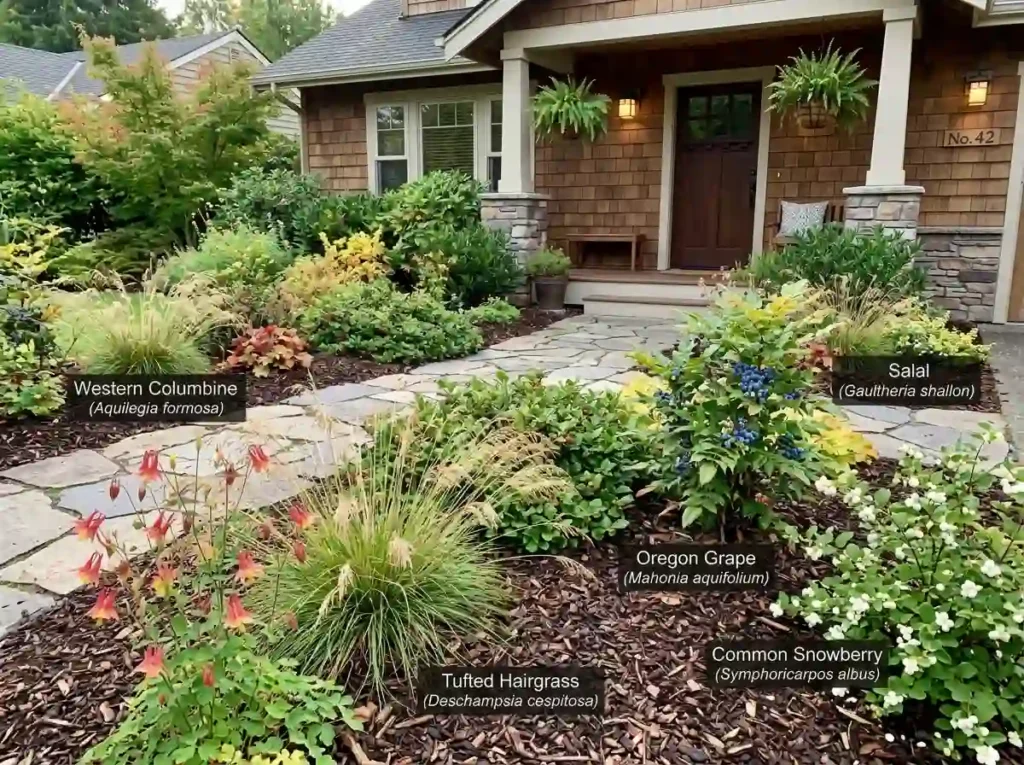
Native plants can be a smart starting point because they are linked to local weather, soil, and seasonal patterns.
Still, the word “native” does not always mean easy. A plant that likes wet shade will struggle in a hot strip beside the driveway.
Choose three to five native plant types that match each part of the yard. Repeat them in groups instead of planting one of everything. This makes the design look calm and makes care much simpler.
In dry regions, local sage, penstemon, or desert marigold may work. Humid regions may support coneflower, switchgrass, or inkberry. Shaded woodland yards may suit native ferns, sedges, or woodland flowers.
Confirm each choice with a local extension office or native plant group.
Add Compact Evergreen Shrubs for Year-Round Shape
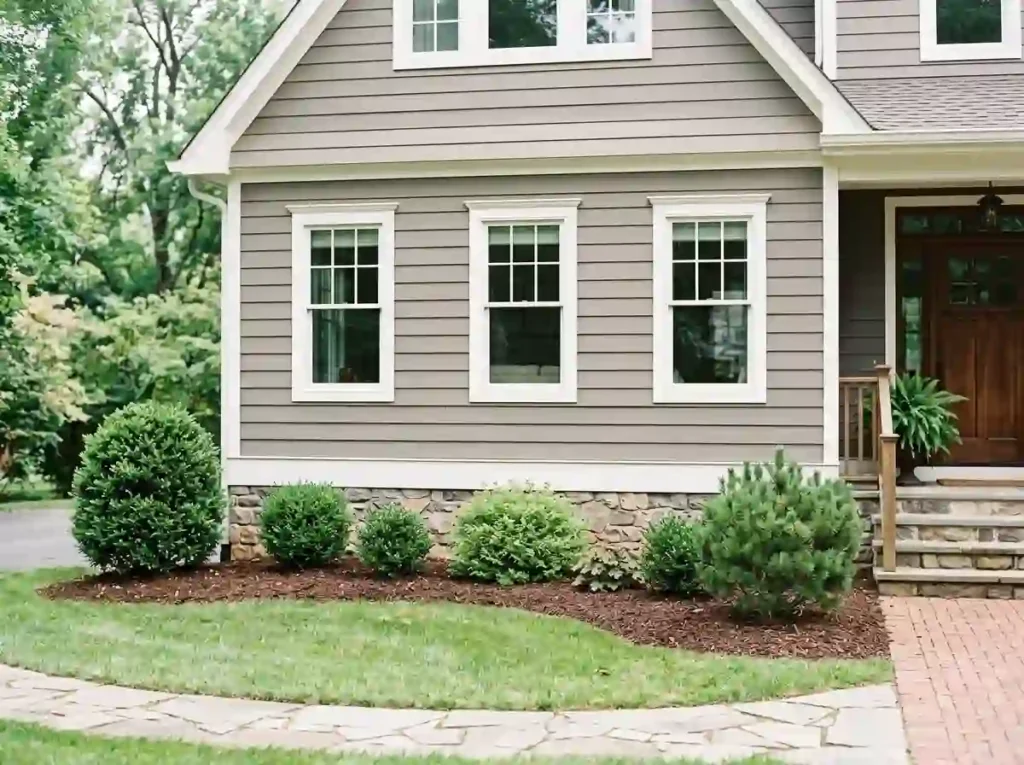
Evergreen shrubs keep some color and structure when flowers fade. Use them near the house, front steps, or entrance.
Compact types often need less pruning than large shrubs forced into small spaces.
Check the mature width before planting below a window. Leave enough room between the shrub and the wall for airflow and future growth.
Avoid placing a tight row of identical shrubs across the whole front of the house. That can look heavy and may create a large trimming job.
A simple layout can work better. Place one compact evergreen near each outer corner of the house. Then repeat shorter shrubs or perennials below the windows.
Choose Dwarf Flowering Shrubs for Easy Color
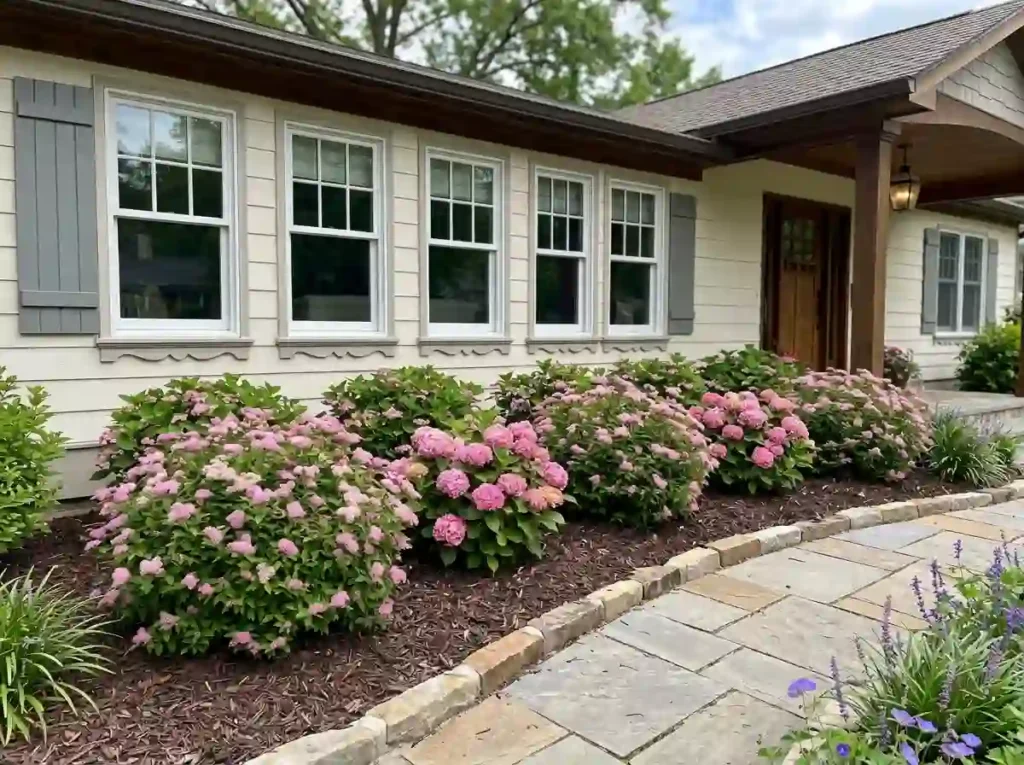
Dwarf flowering shrubs add color without taking over the yard. They can also replace groups of short-lived annual flowers that must be bought and planted each year.
Possible choices include:
- Compact hydrangea
- Spirea
- Dwarf abelia
- Potentilla
- Compact weigela
The right option depends on local weather, sunlight, soil, and winter cold.
Read the plant label before pruning. Some shrubs flower on older stems, while others bloom on new growth. Cutting at the wrong time can remove the next set of flowers.
Use one or two flowering shrub types across the yard. Repeating the same plant gives the design a clear pattern and keeps care simple.
Plant Ornamental Grasses in Repeated Groups
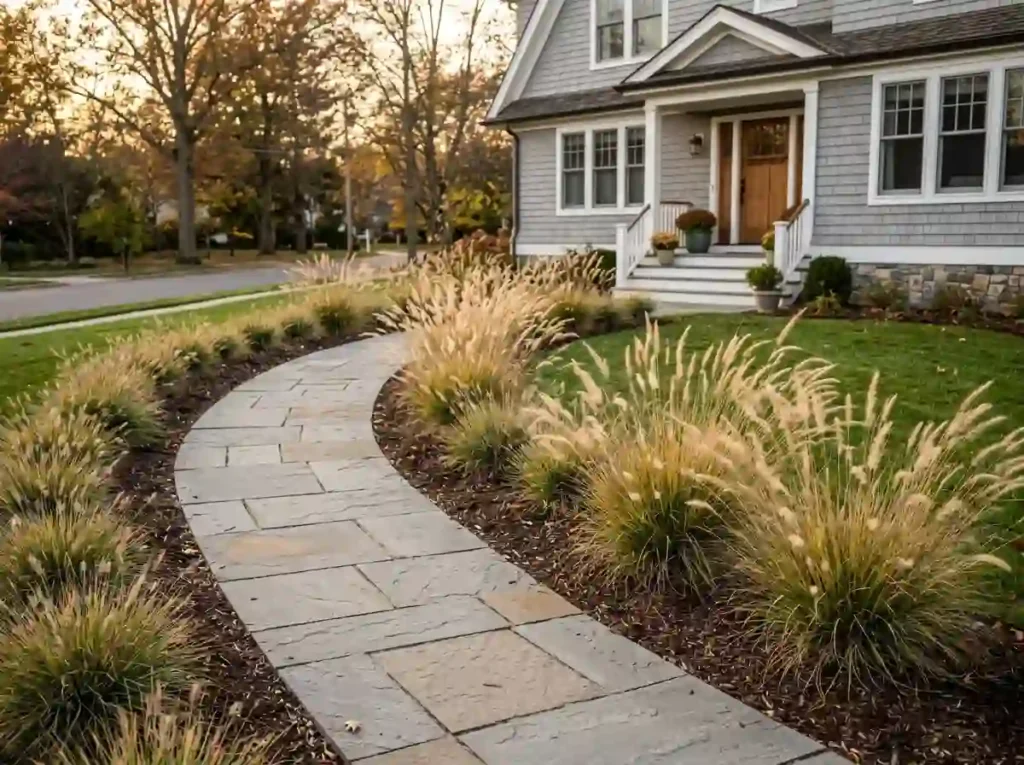
Ornamental grasses soften hard lines around driveways, walls, and paths. Many clumping grasses need one cutback each year instead of regular shaping.
Choose types that stay in clumps rather than spreading through underground roots. Check the mature height too. Tall grass near the street can block views for drivers and people using the sidewalk.
Plant grasses in groups of three, five, or seven. A row of three matching grasses beside a walkway often looks better than several unrelated plants.
Grasses can bend in strong wind and may look dry during winter. That is part of their natural form. Cut them back at the right time for your climate.
Use Drought-Tolerant Perennials for Seasonal Flowers
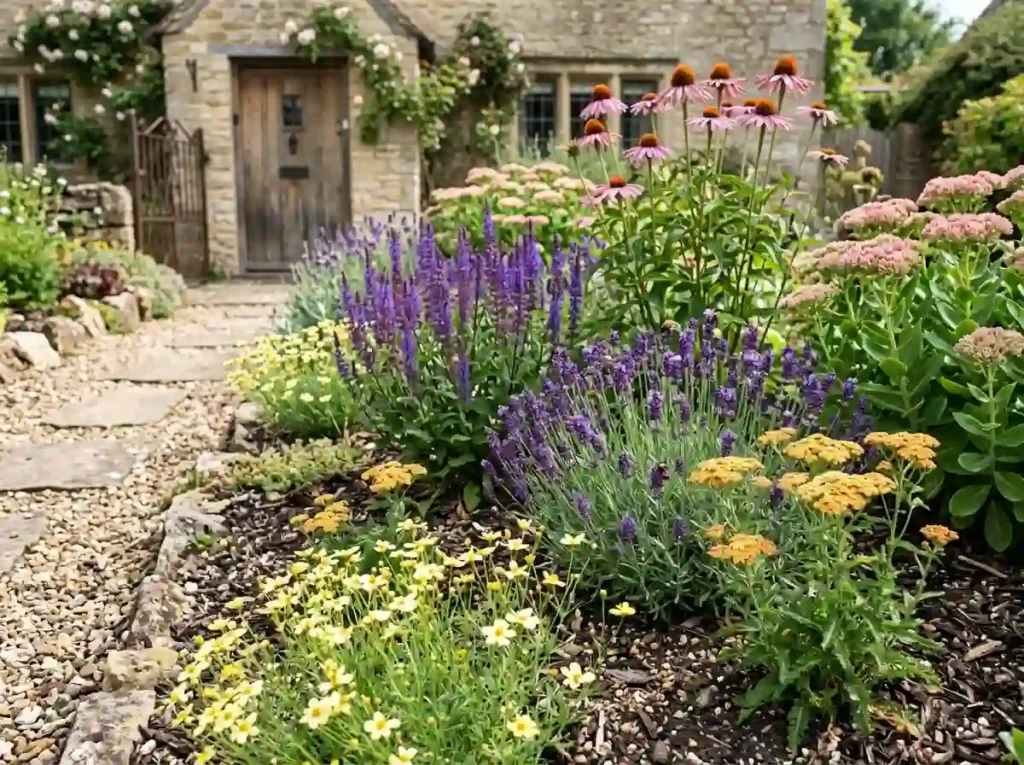
Drought-tolerant perennials can give you flowers without daily watering once their roots are established.
Common options for suitable climates include:
- Lavender
- Salvia
- Yarrow
- Sedum
- Coneflower
- Coreopsis
Group plants with similar water needs. Do not place a moisture-loving plant beside one that prefers dry soil. One of them will always be unhappy.
Choose plants with strong stems that do not need support. Plan for different bloom times so the bed has color in spring, summer, and early fall.
These plants still need regular water after planting. “Drought-tolerant” usually describes an established plant, not a new one.
Add One Slow-Growing Ornamental Tree
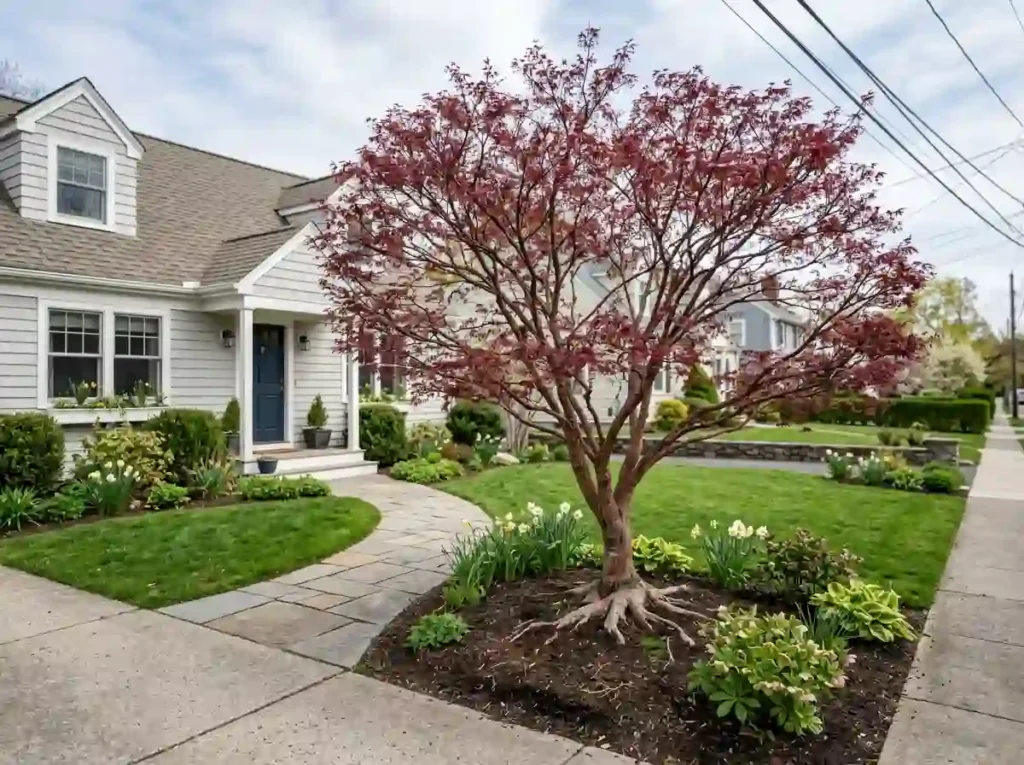
One small tree can give the whole yard a focal point. It may add spring flowers, summer shade, fall color, textured bark, or a strong winter shape.
Choose a tree that fits the property at full size. Check the canopy width, root space, overhead wires, and distance from pavement.
Do not place it where branches will cover the door or rub against the roof.
An off-center tree often looks more natural than one planted in the exact middle of the lawn. It can also balance the shape of the house.
Trees need early care while their roots settle. After that, a well-placed slow-growing tree may need less work than a large flower bed.
Fewer plant types often lead to a cleaner design and a shorter care list. Plants soften the front yard, but hard materials can remove some of the hardest areas to mow and weed.
Low Maintenance Hardscaping Ideas That Fix Problem Areas
Hardscaping works best when it solves a real problem. Use it to repair muddy paths, dry lawn strips, erosion, or spaces where plants keep failing.
Replace a Difficult Lawn Strip With Gravel
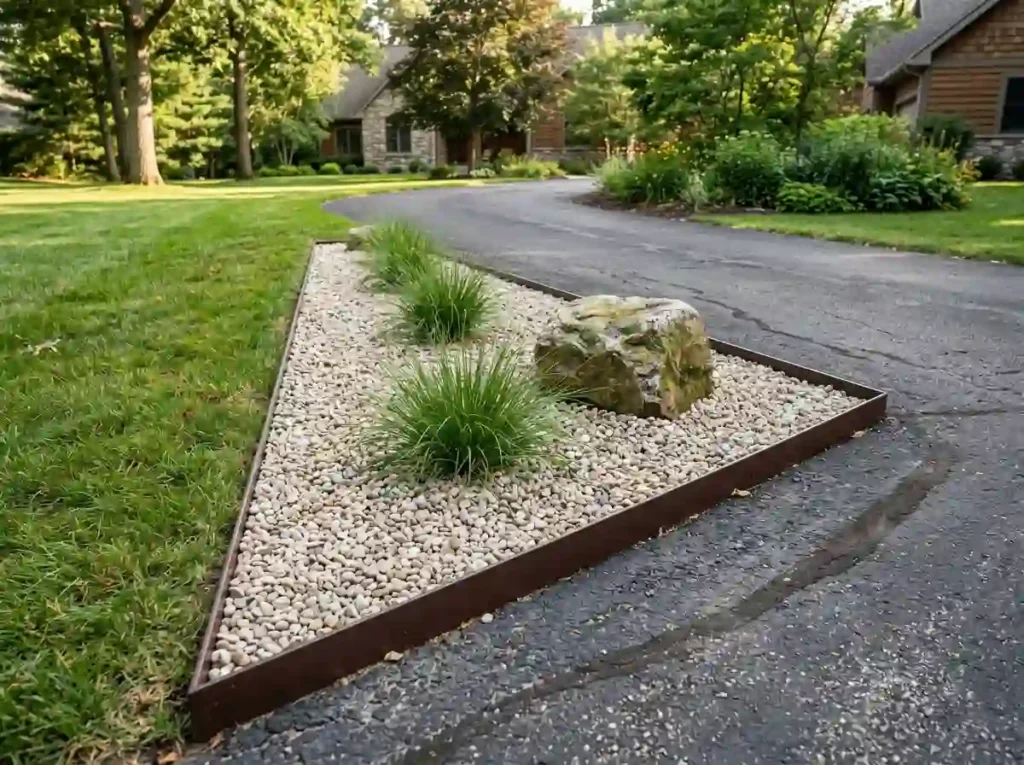
A narrow strip beside a driveway can be hard to water and even harder to mow. Gravel can turn that weak area into a clean border.
Remove the grass and prepare a stable base. Add strong edging so stones do not spread onto the driveway or lawn.
Use a few large groups of plants to stop the area from looking flat.
Gravel is not free from care. Leaves can collect in it, weeds may grow, and light stones can move. Dark gravel may also become very hot in full sun.
A simple design might use gravel, three compact grasses, and one large stone.
Join Small Beds Into One Large Mulch Bed
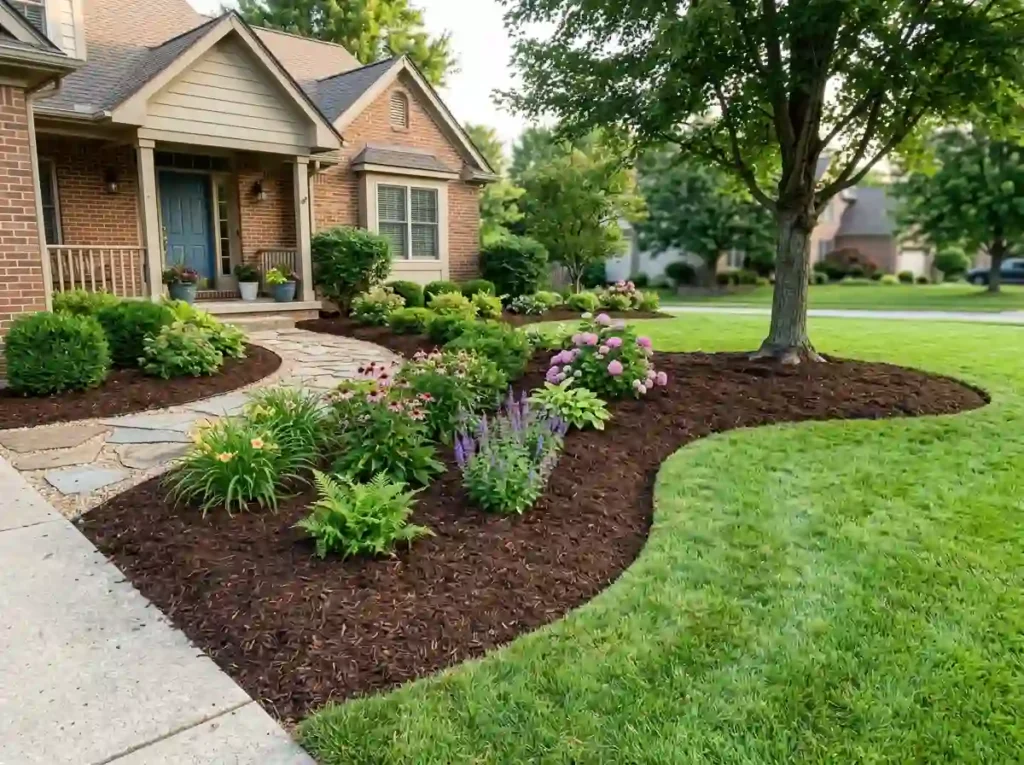
Small grass gaps between flower beds create extra mowing and trimming. Join nearby beds into one larger shape to remove those hard-to-reach areas.
Use broad curves instead of small bumps. Broad lines are easier to mow beside and look cleaner from the street.
Organic mulch can slow weeds and help the soil hold moisture. The University of Minnesota Extension recommends a mulch layer about 2 to 4 inches deep. It also advises keeping mulch away from plant stems and tree trunks.
Do not pile mulch against a tree. This traps moisture around the trunk and can lead to damage.
Add Strong Edging to Stop Grass From Spreading
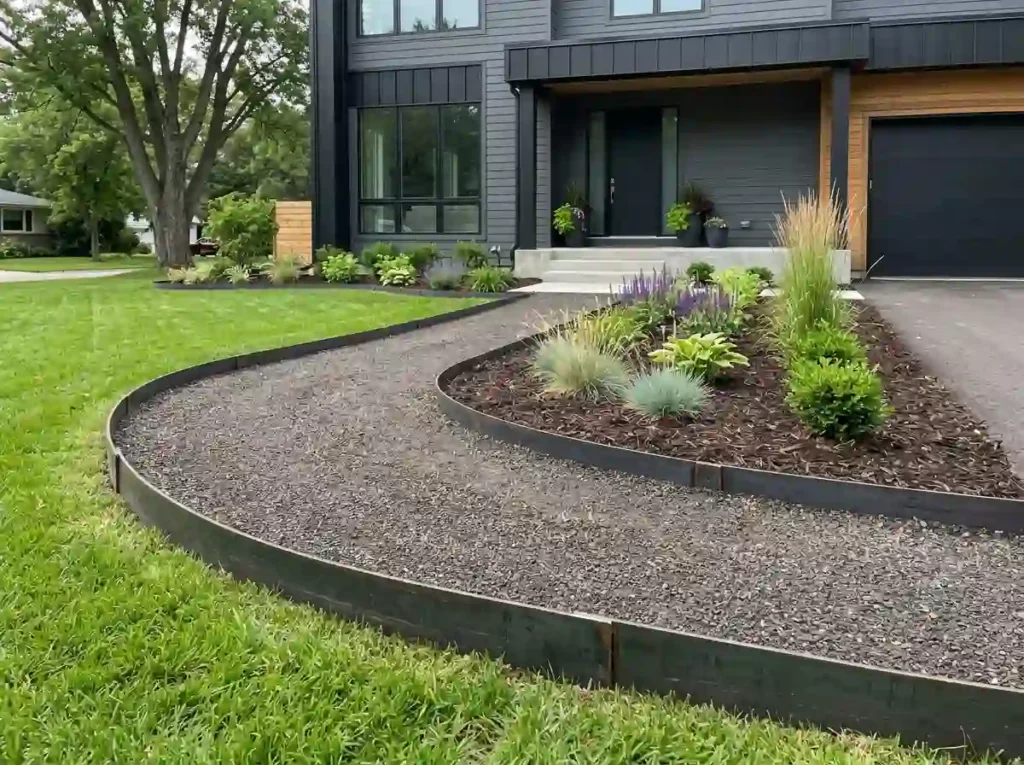
Edging creates a clear line between grass, mulch, and gravel. It also slows grass from creeping into planting beds.
Steel and aluminum give a thin, clean edge. Brick and stone suit many traditional homes. Concrete can last for years but costs more to install.
Keep the shape simple. Too many tight curves create more trimming and can make a small front yard look busy.
Set the edging firmly and check for raised parts that may cause trips. Match it with the home, driveway, or walkway when possible.
Build a Wide, Direct Walkway to the Door
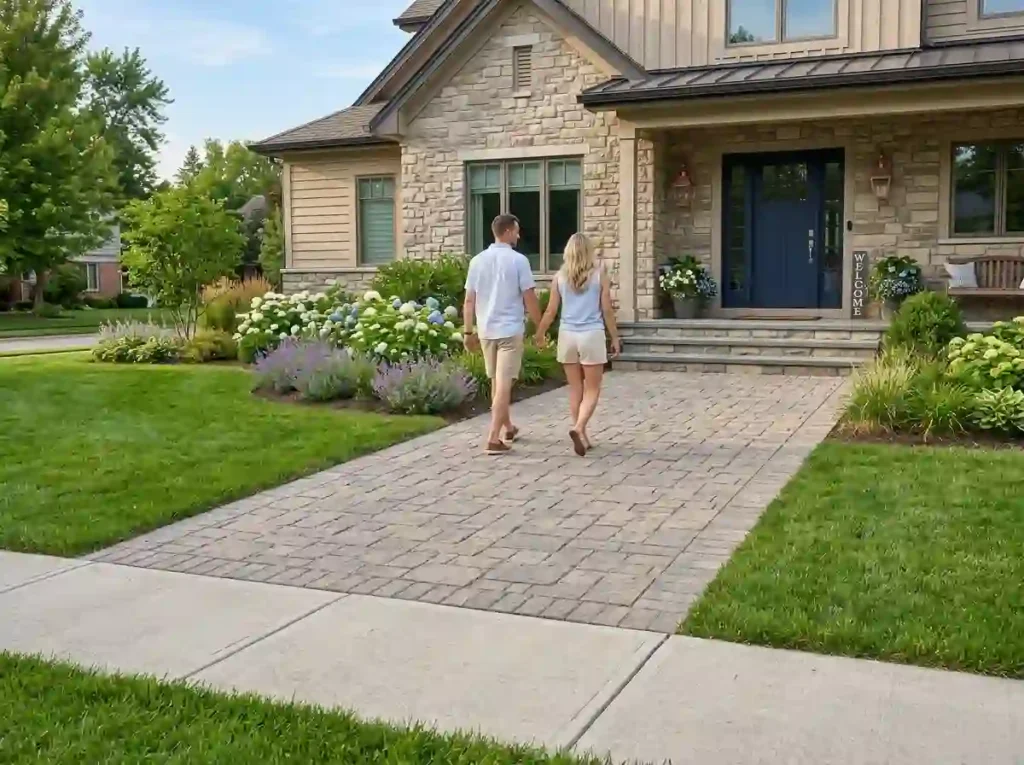
A clear path helps guests reach the front door without cutting across the lawn. It can also remove worn grass and muddy spots.
Use a direct route from the driveway or sidewalk. Avoid small stepping stones that shift or leave grass between them.
A wider path is easier for two people to use. It also gives the entrance a more welcoming look.
Choose outdoor pavers with a textured surface. In areas with drainage concerns, permeable pavers may allow more water to enter the ground.
The path should lead the eye to the door. Keep large shrubs away from its edges so people do not have to brush past wet leaves or branches.
Turn a Natural Drainage Line Into a Dry Creek Bed
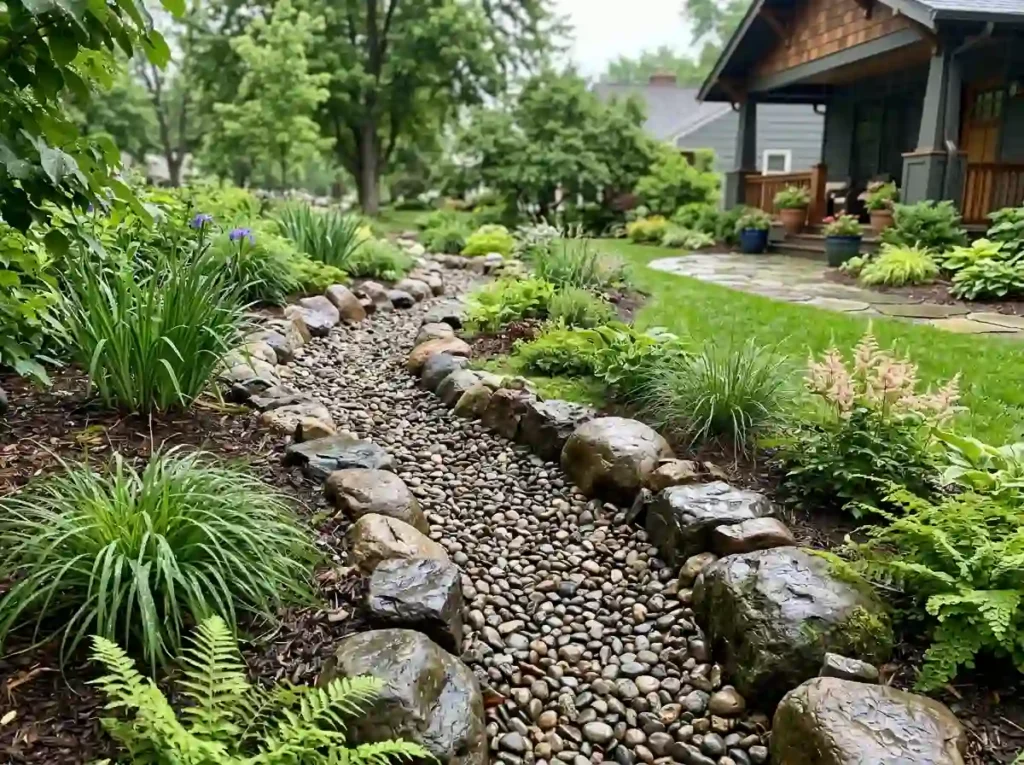
A dry creek bed can make a shallow drainage line look planned. It can also slow water and help guide it through the yard.
Use different stone sizes. Place larger stones at bends and smaller gravel between them. Add plants that can handle short wet periods along the edges.
A dry creek bed does not fix every drainage problem. It should follow the natural flow of water.
Do not direct water onto a neighbor’s land or against the house. Water entering the home calls for a drainage expert.
Hardscaping should make the yard easier to use. It should not cover a drainage issue or create a hotter, less useful space.
Low Maintenance Lawn Alternatives That Keep the Yard Soft
You may want less grass without replacing the whole yard with stone. In that case, start by reducing the hardest sections instead of removing every piece of lawn.
Reduce the Lawn to One Simple Shape
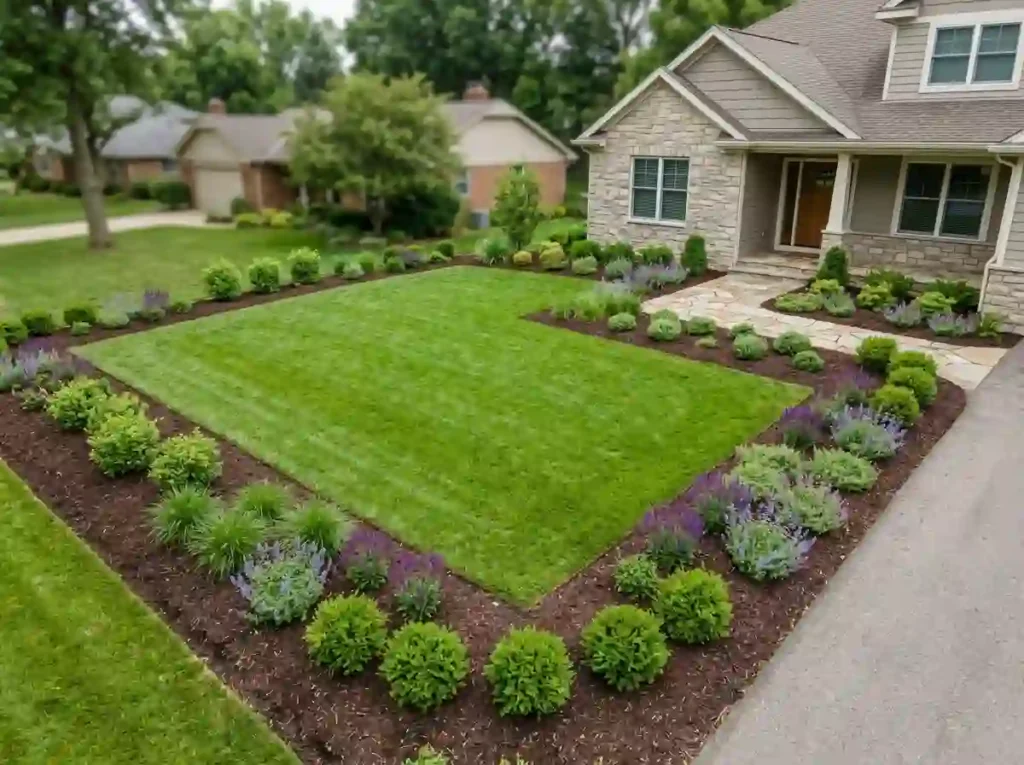
A lawn with sharp corners, tiny islands, and narrow strips takes longer to mow.
Turn it into one clear shape, such as:
- A wide rectangle
- A soft oval
- One broad curve
- A simple open square
Expand planting beds where grass grows poorly. Keep the strongest patch of lawn in the most open area.
This plan gives you a soft green space while cutting extra turns with the mower. It can also make a small yard look larger because the open area is easier to see.
Try a Clover Lawn Where Local Rules Allow
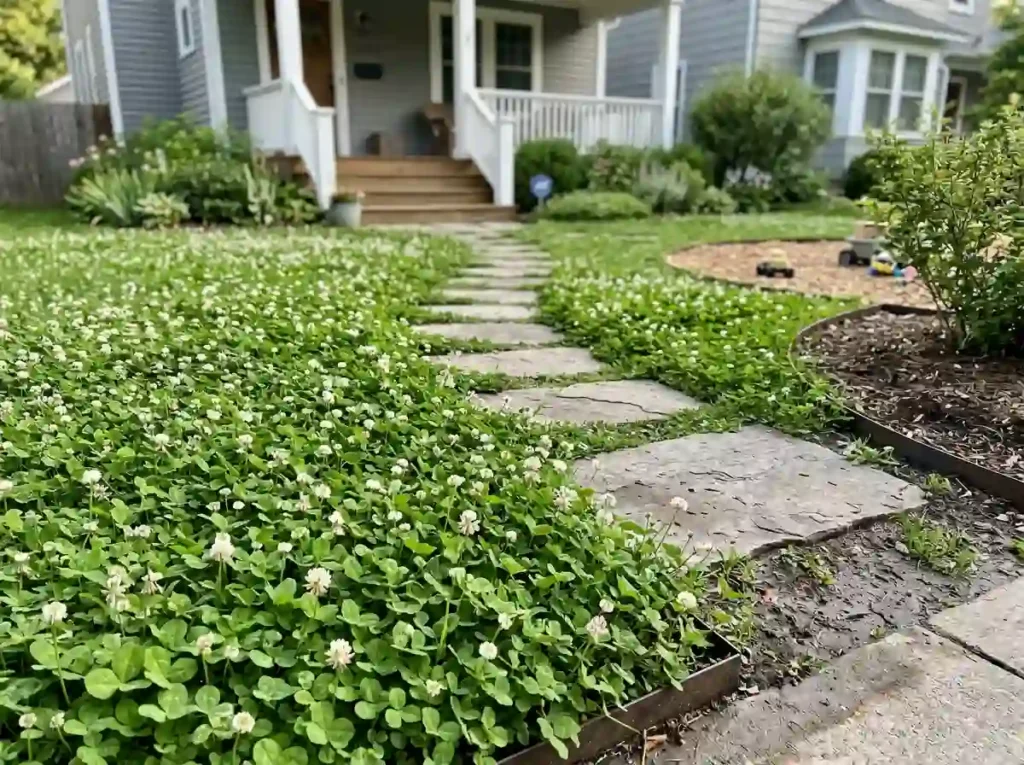
Clover can stay green in some dry periods and may need less mowing than common lawn grass. Its small flowers can also attract pollinators.
It will not look like a smooth sports field. Clover may become patchy, thin out during certain seasons, or need reseeding.
It may also be restricted by local rules or neighborhood standards.
Clover handles some foot traffic, but it may not be the best choice for a busy play area. Check how it grows in your region before replacing a full lawn.
Use a Low-Mow Grass Mix
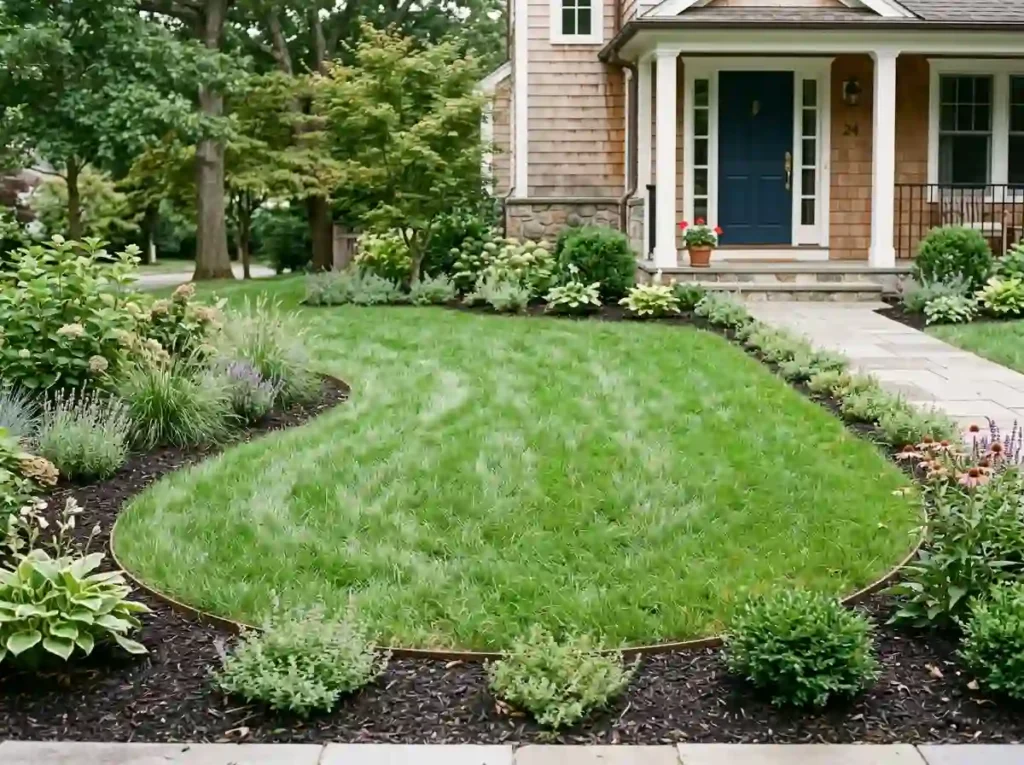
Fine fescue and other low-growing grass mixes can cut mowing needs in the right climate. They often have a softer and more natural look than standard turf.
Choose a mix based on local sunlight, soil, and rainfall.
A bag marked “no-mow” may still need cutting several times a year. It may also need regular watering while the seed grows.
Ask a local extension office which grass types work in your area. Local advice is more useful than a broad label designed for many regions.
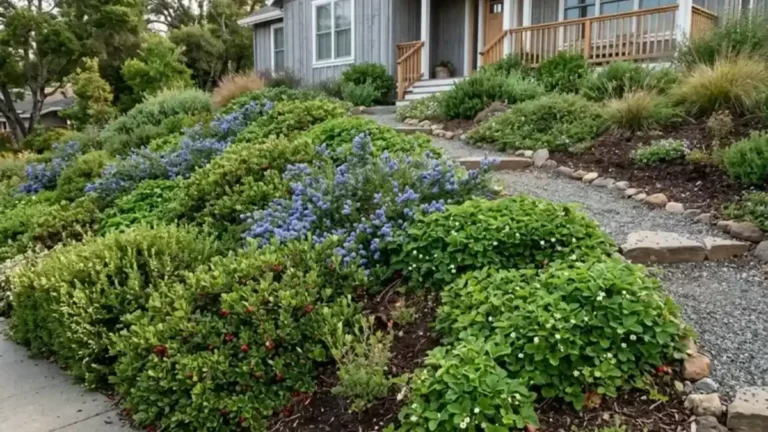
Fill Narrow Areas With Ground Cover
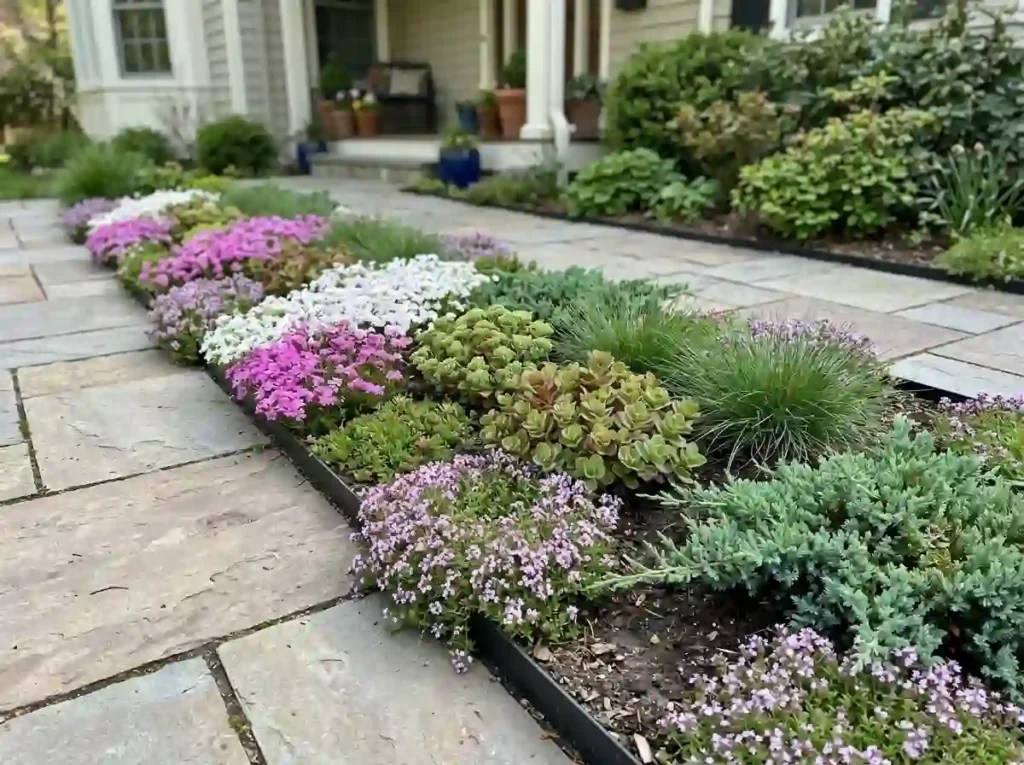
Ground cover can replace grass on slopes, beside paths, and in strips too small for a mower. It also adds color and texture close to the ground.
Possible options include:
- Creeping thyme
- Sedum
- Native sedges
- Creeping phlox
- Low-growing juniper
Ajuga can work in some places, but it may spread farther than planned.
Check how much foot traffic the plant can take. Also check whether it is invasive in your area.
Use edging when needed. Plant close enough for the area to fill in within a reasonable period.
The right lawn alternative depends on how you use the space. A front slope has different needs from an area used by children, pets, or guests.
Easy Front Yard Landscaping Ideas for the Entry and Driveway
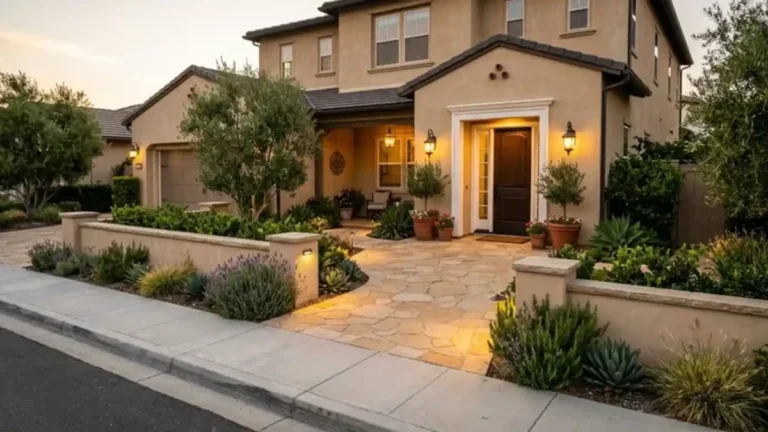
People notice the front door, path, driveway, and house number first. Small changes in these spots can improve curb appeal without redoing the whole yard.
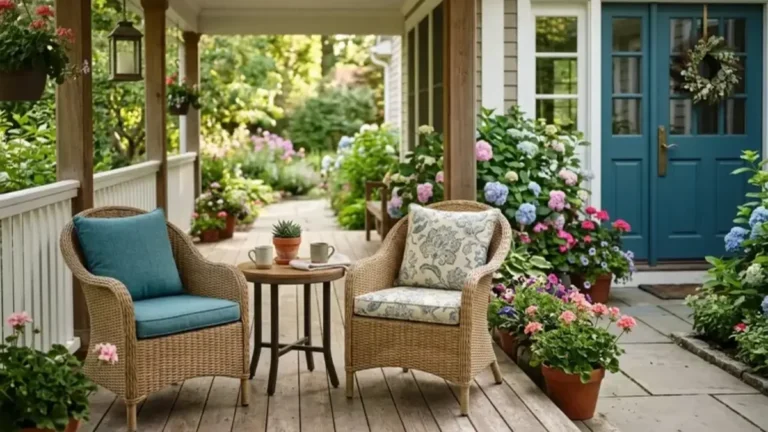
Frame the Front Door With Two Matching Planters
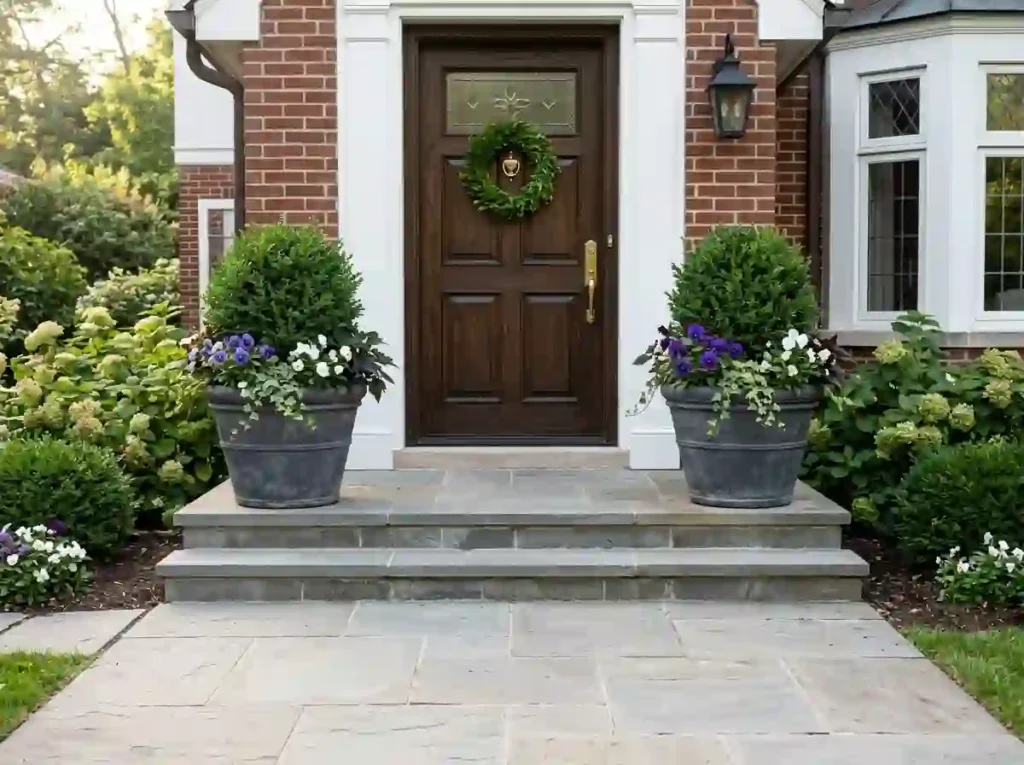
Two large planters often create more impact than a group of small pots. They also need less moving, cleaning, and rearranging.
Choose containers that can handle local rain, heat, and winter cold. Use compact evergreens or tough long-lasting plants as the main feature.
Add one seasonal plant around the edge when you want fresh color.
Keep enough space for the door to open and for people to pass safely. The planters should guide attention to the entrance, not block it.
Make a Small Mailbox Bed That Stays Neat
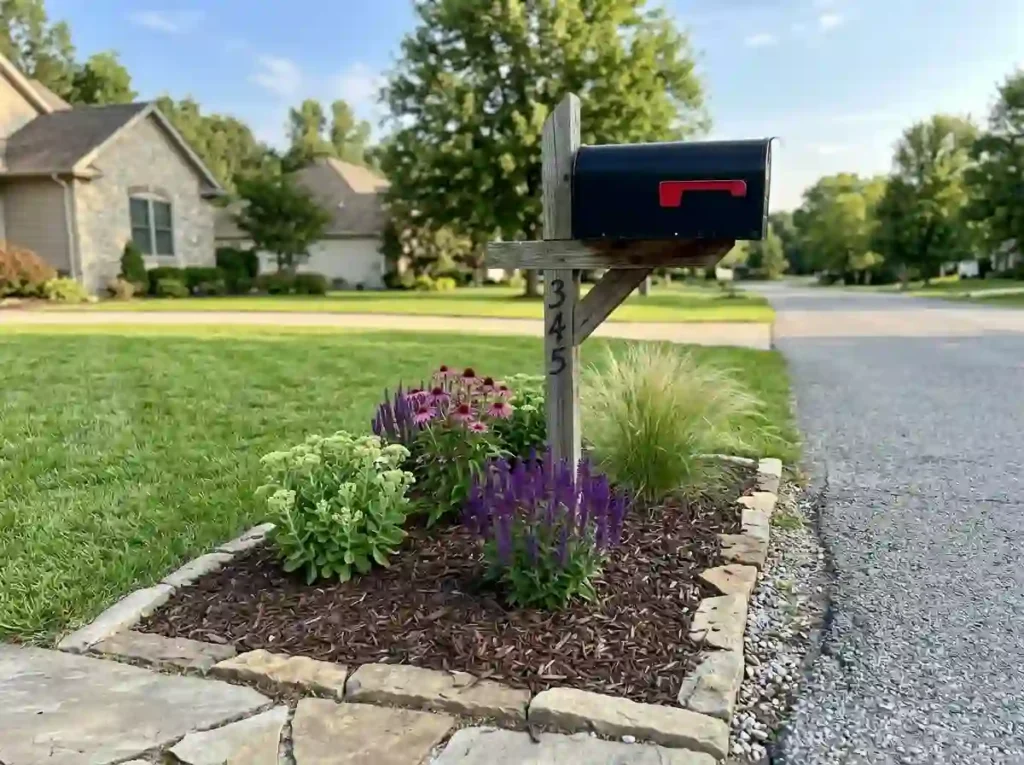
A mailbox bed can add color near the street, but it should be easy to reach and simple to maintain.
Use plants that can handle reflected heat, road dust, and dry soil. Keep them low enough to protect sightlines. Avoid thorny plants around the mailbox.
Repeat plants already used near the house. One compact grass with three flowering perennials can connect the street edge with the main yard.
Use mulch or gravel to cover open soil. Make sure the mail carrier can reach the box without stepping into the bed.
Line the Driveway With Heat-Tolerant Plants
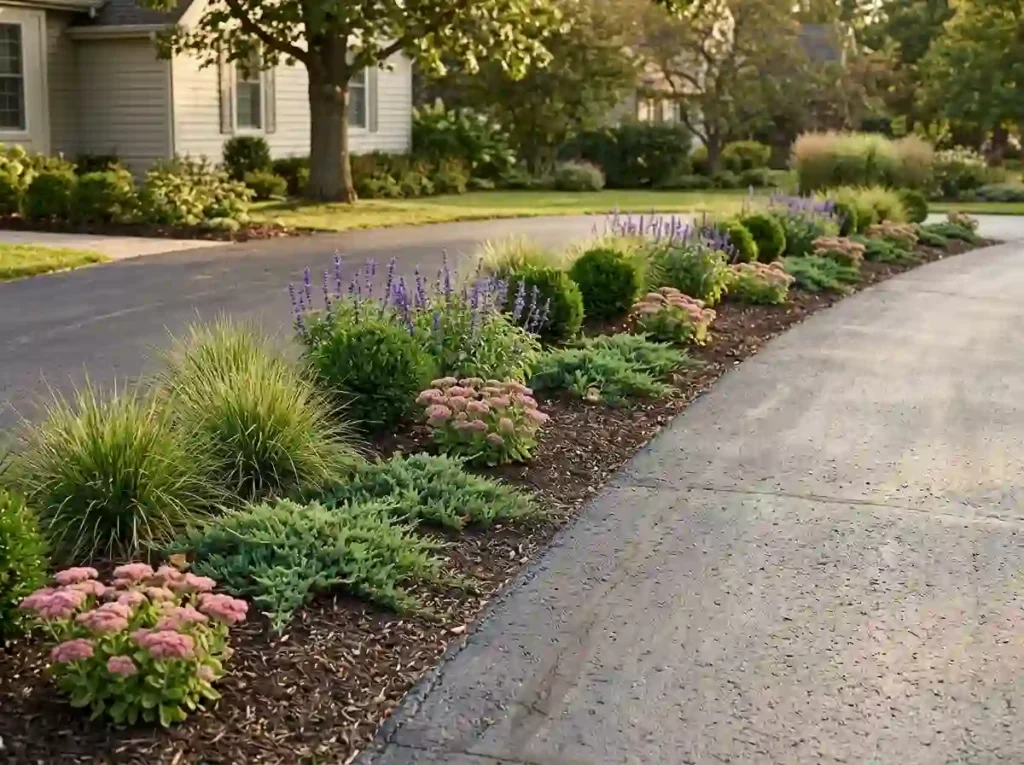
Pavement reflects heat and can dry nearby soil. Choose plants that can handle those conditions.
Possible options for suitable climates include:
- Compact ornamental grasses
- Low-growing junipers
- Sedum
- Salvia
- Native flowering plants
- Small evergreen shrubs
Keep plants short near the street. Leave enough room for car doors to open.
In snowy areas, keep space for snow storage and consider road salt. A pretty plant will not stay pretty if winter piles crush it each year.
Repeat one or two plant types instead of creating a mixed row. This gives the driveway a clean edge and cuts care.
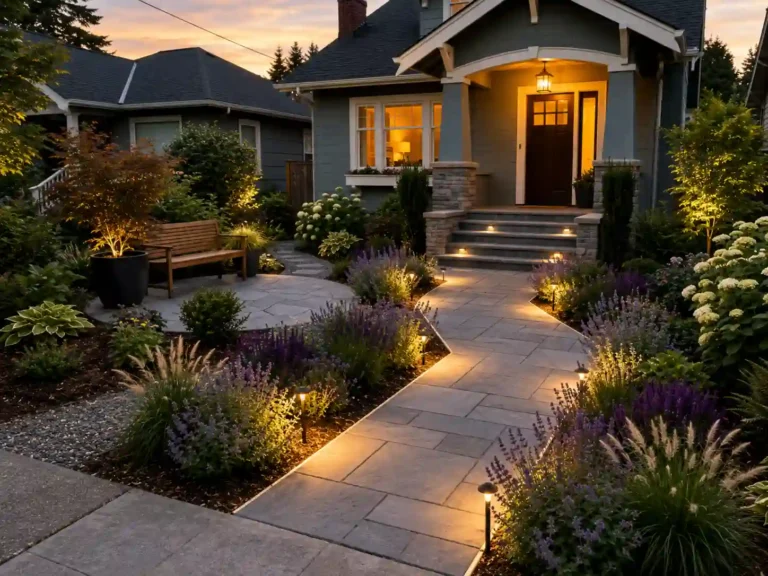
Add Soft Lighting Along Paths and Steps
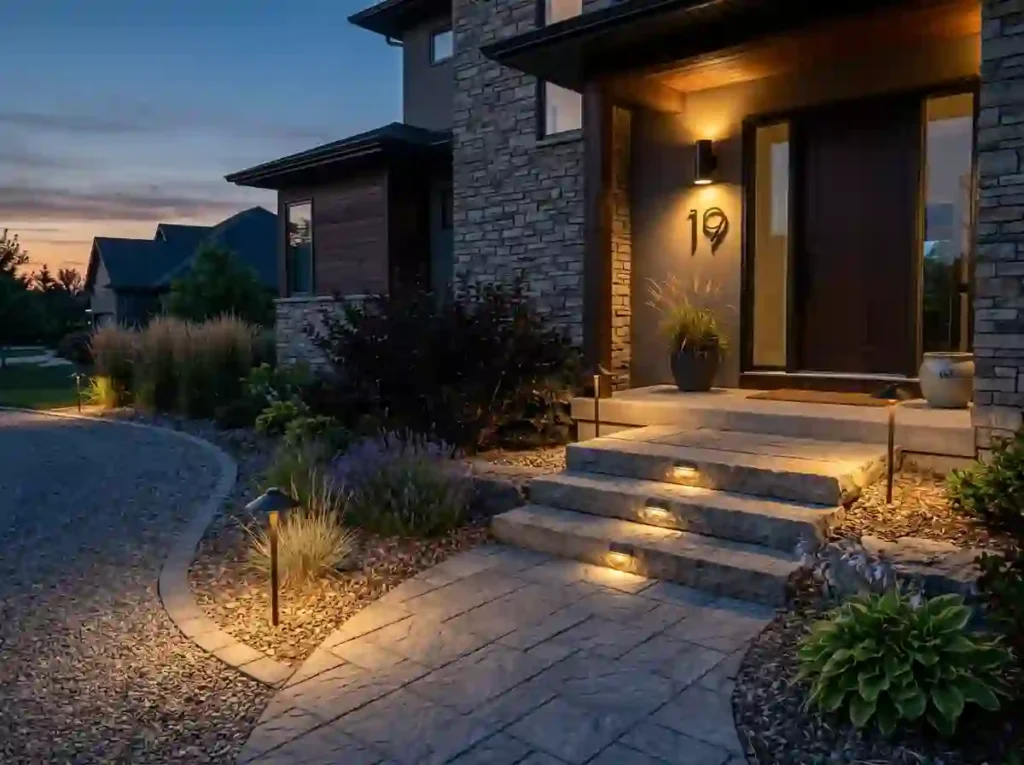
Good lighting helps people find the path, steps, and house number after dark. It also makes the entrance feel cared for.
Solar lights are easy to add, but they need enough direct sun to charge. Shaded yards may get better results from a low-voltage system.
Do not place a light every few feet. Use a few lights at changes in direction, steps, driveway edges, and the entrance.
Aim the light down to reduce glare. Hire a licensed electrician for work linked to household wiring.
Once the front door and driveway feel clear, focus on systems that cut repeated work across the whole yard.
Smart Low Maintenance Front Yard Landscaping Ideas
The strongest low maintenance front yard landscaping ideas work together. Plants, paths, water, drainage, and lawn areas should support the same simple plan.
Install Drip Irrigation Around Planting Beds
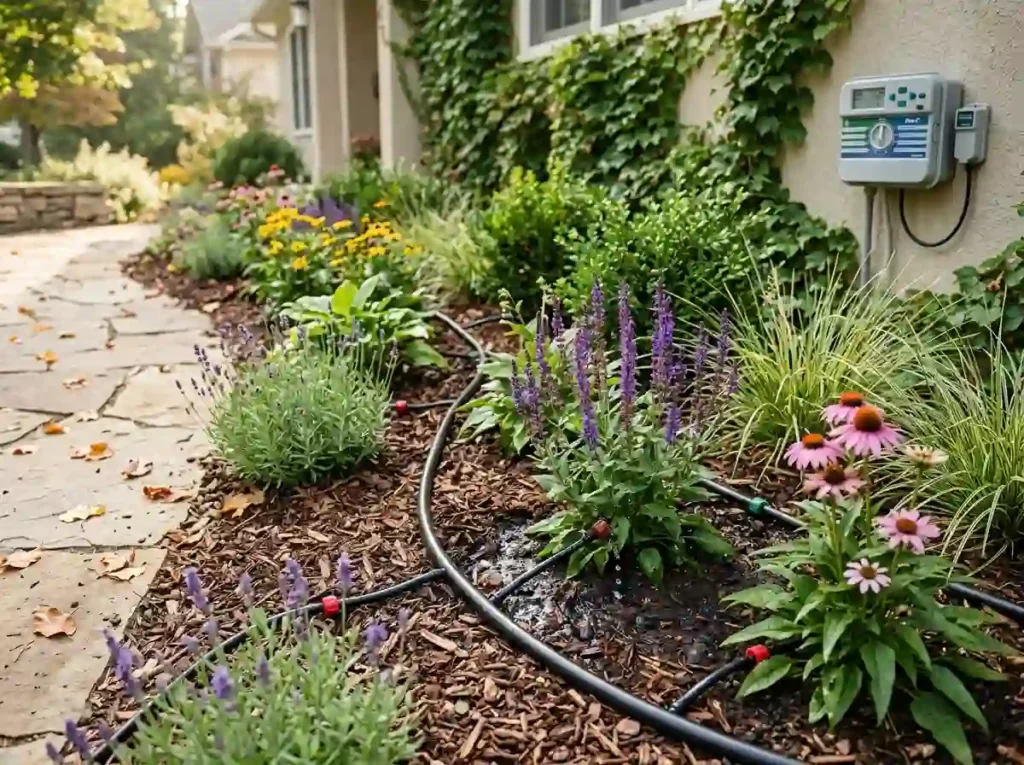
Drip irrigation sends water close to plant roots at a slow rate. This can reduce water lost to wind, evaporation, and runoff.
The EPA says microirrigation systems can use 20% to 50% less water than common sprinkler systems. Outdoor water use also makes up about 30% of household water use across the United States. The share can be much higher in dry regions.
Create separate watering zones for plants with different needs. Check the lines for leaks and blocked points.
Adjust the schedule as the weather changes and as new plants settle.
A timer or weather-based controller can reduce forgotten watering. EPA WaterSense states that replacing a clock-based controller with a labeled controller may cut an average home’s irrigation use by up to 30%.
Repeat the Same Plants in Large Groups
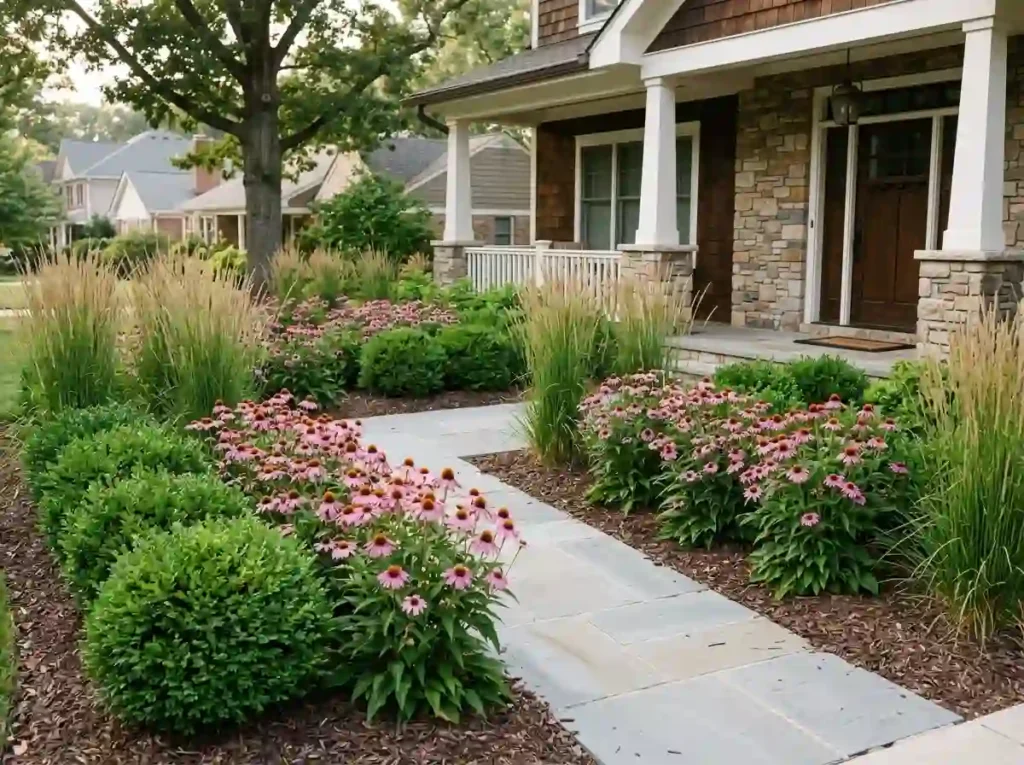
A yard filled with many plant types can look busy and create a long care list. Each plant may need different watering, pruning, feeding, and cleanup.
Choose three to five main plants and repeat them. Use the same compact evergreen, grass, and flowering perennial in several visible areas.
This creates a clear pattern from the street. It also makes it easier to notice when one plant needs care.
Buy enough plants for each group to feel planned. One small plant alone in a wide bed may look lost and leave more open soil for weeds.
Use One Strong Focal Point
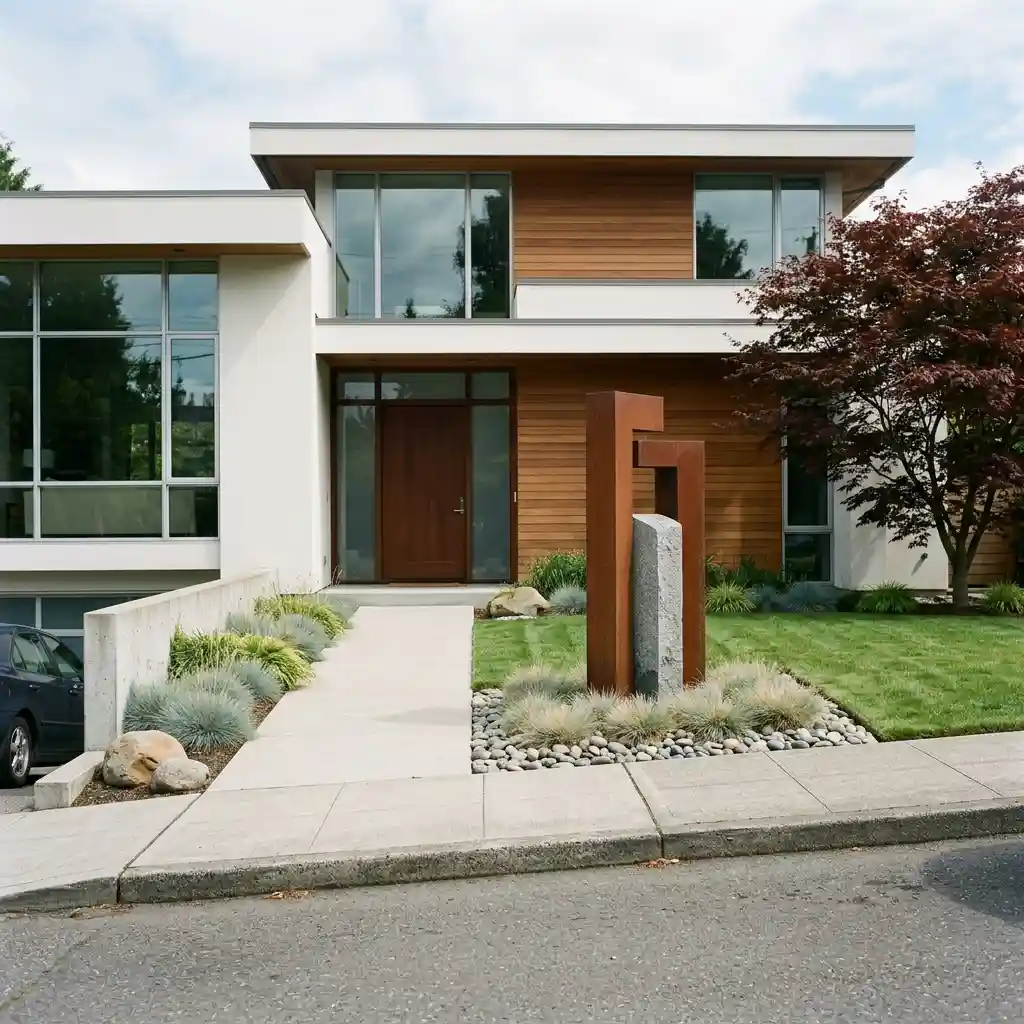
A yard does not need many decorations to feel finished. One clear focal point can organize the whole view.
You might use:
- A small tree
- A large planter
- A boulder
- A bench
- A birdbath
- A simple garden sculpture
- A clearly framed front door
Choose one that matches the home and does not block movement.
Place the feature where it can be seen from the street or walkway. Then keep the nearby planting simple.
Too many signs, ornaments, pots, and materials compete for attention. They also create more items to clean, move, and repair.
Build a Rain Garden in a Naturally Wet Spot
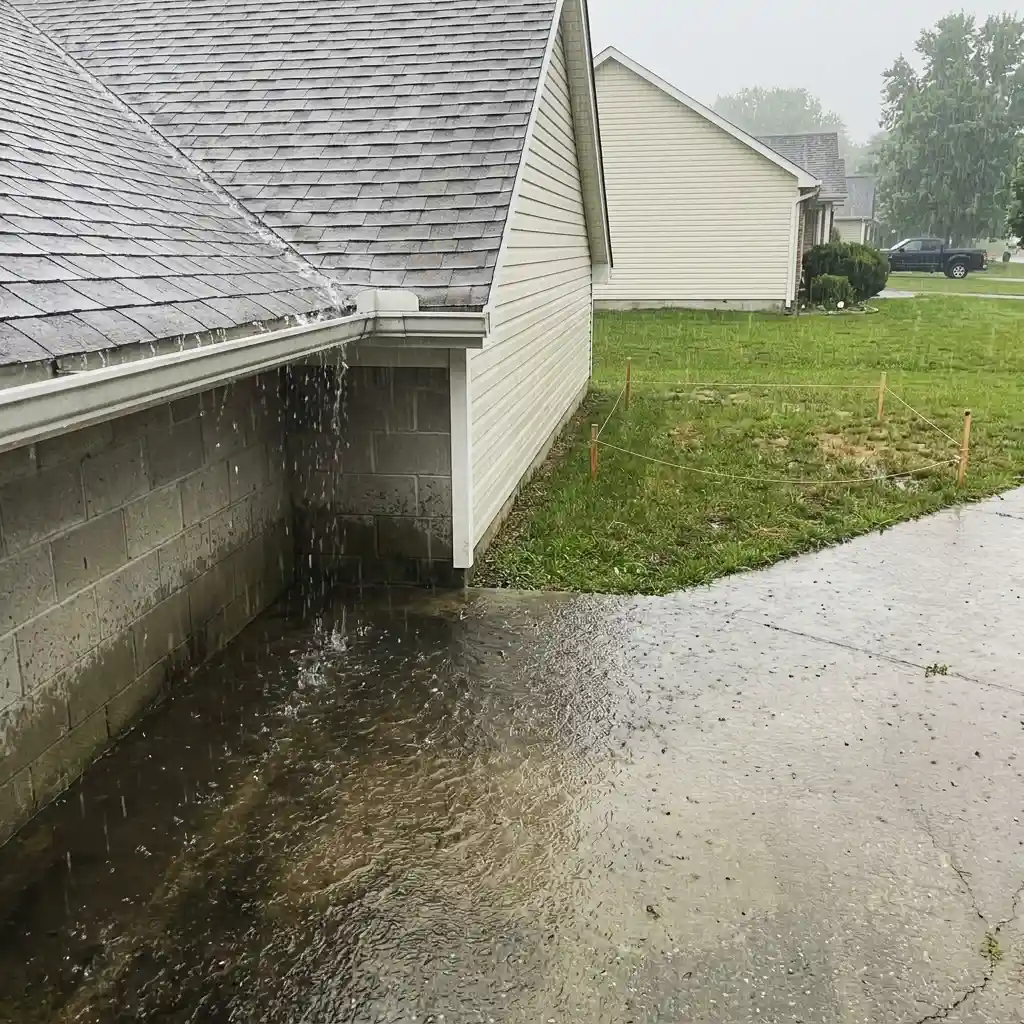
A rain garden is a shallow planted area that collects water from a roof, driveway, or other hard surface. It holds the water for a short time and lets it soak into the soil.
The EPA notes that rain gardens can reduce runoff and help filter pollutants. They may also create useful habitat for birds and insects.
Use plants that can handle both wet and dry periods. Keep the garden away from the foundation and underground utilities.
Check local rules, soil drainage, and safe placement before digging.
A rain garden should not stay filled for long periods. If the area is always wet, smells bad, or sends water near the house, call a drainage professional.
The easiest yard is planned as one system. Water should move safely, plants should fit their sites, and paths should connect the places people use.
How to Pick the Best Ideas for Your Front Yard
You do not need all 23 ideas. Pick a small set based on the yard problem you need to fix.
| Yard problem | Best ideas | Upfront cost | Ongoing care |
| Too much mowing | Gravel, larger beds, simple lawn shape, low-mow grass | Low to medium | Low |
| Dry soil | Native plants, grasses, perennials, gravel | Low to medium | Low |
| Wet corner | Dry creek bed or rain garden | Medium | Low to moderate |
| Small yard | Compact shrubs, dwarf flowers, planters, one focal point | Low to medium | Low |
| Difficult driveway edge | Grasses, edging, heat-tolerant plants | Low to medium | Low |
For a small front yard, use compact shrubs, one focal point, and a direct path. Keep the plant list short.
For a sunny, dry yard, use drought-tolerant plants, gravel, mulch, and drip irrigation. Reduce lawn areas that turn brown each summer.
For a shaded yard, use shade-friendly shrubs, native sedges, ferns, or ground cover. Stop forcing lawn grass to grow where it always thins out.
For a slope, use broad planted areas and roots that help hold soil. Loose gravel may slide on steep ground. A serious erosion issue needs professional advice.
For a tight budget, keep healthy plants and improve one visible area at a time. Join beds with mulch, divide existing perennials, and remove one hard-to-mow strip before paying for major stonework.
Common Mistakes That Create More Yard Work
Some choices look easy on installation day but create problems later.
| Mistake | Better choice |
| Planting shrubs close to the house | Leave room for mature width and airflow |
| Buying plants based on their current size | Check mature height and width |
| Using many plant types | Repeat a short plant list |
| Mixing plants with different water needs | Group plants by water and light needs |
| Creating narrow lawn strips | Join beds or use ground cover |
| Choosing fast-spreading plants | Check local invasive plant lists |
| Adding gravel without edging | Install a firm border first |
| Piling mulch against tree trunks | Leave the trunk and root flare clear |
| Covering a wet area without fixing drainage | Follow the water flow or call a professional |
| Expecting zero upkeep | Plan a short seasonal care routine |
Low maintenance does not mean no maintenance. Plants still grow. Mulch breaks down. Gravel moves. Irrigation lines can clog.
The goal is to replace constant work with a few planned tasks.
Start With the Area That Wastes the Most Time
You do not need to rebuild the whole front yard in one project. Walk outside and find the area that takes the most time to mow, water, trim, or weed.
Fix that space first.
Replace a narrow lawn strip. Join two small beds. Add drip irrigation. Plant one group of compact shrubs. A focused change can make the whole yard feel easier.
The best low maintenance front yard landscaping ideas fit your climate, property, budget, and available time. Choose a simple plan you can care for, then let repetition and smart placement do most of the visual work.