17 Backyard Patio and Porch Ideas for Any Space
Your patio or porch should feel like a useful part of your home. Yet many outdoor spaces sit empty because they feel too hot, too small, too dark, or too exposed.
You may have a concrete slab with no clear purpose. Your porch may have old chairs that no one wants to use. You might also worry that a full makeover will cost too much.
The good news is that you do not need to rebuild the whole area. A few smart changes can make a big difference.
These backyard patio and porch ideas will help you create a better place for eating, relaxing, reading, and spending time with family. You will find options for small yards, covered porches, open patios, rental homes, and limited budgets.
Some backyard patio ideas focus on comfort. Other back porch ideas add shade, privacy, or storage. The goal is to create an outdoor living space that fits how you live.
Plan Your Backyard Patio Before Buying Anything
New furniture will not fix a poor layout. Before you shop, decide what you want the space to do.
Do you need a quiet reading spot? Are you planning family meals outside? Do you want space for guests, children, or pets?
Your main goal will guide every other choice.
Measure the full patio or porch. Mark the location of doors, steps, windows, outlets, and walkways. Make sure furniture will not block a door or create a tight path.
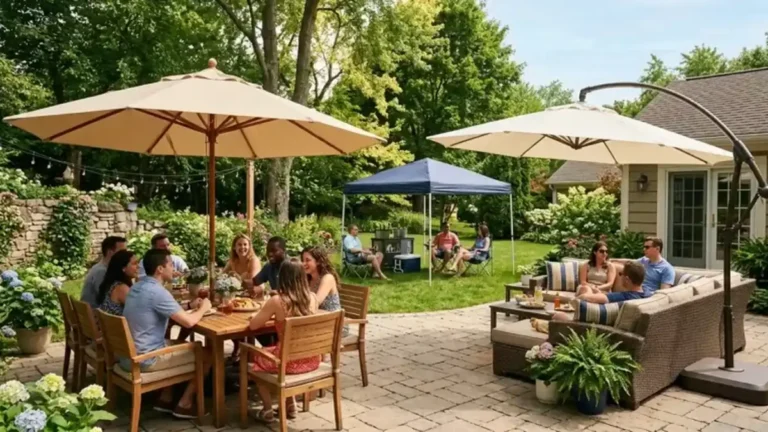
Try to leave about 30 to 36 inches of open walking room around large furniture when the space allows. A dining area also needs enough room for people to pull out chairs.
Watch the space at different times of day. A shaded morning porch may become very hot by late afternoon. Wind, rain, and water drainage also affect where you place furniture and plants.
Next, set a budget. Split it into must-have items and optional decor.
Your basic planning formula is simple:
Purpose + available space + weather + budget = a practical patio plan
Write down your main purpose before you buy anything. This one step can prevent wasted money and crowded furniture.
Create a Patio Conversation Area That Feels Comfortable
A good seating area makes it easy for people to talk. Furniture placement matters more than the number of chairs.
Avoid placing every chair in one straight line. Instead, turn seats so people face each other.
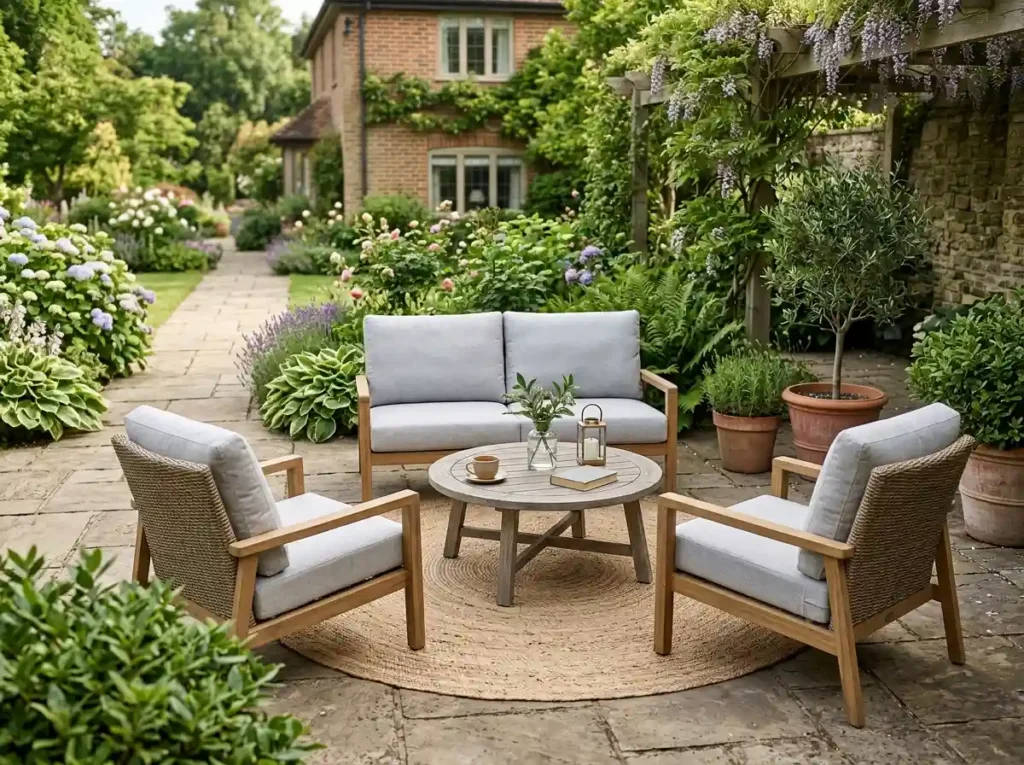
A simple setup may include a small outdoor sofa, two lounge chairs, and a round coffee table. Place the table in the center so everyone can reach it.
For a small patio, use two chairs placed at a slight angle. Add a compact side table between them. This creates a useful backyard conversation area without filling the floor.
Weather-resistant cushions can make basic chairs feel much better. An outdoor rug can also define the seating zone and help mixed furniture look connected.
Keep the main walking path open. People should not need to squeeze between chairs or step over a table.
Best for: Patios used for coffee, casual visits, and family talks.
Before buying new furniture, test the layout with chairs you already own. This helps you see how much space each seat needs.
Turn Your Back Porch Into an Outdoor Living Room
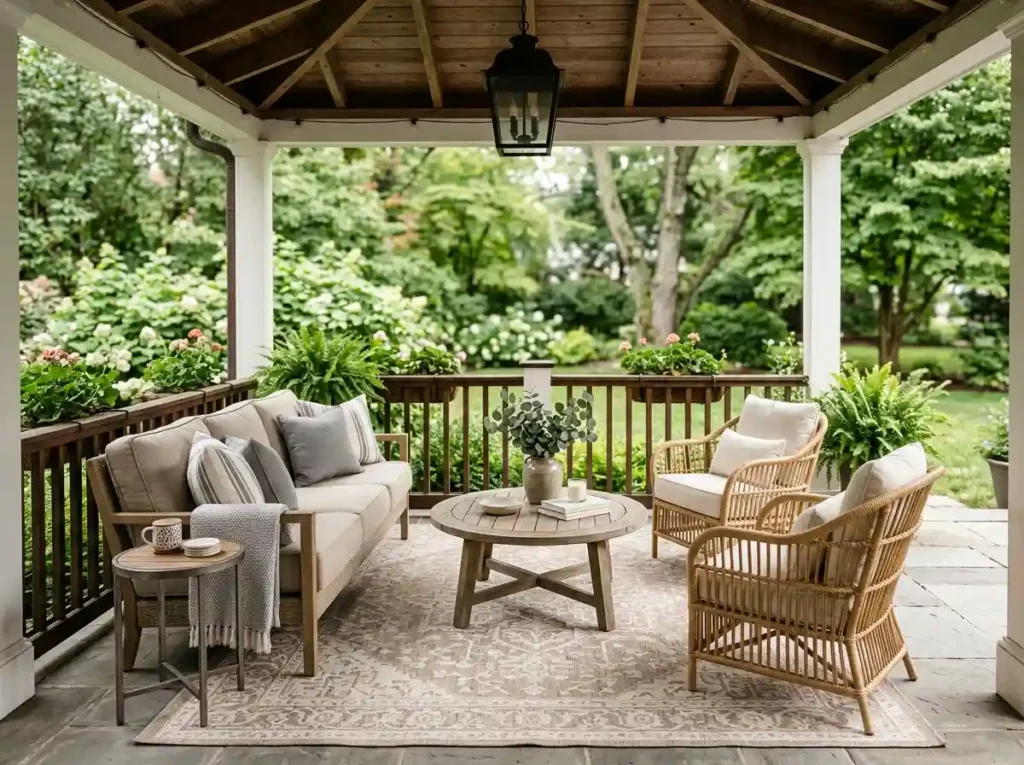
A covered porch can work like another room when it has the right furniture.
Start with one main seating piece. This may be an outdoor sofa, loveseat, or deep bench. Add one or two chairs so guests have a choice of seats.
Then add the smaller items that make the area easier to use. A side table gives you a place for drinks. A coffee table can hold snacks, books, or games.
Choose furniture with rust-resistant frames. Look for cushions made with quick-dry foam and fabric that can handle sun and moisture.
An outdoor rug can make the porch feel warmer. Soft cushions and a lightweight throw can add comfort, but store them during harsh weather if needed.
Keep the style connected to the room inside the house. You do not need an exact match. Repeating one or two colors is enough.
For example, pair a neutral outdoor sofa with two woven chairs, a washable rug, and a lantern-style light.
The space should feel comfortable, but it still needs to work outdoors. Indoor furniture may absorb moisture and wear out quickly.
Add a Small Outdoor Dining Area
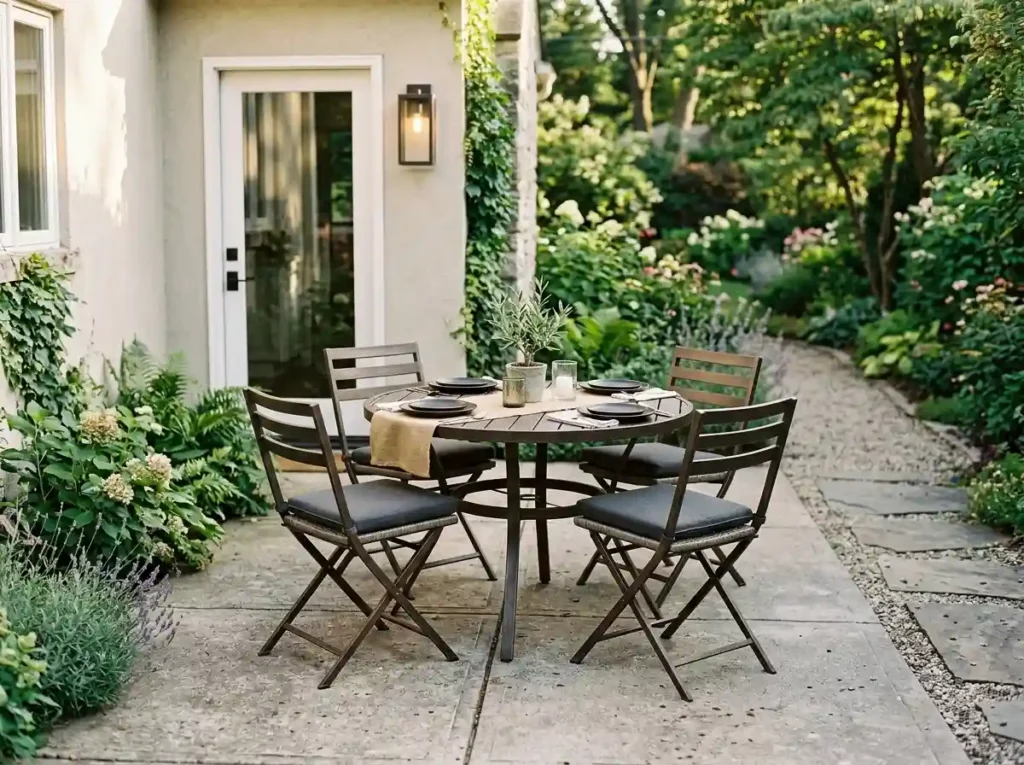
You do not need a large patio to enjoy meals outside.
A two-seat bistro table works well on a narrow porch or small concrete patio. Folding chairs are useful when you need to clear the space later.
A round table is often a good choice for four people. It has no sharp corners, so it can be easier to walk around in a tight area.
Larger families may need a rectangular table. Place it in a part of the patio that allows chairs to move without blocking the main path.
Keep the outdoor dining space close to the kitchen when possible. This makes it easier to carry food, dishes, and drinks outside.
Add light near the table if you plan to eat after sunset. A wall light, hanging fixture, or nearby string lights may work.
Measure the dining area with the chairs pulled out. A table may fit when the chairs are pushed in but feel crowded during a meal.
Best for: Family dinners, weekend breakfasts, and small gatherings.
Choose stackable or folding chairs when you need flexible patio dining ideas for a small yard.
Use a Pergola to Add Shade and Shape
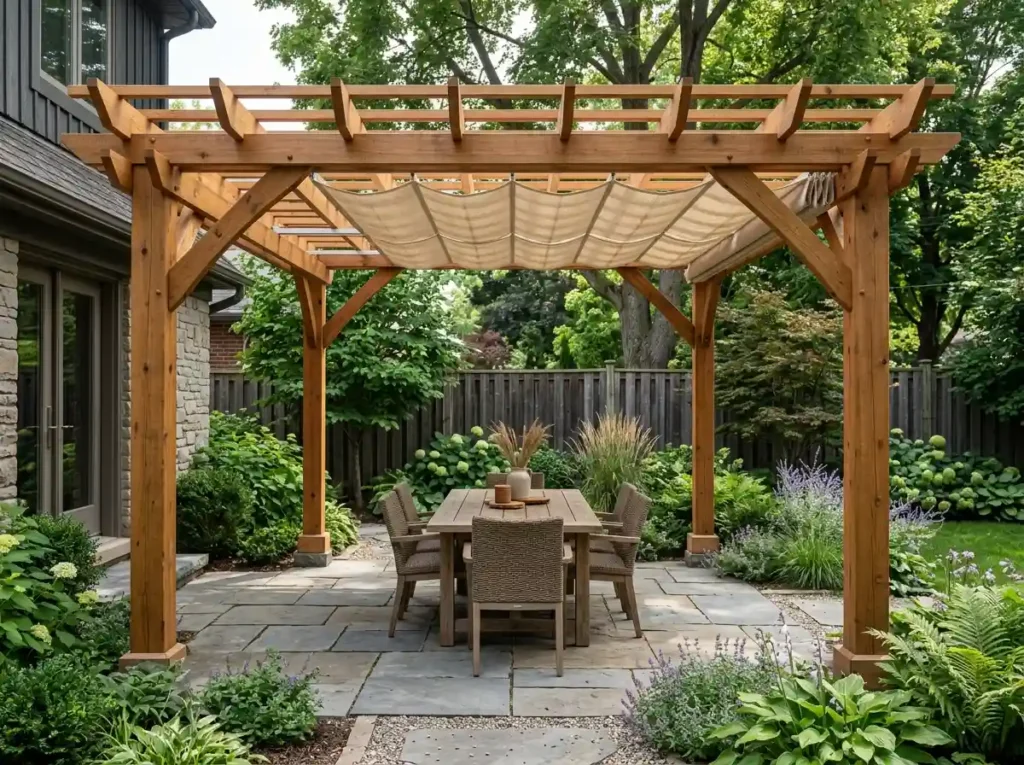
An open patio can feel exposed and unfinished. A pergola gives the area a clear shape and creates a natural place for seating or dining.
Traditional pergolas have an open roof. They provide partial shade but do not fully block rain.
You can add more shade with outdoor fabric, a retractable canopy, or climbing plants. Keep in mind that plants take time to grow and may need regular trimming.
Place a pergola over the part of the patio you use most. This may be a dining table, lounge area, or outdoor kitchen.
A wood pergola can bring warmth to a plain patio. Metal styles may need less care, depending on the finish and local weather.
Do not assume every pergola is waterproof. Decorative roof beams provide less protection than a solid or covered roof.
Permanent structures may need local approval. Check building rules, property lines, and utility locations before installation.
Best for: Open patios that need shade, structure, and a clear focal point.
A pergola works well, but it is a larger project than adding an umbrella or awning.
Install a Retractable Awning for Shade When You Need It
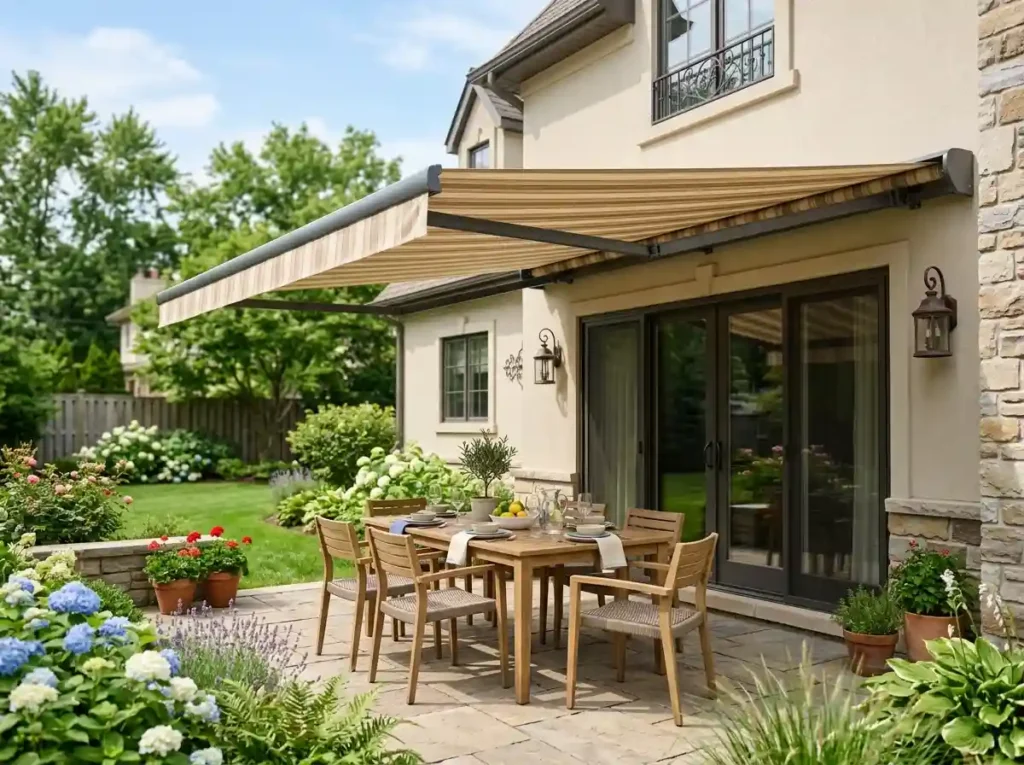
Some patios need shade for only part of the day. A retractable awning gives you more control.
Extend it during hot or bright hours. Pull it back when the weather is mild or when you want more sunlight.
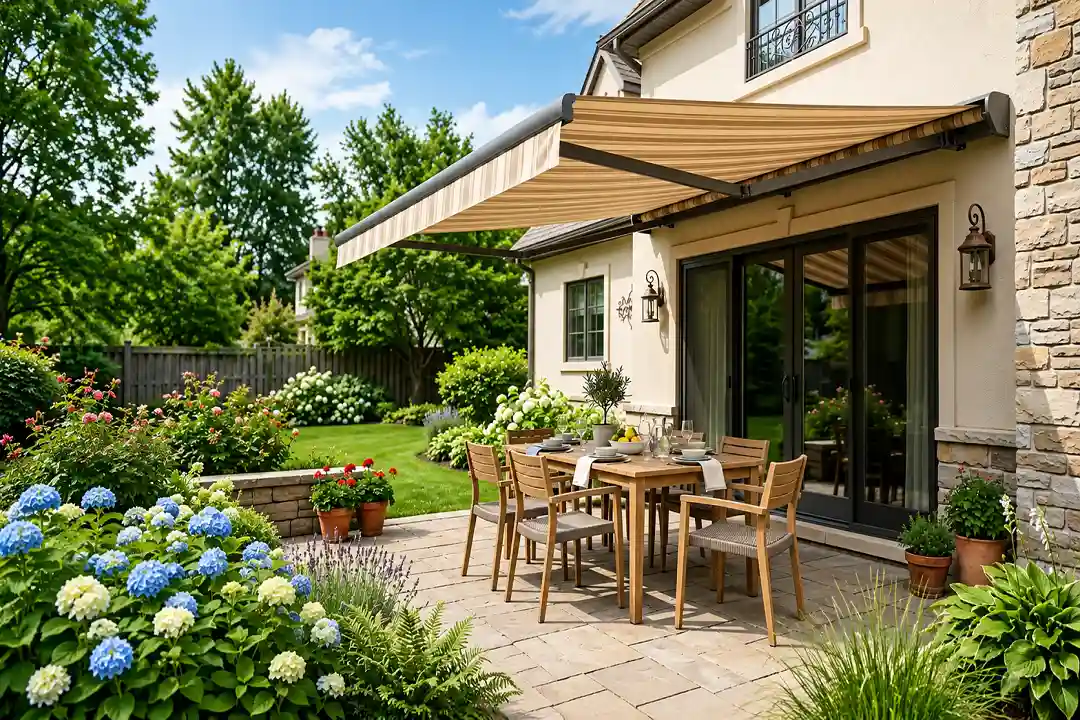
This type of patio shade solution works well over a dining area near the back door. It can protect the table and chairs from direct sun without adding a permanent roof.
Manual awnings usually cost less. Motorized models are easier to open and close, especially when the awning is wide.
Choose fabric made for outdoor use. The color should work with the home exterior, but it should also hide dirt and weather marks.
Strong wind can damage an open awning. Retract it when bad weather is expected and follow the care instructions.
A retractable patio awning is useful for homeowners who want flexible shade. However, it may not provide enough protection during heavy rain or strong wind.
Add Outdoor Curtains for Fast Patio Privacy
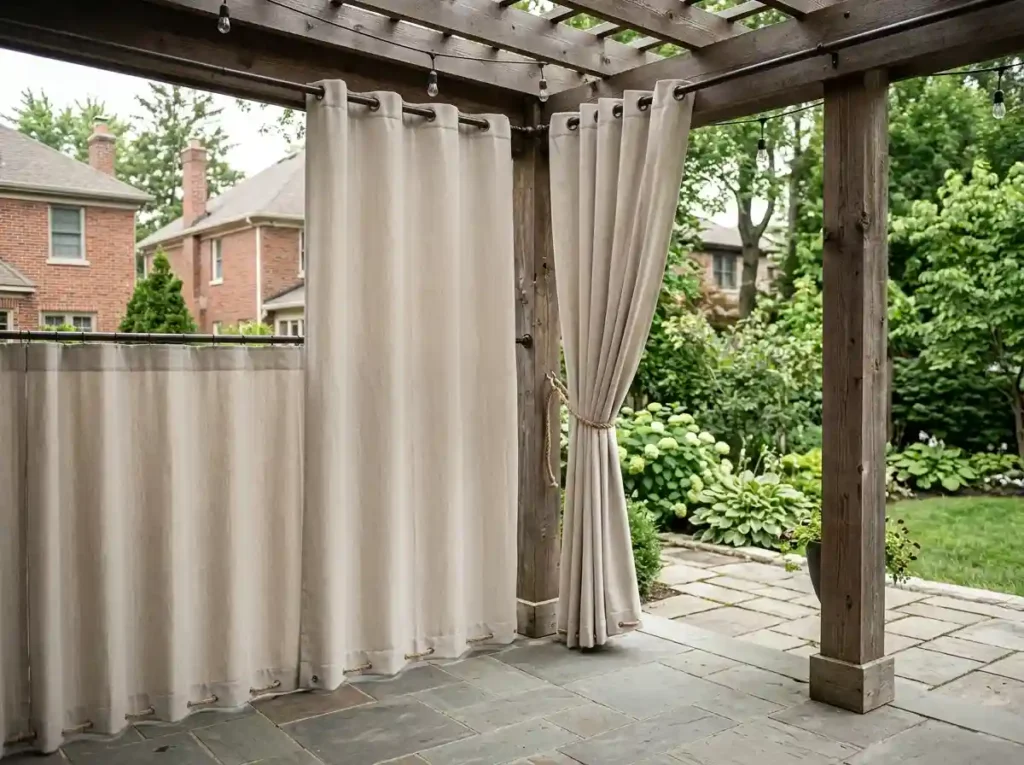
Close neighbors can make a porch feel less relaxing. Outdoor curtains offer a simple way to add privacy without building a solid wall.
They work best on covered porches, pergolas, and framed patios.
Choose outdoor-rated fabric that can handle moisture and sun. Light colors such as white, cream, or beige keep the space bright and open.
Hang curtains on the sides that face nearby homes, streets, or busy areas. Leave the other sides open for airflow and a better view.
You can close the curtains when you want privacy. Tie them back when the space feels too enclosed.
Wind is the main problem with outdoor porch curtains. Use secure ties, weighted hems, or safe bottom fasteners to keep them from blowing across the seating area.
Curtains can also reduce glare during bright parts of the day. They make the patio feel softer without taking up floor space.
Best for: Covered patios that need flexible privacy and shade.
Renters can use removable hardware when the structure allows it and the setup is secure.
Use Tall Plants to Create a Natural Privacy Screen
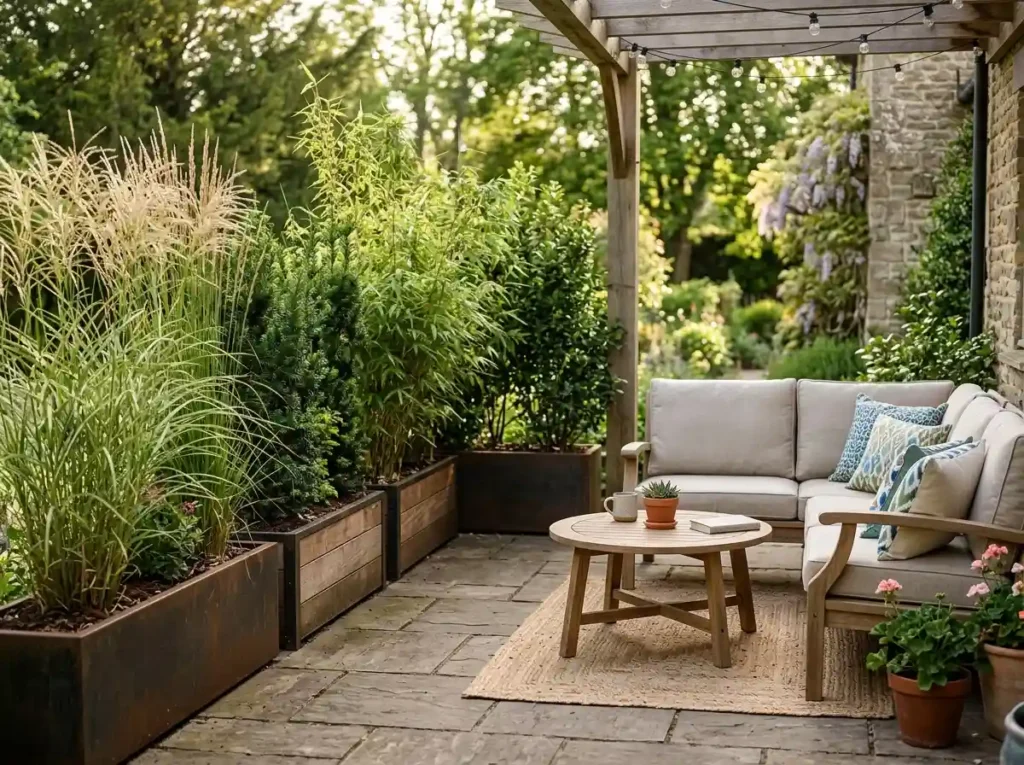
Plants can block unwanted views without making your patio feel closed.
Start with tall planters around the edge of the seating area. Narrow containers work well in small spaces because they add height without using too much floor room.
Choose plants that match your local weather and the amount of sunlight in the area. A plant that grows well in full sun may struggle on a shaded porch.
Tall grasses, container-grown bamboo, climbing vines, and evergreen shrubs may work in some locations. The best choice depends on your climate.
Check the mature height and width before buying. A small plant may become much wider than expected.
Large plants also need large pots. Make sure the container can support the roots and includes drainage holes.
Mix evergreen plants with seasonal flowers when you want privacy throughout the year.
A local nursery or extension office can help you choose safe plants for your area.
Best for: Patios that need privacy, greenery, and a softer edge.
Natural screens look good, but they need watering, trimming, and regular care.
Add a Fire Feature for Cooler Evenings
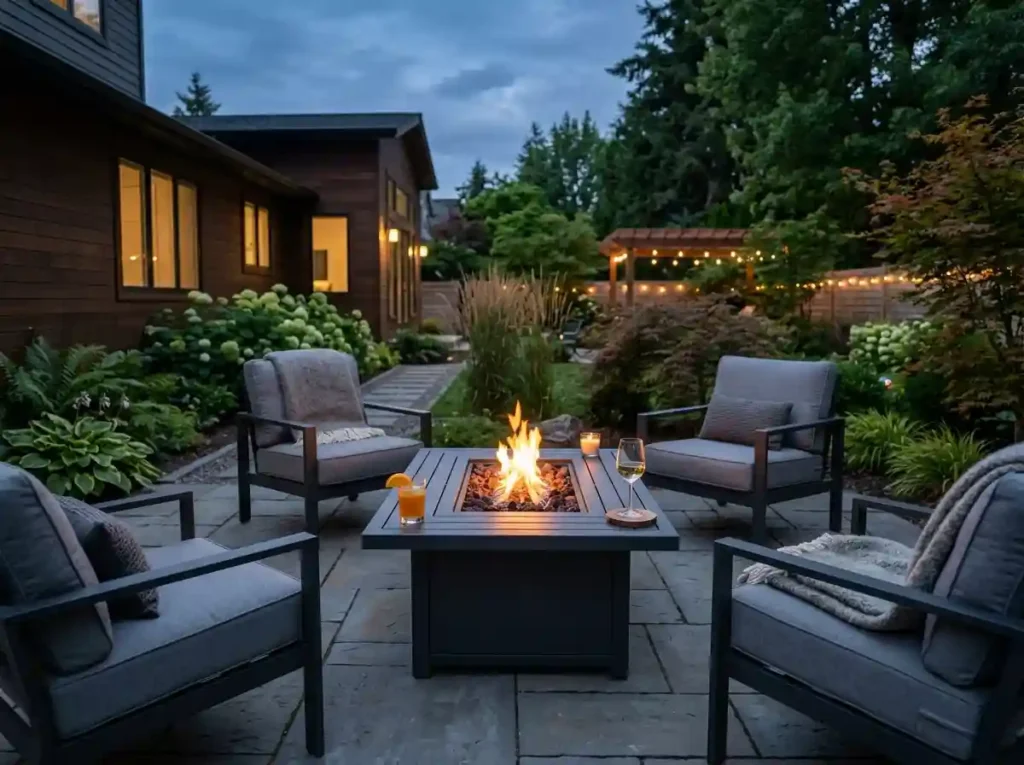
A fire feature can make your patio more comfortable when the temperature drops.
You can choose a fire pit, fire table, portable fire bowl, or outdoor fireplace. Each option needs different space, fuel, and care.
A compact gas fire table often works well on a patio because it also provides a surface for drinks. A portable fire bowl may suit a gravel area away from the house.
A built-in fireplace works better in a large, planned outdoor area. It usually needs more space and professional installation.
Gas models are often easier to start and clean. Wood-burning options create more smoke, ash, and sparks.
Safety matters more than style. Follow the maker’s clearance rules. Keep the fire feature away from walls, branches, furniture, and unsafe roof coverings.
Check local fire rules before using any open flame outdoors.
Do not place a fire feature under a covered porch unless the product and structure are approved for that use.
Best for: Open patios used during cool nights.
A fire feature adds warmth, but it is not suitable for every porch or small yard.
Use an Outdoor Rug to Pull the Seating Together
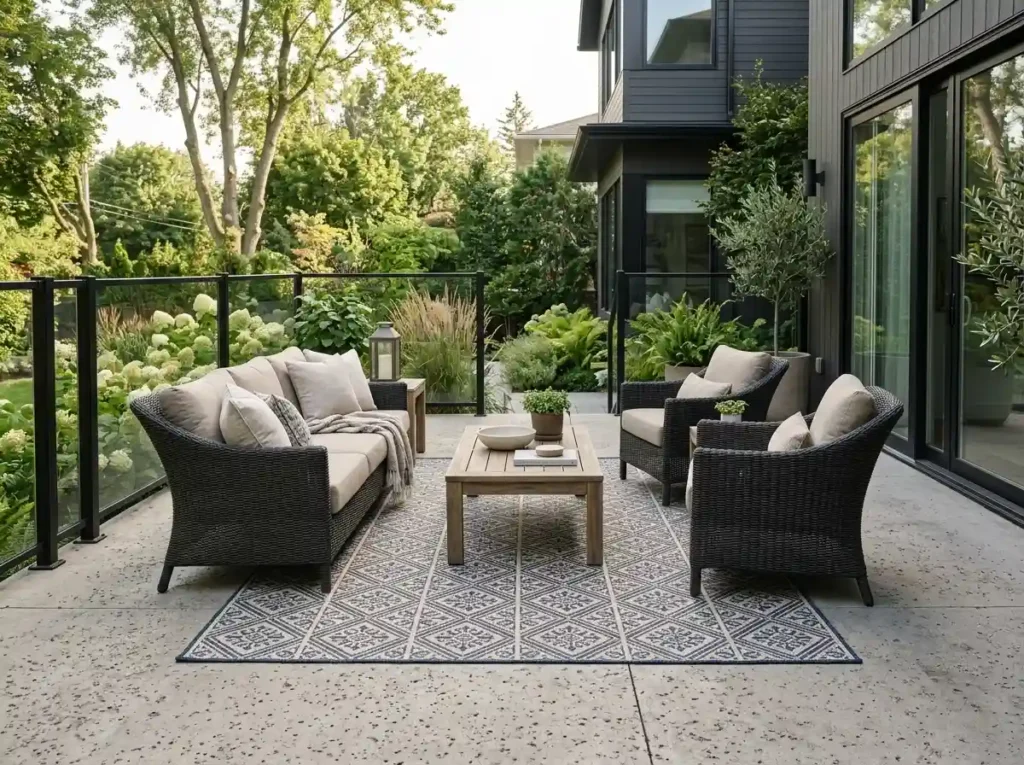
Furniture can look scattered on a wide concrete or wood surface. An outdoor rug creates a clear seating zone.
Choose a rug made for outdoor use. It should handle moisture, dirt, and direct sunlight better than an indoor rug.
Size matters. A rug that is too small can make the furniture look less connected.
Try to place at least the front legs of the sofa and chairs on the rug. In a dining area, the rug should be large enough for chairs to stay on it when pulled out.
Do not place the rug where it blocks a door or creates a raised edge in a walking path.
Shake it out and clean it when needed. Let it dry fully after rain or washing.
A simple outdoor patio rug can also add color without forcing you to replace furniture.
Best for: Plain patios, mixed furniture, and covered porch seating.
Measure the full furniture group before choosing a rug size.
Hang String Lights for a Warmer Evening Space
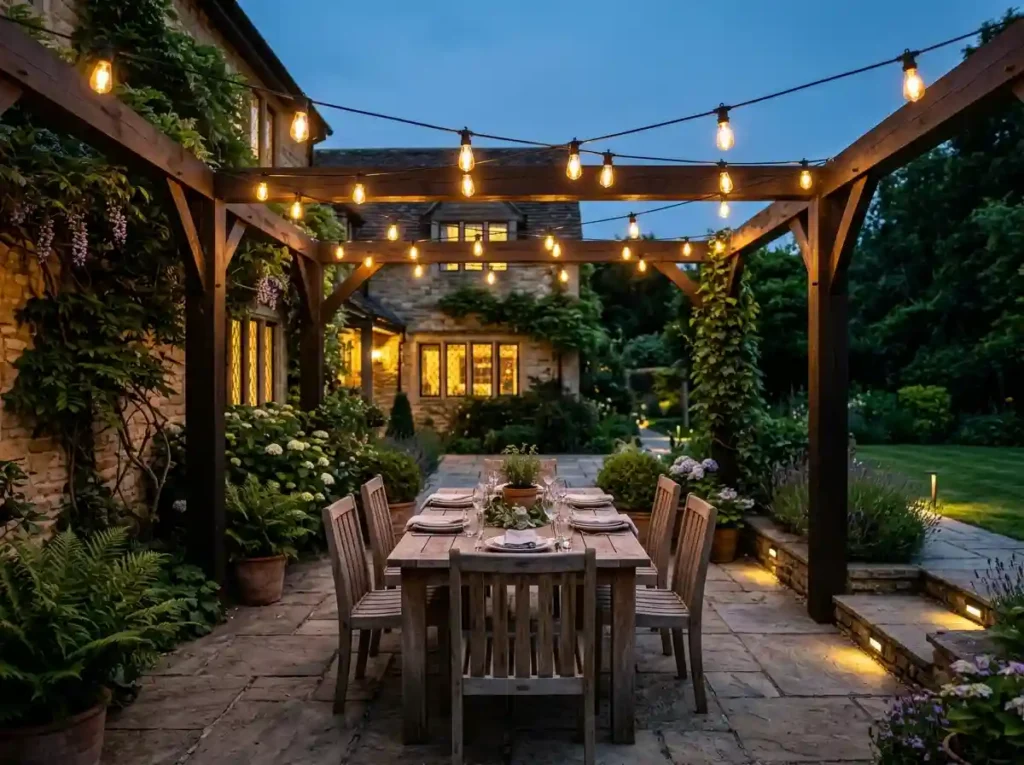
A dark patio often goes unused after sunset. String lights can make it feel more welcoming.
Hang them over a dining or seating area. Pergola beams, strong posts, and approved wall hooks can provide support.
Use lights made for outdoor use. Indoor lights may not be safe around moisture.
Keep cords secure and away from walkways. Avoid loose lines that hang low enough to catch clothing or create a hazard.
Warm, soft bulbs usually create a relaxed mood. Bright white lights may feel harsh in a small seating area.
On an open patio, café lights can stretch between posts. On a pergola, they can follow the roof beams.
Battery-powered options may work for small rental spaces, but check how long they stay bright.
String lights are useful for mood lighting. They may not provide enough light for stairs, grilling, or food preparation.
Add brighter task lights in those areas.
Layer Your Patio Lighting for Safety
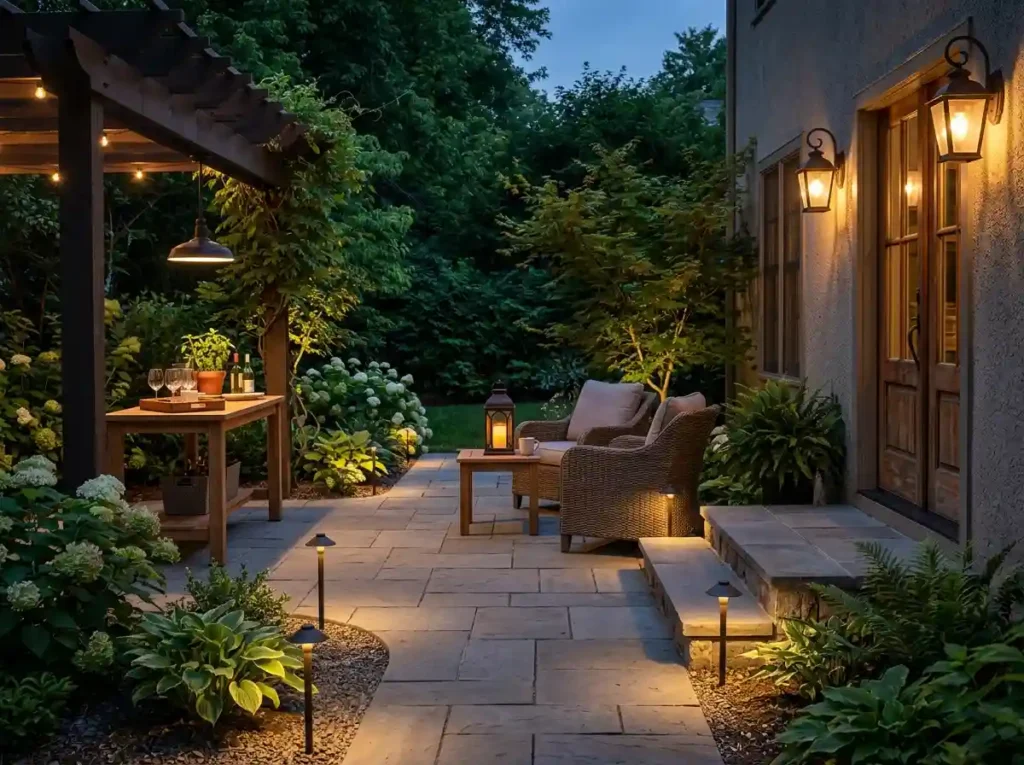
One bright wall light rarely covers the whole patio well.
A better plan uses three types of light: general light, task light, and path light.
General light helps people see the main area. This may come from a wall light, hanging fixture, or string lights.
Task lighting helps with specific jobs. Add it near the grill, outdoor kitchen, or serving table.
Path lighting helps people move safely. Use it near steps, level changes, gates, and walkways.
Table lanterns can add soft light near chairs. Solar lights may help in areas without outlets, but their brightness can vary.
A simple setup may include wall lights near the back door, lanterns on side tables, and low lights along the path.
Walk through the area after dark. Notice where you cannot see the floor, steps, or furniture edges.
Fix those dark spots first.
Best for: Patios used for evening meals and gatherings.
Decorative light creates mood. Functional light helps prevent trips and falls.
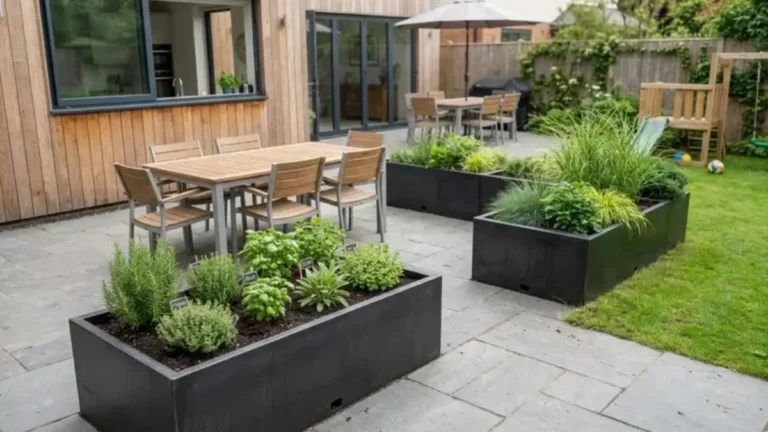
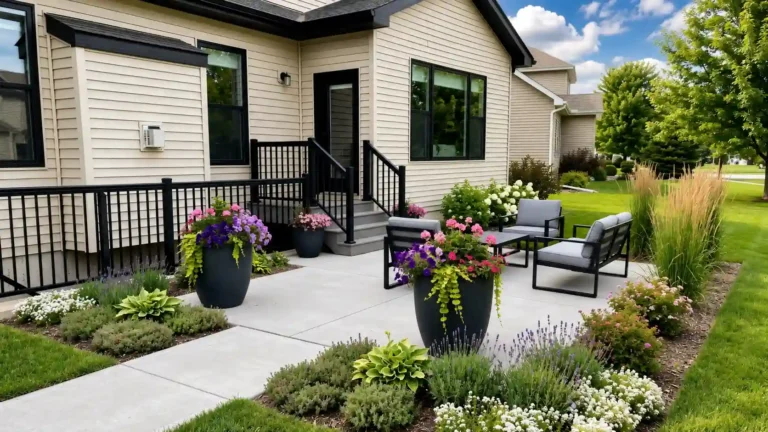
Add a Container Garden Around the Porch
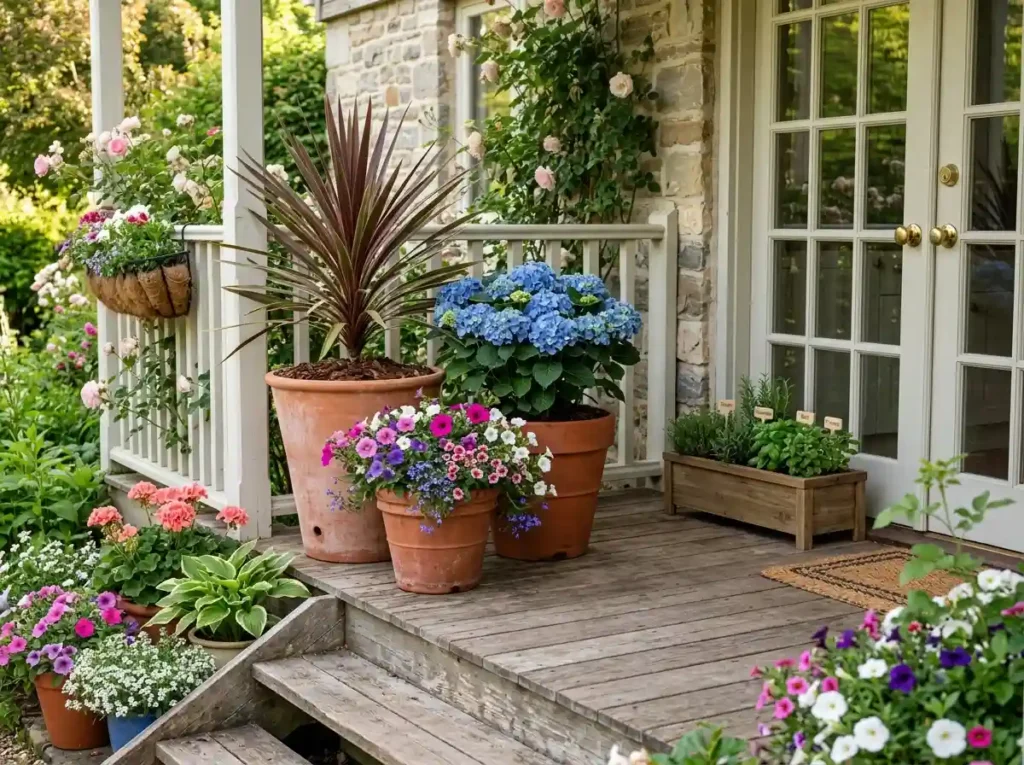
Pots can bring color and life to a porch with little or no garden soil.
Start with three planters in different heights. Grouping them looks more natural than placing single pots around the whole area.
Use a tall plant in the back, a medium plant in the center, and a smaller plant near the front. This creates depth without taking up too much space.
Place herb planters near the kitchen door for easy access. Add flowers beside the porch steps. Large pots can frame a seating area or hide an empty corner.
Check the sunlight before buying plants. Watch the space for a full day if possible.
Every pot needs drainage. Water trapped around the roots can harm the plant.
Choose container sizes that match the plants. Small pots dry out faster and may need more frequent watering.
Best for: Concrete patios, small porches, and rental homes.
Start with a few matching pots. Too many styles can make a small porch feel busy.
Add a Porch Swing or Hanging Chair
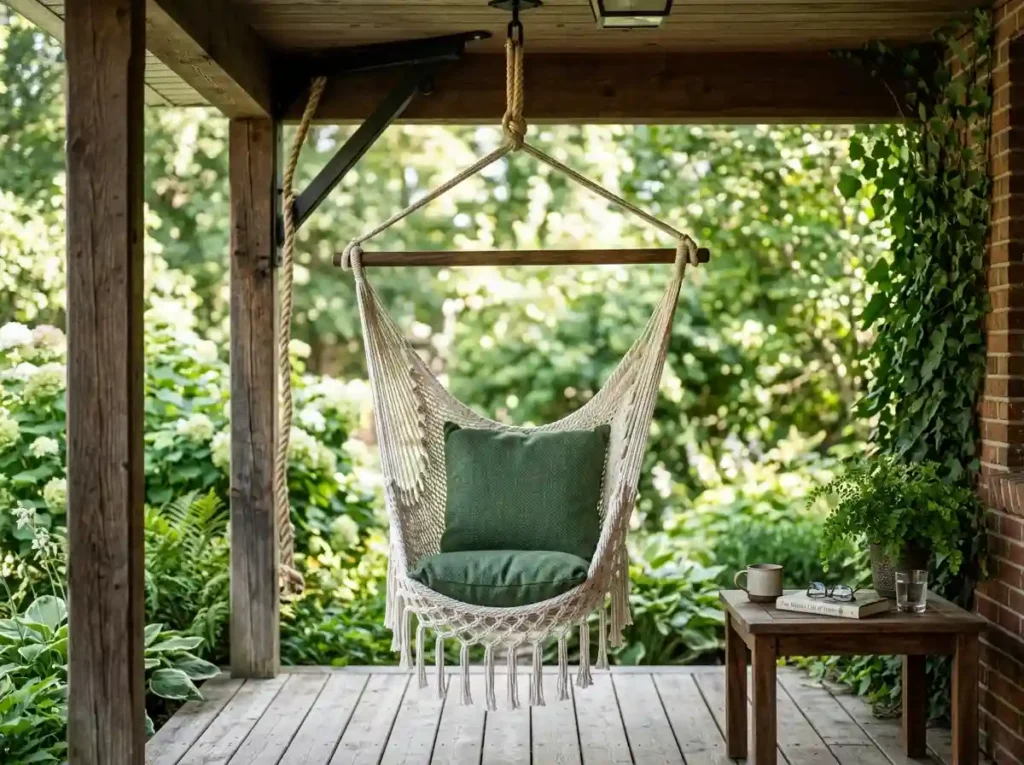
A porch swing gives you a quiet place to read, rest, or enjoy morning coffee.
Choose the style based on your space and support.
A full porch swing needs room to move forward and back. A hanging chair uses less width but still needs safe clearance around it.
A freestanding egg chair may be the easiest option when you cannot attach anything to the ceiling. It can also be moved later.
Check the weight limit before use. Ceiling-mounted seats need strong support from a suitable beam.
Do not attach a swing to decorative ceiling boards. Ask a qualified installer to check the structure when you are unsure.
Add washable outdoor cushions for comfort. Place a small side table nearby for a drink, book, or phone.
Best for: Covered porches used for quiet time.
A hanging seat looks inviting, but safe support is more important than appearance.
Create a Compact Patio Bar or Serving Station
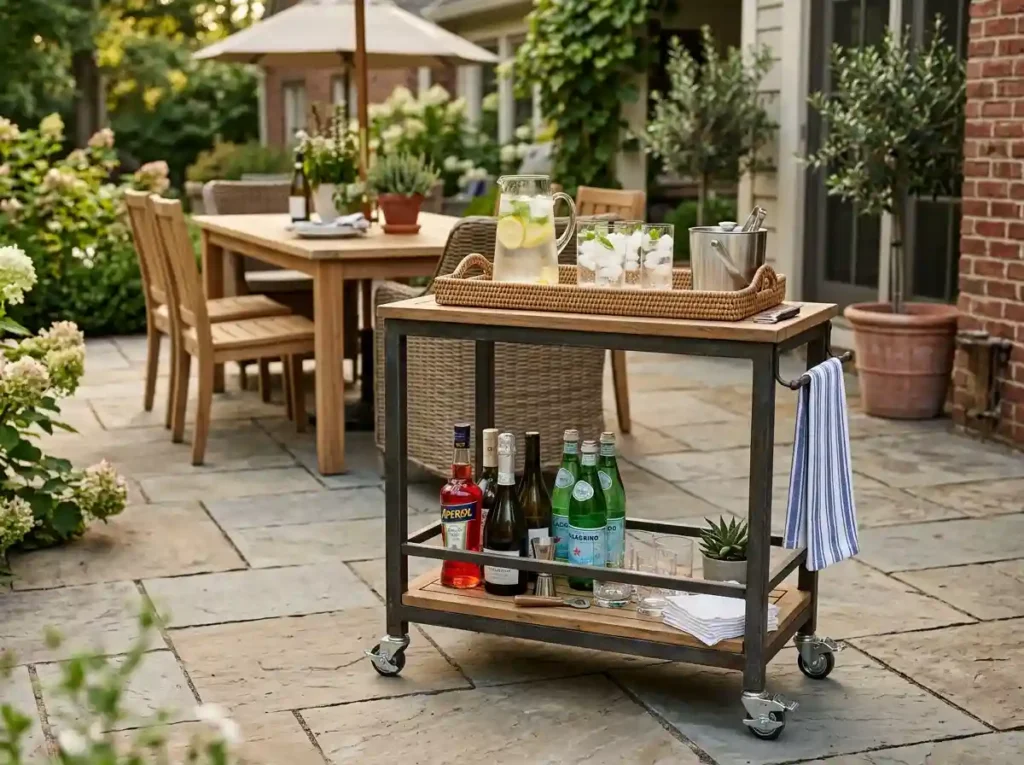
Carrying every cup, plate, and bottle from the kitchen gets tiring. A small serving station can reduce those trips.
Use a narrow outdoor console, rolling cart, or fold-down wall bar.
Place it close to the dining area but outside the main walkway. It should be easy to reach without blocking chairs or doors.
A weather-resistant cart can hold drinks, napkins, cups, and a serving tray. Hooks can store towels or small tools.
Choose a cart with locking wheels. This keeps it steady during use.
A slim counter along a porch railing can work in a narrow space. Make sure it does not create a safety risk or block the view.
Clear the station after gatherings. Food, paper items, and soft supplies should not stay outside in wet weather.
Best for: Patios used for meals and entertaining.
A serving station adds function without the cost of a full outdoor kitchen.
Build Benches Along the Edge to Save Space
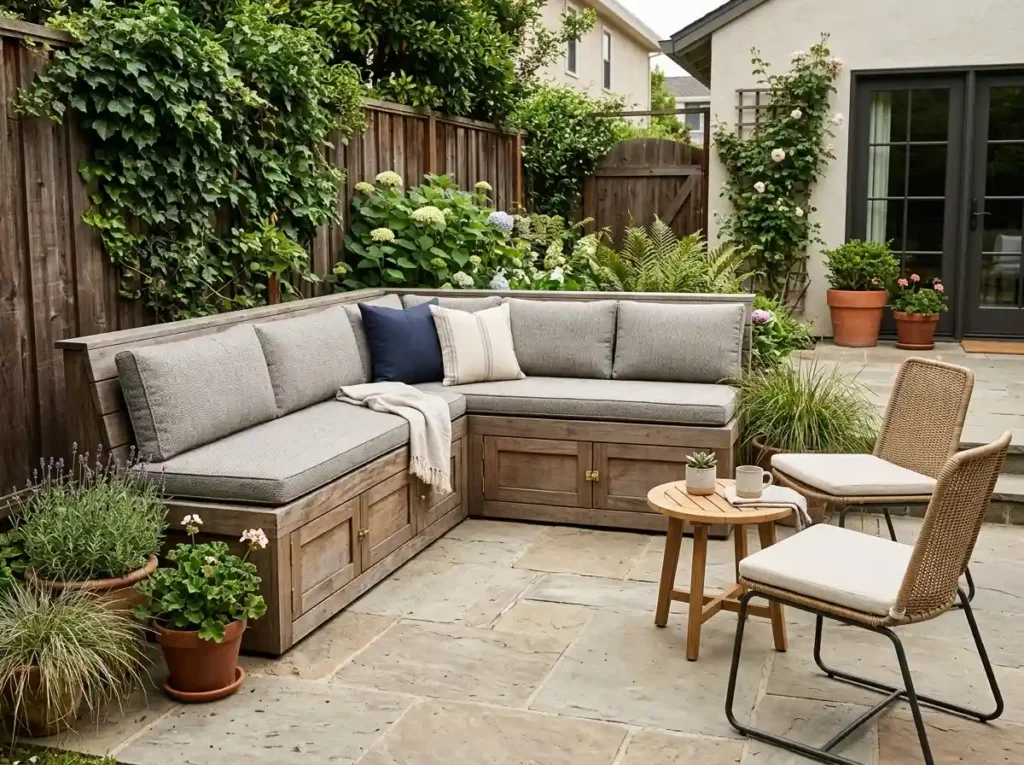
Separate chairs can crowd a narrow patio. A built-in bench uses the edge of the space and keeps the center open.
Place a straight bench along a wall or railing. An L-shaped bench can fit into a corner and create a larger seating group.
Add storage under the seats for cushions, garden tools, or outdoor games. Make sure the storage area can handle moisture.
Use removable outdoor cushions so the bench feels comfortable. Movable chairs can be added when guests visit.
Plan the seat depth and height before building. A bench that is too deep may be hard to use. One that is too shallow may feel uncomfortable.
Test the size with boxes, chairs, or tape on the floor.
Built-in patio seating works best when you do not expect to change the layout often.
Best for: Small backyard patio ideas with limited floor space.
Built-in benches save room, but they are harder to move than regular furniture.
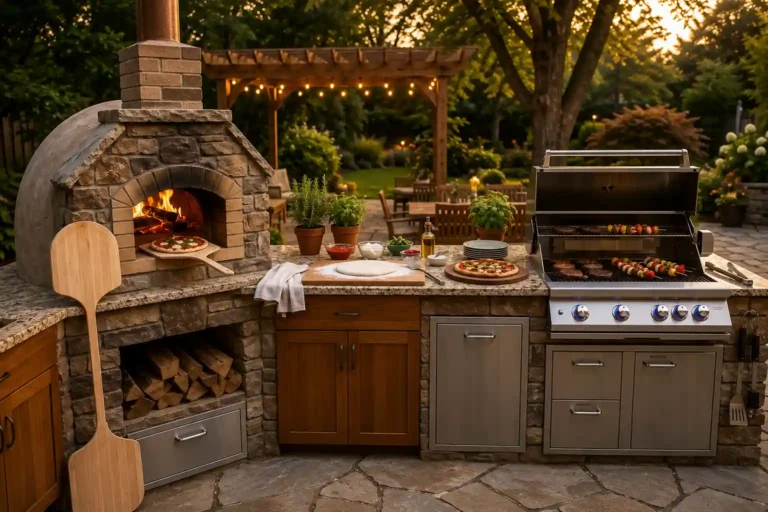
Divide a Large Patio Into Useful Zones
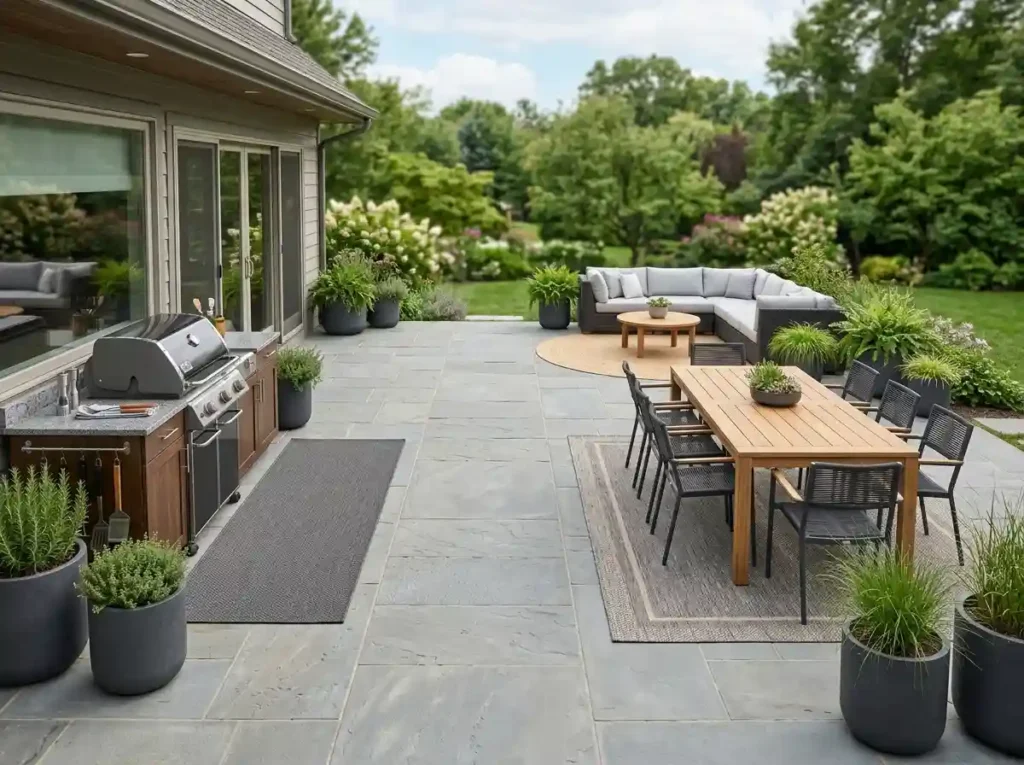
A large open patio can feel empty even when it has plenty of furniture.
Divide it into zones based on how you use the space. Common zones include cooking, dining, and relaxing.
Place the grill close enough to the house for easy use, but follow safe clearance rules. Put the dining table nearby so food does not need to travel far.
Create a lounge area closer to the garden or a quieter edge of the yard.
Use rugs, planters, furniture direction, or changes in flooring to mark each area. You do not need walls.
Keep one clear walkway through all zones. Guests should be able to move from the house to the yard without crossing the cooking area.
Repeat a few colors or materials across the patio. This helps separate zones feel like part of one design.
For example, use matching planters near the grill, dining table, and lounge chairs.
Best for: Medium and large patios used for several activities.
A multi-zone patio feels organized because each part has a clear job.
Refresh the Patio With Paint and Low-Cost Decor
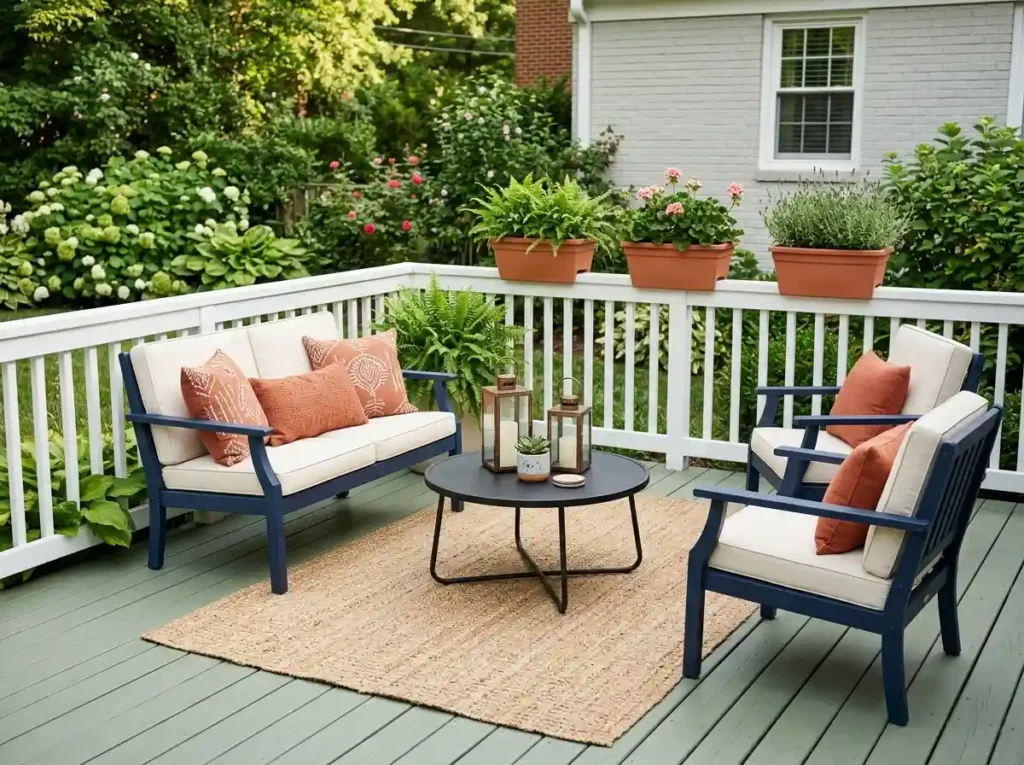
Your patio may need a refresh rather than a full renovation.
Start by cleaning the floor, walls, railings, and furniture. Remove broken pots, faded cushions, and items you no longer use.
Paint can improve old furniture, railings, or suitable porch floors. Use a product made for the material and outdoor weather.
Do not use regular wall paint on walking surfaces. Painted floors may need a slip-resistant finish.
Replace worn cushion covers instead of buying a new seating set. Add two or three matching planters for color.
Lanterns, an outdoor rug, and simple wall decor can make the space feel finished.
Choose a small color palette. Two main colors and one accent color are often enough.
Try this weekend makeover order:
- Clean the area.
- Remove broken or unused items.
- Paint suitable surfaces.
- Rearrange the furniture.
- Add cushions, plants, and lighting.
A budget patio makeover works best when you improve the most visible problem first.
How to Pick the Best Idea for Your Patio or Porch
The best backyard patio and porch ideas are the ones that fit your available space, local weather, and daily routine.
Start with your biggest problem.
If the patio is too hot, work on shade first. A pergola, awning, or curtain may help.
If no one uses the space, improve the seating. A conversation area, porch swing, or outdoor living room may solve the problem.
If the patio feels exposed, use curtains, tall planters, or a privacy screen.
Your budget also matters. Paint, lighting, rugs, and cushions cost less than built-in seating or a permanent pergola.
Think about care before choosing materials. Fabric, plants, wood, and metal all need different levels of upkeep.
Renters should focus on movable furniture and removable decor. Homeowners may choose built-in features when they plan to stay for several years.
| Your Main Goal | Ideas to Consider |
| Add comfort | Conversation area, outdoor living room, porch swing |
| Create shade | Pergola, retractable awning, curtains |
| Improve privacy | Outdoor curtains, tall plants, privacy planters |
| Entertain guests | Dining area, serving cart, multi-zone patio |
| Update on a budget | Paint, rug, cushions, string lights |
| Save space | Bistro table, built-in bench, compact bar |
| Use it at night | Fire feature, string lights, layered lighting |
Choose one comfort upgrade and one visual upgrade. This keeps the project focused and easier to finish.
Create an Outdoor Space You Will Use
A good patio or porch does not need every feature in this guide. It needs a clear purpose, comfortable seating, safe lighting, and a layout that fits the space.
Start with the problem that bothers you most.
Add shade if the patio gets too hot. Improve the seating if people leave after a few minutes. Add privacy if the area feels exposed.
Small changes can make the space more useful without a full renovation.
Use these backyard patio and porch ideas to create an area that fits your home, budget, and daily life. Pick one project, finish it, and then decide what the space still needs.