17 Backyard Landscaping Ideas for Dogs and Their Owners
Your backyard should give your dog room to play. It should not become a muddy, damaged, or unsafe mess.
Many yards are designed for people first. The grass may look nice at the start. Then your dog creates a bare running path along the fence. Holes appear near the flower beds. Rain turns worn areas into mud.
You may also worry about toxic plants, hot paving, weak gates, or places where your dog could escape.
The good news is that you do not have to choose between a nice yard and a dog-friendly one. Smart planning can give your dog space to run, sniff, rest, and play. It can also protect your plants and make cleanup easier.
These backyard landscaping ideas for dogs cover secure fencing, tough ground covers, cooling areas, play zones, and simple ways to control waste. You can use one idea or combine several to fit your yard.
Plan Your Dog-Friendly Backyard Around Real Habits
Before you buy plants or start building, watch how your dog uses the yard.
Your dog has probably created a plan already. You may see a worn path near the fence. There may be a favorite shady corner or one area where your dog likes to dig.
Do not fight these habits at every turn. Use them to guide your design.
Watch your dog for several days and note:
- Where your dog runs
- Where digging happens
- Which areas are used for bathroom breaks
- Where your dog rests
- Which gates or fence sections attract attention
- Where water collects after rain
Your dog’s age and size also matter.
A young, active dog may need a wide running route. A senior dog may need flat paths with good grip. A thick-coated dog may need more shade than a short-haired dog.
Breed habits can also guide your choices. Terriers may enjoy digging. Sighthounds may need open space for short bursts of running. Guarding breeds may spend more time walking along the fence.
Take a photo of the yard after heavy rain. This can show you where drainage is poor and where mud is most likely to form.
Draw a rough map before you make changes. Mark play areas, paths, shade, planting beds, and a bathroom zone. A simple plan can prevent expensive mistakes.
4 Backyard Landscaping Ideas for Dogs That Improve Safety
Safety should come before plants, paths, or outdoor furniture. A beautiful yard will not help if your dog can escape through a weak gate.
Install a Secure Dog-Proof Fence
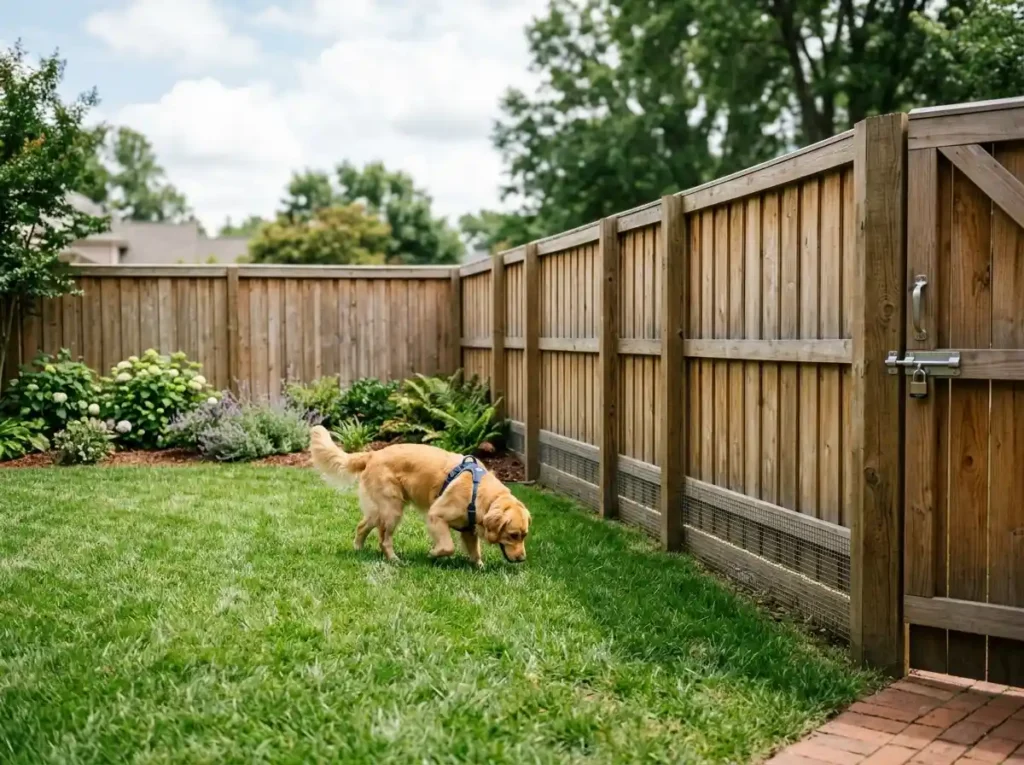
A secure fence gives your dog more freedom to enjoy the yard.
The right height depends on your dog. Some small dogs can jump higher than expected. Large dogs may push against loose panels or climb fences with wide horizontal rails.
Check the full fence line for:
- Gaps beneath panels
- Loose boards
- Sharp edges
- Broken latches
- Spaces beside gates
- Items your dog could use as steps
Dogs that dig may need an underground barrier. You can bury strong wire mesh near the fence or extend part of the fence below the soil.
Do not place benches, bins, raised beds, or wood piles next to the fence. A determined dog may use them to climb over.
Inspect the fence after storms and yard work. Loose soil and fallen branches can create new escape points.
Add a Double-Gate Entry Area
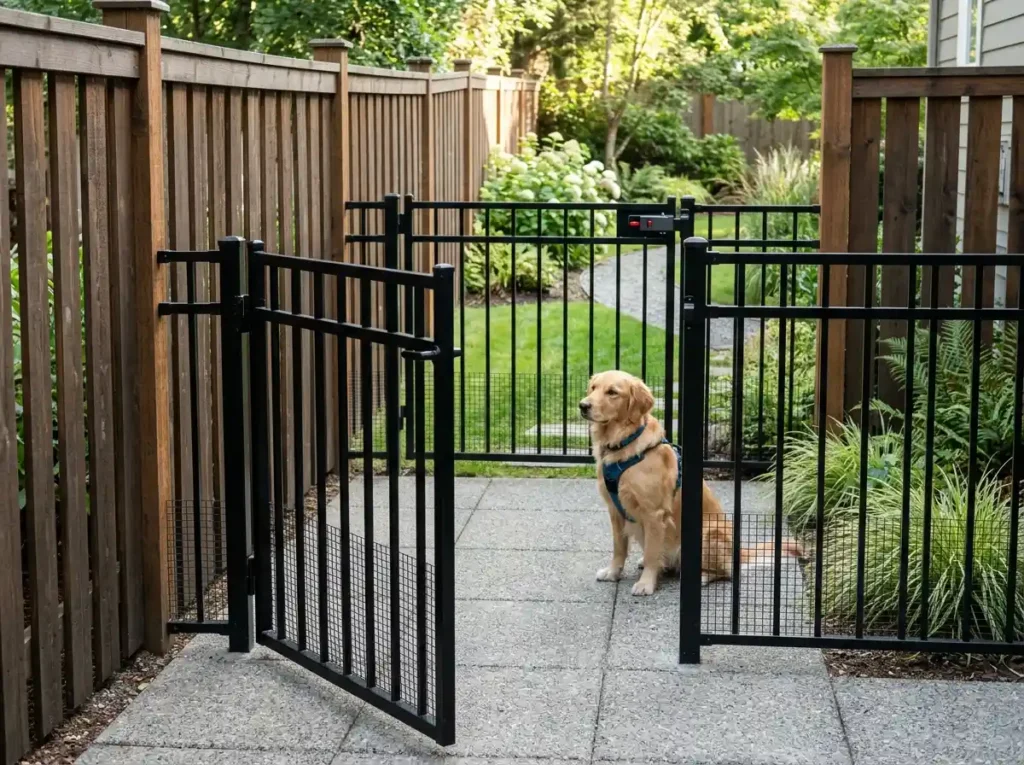
Dogs often escape when someone opens a gate without checking the yard.
A double-gate entry creates a small safety zone. You pass through one gate and close it before opening the next.
This setup works well beside:
- Driveways
- Side-yard paths
- Pool areas
- Busy roads
- Homes with children
- Properties with frequent visitors
The space does not need to be large. It only needs enough room for one person to enter and close the first gate safely.
Use self-closing hinges when possible. Add latches that young children cannot easily open.
A sign on the outer gate can also remind delivery workers and guests that a dog may be in the yard.
Turn the Fence Route Into a Planned Dog Path
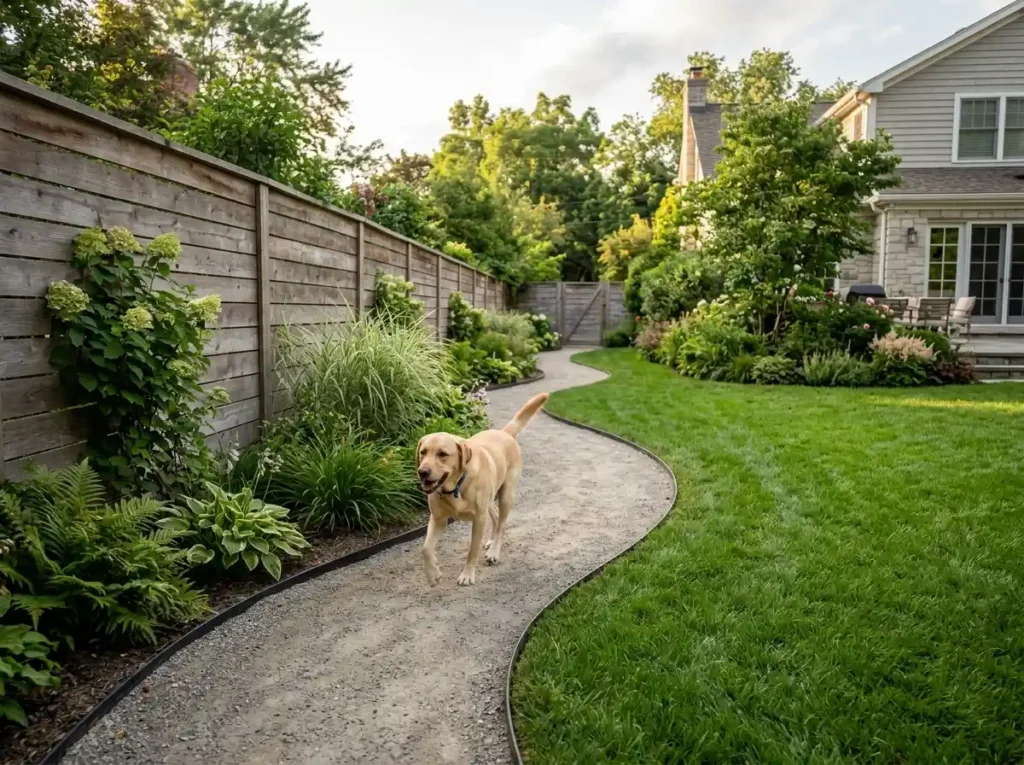
Many dogs walk or run along the same fence line each day. Grass rarely survives this much traffic.
Instead of repairing the same bare strip, turn it into a planned path.
Good materials may include:
- Smooth pavers
- Compacted stone dust
- Pet-safe wood chips
- Artificial turf
- Rounded gravel that feels comfortable under paws
Avoid sharp stone and rough broken gravel. These materials may hurt paws or become uncomfortable during fast running.
Make the path wide enough for your dog to turn around. Add gentle curves where space allows.
A planned path can look much better than a strip of dead grass. It also keeps mud from spreading across the rest of the yard.
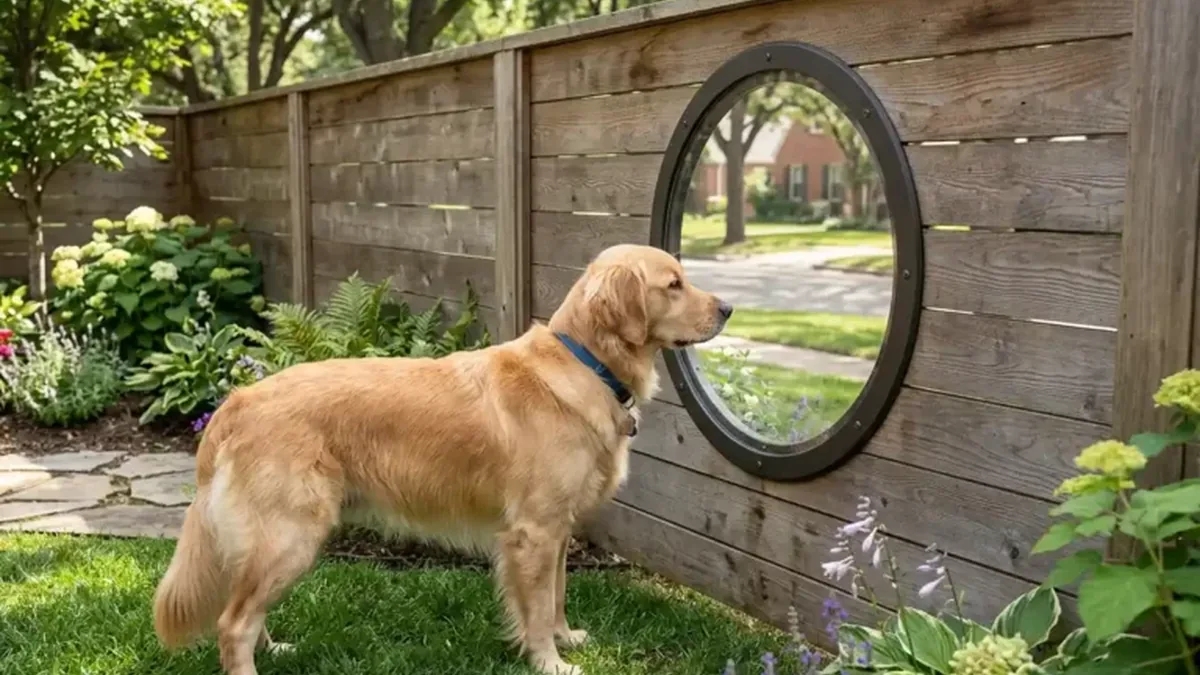
Add a Safe Fence Viewing Window
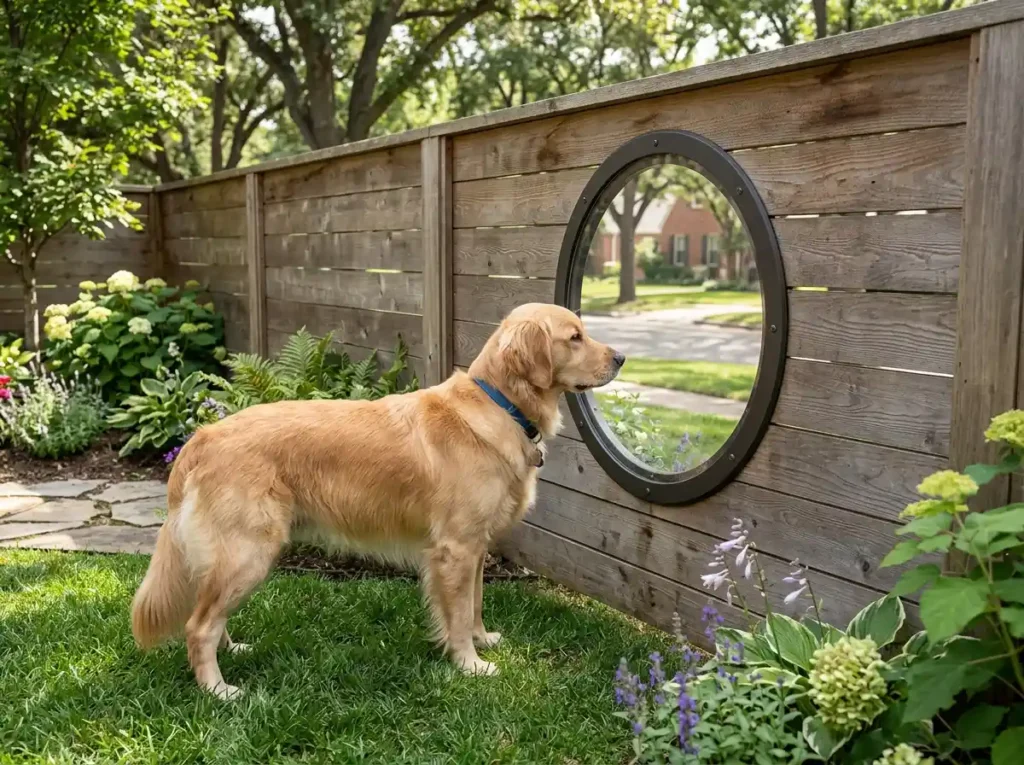
Some dogs become frustrated when they can hear activity but cannot see it.
A small viewing window may reduce jumping or scratching for calm dogs. The opening should be covered with strong, secure material.
Place it at your dog’s eye level. Make sure there are no sharp edges or spaces large enough for a head or paw to become trapped.
This idea is not right for every dog.
Dogs that bark, lunge, or react strongly to people and animals may become more upset when they can see outside. In that case, a solid fence may be better.
Watch your dog’s behavior before adding a window. Speak with a qualified trainer if fence reactions are hard to control.
4 Ground Covers That Handle Dogs Better Than Weak Grass
No ground cover is fully dog-proof. The best choice depends on your weather, drainage, yard size, and how active your dog is.
A mixed yard often works better than covering the whole space with one material.
Plant Tough Grass in Open Play Areas
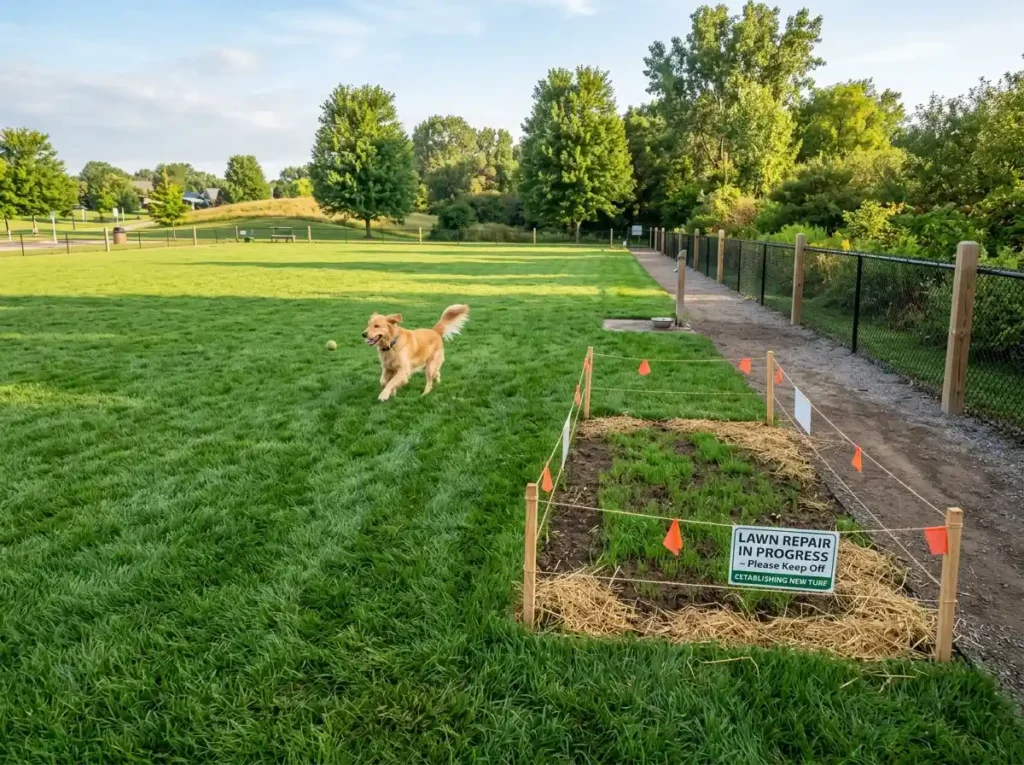
Natural grass feels soft under paws and stays cooler than many hard surfaces.
The problem is that some grass types do not recover well from running, digging, or regular bathroom use.
Choose grass based on your local climate. Bermudagrass and zoysia may handle traffic well in many warm areas. Tall fescue can be useful in cooler regions.
Ask a local garden center which grass grows well in your soil and sunlight.
You can help grass last longer by:
- Improving drainage
- Watering deeply when needed
- Reseeding worn areas early
- Keeping the lawn at a healthy height
- Blocking freshly repaired spots
- Using paths in heavy-traffic areas
Do not expect grass to survive where your dog runs every day. Use pavers, mulch, or turf in those spots.
Use Clover or a Mixed Lawn in Lower-Traffic Areas
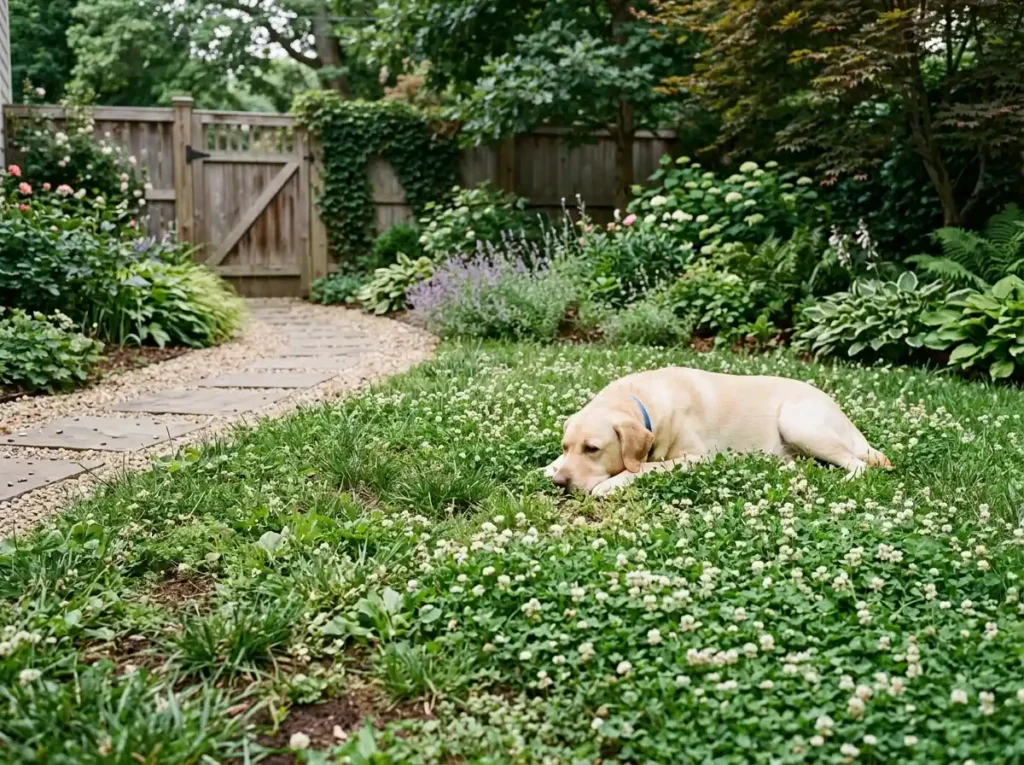
Clover can stay green with less care than some lawn grasses. It may also fill small gaps in a mixed lawn.
However, clover is not right for every yard. It may not handle hard running as well as a tougher grass. It can also spread into garden beds.
Check whether clover grows well in your area. Make sure you are comfortable with bees visiting the flowers.
Other low-growing plants may work in quiet areas, but you must check that each one is safe for dogs.
A mixed lawn can be more practical than a perfect grass lawn. It may hide small worn patches and need less repair.
Use living ground covers in calm areas. Choose tougher surfaces for paths, gates, and play zones.
Install Pet-Friendly Artificial Turf in Muddy Zones
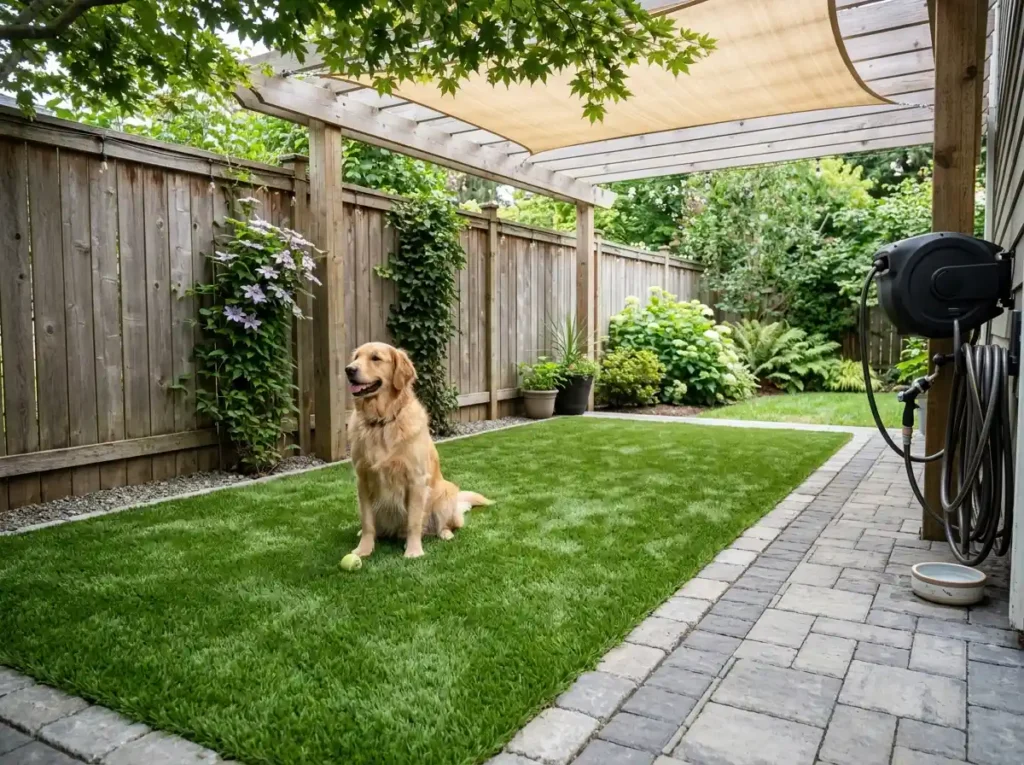
Artificial turf can solve problems in small yards and muddy dog runs.
It does not develop urine spots or bare paths. It can also reduce the amount of dirt your dog carries indoors.
Pet turf needs a proper drainage base. Without good drainage, liquid can collect below the surface and cause strong odors.
Choose a product made for pets. It should allow water to pass through quickly and have a strong backing.
Artificial turf also needs care. Remove waste each day. Rinse the surface and follow the maker’s cleaning steps.
Heat is another concern. Turf can become very hot in direct sun.
Place it in partial shade when possible. Test the surface with your hand before your dog walks on it during hot weather.
Artificial turf costs more at the start, but it may work well in areas where grass keeps failing.
Add Pavers Near Doors, Gates, and Water Bowls
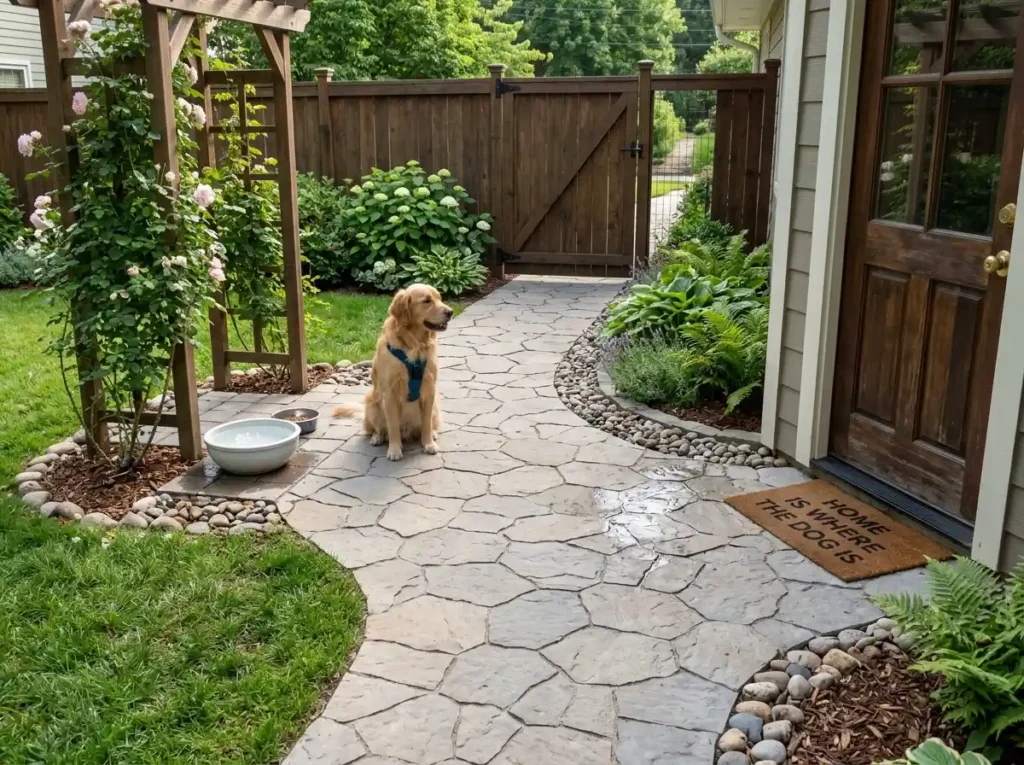
The busiest parts of a yard often become muddy first.
Pavers can protect the ground beside doors, gates, water bowls, and outdoor taps. They are easy to sweep and rinse.
Choose pavers with a textured surface. Smooth tiles may become slippery when wet.
Avoid rough edges that could scrape paws. Keep the surface level so older dogs do not trip.
Leave small drainage gaps or install a proper base below the pavers. Water should move away from the house and yard entrance.
Hard surfaces can become hot in the sun. Use shade or place pavers only where dogs will cross rather than rest.
A few well-placed pavers can solve a muddy entrance without covering the whole yard.
| Ground Cover | Best Use | Care Level | Main Concern |
| Natural grass | Open play areas | Medium to high | Bare spots |
| Clover mix | Calm lawn areas | Low to medium | Bees and spreading |
| Artificial turf | Dog runs and muddy zones | Medium | Heat and odor |
| Pavers | Paths and entrances | Low | Hardness and heat |
| Pet-safe wood chips | Informal paths | Medium | Regular replacement |
3 Ways to Keep Your Dog Cool and Comfortable
A dog-friendly backyard needs more than space to run. Your dog also needs a safe place to stop, drink, and cool down.
Create Shade That Lasts Through the Afternoon
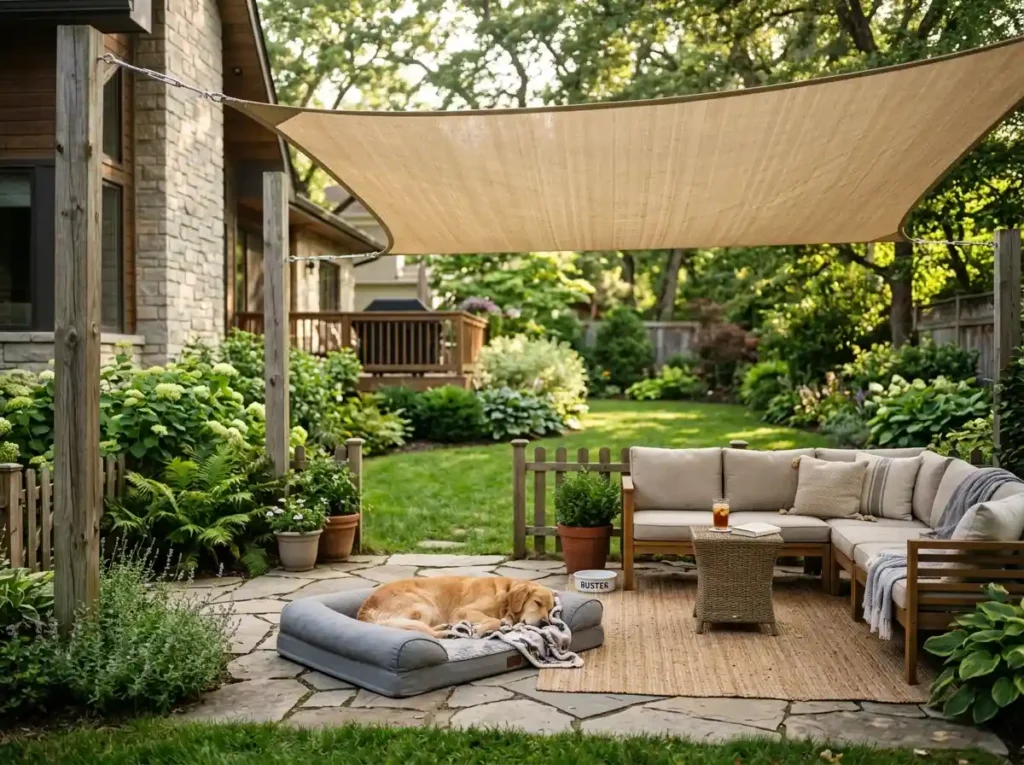
A shady area in the morning may be in full sun later.
Check your yard during the hottest part of the day. Make sure your dog has access to shade at that time.
Shade options include:
- A covered patio
- A shade sail
- A pergola
- A dog shelter
- A large tree
- A covered side yard
A doghouse is not always enough. Small enclosed shelters can become hot when airflow is poor.
Open shade with moving air is often more comfortable.
Place shade near the house or family seating area. Dogs may avoid a resting area if it feels cut off from everyone else.
Set Up a Clean Outdoor Water Station
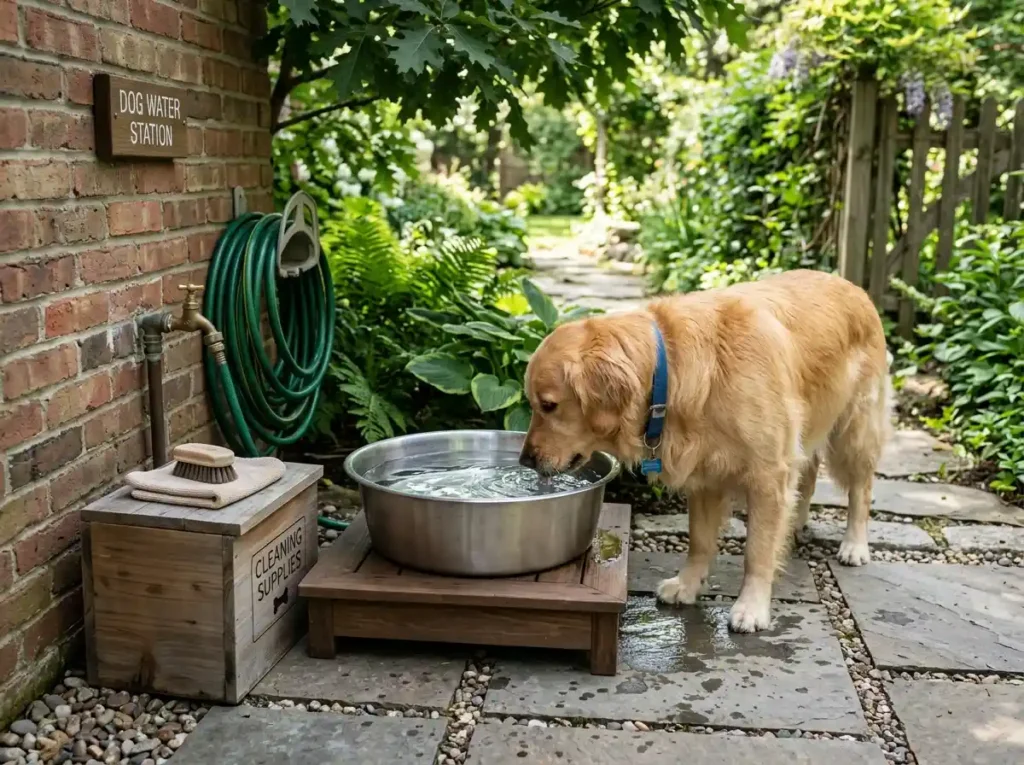
Dogs should have access to clean water when they spend time outside.
Use a heavy bowl that will not tip over during play. Place it in shade to help keep the water cooler.
A simple water station may include:
- A non-tip bowl
- A raised platform
- A nearby outdoor tap
- A drainable surface
- A covered storage box for cleaning tools
Clean the bowl each day. Replace the water when it becomes warm or dirty.
Do not treat a pond or pool as the main drinking source. Standing water may contain dirt, chemicals, insects, or harmful growth.
A clean bowl is safer and easier to check.
Add a Raised Outdoor Dog Bed
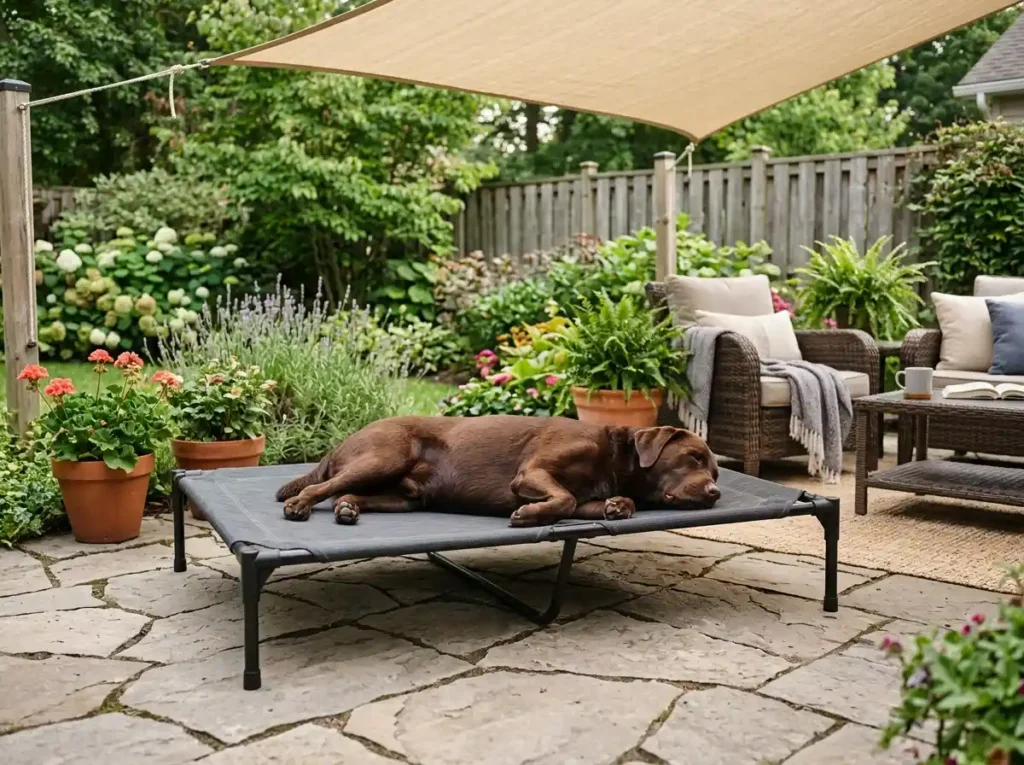
A raised bed gives your dog a clear resting place. Air can move under the bed, which may help on warm days.
Place it beneath a roof, tree, or shade sail.
Keep the bed away from:
- Grills
- Fire pits
- Hot metal walls
- Lawn tools
- Pool chemicals
- Busy gates
Choose a bed with a washable cover. The frame should feel stable when your dog steps onto it.
Senior dogs may prefer a low bed that is easy to enter. Large dogs need enough space to stretch out fully.
Set the bed near your outdoor seating. Many dogs rest more easily when they can stay close to their family.
4 Backyard Play Ideas That Reduce Boredom
A large empty lawn does not always keep a dog busy.
Dogs need chances to sniff, explore, solve simple problems, and use normal behaviors. A few planned features can make the yard more useful.
Give Your Dog a Legal Place to Dig
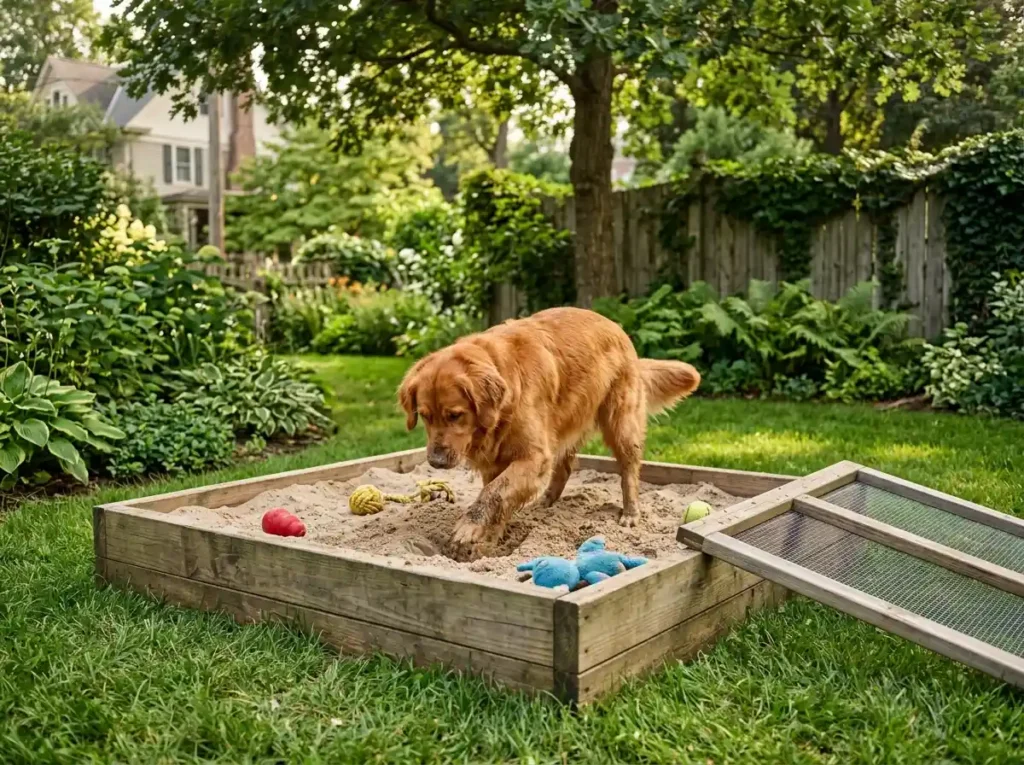
Digging is normal for many dogs. Some dig to cool down. Others follow smells or bury toys.
Instead of trying to stop every hole, create one place where digging is allowed.
Use a raised wooden box, an old sandbox, or a small bordered soil area. Fill it with clean soil or play sand.
Place the digging pit in partial shade. Keep it away from fences and plant roots.
You can encourage your dog to use it by hiding toys near the surface. Praise your dog for digging in the correct area.
Cover the pit when it is not in use if neighborhood cats or wild animals may enter it.
A digging zone will not stop the habit overnight. Training and regular redirection are still needed.
Build a Simple Backyard Agility Area
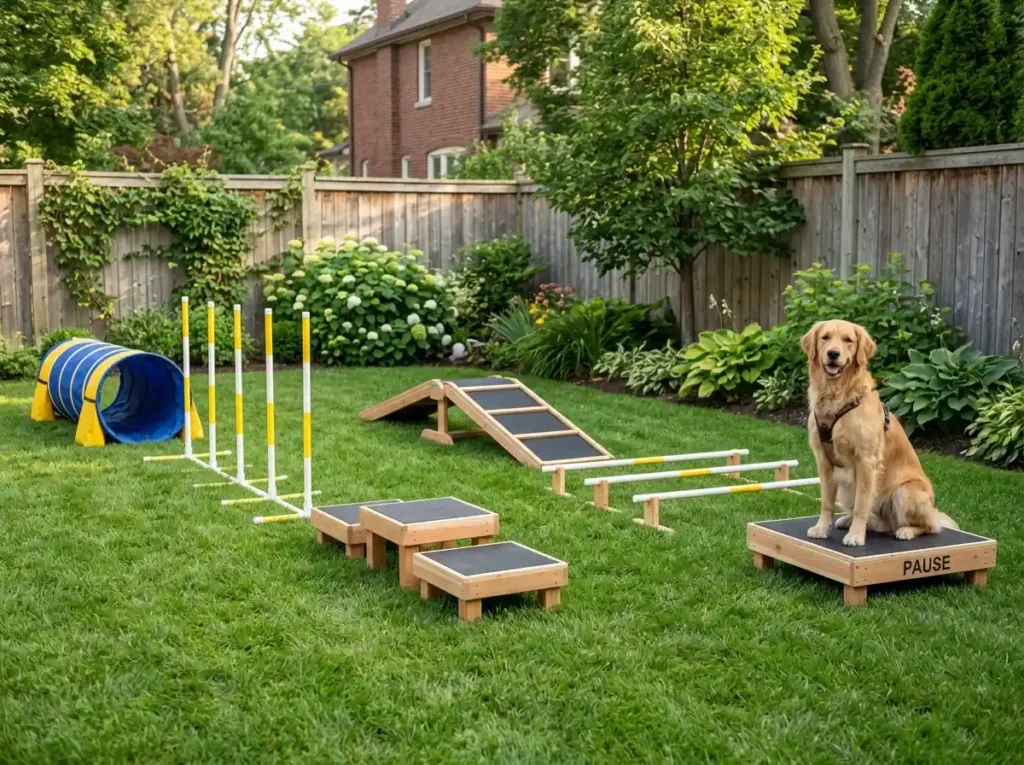
You do not need expensive equipment to create a fun activity area.
A basic setup may include:
- A short tunnel
- Low weave poles
- Flat stepping platforms
- A gentle ramp
- Low ground poles
- A pause platform
Keep the equipment stable. Remove sharp corners, loose screws, and rough edges.
Do not make jumps too high. Puppies, senior dogs, and dogs with joint problems need low-impact activities.
Teach one feature at a time. Use treats and praise rather than forcing your dog through the course.
Store light equipment after use so wind does not move it around the yard.
The goal is safe play, not a difficult training course.
Plant a Safe Scent Garden
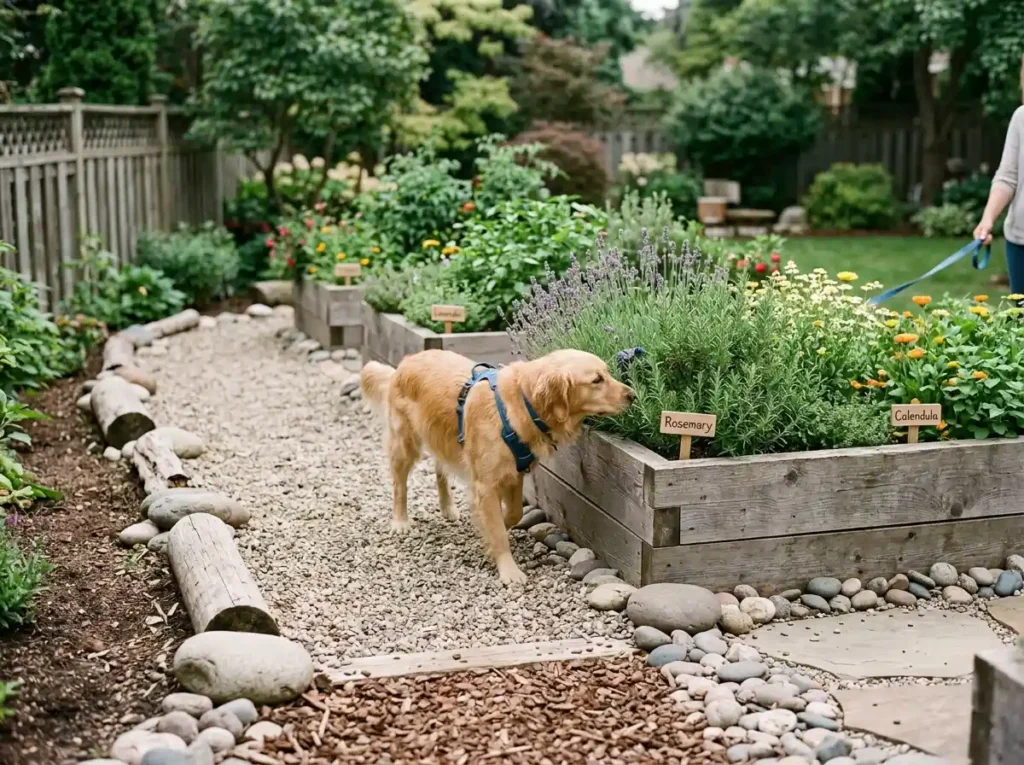
Dogs explore much of their environment through smell.
A scent garden can give your dog a calm activity without needing a large yard.
Use raised planters or strong pots to protect the plants. Leave wide paths so your dog can move between them.
Choose plants only after checking a trusted pet-safety database. A plant may be common in gardens and still be unsafe when eaten.
You can also use safe logs, stones, and different ground textures to create more smells and surfaces.
Avoid thorny plants and sharp seed heads. Do not use cocoa mulch because it may harm dogs if eaten.
A scent garden works best when your dog can sniff without trampling delicate plants.
Add a Small Splash Area
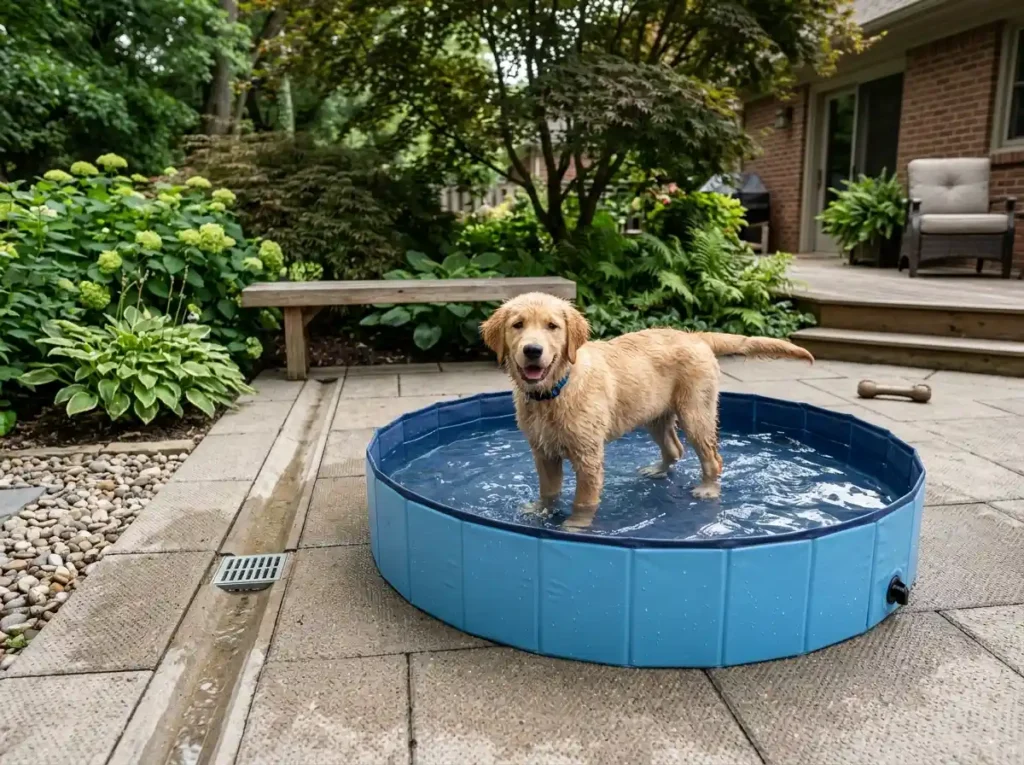
Some dogs love water. A splash area can help them play and cool off.
A shallow dog pool is the easiest option. Place it on a flat, non-slip surface.
You can also use:
- A gentle sprinkler
- A low splash pad
- A shallow water channel
- A pet-safe water feature
Supervise your dog near water. Empty small pools when playtime is over.
Clean the pool often. Warm standing water can become dirty quickly.
Make sure water drains away from the house and does not create a muddy patch.
Not every dog enjoys water. Never force a nervous dog into a pool or sprinkler.
| Dog Habit | Helpful Yard Feature |
| Constant digging | Digging pit |
| Fence running | Perimeter path |
| High energy | Agility area |
| Loves sniffing | Scent garden |
| Gets hot quickly | Shade and splash area |
| Prefers quiet spaces | Covered resting corner |
2 Ideas That Protect Plants and Make Cleanup Easier
Plants and dogs can share a yard. The layout just needs to make the rules clear.
Protect Flower Beds With Raised Edges
Open flower beds are easy for dogs to enter. Soft soil can also look like a perfect digging spot.
Raised beds create a clear border between play space and planting space.
You can use:
- Timber borders
- Low stone walls
- Large containers
- Short garden fencing
- Brick edging
- Dense border plants
Keep paths wide enough for your dog to pass without brushing against plants.
Place delicate plants farther from running routes. Use tougher plants near the edges.
Check every plant before adding it to a dog-friendly yard. Do not trust a label that only says “natural” or “garden safe.”
Also review the products you use around the plants. Fertilizers, weed killers, pesticides, and some mulches may be unsafe for pets.
Store all garden products in a secure place.
Build a Designated Dog Potty Area
A set bathroom zone can protect the rest of your lawn and make waste easier to find.
Choose a quiet corner that your dog can reach in all weather. Keep it away from outdoor dining and play equipment.
Possible surfaces include:
- Pet turf
- Drainable soil
- Smooth gravel
- Pet-safe mulch
- A washable dog-run surface
The area should drain well and be easy to clean.
To teach your dog to use it:
- Take your dog to the area at regular bathroom times.
- Use the same short command each time.
- Wait calmly.
- Give praise or a treat after your dog uses the area.
- Remove waste each day.
- Rinse or refresh the surface when needed.
Training may take time. Stay consistent and avoid punishing mistakes.
A potty area does not need to be large. It only needs enough room for your dog to turn, sniff, and choose a spot.
Fix Common Dog Yard Problems Before They Get Worse
Small yard problems are often easier and cheaper to fix early.
Check the yard each week for:
- New fence gaps
- Loose gate latches
- Fresh holes
- Standing water
- Damaged toys
- Sharp sticks or metal
- Mushrooms
- Chewed plants
- Waste buildup
- Hot or slippery surfaces
Improve drainage where water collects. Add soil grading, a drain, or a more suitable surface when needed.
Reseed worn grass before the area becomes bare. Block the spot until new grass is strong enough for foot traffic.
Rinse hard surfaces and pet turf regularly. Clean water bowls each day.
Rotate outdoor toys every few days. A toy may feel more interesting after it has been stored for a week.
Look at the yard from your dog’s height. Low sharp edges and small gaps are easier to spot from that view.
Avoid These Dog-Friendly Landscaping Mistakes
A material can look great in a photo and still fail in a real dog yard.
One common mistake is choosing the same surface for the whole yard. Grass, pavers, turf, and mulch each work better in certain places.
Another mistake is forgetting about heat. Artificial turf, dark pavers, and concrete may become too hot for paws.
Do not plant before checking pet safety. A popular landscaping plant is not always safe for dogs.
Artificial turf also needs more than a green surface. It needs a strong drainage base and regular cleaning.
Shade must be checked in the afternoon. Morning shade may disappear when the day becomes hotter.
Do not place delicate grass in a dog’s main running route. Turn that route into a path instead.
Avoid sharp gravel, thorny plants, and loose landscape fabric. Dogs may chew, dig, or become caught in them.
Landscaping can guide behavior, but it cannot replace training. A digging pit will work better when you teach your dog to use it. A secure fence will also work better when your dog receives exercise and attention.
Create a Dog-Friendly Backyard on a Budget
You do not need to rebuild your whole yard at once.
Start with the changes that protect your dog.
First, repair gates and fence gaps. Remove unsafe plants and sharp objects.
Next, fix the areas that create daily problems. Add shade, improve drainage, and turn a muddy route into a simple path.
Then add comfort and play features. A digging box, raised bed, or water station can be made without a large budget.
A simple three-step plan can help:
Step 1: Improve Safety
Repair the fence, secure the gate, and remove hazards.
Step 2: Make the Yard Easier to Use
Add shade, water, paths, and a bathroom corner.
Step 3: Improve the Look
Use raised beds, matching containers, safe plants, and neat borders.
Complete one useful zone before starting another. A safe, shaded corner is more valuable than several unfinished projects.
Build a Yard That Works for Your Dog and Your Family
A good dog-friendly yard starts with safety. Secure the fence, remove harmful plants, and fix hot or slippery surfaces.
Next, plan around your dog’s real habits. Use a path where your dog runs. Add a digging pit for a dog that loves soil. Place shade where your dog already rests.
You do not need to use all 17 ideas. Start with the two or three problems that affect your yard most.
The best backyard landscaping ideas for dogs make daily life easier for both of you. They reduce mud, protect plants, support safe play, and give your dog a comfortable place to enjoy the outdoors.