18 Patio Ideas With Pavers for Any Backyard
An empty patch of grass can feel like wasted space. You may want a place to eat, relax, or sit with friends, but choosing the right patio design can be hard.
Pavers give you more choices than a plain concrete slab. You can pick different colors, shapes, sizes, and patterns. You can also repair one damaged area without replacing the whole patio.
The problem is that a design may look great in a photo but fail in your yard. It may cost too much, need too much care, or cause drainage issues.
These 18 patio ideas with pavers will help you find a layout that fits your space and budget. You will find options for small yards, large family patios, fire pits, outdoor kitchens, slopes, and wet areas.
Save the three ideas that best match how you plan to use your patio.
How to Choose Patio Ideas With Pavers That Fit Your Yard
Start with the purpose of your patio.
Do you need space for a dining table? Are you planning a quiet seating area? Do you want a grill, fire pit, pergola, or full outdoor kitchen?
Your answer will help you choose the right size and layout.
Measure the area before you buy anything. A 12-by-16-foot patio covers 192 square feet. Mark the corners with stakes and string. Then place your outdoor furniture inside the marked space.
This simple test can stop you from building a patio that feels too small.
You should also check how rainwater moves through the yard. A patio should direct water away from your home. It should not send water into a basement, garden bed, or neighbor’s property.
Think about the full cost as well. Your budget may need to cover:
- Pavers
- Base stone
- Bedding material
- Joint sand
- Edge restraints
- Delivery
- Equipment rental
- Excavation
- Drainage work
- Labor
- Extra pavers for cuts and damage
Choose your paver patio design ideas based on the site, not just the style.
Make a Modern Patio With Large Concrete Pavers
Best for: Modern homes and low-maintenance yards
Budget level: Medium to high
Main concern: Large pavers need a firm, even base
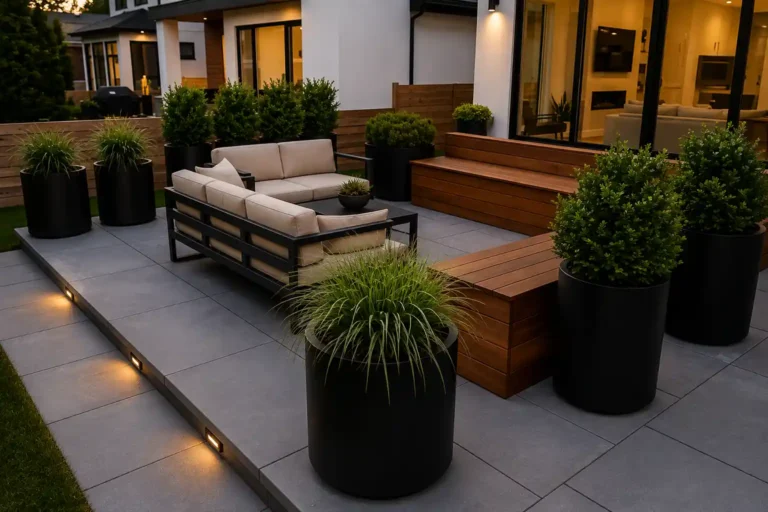
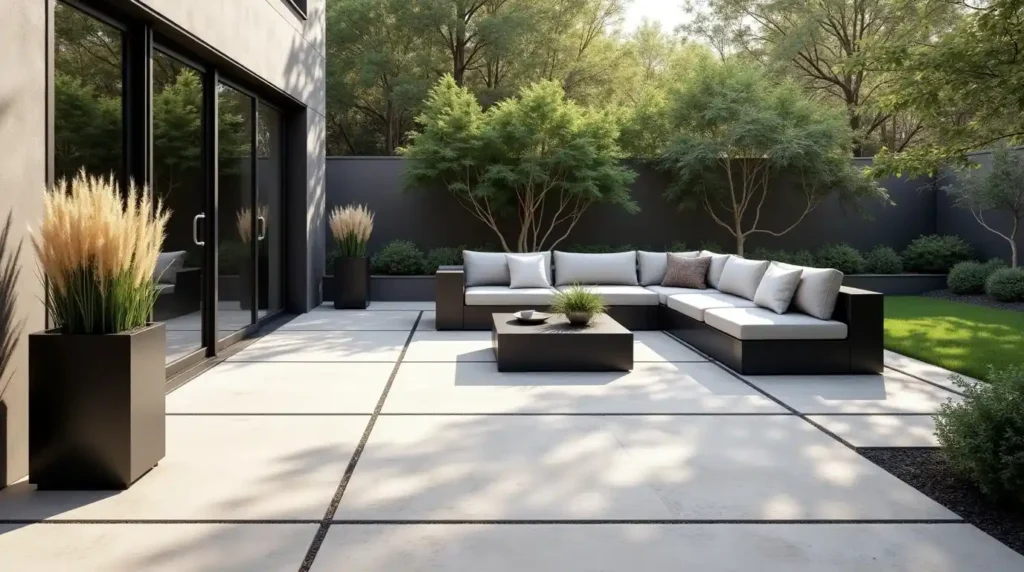
Large concrete pavers can make a small or busy yard feel calmer. Their simple shape creates fewer lines across the surface.
Square pavers work well in neat grids. Long rectangular pavers can make a narrow patio appear wider or longer, based on the direction in which you lay them.
Gray is a common choice, but it is not your only option. Warm beige, cream, soft brown, and charcoal can also create a modern look.
Keep the furniture simple. A low outdoor sofa, one coffee table, and two large planters may be enough.
For example, you could build a 12-by-16-foot patio with 24-inch square pavers. Add a small sectional at one end and leave a clear path to the yard.
Large concrete patio pavers look clean, but poor base work can cause edges to lift or sink. Proper ground preparation matters more than the paver size.
Add Character With a Brick Herringbone Pattern
Best for: Traditional, cottage, and older homes
Budget level: Medium
Main concern: The pattern needs more edge cuts
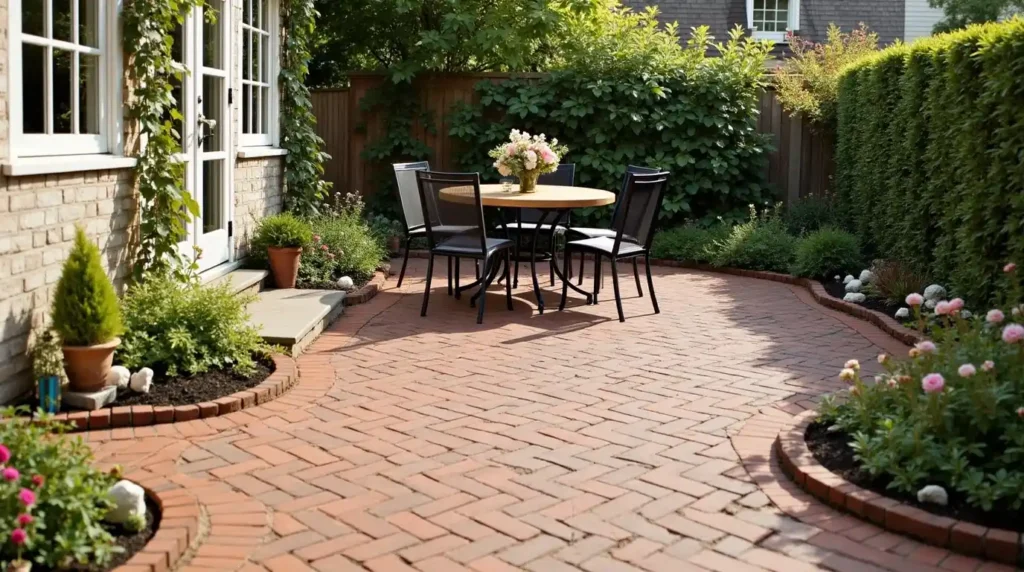
A brick herringbone patio creates strong lines and visual movement. The pavers meet at sharp angles, which gives the floor more detail.
Red brick works well beside white, cream, gray, or natural wood siding. Brown and weathered brick tones can create a softer look.
Add a straight border around the pattern. The border frames the patio and makes the angled layout look finished.
A herringbone paver pattern can also hide small changes in color between individual bricks. This helps the patio age in a natural way.
The pattern does require more cuts near the edges. A square or rectangular patio will usually be easier to install than a curved one.
Use black metal chairs, a wood dining table, or simple garden benches. These pieces will support the traditional style without making the area feel crowded.
Use Three Paver Sizes for a Natural Stone Look
Best for: Family patios and relaxed garden spaces
Budget level: Medium to high
Main concern: The layout should follow a set pattern
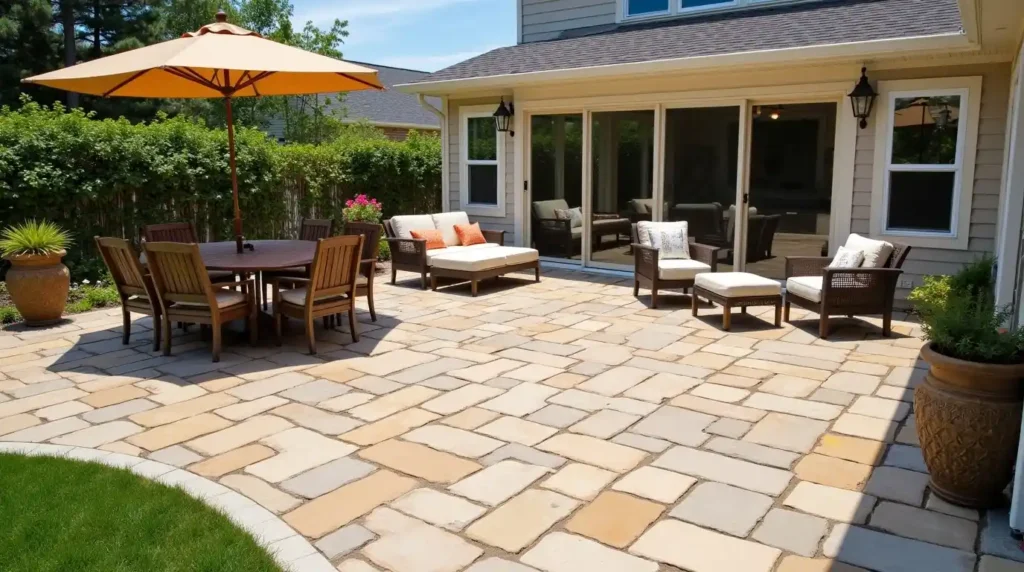
A patio made from one paver size can feel too formal for some homes. Mixing large, medium, and small pavers creates a softer look.
Choose pavers from the same product range. This helps the colors, thickness, and surface finish work well together.
A mix of tan, beige, and soft gray can look like natural stone. Small color changes may also help hide dirt, light stains, and daily wear.
Do not place the sizes without a plan. Many mixed-size paver sets have a repeating layout from the maker. Follow that layout to avoid awkward gaps or too many small pieces in one area.
The floor already has plenty of detail, so keep the furniture simple. A plain wood table and solid-color cushions are often enough.
This design works well when you want the warmth of natural stone without using large stone slabs.
Cut Costs With a Gravel and Paver Patio
Best for: Budget projects and casual seating areas
Budget level: Low to medium
Main concern: Chairs may wobble on loose gravel
You do not need to cover every inch of the patio with pavers.
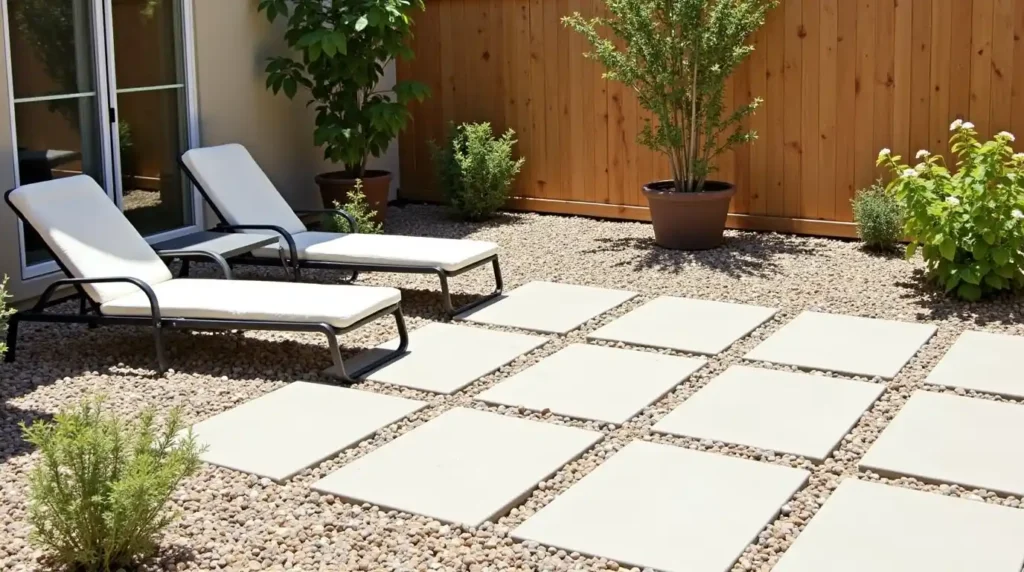
Large pavers placed inside decorative gravel can create a clear seating area at a lower cost. This design also feels less formal than a fully paved surface.
Use metal, plastic, stone, or wood edging to keep the gravel in place. Without edging, the stones may spread into the lawn or garden beds.
The pavers still need a stable base. Setting them on loose soil may cause them to move or sink after rain.
An 8-by-10-foot space could use twelve large pavers with gravel around them. Add two lounge chairs and a small side table.
This design works best for furniture that stays in one spot. Dining chairs can be harder to move across loose stones.
Angular gravel tends to lock together better than smooth pea gravel. Pea gravel feels softer underfoot, but it may move more.
Soften the Patio With Grass Between Pavers
Best for: Garden-style yards and light foot traffic
Budget level: Medium
Main concern: The planted joints need care
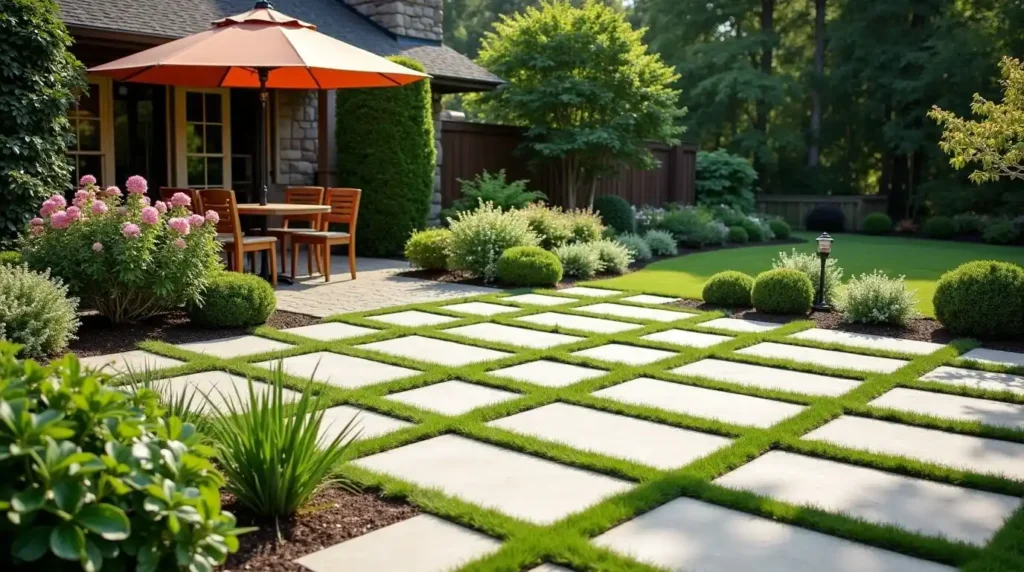
Grass or low plants between pavers can soften a hard patio. The green lines help the paved area blend with the rest of the yard.
Large square pavers often work best for this design. Leave even gaps between them, then fill those spaces with plants suited to your local weather.
Choose plants based on sunlight and foot traffic. Some groundcovers handle light steps, while others are better beside a walkway.
Grass will need trimming. Other plants may need watering, weeding, and seasonal care.
This design is not the same as a full permeable paver system. Decorative plant gaps may absorb some water, but drainage also depends on the soil and base below.
Use this idea for a garden seating area or a quiet path. It may be less useful below a large dining table because food and chair legs can damage the plants.
Make a Plain Patio Look Finished With a Dark Border
Best for: Simple rectangular patios
Budget level: Low to medium
Main concern: The border needs firm edge support
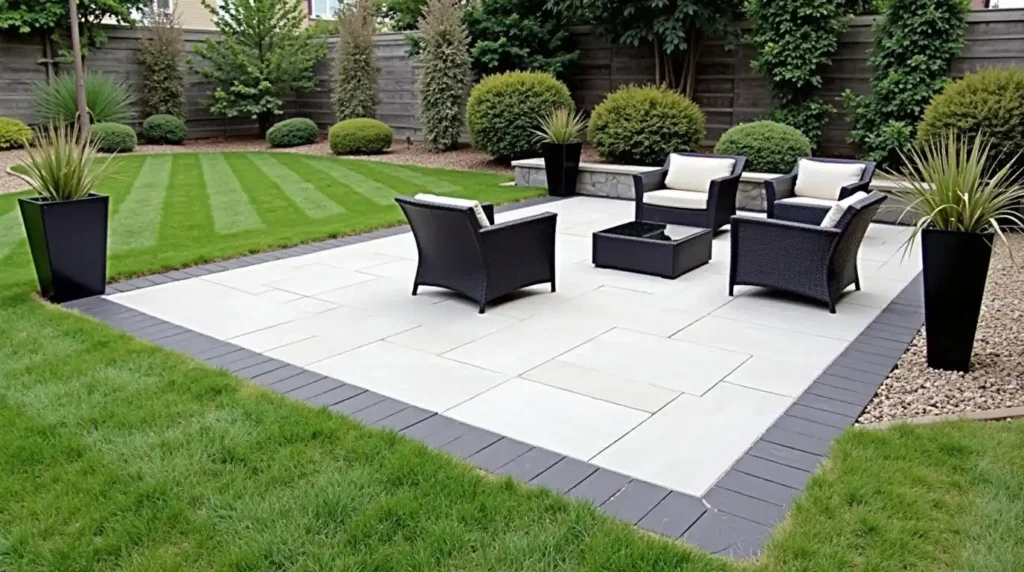
A contrasting border can make basic pavers look more planned.
Use charcoal pavers around a light-gray patio. You could also place a cream border around dark brown or deep gray pavers.
The border helps define the shape. It can also separate the patio from grass, gravel, or planting beds.
Repeat the border color in another part of the space. Black planters, dark chair frames, or matching step edges can tie the design together.
You do not need a wide border. One row may be enough.
The outside pavers need support so they do not move away from the center. The correct edge restraint will depend on the patio design and the product you use.
A border is one of the easiest paver patio border ideas to add without changing the full layout.
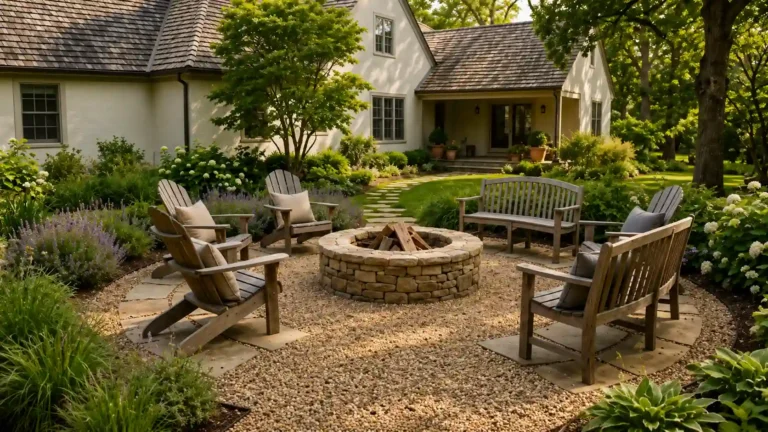
Create a Fire Pit Patio With a Circular Layout
Best for: Evening seating and social yards
Budget level: Medium to high
Main concern: Fire safety and local rules
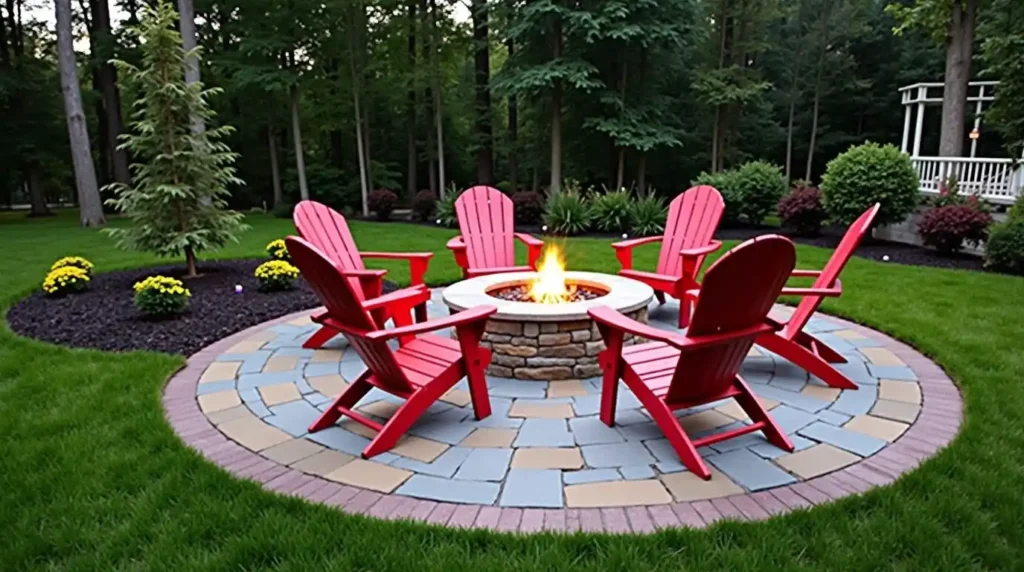
A circular patio naturally places the fire pit at the center. It also gives each chair a clear view of the fire.
Use circle-shaped paver kits or arrange smaller pavers in a fan pattern. Add a strong border around the outside edge.
A patio that is about 12 to 14 feet wide may provide room for a fire pit and four chairs. This is only a planning example. The space you need will depend on the fire pit and furniture size.
Use materials that are approved for the area around your fire feature. Follow the instructions from the fire pit maker.
Do not depend on one general clearance number. Safe space can change based on the fuel type, nearby walls, roof lines, trees, and local fire laws.
This is one of the most useful backyard paver patio ideas for people who host friends after sunset.
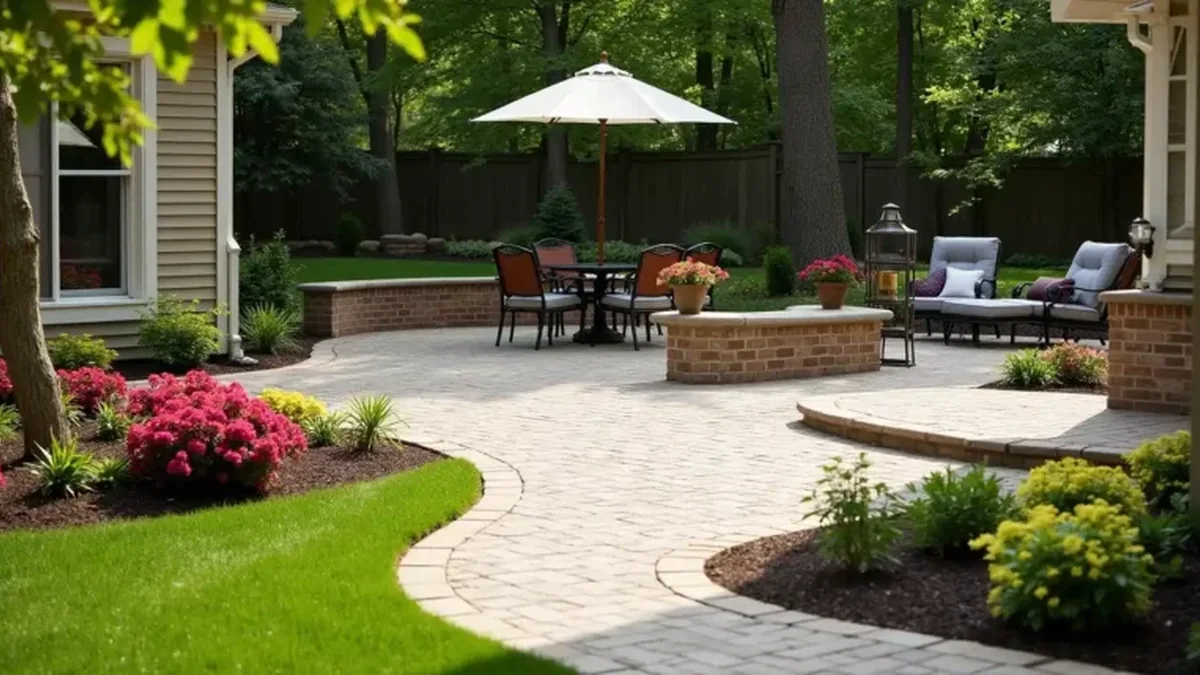
Make a Square Yard Feel Softer With Curved Edges
Best for: Garden yards and stiff rectangular spaces
Budget level: Medium
Main concern: Curves need more cuts
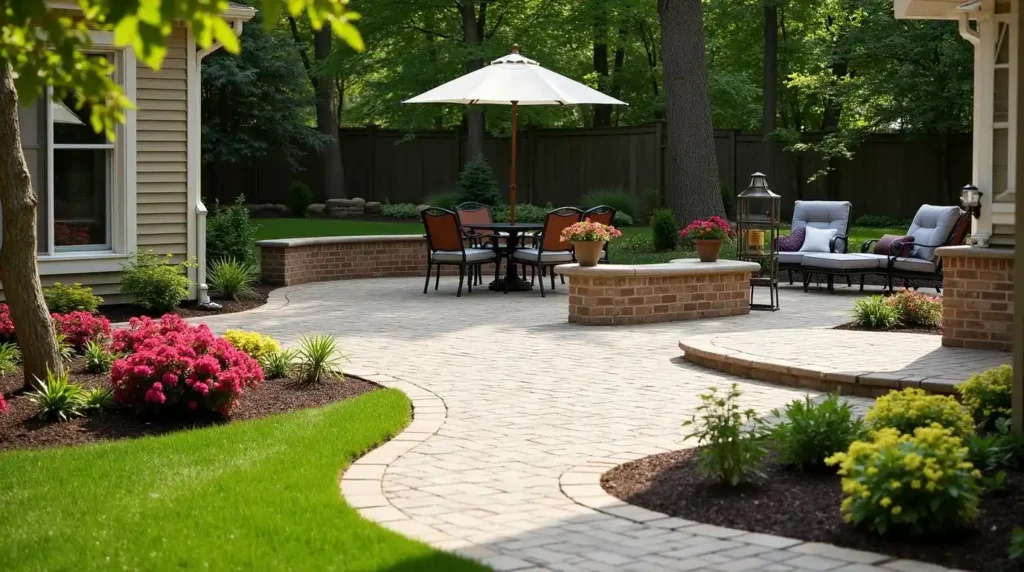
A curved paver patio can break up the straight lines of a fence, house, or narrow yard.
Smaller pavers are often easier to place around curves. Large slabs may need many cuts, which can raise the cost.
Match the patio curve with nearby flower beds. This creates a smooth line through the yard.
You can also shape the patio around a small tree, fountain, or garden feature. Keep enough space around tree roots and trunks.
Before you dig, place a garden hose on the ground to test the curve. Move it until the shape feels balanced.
View the outline from inside the house as well as from the yard. A shape that looks good from one side may seem uneven from another.
Curves look relaxed, but they can create more waste. Add extra material to the order for cut pieces.
Add a Bold Pattern With a Checkerboard Patio
Best for: Small decorative patios
Budget level: Medium
Main concern: Green sections need regular care
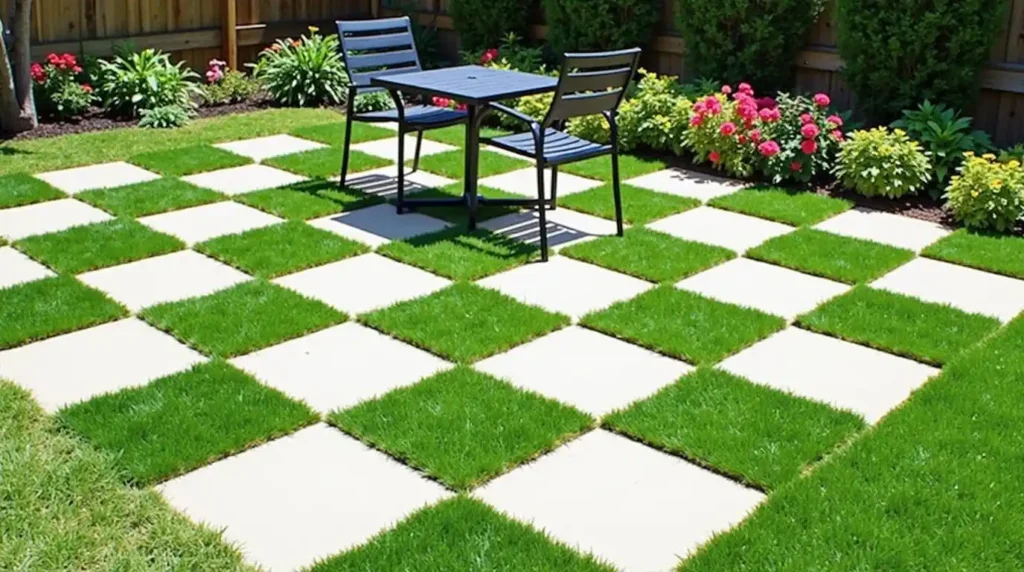
A checkerboard patio uses solid pavers and open squares in an even grid.
The open squares can hold grass, low groundcover, or decorative gravel. Each choice creates a different look.
Grass feels soft and fresh, but it needs cutting and watering. Low groundcover can need less mowing, but it still needs care. Gravel is easier to manage, though it may move onto the pavers.
Large square pavers create the clearest pattern. Keep the rest of the design quiet because the floor will already stand out.
A four-by-four grid can form a small café-style area. Add a compact table and two chairs instead of heavy outdoor furniture.
This style works best in a lightly used space. It may not be practical for a large family dining area or a busy path.
Warm Up the Yard With Travertine-Look Pavers
Best for: Mediterranean and resort-style patios
Budget level: Medium to high
Main concern: Check the surface when wet
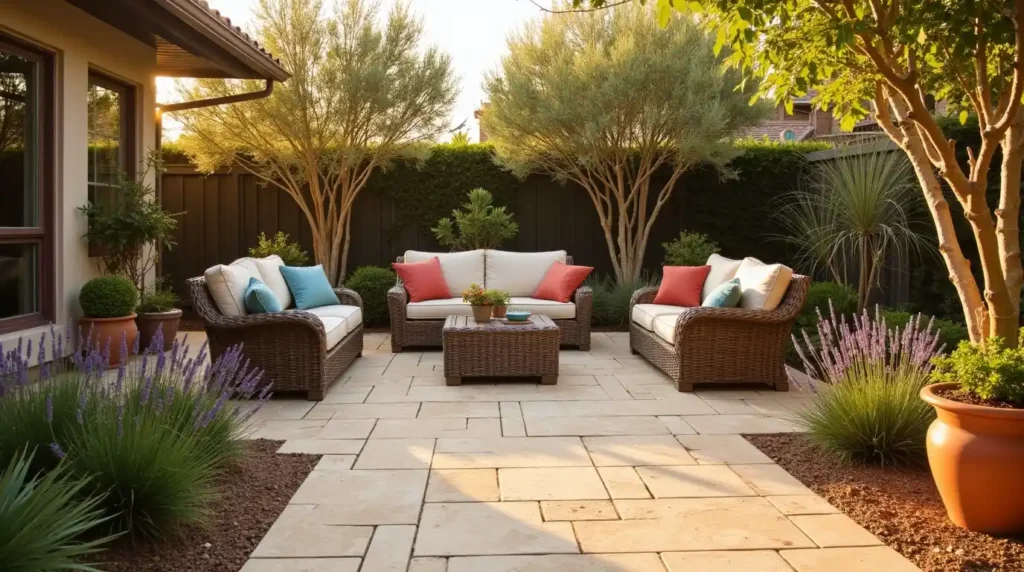
Cream, sand, ivory, and pale beige pavers can make a patio feel brighter and warmer.
These colors work well with wood, wicker, white fabric, and terracotta pots. Olive trees, lavender, and soft grasses can support the same look.
Real travertine has natural color changes and small surface marks. Manufactured travertine-look pavers can give you a similar style with more even sizing.
Check how the paver feels underfoot. Some smooth products may become slippery when wet. A patio near a pool or outdoor shower needs a surface made for wet areas.
Ask for samples before placing a large order. View them outside during the morning and late afternoon.
You should also wet one sample. Water can make the color look darker and reveal how the surface handles moisture.
Separate Dining and Seating With Two Paver Patterns
Best for: Large patios used for several activities
Budget level: Medium to high
Main concern: Too many patterns can look busy
A large patio can feel messy when every activity shares one open space.
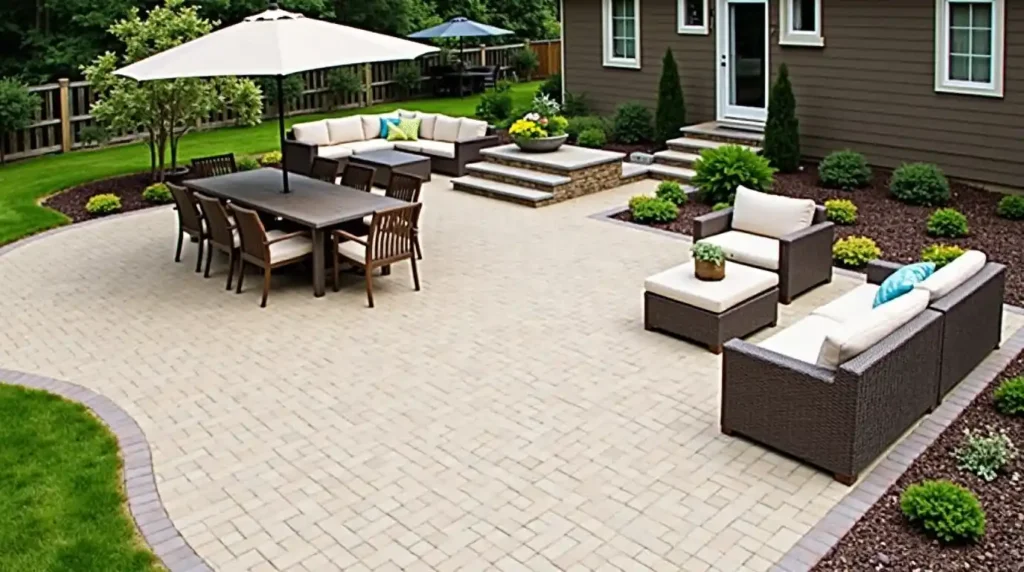
Use the pavers to mark a dining zone and a lounge zone. You can change the paver direction, add a dark border, or use a different paver size.
Keep the main color family the same. This helps both zones feel connected.
Place the dining table near the kitchen door when possible. This makes it easier to carry food, plates, and drinks.
Move the lounge area closer to a garden view, fire pit, shade tree, or pergola.
A 10-by-12-foot dining zone may hold a table and chairs. Test the size with your own furniture before building.
Leave a clear walking path between the two areas. People should not have to squeeze behind chairs or cross through the cooking space.
Good patio zoning can make one large paved area feel like two useful outdoor rooms.
Connect the Patio to the Yard With a Matching Walkway
Best for: Patios set away from the house
Budget level: Medium
Main concern: The path must not carry water to the home
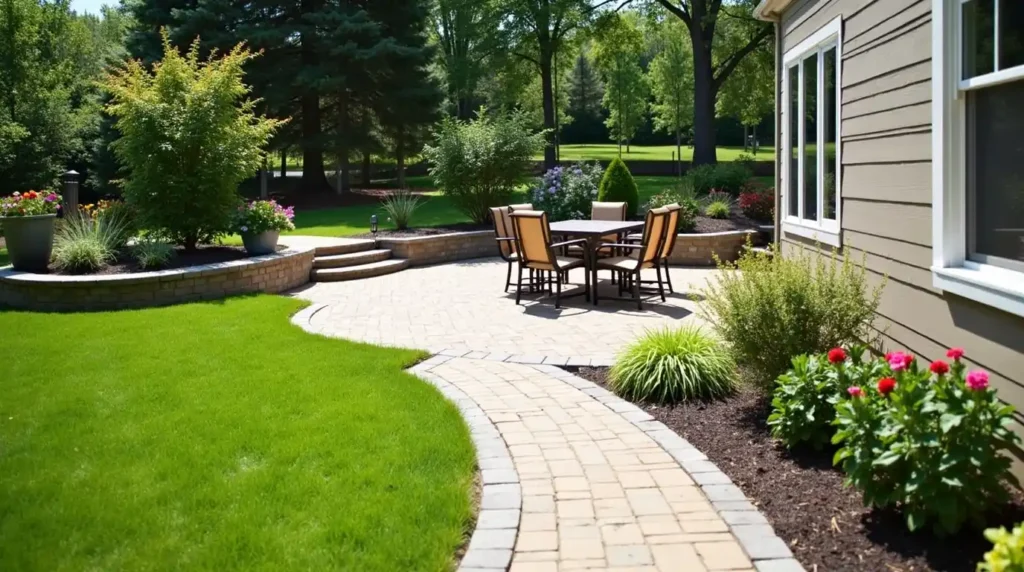
A matching walkway can make a patio feel connected to the rest of the property.
Use the same paver color for both areas. Change the pattern on the path so it has its own shape.
For example, the patio may use a mixed layout while the walkway uses a simple running bond.
Connect the path to a side gate, driveway, garden, shed, or pool. This keeps people from cutting through wet grass or garden beds.
A walkway that is 36 to 48 inches wide can feel comfortable for many homes. The right width depends on your space and how many people will use it.
Add a border to guide the eye and hold the edges.
Plan the slope with care. The walkway should not send rainwater toward the foundation or door.
Turn a Sloped Yard Into Two Flat Patio Levels
Best for: Yards with a steep or uneven grade
Budget level: High
Main concern: Retaining walls and drainage
A sloped yard can leave you with little flat space for chairs or a table.
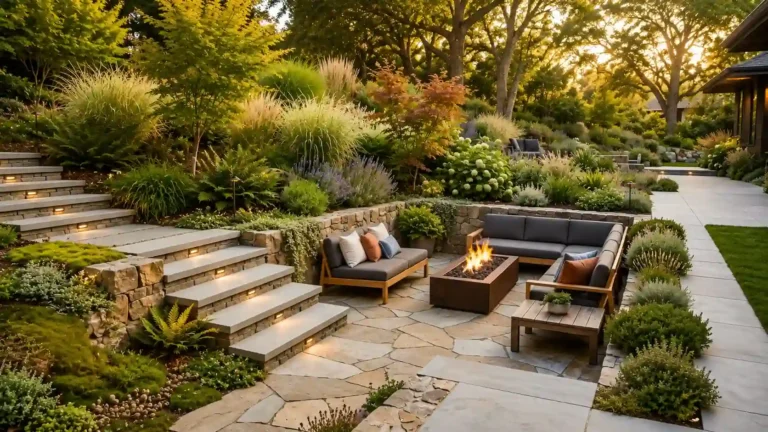
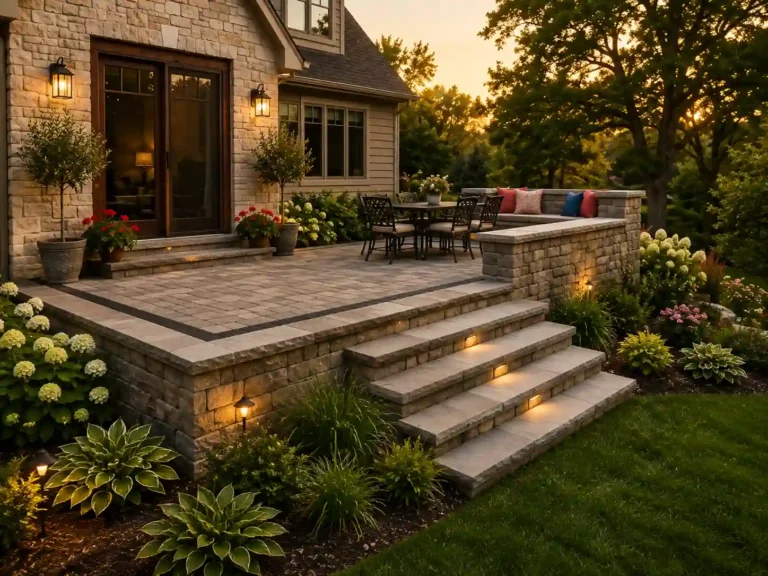
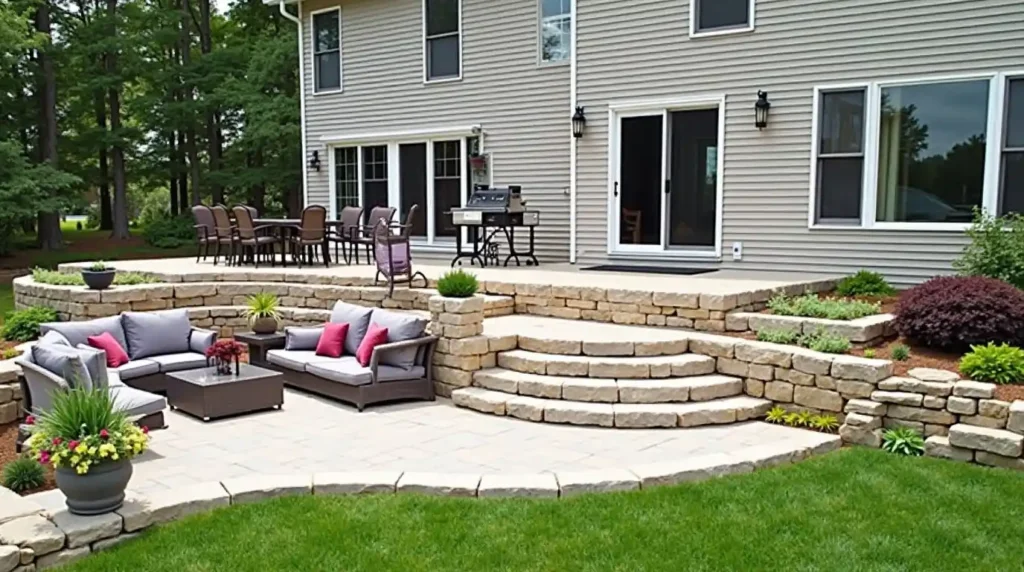
Creating two patio levels can solve that problem. Use the upper level for dining and the lower level for seating or a fire pit.
Wide steps can connect both areas. Make the step edges easy to see, especially at night.
Retaining features may be needed to hold the soil. Water must also have a safe path behind and around those structures.
Do not treat drainage as a small detail. Trapped water can damage walls, wash out the base, or cause pavers to move.
A major grade change is not a simple weekend project. Ask a qualified contractor or engineer to review tall walls, weak soil, or water near your home.
This type of raised paver patio costs more, but it can turn a hard-to-use slope into two useful areas.
Use an Empty Corner for a Small Paver Patio
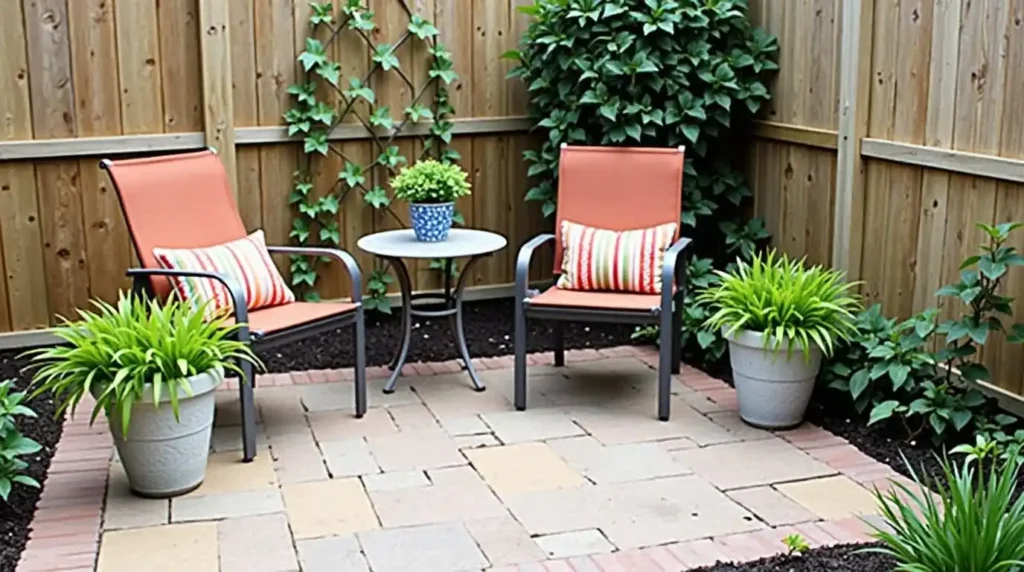
Best for: Small yards and quiet seating spots
Budget level: Low to medium
Main concern: Too much furniture can crowd the space
You do not need a huge yard to build a useful patio.
An empty corner beside a fence, shed, or garden can hold a small seating area. An 8-by-8-foot patio may fit two chairs, a round table, and one tall planter.
Lay rectangular pavers on a diagonal to make the space feel wider. Keep the color range simple.
Use folding chairs or compact furniture if you need more room. A bench against the fence can also save floor space.
Add height with a narrow trellis, wall planter, or tall plant. Solar wall lights can make the corner useful after sunset.
These small patio ideas with pavers work best when every item has a clear purpose.
Do not fill the patio with too many pots or decorations. Open floor space will make the area feel larger.
Build a Stable Paver Zone for an Outdoor Kitchen
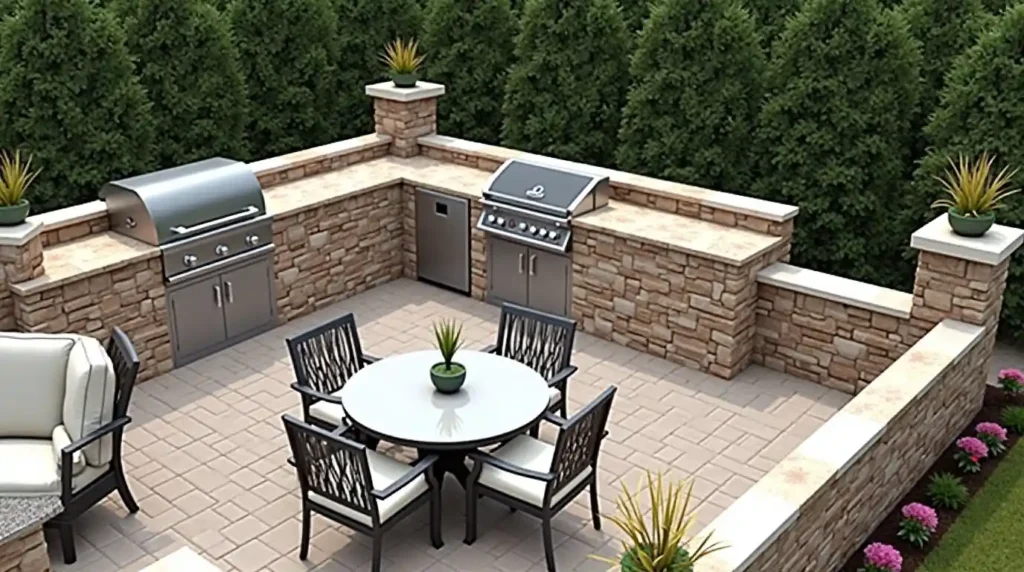
Best for: Cooking, dining, and regular entertaining
Budget level: High
Main concern: Utilities and heavy equipment
An outdoor kitchen needs more planning than a basic seating patio.
You may need gas, power, water, drainage, and lighting. Plan these items before the final pavers go down.
Heavy cabinets and appliances need stable support. Some parts of the kitchen may need their own footings or base system.
Leave enough room around the grill and counters. The cook should be able to work without blocking the main walking path.
An L-shaped kitchen can face the dining table. This keeps the cook connected to guests while still creating a clear work zone.
Use a border or pattern change to mark the cooking area. Choose pavers that are easy to clean because oil and food may fall on the floor.
Follow the appliance maker’s rules for heat, air flow, and nearby surfaces. Local building rules may also apply.
Which Paver Patio Design Should You Choose?
Start by matching the patio to the way you live.
Choose large concrete pavers if you want a simple modern look. Pick brick herringbone for a more traditional yard. Use gravel and spaced pavers when you need a lower-cost seating area.
A small corner patio may be enough for two people. A larger family space may need separate dining and lounge zones.
Sloped yards, raised patios, outdoor kitchens, and poor drainage often need expert help. Paying for the right base and water plan can save you from costly repairs later.
Before you order materials, mark the full patio area and place your furniture inside it. Look at paver samples in sun, shade, and rain.
These patio ideas with pavers can help you turn unused ground into a space that works for your home.