20 Front Yard Landscaping Ideas for Small Homes
A small front yard can be hard to plan. You want it to look welcoming, but every plant, pot, and path takes up space.
Add too much, and the yard feels crowded. Add too little, and the front of your home may look bare.
The good news is that you do not need a large lawn or deep garden beds to create strong curb appeal. A clear path, a few well-placed plants, and one main feature can change the whole space.
These front yard landscaping ideas for small homes will help you use each area with care. You will find ideas for narrow flower beds, small trees, containers, walkways, privacy, lighting, and easy yard care.
You do not need to use all 20 ideas. Pick the ones that solve your biggest problem and fit your climate, budget, and available space.
Plan Your Small Front Yard Before You Buy Plants
Buying plants first may feel like the fastest way to improve your yard. It often creates more work later.
A plant that looks small at the garden center may grow wider than expected. A new flower bed may block the walkway. A tree may end up too close to the house.
Start by measuring the yard, driveway, path, porch, and steps. Mark where the sun hits during the day. Note areas that stay wet after rain or become very dry.
Next, choose one main focal point. This could be the front door, a small tree, or a neat flower bed.
A compact yard usually looks better with one clear feature than several items fighting for attention.
For example, a 15-by-20-foot front yard could include:
- A clear three-foot walkway
- One narrow flower bed
- One small ornamental tree
- A low ground-cover area
- Two matching pots near the door
Keep the number of materials low. Two or three materials are often enough. You might use brick, dark metal edging, and natural mulch.
Draw a basic plan on paper before you start. It does not need to look professional. Mark the house, path, driveway, beds, and major plants.
This simple step can stop you from wasting money on plants or materials that do not fit.
Frame the Front Door With Matching Planters
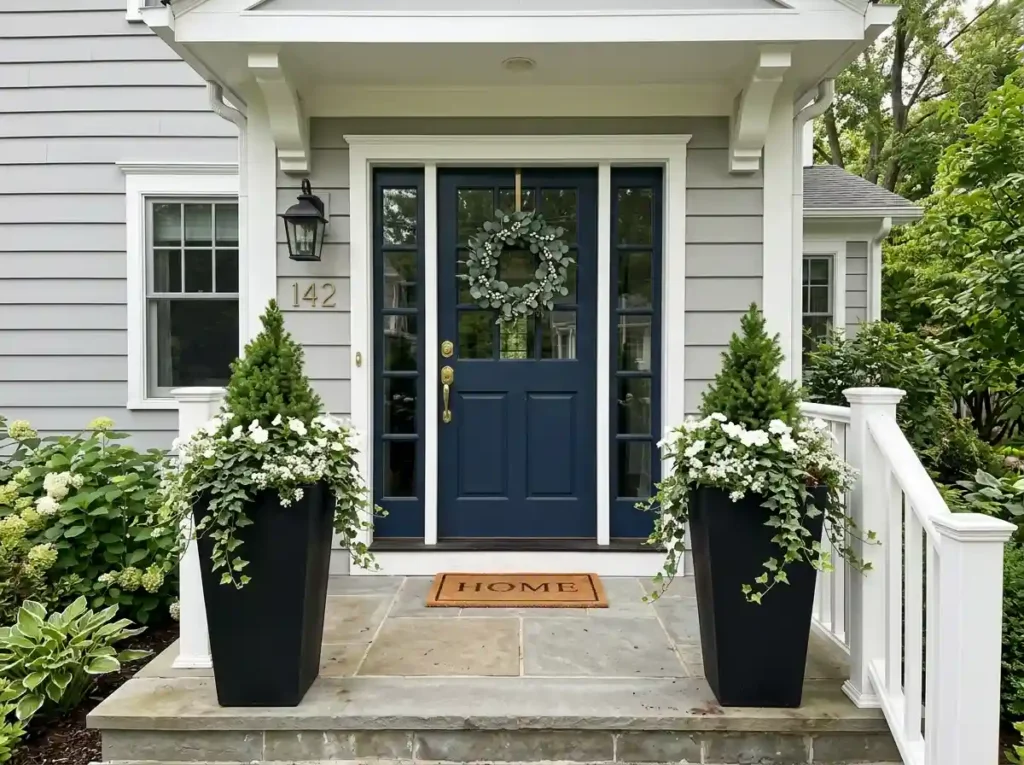
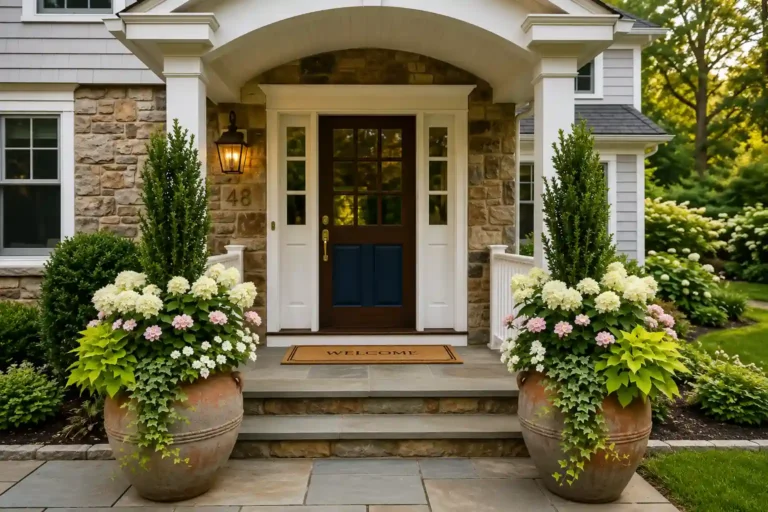
Matching planters can make your entrance look more balanced. They also add color without using much ground space.
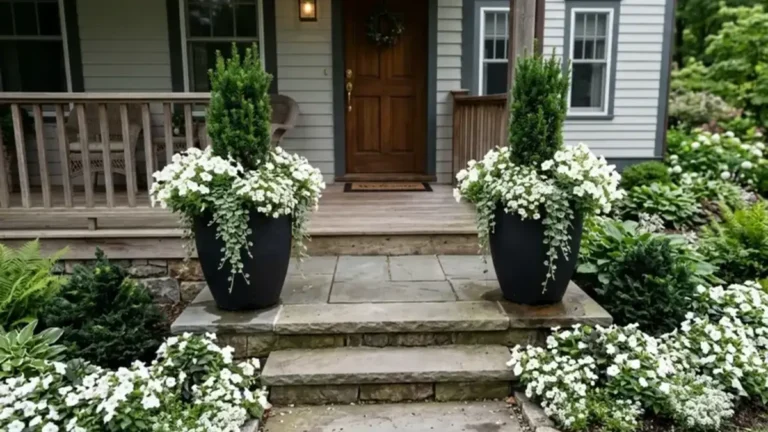
Place one planter on each side of the front door. Make sure they do not block the door, steps, railings, or walkway.
Tall, slim pots work well near narrow entrances. Wide pots may make a small porch feel cramped.
Use one compact evergreen plant in each container for year-round shape. Add seasonal flowers around the base when you want more color.
For example, you could pair dwarf shrubs with trailing greenery and white flowers. Black or dark gray pots can create a clean look against light siding.
Try to keep both planters similar. They do not need to contain the exact same flowers, but the shape and color should feel connected.
Best for: Small porches and plain entrances
Care level: Low to medium
Common mistake: Choosing pots that are too wide for the steps
Replace a Wide Flower Bed With a Narrow Border
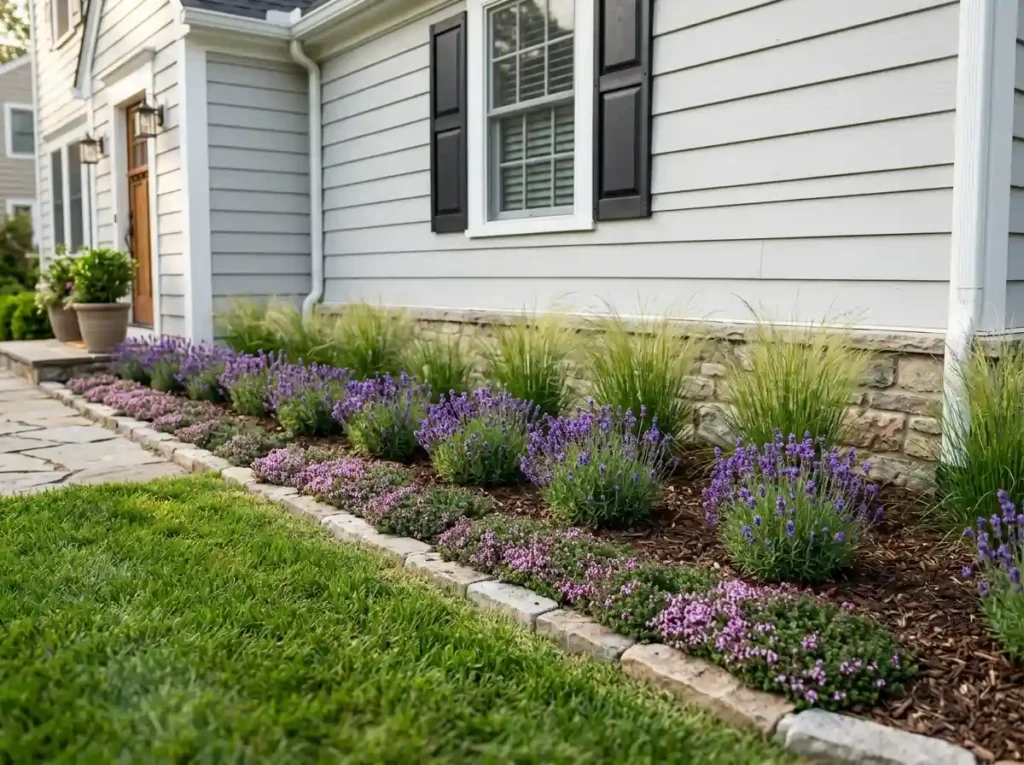
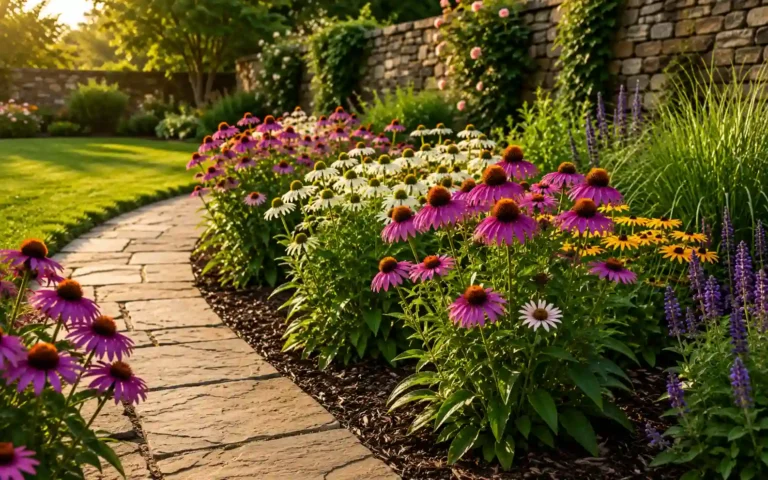
A wide flower bed can take over a small front yard. A narrow planting strip gives you color while leaving more open space.
Create a border that is about 18 to 30 inches deep. The right size will depend on the plants you choose.
Use plants that grow upward instead of spreading far across the ground. Compact grasses, small shrubs, and narrow flowering plants can work well.
Repeat the same plants instead of adding a different type every few feet. Repetition makes the bed look calm and planned.
You might use dwarf ornamental grass at the back, compact lavender in the middle, and creeping thyme along the edge.
Check how wide each plant will grow. Do not judge it by its size in the pot.
Leave space between plants and the wall. This allows airflow and gives you room for cleaning and repairs.
Best for: Shallow yards and narrow spaces beside paths
Care level: Medium
Common mistake: Filling every gap before plants reach full size
Use One Small Tree as the Main Feature
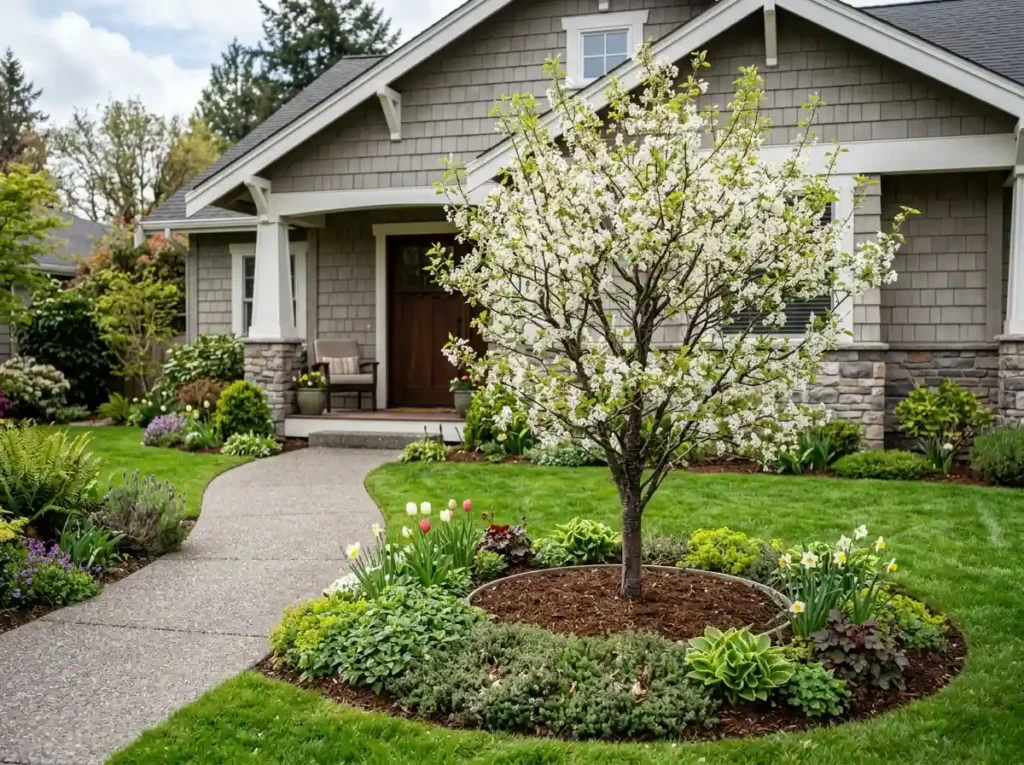
One small tree can give your yard height, shade, and a clear focal point.
The key word is small.
Choose a tree based on its full-grown height and width. Do not choose it based on how it looks at the nursery.
Trees such as serviceberry, redbud, Japanese maple, dwarf magnolia, or crape myrtle may work in some areas. Your climate, soil, sunlight, and local rules will decide which tree is best.
Check for power lines before planting. Keep enough distance from the foundation, driveway, and walkway.
Do not place a tree where its roots may lift paving later.
Keep the space under the tree simple. A low ground cover, a clean mulch ring, or a few repeated plants may be enough.
One healthy tree has more impact than several crowded shrubs.
Best for: Yards that need height or a focal point
Care level: Medium
Common mistake: Planting too close to the home
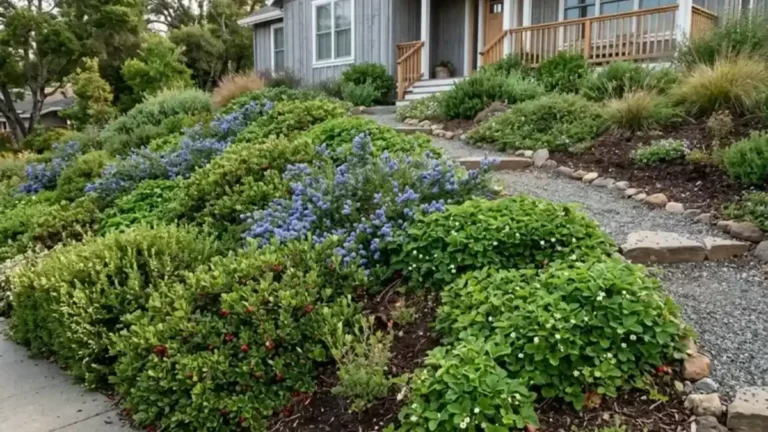
Replace Patchy Grass With Ground Cover
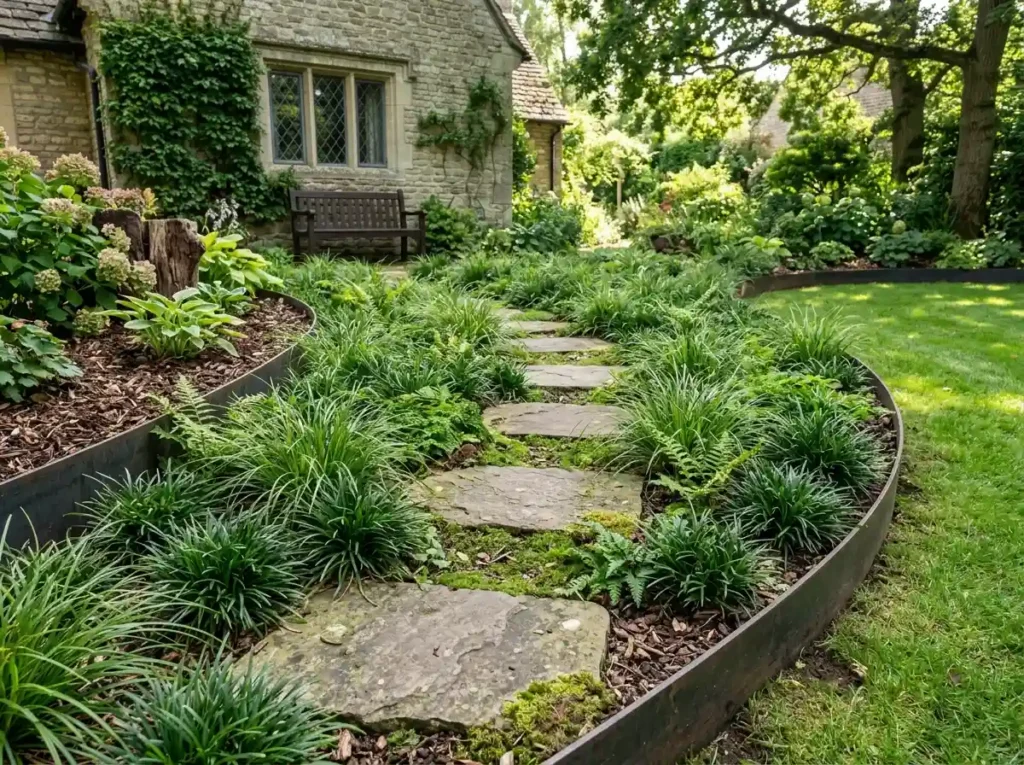
Small patches of grass can be hard to mow. They may also struggle in deep shade or dry soil.
Ground cover can fill these problem areas and make the yard look more complete.
Choose a plant based on the amount of sun and foot traffic the area receives. Some ground covers can handle light walking. Others should stay inside garden beds.
Possible choices include creeping thyme, sedge, mondo grass, ajuga, or low native plants. Check local growing advice before making a final choice.
Some plants spread fast and may become hard to control. Use edging when needed.
You can also place stepping stones through ground cover. This gives people a clear route and protects the plants.
Ground cover is not always maintenance-free. It may need trimming, weeding, or watering while it becomes established.
Still, it can be easier to manage than a thin strip of grass.
Best for: Shaded corners and awkward lawn areas
Care level: Low to medium
Common mistake: Using a fast-spreading plant without a border
Build a Layered Bed Without Making It Feel Crowded
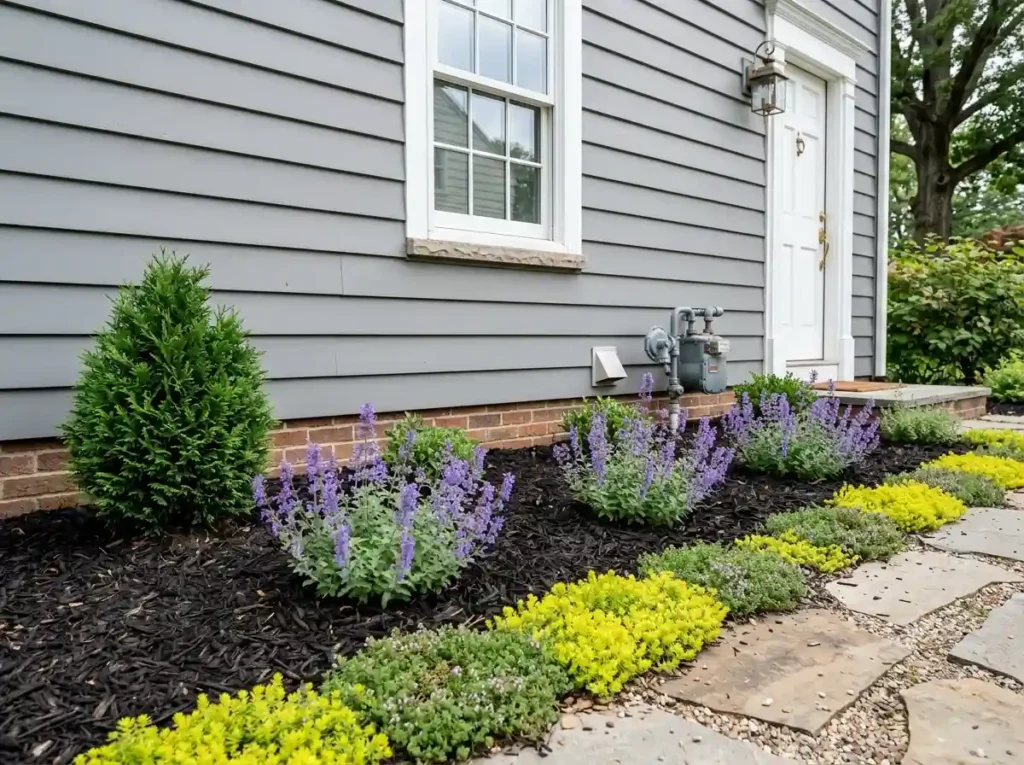
Layered planting gives a small yard depth. It also keeps the bed from looking flat.
Place the tallest plants near the house. Use medium-height plants in the middle. Add low plants along the front edge.
Keep windows, vents, meters, and doors clear.
A simple bed could include one compact evergreen, three flowering perennials, and a low ground cover along the border.
Repeat the same plant groups across the bed. This makes the design feel connected.
Avoid buying one of every flower you like. Too many colors and leaf shapes can make a compact yard feel busy.
Use two main flower colors. Add green plants to create a calm base.
A layered bed works best when each plant has enough room to reach its full size.
Best for: Plain walls and open areas below windows
Care level: Medium
Common mistake: Placing tall plants in front of windows
Widen the Walkway Near the Front Door
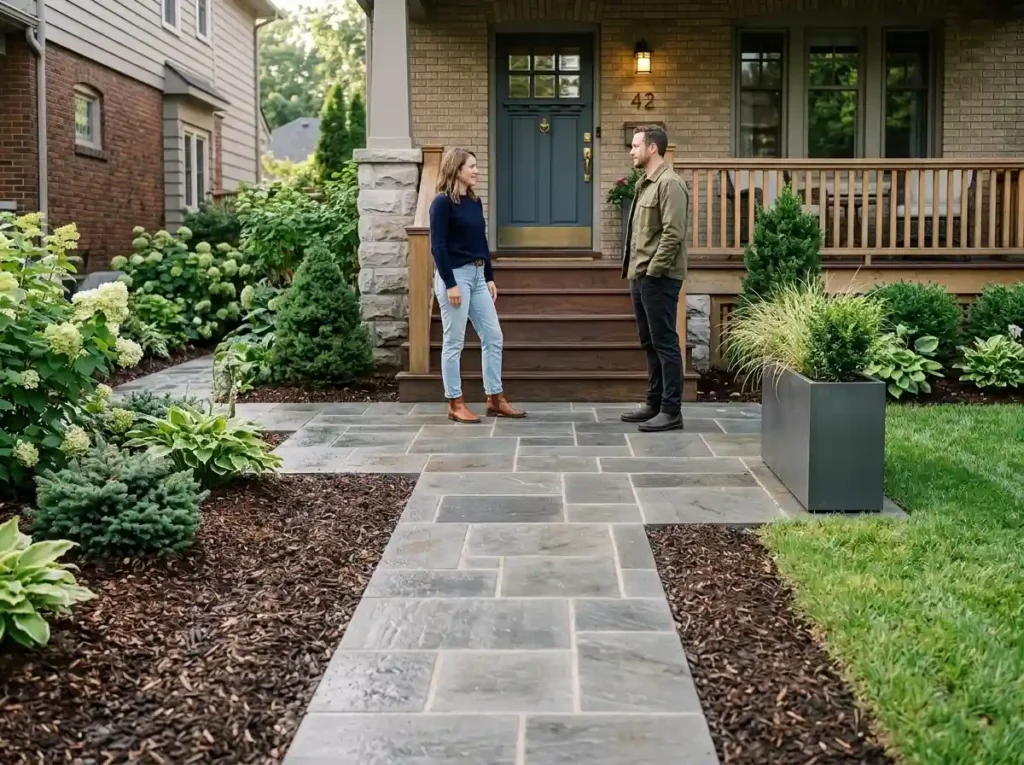
A narrow walkway can make the whole entrance feel tight.
You may not need to replace the full path. Widening the final section near the porch can create a more open welcome area.
For example, a three-foot path could open to five feet near the front steps. This gives two people more room to stand and move.
The wider area may also give you space for one planter or a small bench.
Keep plant growth away from the path. Wet leaves and branches can make the route harder to use.
Walk from the street and driveway to the front door. Notice where people step off the path or brush against plants.
Those spots may need more width or a clearer route.
A path should lead people to the door without making them guess where to go.
Best for: Narrow paths and busy entrances
Care level: Low after installation
Common mistake: Letting plants grow across the walking area
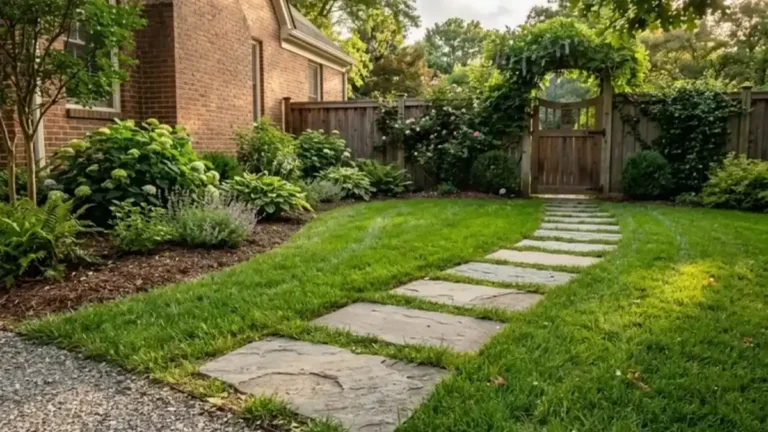
Use Large Pavers to Make the Yard Feel Less Busy
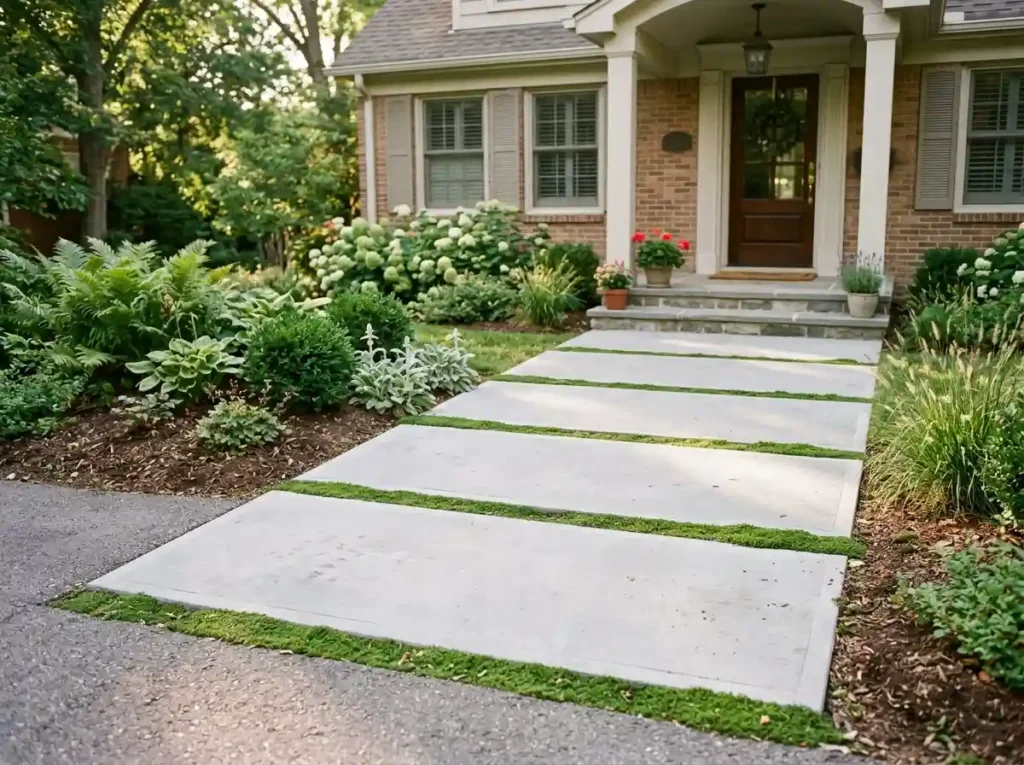
Many small stones can create too much visual detail in a compact yard.
Large pavers give the space cleaner lines. They can also make a short walkway feel wider.
Choose pavers that match the style of your home. Rectangular slabs often suit modern homes. Brick may fit a cottage or older house.
Keep the spacing even. Fill the gaps with gravel, grass, or a low plant that can handle some foot traffic.
Make sure each paver sits on a firm, level base. Loose or uneven stones can become a trip risk.
You could place four or five large slabs between the driveway and porch. This creates a useful path without covering the whole yard.
Use one paver shape throughout the area. Mixing several shapes can make a small space look messy.
Best for: Modern homes and short paths
Care level: Low
Common mistake: Placing pavers on soft, uneven soil
Add a Gentle Curve Only When You Have Enough Room
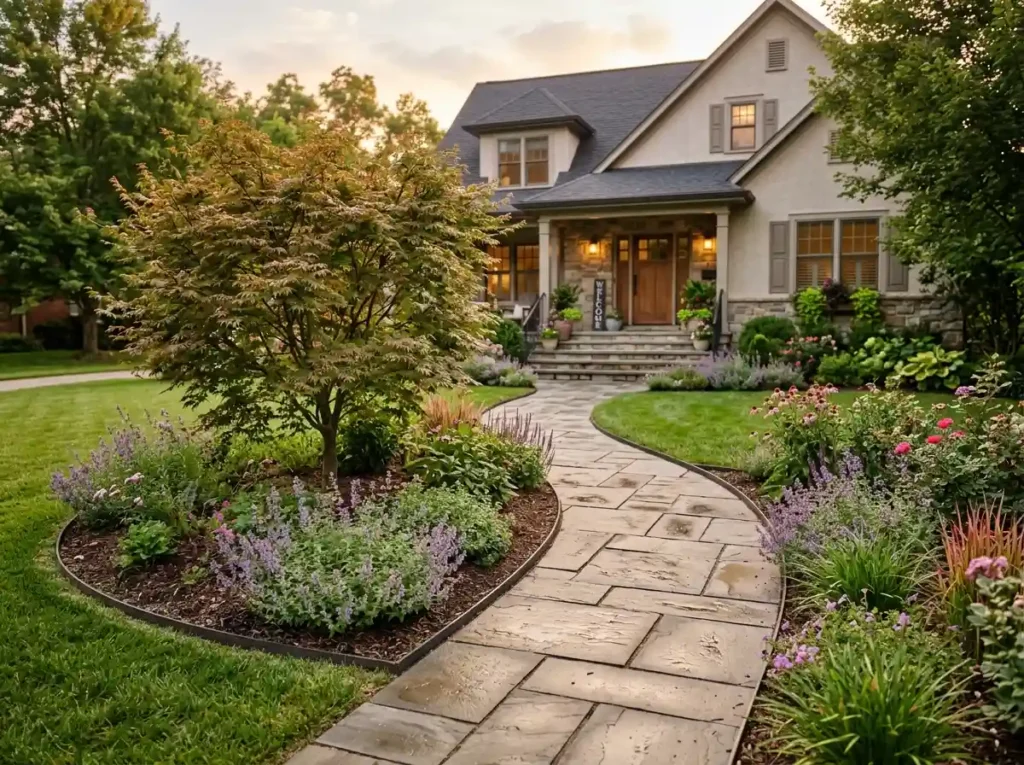
A curved walkway can make a front yard feel deeper. It can also guide attention to a tree, porch, or flower bed.
But a curve does not work in every small yard.
A strong curve may waste space in a narrow area. People may also cut across the lawn if the route feels too long.
Use a soft curve that still creates a direct path to the entrance.
Connect the curve to a clear feature. It could pass a small tree or open near the front steps.
Use edging to keep the shape neat.
Before installing the path, mark the curve with a garden hose. Walk along it several times.
This quick test will show whether the route feels natural.
Best for: Shallow yards with some width
Care level: Low
Common mistake: Adding a curve that makes the path less useful
Use Clean Edging to Create Clear Lines
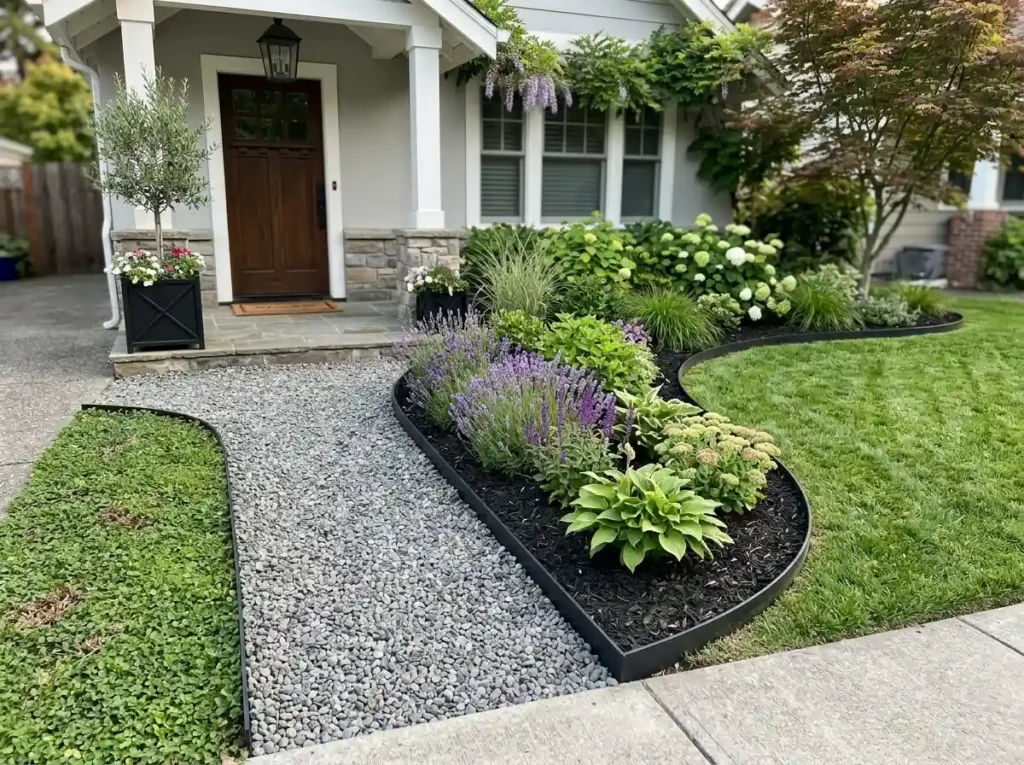
Neat edges can make a basic yard look finished.
Use edging around flower beds, paths, gravel, or ground cover. It keeps materials in place and creates a clear break between areas.
Metal edging gives a thin, modern line. Brick and stone create a stronger border. A hand-cut edge can look clean but may need regular work.
Match the edging to materials already used on the home. Brick edging may connect well with a brick porch. Dark metal may suit black lights or planters.
Avoid using one edging style around the path and a different style around every bed.
Small yards benefit from fewer material changes.
Good edging will not fix a poor layout. It will make a simple layout look cleaner.
Best for: Beds that blend into the lawn
Care level: Low to medium
Common mistake: Using too many border materials
Choose Native Plants That Suit the Exact Spot
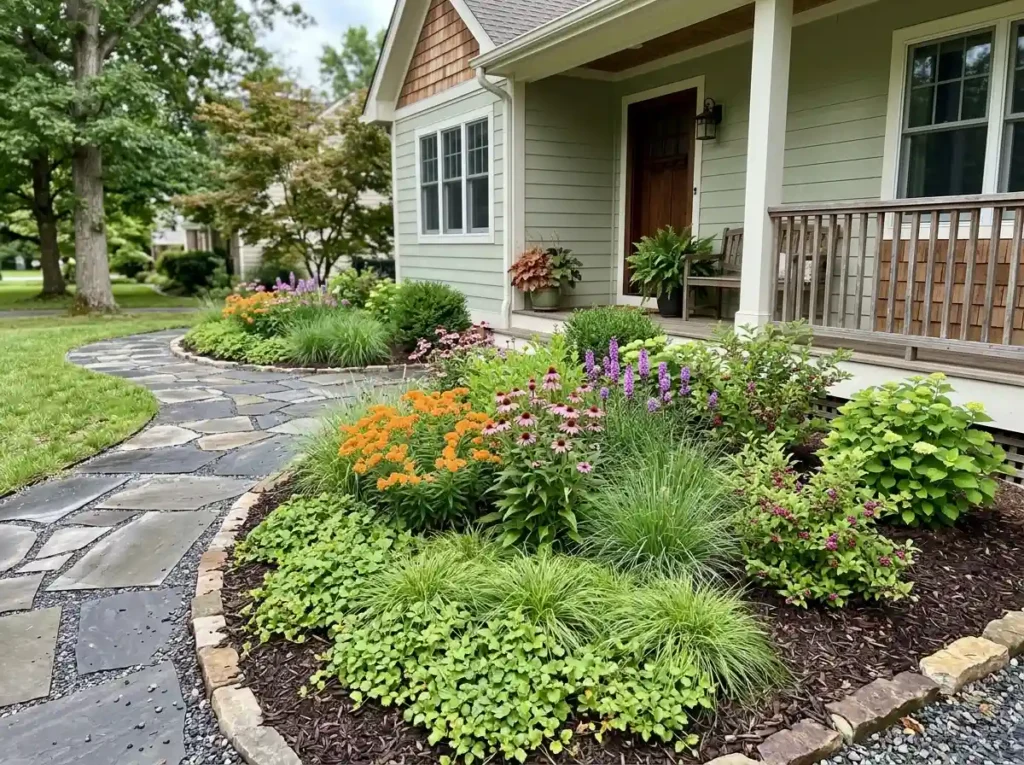
Native plants can be a smart choice for a low-maintenance small front yard.
They are often better suited to local weather and soil. They may also support local birds and insects.
Still, a native plant placed in the wrong spot can struggle.
Check the light, soil, moisture, and full-grown size before planting. A sun-loving plant will not perform well in deep shade.
Group plants that need similar amounts of water. This makes watering easier and reduces waste.
Use a local native plant guide or ask a nearby nursery for help. Pick compact options that fit the size of your bed.
Do not assume every native plant will stay neat without care. Some need cutting back, dividing, or light pruning.
The right plant in the right place will save more time than a plant chosen for looks alone.
Best for: Homeowners who want practical plant choices
Care level: Low to medium
Common mistake: Choosing a native plant that grows too large
Reduce the Lawn Without Removing All of It
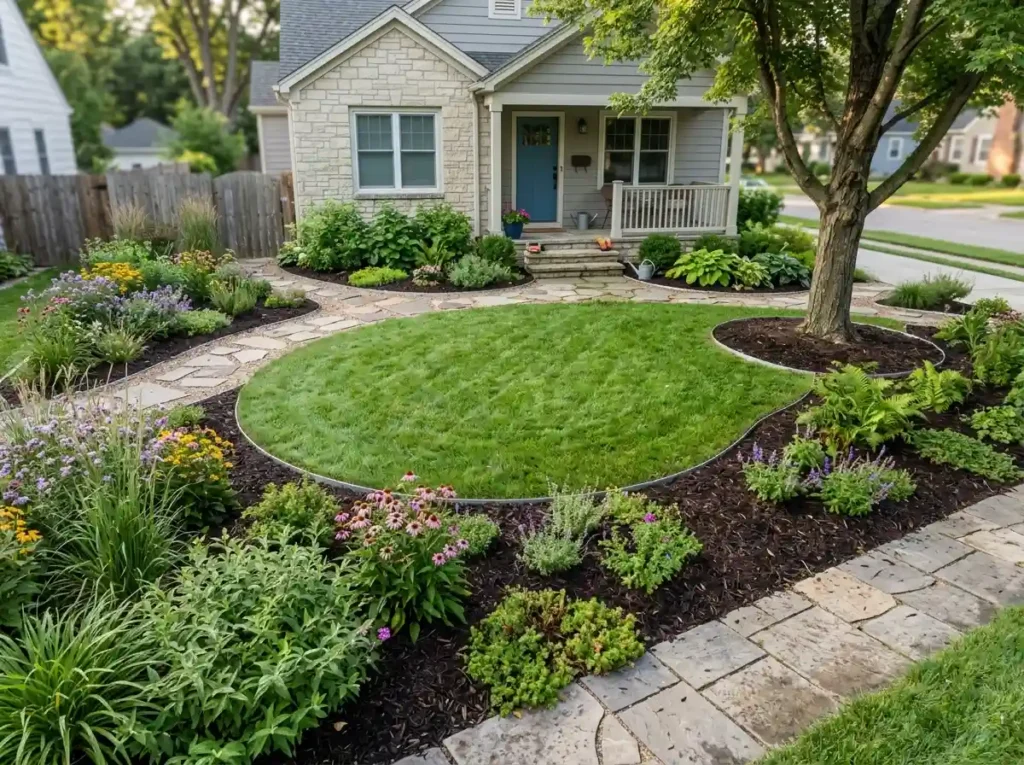
You do not have to remove every piece of grass to make yard care easier.
Start with the hardest areas to mow. These may include tight corners, thin side strips, or spaces around trees.
Replace them with ground cover, mulch, gravel, or a narrow planting bed.
Keep the remaining grass in one simple shape. A small rectangle or soft oval is easier to mow than several narrow strips.
A little open lawn can also give the yard breathing room.
For example, you could keep a small central grass area and add a slim native border around it. This creates a greener look without leaving awkward edges.
Do not replace all grass with stone unless it makes sense for your climate. Large rock areas may hold heat and collect weeds.
Use a mix of plants and open space.
Best for: Homeowners who want less mowing
Care level: Low to medium
Common mistake: Creating several tiny grass sections
Add Drip Irrigation to Beds and Pots
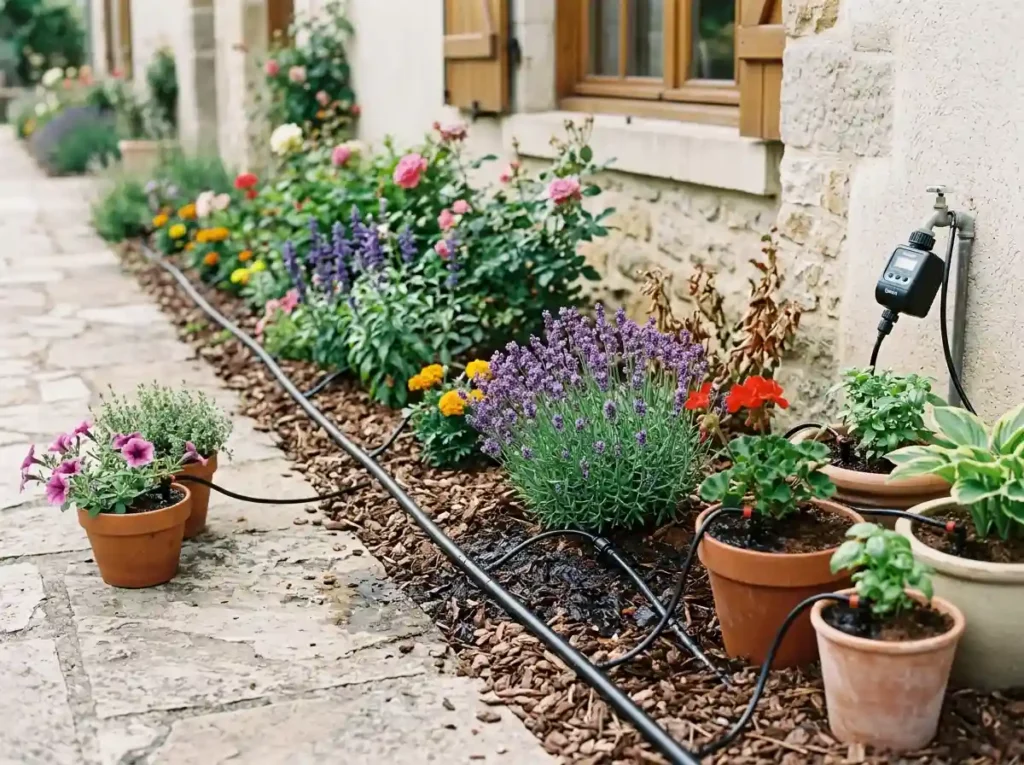
Hand-watering several pots can become tiring during hot weather.
A drip system sends water close to the roots. It can work well in narrow beds, window boxes, and grouped containers.
Connect the lines to a timer so watering stays more regular.
Place each drip point near the plant base. Check the soil after the system runs. You may need to adjust the timing or water flow.
Inspect the lines for leaks and blocked openings.
Do not keep the same schedule all year. Plants may need less water during cooler or rainy periods.
A drip system costs more at the start than a watering can. But it can save time in a yard with several containers.
Best for: Sunny beds and container groups
Care level: Low after setup
Common mistake: Running the system during rainy weather
Use Mulch Where It Solves a Real Problem
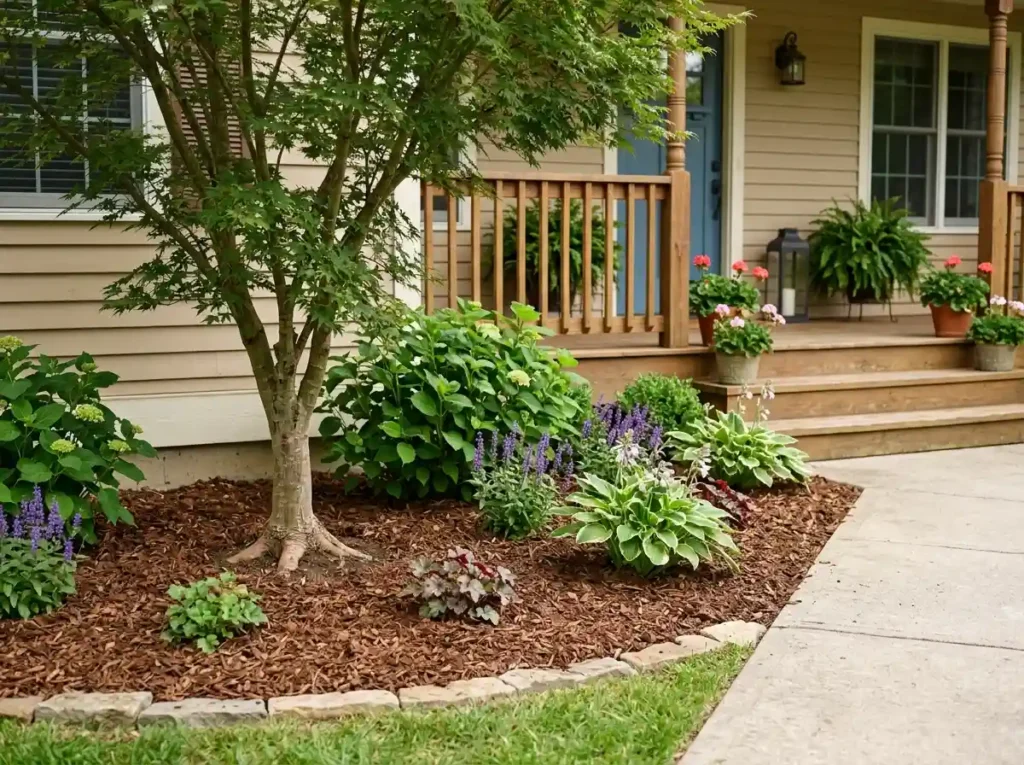
Mulch can help the soil hold moisture. It can also reduce weeds and give a bed a finished look.
Use a layer of about two to three inches in planted areas.
Keep mulch away from tree trunks, plant stems, siding, and wood surfaces. Piling it against a trunk can trap moisture and cause problems.
You do not need to add a thick new layer every year. Check what is already there first.
Bark mulch fits many traditional yards. Gravel may suit dry climates or modern homes. Living ground cover can create a softer look.
Each choice has limits. Bark breaks down. Gravel can hold heat. Ground cover may spread outside the bed.
Pick the option that fits the site and the amount of care you can provide.
Best for: Beds with dry soil or weed problems
Care level: Low
Common mistake: Piling mulch around tree trunks
Add a Trellis Without Losing Walking Space
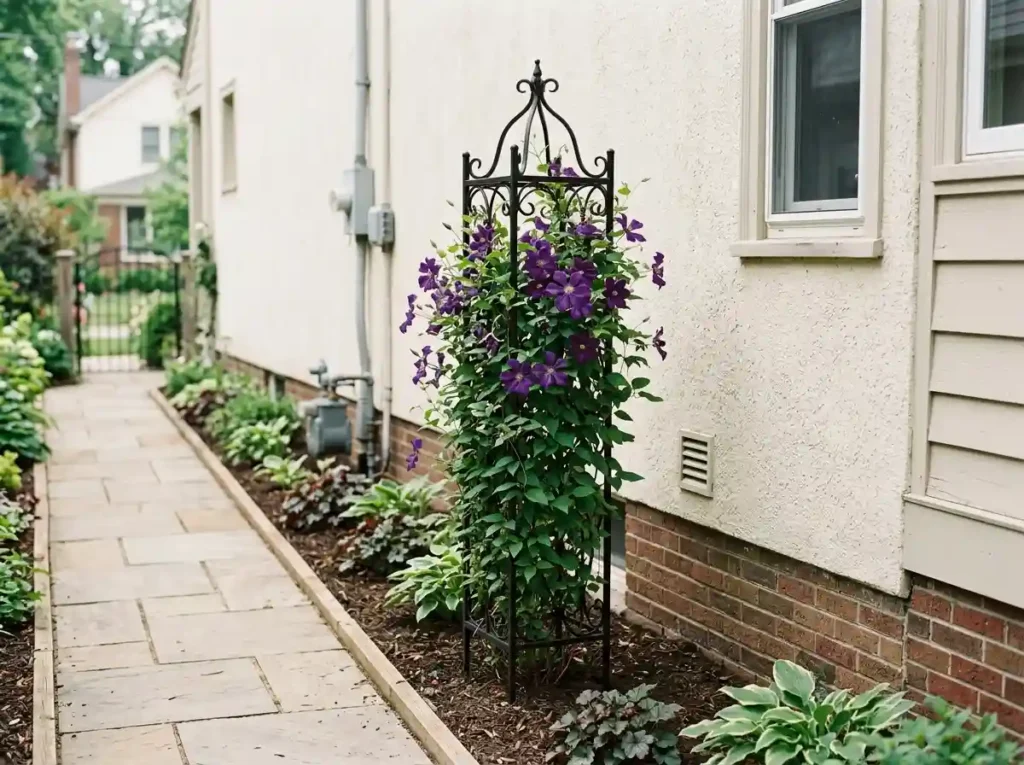
A trellis can add height where the ground area is limited.
Place one against a blank wall, beside a porch, or near a small seating area.
Leave space between the trellis and siding so air can move. This also gives you access for cleaning and repairs.
Choose a climbing plant suited to your climate. Clematis, climbing hydrangea, or star jasmine may work in some regions.
Check how the plant attaches itself. Some vines may damage paint, wood, or masonry if left without support.
Keep the trellis clear of windows, vents, meters, and outdoor wiring.
One vertical feature is usually enough for a compact front yard.
Best for: Blank walls and narrow planting beds
Care level: Medium
Common mistake: Letting vines attach directly to the house
Use Window Boxes for Color Above Ground Level
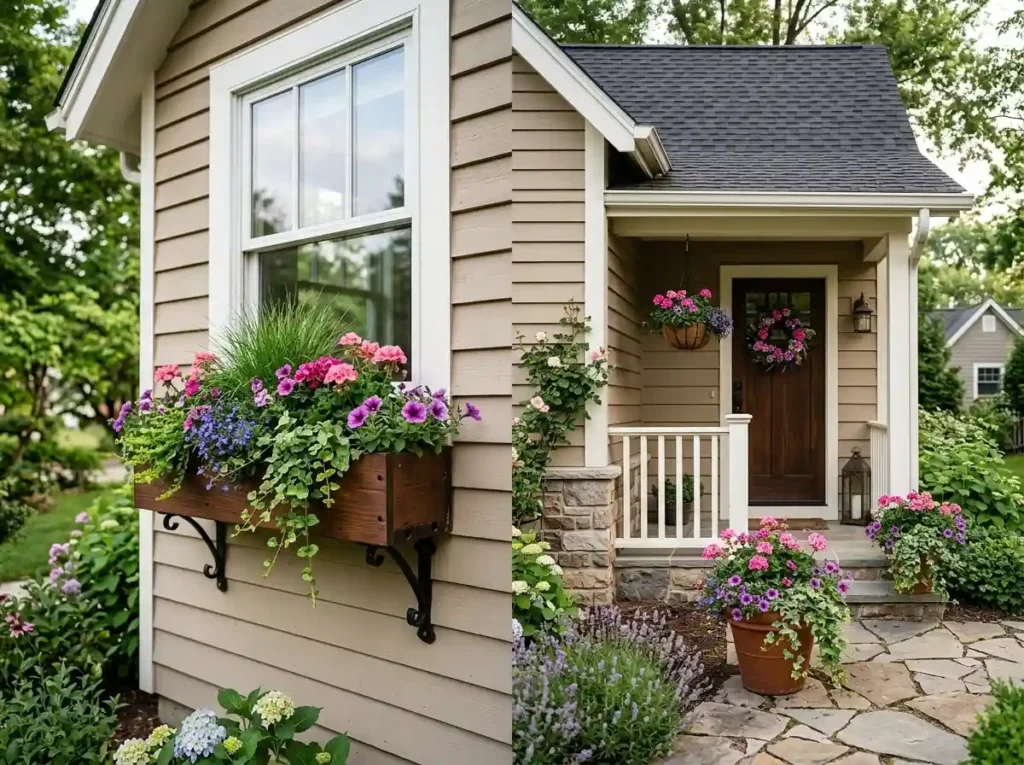
Window boxes give you room for flowers without taking space from the lawn or path.
Choose a box that fits the width of the window. A very short box may look lost. A box that is too long can feel heavy.
Make sure the brackets can hold the full weight of wet soil and plants.
Each box needs drainage holes. Water should not sit around the roots.
Use a simple planting mix. Add one upright plant, one full plant, and one trailing plant.
For example, you could pair a small grass with compact flowers and trailing greenery.
Window boxes may dry out fast during hot weather. Check the soil often.
Keep the flower colors close to the colors used near your front door.
Best for: Small homes with little planting space
Care level: Medium to high
Common mistake: Forgetting how quickly boxes can dry out
Create Privacy With a Short Plant Screen
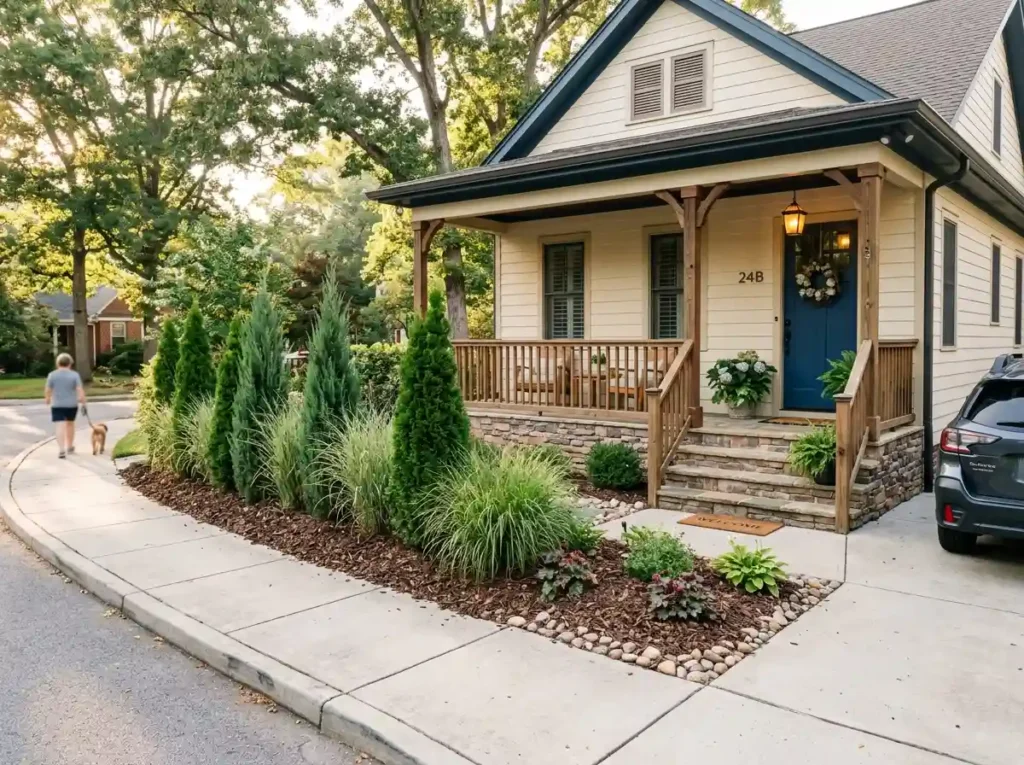
You may want more privacy near a porch or front window. A full fence is not always needed.
Use a short row of narrow shrubs, grasses, or upright evergreens.
Place the screen where privacy matters most. Do not block the whole front of the house.
Keep street views and driveway sightlines open. This is important near corners and sidewalks.
Check the full-grown width of each plant. A shrub that spreads four feet may be too large for a narrow bed.
A screen around three to five feet high may be enough for a small porch. The right height will depend on the home and local rules.
Keep the plants trimmed without forcing them into hard shapes.
Best for: Small porches and street-facing windows
Care level: Medium
Common mistake: Blocking the entrance and house number
Group Containers Instead of Spreading Them Everywhere
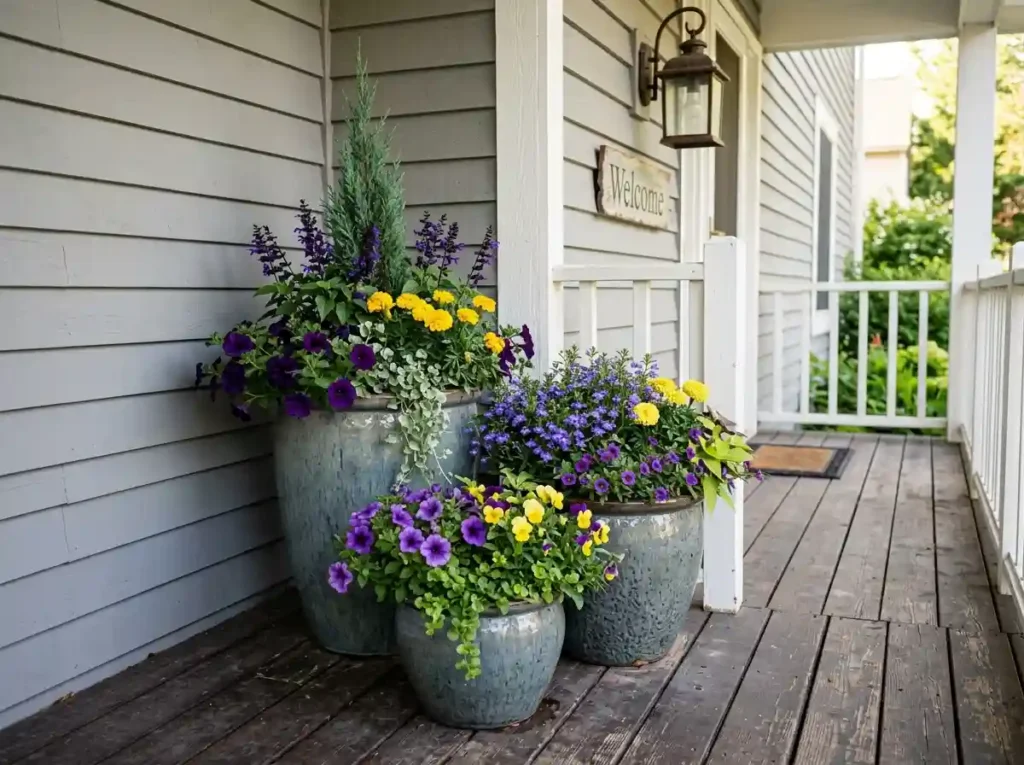
Several pots placed around the yard can look random.
A group of three creates a stronger feature and is easier to manage.
Use one tall pot, one medium pot, and one low bowl. Keep the finishes related.
Place the largest pot at the back. Set the smaller pots slightly in front.
Use similar flower colors in each container. The plants can be different, but they should look like part of the same group.
Place the containers near the porch, steps, or a blank corner.
Leave enough room for people to walk past them.
Grouped pots are useful for renters because they can be moved. They also let you test colors before adding permanent plants.
Best for: Renters and small porches
Care level: Medium
Common mistake: Using too many unrelated pot styles
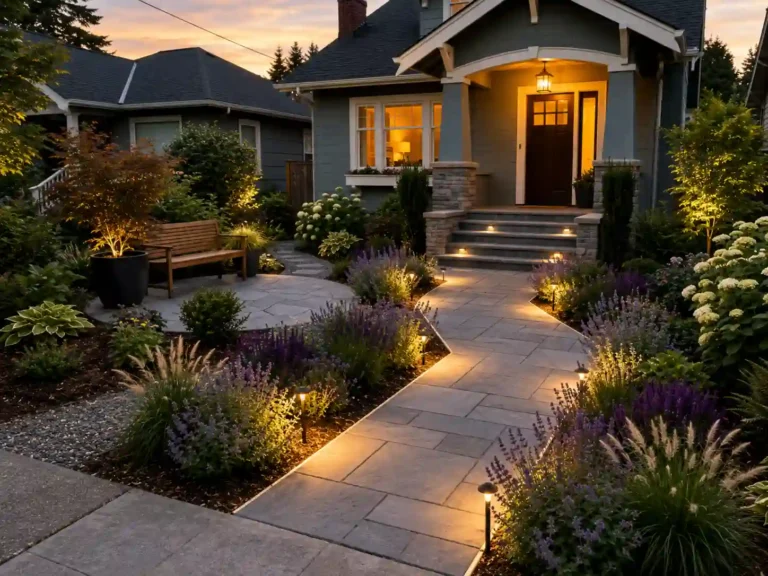
Light One Main Feature Instead of the Whole Yard
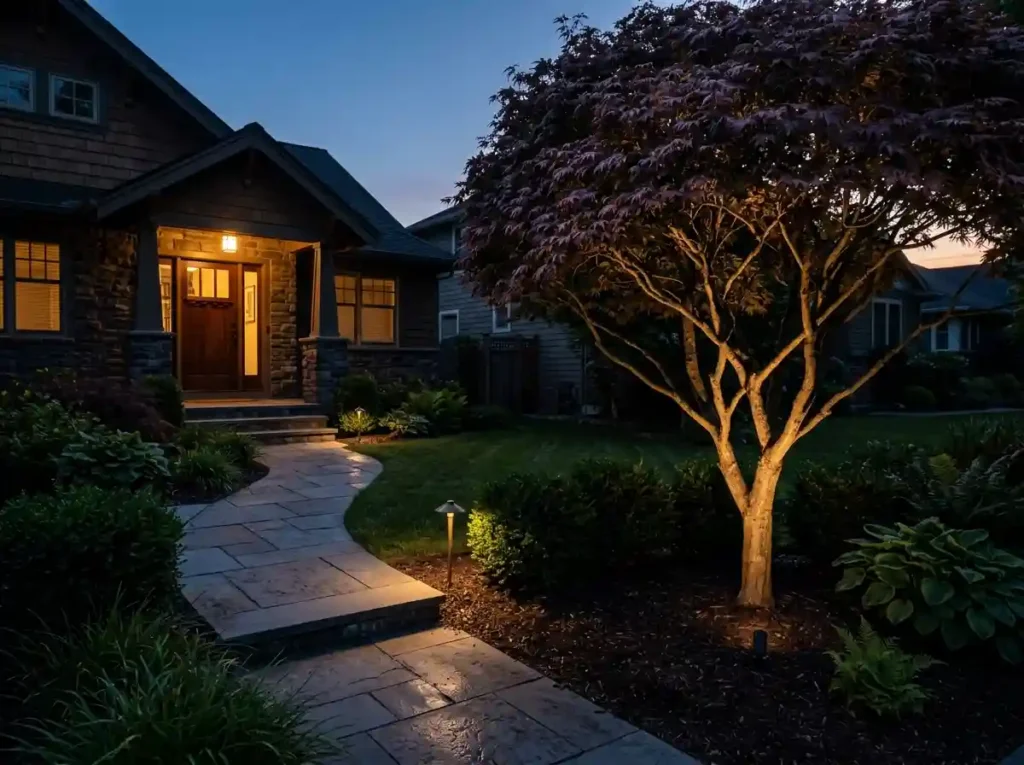
Outdoor lighting can make your entrance safer and more welcoming.
You do not need a row of lights around every edge.
Choose one main feature to light. This could be the path, house number, front door, or small tree.
Use soft, warm light. Bright light may create glare and bother neighbors.
Place path lights where they mark changes in direction or height. Do not space them so closely that the yard looks like a runway.
Solar lights can be useful in sunny spots. They may not perform well under deep shade.
Test the view from the street and inside the house before adding more fixtures.
Best for: Dark paths and hidden house numbers
Care level: Low
Common mistake: Adding too many bright lights
Turn the Mailbox Area Into a Small Garden
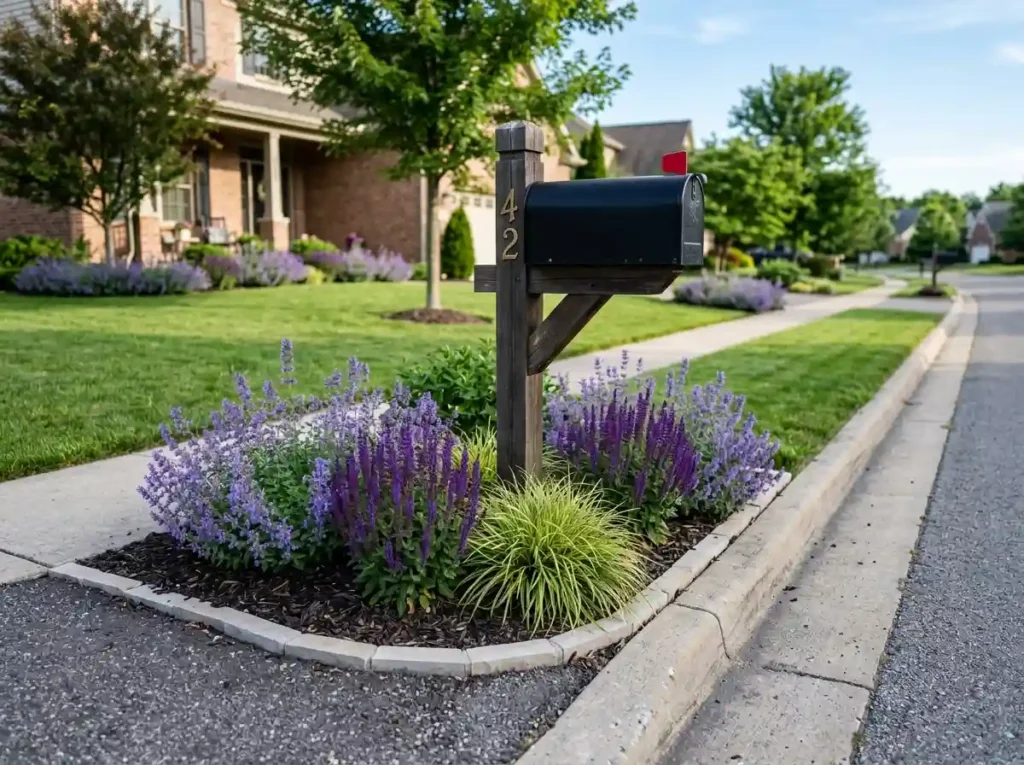
A plain mailbox can become a simple curb appeal feature.
Create a small bed around the post. Keep the shape neat and easy to maintain.
Choose low plants that do not block the mailbox, street view, or access for delivery.
Plants near the road may face heat, dust, salt, or dry soil. Select tough options that fit local conditions.
Repeat one or two plants used closer to the house. This connects the mailbox garden with the rest of the yard.
Use edging to stop grass from growing into the bed.
Keep the area clear enough for repairs and regular access.
Best for: Homes with street-side mailboxes
Care level: Low to medium
Common mistake: Planting tall flowers in front of the box
Repeat the Colors Used on Your Home
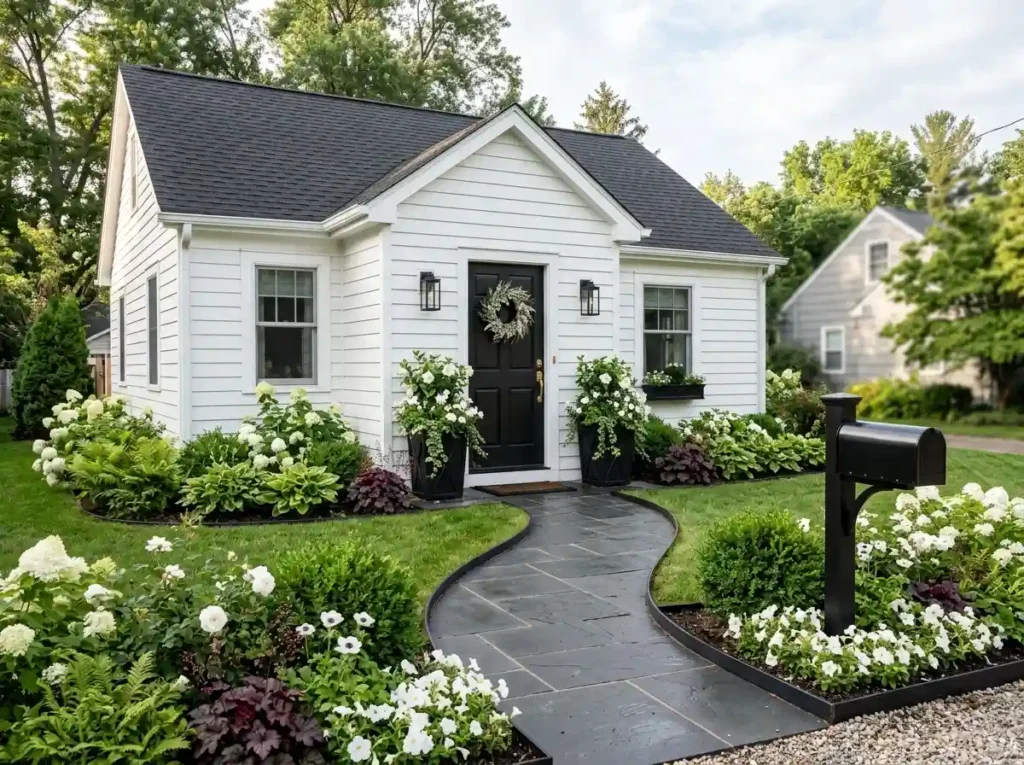
Your landscape will feel more connected when its colors match the house.
Look at the front door, siding, brick, trim, roof, and porch materials.
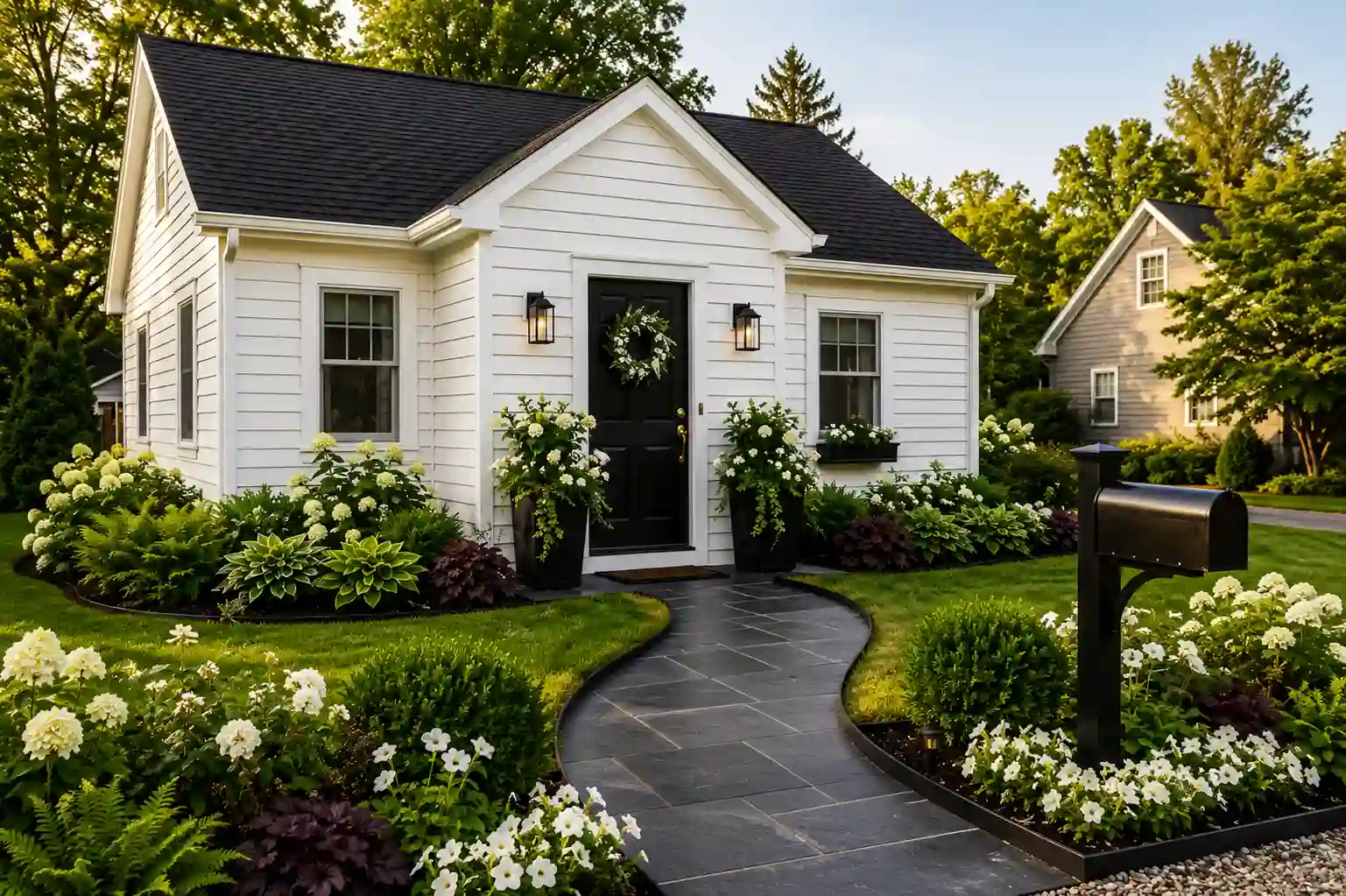
A white home with a black door could use black planters, white flowers, green shrubs, and dark edging.
A warm brick home may work well with soft green leaves, cream flowers, and muted red accents.
A gray home may suit dark planters, white flowers, and clean green plants.
Limit flowers to two main colors. You can add small seasonal accents, but keep the base simple.
Repeat one material in two or three places. For example, use the same brick around the mailbox bed and front path.
Color repetition can make low-cost features look planned.
Best for: Yards that feel disconnected from the house
Care level: Low
Common mistake: Adding too many bright colors
Which Ideas Fit Your Small Front Yard?
You do not need to use all these landscaping ideas for small houses.
Choose options based on your yard shape, sunlight, climate, budget, and available time.
| Your main concern | Ideas that may help |
| Very narrow yard | Trellis, narrow planting border, large pavers |
| Shady front yard | Shade ground cover, containers, small tree |
| Hot and dry weather | Native plants, drip irrigation, less lawn |
| Small budget | Edging, entrance pots, mailbox garden |
| Little time for yard work | Simple beds, mulch, compact shrubs |
| More privacy needed | Short plant screen, trellis, grouped pots |
| Rental home | Moveable containers, window boxes, solar lights |
Start with permanent features such as paths, bed shapes, and large plants. Add pots, flowers, and lighting later.
The best front yard landscaping ideas for small homes depend on how you use the space. A design that looks good in a photo may not suit your soil, weather, or daily routine.
A Simple 6-Step Plan to Get Started
- Measure the yard and entrance.
- Mark sunny, shady, wet, and dry areas.
- Choose one main focal point.
- Pick three ideas that work together.
- Check the full-grown size of every plant.
- Complete one area before starting another.
Taking a photo can also help. Mark the areas that feel empty, crowded, dark, or hard to maintain.
Start with the problem that bothers you most.
Start With One Small Change
A small front yard does not need many plants or expensive materials.
Clear paths, repeated colors, compact plants, and one main feature can make the area feel larger. They can also make the entrance easier to use.
Plan before buying plants. Check full-grown sizes. Keep walking areas open. Use height where ground space is limited.
Most of all, do not try to finish everything at once.
Take a photo of your yard and choose one area to improve first. It could be the front door, the walkway, or a narrow bed.
These front yard landscaping ideas for small homes can help you create better curb appeal without making your limited space feel crowded.