19 Sloped Front Yard Landscaping Ideas for a Safer, Better-Looking Slope
A sloped front yard can send water, mulch, and loose soil downhill after every hard rain. Grass may be difficult to mow. Walking to the front door may feel unsafe. You may also have bare patches that never seem to stay fixed.
The good news is that you do not have to fight the slope.
The right design can slow runoff, hold soil in place, reduce yard work, and improve curb appeal. Some solutions are simple, such as planting ground covers. Others may involve walls, steps, or drainage work.
These sloped front yard landscaping ideas cover both small updates and larger projects. You will learn how to manage water, replace hard-to-mow grass, create safer paths, and make the slope look like part of the home.
Start with the biggest problem in your yard. That may be water, loose soil, poor access, or too much mowing. Once you fix that issue, the design choices become much easier.
How to Plan a Sloped Front Yard Before You Start Digging
Do not start by buying plants.
First, watch what happens when it rains. Look for water running across the yard, soil collecting near the sidewalk, and wet spots at the bottom of the slope. Mark any channels where water has cut through the ground.
You should also measure the slope. This helps you decide whether planting alone may work or whether you need steps, terraces, or a retaining wall.
Use this simple formula:
Slope percentage = rise ÷ run × 100
For example, your yard may rise 3 feet over a horizontal distance of 12 feet.
Three divided by 12 equals 0.25. Multiply that by 100, and you have a 25% slope.
You do not need expensive survey tools for an early plan. Stakes, string, a tape measure, and a level can give you a useful estimate.
Next, split the yard into three zones.
The top of the slope often dries out faster. It may need plants that can handle less water.
The middle needs good soil coverage. This is often where runoff begins to pick up speed.
The bottom may stay wetter. It may need plants that can handle short periods of extra moisture.
Make a basic map of the yard. Mark these areas:
- Bare soil
- Standing water
- Deep washout lines
- Difficult mowing spots
- Existing trees
- Utility areas
- The route to the front door
- Driveway sightlines
Check local rules before building walls, changing drainage, or adding major steps. Some projects may need permits or professional plans.
Call your local utility-marking service before digging. A nice yard is not worth hitting a buried cable or pipe.
19 Sloped Front Yard Landscaping Ideas That Work
The best idea depends on what your slope is doing now.
If soil is washing away, start with erosion control. If mowing is the problem, replace grass. If the front door is hard to reach, deal with access before adding decorative features.
Here are 19 practical ways to improve a sloped front yard.
Build Terraced Garden Beds Across the Slope
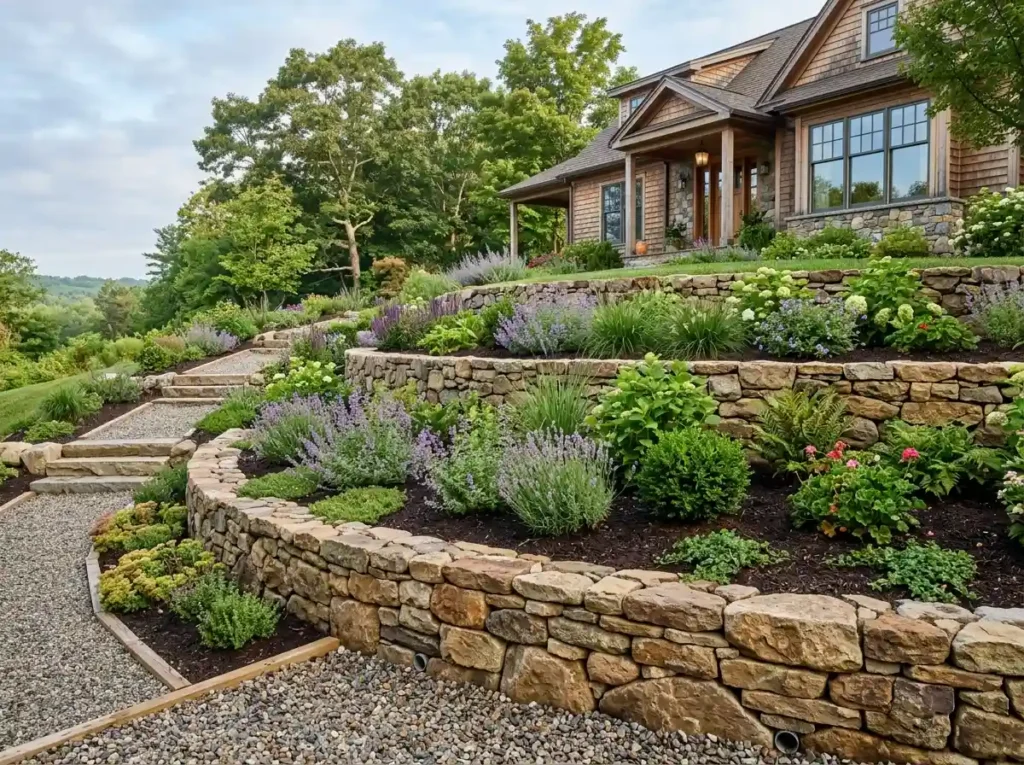
Terraced garden beds turn one long slope into two or more flatter levels. Each level can slow water and give plants a more stable place to grow.
This idea works well when rain moves quickly down the hill. It also makes planting areas easier to reach.
Use two or three wide terraces when space allows. Many narrow levels can make a small front yard look crowded.
You can build low terrace walls with natural stone, concrete blocks, brick, or other materials that match the home. Repeat the same material throughout the yard for a cleaner look.
Leave enough planting depth behind each wall. Plants need room for roots, soil, and water.
Best for: Medium or wide slopes with fast runoff.
Keep in mind: Walls must have proper drainage. A wall that traps water may lean, crack, or fail.
Add a Low Retaining Wall Near the Sidewalk
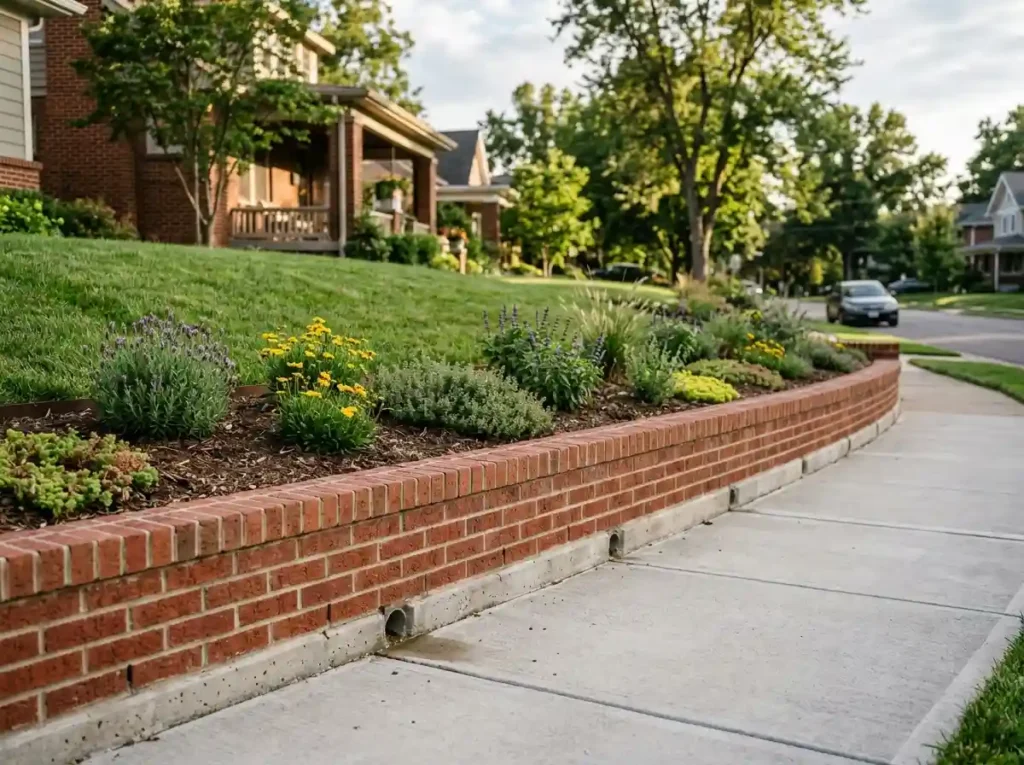
A low retaining wall can stop soil from spilling onto the sidewalk. It also creates a clear edge between the public walkway and your planting bed.
This works well when the bottom of the slope keeps washing out. The wall can form a level strip for flowers, low shrubs, or ground covers.
Choose a material that fits the home. Brick may suit a traditional house. Natural stone can soften a cottage-style yard. Clean concrete blocks may work better with a modern home.
Keep plants near the road or sidewalk low. Tall growth can block views for drivers and people leaving the driveway.
Best for: Front yards where soil collects near the sidewalk.
Keep in mind: The wall needs a stable base and a way for water to escape from behind it.
Use Large Boulders as Natural Slope Anchors
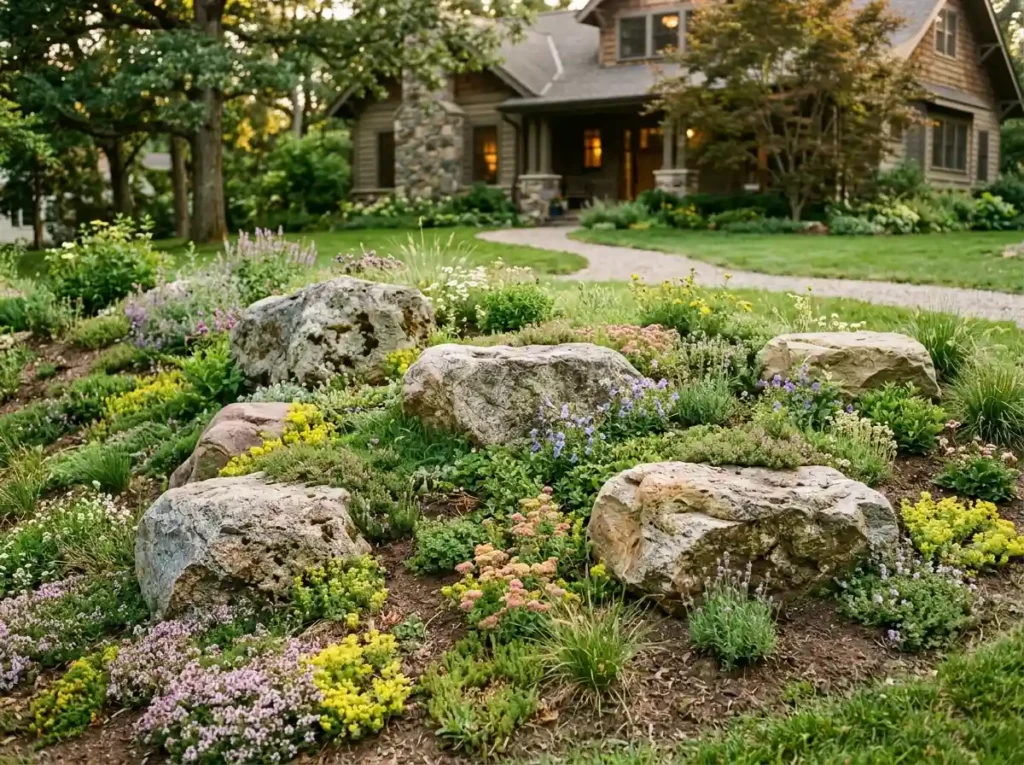
Large boulders can slow runoff and break up a plain slope. They also give the yard a natural look without creating a full wall.
Set part of each boulder into the soil. A rock placed on top of loose ground may shift over time.
Group rocks in odd numbers, such as three or five. Mix their sizes instead of using identical pieces. This makes the layout feel less forced.
Plant spreading ground covers, small grasses, or low flowers around the boulders. The plants will soften the hard edges.
Do not line the rocks in a perfect row. A gentle, staggered pattern usually looks more natural.
Best for: Informal landscapes and slopes with small washout areas.
Keep in mind: Heavy rocks need safe placement. Large pieces may require lifting equipment.
Create a Dry Creek Bed for Heavy Rainwater
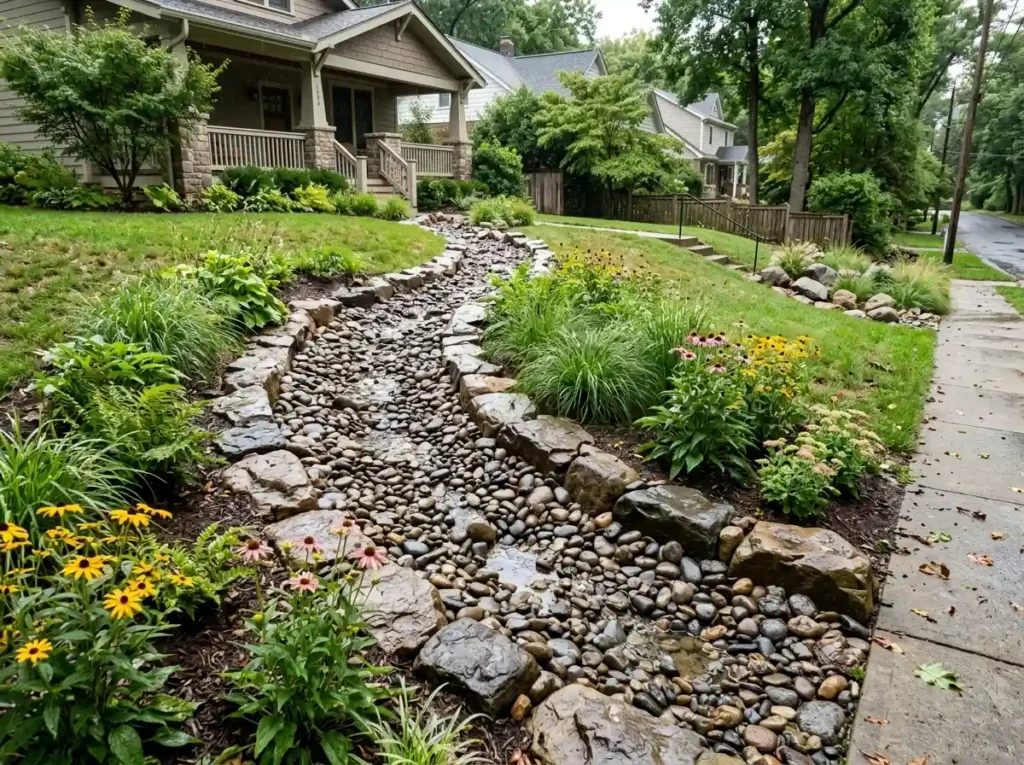
A dry creek bed gives rainwater a clear path through the yard. It looks like a natural stream when dry and carries water during storms.
Follow the route water already wants to take. Do not force the channel across the slope for looks alone.
Use a mix of rock sizes. Small river stones can cover the center. Larger stones can hold the edges and make the creek bed look more natural.
Add gentle curves where space allows. A straight line may look like a drainage ditch.
Plant moisture-tolerant grasses, sedges, or native flowers near the lower end. Keep plants out of the main water path.
The water must end in a safe place. It should not flow onto a neighbor’s yard, a busy sidewalk, or an area near the foundation.
Best for: Yards with clear runoff channels after rain.
Keep in mind: A dry creek bed helps guide surface water, but it may not fix every drainage problem.
Build a Shallow Swale or Rain Garden at the Base
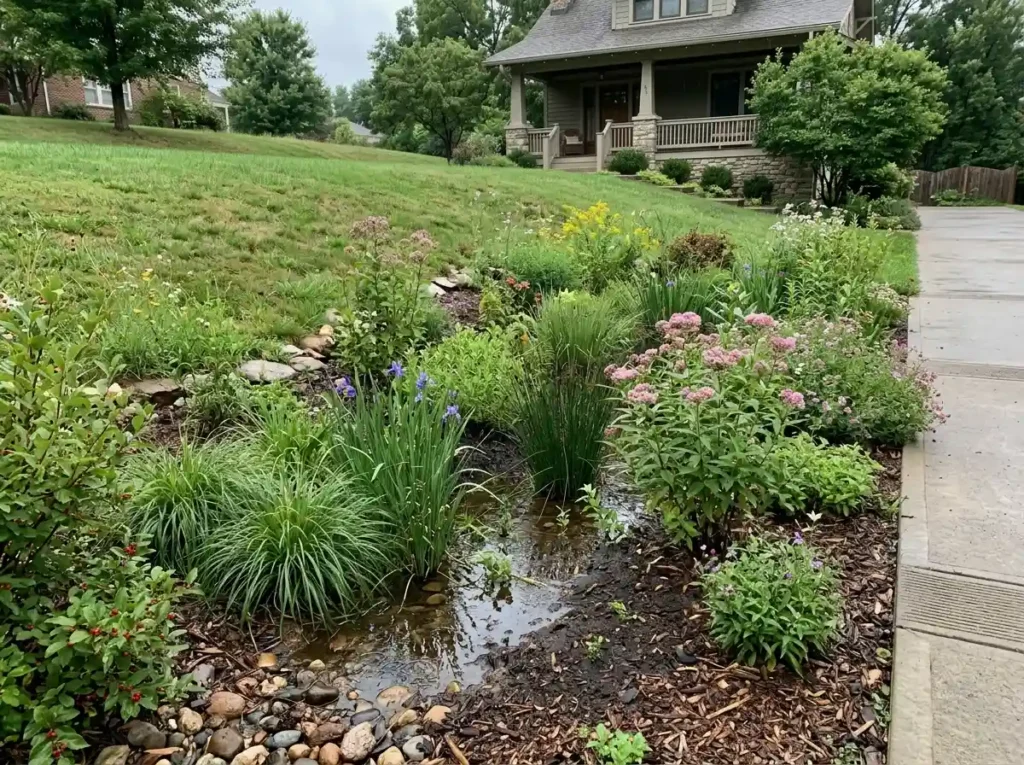
A swale is a wide, shallow channel that slows and redirects water. A rain garden is a planted area that holds runoff for a short time while it soaks into the soil.
These features work well near the bottom of a slope. They can catch water before it reaches a sidewalk, driveway, or low corner.
The area should not stay wet all the time. A rain garden is not a pond.
Choose plants that can handle both wet and dry periods. Local sedges, rushes, native flowers, and moisture-tolerant shrubs may work well.
The exact plants depend on your climate, soil, and sunlight.
Best for: Lower areas where water collects after storms.
Keep in mind: Water should drain away within a reasonable period. Long-lasting standing water may point to a larger issue.
Plant Deep-Rooted Native Ground Covers
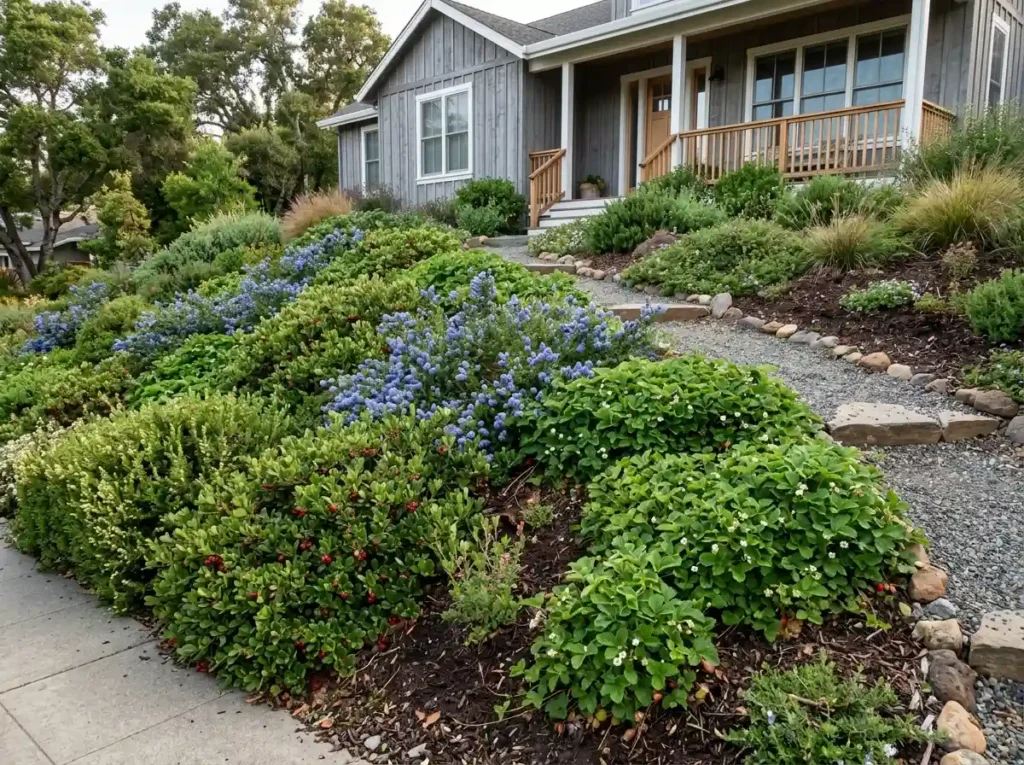
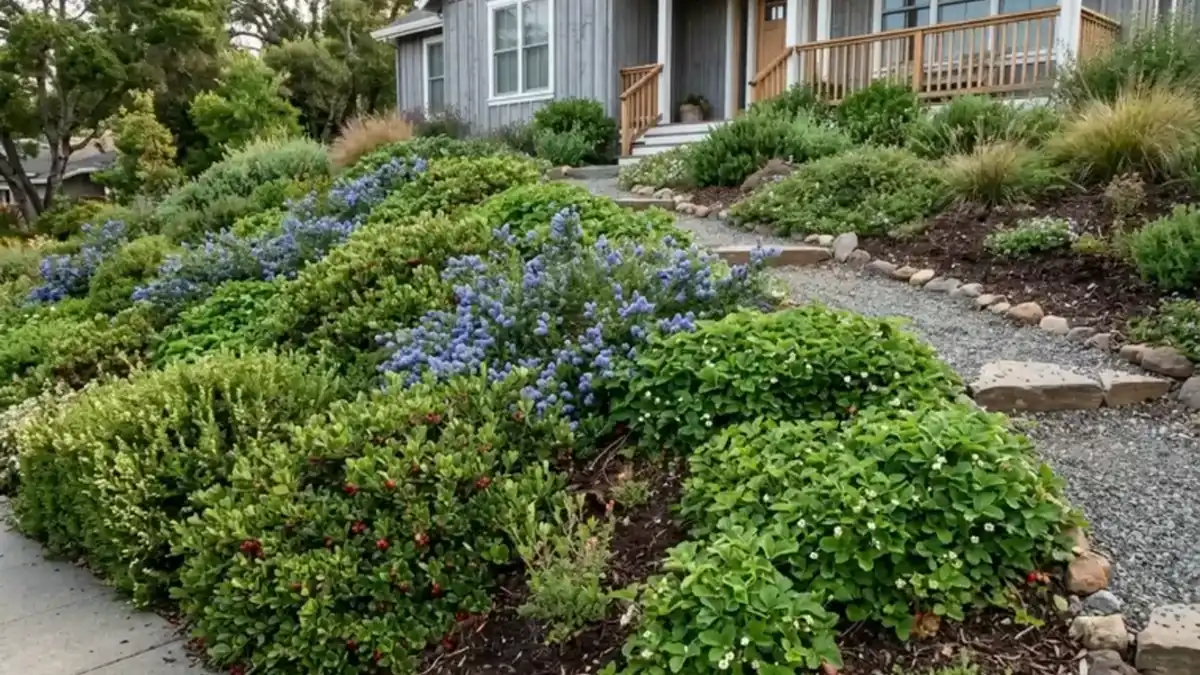
Ground covers protect bare soil and reduce the need for mowing. Their stems and roots help shield the surface from hard rain.
Choose plants that spread well without becoming invasive. Local native plant groups or extension offices can help you find suitable options.
Check how much sunlight the slope gets. A plant that works in full sun may fail under large trees.
Also check the mature spread. Small nursery plants can cover a large area after a few growing seasons.
Plant in groups rather than placing one plant here and another far away. Closer coverage helps reduce open soil between plants.
Best for: Slopes that are hard or unsafe to mow.
Keep in mind: Ground covers still need weeding and watering while they become established.
Layer Shrubs and Perennials From Top to Bottom
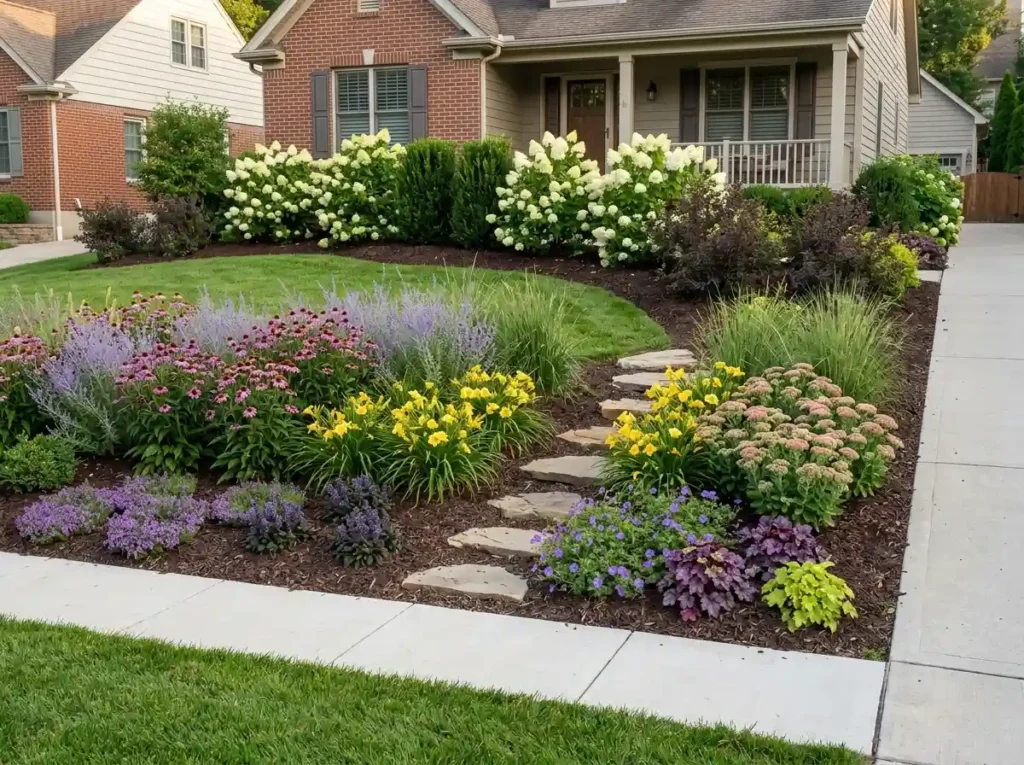
A layered planting plan helps every plant stay visible.
Place taller shrubs near the upper part of the slope. Use medium plants through the middle. Keep low flowers and ground covers near the sidewalk or street.
This creates depth. It also stops tall plants from hiding everything behind them.
Repeat a few plant types across the yard. Too many unrelated plants can make a small slope look messy.
Think about bloom times. Mix spring, summer, and fall interest so the bed does not look empty after one short flowering period.
Leave enough space for mature growth. Crowded shrubs may block paths, windows, and driveway views later.
Best for: Homeowners who want color without losing a clear structure.
Keep in mind: Plan for the mature size, not the size of the plant at the store.
Plant Ornamental Grasses in Wide Drifts
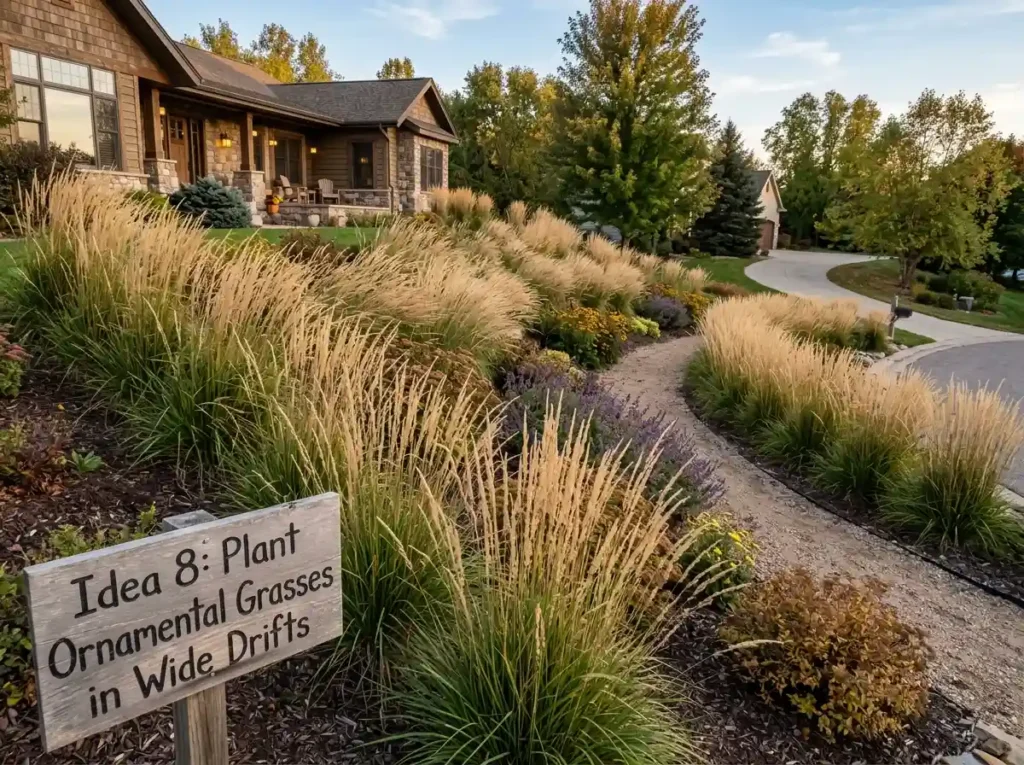
Ornamental grasses can cover large areas without the weekly work of a lawn. Their roots help hold the soil, and their leaves add movement.
Plant several of the same grass together. A wide drift often looks better than single plants scattered across the slope.
Choose clumping grasses when possible. Some spreading types may move farther than you want.
Mix grasses with a few flowering plants or low shrubs. This adds color without making the yard busy.
Many grasses look good through winter. Their dry seed heads can add shape after summer flowers fade.
Best for: Sunny slopes where mowing takes too much time.
Keep in mind: Some grasses need to be cut back once a year. Check whether a species is invasive in your area.
Turn a Sunny Slope Into a Rock Garden
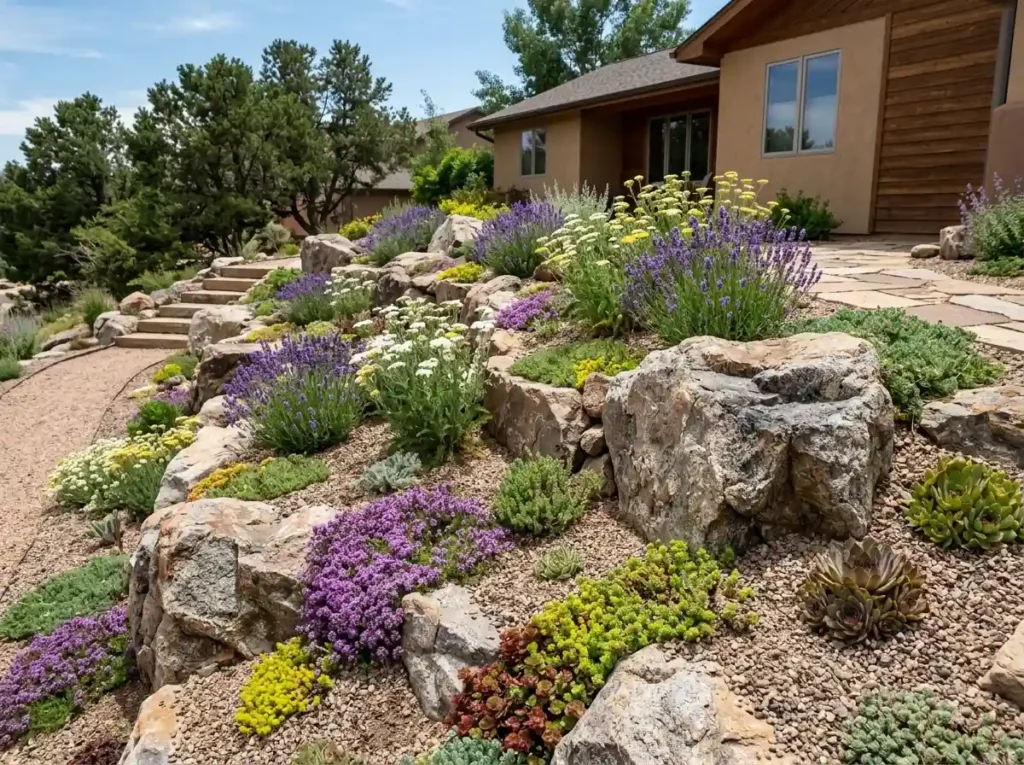
A sunny, dry slope can be a good place for a rock garden. Stones help break up the grade, while drought-tolerant plants reduce watering needs.
Use rocks of different sizes. Set the largest stones first, then fill the spaces with smaller rocks and plants.
Plants such as sedum, creeping thyme, yarrow, lavender, or other locally suitable choices may work in well-drained soil.
Do not assume every dry-looking slope drains well. Heavy clay can still hold water around roots.
Gravel mulch can help finish the design. It often stays in place better than light bark on a steep grade.
Best for: Sunny slopes with fast-draining soil.
Keep in mind: Confirm that each plant fits your climate and soil before planting.
Let Cascading Plants Soften Wall Edges
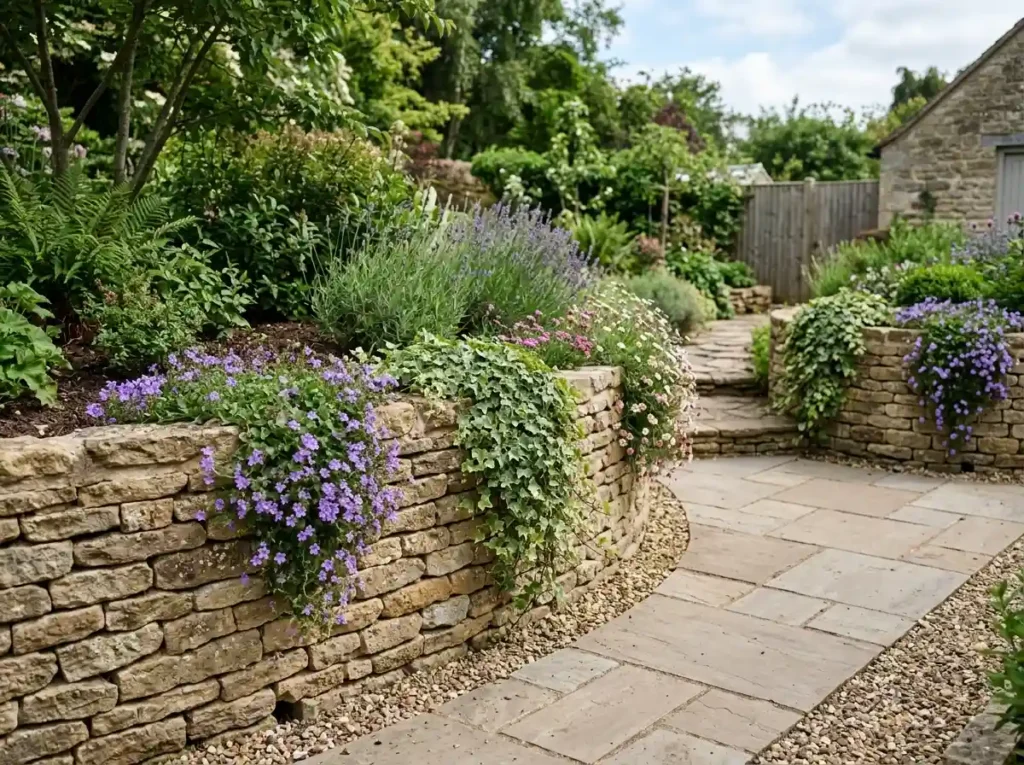
A retaining wall can look hard and heavy. Cascading plants soften the top edge and help the structure blend into the yard.
Choose plants that trail gently without taking over the wall. Avoid aggressive vines near joints, drains, and walkways.
Use a mix of flowering and evergreen choices where the climate allows. This keeps some texture after the main bloom season ends.
Let plants fall over parts of the wall, but do not cover the whole structure. You should still be able to inspect the wall for cracks or movement.
Cascading plants also work well along raised beds and stone steps.
Best for: Terraces and retaining walls that look too plain.
Keep in mind: Do not let plant growth block drainage openings.
Install Curved Steps Instead of Climbing Straight Up
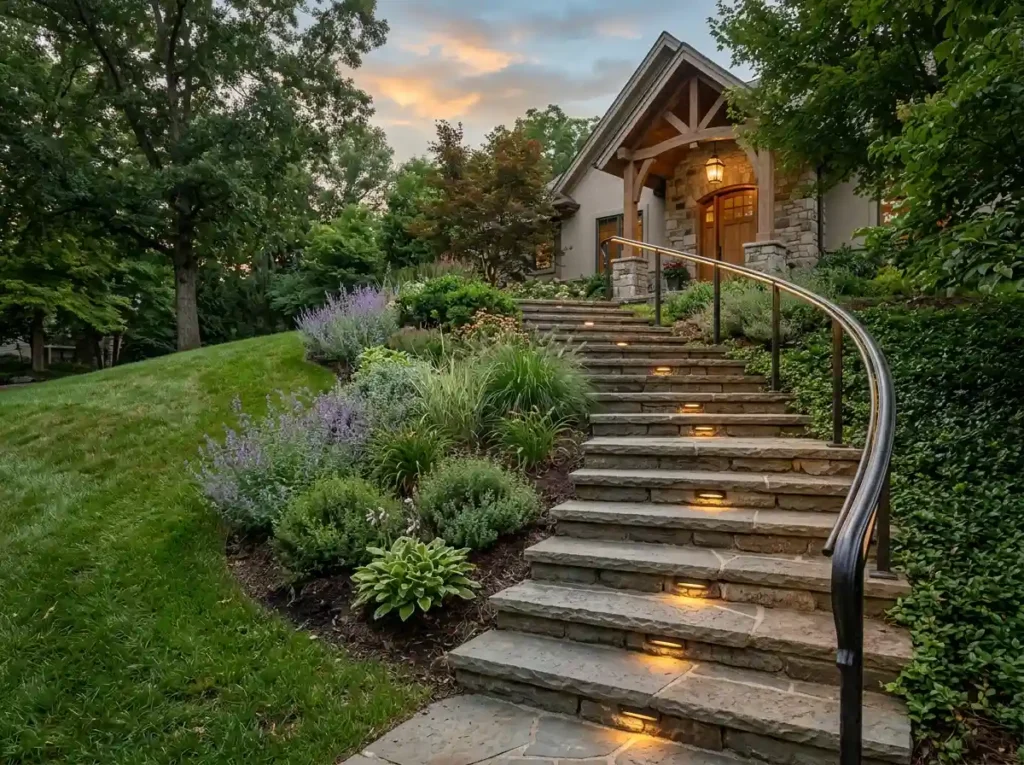
Straight steps can make a steep front yard feel even steeper. A curved route may create a gentler walk and a softer look.
Use wide steps when space allows. Even step heights are important for safety.
Choose a surface that stays firm when wet. Textured stone, concrete, or suitable pavers may provide better grip than smooth materials.
Add a handrail where the height or local rules require one. Low lighting can also make the route safer at night.
Plant along the outer curve to help the steps feel connected to the yard.
Best for: Slopes that need regular access to the front door.
Keep in mind: Tall or difficult stair systems are often best handled by a qualified professional.
Use a Switchback Walkway on a Steep Front Slope
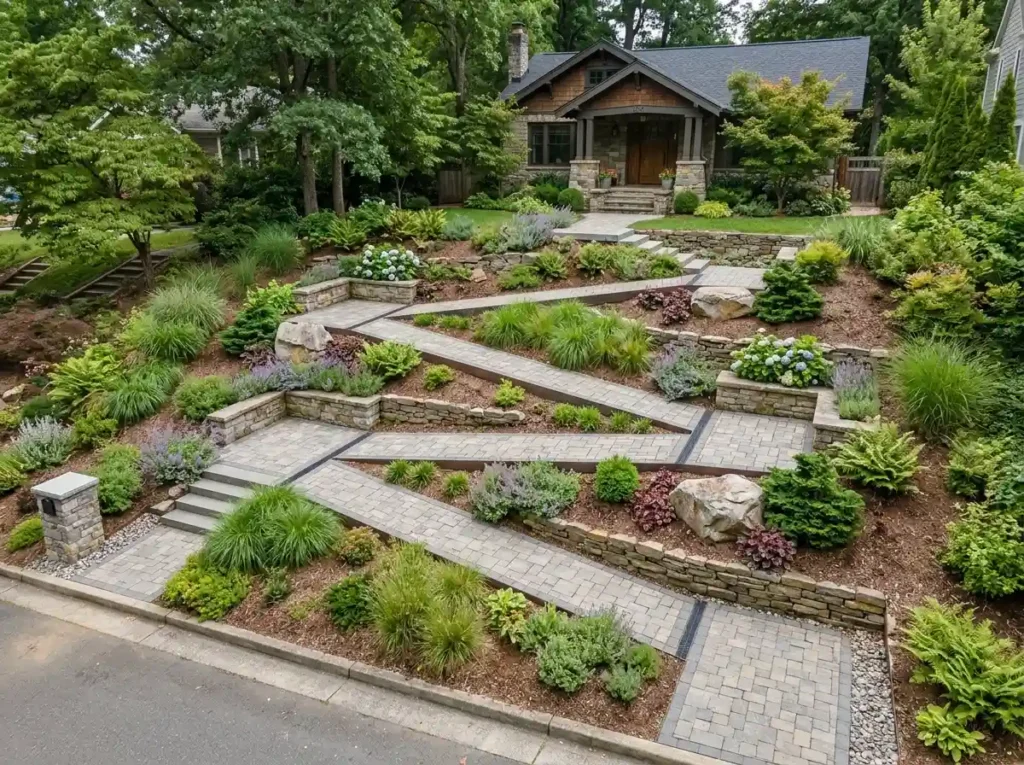
A switchback path crosses the slope in short horizontal runs. It changes direction at wider landings.
This can make the climb feel easier than walking straight uphill. It may also work better for people who need a gentler route.
Use plants or a small feature at each turn. A planter, boulder, or low shrub can make the landing feel planned.
Keep the path wide enough for safe use. Make sure water does not run across the walking surface.
A switchback walkway needs more yard space than direct steps. It works best on broad slopes.
Best for: Wide, steep front yards where a direct climb feels difficult.
Keep in mind: Check local access and construction rules before building.
Create a Stepping-Stone Path With Stable Joints
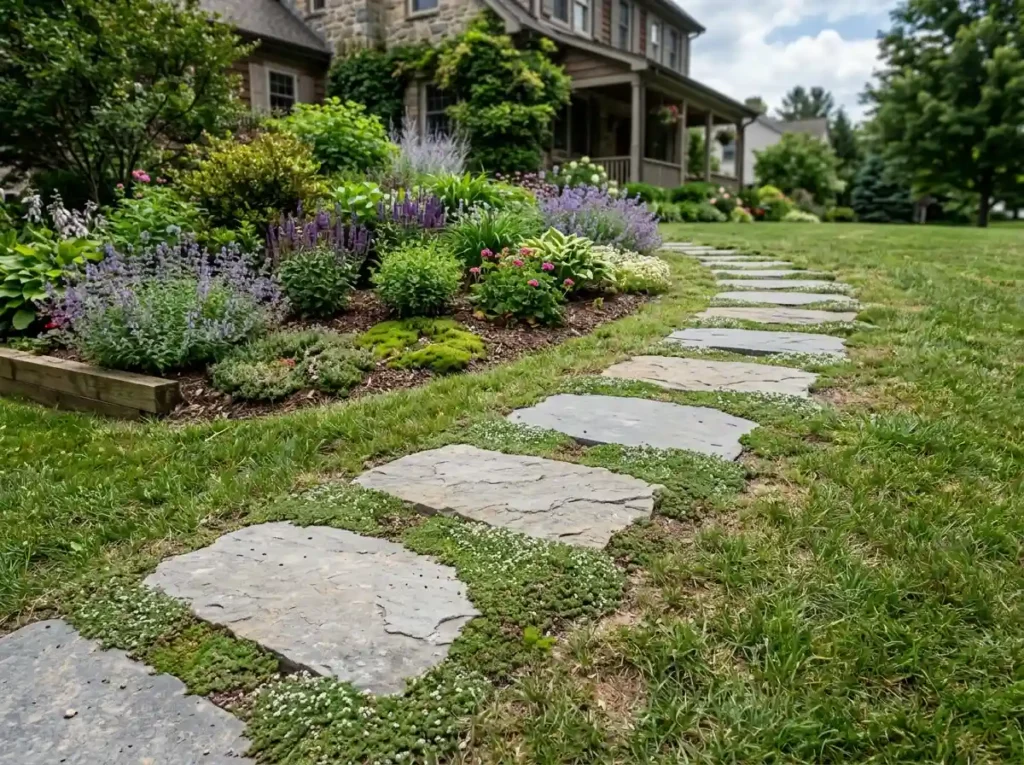
A stepping-stone path can give you access to planting beds without building a full walkway.
Use large, flat stones. Set each one into a firm, compacted base.
Test every stone before finishing the path. It should not rock, tilt, or slide when stepped on.
Keep the gaps comfortable. Large, uneven spaces can create a trip risk.
Avoid placing loose gravel around stepping stones on a steep grade unless it has strong edging and a stable base. Gravel may move downhill during heavy rain.
Best for: Gentle or moderate slopes used for garden care.
Keep in mind: Stepping stones may not be safe for a main entrance on a steep slope.
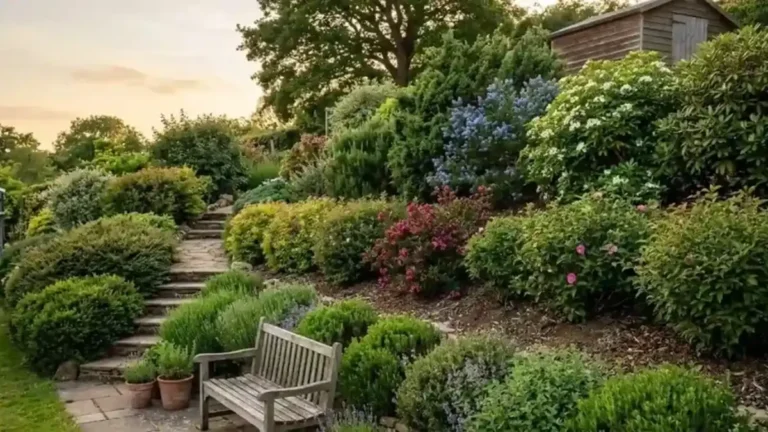
Add a Wide Landing With a Bench or Planter
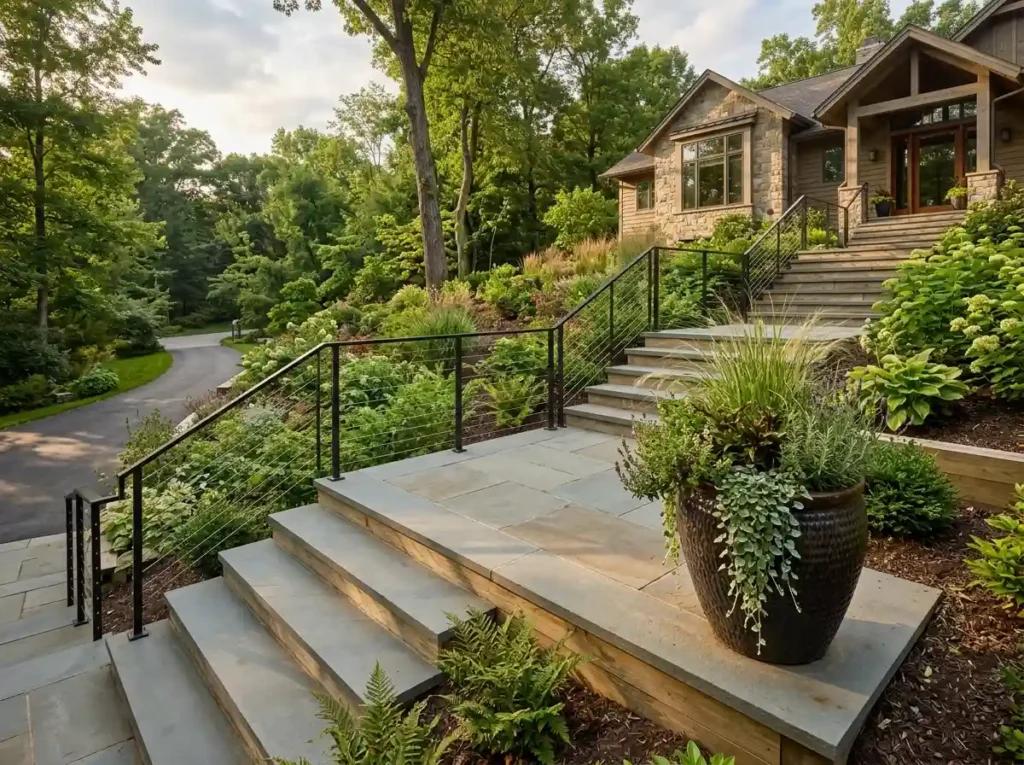
A landing can break a long set of steps into shorter sections. It gives people a flat place to pause and turn.
You can add a bench, large planter, small tree, or address marker. Keep the feature simple so the area does not feel crowded.
The landing should remain clear enough for safe movement. Do not place a bench where knees or bags will block the path.
A landing can also create a visual break in a tall slope. This makes the yard feel less like one large wall of soil.
Best for: Long front paths with several steps.
Keep in mind: Keep furniture and plants away from driveway views.
Frame the Driveway With Stepped Planting Beds
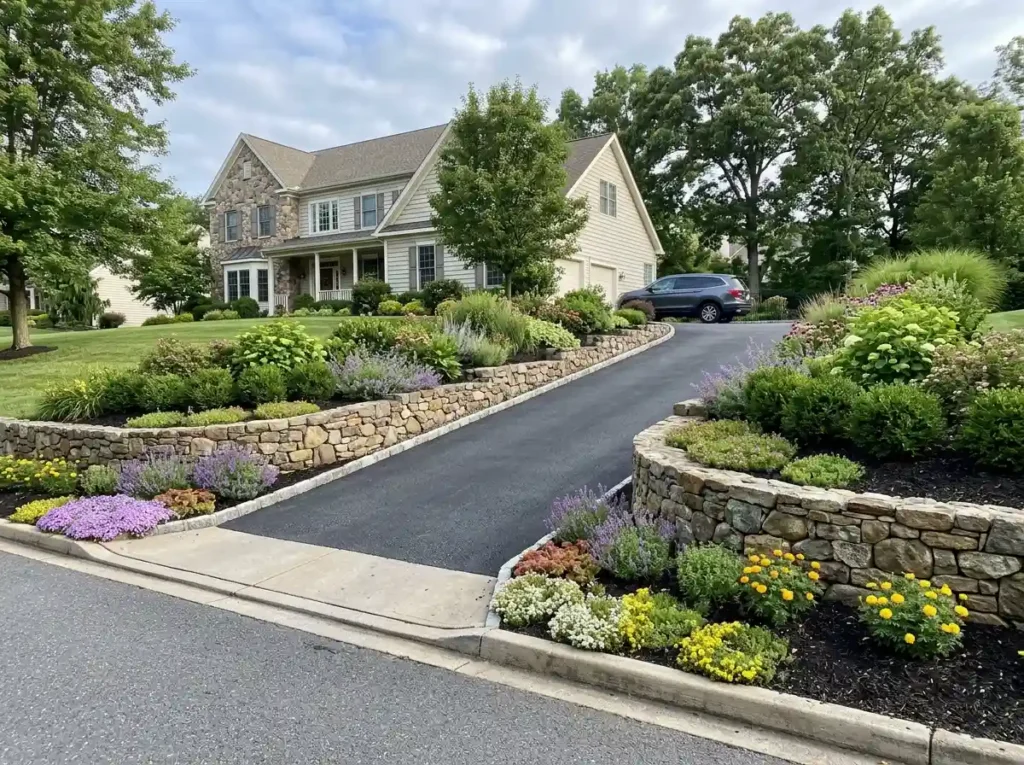
A driveway cut into a slope can leave high banks on one or both sides. Stepped planting beds can soften these edges.
Build the beds so they rise with the driveway. This creates a more natural link between the lower and upper parts of the yard.
Use low plants near the street. Place taller shrubs farther back.
Leave enough room for car doors, mirrors, and snow removal where needed. Thorny plants are usually a poor choice next to parked vehicles.
Repeat the same plants on both sides when the layout allows. This can make the entrance feel balanced.
Best for: Homes with a driveway running through or beside a slope.
Keep in mind: Plants should never block the driver’s view of traffic or people.
Replace Turf With a No-Mow Flowering Meadow
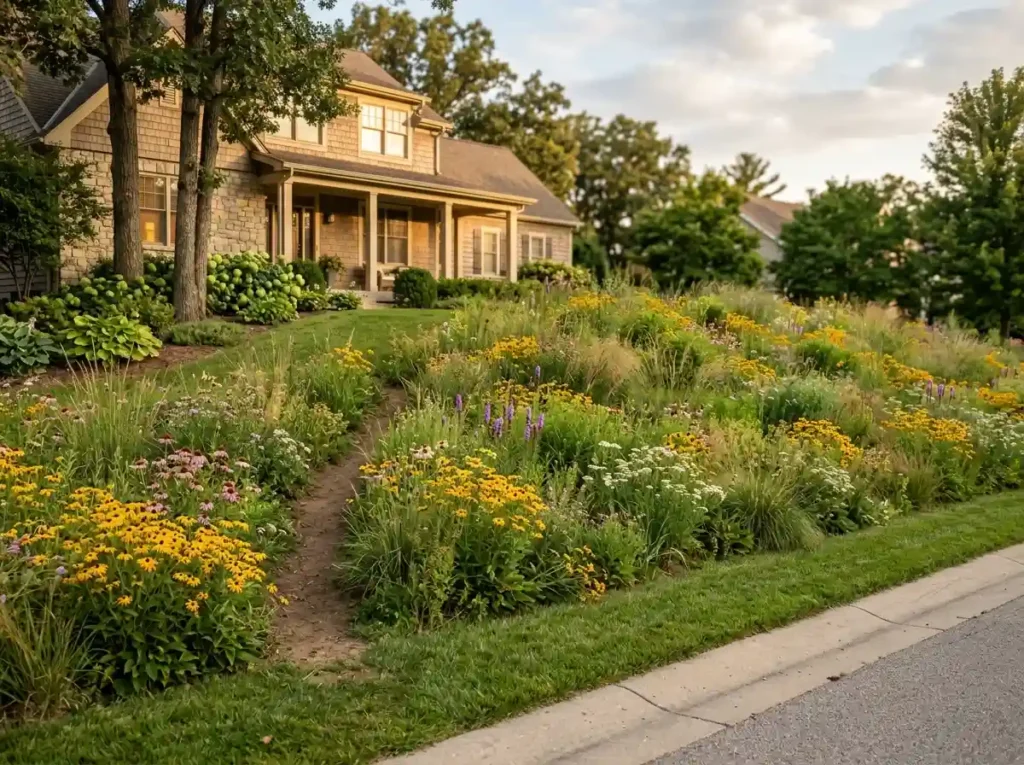
A flowering meadow can cover a broad slope that is difficult to mow. It may also support local insects and birds when native plants are used.
Choose a seed or plant mix made for your region. Generic wildflower packets may include plants that do not suit your soil or climate.
Remove or control existing weeds before planting. Otherwise, strong weeds may take over the young meadow.
The first year is rarely maintenance-free. You may need to water, weed, or cut the area while the plants become established.
After that, the meadow may need only seasonal trimming and weed control.
Best for: Large, sunny slopes where a formal lawn is not needed.
Keep in mind: A meadow has a loose, natural look. It may not suit every neighborhood or home style.
Use Evergreens to Give the Slope Year-Round Structure
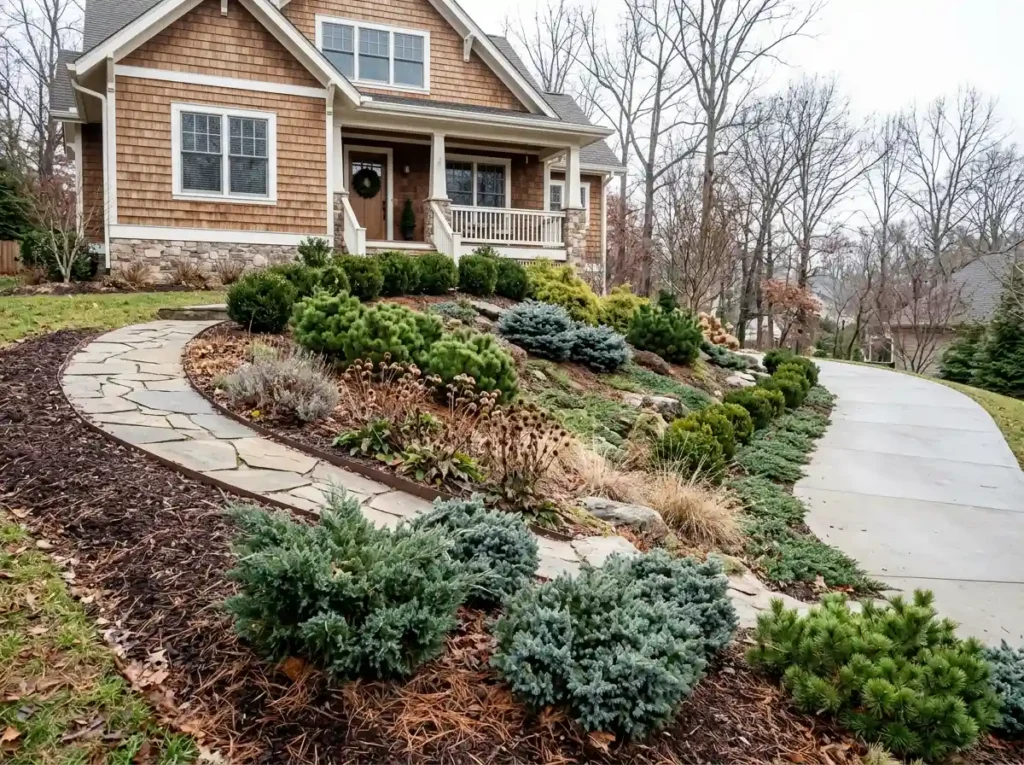
Evergreen shrubs keep the slope from looking empty after flowers and grasses fade.
Use a limited number of plant types. Repeat them across the slope for a calm, planned look.
Choose compact or slow-growing varieties for small front yards. A shrub that looks perfect in a small pot may become too large near a path or window.
Mix evergreens with seasonal flowers for color. The evergreens will act as the main structure.
Avoid planting them in one straight row unless the design is very formal. Staggered groups often look softer.
Best for: Front yards that need year-round curb appeal.
Keep in mind: Check mature height and width before buying.
Add Low-Voltage Lighting Along Steps and Walls
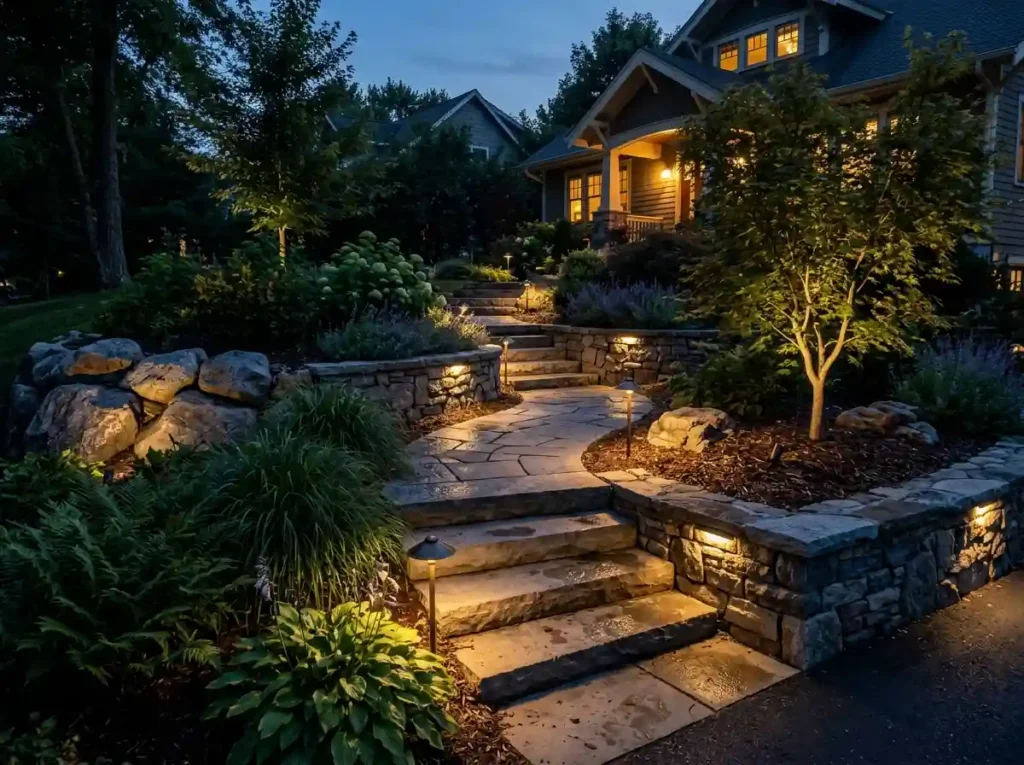
Good lighting makes a sloped yard safer after dark. It can also show off stone, trees, and planted areas.
Use step lights where people need to see changes in height. Place path lights along key walking routes.
Soft uplighting can highlight one small tree or a group of boulders. You do not need a light on every plant.
Point fixtures away from windows and drivers. Bright glare can make steps harder to see instead of safer.
Use outdoor-rated fixtures and protected wiring. Solar lights may work in sunny areas, but their brightness and run time can vary.
Best for: Slopes with steps, paths, walls, or evening visitors.
Keep in mind: Keep the lighting soft and focused on safety.
Create One Strong Focal Point at the Top or Base
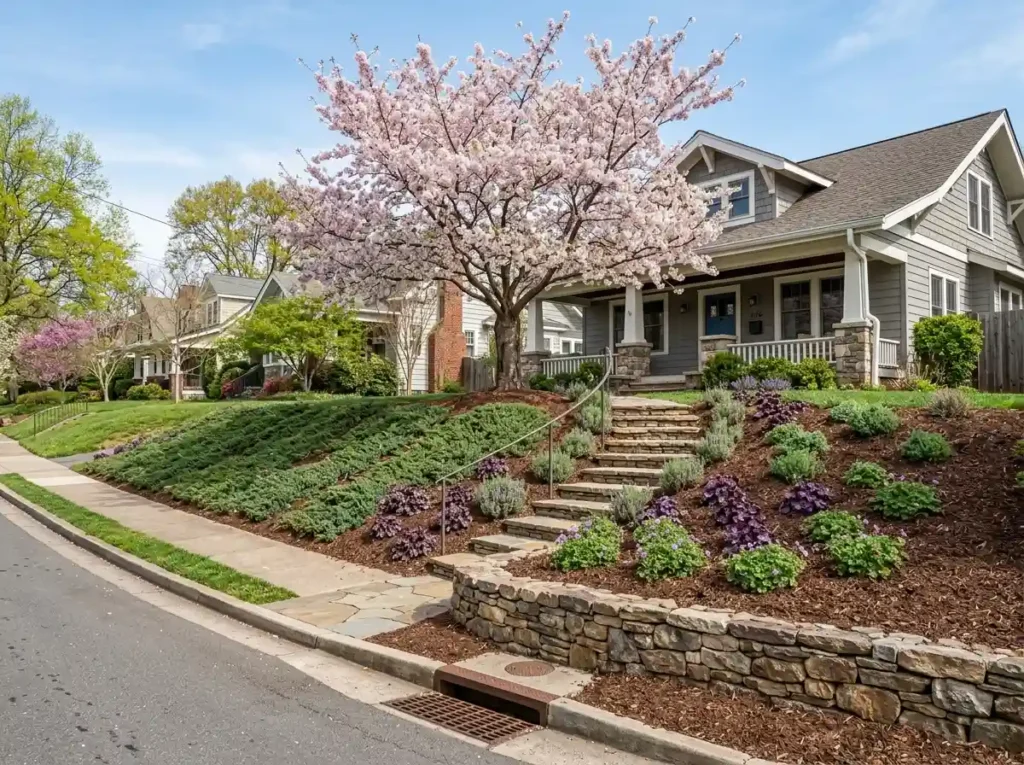
A focal point gives the eye one clear place to rest. It can make a busy slope feel more organized.
Choose one main feature. This may be an ornamental tree, a large planter, a boulder group, a mailbox garden, or a simple address sign.
Place it where it can be seen from the street or front entrance. Do not hide it behind several smaller features.
Keep the area around it simple. Too many decorations will compete for attention.
A focal point works best after drainage, access, and soil problems have been fixed.
Best for: Slopes that look plain, scattered, or unfinished.
Keep in mind: One strong feature usually works better than several small ones.
How to Choose the Best Sloped Front Yard Design for Your Budget
The cheapest idea today may not be the cheapest choice over time.
For example, adding fresh mulch may cost less than planting ground covers. But if the mulch washes onto the sidewalk after every storm, you will keep paying to replace it.
Start by deciding whether the project is decorative or structural.
A decorative project improves the look of a stable slope. A structural project holds soil, changes water flow, or creates safe access.
Lower-cost updates may include:
- Ground cover planting
- Small rock garden areas
- Ornamental grasses
- Simple edging
- A few landscape lights
- Replacing bare soil with dense planting
Medium projects may include:
- A dry creek bed
- A small rain garden
- Stepped planting beds
- A short path
- A low wall
- Boulders placed with equipment
Higher-cost projects may include:
- Large terraces
- Engineered retaining walls
- Permanent stairs
- Major drainage systems
- Switchback walkways
- Work near the foundation
Ask yourself what the yard needs most.
If water moves too quickly, begin with drainage or terracing.
If grass is unsafe to mow, replace it with spreading plants, shrubs, or a meadow.
If the front entrance is hard to reach, put the path and steps first.
If the slope looks empty but works well, add layered planting and one focal point.
You can also complete the yard in stages. Fix the lower washout area first. Add ground covers next. Finish with lights or decorative plants later.
7 Sloped Front Yard Mistakes That Cause Drainage Problems
A new layer of mulch can make a slope look finished. Then one hard storm sends it across the sidewalk.
That happens because the surface was changed, but the water problem was not fixed.
Avoid these common mistakes.
1. Choosing Plants Before Tracking Water
Watch the yard during rain before deciding where plants should go. Water flow affects soil, roots, paths, and walls.
2. Building a Wall Without Drainage
A wall may hold back soil, but it also holds back water. The design needs a safe way to release that pressure.
3. Using Light Mulch on a Steep Slope
Loose bark may float or slide downhill. Dense planting, shredded mulch, stone, or erosion-control materials may stay in place better.
4. Ignoring Mature Plant Size
Plants can block windows, paths, and driveway views as they grow. Check mature height and width before planting.
5. Sending Water Onto Nearby Property
Do not direct runoff onto a neighbor’s yard, public walkway, or road. Local drainage rules may limit where water can go.
6. Creating Beds You Cannot Reach
Every planted area will need some care. Add stepping stones, paths, or access points before filling the slope.
7. Treating a Structural Problem as Decoration
Plants cannot fix every moving slope. Call a qualified professional if you see deep cracks, leaning walls, exposed foundations, or major soil movement.
Turn the Slope Into a Yard That Works for You
A sloped yard needs more than attractive plants. It needs a plan for water, soil, safe access, and future care.
Start by watching where rain flows. Then deal with the area causing the biggest problem. You may need ground covers, terraces, a dry creek bed, safer steps, or a mix of several ideas.
Do not try to finish everything at once. Complete the work in clear stages when needed.
The best sloped front yard landscaping ideas make your property safer, easier to maintain, and more attractive. They also work with the natural grade instead of forcing the yard to act like flat land.