17 Front Yard Landscaping Ideas to Improve Curb Appeal
A plain front yard can make your whole home feel unfinished. You may have healthy grass and a few shrubs, yet the space still lacks shape, color, or a clear path to the door. The problem is often poor planning, not a lack of money.
The best front yard landscaping ideas make your entrance easier to see and your yard easier to care for. They also match the size and style of your home. A good plan may include one new tree, a wider planting bed, better lighting, or a cleaner edge around the lawn.
You do not need to use every idea in this guide. Start with the area that bothers you most. These ideas cover small yards, shaded spaces, wet areas, low-care gardens, and homes with limited planting room. You will also find simple ways to improve curb appeal without removing the whole lawn or hiring a large crew.
How to Pick Ideas That Will Work in Your Yard
A landscaping photo may look great online but fail in your yard. Your sunlight, soil, drainage, climate, and available space will decide what works.
Start by watching the yard for one full day. Note which areas get morning sun, afternoon sun, deep shade, or reflected heat from walls and pavement. Full-sun plants often need at least six hours of direct light. Shade plants may burn if they sit beside a hot driveway.
Next, check where rainwater gathers. A low area may need better drainage or plants that can handle wet soil. A dry slope may need ground cover instead of grass.
Measure beds, windows, paths, doors, and utility boxes before buying plants. The small shrub at the garden center may grow wider than your window in a few years. Always check the mature height and width.
Ask yourself three questions before choosing any idea:
- Does it fit the sunlight and soil?
- Will it fit when the plants reach full size?
- Can you care for it each month?
These simple checks will help you create low maintenance front yard landscaping that still looks planned.
Build Layered Beds to Make the House Look Finished
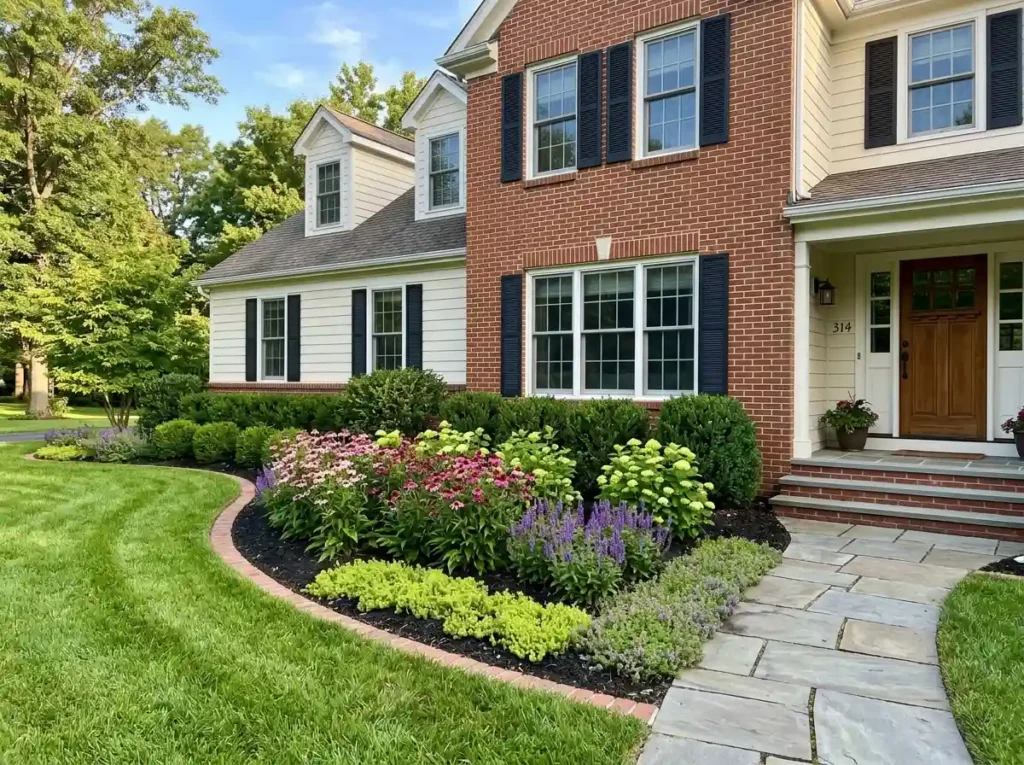
A single row of shrubs can make a house look flat. Layered planting beds add depth and help the home blend with the yard.
Place the tallest plants near blank walls or outer corners. Use medium plants below windows. Add short flowers or ground cover along the front edge. This creates a clear step down from the house to the lawn.
A simple bed may include compact evergreen shrubs in the back, flowering plants in the middle, and creeping ground cover in front. Repeat the same plants in small groups. Too many plant types can make the bed feel messy.
Keep enough space between plants and the house. Air should move around the siding and foundation. Do not cover vents or allow branches to rub against windows.
Before planting, read the tag for mature size. Give each plant room to grow without heavy trimming. This is one of the easiest front yard planting ideas for making a basic home look more complete.
Create a Clear Walkway So Guests Know Where to Go
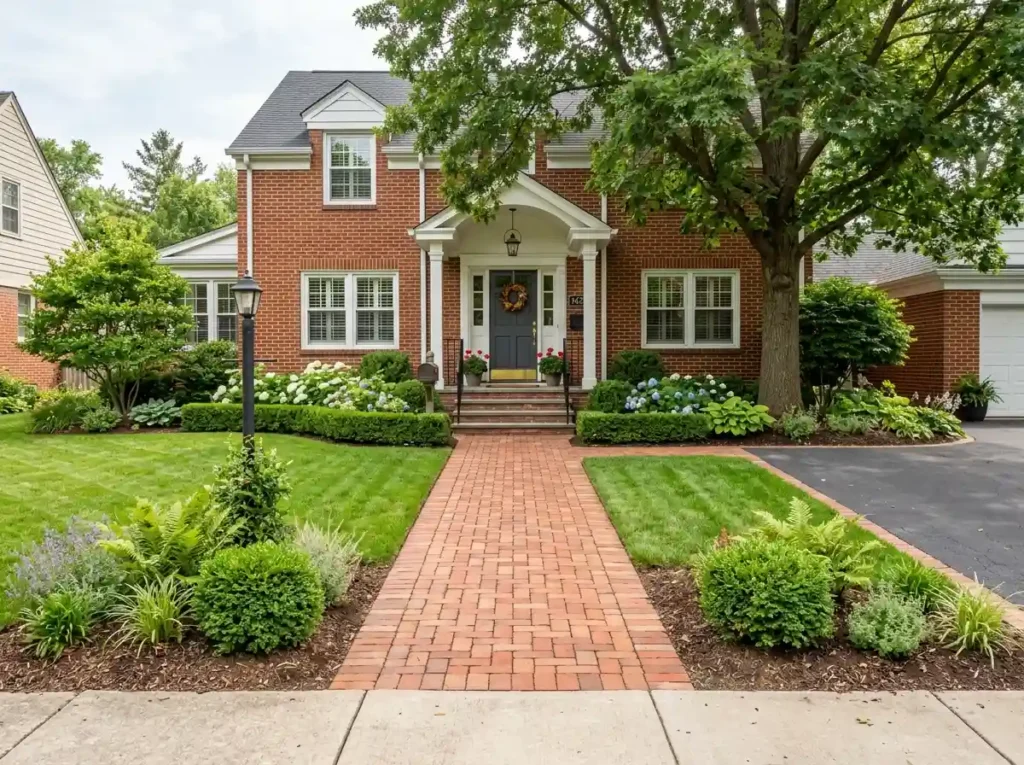
Can a first-time visitor see the route to your front door? If the answer is no, the yard may feel confusing even when the plants look good.
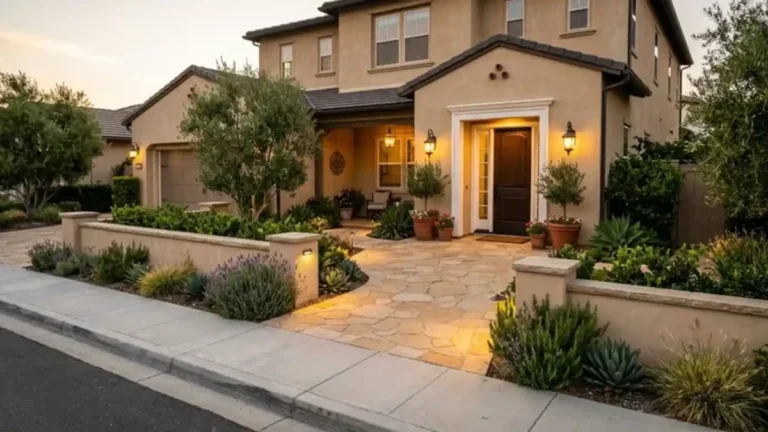
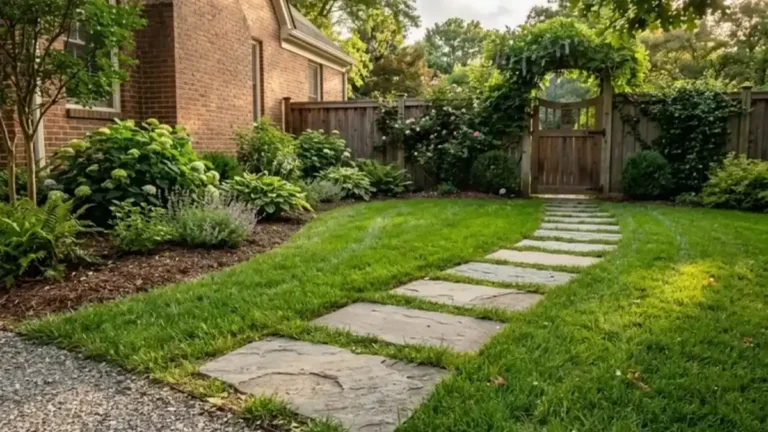
A clear walkway gives the landscape a strong center. It also makes the entrance safer during rain or at night. You can use brick, concrete, pavers, flagstone, or gravel.
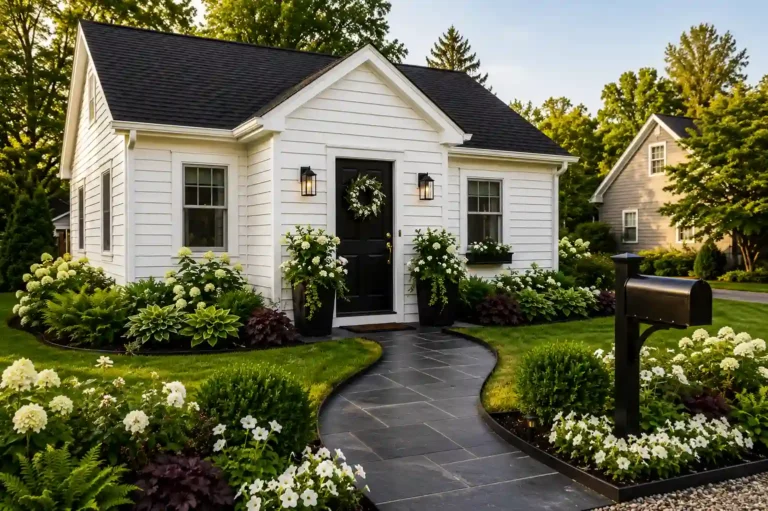
Straight paths suit formal and modern homes. Soft curves work well with cottage gardens and relaxed planting. Avoid sharp bends that make people cut across the lawn.
Large square pavers create a clean look. Brick adds warmth to a traditional home. Flagstone feels more natural. Gravel can cost less, but it needs firm edging to stay in place.
Tightly spaced pavers create a smoother walking surface. Wide gaps between stepping stones feel casual but may be harder for guests carrying bags.
Among all small front yard landscaping ideas, a clear walkway can make the biggest visual change without filling the space with extra plants.
Add One Small Tree to Fix an Empty or Unbalanced Yard
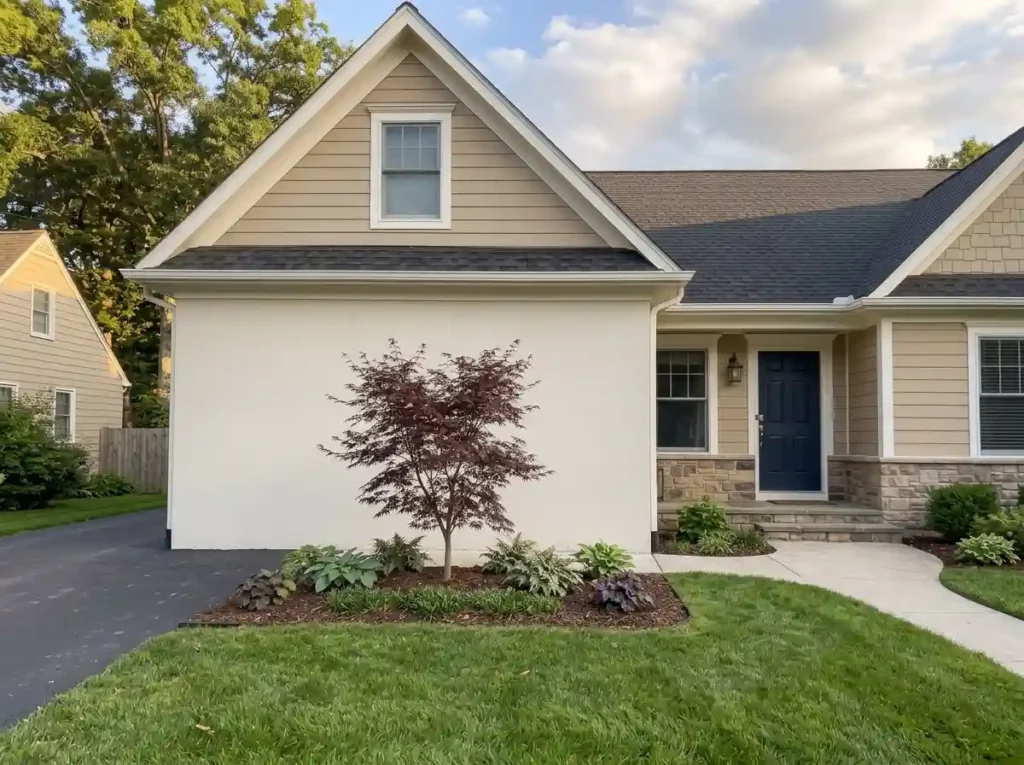
Some yards look empty even after shrubs and flowers are added. One small ornamental tree can create the missing focal point.
Use the tree to balance the house. For example, place it near a wide blank wall or across from an off-center front door. It can also soften the hard line of a driveway or tall corner.
Possible choices include serviceberry, redbud, crabapple, Japanese maple, crape myrtle, or dwarf magnolia. The right tree depends on your climate, soil, and available space. Ask a local nursery or extension office which types perform well in your area.
Check the mature canopy, root spread, and height before planting. Keep the tree away from power lines, foundations, sewer lines, and driveway views.
Add a simple bed under the tree instead of a tight ring of mulch. Low ground cover or a few shade-tolerant plants can connect it with the rest of the landscape.
One well-placed tree often gives the yard more structure than many small decorations.
Use Evergreens to Keep the Yard Attractive All Year
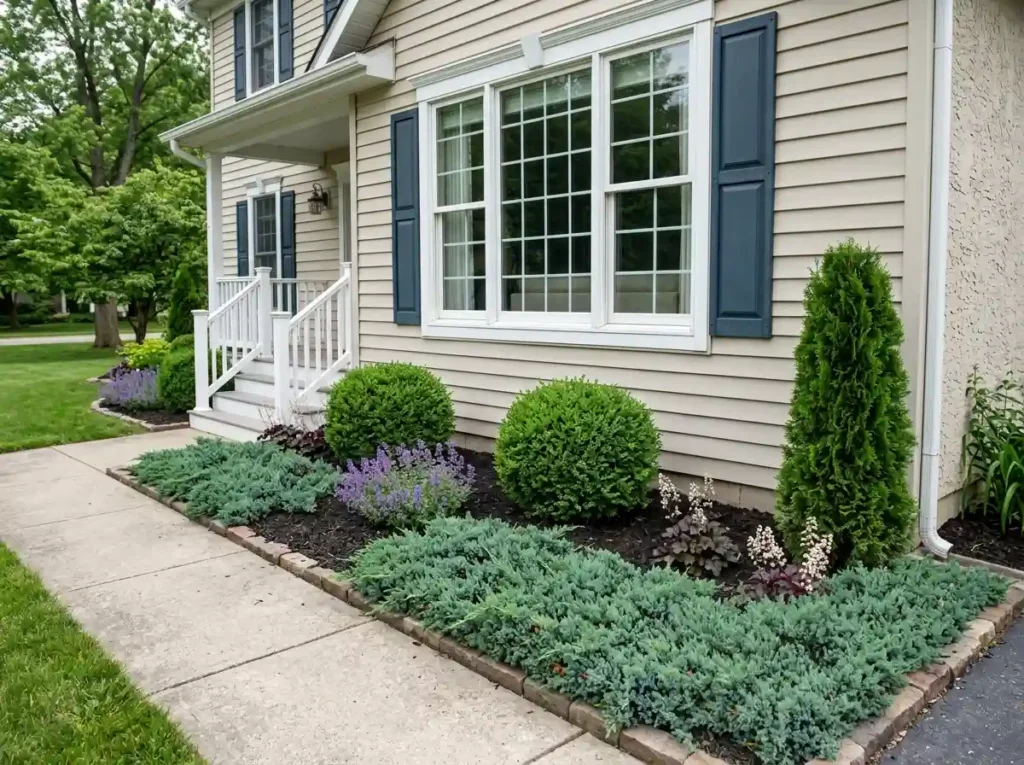
A flower-filled yard may look colorful in spring and empty in winter. Evergreens give the landscape shape through every season.
Choose compact types near windows, steps, and paths. Boxwood, dwarf juniper, inkberry, yew, compact holly, and dwarf arborvitae may work in some climates. Always check local growing needs before buying.
Mix different forms for a more natural look. A rounded shrub can sit beside an upright evergreen and a low spreading plant. This creates shape without using many colors.
Avoid planting a long row of identical shrubs unless you want a formal hedge. Mixed groups often look softer and need less exact trimming.
The word “dwarf” does not always mean tiny. Some dwarf plants still grow several feet wide. Read the mature size on the label.
Evergreens are useful for low maintenance front yard landscaping, but they still need correct spacing, water during the first seasons, and occasional care.
Choose Native Plants That Suit Local Conditions
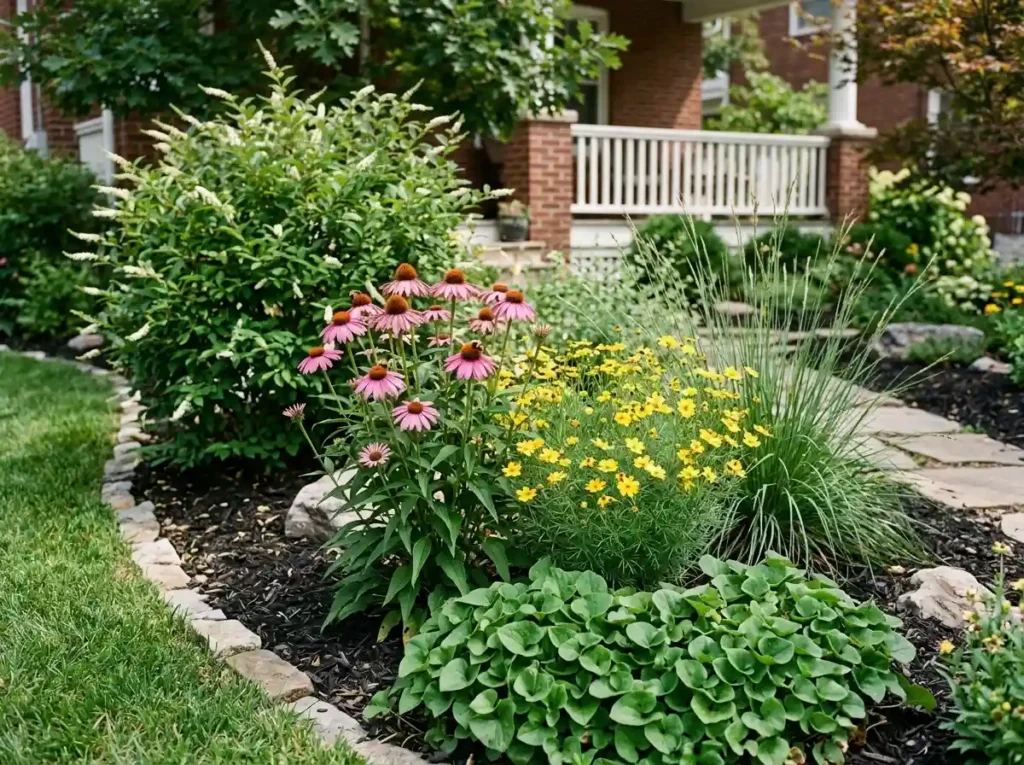
Plants often struggle because they were placed in the wrong climate or soil. Native plants can be a better fit because they developed in the region.
They may cope better with local rain, heat, cold, and soil once their roots are established. Many also provide food or shelter for local birds, bees, and butterflies.
Do not assume every native plant belongs in every part of your yard. A plant from a wet woodland will not be happy in a hot, dry bed beside the driveway.
Build a simple native bed with one small shrub, two flowering plants, one grass, and a low ground cover. Choose plants with different bloom times so the bed changes through the seasons.
Use a local native plant list, botanical garden guide, or university extension resource. These sources can help you avoid aggressive plants and choose the right size.
Native planting can reduce some long-term care, but new plants still need watering and weed control while their roots grow.
Add Wide Curved Borders to Soften Hard Lines
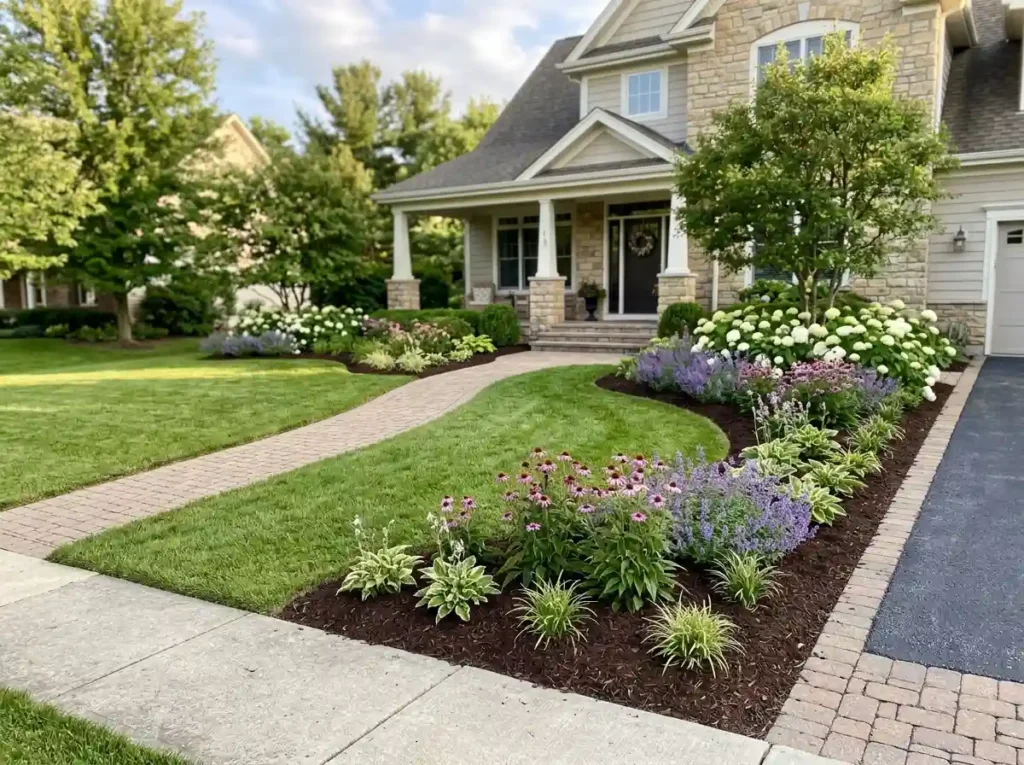
Thin beds and sharp corners can make a front yard feel cut into small pieces. A wide border with a gentle curve creates a softer shape.
Start the border near the driveway, guide it past the walkway, and connect it with the porch or foundation bed. One broad curve looks better than several tight waves.
Use a garden hose to mark the shape before removing grass. Step back and view it from the street, driveway, and front door. Adjust the line until it feels smooth.
Make the bed wide enough for plants to reach full size. Very narrow beds force plants into a straight row and leave little room for layering.
Repeat three or four plant groups along the border. Repeated color and texture help separate areas feel connected.
Avoid leaving a thin strip of grass between the border and a hard surface. Those strips are hard to mow and often turn brown.
This simple change can improve curb appeal even before you add new plants.
Replace Weak Grass With Ground Cover
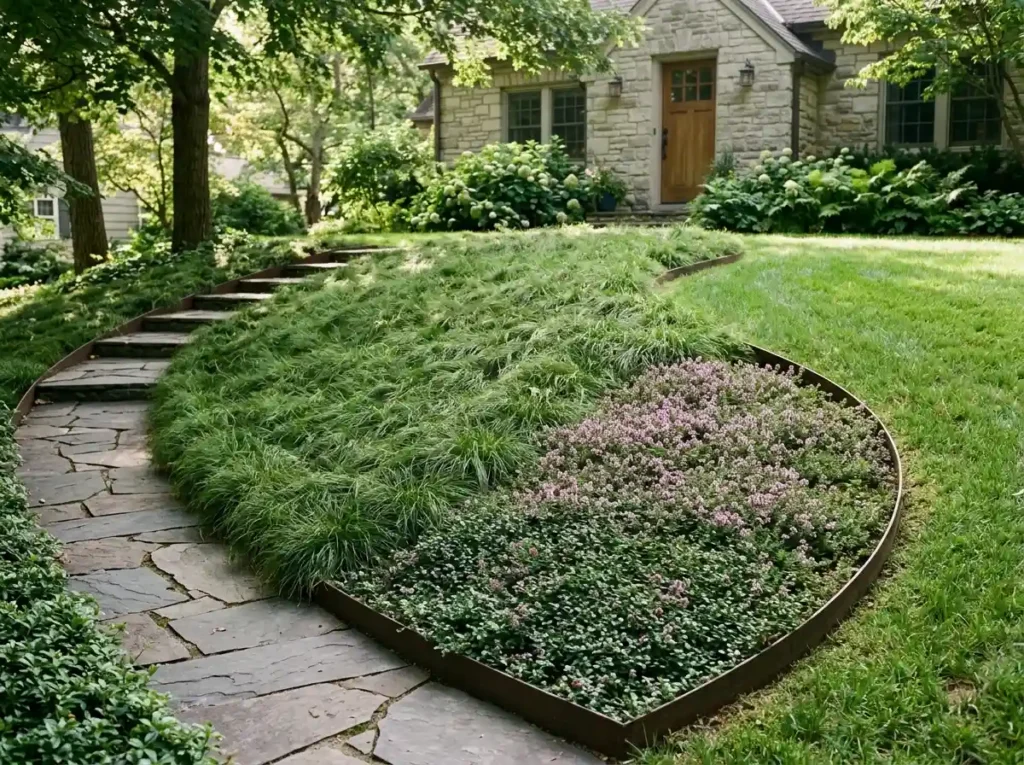
Grass often fails under trees, on steep slopes, or in dry corners. Replacing only the weak areas can save time and improve the view.
Choose ground cover based on sunlight, soil, and foot traffic. Creeping thyme may suit sunny spots in some climates. Sedges can work in shade. Clover mixes, liriope, ajuga, and low native plants may also be options.
Some ground covers handle light steps. Others should stay in beds where no one walks. Check how fast each plant spreads and whether it is considered invasive in your area.
Use edging to keep spreading plants out of the lawn or walkway. Water new plants until the roots fill the space. Pull weeds early so they do not take over open soil.
Ground cover can reduce mowing, but it is not care-free. It needs time to form a thick mat.
For front yard landscaping without grass, start with one problem area instead of removing the whole lawn at once.
Turn the Mailbox Into a Small Garden Feature
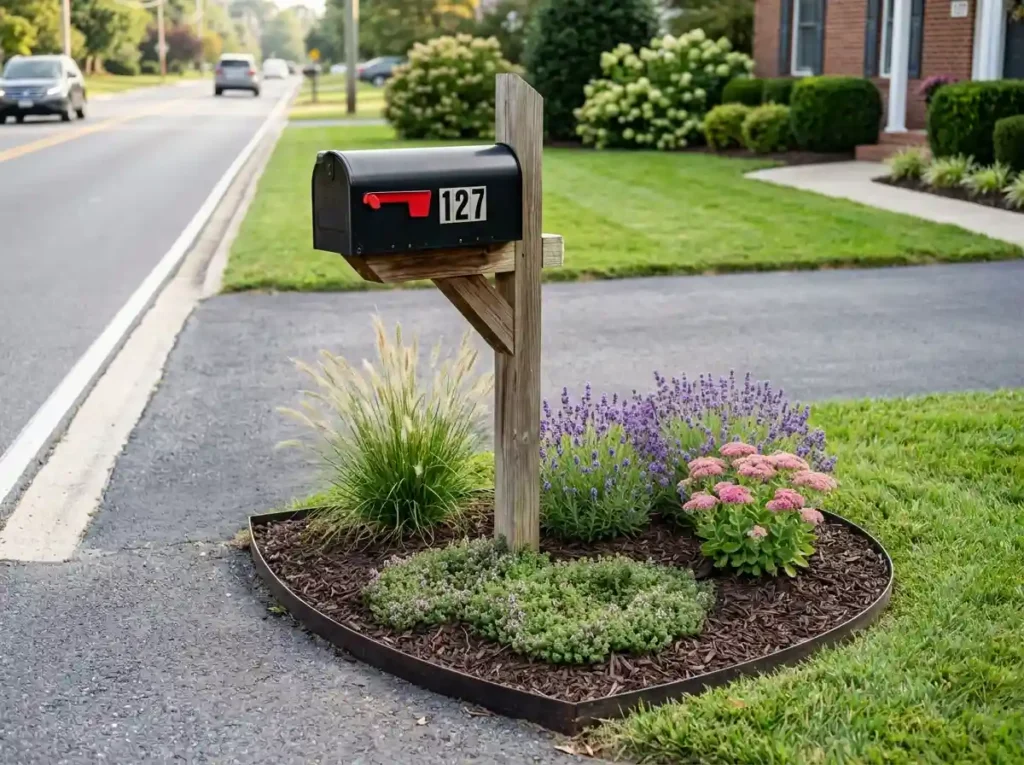
The mailbox is often one of the first things people see from the street. A small planting bed can make it feel connected to the home.
Keep the design simple. Use one compact grass, three flowering plants, a low ground cover, and a layer of mulch or decorative gravel. Repeat one plant from the main yard so the areas look related.
Mailbox beds face tough conditions. Road heat, salt, dust, pet traffic, and dry soil can harm delicate plants. Choose sturdy types that suit the location.
Keep the front of the box clear for mail delivery. Avoid thorny plants near the door or handle. Do not use tall plants that block the view of drivers leaving the driveway.
A small curved or square bed is enough. Large mailbox gardens can become hard to trim and may spread into the road edge.
This is one of the most useful budget-friendly front yard ideas because the area is small and needs only a few plants.
Frame the Front Door With Large Containers
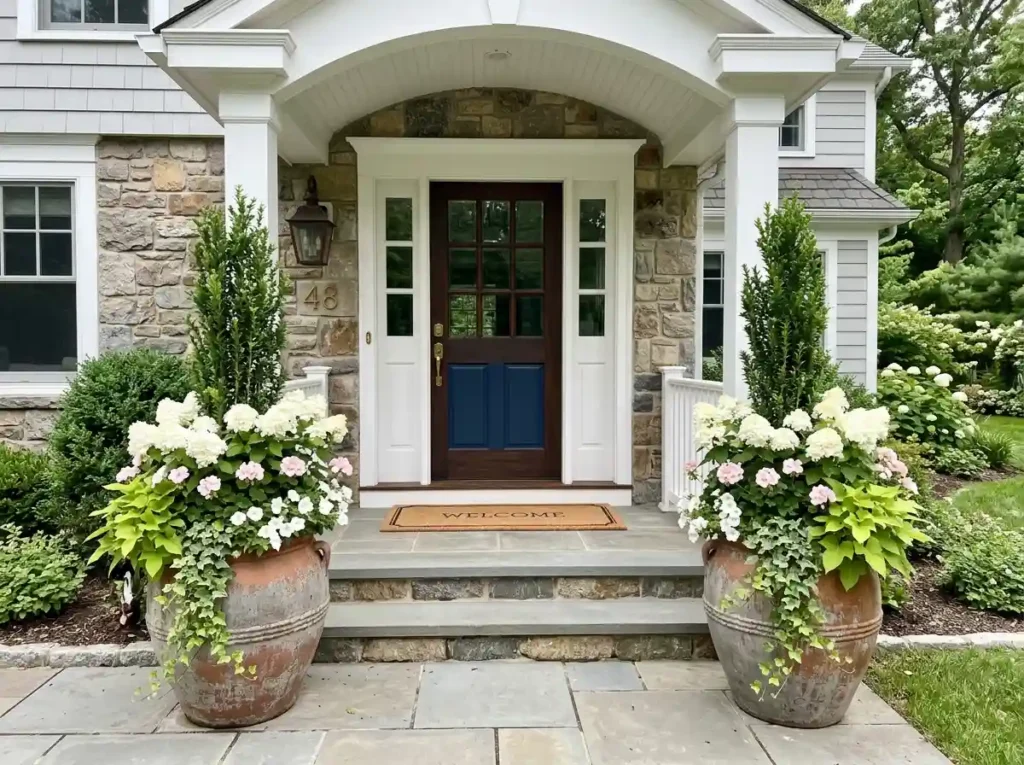
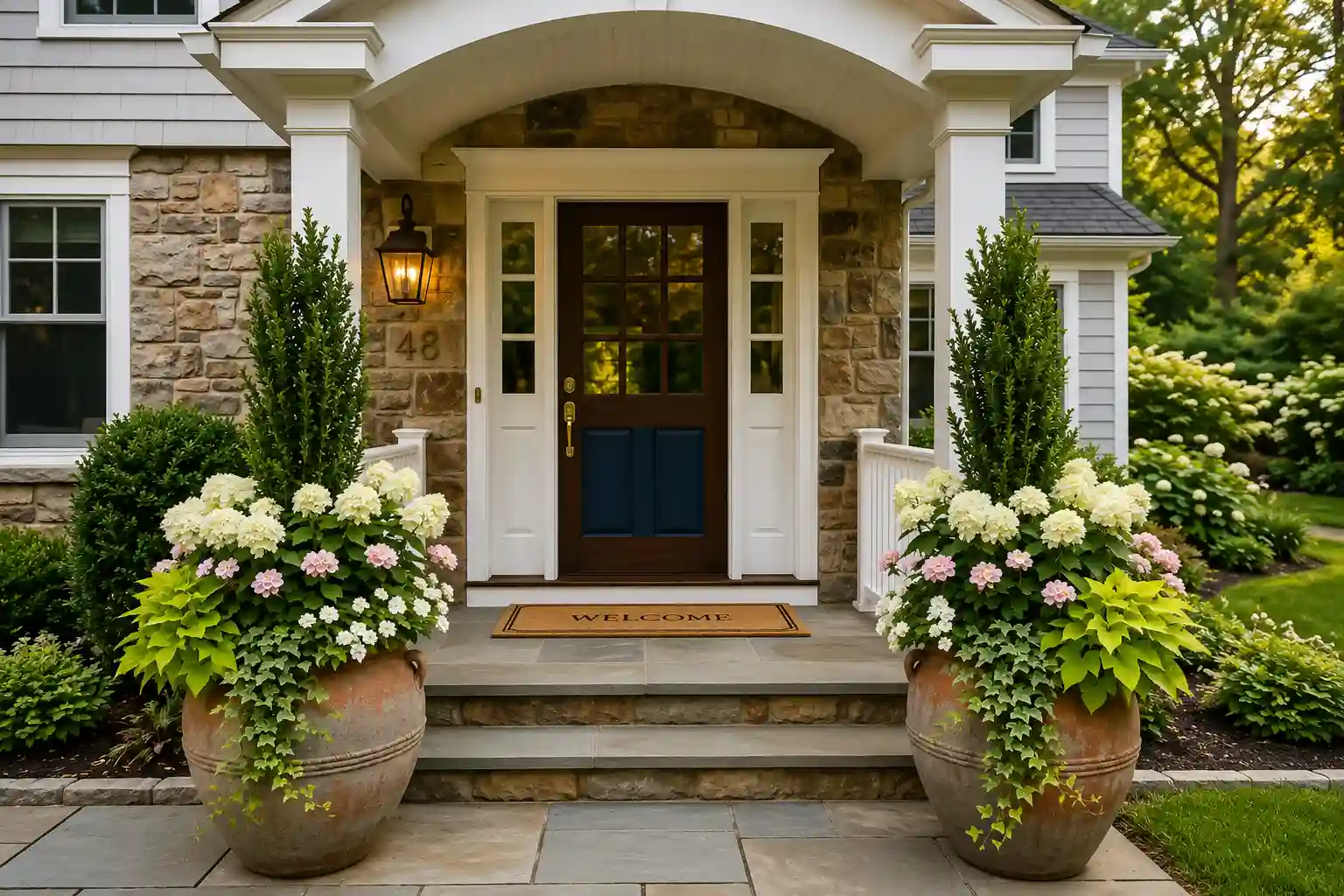
Bare concrete near the entrance can feel cold. Large containers add color and shape when there is little soil beside the door.
Use two matching pots for a wide, balanced entrance. For an off-center door, one large planter may work better than a forced matching pair.
A simple container mix uses one tall plant, one full plant, and one trailing plant. You can also place a compact evergreen in the center and change the flowers by season.
Choose pots that match the scale of the porch. Several tiny pots often look cluttered. One or two larger containers create a stronger effect and hold moisture longer.
Lightweight pots are easier to move, but they may tip over in strong wind. Heavy stone or clay pots stay in place but are harder to lift.
Containers dry faster than garden beds. Check them often during hot weather.
These front yard curb appeal ideas work well for renters, small homes, and entrances with limited planting room.
Add Ornamental Grasses for Movement and Texture
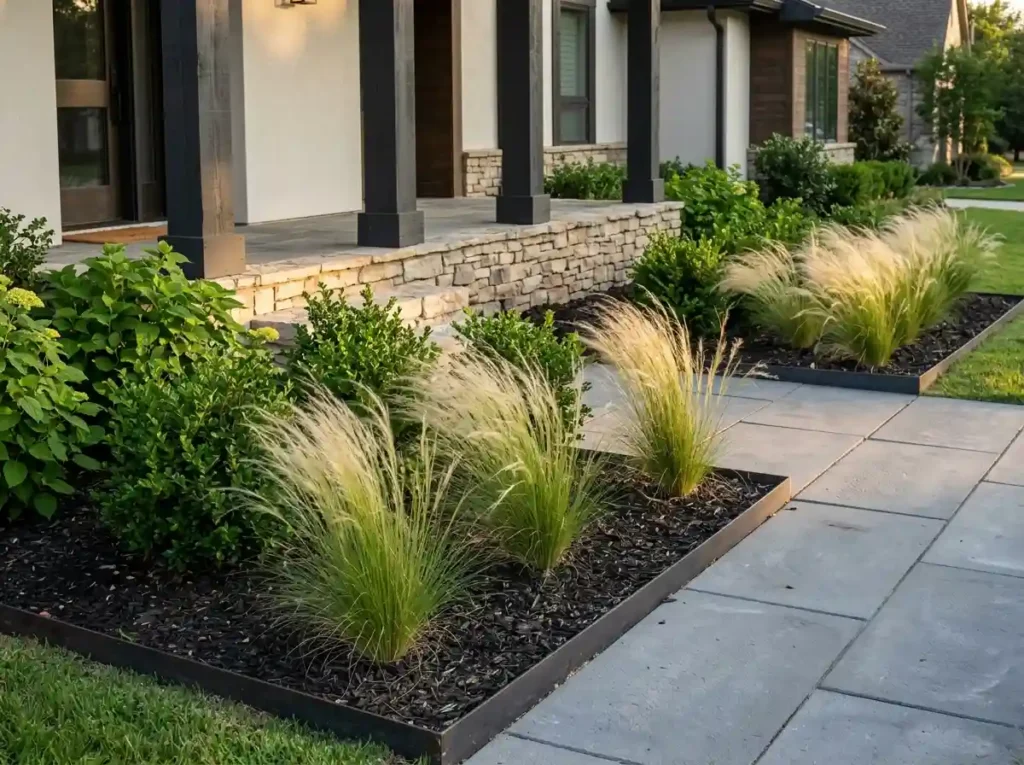
A front yard can have plenty of color and still feel stiff. Ornamental grasses add soft movement and fine texture.
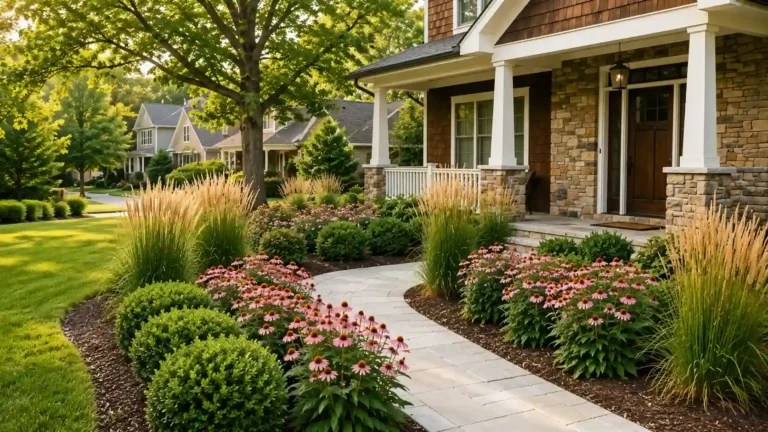
Place them beside broad-leaf shrubs, stone walls, or solid porch posts. The contrast helps both plants stand out. Use compact grasses near paths so the leaves do not fall across the walking area.
Possible choices include little bluestem, prairie dropseed, blue fescue, and switchgrass. Fountain grass may work in some places, but certain types can spread into natural areas. Check local invasive plant lists first.
Grasses also provide shape in fall and winter. In suitable climates, you can leave the dry seed heads until late winter, then cut them back before new growth starts.
Do not fill every bed with grasses. A few repeated groups give better balance.
For modern front yard landscaping, combine grasses with simple pavers, dark edging, and a small number of plant types.
Create a Shade Garden Without Hurting Mature Trees
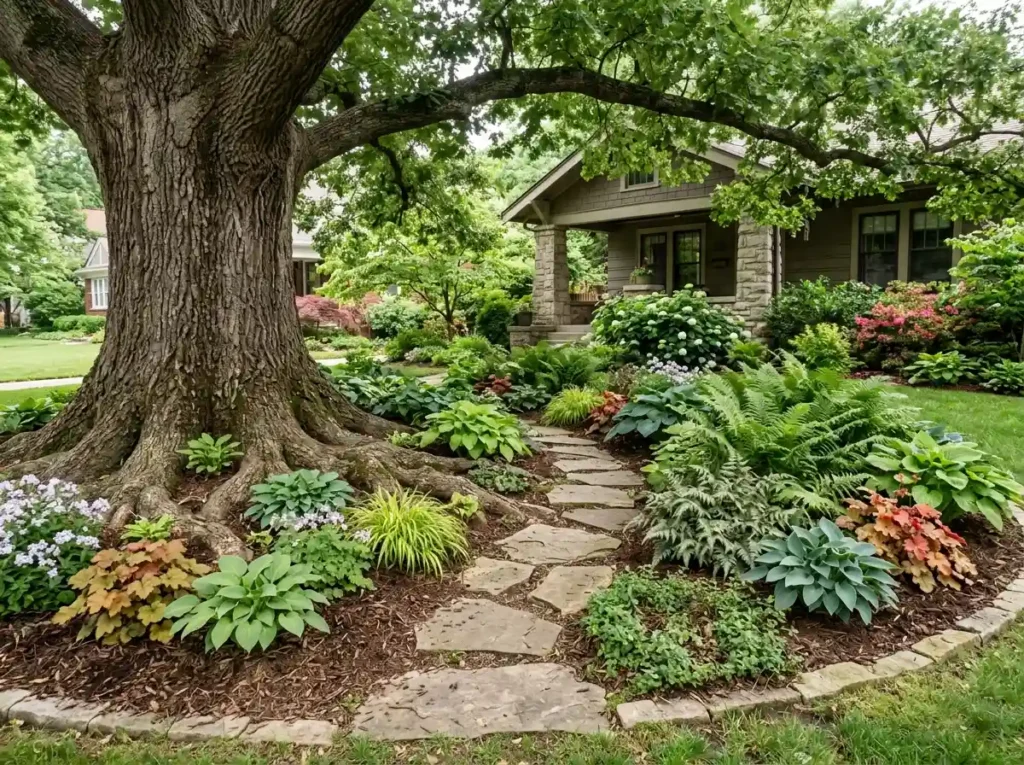
Thin grass under a large tree is common. The area has less light, and tree roots compete for water.
Do not solve the problem by adding a deep layer of soil. Extra soil can harm the roots and cover the base of the trunk. Avoid cutting large roots to create a planting bed.
Instead, place small groups of shade plants between major roots. Ferns, heuchera, hostas, sedges, woodland phlox, and local shade plants may work, depending on your climate.
Choose plants that can handle dry shade if the tree takes most of the moisture. Water gently during the first growing season.
Add a light mulch layer, but keep it away from the trunk. The base of the tree should remain visible. A mound of mulch can trap moisture and lead to damage.
A simple stepping-stone path or small bench may fit if there is enough room. Keep heavy features away from major roots.
This approach turns a weak lawn area into a calm, useful garden.
Use Rock and Gravel Without Making the Yard Too Hot
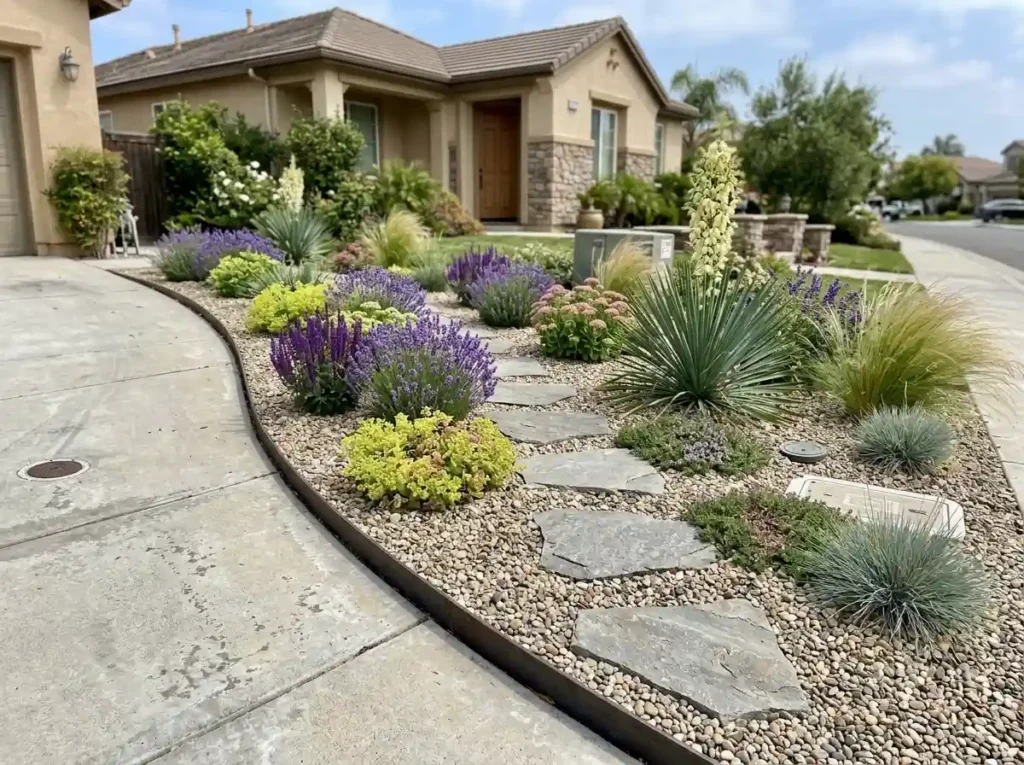
Rock can connect planting beds with driveways, paths, and walls. It can also help in dry areas where mulch blows away.
Use gravel between stepping stones, along a narrow driveway strip, or around drought-tolerant plants. River rock can suit a dry drainage channel. One or two larger stones can act as accents.
Choose a color that works with the house. Warm tan stone may suit brick or beige siding. Gray gravel often fits modern homes and concrete paths.
Install strong edging so small stones do not spread into the lawn. Think carefully before using landscape fabric. Soil and leaves can collect above it, allowing weeds to grow over time.
Dark stone can become very hot in full sun. It may stress nearby plants and make the entrance uncomfortable.
Front yard landscaping with rocks can lower some routine work, but it is not maintenance-free. You will still need to remove leaves, weeds, and loose soil.
Build a Rain Garden to Manage a Wet Area
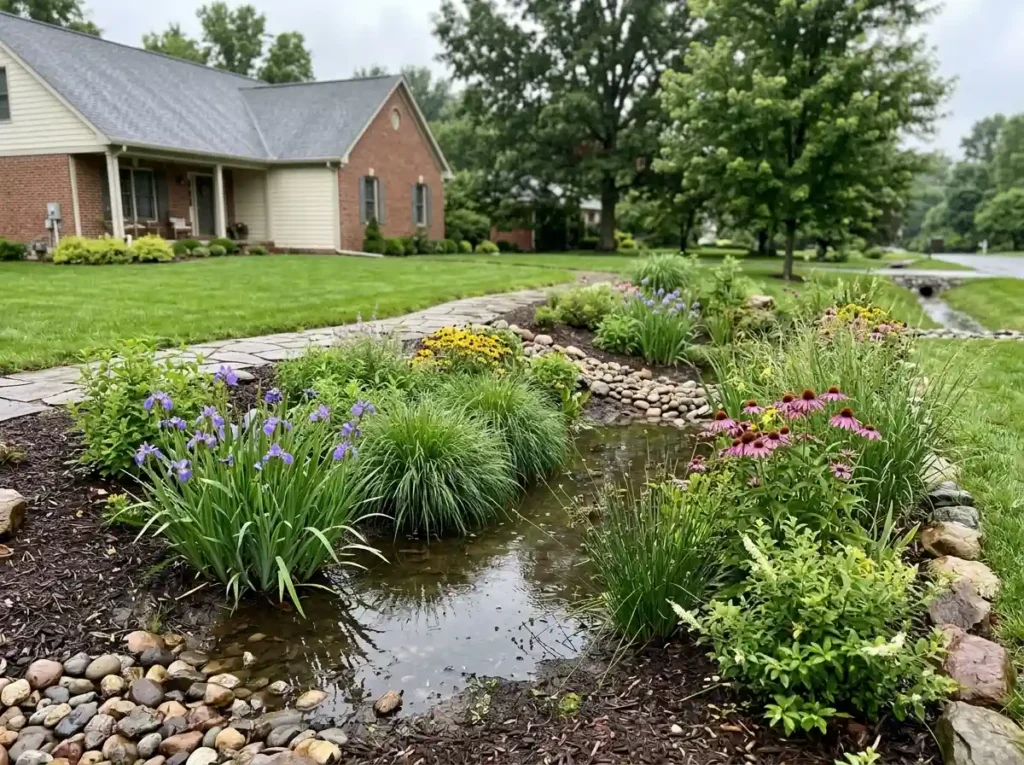
A low spot that stays wet after rain can damage grass and create muddy patches. A rain garden may help manage runoff while adding plants.
A rain garden is a shallow planted area that holds water for a short time. It may collect water from a downspout, driveway edge, slope, or low part of the lawn.
Choose plants that can handle both wet and dry periods. Native grasses, flowering plants, and small shrubs often work well when selected for local soil and climate.
Keep the garden away from the house foundation, septic system, and buried utility lines. Water should not flow onto a neighbor’s property or across a public path.
Rain garden size and placement depend on soil, slope, and local rain patterns. Check a city stormwater guide, conservation office, or extension service before digging.
A rain garden is not the right fix for every drainage problem. Standing water near the house or sewer issues may require a drainage professional.
Add Privacy Without Building a Wall of Shrubs
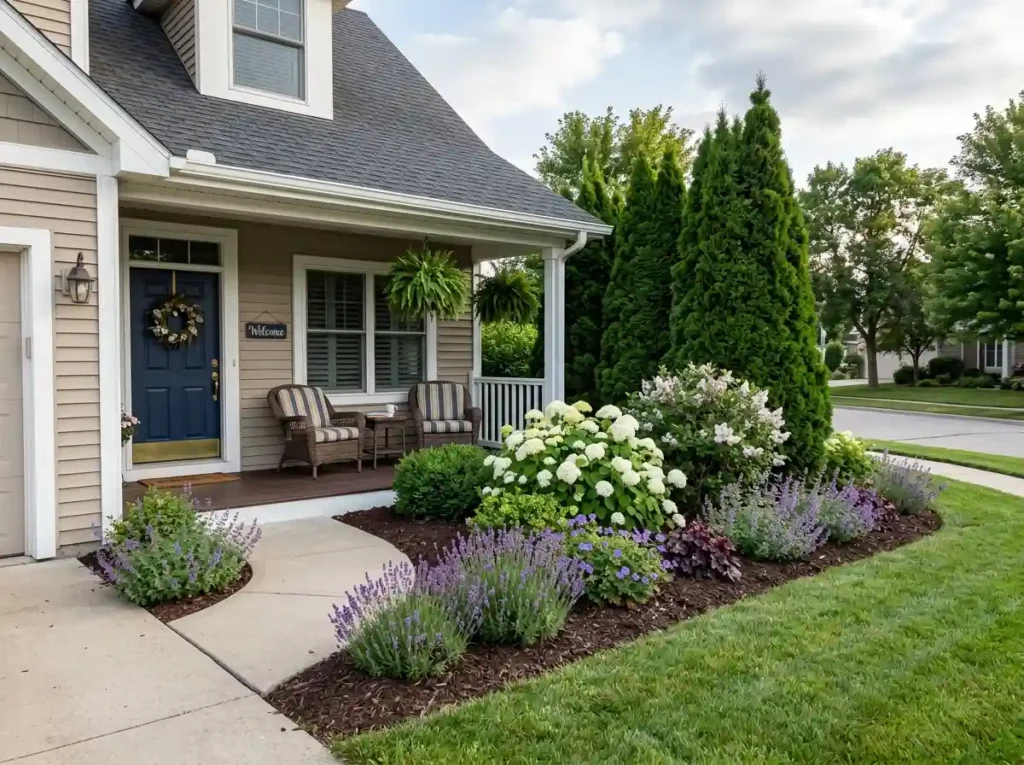
You may want privacy near the porch without hiding the entire front of the home. Layered shrubs can soften views while keeping the yard open.
Place taller shrubs near a side property line or the outer edge of the porch. Use medium plants closer to the house. Add low plants near paths and windows.
A staggered layout often looks more natural than one straight row. It also leaves small gaps for light and air.
Check the view from inside the house, the street, and the driveway before planting. Shrubs should not block windows, house numbers, sidewalks, or drivers’ sightlines.
For a small yard, use one narrow upright shrub with lower plants around it. Large round shrubs may take up too much walking space.
Mixed planting can also reduce the risk of losing the whole screen if one plant has a pest problem.
Good front yard privacy landscaping should make the space feel comfortable, not closed off.
Light Steps and Paths for a Safer Entrance
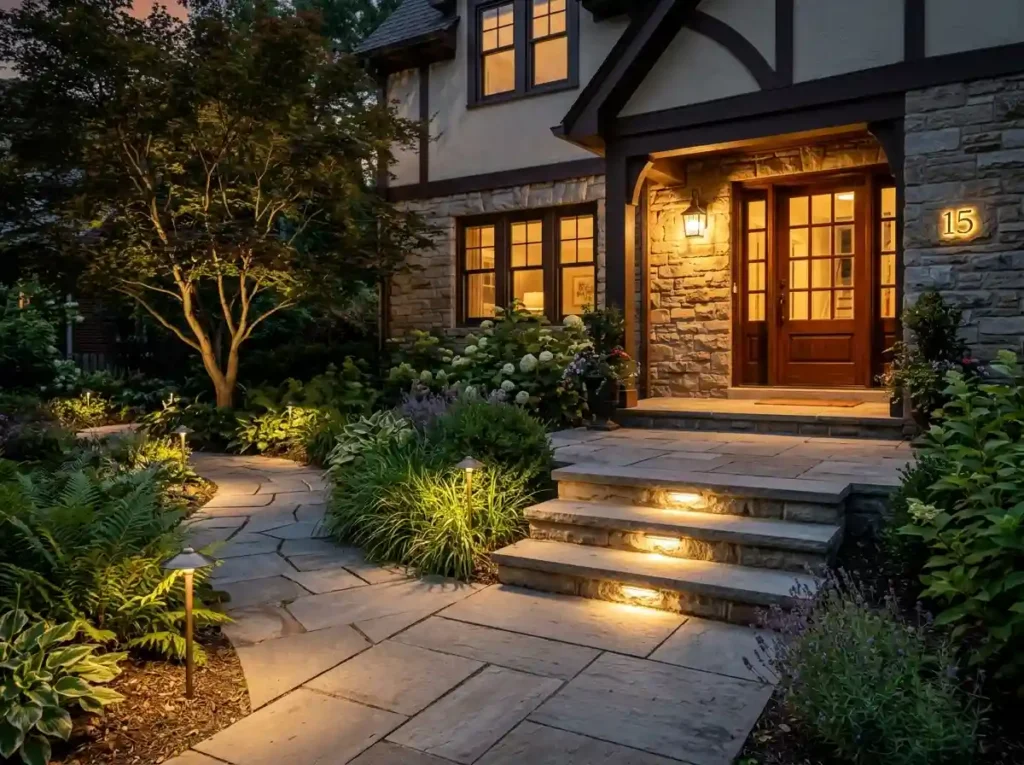
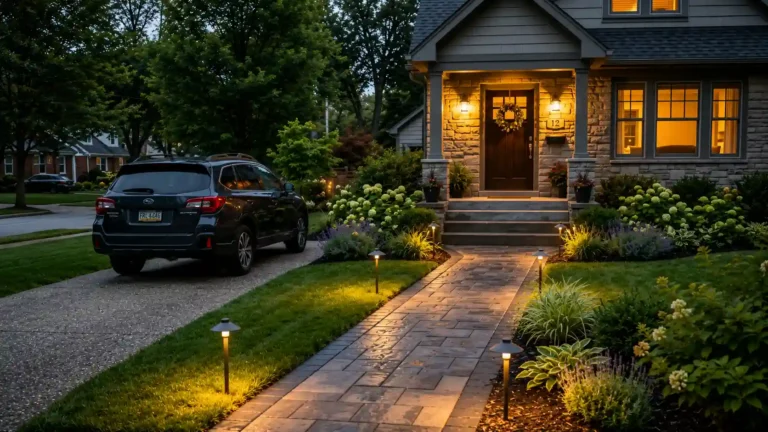
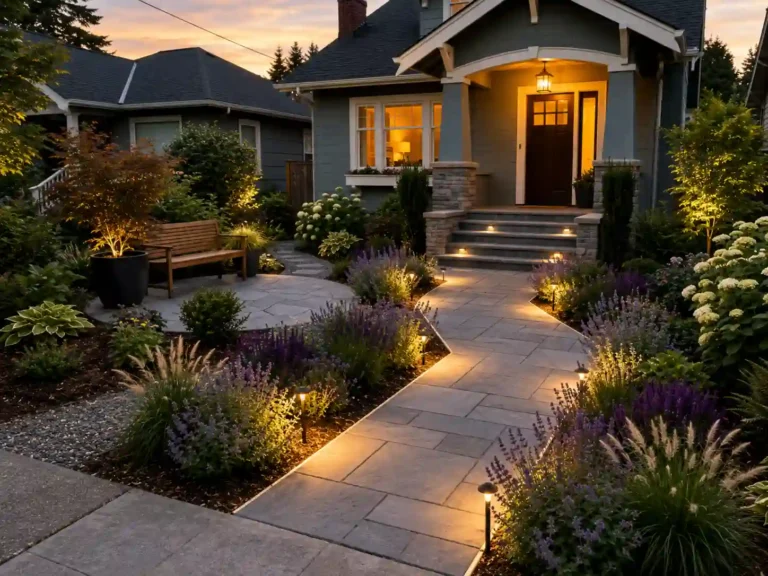
A front yard should remain easy to use after sunset. Good lighting helps guests see steps, paths, house numbers, and the front door.
Start with safety. Add light near changes in height, dark corners, and uneven walking areas. Then use a few fixtures to show a tree, textured wall, or planting bed.
Choose warm, soft light. Bright floodlights can create glare and disturb neighbors. Point fixtures away from windows and the street.
Do not line both sides of the path with many lights. This can make the walkway look like a runway. Space fixtures where light is truly needed.
Solar lights are easy to install, but their brightness can change with the weather and battery quality. Hardwired systems are often stronger and more reliable.
Use outdoor-rated products. Hire a qualified installer for hardwired work or any job near buried cables.
Among the best front yard curb appeal ideas, lighting offers both beauty and daily safety.
Hide Utility Boxes Without Blocking Access
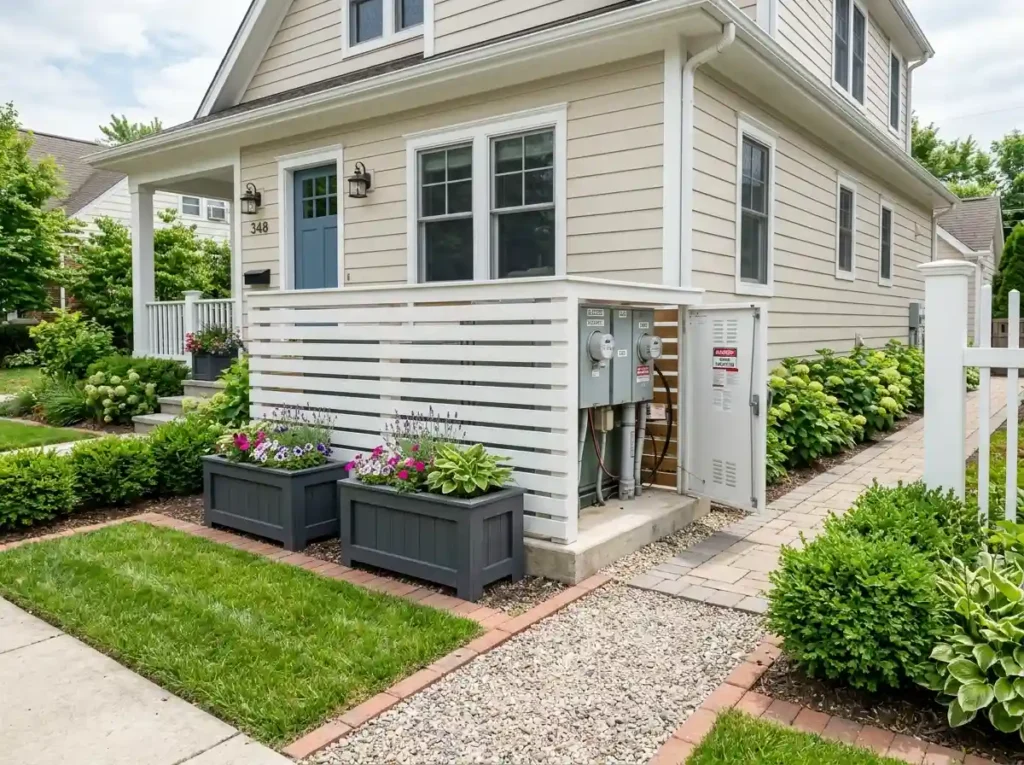
Utility boxes, meters, and trash bins can break up a clean front yard. You can screen them, but access and airflow must come first.
Use a short slatted screen, movable planter boxes, or compact shrubs placed at a safe distance. A small bin enclosure can match the fence, porch, or house trim.
Do not place permanent walls around equipment that workers need to reach. Keep labels, doors, vents, and service panels clear.
Heating and cooling equipment needs open airflow. Dense plants or solid screens may reduce performance or cause damage.
Before digging, contact the local utility-marking service. Do not plant trees or large shrubs over buried lines.
Ask the utility provider about required clear space. Rules can vary by equipment and location.
The best screen hides the view from the street while leaving an open service side. This keeps the yard neat without creating a safety problem.
Use Fresh Edging and Mulch for a Fast Final Fix
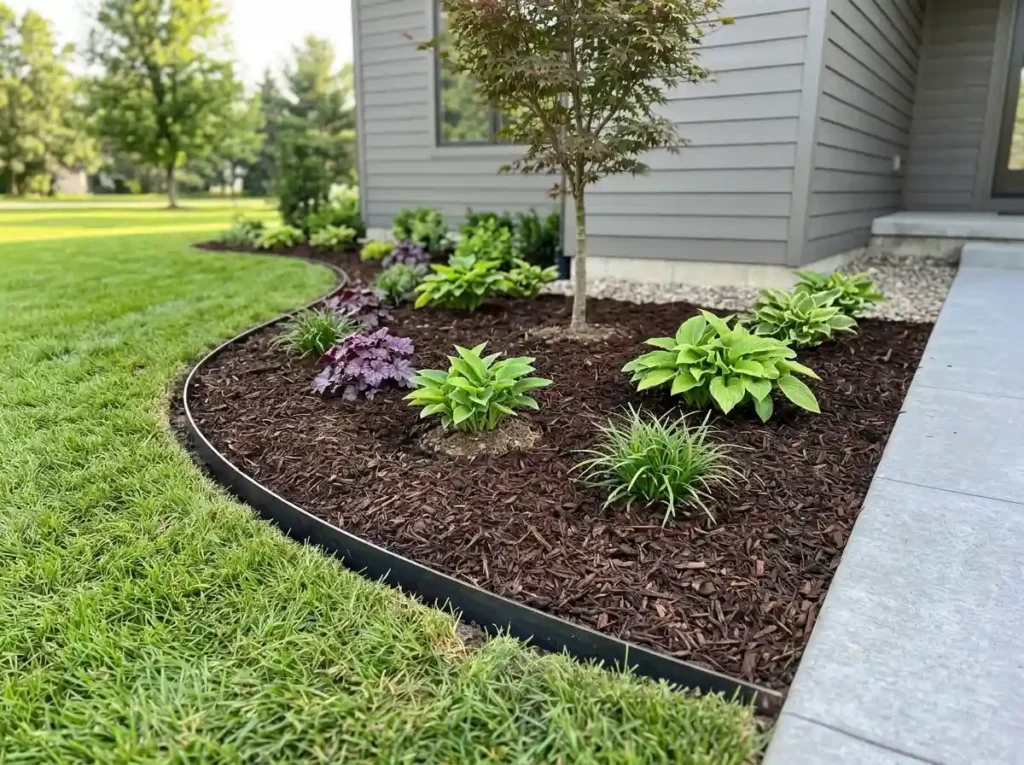
An older yard can look much better once the lines are clean. Edging and mulch give beds a clear shape and cover bare soil.
Choose an edge that fits the home. Steel works well with modern designs. Brick suits many traditional homes. Stone can match an existing walkway. A natural trench edge is simple and costs little.
Remove grass that grows into the bed. Create one smooth line instead of many small bumps.
Add an even layer of mulch, but do not pile it against plant stems, tree trunks, siding, or vents. Too much mulch can hold extra moisture and hide pests.
Fine bark looks neat in small beds. Larger wood chips may last longer in wide areas. Gravel mulch can work in dry climates when the plants can handle extra heat.
Fresh edging will not fix poor plant placement, but it can make a healthy yard look more planned in one weekend.
Start With One Area, Not the Whole Yard
You do not need to rebuild everything at once. Choose the area that causes the biggest problem.
Start with the walkway if guests cannot find the door. Fix drainage before adding expensive plants. Use evergreens if the yard looks empty for much of the year. Replace weak grass if mowing the same bare patch wastes your time.
Measure the area and record its light. Set a budget before shopping. Then choose two or three changes that work together.
For example, you could widen the foundation bed, add one small tree, and finish with fresh edging. Another yard may need a clear path, two large containers, and better lighting.
These front yard landscaping ideas can help you create an entrance that feels organized, welcoming, and easier to maintain. Start small, complete one area, and use the same materials or plants in the next project.