17 Simple Driveway Landscaping Ideas for Any Home
Your driveway may take up a large part of your front yard. Yet it often gets less attention than the lawn, porch, or flower beds.
This can leave you with bare soil, messy grass edges, weeds, or a plain strip of concrete. You may want to improve the area, but a full yard makeover can cost a lot. It can also create more work than you have time to handle.
These simple driveway landscaping ideas can help you create a cleaner and more welcoming entrance. You can start with a small border, a few lights, or two matching planters. Some projects take one afternoon. Others can be completed over several weekends.
The right choice depends on your space, climate, budget, and maintenance needs. You also need to think about car doors, tires, drainage, and driver visibility.
Here are 17 easy driveway landscaping ideas that solve common problems without making your front yard hard to care for.
Check These 5 Things Before Landscaping Your Driveway
The best-looking idea may not be the right one for your property. Check the space before you buy plants or materials.
Start by measuring the area between your driveway and lawn, wall, fence, or property line. Remember that plants will grow wider over time. A small shrub at the garden center may become too large for a narrow border.
Next, watch how people use the driveway. Open each car door. Check where passengers walk and where tires turn. Keep plants, rocks, and lights out of these areas.
You should also check:
- How many hours of sun the area receives
- Where rainwater flows after a storm
- Whether road salt or snow reaches the planting bed
- How often you can water, trim, and weed
- Whether plants could block your view of the road
Set a clear budget before you begin. Edging and mulch may cost less than trees, stone columns, or drainage work.
A quick site check can save you from moving plants or replacing damaged materials later.
Create a Cleaner Edge with Brick, Stone, or Metal
Best for: Messy grass edges
Budget: Low to moderate
Maintenance: Low
DIY difficulty: Easy to moderate
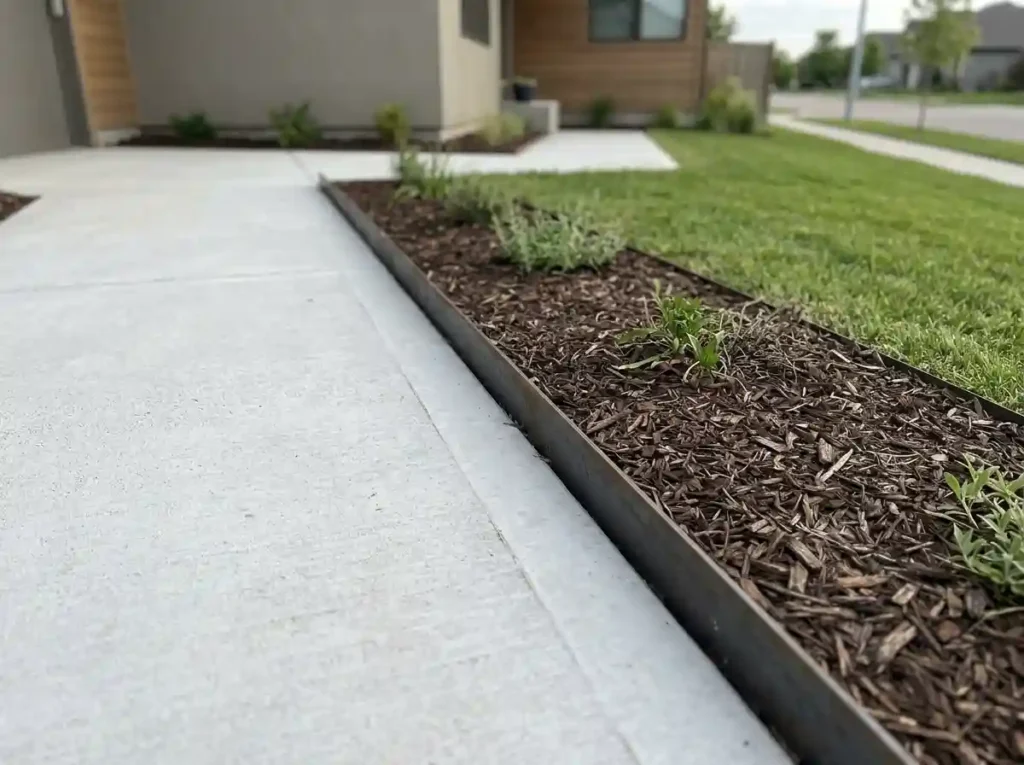
Landscape edging is one of the fastest ways to make a driveway look finished. It creates a clear line between the hard surface and the lawn, mulch, gravel, or flower bed.
Brick works well with traditional homes. Natural stone suits cottages and rustic homes. Thin metal edging creates a clean look beside modern properties.
Keep the edging close to ground level. Raised pieces can become a tripping risk or catch car tires.
Straight lines often work best beside narrow driveways. Soft curves can look good when you have a wider front yard.
Good edging also keeps loose mulch and rocks from spreading across the driveway. You can leave the border simple or use it as the base for future planting.
Cover Bare Soil with a Narrow Mulch Border
Best for: Low-cost weekend projects
Budget: Low
Maintenance: Low to moderate
DIY difficulty: Easy
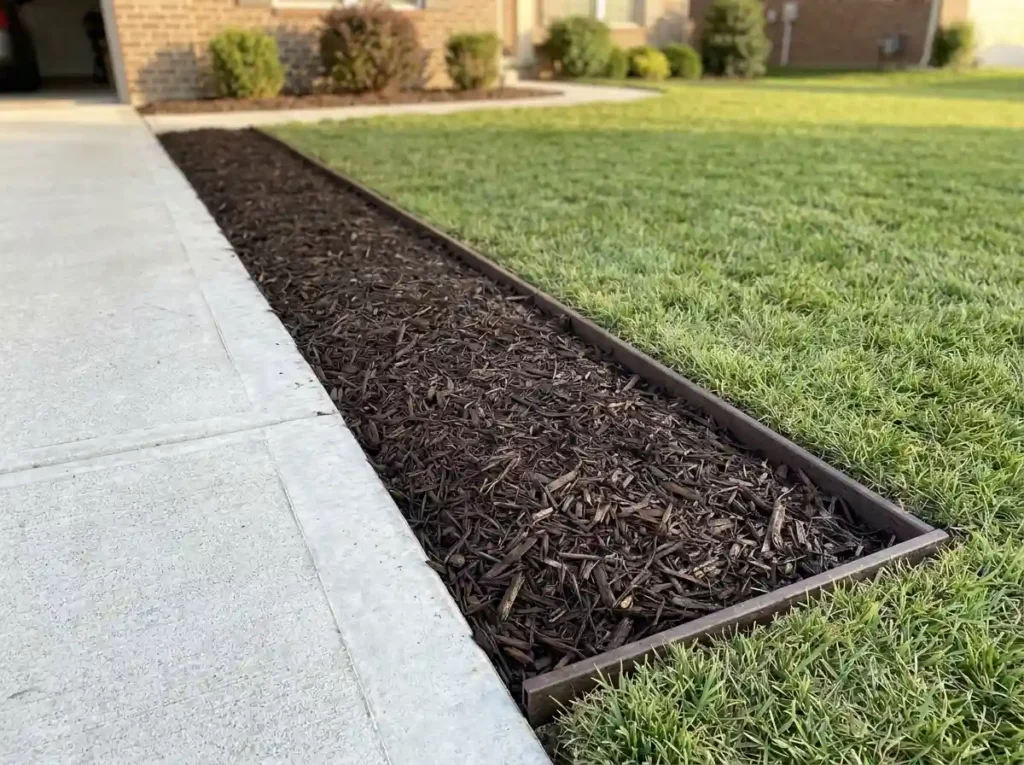
A mulch border can hide bare soil, control some weeds, and give the driveway a neat frame. You do not need a wide flower bed to make this idea work.
Mark the bed with a garden hose before digging. This lets you test the shape without making a permanent change.
Remove grass and weeds from the area. Add a firm edge, then spread an even layer of mulch. Keep the mulch slightly lower than the driveway surface so it does not wash onto the pavement.
Dark mulch creates contrast beside light concrete. Natural brown mulch gives the yard a softer look.
You can add a few grasses or small plants later. However, a fresh mulch border can look complete on its own.
This is also a useful choice for renters because the materials can often be removed without major changes.
Add Compact Evergreen Shrubs for Year-Round Shape
Best for: A neat look in every season
Budget: Moderate
Maintenance: Low to moderate
DIY difficulty: Moderate
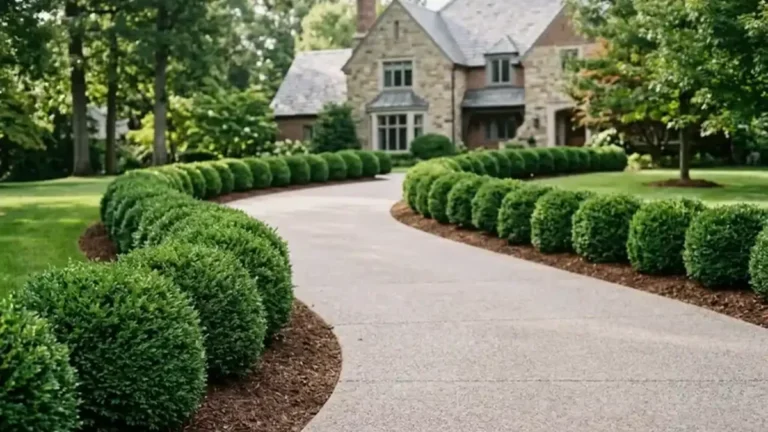
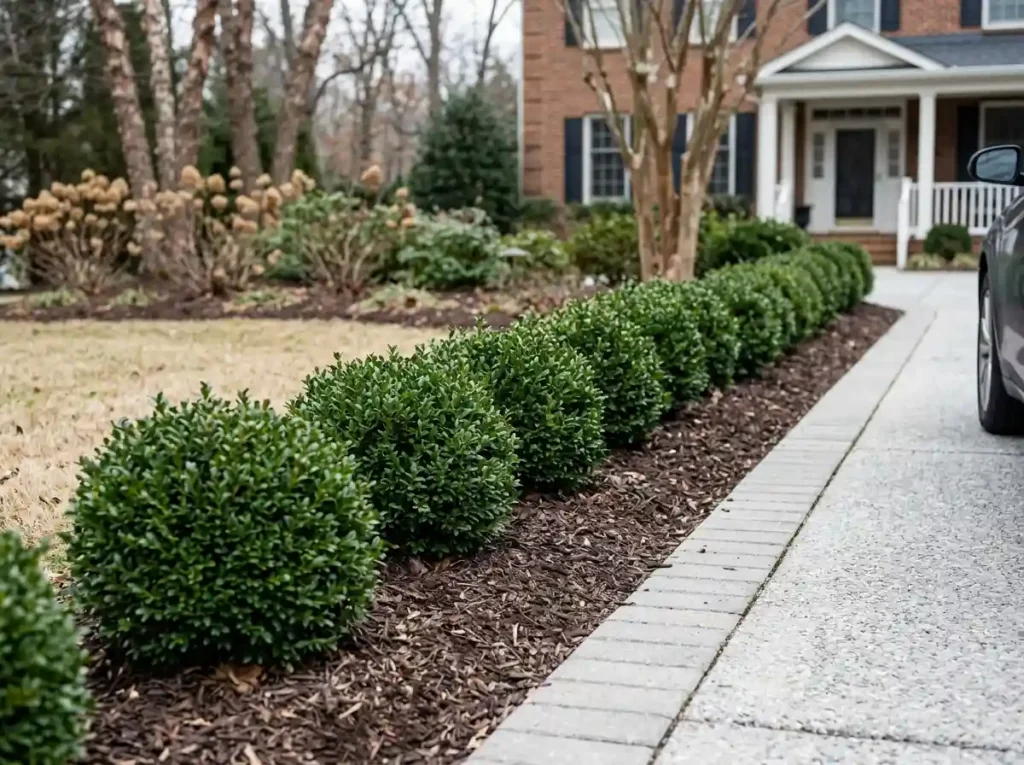
Low-growing evergreen shrubs can give your driveway a clear structure throughout the year. They also help connect the driveway to other front yard planting.
Choose compact plants that fit the available width when fully grown. Check the mature size on the plant label. Do not base your choice on the plant’s current nursery size.
Avoid shrubs with thorns or stiff branches near parked cars. These can scratch paint, catch clothing, or make it hard to open doors.
Possible choices may include dwarf inkberry, compact juniper, or small boxwood alternatives. The right plant depends on your climate, soil, and sunlight.
Repeat the same shrub along the border instead of using many different kinds. Repetition creates a calmer and more planned look.
Ask a local nursery or extension office which compact evergreen plants grow well in your area.
Soften Hard Pavement with Ornamental Grasses
Best for: Modern and relaxed front yards
Budget: Low to moderate
Maintenance: Low
DIY difficulty: Easy
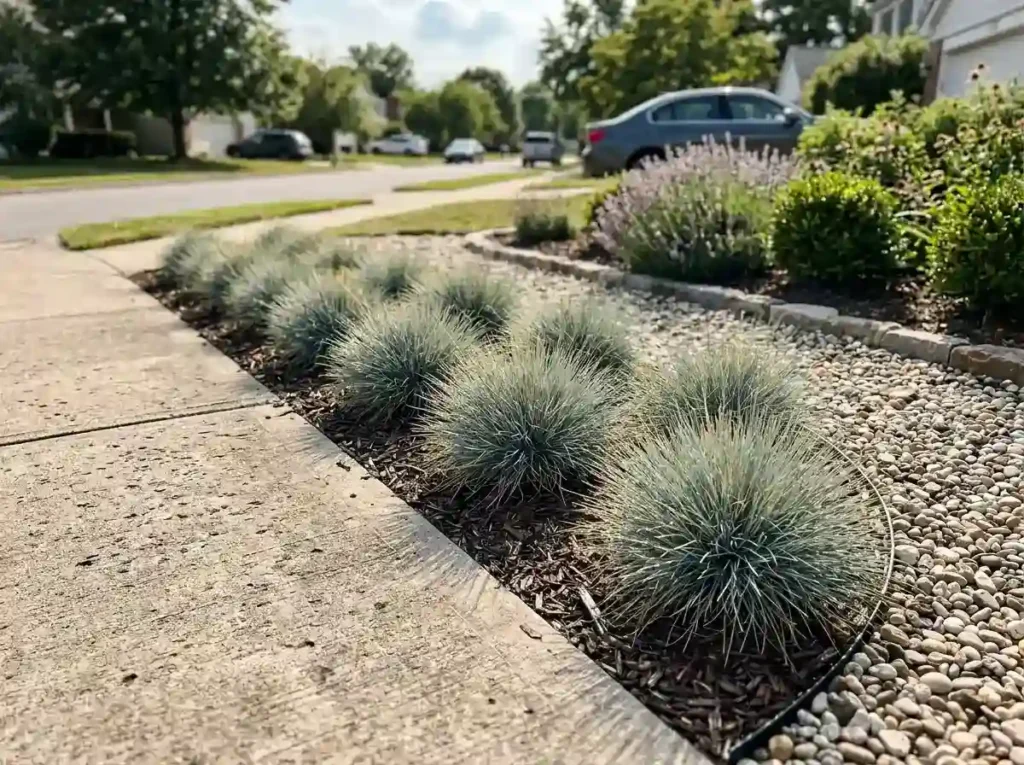
Concrete, asphalt, and gravel can make a front yard feel hard and flat. Ornamental grasses add soft movement without taking up much space.
Choose upright grasses that stay in a tidy clump. Blue fescue can work in smaller sunny spaces. Prairie dropseed and compact switchgrass may suit wider borders. Plant choices will depend on your region.
Avoid grasses listed as invasive in your area. Some types spread through seeds or underground roots and become hard to control.
Plant one variety in repeated groups for a clean design. Mixing too many colors and shapes can make a narrow driveway border look busy.
Grasses pair well with dark mulch, pale gravel, or river rocks. Most need a trim once a year, but care needs can vary.
Keep tall grasses away from street corners and driveway exits. They should never block your view of traffic.
Make the Driveway Safer with Solar Lights
Best for: Dark driveways and curved entrances
Budget: Low to moderate
Maintenance: Low
DIY difficulty: Easy
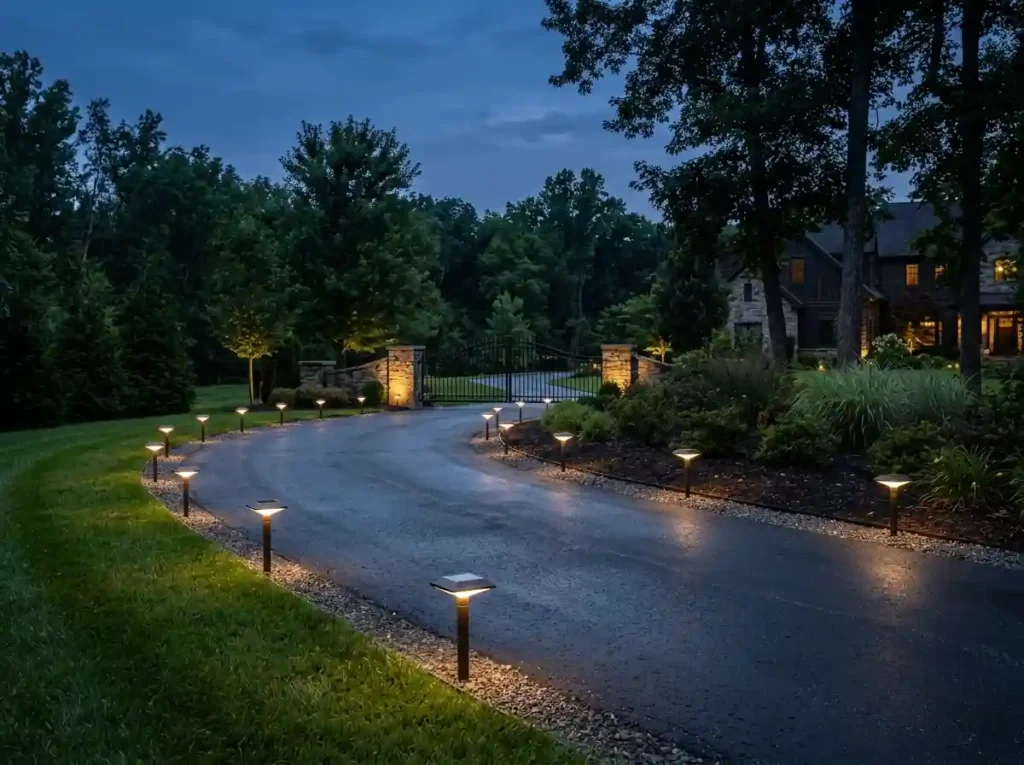
Solar lights can make driveway edges easier to see after dark. They also add a warm glow without the need for electrical wiring.
Place the lights at even spaces. Random placement can make the driveway look messy. Use more lights near curves, steps, gates, and walking paths.
Keep each fixture away from tires, lawn mowers, and snow-clearing tools. Flush or low-profile lights are often safer beside narrow driveways.
Choose warm, soft light instead of very bright white light. Harsh lights can bother neighbors and create glare for drivers.
Before fixing the lights in place, test their positions at night. Check the view from the street, garage, and driver’s seat.
Solar panels need direct sunlight to charge well. Wipe dirt and leaves from the panels when the lights begin to look dim.
Fix Difficult Soil with a River Rock Border
Best for: Dry, uneven, or erosion-prone areas
Budget: Moderate
Maintenance: Low to moderate
DIY difficulty: Easy to moderate
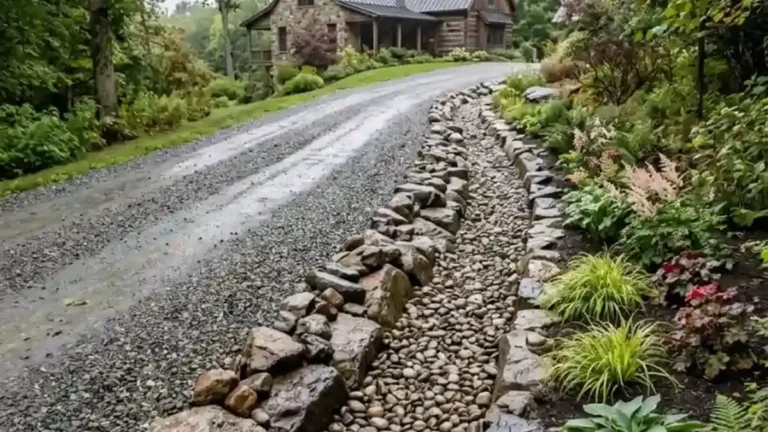
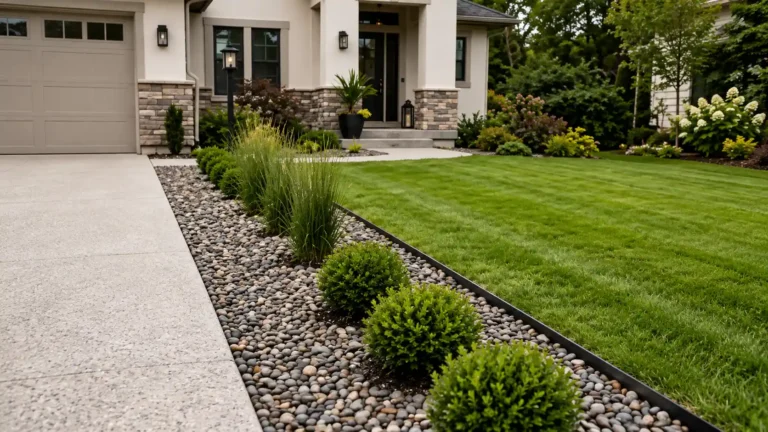
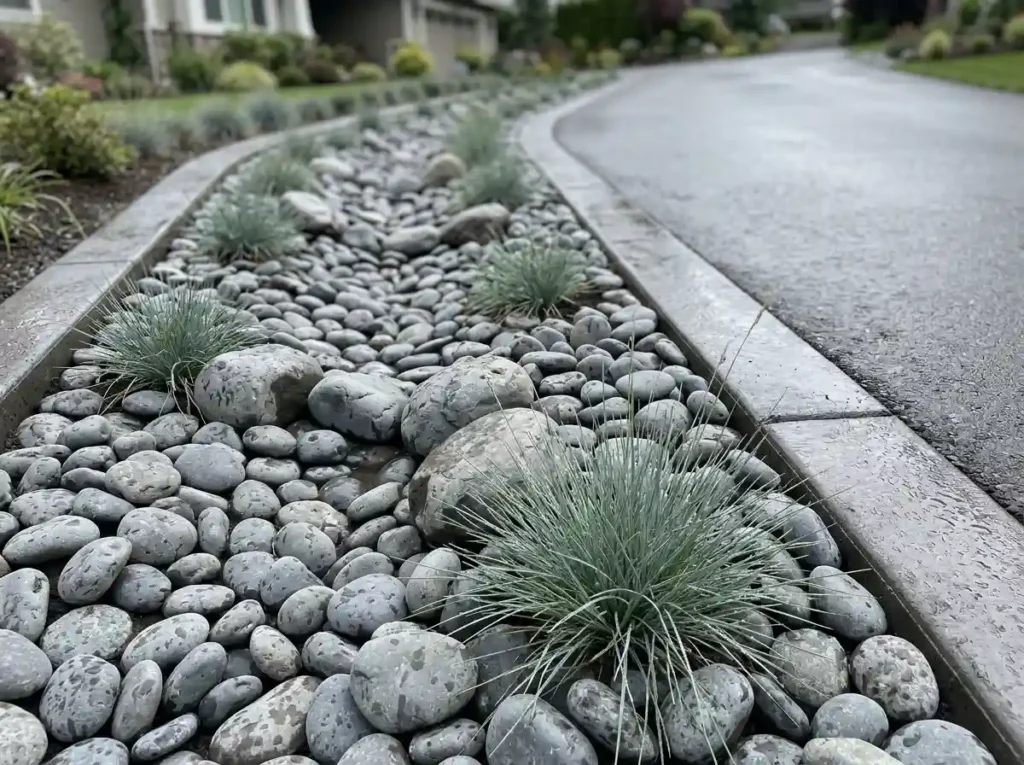
River rocks work well where grass struggles or soil washes away. They create a clear border and can handle heat from nearby pavement.
Use medium or large stones that are less likely to move. Small loose pebbles can roll onto the driveway, especially on a slope.
Install firm edging before adding the rocks. Prepare the base so the stones sit evenly. Landscape fabric may help in some beds, but it will not stop every weed.
Gray river rocks look good with blue-green grasses. Mixed natural stones suit cottage and rustic yards. Larger cobbles can also help guide water through a planned drainage area.
Rock borders still need some care. Leaves can collect between the stones, and dust may support new weeds.
Use a blower, rake, or hand tool to remove garden waste before it builds up.
Add Color with Repeated Groups of Flowers
Best for: Brightening a plain driveway
Budget: Low to moderate
Maintenance: Moderate
DIY difficulty: Easy
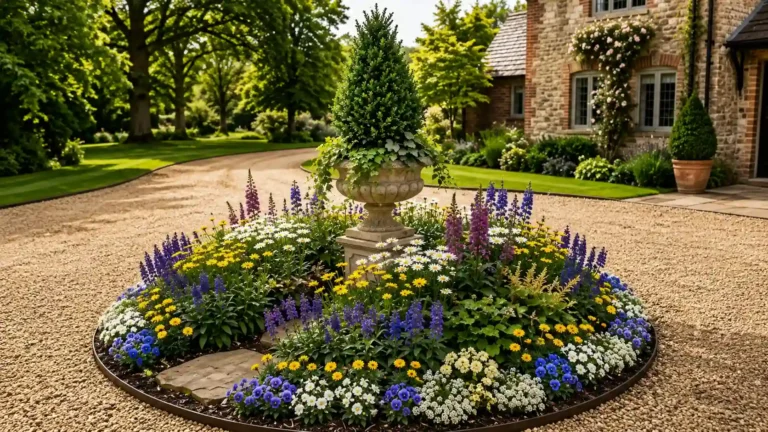
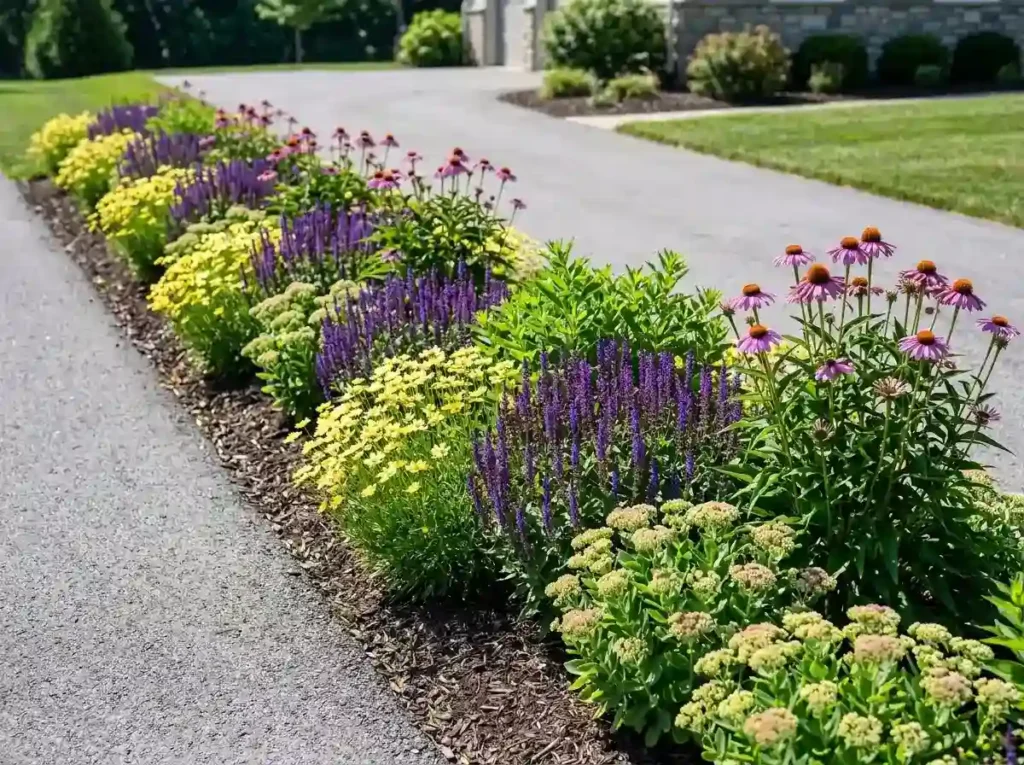
A flower bed can add color, but too many plant types may make the area look crowded. Choose two or three dependable plants and repeat them along the driveway.
For sunny areas, you might use salvia, coreopsis, sedum, or coneflowers. Catmint and daylilies may also work in some climates. Check local growing advice before buying.
Place shorter plants near the driveway. Taller flowers should sit farther back so they do not lean over parked cars or block your view.
Pavement can reflect heat. Select plants that can handle the hotter and drier conditions beside concrete or asphalt.
Try to combine plants that flower at different times. This keeps the border attractive for a longer part of the year.
Keep the design simple. A strong base of green leaves with a smaller amount of seasonal color often looks more balanced.
Add Matching Planters Beside the Garage
Best for: Fully paved spaces
Budget: Low to moderate
Maintenance: Moderate
DIY difficulty: Easy
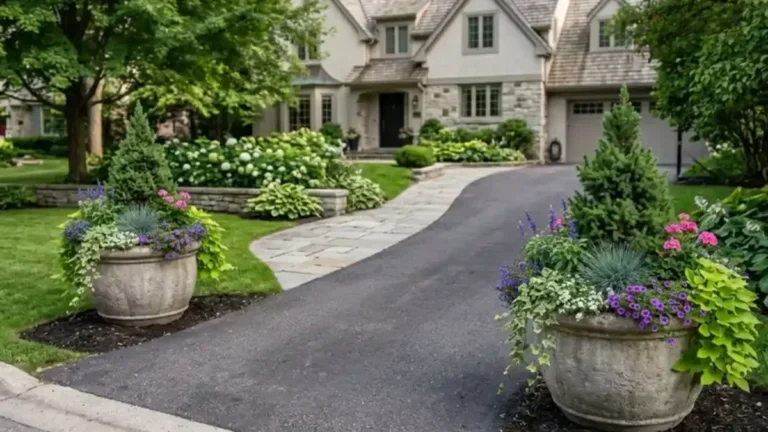
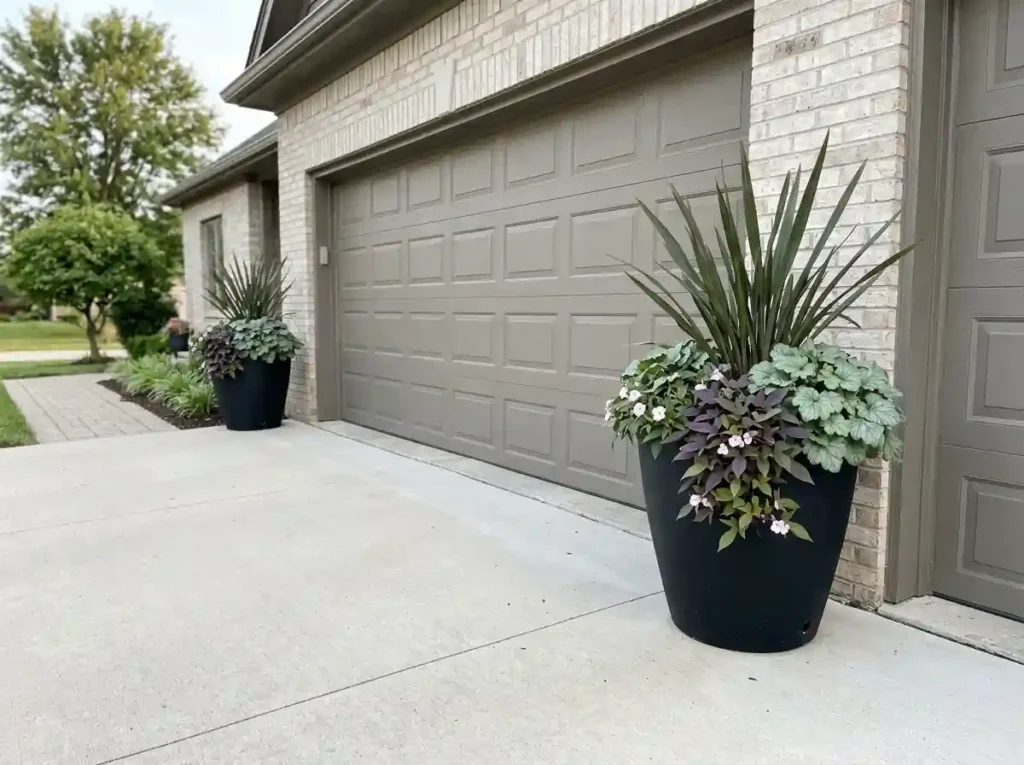
You do not need open soil to landscape a driveway. Two matching planters can frame a garage door or side entrance.
Choose containers that are large enough to match the size of the building. Small pots may look lost beside a wide garage.
Black or gray planters suit many modern homes. Terracotta can add warmth to brick, stone, or cream-colored walls.
Use the same planting mix in both pots. A simple container can include one tall plant, one rounded filler plant, and one trailing plant.
Make sure each pot has drainage holes. Standing water can damage roots and may crack some containers during cold weather.
Place the pots where they will not block mirrors, doors, walking paths, or garage movement.
Lightweight resin pots are easier to move. However, they may need added weight in windy areas.
Turn the Mailbox into a Small Focal Point
Best for: Improving the driveway entrance
Budget: Low
Maintenance: Low to moderate
DIY difficulty: Easy
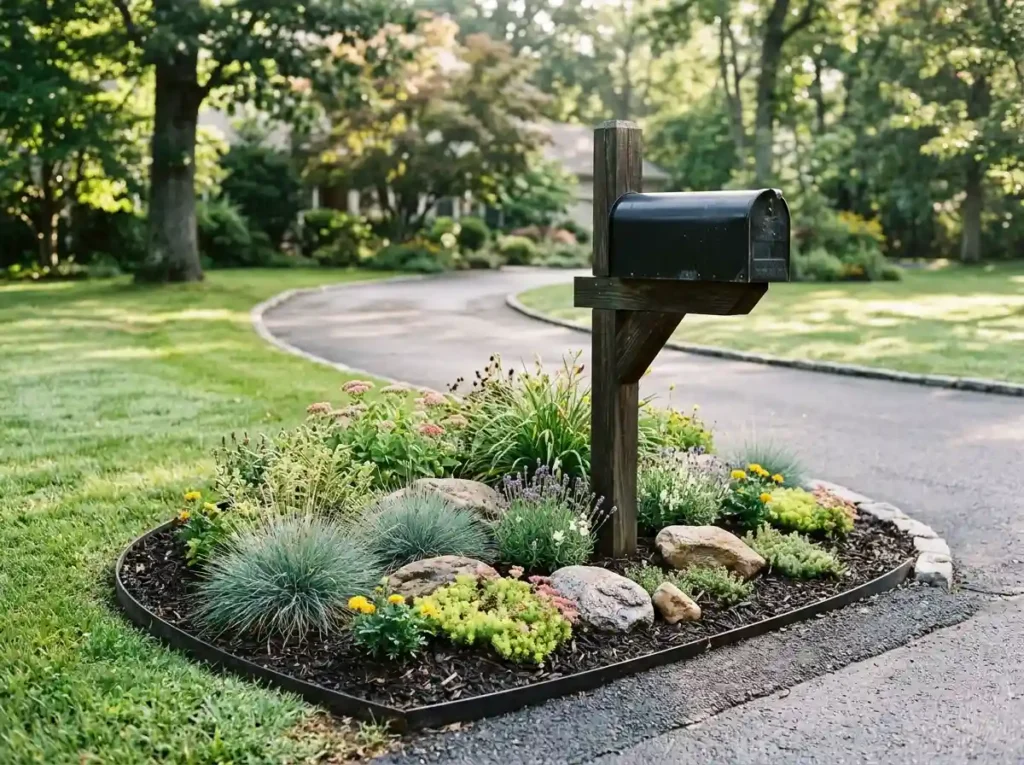
The mailbox area is often the first part of your yard that visitors see. A small planting bed can make it look cared for without taking up much space.
Create a clear circle, square, or curved bed around the post. Use edging to keep grass from spreading into the soil.
Choose low plants that do not block the mailbox door, house number, or driver’s view. Compact grasses, sedum, and seasonal flowers may work well.
The area beside the street can be hot and dry. It may also receive road salt, dust, and water from passing cars. Choose strong plants that match these conditions.
You can also use mulch and a few larger rocks instead of flowers.
Keep the mailbox easy to reach. Check local postal and road rules before adding large stones, signs, or raised structures.
Replace Weak Grass with a Ground-Cover Strip
Best for: Thin grass beside pavement
Budget: Low to moderate
Maintenance: Low after growth fills in
DIY difficulty: Moderate
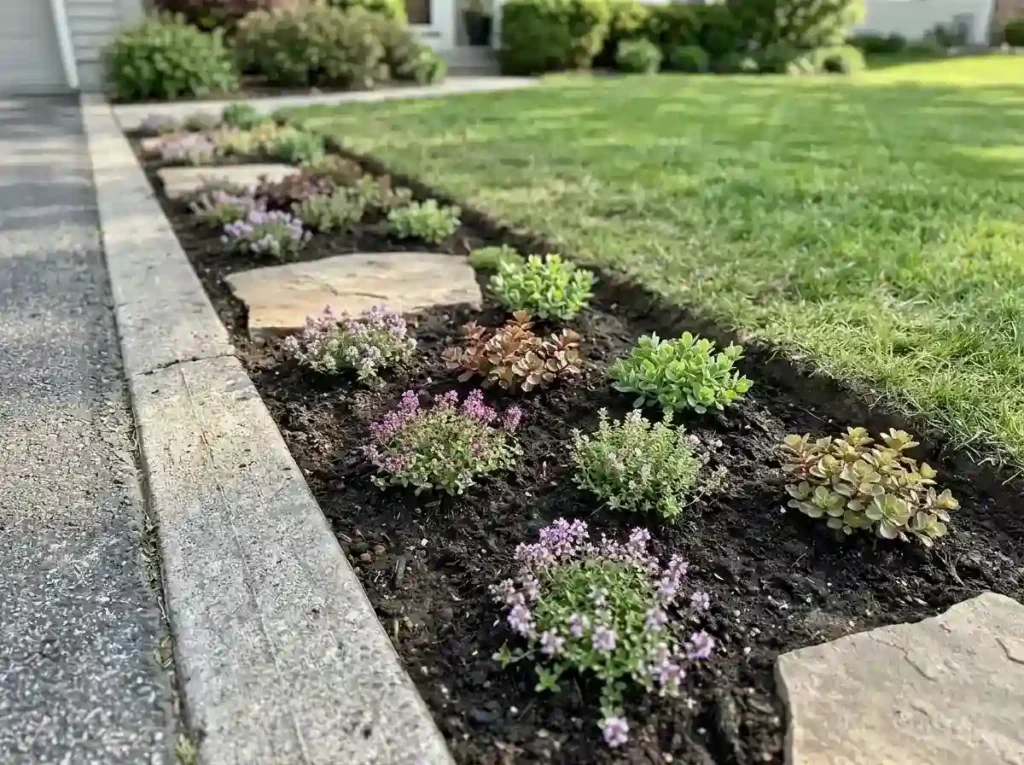
Grass often struggles beside a driveway because the soil becomes hot, dry, or packed down. A low ground cover may be a better fit.
Creeping thyme can work in sunny, dry areas in suitable climates. Sedum handles heat well in many regions. Dwarf mondo grass or liriope may suit shaded spaces, but both need the right local conditions.
Remove weeds before planting. Ground cover will not hide a bed full of strong weed roots.
Leave enough space between young plants so they can spread. Water them during the first growing season. Once they fill the bed, they may need less care.
Avoid aggressive plants that spread into lawns, paths, or nearby gardens.
Think about foot traffic too. Some ground covers handle light steps. Others become damaged when people walk on them.
Ask a local plant expert for a low-growing option that fits your climate.
Use Tall Pots Along a Fence or Wall
Best for: Narrow driveways
Budget: Moderate
Maintenance: Moderate
DIY difficulty: Easy
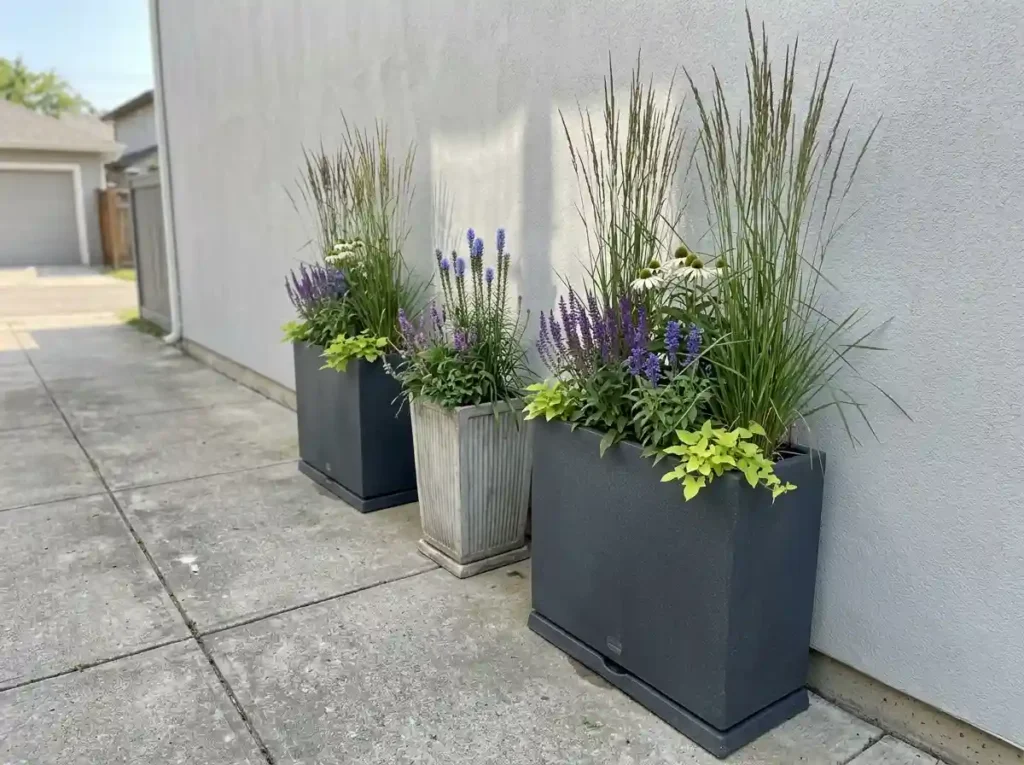
A blank fence or wall can make a narrow driveway feel closed in. Tall pots add plants and height without using much floor space.
Choose slim containers that leave room for car doors and people. Rectangular planters often fit better than wide round pots.
Repeat two or three container styles. A row of unrelated pots can look cluttered.
Tall grasses, compact shrubs, or upright flowers can soften the wall. Avoid plants with sharp leaves or branches near parked vehicles.
Containers dry faster than garden beds. Self-watering pots or a small drip line can reduce daily work.
Use heavy pots or secure light ones in windy places. You do not want a container falling into the driveway.
This option also works well for renters. The pots can move with you, and you do not need to dig into the property.
Mark the Entrance with One Small Tree
Best for: Creating a clear entrance
Budget: Moderate to high
Maintenance: Moderate
DIY difficulty: Moderate
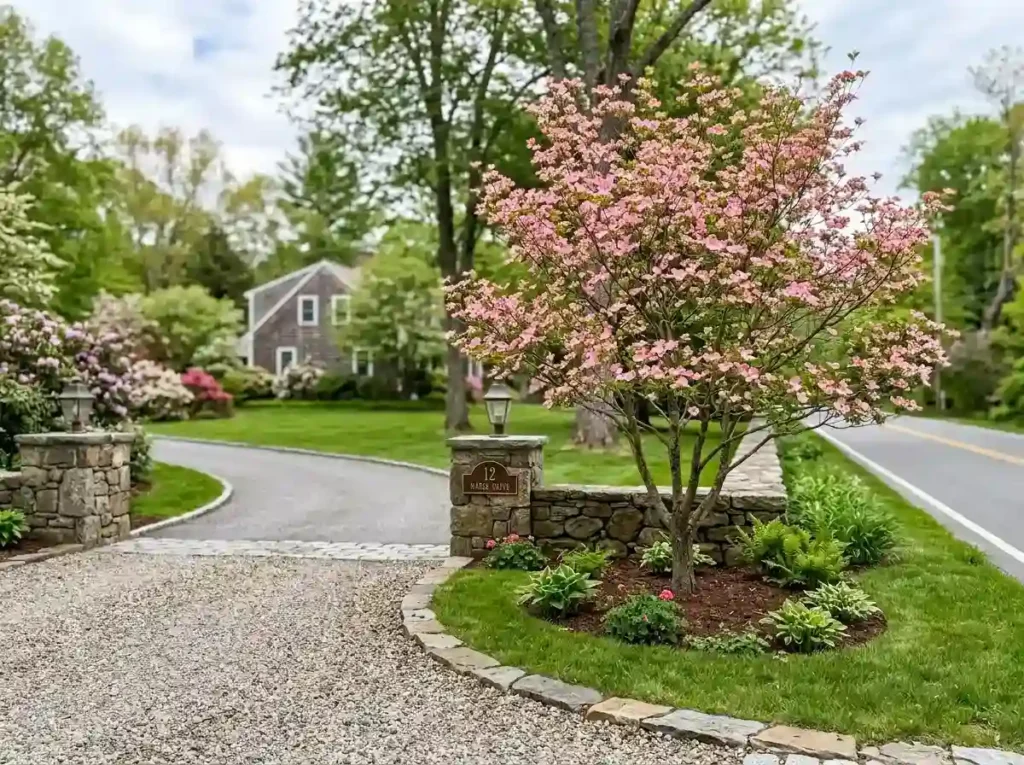
One well-placed tree can make a driveway entrance feel more established. It can also add shade, flowers, or seasonal color.
Choose a small tree that fits the space at full size. Check its mature height, canopy width, and root habits.
Keep the tree away from pavement, foundations, drainage pipes, septic systems, and underground utilities. You should also check for overhead wires before planting.
Do not place the tree where it blocks your view of the road. The trunk, branches, and leaves must stay clear of key sight lines.
Compact flowering trees, multi-stem trees, and narrow column-shaped trees may work in some yards. Native options can be easier to support once established.
Tree selection is very local. Speak with a certified arborist, nursery, or extension office before choosing the species.
Frame a Wide Entrance with Columns
Best for: Long or wide driveways
Budget: High
Maintenance: Low
DIY difficulty: Professional work may be needed
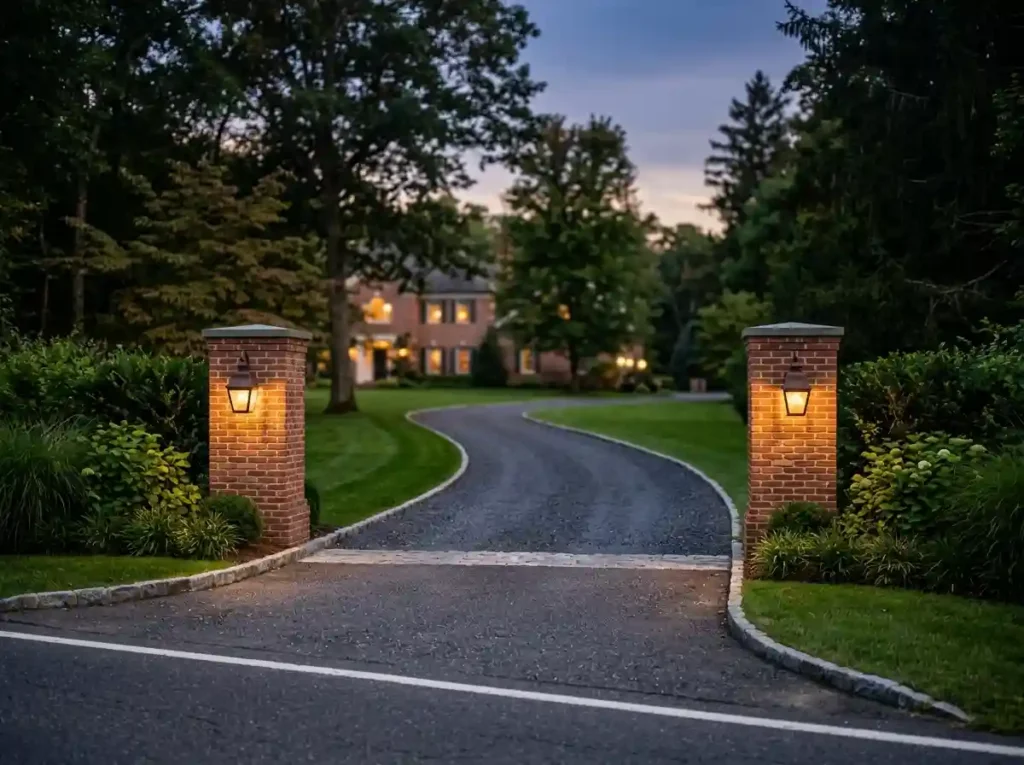
Stone or brick columns can give a driveway a clear starting point. They work best when the entrance feels too open or is hard to notice from the road.
Match the column material to your home. Brick suits many traditional houses. Natural stone works well with rustic homes. Smooth concrete can fit a simple modern design.
You can add address numbers, solar caps, or soft lights. Keep the design simple so the entrance does not feel heavy.
Columns must stay outside road setbacks and utility areas. They also need to leave drivers with a clear view of traffic.
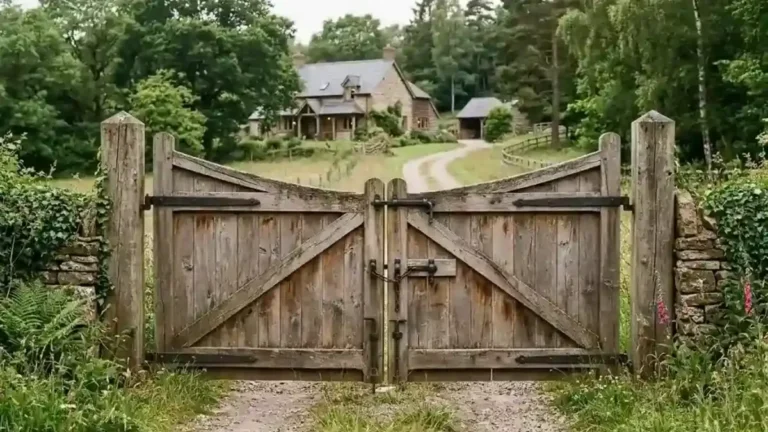
Check local building rules before construction. A mason may be needed for a safe base and stable finish.
For a lower-cost option, use two large matching planters instead. They create a similar frame without permanent building work.
Replace Struggling Lawn with Decorative Gravel
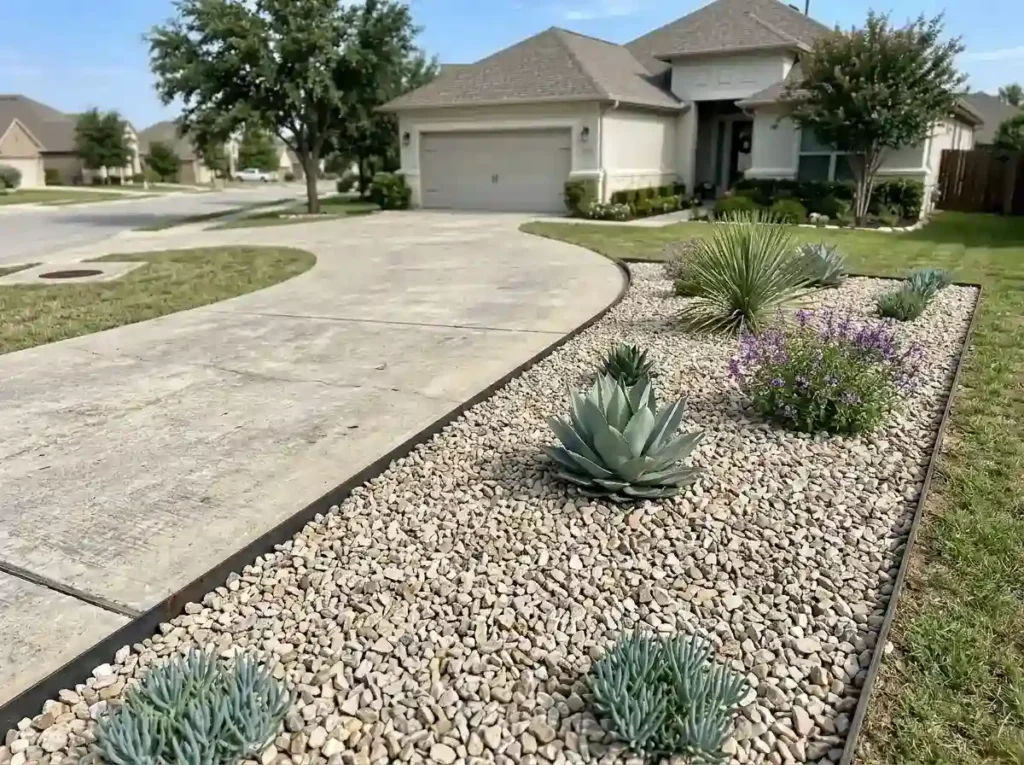
Best for: Hot, dry, or hard-to-mow strips
Budget: Moderate
Maintenance: Low to moderate
DIY difficulty: Moderate
If grass keeps dying beside your driveway, repeated seeding may waste time and money. Decorative gravel can create a cleaner and more stable border.
Start by removing grass, weeds, and loose soil. Add a firm edge to keep the gravel in place.
Use crushed or angular gravel where people may walk. Its pieces lock together better than smooth pea gravel. Pea gravel can work in decorative beds, but it moves underfoot.
Add a few drought-tolerant plants to break up a large stone area. Leave enough open space around each plant for growth.
Light-colored gravel can brighten a shaded entrance. Dark stone creates a strong contrast beside pale concrete.
Gravel is not free from care. Leaves, soil, and weeds can collect over time.
Avoid loose stone on steep slopes or near storm drains.
Control Driveway Runoff with a Small Rain Garden
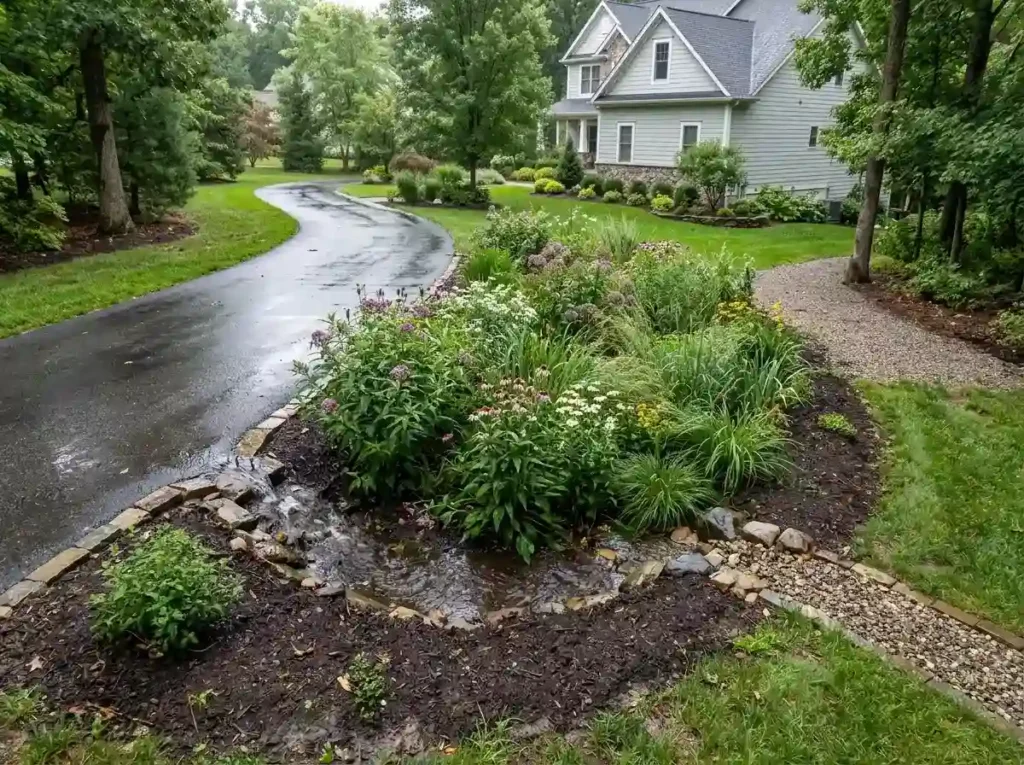
Best for: Areas where rainwater collects
Budget: Moderate
Maintenance: Moderate
DIY difficulty: Moderate
Driveways cannot absorb much rain. Water may flow into the street, wash away soil, or collect near the garage.
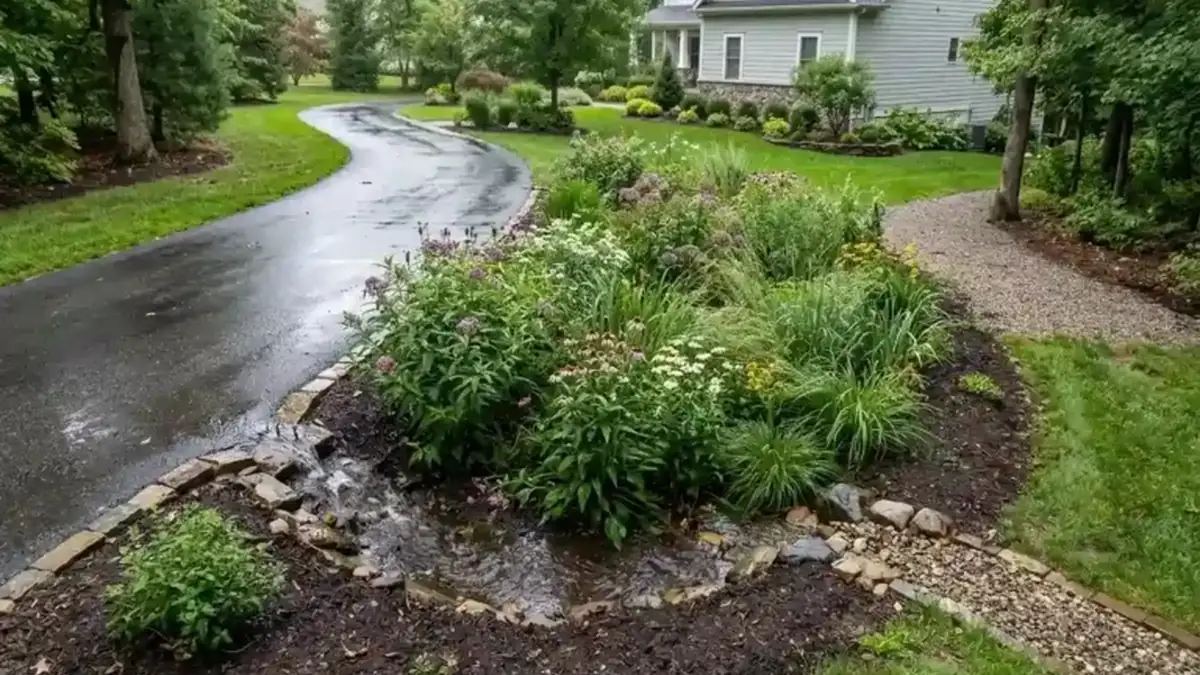
A small rain garden may help when it is placed in the right location. It is a shallow planted area that holds runoff for a short time while water enters the soil.
Watch your driveway during rain. Find where water naturally leaves the surface. Do not place a rain garden close to the home, septic system, or unstable slope.
Use moisture-tolerant native plants that suit your region. Add a safe overflow path for heavy storms.
A rain garden is not the right fix for severe flooding, standing water near a foundation, or major drainage damage. These problems need expert help.
Contact a local stormwater office or extension service before digging. They may offer plant lists and layout advice for your area.
Make the Area Look Neater with Symmetry
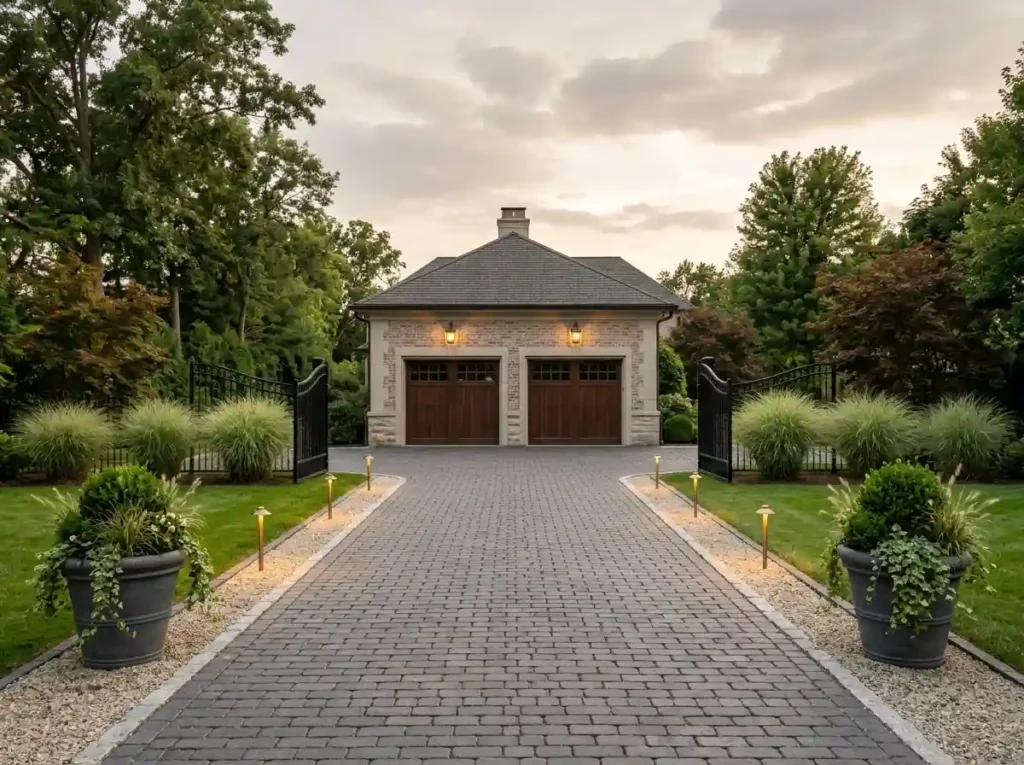
Best for: Garages, gates, and formal homes
Budget: Any
Maintenance: Depends on materials
DIY difficulty: Easy
Symmetry can make simple materials look planned and polished. You can use the same plants, pots, lights, or stones on both sides of the driveway.
Place two matching planters beside the garage. Add three grasses on each side of a gate. You can also space lights evenly along both edges.
Use parts of the home as your guide. Align planters with garage doors, windows, posts, or entrance steps.
Do not fill every open area. Empty space helps each feature stand out.
Formal homes often suit clear symmetry. Relaxed gardens may look better with repeated plants that are balanced but not perfectly matched.
Before buying anything new, remove broken pots, faded decorations, and plants that no longer fit.
A simpler layout can often improve curb appeal more than adding another group of flowers.
Focus on One Strong Feature
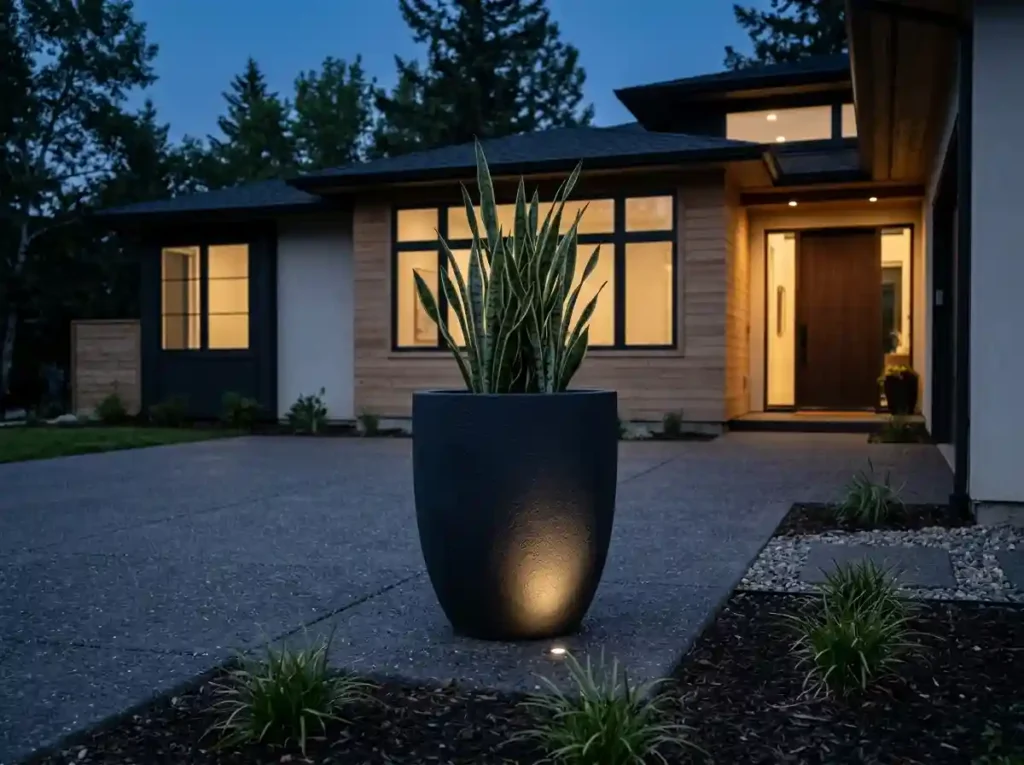
Best for: Small budgets and simple yards
Budget: Any
Maintenance: Low
DIY difficulty: Easy
You do not need to landscape every foot of the driveway. One strong feature may create a better result than many small decorations.
Choose a focal point near the entrance, garage, or widest part of the yard. This could be a small tree, a large planter, an address stone, or a group of decorative rocks.
Repeat one color or material from the house. For example, use a dark planter that matches the window frames. You could also use brick edging that matches the front steps.
Keep the area around the focal point simple. Too many signs, pots, statues, and plant colors compete for attention.
Add one soft light if you want the feature to stand out after dark.
Simple driveway landscaping ideas work best when each item has a clear purpose. More decoration does not always create a better yard.
How to Choose the Best Idea for Your Driveway
You may like several ideas but still feel unsure about where to start. Focus on the main problem you want to fix.
| Your Main Need | Good Options | Care Level | Cost Level |
| Small budget | Edging, mulch, mailbox bed | Low | Low |
| Less yard work | Gravel, rocks, evergreens | Low | Low to moderate |
| Narrow space | Ground cover, slim pots, low lights | Low to moderate | Low to moderate |
| Better drainage | Rain garden, rock channel | Moderate | Moderate |
| Fast curb appeal | Matching pots, lights, symmetry | Low to moderate | Low to moderate |
| Clear entrance | Tree, columns, large planters | Moderate | Moderate to high |
Start with one change instead of working on the full driveway at once.
Edging is a good first step when the area looks messy. Solar lights may be better when the main problem is poor visibility. Gravel or ground cover can replace grass that refuses to grow.
Think about future care before you buy. A flower bed may look lovely, but it will need more work than a rock border.
Choose the idea that fits your daily routine, not just the photo you like most.
Avoid These 8 Driveway Landscaping Mistakes
A poor layout can create extra work or make the driveway less safe.
Avoid these common mistakes:
- Planting too close to pavement: Shrubs and grasses may grow into doors, mirrors, and walking areas.
- Ignoring mature plant size: Small nursery plants can become much wider within a few years.
- Blocking the road view: Tall plants near the entrance can hide cars, bikes, or people.
- Using loose rocks without edging: Stones may roll onto the driveway or street.
- Choosing plants that dislike heat: Concrete and asphalt can make nearby soil hotter and drier.
- Sending water near the house: Drainage changes should never move water against a garage or foundation.
- Placing lights in tire paths: Fixtures can break and create sharp pieces.
- Using too many materials: Brick, gravel, mulch, bright pots, and several plant styles may look disconnected.
Make a basic sketch before you begin. Mark where cars park, doors open, people walk, and water flows.
This small step can prevent expensive changes later.
Start with One Simple Driveway Upgrade
You do not need to rebuild your front yard to improve the driveway. Clean edging, fresh mulch, repeated plants, or two matching planters can make a clear difference.
Start by measuring the available space. Check the sunlight, drainage, and vehicle paths. Then choose one project that solves the biggest problem.
You may need better lighting. You may want to hide bare soil. Or you may need plants that require less care.
Take one step first. You can add more features after you see how the new layout works.
The best simple driveway landscaping ideas use suitable plants, safe spacing, and materials that fit your home. Choose an option you can maintain, and your driveway will stay neat long after the project is finished.