20 Backyard Landscaping Ideas With Deck
A deck gives you a place to sit, eat, and spend time outside. But the yard may still feel unfinished when the deck sits alone beside an empty lawn.
The space around it matters just as much as the deck itself.
Bare soil can turn muddy. Open sides may leave you with little privacy. Sharp deck edges can also make the structure feel separate from the garden.
These backyard landscaping ideas with deck features can help you connect your outdoor living area with the lawn, plants, and other parts of the yard.
You do not need to use every idea. Start with the biggest problem in your space. That may be poor drainage, too much sun, an exposed seating area, or an empty space beneath a raised deck.
From simple planters to full under-deck patios, these ideas work for many yard sizes, styles, and budgets.
What Is the Best Way to Landscape Around a Deck?
The best way to landscape around a deck is to mix practical features with plants and comfortable seating.
Start with safe paths and good drainage. Then add plants that fit your climate and the amount of sunlight in your yard. Finish with one comfort feature, such as shade, lighting, or privacy screening.
Keep mature plant size in mind. Small shrubs can grow much wider than they appear at the nursery.
You should also keep water away from wooden posts and your home’s foundation.
Plan the Space Before Landscaping Around Your Deck
Before you buy plants or gravel, look at how people and water move through the yard.
Start by measuring your deck, stairs, doors, lawn, and property lines. Mark fixed features such as sheds, trees, fences, drains, and utility boxes.
Next, decide how you want to use the space.
Do you need room for outdoor dining? Would you rather have a quiet garden or a place for children to play? Are you trying to hide a nearby house?
Your answers will help you choose the right features.
Study the sunlight during different parts of the day. A spot that looks shady in the morning may receive strong afternoon sun. This can affect both plant health and deck comfort.
Check the yard after heavy rain, too. Look for puddles, washed-out soil, and water collecting near deck posts.
Ask yourself four questions:
- Where will people walk?
- Where will people sit?
- Which areas need privacy?
- Where does rainwater go?
Draw a simple plan before you start. Mark paths, beds, seating areas, and drainage points.
A basic sketch can stop you from buying plants that do not fit or placing features where they block movement.
Soften Hard Deck Edges With Curved Garden Beds
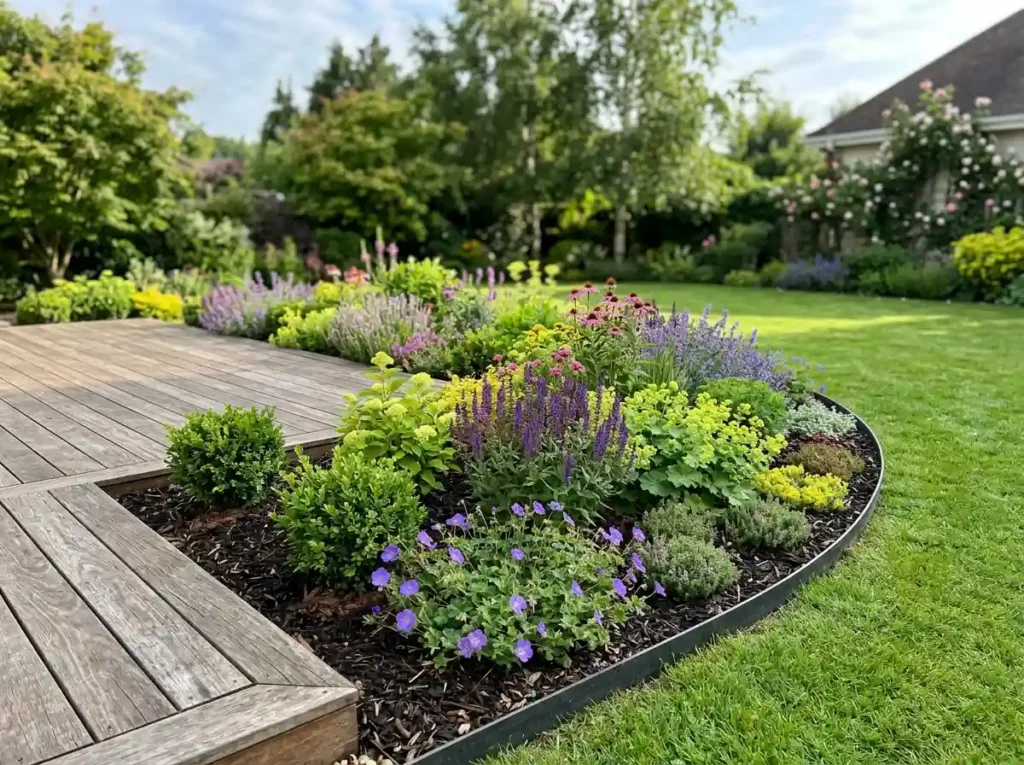
Straight deck lines can make a backyard feel stiff. Curved garden beds create a softer connection between the deck and lawn.
Extend the bed beyond the deck corners. This helps the planting look like part of the full yard instead of a narrow border added later.
Use layers to create depth.
Place low groundcovers near the lawn. Add flowers and medium plants in the middle. Use small shrubs closer to the deck, but leave room for them to grow.
Repeat a few plant types around the bed. Too many different plants can make the area look busy.
Finish the edge with stone, brick, steel, or flexible garden edging. Add mulch to control weeds and hold moisture.
This type of landscaping around a deck works well for both ground-level and raised decks.
Stop Mud With a Low-Maintenance Gravel Border
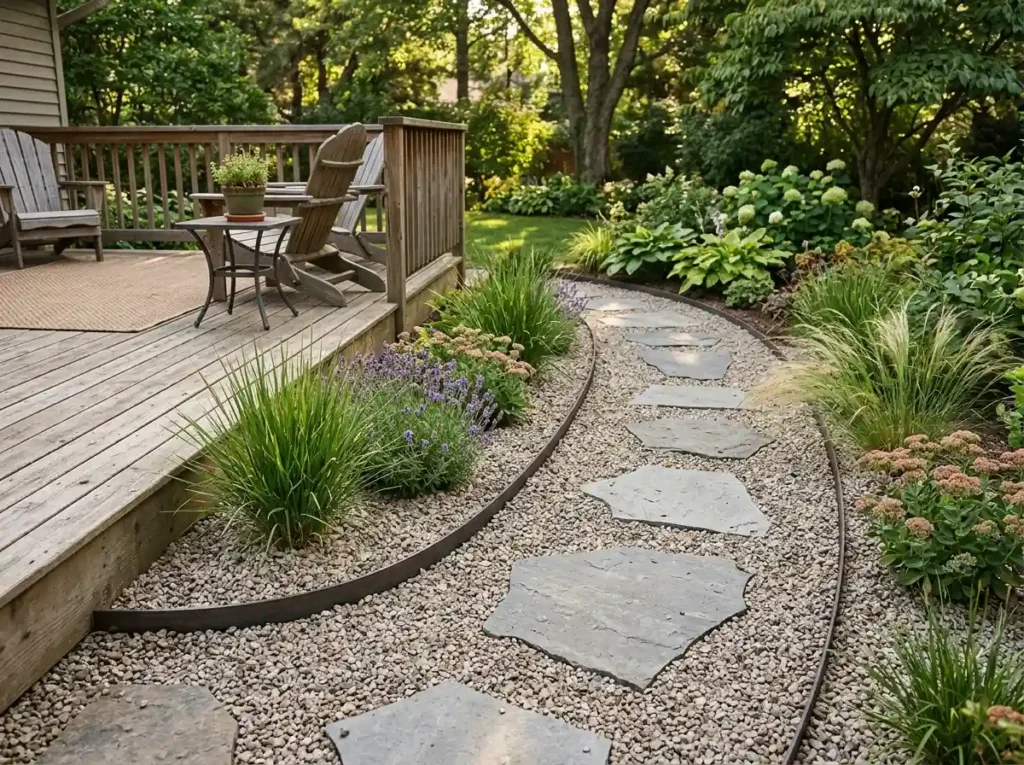
Bare soil beside a deck can turn into mud after rain. A gravel border creates a cleaner edge and reduces regular yard work.
Start with strong landscape edging. It keeps the stones from spreading into the grass.
Choose gravel that fits your home and deck style. Pea gravel has a soft, casual look. Crushed granite feels more natural. River rock works well in areas with little foot traffic.
You can break up the stone with drought-tolerant plants or ornamental grasses.
Flat stepping stones can also create an easy route for maintenance.
Do not assume gravel fixes drainage on its own. Water can still collect under the stones. Correct the slope or install a proper drainage system first when needed.
This is one of the easiest low-maintenance deck landscaping ideas for muddy deck borders and narrow side yards.
Connect the Deck and Yard With a Stone Path
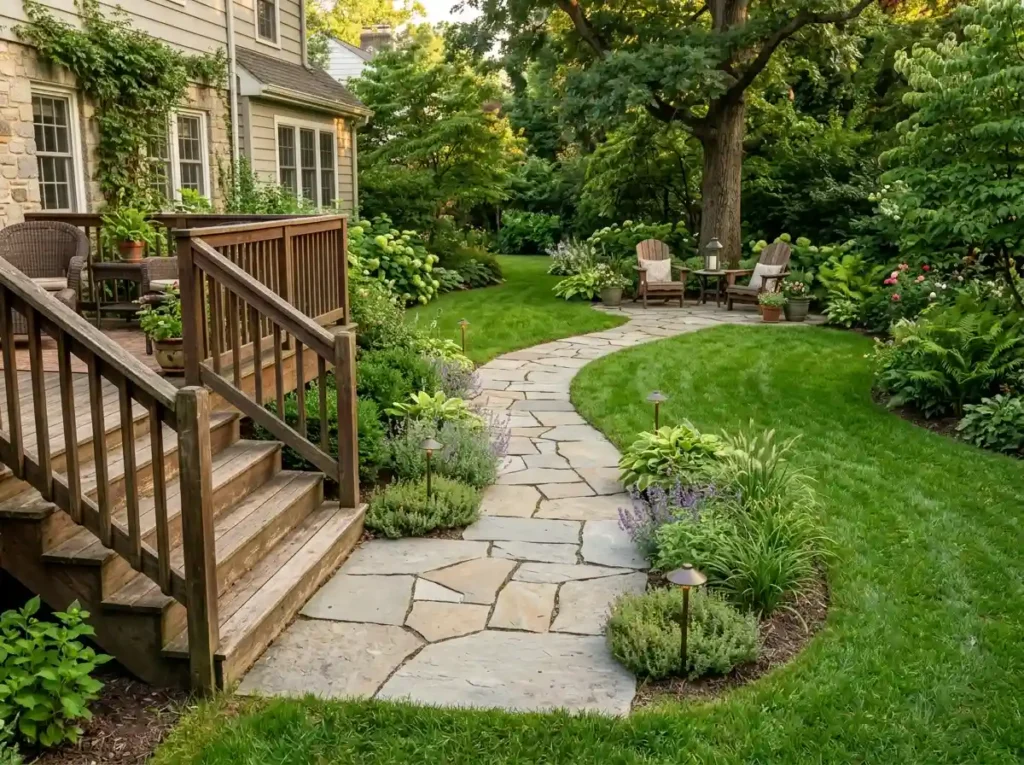
A deck can feel cut off from the rest of the backyard when there is no clear route beyond the stairs.
A stone path fixes this problem.
Make the path lead somewhere useful. It could connect the deck to a fire pit, garden shed, pool, play area, vegetable garden, or second seating space.
Choose a material that matches the deck and home.
Natural flagstone works well with rustic wood decks. Large concrete pavers suit modern spaces. Brick can connect well with traditional homes.
Keep the route clear and easy to follow. Avoid sharp turns unless the yard shape requires them.
Add low plants or path lights along the sides. Do not let plants grow over the walking surface.
A clear deck-to-garden path improves movement and makes the full backyard feel planned.
Block Unwanted Views With a Layered Privacy Screen
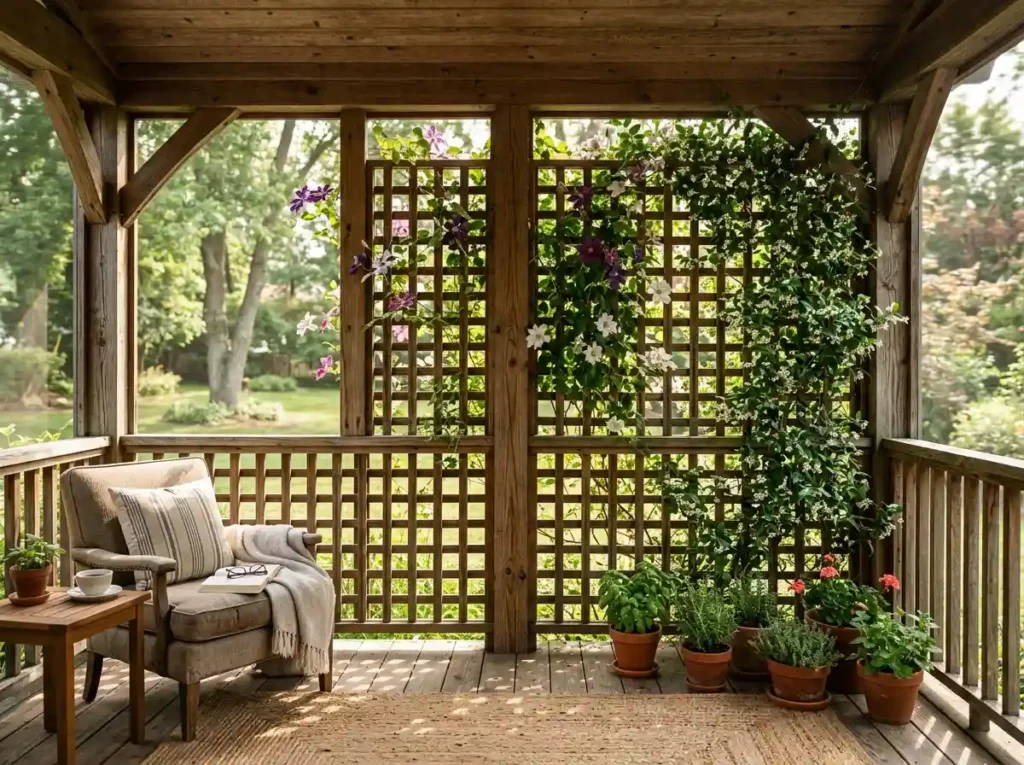
An open deck may feel uncomfortable when neighbors can see straight into the seating area.
Privacy planting can help, but a solid wall of shrubs is not always the best choice. It may make a small yard feel closed in.
Use a layered screen instead.
Place taller evergreen plants where you need year-round coverage. Add flowering shrubs and grasses in front to create a softer look.
Possible choices include arborvitae, holly, column-shaped evergreens, tall grasses, and flowering shrubs. The right plants depend on your region.
Check the mature height and width before planting. A narrow shrub can become much larger over time.
Keep roots, branches, and wet soil away from deck posts.
A local nursery or extension office can help you select privacy plants that suit your soil and climate.
Cover Open Deck Sides With Lattice and Vines
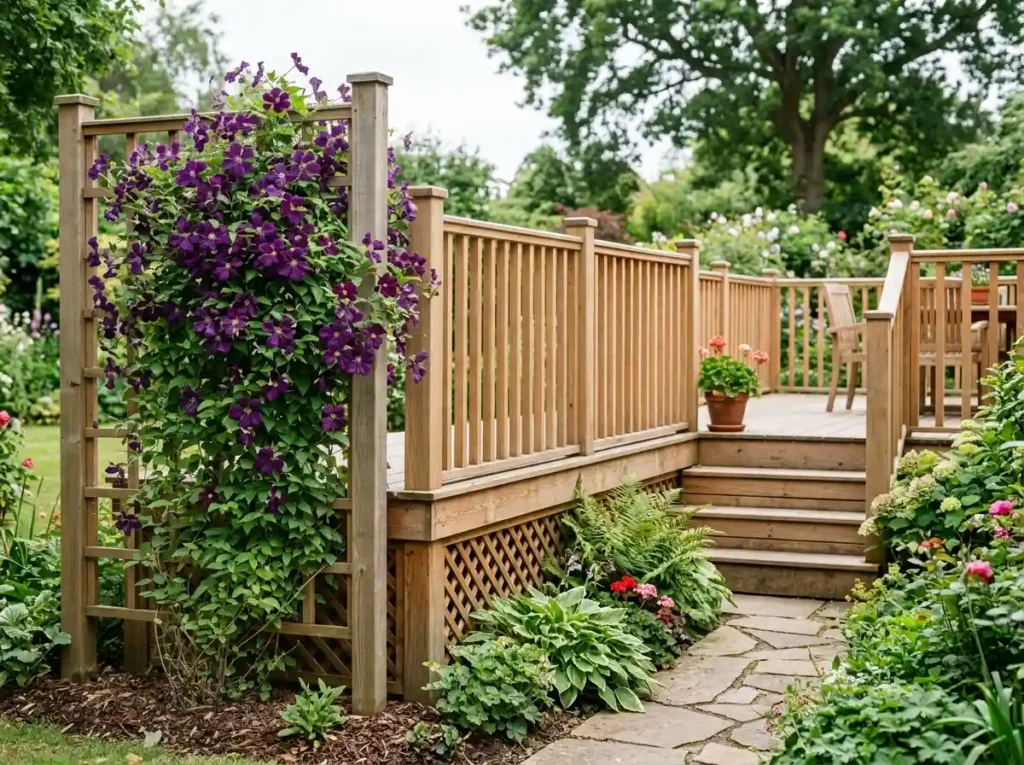
The open side of a raised deck can look harsh. Lattice gives it a finished surface while still allowing air to move through.
Add climbing plants to soften the structure.
Clematis, climbing roses, jasmine, and some honeysuckle varieties can work well. Plant choice depends on your location and how much sun the area receives.
Use a separate support where possible. Some strong vines can damage wood, lift panels, or grow into deck joints.
Leave a small air gap between plants and the structure. This helps the wood dry after rain.
You will also need to prune the vines during the growing season.
For a faster seasonal option, use annual climbing plants. They can provide color without becoming a long-term maintenance problem.
Make Deck Stairs Look Finished With Tall Planters
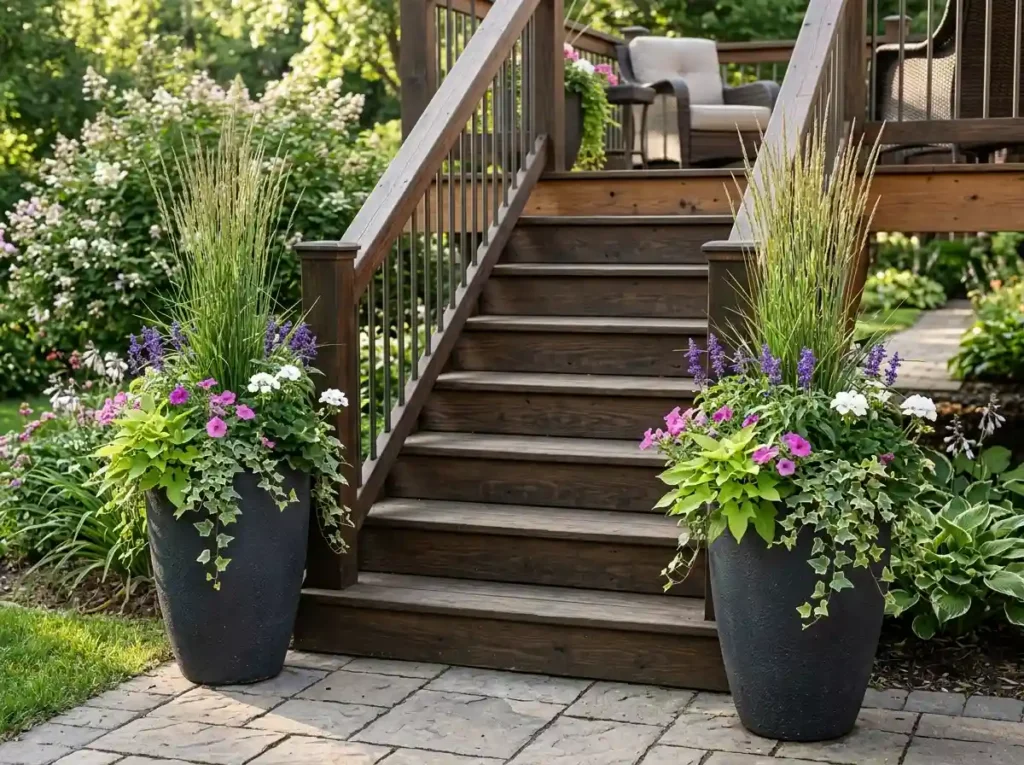
Deck stairs often look plain where they meet the lawn.
Two tall planters can frame the entrance and make it feel more welcoming.
Place them near the top or bottom of the stairs. Keep them outside the main walking path.
Use heavy containers that will not tip in strong wind. Large pots also hold moisture longer than small ones.
For a full design, place a tall grass or upright plant in the center. Add flowers around it and trailing plants near the rim.
You can change the flowers by season while keeping the main plant in place.
Match the pots to another feature, such as the deck stain, railings, or outdoor furniture.
This small update works well when you need a quick deck stair landscaping idea without changing the whole yard.
Turn the Space Under a Raised Deck Into a Patio
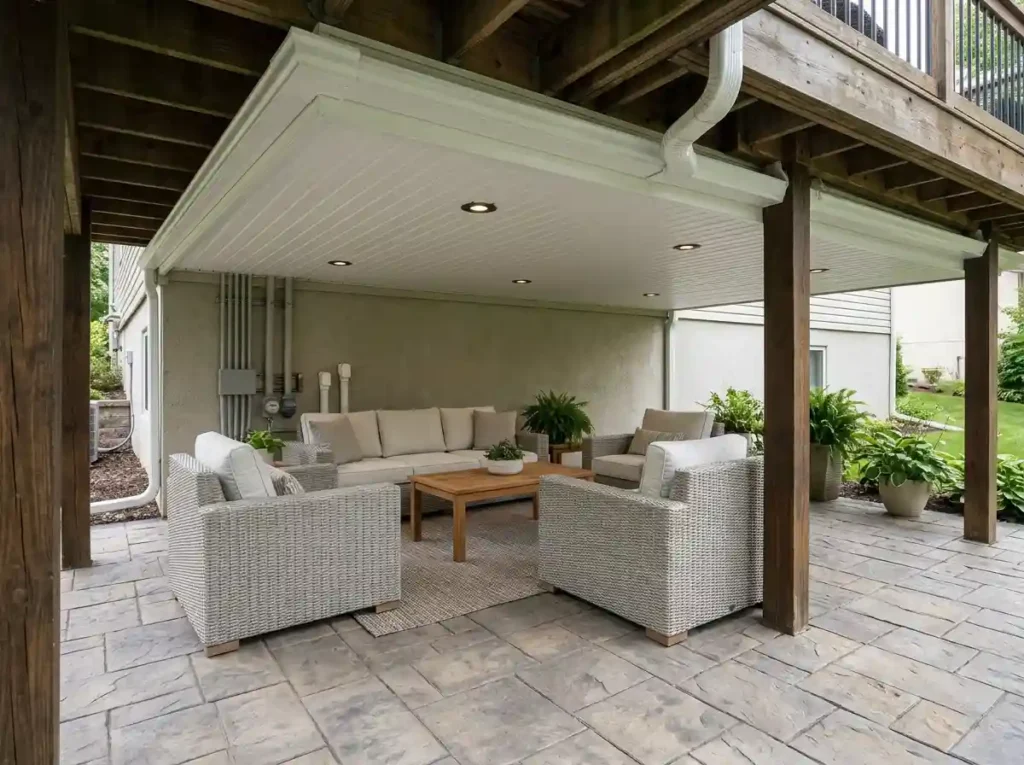
The area below a raised deck often becomes a dark storage spot. With the right work, it can become a useful outdoor room.
Start with drainage.
Water from the deck above should not drip onto furniture or collect near the foundation. An under-deck ceiling system may help direct water away.
Choose a firm surface such as pavers, concrete, or compacted gravel.
Then decide how you want to use the space.
It could become a shaded lounge, outdoor dining area, children’s play zone, potting area, or small bar.
Add outdoor lighting made for damp areas. Use light-colored furniture and surfaces if the space feels dark.
Keep access to pipes, wiring, and deck supports.
A patio under the deck can almost double your usable outdoor space without taking away more lawn.
Hide Deck Framing With Attractive Skirting
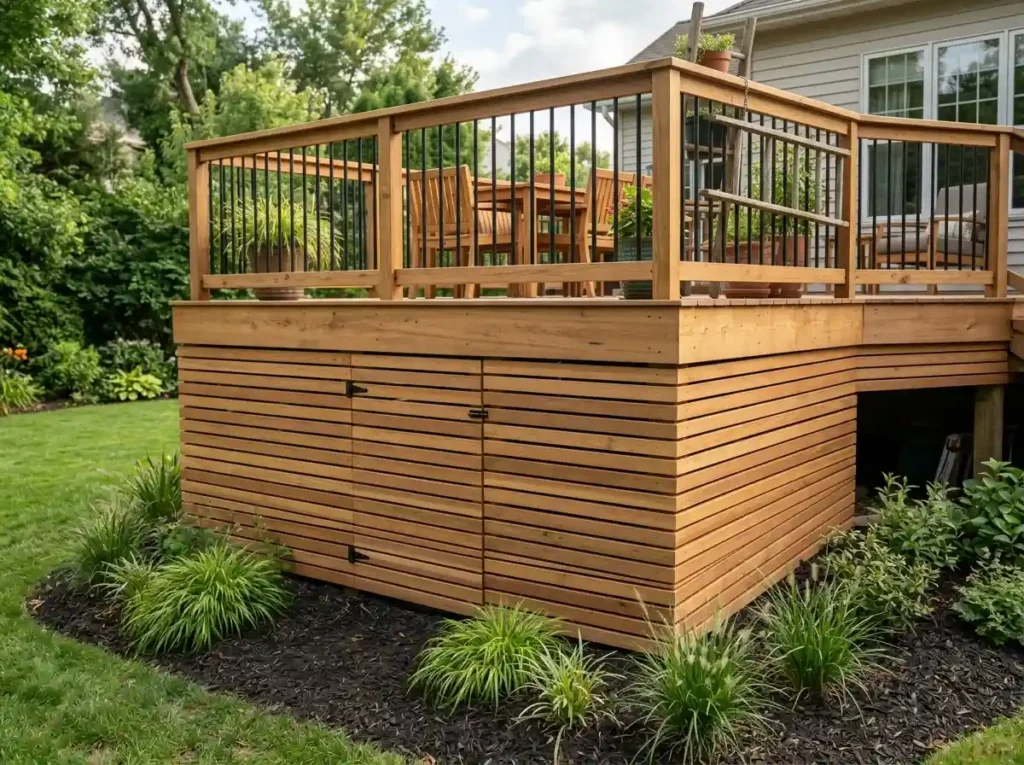
Open framing under a raised deck can make the backyard look unfinished.
Deck skirting hides beams, posts, and stored items. It can also help the deck feel more connected to the home.
Choose a material that matches the style of the structure.
Horizontal wood or composite slats create a clean look. Lattice feels more traditional. Decorative metal panels can work with modern decks. Stone veneer may suit a larger home.
Do not close the space without ventilation. Trapped moisture can lead to mold or wood damage.
Include an access door for storage, pipes, and future repairs.
You can also place low shrubs or grasses in front of the skirting. Keep enough space between the plants and panels for airflow and maintenance.
Add Calm Sound With a Small Water Feature
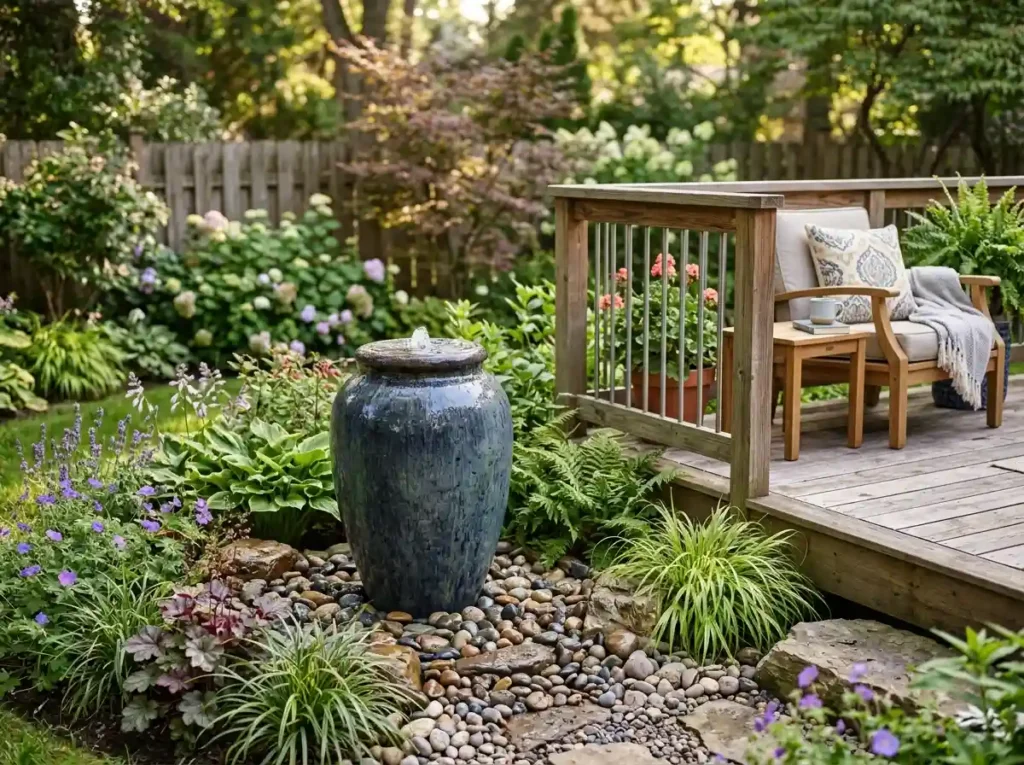
A small water feature can make the deck feel more peaceful.
Place it close enough to see and hear from the seating area. Keep it far enough away that splashing will not leave the deck wet.
Good choices include an urn fountain, bubbling rock, wall fountain, or small recirculating basin.
A compact pond may suit a ground-level deck, but it needs more care.
Think about access to electricity, water, and cleaning. You may also need to prepare the feature for cold weather.
Choose a size that fits your yard. A large fountain can make a small deck feel crowded.
Place a few plants or stones around the base so it looks connected to the garden.
The sound of moving water may also help reduce nearby traffic or neighborhood noise.
Create a Safer Fire Pit Zone Away From the Deck
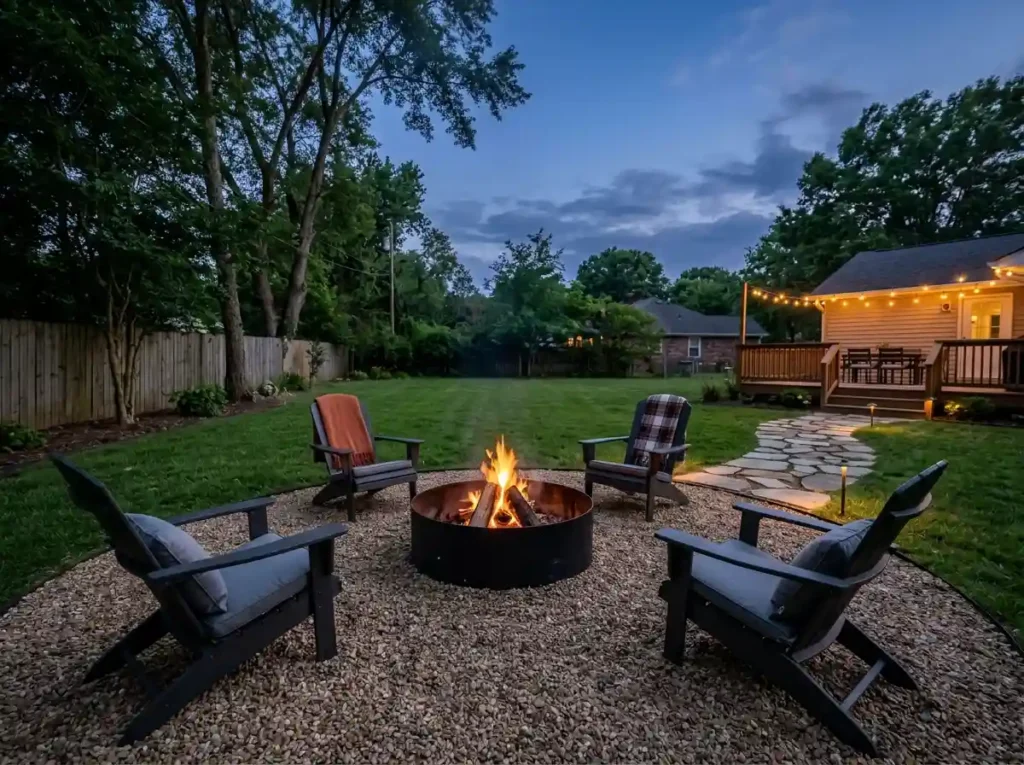
A fire pit can turn an empty part of the yard into a second gathering area.
Place it away from the deck, home, fences, low branches, and busy paths. The safe distance depends on local rules and the product you use.
Always check local fire codes and manufacturer instructions.
Use a nonburning surface such as gravel, stone, concrete, or pavers.
Connect the fire pit to the deck with a clear path. This makes the two spaces feel related while keeping the fire zone separate.
A circular gravel area works well for movable chairs. A paver patio offers a firmer surface. A low stone wall can add extra seating.
Think about wind and smoke direction before choosing the location.
Keep the area open and easy to supervise.
Bring the Garden Onto the Deck With Built-In Planters
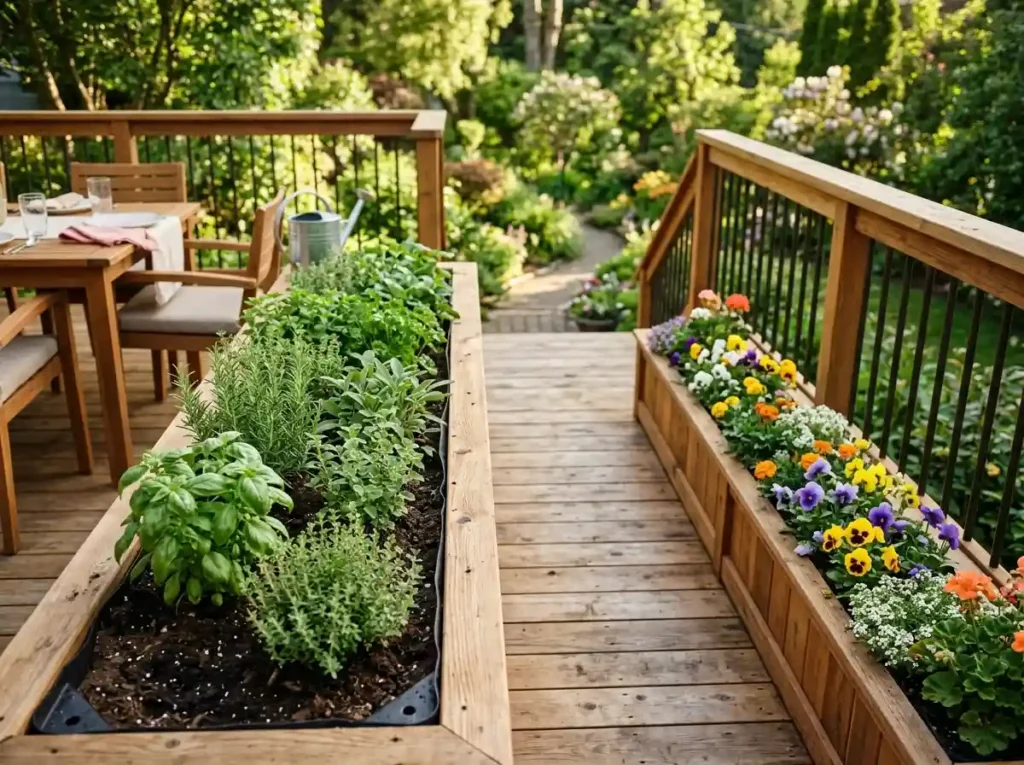
Built-in planters soften deck edges and add color close to your seating area.
Place them along railings, corners, or the outer edge of a ground-level deck. Do not block views, airflow, or walking space.
Planters need drainage holes. Use a liner when needed to protect the wood.
Choose plants based on the amount of sun the deck receives.
Flowers can add seasonal color. Herbs work well near an outdoor dining space. Small pollinator plants can attract butterflies and other helpful insects.
Avoid plants that grow too tall near stairs or railings.
Narrow cedar boxes suit a natural deck. Simple square planters work well with modern designs.
Keep the design easy to care for. A few larger containers are often easier to manage than many small pots.
Make a Hot Deck More Comfortable With Shade
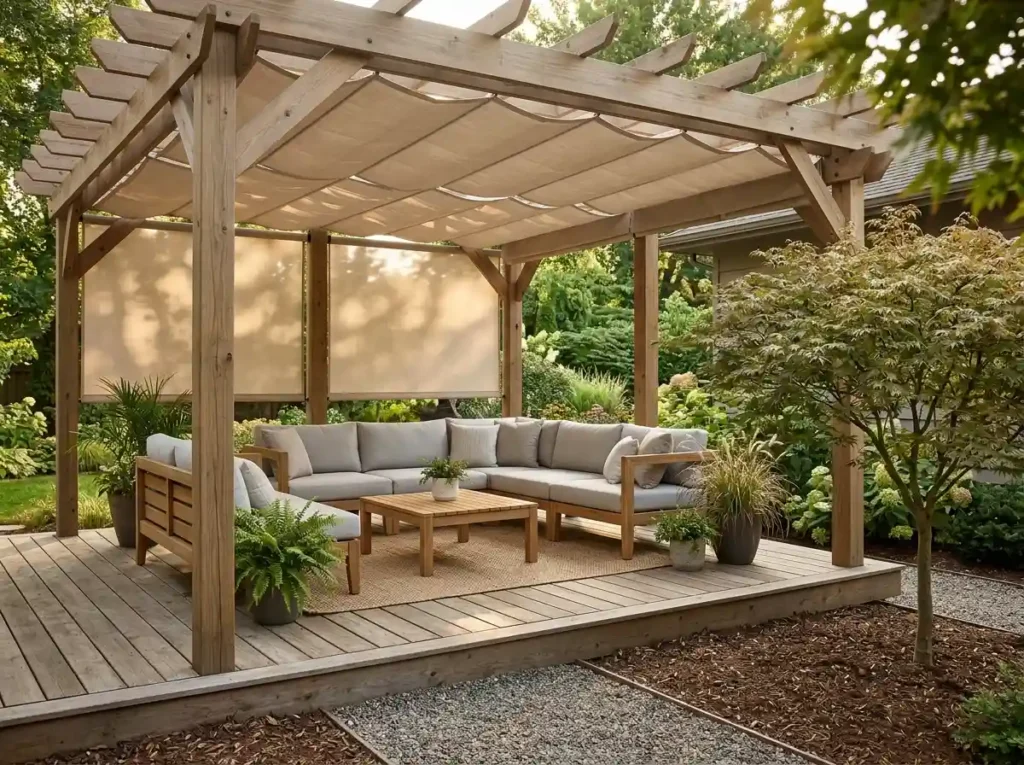
A sunny deck can look inviting but become too hot to use during the afternoon.
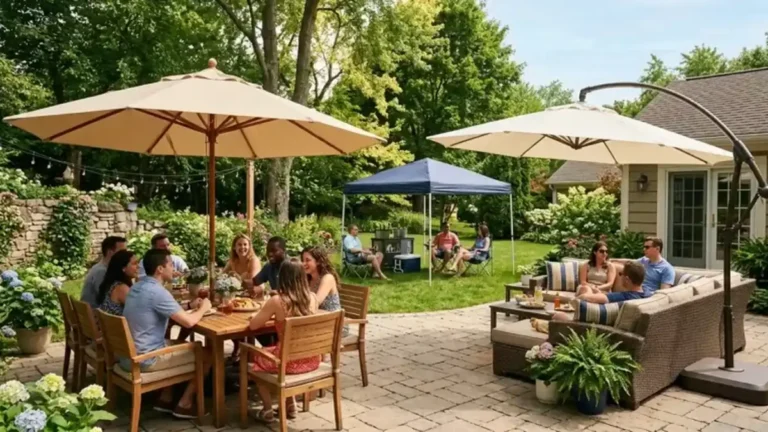
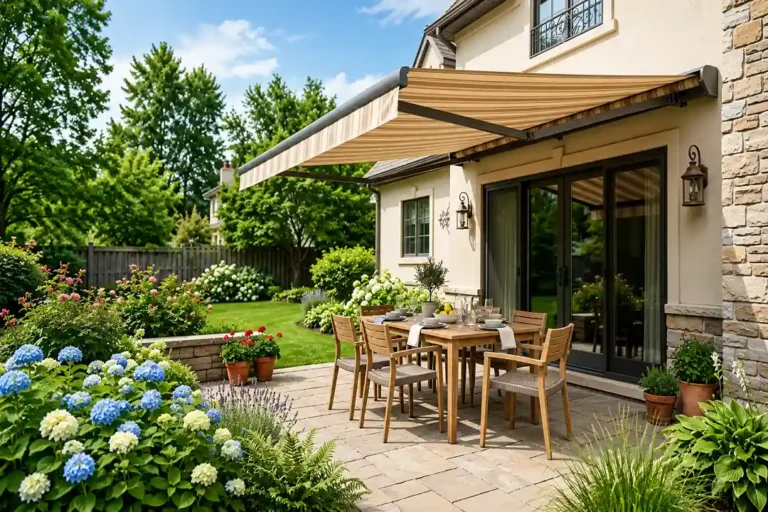
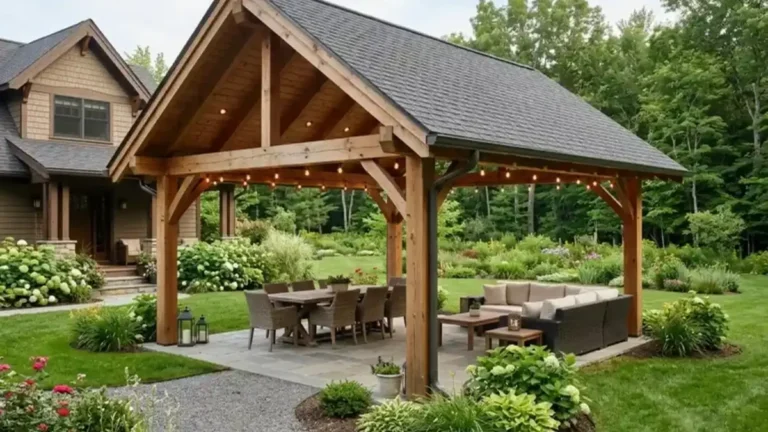
A pergola can create shade and define the seating area.
Place it over an outdoor table, lounge area, or kitchen zone. Add a fabric canopy for stronger sun control.
Climbing plants can provide softer shade, but they need time to grow and regular trimming.
You can also plant a small ornamental tree beyond the deck. Place it where it can block harsh afternoon sun without sending large roots close to posts or foundations.
For faster shade, consider a large umbrella or retractable awning.
Combine fixed shade with nearby planting for a cooler and more natural space.
Always check whether a pergola needs permits or added structural support.
Use Lighting to Join the Deck and Garden
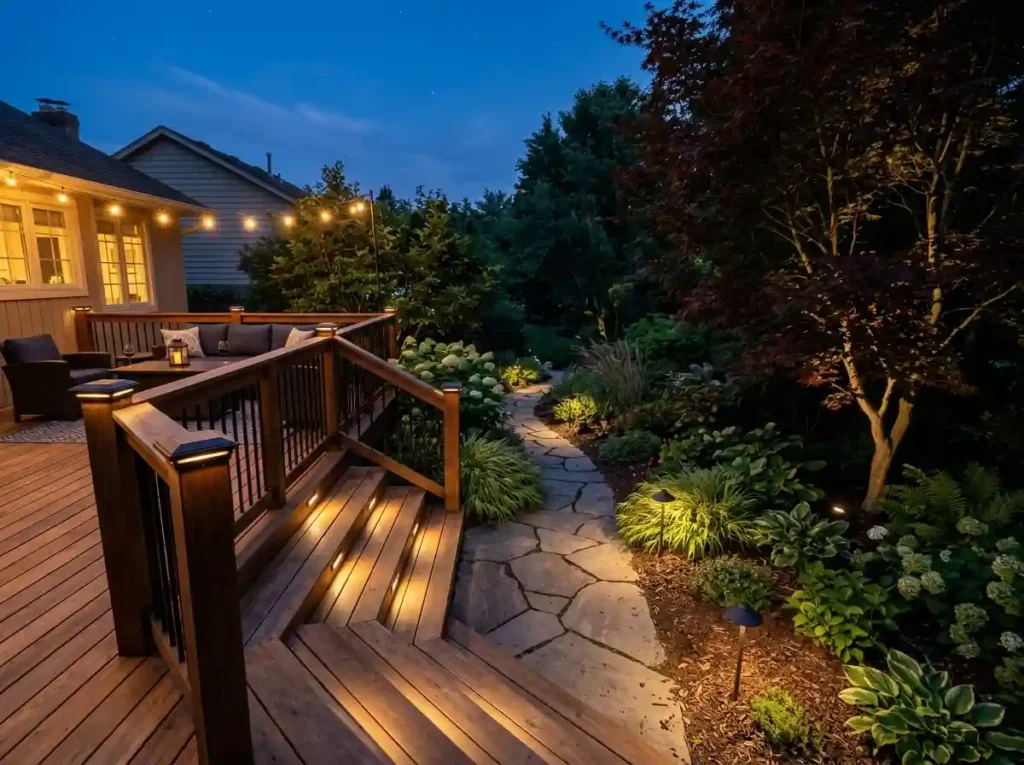
One bright wall light is rarely enough for a full backyard.
Use several softer lights instead. This improves safety and creates a more comfortable mood.
Start with the areas people use most.
Light the deck stairs, main path, seating zones, and any change in ground level. Add post-cap or under-railing lights for soft deck lighting.
Use path lights to lead people into the garden. A small uplight can highlight a tree or tall plant.
Keep the light aimed down or into your own yard. Bright fixtures can bother neighbors and reduce the calm feel of the space.
Choose outdoor-rated products. Damp areas may need special fixtures.
Timers and smart controls can make the lights easier to manage.
Good deck landscape lighting helps the backyard stay useful after sunset.
Add Color With a Pollinator Garden Near the Deck
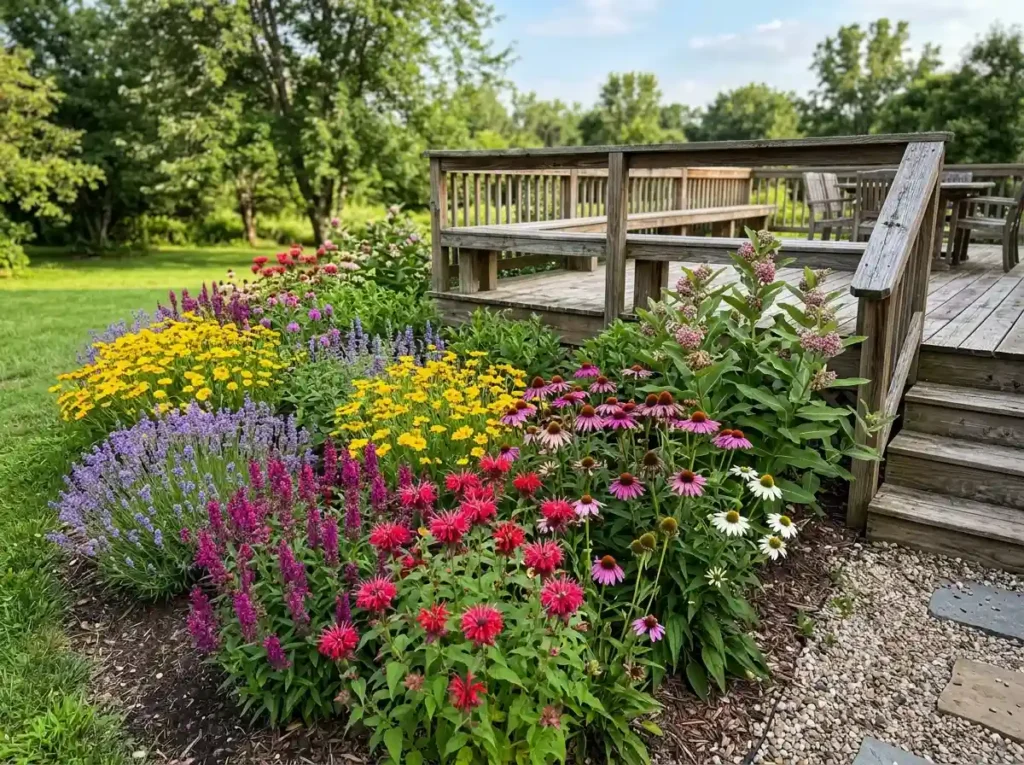
A pollinator garden can bring flowers, butterflies, and movement into the space around your deck.
Choose plants that bloom at different times. This gives the bed color across more of the growing season.
Native plants are often a strong choice because they suit local insects and weather conditions.
Possible plants include coneflowers, bee balm, salvia, milkweed, lavender, and coreopsis. Check which ones grow well in your region.
Group several of the same plant together. Larger groups are easier for pollinators to find and create a cleaner design.
Keep the most active bee plants a little farther from the dining table.
Avoid placing tall flowers beside stairs or narrow paths.
A pollinator garden near the deck can fill a plain border without adding a large hardscape project.
Grow Herbs and Food Near the Dining Area
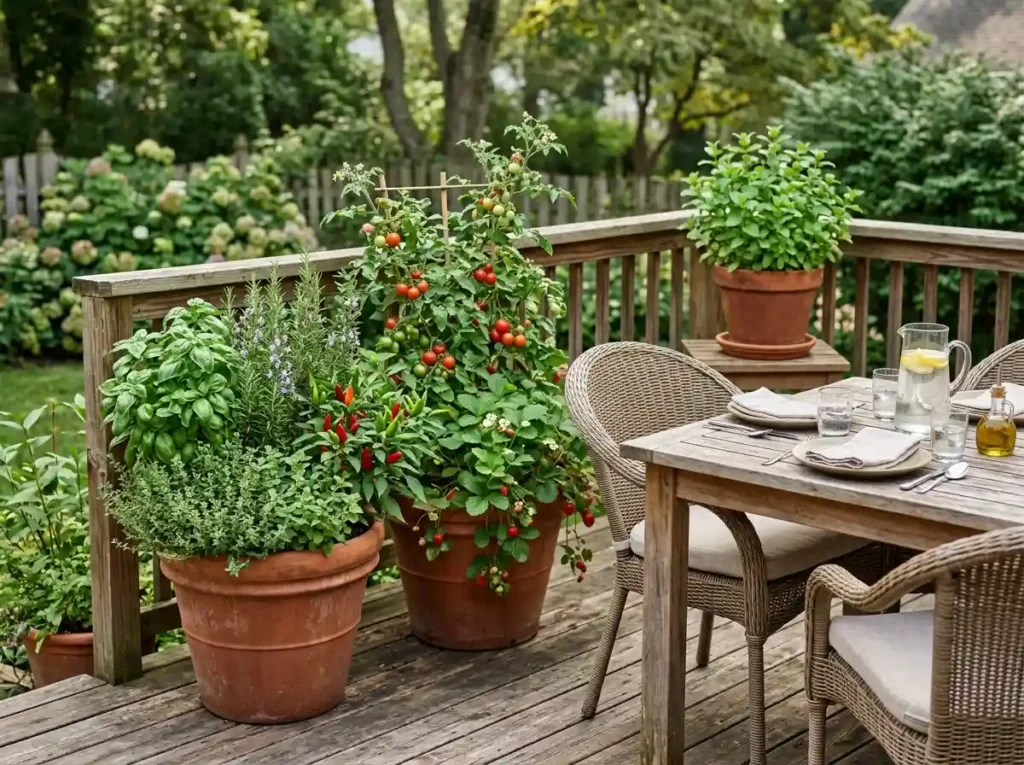
An outdoor dining garden makes your deck more useful.
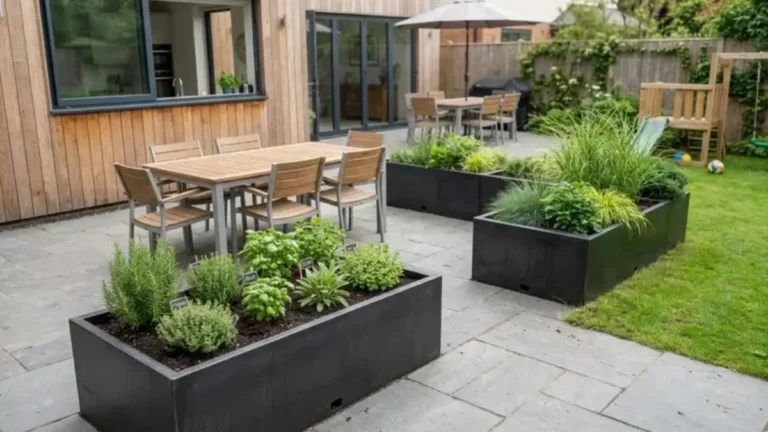
Place herbs close to the table or grill so they are easy to reach. Basil, rosemary, thyme, and mint can grow well in containers.
Keep mint in its own pot because it can spread quickly.
Cherry tomatoes, strawberries, and compact peppers may also work in sunny spots. Dwarf citrus can suit warm climates.
Use raised beds or large containers instead of crowding the deck with many small pots.
Leave enough space for people to move chairs and carry food.
Keep plants away from grill heat, grease, and smoke.
A small edible garden does not need to supply every meal. Even a few fresh herbs can add value without creating too much work.
Make a Small Backyard Feel Larger With Vertical Plants
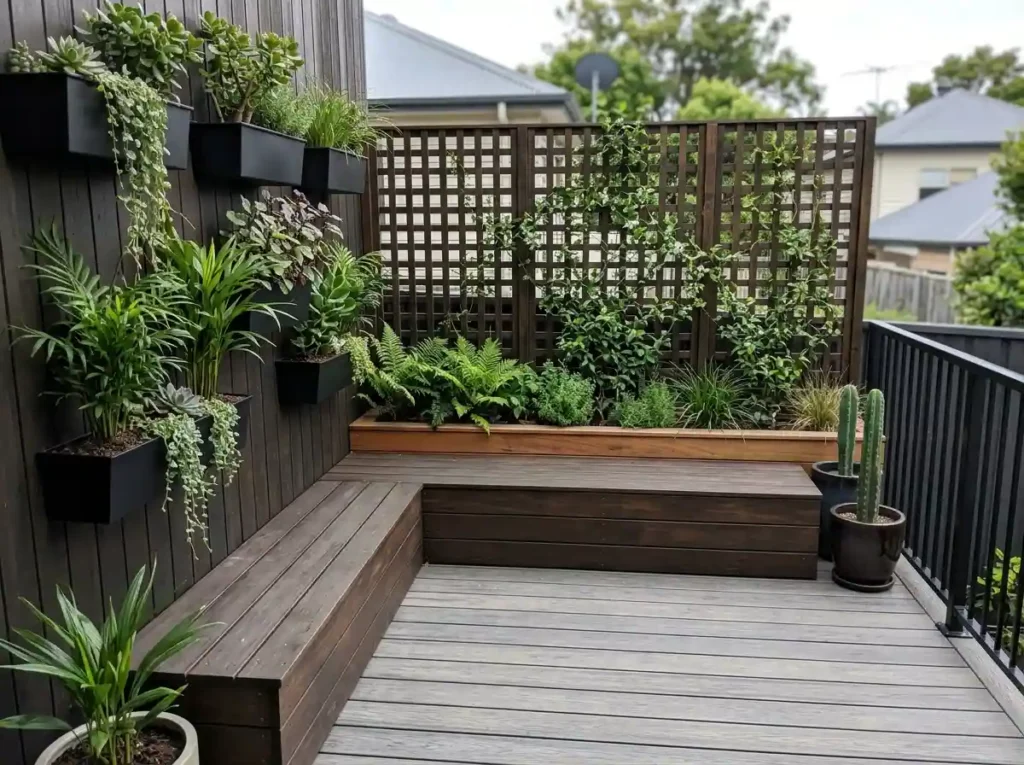
A small backyard cannot hold every feature. Each part needs a clear purpose.
Keep the deck shape simple. Large curves, extra levels, and heavy railings may use too much visual space.
Use vertical planting to save room on the ground.
Wall planters, trellis screens, narrow raised beds, and climbing plants can add greenery without taking over the lawn.
Choose furniture with a smaller shape. A built-in bench with hidden storage can replace several chairs.
Limit the number of colors and materials. Too many finishes can make a compact yard feel busy.
Create one main focal point, such as a small tree, water bowl, or attractive planter.
These small backyard ideas with deck features help you use height, walls, and corners instead of filling every open area.
Make a Sloped Yard Useful With a Multi-Level Deck
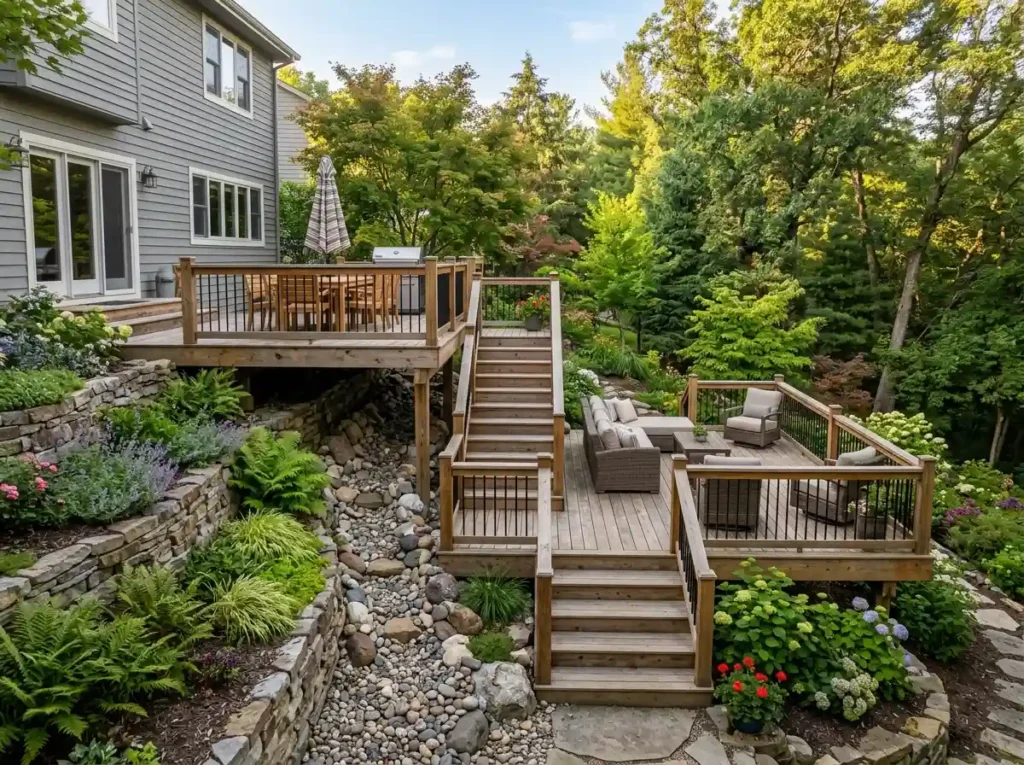
A steep backyard can be hard to walk through and even harder to furnish.
A multi-level deck can follow the natural grade and create flat areas for different uses.
The upper level may hold a dining table. A lower platform can become a lounge or garden viewing area.
Connect the levels with wide, safe stairs.
Use terraced planting beds to hold soil and reduce erosion. Groundcovers can protect bare slopes.
A dry creek bed may help guide runoff through the yard.
Large retaining walls and major slope changes often need professional design. Poor work can lead to drainage problems or soil movement.
Direct water away from deck posts and the home.
A good sloped backyard deck plan works with the land instead of trying to force the whole yard flat.
Reduce Yard Work With Native Plants
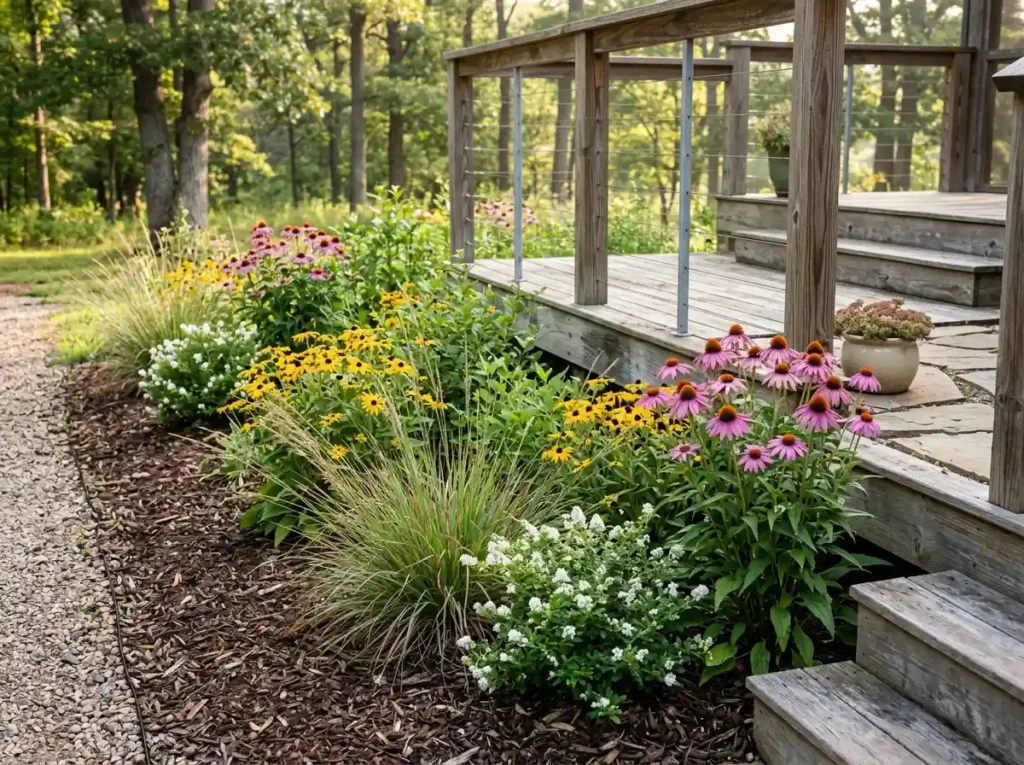
Large deck borders can become a chore when plants need constant watering, trimming, or replacement.
Native plants may reduce some of that work because they are suited to local conditions.
Choose a mix of grasses, flowers, and shrubs. Match each plant to the amount of sun and moisture in the area.
Native does not mean maintenance-free. New plants still need care while their roots become established.
Do not use one plant list for every region.
Check a state extension database, native plant society, botanical garden, or local nursery. These sources can help you find plants that suit your soil and weather.
Group plants with similar water needs.
Low-maintenance landscaping around a deck works best when the plant choice matches the site from the start.
Control Runoff With a Dry Creek Bed
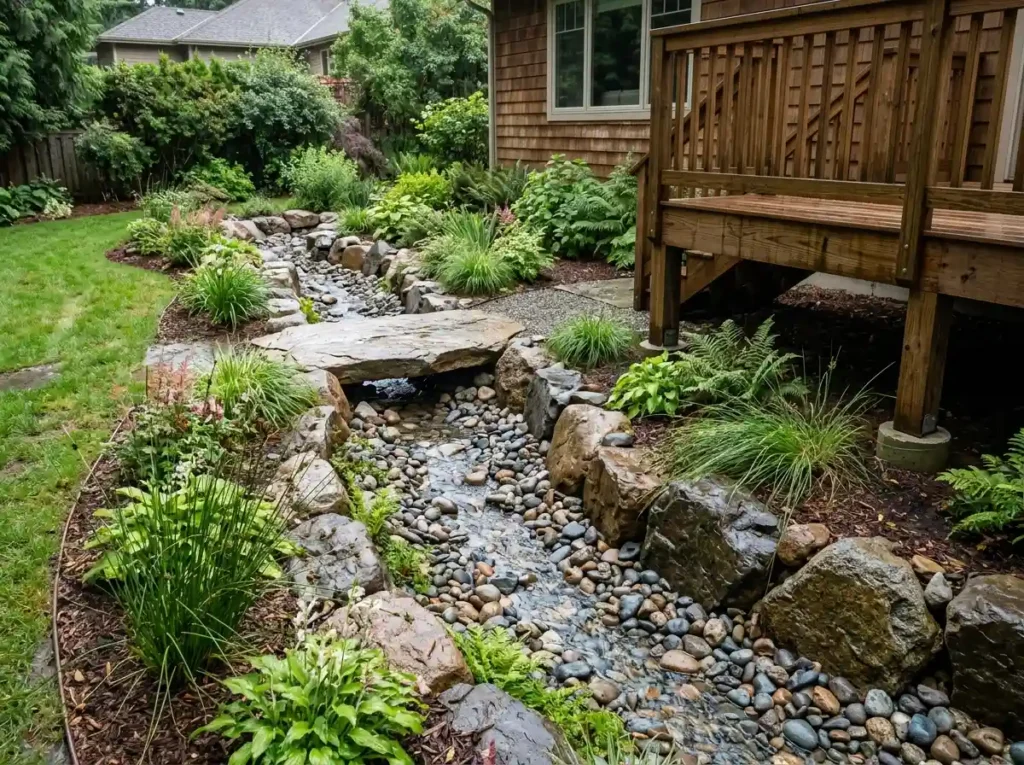
Water moving beside a deck can wash away soil and expose the area around posts.
A dry creek bed can guide runoff while adding a natural feature to the yard.
Shape the channel with gentle curves. Straight lines may look like a drainage ditch.
Use several rock sizes. Larger stones can hold the edges, while smaller river rock can cover the center.
Add moisture-loving plants near areas that stay wet. Ornamental grasses can soften the sides.
Flat stones or a small bridge can create a crossing point.
The creek bed must send water to an approved drainage area. Do not direct runoff onto a neighbor’s property or toward your home.
A drainage contractor may be needed when the yard has serious flooding or erosion.
Create a Modern Deck Landscape With Clean Lines
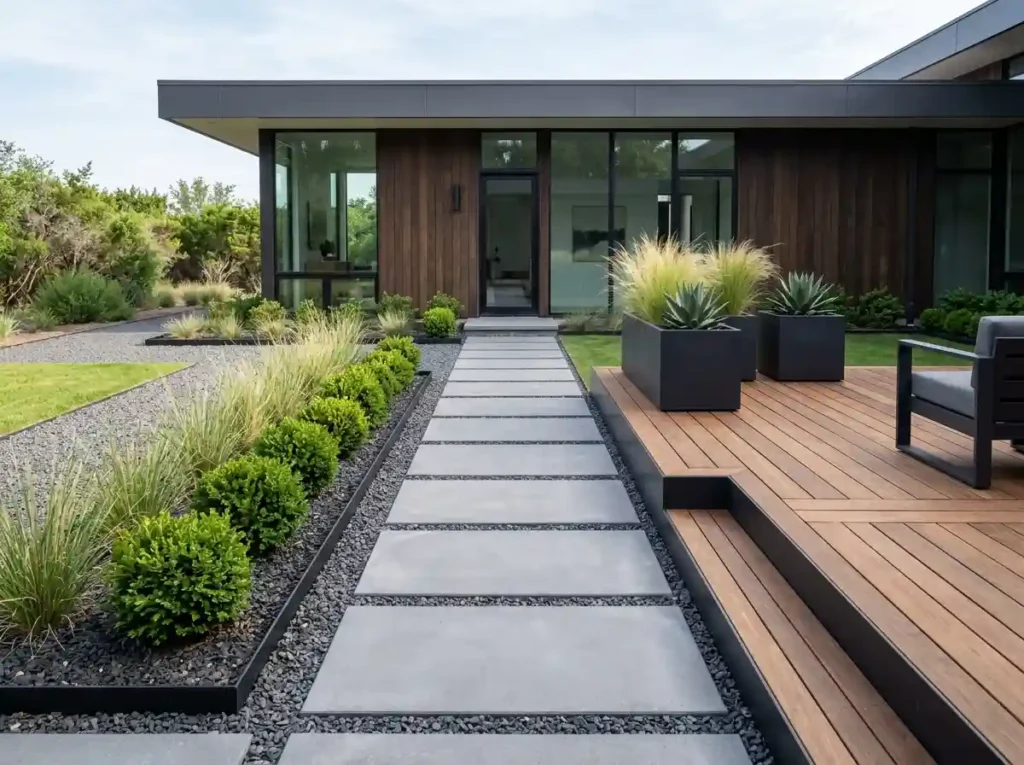
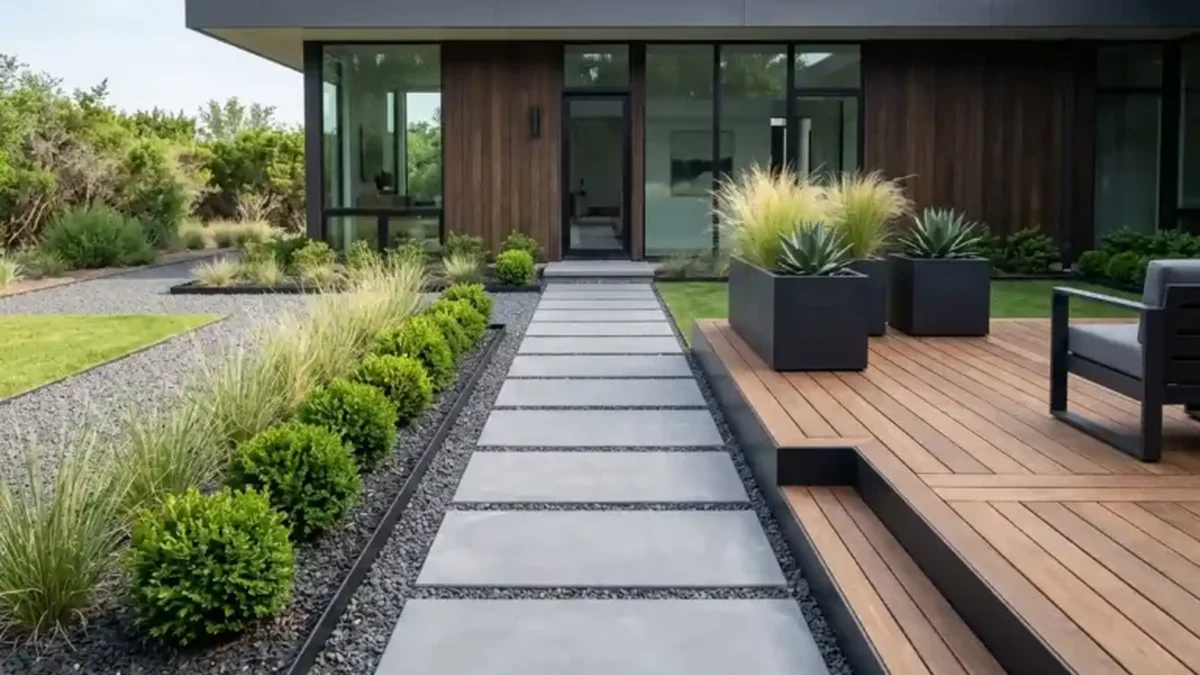
Modern backyard deck landscaping works best when the design stays simple.
Repeat the straight lines of the deck in nearby paths, beds, and planters.
Use a limited group of materials. Large concrete pavers, dark metal edging, gravel, and rectangular containers can create a clean look.
Choose plants with clear shapes and strong texture.
Ornamental grasses can add movement. Compact shrubs can bring structure. Use plants that suit your climate instead of choosing them for shape alone.
Avoid filling the area with small decorations.
Leave open space around major features so each one stands out.
Repeat the same edging, gravel, or plant in more than one part of the yard. This creates a clear visual link between the deck and garden.
How to Choose the Right Deck Landscaping Idea
You do not need all 20 ideas.
The best plan is the one that fixes the biggest problems in your yard.
Start with your main concern. Gravel may help a muddy border. Tall plants may improve privacy. A pergola may make a hot deck more usable.
Next, consider the type of deck you have.
A raised deck may benefit from skirting or an under-deck patio. A ground-level deck may look better with curved beds and a path.
Think about how much work you want to do after the project is complete.
Large flower beds may need weeding, watering, and seasonal care. Gravel, native plants, and simple shrubs may require less regular work.
Your budget matters, too.
Planters and mulch can update a space at a lower cost. Patios, retaining walls, drainage systems, and multi-level decks usually require more money and skilled work.
| Yard Condition | Ideas That May Work Best | Main Benefit |
| Small backyard | Vertical planting, narrow beds, compact path | Saves ground space |
| Raised deck | Skirting, under-deck patio, layered shrubs | Uses empty areas |
| Sloped yard | Multi-level deck, terraces, dry creek bed | Controls slope and runoff |
| Sunny deck | Pergola, shade tree, heat-tough plants | Improves comfort |
| Low-maintenance yard | Gravel, native plants, simple lighting | Reduces regular care |
| Exposed deck | Privacy plants, lattice, tall planters | Blocks unwanted views |
| Entertaining yard | Fire pit, dining garden, path lighting | Supports gatherings |
A strong plan often combines three features:
- One practical feature
- One planting feature
- One comfort feature
For example, you might add a drainage path, curved garden bed, and privacy screen.
10 Deck Landscaping Mistakes That Cause Extra Work
Most deck landscaping problems begin with plants, water, or structures placed too close together.
1. Planting Shrubs Too Close to the Deck
Small shrubs can grow wider than expected.
Leave enough room for mature growth, airflow, and repairs.
2. Sending Water Toward Deck Posts
Sprinklers and downspouts should not keep wooden posts wet.
Adjust irrigation and direct runoff away from the structure.
3. Ignoring Mature Plant Size
Read the mature height and width on the plant label.
A plant that fits today may block stairs or windows later.
4. Covering Access Points
Do not hide pipes, wiring, storage doors, or utility panels behind permanent features.
Leave space for future work.
5. Making Paths Too Narrow
A narrow route can feel awkward when people carry food, chairs, or garden tools.
Make the main path easy to use.
6. Using Invasive Plants
Some vines, grasses, and groundcovers spread fast.
Check local plant guidance before adding them near the deck.
7. Blocking Air Around Wood
Dense plants and solid panels can trap moisture.
Leave gaps so wood can dry after rain.
8. Placing Fire Too Close to Structures
Do not guess the safe distance.
Check local rules and the instructions for your fire pit or fire table.
9. Forgetting Stair Lighting
Dark stairs create a fall risk.
Add low lighting around steps and changes in ground level.
10. Starting Without Watching the Rain
Walk through the yard during or after heavy rain.
One careful water check can prevent many deck landscaping mistakes.
Final Thoughts
Good deck landscaping does more than add flowers.
It can improve privacy, shade, movement, drainage, and the way you use the full backyard.
Start with one clear goal. Add a path if the deck feels separate from the lawn. Use privacy plants if the space feels exposed. Add gravel or a dry creek bed if water is the main problem.
Then choose two or three ideas that work together.
The best backyard landscaping ideas with deck features are the ones that match your space, climate, budget, and daily routine.