17 Hillside Landscaping Ideas for a Safer, More Useful Yard
A sloped backyard can feel like wasted space. Mowing is hard. Rain carries soil downhill. Patio furniture will not sit level. Even walking across the yard can feel unsafe.
The good news is that you may not need to flatten the whole area. Many hillside landscaping ideas work with the natural shape of the land. They can slow water, hold soil, create safe access, and give you more space to enjoy.
The right plan depends on your slope, soil, drainage, budget, and how you want to use the yard. A gentle hill may only need ground cover and a simple path. A steep slope may need terraces, walls, steps, or professional drainage work.
These sloped backyard landscaping ideas will help you choose practical fixes before spending money on plants or building materials.
Check Your Slope Before Choosing a Landscaping Idea
Do not choose plants, walls, or patios until you know how steep the yard is and where the water goes.
Start by measuring the slope. You need two numbers:
- The vertical rise
- The horizontal run
Use this simple formula:
Slope percentage = rise ÷ run × 100
For example, a yard that rises 3 feet over a horizontal distance of 12 feet has a 25% slope.
The number does not tell you everything. Soil type, rainfall, trees, nearby buildings, and drainage also matter. Still, it gives you a good starting point.
| Slope condition | Ideas that may work |
| Gentle slope | Ground cover, planting beds, simple paths |
| Moderate slope | Steps, terraces, short retaining walls |
| Steep slope | Engineered walls, deep-rooted plants, professional drainage |
Next, watch the yard during heavy rain. Look for water channels, moving mulch, exposed roots, puddles, or wet areas near the house.
These signs show where erosion or drainage problems are already starting.
Also check how workers and materials could reach the site. A project may cost more when stone, soil, or equipment must be carried through a narrow side yard.
A basic planting plan may work on a stable, gentle slope. Active erosion, cracked walls, moving soil, or water flowing toward your home needs professional attention.
17 Sloped Backyard Landscaping Ideas That Solve Real Problems
You do not need to use every idea on this list. Most successful hillside yards combine two or three features.
You might use plants to hold soil, steps for access, and one flat seating area for daily use. Start with the main problem. Then choose the idea that fixes it.
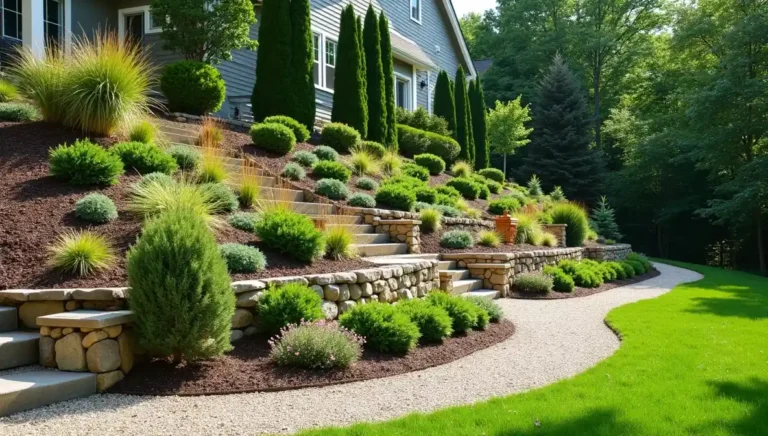
Build Terraced Garden Beds to Create Usable Levels
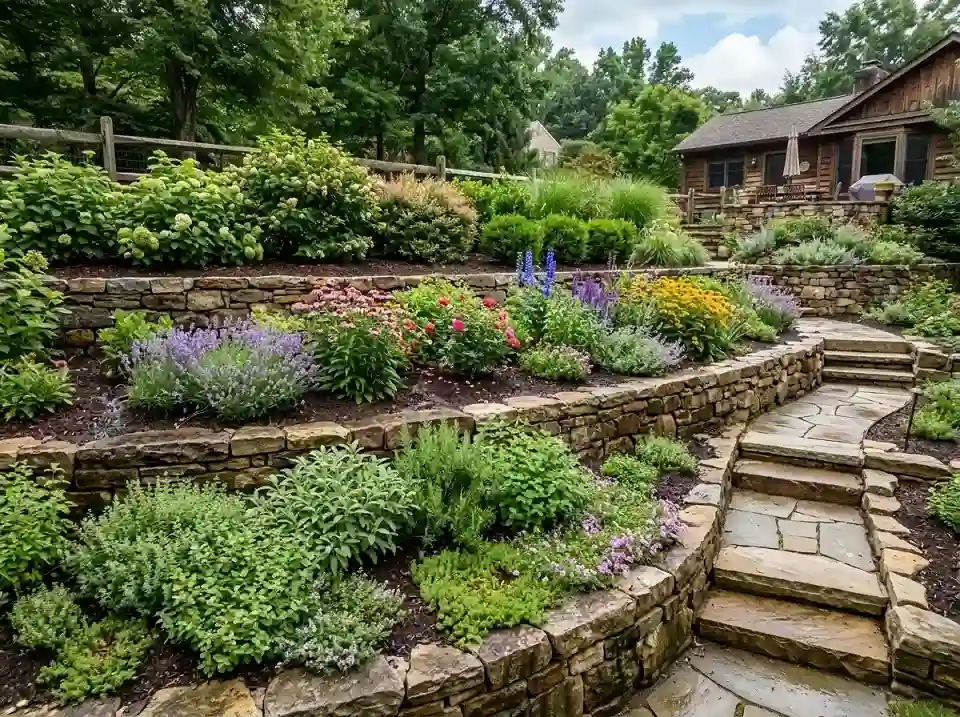
A long slope is hard to plant, water, and maintain. Terraced garden beds divide it into smaller, flatter sections.
Each level can support a different plant group. You might use the top bed for shrubs, the middle bed for flowers, and the lower bed for herbs or ground cover.
Terraces also slow water. Rain reaches one level at a time instead of rushing down the full hill.
You can build terrace edges with natural stone, concrete block, timber, or metal edging. The right material depends on the height of each level and the amount of soil it must hold.
Several low terraces often look more natural than one tall wall. They can also be easier to access.
Do not forget paths or stepping areas between the levels. A garden is not useful if you cannot reach the plants safely.
Add Retaining Walls Where Soil Needs Support
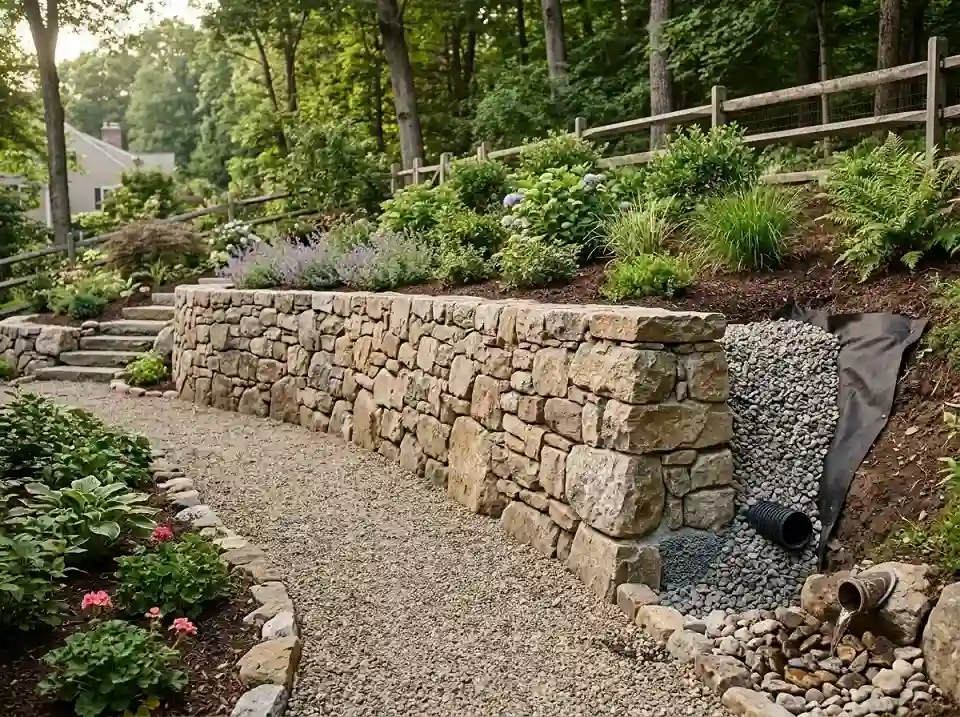
A retaining wall holds soil in place and creates a clear change in height. It can make room for a lawn, patio, path, or planting bed.
Short decorative walls may be suitable for smaller changes in grade. Taller walls carry much more pressure and often need proper footings, drainage, permits, or engineering.
Water is one of the biggest risks. Wet soil becomes heavy. Pressure can build behind the wall if water has no way to escape.
A proper wall may need gravel backfill, drainage pipe, filter fabric, and outlets for water.
Materials include concrete block, natural stone, poured concrete, brick, and treated timber. Each option has a different cost, life span, and style.
Do not treat a large retaining wall as a simple weekend job. A wall can look strong and still fail if the base or drainage is poor.
Plant Deep-Rooted Ground Covers to Hold Soil
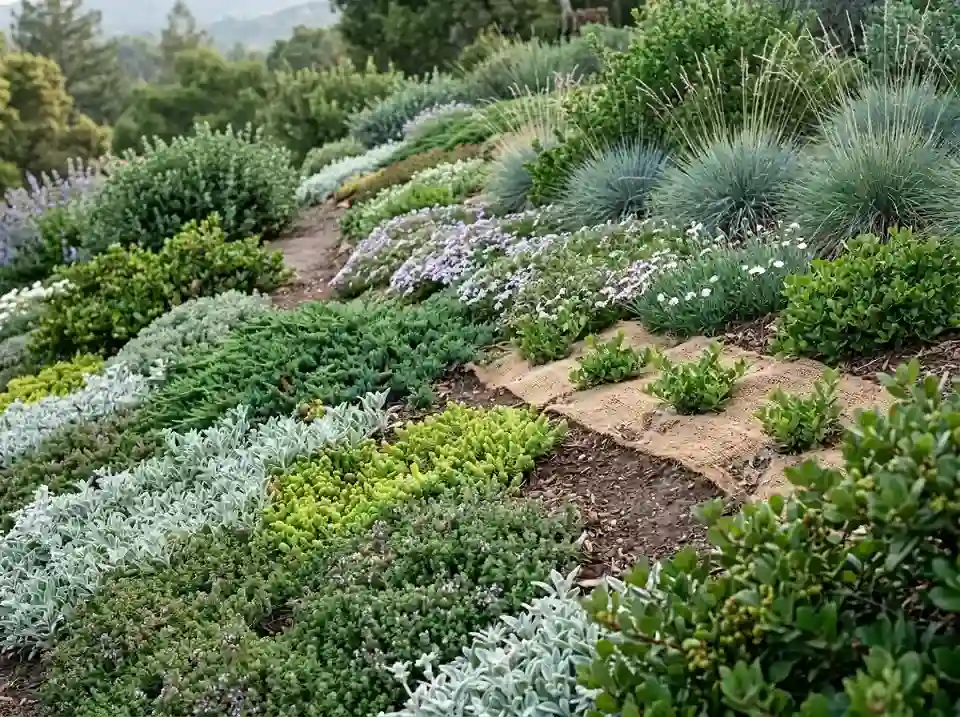
Bare soil washes away quickly on a hill. Ground covers protect the surface and help hold loose soil in place.
Choose plants that spread across the ground and suit your local weather. The plants must also match the amount of sunlight and moisture on the slope.
Good plant groups may include:
- Creeping ground covers
- Low-growing native shrubs
- Ornamental grasses
- Mat-forming perennials
- Spreading evergreen plants
Plant choice should be local. A plant that works well in a wet northern yard may fail on a hot, dry hillside.
Avoid invasive plants. They may spread beyond your property and crowd out local species.
Space new plants based on their mature width. Large gaps leave exposed soil for too long. During the first growing season, erosion-control fabric or light mulch may help protect the surface.
Replace Difficult Grass With Low-Maintenance Planting
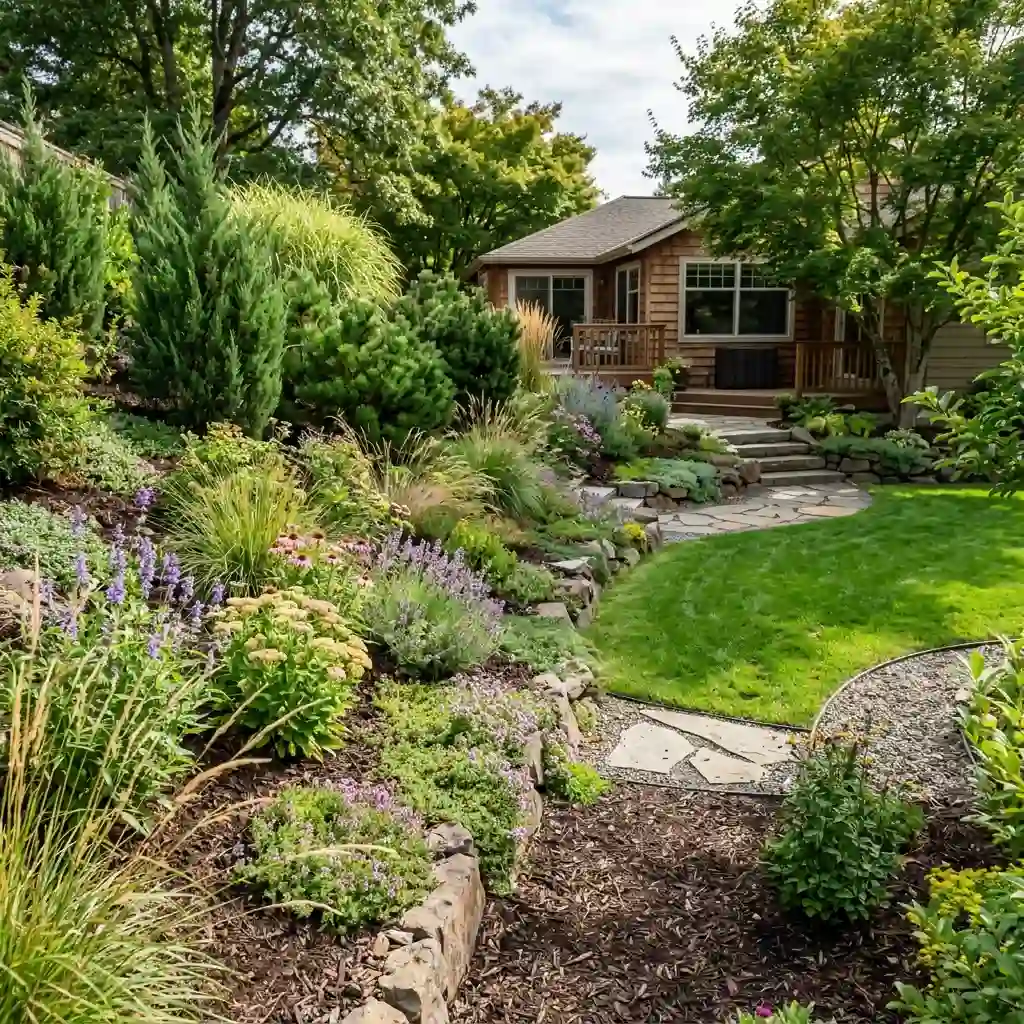
Grass can look neat, but it is often a poor choice for a steep slope.
Mowing on a hill is tiring. It may also be unsafe. Grass can dry out because water runs away before it reaches the roots.
Keep lawn on the flatter parts of your yard. Replace the steep middle area with shrubs, grasses, flowers, or ground cover.
A mixed planting bed usually gives better soil coverage than one type of plant. Taller shrubs add structure. Grasses fill gaps. Ground covers protect the soil.
Be careful with loose bark mulch. Heavy rain may carry it downhill. Shredded mulch grips better than large wood chips, but it may still move on a steep grade.
Low-maintenance hillside landscaping does not mean zero care. New plants still need watering, weed control, and trimming until they fill the area.
Install Stone Steps for Safer Access
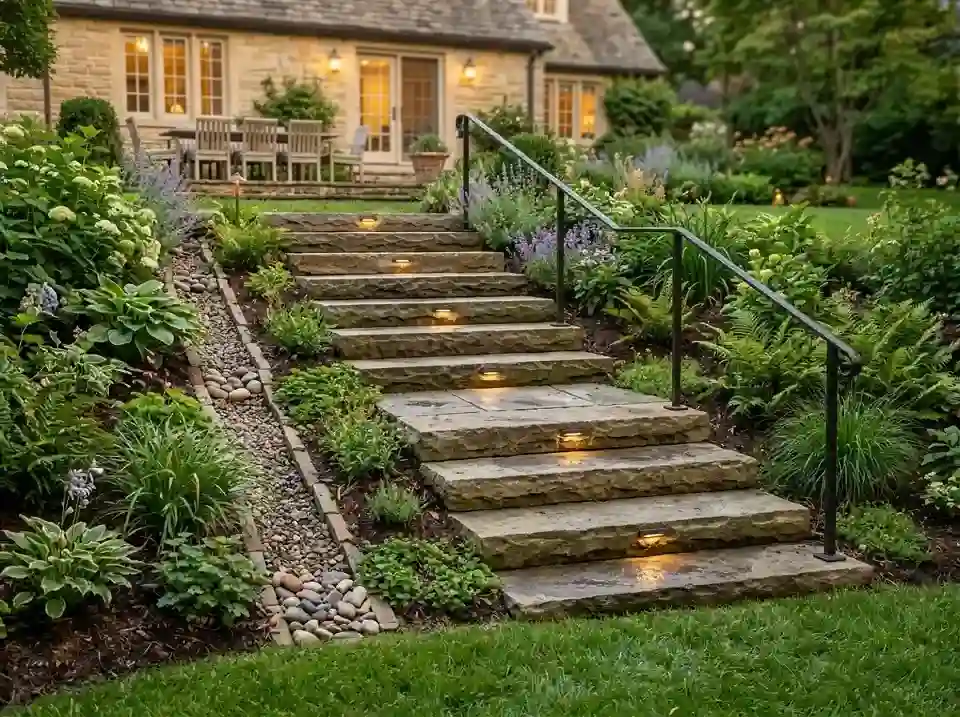
A slope becomes more useful when you can move across it safely.
Stone steps can connect the house, upper yard, garden beds, patio, or lower lawn. Place them along the route people already want to take.
Each step should have a steady height and enough depth for a secure foot placement. Uneven steps can cause trips, especially in wet weather.
Wide steps often feel safer than narrow ones. They also give you room to carry tools, trays, or garden supplies.
Add a handrail where the slope is steep or where older adults and children use the path.
Water should move beside the steps, not down the center. A drainage channel or planted edge can help control runoff.
Low path lights or lights under the step edges make the route safer after dark.
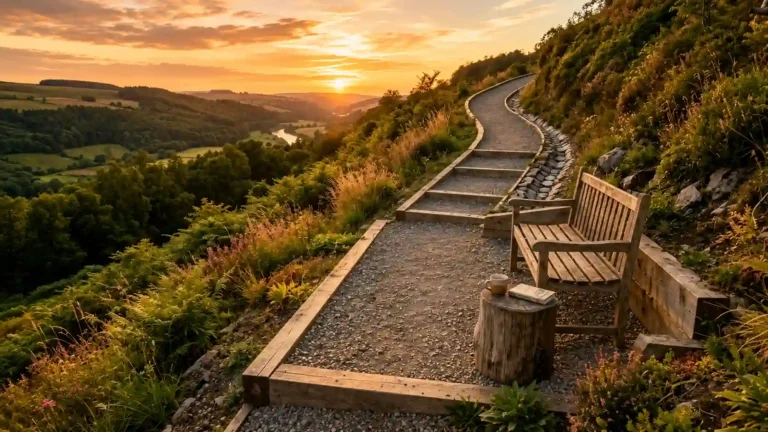
Create a Switchback Path Across a Steep Hill
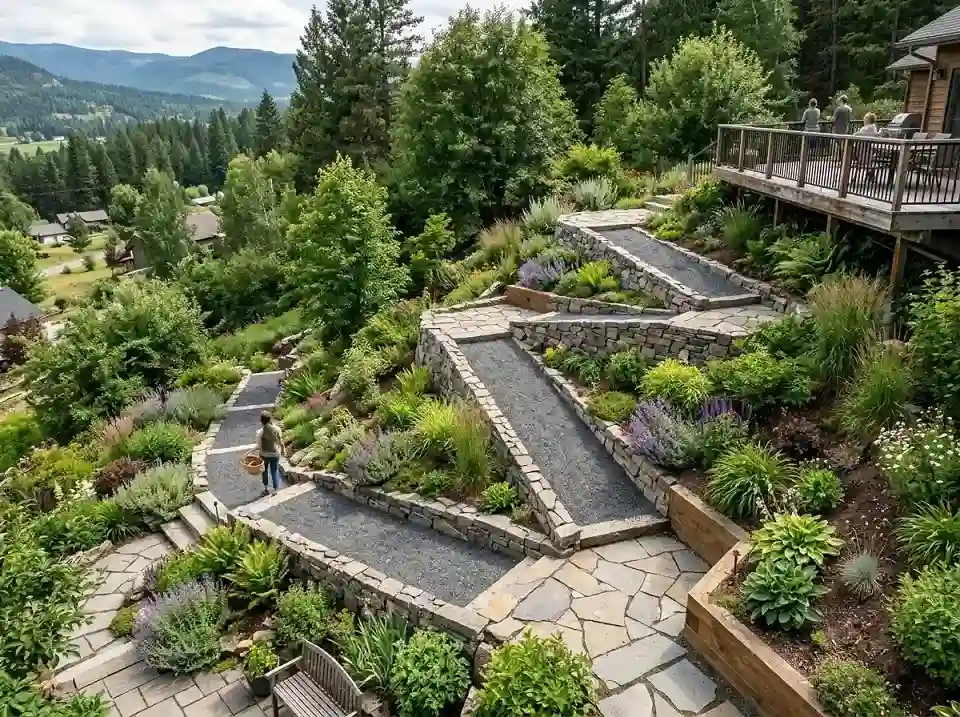
A straight path up a hill can feel too steep. It can also turn into a water channel during rain.
A switchback path crosses the slope in a zigzag shape. This reduces the walking angle and makes the climb easier.
Use level landing areas where the path changes direction. These spots give people space to stop and turn.
Gravel, compacted stone, textured concrete, and flat pavers can work well. The surface should provide grip when wet.
Add strong edging to hold loose gravel in place. Without edging, stones may move downhill over time.
A switchback path can connect an upper deck to a lower fire pit, garden, pool area, or seating space. It often needs more yard space than a staircase, but it can be easier for daily use.
Add a Level Patio at the Top or Bottom of the Slope
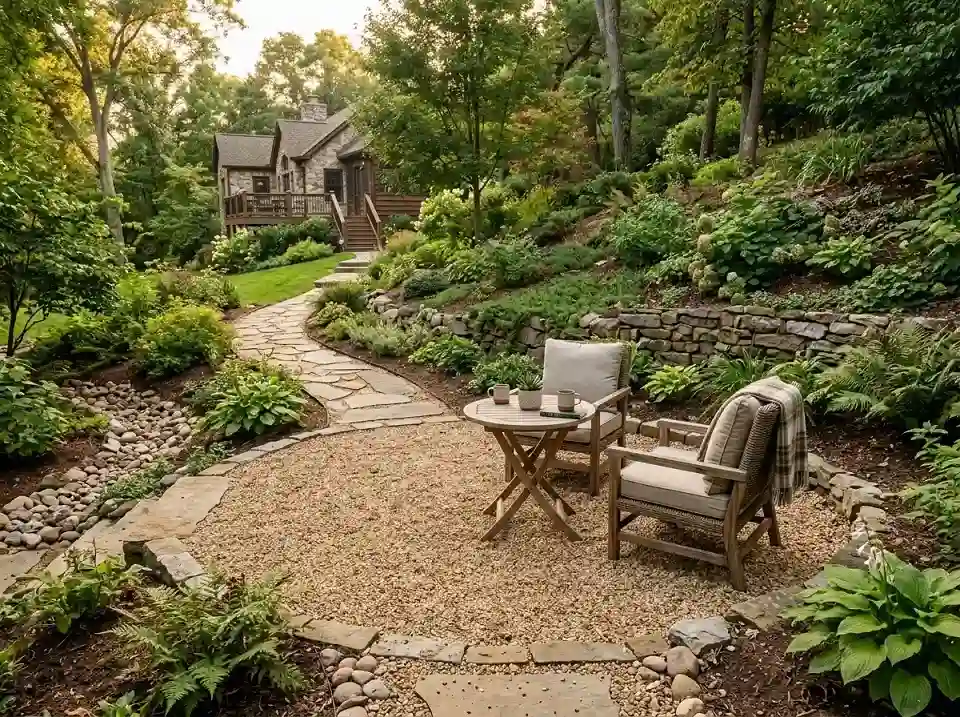
A level patio gives you a place for chairs, a table, a grill, or a small fire feature.
Choose the part of the yard that needs the least excavation. The top or bottom of the slope may already have a flatter section.
Think about access from the house. A patio with a great view may still go unused if reaching it feels difficult.
The base must be stable and well compacted. Water should drain away from the seating area.
Gravel patios can cost less than stone or concrete. They also work well in informal gardens. Pavers provide a cleaner surface but need careful base work.
A small patio can be more useful than a large one. Make space for the furniture you will actually use, then leave room for safe movement around it.
Build a Deck Over the Hardest Part of the Grade
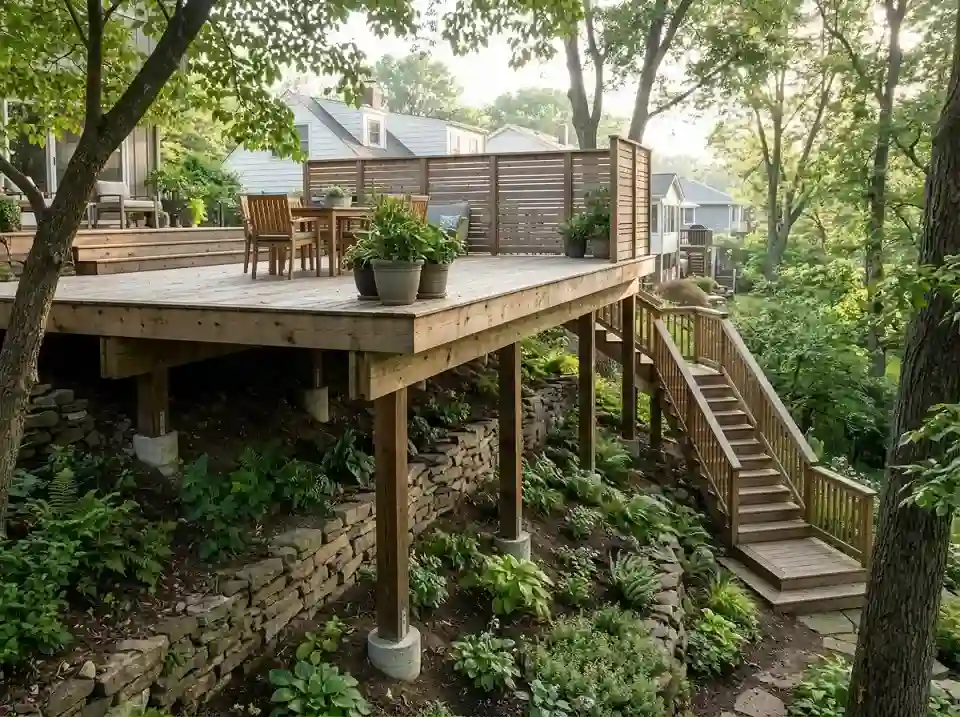
A deck can create level outdoor space without cutting deeply into a slope.
This option may work when excavation would remove too much soil or require a large retaining wall. The deck can extend from the house or stand on posts farther down the hill.
The space below may hold shade plants, storage, or a simple gravel area where local rules allow it.
Decks need strong foundations. Posts, beams, railings, stairs, and connections must meet local building rules.
Think about privacy and views before setting the height. A raised deck may overlook nearby homes. Screens, trees, or tall shrubs can help.
A deck is usually more complex than a small patio. Still, it may be the better choice when the grade is too difficult for a ground-level space.
Use Boulders to Slow Runoff and Add Structure
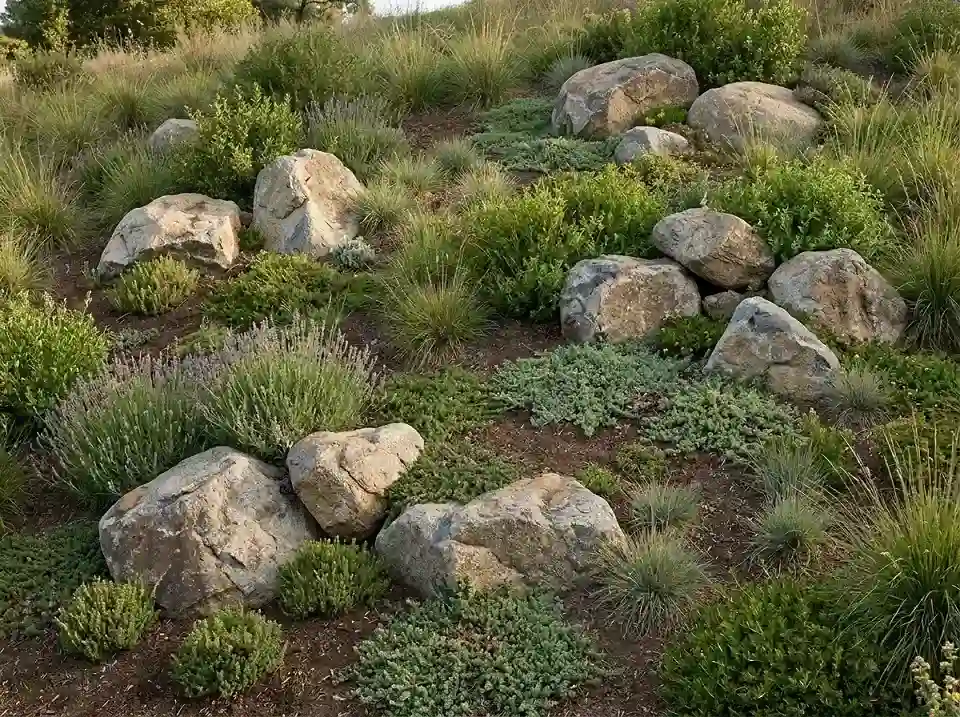
Large boulders help break up a wide slope. They can also slow surface water and create pockets for plants.
Set part of each boulder below the soil. A rock placed fully on top may look unstable and can move over time.
Use a mix of sizes. Groups of two, three, or five often look more natural than one straight row of matching stones.
Plant grasses, shrubs, or ground covers around the rocks. The plants soften the hard edges and help hold soil between them.
Boulders work well in dry gardens, wooded yards, and natural hillside designs.
They should not replace a retaining wall where major soil support is needed. Decorative rocks can guide water and reduce small areas of erosion. They cannot safely hold a large load of soil.
Create a Dry Creek Bed for Better Drainage
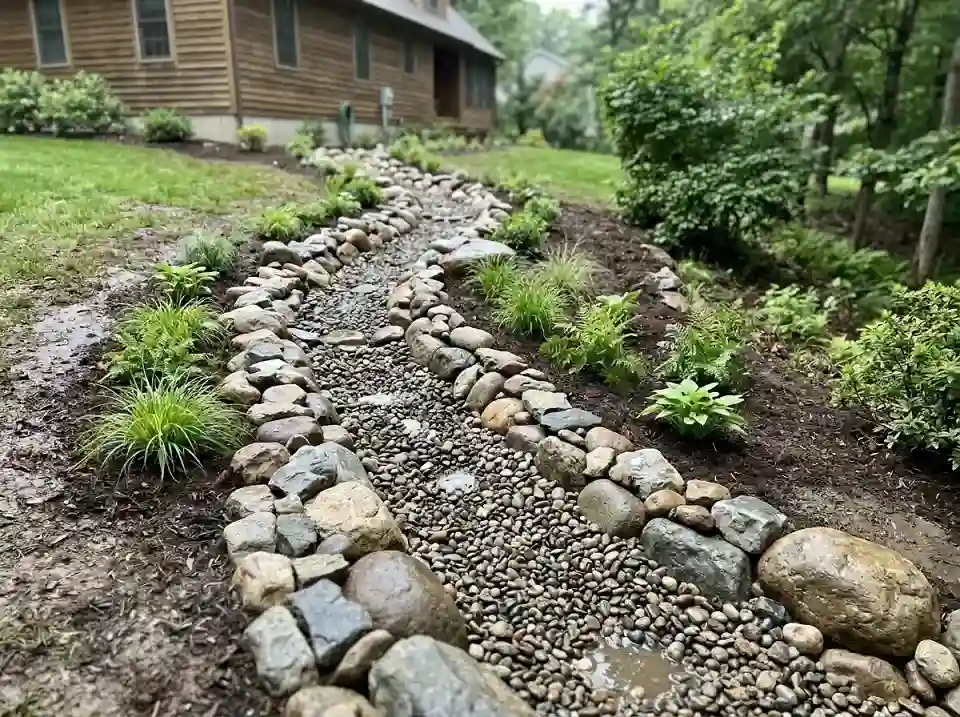
A dry creek bed is a stone-lined channel that carries water through the yard during rain.
It follows the natural water route and gives runoff a safer path. When the weather is dry, it looks like part of the landscape.
Use larger stones along the edges and smaller gravel in the center. Mixed sizes make the creek bed look more natural and help slow the water.
Add grasses, low shrubs, or moisture-friendly plants near the sides.
The channel must lead to a safe discharge point. Do not send water toward your foundation, driveway, septic area, or neighboring property.
A dry creek bed may help with surface runoff. It will not fix every drainage problem. Standing water, underground springs, or heavy flow may need a drainage contractor or engineer.
Add a Rain Garden at the Bottom of the Hill
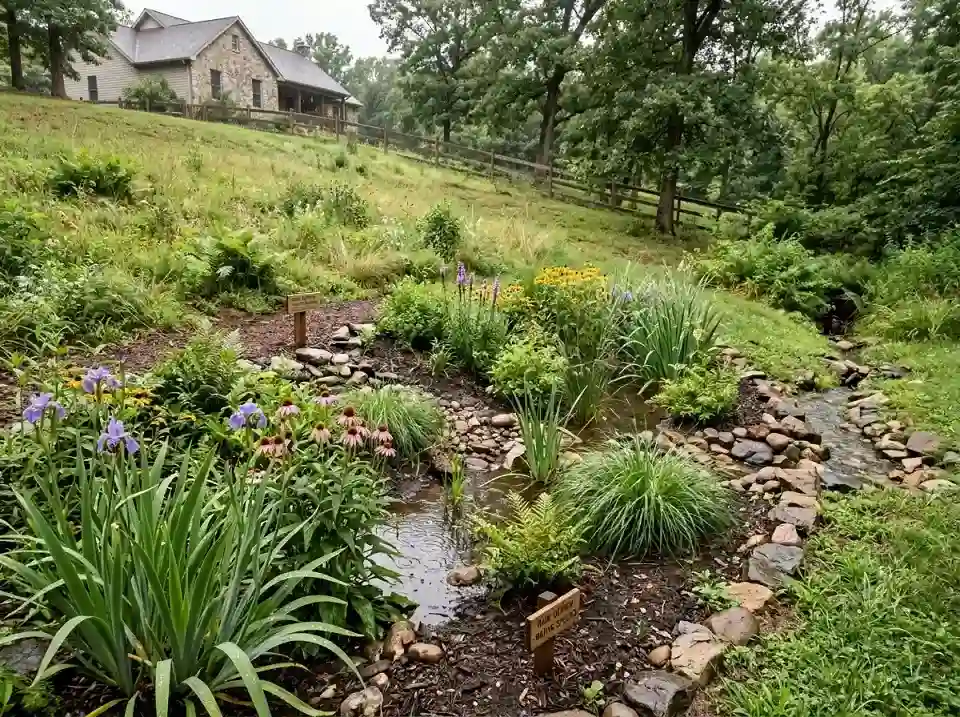
A rain garden is a shallow planted area that holds water for a short time after rain.
It can work near the bottom of a slope where runoff already collects. The plants and soil help slow the water and allow it to soak into the ground.
Choose plants that can handle both wet and dry conditions. A rain garden may be damp after a storm but dry between rains.
Keep it away from the home’s foundation. It should also stay clear of septic systems, utility lines, and unstable soil.
Test the soil before building. Water should drain within a reasonable time. A rain garden is not meant to stay wet like a pond.
This feature can turn a muddy low spot into an attractive planting area. It must still have a safe overflow route during very heavy rain.
Turn the Slope Into a Rock Garden
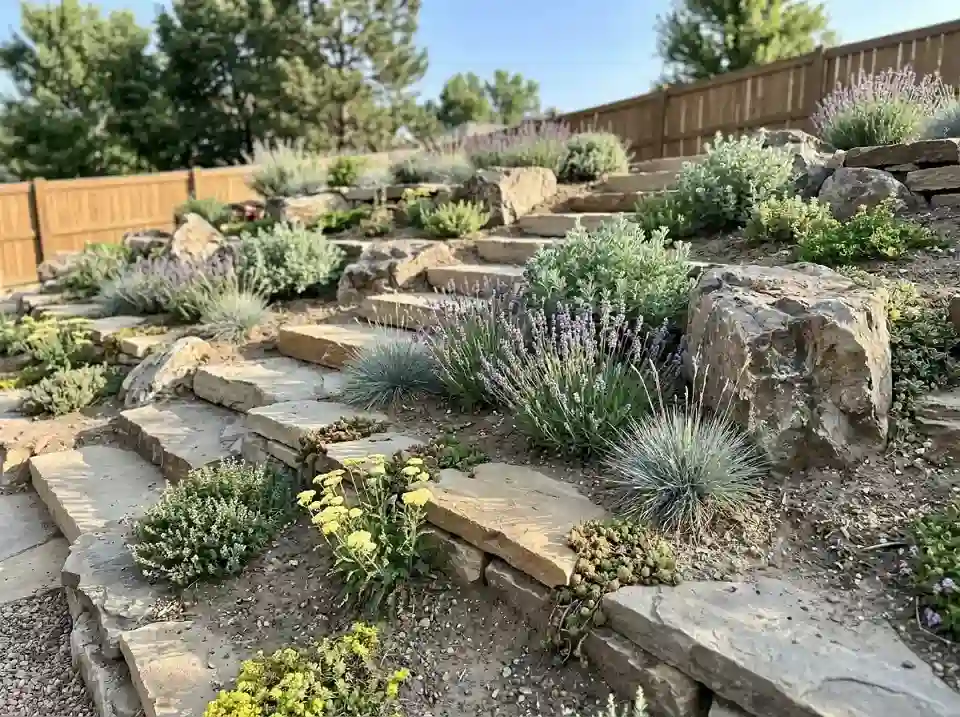
A sunny, dry slope can be a good place for a rock garden.
Use stone to create stable planting pockets. Add plants that prefer fast-draining soil and lower water use.
Flat stones can act as anchors between grasses, low shrubs, and flowering plants. Larger stones add height and shape.
Leave enough room for plants to reach their mature size. Crowded plants may trap moisture or become hard to trim.
Avoid covering the whole slope with loose gravel. Gravel can shift downhill and may be difficult to keep free of weeds.
A rock garden works best when the stone feels connected to the land. Use repeated materials and plant groups instead of adding many unrelated colors and textures.
Plant Native Shrubs in Layered Groups
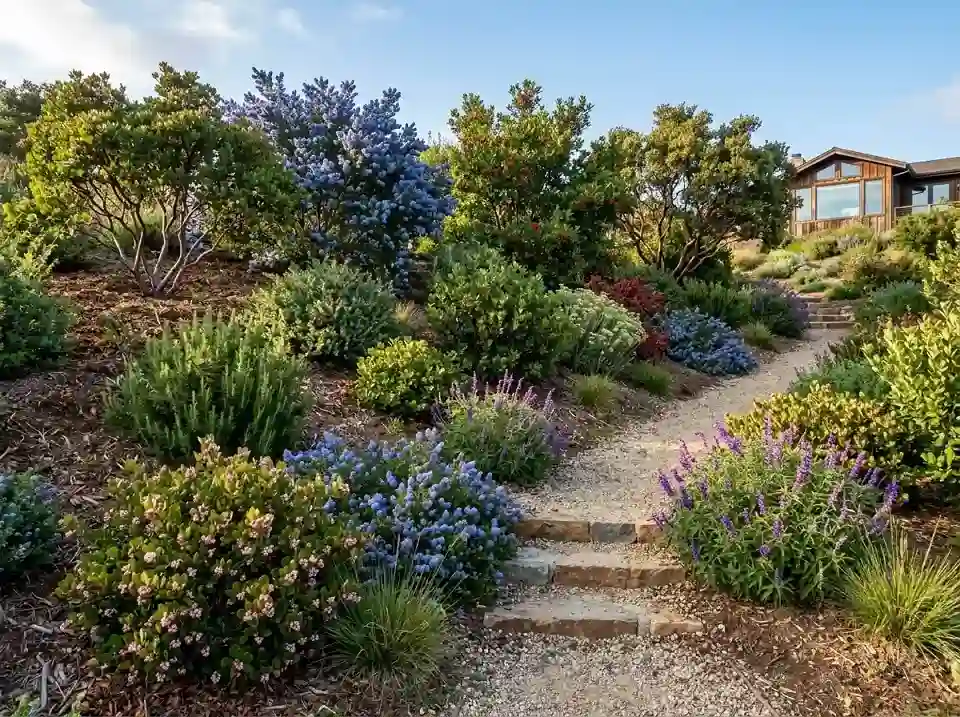
Native shrubs can be a smart choice for hillside planting because they are suited to local weather and soil.
They may also provide food and shelter for birds, bees, and other wildlife.
Plant taller shrubs near the top or back of the slope. Use shorter plants near paths, steps, or view areas.
Repeat groups of the same plant. Three to five shrubs together usually look more planned than one plant of many different types.
Mix plants with different bloom times, leaf shapes, and seasonal color. This keeps the hillside interesting through more of the year.
Check mature size before planting. A small shrub at the garden center may grow wide enough to block a path or cover a window.
Local extension offices and native plant groups can help you choose species for your region.
Add Raised Beds Along the Slope’s Edge
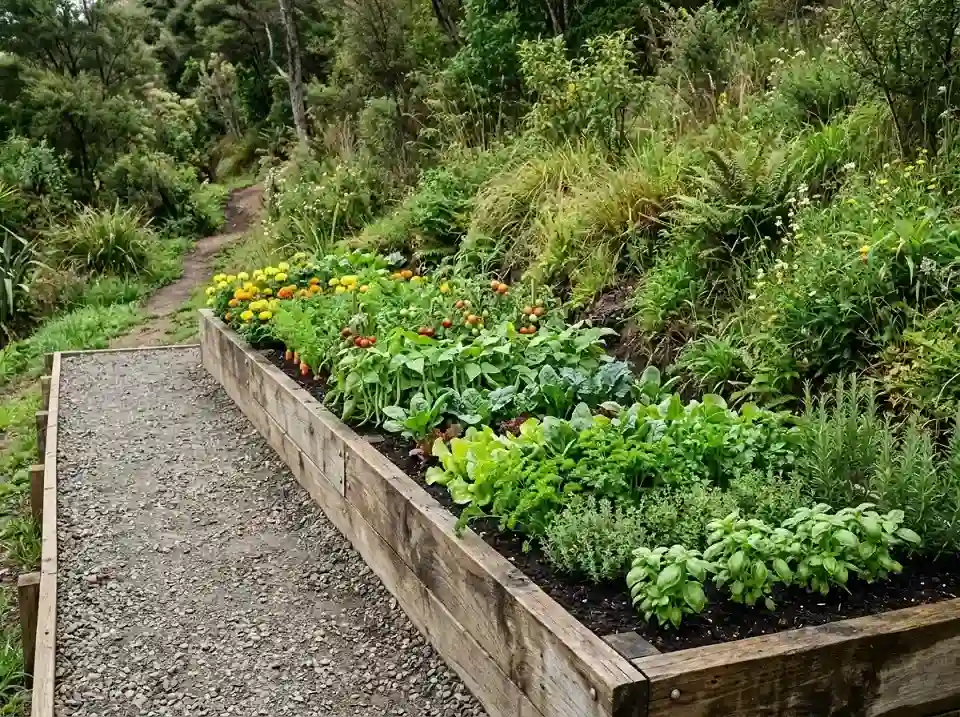
Raised beds can create better growing space near a level landing or terrace.
They are useful for herbs, vegetables, flowers, and small fruit plants. The raised soil is easier to improve and may be easier to reach.
Do not place a heavy bed on loose or unstable ground. The base needs firm support.
Keep the bed narrow enough to reach the center without stepping inside. A width of about 3 to 4 feet works for many gardeners when both sides are open.
Add a level path beside the bed. Gravel, pavers, or compacted stone can create a clean work area.
Raised beds are best near the top or bottom of the hill. They are less suitable on the steep face unless they are part of a properly built terrace.
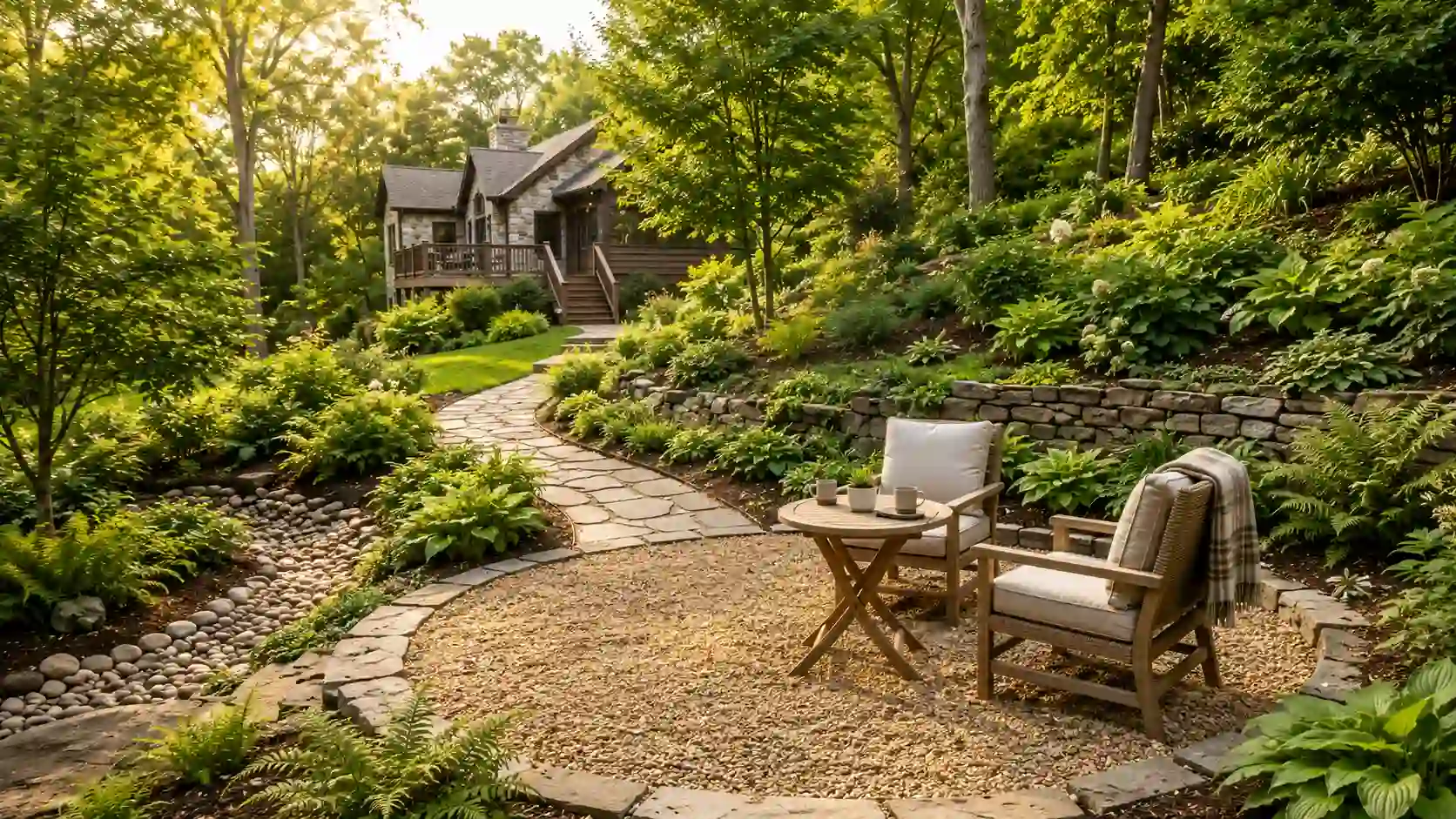
Create a Hillside Seating Nook
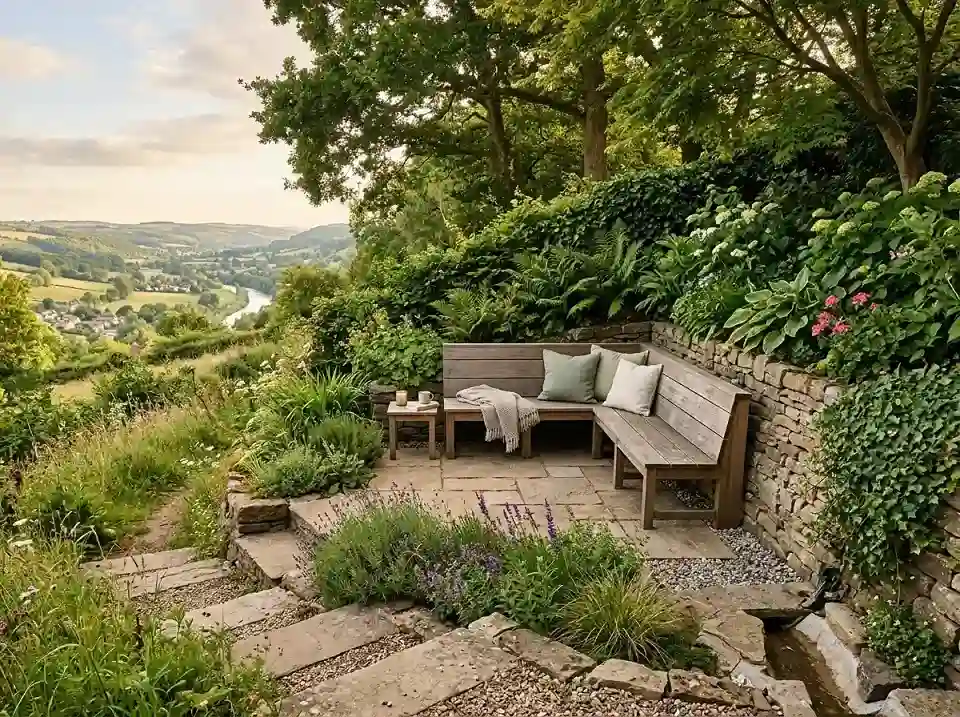
You may not need a large patio to enjoy the view.
A small seating nook can fit into a level pocket on the slope. It may hold one bench, two chairs, or a compact bistro set.
Choose a spot with a good view, afternoon shade, or privacy from nearby homes.
Built-in benches work well where space is tight. They reduce the need for loose furniture and can follow the shape of a wall.
Use gravel, pavers, or a small deck platform for the floor. Make sure the area drains well.
Add plants behind the seat to create a sense of shelter. Keep low plants in front so they do not block the view.
Safe access matters. Connect the nook with firm steps or a stable path.
Use Lighting to Make Steps and Paths Safer
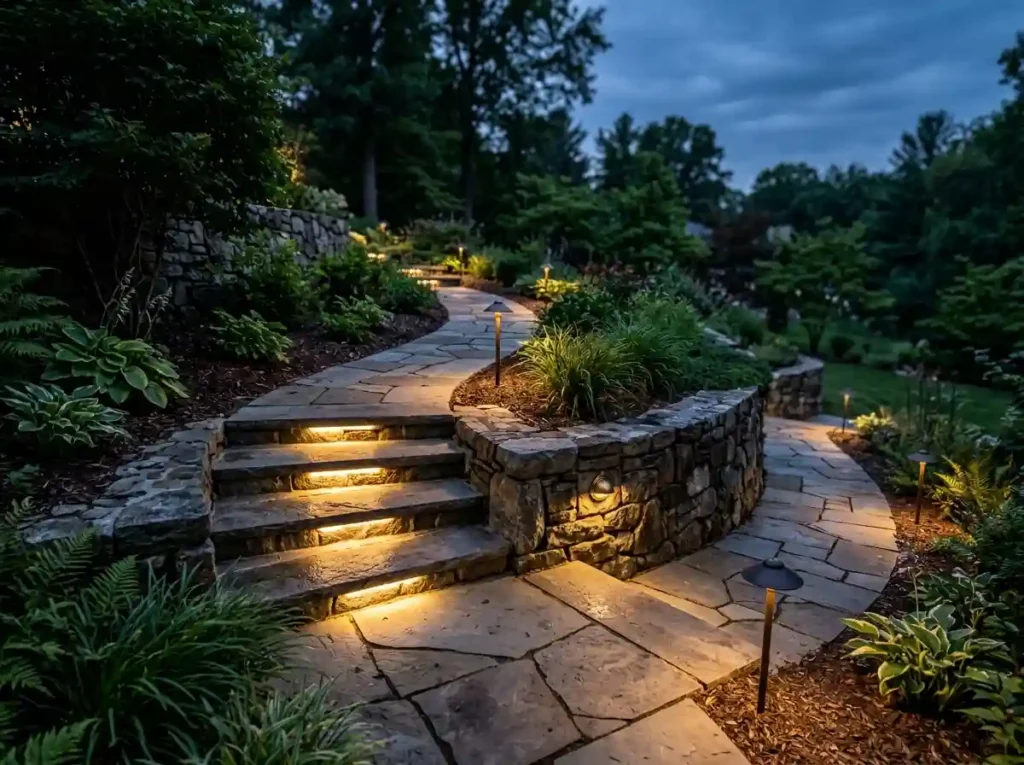
Sloped yards can become difficult to use after sunset.
Place lights near steps, landings, sharp turns, and changes in level. The goal is to show the walking surface without shining light into people’s eyes.
Low path lights work well beside walkways. Under-step lights can mark each stair. Small wall lights may help near retaining walls or seating areas.
Use fixtures rated for outdoor conditions. Wires should be protected from rain, tools, pets, and moving soil.
Solar lights are easy to install, but they may not work well in deep shade. They can also become dim after several cloudy days.
A low-voltage system often gives more steady light. It may require more planning and professional installation.
Keep Part of the Slope Natural With a Meadow Design
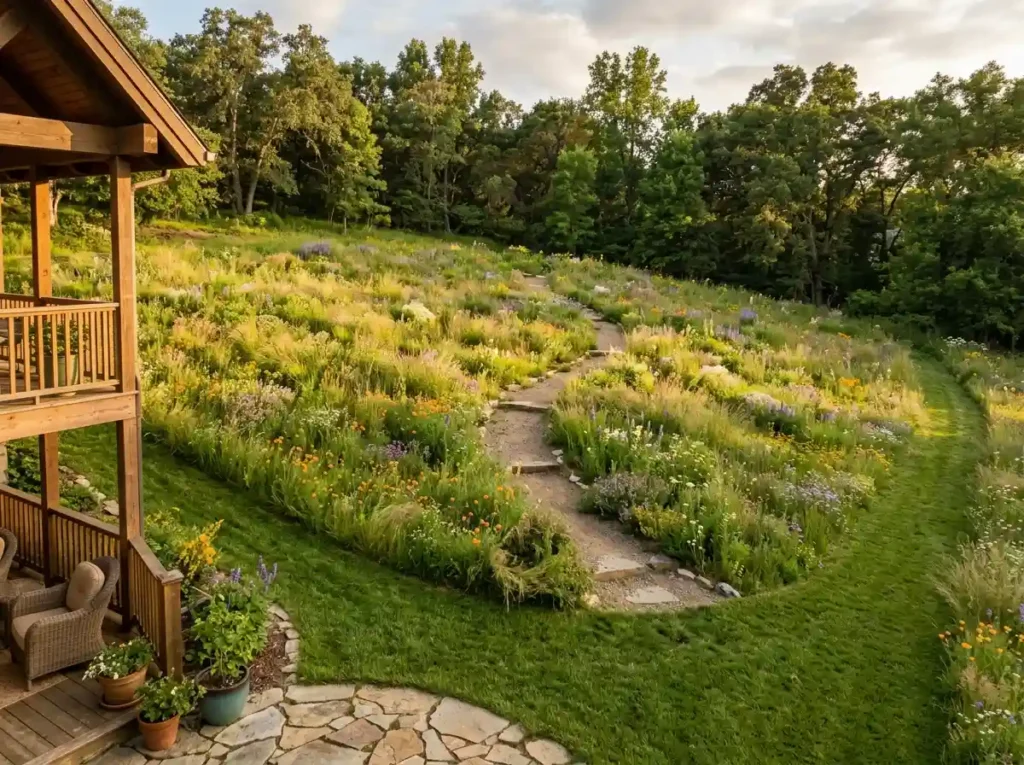
A large slope does not always need a formal garden.
A meadow design uses grasses and flowering plants to create a softer, more natural look. It can also reduce mowing.
Choose plants that suit the soil, sun, and rainfall in your area. Local grasses and flowers are often easier to support than plants from very different climates.
Add a clear edge or mown border. This makes the meadow look planned instead of neglected.
A curved path can help you walk through a larger meadow. It also creates a clear shape when viewed from the house.
Meadow planting still needs care. Weeds must be controlled while plants become established. Many meadow areas also need seasonal cutting.
This option works best on broad, sunny slopes with enough space for plants to move naturally.
Choose the Right Idea for Your Yard’s Slope and Budget
You may like several of these backyard slope ideas, but your yard probably does not need all 17.
Start with the main problem.
Is soil washing away? Is water collecting near the house? Is the hill unsafe to walk on? Do you need a flat place for chairs?
Fix drainage and safety before adding decorative features.
| Main yard problem | Best ideas to consider |
| Soil washing away | Ground cover, terraces, boulders |
| Unsafe access | Steps, switchback paths, lighting |
| No usable space | Deck, patio, seating nook |
| Water collecting below | Dry creek bed, rain garden |
| Hard-to-mow grass | Native shrubs, meadow, ground cover |
| Limited budget | Planting, simple paths, phased terraces |
A small budget may cover ground cover plants, basic stone steps, or a gravel path. A larger budget may allow for a deck, patio, drainage system, or retaining walls.
You can also complete the work in stages.
For example, fix the drainage first. Add steps the next season. Plant shrubs after the soil has settled.
This approach spreads the cost and gives you time to see how each change affects the yard.
Do not choose the cheapest idea if it does not solve the problem. A low-cost planting bed will not help if water is pushing against a failing wall.
Avoid These Hillside Landscaping Mistakes
A hillside project can look finished and still fail after the first season of heavy rain.
The first mistake is ignoring drainage. Water can wash away mulch, expose plant roots, weaken paths, and place pressure behind walls.
The second mistake is building a tall wall without proper design. A retaining wall must support weight and release water.
Another common problem is using loose materials on a steep surface. Large bark chips, loose gravel, and light soil may move downhill.
Plant choice also matters. Avoid plants that dislike your soil or rainfall. Check local invasive plant lists before planting fast-spreading ground cover.
Steps with uneven heights can become a safety problem. Each riser should feel steady and predictable.
You should also plan for mature plant size. Small shrubs may block paths or views within a few years.
Do not send runoff toward your home or a neighboring property. Drainage changes can create damage far from the place where the water starts.
Finally, avoid covering the full slope with one material. Large areas of gravel, mulch, or one plant can look flat and may be hard to maintain.
Plan for water, weight, roots, and maintenance before choosing colors or decorative materials.
When Should You Hire a Hillside Landscaping Professional?
Some hillside projects are suitable for careful DIY work. Others can affect soil stability, drainage, and nearby buildings.
Call a professional when you see deep erosion channels, moving soil, leaning walls, cracked concrete, exposed foundations, or water flowing toward the house.
You may also need help when:
- A retaining wall must hold a large amount of soil
- The work affects a property line
- Heavy equipment cannot reach the site
- The slope is very steep
- Water comes from several nearby properties
- Local rules require a permit
- The yard sits near a septic system or utility line
The right professional depends on the problem.
| Project need | Professional to contact |
| Planting and yard layout | Landscape designer |
| Large site planning | Landscape architect |
| Soil support or structural wall | Civil or structural engineer |
| Runoff and standing water | Drainage contractor |
| Retaining wall construction | Licensed wall contractor |
| Regional plant advice | Native plant specialist |
A landscape designer can help with planting and layout. An engineer may be needed when a wall supports a major soil load.
Professional advice at the planning stage may cost less than rebuilding a failed wall or correcting drainage after construction.
Start With the Problem, Not the Decoration
The best hillside landscaping ideas improve safety, drainage, and daily use at the same time.
Measure the slope before choosing a design. Watch where water moves. Look for bare soil, exposed roots, puddles, and unsafe walking areas.
Then choose two or three ideas that solve the biggest problems first.
You may need ground cover to hold soil, steps for access, and a small level patio for seating. Another sloped backyard may need a dry creek bed, native shrubs, and a deck.
After the next heavy rain, walk around the yard and mark the water route. That simple step can help you avoid costly mistakes and build a hillside yard that works better for years.