19 Privacy Landscaping Ideas for a Secluded Yard
Your backyard should feel like a place to relax. It should not feel like a stage that every neighbor can see.
Yet many homes have little outdoor privacy. Houses sit close together. Upper-floor windows overlook patios. Roads, sidewalks, and shared fences can also leave you feeling exposed.
A taller fence may seem like the easiest answer. But a fence can be costly, may break local rules, and may still fail to block views from above.
These privacy landscaping ideas can help you block unwanted views without making your yard feel dark or closed in. You can use trees, shrubs, planters, screens, trellises, or a mix of several features.
The right choice depends on where the view comes from. It also depends on your yard size, local climate, budget, and available time for care.
When planned well, landscaping for privacy can give you more comfort while adding shade, flowers, texture, and useful outdoor space.
How to Choose the Right Privacy Landscaping Ideas
Before buying plants or building a screen, find the exact view you need to block.
Sit in the places where you spend the most time. Check the view from your patio chair, dining table, pool, hot tub, deck, or play area. This simple check is called a privacy audit.
Next, find the source of the problem. Is someone looking through a ground-floor window? Does an upper-floor window face your patio? Can people see into your yard from a road?
The answer will affect the height and location of your screen.
A row of shrubs may block a ground-level view. It may do little against a second-story window. That view may need a tree canopy, pergola roof, or tall screen placed closer to your seating area.
Measure the width and height you need to cover. Then check how much planting room you have.
You should also review:
- Daily sunlight
- Soil drainage
- Wind exposure
- Planting space
- Utility lines
- Fence height limits
- Homeowners association rules
- Access for trimming and repairs
Do not choose plants based only on how they look at the garden center. Check their mature spread, which means the full width they may reach when grown.
Some plants provide quick coverage. Others take several years to fill in. In many yards, the best plan combines one immediate screen with one long-term planting solution.
How to Create Year-Round Privacy With Trees and Shrubs
Trees and shrubs can block views while making your yard feel greener and softer. They can also provide shade, flowers, nesting areas, and food for birds.
The key is choosing plants that fit your space after they mature.
Plant a Dense Evergreen Hedge
Best for: Property lines, large yards, pools, and year-round screening
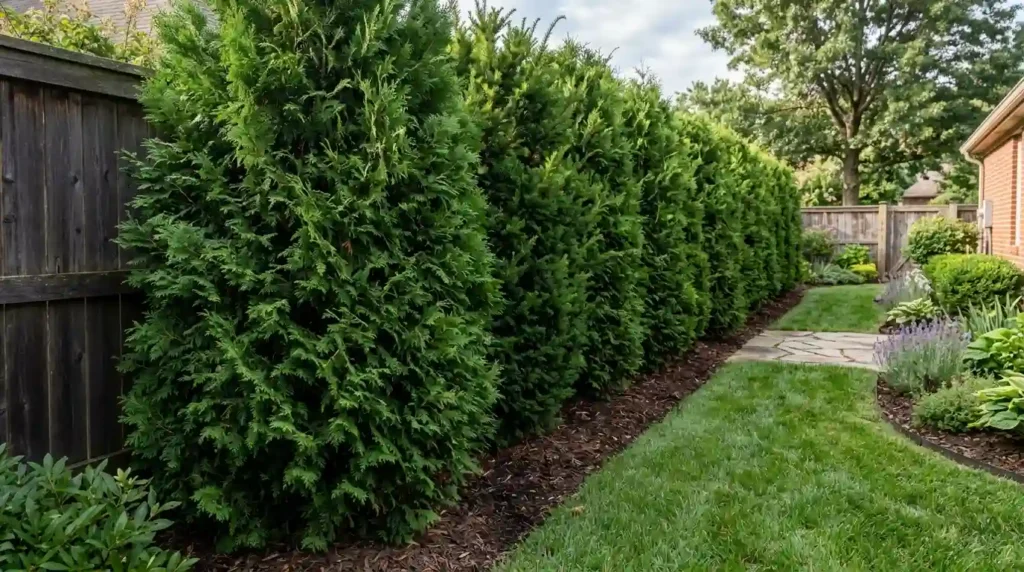
An evergreen hedge keeps most of its leaves through the year. This makes it a strong choice when you need privacy during both summer and winter.
Possible plants include arborvitae, yew, holly, podocarpus, cherry laurel, and pittosporum. The right choice will depend on your climate, soil, and sunlight.
Check the mature width before you plant. A small shrub may grow much wider than you expect. Crowding several plants together may create quick coverage, but it can cause poor airflow and disease later.
You can clip the plants into a neat formal hedge. You can also let them keep a loose, natural shape. A formal hedge needs more trimming.
When comparing privacy plants for backyard use, check whether each species is invasive in your area.
Keep in mind: Even fast-growing shrubs may take a few seasons to form a solid screen.
Build a Mixed Shrub Border
Best for: Large boundaries, cottage gardens, and natural-looking yards
A single row of the same shrub can look stiff. It can also leave a large open gap if one plant dies.
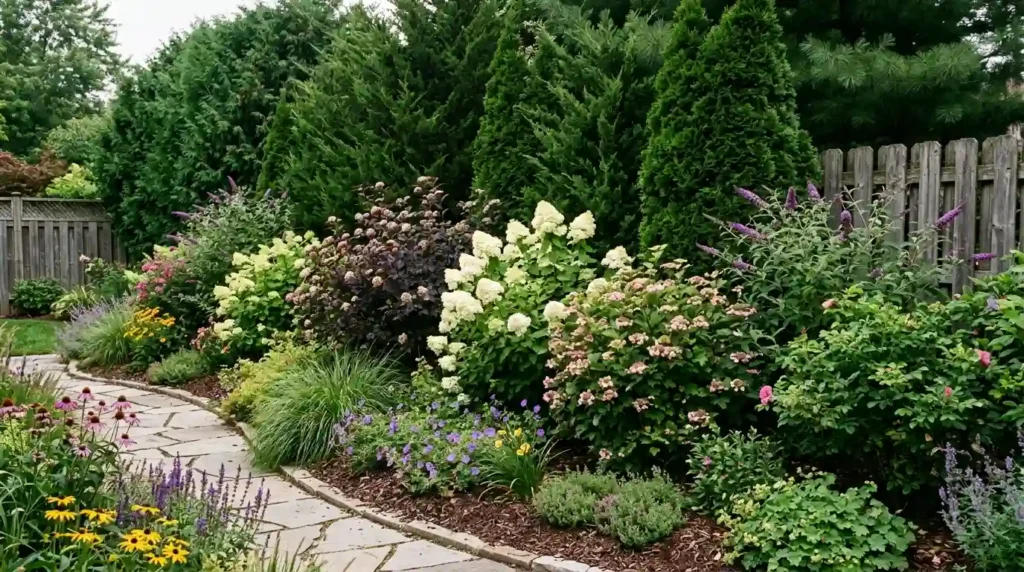
A mixed border uses several types of shrubs. Combine evergreen plants with shrubs that flower or change color through the seasons.
Place taller evergreen shrubs at the back. Add flowering shrubs in the middle. Finish the front with grasses, flowers, or low ground covers.
Stagger the plants instead of placing them in one straight line. This gives the border more depth and helps cover small gaps.
Native shrubs can be a good choice because they often suit the local soil and support nearby wildlife. A local garden center or extension service can help you find safe options.
This form of landscaping for privacy usually looks softer than a clipped hedge.
Keep in mind: Mixed borders need enough width for each plant to grow without crowding the next one.
Use Columnar Trees in Narrow Spaces
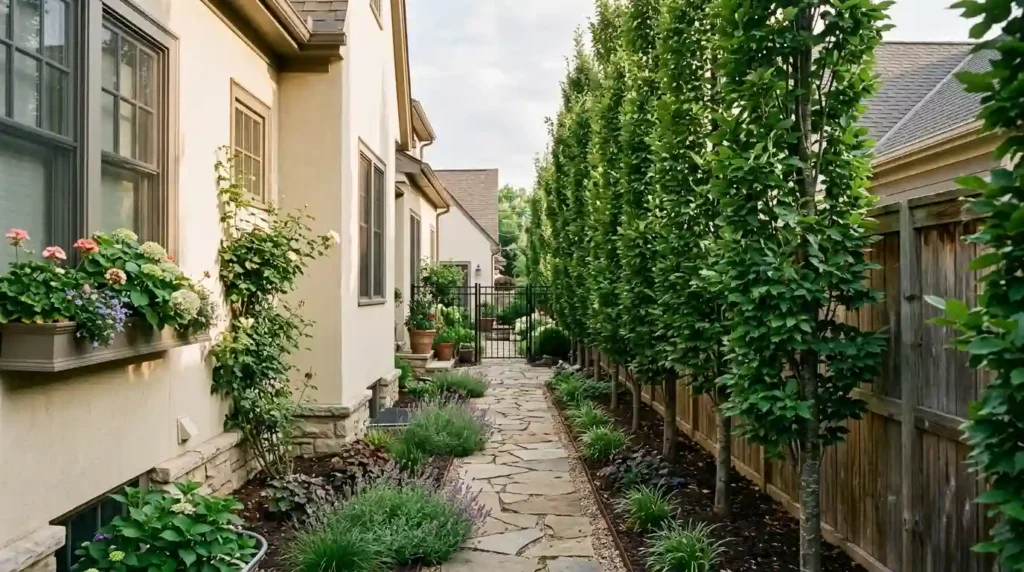
Best for: Side yards, driveways, small patios, and narrow property lines
Columnar trees grow upward with a slim shape. They can add useful height without taking over a small yard.
Possible options include columnar hornbeam, upright juniper, columnar maple, and Italian cypress in suitable climates.
Always check the tree’s full size. Some upright trees stay narrow for years but become much wider as they age.
Do not plant them too close to walls, paving, drains, or utility lines. Roots and branches need room even when the tree has a slim shape.
A row of columnar trees can work well beside a driveway. You can also place two or three around a patio to block a specific view.
This is one of the most useful small backyard privacy ideas when a wide hedge would take up too much space.
Keep in mind: A narrow tree can still grow very tall, so check for overhead wires before planting.
Plant Small Canopy Trees to Block Upper Windows
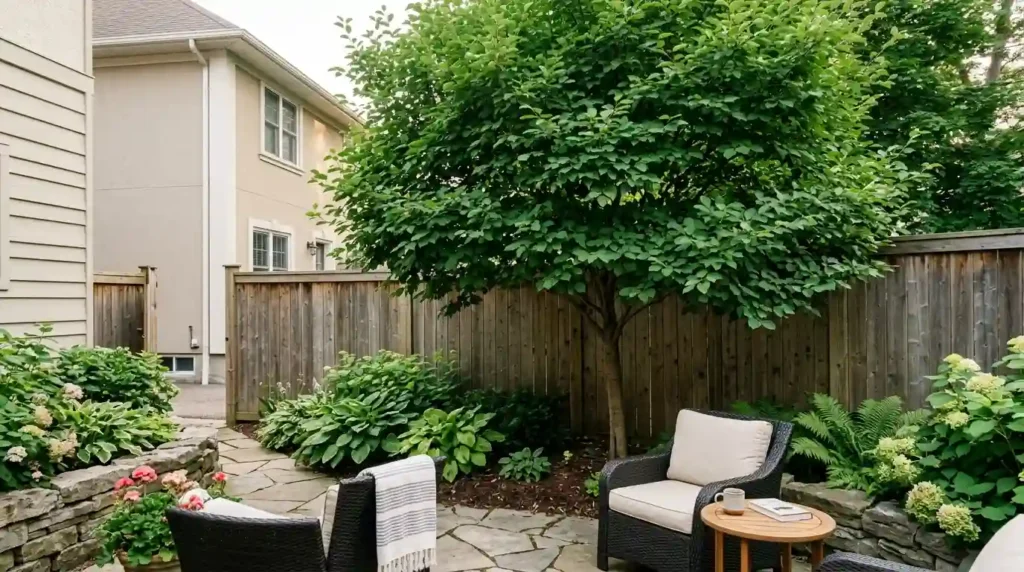
Best for: Patios or decks overlooked by second-story windows
A standard fence often blocks views at ground level. It may not stop someone from looking down from an upper floor.
A small canopy tree can fill the space between the window and your seating area. The canopy is the leafy top of the tree.
Possible choices include serviceberry, redbud, dogwood, Japanese maple, and crape myrtle in suitable regions.
Placement matters more than planting a large number of trees. Stand in your seating area and look at the problem window. Place the tree along that sightline.
A sightline is the direct line between the viewer and the area being viewed.
The tree may work better near the patio than at the far end of the yard. This can block the view with a smaller plant.
Keep in mind: Deciduous trees lose their leaves in winter, so they may not provide full privacy all year.
Grow Clumping Bamboo With Proper Control
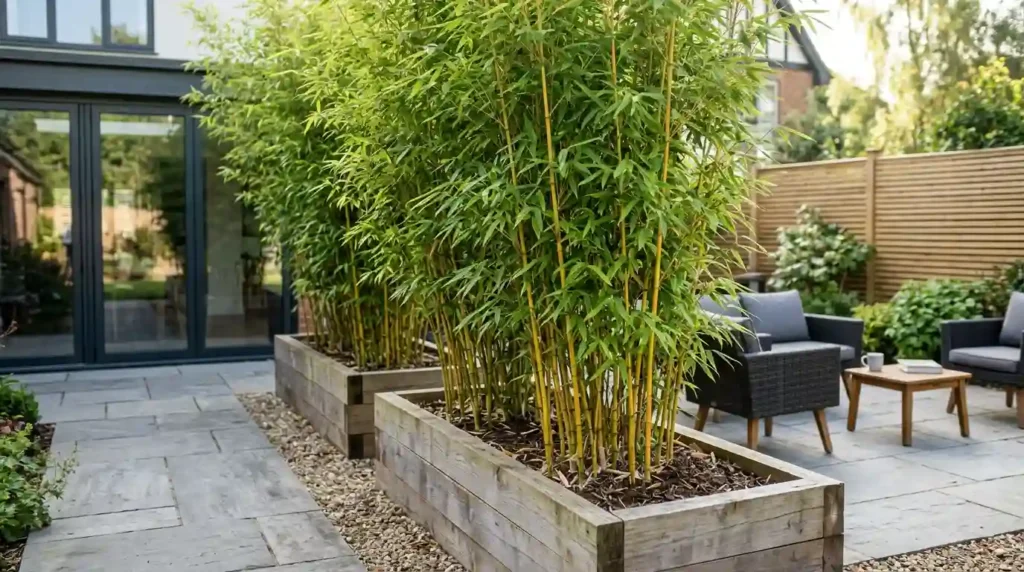
Best for: Modern gardens, narrow spaces, and fast green screening
Bamboo can form a tall, leafy screen in a small amount of ground space. But you need to choose the right type.
Clumping bamboo grows in a tighter group. Running bamboo sends underground stems into nearby areas and can spread far beyond its planting spot.
Check local rules before planting any bamboo. Some types are invasive or restricted.
Large containers can offer better control. They also allow you to move the screen if needed.
Bamboo needs regular water during dry weather. Older stems may also need thinning to keep the screen healthy.
Do not plant running bamboo and assume a basic garden edge will stop it. Proper root barriers may be needed.
Keep in mind: Bamboo can become difficult and costly to remove if the wrong type spreads.
How to Add Privacy Without Building a Solid Wall
A single tall screen can make a yard feel boxed in. Layered plants break up the view while keeping the space open and natural.
You can also raise the planting area to gain extra height.
Combine Plants in Three Heights
Best for: Wide borders, large yards, and natural garden styles
A three-layer planting plan uses tall, medium, and low plants.
Place evergreen trees or large shrubs at the back. Add medium flowering shrubs in front. Finish with ornamental grasses, flowers, or ground covers.
This setup covers the gaps that often appear near the base of tall plants. It also adds color and texture.
For example, you might plant evergreen shrubs at the back, hydrangeas in the middle, and grasses at the front. Choose plants that suit your climate and light conditions.
Repeat a few of the same plants across the border. Too many unrelated plants can make the area look messy.
Leave enough space for each layer to reach its mature size.
Keep in mind: Check how the border will look in winter. Some layers may disappear when leaves fall.
Use Tall Ornamental Grasses for Soft Screening
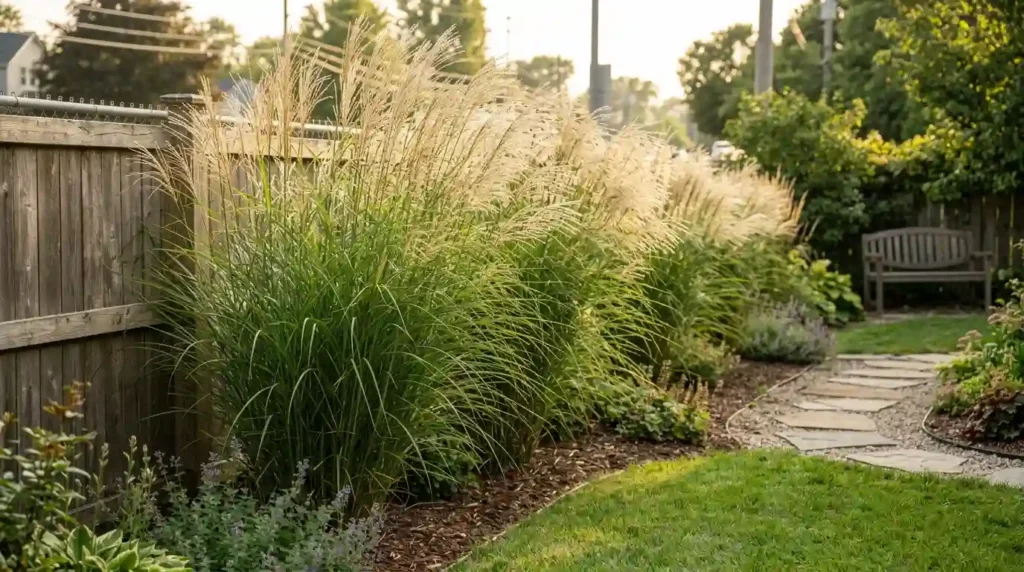
Best for: Patios, pools, walkways, and seasonal privacy
Tall grasses move gently in the wind and create a light screen. They can hide a view without forming a heavy green wall.
Possible options include switchgrass, feather reed grass, and other clumping grasses suited to your area.
Place them around a patio or pool where you need soft screening during the warmer months. Their narrow shape can also work in slim planting beds.
Choose clumping types that stay in place. Some grasses spread through seeds or roots and may cause problems.
Many ornamental grasses turn brown in winter. Some are cut close to the ground before new growth begins.
For better year-round coverage, mix grasses with evergreen shrubs.
Keep in mind: Ornamental grasses often provide seasonal privacy rather than full winter screening.
Create a Raised Berm
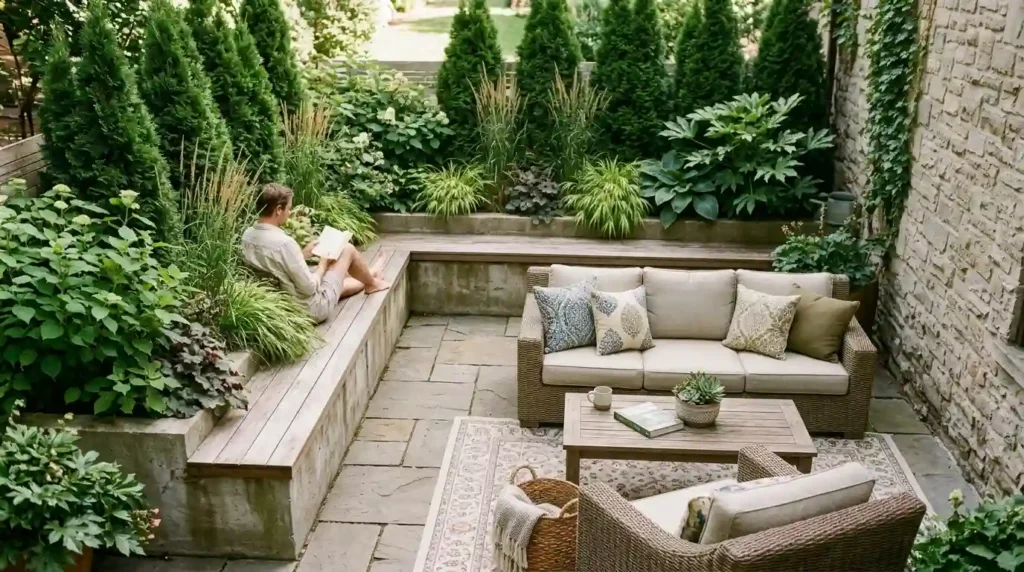
Best for: Large, flat yards with enough open ground
A berm is a low mound of soil shaped into the landscape. Planting shrubs or trees on top gives them extra height.
For example, a shrub on a raised mound may block a view sooner than the same shrub planted at ground level. The result will depend on distance and viewing angle.
Keep the slopes gentle. A steep mound can lose soil during heavy rain.
You also need to plan drainage. Water should move away from buildings rather than collect near the foundation.
Do not pile new soil around the trunks of existing trees. This can harm their roots.
A berm can make a flat yard look more natural while helping shorter plants provide better screening.
Keep in mind: Moving and shaping a large amount of soil can cost more than expected.
How to Get Privacy Faster With Screens and Fences
Plants can take years to fill an open space. Fences, trellises, and panels give you faster coverage.
You can add plants around these features to soften their edges.
Cover a Trellis With Climbing Plants
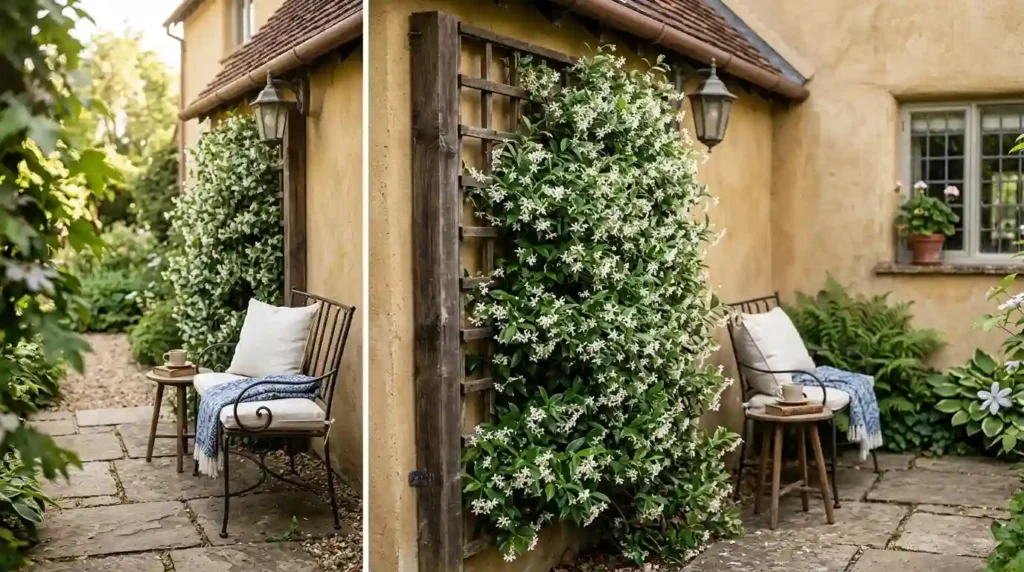
Best for: Narrow yards, patios, decks, and small garden beds
A trellis creates a tall screen without taking up much floor space. Add climbing plants to turn it into a leafy wall.
Possible vines include clematis, star jasmine, honeysuckle, climbing roses, and passionflower in suitable climates.
Choose the support based on the mature weight of the plant. A light trellis may bend or break under a heavy vine.
Keep climbing plants away from gutters, rooflines, and damaged fencing. Some vines can work their way into small cracks.
Evergreen vines may offer longer coverage. Deciduous vines often lose their leaves in cold weather.
Leave enough access for pruning and repairs.
Keep in mind: A vine-covered trellis may take time to become fully covered.
Train Espalier Trees Along a Wall or Fence
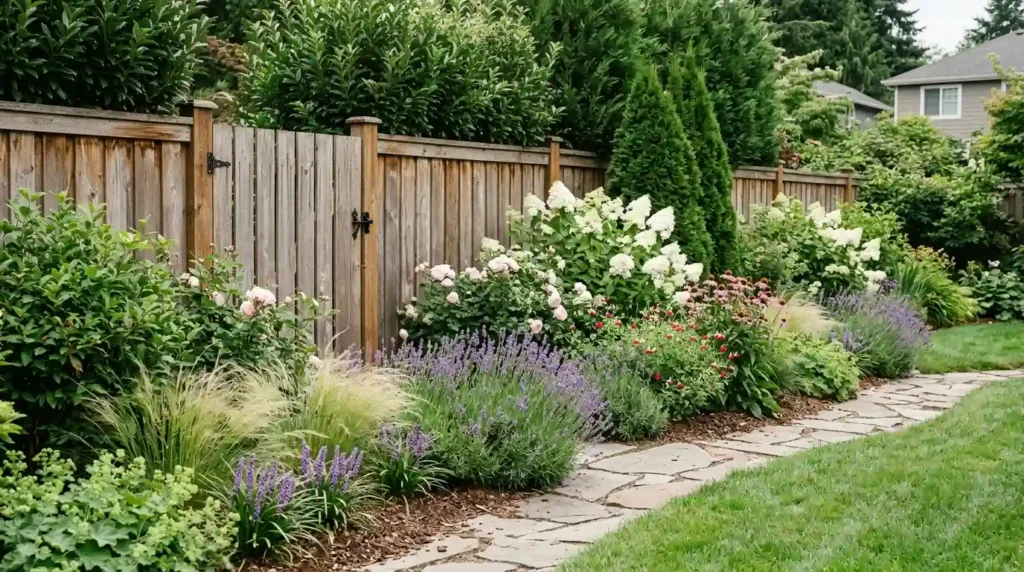
Best for: Narrow gardens, courtyards, and small yards
Espalier is a method of training tree branches to grow flat against wires or a frame.
This gives you flowers, leaves, and sometimes fruit without the full width of a normal tree.
Apple, pear, and some ornamental trees can be trained this way. The exact options depend on your climate.
Espalier needs regular pruning. Young branches must be tied and guided as they grow.
Keep the support a safe distance from siding so air can move behind the branches. This also makes repairs easier.
An espalier screen looks neat and can become a strong garden feature.
Keep in mind: This idea takes patience and is not the best choice when you need full privacy right away.
Install a Horizontal Slat Fence
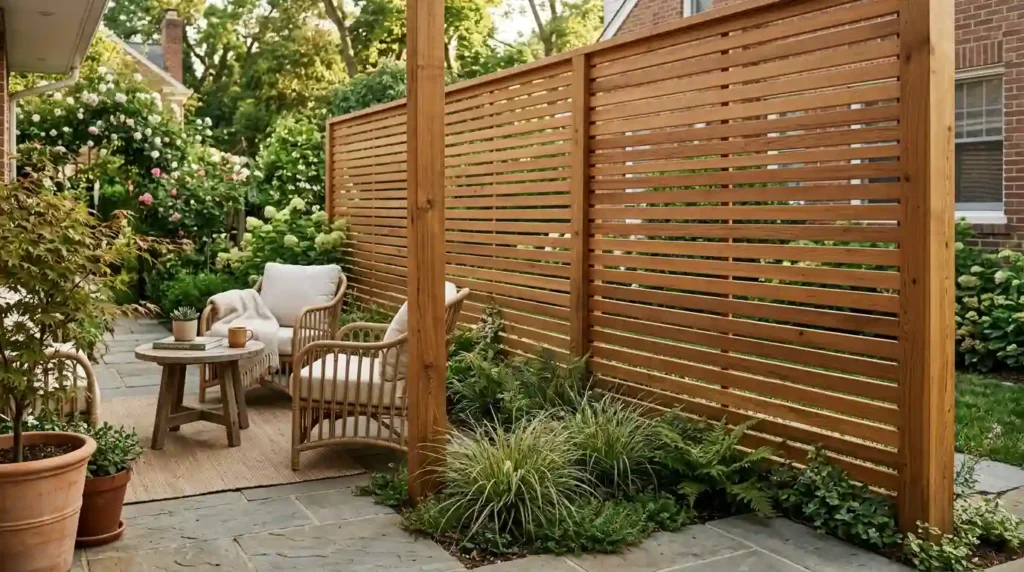
Best for: Modern yards and spaces needing immediate coverage
A horizontal slat fence gives quick privacy and a clean look.
Use narrow gaps when you want strong coverage with some airflow. Wider gaps create a lighter screen but may leave clear viewing lines.
Choose wood, composite, vinyl, or metal based on your budget and local weather. Wood looks warm but may need sealing or staining.
Add shrubs or grasses along the base to soften the hard surface. Climbing plants can also break up a long fence.
Check local height rules before building. Some areas also have rules about which side of the fence must face the neighbor.
Keep in mind: A tall solid fence can cast shade and make a small yard feel tighter.
Add a Lattice Topper to an Existing Fence
Best for: Yards with a fence that is almost tall enough
A lattice topper adds extra screening without replacing the full fence.
It can help when your current fence blocks ground-level views but leaves nearby windows visible.
Check whether the fence posts are strong enough to hold the added weight. Wind can place extra pressure on the whole structure.
You can leave the lattice open or add a light climbing plant. Avoid very heavy vines unless the frame is built to hold them.
Match the color and material to the existing fence for a cleaner result.
Check legal fence height before adding anything.
Keep in mind: A topper will not solve a view coming from far above unless it reaches the correct sightline.
Place Freestanding Decorative Screens
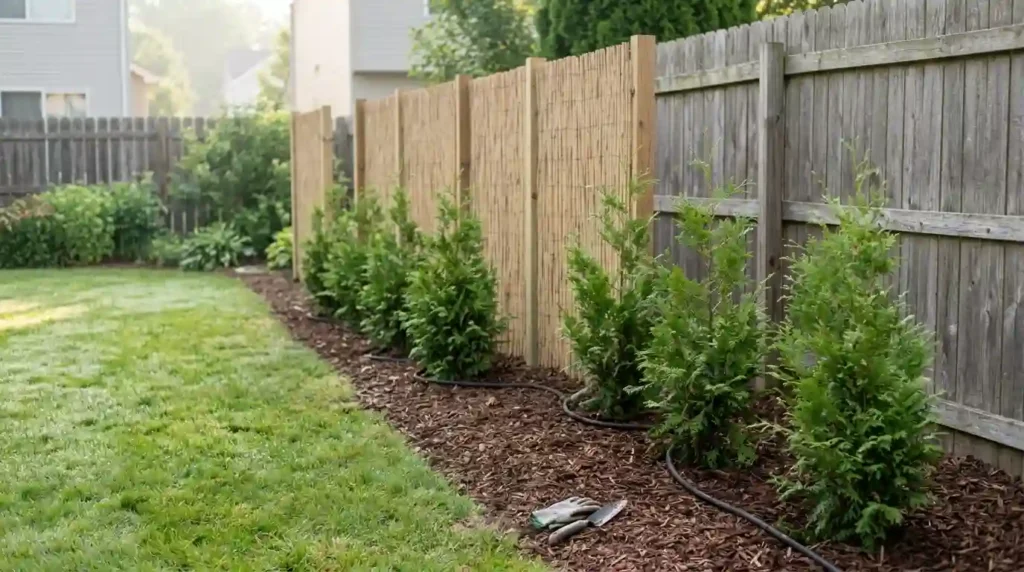
Best for: Patios, hot tubs, outdoor kitchens, and rented homes
Freestanding screens let you cover the area that matters most. You do not need to close off the whole yard.
Place one beside a seating area, dining table, or hot tub. A screen close to the activity area can block a view more effectively than a distant boundary fence.
Choose from wood, metal, composite, or weatherproof fabric.
Cutout metal panels allow some light through. Solid wood panels provide more coverage.
Anchor every screen well. A tall panel can become unsafe in strong wind.
Add planters at the base to make the screen feel like part of the garden.
Keep in mind: Portable screens still need strong supports, especially in open or windy yards.
How to Add Privacy in a Small Yard
A wide hedge can take away valuable space. Small yards often work better with vertical or movable screens.
These backyard privacy ideas can also help renters who cannot make large permanent changes.
Arrange Tall Planters Around a Seating Area
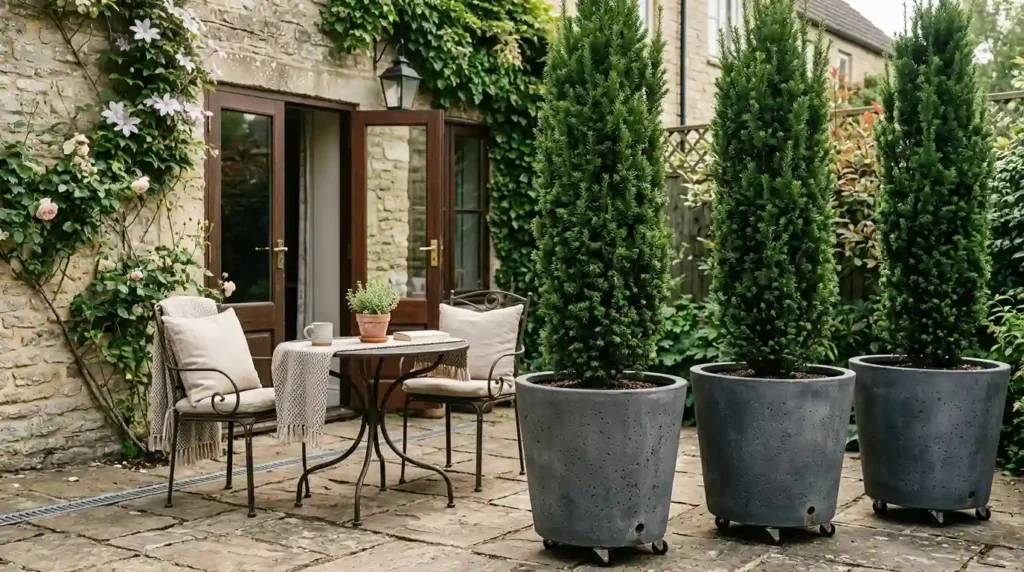
Best for: Balconies, decks, patios, and rented homes
Tall planters can create targeted privacy close to where you sit.
Use a straight row for a clear boundary. Use a staggered group for a softer look.
Possible plants include upright grasses, dwarf conifers, compact bamboo, and slim shrubs. Use evergreen plants if you need winter coverage.
Choose large, heavy containers that will not tip in the wind. Make sure they have drainage holes.
Container plants dry out faster than plants in the ground. Check the soil often during hot weather.
Place the planters before filling them. Large containers can become very hard to move once they contain soil and plants.
Keep in mind: Container plants usually need more watering and winter care.
Grow Small Trees in Large Containers
Best for: Decks, paved patios, balconies, and flexible layouts
A small potted tree can block a higher view while using little floor space.
Possible choices include dwarf conifers, Japanese maple, bay trees, dwarf citrus, and olive trees in suitable climates.
Choose a large container with good drainage. The pot must give the roots enough room and should be heavy enough to stay stable.
Some trees cannot survive winter in an exposed container. Roots in pots get colder than roots in the ground.
You may need to move the container into a protected area during severe weather.
Locking plant casters can make a heavy pot easier to move.
Keep in mind: Even dwarf trees may need root pruning or a larger pot after several years.
Install a Living Wall
Best for: Balconies, courtyards, urban patios, and narrow yards
A living wall uses a vertical frame filled with plants. It gives you greenery without using much ground space.
You can attach the system to a strong wall or build it as a freestanding panel.
Choose plants based on the light available. Ferns and shade plants may suit a covered courtyard. Herbs and sun-loving flowers may work on a bright patio.
Drip watering can make care easier. Good drainage is also important because water should not damage the wall or floor.
A living wall creates partial privacy and adds color. It will not block sound like a solid barrier.
Keep in mind: Living walls can need frequent watering, feeding, trimming, and plant replacement.
How to Make a Patio or Deck Feel More Private
You may not need to screen your whole yard. Focus first on the areas where you sit, eat, or entertain.
This can save money and keep the rest of the space open.
Cover a Pergola With Vines or Curtains
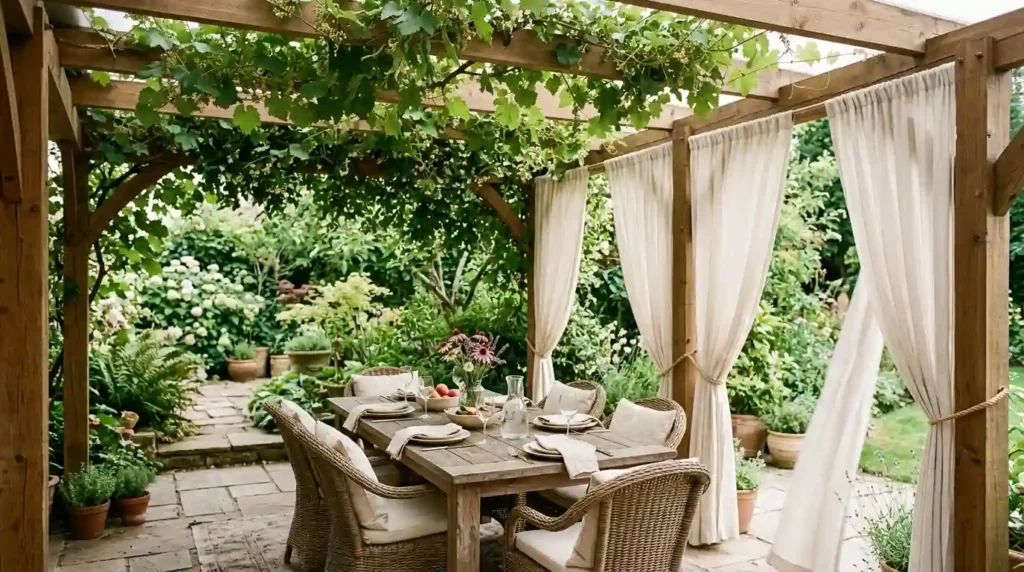
Best for: Patios and decks exposed to upper-floor windows
A pergola can provide privacy at the sides and above.
Add outdoor curtains for fast, adjustable coverage. Open them when you want more light and close them when the area feels exposed.
You can also grow vines over the frame. This creates shade and a softer look, but the plants will need time to fill in.
Roof slats, shade cloth, or panels can help block views from upper floors.
Secure curtains during strong wind. Wet fabric should be allowed to dry so mold does not form.
Check whether a permit is needed before building a permanent pergola.
Keep in mind: Vines can add weight, so the pergola must be strong enough to support mature growth.
Add a Water Feature to Mask Nearby Noise
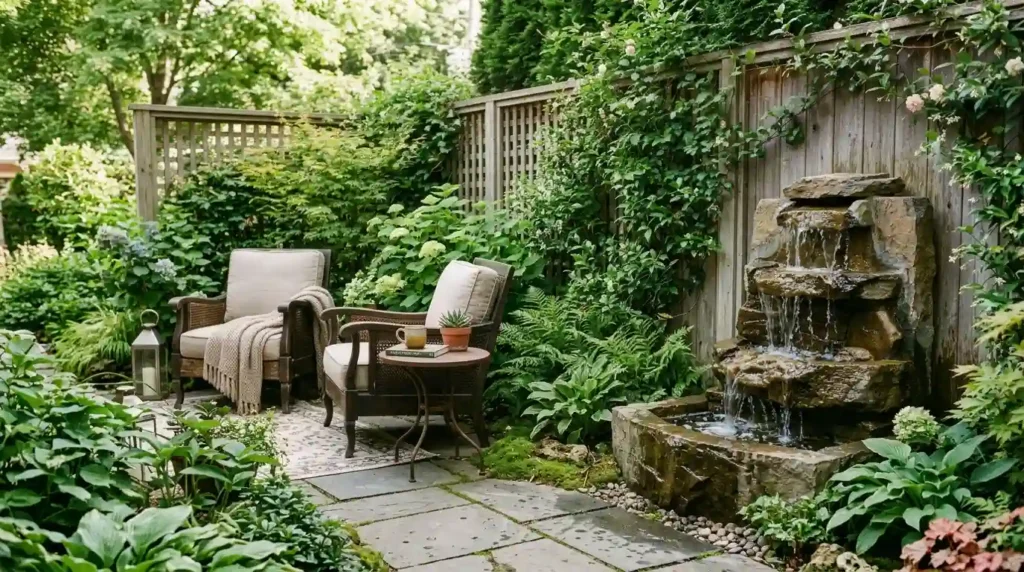
Best for: Patios near roads, shared yards, or busy neighbors
Visual privacy does not always create sound privacy. You may still hear traffic, voices, or nearby equipment after blocking the view.
A fountain can add a steady background sound that makes unwanted noise less noticeable.
Place the water feature close to the seating area. Sound becomes weaker as it moves farther away.
Moving or falling water creates more sound than still water. Test the volume before choosing a large fountain.
Think about power access, water use, cleaning, and winter care.
A fountain will not soundproof the yard. It simply gives your ears a more pleasant sound to focus on.
Keep in mind: A loud water feature may bother you or your neighbors, so choose a gentle sound level.
How to Get Privacy While Your Plants Are Growing
Living screens often need several growing seasons to fill in. You do not have to stay exposed during that time.
Use Temporary Screens While Plants Mature
Best for: New gardens, tight budgets, and short-term coverage
Reed, willow, fabric, and modular panels can create quick coverage behind young plants.
Attach the material to a strong, approved support. Loose panels can tear or fall during storms.
Choose a color and texture that fit your yard. A natural willow screen may blend well with a garden. Plain outdoor fabric may suit a modern patio.
Use a simple four-step plan:
- Install the temporary screen.
- Plant long-term shrubs, trees, or vines.
- Add lower plants to cover open gaps.
- Remove the temporary material when the plants fill in.
This method gives you quick comfort without forcing you to choose unsuitable fast-growing plants.
Keep in mind: Low-cost materials may fade or need replacement after a few seasons.
How to Combine Privacy Landscaping Ideas for Better Results
One solution may block a view from the side but leave you exposed from above. A mix of plants and structures often works better.
For a small patio, try one decorative screen, two tall planters, and a climbing vine. A small fountain can help cover nearby sounds.
For a large backyard, combine evergreen trees with flowering shrubs and grasses. The evergreen layer provides winter coverage. The other plants add color and soften the border.
For a narrow side yard, use columnar trees or a trellis. Avoid wide shrubs that may block the path.
For a yard overlooked by upper windows, combine a pergola with one small canopy tree. Add curtains when you need full coverage.
Here is a simple starting guide:
| Your Privacy Problem | Good Starting Solution |
| You need coverage now | Fence or decorative screen |
| You need winter privacy | Evergreen hedge |
| Your yard is narrow | Trellis or columnar trees |
| A second floor overlooks you | Pergola or canopy tree |
| Nearby sounds bother you | Water feature |
| Your plants are still small | Reed or willow screen |
A useful formula is one immediate feature, one long-term plant, and a lower layer to cover gaps.
How to Avoid Costly Privacy Landscaping Mistakes
A screen that works for one summer can become crowded or hard to manage later.
Do not plant trees and shrubs too close together. Check their mature width and leave room for air and trimming.
Avoid invasive plants. A fast-growing plant can spread into nearby gardens or damage paving.
Think about sunlight. A tall hedge may cast shade over your lawn, vegetable garden, or windows.
Check every season. A thick summer screen may become almost bare after its leaves fall.
Do not plant over buried utility lines. Contact your local utility-marking service before digging.
Check local rules before building fences, pergolas, or tall screens.
Leave space to paint fences, clean walls, and prune plants. You should be able to reach both sides of the screen when repairs are needed.
Do not hide every entrance or window. Some clear views around doors and paths can help you see who is entering the property.
A few measurements and local checks can save you from years of extra work.
Choose the Privacy Solution That Fits Your Yard
You do not need to surround your yard with one tall wall. Start with the exact place where you feel exposed.
Use evergreen trees and hedges for year-round coverage. Choose trellises, fences, or screens when you need faster results. Try containers and living walls when space is limited.
A pergola or canopy tree can help with views from above. A water feature can make nearby noise less distracting.
Walk through your yard and mark each problem sightline. Then choose one immediate solution and one long-term solution for the areas you use most.
The best privacy landscaping ideas block unwanted views while keeping your outdoor space bright, useful, and comfortable.