16 Landscape Design Principles for a Better-Planned Yard
A yard can have costly plants, fresh paving, and new lights but still feel wrong. The problem is often poor planning. Plants may look scattered. Paths may lead nowhere. Seating may sit in the hottest part of the yard.
Good landscape design principles help you avoid these mistakes. They show you how to arrange plants, paths, structures, and open areas so the whole yard works together.
You do not need a huge budget or a large property. You need a clear plan based on your site and the way you want to use it. The right landscape design rules can also save you from buying plants that will outgrow their space.
This guide explains 16 practical rules for planning a yard. You will learn how to check your site, create balance, choose the right scale, improve privacy, and plan for future growth.
These principles of landscape design can help you make better choices before you buy plants, install paths, or change the shape of your yard.
What Are Landscape Design Principles?
Landscape design principles are basic rules that help you organize outdoor spaces. They cover unity, balance, scale, rhythm, contrast, movement, and plant placement.
These rules help your yard feel connected. They also make it safer, easier to use, and simpler to care for.
You do not have to follow every rule in a strict way. Your home, climate, budget, and personal taste still matter. Use these principles as a guide rather than a fixed formula.
Check Your Site Before You Make a Plan
It is easy to get excited about plants and patios. But buying things before checking your site can lead to costly mistakes.
Start by watching how sunlight moves across the yard. One corner may get morning shade but strong afternoon heat. Another area may stay dark and damp for most of the day.
Next, check the soil and drainage. Look for places where water collects after rain. Notice dry slopes, exposed roots, hard soil, and low spots.
Mark important fixed features on a simple site plan:
- Doors and windows
- Gates and fences
- Utility boxes
- Drainage points
- Large trees
- Property lines
- Outdoor taps
- Views you want to keep
A basic yard assessment also helps you spot problems early. For example, a low corner may need better drainage before it becomes a planting bed.
The 5-Minute Site Check
Stand in your yard and ask:
- Where is the sun strongest?
- Where does water collect?
- Which views do I want to hide?
- Which views do I want to keep?
- Where do people already walk?
These landscape design basics will shape every choice you make later.
Give Every Area a Clear Job
A yard should support the way you live. It should not be a collection of pretty features with no clear purpose.
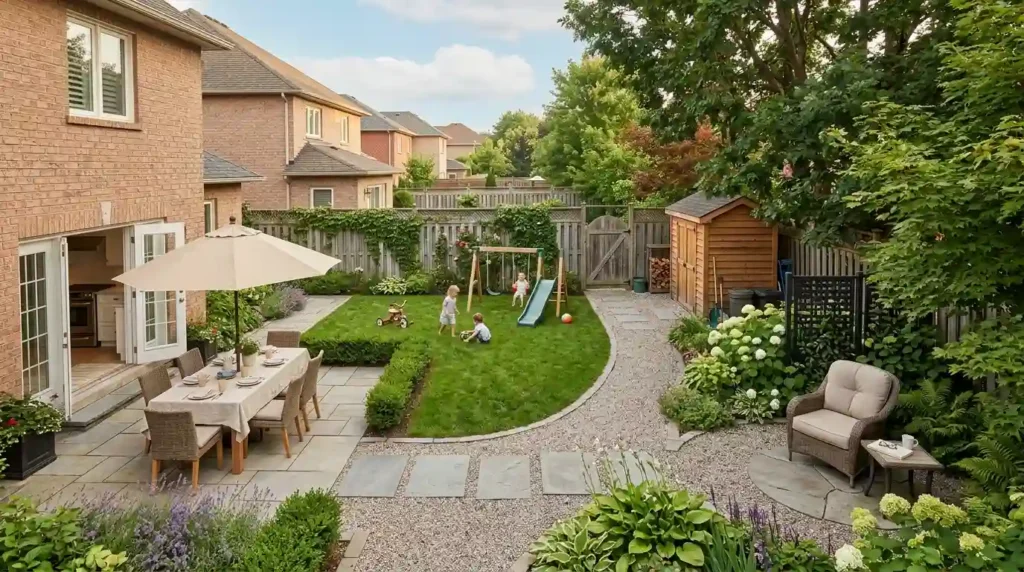
Before planning the layout, list what you need from the space. A family may want room for eating, play, storage, and quiet rest. A smaller household may care more about gardening and outdoor seating.
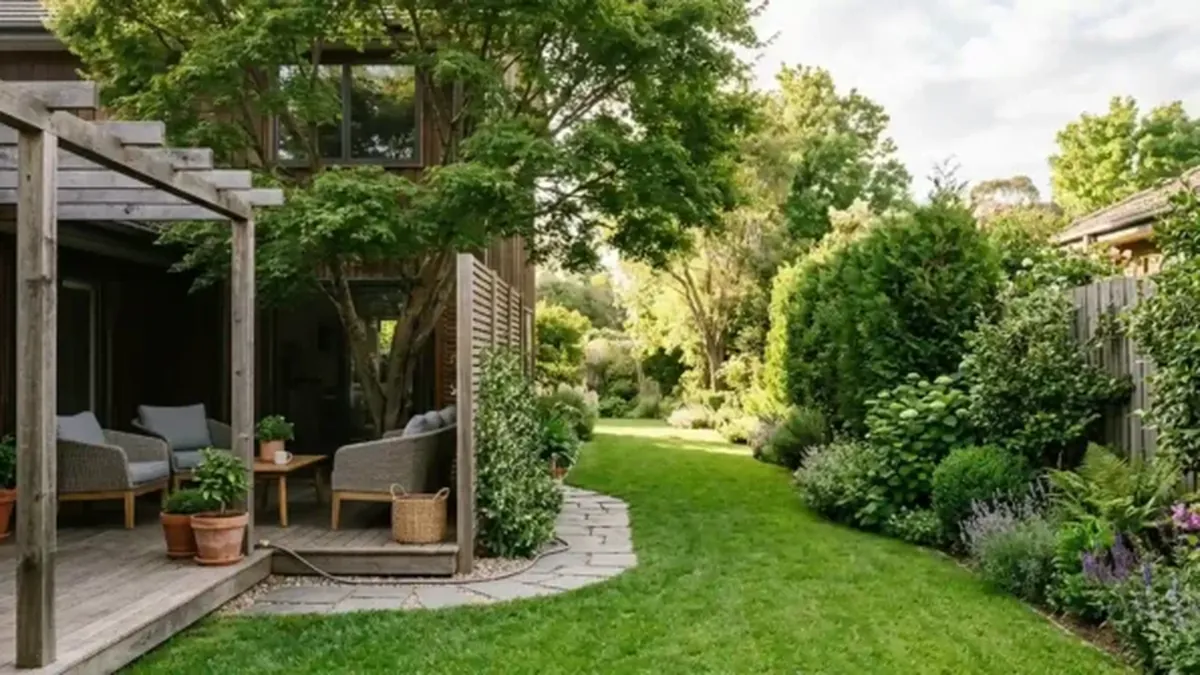
Divide the yard into simple zones. Place areas that you use often close to the house. Outdoor dining usually works best near the kitchen. A storage shed may work better near a side gate.
Keep active and quiet spaces apart when possible. A reading chair placed beside a play area will not feel peaceful. A grill placed too close to children’s equipment can also create a safety risk.
Use the “Need, Want, Remove” method:
- Need: Features the yard must provide
- Want: Features that would be useful
- Remove: Items that take up space without helping
Rank your top three needs. This makes decisions easier when space or money is limited.
Good functional landscape design begins with use. Appearance comes next.
Use Unity to Make the Yard Feel Connected
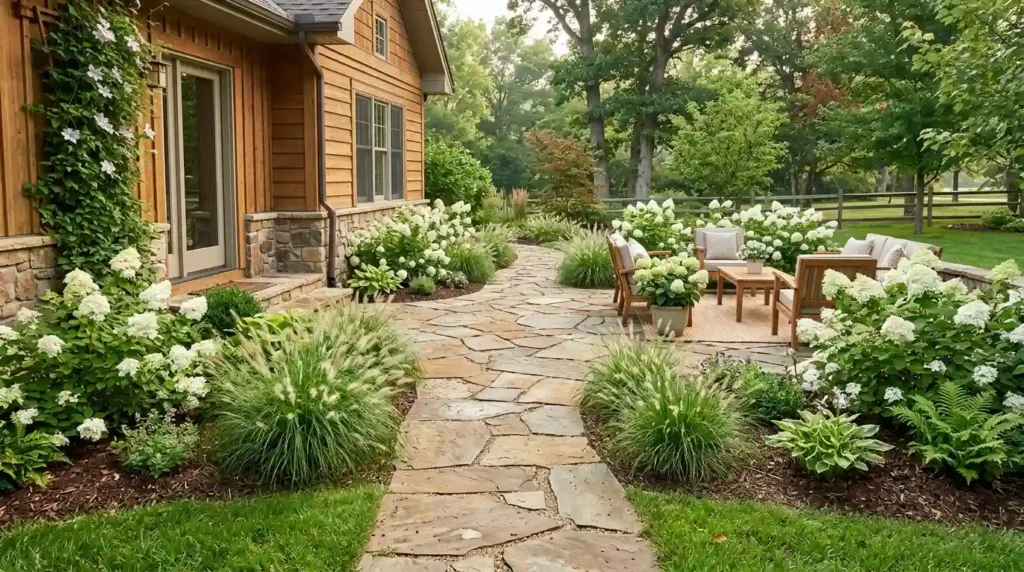
Does your yard feel like several small projects that were added at different times? Unity can fix that.
Unity means the parts of your landscape look like they belong together. You create it by repeating selected plants, colors, shapes, and materials.
For example, you could use the same stone near the front entry, garden path, and patio. You might also repeat one type of grass or flowering shrub in several beds.
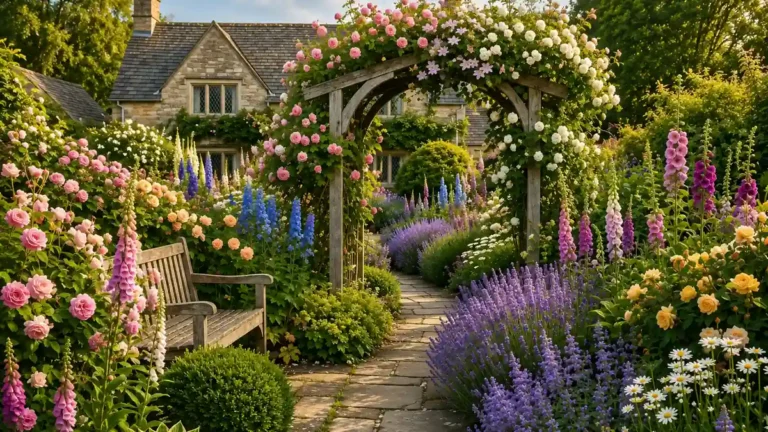
Your landscape should also connect with the style of your home. A formal brick house may suit straight paths and neat hedges. A cottage-style home may look better with softer edges and loose planting.
Avoid using too many unrelated materials. Five paving styles, several fence colors, and dozens of plant types can make the yard feel busy.
Try the three-part unity test:
- Does the yard suit the house?
- Do key materials repeat?
- Do the planting beds feel related?
You do not need to make every area identical. Small changes add interest. The main colors, materials, and plant groups should still feel connected.
Unity in landscape design creates order without making your yard feel dull.
Create Balance Without Making Everything Match
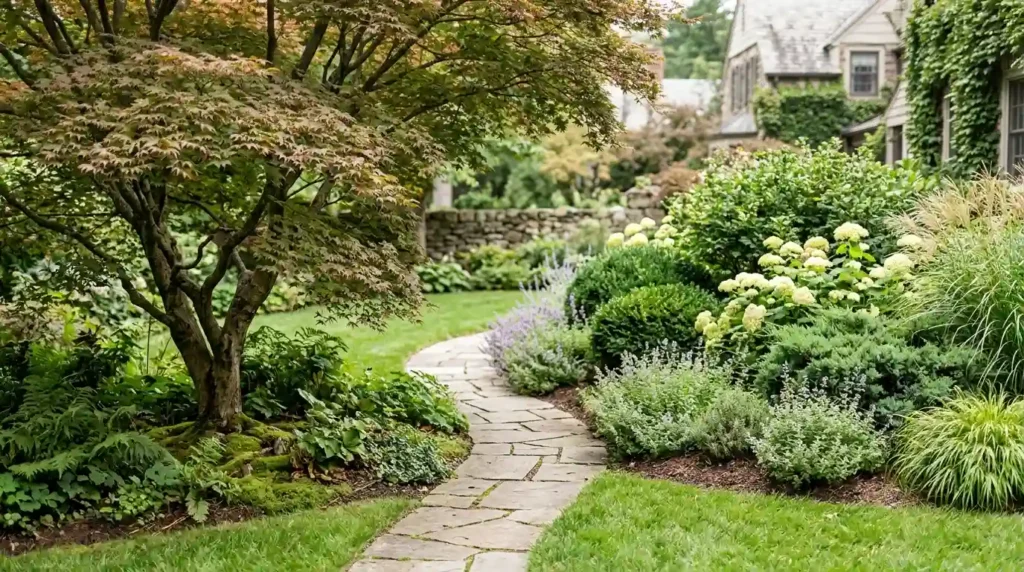
Balance is about visual weight. It does not always mean placing the same thing on both sides.
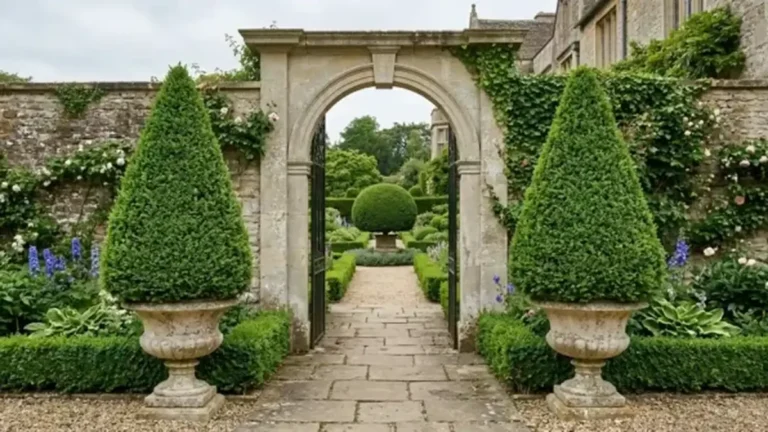
A formal entrance may use matching pots beside the front door. This is called symmetrical balance. It creates a neat and controlled look.
An informal yard often uses asymmetrical balance. The two sides are different, but they still feel equal. A large tree on one side could be balanced by a group of shrubs on the other.
Many features affect visual weight:
- Plant size
- Dark or light color
- Thick or fine texture
- Upright or spreading form
- Solid structures
- Empty space
A dark evergreen shrub can look heavier than a small plant with pale leaves. A wide group of low plants may balance one tall tree.
Stand at the main entrance and look at the whole yard. Does one side feel crowded while the other feels empty?
You can also take a black-and-white photo. Removing color makes large shapes and empty areas easier to see.
Balance in landscape design should make the yard feel stable. It should not make it look stiff or forced.
Match the Size of Each Feature to the Space
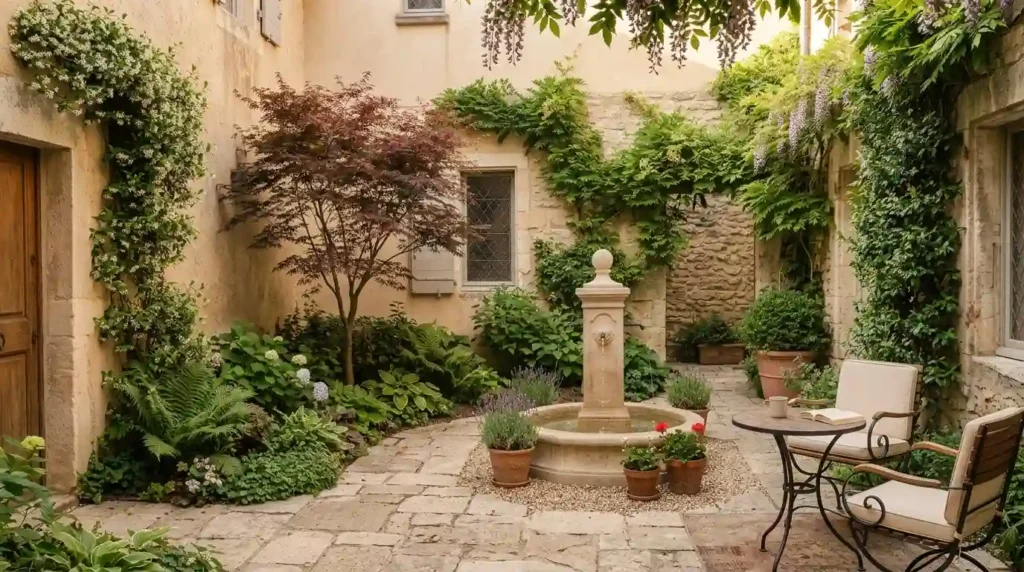
Scale describes how large or small something feels compared with its setting. Proportion looks at the size relationship between two or more features.
A tiny flowerpot beside a two-story home may look lost. A huge fountain in a small courtyard may take over the whole area.
Plants also need the right scale. A young tree can look small at the nursery, but its mature size may be much larger. It could block windows, damage paving, or crowd nearby plants after a few years.
Check the mature height and spread before planting anything close to:
- Walls
- Walkways
- Windows
- Rooflines
- Fences
- Utility lines
Paths and patios also need suitable proportions. A narrow path may feel uncomfortable when two people try to pass. Large furniture can make a small patio hard to use.
Wide planting beds often look better beside tall walls. Thin beds can make a large house look even bigger.
The same plant may work well in one yard and fail in another. It depends on the available space.
Good scale and proportion in landscaping help every feature feel like it belongs.
6. Use Lines to Guide People Through the Yard
Lines control how people move and where they look. Paths, fences, walls, lawn edges, and planting beds all create lines.
Straight lines feel direct and formal. They work well when you want to guide visitors quickly to a front door or gate.
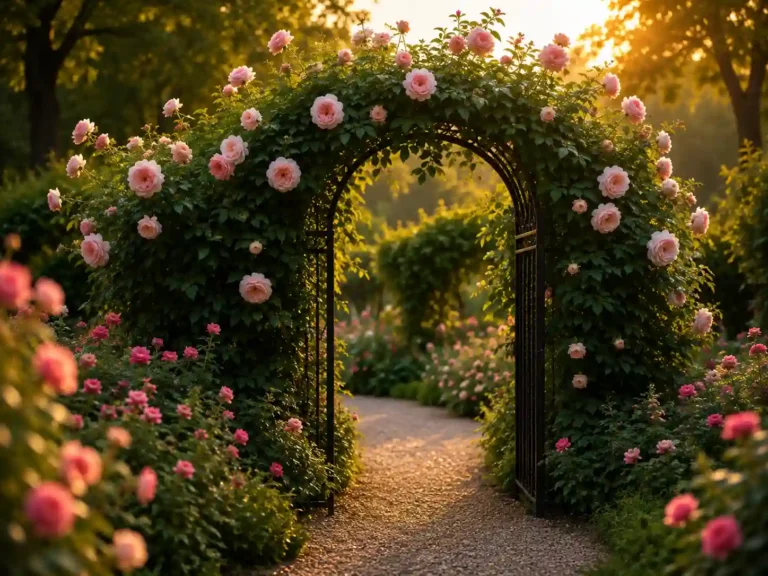
Curved lines feel slower and more relaxed. They can hide part of a garden and reveal it as someone walks.
Curves should have a reason. Many small bends can make a path look weak. One broad curve usually feels cleaner than several short waves.
Look at your yard from the main entrance. Notice where the lines point.
Do they guide your eyes to the door? Do they lead to an attractive tree or seating area? Or do they point at a bin, blank wall, or utility box?
You can improve weak lines by:
- Widening a bed
- Smoothing an uneven curve
- Repeating the same edging
- Moving a path
- Framing the end with plants
Lines in landscape design should make movement feel natural. They should help visitors know where to go without needing signs.
7. Repeat Key Elements to Reduce Visual Clutter
One of the most common yard mistakes is buying one of every plant that looks good at the nursery.
Each plant may be attractive on its own. But together, they can create a scattered look.
Repetition gives your landscape a clear pattern. You can repeat:
- Plant types
- Plant shapes
- Flower colors
- Paving materials
- Pots
- Edging
- Lighting styles
For example, repeat the same ornamental grass near the patio, path, and front entrance. Use one brick style around several beds. Carry the same flower color through different parts of the yard.
Repetition does not mean copying the same layout in every bed. Change the group size or pair the repeated plant with different partners.
A group of three grasses near the path could become a group of five near the patio. The plant still connects the areas, but the layout does not feel copied.
Choose one element in your yard that you can repeat at least three times.
Useful repetition creates order. Too much duplication can feel flat, so leave room for a few special features.
Build Rhythm With Spacing and Sequence
Rhythm is the pace at which your eyes move through the landscape. It comes from repeated features and planned spacing.
Think about path lights placed at even distances. Your eyes move from one light to the next in a steady pattern.
Trees planted along a drive can create the same effect. Repeated shrubs with open gaps between them can also form a clear sequence.
Spacing changes the speed of the design. Close spacing can feel active and full. Wider spacing can create a calmer mood.
You can use rhythm through:
- Evenly spaced trees
- Repeated garden lights
- Groups of the same plant
- Stepping stones
- Alternating plants and open space
- Repeated fence posts
Random spacing often makes a landscape feel unfinished. But perfect spacing everywhere can also feel too strict.
Create pauses between strong groups. Empty space gives your eyes a place to rest.
Rhythm in landscape design is a little like a beat in music. A steady pattern connects the parts, while small changes keep it interesting.
Add Contrast So the Yard Does Not Look Flat
A planting bed can have healthy plants and still look boring. This often happens when every plant has the same height, shape, or texture.
Contrast adds clear differences. You can create it with:
- Fine and broad leaves
- Light and dark colors
- Upright and rounded forms
- Smooth and rough materials
- Tall and low plants
- Solid and open shapes
Try placing fine ornamental grass beside a plant with wide leaves. Use pale flowers in front of a dark fence. Pair upright plants with rounded shrubs.
Hard materials can also add contrast. Smooth stone beside loose planting creates a clean edge. Rough bark can stand out beside soft foliage.
Do not add strong contrast everywhere. Too many bold differences create visual noise.
Choose one or two areas where contrast will have the most effect. A front entrance, patio edge, or focal point is often a good choice.
Look for a bed where everything feels the same. Add one plant with a different shape, texture, or color.
Contrast in landscape design should create interest without making the yard feel busy.
Give Each Main View One Clear Focal Point
What should visitors notice first when they enter your yard?
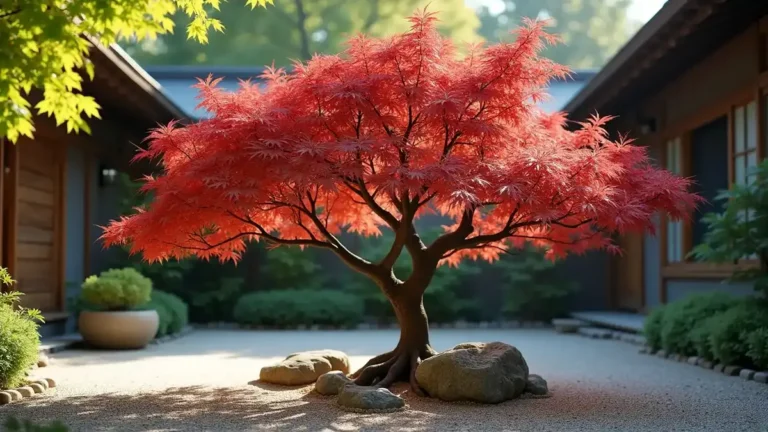
A focal point answers that question. It gives the eye a place to stop.
A focal point could be:
- A specimen tree
- A garden bench
- A water bowl
- A sculpture
- A fire feature
- A large planter
- A framed view
The feature should fit the size and style of the yard. A small courtyard may need one simple pot or wall feature. A large garden may support a mature tree or covered seating area.
Place focal points at the end of paths, across from windows, or within key views. Use nearby plants to frame the feature instead of hiding it.
Follow the one-view rule:
From each main viewing spot, decide what people should notice first.
Too many statement pieces will compete. A fountain, bright sculpture, fire pit, and colorful bench placed close together can create confusion.
If several features fight for attention, choose the strongest one. Move, soften, or remove the others.
A clear focal point in landscape design gives the whole area direction.
Use Smooth Transitions Between Different Areas
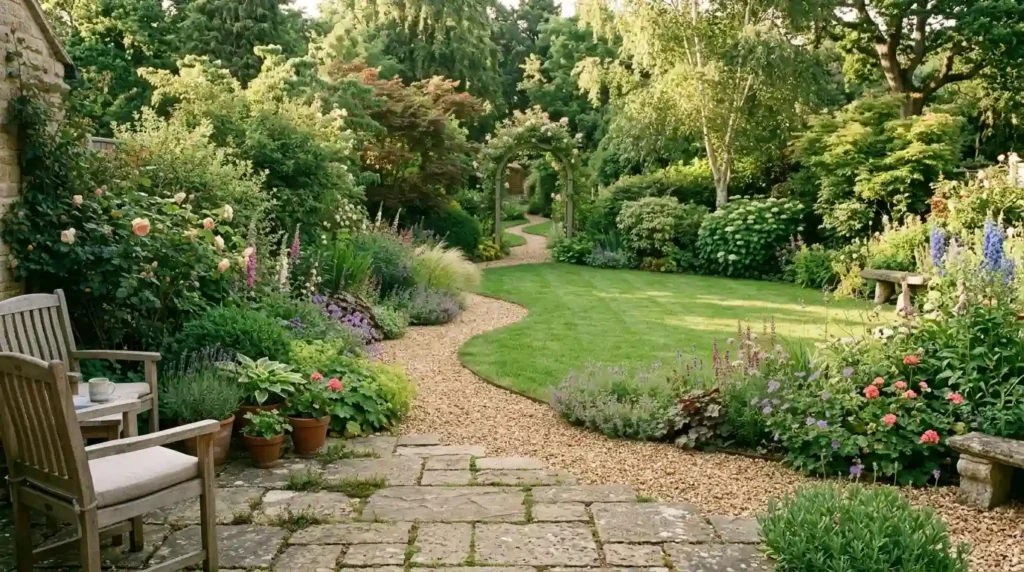
A patio can look like it was dropped into the middle of a lawn when there is no clear link between the two areas.
Transition helps one space move into another. It can involve changes in height, color, texture, use, or material.
For plant height, you might move from groundcover to low perennials, then shrubs and trees. This creates a softer change than placing very low plants beside a tall wall.
You can also connect materials. A narrow stone border can help a paved patio meet a gravel path. Repeating one color in both materials can make the change feel planned.
Use softer plants and colors near quiet seating areas. Save bold flowers and strong shapes for active spaces or entrances.
Check the places where:
- Lawn meets paving
- Paving meets gravel
- One bed meets another
- Open lawn meets a wooded edge
- Active space meets quiet space
The principles of landscape design work best when each area supports the next.
Good transition improves landscape flow. It helps separate spaces without making them feel disconnected.
Group Plants Instead of Scattering Them
Single plants placed around a bed can look weak and random. Plant groups create stronger shapes that are easier to see.
Use groups, drifts, or masses for most plants. Save single plants for special features that deserve attention.
Groups of three, five, or seven often work well in smaller beds. But these numbers are not strict rules. A large yard may need broad groups of ten or more plants to match its scale.
The shape of the group matters more than the exact number. Let plants form a clear mass instead of a straight row unless you want a formal look.
For example, compare these two plans:
- Ten different plants placed one at a time
- Three plant types arranged in three strong groups
Both plans may use the same number of plants. The grouped plan will usually feel calmer and more complete.
Check mature widths before setting the spacing. Young plants need room to grow.
Good plant grouping principles create stronger color, texture, and shape. They can also make care easier because similar plants sit together.
Layer Plants to Add Depth in Every Season
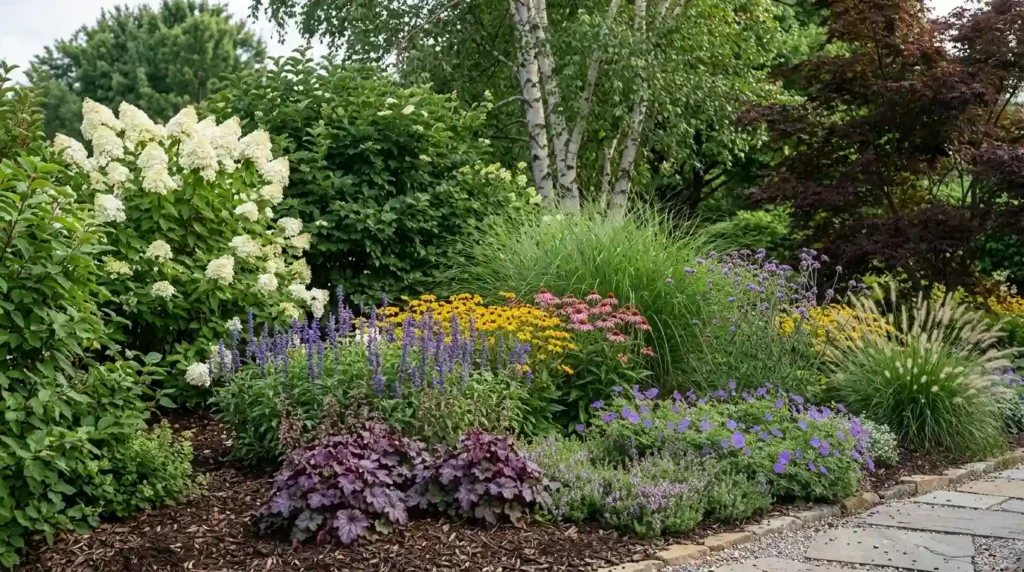
A flat bed with plants of one height often looks thin. Layering creates depth and helps the garden look full from front to back.
Start with low groundcovers near the edge. Place flowering plants and small grasses behind them. Add shrubs as the middle or back layer. Use small trees to create height.
A simple planting order may include:
- Groundcover at the front
- Perennials in the middle
- Shrubs behind them
- A small tree as the upper layer
Do not plan for summer flowers alone. Ask what the bed will offer during each season.
Spring may bring fresh growth and bulbs. Summer may add flowers. Autumn can provide seed heads and leaf color. Winter may depend on evergreen plants, bark, branches, and plant form.
Use a mix of temporary and lasting features. Flowers may last a few weeks, while shrubs and trees support the design for months.
Check your planting plan from the main viewing point. Make sure tall plants will not hide the lower layers.
Layered planting design creates depth, structure, and year-round interest.
Protect Privacy Without Blocking Every View
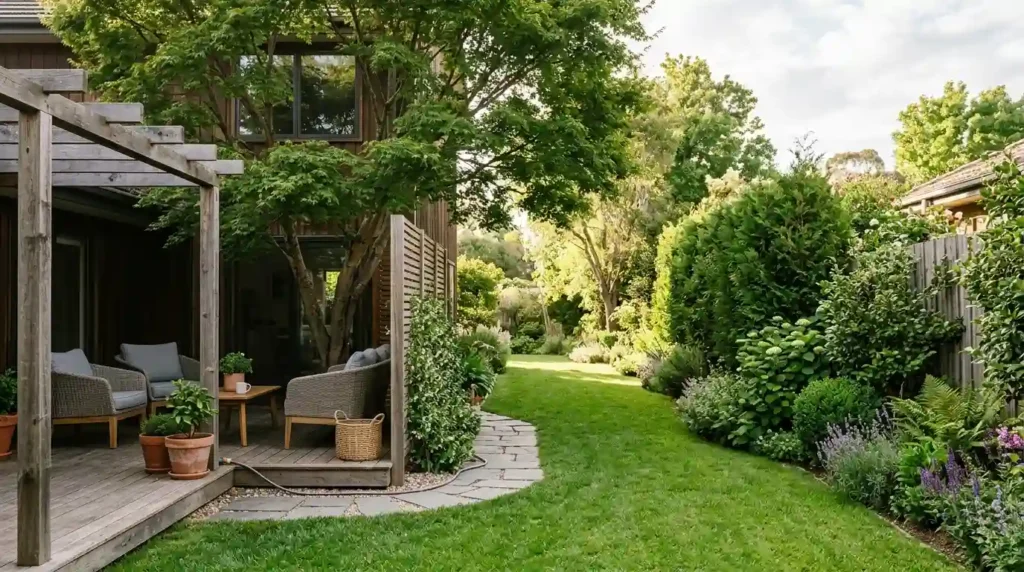
Privacy matters, but a solid wall of plants is not always the best answer.
Start by checking views from inside the house. Look through kitchen windows, living room windows, and doors. Mark the areas you want to improve.
Some views need screening. Others may need framing.
For example, two groups of shrubs can block nearby windows while leaving a view of a distant tree. A staggered planting can provide privacy without making the yard feel closed.
Keep safety in mind. Tall plants near driveways, corners, and paths can block views of cars or people. Entrances should remain easy to see.
Use different plant heights for softer screening:
- Low plants near paths
- Medium shrubs in front
- Taller shrubs or small trees behind
Check local rules before building tall fences or planting near street corners. Property lines and visibility limits may affect your options.
Privacy landscaping should solve a clear problem. It should not remove every open view.
A good plan hides what you do not want to see while keeping the yard bright, safe, and pleasant.
Choose Plants That Fit the Site
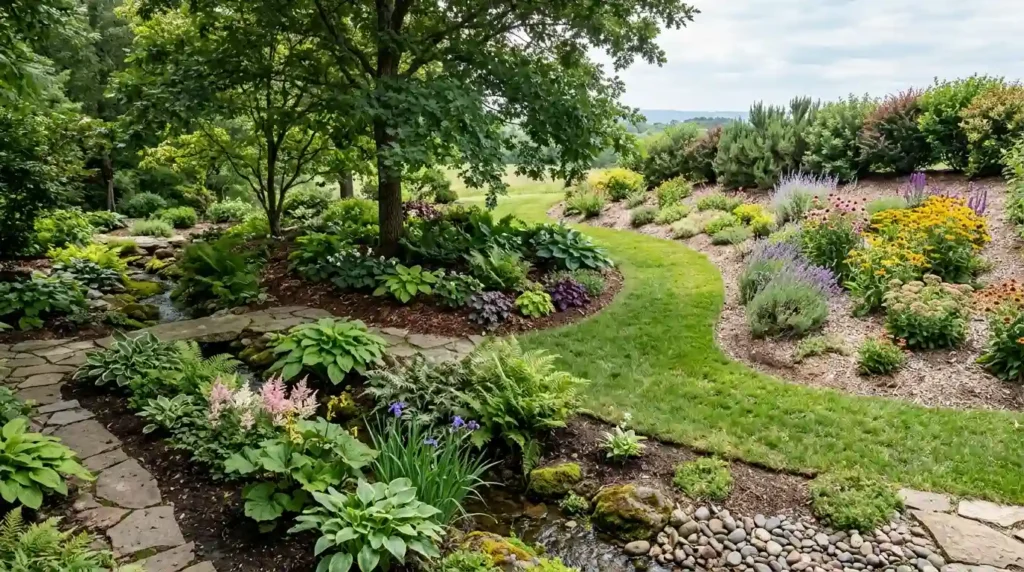
A healthy plant in the wrong place can become a long-term problem.
Before choosing a plant, check five things:
- Sunlight
- Soil
- Drainage
- Water needs
- Mature size
A plant that likes dry soil may fail in a damp corner. A shade plant may burn on a sunny slope. A large shrub may cover a window if placed too close to the house.
Group plants with similar water needs. This makes watering easier and reduces waste. Do not place a thirsty plant beside one that prefers dry soil.
Native and locally adapted plants may cope better with local weather. They can also support local insects and birds. Still, check each plant’s needs. A native plant is not suitable for every part of the yard.
Avoid plants listed as invasive in your area. They may spread into nearby land and become hard to control.
Use a simple plant list:
| Plant | Sun | Soil | Water | Mature Size |
| Plant 1 | Full sun | Well-drained | Low | 3 feet wide |
| Plant 2 | Part shade | Moist | Medium | 5 feet tall |
The “right plant, right place” rule is one of the most useful landscape design basics.
Plan for Growth and Future Maintenance
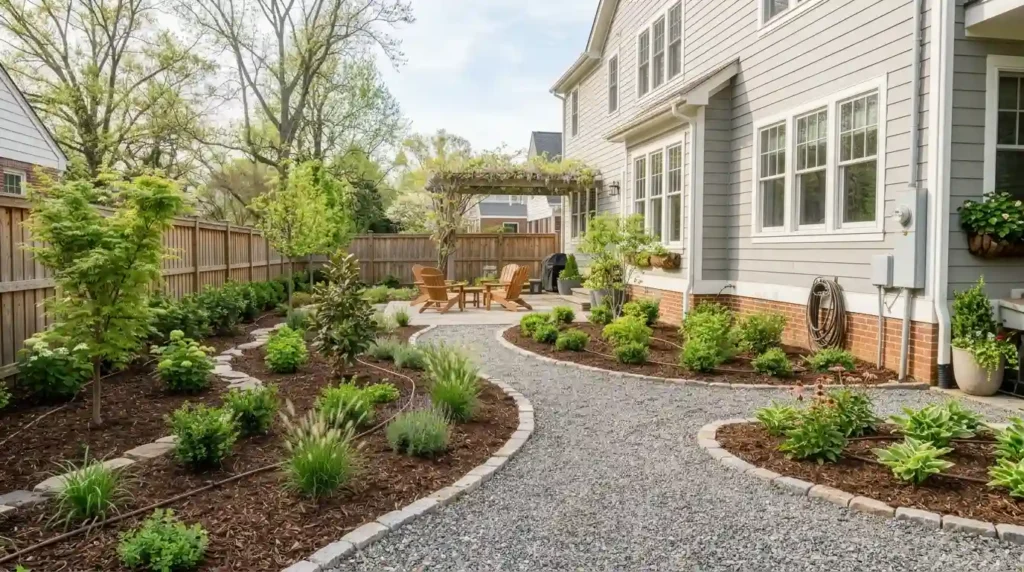
A new landscape may look open during the first year. By year five, the same plants may crowd paths, windows, and each other.
Plan for mature growth from the start. Do not place plants too close just to make a new bed look full.
Think about the work each feature will need:
- Watering
- Pruning
- Mowing
- Weeding
- Leaf cleanup
- Repairs
- Seasonal care
A large lawn may need regular mowing and watering. A formal hedge may need frequent trimming. Gravel may reduce mowing but can collect weeds and leaves.
Leave clear access to utility boxes, drains, fences, and outdoor taps. You may need to repair or inspect these areas later.
Match the plan to your available time. A detailed flower garden may look lovely, but it may not suit someone who travels often.
You can also complete the project in phases:
- Fix drainage and hard surfaces.
- Add trees and large shrubs.
- Install smaller plants.
- Add lights, pots, and decor.
Give each planned feature a maintenance score of low, moderate, or high.
Practical landscape design should look good now and remain manageable later.
How to Apply These Rules to Your Yard
You do not need to rebuild the whole yard at once. Start with the problems that affect daily use.
Walk around your property with a notebook or phone. Take photos from the main entrance, patio, and important windows.
Then complete these five steps:
- Mark the sun, shade, drainage, and fixed features.
- List the three main jobs your yard must provide.
- Find areas that feel crowded, empty, or disconnected.
- Check mature plant sizes.
- Choose one small change you can make first.
You may find that the yard needs fewer plants, not more. Moving one seat, widening one bed, or repeating one plant can create a clear improvement.
Start with function, site conditions, and scale. Decorative details should come later.
Common Landscape Design Mistakes to Avoid
Even a good idea can fail when it is used in the wrong place.
Watch for these common mistakes:
- Buying plants without checking mature size
- Using too many materials
- Placing one of every plant in a bed
- Making paths too narrow
- Blocking windows and driveway views
- Adding several competing focal points
- Ignoring drainage
- Designing only for one season
- Choosing a yard style that needs too much care
- Placing features before deciding how the space will be used
Fix the largest problem first. Small decorative updates will not solve poor drainage, unsafe paths, or crowded plants.
Build a Yard That Works as Good as It Looks
Strong landscape design principles help you create a yard that fits your home, supports daily life, and stays manageable.
Start by checking the site. Give each area a clear job. Then use unity, balance, scale, repetition, and smooth transitions to connect the space.
Choose plants that suit the soil, light, water, and climate. Always plan for their mature size. This small step can prevent years of pruning, crowding, and replacement costs.
Walk through your yard and choose the three rules that need the most attention. Fix the site, function, and scale before buying more plants.
Applying these landscape design rules one step at a time can help you create an outdoor space that feels connected, useful, and easier to care for.