16 English Garden Aesthetic Ideas for Any Yard
Meta description: Explore 16 English garden aesthetic ideas using roses, layered borders, gravel paths, arches, vintage details, and smart small-space design.
A garden can have plenty of flowers and still feel unfinished.
You may have roses, lavender, and a few old pots. Yet the space may still look like a group of separate items instead of one calm design.
This happens because an English-style garden needs more than pretty plants. It needs a clear shape, repeated colors, useful paths, and a few strong focal points.
The best English garden aesthetic ideas mix order with soft, loose planting. A hedge or path gives the garden a frame. Flowers then fill that frame with color, scent, and movement.
You do not need a large country home to create this look. These English garden ideas can work in a front yard, small backyard, patio, or balcony. You can also adjust the plant list for a hot, cold, wet, or dry climate.
Use the 16 ideas below to plan a garden that feels romantic, useful, and easy to enjoy.
Give Loose Flowers a Clear Frame
A full flower bed can look charming. It can also look messy when it has no clear edge.
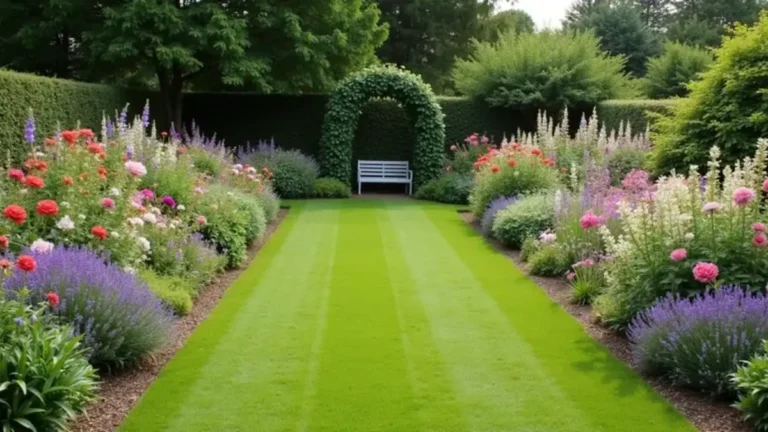
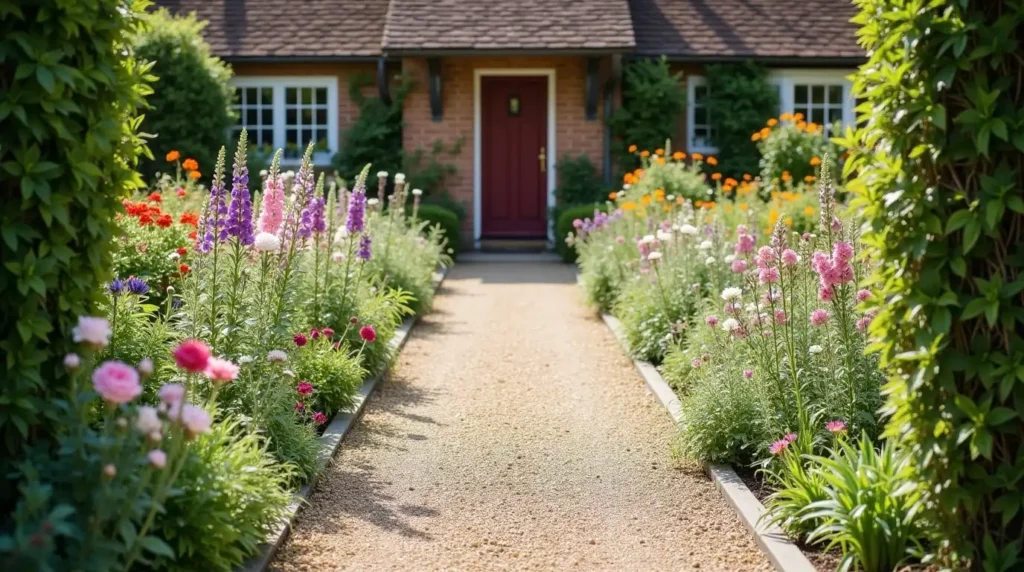
Start with the parts that will stay in place. These may include a path, low hedge, fence, wall, or neat border edge. Then place softer flowers inside that shape.
For example, picture a straight path leading to your front door. Add matching beds on each side. Use low edging to mark the beds. Then fill them with roses, foxgloves, catmint, and hardy geraniums.
The flowers can lean and spread a little. The path and edging will keep the whole area looking planned.
This balance is the main rule behind many English garden aesthetic ideas. The fixed parts create order. The plants add life.
Quick action: Draw your paths, beds, gates, and seating areas before you buy any plants.
Use a Path to Make the Garden Feel Larger
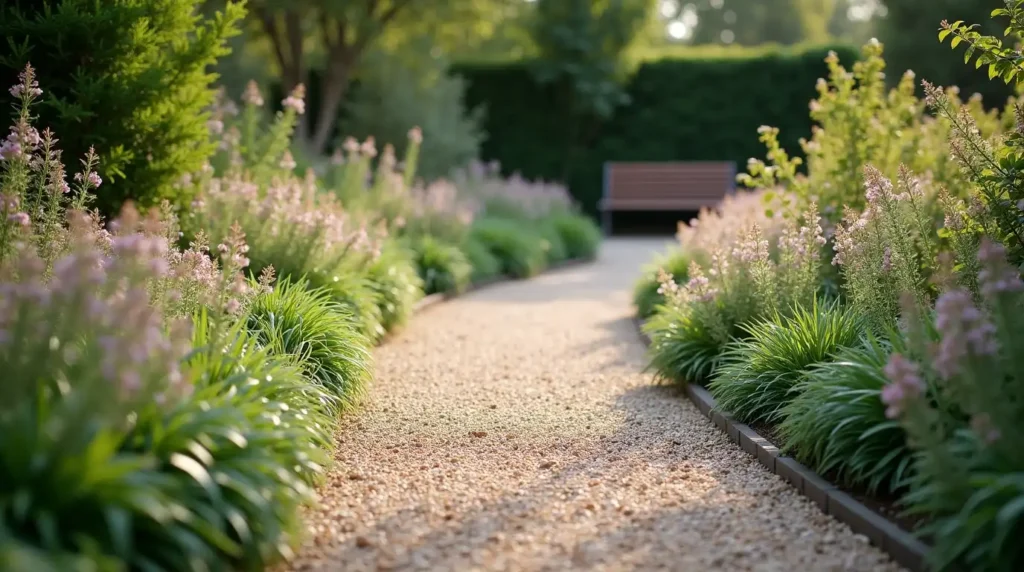
A path does more than help you walk through the yard. It also controls what you see and when you see it.
Use a straight path when you want a formal entrance. It works well from a gate to a front door. Use a curved path when you want the garden to feel relaxed and slightly hidden.
Choose a material that fits your home:
- Pea gravel gives a soft country look.
- Reclaimed brick suits older homes.
- Flagstone adds a strong, natural feel.
- Stepping stones work well in small spaces.
- Crushed stone can be a lower-cost choice.
Add firm edging so gravel does not spread into the beds. Make sure water can drain after rain.
Soften the sides with creeping thyme, lady’s mantle, or low geraniums. Let a few stems lean near the edge, but keep the walking space clear.
Quick action: Choose one path material and repeat it in another small area, such as under a bench or beside a gate.
Add Low Hedges Without Creating Extra Work
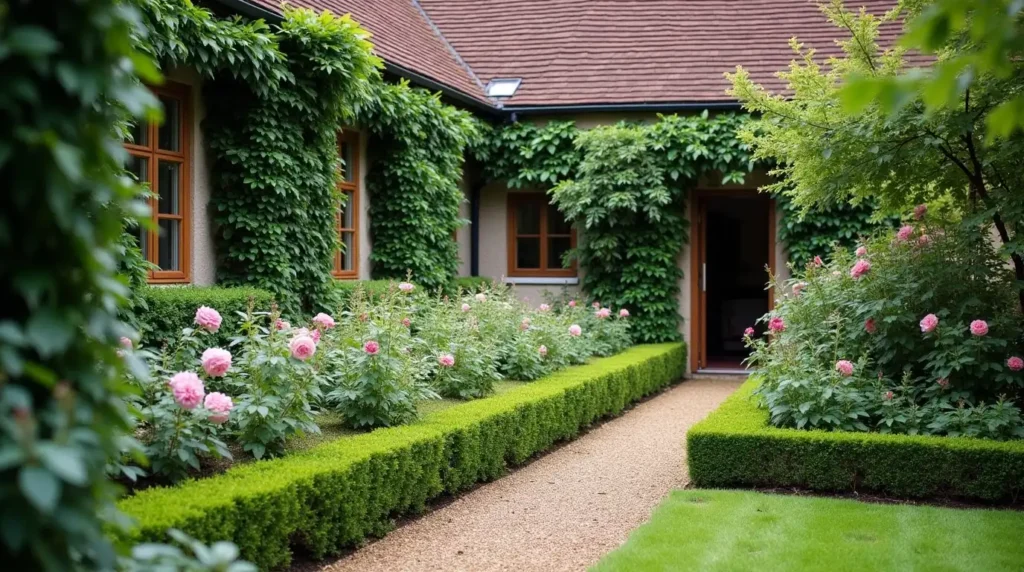
Low hedges give loose flowers a clean outline. They also add green color when many flowers are out of bloom.
You can use hedges around flower beds, paths, seating areas, or small garden rooms. Keep them low enough that they do not hide the plants behind them.
Traditional box hedges look beautiful, but they are not the best choice in every area. Box pests and disease can cause serious damage. Check local garden advice before planting a full row.
Other options may include:
- Yew for a classic evergreen look
- Dwarf holly for dense structure
- Privet for larger spaces
- Compact rosemary for warm, dry areas
- Teucrium for mild climates
- Low wood or metal edging when a living hedge needs too much care
Always check the mature width. A plant that looks small at the nursery may become too wide for a narrow path.
Quick action: Pick a hedge based on your climate, pest risks, and available space.
Build Flower Borders in Three Simple Layers
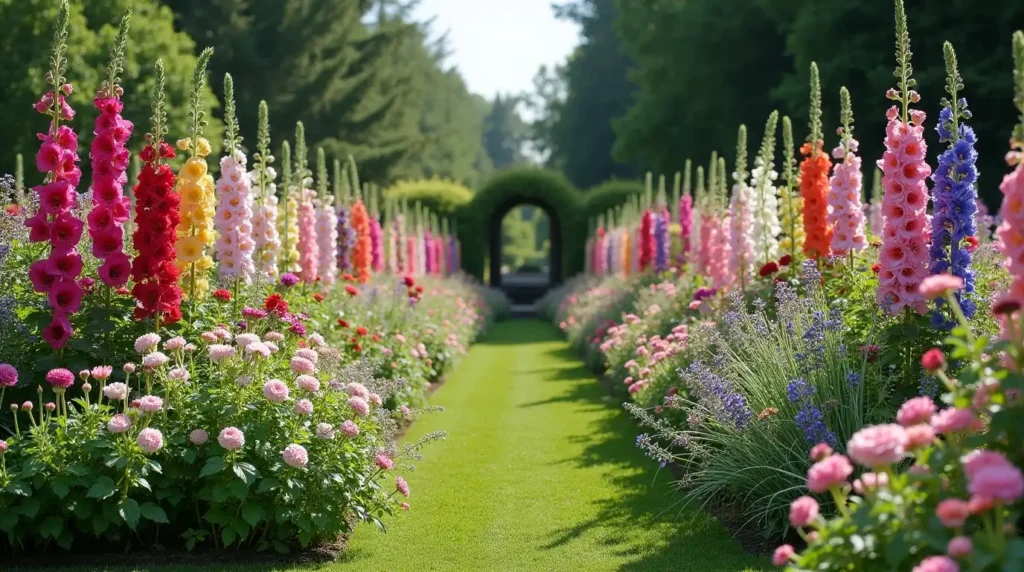
Deep, layered borders make a garden look full from the ground up. They also help each plant show its best shape.
Use three main height groups.
Place tall plants at the back. Good choices include hollyhocks, foxgloves, and delphiniums. These plants add height near a wall or fence.
Use medium plants in the middle. Shrub roses, peonies, salvias, and daisies can fill this area with most of the color.
Place low plants at the front. Hardy geraniums, catmint, lady’s mantle, and small herbs can soften the edge.
Add spring bulbs between the main plants. Tulips, alliums, and daffodils can provide early color before summer flowers fill out.
Do not buy one of every plant you like. Repeat a few plants in groups. Repeated flowers help the eye move through the border.
This is one of the easiest ways to create a strong cottage garden aesthetic.
Quick action: Choose one tall plant, two medium plants, and two low plants for your first border.
Use Roses Where They Will Have the Most Impact
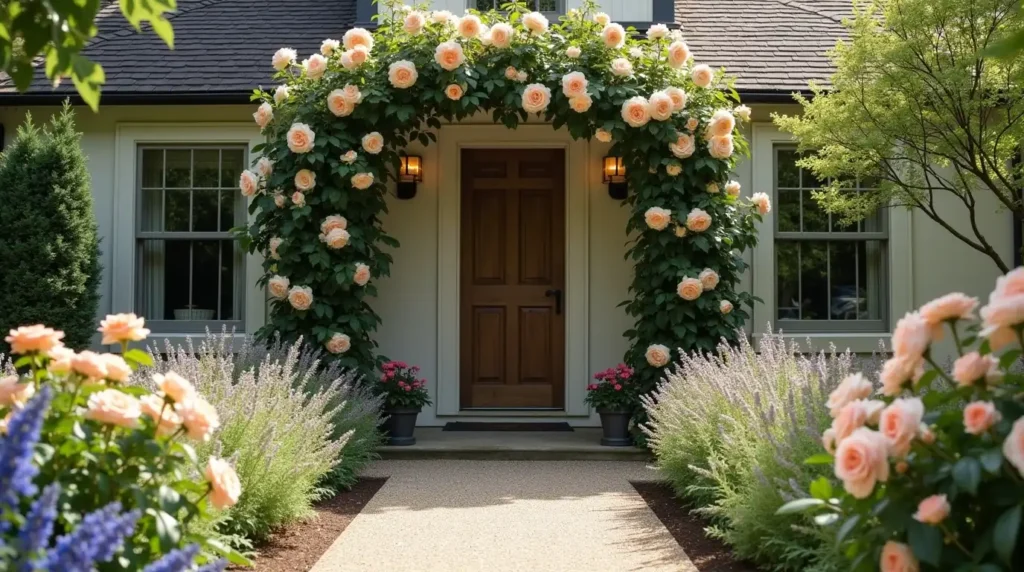
Roses can shape the mood of the whole garden. You do not need dozens of them.
Use shrub roses as strong plants inside a border. Place them where they can grow to their full size without blocking the path.
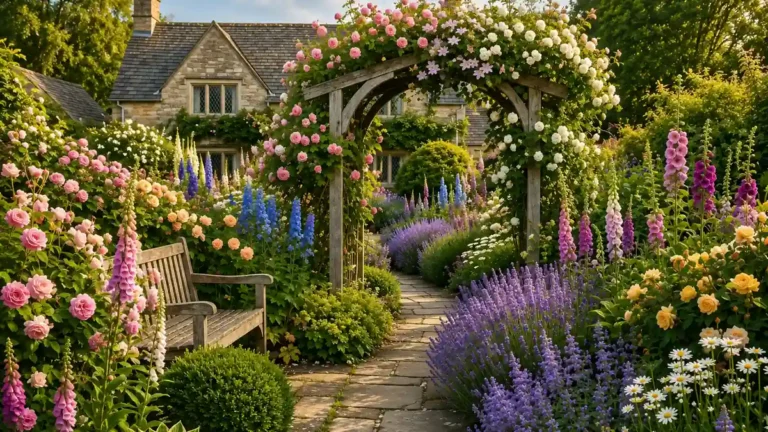
Use climbing roses on a wall, strong trellis, or arch. Give them space for air to move around the stems and leaves.
Rambling roses often grow larger and may flower once each year. They work best on strong pergolas, large fences, or mature trees.
Try one of these simple ideas:
- Train a pale climbing rose around the front door.
- Mix apricot shrub roses with blue catmint.
- Pair cream roses with white foxgloves.
- Grow a pink rose over a dark wood gate.
- Place red roses near deep green hedges for a bold look.
Roses do not have to be pink. Cream, white, apricot, yellow, and red can all suit an English-style garden.
Check sunlight, mature size, and disease resistance before buying.
Quick action: Choose the rose location first. Then buy a rose that fits that exact space.
Mix Flowers by Height, Shape, and Bloom Time
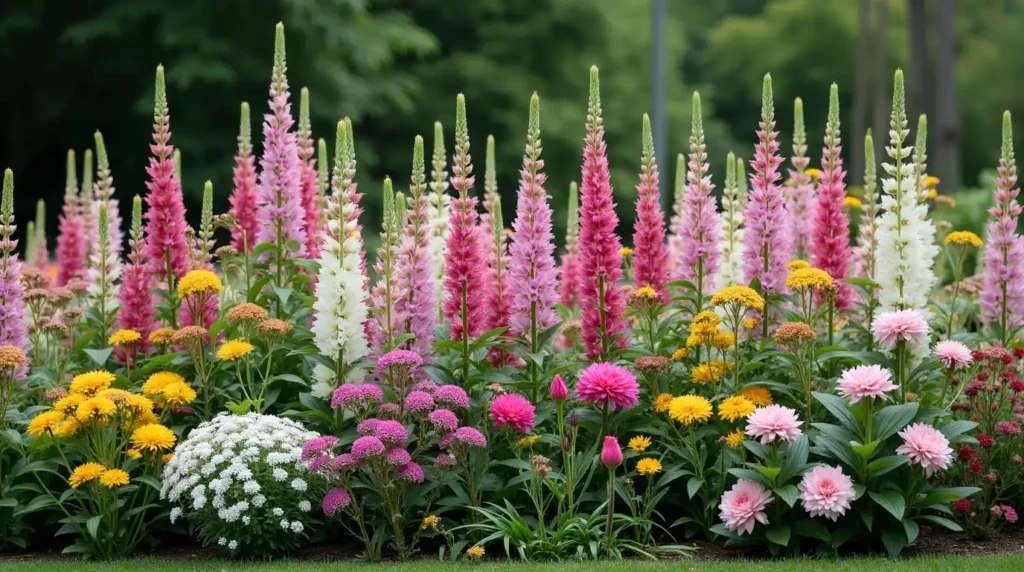
A good border needs more than matching colors. It needs different shapes and flowers that bloom at different times.
Start with vertical plants. Foxgloves, hollyhocks, and delphiniums draw the eye upward.
Add rounded flowers in the middle. Roses, peonies, and daisies create fuller shapes.
Use spreading plants near the front. Geraniums, catmint, and lady’s mantle cover bare soil and soften hard edges.
Then plan for the seasons:
- Spring bulbs provide early color.
- Roses and perennials fill the summer.
- Salvias and daisies can extend the display.
- Grasses, berries, and seed heads help in autumn.
- Hedges and branches give shape in winter.
Repeat three to five key plants across the garden. This looks calmer than using many single plants.
Classic English flowers may struggle in very hot or dry places. Use local plants with a similar height, flower shape, or color. Copy the look, not a strict plant list.
Quick action: Make a simple bloom calendar before you shop.
Choose a Color Plan Before Buying Plants
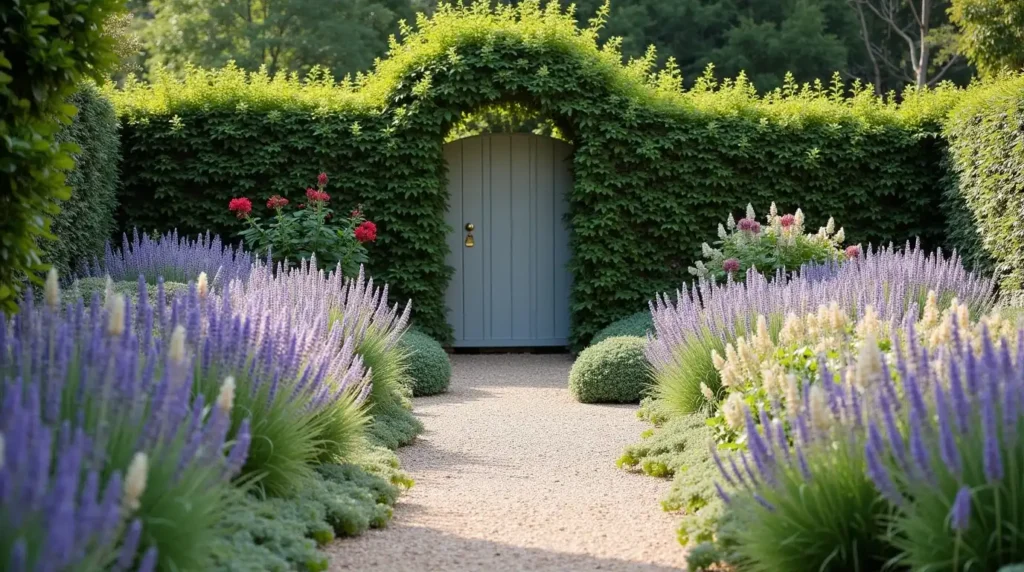
Too many unrelated colors can make a small garden feel busy.
Pick two or three main flower colors. Then use green, white, and silver to give the eyes a place to rest.
Here are four simple palettes:
- Blush pink, lavender, cream, and soft blue
- White, green, silver, and pale yellow
- Apricot, plum, dusty pink, and violet
- Red, white, deep green, and soft purple
Repeat the same colors in several areas. For example, place blue salvia near the gate, beside the path, and close to the bench.
Use one stronger accent color in small amounts. A few deep red flowers can add energy to a soft pink and cream garden.
Foliage also affects color. Silver lamb’s ear feels soft and pale. Dark green yew feels formal. Bronze leaves can make pink flowers look warmer.
Quick action: Save five garden photos you like and list the colors that appear most often.
Add Height with an Arch, Pergola, or Trellis
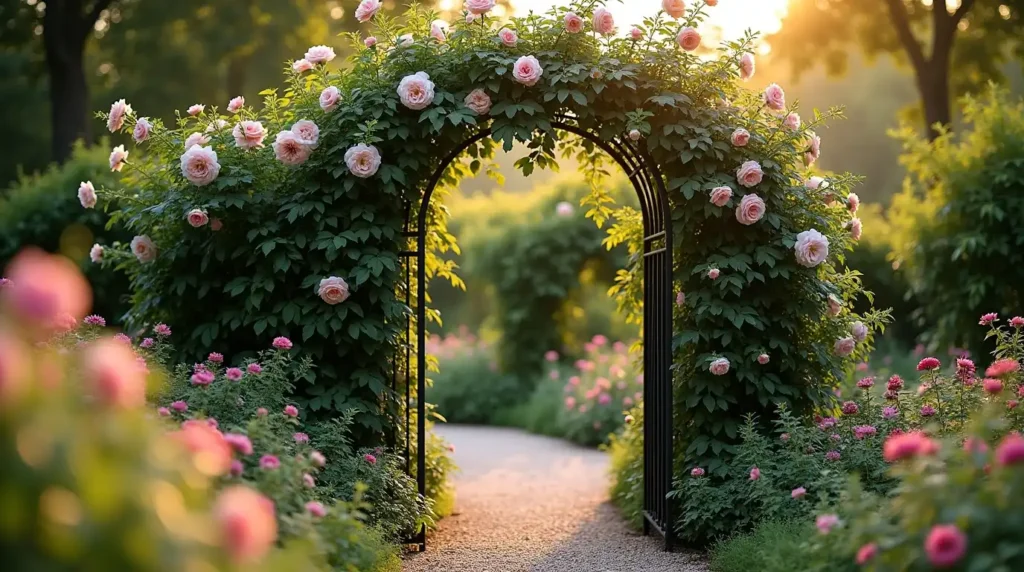
Flat gardens can feel smaller than they are. A vertical feature adds height and creates a strong focal point.
Place an arch over a gate or at the entrance to another part of the yard. This makes the next space feel special.
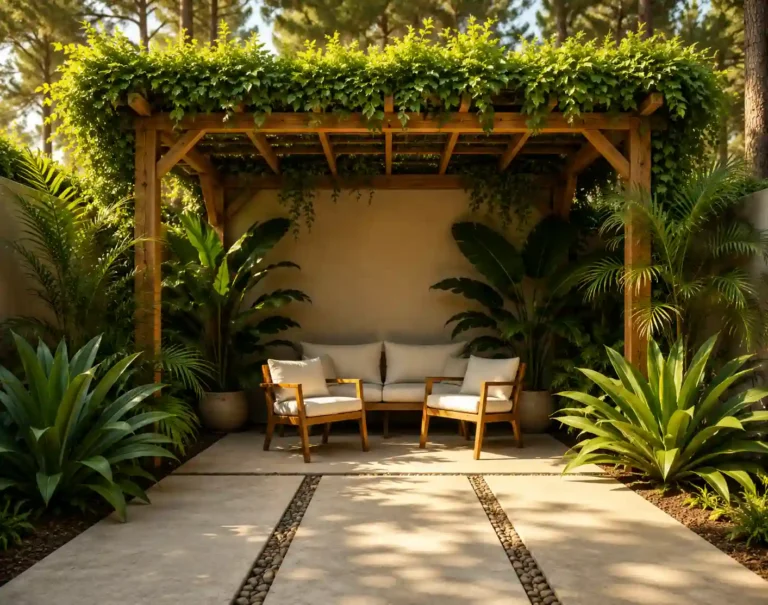
Use a pergola to frame a dining area or bench. Make sure it is strong enough to hold mature climbing plants.
A trellis can improve a blank wall. It can also give privacy without taking up much ground space.
Plants for vertical features may include:
- Climbing roses
- Clematis
- Honeysuckle
- Jasmine in suitable climates
- Grapevines
- Sweet peas on seasonal supports
Do not place a weak arch under a heavy rambling rose. The plant may become much larger than expected.
Match the structure to your home. Dark wood feels rustic. Painted timber can feel light and cheerful. Black metal gives a neat, classic look.
Quick action: Add one vertical feature where the eye needs a clear stopping point.
Divide the Yard into Useful Garden Rooms
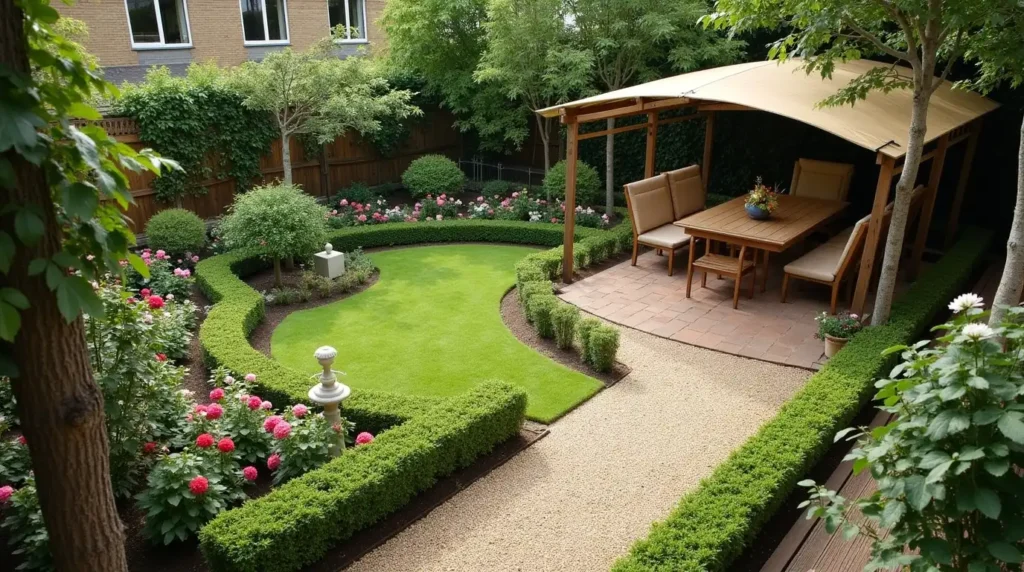
A garden feels larger when you cannot see every part at once.
Divide the yard into small areas with different uses. You can use hedges, trellises, trees, low walls, or a change in paving.
Possible garden rooms include:
- A morning coffee corner
- A small rose garden
- A herb bed near the kitchen
- A shaded reading seat
- A dining area behind a trellis
- A quiet spot with a birdbath
Give each space one clear purpose. Too many uses in one small area can make it feel crowded.
Connect the rooms with repeated plants or materials. For example, use the same gravel path in each area. Repeat the same rose color near every entrance.
Leave a narrow opening between rooms. A gate, arch, or curved path can create a sense of discovery.
Quick action: Name each garden area based on what you want to do there.
Put the Bench Where You Will Use It
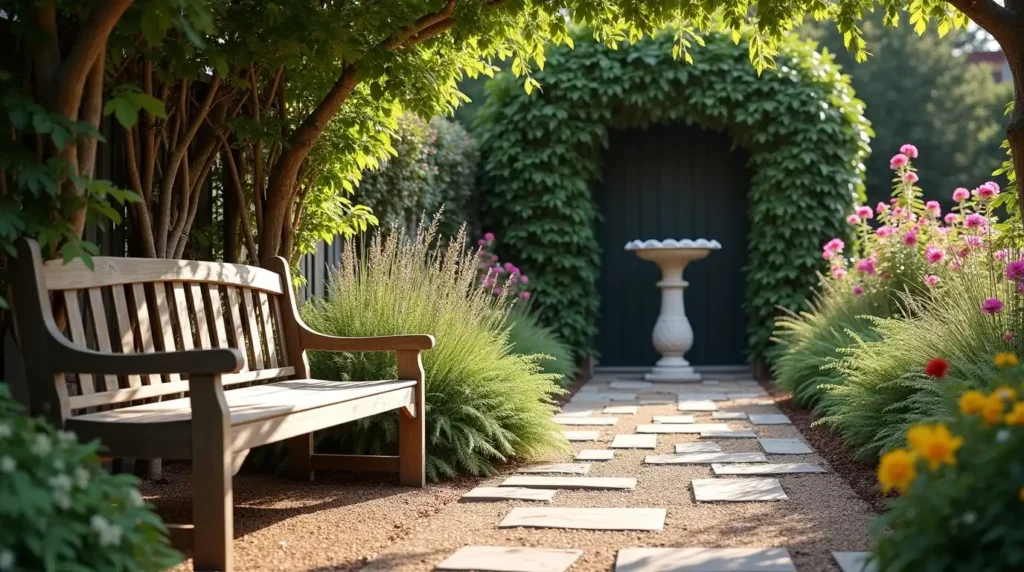
A garden bench should give you a reason to sit down.
Do not place it in an empty corner just because the space is free. Place it where you can enjoy a good view, morning light, evening shade, or the scent of nearby flowers.
Strong bench locations include:
- At the end of a path
- Under a rose arch
- Against a clipped hedge
- Near a birdbath
- Beside a fragrant border
- Under a small tree
Choose a material that fits the rest of the garden. Weathered wood feels warm and relaxed. Painted metal can add color. Stone suits a formal area but may feel cold.
Leave enough room around the bench for feet, watering cans, and plant growth.
Test the spot before making it permanent. Put a simple chair there for a few days. Notice the sun, wind, noise, and view.
Quick action: Move a temporary chair around the yard before buying a bench.
Repeat Aged Materials for a Collected Look
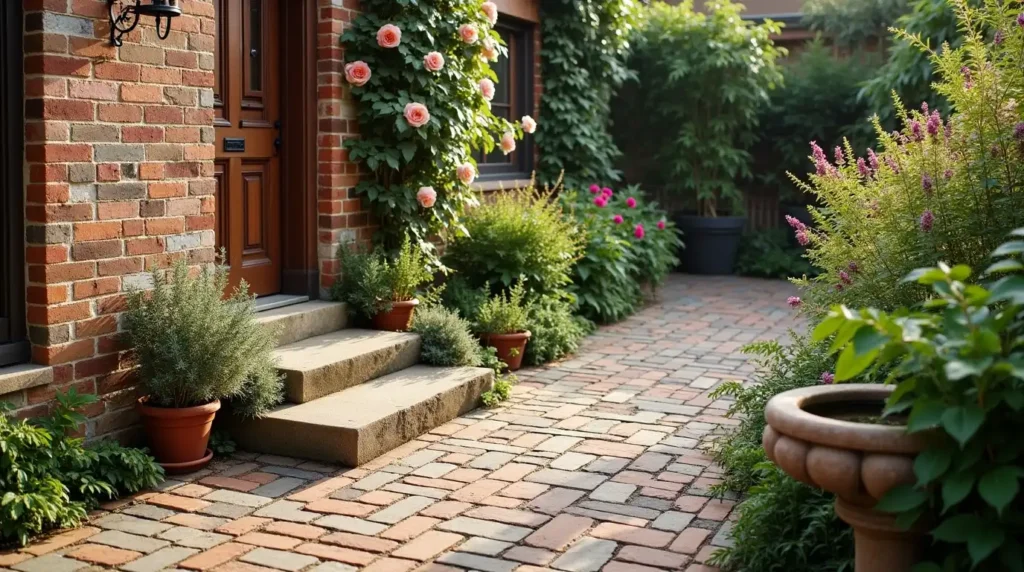
English-style gardens often feel as if they have grown over many years. Materials can help create that effect.
Choose two or three main materials and repeat them.
Good choices include:
- Reclaimed brick
- Natural stone
- Gravel
- Terracotta
- Painted wood
- Dark iron
You might pair a brick path with terracotta pots. You could place a stone birdbath near stone edging. A timber gate can work well with dark iron hardware.
New materials can still fit the style. The shape, finish, and color matter more than the age.
Avoid mixing too many finishes. Bright plastic pots, shiny steel, rough stone, red brick, and painted wood may fight for attention when used together.
Let plants soften hard surfaces. Grow thyme near stepping stones. Place roses beside a brick wall. Allow a fern to lean near a stone basin.
Quick action: Limit your main material list to three choices.
Add Water Without Building a Large Pond
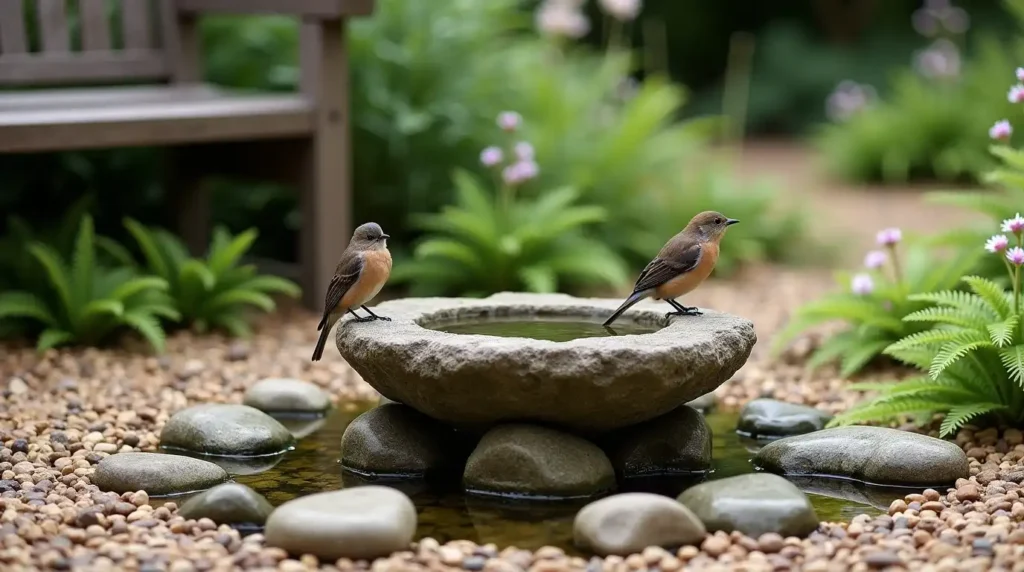
Water can make a garden feel calm. It can also bring birds and useful insects into the yard.
You do not need a large pond. A shallow birdbath or water bowl may be enough.
Place the feature where you can see it from a window, path, or bench. Keep low plants around it so the water remains visible.
Simple choices include:
- A shallow stone birdbath
- A glazed water bowl
- A small wall fountain
- A brick-edged basin
- A simple container pond
- A low bowl surrounded by ferns
Clean birdbaths often. Replace dirty water. Keep deep water safe for children and pets. Add stones or shallow edges so small animals can climb out.
A loud fountain may not suit a quiet cottage garden. A gentle trickle often feels more natural.
Quick action: Start with a birdbath before adding a larger water feature.
Mix Herbs and Fruit into Flower Beds
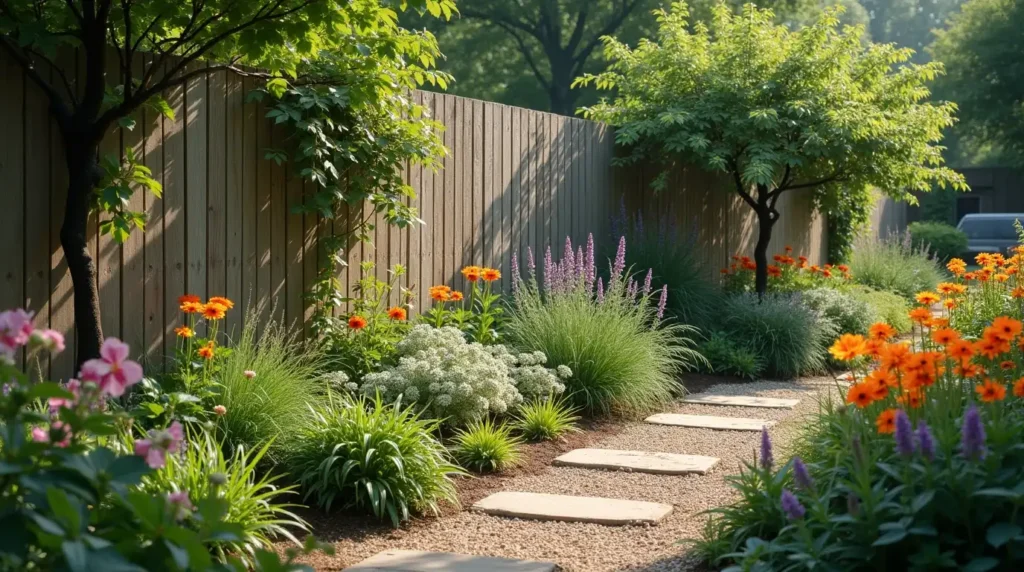
A cottage-style garden can be useful as well as pretty.
Herbs bring scent, texture, and color. Many also attract bees and other pollinators.
Try these simple pairings:
- Chives beside roses
- Thyme near stepping stones
- Sage behind low flowers
- Rosemary in a sunny, dry border
- Strawberries as ground cover
- Nasturtiums in open gaps
- Calendula near herbs and vegetables
A small fruit tree can become a strong feature. Choose a compact type for a small yard. You can also train an apple or pear tree flat against a wall or fence.
Keep edible plants away from areas treated with unsafe sprays. Confirm that a flower is edible before tasting it. Common names can be confusing, and some look-alike plants are unsafe.
Quick action: Add one herb group near a path where you can reach it easily.
Let Some Plants Spill and Self-Seed
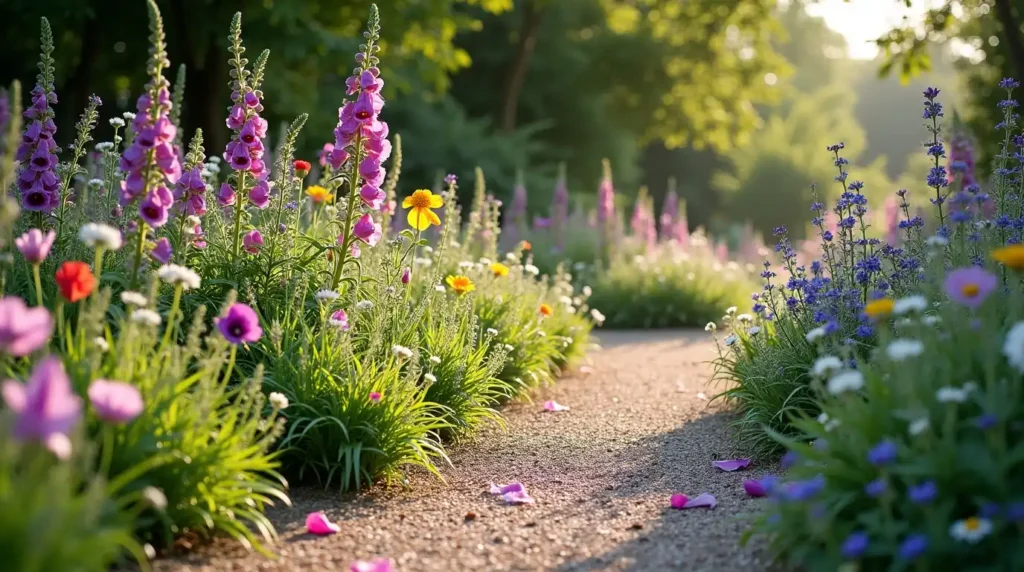
A relaxed garden should not look stiff. A few plants can lean over paths or return from seed each year.
Good self-seeding choices may include:
- Foxgloves
- Forget-me-nots
- Poppies
- Nigella
- Erigeron
- Violas
- Lady’s mantle
The goal is relaxed growth, not neglect.
Remove seedlings that block paths, crowd weaker plants, or grow in the wrong color area. Keep the strongest groups where they improve the design.
Watch for plants that spread too fast in your climate. A gentle plant in one region may become a problem in another.
Keep entrances, steps, and seating areas clear. Trim back sharp, wet, or thorny stems where people walk.
Use a simple rule: edit, do not erase. Keep enough natural growth to make the garden feel soft.
Quick action: Mark the self-seeding plants you want to keep before spring weeding begins.
Create the Look in a Small Yard or Balcony
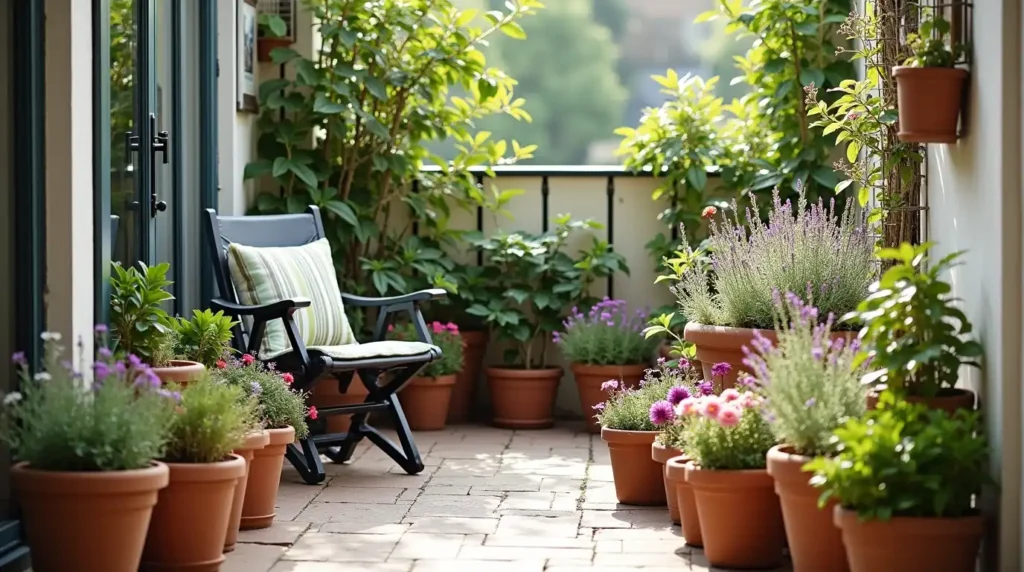
You do not need a large lawn or deep borders.
In a small space, use fewer features and make each one count. One strong focal point works better than many small decorations.
For a Small Front Yard
Use a narrow path with two planted sides. Add one climbing rose near the entrance. Repeat the same three or four flowers in both beds.
For a Patio
Group large terracotta pots instead of placing single pots everywhere. Use one compact shrub rose, lavender, herbs, and a trailing flower.
For a Balcony
Add window boxes, one narrow trellis, and a folding chair. Grow herbs and compact flowers that suit the amount of sun.
Grow upward whenever possible. Climbers and wall planters add color without using much floor space.
Keep the color plan simple. Repeating two flower colors can make a tiny area feel calmer and more connected.
These English cottage garden ideas focus on shape and mood instead of yard size.
Quick action: Choose one focal feature, one climber, and one repeated flower color.
Plan for Color and Structure in Every Season
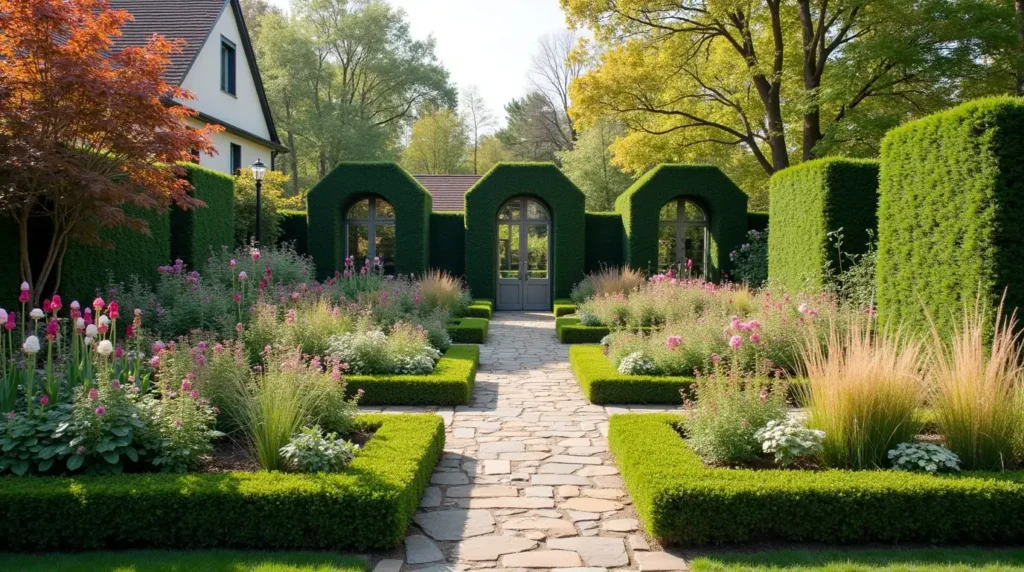
A garden should still have shape after the summer flowers fade.
Use permanent features as the base. Paths, hedges, arches, fences, and benches provide structure all year.
Then plan one or two highlights for each season.
Spring
Use tulips, daffodils, blossom, and fresh green leaves.
Summer
Fill borders with roses, foxgloves, lavender, catmint, and geraniums.
Autumn
Keep ornamental grasses, berries, warm leaves, and selected seed heads.
Winter
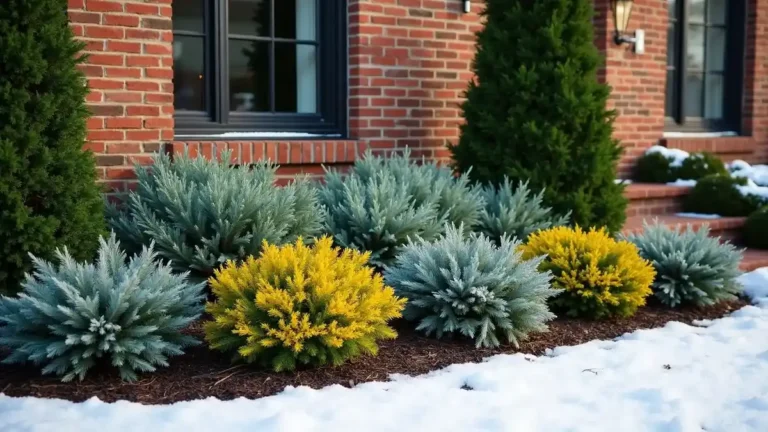
Rely on hedges, tree bark, topiary, arches, paths, and simple lanterns.
Use outdoor lighting with care. Light the gate, a path turn, a bench, or one feature tree. Avoid filling every flower bed with lights.
A seasonal care plan also helps. Prune at the right time. Divide crowded plants. Add mulch. Replace weak plants with better choices.
Quick action: Write down one main feature for spring, summer, autumn, and winter.
Start with Three Changes
You do not need to rebuild the whole yard at once.
Start with one structural feature, such as a path or clear border edge. Add one plant group that gives the garden height, color, and soft growth. Then choose one focal point, such as a bench, arch, rose, or birdbath.
Measure the space before shopping. Check sunlight and mature plant sizes. Make a small mood board with your chosen colors and materials.
These English garden aesthetic ideas can grow with your yard, budget, and gardening skills. Begin with a clear frame. Then let the plants bring the garden to life.