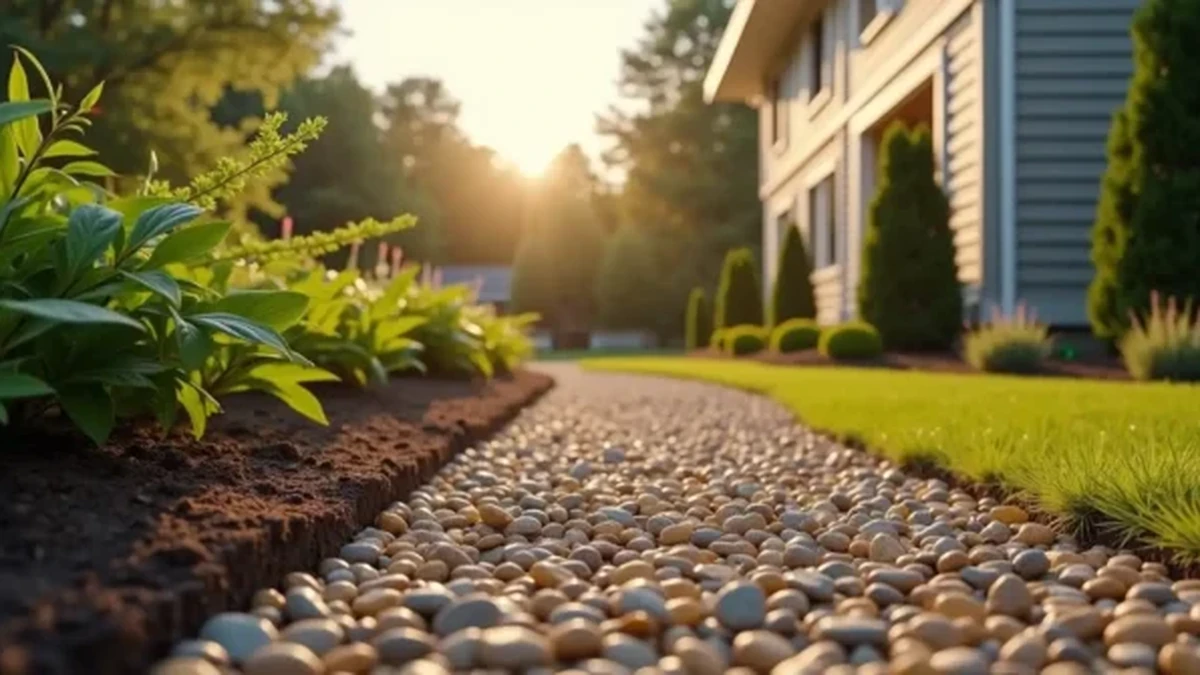
18 Rock Landscaping Ideas for Side of House
Your side yard may be narrow, muddy, shaded, or full of weeds. It may also be the part of your home you avoid showing guests.
Grass often struggles in this area. It may not get enough sun. Water may collect after rain. A lawn mower may not even fit through the space.
These rock landscaping ideas for side of house areas can help you fix those problems. You can build a clean path, improve drainage, reduce weeds, or add plants without creating hours of extra work.
Some ideas work well in a three-foot-wide passage. Others need enough room for plants, boulders, or a small drainage channel.
The best plan depends on how you use the space. You may need a path for trash bins. You may want access to the backyard. You may simply want the area to look neat.
Start with the main problem. Then choose a design that makes the side yard safer, cleaner, and easier to care for.
Plan Your Side Yard Before Buying Rock
Side yard rock landscaping works best when you plan the space before ordering materials.
Start by measuring the full length and width. Do not guess. A few extra inches can affect whether you have room for a path, plants, or edging.
Next, watch what happens during rain. Look for standing water, wet walls, muddy spots, and soil that washes away. Decorative stone can hide mud, but it will not fix a serious drainage issue.
Check the amount of sunlight too. A plant that needs full sun may fail beside a tall fence or wall.
You should also mark:
- Gates
- Utility meters
- Air-conditioning units
- Water pipes
- Hose reels
- Downspouts
- Trash bin routes
- Underground utility lines
Leave enough open space for repairs and regular service. Do not place large rocks in front of meters or equipment.
Ask one final question: What job should this area do?
A narrow side yard may need a simple walking path. A wider space may hold a path and planting bed. A wet area may need a drainage system before any design work begins.
Once you know the space, water flow, sunlight, and daily use, you can choose the right idea.
6 Rock Walkway Ideas for a Narrow Side Yard
A clear path is often the best upgrade for a tight side yard. It gives you a safe route between the front and back of the house. It also keeps shoes, bins, and garden tools out of the mud.
These narrow side yard landscaping ideas range from simple gravel paths to more stable paver designs.
1. Build a Pea Gravel Path With Metal Edging
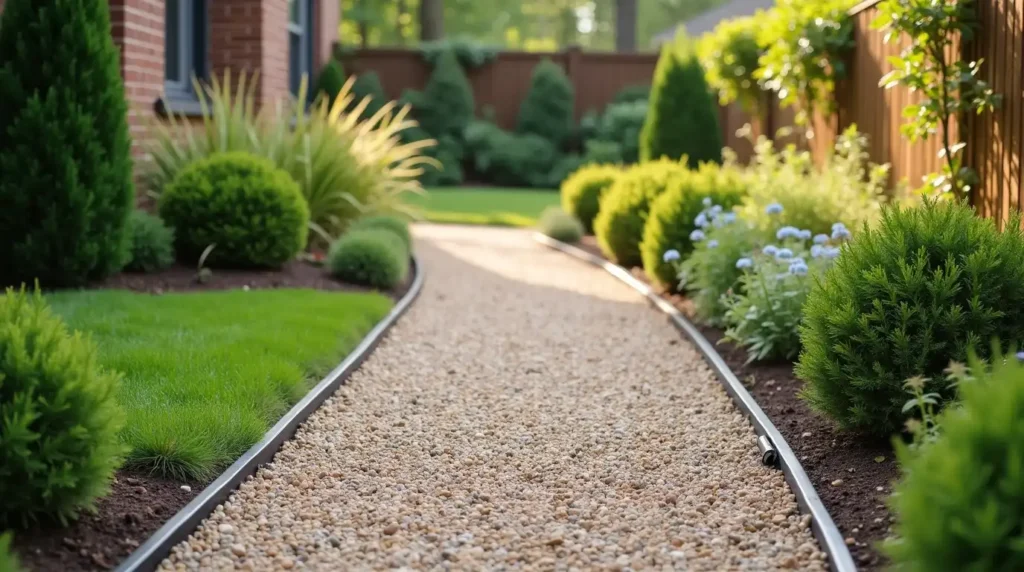
Pea gravel gives a side yard a soft and relaxed look. Its small, rounded stones come in shades of brown, gray, cream, and white.
It is often less costly than large pavers or natural stone. You can also spread it without heavy equipment.
Install strong edging on both sides of the path. Metal edging creates a clean line and uses very little space. Brick, plastic, or stone edging can also work.
A compacted base helps stop the gravel from sinking into soft soil. It also reduces low spots after rain.
Best for: Light foot traffic and decorative paths
Materials: Pea gravel, compacted base, edging, rake
Watch out for: Pea gravel moves underfoot
This material may not be the best choice for wheelbarrows, bikes, or anyone who needs a firm walking surface.
Set Flagstone Steps in Fine Gravel
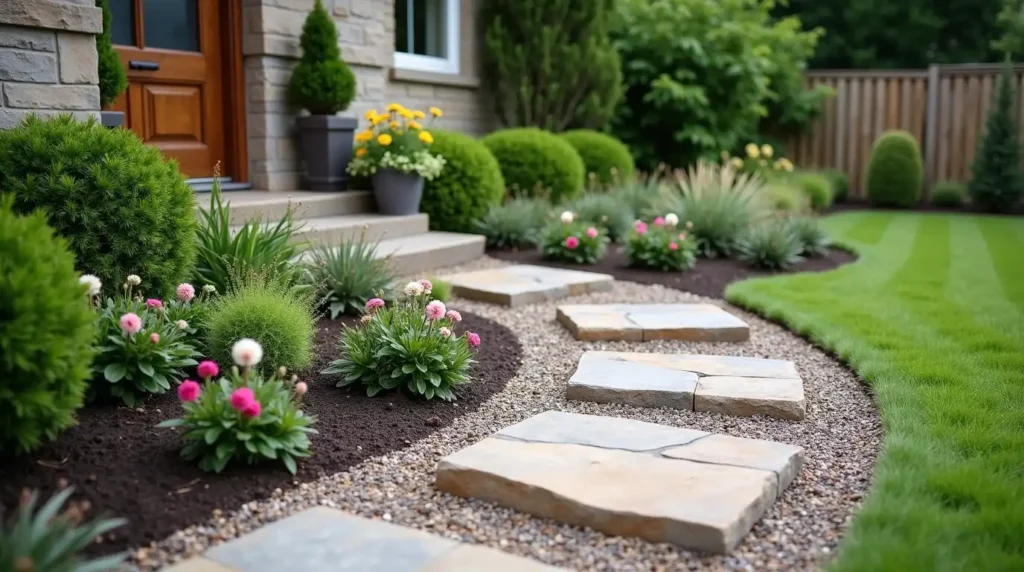
Flagstone gives you a stable place to step while gravel fills the open areas.
This design feels natural and works well beside brick, stone, wood, or neutral siding. Gray flagstone looks good with tan gravel. Warm brown stones pair well with cream or mixed river rock.
Set each stone at a comfortable walking distance. Walk across the planned route before fixing the stones in place. Your steps should feel natural.
The top of each flagstone should sit level with the gravel. Raised edges can cause trips.
Best for: Rustic, cottage, and natural garden styles
Materials: Flagstone, fine gravel, base material, edging
Watch out for: Uneven stones can become a safety risk
Choose wide stones that can hold your full foot. Small pieces may shift or feel unstable.
Use Large Pavers With River Rock
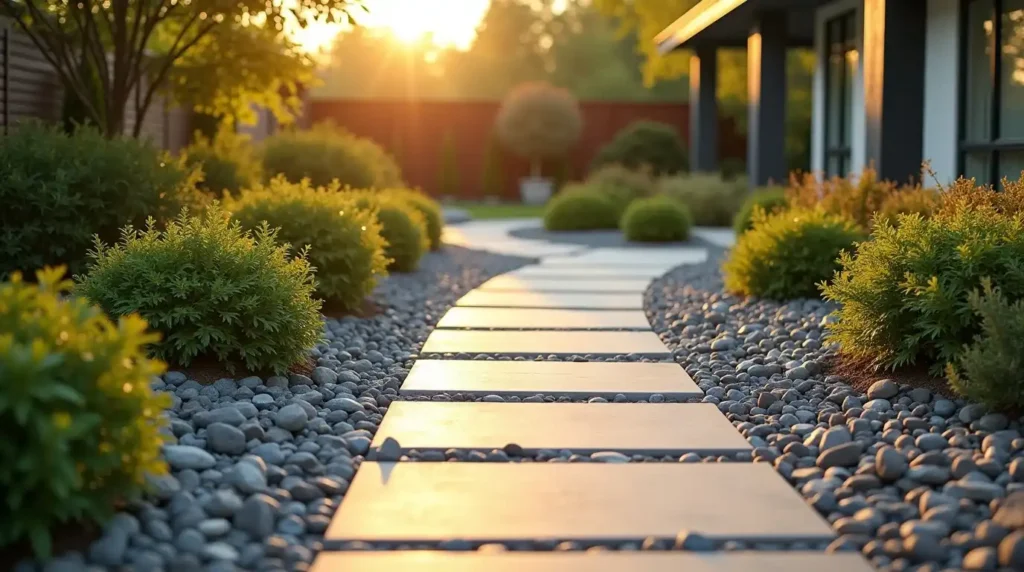
Large square or rectangular pavers create a clean, modern path. Smooth river rock fills the gaps and adds texture.
This option gives you a stable walking surface without covering the whole side yard in concrete.
Charcoal pavers work well with pale gray stone. Light concrete pavers create strong contrast against dark gravel.
Use pavers large enough for safe steps. Set them on a firm, level base. Each one should sit at the same height.
Best for: Modern and simple home designs
Materials: Concrete pavers, river rock, base material, edging
Watch out for: Smooth river rock can be hard to walk on
Keep most of the foot traffic on the pavers rather than the loose rock.
Create a Crushed Granite Trail
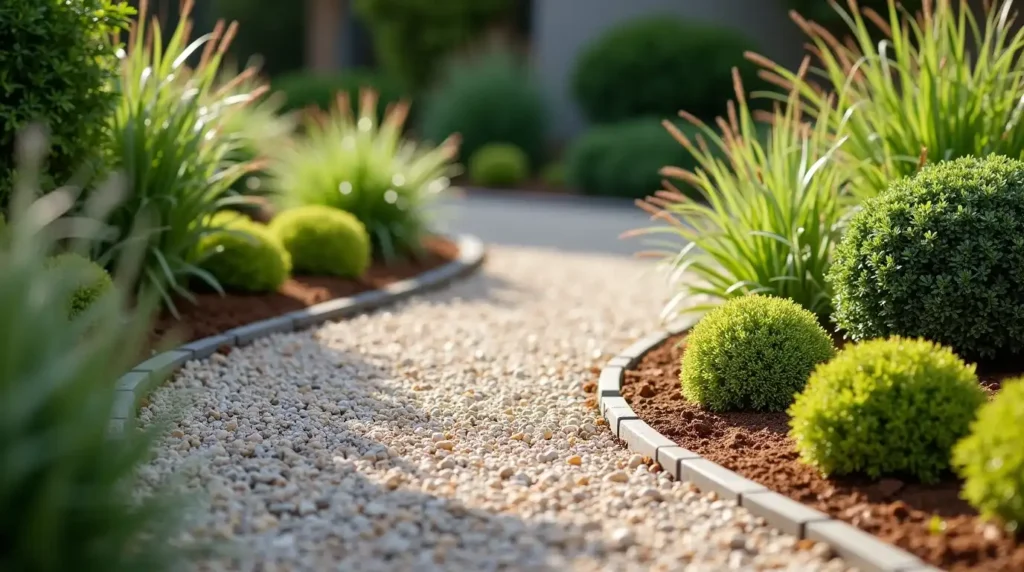
Crushed granite has small, sharp pieces that lock together when compacted. This creates a firmer surface than pea gravel.
It works well when you need to roll trash bins, carts, or garden tools through the side yard.
The material comes in several earthy shades. You can choose gray, gold, tan, brown, or reddish tones based on your home.
Install it over a prepared base. Add water during compaction if the product instructions call for it.
Best for: Regular foot traffic, carts, and bins
Materials: Crushed granite, base material, edging, hand tamper
Watch out for: The surface may need fresh material over time
Heavy rain and frequent use can create shallow dips. Rake and compact these areas as needed.
Mix Old Brick With Gravel
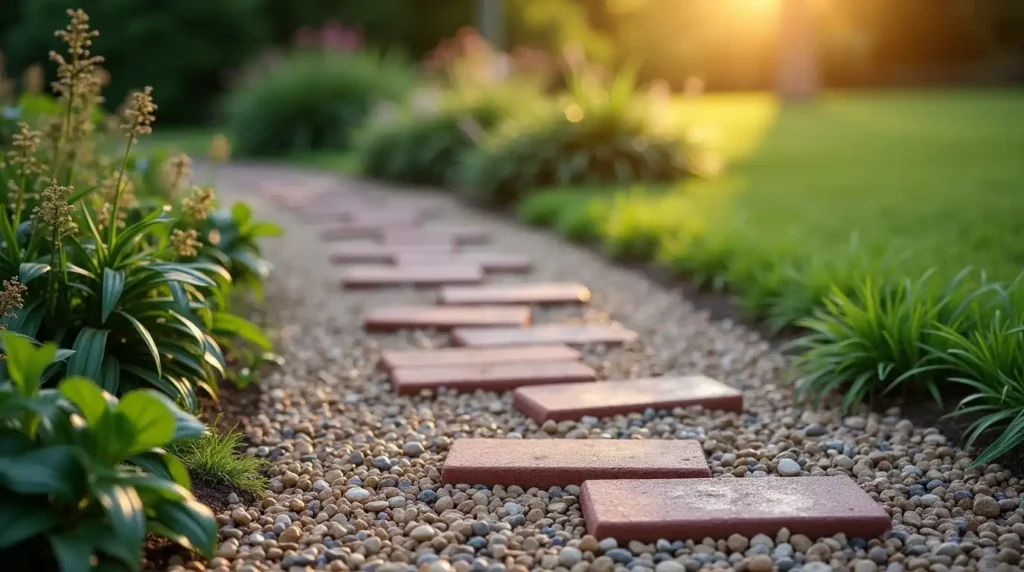
Old bricks can turn a plain gravel path into a feature. Use them as a border, stepping surface, or repeating pattern.
This design works well beside traditional homes. It can also help connect the side yard to a brick patio or front walkway.
Choose bricks that are in good condition. Broken or badly worn bricks may create sharp edges.
You can lay bricks in a straight line or place them in a simple staggered pattern.
Best for: Traditional homes and low-cost projects
Materials: Bricks, gravel, base material, sand
Watch out for: Loose bricks may move without a firm base
Clean reused bricks before installation. This helps you check their true color and condition.
Place Stepping Stones in Dark Gravel
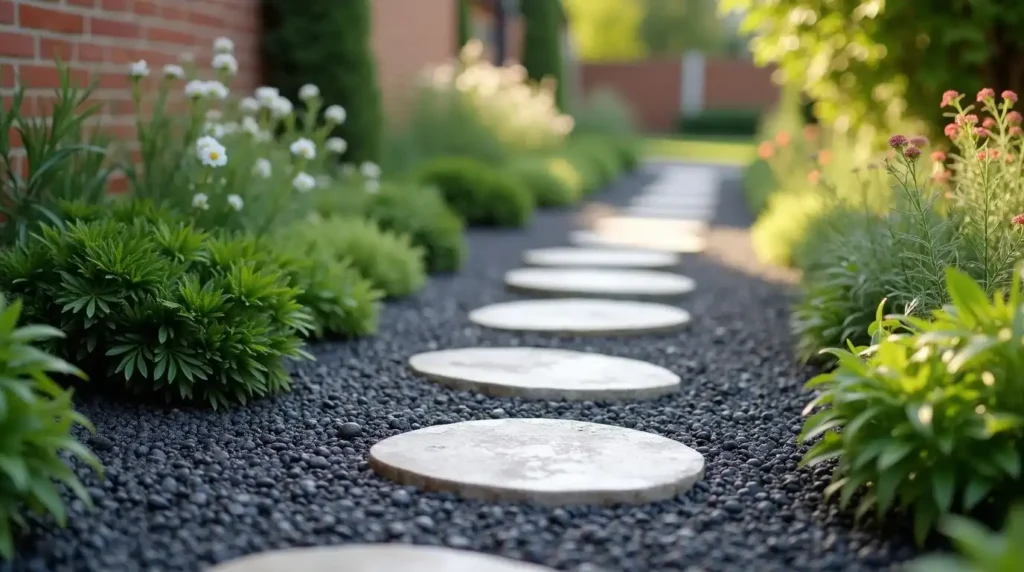
Dark gravel makes pale stepping stones stand out. The contrast can make a small side yard look neat and planned.
This style works best when you keep the design simple. Too many colors or stone shapes can make the narrow space feel busy.
Use large stepping stones in one shape. Space them based on a normal walking step.
Low solar lights can mark the edge at night. Keep them away from the main walking line.
Best for: Small modern side yards
Materials: Stepping stones, dark gravel, edging
Watch out for: Dark stone may become hot in strong sun
A rock walkway beside the house should feel safe first. Choose compacted stone or solid pavers when the area gets heavy use.
6 Ways to Mix Rocks and Plants Without Adding Too Much Work
A rock-only side yard can look cold or unfinished. Plants soften the hard surfaces and add color.
You do not need a large garden bed. A few plants in the right spots can make low-maintenance side yard landscaping feel more welcoming.
Choose plants based on sunlight, local weather, soil, and mature size.
Add Shade Plants Along a River Rock Border
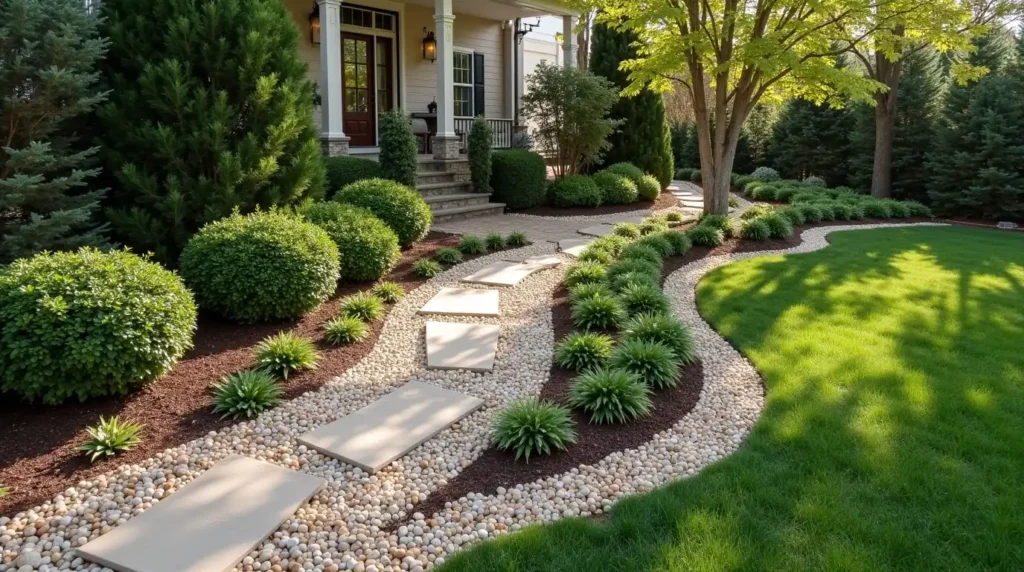
Does your side yard stay shaded for most of the day? Use plants that can handle lower light.
Ferns, hostas, coral bells, and other shade plants may work well in suitable climates. Local native plants are often an even better choice.
Place the taller plants near the wall or fence. Keep shorter plants near the path.
Use river rock as a border or mulch around the planting area. Do not pile rock against plant stems.
Best for: Cool and shaded side yards
Materials: River rock, shade plants, soil, edging
Watch out for: Some shade plants spread wider than expected
Check the mature width before planting. A small plant at the store may fill the whole path within a few years.
Plant Succulents in Decorative Gravel
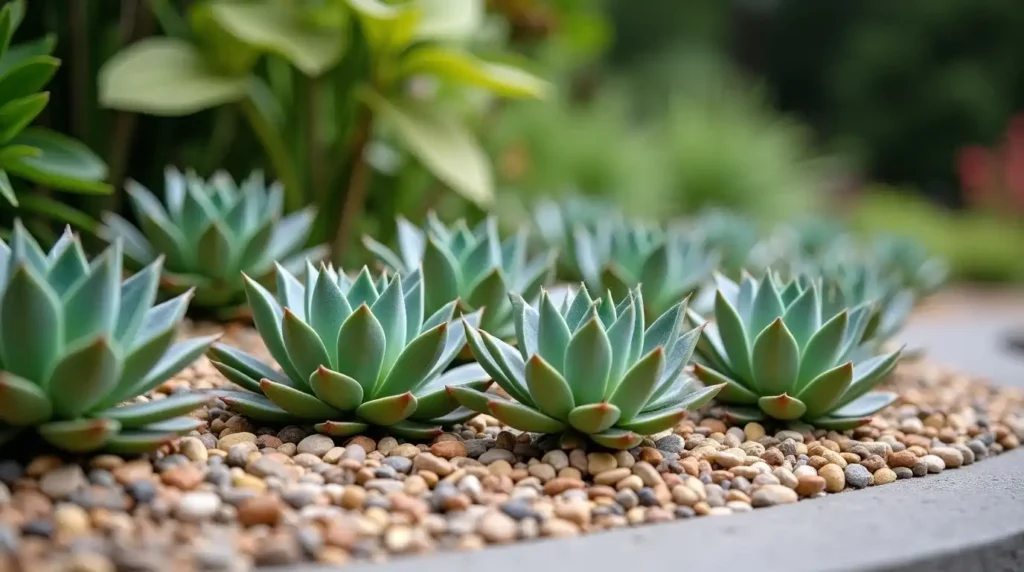
Succulents work well in hot, dry spaces with strong sunlight. Their bold shapes pair well with gravel and stone.
You can use low sedum, aloe, agave, or other plants suited to your area. Some succulents cannot handle frost, heavy rain, or wet soil.
Fast-draining soil is important. Gravel on top will not help if water sits around the roots.
Leave open space between plants. This gives each plant room to grow and keeps the design clean.
Best for: Sunny and dry side yards
Materials: Decorative gravel, drought-tolerant plants, fast-draining soil
Watch out for: Sharp plants can block a narrow path
Keep spiky plants away from gates, doors, and walking areas.
Place Dwarf Grasses Between Boulders
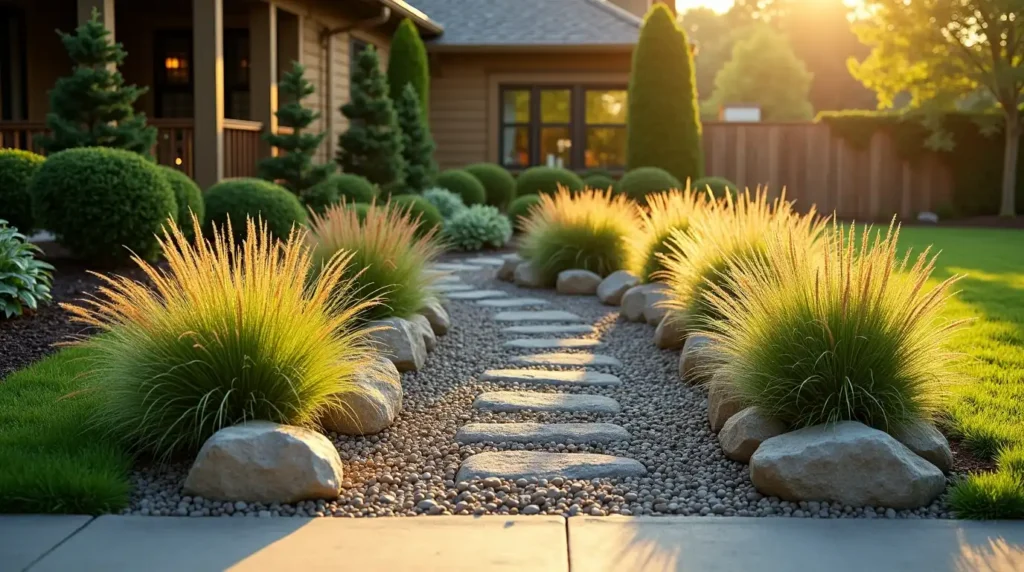
Ornamental grasses add movement without needing bright flowers.
Choose dwarf types that stay compact. Tall or spreading grasses may take over a narrow space.
Use one or two boulders as focal points. Place the grasses around them in small groups.
A mix of fine grass leaves and rough stone creates strong texture. It also works well in simple, natural designs.
Best for: Modern, prairie, and natural styles
Materials: Dwarf grasses, boulders, gravel
Watch out for: Some grasses spread through roots or seeds
Choose non-invasive types that grow well in your area.
Create a White Rock Garden With Evergreens
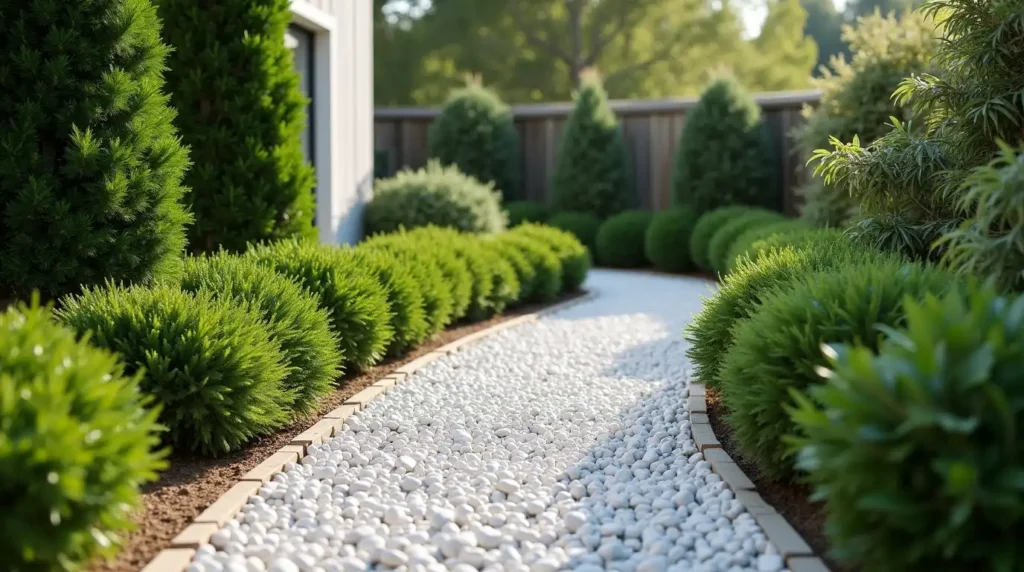
White stone looks fresh beside green shrubs. It can also brighten a shaded or narrow area.
Use one or two small evergreen shrubs rather than filling the whole space. The green color gives the garden structure during every season.
White rock shows dirt, leaves, and stains more than mixed stone. It may also reflect heat around plants and walls.
Best for: Modern and Mediterranean-style homes
Materials: White rock, compact evergreen shrubs, edging
Watch out for: White rock needs regular cleaning
Avoid placing it under trees that drop lots of leaves, flowers, or fruit.
Make a Pollinator Strip With Gravel Mulch
A side yard can support bees and butterflies without becoming a wild, overgrown garden.
Use a narrow row of flowering plants that suit your climate. Lavender, salvia, yarrow, and coneflower may work in some regions. Native flowers are often better for local insects.
Gravel mulch can help keep the planting area neat. It also creates a dry surface around drought-friendly plants.
Choose flowers that bloom at different times. This gives pollinators food across more of the growing season.
Best for: Sunny side yards and wildlife-friendly homes
Materials: Flowering plants, gravel mulch, edging
Watch out for: Tall flowers may fall into the path
Use compact varieties beside narrow walkways.
Build a Fern and Natural Stone Garden
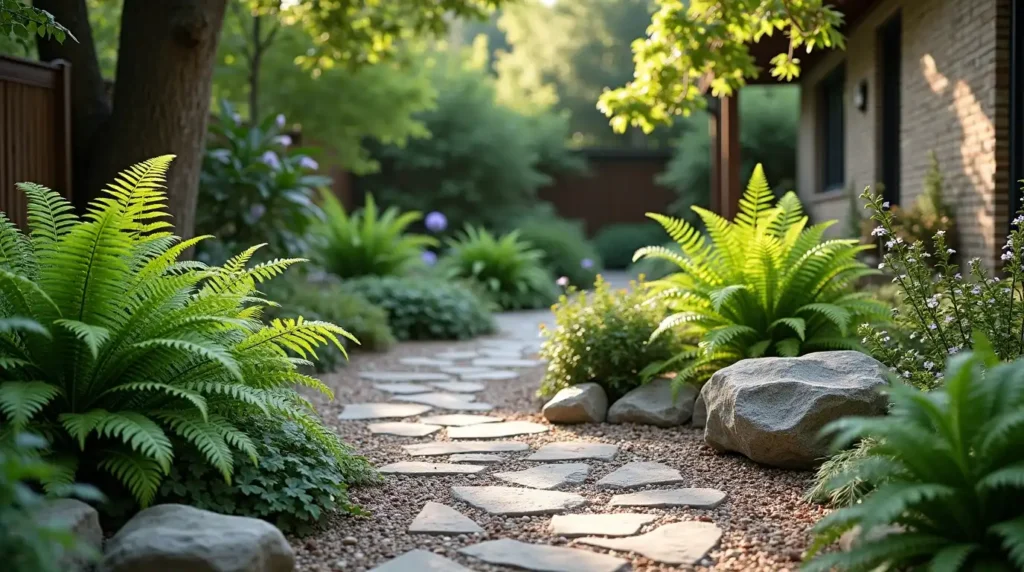
A cool and damp side yard can become a simple woodland-style garden.
Use irregular stones instead of polished rock. Add ferns, moss, or other moisture-friendly plants that grow well in your area.
Keep the walking surface firm and clear. Wet moss on stepping stones can become slippery.
Add a layer of natural mulch around plants. Use rocks to mark the edge rather than covering every inch of soil.
Best for: Moist, shaded spaces
Materials: Natural stone, ferns, mulch, stepping stones
Watch out for: Wet surfaces can become slick
Trim plants away from the path to improve airflow and safety.
4 Rock Ideas That Can Help With Drainage and Erosion
Standing water beside the house is more than a visual problem. It can create mud, attract insects, damage plants, and place water too close to the foundation.
Rock landscaping for drainage should move water to a safe outlet. It should not trap water against the wall.
Get professional help when water enters a basement, collects against the foundation, or causes major soil loss.
Build a Dry Creek Bed
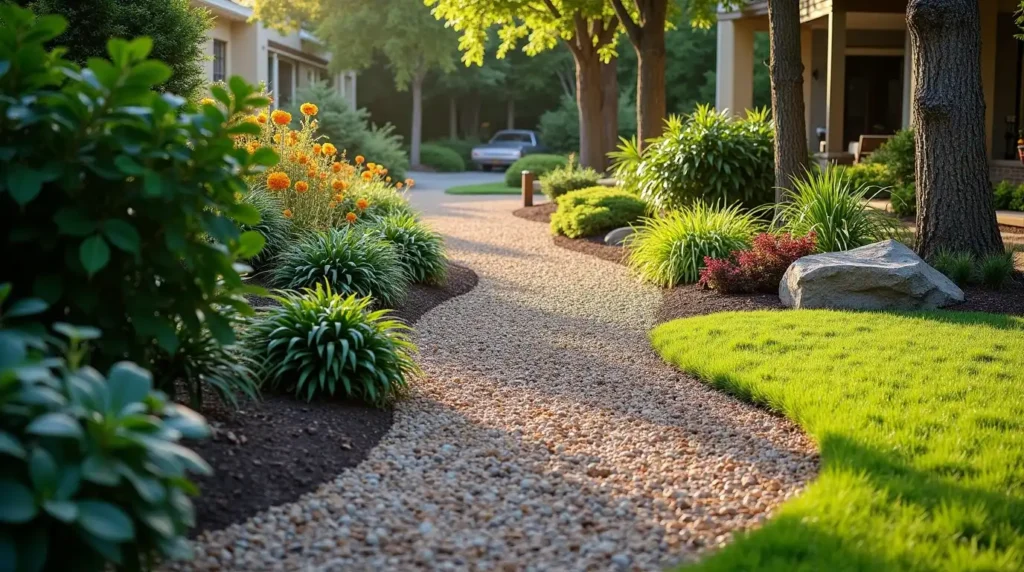
A dry creek bed is a shallow channel lined with stone. It stays dry most of the time but carries water during rain.
Use a mix of small gravel, medium river rock, and larger stones. Several rock sizes make the channel look more natural.
Create a gentle curve rather than a stiff, straight line. Place larger stones near bends.
The creek bed must lead water to a safe discharge point. Do not send water into a neighbor’s yard or public path.
Best for: Side yards with surface runoff
Materials: River rock, gravel, larger stones, base material
Watch out for: A creek bed needs a clear outlet
A channel with no outlet may simply move the puddle to another spot.
Add a Narrow River Rock Drainage Channel
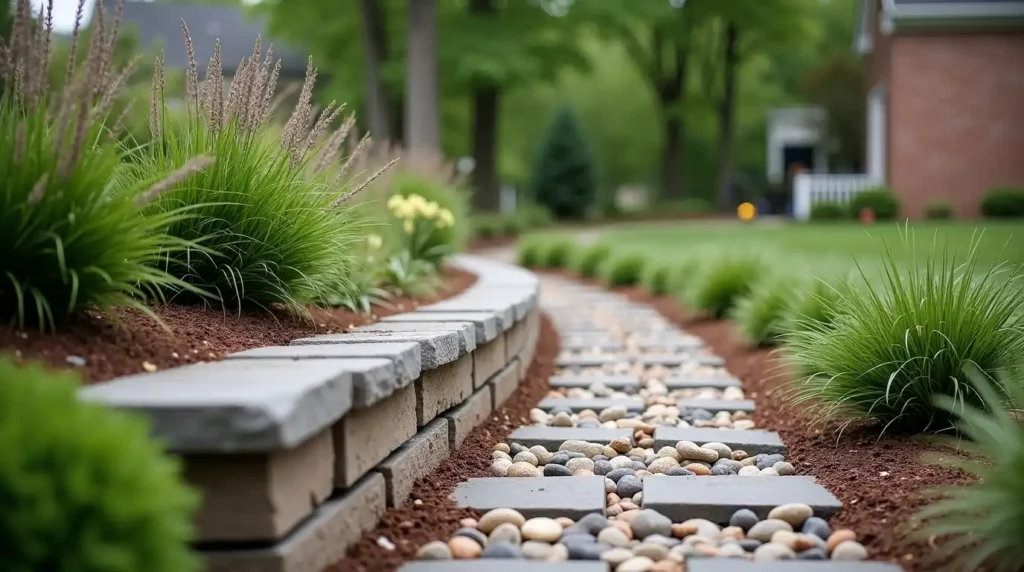
A narrow channel can fit between a path and the house. It may also work below a downspout.
The channel needs enough slope for water to move. The stones should sit on a stable base so they do not sink into mud.
Use edging if the channel runs beside gravel or soil. This keeps the materials from mixing.
Best for: Tight spaces with light runoff
Materials: River rock, edging, base material
Watch out for: Rock alone does not correct poor grading
Find the cause of the water before building the channel.
Place Gravel Below the Roof Drip Line
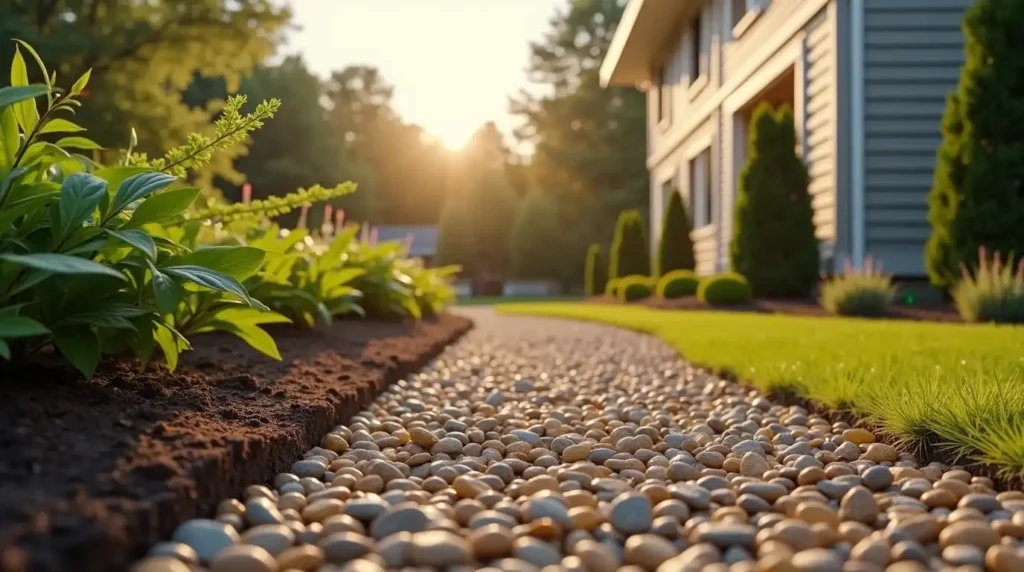
Water falling from a roof can splash mud against siding. A gravel strip creates a cleaner surface below the drip line.
It can also keep plants and wet soil away from the wall.
Use edging to hold the gravel in place. Keep the strip free from leaves and roof debris.
This idea works best for homes without gutters or in areas where light rain reaches the roof edge.
Best for: Reducing mud splash near walls
Materials: Gravel, edging, compacted base
Watch out for: Heavy roof runoff may need gutters or drains
A gravel strip cannot manage a large amount of water by itself.
Build Terraced Rock Beds on a Slope
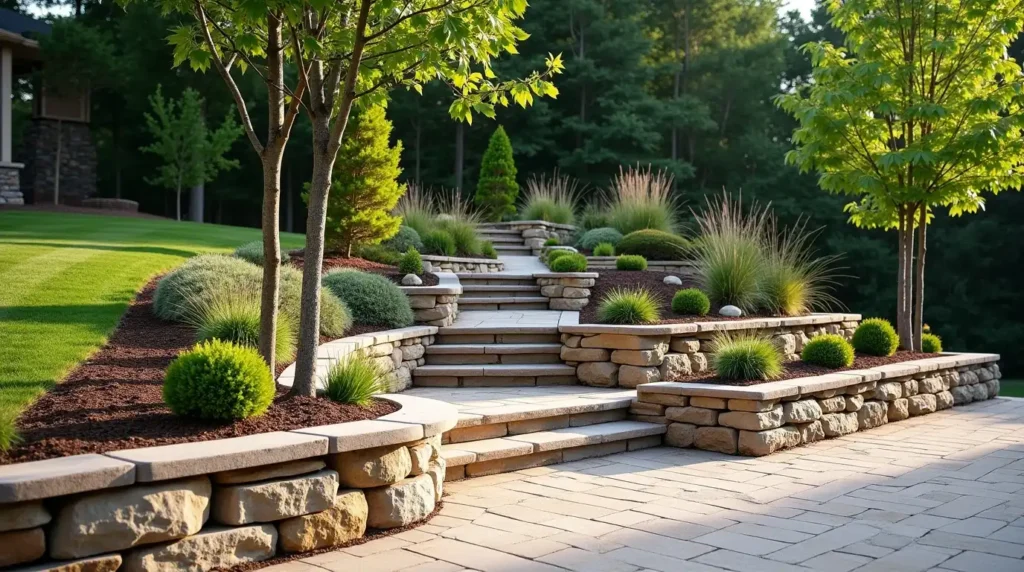
A sloped side yard can lose soil during heavy rain. Small terraced beds may slow the flow and create level planting areas.
Use retaining stones to form short steps. Fill each level with suitable soil and plants.
Keep the walls low for a DIY project. Tall retaining walls may need professional design or local approval.
Best for: Gentle slopes with soil wash
Materials: Retaining stone, gravel, soil, plants
Watch out for: Steep slopes need expert help
These side yard drainage ideas work best when the full water path is planned before installation.
2 Ways to Improve Utility and Storage Areas
Utility areas often look messy because they serve a practical purpose. Rock can create a clean base without blocking access.
Make a Gravel Pad for Trash and Recycling Bins
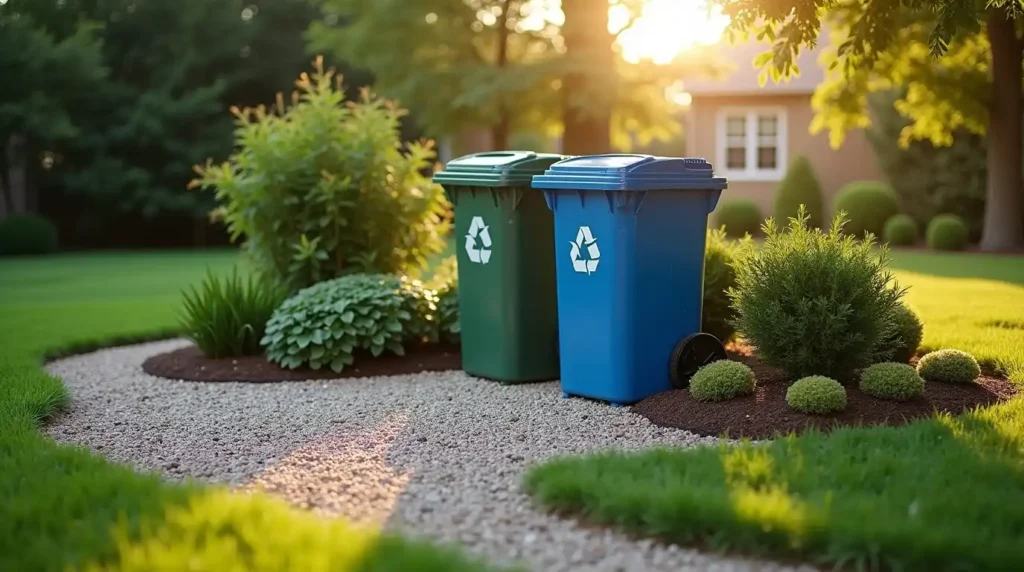
Trash bins can turn bare soil into mud. A compacted gravel pad gives them a firm place to sit.
Use angular crushed stone rather than loose round rock. It creates a steadier surface for rolling heavy bins.
Add a simple screen if space allows. Keep enough room to open lids and move each bin.
Match the screen to the fence, gate, or house trim.
Best for: Muddy storage areas
Materials: Crushed stone, compacted base, edging, optional screen
Watch out for: Loose gravel can make bins hard to roll
Test the route before finishing the pad.
Use Boulders and Gravel Near Utility Equipment
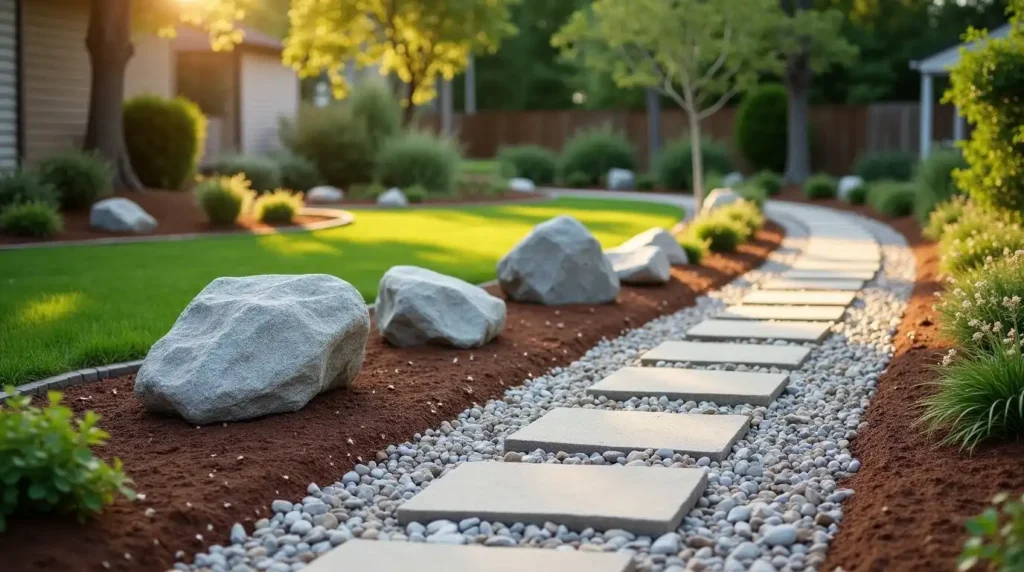
One or two boulders can pull attention away from pipes, meters, or service boxes.
Keep the layout simple. Too many large rocks can make a small area feel crowded.
Use low plants around the boulders if there is enough space. Keep all equipment visible and easy to reach.
Never cover gas, water, electric, or communication equipment. Do not place heavy boulders above buried utility lines.
Best for: Decorative rock landscaping near utility zones
Materials: One or two boulders, gravel, low plants
Watch out for: Service access must stay open
Rock landscaping beside the house should improve the space without creating repair problems later.
How to Choose the Best Rock for Your Side Yard
The best gravel for side yard projects depends on how you plan to use the area.
| Material | Best Use | Main Benefit | Main Drawback |
| Pea gravel | Light-use paths | Soft, casual look | Moves easily |
| Crushed granite | Paths and bin areas | Packs into a firm surface | Needs fresh material later |
| River rock | Drainage and borders | Natural appearance | Hard to walk on |
| Lava rock | Dry gardens | Light to move | Can look harsh |
| Marble chips | Bright modern gardens | Strong contrast | Shows dirt |
| Boulders | Focal points | Adds height and structure | Hard to move |
Use small gravel to fill open areas. Use medium stones for drainage or borders. Use boulders as focal points.
Match the rock color to the house. Warm tan stone often works with brick and cream siding. Gray rock pairs well with white, blue, black, or modern finishes.
Think about maintenance too. Smooth white stones show leaves and dirt. Loose round rock moves more than angular gravel. Dark stone may become hot in strong sun.
Buy a sample before ordering a large load. Place it beside the house and check the color in sun and shade.
How to Estimate Your Rock Landscaping Cost
The price of rock is only one part of the project.
Your budget may also include:
- Delivery
- Edging
- Base material
- Landscape fabric
- Pavers
- Plants
- Tools
- Soil removal
- Drainage work
- Professional labor
Start by measuring the length and width of the area. Then choose the planned rock depth.
Use this basic formula:
Length × width × depth = total volume
Use the same unit for every measurement. An online landscape rock calculator can help convert the result into cubic yards or tons.
Add a small extra amount for settling and future repairs. Do not order a large extra load unless you have a place to store it.
A short DIY gravel path may cost much less than a dry creek bed or drainage system. Large boulders can also increase the price because they need special delivery and placement.
Get local prices before setting the final budget. Rock, delivery, and labor costs can change greatly by area.
10 Side Yard Rock Landscaping Mistakes to Avoid
A good design can fail when the base, drainage, or access is ignored.
Avoid these common mistakes:
- Placing rock over live weeds: Remove weeds and roots before installation.
- Using round rock on a slope: Choose angular gravel or solid pavers.
- Blocking utility equipment: Leave clear space for repairs and service.
- Sending water at the house: Plan a safe path away from the foundation.
- Choosing plants that grow too wide: Check mature size before buying.
- Using white stone under messy trees: Choose mixed stone that hides debris.
- Skipping edging: Add a firm border to stop rock from spreading.
- Spacing stepping stones too far apart: Test the path with a normal walk.
- Using solid plastic below the rock: Avoid materials that may trap water.
- Forgetting daily access: Plan for bins, gates, hoses, carts, and tools.
Most failed rock landscapes have problems below the surface. Prepare the soil, base, and drainage before adding decorative stone.