19 Rock Landscaping Ideas for Front Yard Curb Appeal
Your front yard should make your home feel welcoming. But keeping grass green, pulling weeds, and replacing old mulch can take a lot of time.
Rock landscaping can cut down some of that work. Rocks do not fade as fast as mulch. They can also help control mud, define flower beds, and guide water through the yard.
Still, covering every open space with gravel is not always the best choice. Too much stone can make a yard look hot, flat, and empty. The best designs mix rocks with plants, clear borders, and useful paths.
These rock landscaping ideas for front yard spaces include options for large lawns, narrow beds, sloped areas, dry climates, and small porches. You will also learn how to choose the right rocks, measure your space, and avoid common mistakes.
Plan Your Front Yard Rock Landscape Before You Buy Anything
Rock is heavy. Once it is delivered and spread, moving it again can be hard.
Start by watching what happens during heavy rain. Look for standing water, washed-out soil, and areas where water moves close to the house. Your design should help water move away from the foundation.
Next, measure each area you want to cover. Do not guess. A small mistake can leave you with too much rock or an unfinished bed.
You can estimate the amount of rock with this formula:
Square feet × rock depth in inches ÷ 324 = cubic yards
For example, a 100-square-foot bed covered with two inches of rock needs about 0.62 cubic yards. Your supplier may suggest a different depth based on the stone size.
Check these points before placing an order:
- How much sun does the area receive?
- Where does rainwater flow?
- Which plants will stay?
- Will the bed need a border?
- Can a wheelbarrow reach the area?
- Are there pipes, cables, or sprinkler lines below the soil?
- Will the rock color match the house and driveway?
Ask for small samples from a local stone supplier. Look at each sample when it is dry and wet. Many rocks become much darker after rain.
Dark stones can also hold more heat in strong sun. This may hurt plants that prefer cool soil.
Replace Faded Mulch With River Rock
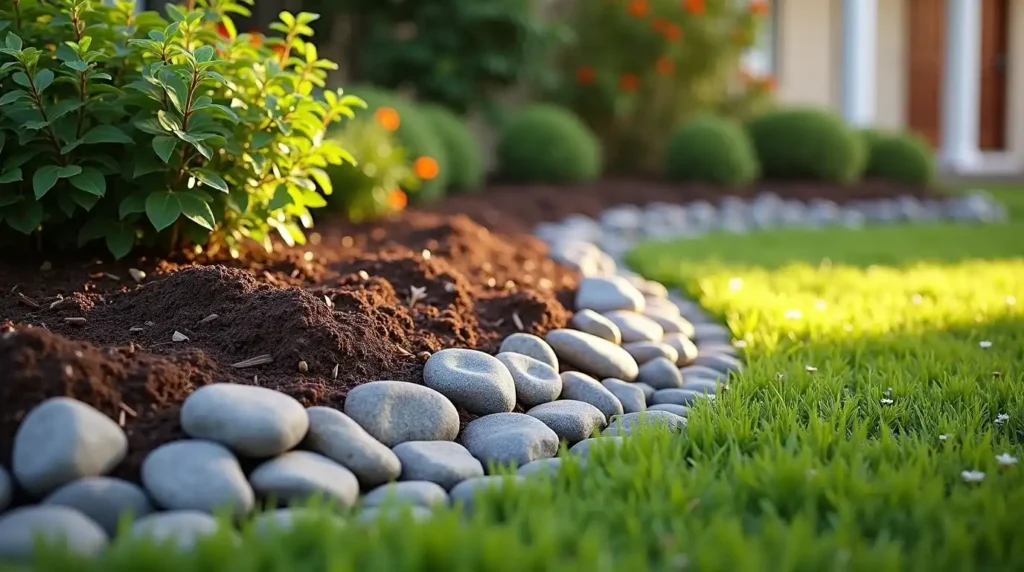
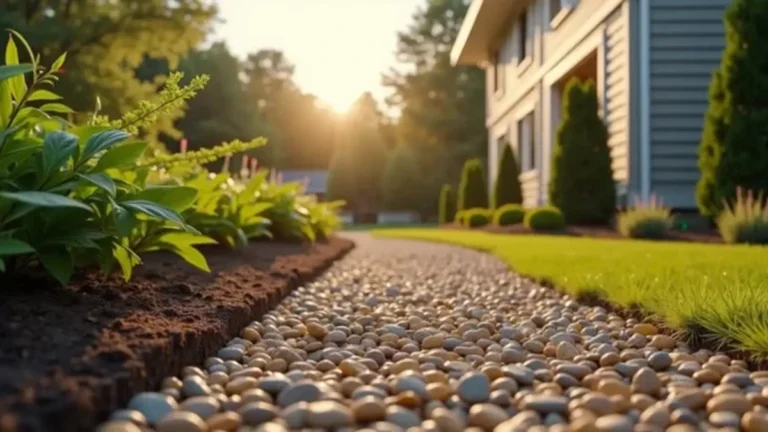
Mulch can fade, blow away, or wash into the lawn. River rock gives a flower bed a cleaner look and often lasts much longer.
Choose medium-sized stones for beds around shrubs. Very small stones may scatter when you use a leaf blower. Large rocks may leave wide gaps where weeds can grow.
Tan, brown, cream, and gray stones work well with many house colors. They also look more natural than bright decorative stone.
Install a firm border before adding the river rock. Steel, brick, concrete, or stone edging can stop the rocks from spreading into the grass.
Leave open space around plant stems and trunks. Do not pile rocks against them. This can trap heat and moisture.
Best for: Established shrub beds where mulch needs frequent replacement.
Main benefit: River rock stays in place longer than loose mulch.
Watch for: Leaves and soil can collect between the stones.
Add a Clean Gravel Bed Along the Foundation
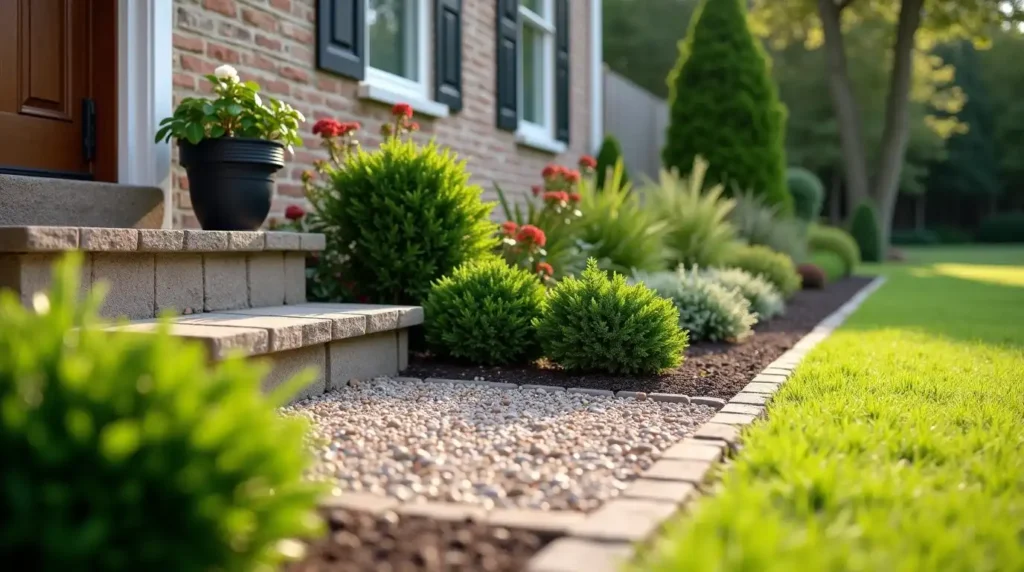
A narrow strip of gravel can clean up the space between your house and lawn. It also creates a simple maintenance path for checking pipes, vents, and outdoor equipment.
First, make sure the soil slopes away from the foundation. Gravel will not fix poor grading. Water can still collect near the house if the soil below it is flat or sloped the wrong way.
Use light gravel if the area receives full sun. Dark rock can become very hot near walls and windows.
Add a few compact plants instead of filling the full strip. Three small evergreen shrubs can create more impact than a long row of crowded plants.
Keep the rock below the bottom edge of the siding. Do not cover weep holes, vents, or drainage openings.
Best for: Narrow foundation beds and areas that are hard to mow.
Main benefit: Gravel creates a neat border with little weekly care.
Watch for: Make sure water continues to move away from the home.
Use One Large Boulder as a Strong Focal Point
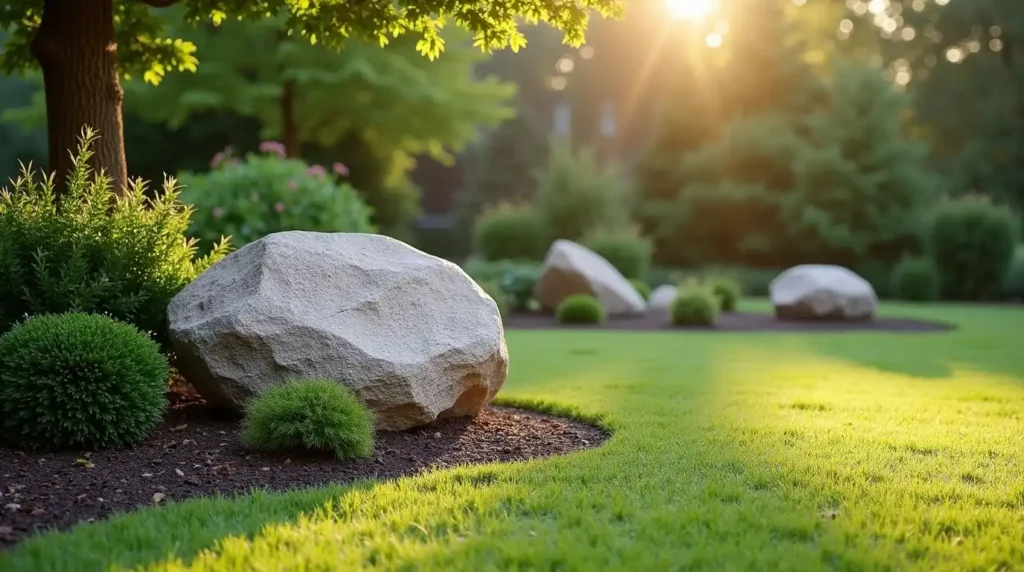
You do not need many decorations to make your yard more interesting. One large boulder can give an empty bed a clear focal point.
Choose a stone that matches the colors already found around your home. A warm brown boulder can work well near brick. Gray stone often fits concrete, blue siding, and modern homes.
A boulder looks more natural when part of it sits below the soil. A stone placed flat on top of the ground may look dropped into the yard.
Place low plants around one side of the boulder. Blue fescue, creeping thyme, sedum, or other local plants can soften its hard edges.
Do not place a large boulder over utility lines or close to access covers. Heavy equipment may be needed to move it.
Best for: Plain beds that need one clear design feature.
Main benefit: One large stone adds interest without making the yard look busy.
Watch for: Delivery and machine placement can add to the total cost.
Build a Dry Creek Bed to Manage Runoff
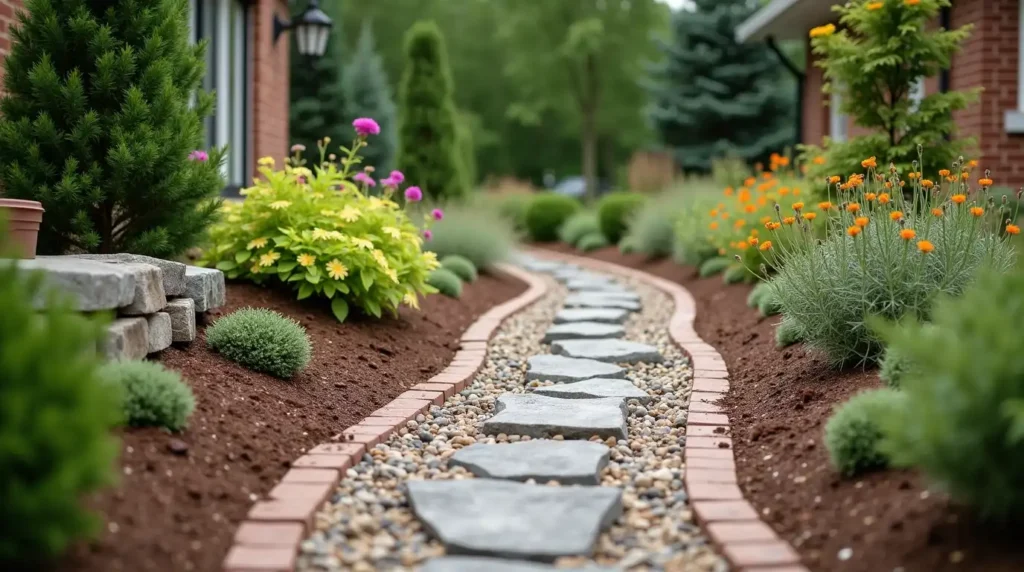
A dry creek bed can turn a drainage problem into an attractive feature.
Start where water already flows through the yard. The creek should follow the natural slope instead of cutting across it.
Use larger rocks along the sides. Place smaller river rocks through the center. Mix a few stone sizes so the creek looks natural.
The channel should lead water to a safe place. Do not send runoff onto a neighbor’s property, public walkway, or building foundation.
You can add moisture-friendly plants near low areas. Use plants that can handle both wet and dry soil.
A decorative dry creek still needs care. Leaves, mud, and weeds can block the water path over time.
Best for: Yards with roof runoff, low spots, or soil erosion.
Main benefit: It guides water while adding shape to the landscape.
Watch for: Major drainage changes may need help from a professional.
Create a Curved Rock-and-Shrub Island
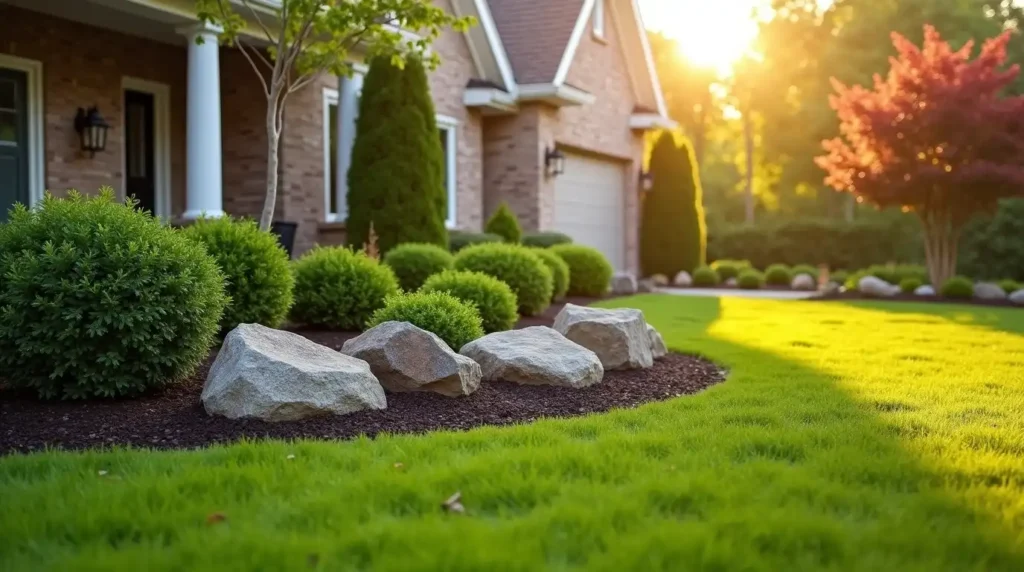
A rock island can break up a wide lawn and add depth to a flat front yard.
Use a garden hose to mark a wide curve. Avoid making several small waves. One smooth curve looks cleaner and is easier to mow around.
Choose one taller plant as the main feature. This could be a small tree, a large shrub, or a tall grass. Add three or five smaller plants around it.
Use one main rock color. Two colors may work when one is used as a small accent. Too many colors can make the bed look messy.
Keep the island far enough from the driveway and walkway. Plants will become wider as they grow.
Best for: Open lawns that feel empty or flat.
Main benefit: A curved island creates depth and breaks up a large grass area.
Watch for: Make the bed wide enough to look planned, not squeezed into the lawn.
Build a Safe Flagstone Path to the Front Door
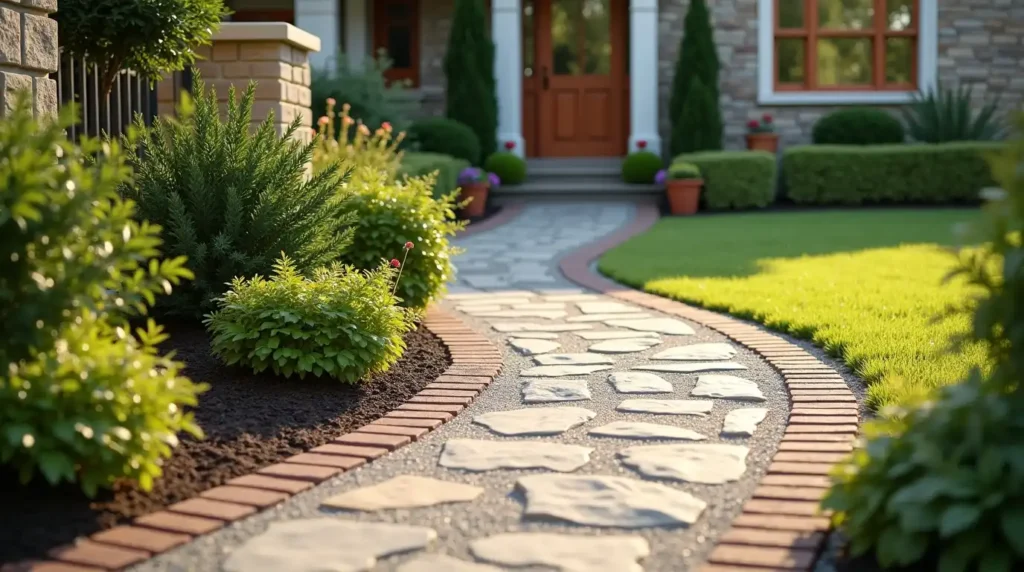
A flagstone path gives guests a clear route from the sidewalk or driveway to your door.
Choose flat stones with a rough surface. Smooth stone can become slippery when wet.
Set each stone on a firm base. The top should sit level with the nearby ground. Raised corners can cause trips.
Keep the gaps between the stones narrow. Wide gaps can be hard for children, older guests, wheelchairs, and people wearing heels.
Fill the joints with compact gravel or a low groundcover that suits your climate. Avoid loose round stones in areas where people walk often.
Add low lights when the path is hard to see at night.
Best for: Homes that lack a clear path from the driveway to the entrance.
Main benefit: It improves both curb appeal and daily access.
Watch for: Poorly set stones may move, sink, or create uneven steps.
Frame the Driveway With a Stone Border
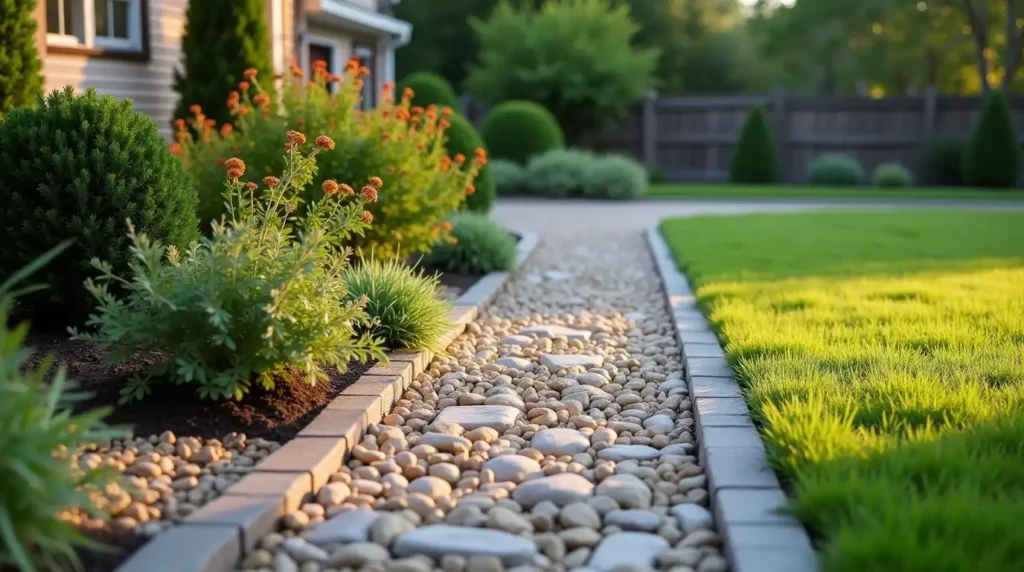
A stone border can stop lawn soil, mulch, and gravel from spreading onto the driveway.
Use low cobbles, brick, concrete edging, or flat natural stone. The border should sit low enough that it does not block car doors.
Measure where tires and bumpers pass before placing the edge. Large vehicles may hang over the driveway more than you expect.
Match the border to another material on the property. For example, use gray cobbles near a concrete drive or warm brick edging near a brick home.
Avoid loose round rock along a steep driveway. Rain and vehicle movement may push it onto the pavement.
Best for: Driveways with weak lawn edges or soil washing onto the surface.
Main benefit: A clear edge makes the driveway and lawn look more finished.
Watch for: Raised borders can become a trip risk or scratch car doors.
Add Curved Rock Edging Around Flower Beds
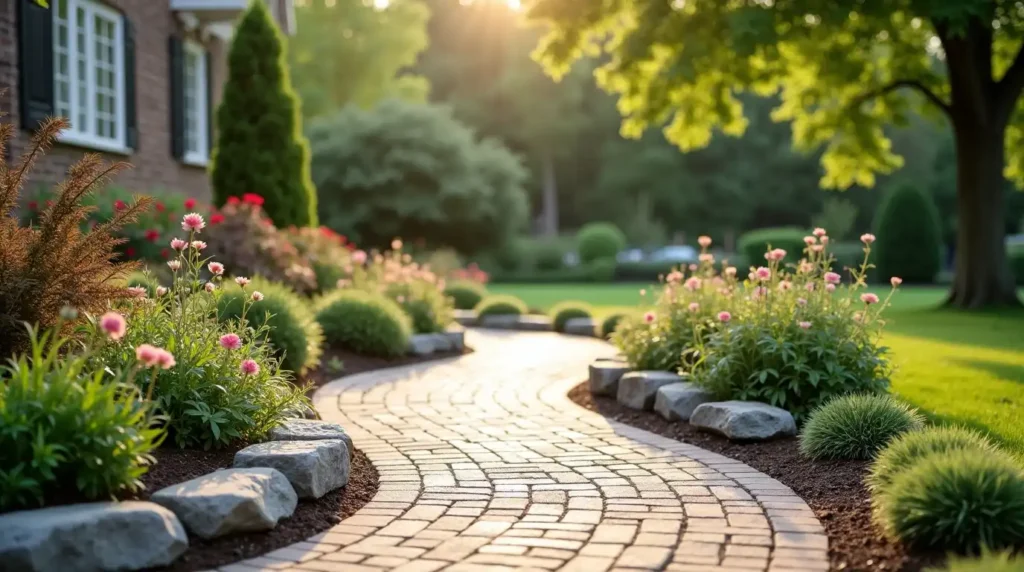
Straight lines work well for formal homes. Curved stone borders can soften the hard lines of a driveway, sidewalk, or house wall.
Mark the shape with a hose before digging. Step back and view it from the street. A curve that looks fine up close may look uneven from a distance.
Use stones with similar sizes. They do not need to match perfectly, but the row should feel balanced.
Set the stones into the soil instead of placing them on top. This helps them stay in place and creates a cleaner edge.
Leave enough space for a mower or string trimmer. Tight corners are hard to maintain.
Best for: Flower beds that need a softer shape and clear edge.
Main benefit: Curved borders make stiff spaces feel more natural.
Watch for: Several tiny curves can make the design look unplanned.
Create a Small Mailbox Rock Garden
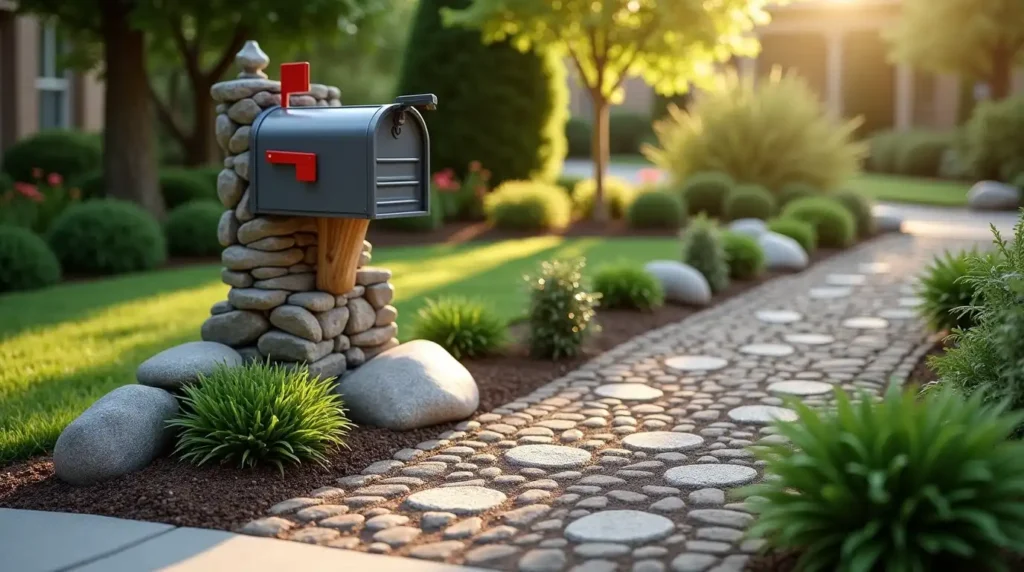
The mailbox area is often one of the first things people see. A small rock garden can turn it into a useful focal point.
Keep plants low so they do not block the road view. Drivers should be able to see cars, bicycles, and people.
Choose plants that can handle heat, road dust, and dry soil. In cold areas, select plants that also tolerate road salt.
Use a firm border to stop gravel from spreading into the street. Leave clear space for mail delivery and repairs.
A simple mix could include pea gravel, one dwarf grass, low sedum, and a flat accent stone.
Best for: Small curbside areas that look bare or collect weeds.
Main benefit: It creates curb appeal without using much space.
Watch for: Avoid tall plants near road corners and driveways.
Add Stepping Stones Across Loose Gravel
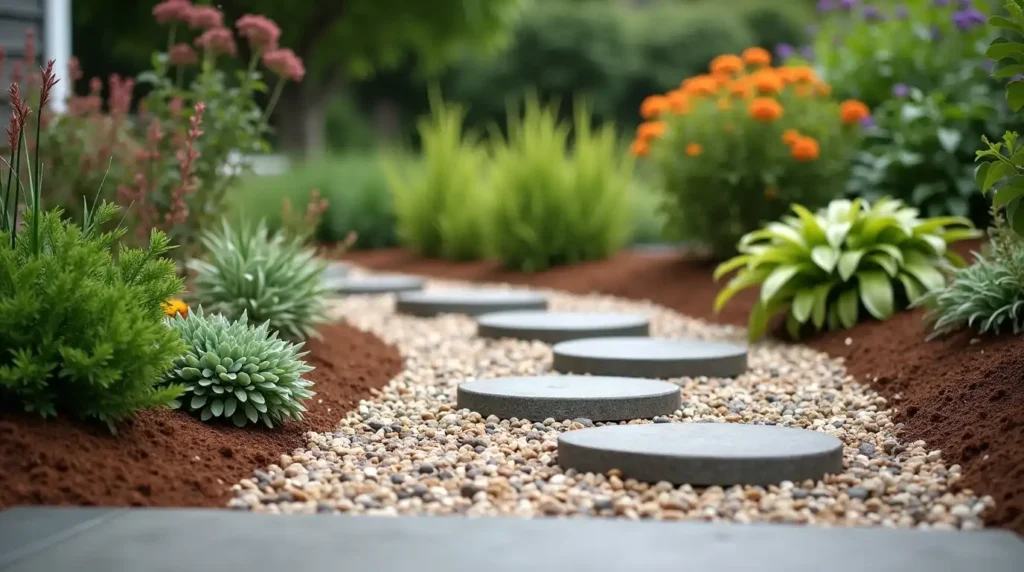
Walking through loose gravel can feel unstable. Stepping stones create a safer route across the bed.
Use large, flat stones with a textured top. Set them into the base so they do not rock when stepped on.
Test the spacing before you finish the bed. Walk across the stones several times. Ask another person to test them too, since stride length can vary.
Use a stone color that stands out from the gravel. Dark slate can look clear against pale pea gravel.
Keep the path wide enough for normal foot traffic. A line of tiny stones may look good but feel awkward to use.
Best for: Gravel beds that people need to cross for access or maintenance.
Main benefit: Stepping stones protect plants and create stable footing.
Watch for: Stones that sit too high can cause trips.
Pair Ornamental Grasses With Gravel
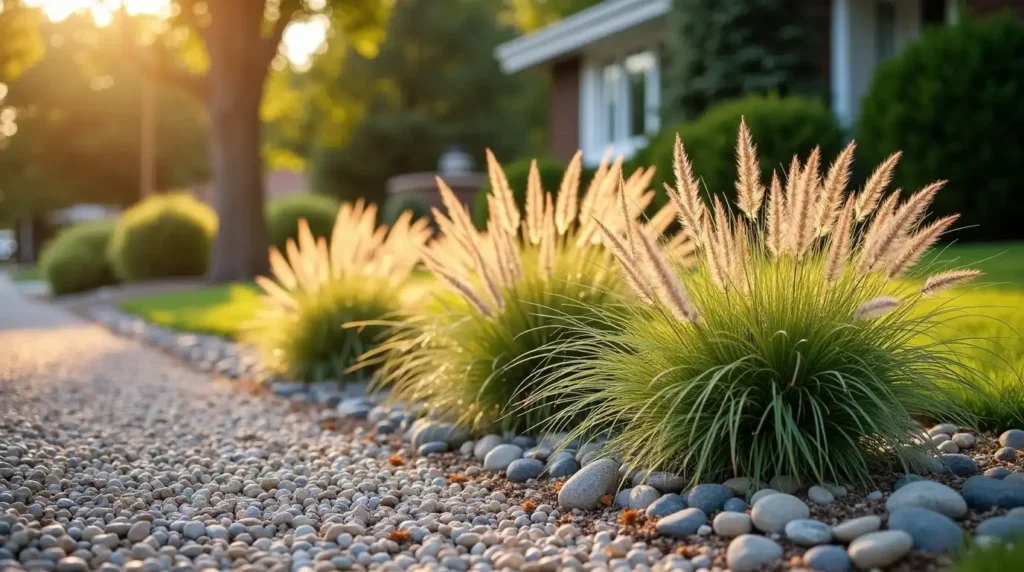
Ornamental grasses bring movement and soft texture to rock landscaping.
Choose clumping grasses instead of fast-spreading types. Clumping plants stay in a clearer shape and are easier to control.
Check the mature size before planting. A grass sold in a small pot may grow several feet wide.
Light gravel can make blue or dark green grass stand out. Dark stone can help bright green or golden grass look stronger.
Place grasses in groups of three or five. Repeated groups often look better than single plants spread across the bed.
Some grasses need to be cut back once a year. Others stay evergreen in mild climates.
Best for: Modern yards and sunny beds that need height and movement.
Main benefit: Grasses soften the hard look of stone.
Watch for: Tall grass near the street may block the driver’s view.
Build a Succulent and Lava Rock Garden
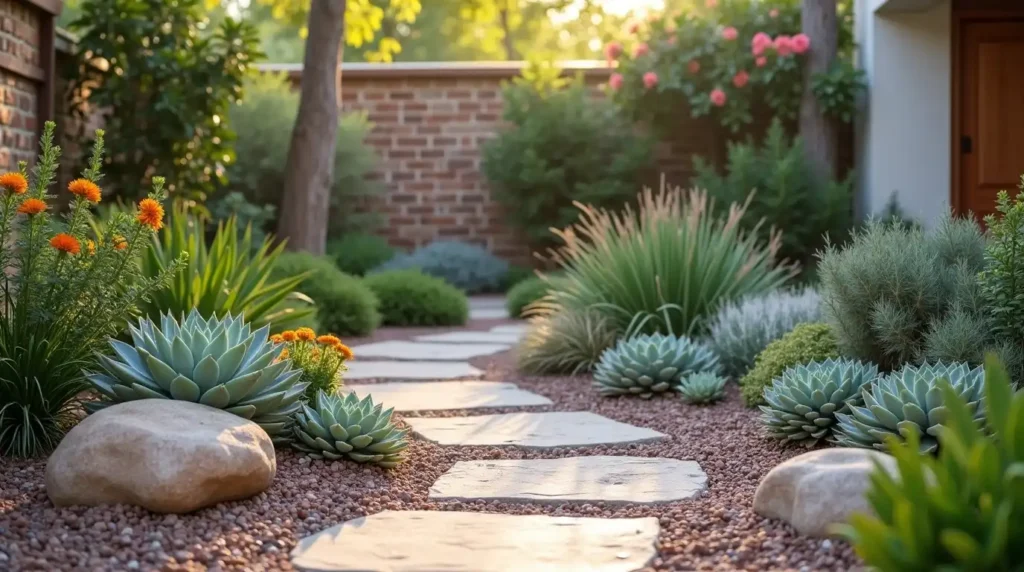
Succulents and lava rock can create a bold design in hot, dry areas.
Choose plants that can survive your winter weather. Some succulents handle frost, while others need warm temperatures all year.
Lava rock is light compared with many other stones. Its rough texture also creates strong contrast with smooth succulent leaves.
Plant agave, sedum, hens and chicks, or other climate-safe choices. Leave enough space between plants for future growth.
Do not cover the crown of each plant with rock. Trapped moisture may cause rot.
This design works best where the soil drains fast. It may fail in areas that stay wet after rain.
Best for: Sunny, dry front yards with fast-draining soil.
Main benefit: Succulents and lava rock need less water than many lawn designs.
Watch for: Some succulents have sharp leaves and should stay away from paths.
Surround Dwarf Evergreens With Neutral River Rock
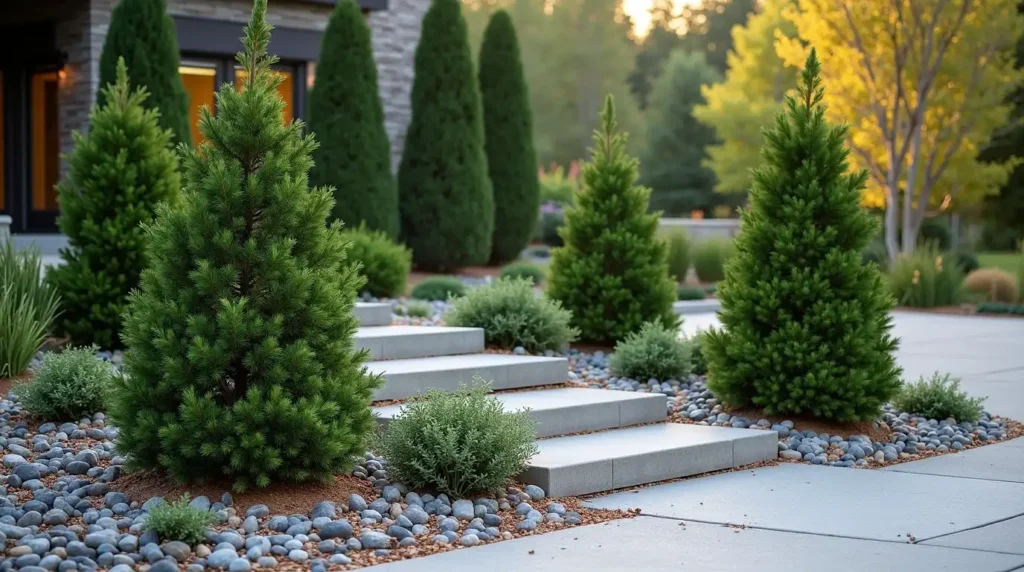
Evergreen shrubs keep their color through much of the year. This makes them useful in front yards that look empty during winter.
Choose dwarf plants that fit the bed at full size. Do not rely on constant trimming to keep large shrubs small.
Use gray, cream, or soft brown river rock. Neutral stone keeps the design calm and lets the plants stand out.
Place drip irrigation before adding the rock. Moving stones later to install watering lines can take extra work.
Keep the river rock several inches away from the base of each shrub. This allows air and water to reach the plant.
Best for: Homeowners who want a clean look in every season.
Main benefit: Evergreens provide structure when flowers are not in bloom.
Watch for: Check the plant label for mature width and height.
Mix Pollinator Plants With Pea Gravel Paths
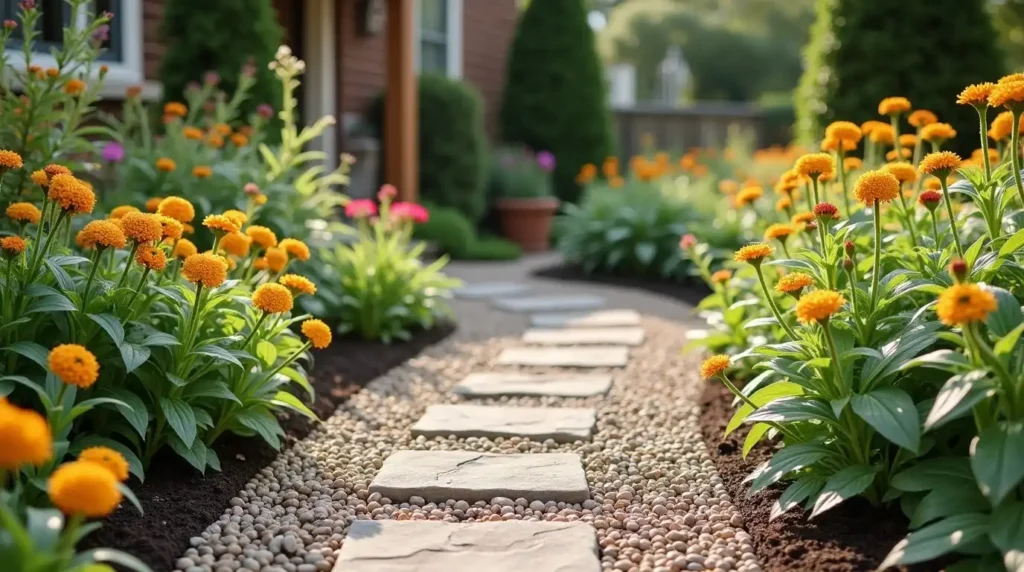
A front yard rock garden can still support bees, butterflies, and other helpful insects.
Plant flowers in groups instead of placing one plant here and another there. Larger groups are easier for pollinators to find.
Choose native or locally recommended plants when possible. They are often better suited to local soil, rain, and wildlife.
Use pea gravel for small paths between planting groups. Keep some areas of open soil for insects that nest in the ground.
Lavender, salvia, coneflower, and yarrow may work in some areas. Your local plant service can suggest better choices for your climate.
Avoid spraying pesticides across the full bed.
Best for: Sunny yards that need more color and wildlife value.
Main benefit: Flowers soften the rock and support local pollinators.
Watch for: Pea gravel can move on steep slopes.
Use Two Rock Colors as a Small Accent
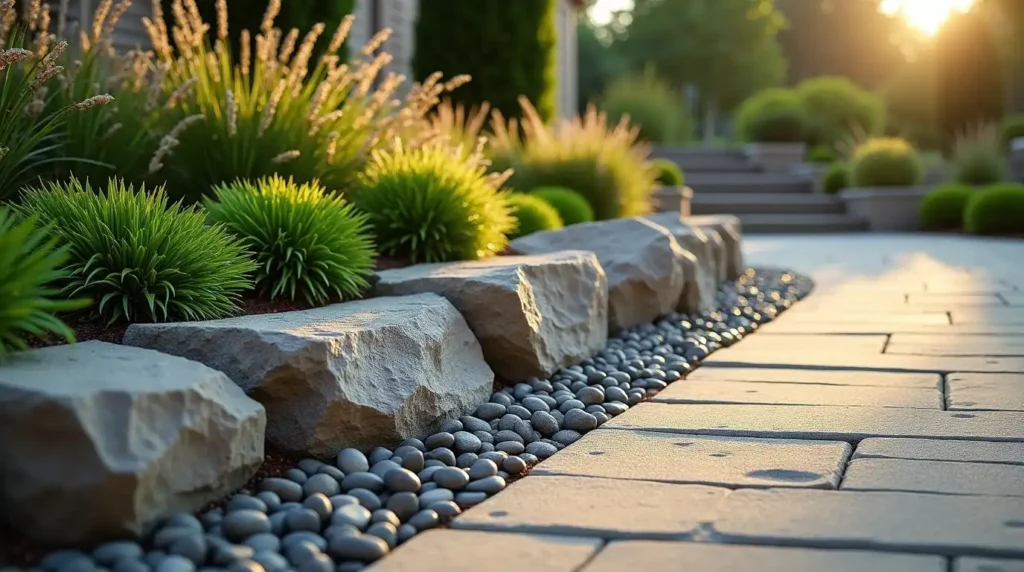
Two rock colors can add contrast, but the pattern should stay simple.
Use one color for most of the bed. Add the second color as a narrow stripe, small circle, or border.
Match one color to your house trim, front door, or roof. This helps the accent feel connected to the home.
Install a firm divider between the colors. Without edging, small stones may mix after rain or foot traffic.
Check the samples when they are wet. A pale gray rock may become nearly black after rain.
Avoid complex shapes and several rock colors. They can make the front yard feel busy.
Best for: Modern homes and small feature beds.
Main benefit: Contrast creates visual interest without adding more plants.
Watch for: Small loose stones will mix unless they are separated.
Fill a Narrow Strip With Gravel and Upright Plants
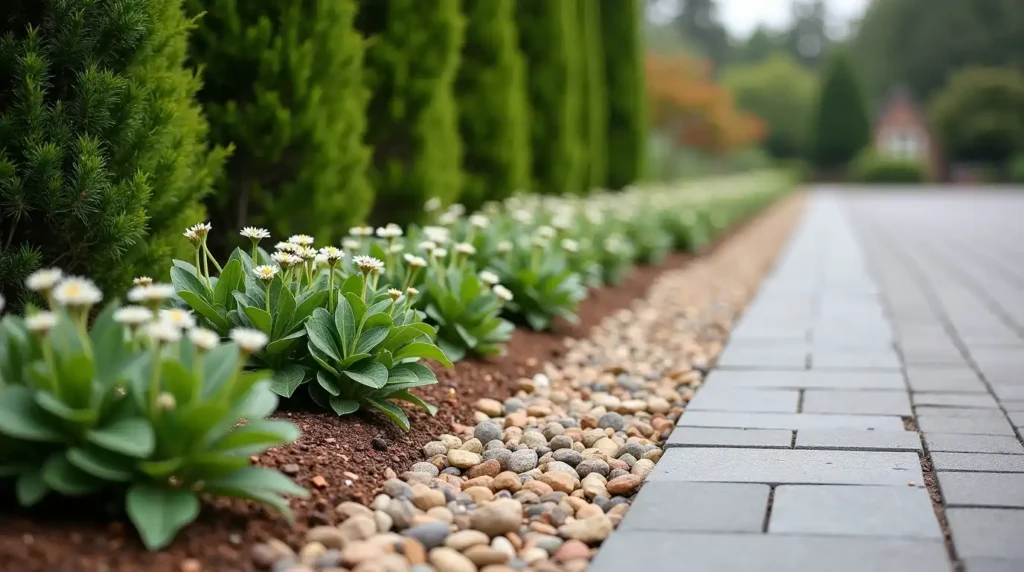
A narrow bed beside a driveway or walkway can be hard to maintain. Gravel and upright plants can make better use of the space.
Choose slim plants that grow up instead of out. Column-shaped shrubs, narrow grasses, and tall perennials can work well.
Leave clear space around meters, vents, taps, and utility boxes. These areas need to stay easy to reach.
Add a few flat stepping stones if you need to enter the bed for maintenance.
Use one gravel color across the strip. A simple material choice can make a tight space feel wider.
Best for: Narrow spaces between the house, lawn, driveway, or sidewalk.
Main benefit: Upright plants add height without blocking paths.
Watch for: Check mature plant width before buying.
Terrace a Sloped Yard With Natural Stone
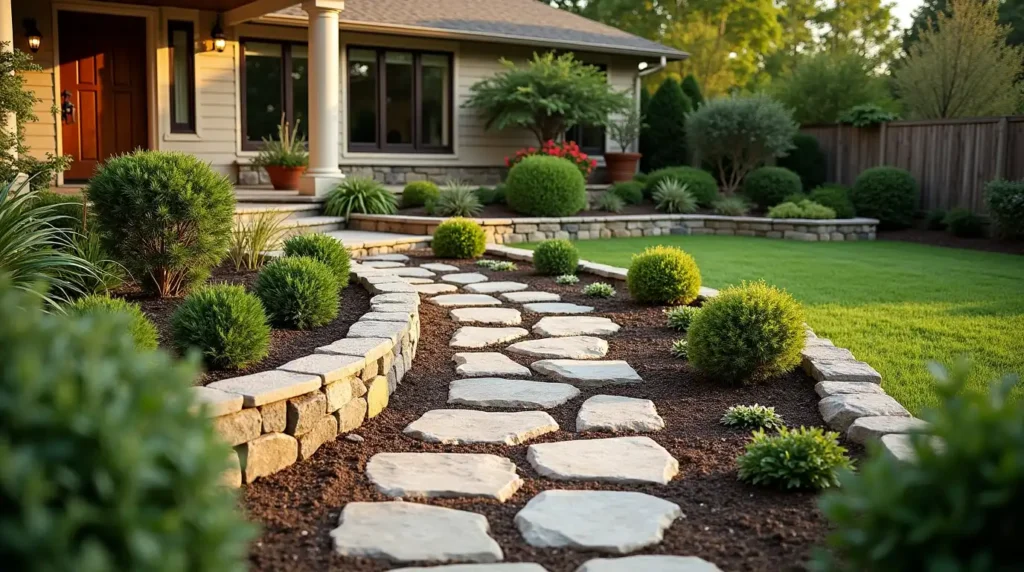
A slope can lose soil during heavy rain. Short stone terraces can slow water and create level planting areas.
Build several low levels instead of one tall wall. Low terraces often look more natural and may be easier to manage.
Use plants with strong roots to help hold the soil. Mix low groundcovers with small shrubs.
Water needs a place to escape from behind the stones. Trapped water can push the wall out of place.
Small decorative terraces may be a DIY project. Tall retaining walls may need engineering, drainage work, permits, or professional installation.
Best for: Sloped front yards with erosion or hard-to-mow grass.
Main benefit: Terraces create usable planting spaces and slow soil loss.
Watch for: Structural walls need proper drainage and support.
Create a Small Rock Garden Near the Porch
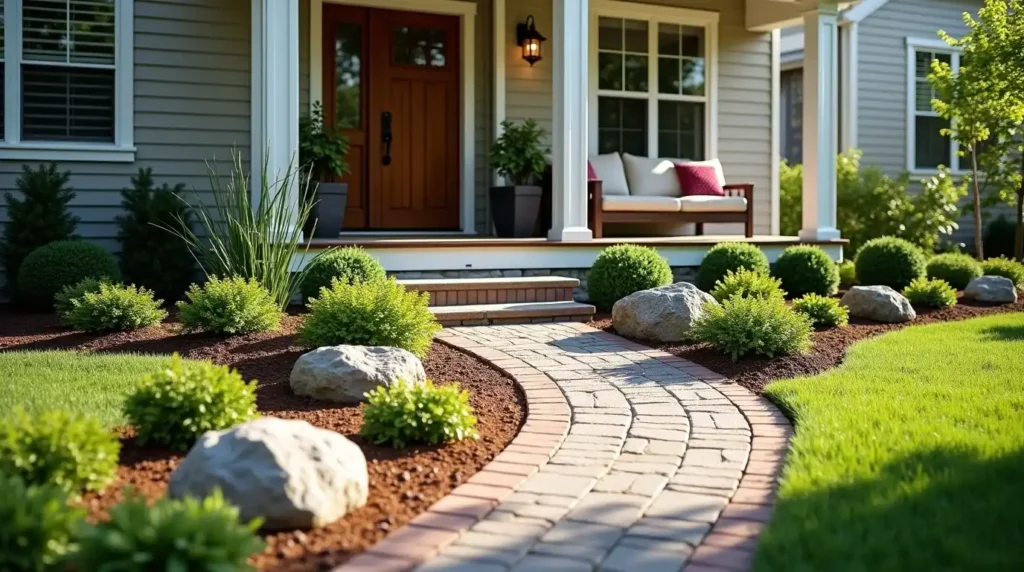
A small porch garden can add charm without taking over the front yard.
Choose one clear focal point. This could be a dwarf evergreen, decorative pot, or sculptural stone.
Use two or three plant types. Too many small plants can make the bed feel crowded.
Mix a few rock sizes, but keep the colors similar. Place one or two larger stones first, then fill around them with smaller gravel.
Low creeping plants can soften the front edge. Taller plants should stay closer to the wall, as long as they do not cover windows or vents.
Best for: Small porch corners and compact front yards.
Main benefit: A small bed adds detail close to the main entrance.
Watch for: Leave space for plants to reach their full size.
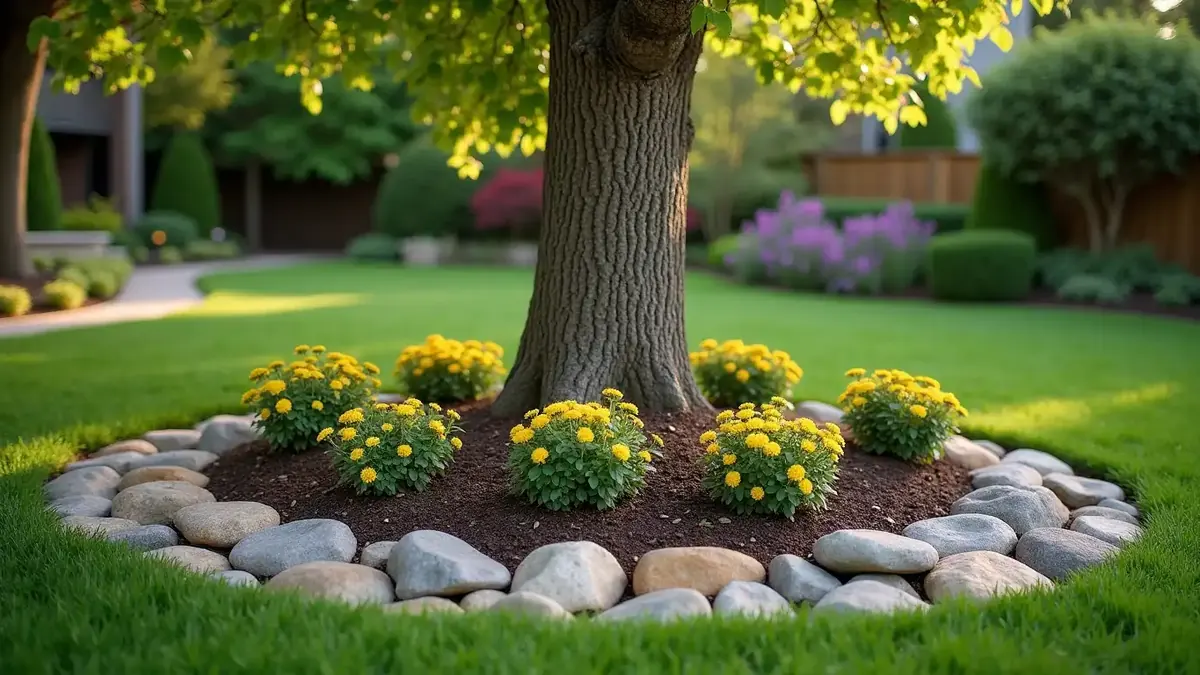
Add a Wide, Shallow Rock Bed Around a Tree
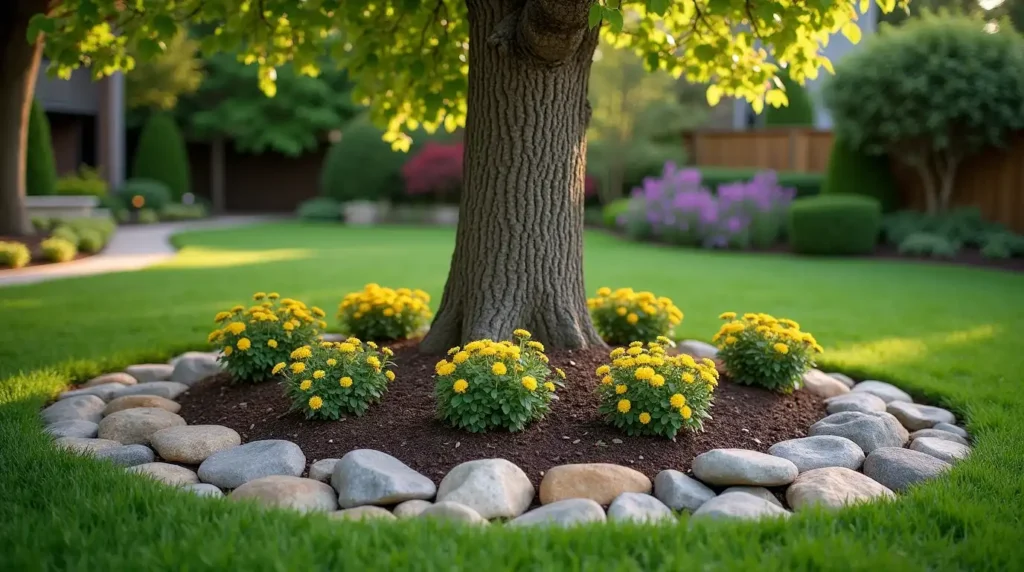
A rock bed can reduce mowing near tree roots, but it must be installed with care.
Keep the tree’s root flare visible. This is the wider area where the trunk meets the roots.
Do not pile stones against the trunk. Deep layers can trap heat and moisture.
Create a wide bed with a shallow layer of rock. Keep hard edging away from large surface roots.
You can add low shade plants near the outer part of the bed. Do not dig deeply around the main roots.
A certified tree expert can help when the roots are damaged, exposed, or close to a planned wall.
Best for: Trees with exposed roots or grass that is hard to mow.
Main benefit: The bed protects roots from mower damage.
Watch for: A raised ring of rock around the trunk can harm the tree.
How to Install Rock Landscaping That Stays Neat
Good preparation can save hours of future work.
1. Mark the Bed
Use a garden hose, string, or landscape paint to mark the shape. View it from the street before digging.
2. Remove Grass and Weeds
Remove all unwanted plants and roots. Weeds left below the rock may return through gaps.
3. Fix Drainage Problems
Make sure the soil carries water away from the house. Fill low spots and correct weak slopes before adding stone.
4. Install the Border
Set metal, brick, pavers, or stone edging around the bed. A strong edge keeps rock out of the lawn.
5. Decide Whether You Need Fabric
Landscape fabric may slow weeds in some gravel beds. It does not stop weeds forever.
Dust, leaves, and soil will collect on top of the fabric. New weeds can then grow in that material.
Avoid covering important tree roots with thick plastic or fabric. Roots need access to air and water.
6. Add Plants and Watering Lines
Place all plants before spreading rock. Check the layout from several angles.
Install drip lines at this stage. It is much easier than moving rock later.
7. Spread the Rock
Move the rock in small loads. Spread it evenly with a rake.
Do not create deep piles around plants, walls, or tree trunks.
8. Test the Finished Area
Run water through the bed or check it after rain. Look for standing water, moving stones, and blocked drains.
What Rock Landscaping Costs
Rock prices change by location, stone type, delivery distance, and order size.
Bagged stone works well for small beds. It is easier to move, but the price per pound is often higher.
Bulk stone may cost less for a large project. However, you need a safe place for the supplier to drop it. You also need a wheelbarrow route from the pile to the yard.
Remember to budget for:
- Rock or gravel
- Delivery
- Edging
- Plants
- Soil improvement
- Drainage work
- Landscape fabric, when needed
- Tools
- Labor
- Boulder placement
Ask at least two local suppliers for prices. Confirm whether the quote is based on weight or volume.
How to Keep a Rock Front Yard Clean
Rock landscaping needs less care than some lawn or mulch designs. It still needs regular cleanup.
Use a leaf blower on a low setting. A strong setting can throw small stones into the lawn.
Pull weeds while they are young. Mature weeds may spread seeds across the full bed.
Rake gravel when it moves into low spots. Check borders after heavy rain.
Trim plants before they cover paths, lights, windows, or house numbers.
You may also need to wash pale stones near a road or dusty driveway.
10 Rock Landscaping Mistakes to Avoid
1. Using Too Many Rock Colors
Choose one main color and one small accent.
2. Covering the Whole Yard With Stone
Add plants, paths, and open areas so the yard does not look flat.
3. Piling Rock Against the House
Keep siding, vents, and drainage openings clear.
4. Covering Tree Trunks
Leave the root flare open and visible.
5. Skipping the Border
Without edging, gravel can spread into grass and paths.
6. Using Small Gravel on a Steep Slope
Loose stone may wash downhill during heavy rain.
7. Ignoring Heat
Dark rocks can become very hot in full sun.
8. Buying Plants Before Checking Their Mature Size
Small nursery plants may become much wider than expected.
9. Ordering Without Measuring
Always measure the bed and confirm the needed depth.
10. Treating Fabric as a Permanent Weed Fix
Weeds can grow in dust and soil that collect above the fabric.
Choose a Rock Design That Fits Your Real Yard
The best front yard design starts with the problems you need to fix. You may want to stop mulch from washing away, protect tree roots, improve drainage, or reduce mowing.
Start with one area. Measure it and watch how sun and rain affect the space. Then compare rock samples beside your house.
Choose one main stone color and add plants that suit your climate. Use clear borders to keep everything in place.
These rock landscaping ideas for front yard spaces can help you build a cleaner and more useful yard without adding hours of weekly work. Pick two or three ideas that fit your space, draw a simple plan, and price the materials before you begin.