17 Rock Landscaping Ideas Around Pool Areas
Your pool may be the best part of your backyard. But bare soil, patchy grass, and messy garden beds can make the space feel unfinished.
Grass around a pool can also create more work. Wet feet carry mud onto the deck. Mowing sends grass clippings into the water. Sprinklers may leave marks on the deck or waste water.
The right rock landscaping ideas around pool areas can solve many of these problems. Rocks can improve drainage, reduce lawn care, and give your pool area a cleaner look.
But you need to choose the right materials. Loose stones can spread across walkways. Dark rocks can get hot in full sun. Sharp gravel may hurt bare feet.
This guide covers 17 practical ideas for large, small, modern, and natural pool areas. You will also learn how to control loose stones, choose safe surfaces, and avoid common mistakes.
How to Plan Safe Rock Landscaping Around a Pool
Rock landscaping can lower yard work. But the wrong material can create heat, drainage, and walking problems.
Start by looking at how people use the space. Mark the paths between the house, pool, seating area, gate, and outdoor shower. These busy areas need firm and slip-resistant surfaces.
Keep loose gravel away from the immediate pool edge. Children, pets, and adults can kick small stones into the water. A strip of concrete, pavers, or solid coping can create a useful barrier.
You should also think about heat. Dark rocks may become uncomfortable in strong sunlight. Light stones often stay cooler, but bright white rock can cause glare and show dirt.
Place a few rock samples outside before ordering a full load. Check them during the hottest part of the day. Walk on them with bare feet and wet shoes.
Drainage matters too. Decorative stone will not fix an area where water already collects. The ground may need grading or a drain before you add fabric and rocks.
Before buying stone, ask:
- Does it become too hot?
- Can it roll underfoot?
- Will it wash onto the pool deck?
- Does it match the deck and house?
- Can you buy the same color again later?
A small test area can help you avoid a costly mistake.
4 Rock Landscaping Ideas Around Pool Borders
A rock border is one of the easiest ways to make a pool area look finished. It can separate the deck from plants, lawn, or bare soil without a major rebuild.
1. Add a Rounded River Rock Drainage Strip
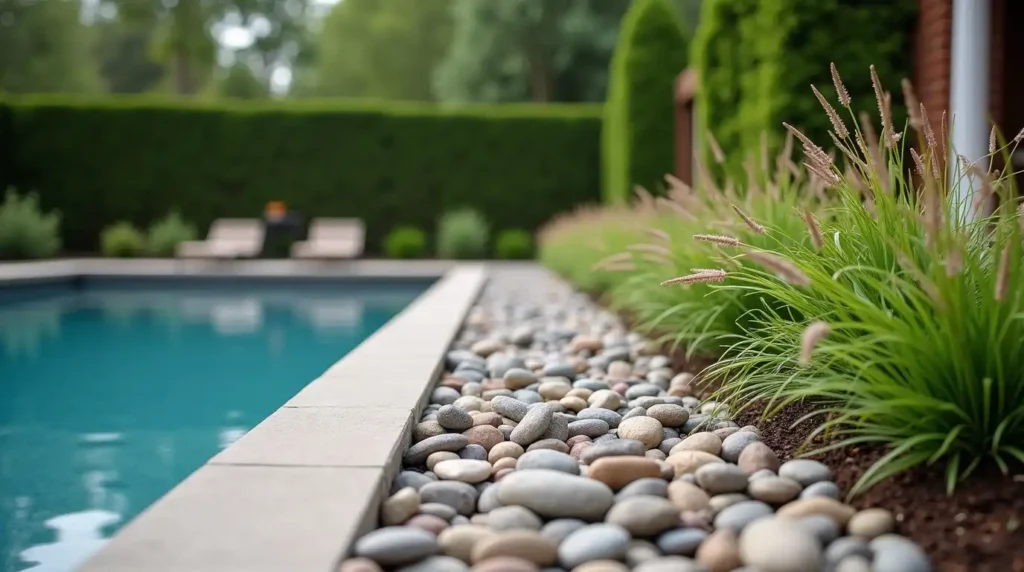
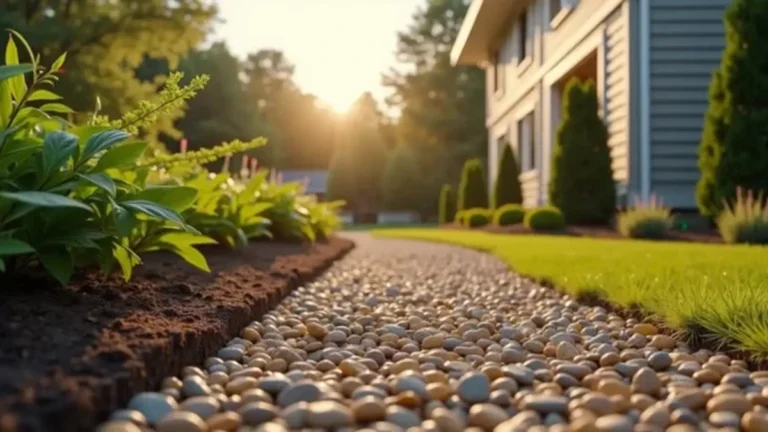
A narrow river rock strip can create a smooth break between the pool deck and nearby garden beds.
Use rounded stones in areas where you may need to reach plants or drains. Smooth river rock is easier to handle than sharp crushed stone.
This idea works well beside curved pools because the stones can follow soft shapes. It also fits natural yards with trees, grasses, and informal planting beds.
Place firm edging on both sides of the strip. Metal, concrete, brick, or larger stones can stop the smaller rocks from spreading.
A river rock bed may help water move through the surface. Still, it needs a proper outlet. Do not let the bed send water back toward the pool or house.
Best for: Curved pools, natural designs, and low areas near planting beds.
Watch out: Rounded stones can move underfoot. Do not use them as the main walking surface.
Create a Two-Tone Rock Border
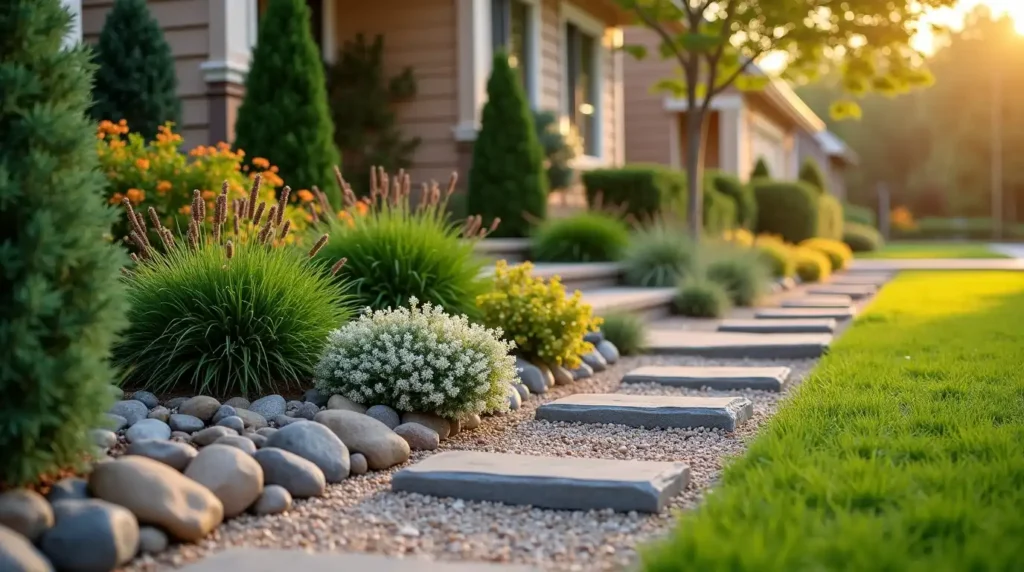
A two-tone border adds contrast without needing more plants.
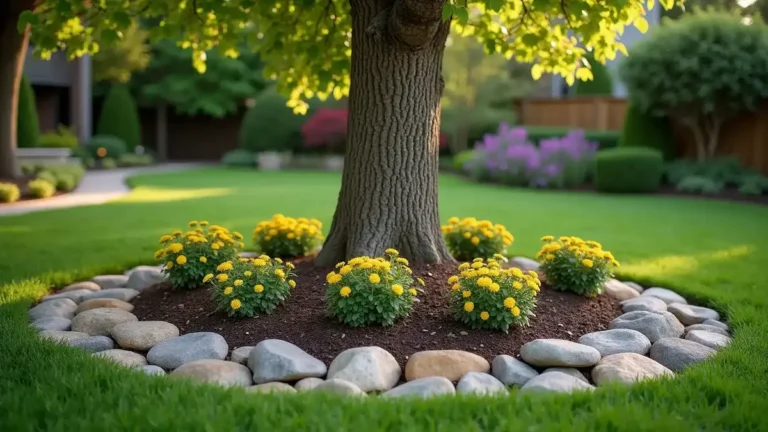
Choose one rock color for the main bed. Add a second color as a narrow line around the edge or through the center.
For example, you could use pale gravel with a thin band of dark lava rock. You could also pair tan stone with gray river rock.
Match one color to your pool deck. Match the other to your house, fence, or outdoor furniture. This simple link helps the yard feel connected.
Keep the pattern simple. Too many curves, colors, and stone sizes can make a small pool area look crowded.
Best for: Modern yards, plain pool decks, and areas that need more visual interest.
Watch out: White stones show soil and fallen leaves. Dark stones may become hot in direct sun.
Fill Empty Corners With Boulder Groups
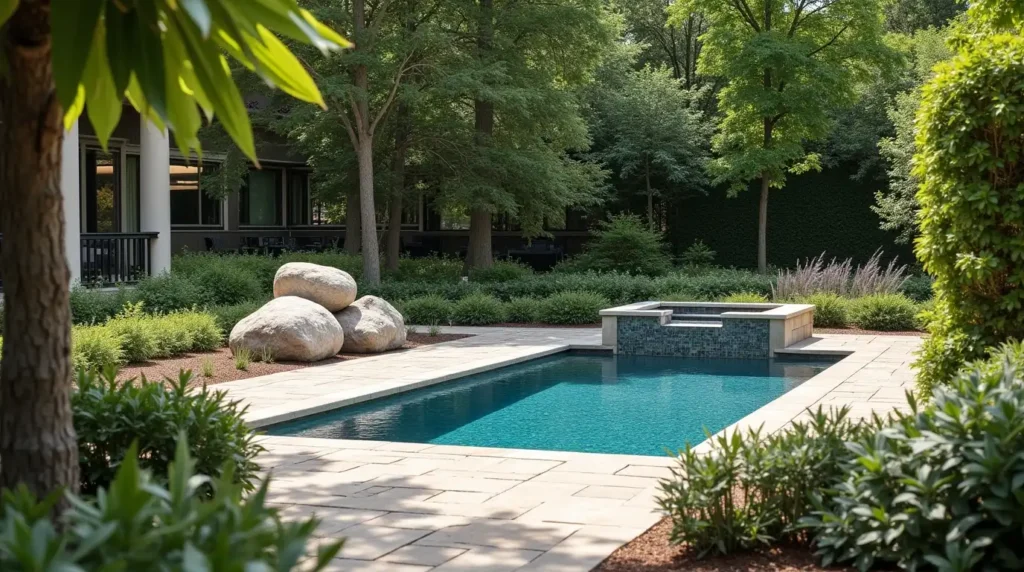
A single boulder can look lost beside a large pool. A group of three often looks more natural.
Choose boulders in different sizes. Place the largest one toward the back. Set the smaller stones slightly forward and to the side.
Partly bury each boulder. A stone that sits flat on top of the soil may look added at the last minute. A buried base makes it feel like part of the land.
Add low plants around the group. Small grasses, ground covers, or flowering plants can soften the hard edges.
Repeat the same stone color in another part of the yard. You might use matching rocks beside a path or near a raised planter.
Best for: Large yards, sloped sites, and empty corners that need height.
Watch out: Large boulders are heavy. Use professional help if safe placement requires machinery.
Use Steel Edging With Decorative Gravel
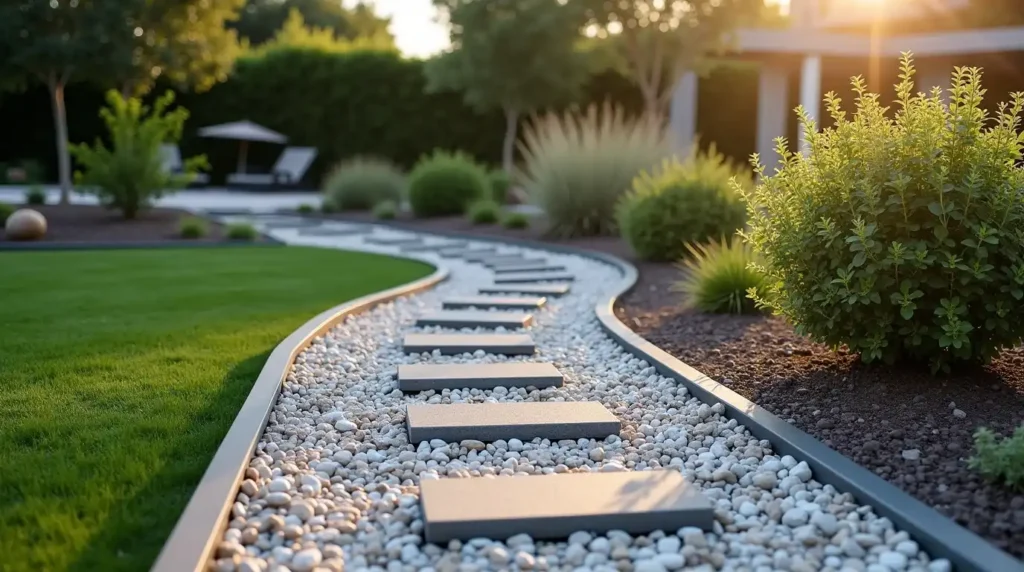
Steel edging creates clean lines around gravel beds. It works well with square pools, straight paths, and modern homes.
Use it to separate gravel from lawn, mulch, or concrete. The edge keeps the materials in place and makes trimming easier.
Set the top close to ground level. A raised metal edge can become a trip hazard or cut bare feet.
Choose one simple gravel color. Gray, tan, or soft brown often works better than a mix of many bright shades.
This design also helps define narrow strips beside a fence or pool equipment area.
Best for: Modern pools, small yards, and straight garden beds.
Watch out: Check the edging after heavy rain. Soil movement can push sections out of place.
4 Rock and Paver Ideas for Safer Pool Paths
Loose stone works well inside garden beds. It is less useful on paths where people walk with wet feet.
These four ideas give you the look of stone with a firmer surface.
Build a Flagstone Stepping Path
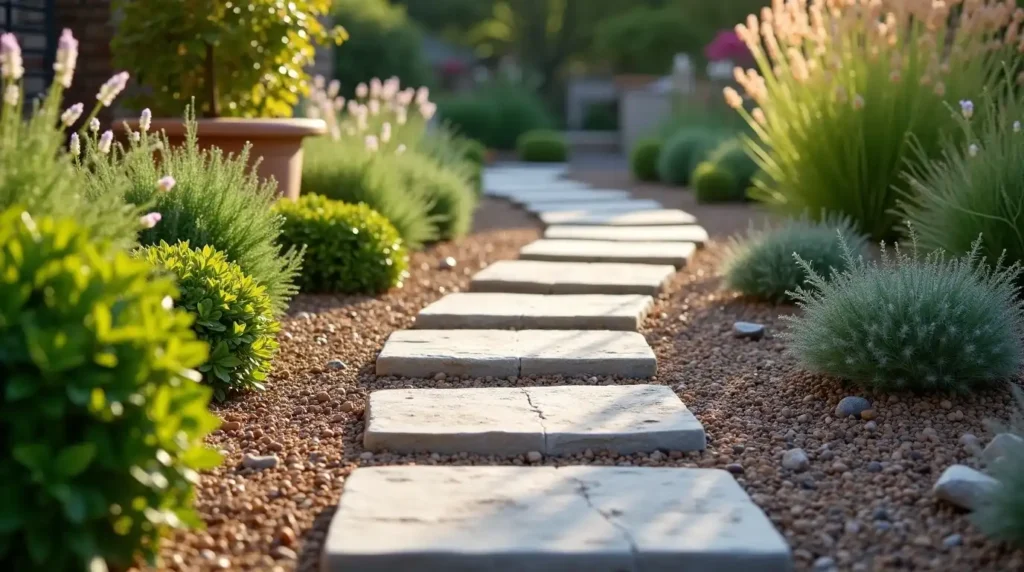
A flagstone path can connect the pool to the house, garden gate, or outdoor shower.
Choose flat stones with a rough surface. Polished stone may become slippery when wet.
Place each stone at a comfortable walking distance. Test the spacing before setting the stones into the base.
You can fill the gaps with compacted gravel. Low-growing plants may also work if they suit your climate and do not drop much debris.
Keep the stones level. Uneven pieces can catch toes and collect water.
Best for: Natural pools, cottage-style yards, and curved garden paths.
Watch out: Thin flagstone may crack if the base is weak or uneven.
Pair Large Pavers With Decorative Gravel
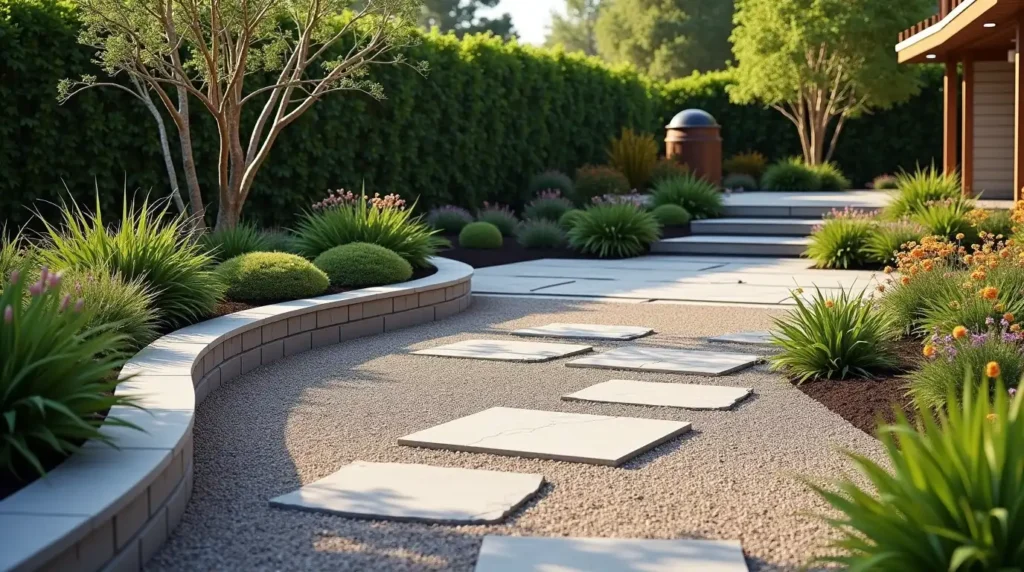
Large pavers and gravel create a clean, modern look.
Set square or rectangular pavers over a firm, compacted base. Fill the gaps with gravel that matches the pool deck or house.
Use this pattern beside the pool instead of directly at the water’s edge. The pavers give people a firm place to step, while the gravel adds texture.
You can extend the pattern into a small seating area. Place chair and table legs on the pavers so they stay stable.
Repeat the lines of the pool or house. Straight patterns often look best beside a rectangular pool.
Best for: Modern yards, small patios, and narrow side spaces.
Watch out: Loose gravel between wide gaps may shift. Use a shallow layer over a stable base.
Add a Pebble-Floor Outdoor Shower
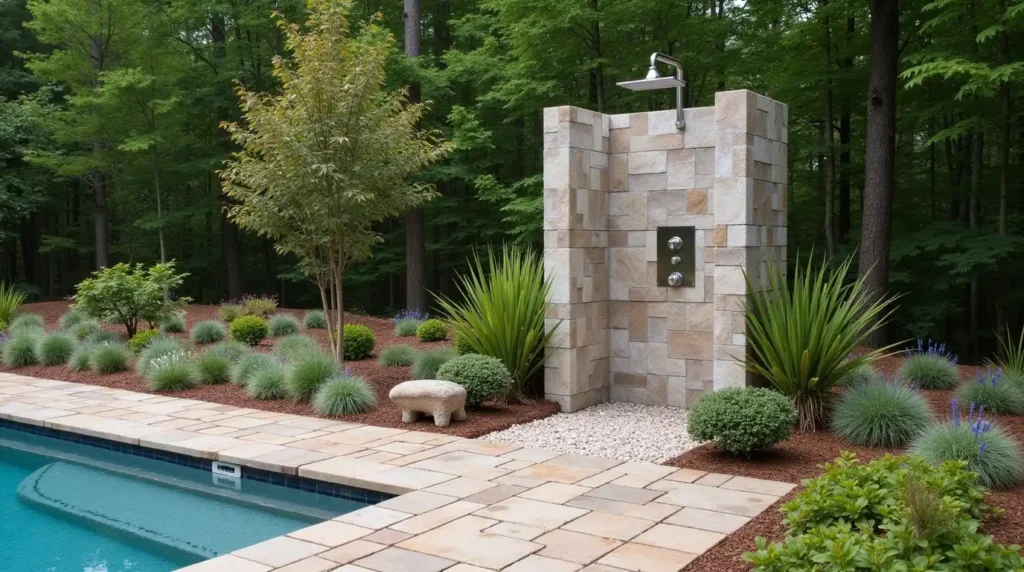
A poolside shower helps keep dirt, grass, and sunscreen out of the pool.
Smooth pebbles can create a comfortable shower floor. They also give the area a natural spa-like look without heavy decoration.
The base below the pebbles is more important than the top layer. Water needs to drain away without creating mud or standing water.
Add a solid border around the floor. This stops the stones from spreading into nearby paths.
A wood or slatted privacy screen can make the shower feel more private. Choose a screen that can handle regular moisture.
Best for: Pools near the house, beach-style yards, and warm climates.
Watch out: Soap and body products may affect nearby plants or drainage rules. Check local needs before installation.
Create a Gravel Lounge Nook Away From the Pool
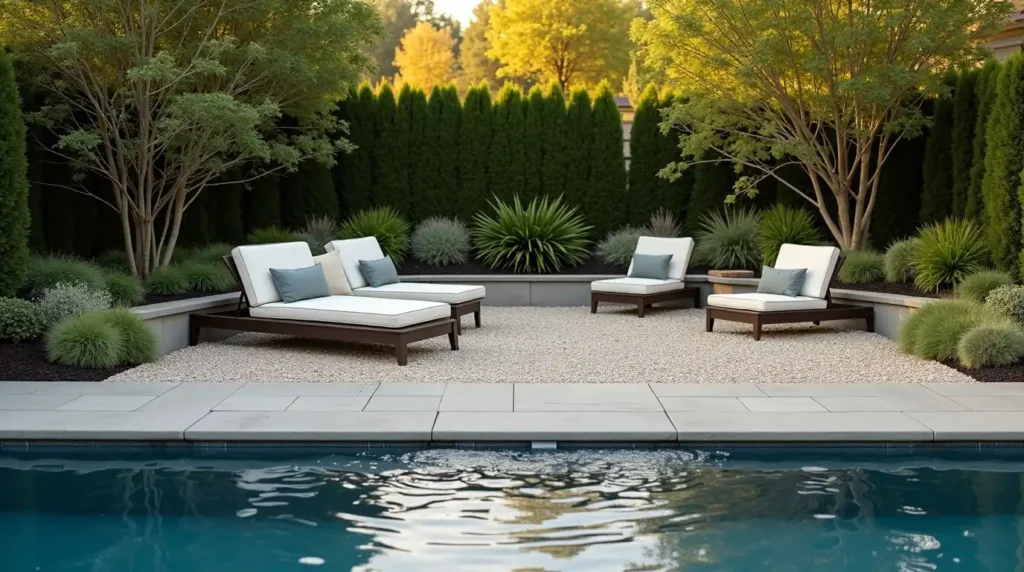
A gravel lounge area can add seating without the cost of a full concrete patio.
Place it several steps away from the pool edge. This lowers the chance of stones reaching the water.
Use compacted gravel rather than a deep, loose layer. Add large pavers below chairs, benches, and tables.
Use strong edging around the space. A defined shape will look planned and help control the gravel.
Add an umbrella, two chairs, and a small table. You do not need much furniture to make the area useful.
Best for: Budget projects, unused corners, and small backyard pools.
Watch out: Lightweight gravel can move under chair legs and get kicked onto nearby surfaces.
4 Ways to Mix Rocks, Plants, and Better Drainage
A good pool landscape should do more than cover bare ground. It should control water, soften hard surfaces, and add color without creating a mess.
Build a Decorative Dry Creek Bed
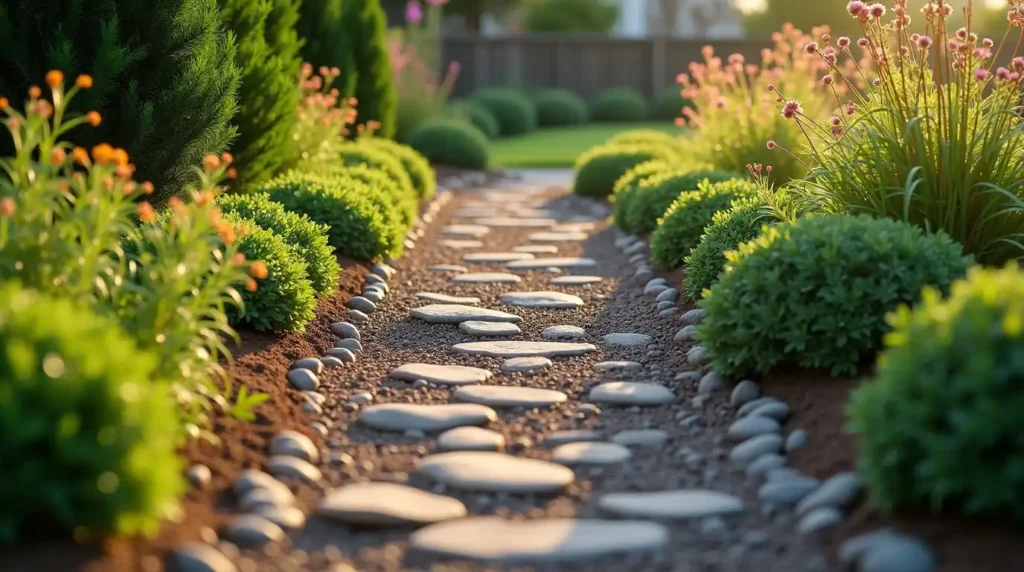
A dry creek bed can turn a drainage path into a useful landscape feature.
Start by following the natural slope of the yard. The bed should guide rainwater to a safe outlet.
Place larger stones along the sides. Use smaller river rock through the center. Add a few medium stones to make the creek look less even.
Create gentle curves instead of one straight line. Natural water paths often bend around high spots and plant roots.
Add plants that can handle short periods of moisture. Keep them outside the main water channel.
This idea works well where rainwater flows from a higher lawn or roof drain.
Best for: Sloped yards, drainage trouble, and natural pool designs.
Watch out: Do not direct water toward the pool base, house, or neighboring yard.
Make a Poolside Succulent Rock Garden
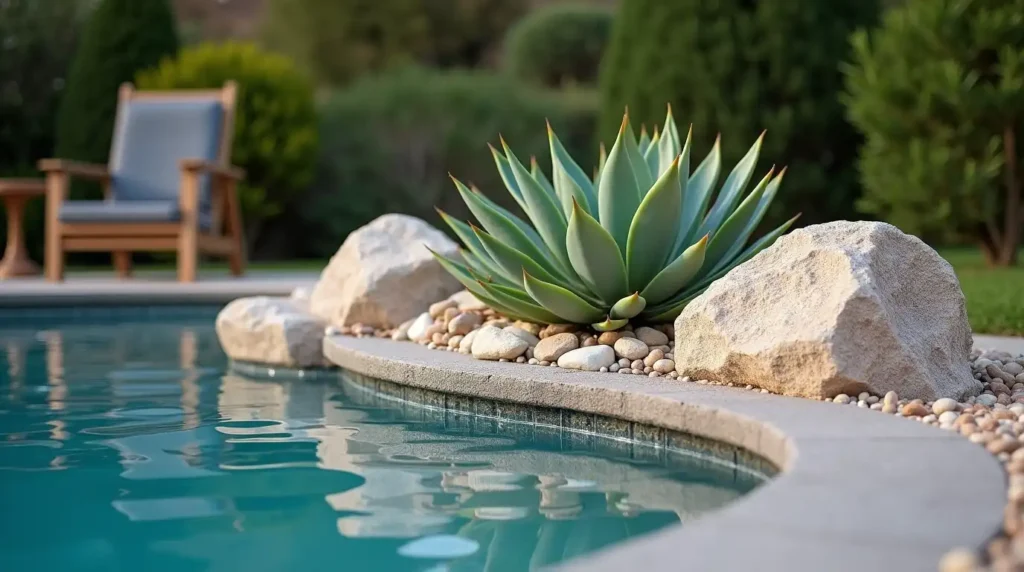
Succulents and pale stone can create a simple, low-water planting bed.
Choose plants that suit your weather. A plant that does well in a hot, dry area may fail in a cold or wet climate.
Mix different shapes. Use one upright plant, a few rounded plants, and low spreading plants near the front.
Leave open space between them. Succulents often look better when each plant has room to stand out.
Use drip lines near the roots. Overhead sprinklers can wet the deck and leave marks on nearby surfaces.
Avoid sharp cactus spines near paths and seating areas. Place thorny plants farther back where people cannot brush against them.
Best for: Warm climates, sunny yards, and modern pool landscaping.
Watch out: Some succulents can rot in soil that stays wet.
Add Small Pockets of Ornamental Grass
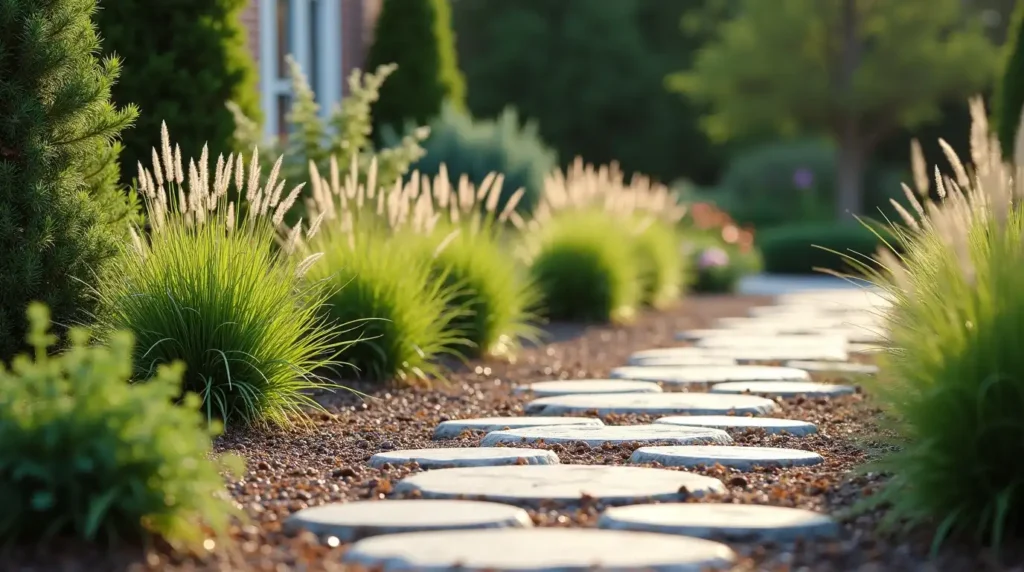
Ornamental grasses can soften large areas of stone. Their leaves also add movement when the wind blows.
Plant them in small groups instead of one long row. Groups of three or five often look more natural.
Choose grasses that stay at a useful size. Large types can block the view of the pool or cover equipment access.
Look for low-litter plants. Some grasses drop dry blades and seed heads into the water.
Combine fine grass leaves with large rocks. The contrast makes both materials stand out.
Best for: Modern yards, natural borders, and spaces that need soft texture.
Watch out: Keep tall grasses away from pool lights, drains, and equipment doors.
Build a Raised Stone Planter
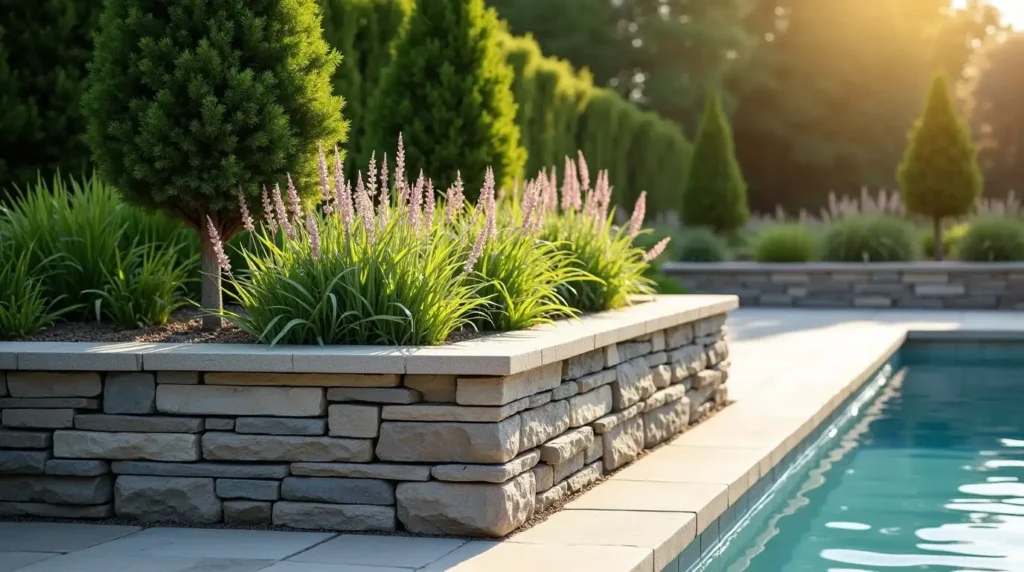
A raised planter gives plants better soil and creates a clear border around the pool area.
Use stacked stone, concrete blocks, or stone facing that matches the deck. A matching material keeps the planter from looking separate from the yard.
Raised beds work well in places with poor soil or drainage. They can also hide a slope or create a low privacy barrier.
Add upright plants in the back. Use smaller plants or soft trailing plants near the front edge.
Leave enough space behind the planter for maintenance. Pool pumps, filters, valves, and drains must remain easy to reach.
Best for: Sloped yards, poor soil, and pools that need more structure.
Watch out: Tall walls and heavy stone may need a proper base and professional installation.
3 Stone Features That Add Privacy and Style
A pool can feel exposed even when the deck looks complete. Stone features can block views, soften noise, and give the yard a stronger focal point.
Install a Gabion Privacy Wall
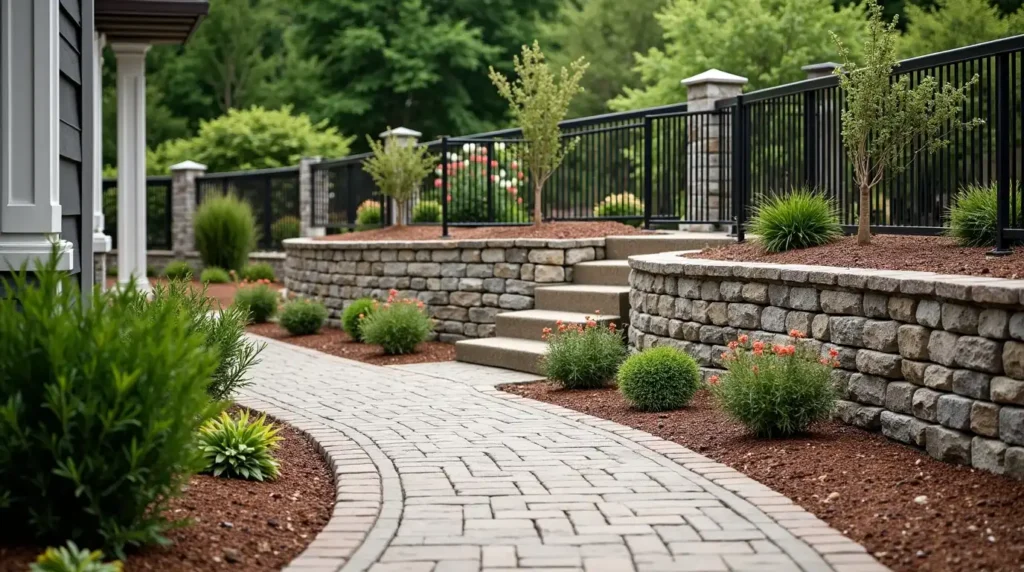
A gabion wall uses wire cages filled with stone. It can create privacy while adding a bold, modern look.
Use the wall behind seating or beside pool equipment. You can also combine short gabion sections with wood panels or plants.
Fill the cages with local stone when possible. Local materials often blend better with nearby homes and yards.
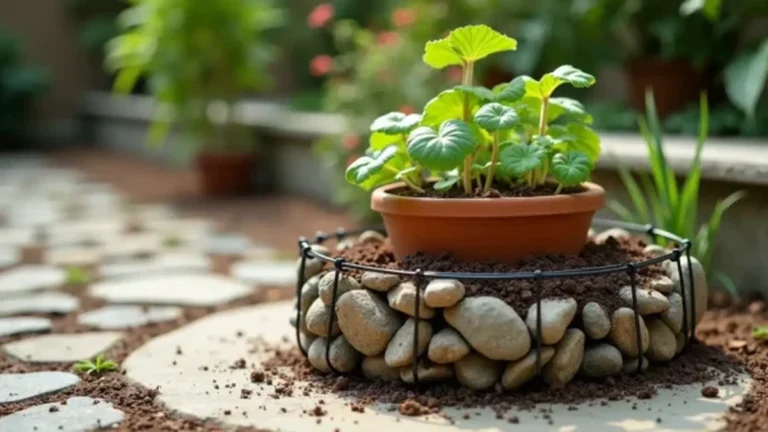
Repeat the same stone in a smaller border or garden bed. This keeps the wall connected to the rest of the space.
Best for: Modern homes, sloped lots, and equipment screening.
Watch out: Tall gabion walls need a strong base. Check local rules and use a skilled installer.
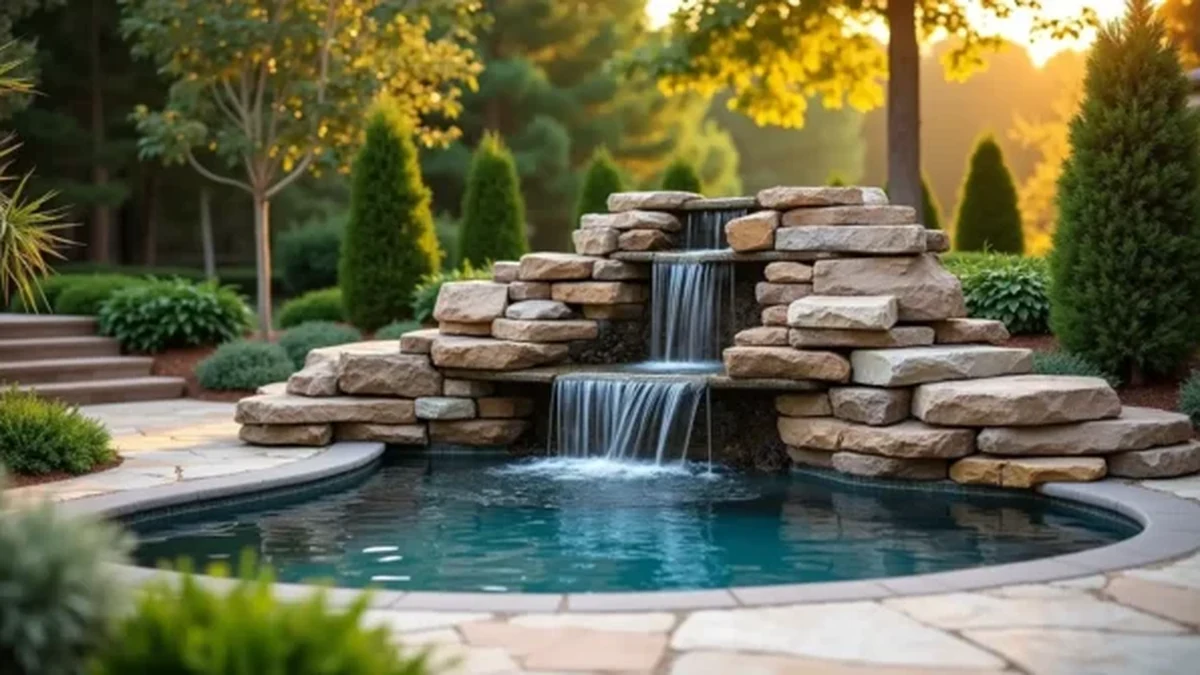
Add a Rock Waterfall or Fountain
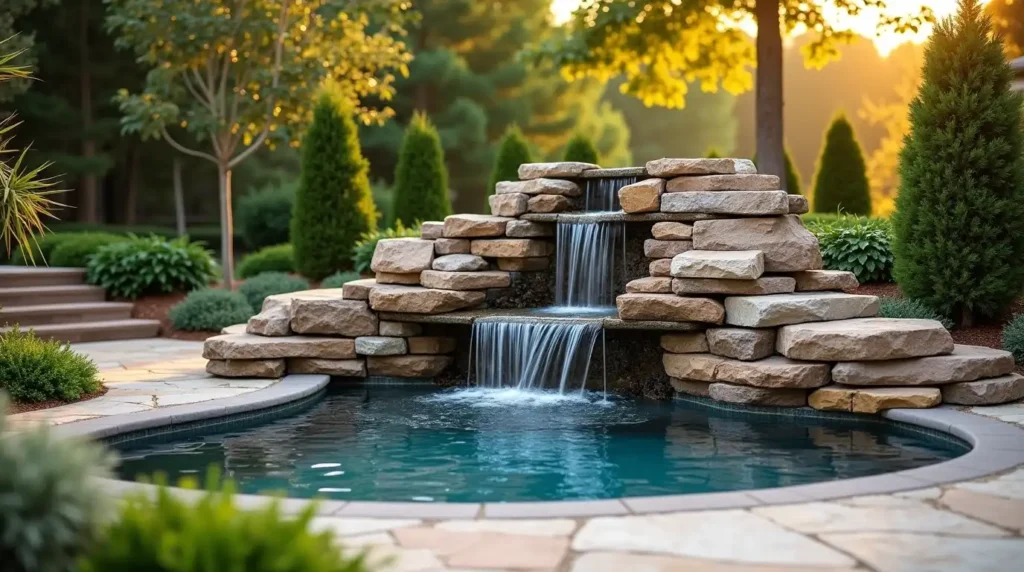
A waterfall or fountain can add sound and movement to a plain pool area.
Choose stone that matches the pool shape and yard style. Rough boulders fit natural designs. Cut stone may suit a modern pool.
Keep the size in balance with the pool. A large feature can overpower a small yard.
Plan access to the pump and pipes. Hidden equipment may look cleaner, but it still needs room for repairs.
Water sounds can help cover nearby road noise. Soft lighting can make the feature useful after sunset.
Best for: Large pools, private yards, and spaces that need a focal point.
Watch out: Water features add cleaning, power use, and equipment care.
Create a Low Stone Seating Wall
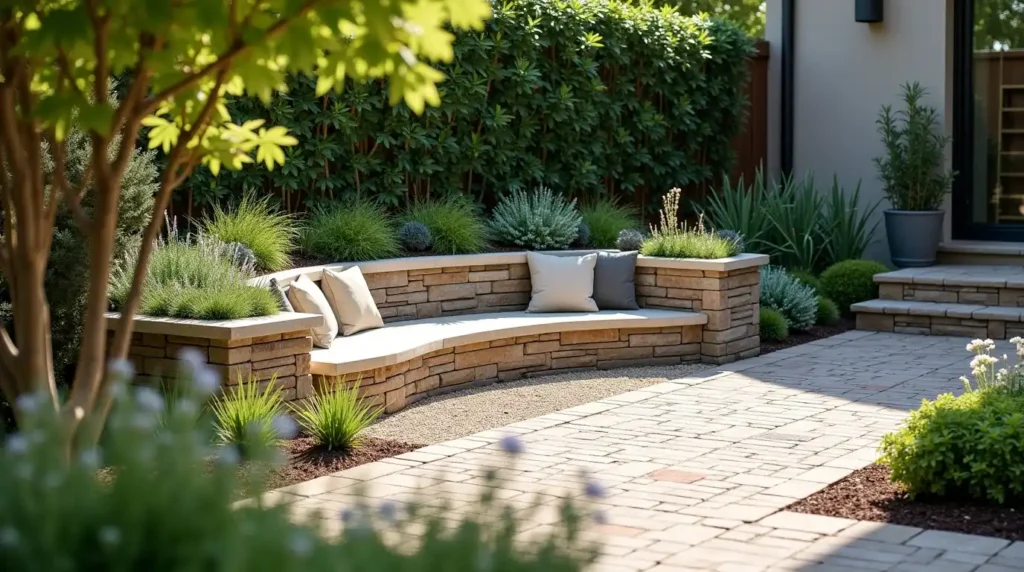
A low wall can define a planting bed and add extra seating.
Choose a smooth capstone for the top. Rough or uneven stone may feel uncomfortable and catch clothing.
Place the wall outside the main walking path. People should be able to sit without blocking access around the pool.
A curved wall works well beside a round pool or fire area. Straight walls suit modern layouts.
You can add low plants behind the wall. Keep the plants below eye level if you need a clear view of children in the pool.
Best for: Entertaining areas, raised beds, and pools with limited furniture space.
Watch out: Check safe wall height and local building rules before construction.
2 Small and Affordable Pool Rock Landscaping Ideas
You do not need a large yard or a large budget to improve the area around your pool.
Start with the part you see most often. This may be the space outside the patio door or the strip beside the main seating area.
Fill a Narrow Poolside Strip With One Stone
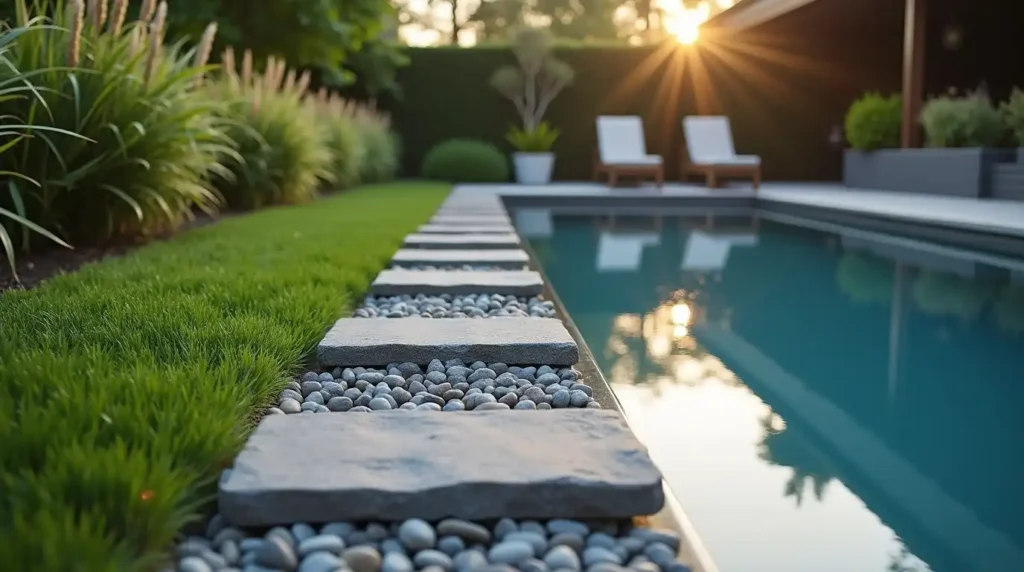
A narrow strip can look messy when it contains too many materials. One rock type keeps it calm and neat.
Choose a stone color that matches the deck. Add two or three upright plants instead of wide shrubs.
Use stepping stones if you need access to a fence, drain, or equipment panel.
Keep the design simple. A narrow area may only need gravel, edging, and a few plants.
Best for: Small pools, side yards, and spaces between a pool and fence.
Watch out: Do not cover drains, vents, or access points with stone.
Use One Base Rock and One Accent Rock
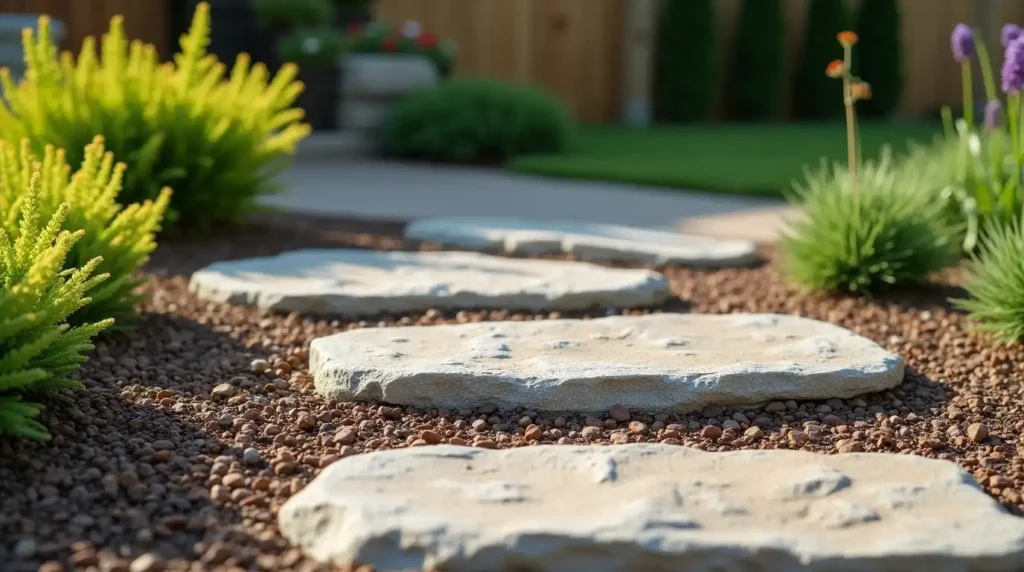
You can lower costs by using an affordable stone across most of the bed.
Save the more expensive rock for small visible areas. Place it around plants, beside steps, or near the entrance to the pool.
For example, use local gravel as the base. Add smooth river rock around a few plants or along a drainage line.
You can also reuse old pavers or boulders. Clean them and place them where they will have the most visual effect.
Complete the project in sections if needed. A finished small bed looks better than a large half-finished yard.
Best for: Budget updates, DIY work, and large spaces that need gradual improvement.
Watch out: Check delivery costs before choosing a stone. Cheap material can become costly when it travels a long distance.
How to Keep Rocks Around Your Pool Neat
Rock landscaping needs less routine care than grass. But it is not free from maintenance.
Remove leaves before they break down between the stones. Wet leaves can stain light rocks and create small pockets of soil where weeds grow.
Use a leaf blower on a low setting. Point it away from the pool so you do not blow gravel into the water.
Pull weeds while they are small. Most weeds that appear in rock beds grow from seeds that land on top.
Check edging after storms. Heavy rain can wash soil away and move loose stone.
Rake gravel back into thin areas once a month. Add matching rock when the base starts to show.
A simple care plan helps:
- Weekly: Remove leaves and loose debris.
- Monthly: Check borders, drains, and moved stones.
- Seasonally: Pull weeds and refresh thin areas.
- Yearly: Inspect drainage and replace damaged edging.
Strong borders and good drainage save more time than repeated raking.
8 Pool Rock Landscaping Mistakes to Avoid
A design can look good at first and still cause trouble later.
Here are the most common mistakes and better ways to handle them.
Placing Loose Gravel Beside the Water
Loose gravel can get kicked into the pool.
Better option: Add a solid strip of coping, concrete, or pavers between the pool and gravel.
Choosing Sharp Rock Near Bare Feet
Crushed stone may look clean, but it can hurt feet.
Better option: Use flat pavers for paths and keep sharp stone inside planted beds.
Using Dark Rock Across Every Sunny Area
Dark stone may hold more heat.
Better option: Use it as an accent or place it in areas where people do not walk.
Ignoring Drainage
Rock does not make standing water disappear.
Better option: Fix the slope or add drainage before laying stone.
Using Weak Plastic Edging
Thin edging can bend, rise, or break.
Better option: Use metal, brick, concrete, or another firm border.
Planting Messy Trees and Shrubs
Falling leaves, flowers, fruit, and seeds can fill the pool.
Better option: Choose low-litter plants and place larger plants farther away.
Blocking Pool Equipment
A beautiful planter can become a problem if it blocks pumps or filters.
Better option: Leave a clear work area around every equipment panel and valve.
Mixing Too Many Colors
Several stone colors can make the area feel busy.
Better option: Choose one main stone and one accent.