17 Pool Landscaping Ideas for a Better Backyard
A pool can be the best part of your backyard. But an empty deck, exposed fence, or messy planting bed can make the whole area feel unfinished.
You may want more privacy. You may need shade, safer walking paths, or plants that do not fill the water with leaves. You may also want a stylish space without spending every weekend pulling weeds or cleaning up debris.
The right pool landscaping ideas can solve these problems one step at a time. You do not need to rebuild the whole yard. A better deck surface, a few well-placed plants, or a simple privacy screen can make a clear difference.
Below, you will find 17 ideas for landscaping around a pool. Some are low-cost fixes. Others work best as part of a larger project. Each idea includes practical points about cost, care, climate, and safety so you can choose what fits your space.
How to Plan Landscaping Around a Pool Before You Start
It is easy to buy plants first because they make a fast visual change. But the layout should come before decoration.
Start by watching how people move through the yard. Mark the path from the house to the pool gate, steps, seating area, storage, and outdoor shower. These routes should stay open and easy to clean.
Next, check drainage. Water should move away from the pool and away from the house. New beds, walls, and pavers can change how rainwater flows, so plan them with care.
You should also keep clear views across the water. This matters when children or guests use the pool. Tall plants, screens, and furniture should not block every sightline from the house or main seating area.
Then think about climate. Check your sun, heat, wind, winter cold, and local plant zone. The USDA Plant Hardiness Zone Map can help you check whether a perennial plant is likely to survive winter in your area. It does not replace local advice, but it is a useful starting point.
Use this simple five-part check before you buy anything:
- Traffic: Can people move safely around the pool?
- Drainage: Where will rain and splash water go?
- Safety: Can you see the water and reach the pool easily?
- Maintenance: Will plants and materials create extra cleaning?
- Style: Do the colors and shapes fit your home?
The Poolside Maintenance Test
Ask these questions about every plant or material:
- Will it drop leaves, flowers, fruit, bark, or seeds?
- Will it feel too hot or rough under bare feet?
- Can it handle reflected heat from the pool deck?
- Will it narrow a path or block a gate?
- Does it need weekly trimming, watering, or cleanup?
Plan the fixed parts first. Then add plants, furniture, and decor.
Pool Landscaping Ideas for Better Hardscaping and Layout
Hardscaping includes the pool deck, coping, paths, walls, and gravel beds. These parts shape how the yard works each day. Get them right before you add soft plants and decor.
Install a Slip-Resistant Pool Deck
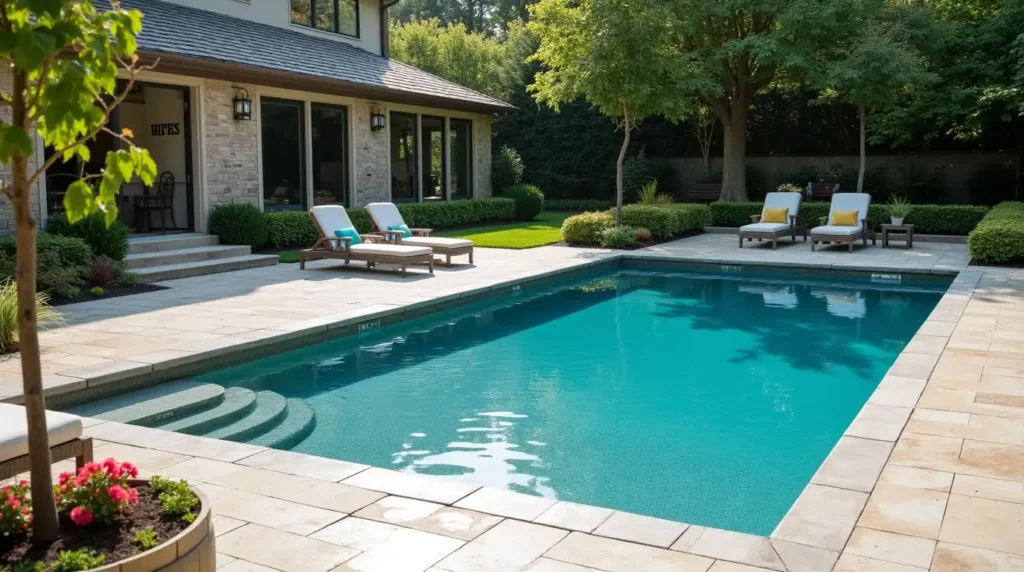
A good pool deck should feel safe when it is wet. It should also stay comfortable enough for bare feet.
Textured concrete is often a practical lower-cost choice. Porcelain pavers can give a clean, modern look. Brick fits many traditional homes. Natural stone can look beautiful, but some finishes become slick or hot.
Light colors often stay cooler than dark surfaces in strong sun. Still, color is only one factor. Texture, thickness, shade, and local heat also matter.
Keep the pattern simple. Too many sizes, colors, and joint lines can make a small pool area look busy. Good edging also stops the surface from shifting or breaking at the sides.
Hire a skilled installer when grading or drainage needs to change. A pretty deck will still cause trouble if water collects near doors, steps, or the pool edge.
Best for: Worn, plain, or slippery pool areas
Cost: $$ to $$$
Maintenance: Low to medium
Watch for: Heat, glare, drainage, and slick finishes
Frame the Pool with Contrasting Coping
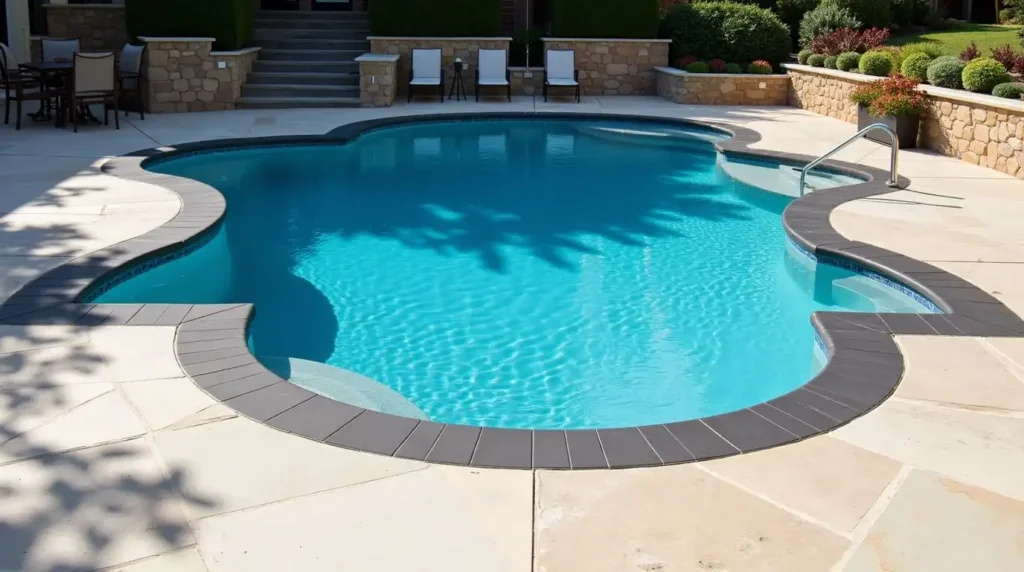
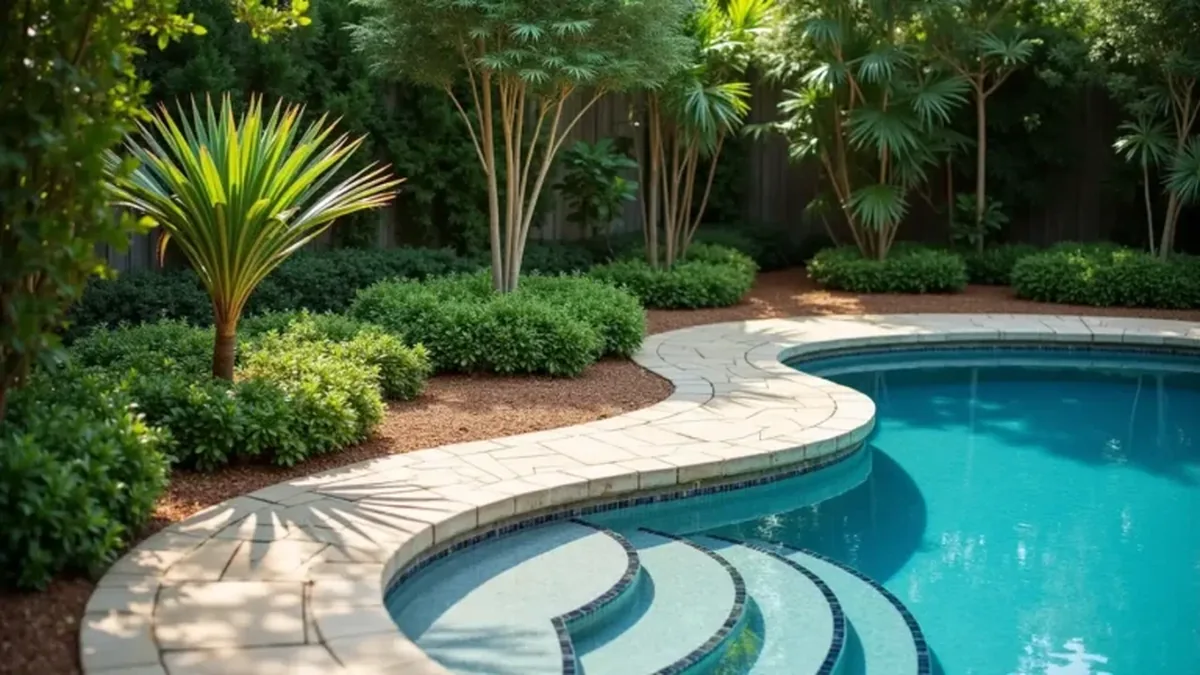
Coping is the finished edge around the pool. It protects the pool structure and gives the water a clean border.
A small color contrast can make the pool shape stand out. Charcoal coping can frame a pale deck. Cream stone can soften the look around blue water. Brick coping can connect the pool to a brick home or patio.
Do not mix too many materials. The coping, deck, steps, and nearby walls should feel related. They do not need to match, but they should share a color, texture, or shape.
Rounded edges may feel softer beside curved pools. Straight, narrow coping often suits modern pools.
This is a useful update when the deck is still in good shape but the pool edge looks dated.
Best for: Giving an existing pool a cleaner outline
Cost: $$ to $$$
Maintenance: Low
Watch for: Loose pieces, sharp edges, and clashing colors
Build a Clear Stepping-Stone Path
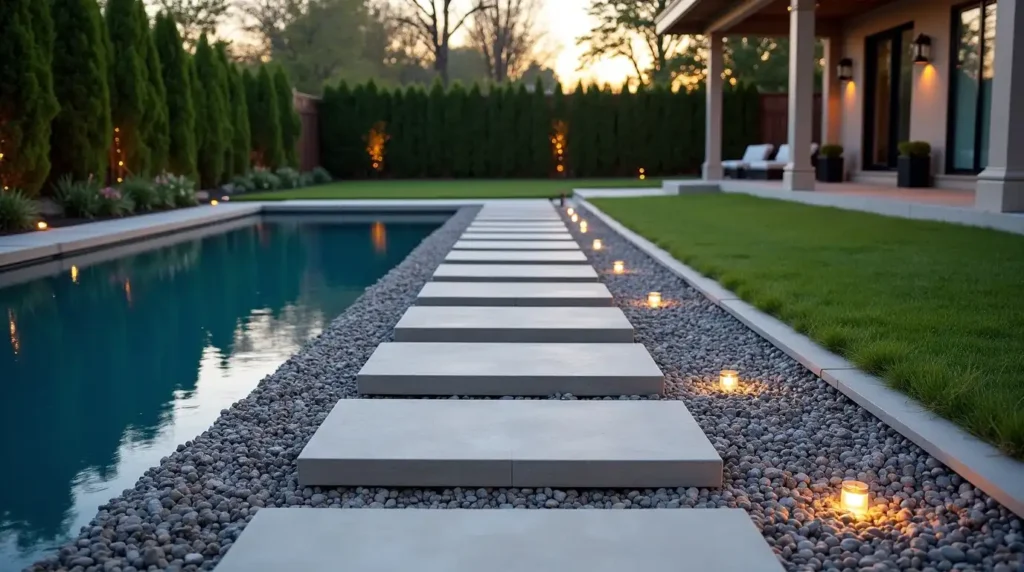
A direct path keeps wet feet off grass, mud, and loose soil. It also helps the pool area feel connected to the house.
Use large, stable stones or pavers. Small stepping stones can shift underfoot and may be hard to use when someone carries towels, food, or pool toys.
Connect the places people use most. This may include the back door, pool gate, lounge area, storage box, outdoor shower, or equipment area.
Set the stones close enough for a natural walking step. Add low lights near stairs or changes in height.
For a modern look, place large concrete squares in gravel. For a softer garden look, use stone with low groundcover beside it. Keep plants out of the walking line.
Best for: Muddy routes and disconnected spaces
Cost: $ to $$
Maintenance: Low
Watch for: Uneven stones, narrow gaps, and loose gravel
Add Contained Rock or Gravel Beds
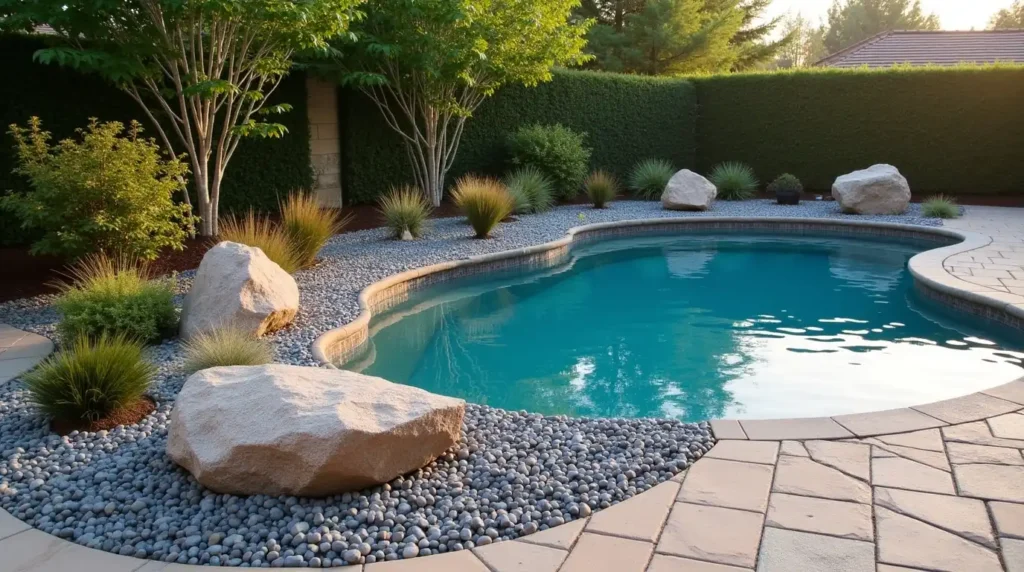
Rock beds can replace bare soil or thirsty grass around a pool. They also give the yard a neat border and reduce mud after rain.
Use metal, stone, brick, or strong plastic edging to keep loose rock out of the pool and away from barefoot paths. This one detail makes the area much easier to manage.
Choose one main stone color. You can add a few larger boulders for shape, but avoid mixing many unrelated colors and sizes.
Washed river rock works well in natural designs. Dark gravel suits modern pools. Pale stone can fit a hot, dry yard, though light rock may create glare in full sun.
Add repeated groups of plants instead of placing one different plant in each space. This makes the bed look planned.
Best for: Dry climates and low-maintenance yards
Cost: $ to $$
Maintenance: Low
Watch for: Loose stones, weeds, heat, and glare
Poolside Landscaping Ideas with Plants
The prettiest plant is not always the best plant beside a pool. A good choice should fit your climate, space, light, and cleaning routine.
Choose Low-Litter Evergreen Plants
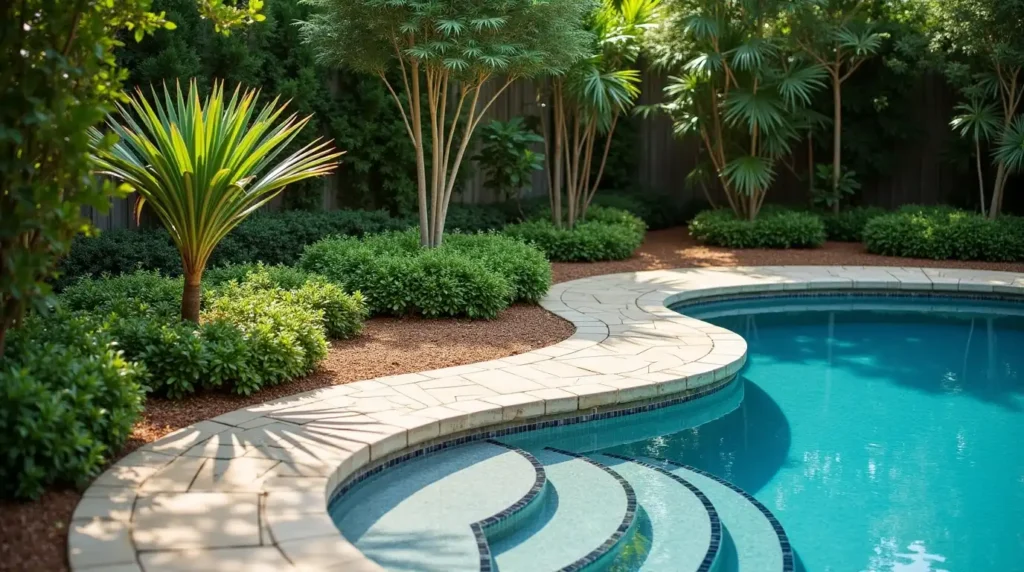
Low-litter plants help you spend less time skimming leaves, flowers, fruit, and seeds from the water.
Evergreen shrubs can also keep the yard looking full for more of the year. Good options may include dwarf yaupon holly, podocarpus, pittosporum, liriope, clumping palms, or other local evergreen plants.
Plant choice depends on climate. A shrub that grows well in Florida may fail in a cold winter state. Check local extension guides or ask a trusted nursery about mature size and care.
Keep thorny plants away from paths, steps, and seating. Also avoid plants with heavy fruit or sticky sap close to the water.
Repeat a small group of plants instead of buying one of everything. Repetition makes the yard calmer and easier to maintain.
Best for: Cleaner water and year-round structure
Cost: $ to $$
Maintenance: Low to medium
Watch for: Mature width, roots, thorns, and seasonal drop
Use Drought-Tolerant Plants with Drip Irrigation
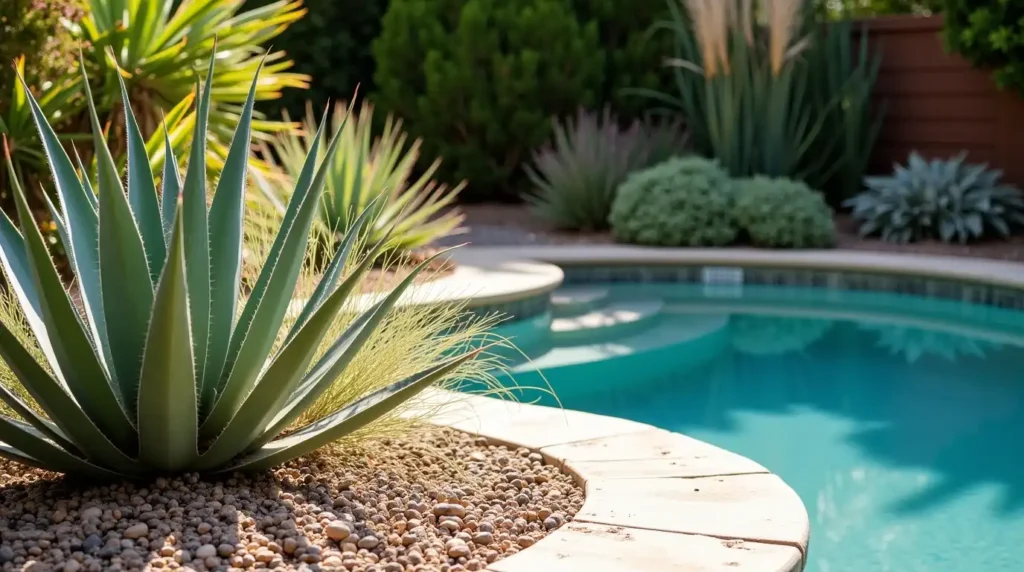
Pool decks can reflect strong heat. Plants beside them need to handle sun, dry soil, and warm air.
Agave, aloe, rosemary, lavender, lomandra, and some ornamental grasses can work well in dry areas. Use plants that are safe and suitable for your region.
Group plants with similar water needs. This stops you from giving one bed too much water while another stays dry.
Drip irrigation sends water to the soil near the roots. It can also reduce spray on the deck and pool surface. Hide the line beneath mulch or stone, but leave access for repairs.
Drought-tolerant plants still need regular water while their roots grow. They become easier to care for after they settle in.
Outdoor watering makes up a large share of home water use in many parts of the United States, so smart plant choices can reduce waste and care.
Best for: Hot, sunny, or water-conscious yards
Cost: $ to $$
Maintenance: Low after the first season
Watch for: Sharp leaves, reflected heat, and poor soil
Layer Plants for a Resort-Style Look
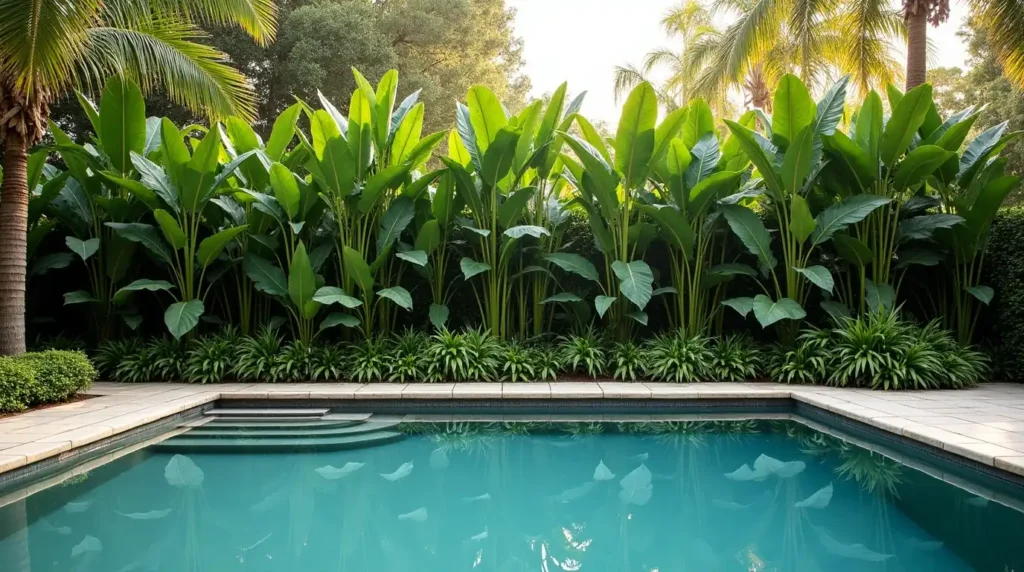
You can create a full, lush look without filling every inch of soil.
Place taller plants at the back. Add medium shrubs in front. Finish with low plants or groundcover near the edge. This creates depth and hides bare lower stems.
In warm areas, you may use bird of paradise, cordyline, canna, philodendron, or clumping palms. In cooler areas, try hardy hibiscus, hydrangea, ornamental grasses, seasonal canna, or large-leaf plants in pots.
Repeat leaf shapes and colors across the bed. Three groups of the same plant often look stronger than nine unrelated plants.
Leave enough room for mature growth. Crowded young plants may look full on day one, but they can block views and become hard to trim later.
Best for: Softening large decks and plain fences
Cost: $$
Maintenance: Medium
Watch for: Overcrowding, blocked views, and winter care
Add Movable Container Gardens
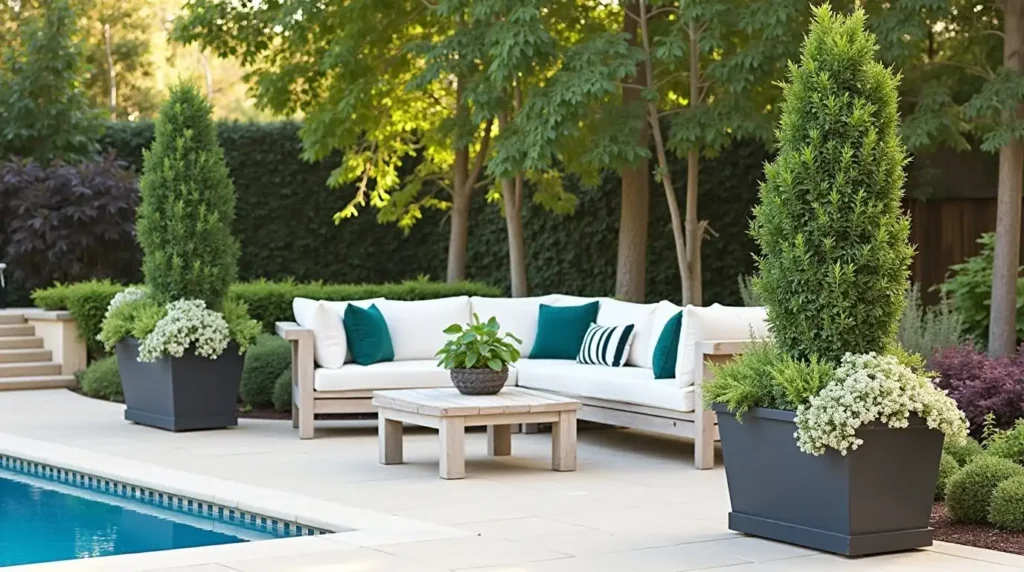
Containers are useful when you have little soil or do not want permanent beds.
Place two large planters near a pool gate, seating zone, or the corners of a rectangular pool. A few large pots usually look better than many small ones.
Choose heavy planters in windy yards. Make sure water can drain without leaving a slick stain or puddle on the deck.
Use simple plant groups. One tall plant, one fuller plant, and one trailing plant can give a balanced look. You can also use one bold plant in each matching pot.
Move the containers when you need more room for guests or cleaning. In cold climates, pots also make it easier to protect tender plants during winter.
Best for: Small yards, renters, and seasonal color
Cost: $ to $$
Maintenance: Medium
Watch for: Wind, drainage, and narrow walkways
Backyard Pool Landscaping Ideas for More Privacy
A pool is harder to enjoy when nearby windows, streets, or upper decks look straight into the yard. Privacy can come from plants, screens, or a mix of both.
Grow a Living Privacy Hedge
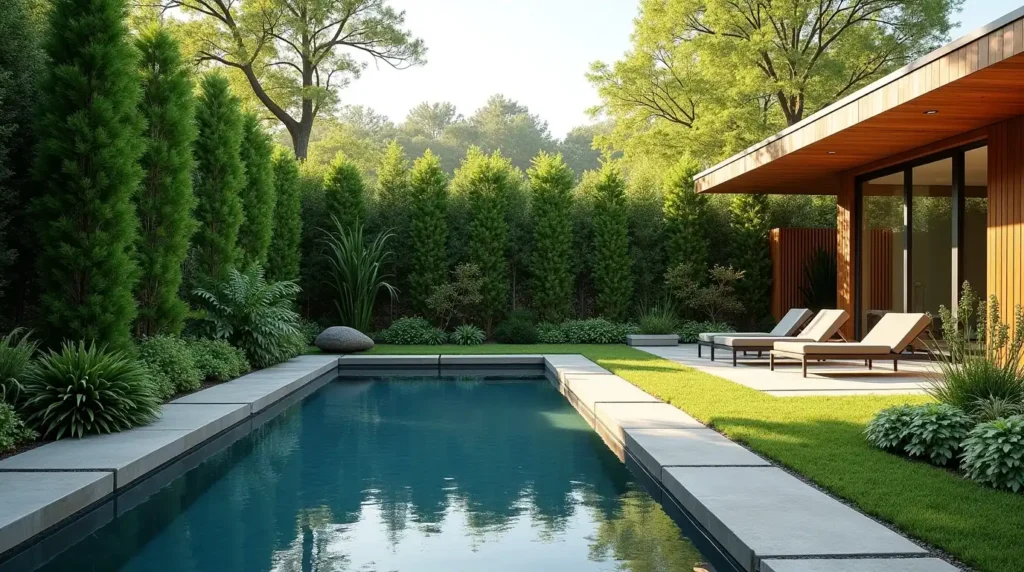
A hedge creates a soft green wall. It may also reduce some noise and unwanted views.
Choose an evergreen plant if you need privacy all year. Arborvitae, podocarpus, wax myrtle, clumping bamboo, and native evergreen shrubs may work in the right region.
Check the mature width before planting. A hedge that grows six feet wide can take over a narrow side yard. Leave enough space behind it for trimming, fence repair, and pool care.
A living screen takes time to fill in. When you need fast privacy, plant larger shrubs or use a temporary screen while the hedge grows.
Keep at least one open view from the house or main seating area to the water.
Best for: Wide borders and natural-looking privacy
Cost: $$
Maintenance: Medium
Watch for: Slow growth, trimming, roots, and blocked views
Combine Slatted Screens with Climbing Plants
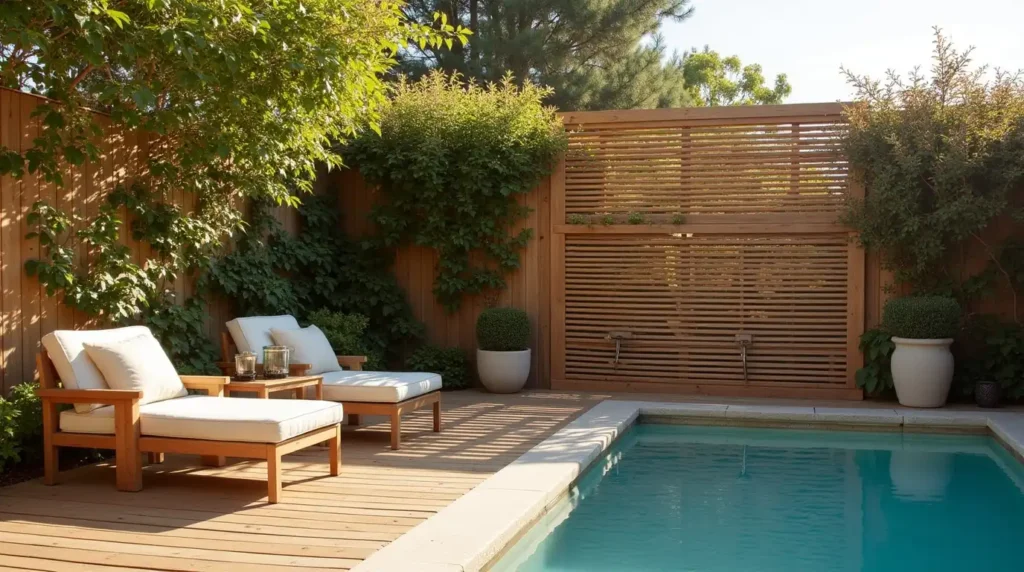
A slatted screen gives faster privacy than a hedge and uses less ground space.
Wood screens feel warm and natural. Metal screens can suit a modern yard. A painted screen can match the home, fence, or pergola.
Add a climbing plant to soften the surface. Star jasmine, clematis, or another noninvasive vine may work, based on your climate.
Avoid thorny vines beside tight paths. Also check how much leaf and flower drop the plant creates.
Leave small gaps between slats to let light and air pass through. You can also use a short screen to hide pool equipment without closing off the whole yard.
Best for: Narrow yards and fast privacy
Cost: $$
Maintenance: Low to medium
Watch for: Wind, local height rules, and invasive vines
Soften Pool Fences with Ornamental Grasses
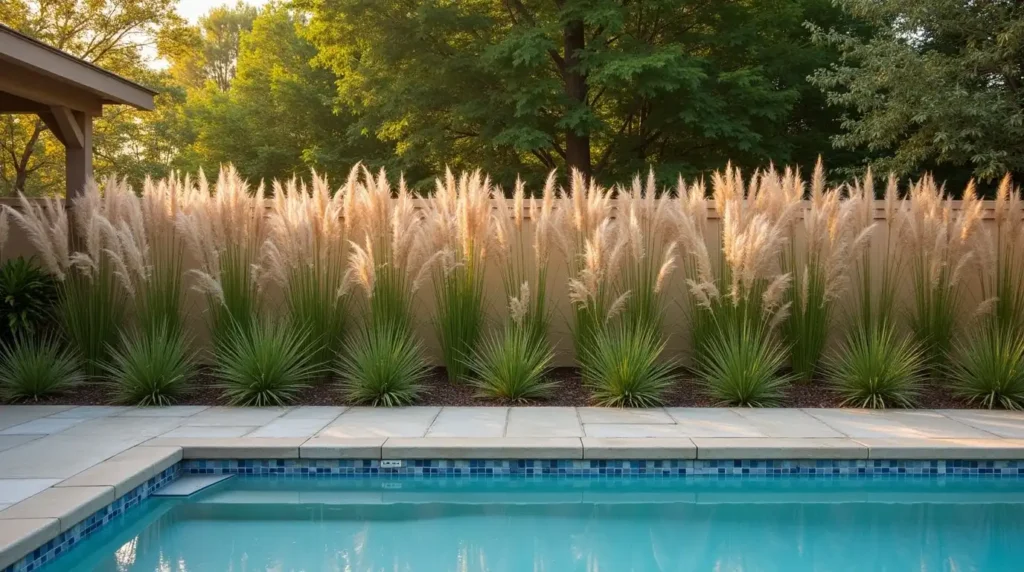
A bare fence can make a pool area feel boxed in. Ornamental grasses add movement and soften hard lines.
Use repeated groups along the fence instead of one long mixed row. Feather reed grass, switchgrass, lomandra, and local native bunchgrasses may work well.
Choose a variety that fits your climate and is not invasive in your area. Some grasses spread fast or drop many seeds.
Most grasses need cutting back once a year. Some also turn tan in winter. That can look natural, but it may not fit every yard.
Keep dry grass away from fire features, grills, and hot equipment.
Best for: Plain fences and soft seasonal texture
Cost: $ to $$
Maintenance: Low to medium
Watch for: Seed spread, dry leaves, and yearly cutting
Pool Landscaping Ideas for Shade and Outdoor Living
A pool area should be useful when people are not in the water. Shade, seating, and storage help the yard work for meals, rest, and time with guests.
Create Shade with a Pergola or Shade Sail
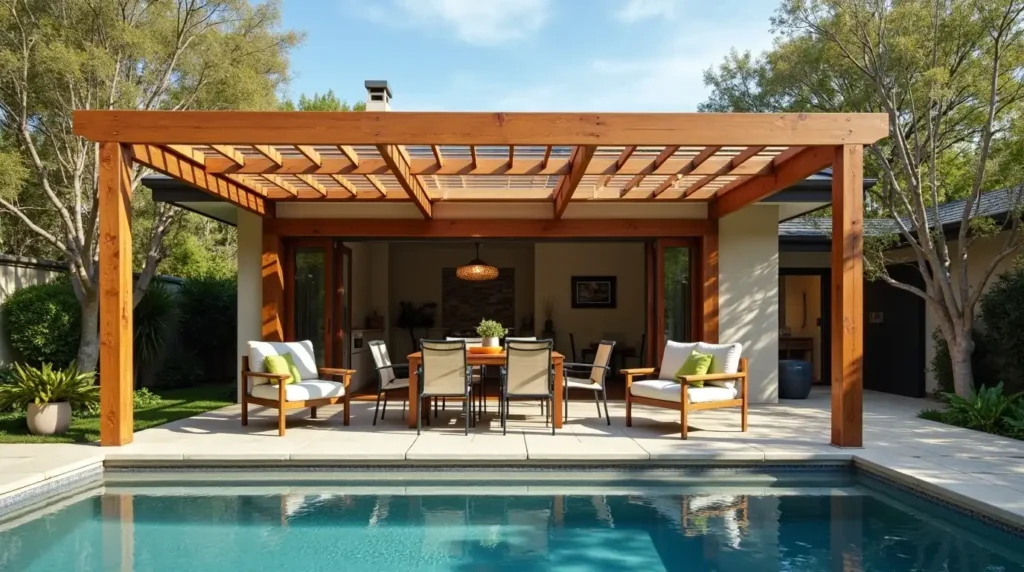
Shade makes a pool area far more comfortable during the hottest part of the day.
Place shade over lounge chairs, a dining table, or a conversation area. You do not need to cover the whole pool.
A pergola gives the yard a strong structure. A louvered roof offers more control over sun and rain. A shade sail costs less and fits many small spaces.
Check wind exposure before you install any shade structure. Posts and anchors must be secure. Keep posts out of narrow paths and away from places where people enter the pool.
Climbing plants can soften a pergola, but they also add trimming and debris. Use them only when the extra care fits your routine.
Best for: Hot decks and outdoor dining
Cost: $$ to $$$
Maintenance: Low to medium
Watch for: Wind, permits, post placement, and shade direction
Divide the Deck into Lounge and Dining Zones
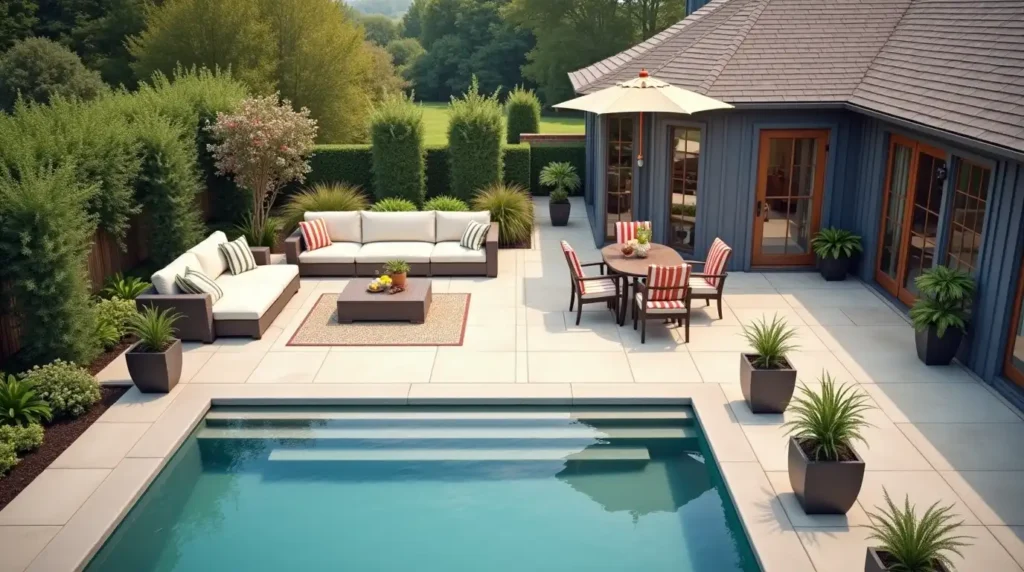
A large deck can still feel awkward when the furniture has no clear purpose.
Create one area for sun or rest. Create another for meals or conversation. Keep the main walking line between the house and pool open.
Place dining closer to the kitchen or back door. Put lounge chairs where they get the amount of sun you want. Add a small table between them for drinks, sunscreen, or towels.
Use planters, an outdoor rug, or furniture direction to mark each zone. You do not need a wall or raised deck.
A storage bench can hold towels, toys, and cleaning tools while also giving guests another seat.
Best for: Making better use of an existing deck
Cost: $ to $$
Maintenance: Low
Watch for: Crowded paths and furniture near the pool edge
Add an Outdoor Shower or Changing Nook
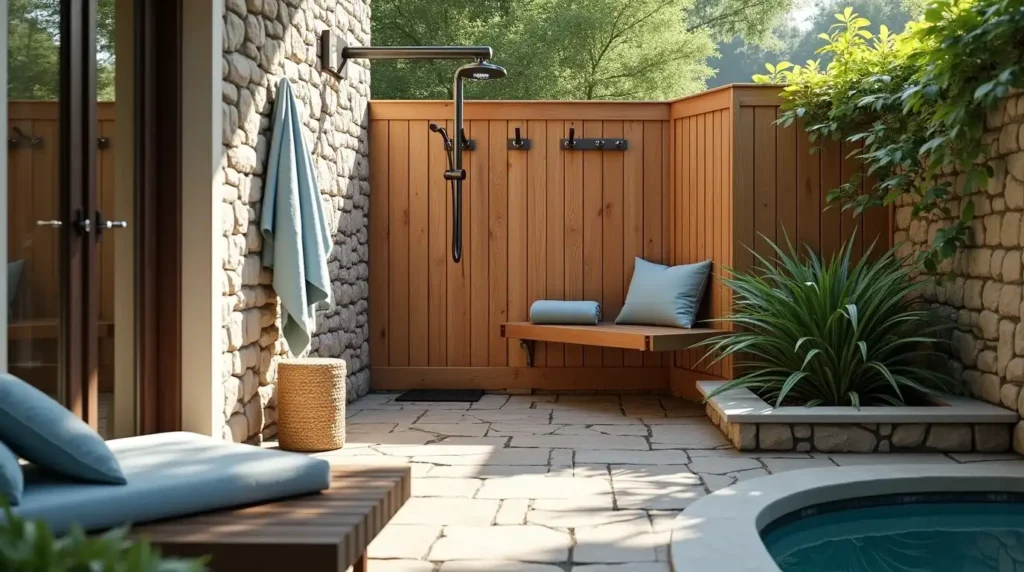
An outdoor shower keeps grass, sand, sweat, and sunscreen out of the pool and house.
Place it close to the pool exit or back door. Use a slip-resistant base and plan where the water will drain.
A cedar screen, stone wall, or slatted panel can add privacy. Leave the top or one side open enough for light and airflow.
Add hooks, a towel rail, and a small bench when space allows. A simple foot-rinse station is a lower-cost choice when full plumbing is not practical.
Check local plumbing and building rules before installation. You may also need a plan for warm water and winter shutoff.
Best for: Busy family pools and beach-style yards
Cost: $$ to $$$
Maintenance: Low to medium
Watch for: Drainage, privacy, plumbing, and winter care
Pool Landscaping Ideas with Lighting and Focal Points
A pool can fade into a dark yard after sunset. Soft lighting and one clear focal point can make the area useful and attractive at night.
Install Layered Low-Voltage Lighting
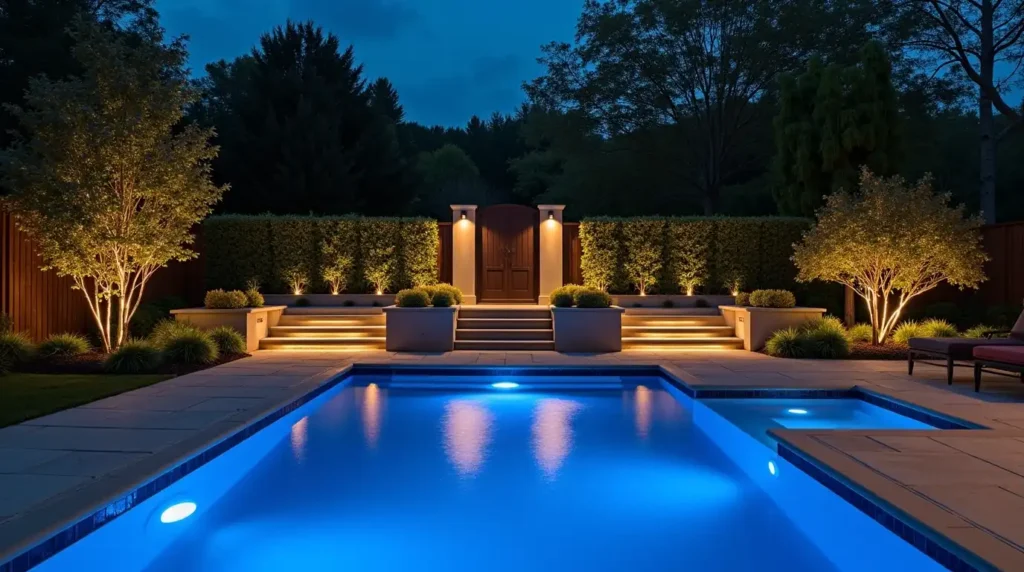
Start with safety. Light the pool gate, walking paths, steps, and changes in level.
Then add soft light to plants, walls, and seating. Several low-output fixtures usually look better than one bright floodlight.
Aim lights away from the house and guests. Strong glare can make it harder to see the pool and can ruin the calm mood.
Try uplights under a small tree, lights beneath wall caps, or soft fixtures inside a pergola. Keep the colors and brightness consistent.
Use pool-rated products where needed. Hire a licensed electrician for work near water, wiring, or fixed fixtures.
Best for: Safer paths and better evening use
Cost: $$
Maintenance: Low
Watch for: Glare, exposed wires, and unsafe products
Add a Compact Water Feature
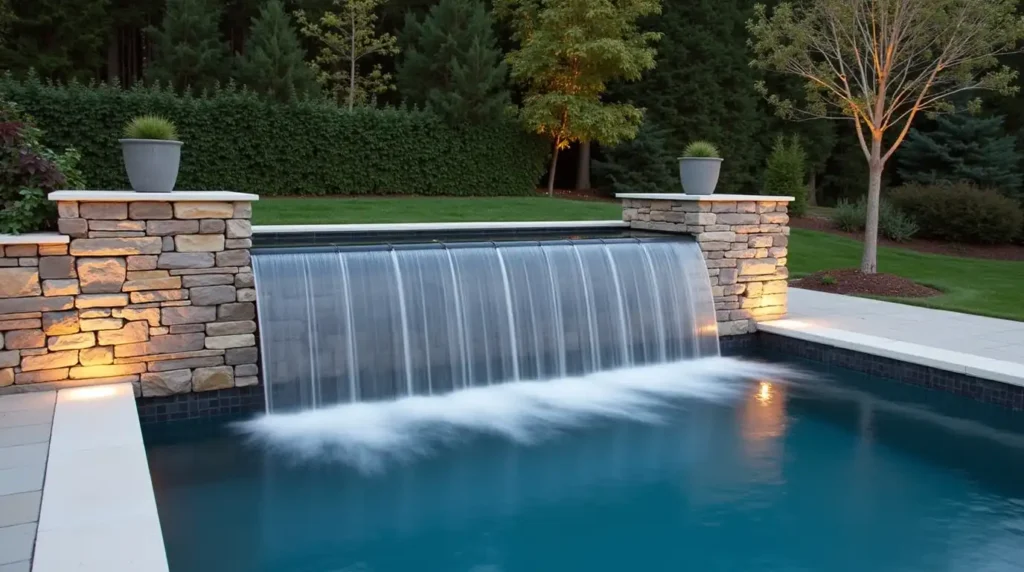
A small water feature can give the pool a clear focal point without taking over the yard.
Wall scuppers, a narrow sheet of falling water, or a raised spa spillway can add sound and movement. A fountain wall can also hide a plain fence.
Match the feature to the pool style. Straight lines fit many modern pools. Rough stone and softer shapes fit natural designs.
Think about splash, wind, noise, and water loss. A feature that looks calm on a still day may send water across the deck in strong wind.
Place it where you can see it from the house or main seating area. One well-sized feature is often enough.
Best for: Plain pool walls and quiet seating areas
Cost: $$ to $$$
Maintenance: Medium
Watch for: Wind, splash, scale, leaks, and pump care
Build a Fire Feature or Conversation Area
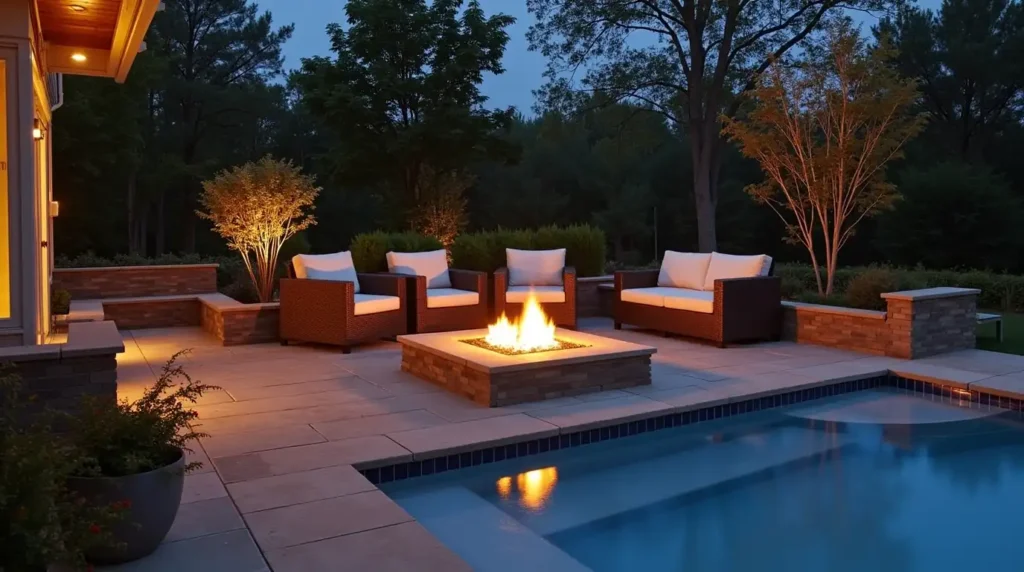
A fire feature can turn the far end of the pool into a place people use after swimming.
A gas fire table is often easier to fit than a full fireplace. Movable chairs give you more control over space. A built-in bench can make the area feel more finished.
Leave a clear path between the fire area and the pool. Think about wind before choosing the location. Smoke, heat, and loose cushions should stay away from plants and structures.
Rules change by location, fuel type, and product. Check local fire rules and the maker’s instructions before you build.
You can also skip the flame and create a conversation zone with chairs, a low table, and soft lighting.
Best for: Large yards and evening gatherings
Cost: $$ to $$$
Maintenance: Low to medium
Watch for: Wind, clearances, fuel, children, and dry plants
How to Choose the Right Pool Landscaping Ideas
You do not need all 17 ideas. Start with the problem that affects you most.
Choose privacy first when you avoid using the pool because neighbors can see it. Choose shade when the deck is too hot during the day. Fix drainage and slippery surfaces before spending money on decor.
Lower-Cost Changes
- Add two large containers.
- Create a small gravel bed.
- Move furniture into clear zones.
- Plant ornamental grasses.
- Add simple path lights.
- Install a foot-rinse station.
Midrange Changes
- Build a privacy screen.
- Add a new planting border.
- Install drip irrigation.
- Put up a shade sail.
- Replace pool coping.
- Add low-voltage lighting.
Higher-Cost Changes
- Replace the full pool deck.
- Build a pergola.
- Add an outdoor shower.
- Install a custom water feature.
- Create a built-in fire area.
Use this quick guide:
| Your Main Goal | Ideas to Start With |
| More privacy | Hedge, slatted screen, ornamental grasses |
| Less maintenance | Rock beds, evergreens, drip irrigation |
| Better evening use | Lighting, fire table, conversation zone |
| More comfort | Pergola, seating zones, outdoor shower |
| Better use of a small yard | Containers, vertical screen, shade sail |
| A resort-style look | Layered plants, water feature, matching hardscape |
Complete one permanent change first. Then add plants and smaller details in stages.
Create a Pool Area You Will Use More Often
Good pool landscaping should make your yard easier to use, not harder to care for. Start with safe paths, drainage, and clear views of the water. Then add plants, privacy, shade, seating, and lighting.
Choose materials that fit your climate and budget. Pick plants based on mature size and cleanup, not just how they look at the nursery.
The best pool landscaping ideas solve a real problem while making the backyard feel more complete. Choose two or three ideas from this list, sketch a simple plan, and improve the space one step at a time.