15 Patio Landscaping Ideas for a Better Backyard
Meta description: Explore 15 patio landscaping ideas that add privacy, shade, color, and comfort without making your outdoor space hard to maintain.
A patio can have stylish furniture and still feel cold or unfinished. Hard concrete, brick, and stone need softer features around them.
The wrong choices can create new problems. Large shrubs may crowd your chairs. Tree roots may lift pavers. Loose soil may wash onto the patio each time it rains.
These patio landscaping ideas can help you add privacy, shade, color, and better drainage. You will also learn how to choose plants that fit your space and care routine.
You do not need to rebuild your whole backyard. A few smart changes can make the patio feel connected to the house and garden.
Start with the problem that bothers you most. It may be a lack of shade, an open view, or a bare concrete edge. Then choose an idea that fixes it.
Check These 5 Things Before You Landscape Your Patio
A small plant at the garden center may grow into a wide shrub. That can block a walkway within a few years.
Planning first can save you from moving plants later.
1. Measure the open space
Measure the distance between your patio and nearby walls, fences, paths, or lawn.
Check where people place chairs and walk around the table. Leave enough room for guests to move without brushing against plants.
2. Watch the sunlight
Check the area in the morning, afternoon, and evening.
A sunny patio may need plants that can handle heat from the paving. A shaded patio may need ferns, hostas, or other plants that prefer less direct sun.
3. Check where rainwater flows
Look at the patio during or after heavy rain.
Water should move away from your house. It should not sit beside the foundation or collect under raised beds.
A dry creek, gravel strip, or planted drainage area may help with minor runoff. Call a drainage professional when water reaches the house or causes deep erosion.
4. Decide how much privacy you need
You may want to block a nearby window, street, or neighbor’s seating area.
Do not create a solid wall without checking light and airflow. A few tall plants placed in the right spots may be enough.
5. Be honest about maintenance
Flower beds need weeding. Hedges need trimming. Containers need regular watering.
Choose a design you can care for during busy weeks. Low-maintenance plants still need water and basic care during their first growing season.
15 Patio Landscaping Ideas That Add Comfort and Style
You do not need to use all 15 ideas. Pick two or three that solve your patio’s biggest problems.
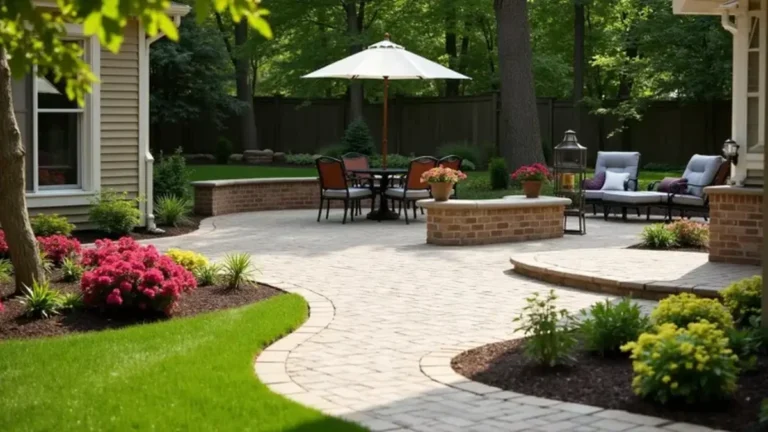
Soften Hard Edges With Layered Planting Beds
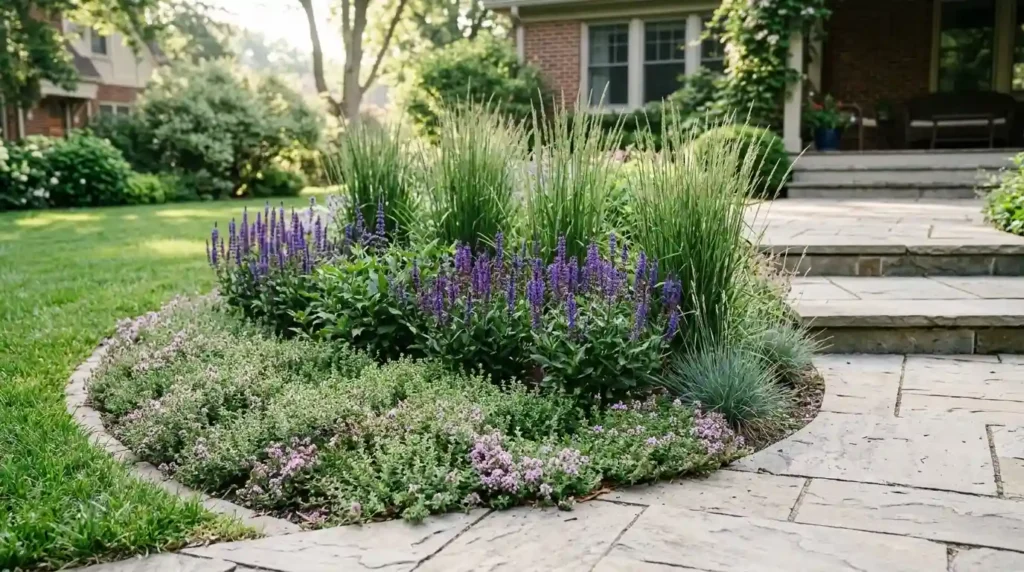
A layered garden bed can make a plain patio feel settled into the yard.
Place low plants along the front edge. Add medium plants behind them. Finish with taller shrubs or grasses at the back.
This setup keeps the view open while hiding the hard line between the patio and lawn.
You could pair creeping thyme with salvia and a compact ornamental grass. Choose plants that suit your local weather and sunlight.
Keep taller plants away from steps and narrow walkways. Always check their mature width before planting.
Best for: Large, bare patio edges
Watch out for: Plants that spread onto the paving
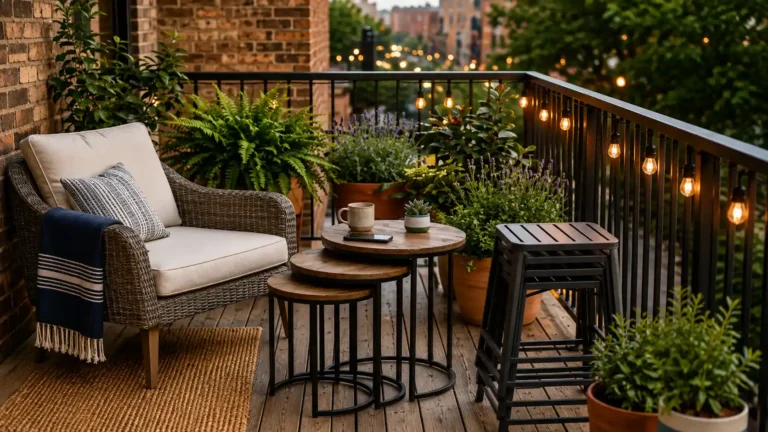
Fill Empty Corners With Large Containers
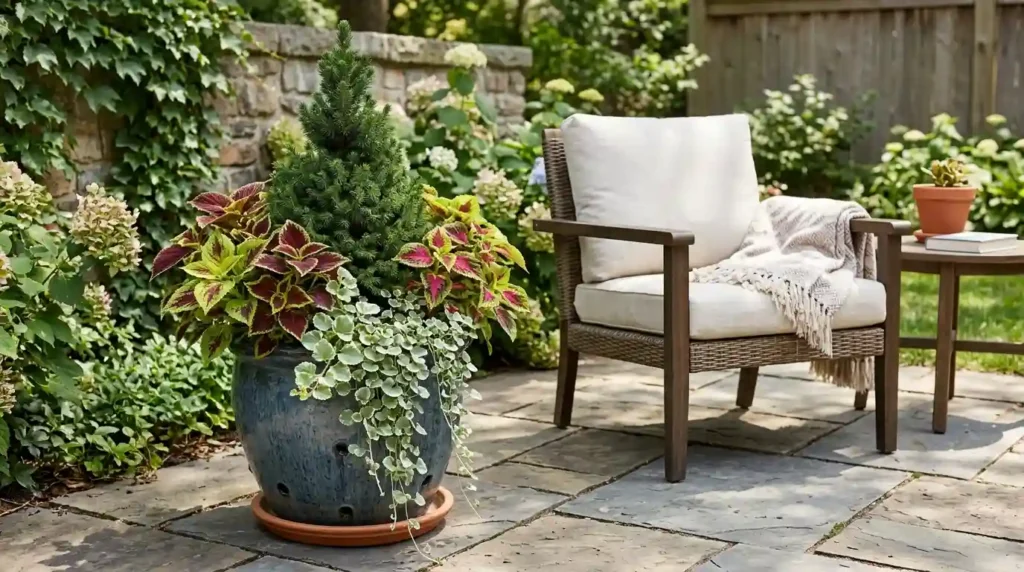
Large pots can bring color to a patio without creating permanent garden beds.
One large container often looks cleaner than six small pots. It also holds more soil, so it may dry out more slowly.
Try combining three plant shapes:
- One tall plant
- One full plant
- One trailing plant
For example, place a dwarf evergreen in the center. Add coleus around it and let a trailing plant spill over the edge.
This is one of the easiest small patio landscaping ideas because you can move the pots when your layout changes.
Use containers with drainage holes. Do not let water collect around plant roots.
Best for: Renters and small patios
Watch out for: Light pots that may tip during strong wind
Block Unwanted Views With a Living Screen
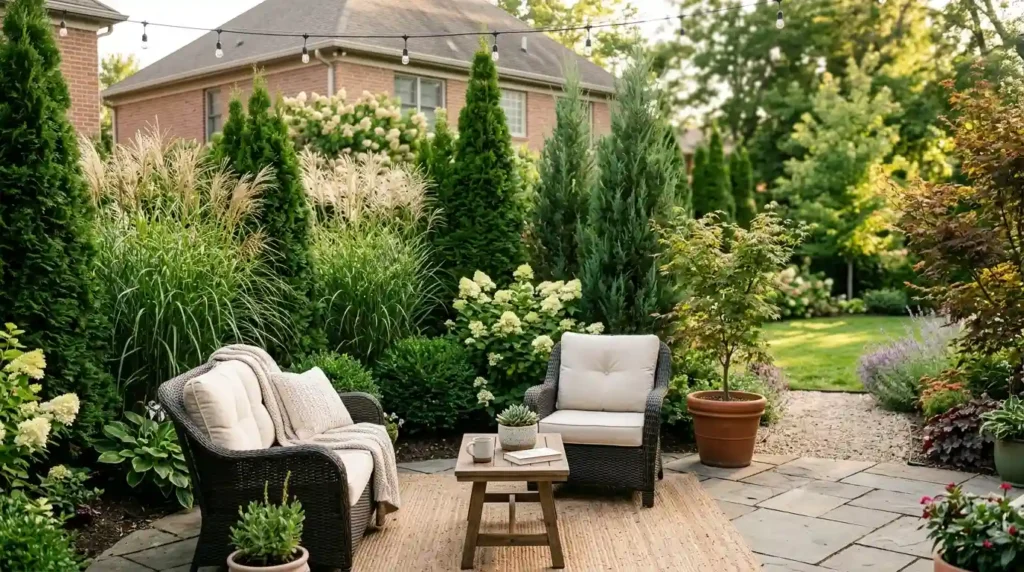
A living screen can give you privacy without making the patio feel boxed in.
Use narrow evergreens, tall grasses, or compact shrubs. Place them where they block the main view rather than planting a hedge around the whole patio.
A mixed screen often looks more natural than one long row of the same plant. It can also handle disease or plant loss better.
Check the mature height and width. A shrub that grows eight feet wide will not fit in a three-foot bed.
Avoid invasive bamboo. Look for clumping types when bamboo is safe and allowed in your area.
Best for: Patios facing streets or nearby homes
Watch out for: Roots and branches that spread into seating areas
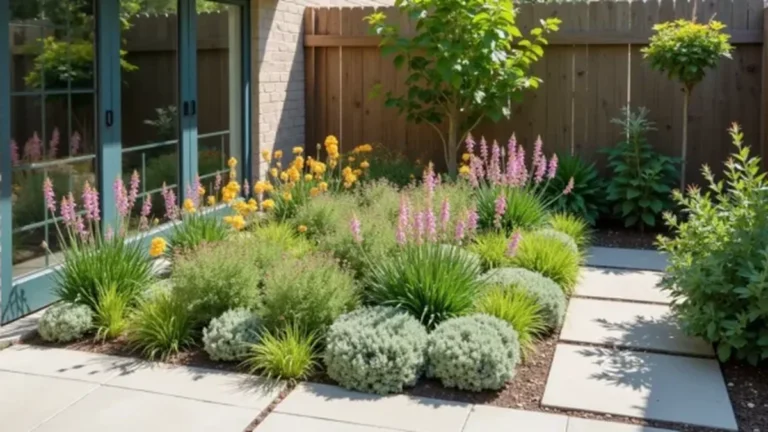
Add Movement With Ornamental Grasses
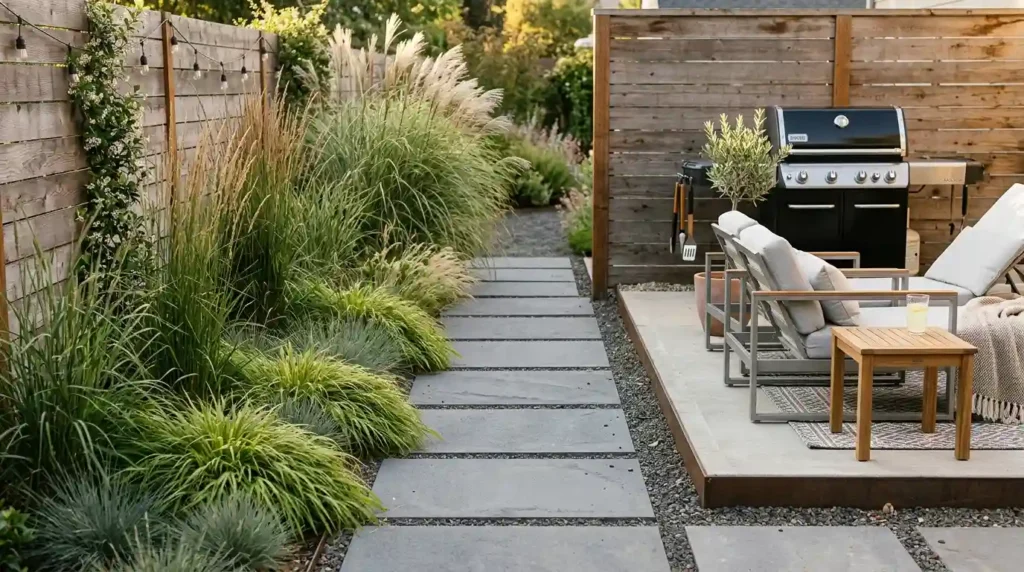
Ornamental grasses can soften walls, fences, and hard patio corners.
Their leaves move in the breeze. This gives the space a calm and natural look.
Choose clumping grasses instead of fast-spreading types. Compact grasses work beside paths. Taller types can create privacy at the back of a border.
Some grasses stay upright through winter. Others become flat and messy after storms.
Place dry grasses away from fire pits, grills, and outdoor heaters. Cut them back at the correct time for the type you grow.
Best for: Modern and low-care gardens
Watch out for: Floppy grass that blocks walkways
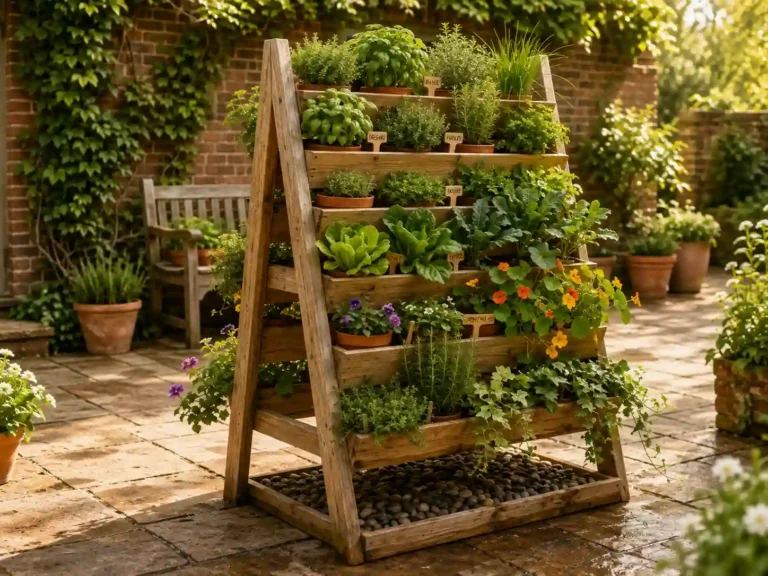
Create a Garden at a Comfortable Height
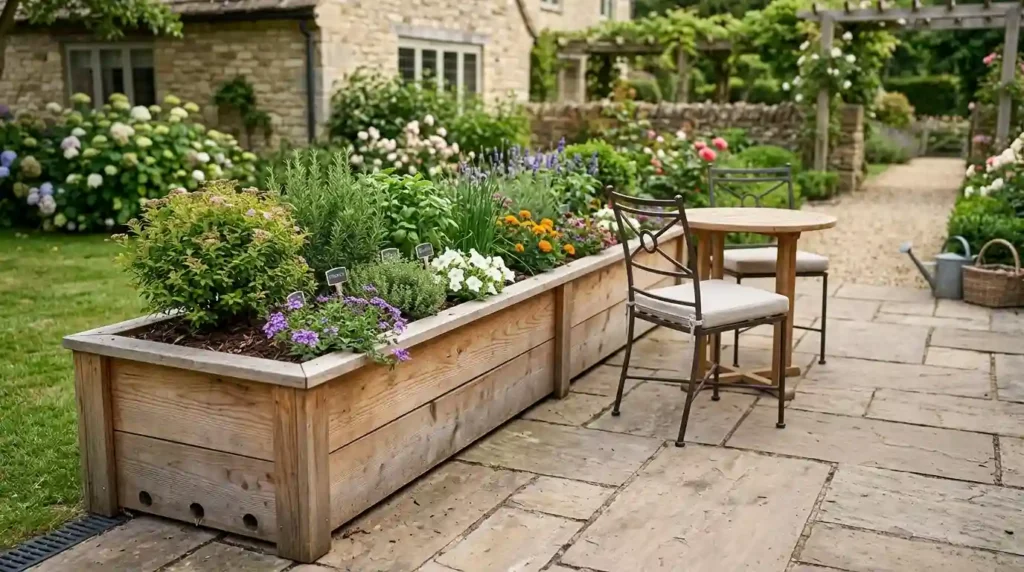
Raised planters can add plants without forcing you to bend down as far.
They also create a clear border between the patio and garden. A long, narrow planter can define one side of a seating area.
Use it for herbs, small flowers, dwarf shrubs, or seasonal plants.
Make sure the planter has drainage holes. Wet soil becomes heavy, so the base must be strong.
Keep the planter outside the main walking path. Leave room for chairs to slide back from the table.
Choose wood, stone, metal, or composite material that can handle outdoor moisture.
Best for: Herbs and easy-access gardening
Watch out for: Water stains and blocked drainage
Save Ground Space With a Trellis
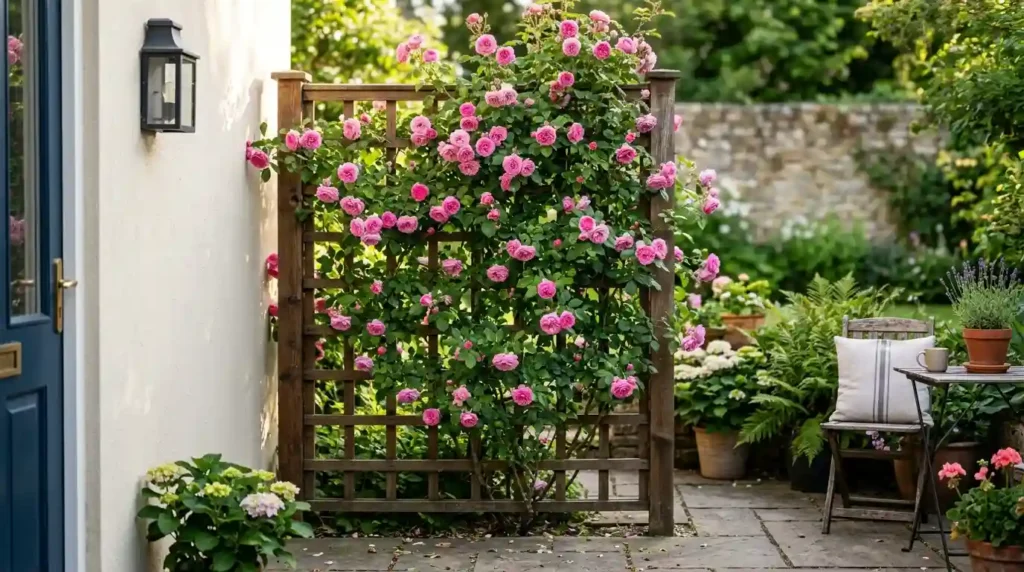
A trellis lets you grow plants upward instead of across the ground.
Place a freestanding trellis beside a wall or along one open patio edge. It can hold clematis, climbing roses, star jasmine, or another vine suited to your region.
Vertical planting can hide a plain wall and add light privacy.
Do not let aggressive vines grow directly into siding, gutters, or roof spaces. Use a support that leaves airflow between the plant and wall.
Trim vines before they reach doors, lights, or seating areas.
Best for: Narrow patios and blank walls
Watch out for: Vines that damage surfaces or spread too fast
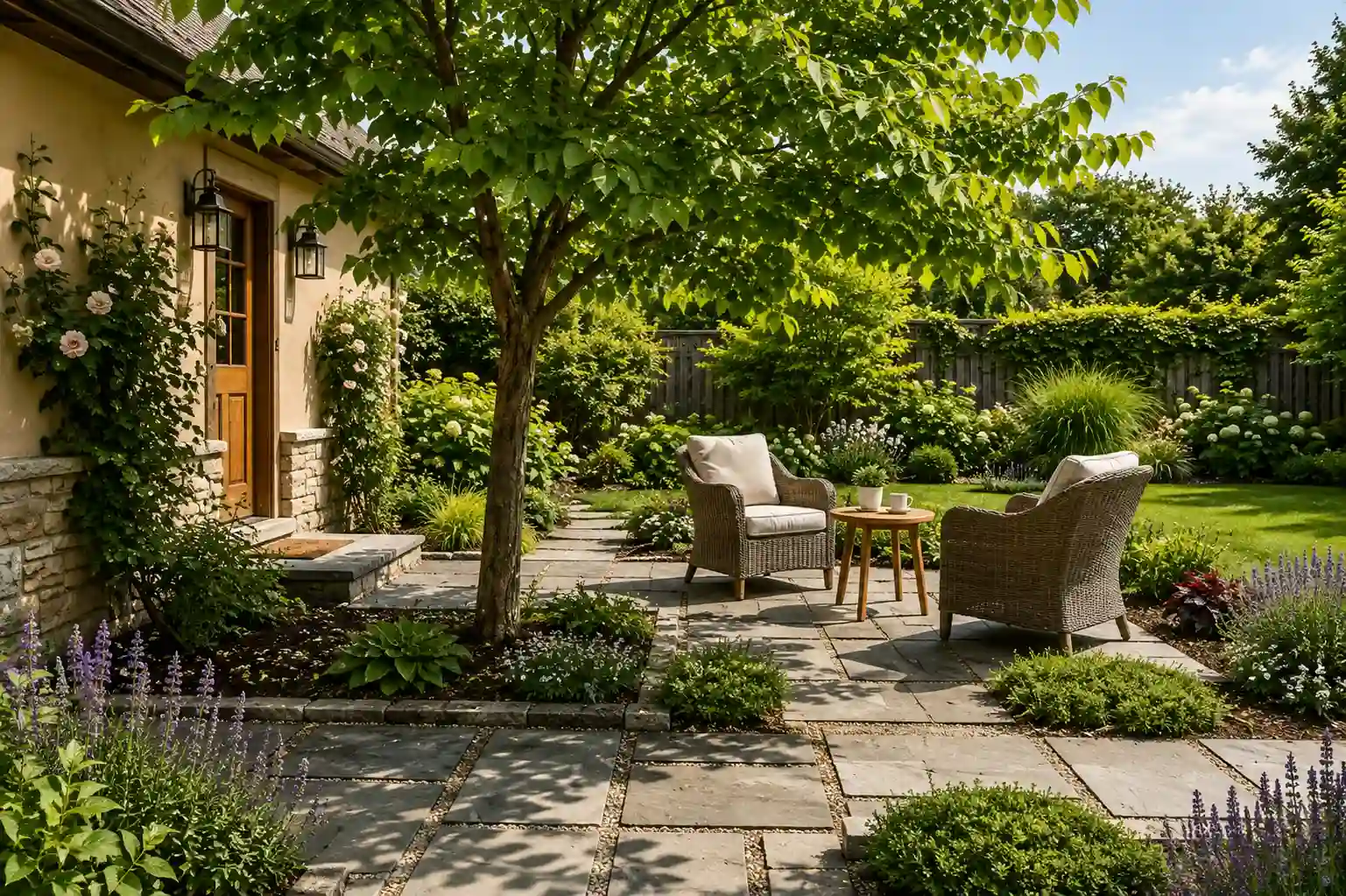
Cool the Patio With One Small Shade Tree
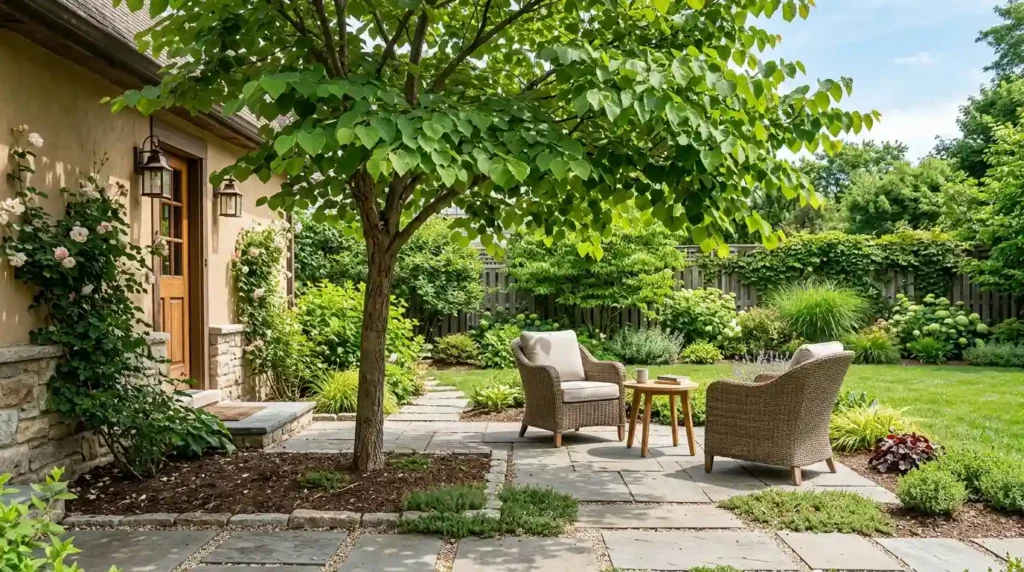
A small tree can make a hot patio more comfortable.
It can also add height and become the main feature of your backyard patio landscaping.
Look for a tree with a size that fits your yard. A compact Japanese maple, serviceberry, redbud, or crape myrtle may work in some regions.
Check its root habits before planting. Keep the trunk and major roots a safe distance from foundations and paving.
Avoid trees that drop sticky fruit, sharp seed pods, or weak branches over dining areas.
A deciduous tree can provide shade in summer while allowing more light through during winter.
Best for: Hot, sunny patios
Watch out for: Roots, falling fruit, and oversized canopies
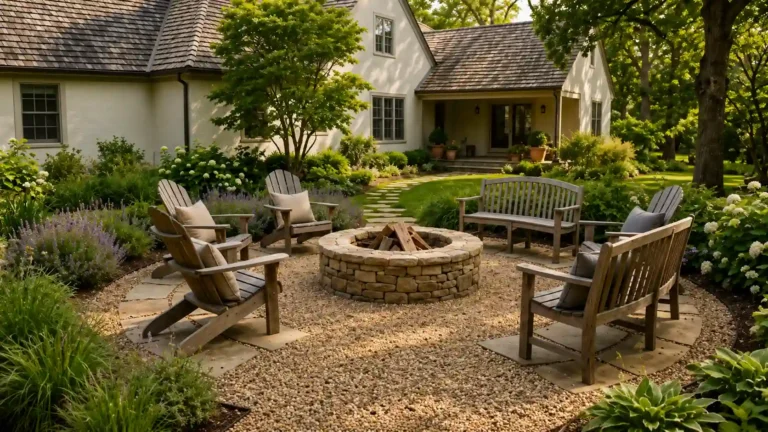
Keep Mud Off the Patio With a Gravel Strip
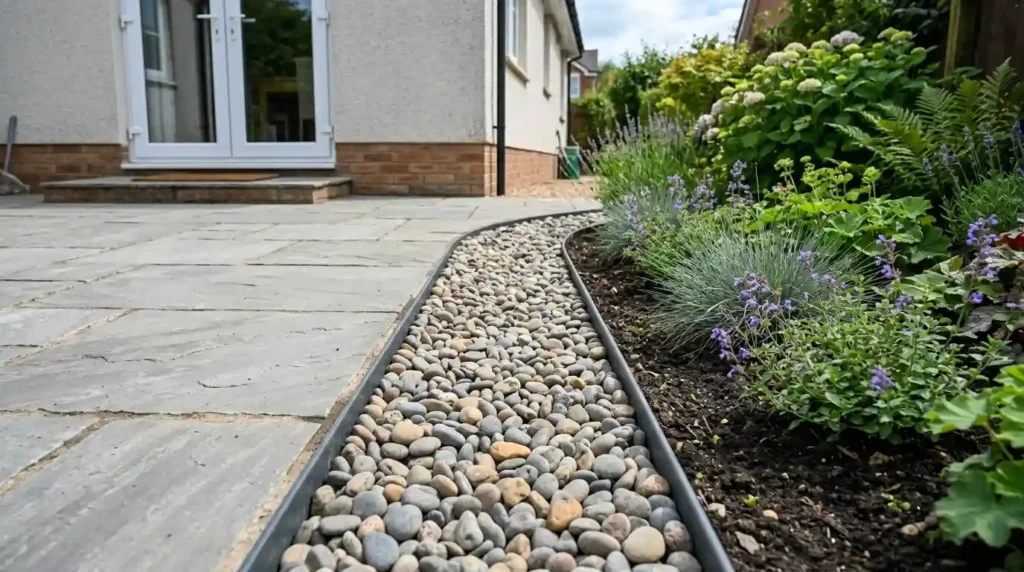
A narrow gravel strip can create a clean break between paving and soil.
It may reduce mud splash during rain. It can also give water a place to pass through when the base drains well.
Install solid edging on both sides. This keeps the gravel out of the lawn and off the patio.
Choose stone that is large enough to stay in place. Very small gravel can stick to shoes and spread across the seating area.
Do not treat gravel as a fix for major drainage trouble. Water still needs a safe place to go.
Best for: Clean patio edges and dry climates
Watch out for: Loose stones near doors and steps
Connect the Yard With a Planted Path
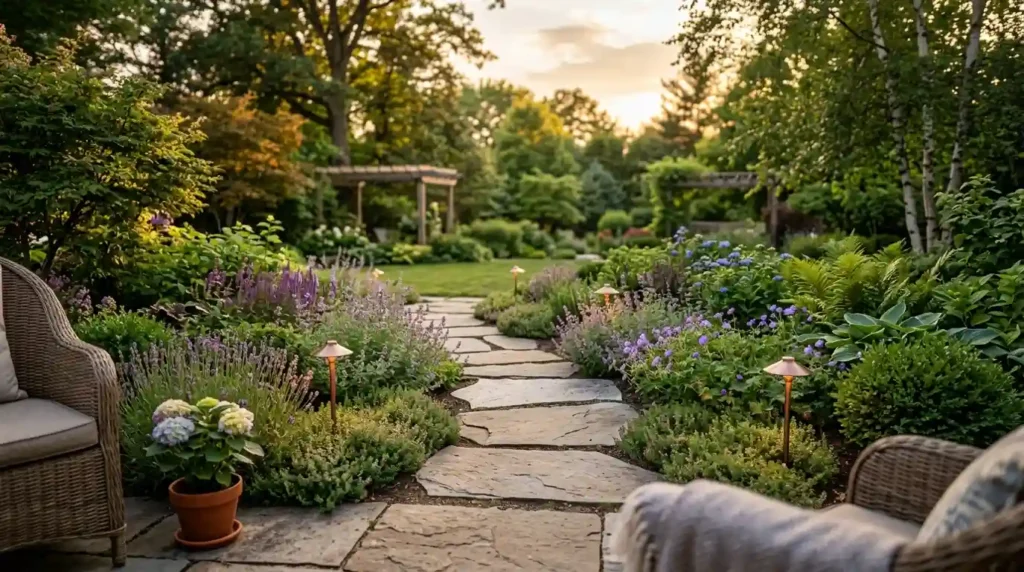
A path can make your patio feel like part of the whole garden.
Use stepping stones, pavers, or compact gravel. Add low plants along the sides to soften the route.
The path should be wide enough for safe walking. Stones must sit level so they do not rock or cause trips.
You can grow creeping thyme or another low plant between wide stones. Check that the plant can handle your sunlight and light foot traffic.
Add soft path lights when guests use the patio at night.
Best for: Patios set away from the house
Watch out for: Uneven stones and slippery surfaces
Grow Ground Cover Between Wide Pavers
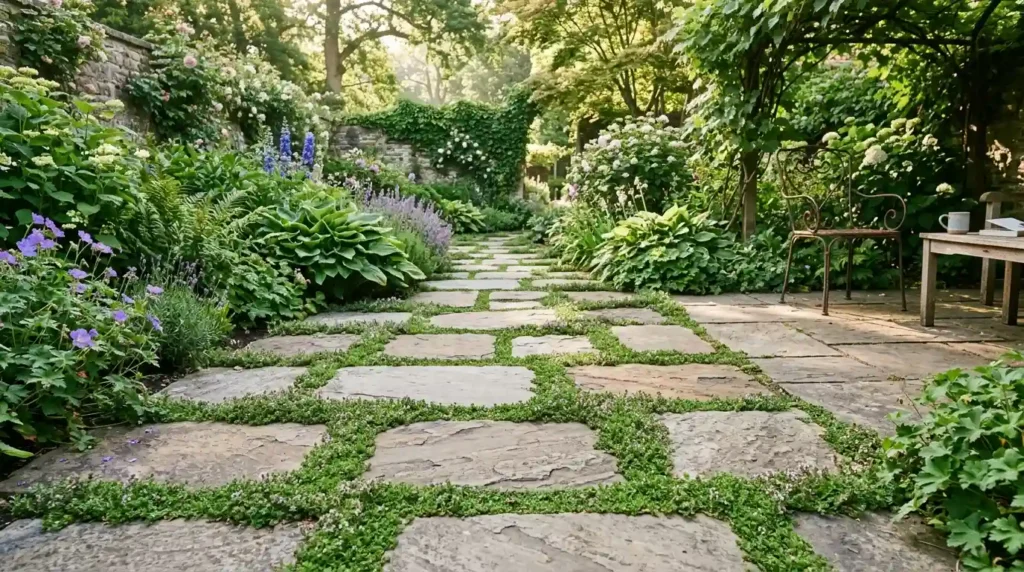
Plants between pavers can replace bare joints with soft green detail.
This works best when the gaps are wide enough to hold soil and plant roots. Tiny cracks will dry out too fast.
Creeping thyme may work in sunny areas. Dwarf mondo grass may suit mild, partly shaded spaces. Local plants may perform better than common garden-center choices.
Remove weeds before planting. Fill the joints with suitable soil and water the plants until they become settled.
Keep fast-growing plants away from joints that carry heavy foot traffic.
Best for: Garden-style patios and walkways
Watch out for: Plants that become slippery when wet
Plant Herbs Near the Outdoor Table
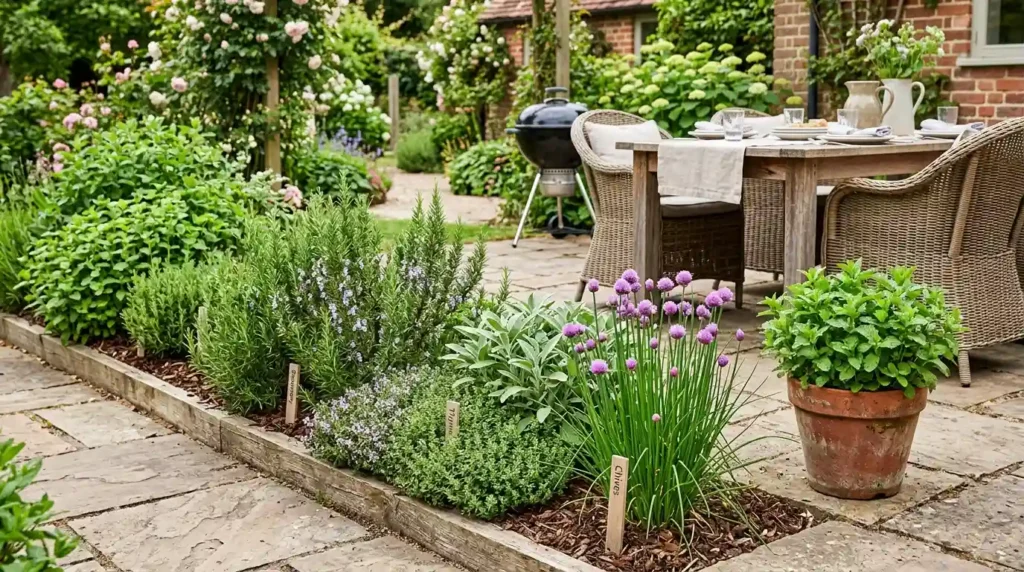
An herb border can make the patio useful as well as attractive.
Place rosemary, thyme, sage, or chives near the dining area. You can cut fresh herbs while cooking or serving food.
Many herbs prefer sun and well-drained soil. They may struggle in deep shade or wet ground.
Grow mint in a pot because it can spread quickly through a bed.
Keep herbs away from areas where food waste, grill smoke, or cleaning products may reach the soil.
A simple herb bed can also add scent when you brush past the leaves.
Best for: Outdoor kitchens and dining patios
Watch out for: Spreading herbs and poor drainage
Add a Small Garden for Bees and Butterflies
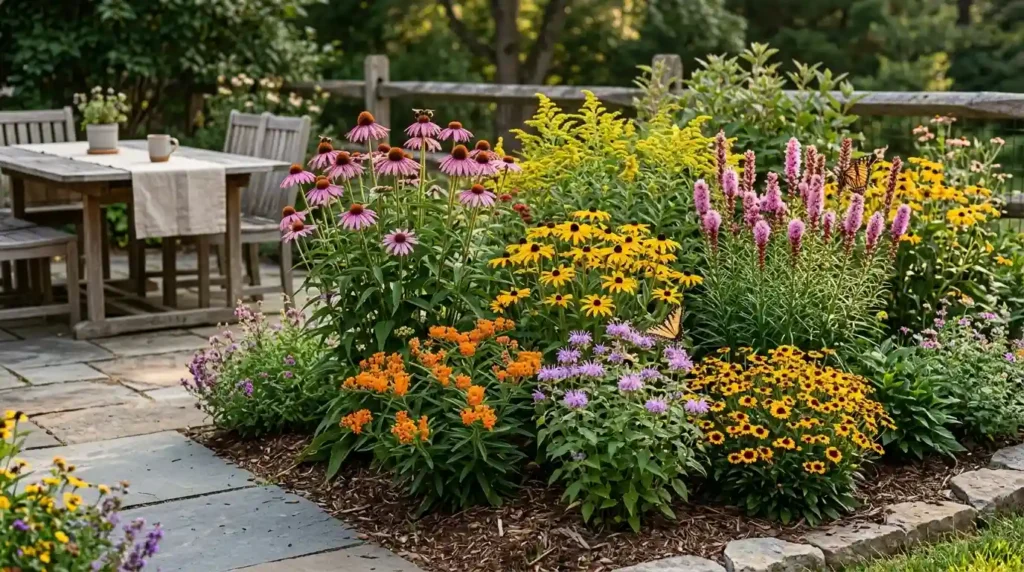
A small planting pocket can provide food for local pollinators.
Choose native flowers that bloom at different times. This gives insects a food source across more of the growing season.
Plant several of the same flower together. A clear group is easier for bees and butterflies to find.
Avoid spraying pesticides near blooming plants. They may harm helpful insects along with pests.
Place the bed a short distance from the main dining table if guests worry about bees. Most pollinators focus on flowers when left alone.
Use a local native plant guide to choose suitable species.
Best for: Nature-friendly yards
Watch out for: Plants that spread beyond the bed
Make the Patio Safer With Soft Lighting
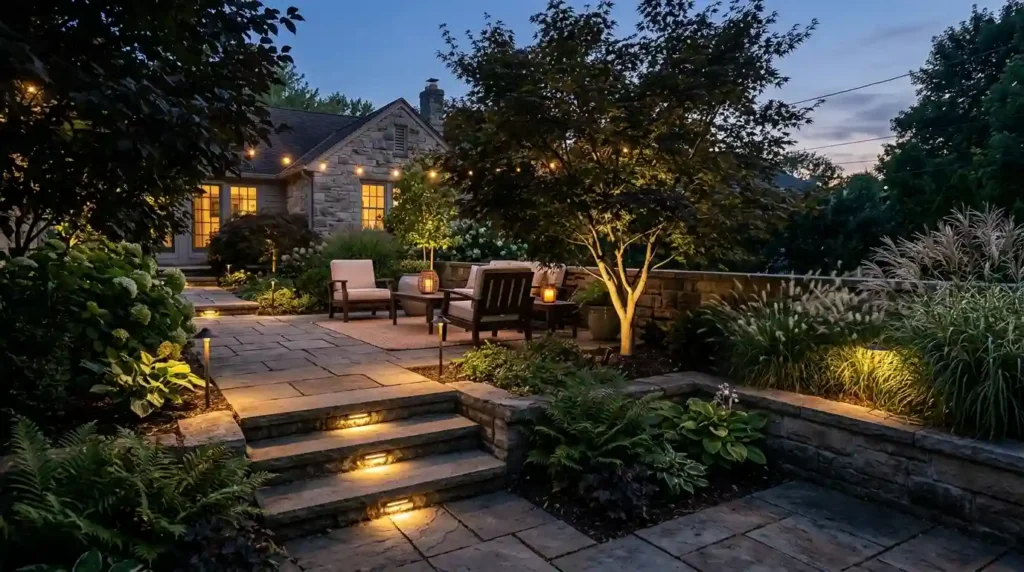
Good lighting helps people see steps, paths, and patio edges after dark.
Use warm, low-level lights instead of one bright floodlight. Strong glare can make nearby dark areas harder to see.
Place path lights near steps and changes in level. Uplight a small tree or shine soft light behind grasses for a calm effect.
Keep fixtures away from chair legs, lawn tools, and areas where children play.
Use outdoor-rated products. Hire a licensed professional for permanent wired lighting when local rules require it.
Best for: Evening use and safer walkways
Watch out for: Glare aimed at seats or neighboring homes
Turn a Wet Edge Into a Dry Creek Bed
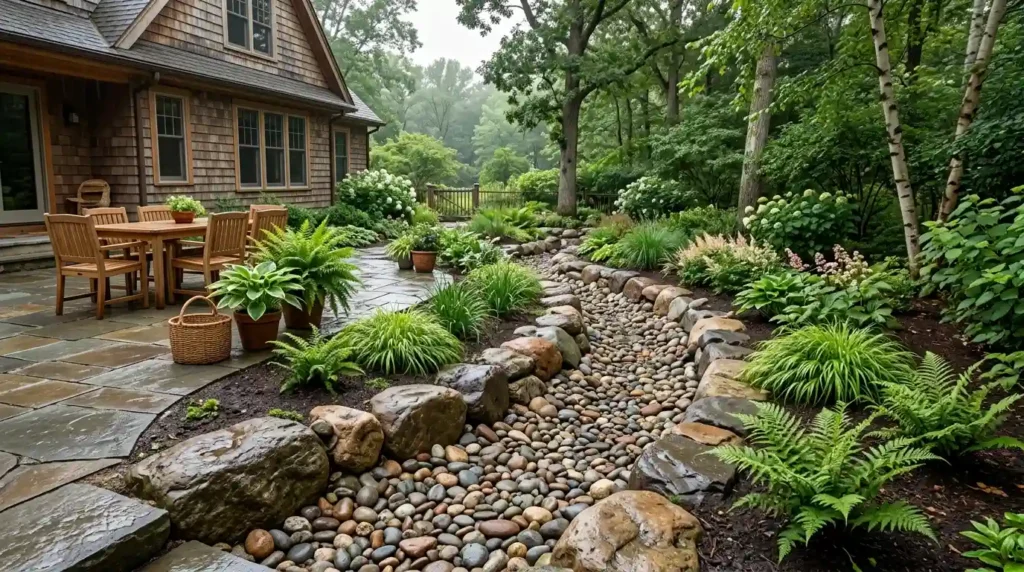
A shallow dry creek can guide minor runoff and add natural stone texture.
Place it where water already wants to flow. Use larger stones along the sides and smaller stones through the center.
The creek must lead water to a safe outlet. Do not send water onto a neighbor’s land or against your foundation.
Add moisture-tolerant plants beside the stones when the soil stays damp after rain.
A dry creek can look good during dry weather while still serving a practical purpose.
Call a professional when water enters the house, damages paving, or cuts deep channels through the yard.
Best for: Low areas beside patios
Watch out for: Building a channel with no safe outlet
Create One Strong Seasonal Focal Point
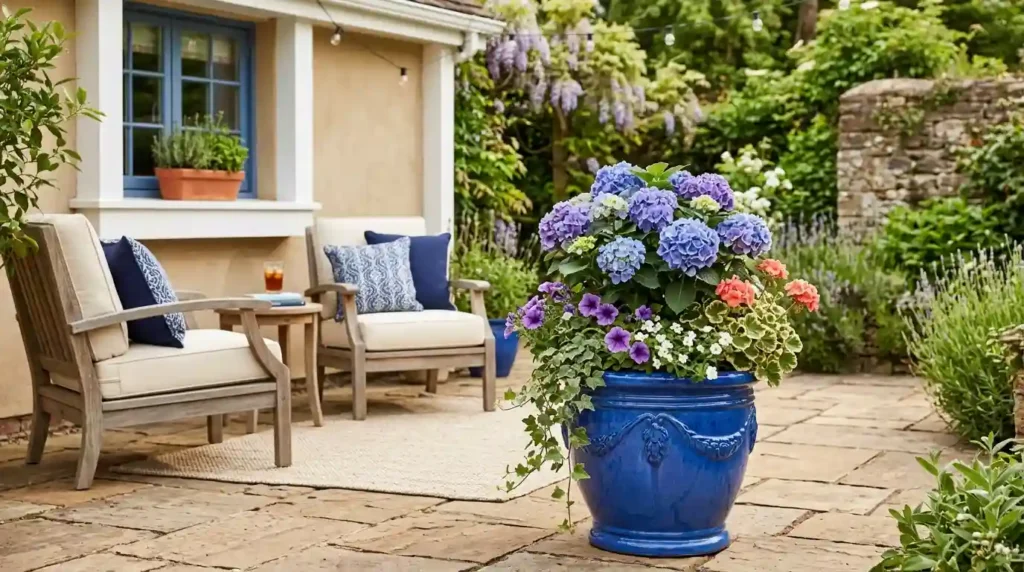
Too many small decorations can make a patio look cluttered.
Choose one area to draw attention. It could be a large container, flowering shrub, small tree, sculpture, or bulb bed.
Change small parts of the feature as the seasons shift. You may use spring bulbs, summer flowers, autumn grasses, or evergreen branches in winter.
Repeat one color from the patio furniture or house trim. This helps the feature feel connected to the space.
Keep the display in scale. A small patio needs a compact focal point, while a large patio can handle more height.
Best for: Quick visual impact
Watch out for: Too many unrelated colors and objects
Match Your Patio Landscaping to Your Home
A patio looks more finished when its plants and materials match the house.
You do not need every plant to be the same. Repeating a few shapes and colors is enough.
For a modern patio
Use clean edges, simple containers, ornamental grasses, and a limited color range.
Dark gravel and straight planting beds can work well with modern homes.
For a cottage-style patio
Choose herbs, flowering perennials, climbing roses, and curved borders.
Allow the plants to look full, but keep them out of paths.
For a tropical look
Use bold leaves and layered green plants.
This style needs a warm climate or containers that can move indoors during cold weather.
For a rustic patio
Use natural stone, native grasses, wood, and relaxed planting lines.
Avoid making the layout too messy. Repeat key plants to hold the design together.
For a small urban patio
Use tall narrow planters, wall planting, compact shrubs, and one strong focal point.
A simple three-part plan works well:
- Choose one main plant.
- Add two supporting plant types.
- Repeat those plants around the patio.
5 Patio Landscaping Mistakes That Create Extra Work
Some patios look good during the first season but become hard to manage later.
Planting too close to the paving
Plants grow wider each year. Leave room for their mature size.
Place plants far enough back so leaves do not cover paths or trap moisture against the patio.
Ignoring roots
Large roots may lift pavers or damage edging.
Research the root habits of trees and large shrubs before planting them near hard surfaces.
Blocking doors and walkways
Check how doors open and where people move chairs.
Keep thorny, stiff, or wide plants away from busy paths.
Letting water flow at the house
Raised beds and new edging can change the way water moves.
Keep soil below siding and guide water away from the foundation.
Choosing messy plants near dining areas
Some plants drop fruit, sap, flowers, or large amounts of leaves.
Place them where cleanup will not become a daily task.
Start With the Patio Problem You Notice Most
The best patio landscaping ideas improve comfort without adding more work than you can manage.
Measure the space first. Check the sunlight, drainage, and walking paths. Then choose plants based on their full-grown size.
You may begin with a few large containers. You could also add one privacy screen, a gravel edge, or a small shade tree.
There is no need to change the full yard at once. Fix the area that feels most bare or uncomfortable.
A clear plan and a few repeated materials can make your patio feel calm, useful, and connected to the garden.