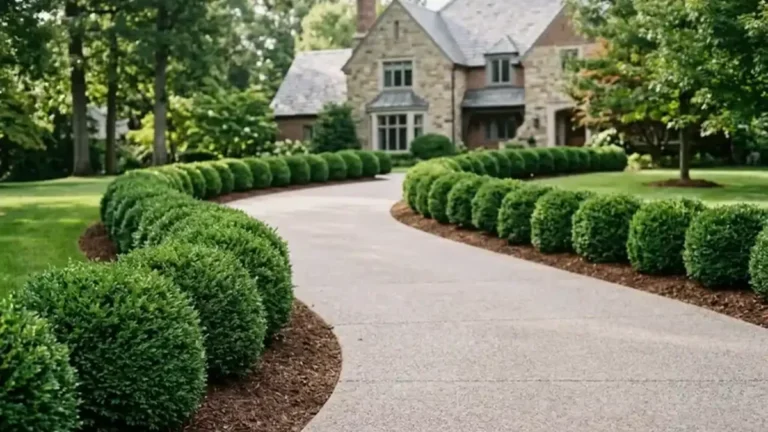
18 Low-Maintenance Driveway Landscaping Ideas
A beautiful driveway border should improve your home without taking over every weekend.
Yet the space beside a driveway can be hard to manage. Heat rises from concrete and asphalt. Soil may be dry, packed down, or washed away by rain. Narrow grass strips also need frequent mowing and trimming.
These low-maintenance driveway landscaping ideas can help you fix those problems. You can use gravel, hardy plants, neat borders, lighting, and drainage features to create a cleaner entrance.
The best choice depends on your space. A narrow driveway may need compact plants. A sloped driveway may need better water control. A hot driveway may need plants that can handle dry soil and strong sun.
Start with the problem that wastes most of your time. Then choose an idea that makes that area easier to care for.
What Makes Driveway Landscaping Easy to Maintain?
Low maintenance does not mean no maintenance. Every driveway border needs some care.
The goal is to avoid jobs that return every week. These may include mowing narrow grass strips, pulling weeds, watering thirsty plants, or cutting back shrubs that grow over the pavement.
Start by checking how much sunlight the area gets. Then look at the soil and watch where rainwater flows. Plants that match the site will need less care.
Check the mature size of every plant before you buy it. A small shrub in a nursery pot may become several feet wide. If it grows over the driveway, you will need to prune it often.
A simple design is also easier to manage. Use three to five plant types instead of filling the border with many different plants.
Cover bare soil with two to three inches of mulch, gravel, or groundcover. This can reduce weeds and help the area look finished.
A good low-care plan uses five basic parts:
The right plant + enough space + a firm edge + covered soil + controlled water
Compare the 18 Low-Maintenance Driveway Ideas
The best option depends on your budget, climate, driveway size, and main yard problem. Use this table to find a good starting point.
| Driveway Idea | Cost | Maintenance | Best For | DIY Friendly |
| Gravel edging | Low to medium | Very low | Straight driveway borders | Yes |
| Native grasses | Low to medium | Seasonal cutting | Sunny areas | Yes |
| Dwarf evergreens | Medium | Light pruning | Year-round color | Yes |
| Groundcover | Low to medium | Seasonal care | Narrow lawn strips | Yes |
| River-rock strip | Medium | Occasional cleanup | Runoff and erosion | Sometimes |
| Drought-tolerant flowers | Low to medium | Seasonal trimming | Hot, sunny areas | Yes |
| Mulch beds | Low | Yearly refreshing | Budget projects | Yes |
| Decorative boulders | Medium | Very low | Permanent focal points | Sometimes |
| Permeable pavers | High | Low | Drainage and parking edges | Usually not |
| No-mow grass | Medium | One or two cuts | Soft driveway borders | Yes |
| Three-plant design | Medium | Low | Clean, simple beds | Yes |
| Driveway lighting | Low to medium | Light cleaning | Safety and curb appeal | Yes |
| Self-watering planters | Medium | Regular refilling | Driveway entrances | Yes |
| Mailbox garden | Low | Low | Small entrance areas | Yes |
| Rain garden | Medium | Low after setup | Heavy runoff | Sometimes |
| Columnar trees | Medium to high | Seasonal care | Long driveways | Sometimes |
| Mow strip | Medium | Very low | Lawn edges | Sometimes |
| Xeriscape border | Medium | Very low | Hot and dry climates | Yes |
Stop Mowing Narrow Edges With a Gravel Border
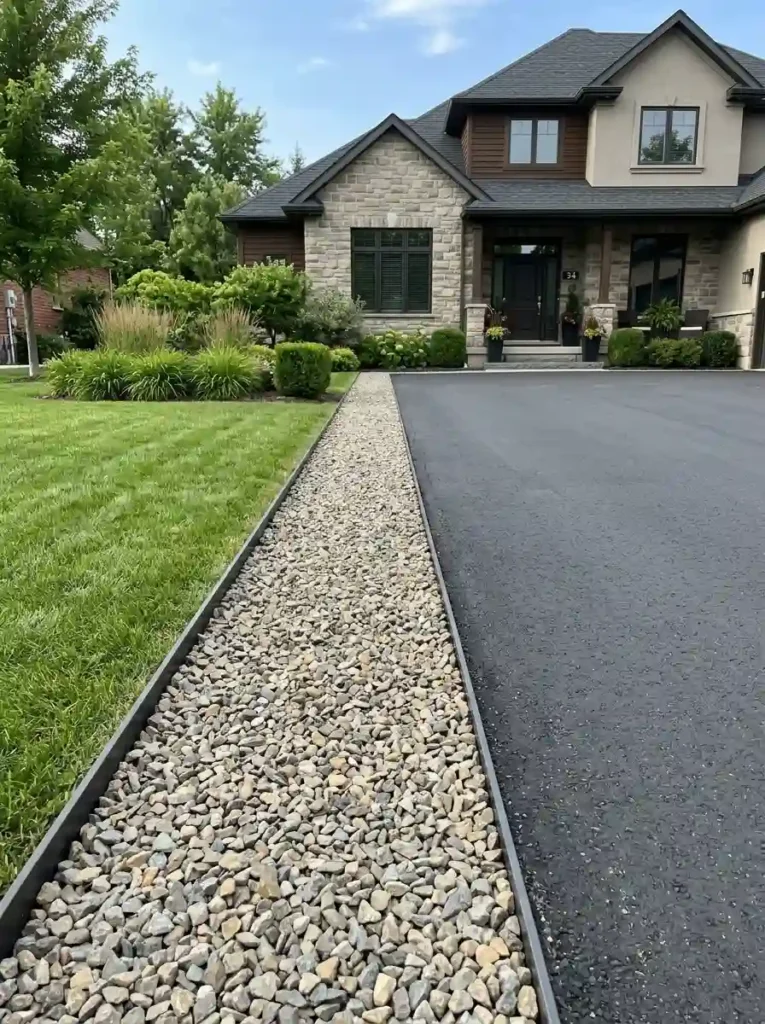
A thin strip of grass beside a driveway can be hard to mow. It may also turn brown from heat or get damaged by car tires.
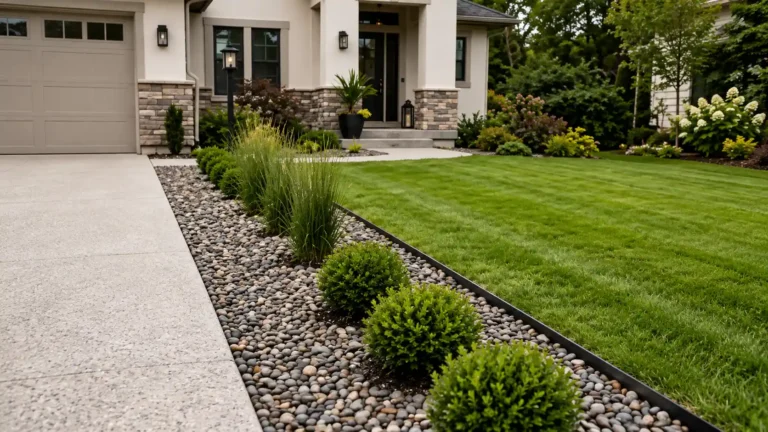
Replace that grass with a two- or three-foot gravel border. Gravel does not need water, cutting, or feeding. It also creates a clear break between the driveway and the rest of the yard.
Use steel, brick, stone, or aluminum edging to keep the gravel in place. Without a firm edge, stones may spread across the driveway or into nearby grass.
Angular crushed stone usually stays in place better than smooth pea gravel. Rounded stones can roll onto the driving surface.
Light gravel works well beside modern homes. Darker stone can suit rustic brick, wood, or natural stone homes.
Best for: Straight driveway edges and dry areas
Maintenance: Rake loose stones back into place once or twice a year
Helpful tip: Use a compacted base to reduce sinking and weed growth
Cut Yearly Yard Work With Native Ornamental Grasses
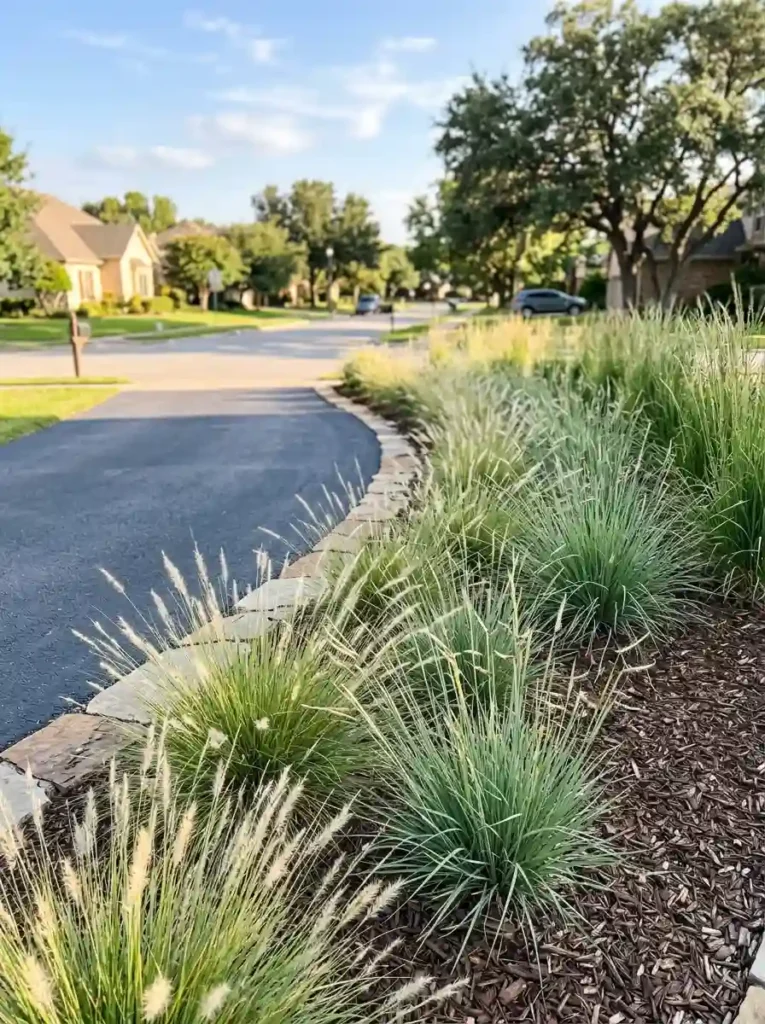
Ornamental grasses can soften a hard driveway edge. They add height, movement, and texture without needing regular shaping.
Choose clumping grasses instead of fast-spreading types. Clumping plants stay in one area and are easier to control.
Little bluestem, prairie dropseed, pink muhly grass, blue fescue, and native sedges may work in some regions. Check which plants grow well in your local climate before buying them.
Plant grasses in repeated groups. Three or five matching plants often look better than several single plants placed far apart.
Keep tall grasses away from the street entrance. They should not block your view when you pull out of the driveway.
Many ornamental grasses need one cut each year. This is much easier than mowing grass every week during the growing season.
Best for: Sunny driveway borders
Maintenance: Cut back once a year
Helpful tip: Check the mature height so plants do not block drivers’ views
Get Year-Round Color With Dwarf Evergreen Shrubs
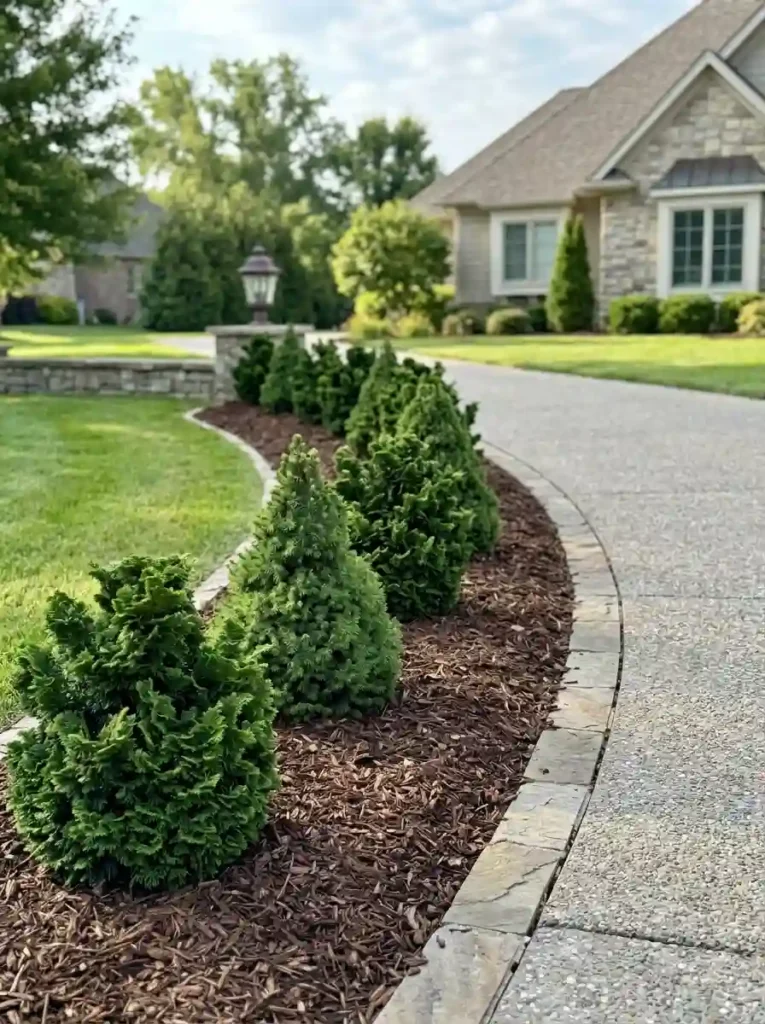
Flowering plants may disappear during winter. Dwarf evergreens keep their shape and color through most or all of the year.
Good choices may include dwarf juniper, inkberry holly, compact arborvitae, or dwarf yaupon holly. Low-growing rosemary may work in warm areas.
Choose plants that stay compact on their own. A naturally small shrub needs less cutting than a large shrub forced into a tight space.
Read the plant label carefully. Focus on the mature width, not the size of the nursery pot.
Leave enough room between the plant and the driveway. Branches should not scrape cars, cover lights, or hang over the pavement.
Use one or two shrub types for a clean look. Three matching evergreens along a short driveway can create more impact than many unrelated plants.
Best for: Year-round driveway border landscaping
Maintenance: Light pruning when needed
Helpful tip: Choose salt-tolerant plants if winter road salt reaches the bed
Replace Hard-to-Mow Grass With Groundcover
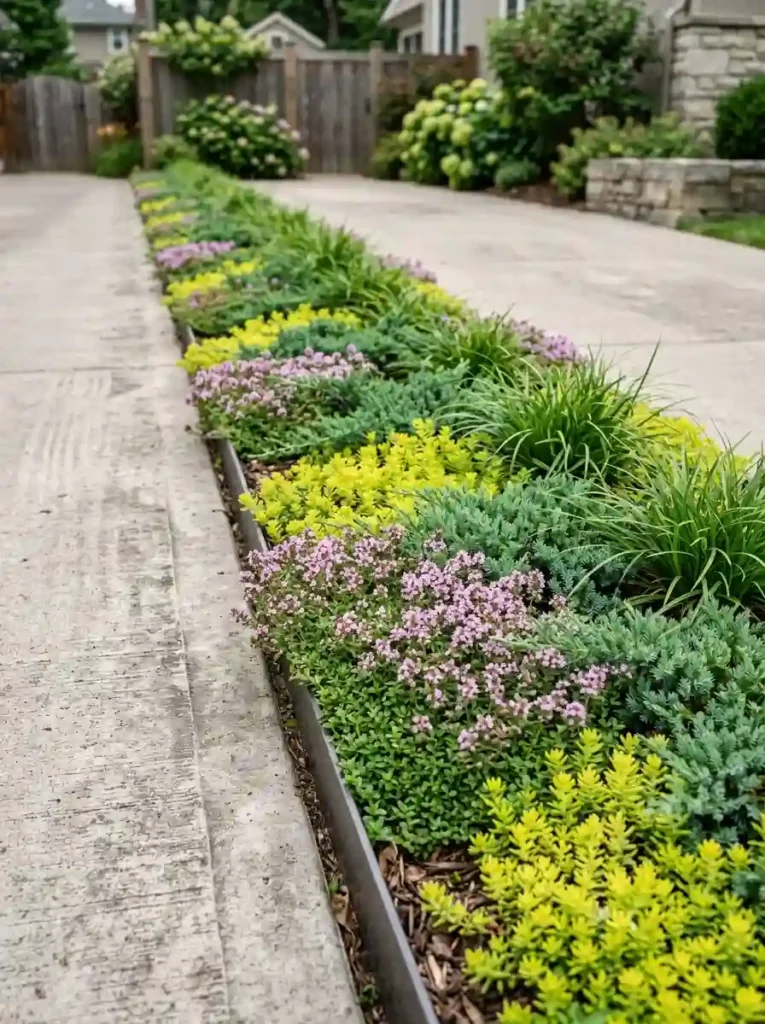
Narrow grass strips often look untidy because a mower cannot reach them well. Groundcover can fill those areas without weekly cutting.
Creeping thyme and low-growing sedum can work in sunny, dry sites. Creeping juniper may suit a wider border. Native sedges may work in areas with some shade.
Choose a plant that matches the sunlight and soil. A sun-loving groundcover may become thin and weak in deep shade.
Avoid plants that spread too fast. Some types can move into lawns, flower beds, or cracks in the pavement.
Keep groundcover away from spots where tires regularly cross. Most plants will not handle that pressure.
Use edging while the plants fill in. It may take one or more growing seasons for the groundcover to cover the soil.
Best for: Narrow strips where mowing is difficult
Maintenance: Trim edges once or twice a year
Helpful tip: Check local invasive plant lists before choosing a spreading plant
Fix Runoff With a River-Rock Drainage Strip
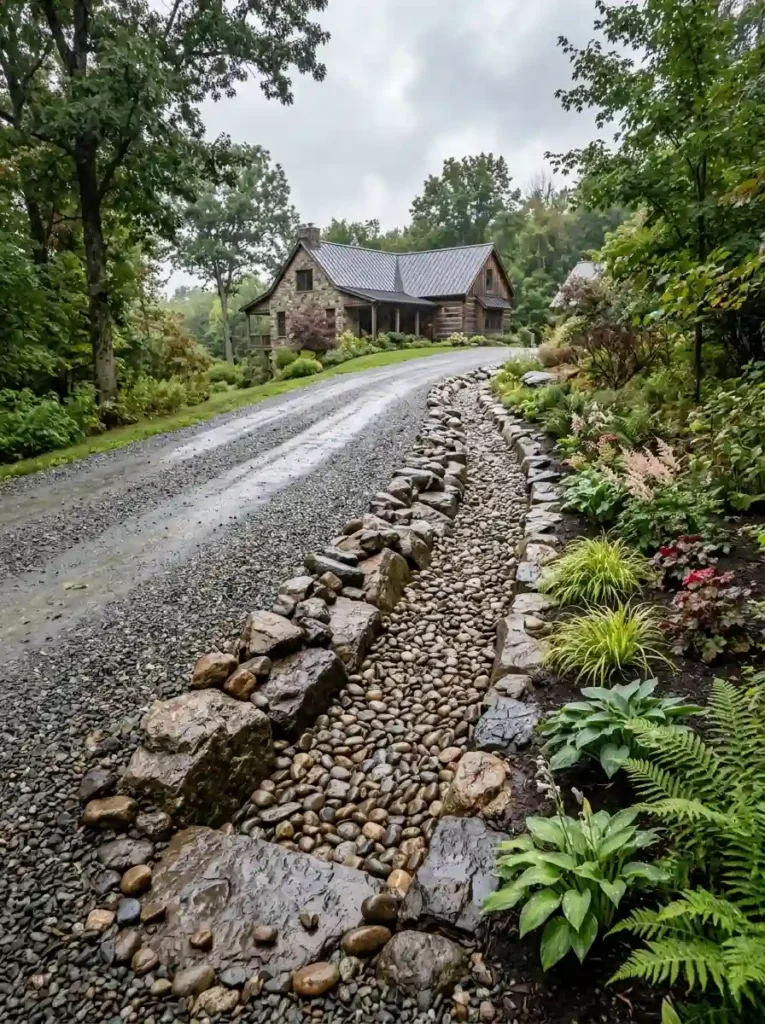
Does rain wash mulch onto your driveway? Does water collect along one side after every storm?
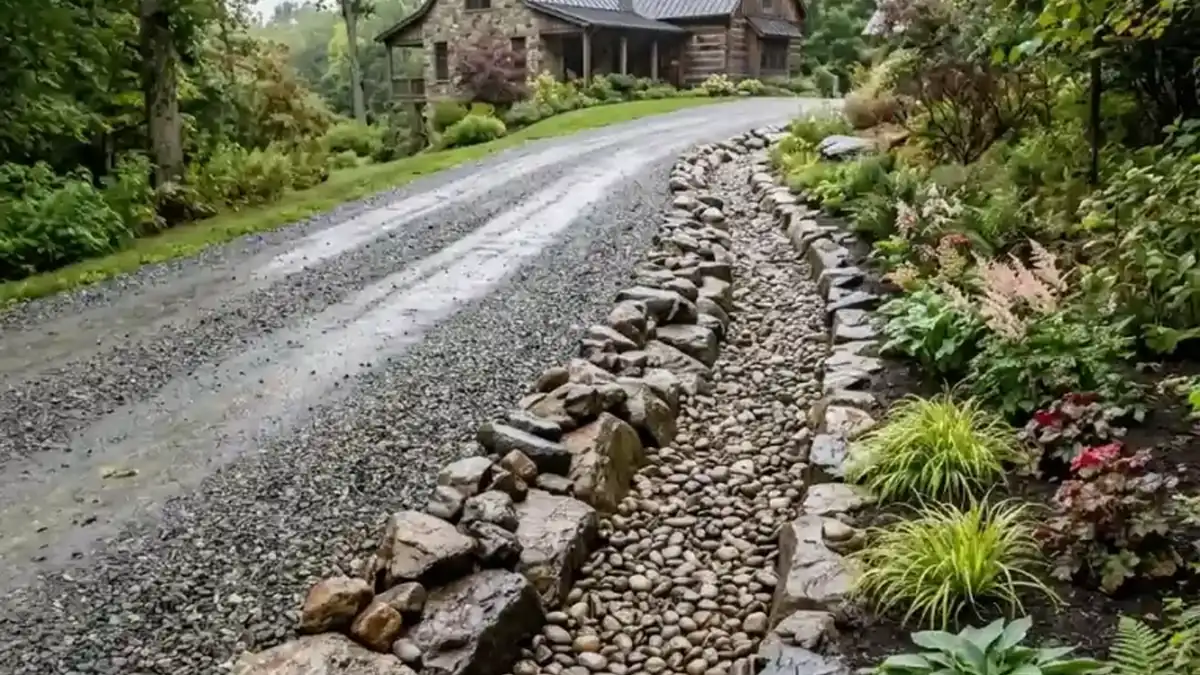
A river-rock strip can guide water while making the area look planned. It may look like a small dry creek beside the driveway.
Use larger rocks where the water moves fastest. Fill the spaces with smaller river stones. This mix looks more natural and helps keep the bed stable.
The strip should move water to a safe drainage area. Do not send water onto a neighbor’s land, public path, or building foundation.
You can place moisture-tolerant plants along the outer edge. Keep the main water path open so stems and roots do not trap waste.
A rock strip can help with light runoff. Major flooding, deep erosion, or sinking pavement may need professional grading.
Best for: Sloped driveways and wet edges
Maintenance: Remove leaves and waste after heavy storms
Helpful tip: Watch the water during rainfall before choosing the strip’s location
Add Color With Drought-Tolerant Driveway Plants
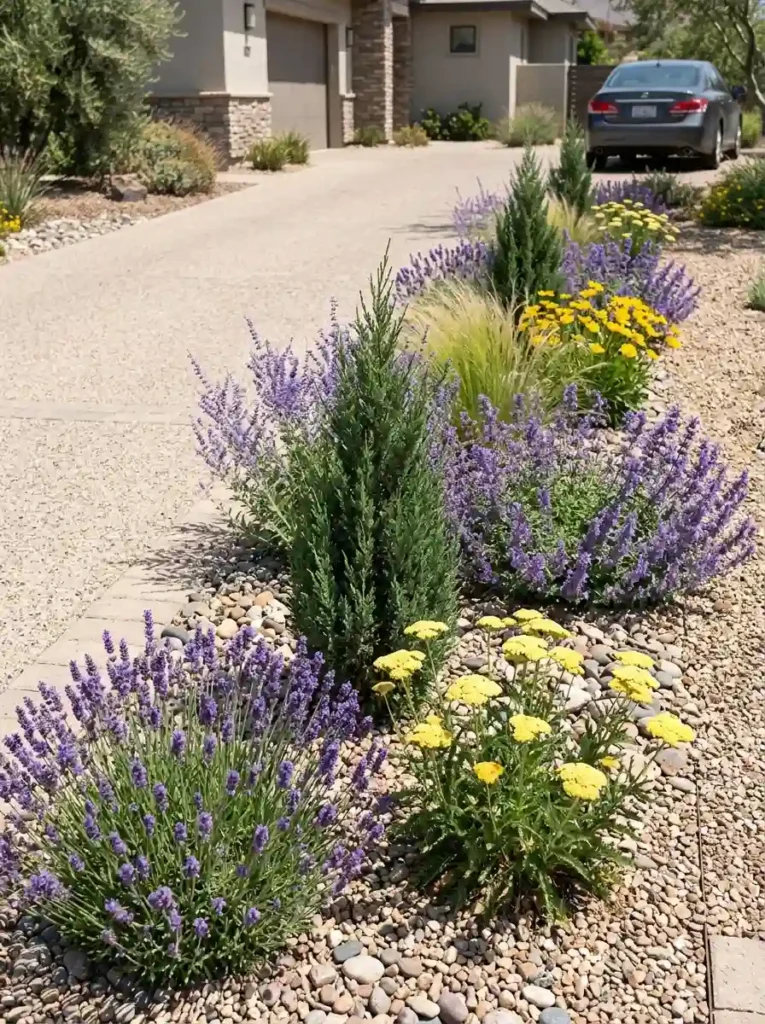
Low-care landscaping does not need to look dull. You can add flowers without creating a bed that needs daily watering.
Choose plants that handle hot pavement, bright sun, and dry soil. Lavender, catmint, salvia, yarrow, coreopsis, coneflower, and Russian sage may work in suitable climates.
Group the plants in sets of three, five, or seven. Repeated groups look fuller and more organized than single flowers scattered across the bed.
Use two or three flower colors. Too many colors can make a narrow border look busy.
New plants still need regular water while their roots grow. After the first season, well-chosen drought-tolerant driveway plants should need less help.
Add an evergreen shrub or ornamental grass between flower groups. This keeps the bed attractive when the flowers are not blooming.
Best for: Hot, sunny driveway edges
Maintenance: Seasonal cutting and light cleanup
Helpful tip: Check your local growing zone before choosing plants
Reduce Weeds With Mulch and Crisp Edging
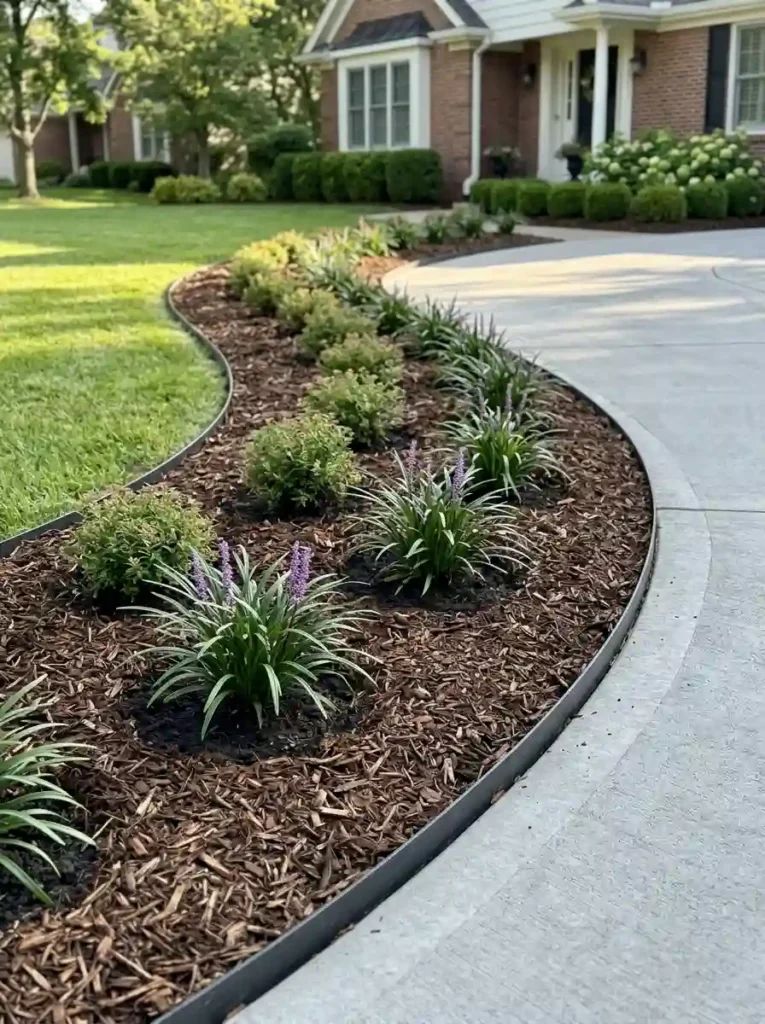
A simple mulch bed is one of the cheapest ways to clean up a driveway border.
Start by creating a clear shape. A smooth curve can soften a long driveway. A straight line may fit a modern home.
Use metal edging, brick, stone, concrete curbing, or a clean-cut trench. The edge keeps grass from moving into the bed. It also stops mulch from spreading across the driveway.
Apply two to three inches of mulch. A layer that is too thin may not block weeds. A very deep layer can hold too much water around plant stems.
Do not pile mulch against tree trunks or shrubs. Leave a small open space around each stem.
Organic mulch improves the soil as it breaks down. Stone lasts longer but can hold heat.
Best for: Budget-friendly driveway improvements
Maintenance: Add fresh mulch when the layer becomes thin
Helpful tip: Make the bed wide enough for the plants at full size
Add a Permanent Focal Point With Decorative Boulders
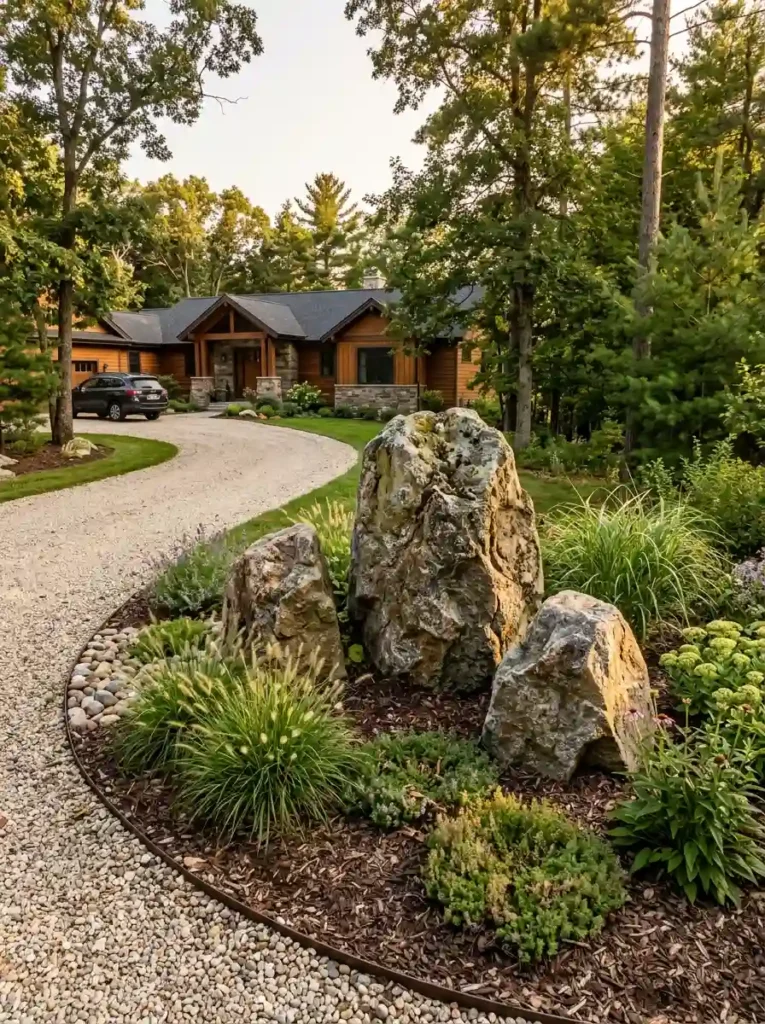
Plants are not the only way to add interest. Decorative boulders create shape and height without watering, feeding, or pruning.
Use one large boulder with two smaller stones. Odd-numbered groups often look more natural than matching pairs.
Partly bury each stone instead of placing it on top of the soil. This makes the boulder look like part of the land.
Choose stone that matches the colors around your home. Gray stone can suit concrete and modern walls. Warm brown stone may fit brick or wood.
Place boulders outside the vehicle turning area. They should also stay clear of snowplows, lawn equipment, and doors.
Add a few grasses or groundcover plants around the stones. The plants soften the hard edges without creating much extra work.
Best for: Wide driveway beds and entrance islands
Maintenance: Remove weeds and leaves when needed
Helpful tip: Large boulders may need professional delivery and placement
Improve Drainage With Permeable Paver Bands
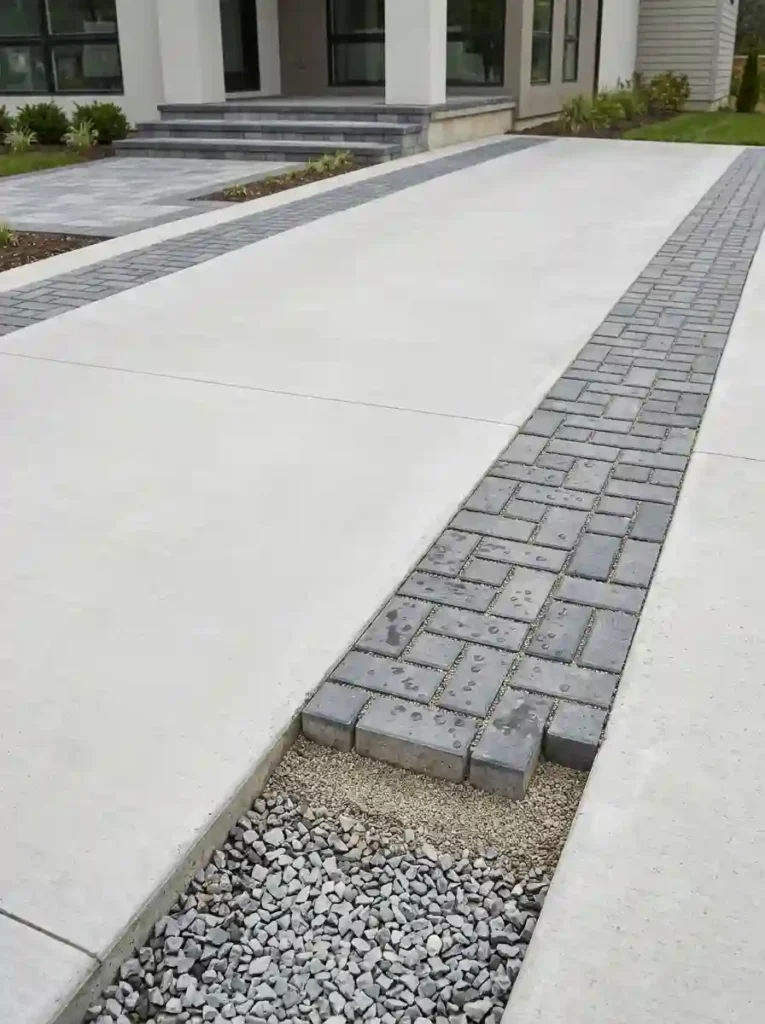
Permeable pavers can add a neat border while allowing some rainwater to move through the joints.
Use them as narrow bands beside the driveway, parking strips, or an accent near the entrance. This can cost less than replacing the full driveway.
The base matters. Poorly installed pavers may sink, spread, or hold water. The area needs proper digging, grading, and compacted stone below the surface.
Choose a paver color that connects with the home, walkway, or front steps. This helps the border feel like part of the whole property.
Leaves, soil, and other waste can block the open joints. Clean the surface when buildup appears.
Permeable pavers may help with light water control, but they cannot fix every drainage problem.
Best for: Modern homes, parking edges, and runoff areas
Maintenance: Sweep or clean the joints from time to time
Helpful tip: Hire an experienced installer for large or load-bearing areas
Soften the Border With No-Mow Grass or Sedges
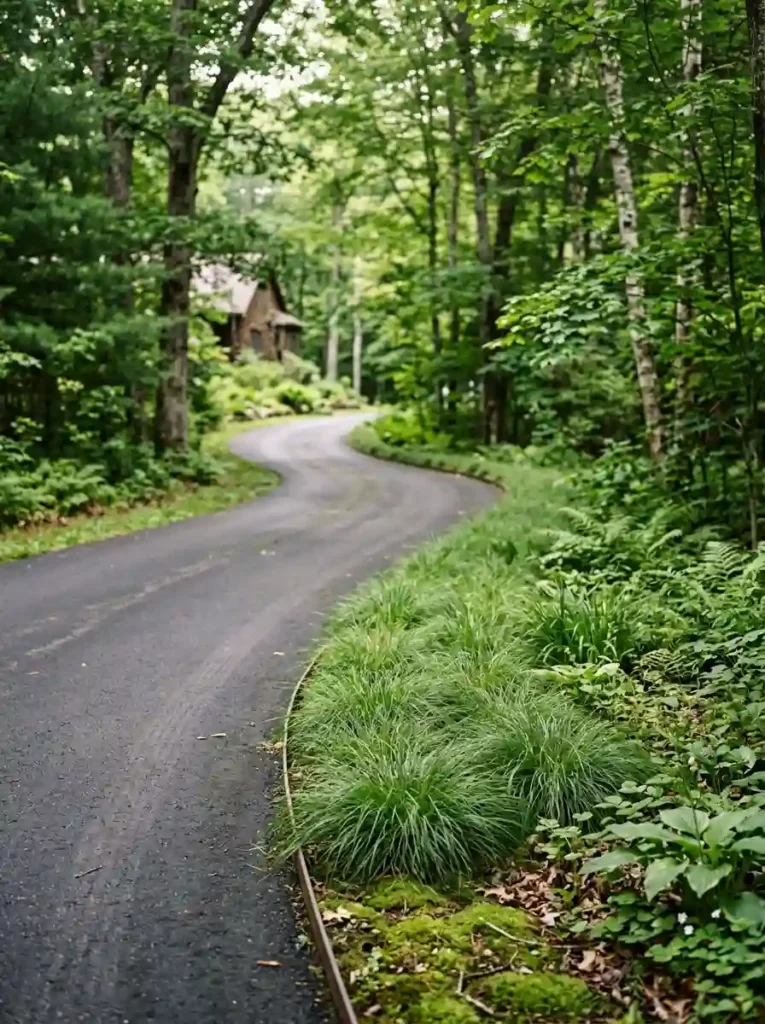
Gravel is practical, but some homeowners want a softer look. No-mow grass or low sedges can provide it.
Fine fescue mixes and native sedges may need only one or two cuts each year. Standard lawn grass may need cutting every week during warm months.
Choose a plant that fits the site. Some sedges prefer shade and moisture. Others grow better in dry sun.
This idea works best beside the driveway, not in areas where tires pass. Repeated vehicle pressure can leave deep tracks and kill the plants.
Use a firm edge between the planting strip and the driveway. This keeps soil and stems from spreading across the pavement.
The finished look can feel soft, natural, and less formal than a gravel border.
Best for: Woodland homes and relaxed garden styles
Maintenance: One or two seasonal cuts
Helpful tip: Confirm that the plant can handle your local heat and winter weather
Make the Design Look Better With Only Three Plants
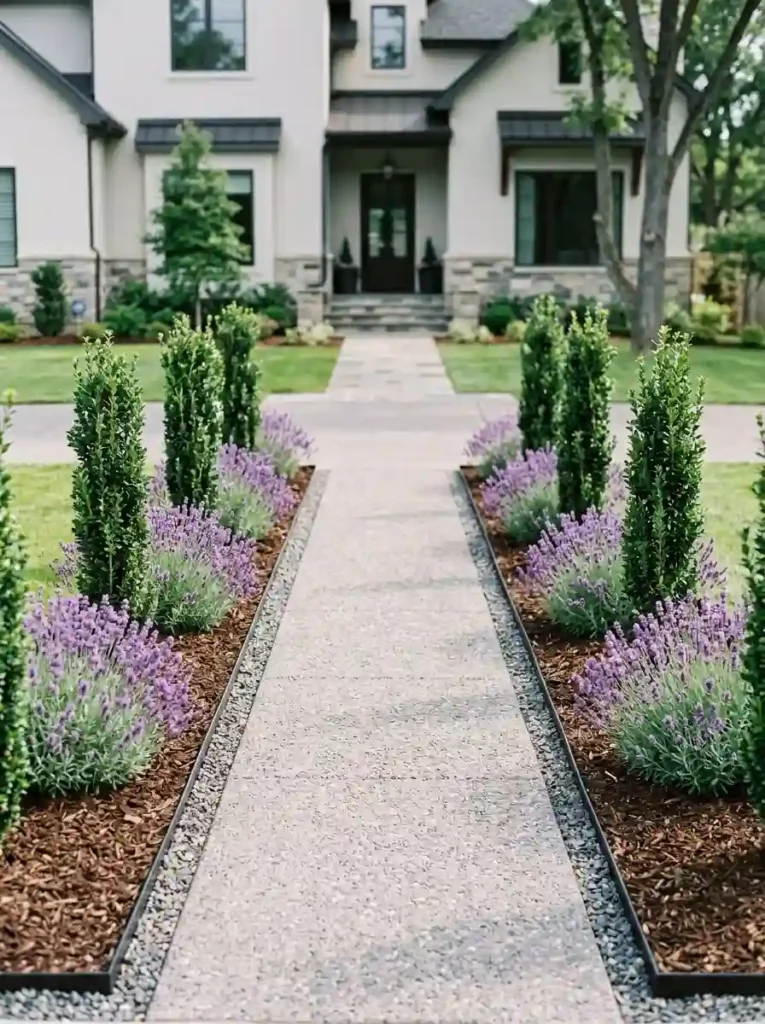
Using fewer plant types can make a driveway border look cleaner. It also makes care easier.
Choose one plant for structure. This might be a dwarf evergreen or upright grass.
Add one flowering plant for color. Then use one groundcover or mulch to cover the soil.
Repeat that same group along the driveway. Repetition connects the whole space and keeps the border from looking random.
Try one of these simple combinations:
- Dwarf juniper, catmint, and creeping thyme
- Ornamental grass, salvia, and sedum
- Compact holly, coneflower, and dark mulch
- Upright evergreen, lavender, and pale gravel
Keep enough space between plants. A new bed may look open at first, but plants need room to reach their full size.
Best for: Small driveways and simple garden styles
Maintenance: Depends on the three plants you choose
Helpful tip: Use the same combination on both sides for a balanced look
Make the Driveway Safer With Simple Lighting
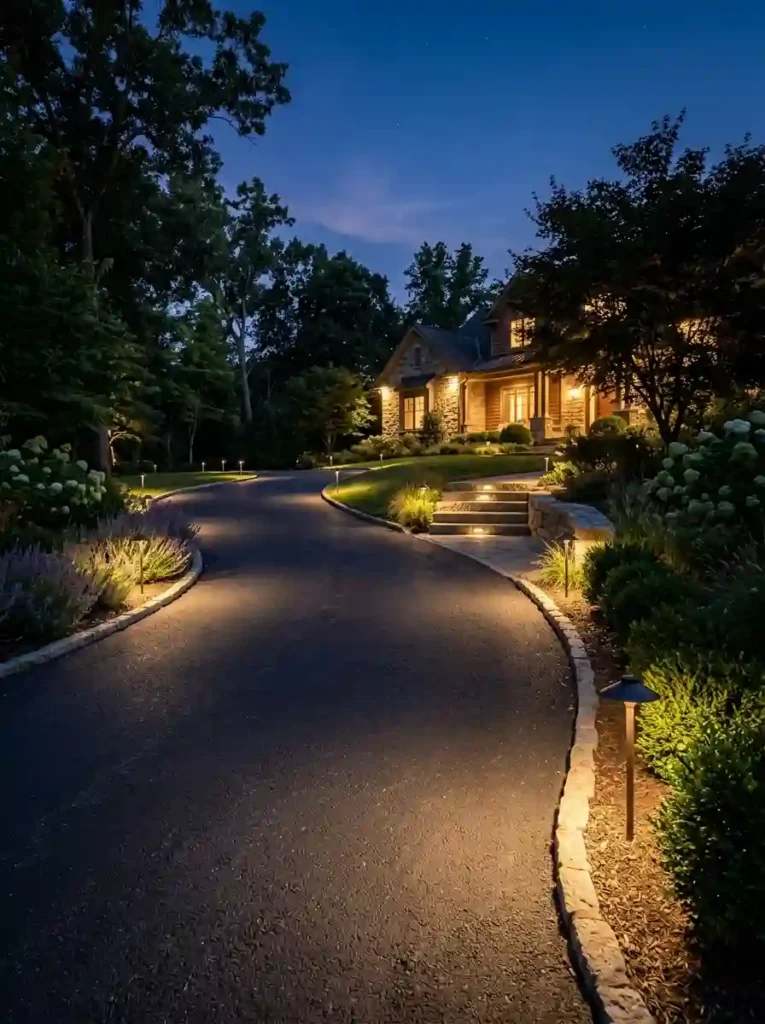
Driveway lighting can improve safety without adding much yard work.
Place lights near curves, steps, entrance posts, and changes in ground level. Do not line the full driveway with too many bright fixtures.
Low, soft light is often enough to mark the edge. Strong glare can make it harder to see at night.
Solar lights are easy to install because they do not need wires. They work best where the panels receive several hours of direct sun.
Low-voltage lights may work better in shade. They can also provide steadier light during cloudy weather.
Keep the spacing even. Random gaps can make the driveway look unfinished.
Clean dirt from solar panels and light covers. Replace weak rechargeable batteries when the lights stop lasting through the night.
Best for: Dark entrances and curved driveways
Maintenance: Light cleaning and battery checks
Helpful tip: Test the light positions after dark before fixing them in place
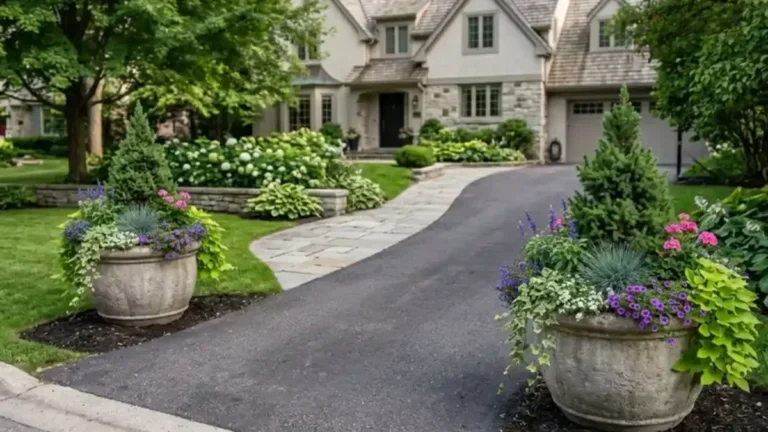
Frame the Entrance With Self-Watering Planters
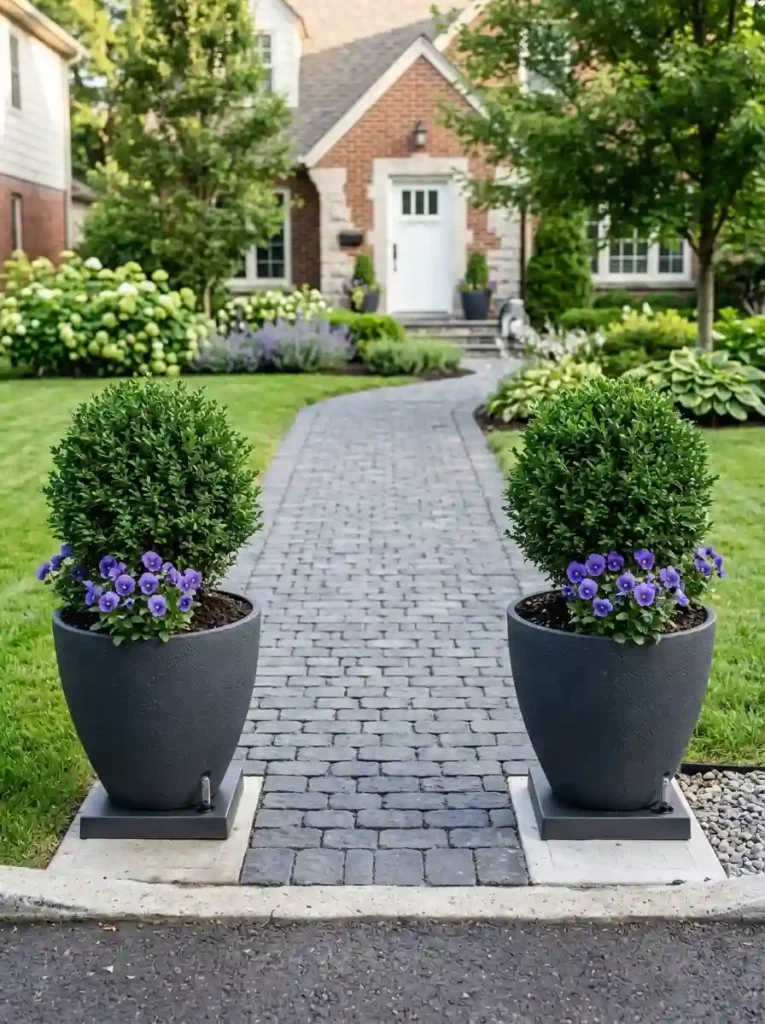
You may not have space for a full planting bed. Large planters can still create a clear and attractive entrance.
Use two large containers instead of several small pots. Large pots hold more soil and dry out more slowly.
Self-watering planters have a water space below the soil. Plant roots draw water as needed. You still need to refill them, but you may not need to water every day.
Choose frost-safe containers if winters are cold. Lightweight plastic or fiberglass pots are easier to move than concrete.
Use one main plant in each pot. A small evergreen or ornamental grass can provide long-lasting shape.
You can add one seasonal flower for extra color. Skip it when you want the lowest possible care.
Best for: Small driveways and paved entrances
Maintenance: Refill water and remove dead growth
Helpful tip: Use heavy planters in windy areas so they do not tip over
Improve the Entrance With a Small Mailbox Garden
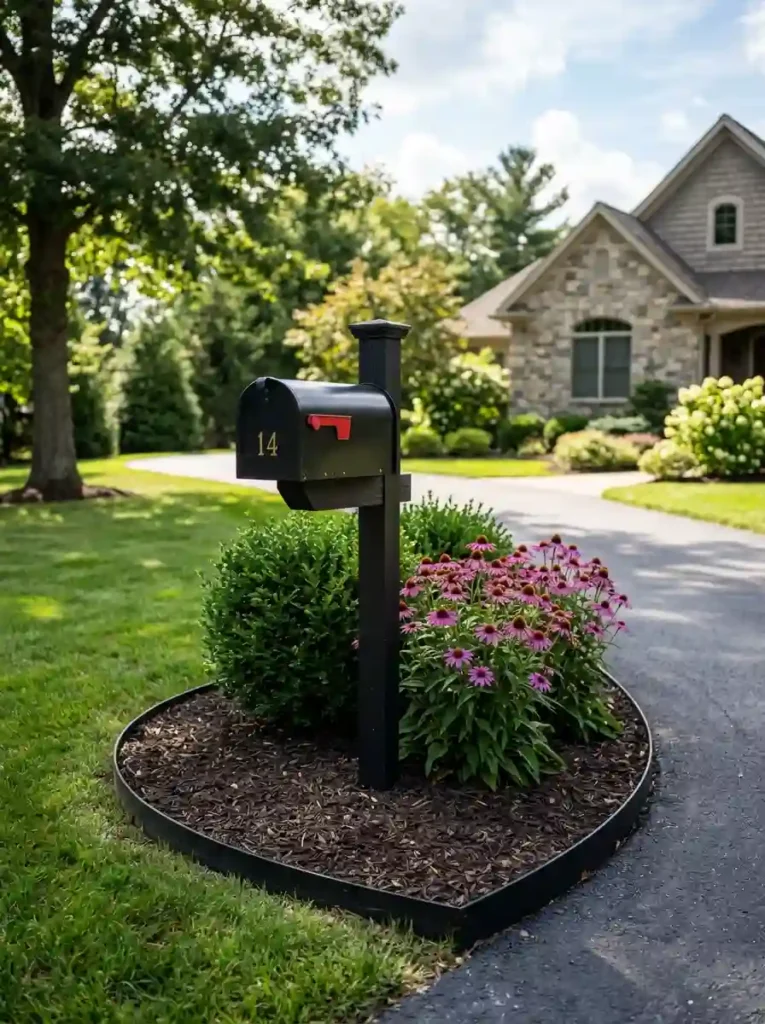
A mailbox garden can make the driveway entrance feel finished without taking up much space.
Keep the layout simple. Use one compact shrub, one flowering plant, and mulch or low groundcover.
Place taller plants behind the mailbox. Keep the front and sides open so mail can be delivered without trouble.
Choose plants that handle heat from the road. In cold areas, they may also need to handle salt, dirty snow, and wind.
A three- or four-foot bed is often enough. Larger beds may become difficult to maintain near the street.
Check local rules before changing the area. Some communities have limits on mailbox placement, height, and nearby plants.
Best for: Small driveway entrances
Maintenance: Seasonal trimming and fresh mulch
Helpful tip: Keep plants below the mailbox door and away from the walking path
Control Heavy Runoff With a Rain Garden
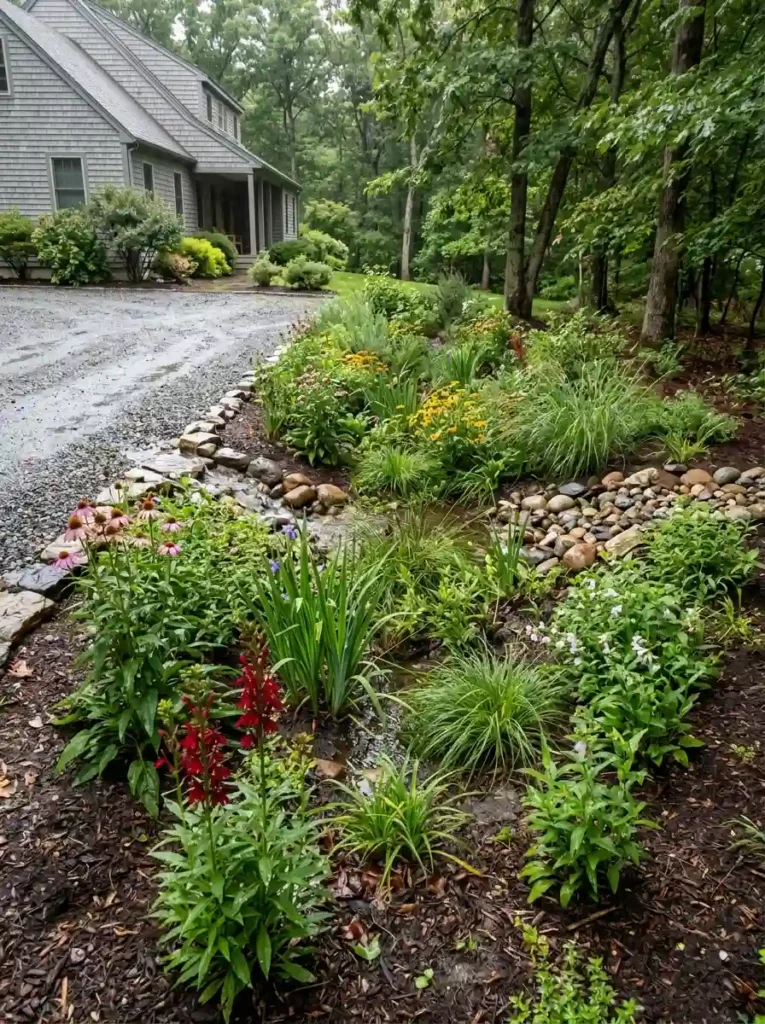
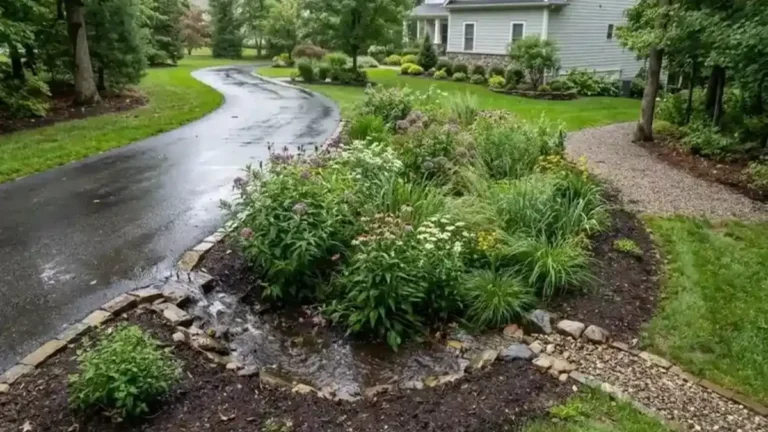
A rain garden collects water in a shallow planted area. It can help when water flows from the driveway into one part of the yard.
The garden should sit below the driveway edge, but away from the home’s foundation. It also needs a safe overflow path during heavy rain.
Choose native plants that can handle both wet and dry periods. Plants in the lowest part need to handle standing water for a short time. Plants near the outer edge may need drier soil.
Test the soil before digging. Water should drain within a safe period. Soil that stays wet for too long may need another solution.
Keep the garden away from septic systems, buried lines, and large tree roots.
Rain garden rules vary by area. Use your city or county stormwater guide before choosing the size and location.
Best for: Driveways with repeated runoff
Maintenance: Weed and water during the first growing season
Helpful tip: Call a professional when water reaches the house or damages the pavement
Frame a Long Driveway With Columnar Trees
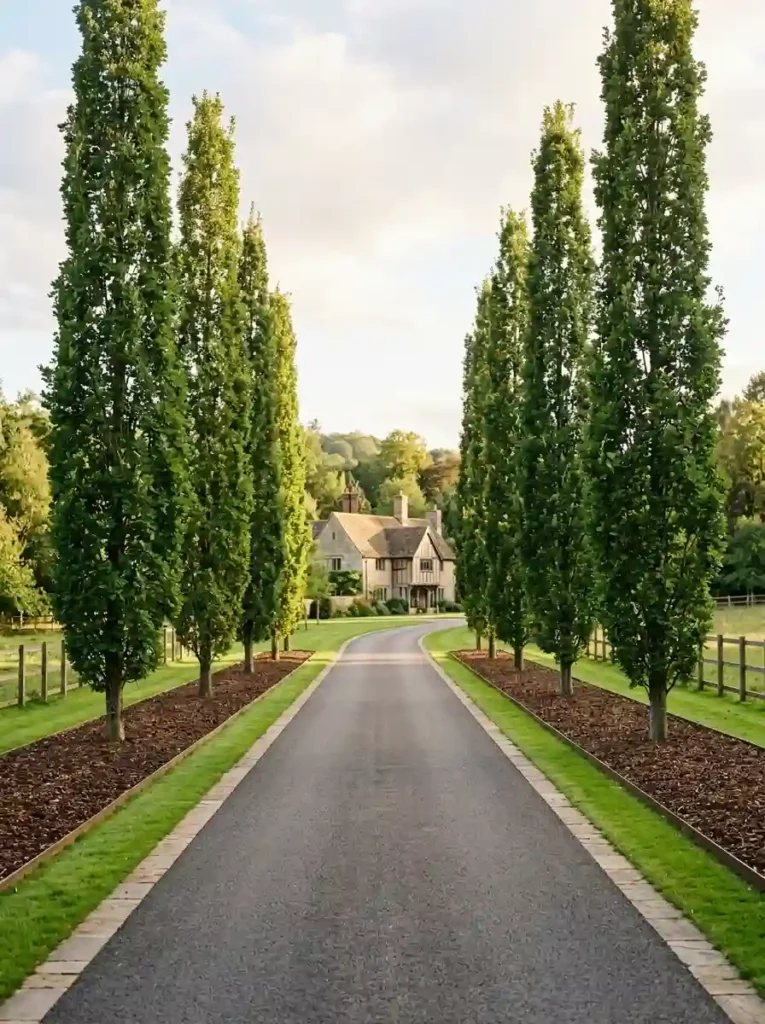
Wide trees can crowd a narrow driveway. Columnar trees grow in a tall, slim shape and use less side space.
Possible choices include columnar hornbeam, upright juniper, narrow arborvitae, and some columnar oak or serviceberry types.
Check the final height and width before planting. Also check how the roots grow. Some trees can lift pavement or compete with nearby plants.
Keep trees away from power lines, pipes, and underground cables. Contact your local utility-marking service before digging.
You do not need a tree every few feet. Three or five evenly spaced trees may be enough to guide the eye along the driveway.
Avoid trees with messy fruit, weak branches, or heavy seed drop. Those features can add cleaning work.
Best for: Long, narrow, or formal driveways
Maintenance: Seasonal checks and light pruning
Helpful tip: Ask a local tree expert which narrow trees perform well in your soil
Stop Constant Trimming With a Mow Strip
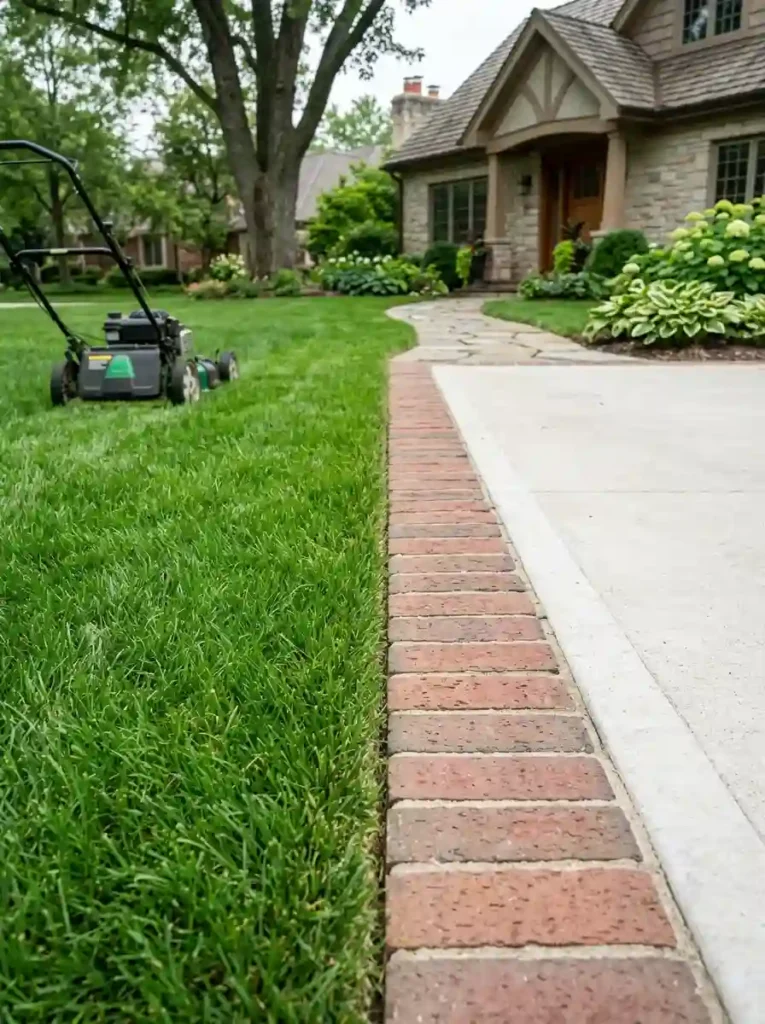
Most extra driveway work happens where the lawn meets the pavement.
A mow strip creates a flat border between the grass and the driveway. A mower wheel can travel over the strip, so you may not need to use a string trimmer.
Use brick, flat pavers, stone, or poured concrete. Keep the top level with the lawn so the mower can pass over it safely.
Raised curbing is another option. It can hold gravel or mulch inside a planting bed. However, it may still need trimming on the lawn side.
Match the material with your walkway, front steps, or house trim. This helps the new border look planned.
A good base is important. Loose bricks or uneven pavers can become a trip risk.
Best for: Lawns that meet the driveway
Maintenance: Very low after correct installation
Helpful tip: Make the strip wide enough to support one mower wheel
Use a Hardscape-First Xeriscape Border
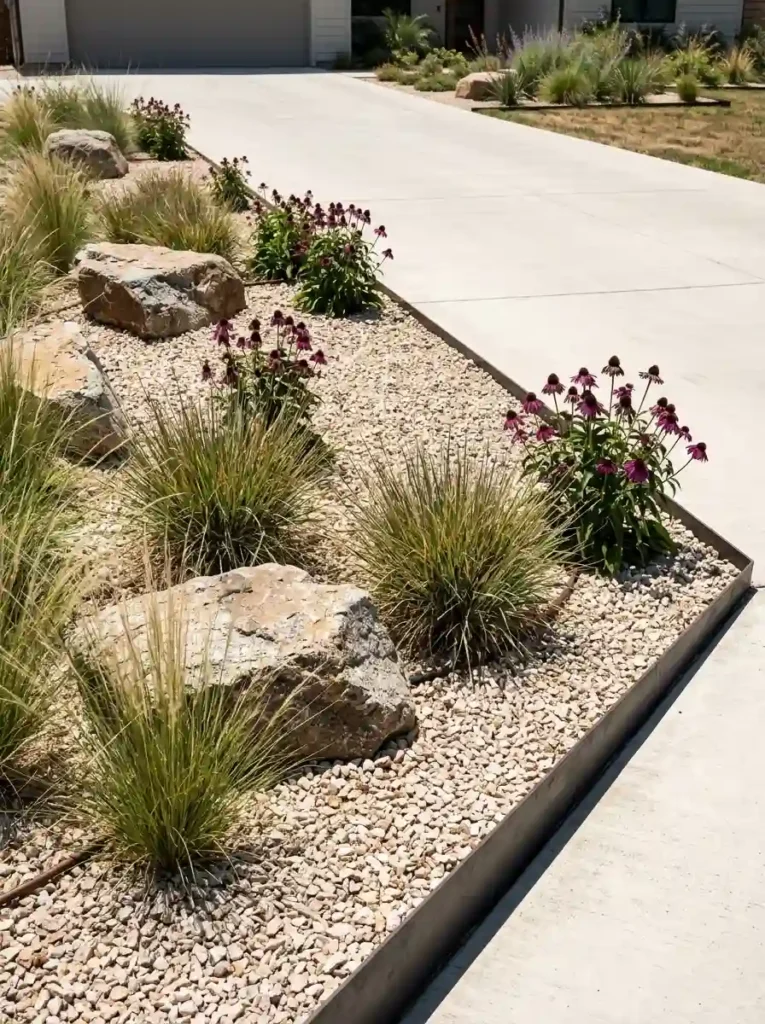
A xeriscape border uses water with care. It does not mean covering the whole area with plain rocks.
Start with gravel, boulders, or stone. Then add a small number of plants that can handle your local rainfall and heat.
Group plants with similar water needs. This stops you from overwatering hardy plants just to keep one thirsty plant alive.
Try a simple layout with three boulders, two groups of ornamental grass, and one repeated flowering plant. Leave open gravel between the groups.
Use edging to keep the stone inside the bed. Without it, gravel may spread onto the driveway.
Dark rock can become very hot in full sun. Pale stone may be a better choice near heat-sensitive plants.
Best for: Hot, dry, and water-limited areas
Maintenance: Weed checks and seasonal plant cleanup
Helpful tip: Choose local plants instead of copying a design from a different climate
How to Choose the Right Idea for Your Driveway
No single design works for every home. Use the site conditions to narrow your choices.
Check the Sun
Watch the area in the morning, afternoon, and evening. Full-sun plants may fail beside a shaded driveway. Shade plants may burn beside hot pavement.
Measure the Available Space
Do not guess. Measure the width and length of the border.
A narrow space may suit gravel, groundcover, sedges, or upright plants. A wide bed can hold boulders, shrubs, grasses, or a rain garden.
Watch the Water
Check where rainwater collects and where it leaves the driveway.
Use a river-rock strip or rain garden when runoff is the main problem. Do not install mulch in a place where it washes away after every storm.
Think About Your Climate
Snow, salt, strong sun, wind, and long dry periods can damage plants. Choose options that already grow well in your area.
Set a Real Budget
Mulch, gravel, and small plants may suit a lower budget. Pavers, large boulders, drainage work, and mature trees can cost more.
Be Honest About Maintenance
Choose gravel or hardscape when you want the least plant care.
Choose native grasses or dwarf evergreens when one seasonal cleanup feels manageable.
Choose planters only when you are willing to refill their water tanks.
7 Driveway Landscaping Mistakes That Create More Work
A low-care border starts with good planning. Most problems begin before the first plant goes into the soil.
1. Buying Plants Based on Their Current Size
A small plant may grow several feet wide. Check the mature size before buying it.
2. Planting Too Close to the Pavement
Branches can scratch cars or cover part of the driveway. Leave space for full growth.
3. Ignoring Water Flow
Rain can wash away mulch, soil, and small stones. Fix runoff before adding decoration.
4. Using Too Many Plant Types
Many plants mean many care needs. Repeat a few strong choices instead.
5. Choosing Fast-Spreading Plants
A groundcover may look harmless at first. Later, it may move into the lawn or pavement cracks.
6. Blocking the View of the Street
Keep plants low near the driveway entrance. You need a clear view of cars, bikes, and people.
7. Forgetting About Snow and Road Salt
Do not place delicate shrubs where snowplows pile heavy snow. Choose salt-tolerant plants when road spray reaches the bed.
Before You Start
- Measure the full area.
- Check the sunlight for one day.
- Watch where water flows.
- Mark buried utilities.
- Read mature plant sizes.
- Review local sight-line rules.
- Decide where snow will go.
- Set a maintenance budget.
Create a Better Driveway Without Adding More Work
Your driveway border should solve problems, not create new ones.
Start with the job you dislike most. Replace a narrow grass strip with gravel or groundcover. Add a rock channel where rain washes soil away. Use dwarf shrubs when large plants need constant cutting.
Keep the design simple. Repeat a few plants, leave room for growth, and control water before adding mulch or stone.
You do not need to rebuild the full yard at once. Measure one problem area and improve it first.
With the right plants and materials, these low-maintenance driveway landscaping ideas can improve your curb appeal without adding hours of yard work.