20 Backyard Landscaping Ideas for Any Yard
Your backyard does not need to be large or expensive to become a space you enjoy using. These backyard landscaping ideas can help you create an outdoor area that feels useful, comfortable, and connected.
The hard part is often knowing where to begin.
You may have an empty lawn, a plain fence, or a patio that no one uses. You may also worry about cost, upkeep, privacy, drainage, or choosing the wrong plants.
A good backyard makeover does not start with buying decorations. It starts with fixing the problems that stop you from using the space.
This guide shares ideas for small yards, family spaces, rental homes, garden areas, and low-maintenance designs. You will also learn how to plan your layout, choose matching features, and avoid common mistakes.
You do not need to use every idea. Pick the ones that solve your biggest problems and fit the way you live.
Plan Your Backyard Before Buying Plants or Materials
The quickest way to waste money is to buy plants and materials before deciding how the backyard needs to work.
Start by measuring the yard. Mark the location of doors, fences, sheds, trees, patios, drains, and outdoor taps.
Next, watch how sunlight moves through the space. One corner may receive strong afternoon sun. Another area may stay shaded for most of the day.
Also look for places where water collects after rain. A wet area may need drainage work before you add a patio, lawn, or planting bed.
Now think about how you want to use the yard.
Do you need a place for meals? Do children need open space? Does your dog run along the fence? Are you trying to block a nearby window?
A family backyard might include three simple zones:
- A patio close to the house
- An open lawn for children or pets
- A planted border beside the fence
Set a budget before choosing your backyard design ideas.
A low-budget project may include mulch, solar lights, containers, and simple edging. A medium-budget project may include raised beds, gravel seating, or a small fire pit. Larger projects may include paver patio, built-in seating, or a covered dining area.
Before moving forward, answer these five questions:
- What do you dislike most about the yard?
- How do you want to use the space?
- How much weekly care can you manage?
- Which areas receive sun or shade?
- What can stay, and what needs to change?
Write down your three biggest problems before choosing a project.
Backyard Landscaping Ideas for Beauty and Function
You do not need to use all 20 ideas. A better plan is to combine a few features that solve different needs.
For example, you might choose a path for movement, a tree for shade, and containers for color. This creates balance without filling the yard with random features.
Create a Gravel Seating Area on a Small Budget
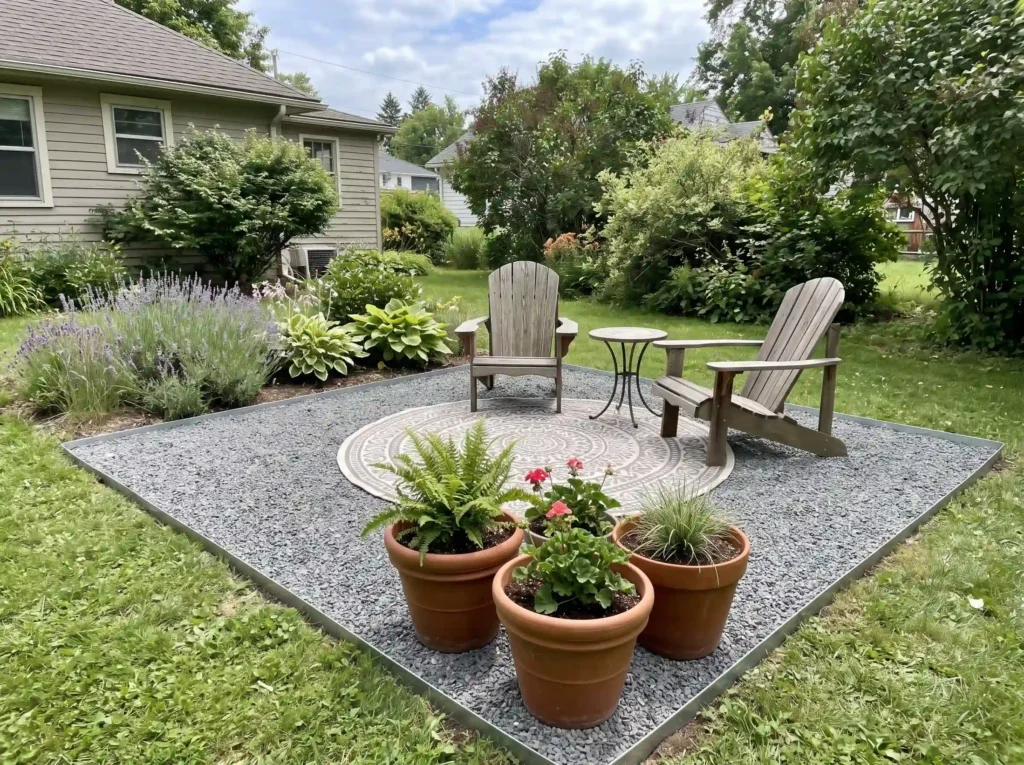
A gravel seating area gives you a useful place to relax without the cost of a full paver patio.
This idea works well in small yards, side yards, and informal garden spaces. It can also fit into a corner that is too small for a large deck.
Start by choosing a flat location. Mark the shape, remove grass, and prepare the ground so water can drain.
Use edging around the outside. This helps stop the gravel from spreading into the lawn or flower beds.
A simple 10-by-10-foot space can hold two chairs, a small café table, and three large pots. Add an outdoor rug if the surface feels too rough under furniture.
Choose this idea when you want a low-cost sitting space. Skip it where loose stones may create problems for wheelchairs, strollers, or young children.
Best for: Small or informal yards
Budget level: Low to medium
Maintenance: Low
DIY difficulty: Beginner-friendly
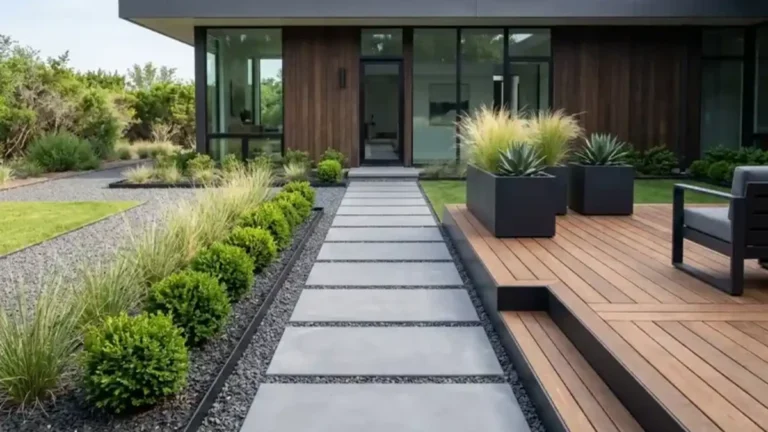
Add a Paver Path That Connects the Yard
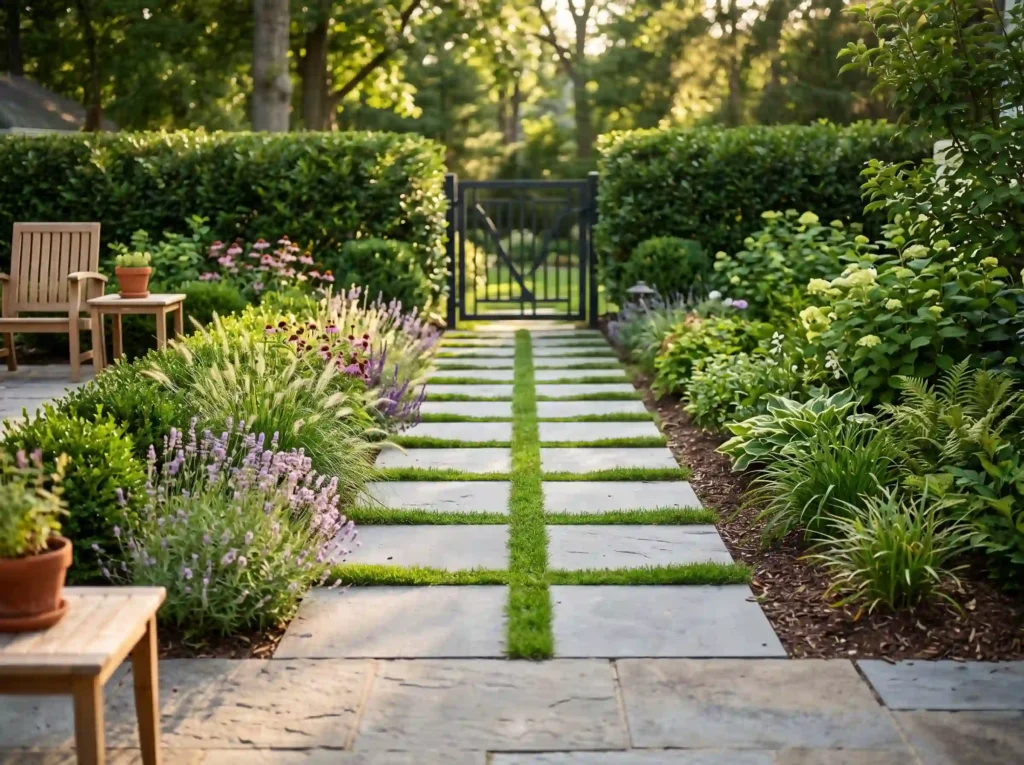
A clear path makes a backyard easier to use. It also helps separate walking areas from lawns and garden beds.
Place the path where people already walk. It may connect the back door to a shed, gate, patio, garden, or play area.
Large square pavers create a clean, modern look. Irregular flagstones work better in a cottage garden or natural yard.
You can leave grass between wide stepping stones. You can also use low ground cover between pavers if it suits your climate and foot traffic.
Avoid creating a path that leads nowhere. Every walkway should have a clear purpose.
A curved path can make a wide yard feel softer. A straight path can make a narrow space feel longer and more organized.
Best for: Connecting separate backyard zones
Budget level: Low to high
Maintenance: Low
DIY difficulty: Moderate
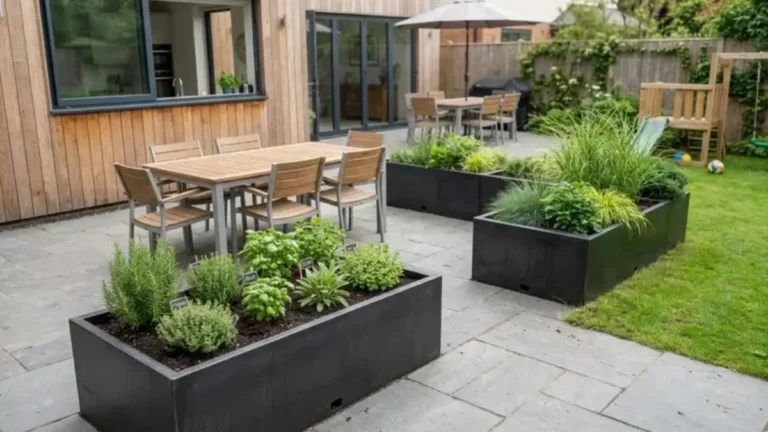
Build Raised Beds for Flowers, Herbs, or Vegetables
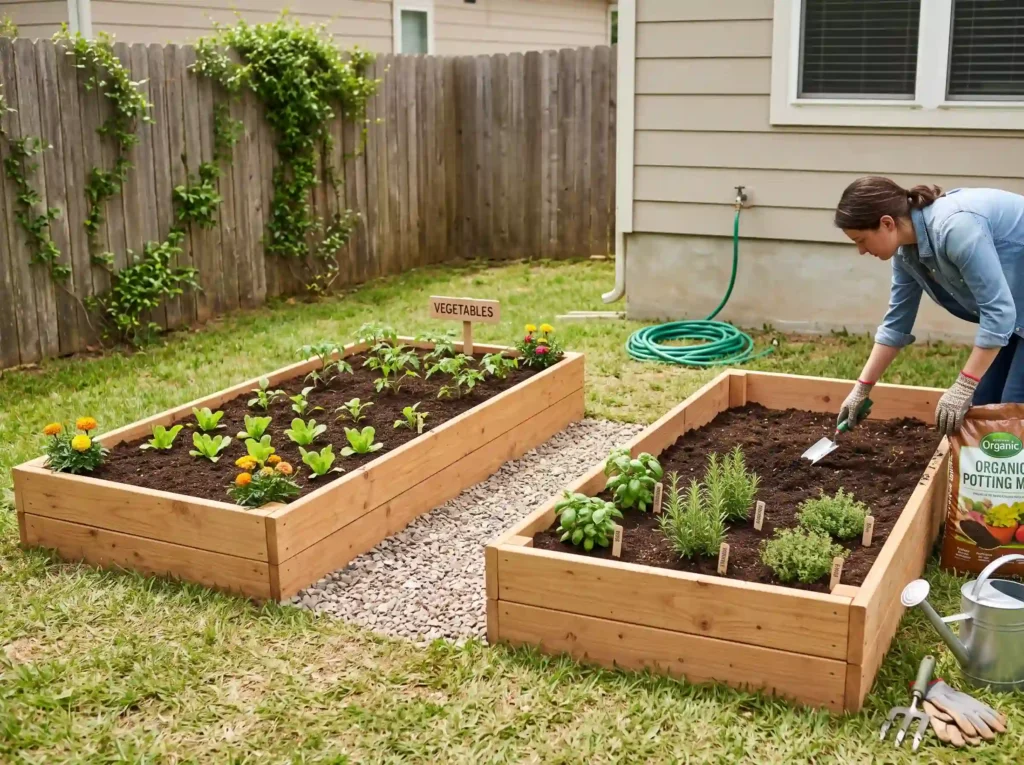
Raised garden beds help organize plants and make gardening easier to manage.
They work well when the soil is poor, compacted, rocky, or hard to reach. They also let you control the soil mix more easily.
Place the beds where plants will receive the right amount of sunlight. Keep them close enough to a water source so watering does not become a daily struggle.
Leave walking space between each bed. You should be able to move around them without stepping into the soil.
In a small backyard, two narrow beds beside a sunny fence may work better than one large bed in the center.
Use materials that are safe for gardening. Check how well the material handles water, heat, insects, and soil contact.
Best for: Food gardens and organized planting
Budget level: Low to medium
Maintenance: Medium
DIY difficulty: Beginner to moderate
Use Containers for Easy Color and Flexible Design
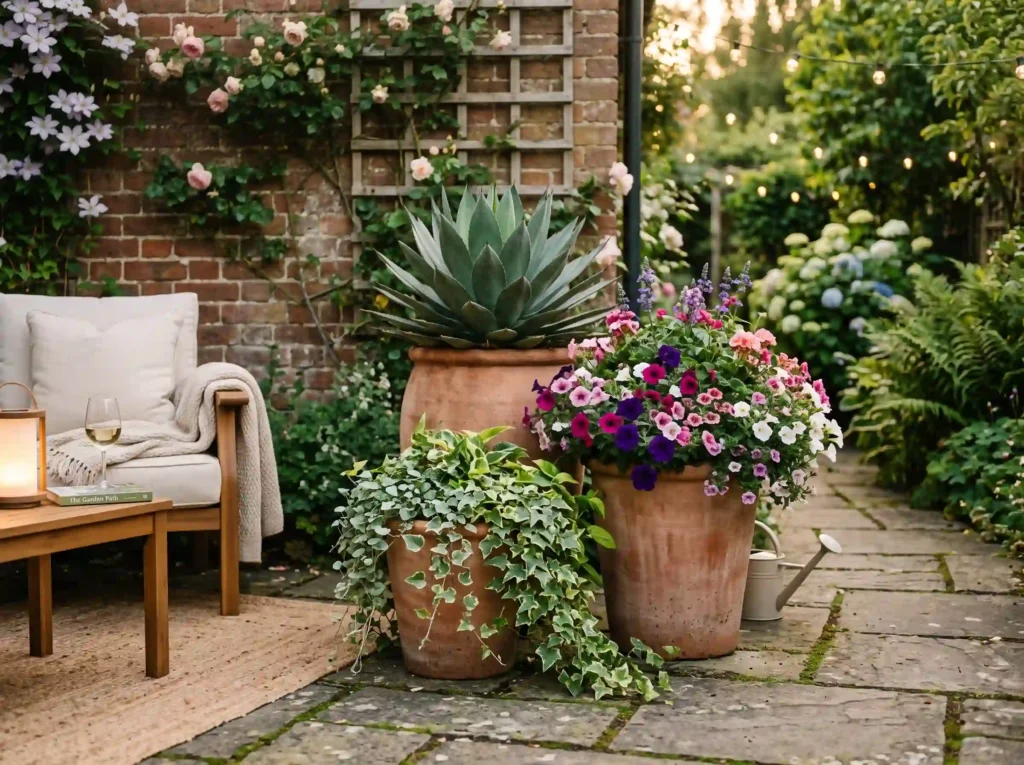
Container plants are one of the easiest ways to improve a plain patio, deck, balcony, or rental backyard.
They can be moved when the weather changes. They can also be removed without changing the property.
Large pots usually create a stronger look than many tiny containers. Grouping three pots together can make an empty corner feel finished.
Try using one tall plant, one full flowering plant, and one trailing plant. Make sure they have similar sunlight and watering needs.
Place containers beside doors, patio corners, steps, or seating areas. Avoid putting them where they block walking paths.
Simple backyard landscaping often works best when you repeat the same pot style or color in several places.
Best for: Renters and small patios
Budget level: Low to medium
Maintenance: Medium
DIY difficulty: Easy
Plant a Privacy Border Along the Fence
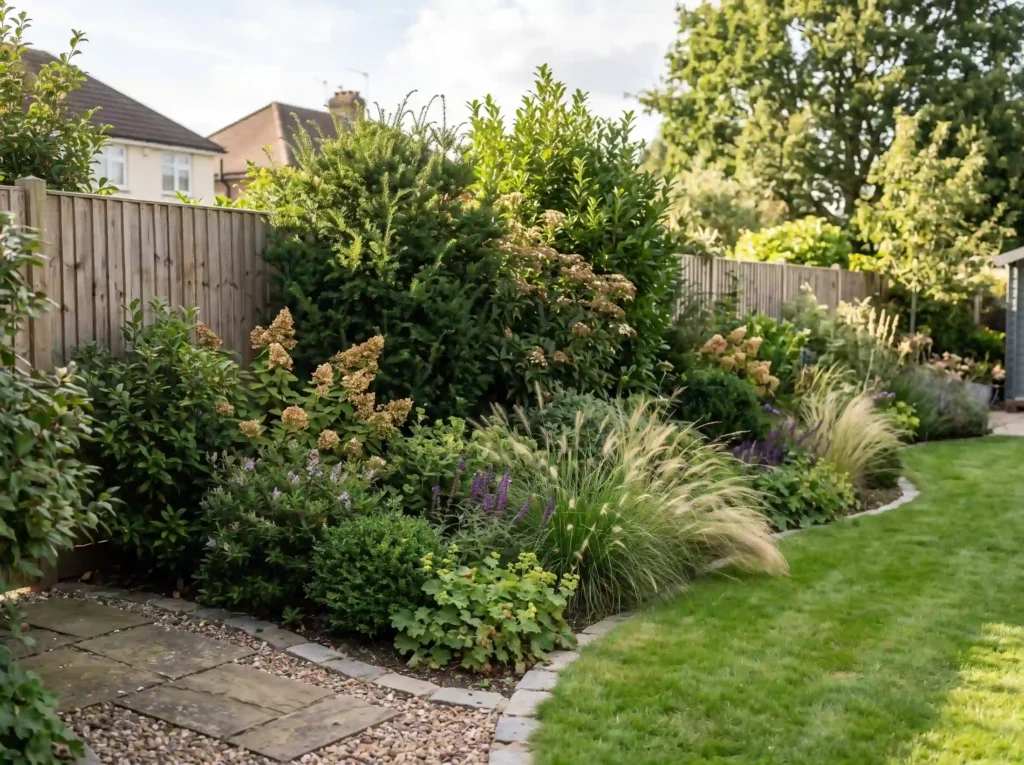
A planted privacy border can soften a plain fence and make the backyard feel more private.
You can use shrubs, small trees, ornamental grasses, or climbing plants. The right choice depends on your climate, available space, and desired height.
Check the full-grown width of each plant before buying it. A small shrub may look harmless at the nursery but become too wide for a narrow bed.
Layer plants at different heights for a softer look. Place taller plants in the back and shorter plants closer to the lawn or path.
A narrow backyard may work better with a trellis and climbing plants. A larger yard may have enough room for a mixed border of evergreen and flowering shrubs.
Do not plant too close to fences, walls, drains, or foundations.
Best for: Blocking views and softening fences
Budget level: Medium
Maintenance: Medium
DIY difficulty: Moderate
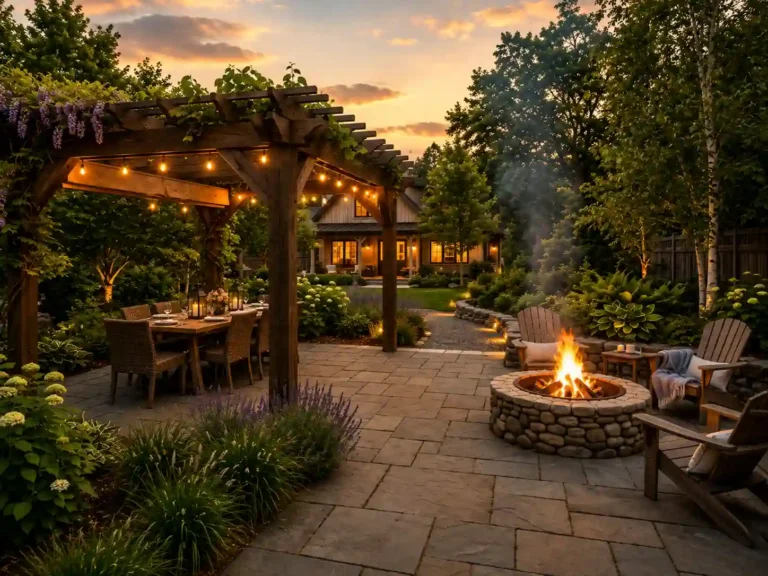
Design a Safe and Comfortable Fire Pit Zone
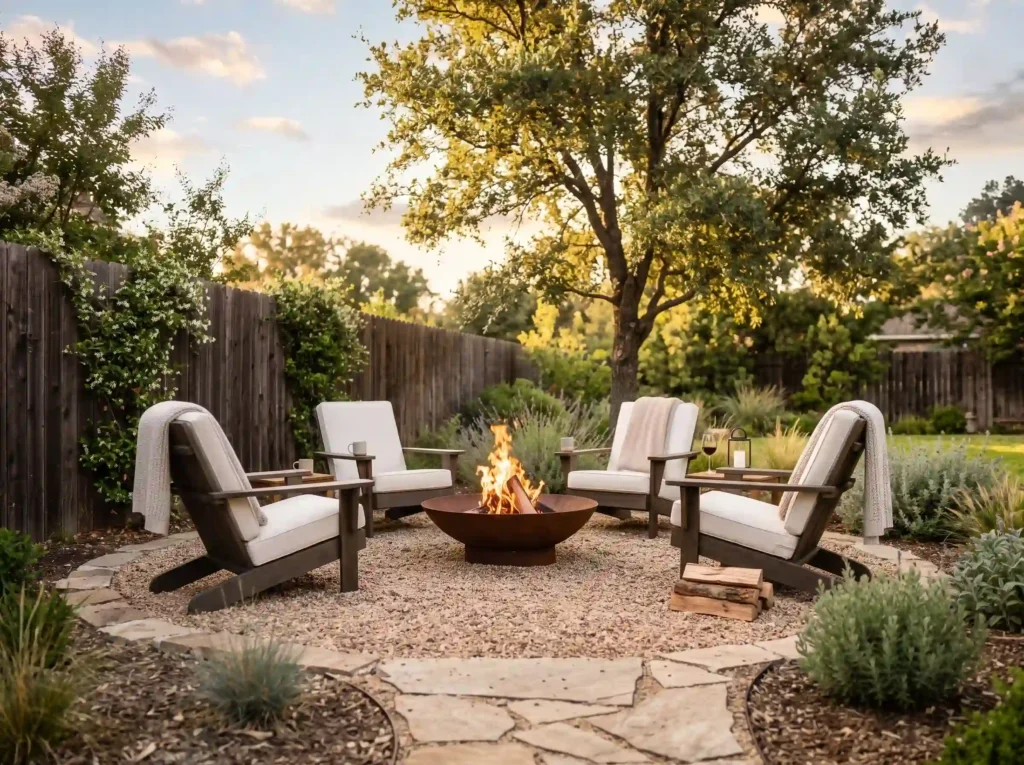
A fire pit can turn an unused corner into a social area for cool evenings.
Place it on a flat, stable, and nonflammable surface. Gravel, stone, or another suitable hard surface may work better than grass.
Keep chairs far enough away for comfort. Movable seating gives you more control over the layout.
Think about wind and smoke. You do not want smoke blowing into the house, patio, or neighbor’s yard.
Look above the area before choosing the location. Avoid spots near low branches, structures, storage areas, or other fire risks.
Local fire rules can differ. Check permit and safety requirements before building or using any fire feature.
A simple design may include a round gravel area, a metal fire bowl, and four outdoor chairs.
Best for: Outdoor gatherings
Budget level: Medium
Maintenance: Low
DIY difficulty: Moderate
Replace Unused Lawn With Mulched Garden Beds
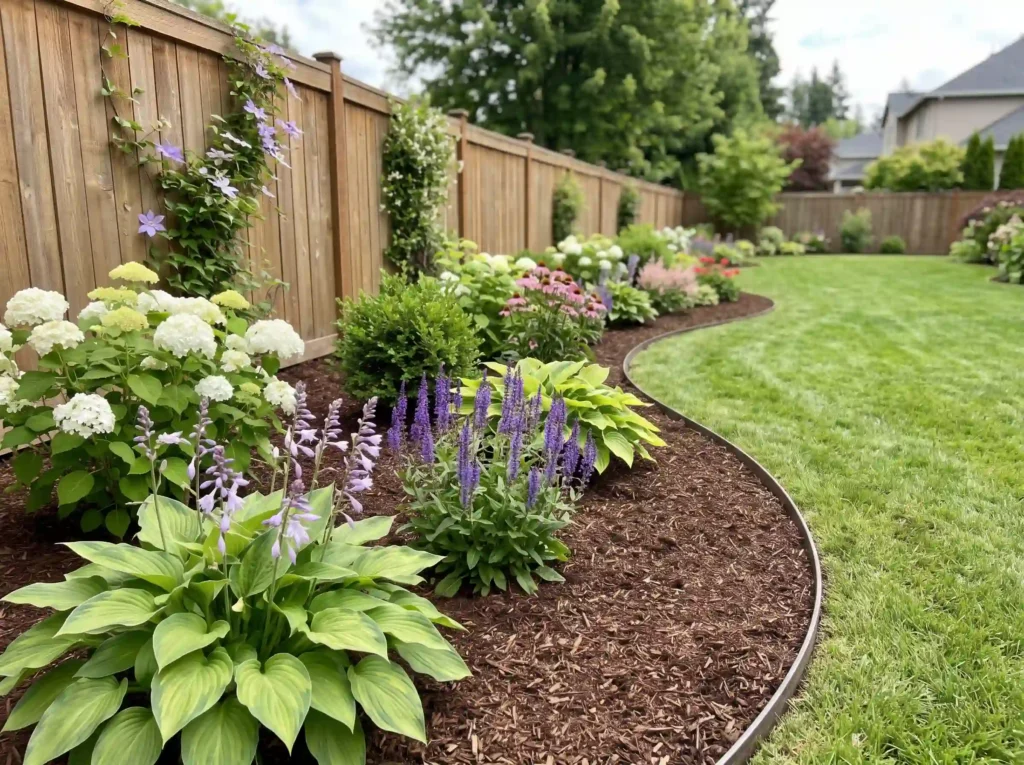
You do not need to keep grass in every part of the yard.
Unused lawn around fences, trees, or corners can become planted beds. This may reduce mowing and make the yard look more complete.
Start with one area instead of removing the whole lawn. A deep border along a fence can add color while keeping an open lawn in the center.
Choose a curved edge for a relaxed garden style. Use straight lines for a cleaner and more modern look.
Plant in groups instead of placing one plant here and another plant there. Repeated groups look more planned.
Mulch helps slow weed growth and hold moisture in the soil. Keep it away from tree trunks and plant stems.
Best for: Reducing lawn care
Budget level: Low to medium
Maintenance: Low to medium
DIY difficulty: Easy
Add a Small Water Feature for Sound and Movement
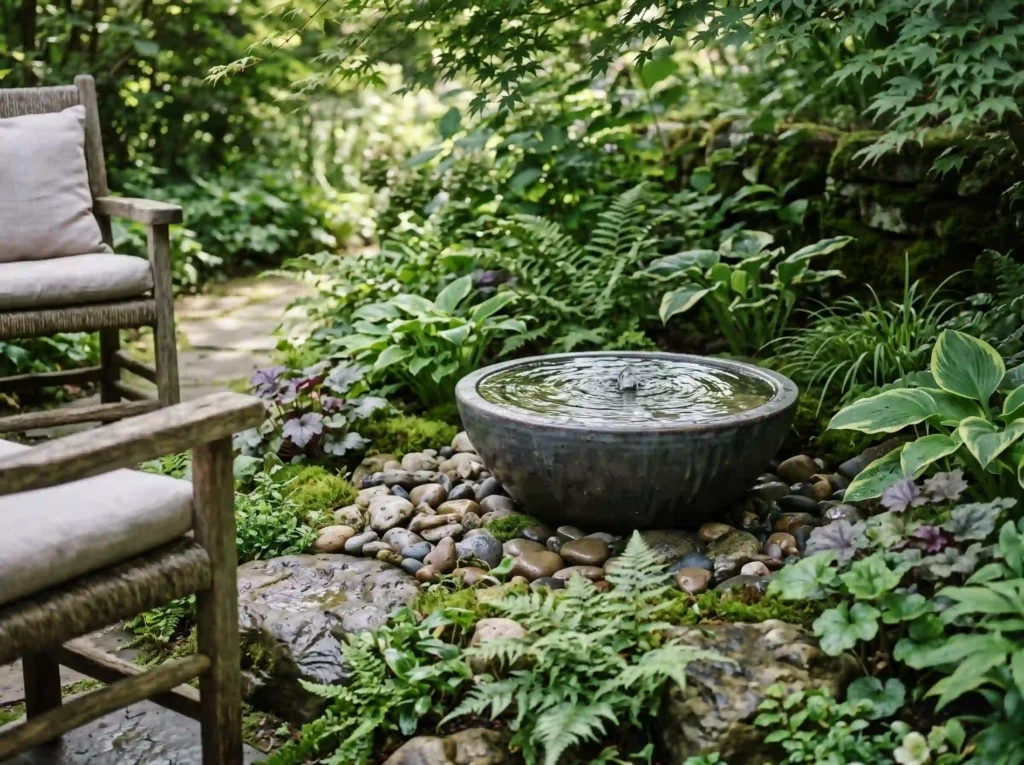
A small fountain can make the backyard feel calmer without taking up much room.
A recirculating fountain is often easier to manage than a full pond. It uses the same water again instead of needing a constant supply.
Place the feature where you can see it from the house, patio, or favorite chair. This makes it useful even when you are not sitting directly beside it.
Avoid placing it under trees that drop large amounts of leaves. Falling leaves can make cleaning harder.
You will also need safe access to power if the fountain uses a pump.
A compact bowl fountain can work in a shaded corner. Add stones and low plants around it to help it blend into the landscape.
Best for: Quiet garden corners
Budget level: Low to medium
Maintenance: Medium
DIY difficulty: Easy to moderate
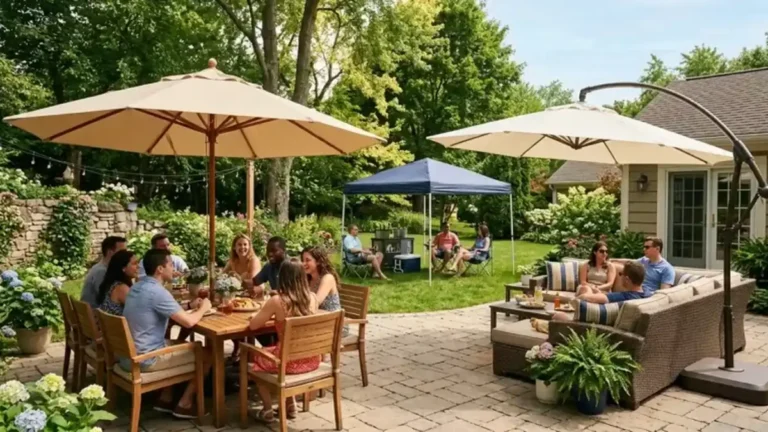
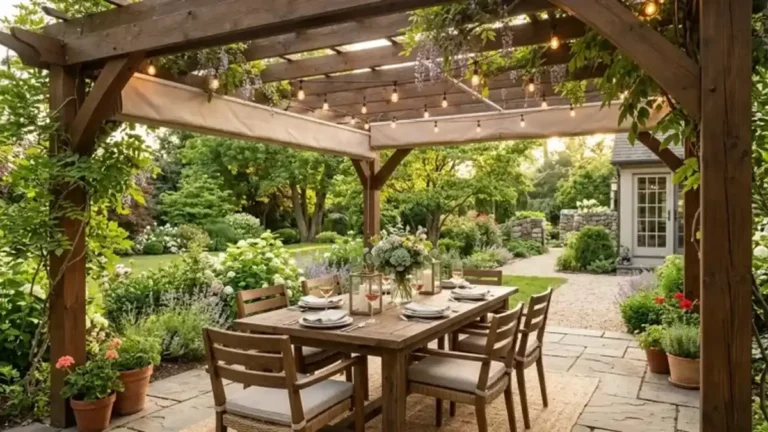
Create a Shaded Outdoor Dining Area
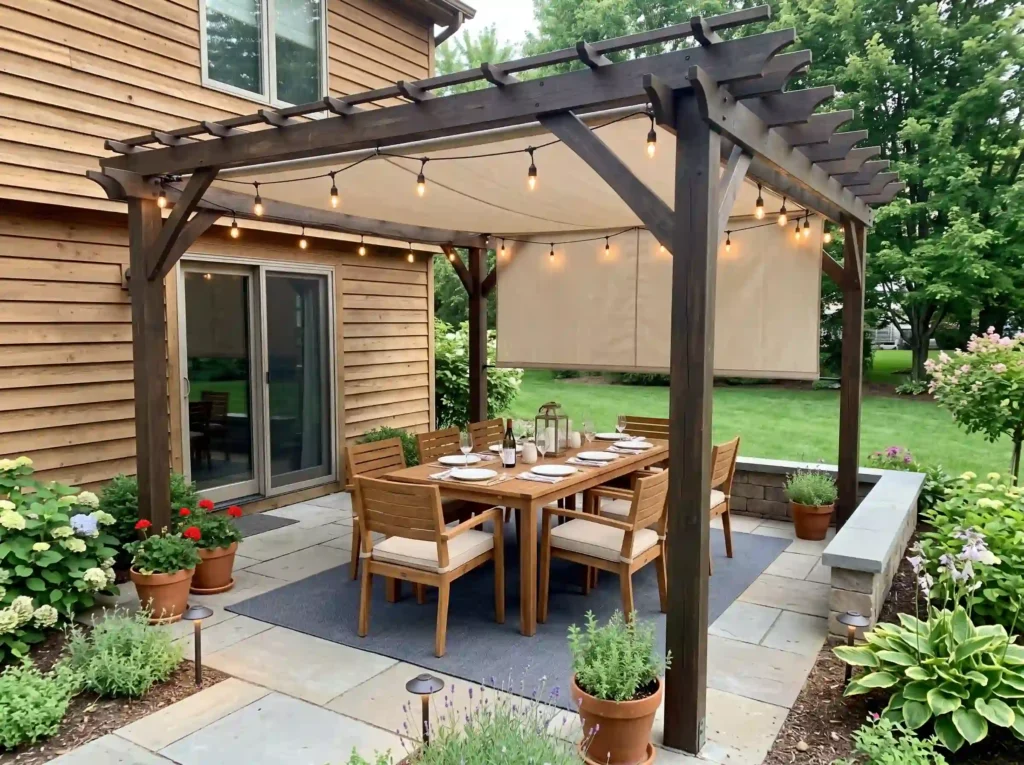
An outdoor dining area gives the backyard a clear purpose.
Place it close to the kitchen when possible. Carrying food, plates, and drinks becomes easier when the table is near the back door.
Choose a flat surface that keeps chairs stable. A patio, deck, or level gravel area may work.
Shade is important in hot or sunny yards. You can use an umbrella, pergola, shade sail, or tree canopy.
Leave enough space around the table. People should be able to pull out chairs without hitting walls, pots, or garden beds.
A small round table under an umbrella works well in a tight yard. A larger family may need a longer table under a pergola.
Add soft lighting so the space stays useful after sunset.
Best for: Family meals and entertaining
Budget level: Medium to high
Maintenance: Low
DIY difficulty: Moderate
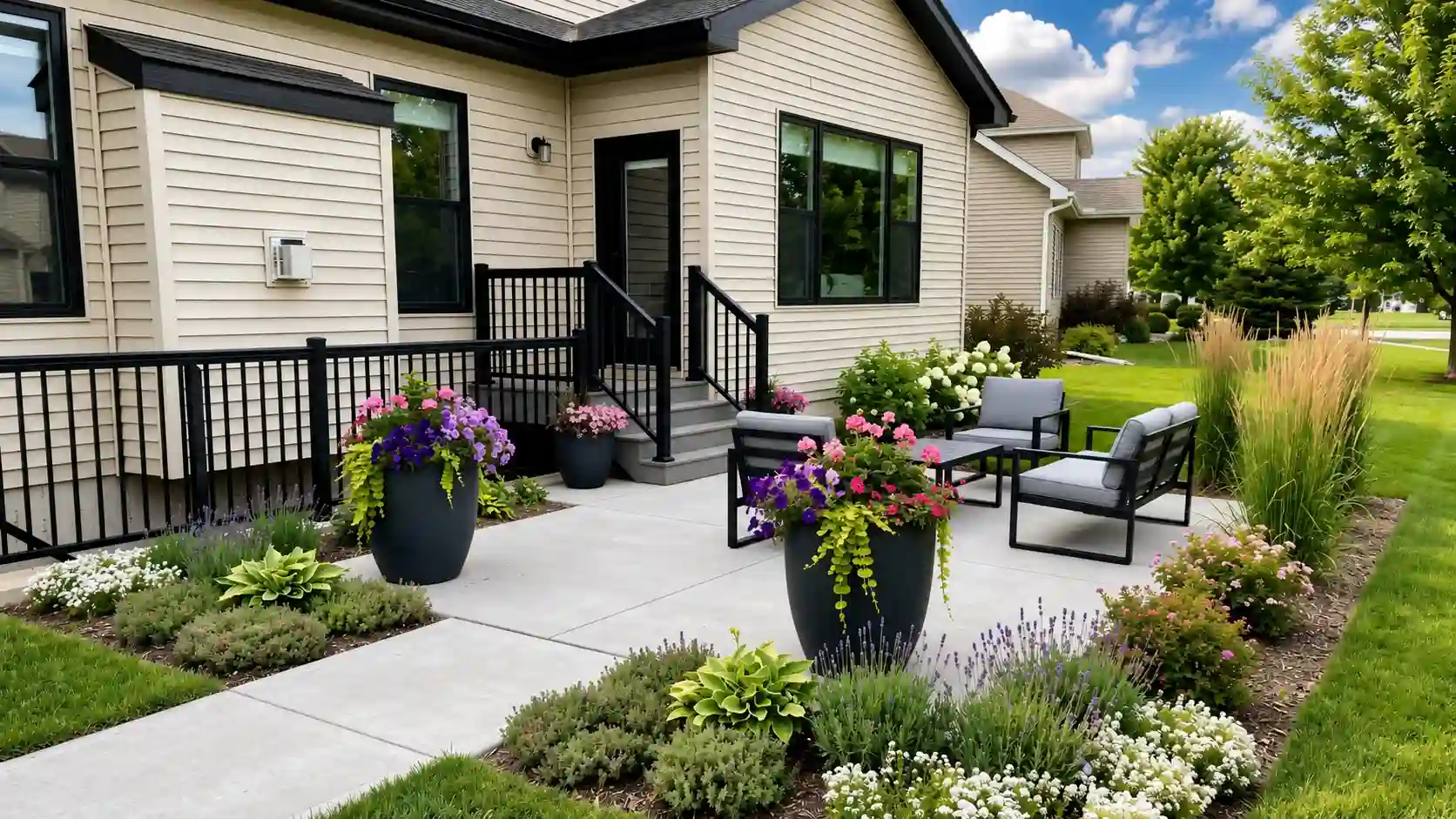
Landscape Around an Existing Patio
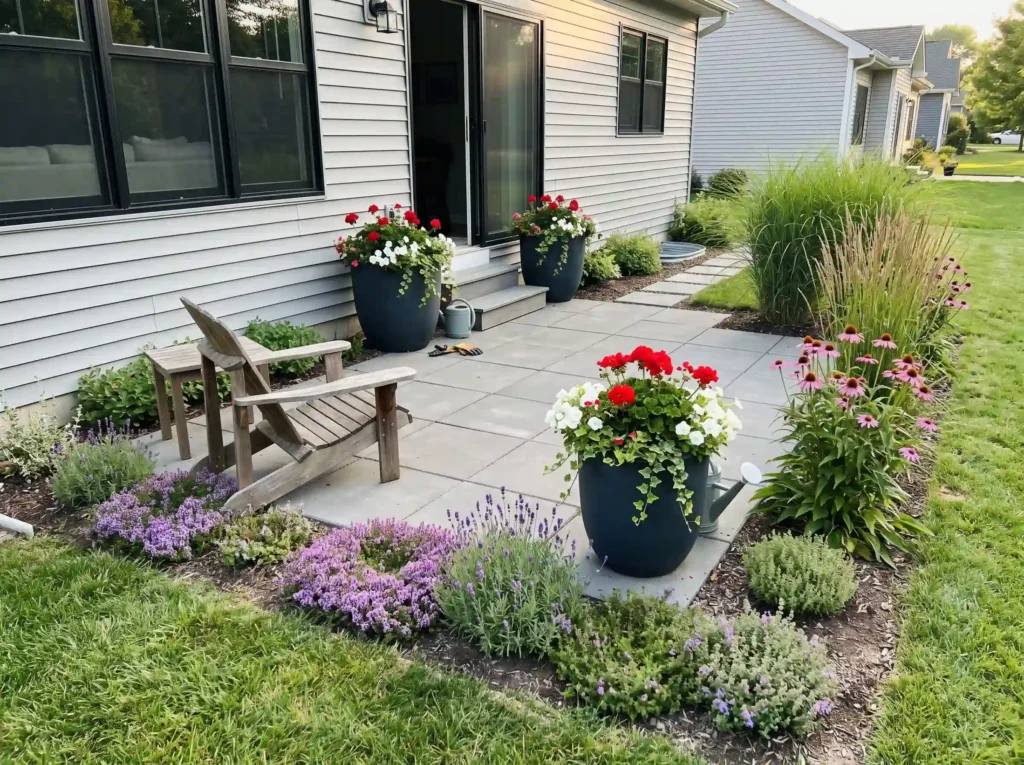
A patio can look cold or unfinished when it is surrounded by bare lawn.
Planting around the edges can soften the hard surface and connect it to the rest of the yard.
Use low plants near walking areas. Place taller plants near corners where they will not block movement.
Containers work well beside the back door or near patio steps. They also help bring color closer to the seating area.
Repeat materials or colors already used on the home. For example, dark planters may connect with black window frames or railings.
Avoid thorny plants beside chairs and paths. Also avoid plants that will quickly grow over the patio.
A simple plan may include low border plants, taller corner plants, and two matching pots beside the door.
Best for: Plain or exposed patios
Budget level: Low to medium
Maintenance: Medium
DIY difficulty: Easy
Use Vertical Gardening in a Small Backyard
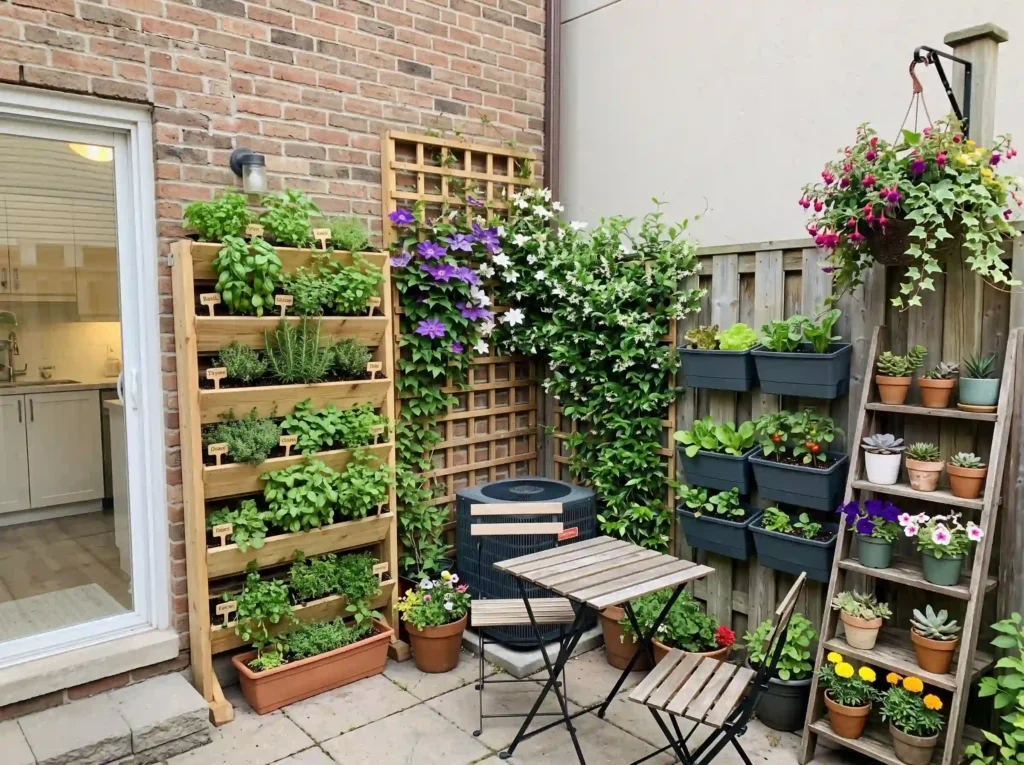
Vertical gardening lets you add plants without using much ground space.
This makes it one of the most useful small backyard landscaping ideas.
You can use trellises, wall planters, hanging baskets, narrow towers, or shelves. These features can hold flowers, herbs, vines, or small vegetables.
Check the strength of the wall or fence before attaching anything heavy. Wet soil can add more weight than you expect.
Keep plants that need frequent watering in an easy-to-reach area.
A narrow herb wall beside the patio can save space and keep fresh herbs close to the kitchen.
A trellis may also hide an unattractive wall or utility area. Do not block airflow around outdoor equipment.
Best for: Tight yards and patios
Budget level: Low to medium
Maintenance: Medium
DIY difficulty: Easy to moderate
Add Landscape Lighting in Simple Layers
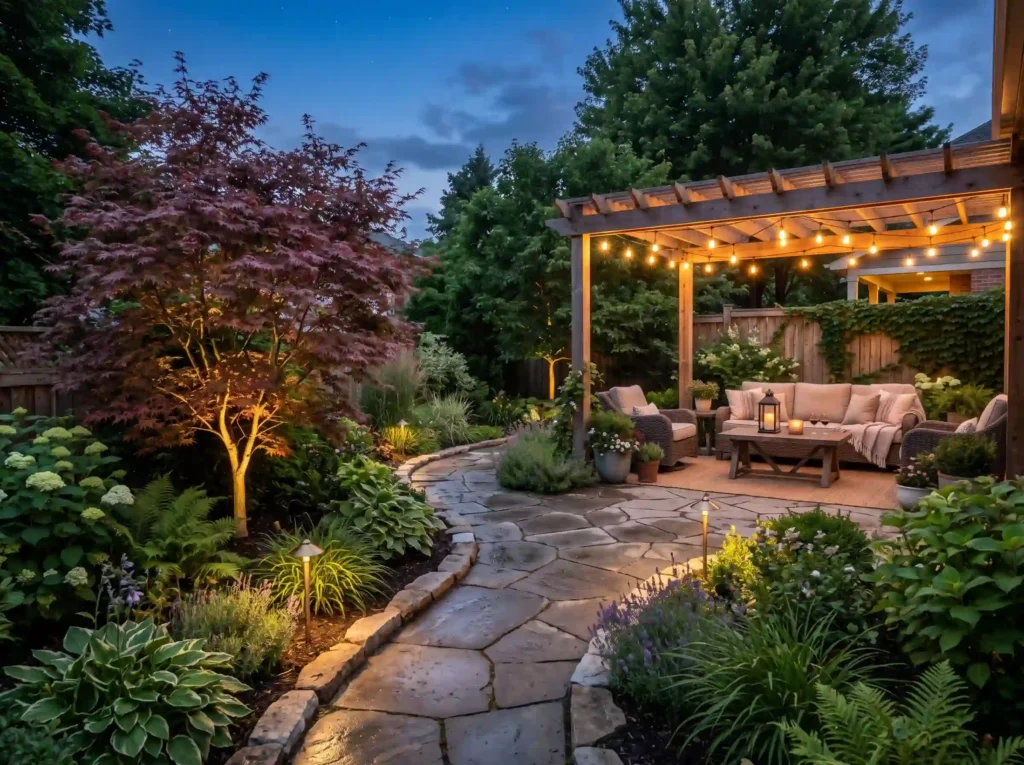
Lighting can make a backyard safer and more useful at night.
Start with paths and steps. Low lights can help people see where they are walking.
Next, highlight one or two features. A small uplight can draw attention to a tree, wall, or garden bed.
String lights can create a warm feeling over a patio or dining area. Keep them high enough so people do not hit them.
Avoid filling the yard with very bright fixtures. Too much light can make the space feel harsh.
A simple plan may include path lights, one tree uplight, and string lights above the seating area.
Solar lights are easy to install, but their brightness and running time can vary. Wired systems may be more dependable but cost more.
Best for: Evening use and safer paths
Budget level: Low to high
Maintenance: Low
DIY difficulty: Easy to professional
Create a Pollinator-Friendly Flower Garden
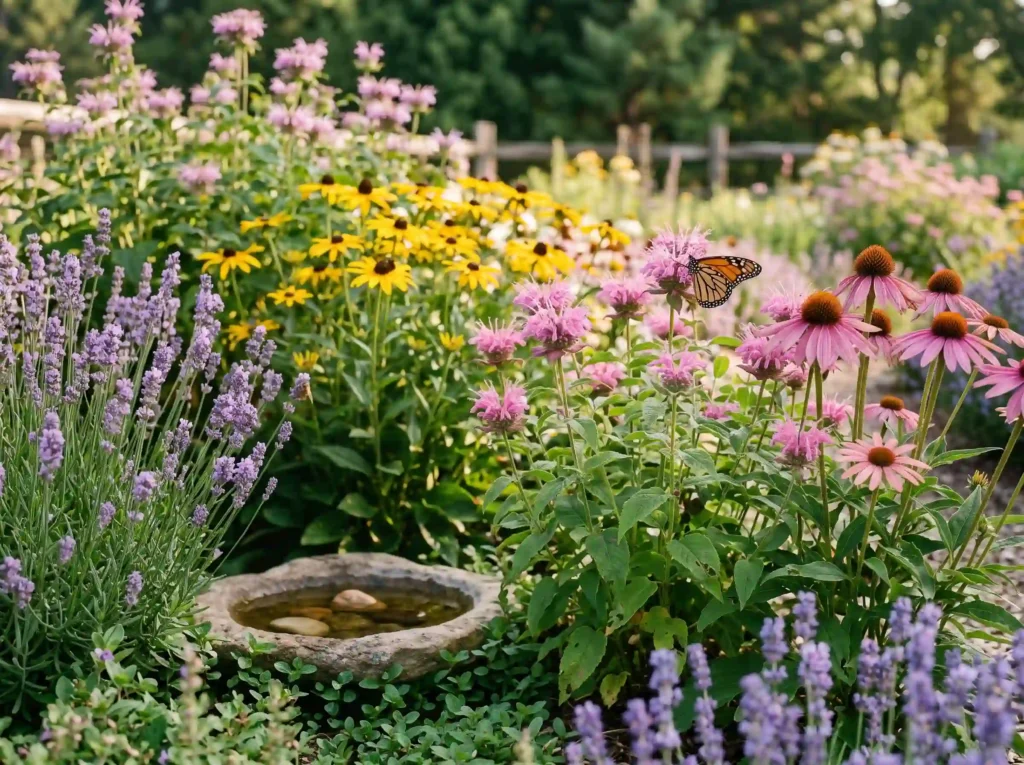
A pollinator garden can add color while supporting bees, butterflies, and other helpful insects.
Choose plants that suit your local climate, soil, and sunlight. Local native plant resources can help you avoid plants that struggle in your area.
Include flowers that bloom at different times. This can provide food through more than one season.
Plant flowers in groups. Large patches are often easier for pollinators to find than single plants spread across the yard.
Avoid heavy pesticide use. It can harm the insects you are trying to attract.
You can also add shallow water and sheltered areas where suitable.
Do not depend on one national plant list. A plant that works well in one state or country may not suit another.
Best for: Wildlife-friendly gardens
Budget level: Low to medium
Maintenance: Medium
DIY difficulty: Easy
Build a Low-Maintenance Rock Garden
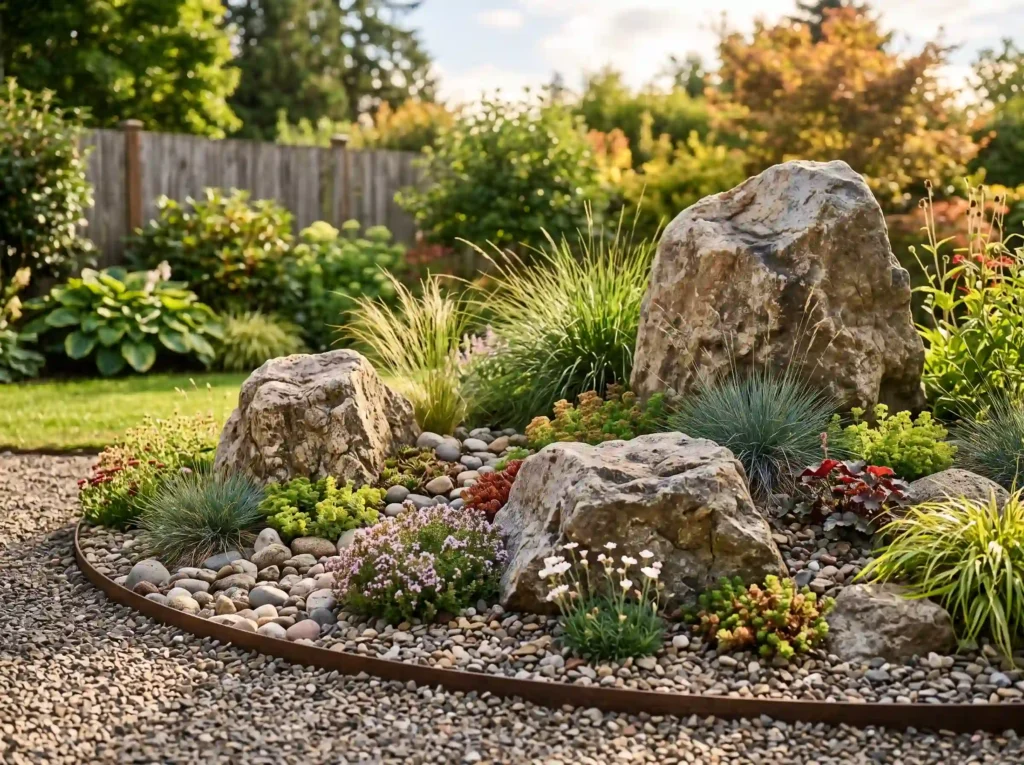
A rock garden can improve a dry, sunny, sloped, or difficult corner.
Use rocks in different sizes instead of spreading one type of stone across the whole area. A few larger rocks can create a stronger focal point.
Add plants between the rocks. Choose plants that fit your local weather and soil.
In dry areas, drought-tolerant plants may lower watering needs. In wetter climates, you may need a different plant mix and better drainage.
Use edging to keep small stones from spreading into grass or paths.
A simple design may include three large rocks, a few grasses, and several low-growing plants.
Rock gardens are low maintenance, but they are not maintenance-free. Leaves, weeds, and soil can still collect between stones.
Best for: Dry or sloped corners
Budget level: Medium
Maintenance: Low
DIY difficulty: Moderate
Turn a Sloped Yard Into Planted Levels
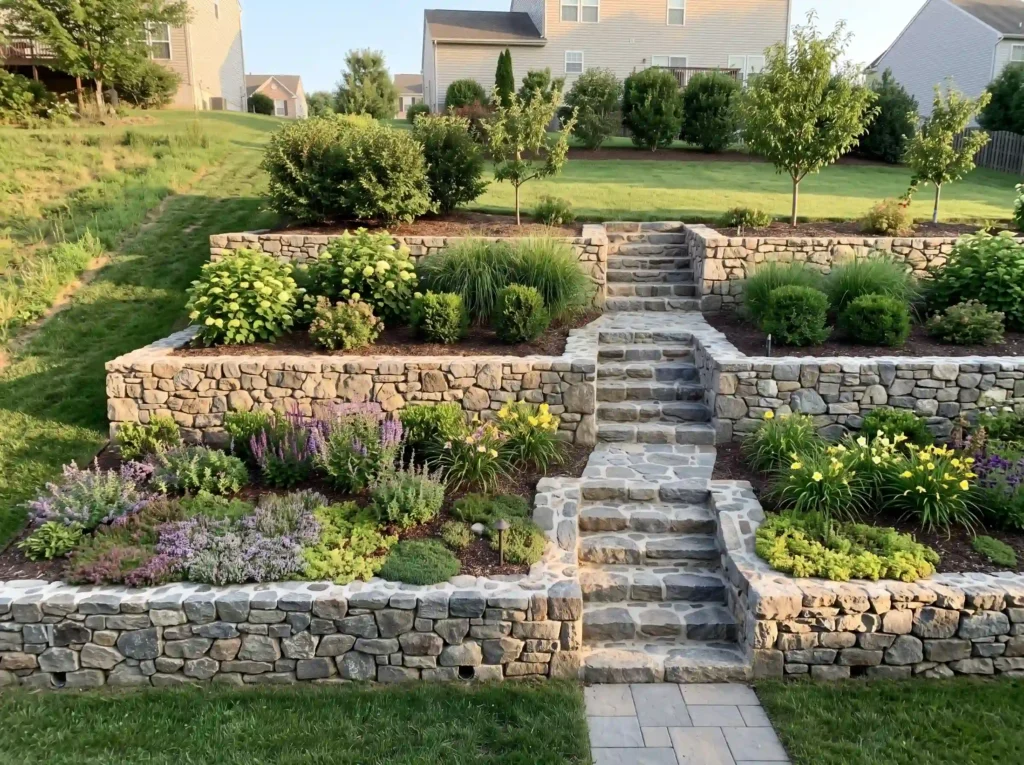
A slope can be hard to mow, walk across, or use.
Turning it into planted levels may create safer and more useful space. It can also help slow soil movement.
A gentle slope may only need ground cover, shrubs, or deep-rooted plants.
A steeper slope may need terraces, steps, or retaining walls. Large walls may require professional design and local approval.
Drainage is a major part of any retaining wall project. Water pressure behind a wall can cause damage when it has nowhere to go.
Two low levels may feel softer than one tall wall. They can also create separate planting areas.
Do not treat a serious erosion problem as a simple decorating project. Fix the structural issue first.
Best for: Sloped or uneven backyards
Budget level: Medium to high
Maintenance: Medium
DIY difficulty: Moderate to professional
Add a Play Area Without Losing the Whole Yard
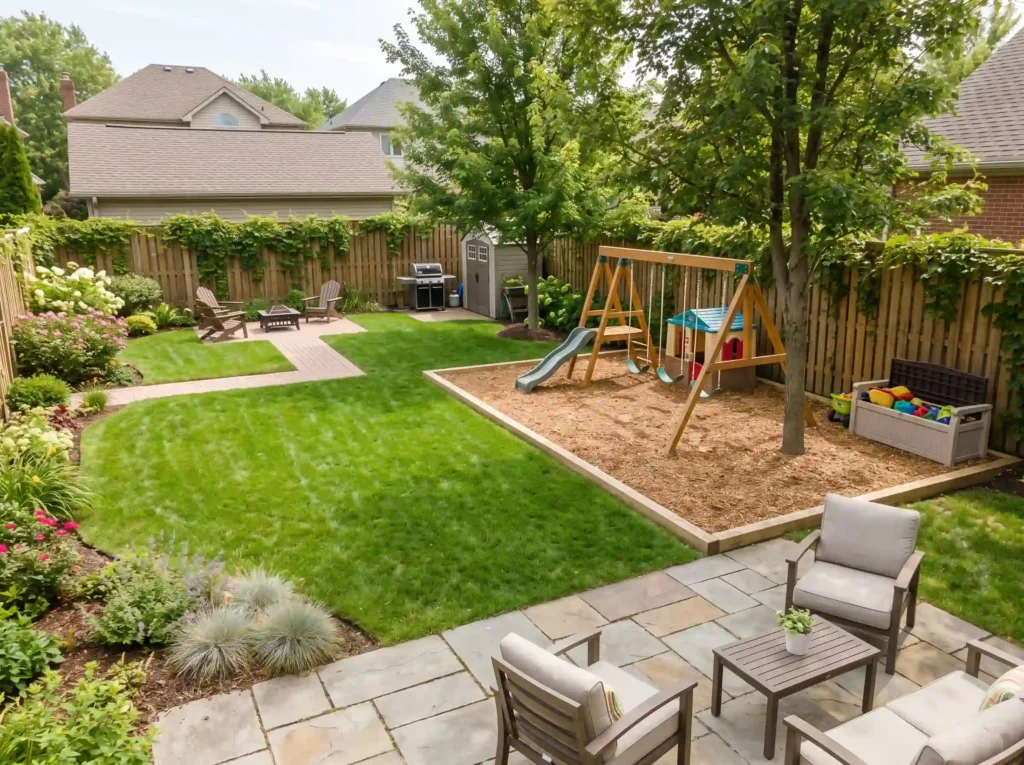
A defined play area gives children space while keeping the rest of the backyard organized.
Place it where adults can see it from the house, patio, or seating area.
Use a ground surface that fits the activity. Keep the area away from fire pits, grills, sharp edges, and storage zones.
Shade can make the space more comfortable during warm weather.
Choose features that can change as children grow. A large permanent play structure may stop being useful after a few years.
A smaller plan may include a playhouse, an outdoor storage bench, and an open patch of lawn.
Do not fill the whole yard with play equipment. Leave space for running, family use, and future changes.
Best for: Families with children
Budget level: Low to high
Maintenance: Medium
DIY difficulty: Easy to professional
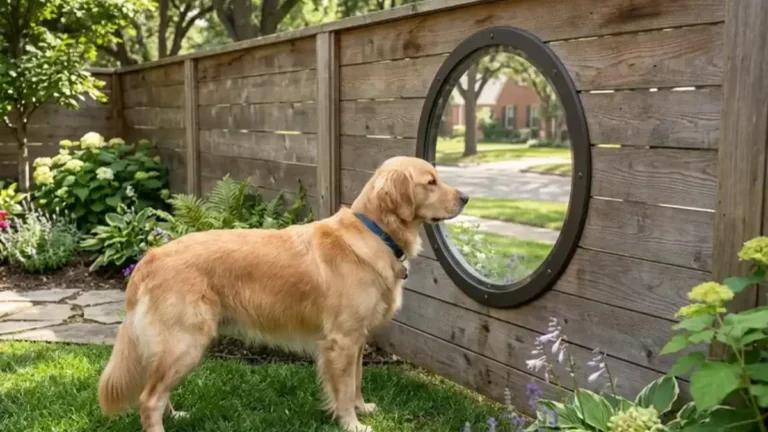
Make a Pet-Friendly Backyard Zone
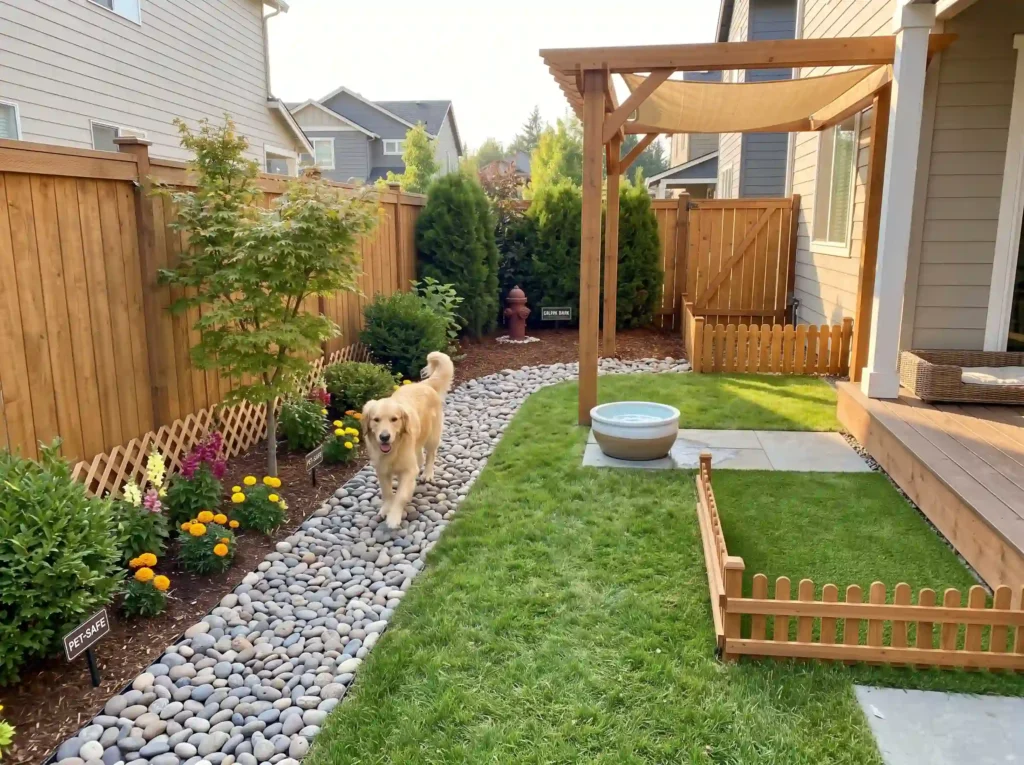
A pet-friendly yard should be safe, durable, and easy to clean.
Start by checking whether your plants are safe for pets. Some common garden plants can be harmful when eaten.
Create clear paths if your dog runs around the yard. A durable path along the fence may protect the center lawn from damage.
Add shade and easy access to water.
A hidden relief area can help keep waste away from patios and play spaces. Place it behind shrubs or screening where possible.
You can also use planting or barriers to stop digging near the bottom of fences.
Avoid surfaces that become too hot in strong sun. Also avoid sharp gravel where pets run or rest.
Best for: Homes with dogs or active pets
Budget level: Low to medium
Maintenance: Medium
DIY difficulty: Easy
Create a Quiet Garden Corner for One or Two People
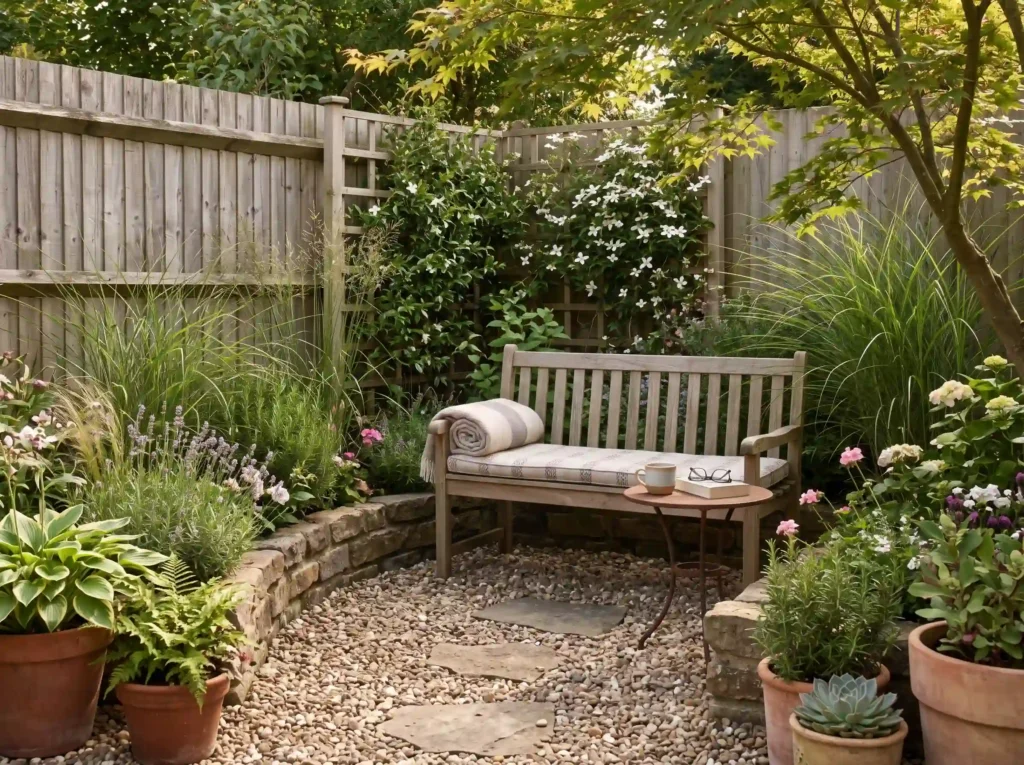
You do not need to redesign the whole yard to create a relaxing space.
Choose one unused corner. Add a comfortable chair or small bench.
Use plants, a trellis, or a screen to create partial privacy. You do not need to block every view.
Add a small side table for a drink, book, or plant pot.
Soft grasses and fragrant plants can make the area feel more pleasant. Choose options that suit your climate and do not crowd the seat.
A bench under a small tree can create natural shade. A gravel base may help define the area.
This idea works well when the main patio feels too busy or exposed.
Best for: Reading and quiet breaks
Budget level: Low to medium
Maintenance: Low
DIY difficulty: Easy
Repeat Materials to Make the Yard Feel Connected
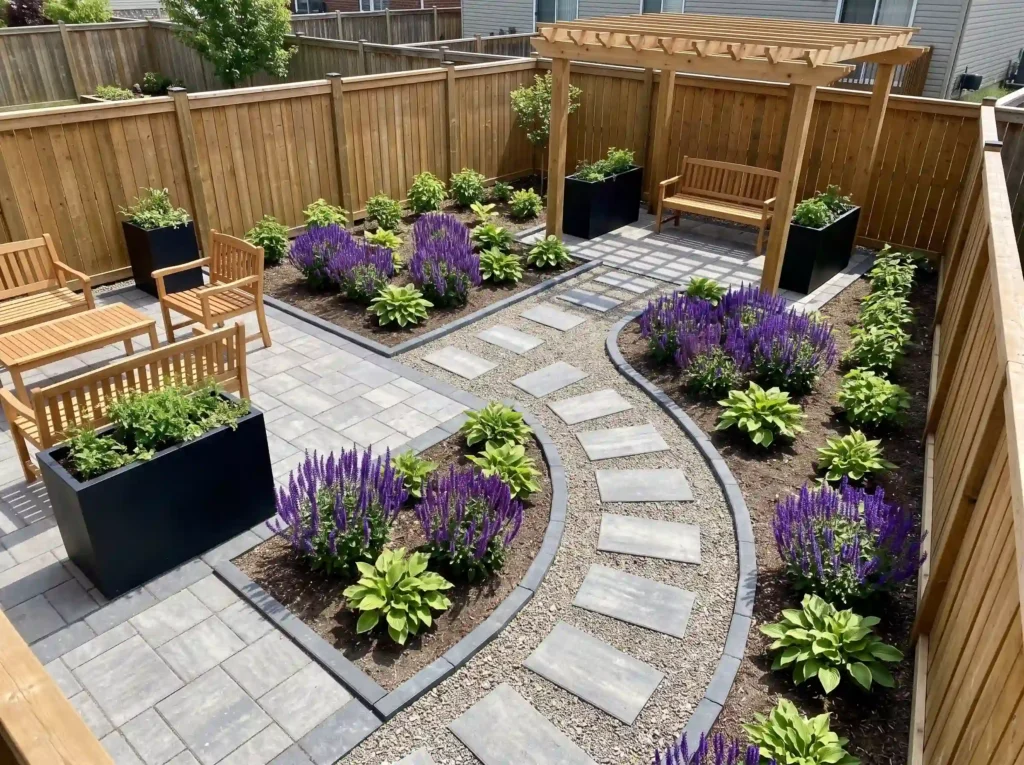
A backyard can feel messy when every area uses different colors, shapes, and materials.
You can fix this by repeating a few design details.
Use the same edging around several beds. Repeat one pot color near the patio and garden. Match the wood tone of a bench with a fence or pergola.
You can also repeat the same plant in different parts of the yard.
For example, black planters, natural wood, and rectangular pavers can connect a patio, garden, and seating area.
Limit the number of strong colors. Too many competing finishes can make a small yard feel crowded.
This idea does not add another feature. It helps your existing features look like one finished design.
Best for: Yards that feel mismatched
Budget level: Low
Maintenance: Low
DIY difficulty: Easy
Finish One Backyard Makeover in a Weekend
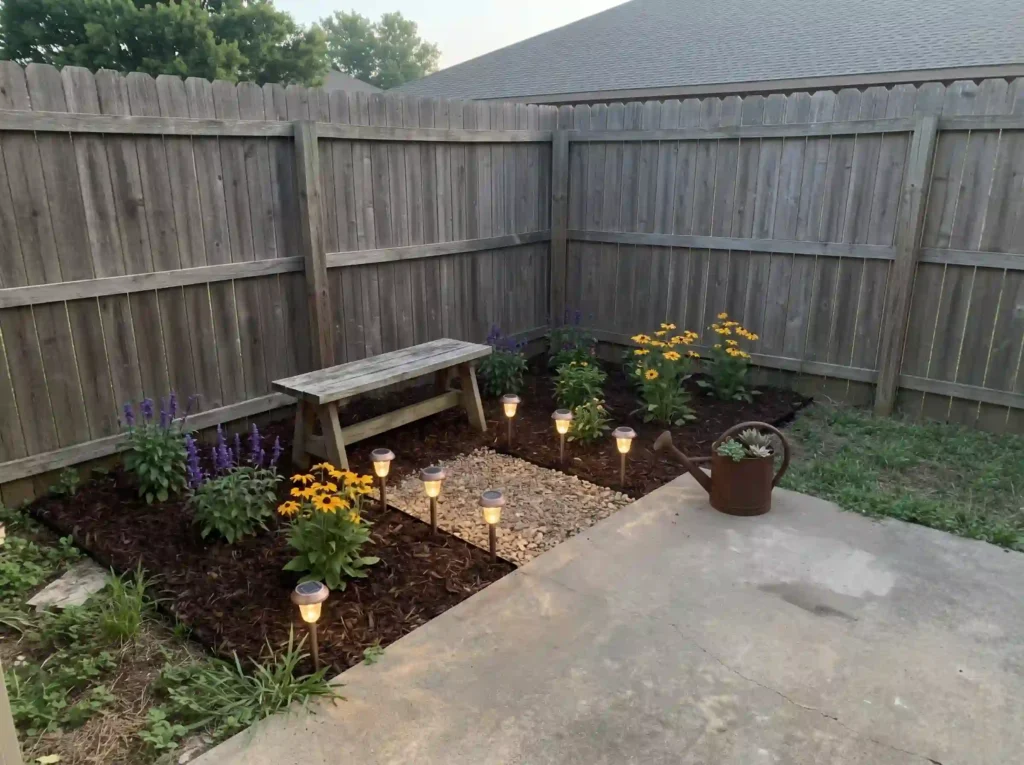
A full backyard project can feel too large. One weekend project is easier to start and finish.
Choose one visible area. It may be the space beside the patio, a bare fence, or an empty corner.
Remove clutter, weeds, dead plants, and broken items first. Cleaning often creates the biggest early change.
Next, define the area with edging, mulch, gravel, or a small path.
Finish with one useful feature. Add a bench, containers, solar lights, or a simple planted border.
A basic two-day plan may look like this:
Day one: Clean the area, trim plants, measure the space, and mark the new border.
Day two: Add mulch or gravel, place containers, and install lighting.
Take a before-and-after photo. It can help you see your progress and plan the next stage.
Best for: Beginners and tight budgets
Budget level: Low
Maintenance: Depends on the project
DIY difficulty: Easy
How to Choose the Right Backyard Idea for Your Space
A long list of ideas can make planning harder unless you have a way to compare them.
Start with your main goal.
| Your Main Goal | Best Ideas to Consider |
| Add privacy | Plant border, trellis, vertical garden |
| Spend less | Gravel seating, containers, mulch beds |
| Reduce maintenance | Rock garden, reduced lawn, native plants |
| Improve a small yard | Vertical garden, compact dining, containers |
| Entertain guests | Fire pit, dining zone, landscape lighting |
| Help children or pets | Play area, durable pet zone |
| Add visual interest | Water feature, garden path, repeated materials |
Next, think about the size of the yard.
A large fire pit or dining area may overwhelm a narrow space. A tiny bench may look lost in a wide lawn.
Your maintenance level also matters. A large flower garden may look beautiful, but it may need regular watering, cutting, feeding, and cleanup.
Budget-friendly backyard ideas can still look complete when they solve a clear problem. Gravel seating, mulch beds, lighting, and large containers can create a strong change without rebuilding the whole yard.
Use this three-part formula:
- Choose one foundation feature, such as a path, patio, or gravel area.
- Choose one comfort feature, such as seating, shade, or lighting.
- Choose one planting feature, such as containers or a privacy border.
This creates a complete backyard layout without overcrowding the space.
Fix These Backyard Landscaping Mistakes Before They Cost More
Most backyard mistakes happen because people plan around how a feature looks today instead of how it will work later.
Drainage should come first. Standing water is a functional problem. A bare fence is mainly a visual problem.
Solve functional problems before adding decorations.
Another mistake is buying plants without checking sunlight. A sun-loving plant may become weak in a shaded corner.
You should also check the full-grown size of every tree and shrub. A young plant may look too small at first, but it can quickly outgrow a narrow bed.
Do not make patios, paths, or fire pit areas too large for the yard. A wide patio may leave no room for lawn, planting, or movement.
Keep access in mind. You may still need space for bins, lawn equipment, repairs, deliveries, or a mower.
Using too many materials can also create a messy look. Three paver styles, several pot colors, and different types of edging may compete with each other.
Storage is another common problem. Cushions, toys, tools, and hoses need a place to go.
Before adding anything, ask whether it improves movement, comfort, privacy, drainage, or maintenance. If it solves none of these, it may not be a priority.
Start With One Problem, Not the Whole Backyard
An unfinished backyard can feel like one large project. It becomes easier when you divide it into smaller decisions.
Fix drainage and safety problems first. Then decide how you want to use the space.
Choose two or three matching ideas instead of trying to include every popular feature. Complete the work in stages when time or money is limited.
Walk through your yard and find the area that causes the most frustration. Measure it before buying anything.
One useful change can make the whole space feel more welcoming.
The best backyard landscaping ideas are the ones that make your outdoor space easier and more enjoyable to use.