19 Concrete Patio Ideas for a Stylish Backyard
Concrete may be practical, but your patio does not have to look like a plain gray slab.
The right concrete patio ideas can turn an empty backyard into a useful place for eating, relaxing, cooking, or spending time with family. You can keep the design simple and low-cost. You can also add color, plants, shade, seating, or a fire pit.
The hard part is choosing a design that fits your space. A patio that looks great in a large yard may feel crowded in a small one. Dark concrete may suit a modern home, but it can become hot in strong sun. A painted surface may look fresh, but it may need future touch-ups.
This guide covers budget, small, and modern concrete patio ideas. You will also find designs for dining areas, fire pits, outdoor kitchens, narrow yards, and sloped spaces.
Start by thinking about how you plan to use your backyard concrete patio. Then save the ideas that match your home, yard, and budget.
Plan These Details Before You Pour Concrete
A patio can look beautiful and still cause problems if it is too small, poorly placed, or hard to furnish.
Start with the main use. Do you want a quiet reading area, a family dining space, or a place for large gatherings? Your answer will affect the size, shape, and location of the patio.
Measure your furniture before you decide on the patio size. A dining table needs extra room around it so people can pull out their chairs. A grill also needs a clear working area. Deep outdoor sofas can take up more room than expected.
Next, study the sun. Check the yard in the morning, afternoon, and evening. A sunny spot may feel pleasant in spring but become too hot during summer.
You also need to plan for water. The patio should guide rain away from your house. Water should not collect near doors, walls, or the foundation.
Ask your contractor where the control joints will go. These are planned grooves that help control where the concrete may crack. A good contractor can often work them into the design.
Before work starts, check:
- How you will use the patio
- Furniture measurements
- Sun and shade
- Water drainage
- Lighting needs
- Electrical outlets
- Grill or kitchen placement
- Concrete finish
- Border materials
- Contractor access to the yard
Good planning can save you from costly changes later.
4 Budget Concrete Patio Ideas That Still Look Finished
You do not need costly stamped patterns or several colors to make a concrete patio feel complete. Simple materials can look polished when the layout is clean and each item has a purpose.
Choose a Clean Broom-Finished Concrete Patio
Best for: Low budgets, family yards, and simple outdoor spaces
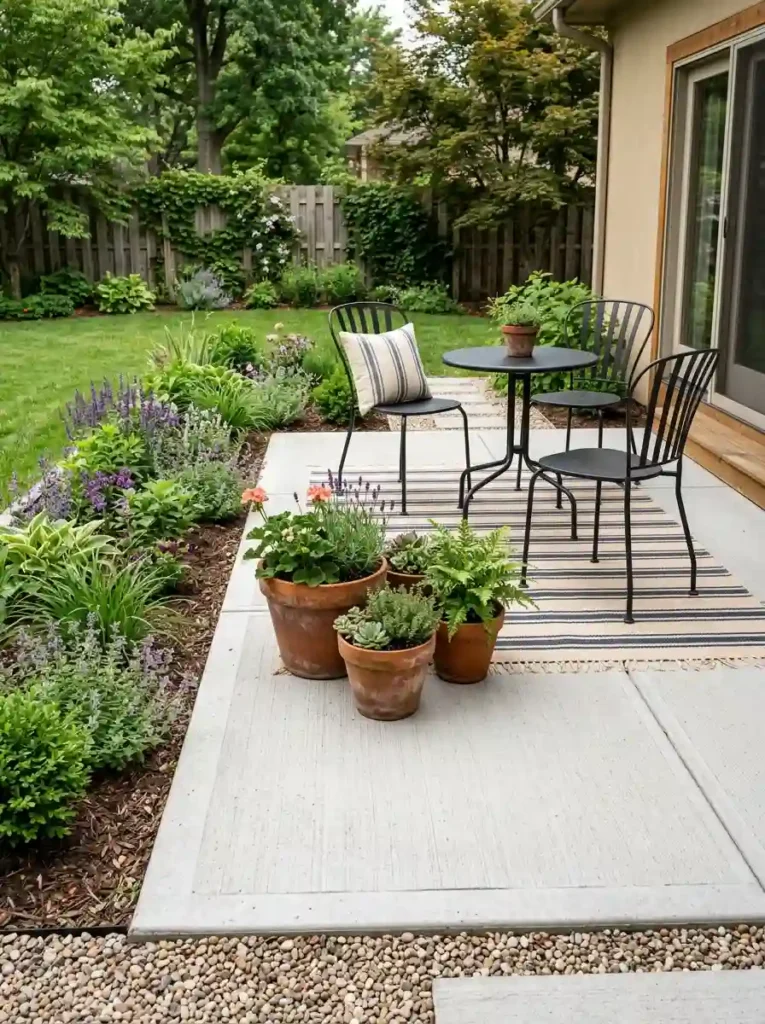
A broom finish is one of the most practical choices for an affordable concrete patio. The contractor pulls a broom across the wet surface to create fine lines.
These lines add grip, which can help when the patio is wet. They also give the slab a more finished look than a smooth surface.
Keep the concrete light gray and use furniture to add color. Black metal chairs, terracotta pots, and a striped rug can make a basic patio feel warm and inviting.
You can also improve the edges. Add pea gravel, brick, mulch, or a narrow flower bed around the slab.
Keep in mind: A broom finish is simple. It may not suit you if you want a highly decorative surface.
Break the Patio Into Concrete Squares
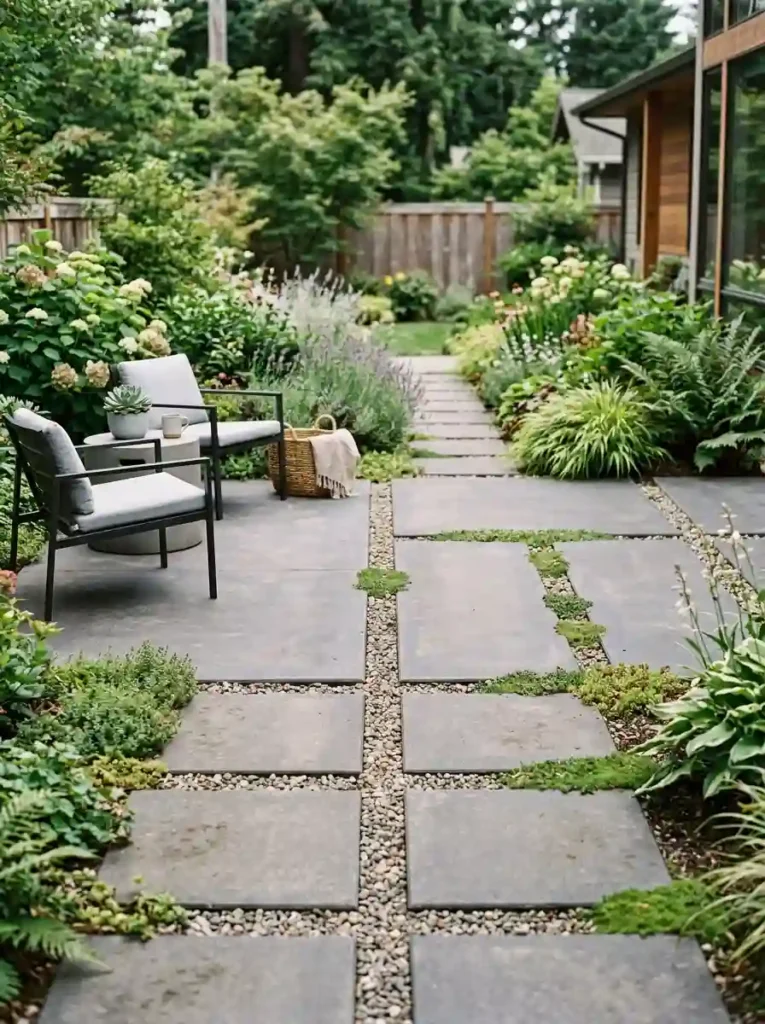
Best for: Modern yards and homeowners who dislike one large slab
Large concrete squares can make a patio feel lighter and more interesting. The gaps between each pad create a clear grid.
Fill the spaces with pea gravel, small stones, or low plants. The gaps can also help the patio connect with the lawn or garden.
You do not need to make every square the same size. Long rectangles can create a more modern look. Smaller squares may suit a compact sitting area.
Keep the spacing even. Uneven gaps can make the design look unfinished.
Keep in mind: Gravel may move over time. Ground cover may also need trimming and regular care.
Add a Painted or Stenciled Pattern
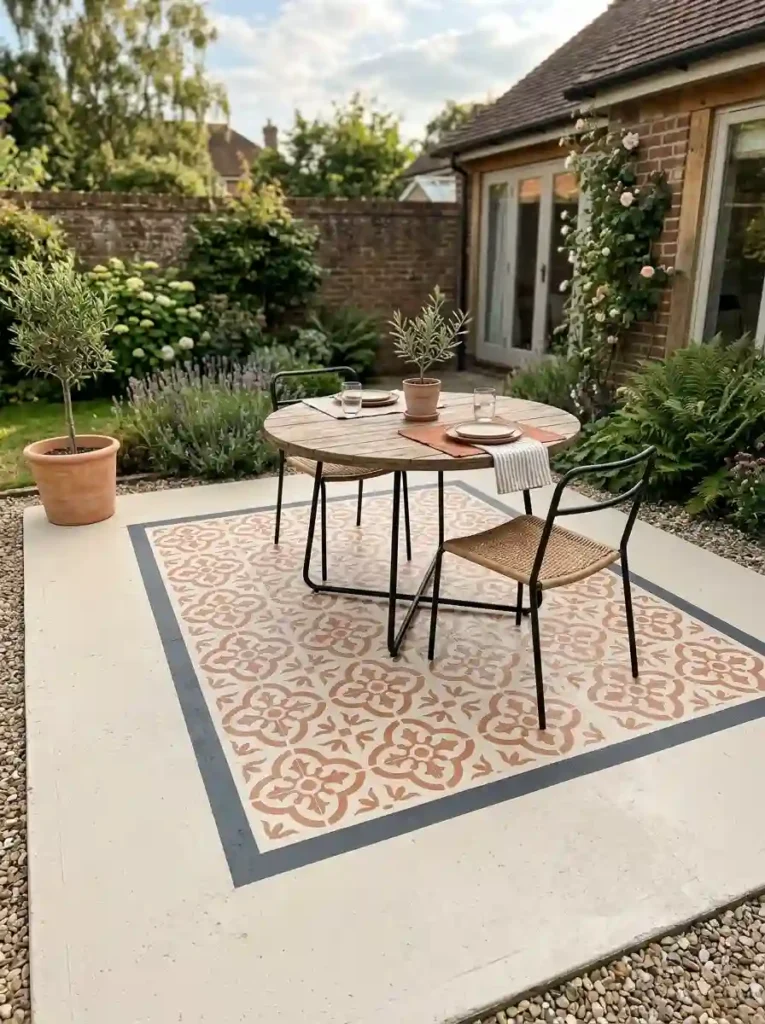
Best for: Old patios that need a low-cost makeover
Concrete paint or stain can refresh a patio without replacing the slab. You can add a border, a simple tile pattern, or a bold shape under the dining table.
A charcoal border works well around pale concrete. A soft blue or warm clay stencil can add color without covering the full patio.
Clean the surface before you apply any product. Dirt, grease, loose paint, and old sealer can stop the new coating from sticking.
Test your color in a small hidden area. Colors may look much brighter outside than they do on a sample card.
Keep in mind: Painted concrete is not maintenance-free. Heavy foot traffic and strong weather may cause fading or peeling.
Use Exposed Aggregate for More Texture
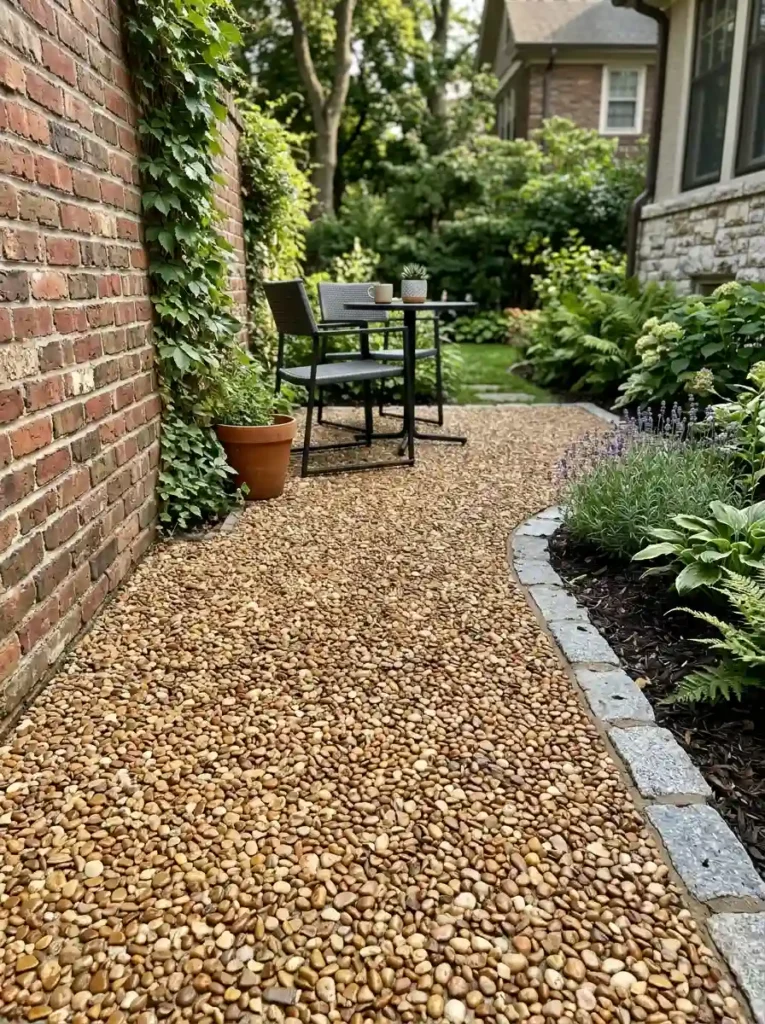
Best for: Traditional homes and patios that need extra visual detail
Exposed aggregate shows the small stones inside the concrete. The result feels more natural than a plain slab.
Choose stone colors that match your home. Warm brown and tan stones can suit brick walls. Cool gray stones often work well with white or modern exteriors.
The textured surface can also hide light dirt better than smooth concrete. This can help in busy family yards.
Use simple furniture so the surface remains the main feature.
Keep in mind: A rough surface may feel hard under bare feet. Deep texture can also hold dirt and leaves.
4 Modern Concrete Patio Ideas With Cleaner Lines
Modern patio design is often simple. The slab size, joint pattern, furniture, and materials all work together.
Use Large Concrete Slabs for a Minimal Look
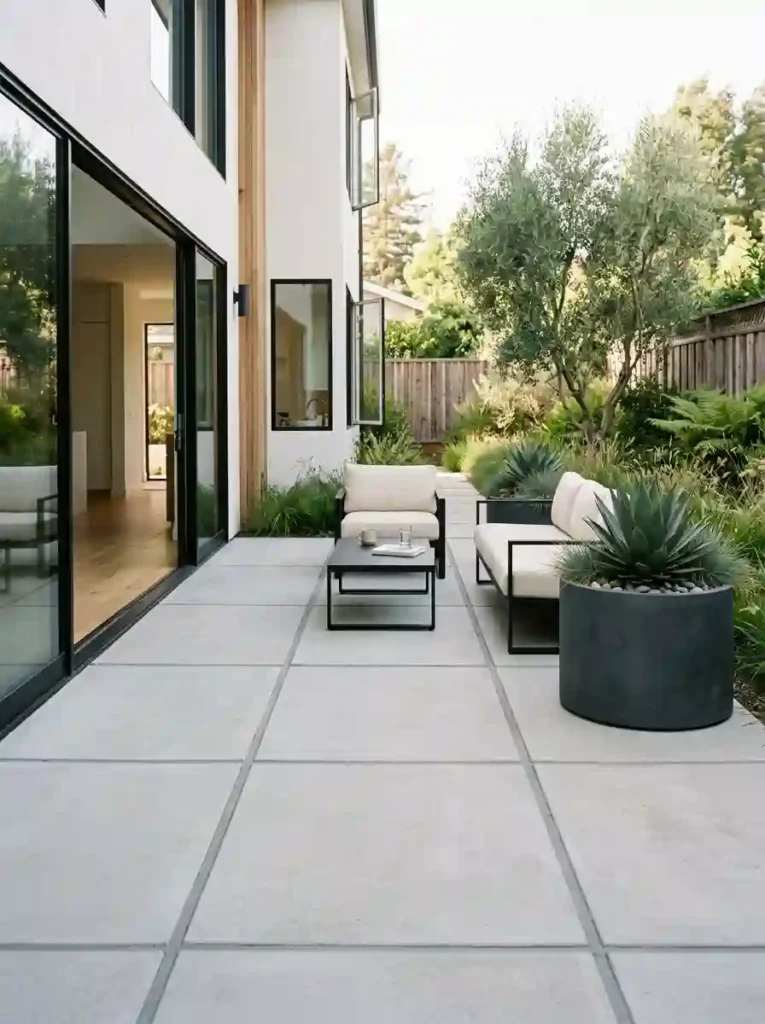
Best for: Modern homes and open backyards
Large rectangular slabs create a calm and clean look. They reduce the number of visible lines across the patio.
Place the slabs in a straight grid. Align them with doors, windows, walls, or other parts of the house. This helps the patio feel connected to the building.
Choose furniture with low backs and simple shapes. One large planter can look better than several small pots.
A pale gray finish works well with black metal, light wood, or cream fabric.
Keep in mind: Large sections still need proper joint planning. Ask your contractor how the slab will handle movement and cracking.
Add Geometric Score Lines
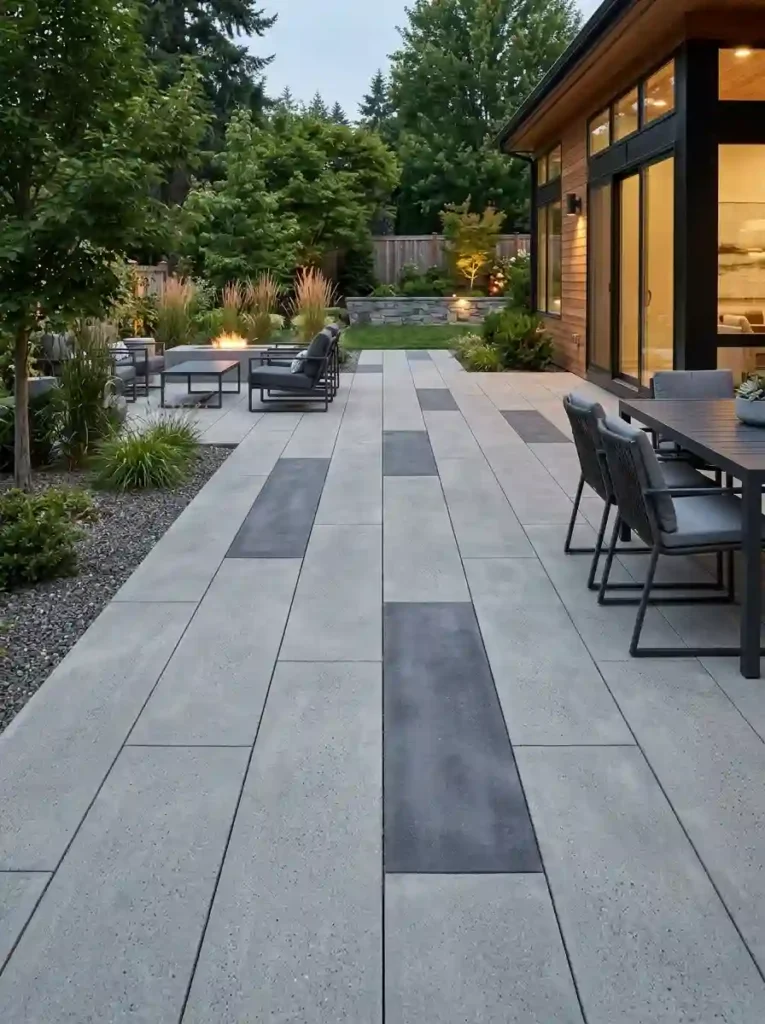
Best for: Homeowners who want detail without a busy pattern
Score lines are shallow cuts added to the concrete surface. They can create squares, diamonds, long rectangles, or offset shapes.
Use the lines to lead the eye from your home into the yard. Long rectangles can make a short patio feel deeper. Wide square patterns can help a large patio feel more balanced.
Keep the pattern in scale with the space. Tiny shapes may make a large patio look busy.
You can leave the lines plain or add a darker stain inside them for more contrast.
Keep in mind: Decorative scoring does not replace all needed control joints. The design should work with the joint plan.
Try Charcoal-Tinted Concrete
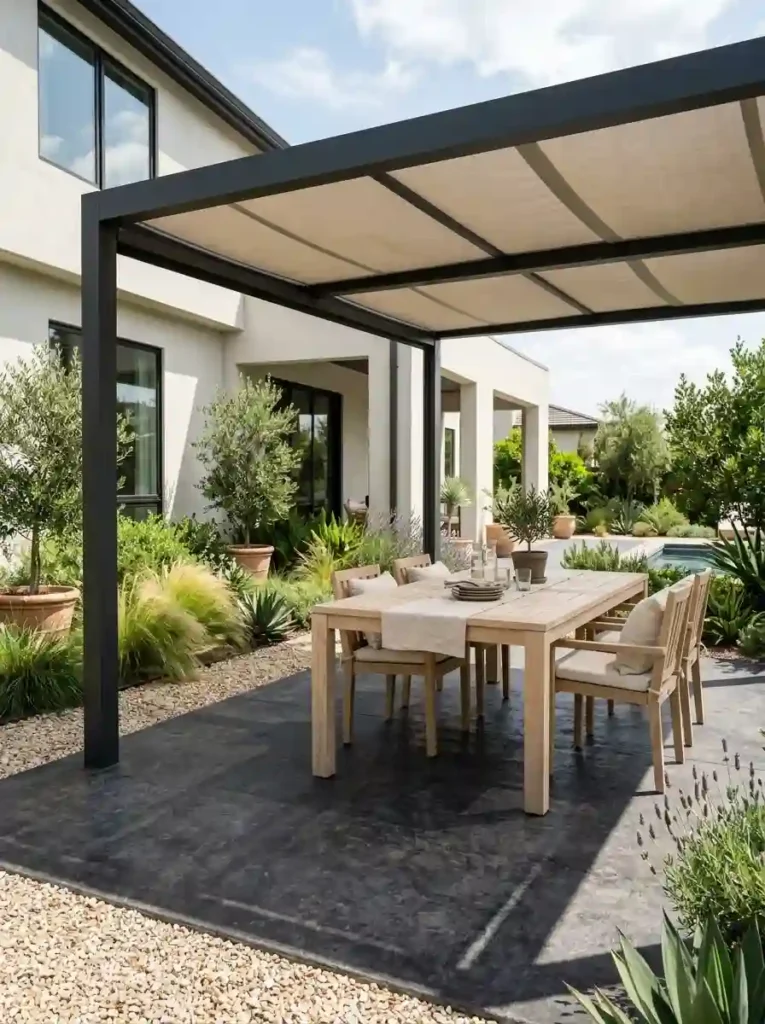
Best for: Light-colored homes and bold modern yards
Dark concrete creates strong contrast. It can make pale wood, green plants, and cream cushions stand out.
You can add color to the concrete mix or stain the surface later. Ask to see real samples before you choose a shade.
Place the sample in direct sun and shade. The same color can look very different as the light changes.
Break up a large dark patio with light furniture, gravel borders, or wood features. This stops the space from feeling too heavy.
Keep in mind: Dark surfaces can become hot in strong sun. Add shade if people will use the patio during the hottest part of the day.
Warm Up Concrete With Wood Details
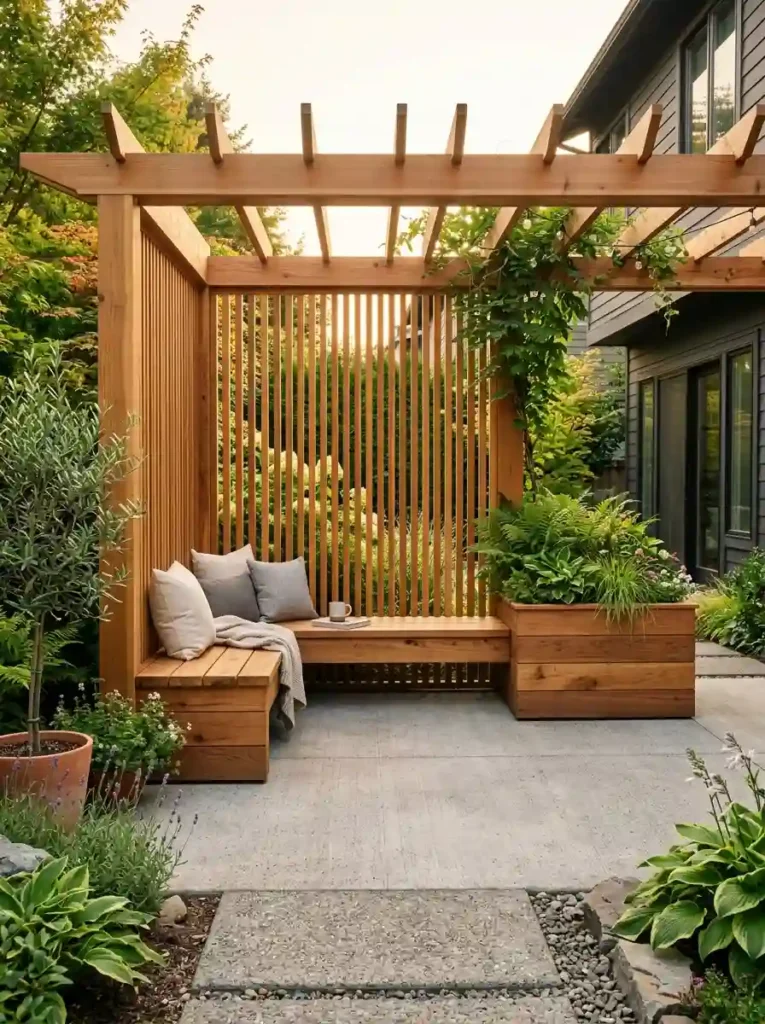
Best for: Modern patios that feel cold or plain
Concrete and wood work well together. Concrete gives you a strong base. Wood adds warmth and softer color.
Add a wood pergola, built-in bench, slat screen, or planter box. You can also use wood-look outdoor furniture if you want less upkeep.
A vertical slat screen can improve privacy without fully closing the patio. Leave small gaps between the boards so air and light can pass through.
Try to use two or three main materials. Too many finishes can make the space feel messy.
Keep in mind: Natural wood needs care. Choose outdoor-rated wood or a weather-resistant composite material.
4 Small Concrete Patio Ideas That Save Space
A small yard can still support dining, relaxing, or gardening. You just need to choose items that fit the space.
Create a Compact Bistro Patio
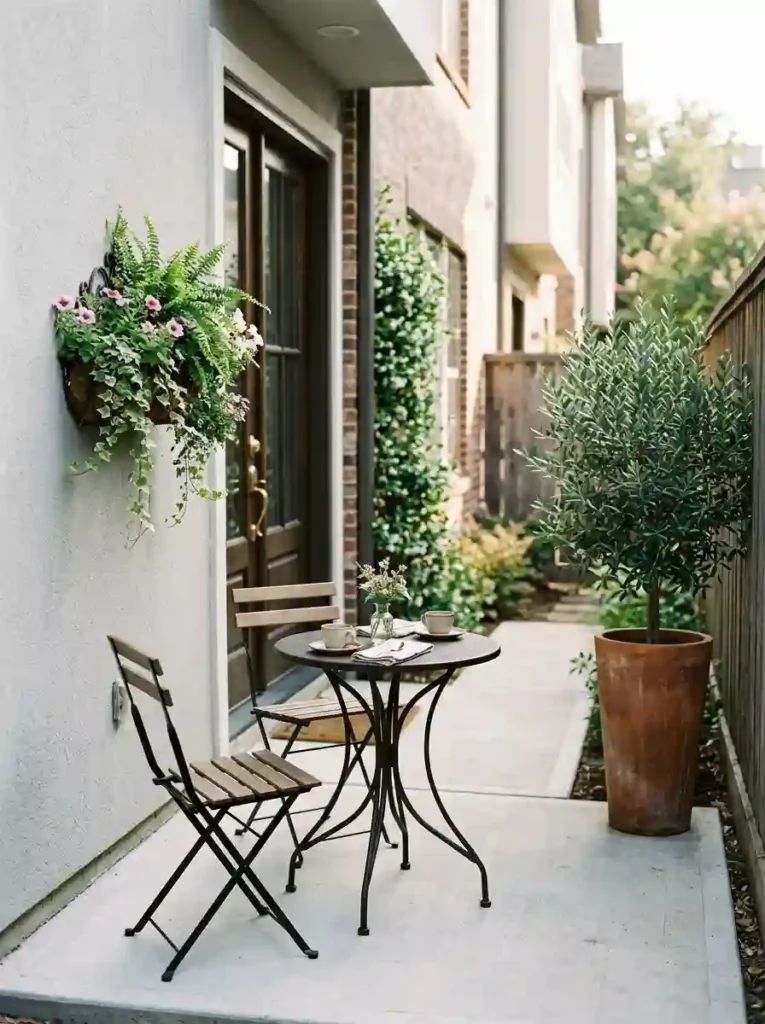
Best for: Couples, apartments, townhouses, and tiny backyards
A small square slab can hold a round table and two chairs. This gives you a simple place for coffee, lunch, or evening drinks.
Choose folding chairs or furniture with thin legs. Heavy furniture can make a tight area feel crowded.
Add one tall planter instead of several small pots. You can also use a wall planter to keep the floor clear.
Leave an open path between the door and the yard. People should not have to move a chair each time they walk past.
Keep in mind: A bistro patio works well for two people, but it may not support larger meals or gatherings.
Add a Built-In Corner Bench
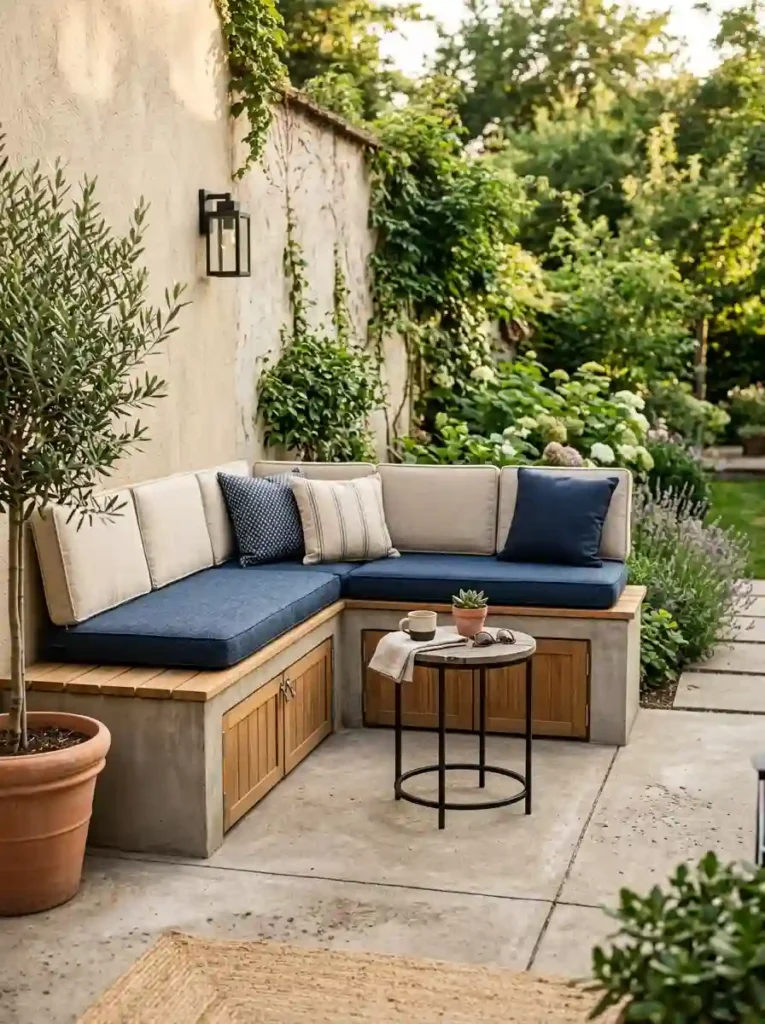
Best for: Small patios that need more seating
A corner bench uses less floor space than several separate chairs. It can also make an empty fence or wall more useful.
Place the bench along two sides of the patio. Add a narrow table or small round coffee table in front.
You can build storage under the seat for cushions, gardening tools, or outdoor games. Make sure the storage area stays dry.
Use washable cushions for comfort. Choose one or two colors so the patio does not feel crowded.
Keep in mind: Built-in seating is harder to move. Check the layout before the bench is installed.
Use a Curved Patio to Fix an Awkward Yard
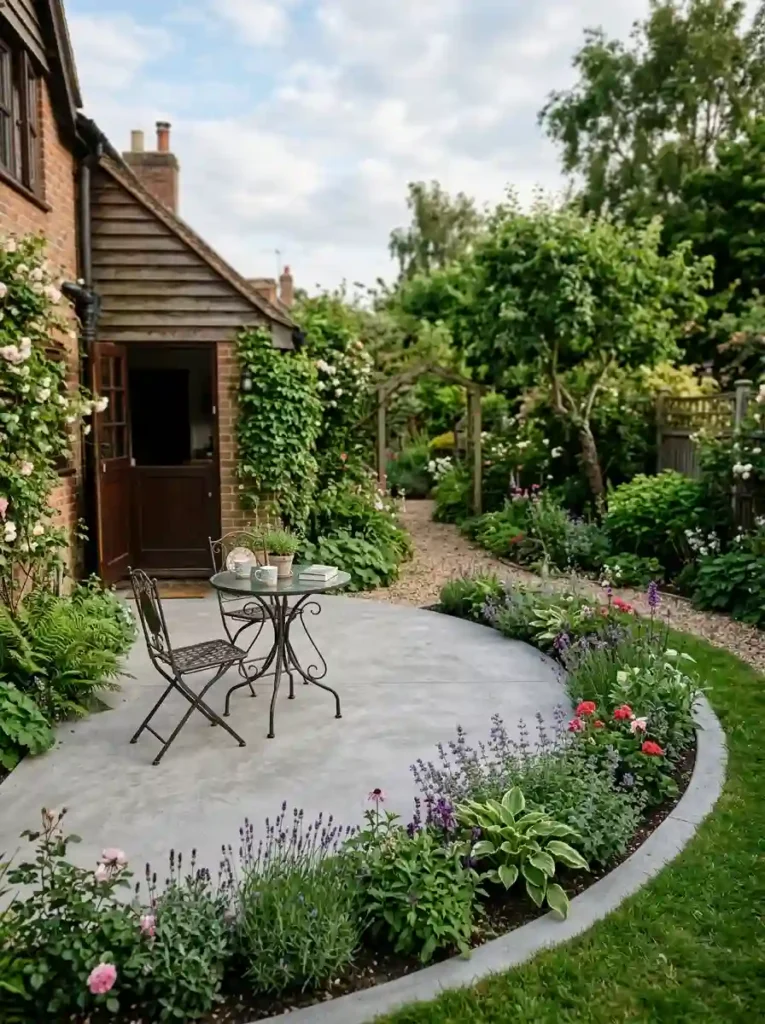
Best for: Small gardens, cottage-style homes, and uneven yard shapes
A curved patio can soften the look of a box-shaped yard. It can also fit around a garden bed, tree, or existing path.
A half-circle patio works well outside a back door. Place a small table near the center and add planting around the curved edge.
The curve can also guide people from the house into the garden. This makes the patio feel like part of the yard instead of a separate block.
Use one smooth curve rather than several small bends. A simple shape usually looks cleaner.
Keep in mind: Curved forms may need more labor than straight edges. Ask how the shape will affect the price.
Turn a Narrow Side Yard Into a Retreat
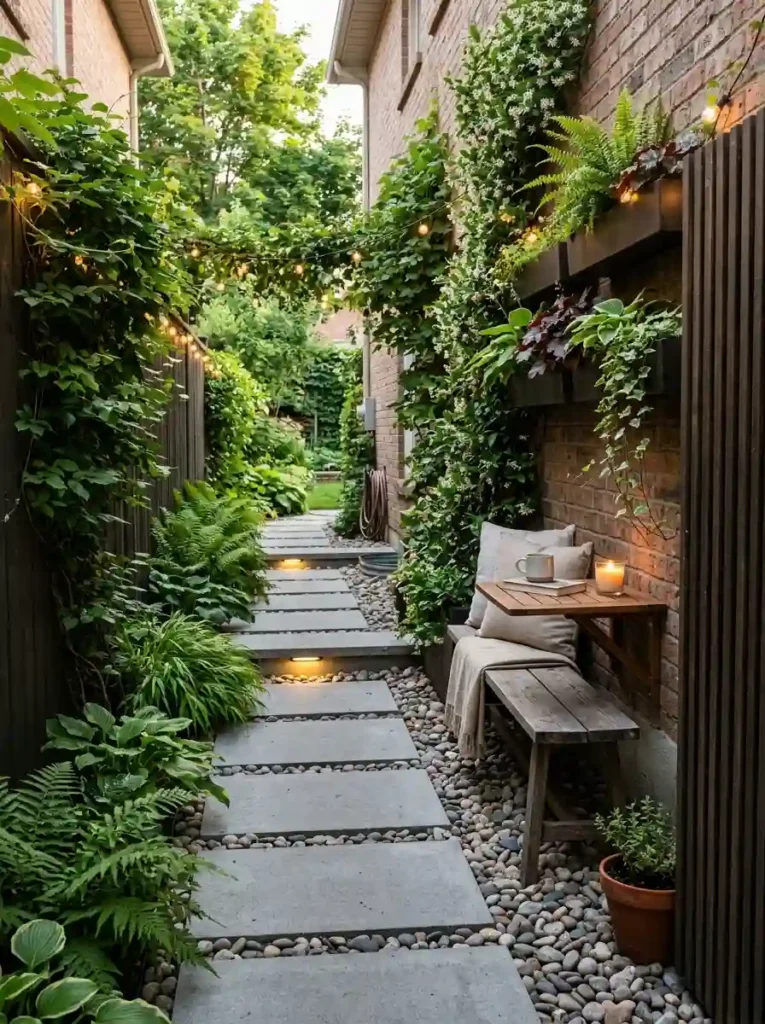
Best for: Homes with unused space between the house and fence
A narrow side yard can become a quiet sitting area. Use long concrete slabs to match the shape of the space.
Place a slim bench against one wall. Add a small wall-mounted table or narrow coffee table.
Use climbing plants, wall planters, or a wood screen for privacy. Warm outdoor lights can make the area feel more comfortable at night.
Keep the main walking path clear. Deep chairs and wide planters may block movement.
Keep in mind: Side yards may receive little sun. Choose plants that match the actual light level.
4 Concrete Patio Ideas for Cooking, Dining, and Relaxing
The most useful patios are built around what people will do there. Plan the main activity before you choose furniture or decorative details.
Build the Patio Around a Fire Pit
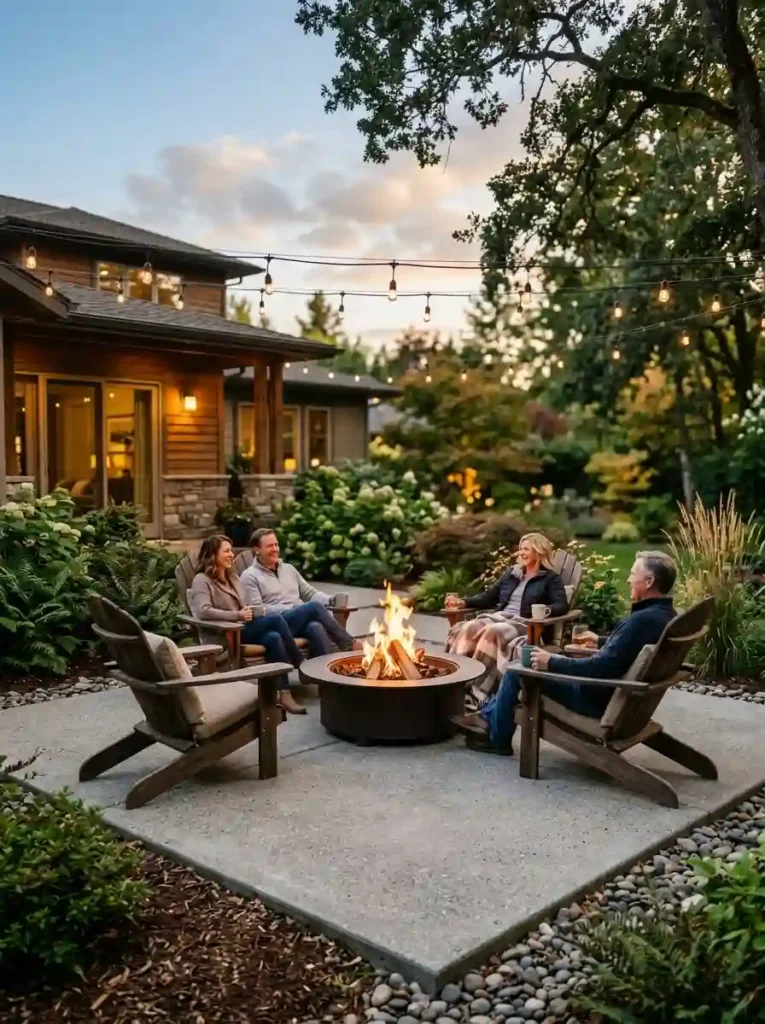
Best for: Evening gatherings and casual seating
A fire pit can create a clear center for the patio. Arrange chairs around it so people can talk without turning their seats.
A round fire pit works well on a square patio. It softens the straight edges and creates an easy seating plan.
Use movable chairs if you want more freedom. Built-in benches can look neat, but they give you less control over the distance from the fire.
Keep the area open above the flames. Avoid low roofs, tree branches, and other items that may catch fire.
Follow the fire pit maker’s safety instructions. You should also check local fire rules before installation.
Keep in mind: Smoke may blow toward doors, windows, or neighbors. Study the usual wind direction before choosing the location.
Plan the Patio Around a Dining Table
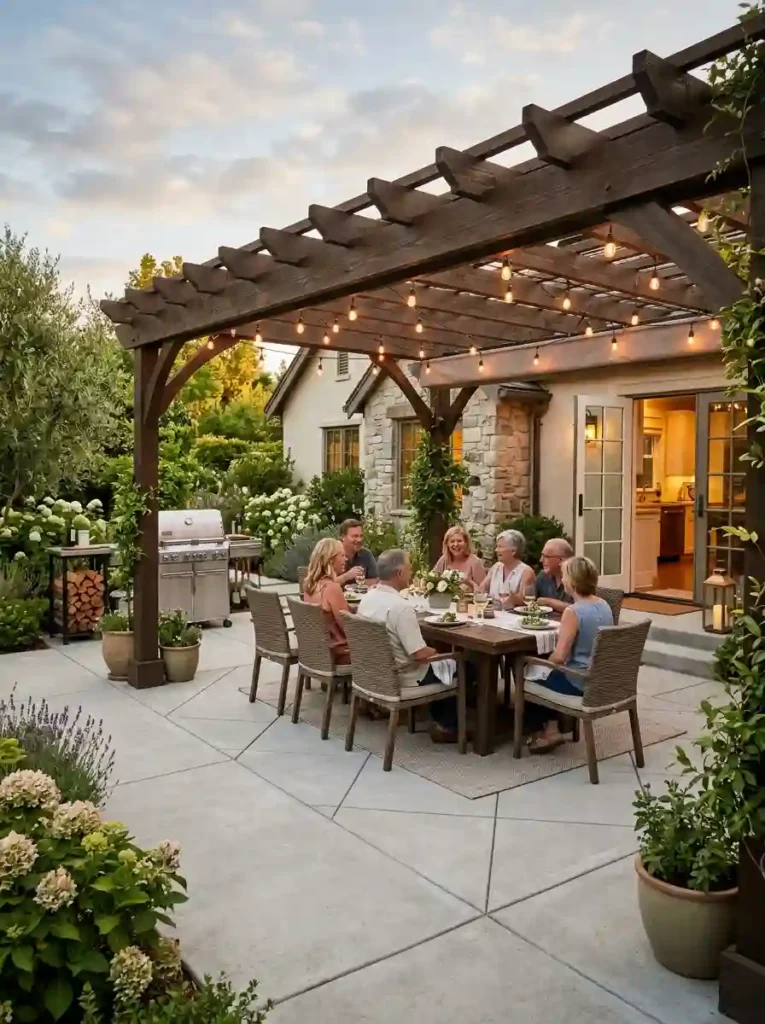
Best for: Family meals and outdoor entertaining
Start with the size of your table. Then add space for chairs, walking, and serving food.
Place the dining area near the kitchen door when possible. This makes it easier to carry plates and drinks outside.
Keep the grill close enough to be useful, but do not place it in the main walking path. The cook should have room to work safely.
Add shade with a large umbrella, pergola, or roof cover. Outdoor lighting will also make the area more useful after sunset.
A scored concrete grid can help define the dining zone without adding another flooring material.
Keep in mind: The patio may look large when empty. Test the furniture layout with string or chalk before the concrete is poured.
Cover the Patio With a Pergola
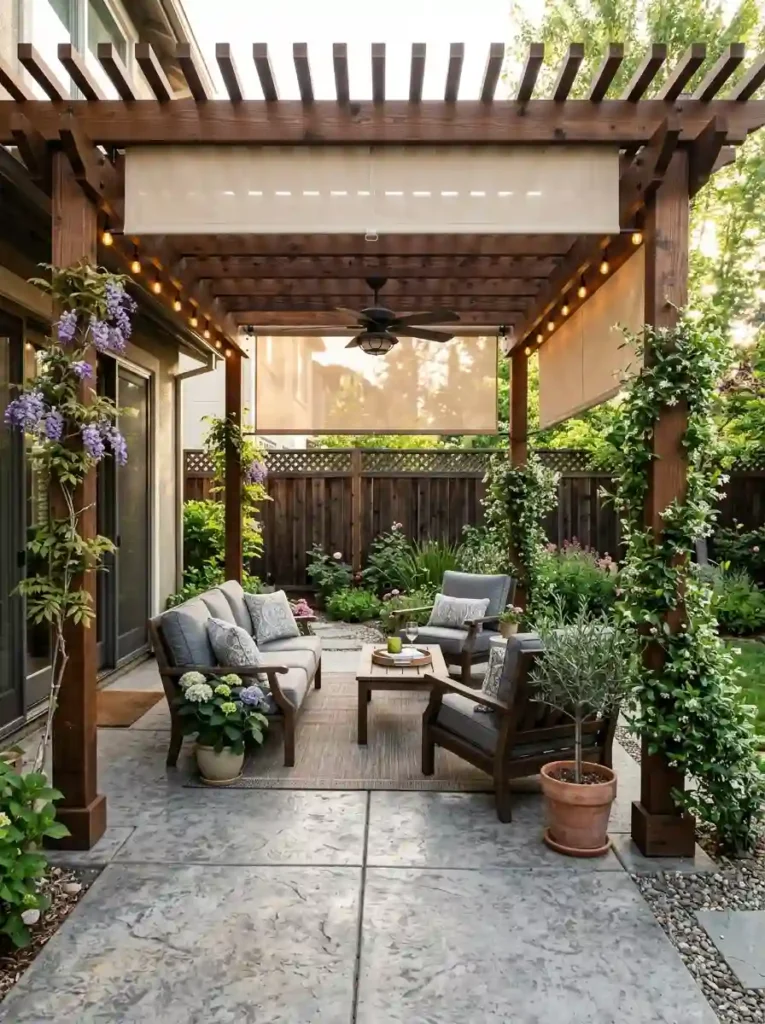
Best for: Sunny yards and patios that need a clear outdoor room
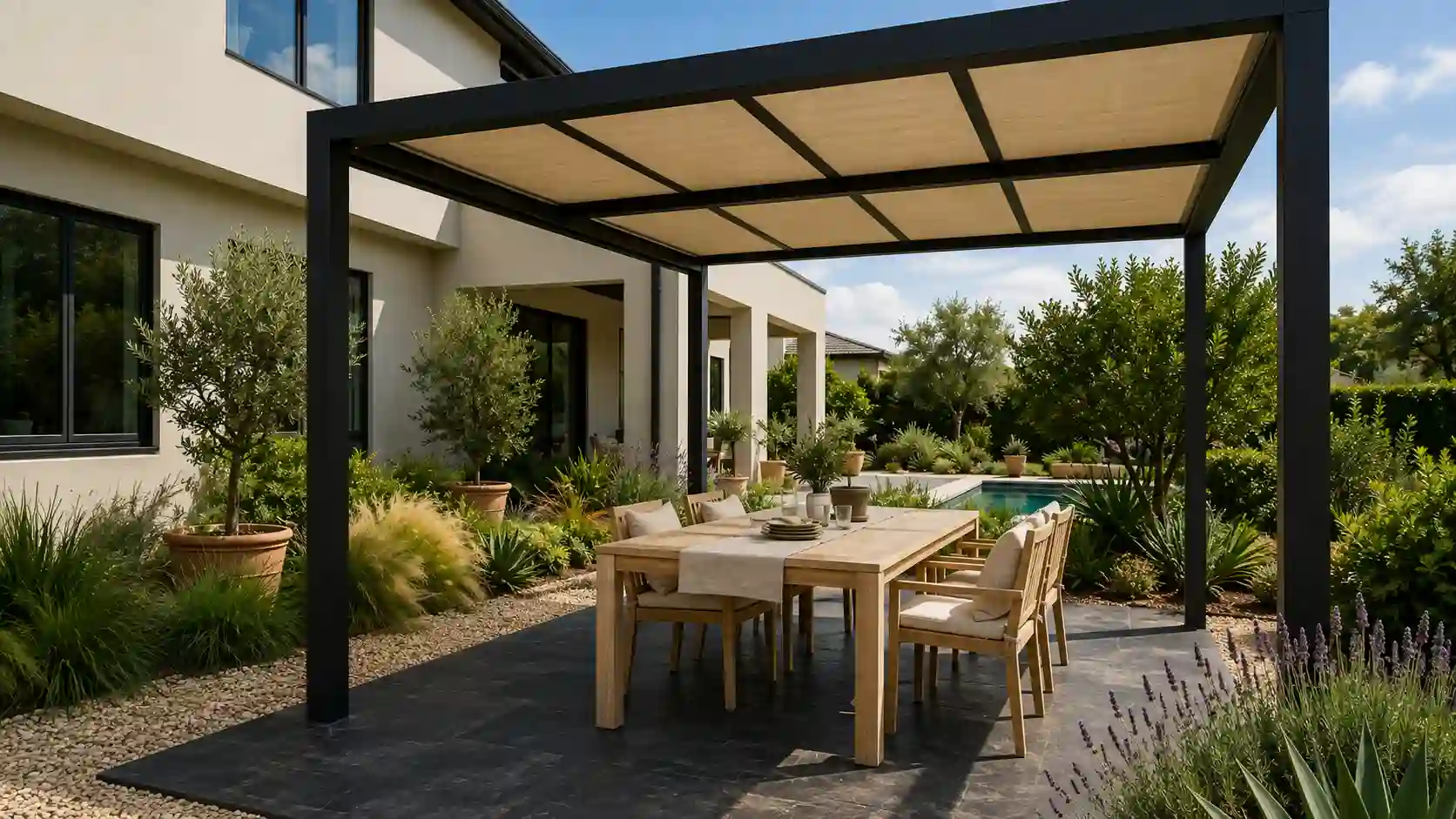
A pergola creates partial shade and gives the patio more structure. It can also make a plain concrete slab feel finished.
Choose a pergola size that covers the main seating or dining area. The posts should not block doors or walking routes.
You can add a fabric shade for stronger sun control. A retractable cover gives you more choice during different seasons.
Lights, fans, and climbing plants can add comfort. Plan wiring and support points before the structure is complete.
Match the wood color to your fence, doors, or outdoor furniture.
Keep in mind: A basic pergola does not block all sun or rain. Add a suitable cover if you need stronger weather protection.
Add an Outdoor Kitchen Zone
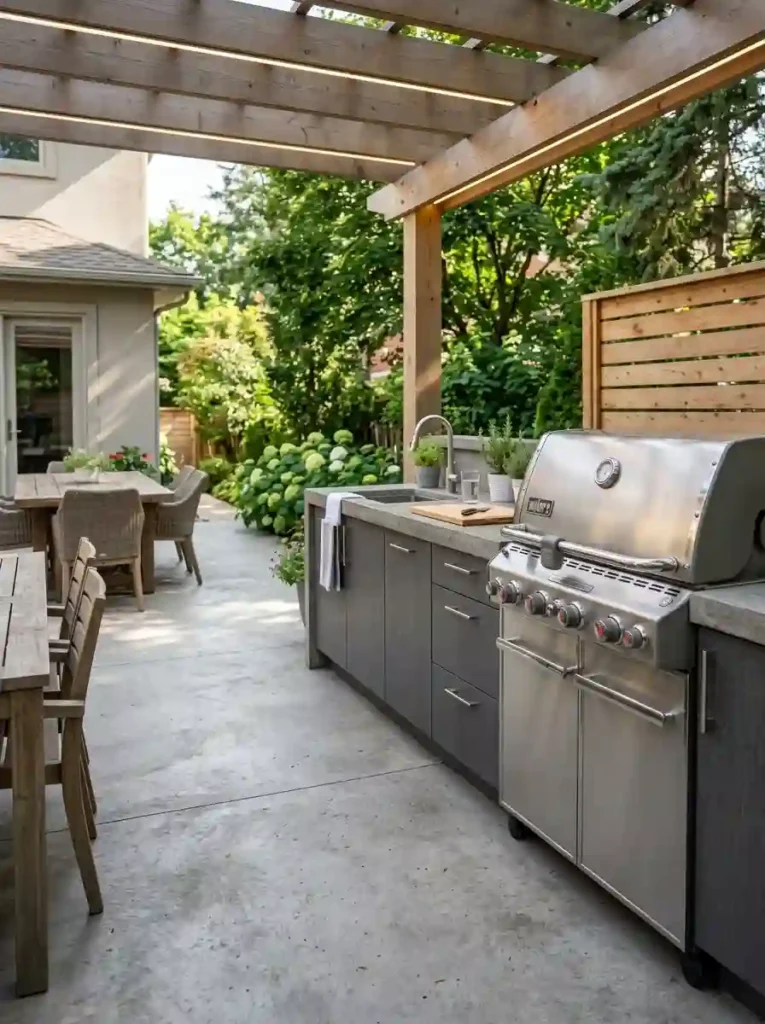
Best for: Homeowners who cook outside often
An outdoor kitchen can make a patio more useful, but it needs careful planning.
Place the cooking area along one side. This keeps the center open for dining and movement.
Include counter space beside the grill. You need room for plates, tools, and food preparation.
Weather-resistant cabinets can keep supplies close. A small refrigerator or sink may also help, but these features need safe utility connections.
Plan water, gas, electricity, and drainage before the concrete work begins. Changing these systems later can cost more.
Keep in mind: Do not add expensive features that you will rarely use. A good grill and useful counter may work better than a full kitchen for many homes.
3 Concrete Patio Landscaping Ideas That Soften the Space
Large concrete surfaces can feel hard or empty. Plants, gravel, wood, and changes in height can make the patio feel more connected to the yard.
Grow Grass or Ground Cover Between Concrete Pads
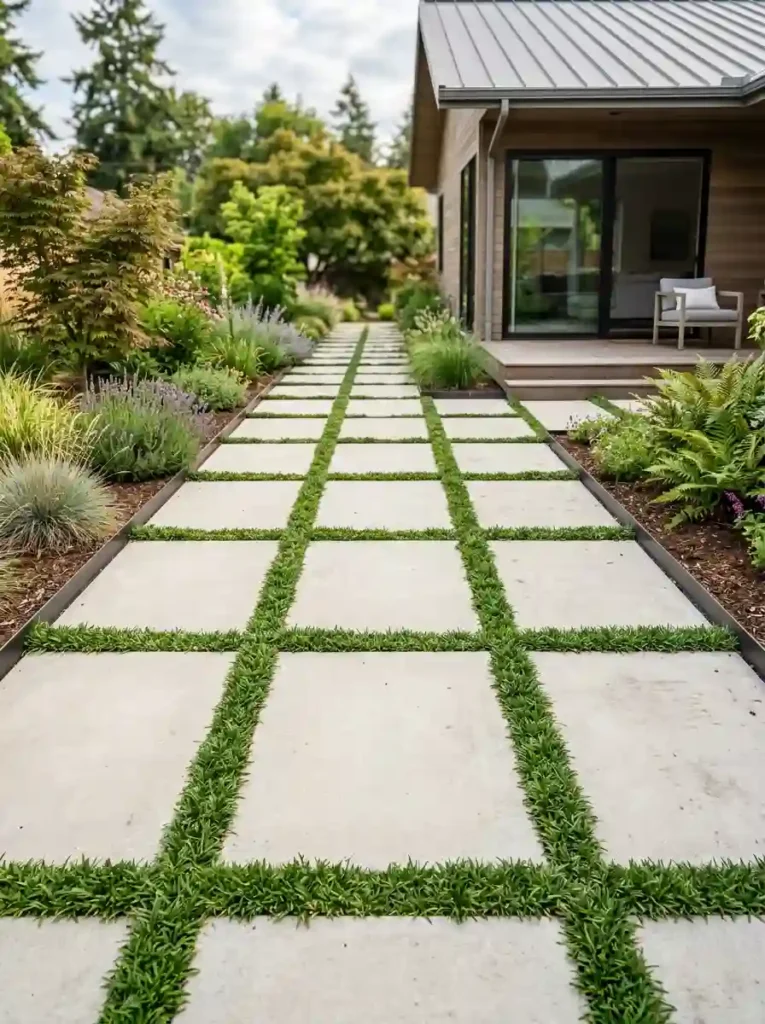
Best for: Modern gardens and patios that need a softer look
Leave even spaces between large concrete pads. Fill them with grass, low ground cover, or gravel.
Green plants create a strong contrast with pale concrete. They can also help the patio blend with the lawn.
Choose plants that match the amount of sun and foot traffic. Some soft plants look good but cannot handle people stepping on them.
In dry climates, gravel may be easier to care for than grass. Use edging to help keep the stones in place.
Keep in mind: Plants between slabs need trimming and water. Soil can also wash onto the concrete after heavy rain.
Frame the Patio With Raised Planters
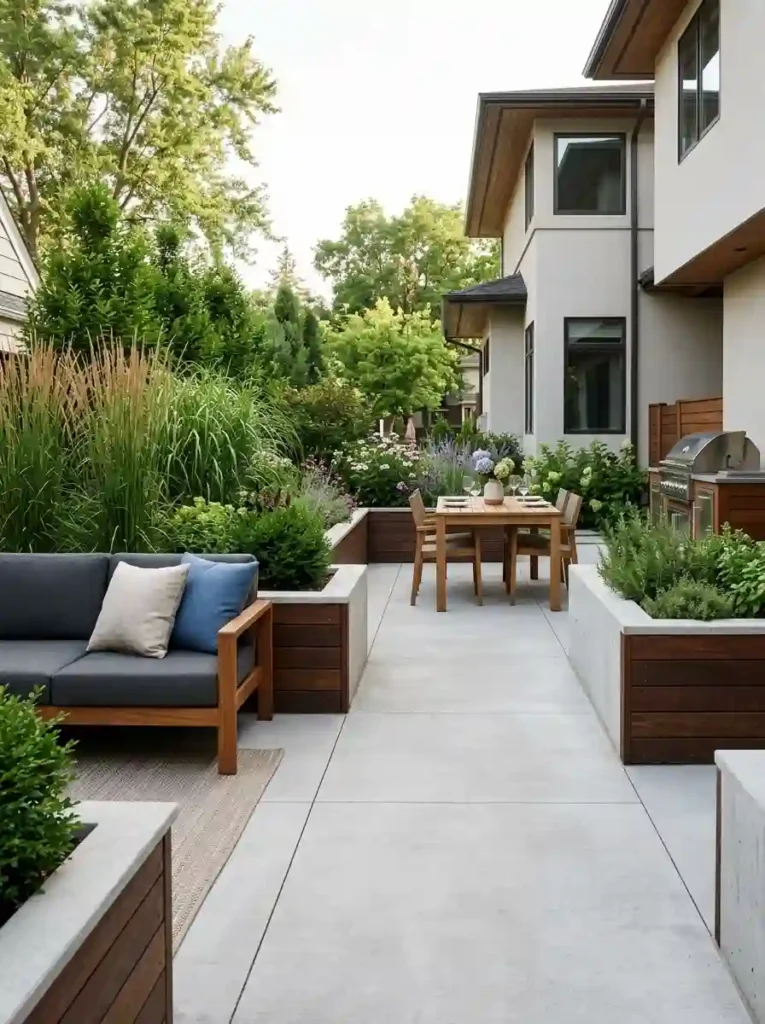
Best for: Privacy, color, and clear patio borders
Raised planters can define the edge of a patio without building a wall. They also bring plants closer to eye level.
Use tall grasses or shrubs behind a sofa for privacy. Add herbs near an outdoor kitchen. Choose flowering plants near a dining area for seasonal color.
Keep enough space between the planters and furniture. People should be able to walk, clean, and care for the plants.
Use planter materials that match the house or furniture. Wood, brick, metal, and smooth concrete can all work.
Keep in mind: Large planters become very heavy after they are filled. Decide on their location before adding soil.
Create a Multi-Level Concrete Patio
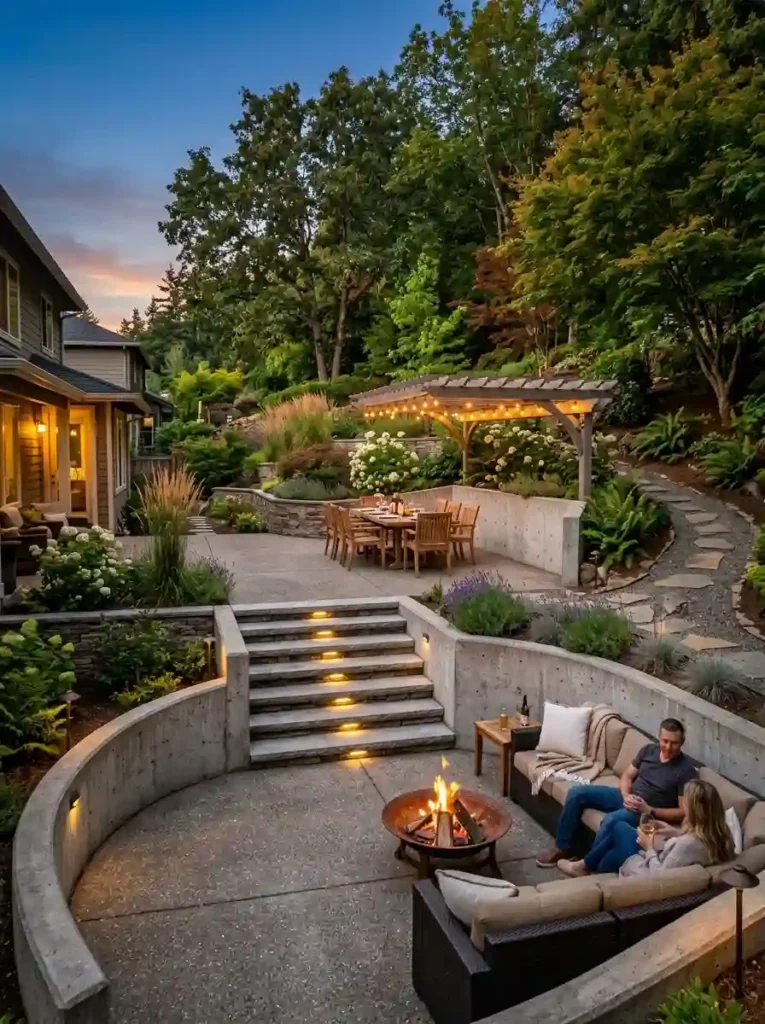
Best for: Sloped yards and large outdoor areas
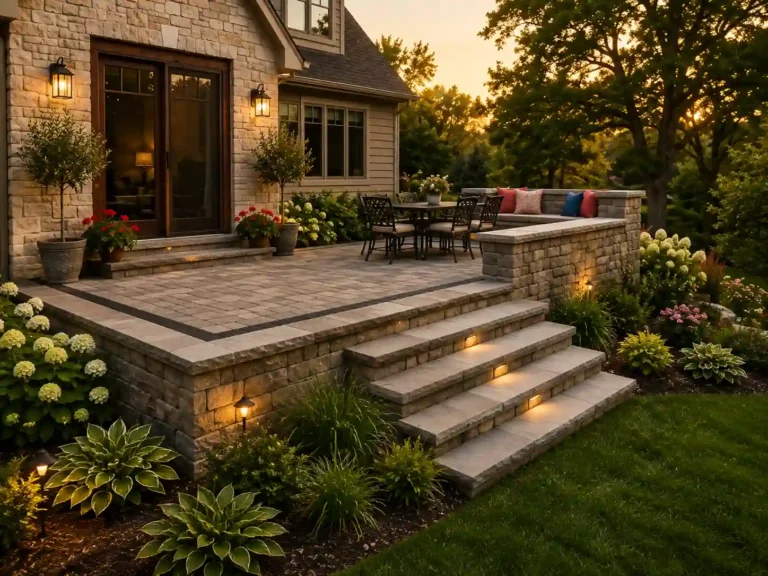
A multi-level patio can divide the yard into useful zones. The upper level can hold a dining table. The lower level can support lounge seating or a fire pit.
This design can also help manage a slope. A low retaining wall may hold back soil while creating a clear edge.
Make each step easy to see. Add lighting near level changes so people can move safely at night.
Consider access for children, older family members, and people with limited movement. In some cases, a gentle ramp may work better than steps.
Keep in mind: Multi-level work is more involved than a single slab. You may need help from a qualified contractor or engineer.
How to Pick the Best Concrete Patio Design
The best-looking patio online may not be the best choice for your yard, climate, or budget. Use these five points to narrow your options.
Start With Your Budget
Plain concrete is often less costly than decorative finishes. Stains, scoring, exposed aggregate, special forms, and multiple levels can add labor.
Prices change by location, site access, soil, patio size, and finish. Get at least three written quotes.
Ask each contractor to list the same items. This will make the quotes easier to compare.
Match the Design to Your Yard Size
Small yards need simple furniture and clear walking paths. Built-in seating, wall planters, and narrow tables can save space.
Larger yards can support separate areas for cooking, dining, and relaxing. Use rugs, score lines, planters, or furniture groups to define each zone.
Connect the Patio to Your Home
Large slabs and straight lines often suit modern homes. Warm exposed aggregate can look good beside brick.
Curved edges and flower borders can suit cottage-style homes. Dark concrete and metal furniture can create a stronger industrial look.
Think About Your Climate
Cold areas may need extra care with the base, drainage, concrete mix, and sealing. Hot areas may need light colors and shade.
Wet areas need a finish with good grip. Dry yards may suit gravel gaps and drought-friendly plants.
Be Honest About Maintenance
Painted designs may need touch-ups. Ground cover needs trimming. Wood features may need sealing or cleaning.
Choose a design you can care for. A simple patio that stays clean often looks better than a detailed one that is ignored.
Avoid These Concrete Patio Mistakes
Most concrete patio problems begin before the concrete is poured.
One common mistake is making the patio too small. A table, six chairs, grill, and several pots can fill a space fast. Mark each item on the ground before you approve the size.
Poor drainage is another major concern. Water should flow away from the house and avoid low spots.
Do not choose a smooth finish just because it looks clean. It may become slippery when wet.
Ask where the control joints will go. Random cuts can harm the final design.
Test dark colors in direct sun. A deep gray patio may look stylish but feel too hot during summer.
Plan outlets and lights early. It is harder to add wiring after the slab is complete.
Keep fire pits and grills away from unsafe areas. Follow product instructions and local rules.
Avoid planting large trees too close to the patio. Strong roots may lift or damage the concrete over time.
Before hiring a concrete contractor, ask:
- How will you prepare the base?
- How will water move away from the house?
- Where will you place the control joints?
- Which finish offers good grip?
- Do you recommend a sealer?
- When can furniture be placed on the patio?
- What does the warranty cover?
- Can I see recent patio projects?
Get the key details in writing before work starts.
Choose a Patio That Fits Your Daily Life
Concrete can support many outdoor styles. You can keep it simple with a broom finish, create a modern grid, add a small bistro area, or build separate zones for cooking and relaxing.
The best choice should fit your yard, home, climate, and budget. It should also match the amount of care you are willing to give it.
Choose your three favorite concrete patio ideas. Measure your space and mark the furniture layout on the ground. Then compare finish samples and detailed quotes from local contractors.
A well-planned patio does not need to be fancy. It needs to look good, drain well, and make your outdoor time more comfortable.