18 Rural Driveway Entrance Ideas With Country Charm
A rural driveway entrance must do more than look good. It needs to help visitors find your property, give large vehicles enough room, and hold up during rough weather.
This can be hard to get right.
Your entrance may look empty or unfinished. Mud may collect near the road. Gravel may spread into the grass. Tall plants may block your view when you pull out.
The good news is that you do not need a large budget to fix these problems.
The best rural driveway entrance ideas mix useful features with simple country style. A strong gate can improve security. Stone posts can mark the entrance. Native plants can add color without creating hours of yard work.
Below, you will find 18 practical ideas for farms, ranches, wooded lots, and country homes. You will also learn how to improve lighting, drainage, visibility, and curb appeal.
Plan These 5 Details Before You Start
It is easy to focus on gates, flowers, and stonework. But safety and access should come first.
Start by measuring the entrance. Check the space when your largest vehicle turns into the driveway. This could be a tractor, horse trailer, delivery truck, camper, or snowplow.
Next, stand at the end of the driveway and look in both directions. Trees, signs, columns, and shrubs should not block your view of traffic.
You also need to watch what happens during heavy rain. Look for puddles, washed-out gravel, and soil erosion. Adding a flower bed in the wrong place can make a drainage problem worse.
Before you build anything, check:
- The width of the entrance
- The turning space for large vehicles
- The location of underground utilities
- Local rules for gates, signs, and culverts
- The path rainwater takes across the property
Your design should also match the scale of your land. Tiny decorations can disappear on a large property. Very tall columns may feel too formal beside a simple farmhouse.
A clear plan will help you avoid costly changes later.
Use a Reclaimed Timber Gate for a Natural Look
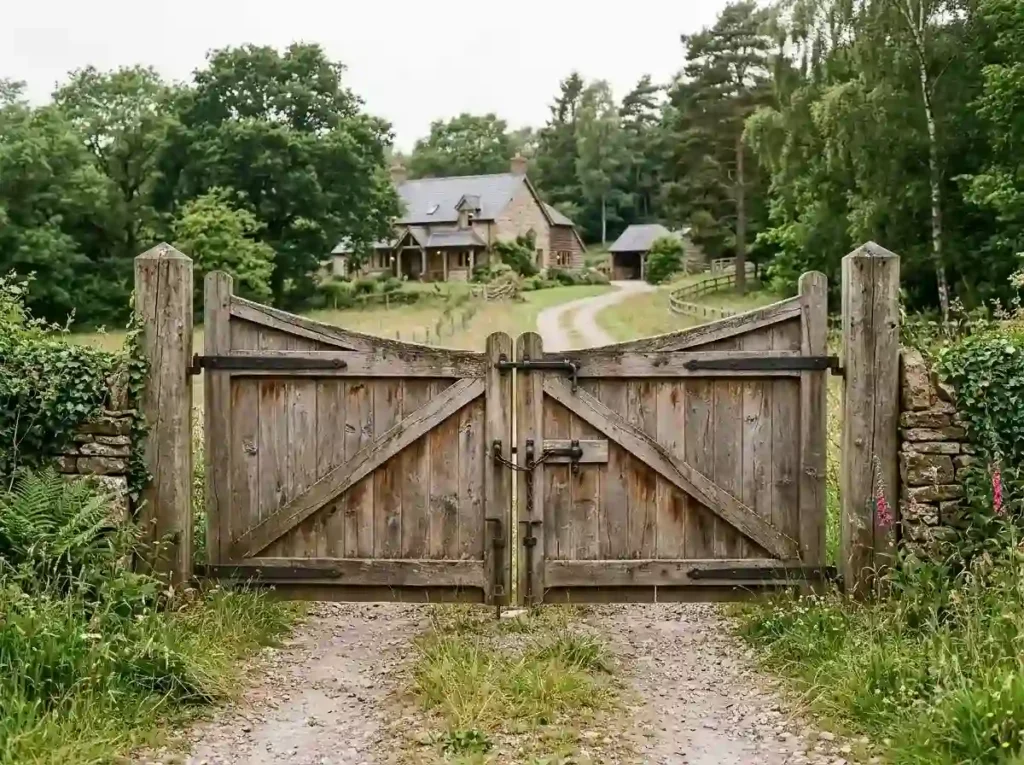
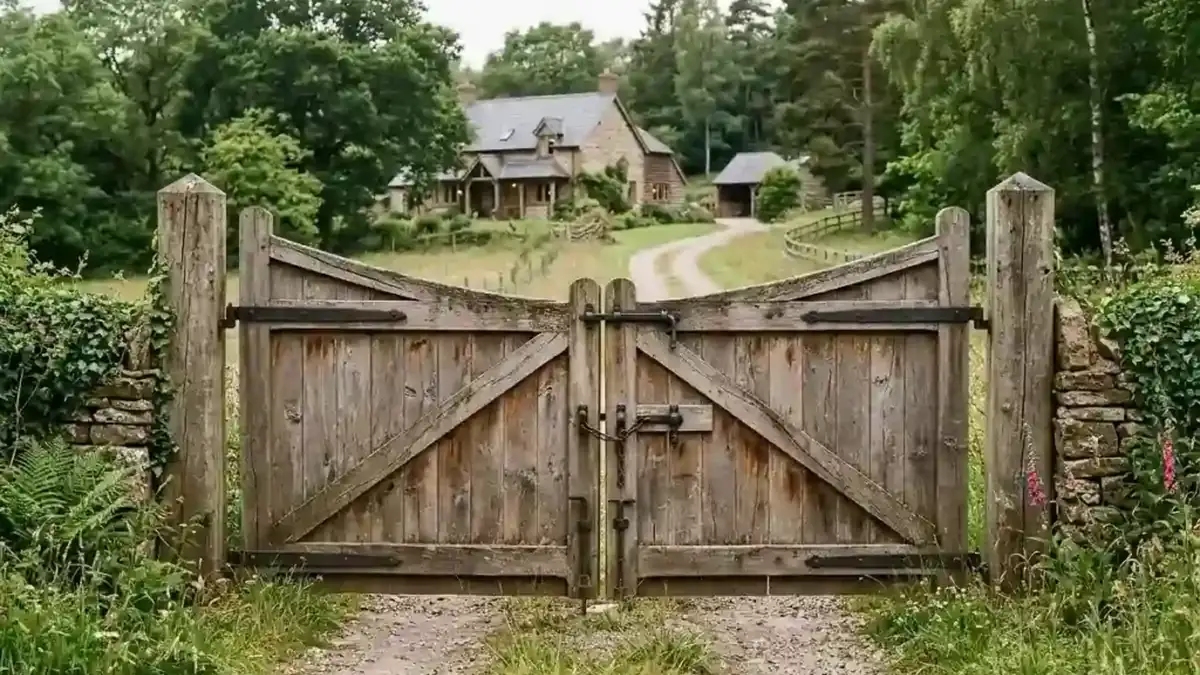
A reclaimed timber gate can make a plain entrance feel warm and established. It works well with farmhouses, barns, cabins, and wooded properties.
Old barn wood often has marks, faded color, and natural texture. These details add character that new lumber may lack.
But old wood is not always strong wood.
Check each board for rot, insects, deep cracks, and soft areas. Decorative boards can be attached to a new metal or wood frame if they are too weak to support the gate.
Use heavy posts and outdoor-rated hinges. A wide timber gate can become very heavy, especially after rain.
Seal the wood to slow damage from moisture and sunlight. Choose a clear seal if you want to keep the aged color.
Best for: Farmhouses, cabins, and wooded properties
Maintenance: Medium
Watch out for: Weak boards and sagging hinges
Mark the Entrance With Low Stone Columns
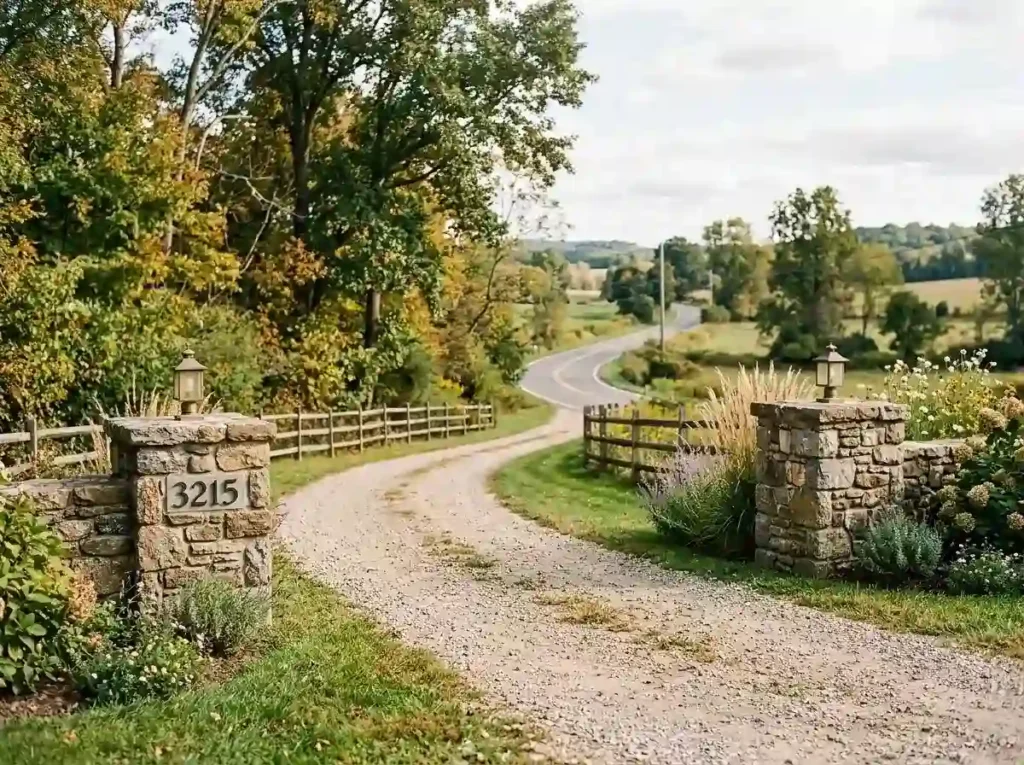
Stone columns make a driveway easier to see from the road. They also give the entrance a clear starting point.
Natural fieldstone is a strong choice for rural land. It blends well with gravel, timber, and native plants. Manufactured stone veneer can create a similar look with less weight.
Keep the columns in scale with your property. Low, wide columns often look better in an open setting than thin, very tall pillars.
You can add:
- House numbers
- Low-voltage lights
- Metal lanterns
- A family name plaque
- A small mailbox panel
Make sure the columns sit far enough from the driving path. Drivers should have room to turn without hitting the base.
Stonework can be costly. You can reduce the price by using a concrete block core with stone veneer on the outside.
Best for: Traditional farmhouses and large country homes
Maintenance: Low
Watch out for: Narrowing the entrance
Guide Visitors With Split-Rail Fencing
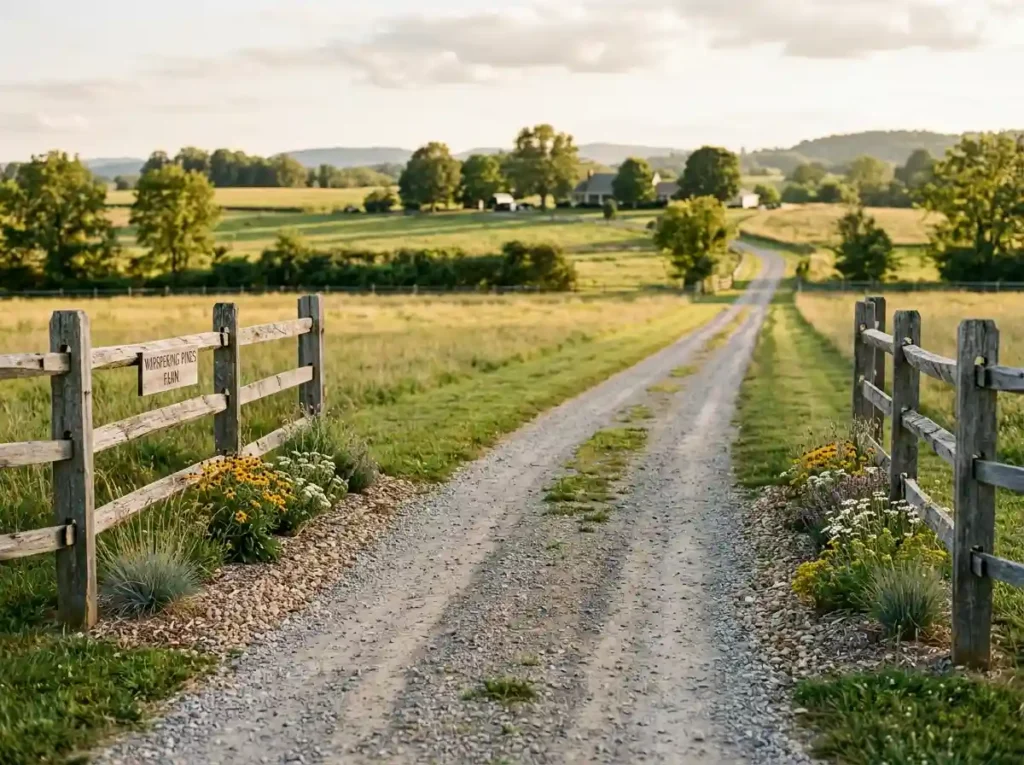
Split-rail fencing adds structure without making the entrance feel closed.
Run the fence along both sides of the driveway for a short distance. This helps guide the eye from the road into the property.
You do not need to fence the full driveway. A short section may be enough to create a clear entrance.
Pair the rails with low grasses, wildflowers, or gravel beds. Keep the planting simple so the fence remains the main feature.
Wire backing can be added when you need to contain pets or livestock. Install it neatly on the property side so it is less visible from the road.
Wood rails will need stain or sealant from time to time. Vinyl split-rail fencing needs less care, but it may look less natural beside an older farmhouse.
Best for: Farms, horse properties, and wide entrances
Maintenance: Low to medium
Watch out for: Rot where wood touches wet soil
Improve Security With a Simple Metal Farm Gate
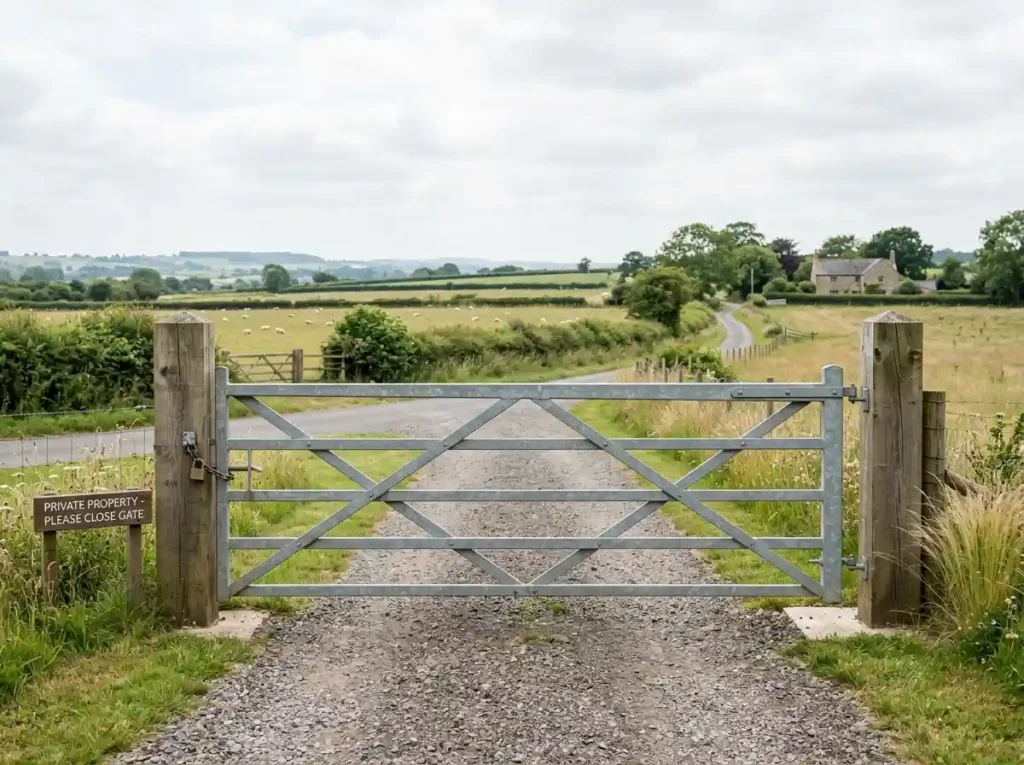
A basic farm gate is one of the most useful rural driveway entrance ideas. It controls access, helps contain animals, and leaves room for large vehicles.
Galvanized steel gates resist rust and need little care. Painted metal gates offer more color choices but may need touch-ups over time.
A plain gate can look more finished when you add strong timber or stone posts. You can also plant low grasses near the posts.
Choose a latch that is easy to use but hard for animals to open. Place chains, locks, and control boxes where they will not scrape vehicles.
Think about where a driver will stop while opening the gate. The vehicle should be able to pull fully off the public road.
Automatic gates are helpful on long driveways. They cost more and need a power source, keypad, remote, or solar system.
Best for: Working farms and livestock properties
Maintenance: Low
Watch out for: Placing the gate too close to the road
Add a Ranch-Style Sign Above the Entrance
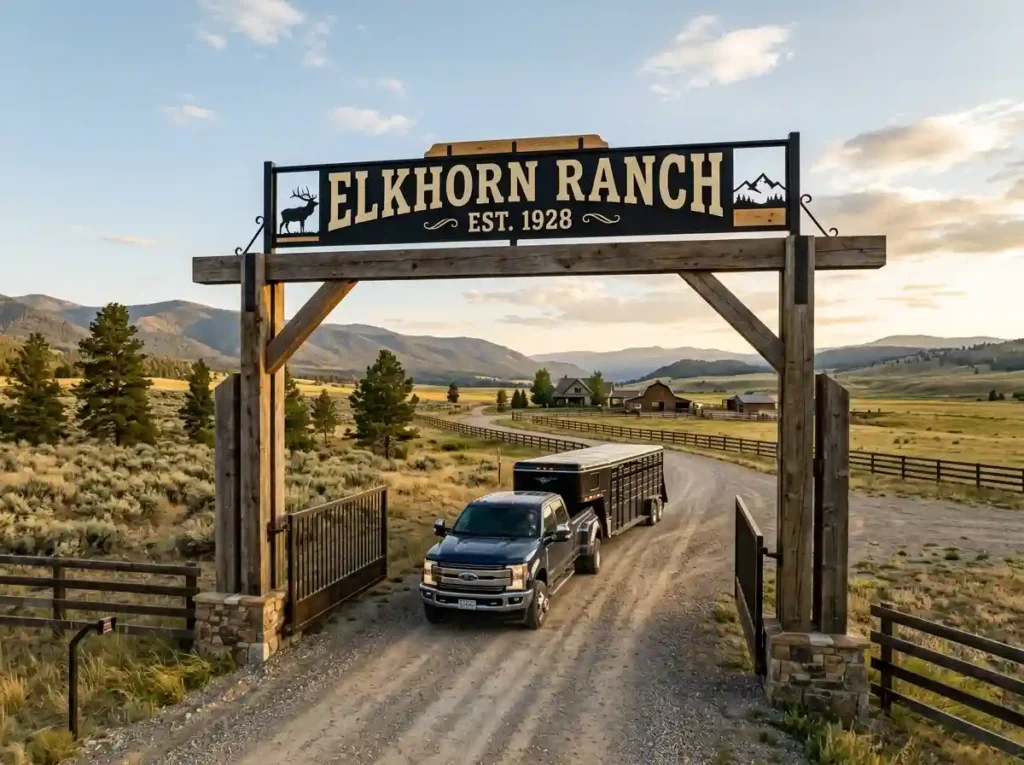
An overhead sign can make a large rural property easier to identify. It works well for ranches, farms, event properties, and family estates.
Use the sign to display:
- A farm name
- A ranch name
- A family surname
- A simple logo
- The year the property was established
Wood creates a rustic look. Powder-coated metal usually lasts longer and needs less care.
Keep the lettering large and clear. Fancy script may look nice up close but can be hard to read from a moving car.
The structure must also be high enough for trucks, trailers, farm equipment, and emergency vehicles.
Wind can place heavy force on a large overhead sign. Use strong posts and proper footings. Check local building and sign rules before construction begins.
Best for: Ranches and named properties
Maintenance: Depends on the material
Watch out for: Low clearance and wind damage
Add Native Wildflowers Without Creating a Messy Look
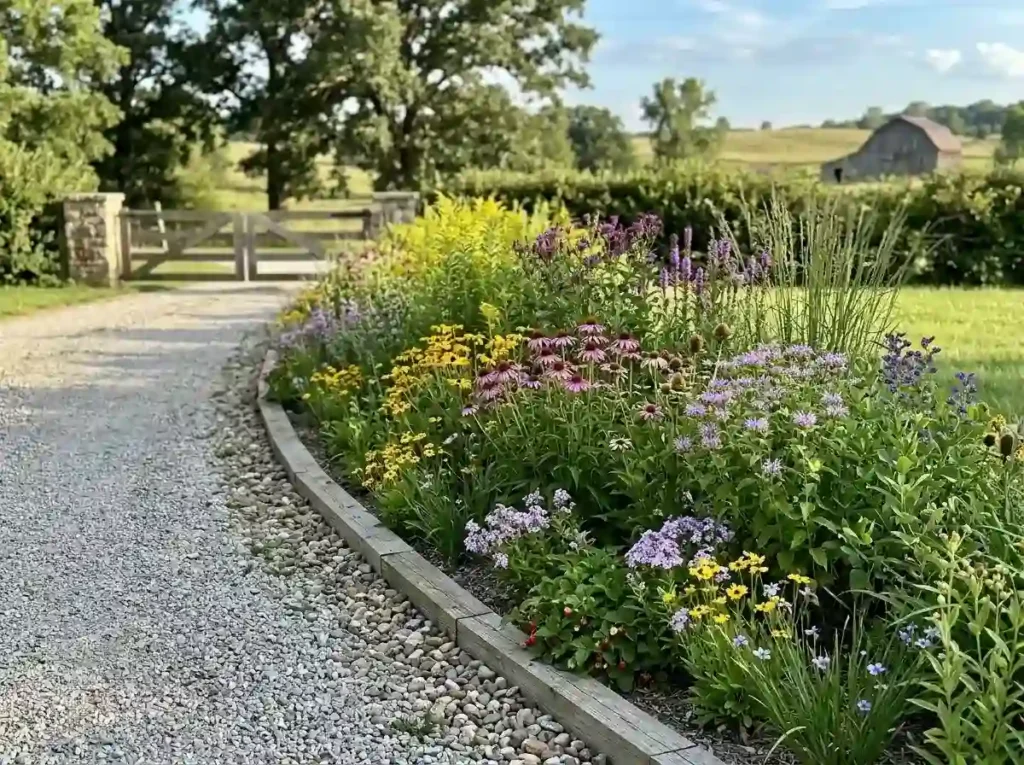
Native wildflowers bring color to a country driveway while supporting bees, butterflies, and other pollinators.
They often need less water than plants brought in from other climates. They may also handle local soil and weather better.
The main problem is appearance. A wildflower bed can look unplanned when it has no clear border.
Use a cut grass edge, stone strip, timber border, or narrow gravel band. This shows that the planting area is part of a design.
Choose shorter flowers near the road. Taller plants can block your view when leaving the driveway.
Mix plants that bloom at different times. This keeps some color near the entrance for more of the growing season.
Remove invasive weeds before planting. Young wildflowers may have trouble competing with thick grass.
Best for: Natural and low-water landscapes
Maintenance: Low after plants are established
Watch out for: Tall growth near traffic
Use Ornamental Grasses for Easy Texture
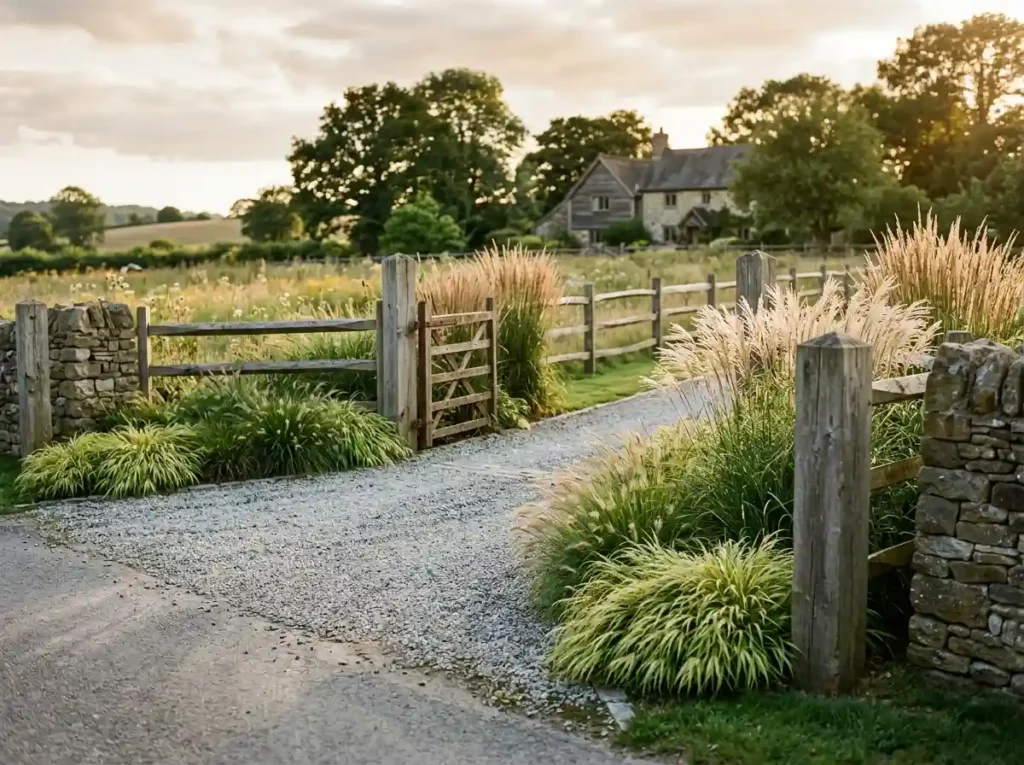
Ornamental grasses add movement and soft texture without making the entrance feel formal.
They look good beside timber, stone, metal gates, and gravel. Many types also hold their shape during fall and winter.
Choose clumping grasses instead of fast-spreading types. Spreading grasses can move into lawns, ditches, and nearby fields.
Check the mature height before you buy. A small nursery plant may grow taller and wider than expected.
Place taller grasses farther back from the road. Use short grasses near the driveway edge.
Most ornamental grasses need to be cut back once a year. This is often easier than shaping shrubs several times each season.
Best for: Modern farmhouses and low-maintenance entrances
Maintenance: Low
Watch out for: Invasive varieties
Create Year-Round Structure With Evergreen Shrubs
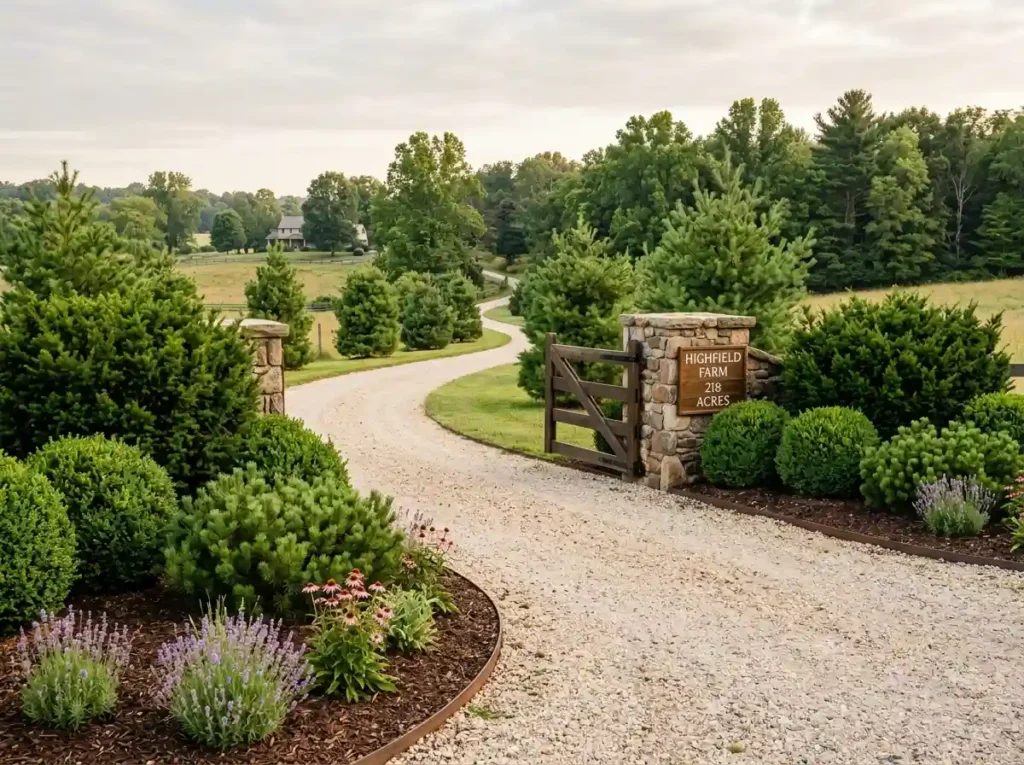
Flowers come and go, but evergreen shrubs keep the entrance looking finished all year.
Use a small group on each side of the driveway. The groups do not need to match perfectly, but they should feel balanced.
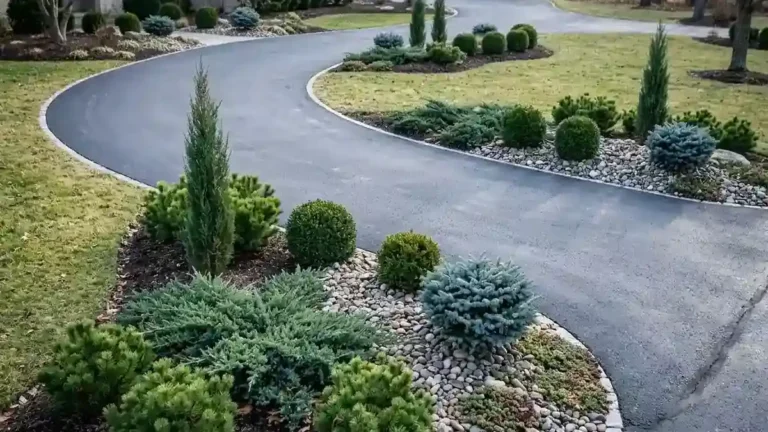
Choose dwarf or slow-growing plants. Large evergreens can quickly crowd signs, lights, gates, and driving space.
Leave enough room for the mature width of each shrub. Do not plant based on its size at the garden center.
A gravel or mulch bed can help control weeds around the plants. Keep mulch away from the main stems to reduce rot.
Evergreen shrubs work well as background plants. Add a few seasonal flowers in front when you want more color.
Best for: Four-season curb appeal
Maintenance: Low to medium
Watch out for: Planting too close to columns or signs
Add Flowering Shrubs for Seasonal Color
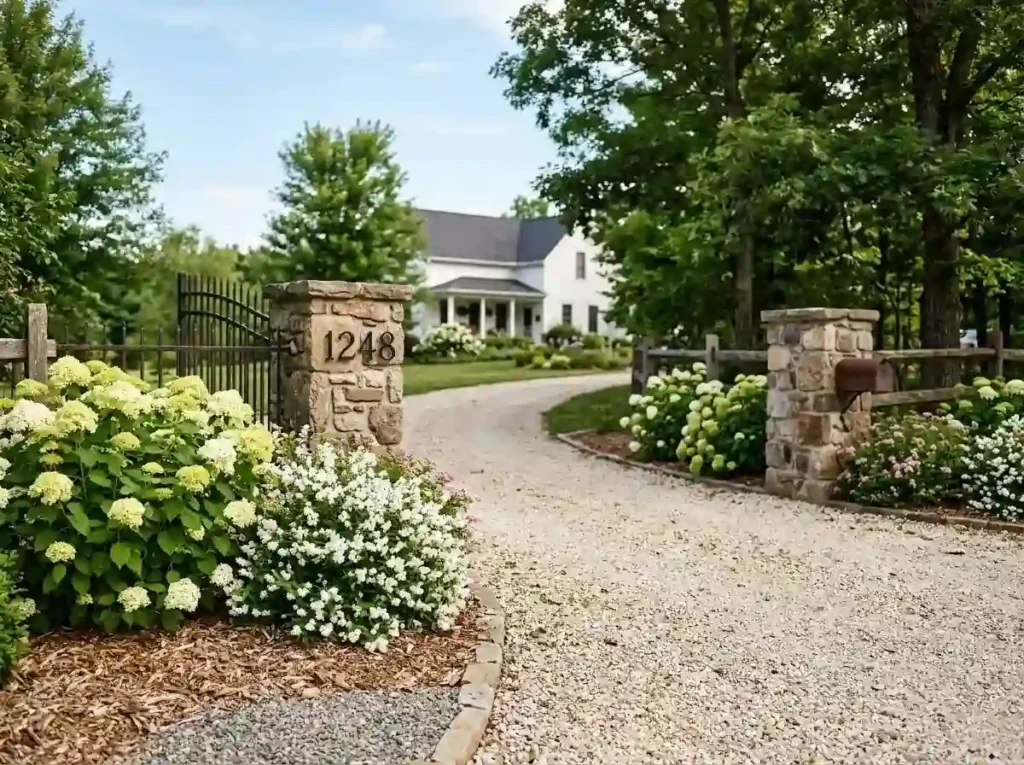
Flowering shrubs can soften a hard entrance made from stone, metal, or gravel.
Choose plants that suit your soil, sunlight, and winter temperatures. Some shrubs need full sun to bloom well. Others can handle part shade.
Look for types that can tolerate dust, wind, and heat from the road.
Space each plant for its mature size. Crowded shrubs may need constant trimming and can block house numbers.
Use one or two shrub types instead of planting many unrelated varieties. Repeated plants make a large entrance feel calm and planned.
Place low groundcover or gravel around the shrubs. This keeps the soil from washing onto the driveway.
Best for: Farmhouse and cottage-style properties
Maintenance: Medium
Watch out for: Heavy pruning needs
Create a Tree-Lined Approach in Stages
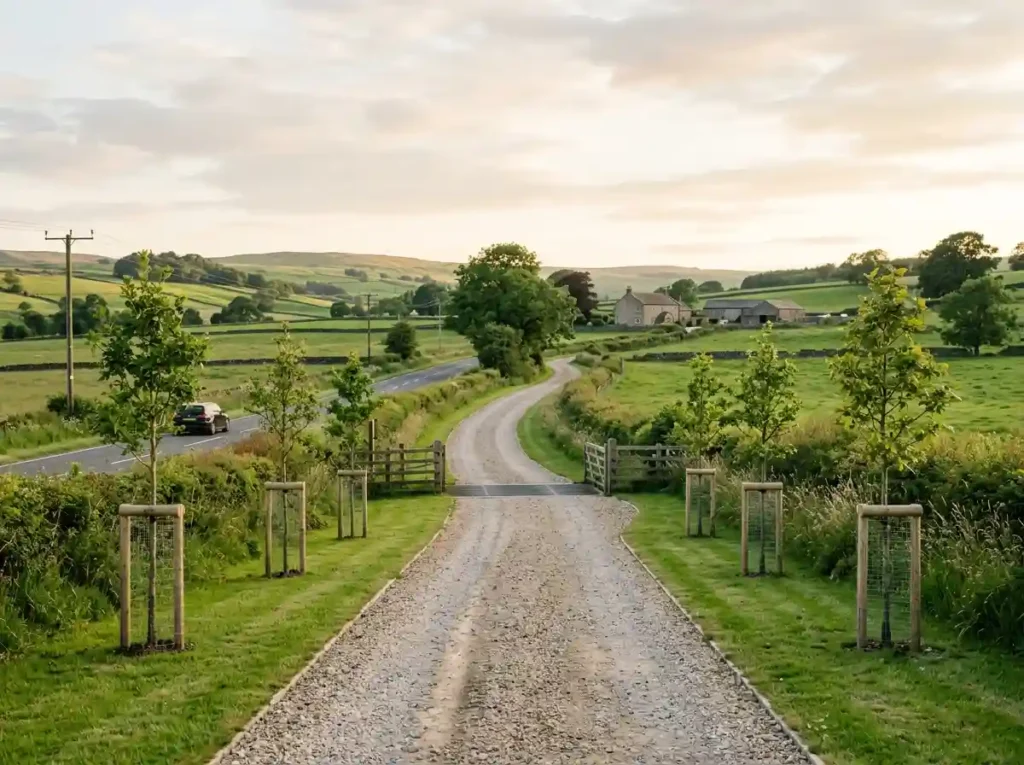
A row of trees can make a long driveway feel grand. But you do not need to plant the full length at once.
Start with a short row near the entrance. Six evenly spaced trees can create a strong effect without the cost of planting dozens.
Place trees far enough from the driveway to protect the pavement and allow room for mature branches. Avoid planting under power lines.
Do not plant large trees directly beside the public road. They may block visibility as they grow.
Match the tree to your climate and soil. Also consider falling fruit, weak branches, surface roots, and leaf cleanup.
Protect young trunks from deer, livestock, lawn equipment, and vehicles.
Best for: Long driveways and large properties
Maintenance: Medium during the first few years
Watch out for: Roots, overhead wires, and road visibility
Make the Entrance Easier to Find With Solar Lights
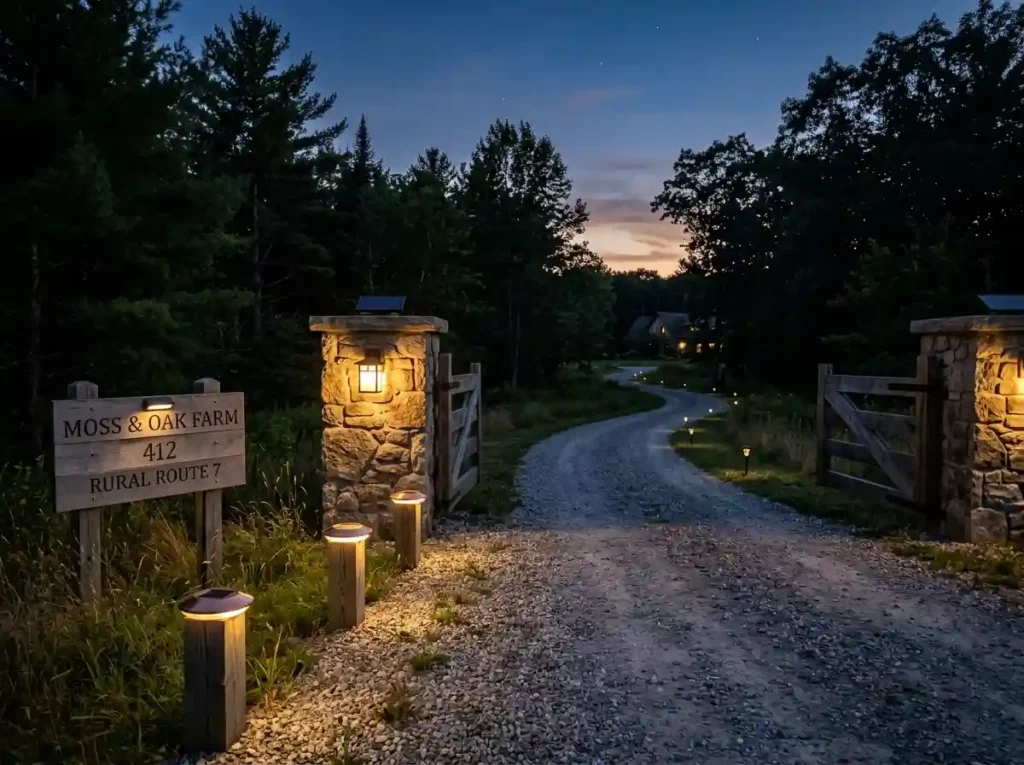
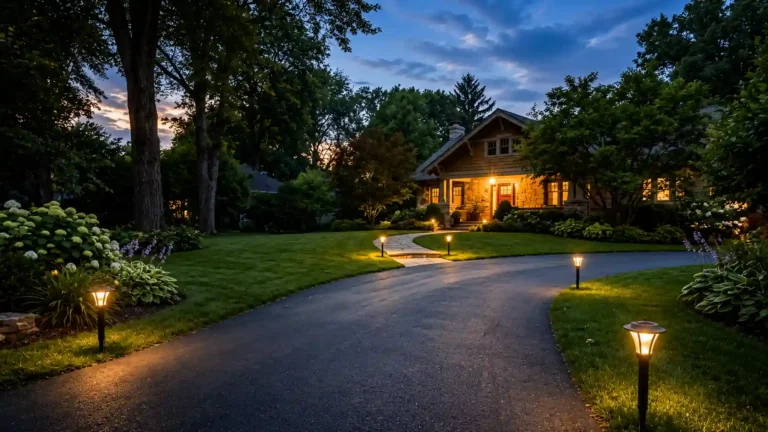
Long rural driveways can be hard to spot at night. Solar lights offer a simple fix when electrical wiring is not available.
Place lights on gate posts, stone columns, address signs, or low marker posts.
Check how much direct sun the area receives. A light placed under a thick tree canopy may not charge well.
Choose models with replaceable batteries. This can extend the useful life of the fixture.
Warm light often looks softer beside wood and stone. Bright white light may feel harsh in a quiet country setting.
Avoid placing too many lights in a straight line. A few well-spaced lights can mark the entrance without making it look like a runway.
Best for: Remote entrances without nearby power
Maintenance: Low
Watch out for: Shaded charging areas
Install Address Numbers Drivers Can Read
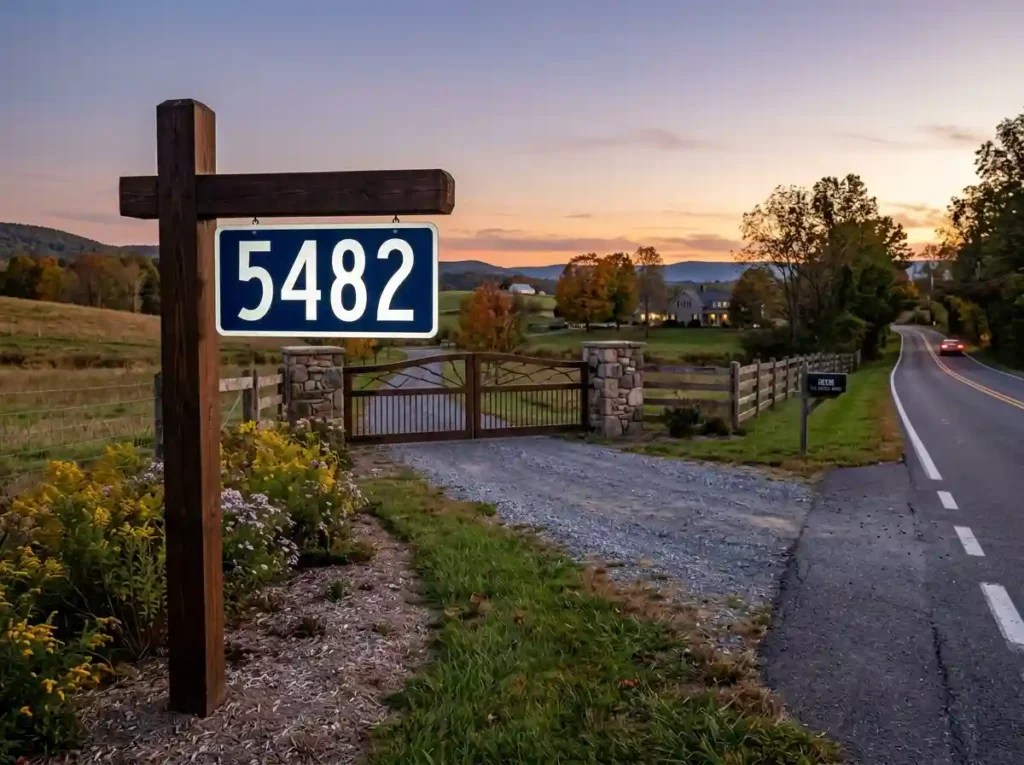
Small house numbers create real problems on rural roads.
Delivery drivers may miss the entrance. Guests may turn into the wrong driveway. Emergency crews may lose time searching for the correct property.
Use large numbers with strong contrast. Dark numbers on a light background work well. Light numbers on a dark sign can also be easy to read.
Reflective numbers improve visibility at night. Place them where drivers can see them from both directions.
Keep grass, flowers, and snow away from the sign.
The address should remain visible when the gate is open or closed. It should also be separate from decorative wording that may be harder to read.
Best for: Every rural property
Maintenance: Very low
Watch out for: Small or decorative lettering
Build a Strong Gravel Apron Near the Road
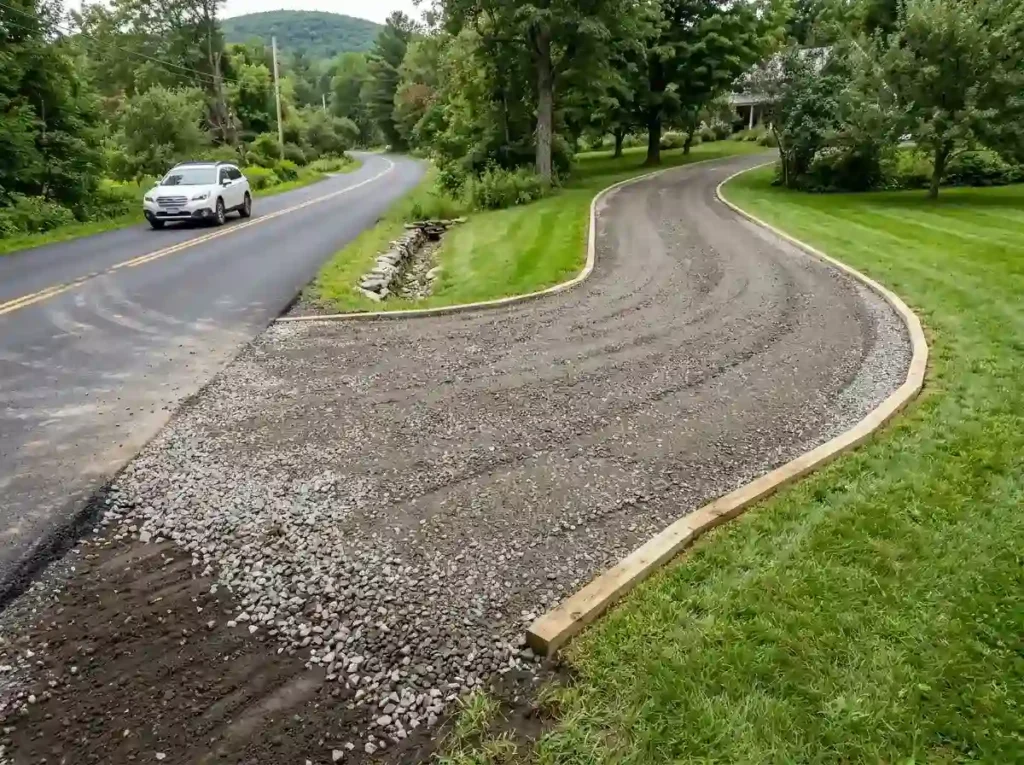
The first part of a gravel driveway often receives the most wear. Vehicles turn, stop, and push loose stone toward the road.
A compacted gravel apron creates a stronger entrance. It can reduce mud, ruts, and loose gravel on the roadway.
The base matters more than the top layer. Decorative stone placed over soft soil will sink and spread.
A proper apron may include:
- Prepared and graded soil
- A compacted base layer
- Crushed stone that locks together
- A finished gravel layer
Add edging where gravel keeps moving into the lawn. Regrade the area when low spots appear.
Water should drain away from the road and driveway surface. Fix the slope before adding more stone.
Best for: Gravel driveways with ruts or mud
Maintenance: Medium
Watch out for: Adding fresh gravel without fixing the base
Use Attractive Reflective Markers for Safer Turns
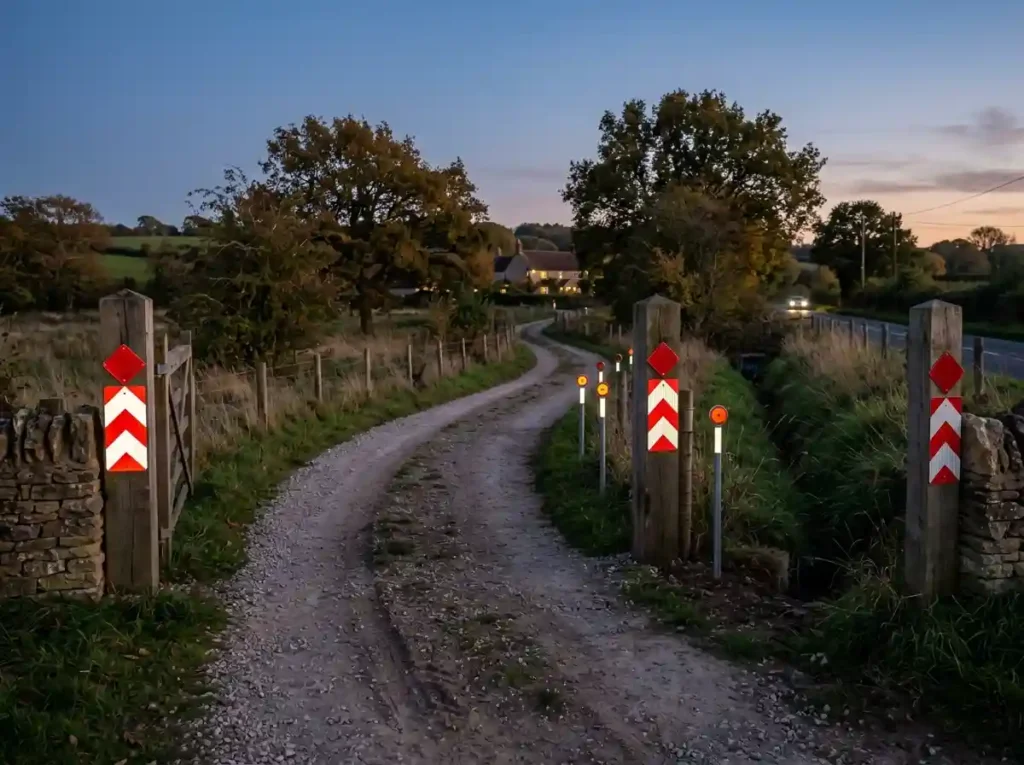
Ditches and culverts can be hard to see at night, during rain, or after snow.
Reflective markers show drivers where the safe driving area begins and ends.
You do not need bright plastic poles if they do not match your property. Small reflectors can be attached to timber posts, metal stakes, stone columns, or fence ends.
Place them near:
- Culvert edges
- Deep ditches
- Narrow bridges
- Sharp turns
- Gate posts
Keep the markers high enough to remain visible above grass and light snow.
Check them twice a year. Replace broken reflectors and straighten leaning posts.
Best for: Narrow entrances and properties with ditches
Maintenance: Very low
Watch out for: Markers placed inside the vehicle path
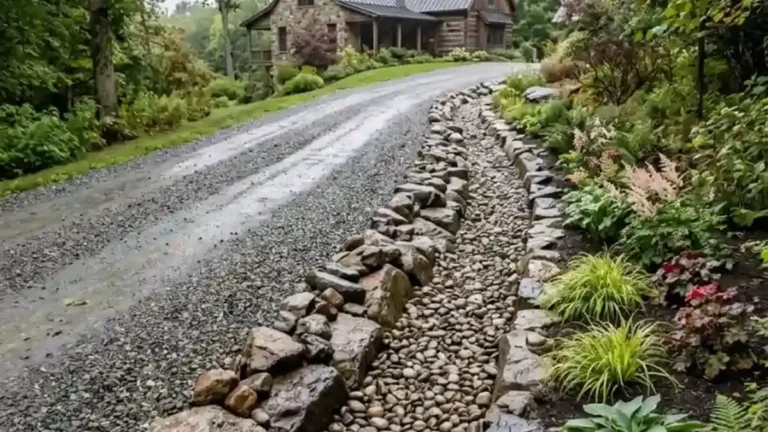
Control Runoff With a Dry Creek Bed
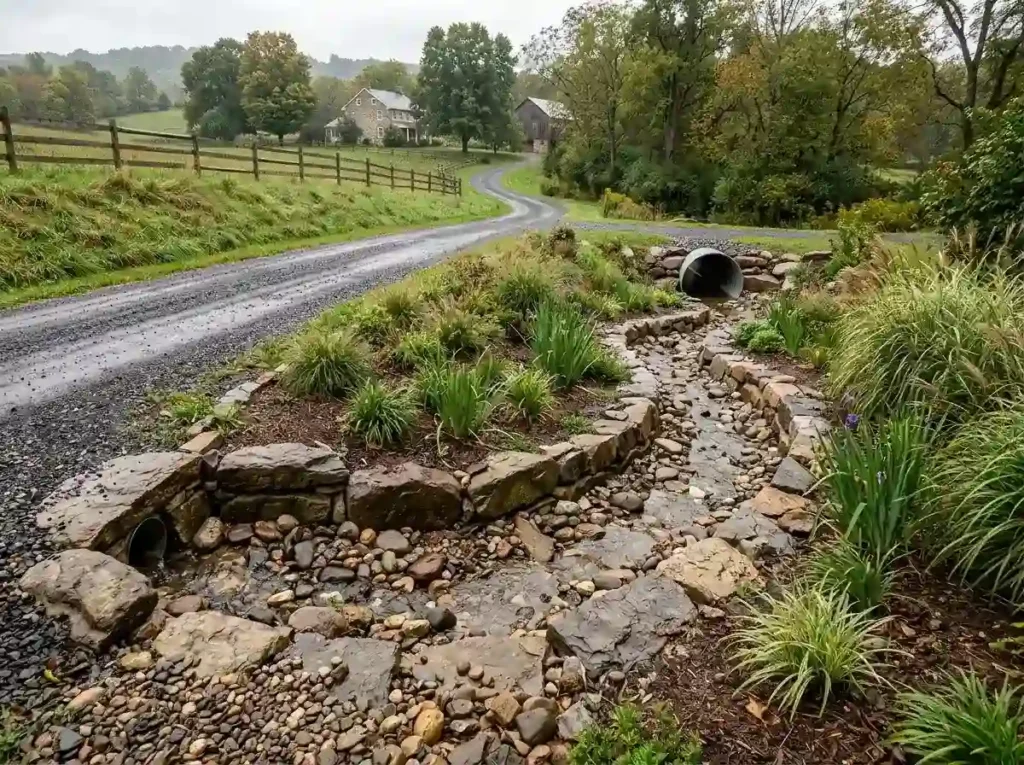
Water can wash away gravel, cut channels through the soil, and damage planting beds.
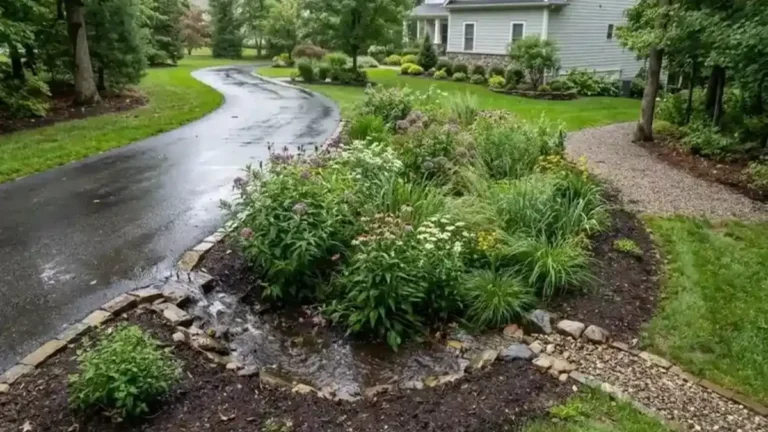
A dry creek bed gives runoff a planned path. It can also look like a natural part of a rural landscape.
Use a mix of stone sizes. Large rocks help hold the shape. Smaller stones fill gaps and create a more natural look.
The channel should guide water to a safe drainage area. It should not send water onto a neighbor’s land, public road, or building foundation.
Add plants that can handle short periods of wet soil. Keep deep-rooted plants away from culvert openings.
A dry creek bed is decorative, but it still needs a working slope and outlet.
Best for: Properties with visible runoff
Maintenance: Low to medium
Watch out for: Moving water without a safe exit
Improve a Plain Culvert With Stone Headwalls
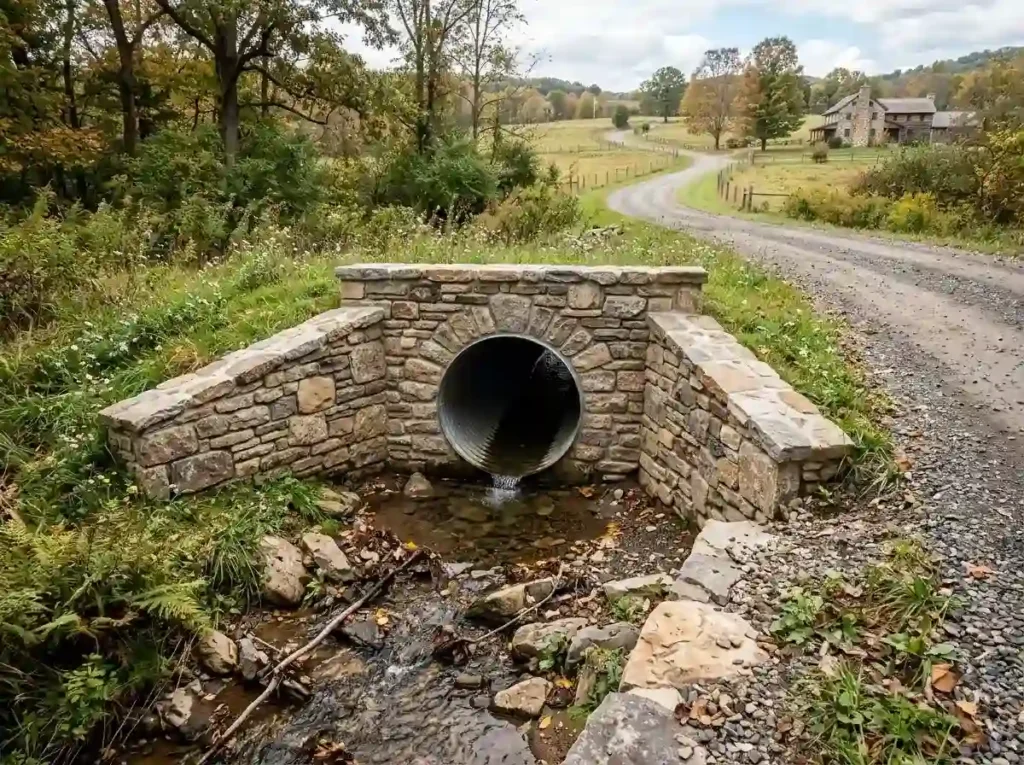
A culvert often looks unfinished when the pipe ends are exposed.
Stone headwalls can hide the pipe edges, hold nearby soil, and make the entrance easier to see.
Use stone that matches other features on the property. This could be fieldstone, cut stone, or concrete block covered with veneer.
The stonework must not reduce the pipe opening. It should also allow water to flow without catching branches and leaves.
Do not change the culvert size or water path without checking local rules. Roadside drainage may be managed by the town, county, or another public office.
A drainage professional can check the slope, pipe condition, and erosion before work begins.
Best for: Driveways with visible roadside pipes
Maintenance: Low
Watch out for: Blocking water flow
Use Boulder Groups as Natural Entrance Markers
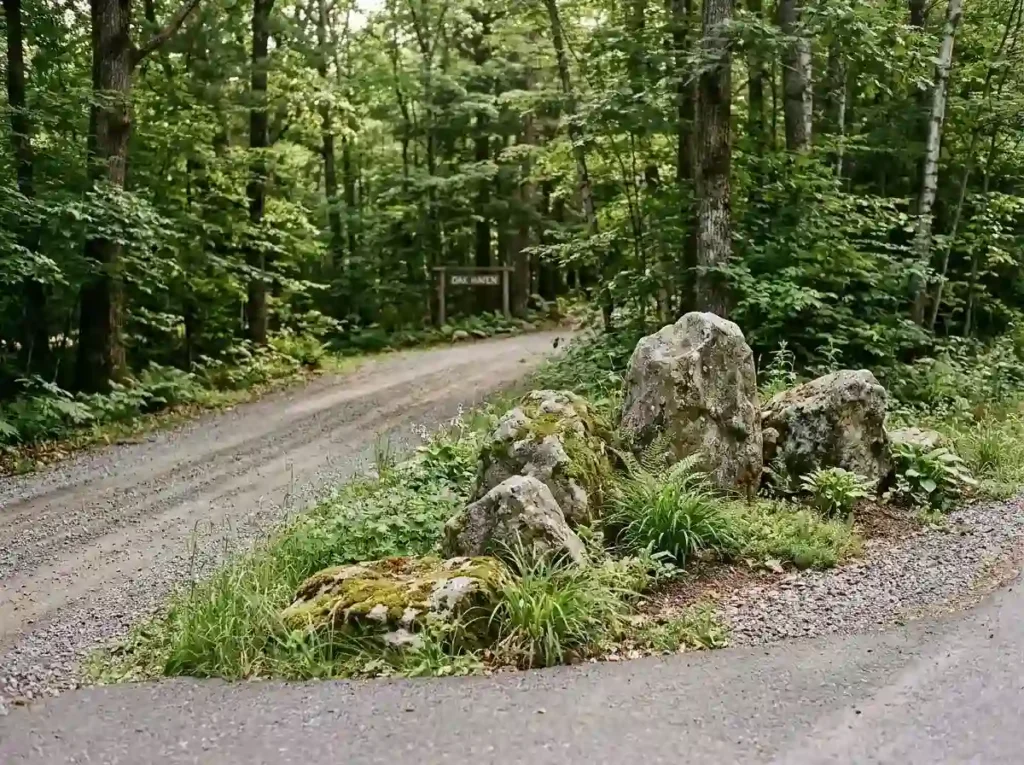
Large boulders can mark a rural entrance without adding a formal wall or gate.
Choose stones that fit the scale of your land. One small rock may look lost. A group of three or five often feels more natural.
Set part of each boulder into the ground. This makes the stones look established and helps keep them stable.
Add low grasses, groundcover, or gravel around the base. Avoid packing plants between every stone.
Keep boulders well outside the turning area. Drivers need extra room when pulling trailers or wide equipment.
Use boulders from the local area when possible. Their color may blend better with the soil and nearby buildings.
Best for: Wooded lots and natural landscapes
Maintenance: Very low
Watch out for: Placing stones too close to vehicles
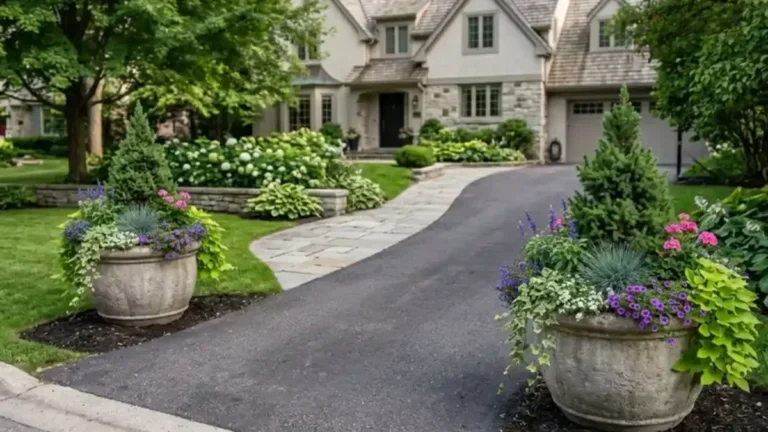
Match the Mailbox and Planters to the Entrance
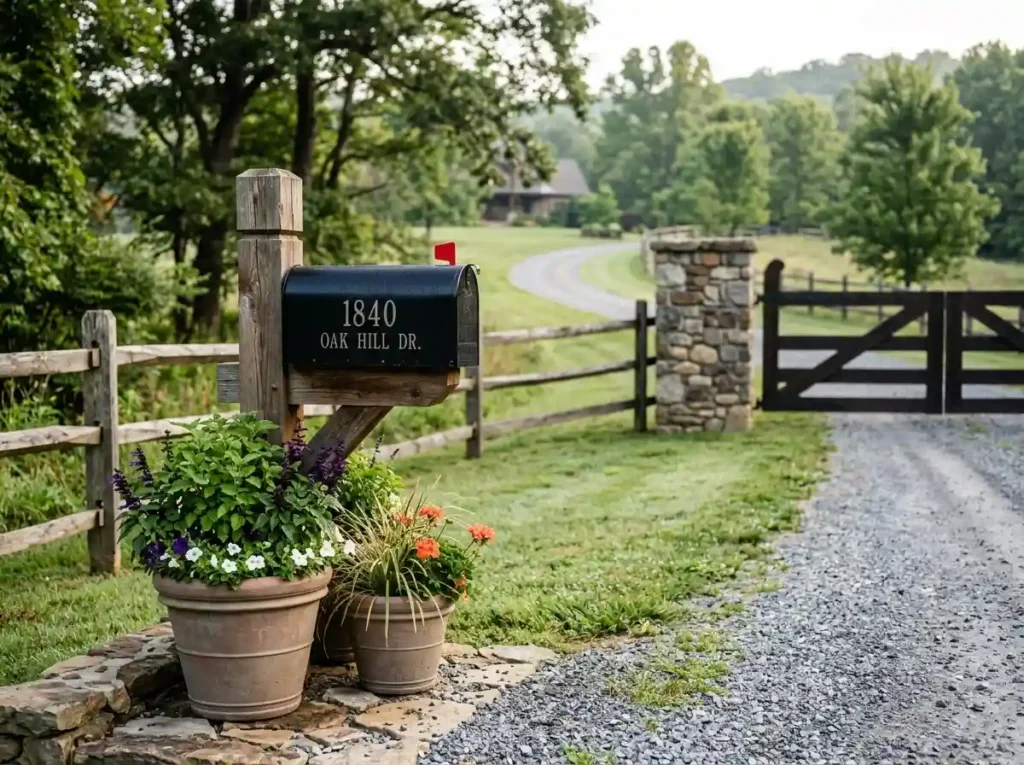
A mailbox may be the first feature visitors see. Treat it as part of the full design.
Repeat a material already used at the entrance. A black metal mailbox can match a metal gate. A timber post can connect with split-rail fencing. A stone base can match driveway columns.
Add one or two large planters if there is enough safe space.
Large containers work better than many small pots on a wide rural property. They are easier to see from the road and create less clutter.
Choose weather-resistant containers with drainage holes. Use simple seasonal plants that can handle wind and road dust.
Keep the mailbox easy for the carrier to reach. Do not let flowers, branches, or snow block the door.
Best for: Quick weekend updates
Maintenance: Low to medium
Watch out for: Small decorations that look lost
Choose the Right Design for Your Type of Property
The best-looking idea may not be the best choice for your daily needs.
A working farm needs strong access and clear signs. A wooded property may look better with natural stone and native plants.
Use this guide to narrow your choices.
For a Working Farm
Choose:
- A wide metal gate
- Strong timber or steel posts
- Reflective address numbers
- A compacted gravel apron
- Clear culvert markers
These features support daily use and large vehicles.
For a Traditional Farmhouse
Choose:
- Fieldstone columns
- A timber gate
- Flowering shrubs
- Warm solar lights
- A matching mailbox
Repeat the same two or three materials across the entrance.
For a Wooded Property
Choose:
- Native plants
- Boulder groups
- A simple wood sign
- Low lighting
- Natural gravel
Avoid formal features that compete with the trees.
For a Low-Maintenance Entrance
Choose:
- Metal edging
- Gravel beds
- Dwarf evergreens
- Steel or stone posts
- Solar lights with replaceable batteries
Use fewer plant types to reduce care.
For a Long Driveway
Choose:
- Large address numbers
- Trees or fencing near the entrance
- Reflective markers
- Repeated lights at key points
- A clear gate or sign
Make the entrance easy to see before drivers pass it.
Avoid These 8 Rural Driveway Entrance Mistakes
A good entrance should improve safety. It should never make driving harder.
1. Blocking the View of the Road
Tall shrubs, signs, and columns can hide approaching traffic. Check the view from the driver’s seat before planting or building.
2. Making the Entrance Too Narrow
Plan for the widest vehicle that uses the property. Leave extra turning room near posts, rocks, and ditches.
3. Placing the Gate Too Close to Traffic
Drivers need a safe place to stop while opening the gate. They should not have to leave the vehicle on the public road.
4. Ignoring Water Problems
New beds and walls can trap runoff. Watch the entrance during heavy rain before making major changes.
5. Using Features That Are Too Small
Tiny pots, short signs, and small stones may disappear in a wide landscape. Choose fewer items with a larger scale.
6. Picking Plants That Need Constant Care
A driveway entrance may be far from an outdoor faucet. Choose plants that can handle local weather after they settle in.
7. Installing Solar Lights in Deep Shade
Solar panels need enough direct light to recharge. Check sun exposure before fixing lights to posts.
8. Building Before Checking Utilities
Gate controls, posts, walls, and trees may affect underground lines. Contact the local utility-marking service before digging.
A Simple Weekend Upgrade Plan
You do not need to rebuild the full entrance at once.
Start with one useful improvement and one visual improvement.
For example:
- Add clear address numbers and fresh gravel.
- Trim blocked sightlines and install solar lights.
- Paint the gate and edge the planting beds.
- Fix a drainage problem and add native grasses.
- Straighten the mailbox and add one large planter.
This approach keeps the project manageable. It also gives you time to see what works before spending more money.
Final Thoughts
A rural entrance should feel connected to the land and the buildings behind it. It should also help people enter, turn, and leave safely.
Begin with access, visibility, and drainage. Then add materials and plants that match your home.
You may choose a timber gate, stone columns, native flowers, or a simple gravel border. The right choice depends on your climate, property size, and maintenance needs.
The best rural driveway entrance ideas improve daily use while creating a warm first impression. Start with one problem you need to fix. Then add one feature that makes the entrance feel like part of your home.